Getting dressed on a cold morning is often less about finding a new idea than removing one decision before you leave the house. Choose a starting point that already feels like you, then make one adjustment that changes the mood – a cleaner line, a softer layer, or a more grounded shoe – instead of trying to make every part of the outfit interesting at once. That approach leaves room for warmth, movement, and a little personality without turning your closet into another task list.
Think of a winter casual outfit as a small personal uniform that can shift with your day rather than a finished answer you have to copy exactly. Notice which pieces let you sit, walk, carry what you need, and still feel presentable when a coat comes off; those are the pieces worth repeating. The useful styling decision is usually the one that gives an old favorite a clearer role, not the one that asks you to buy or layer more than your routine can hold.
Cable Knit With a Dark Mini
The white cable-knit sweater has a crisp V-neck outlined in dark trim, and that narrow border immediately connects it to the black mini skirt. Vertical knit texture keeps the light top from looking flat, while the short skirt gives the fuller sleeves a clean, graphic counterweight. It is a useful example of how a sweater can feel casual without losing a defined outline.
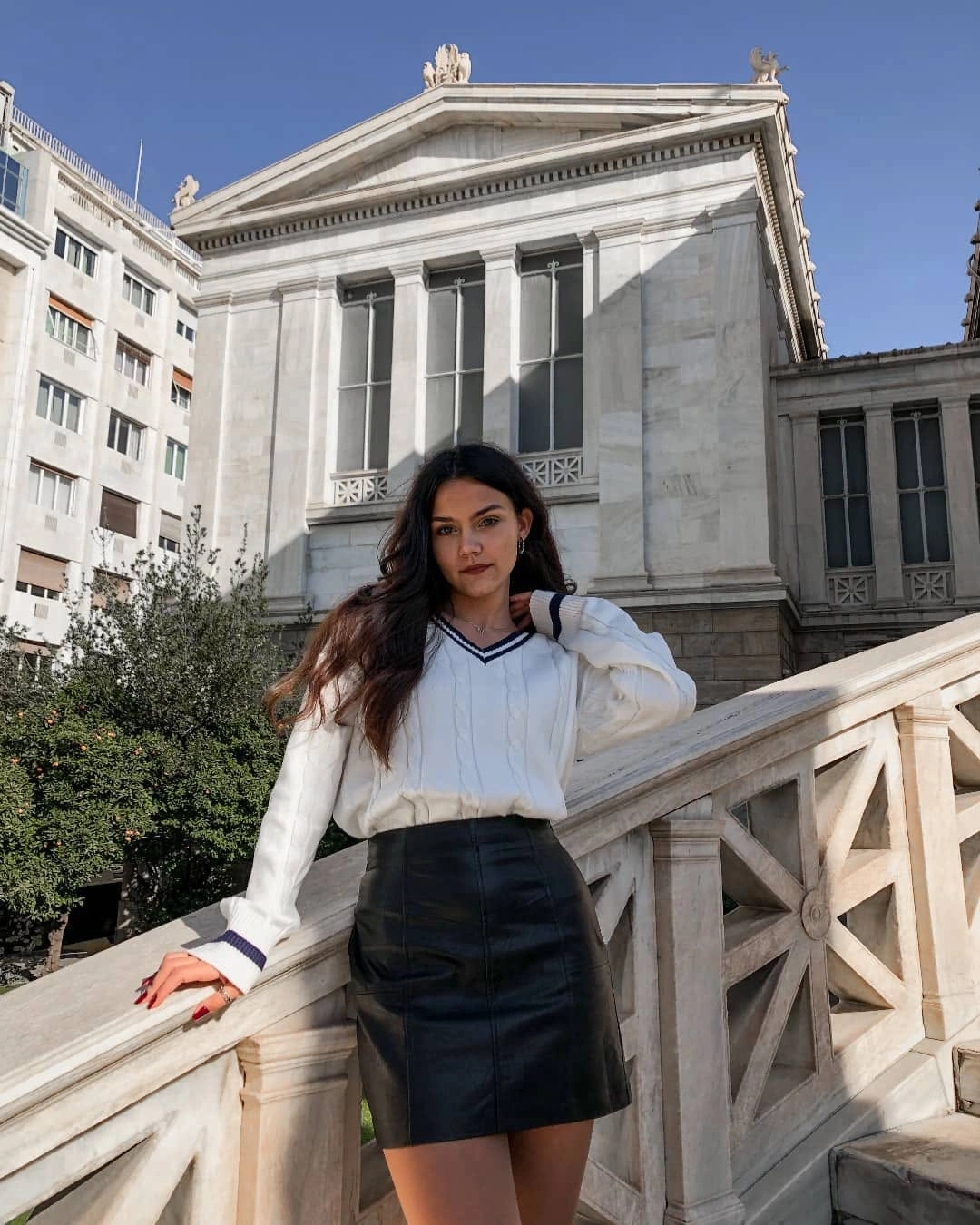
The strongest styling choice is the limited palette: white, navy, and black appear in clear blocks instead of many small accents. If you recreate the idea, keep the skirt simple and let the collar detail do the work, rather than adding a printed scarf or busy bag. That restraint protects the collegiate feeling of the knit and keeps the contrast readable from a distance.
A shorter hem can make a roomy sweater feel more balanced, but the proportion is not the only option. Straight dark jeans or opaque tights would preserve the same light-top, dark-bottom rhythm if a mini skirt is not practical for you. The key is to repeat the neckline color somewhere below the waist so the outfit still feels connected. For an even lower-effort take on cold-weather layering, explore cute but comfy winter outfits for lazy days.
Ivory Layers and Platform Boots
Here, a cream cable-knit layer sits under a long ivory coat, creating a continuous light column before the tan platform boots interrupt it near the ground. The coat and knit are close in value, but their different textures prevent the outfit from disappearing into one pale shape. A small burgundy bag gives the neutral combination one contained, darker point of focus.
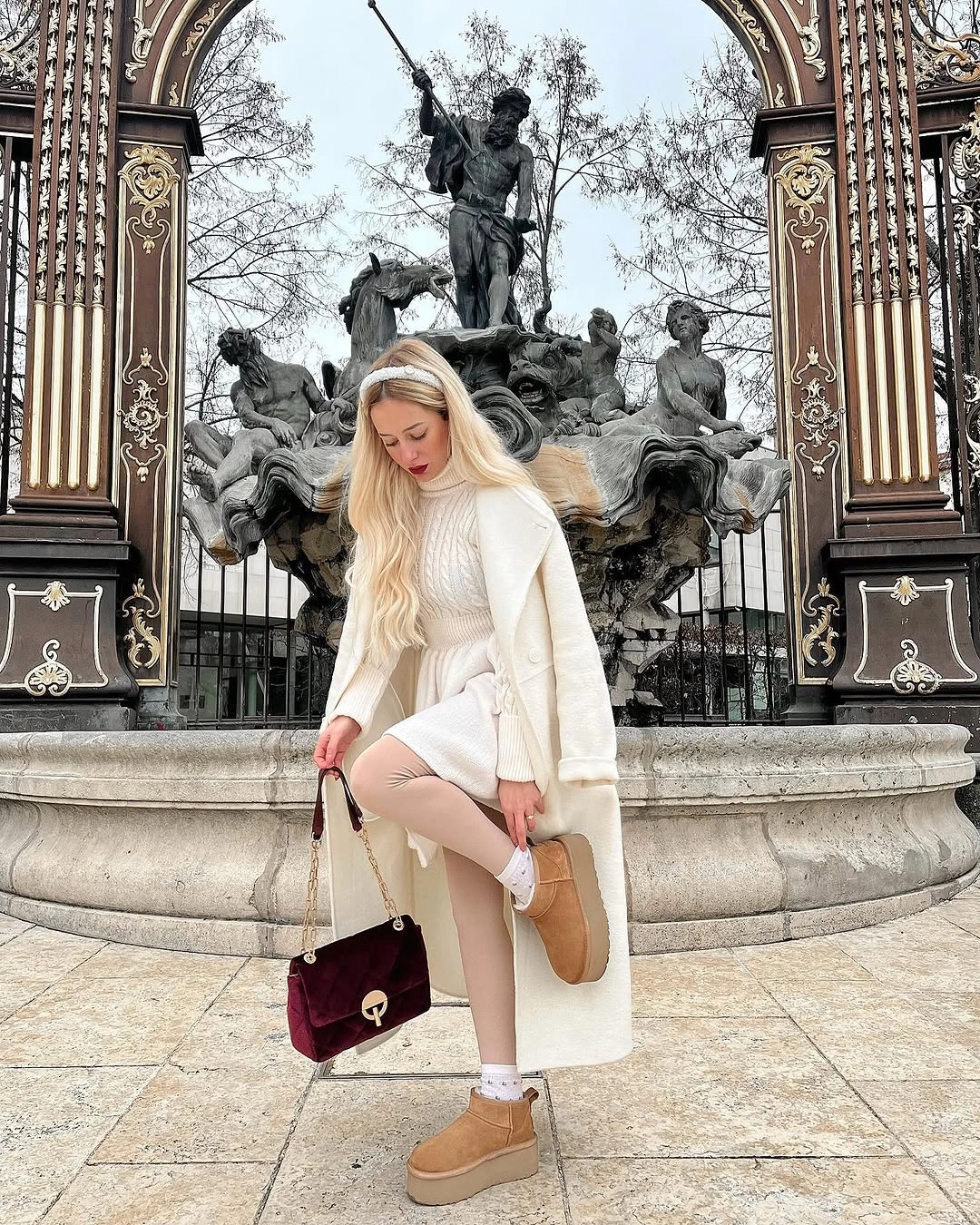
This is a good reminder that tonal dressing needs a change in scale, not necessarily a change in color. The substantial boot sole adds weight beneath the short knit hem, while the long coat adds length above it. When wearing several creams together, try to include one darker accessory at the hand or shoulder so the outfit has a deliberate visual pause.
The platform boot is more commanding than a delicate shoe, which makes it effective with the coat’s generous length. On a day with lots of walking, a flatter ankle boot could keep the same palette but soften the contrast at the hem. Avoid adding another warm brown layer at the top, though, or the bag and boots may begin to compete instead of framing the ivory layers.
Taupe Knit Between White and Tan
A taupe crewneck sweater sits between white textured trousers and tan ankle boots, acting as the quiet middle note that keeps the outfit from splitting into unrelated light and dark pieces. The pale pink ribbed beanie softens the transition at the top, while the boot color echoes the warm wood nearby. Nothing has to match exactly for the palette to feel calm and considered.
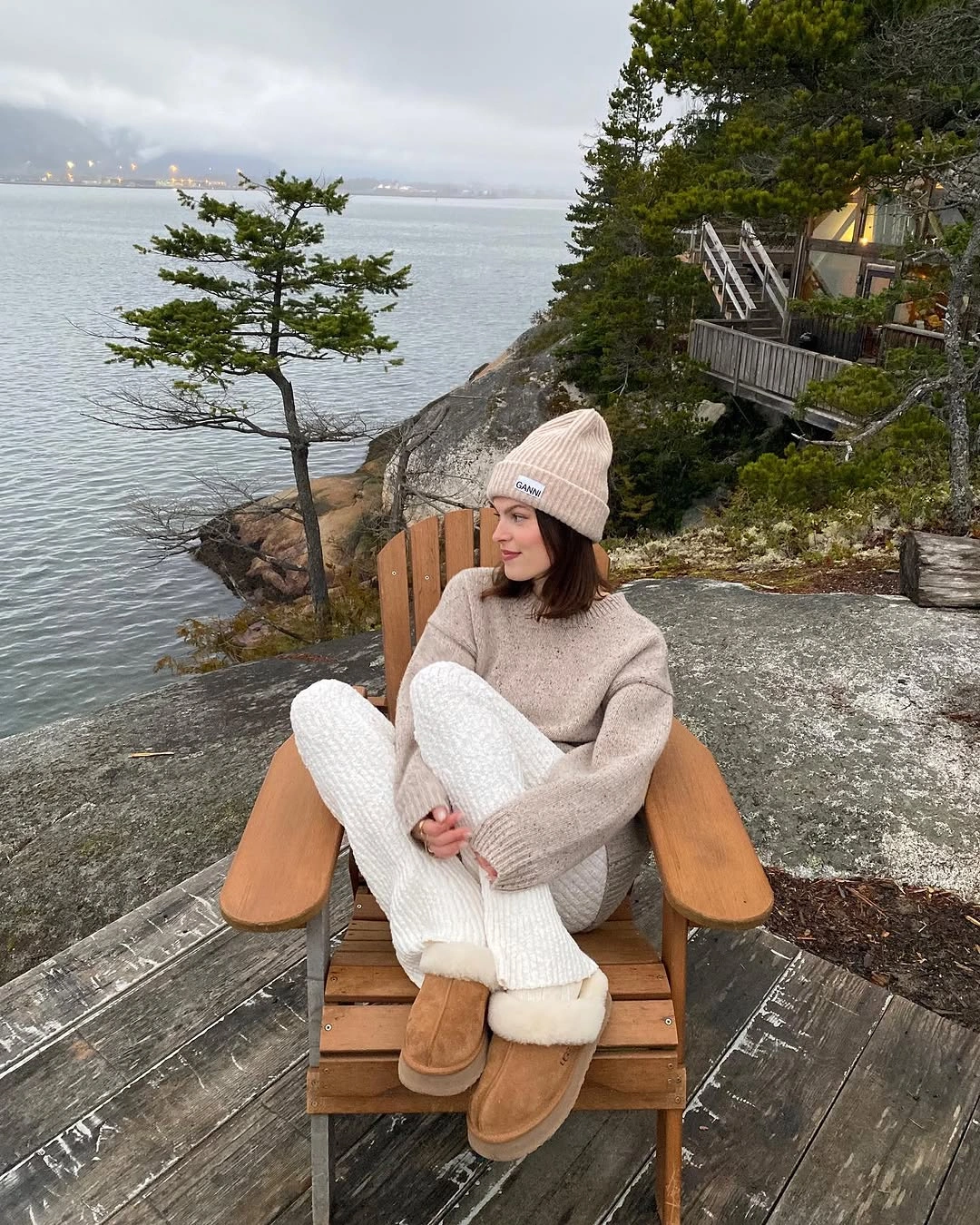
The soft contrast is what makes this combination feel relaxed rather than overly coordinated. White trousers can look abrupt with darker shoes, so a beige or taupe knit is an easy bridge when you do not want to add a belt or a jacket. Keep the sweater’s shape uncomplicated, because an extra large pattern could pull attention away from the trousers’ visible texture.
For an everyday version, choose a boot with a stable sole and trousers that leave enough room to move comfortably. A creamy sneaker could make the outfit lighter, but it would remove the warm grounding effect that the tan boot supplies. If you use a beanie, let it stay close to the softness of the knit rather than making it the boldest color in the look.
Long Scarf Through Light Outerwear
The pale long coat, cream sweater, and brown trousers are arranged in layers that stay open at the front, while the extended scarf creates a vertical line between them. That scarf is not just an added warm layer; its length makes the shorter knit and the fuller coat read as one continuous composition. The dark cap and wide trousers keep the light layers from becoming overly sweet.
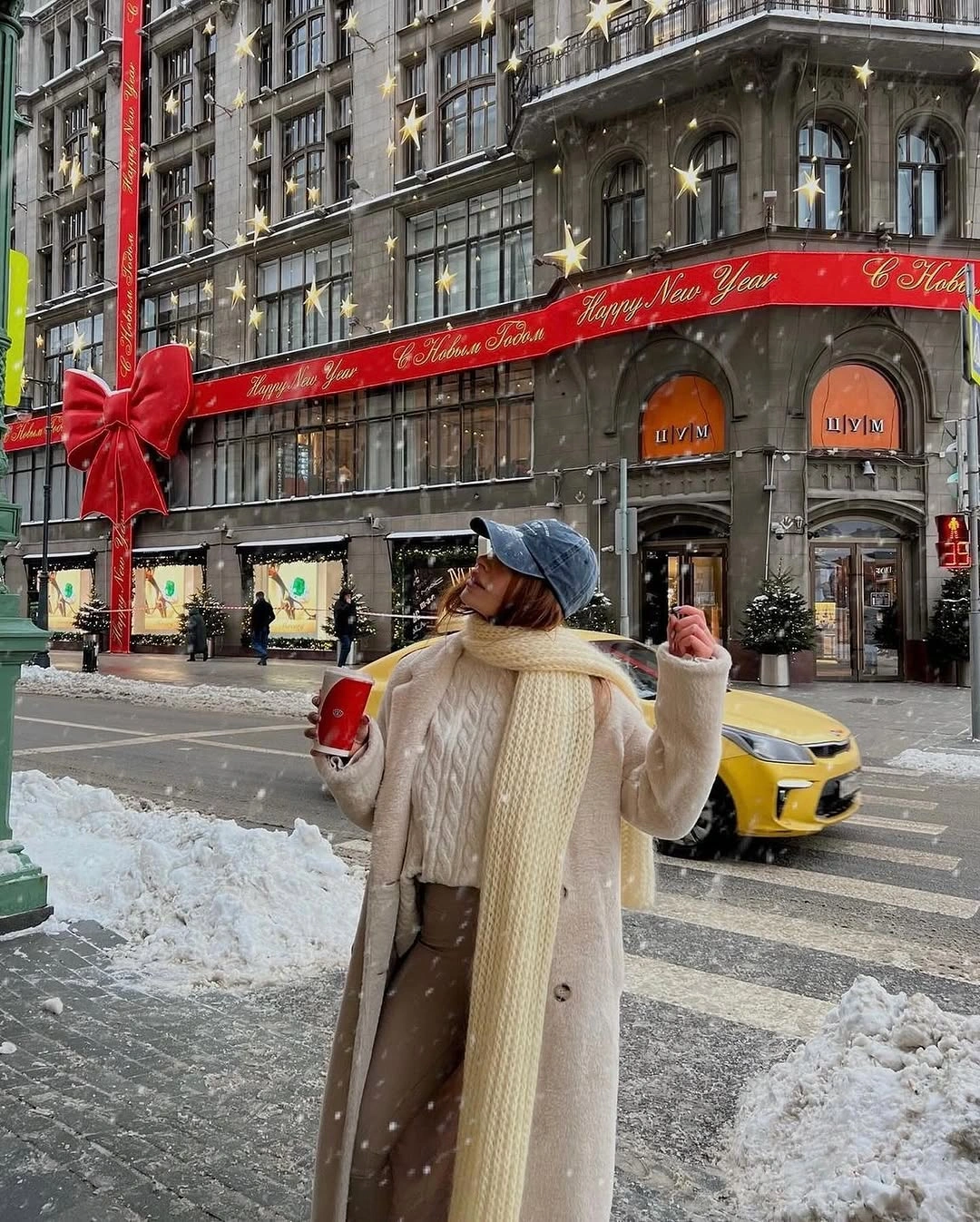
When a coat has an open front, a long scarf can provide structure without tightening the waist or adding a belt. Let the scarf remain fairly narrow so it does not hide the knit’s texture, and choose trousers with a relaxed leg to offset the length above. Readers who enjoy a broader selection of layered ideas can also explore cold weather outfit inspiration for other ways to build a warm outer layer.
The cap is useful because it introduces a small cool-toned interruption against the creams and browns. You could replace it with a beanie in a similar subdued shade, but a bright hat would change the outfit’s quiet balance quickly. For a more polished setting, swap the casual cap for a simple headband and keep the scarf as the main soft accessory.
Pale Coat Over a Dark Foundation
A pale structured coat sits over a taupe turtleneck and black wide-leg trousers, creating a neat light frame around a dark lower half. The pointed black ankle boots extend the trouser line, and the small crossbody bag repeats that dark note at the torso. The close-fitting neck layer is especially useful because it prevents the roomy coat from swallowing the upper body.
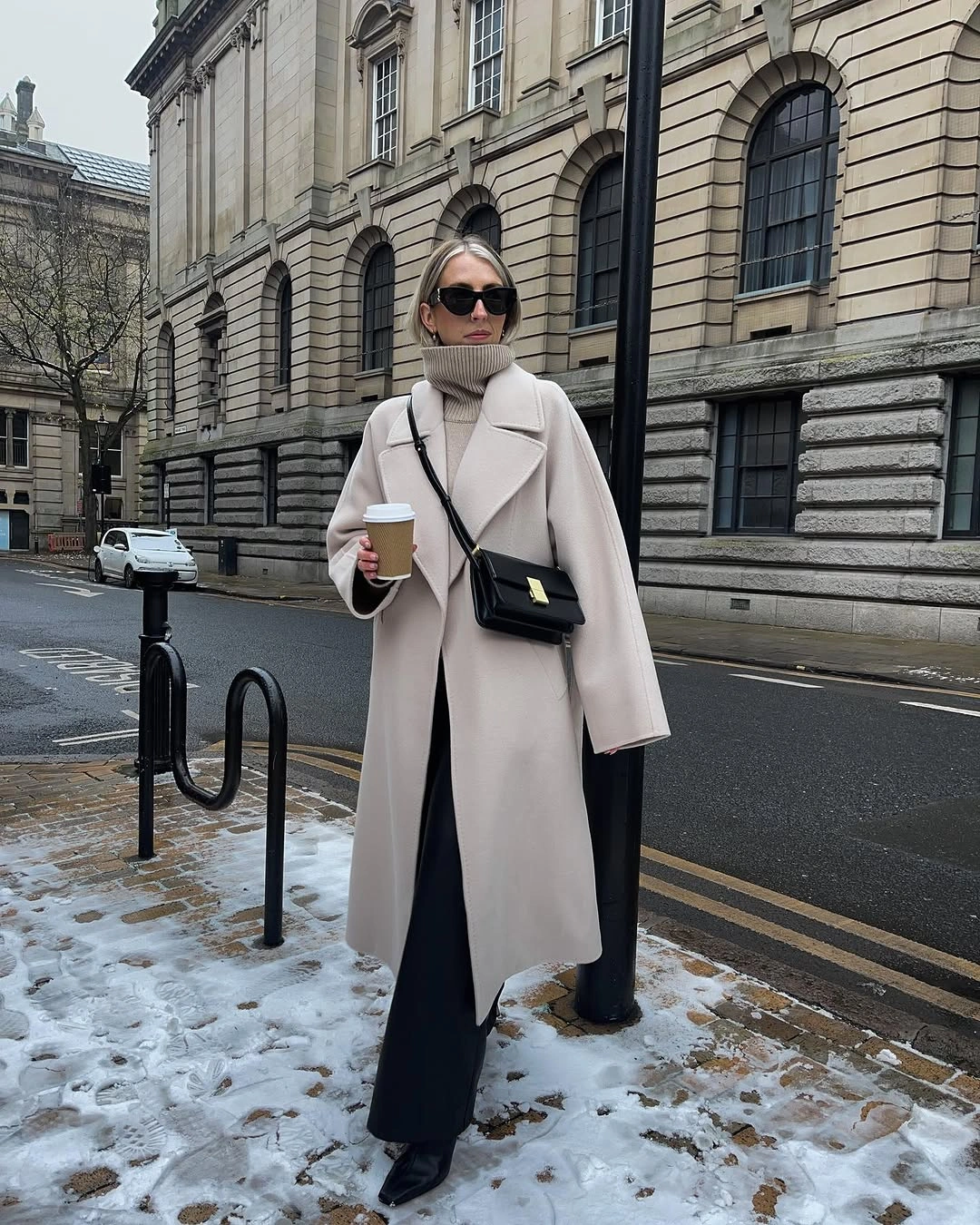
The contrast works because the outfit does not scatter black details everywhere; it concentrates them in the trousers, boots, and bag. If you want to copy this outline, choose a top that sits smoothly at the neck and keep the coat open enough to show it. A bulky scarf could obscure that clean center line, so it is better saved for a coat with a simpler collar.
Wide trousers give the coat a grounded, modern proportion, though they need a shoe with enough shape to remain visible below the hem. A straight-leg dark jean would make the combination less formal while keeping the same balance. The light coat is also a useful starting point for readers drawn to classic winter outfit ideas with a similarly controlled palette.
Patterned Knit With Straight Jeans
The cream sweater uses pink and burgundy patterning at the yoke and cuffs, so the plain blue jeans have an important supporting role. They leave space for the knit’s small repeated shapes instead of adding another print or dramatic silhouette. A burgundy hair clip echoes the deepest sweater accent and makes the color story feel finished without relying on matching accessories.
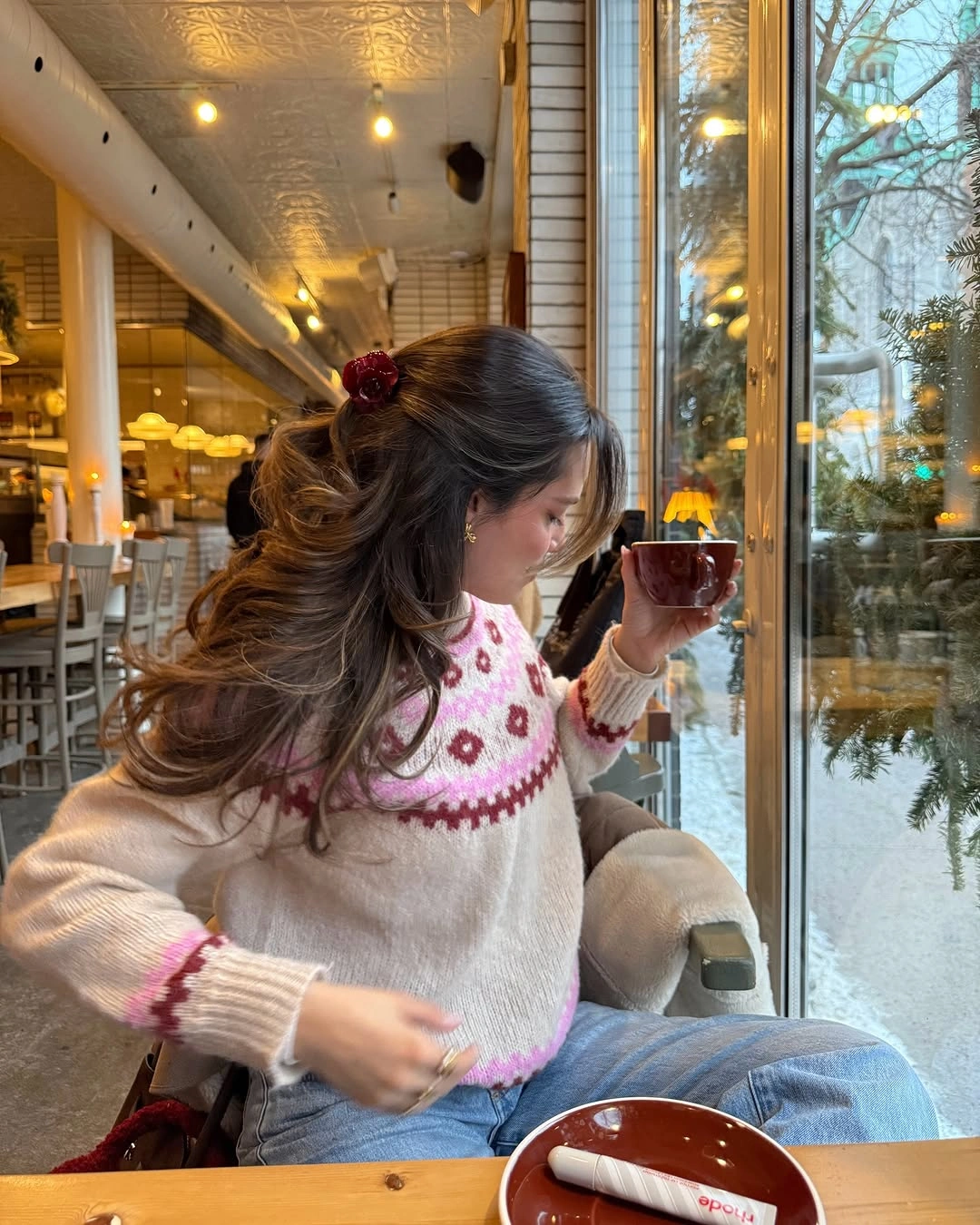
Patterned sweaters are easiest to wear when the rest of the outfit has one clear job, and the straight denim here provides that steady base. If the colors in your knit are brighter, choose a jean wash that is clean and relatively even rather than heavily distressed. That keeps the sweater as the visual subject and prevents the outfit from feeling crowded around the waist.
This kind of outfit is comfortable for an informal day, but the sleeves and yoke already supply enough decorative detail. A simple ankle boot, loafer, or low-profile sneaker would work better than heavily embellished footwear. If you add a jacket, let it be solid and roomy enough that the sweater pattern remains visible at the neck and cuffs.
Leopard Coat With a Pink Accent
The long leopard-print coat is the dominant element, while the bright pink leg layer appears mostly inside its open frame. That placement is what keeps the color from taking over the entire outfit. Tan platform boots settle the look with a neutral finish, and the small red hair accessory picks up the energetic note of the pink without introducing another large color block.
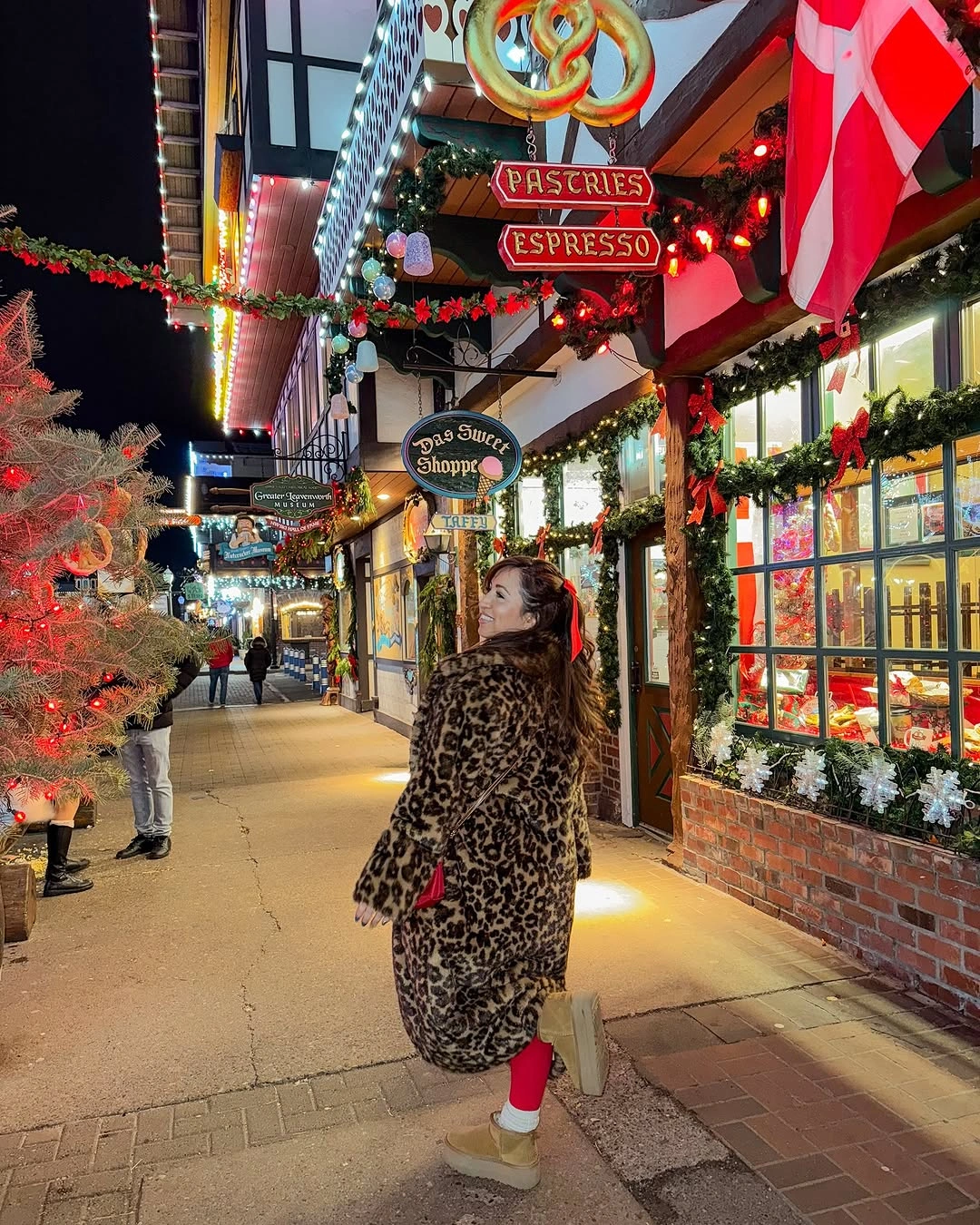
When an outer layer has an all-over print, it helps to limit the number of other visible focal points. The boots are quiet in color and broad in shape, which gives the print and pink their own space. If you prefer a less dramatic result, replace the bright lower layer with black or brown, but keep one small warm accent near the face for a similar sense of play.
The tradeoff with a statement coat is that every added detail is more noticeable, especially around the bag and shoes. A plain crossbody bag and uncluttered boot are safer choices than metallic hardware or extra print. Let the coat stay open only enough to reveal the color you want to emphasize; a wider opening would make the outfit feel less focused.
Camel Coat With Textured Tights
This camel coat frames a black top and short dark skirt, while patterned tights soften the shift from the hem to the chunky black boots. The coat provides a warm, long vertical line; the tights introduce detail only in the narrow area where the outfit needs a bridge. That layered transition is why the boot does not feel too heavy beside the shorter skirt length.
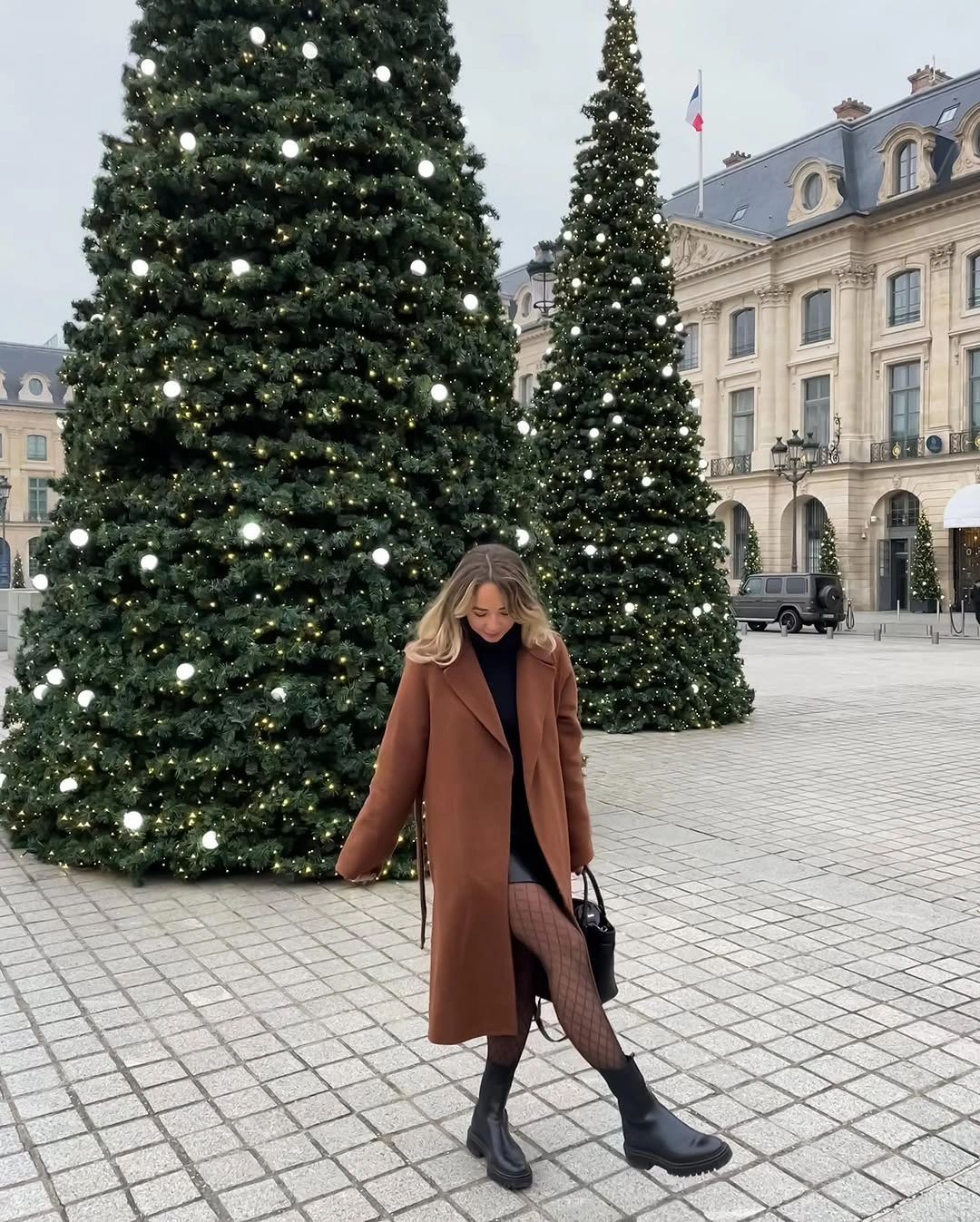
Textured tights can be useful when a short hem and substantial footwear need a little visual connection. Choose a fine pattern with a dark base so it reads as texture rather than a second outfit theme. The black bag and boots reinforce the center line, while the camel coat stays separate as the warm outer frame rather than competing with them.
For a lower-contrast version, use opaque tights and keep the coat’s warm brown as the main color difference. The patterned pair adds more visual interest, but it will require simpler jewelry and a quieter top. A boot with a lug sole suits the outfit’s weight, although a sleeker ankle boot would make the skirt proportion look sharper and more minimal.
Cropped Texture Above Tall Boots
A textured white cropped jacket ends high on the torso over a fitted white top, leaving the black leggings and knee-high boots to form a continuous dark lower line. The short layer is important because it creates shape without adding another long hem. A woven cream bag keeps the top half light while still giving the simple black-and-white palette a change in surface.
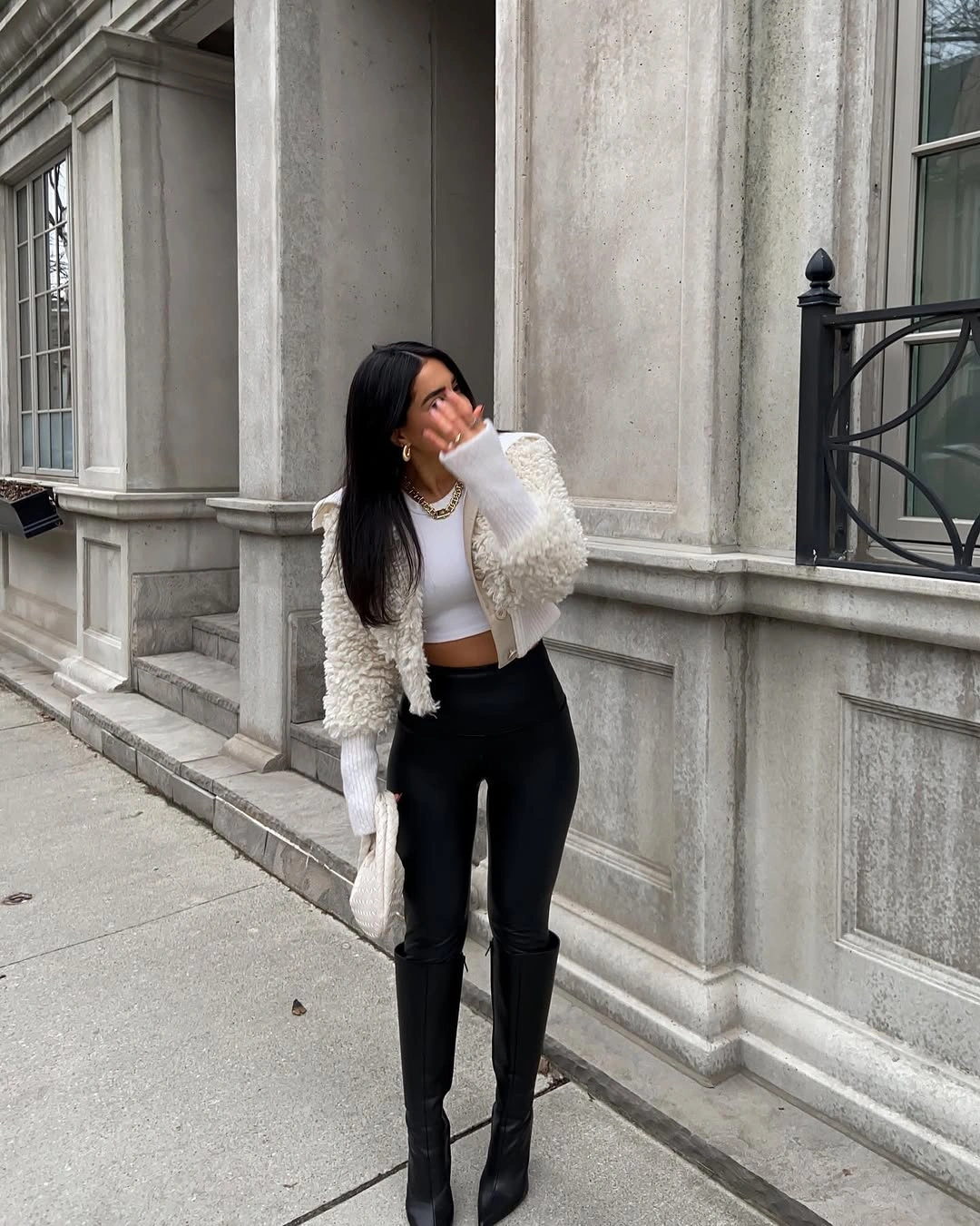
The contrast here is organized by proportion more than color: volume sits near the shoulders, while the legs remain narrow and uninterrupted. If leggings are part of your winter casual outfits for women rotation, a cropped layer can make them feel more intentional than a long hoodie would. Keep the boot shaft visible so the outfit retains its vertical finish instead of ending abruptly at the ankle.
A shorter outer layer can feel exposing in cold conditions, so the outfit benefits from a close-fitting base that does not bunch underneath. You could add a long scarf in a pale neutral, but avoid letting it cover the jacket texture completely. The best variation is usually a different boot toe or bag shape, not another oversized layer on top.
Ribbed Sweater Dress With Tall Boots
The ivory ribbed sweater dress has generous volume through the body, but its high neck and vertical ribs create a clear upward line. Tall black boots give the loose knit a solid finish and prevent the hem from looking unanchored. The simplicity is the point: a single textured garment carries most of the visual interest, so the footwear can remain clean and dark.
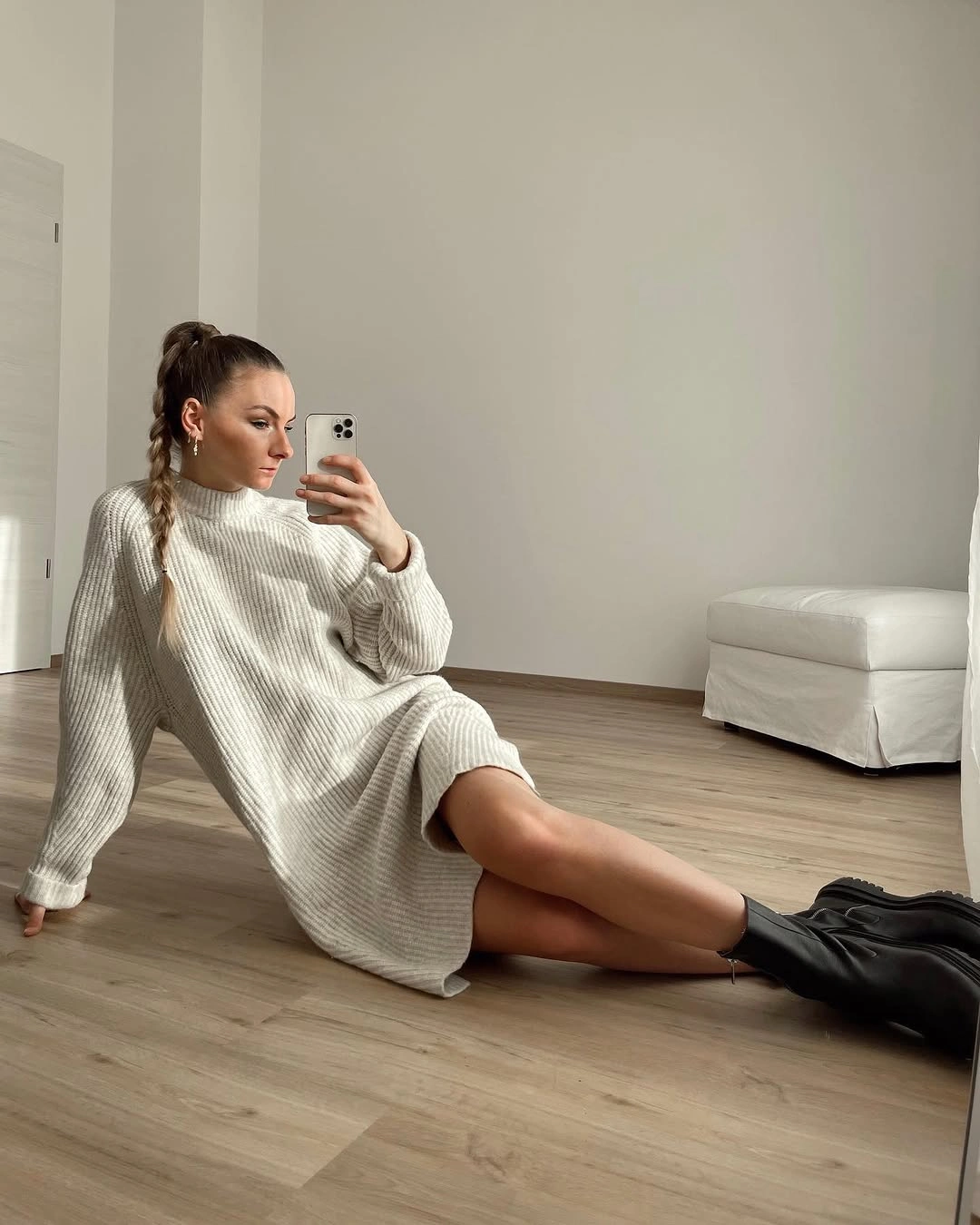
For this silhouette, the boot shaft matters more than a complicated accessory. A taller boot meets the knit with enough visual weight to balance the oversized sleeves and relaxed length, while a low shoe could make the look feel cut off. If you choose a similar dress, check that the hem and boot opening leave a small, intentional gap rather than competing for the same spot.
The soft knit shape is comfortable, yet it can become shapeless if every element is loose. A compact shoulder bag, slim belt worn over the dress, or structured coat can add definition when needed. Keep those additions selective, though, because the vertical rib texture already gives the outfit its own quiet direction and does not need a second large feature.
Shearling-Trim Jacket Over a Hoodie
A brown aviator-style jacket with light textured trim sits over a white hoodie and cream trousers, making the pale layers visible at the neck, cuffs, and center. That repeated light color keeps the shorter dark jacket from becoming a hard visual block. The knit beanie, gloves, and sunglasses are compact finishing pieces that support the outdoorsy, casual proportion without overwhelming it.
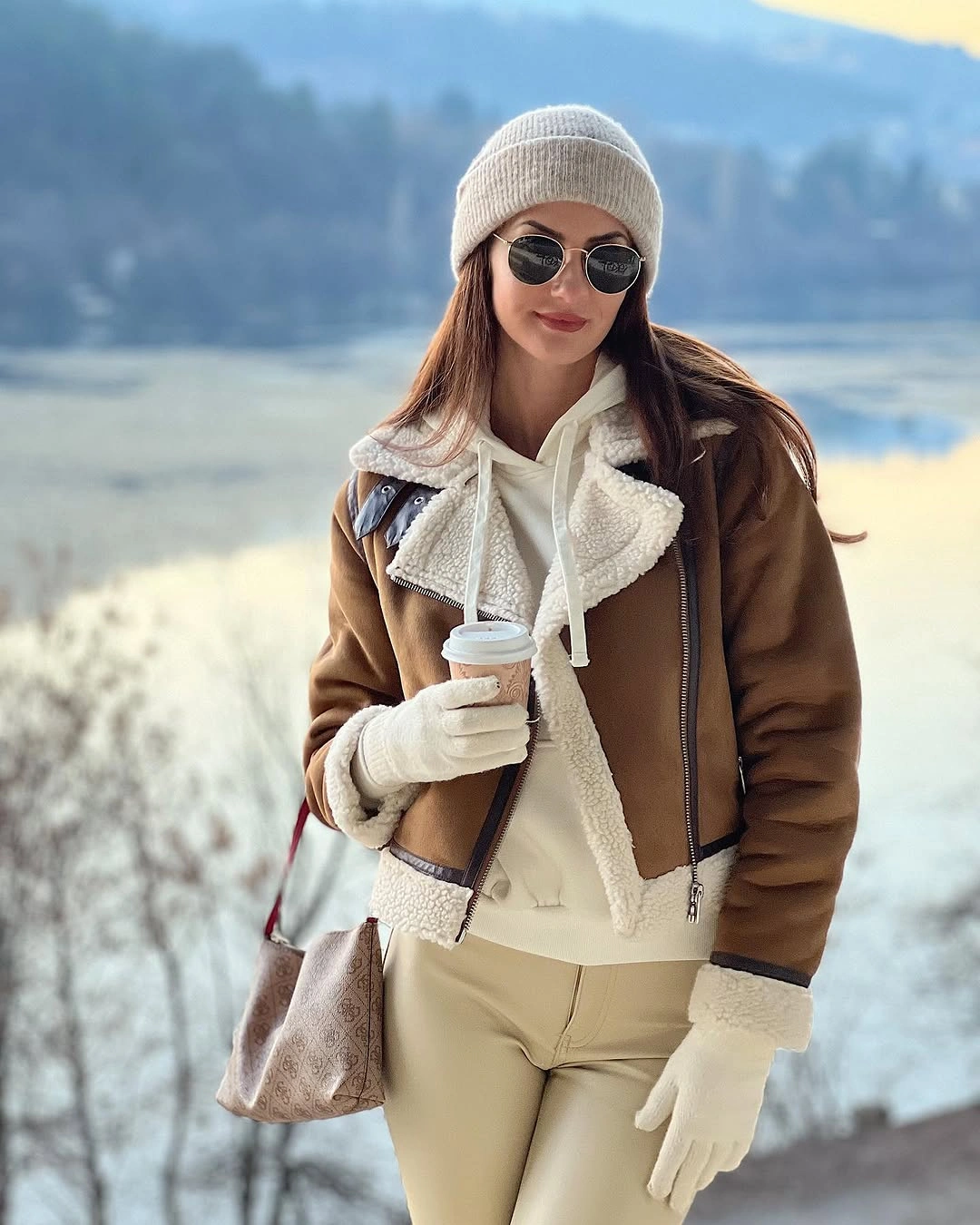
The hoodie works because its drawstrings and hood remain visible rather than getting buried under a closed jacket. To adapt the idea, choose a jacket that leaves enough room through the shoulders for the sweatshirt to sit smoothly. Matching the hoodie to the trousers is not required, but keeping both in a light family creates the same easy connection under a darker outer layer.
Short jackets can expose the waist in cold conditions, so a longer hoodie hem or a higher-rise trouser is a practical adjustment. Gloves are more than an afterthought here because their pale color continues the central layers into the hands. If you switch to dark trousers, repeat that dark shade in the boots or bag so the outfit does not split in half.
All Black With a Defined Waist
The long black coat, black top, dark jeans, gloves, and pointed boots create one uninterrupted palette, yet the look remains legible because the waistband and belt establish a middle point. The coat’s open edges reveal the separate trouser shape, while the pointed toe adds direction below. This is an effective answer for anyone who likes monochrome but does not want to disappear inside oversized layers.
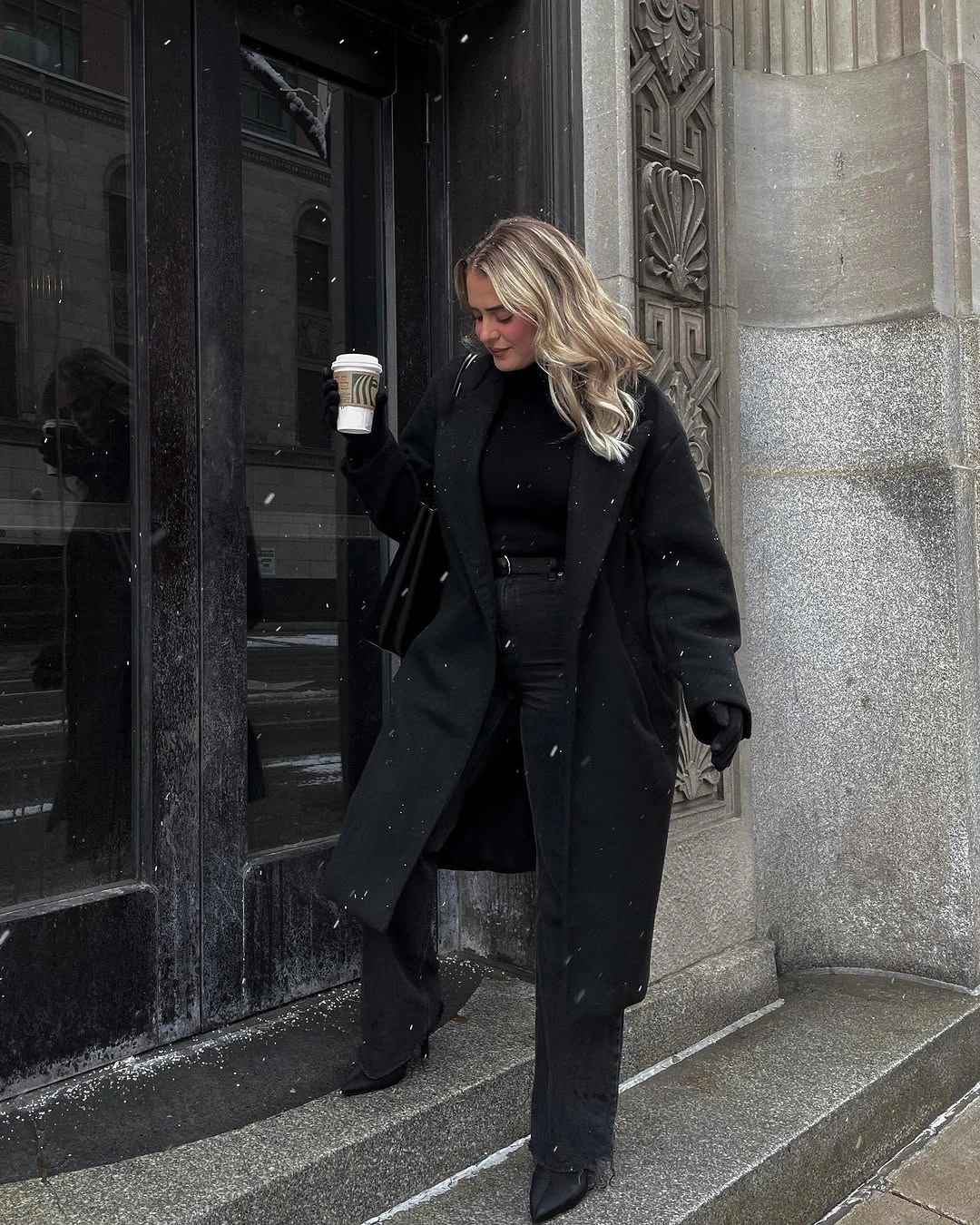
Monochrome dressing becomes more interesting when the pieces have different silhouettes rather than different colors. A loose coat, fitted waistband, straight jean, and pointed boot each make a distinct contribution here. If you recreate it, avoid adding several glossy accessories at once; one matte bag or a subtle metal detail is enough to keep the dark palette from looking flat.
The practical benefit of an all-black base is flexibility, since you can change only the coat or shoe and still retain the outfit’s structure. A scarf in charcoal or deep brown would preserve the restrained mood better than a bright color. If the coat is especially oversized, make sure the trousers remain visibly shaped at the waist to prevent the entire silhouette from becoming one large rectangle.
Soft Cream Coat With Everyday Denim
A cream coat and cream high-neck knit form a calm upper half, then blue jeans introduce an everyday contrast below. The matching cuff and turtleneck give the lapels a clean, contained frame, which makes the denim feel intentional rather than casual by accident. This is a useful formula when you want a polished outer layer without needing tailored trousers or high heels.
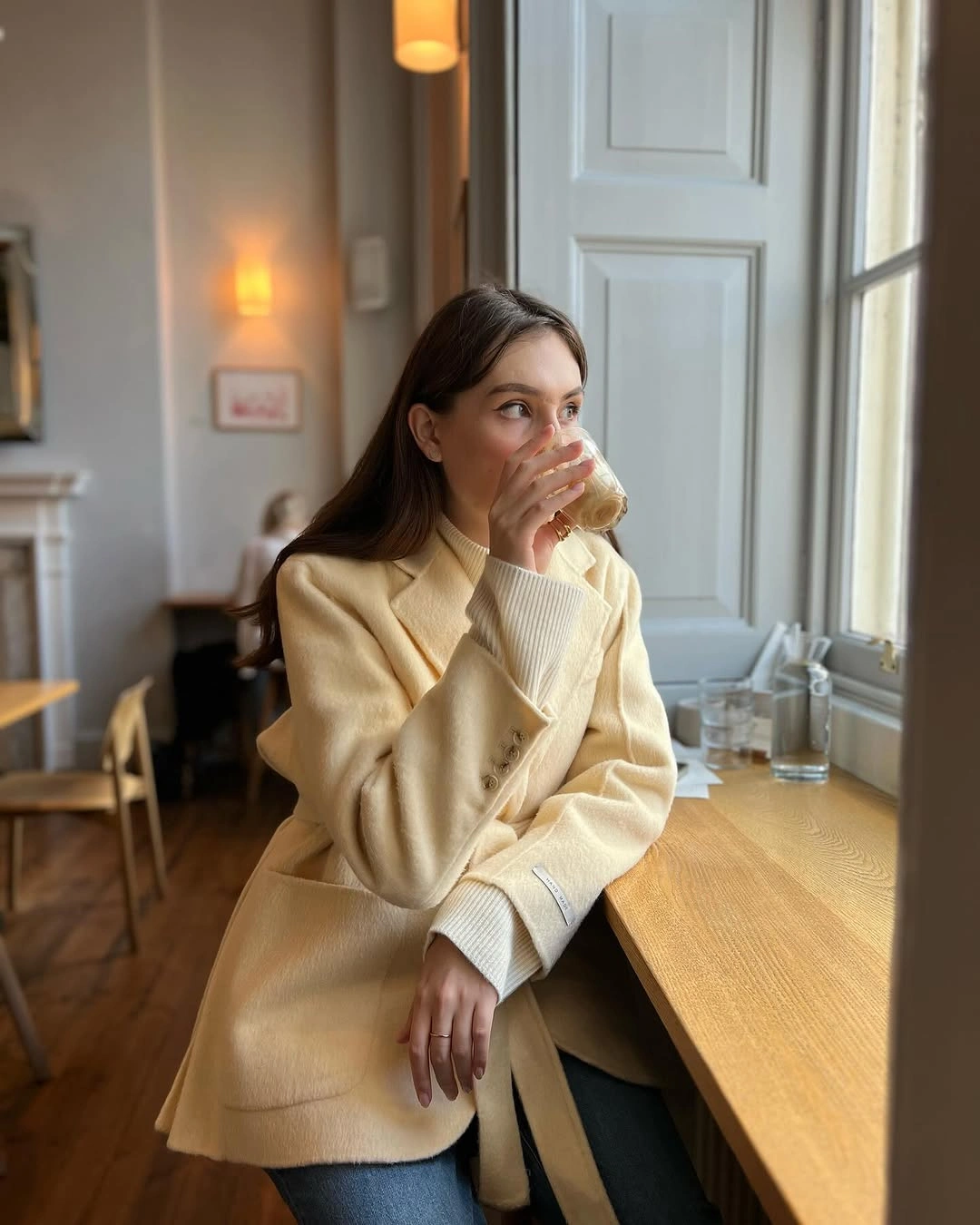
The close-tone layers work because the knit stays visible at the neck and sleeve, creating enough texture inside the smoother coat. For a similar outfit, choose jeans with a tidy straight or relaxed leg and keep the wash fairly simple. Heavy fading, large rips, or too many added colors would pull attention away from the quiet relationship between the coat and turtleneck.
Denim gives this combination a more relaxed purpose, while the coat maintains a clear shape around it. A dark loafer or ankle boot would make the contrast sharper, and a white sneaker would lean more casual without changing the basic idea. The main limitation is bulk at the collar, so select a knit that layers comfortably under the coat rather than forcing the neckline to bunch.
Fuchsia Texture With Black Trousers
The bright fuchsia textured top is the immediate focal point, especially because the high neck and horizontal chest opening change its silhouette. Black wide-leg trousers absorb that intensity and give the sweater enough visual space to stand on its own. Gold hoop earrings add a small warm detail, but the outfit stays focused because no other large color or print tries to compete with the top.
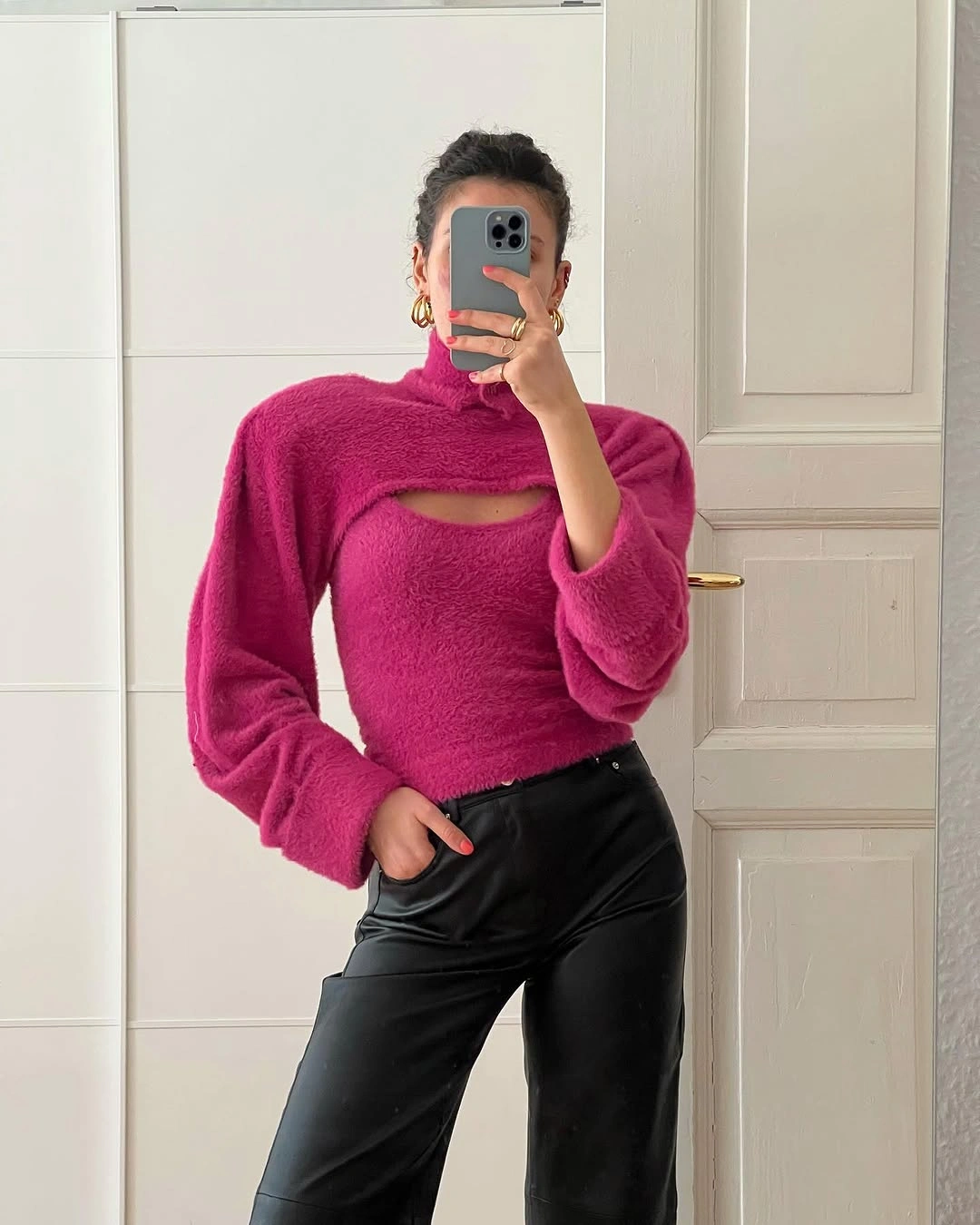
Statement knitwear benefits from a simple supporting shape, and wide black trousers are effective here because they create a stable dark field below the waist. If you prefer less contrast, charcoal trousers would soften the look while preserving the same balance. Resist the urge to add a colorful bag or a patterned shoe, since the unusual neckline already gives the outfit plenty to say.
The visible texture makes this top feel substantial, but the cutout detail may not be practical for every setting or temperature. A plain black camisole underneath could change the coverage while keeping the color relationship intact. The most useful lesson is not the specific shade; it is the choice to let one expressive garment lead while every other piece remains clean-lined and quiet.
Varsity Layers Around a Checkerboard Knit
The black-and-white varsity-style jacket repeats the checkerboard knit underneath, so the graphic pattern stays centered rather than spreading across the entire outfit. A short black skirt, sheer tights, tall boots, and bucket hat continue the dark outline around that central panel. The result has plenty of visual character, yet the repeated black-and-white blocks make it feel organized rather than random.
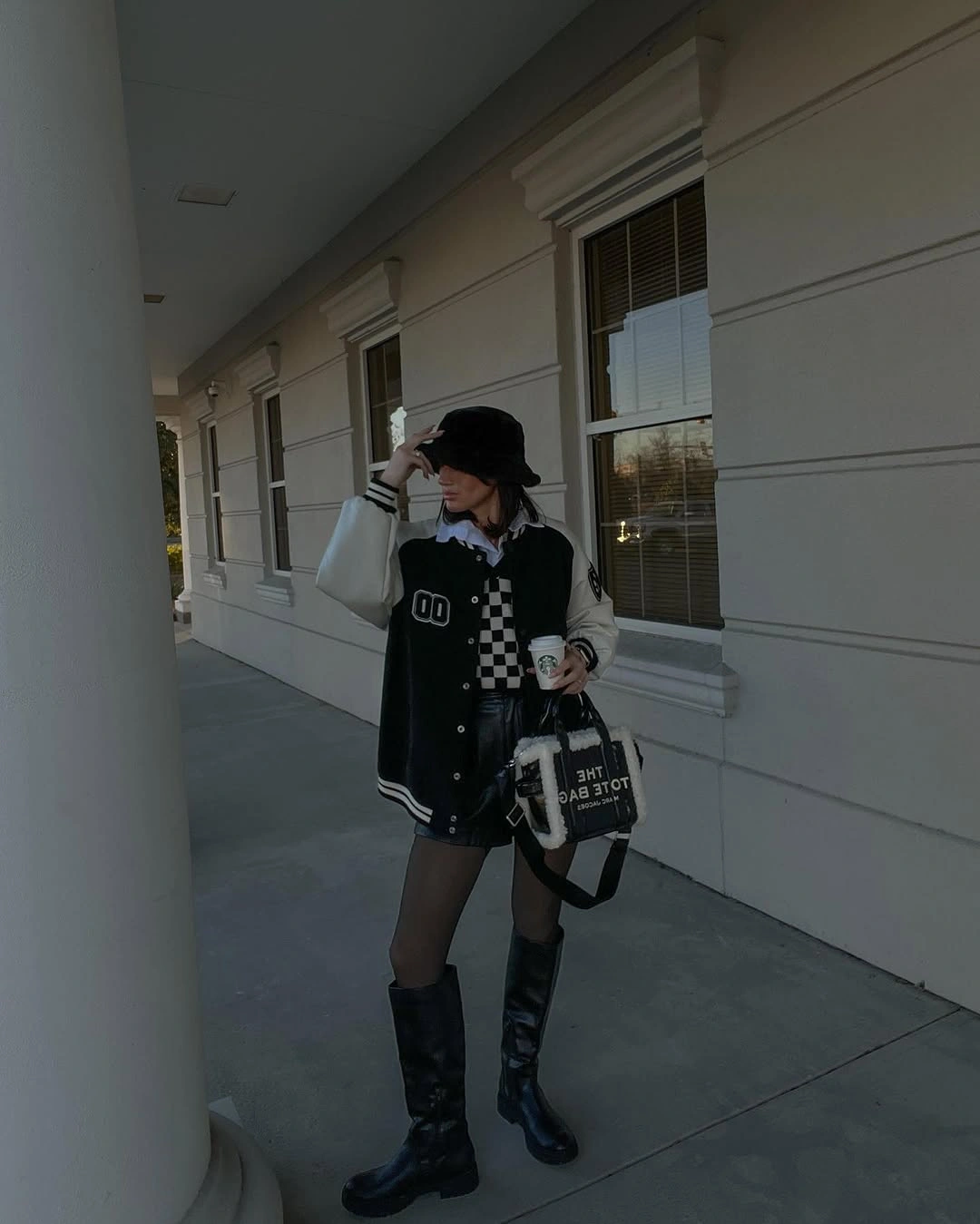
Graphic layers work better when the pattern has a boundary, and the jacket creates that boundary around the checkerboard detail. If you borrow the idea, choose one printed or logo-like piece and keep the skirt, tights, and boots mostly solid. A small bag with contrasting trim can echo the same palette, but a large colorful tote would weaken the look’s compact, graphic focus.
Tall boots add enough weight to support the short hem and heavier jacket, especially when tights keep the leg line continuous. For a more relaxed version, switch the mini skirt to straight dark jeans and let the checkerboard remain visible at the torso. The jacket should still be roomy enough for the knit underneath, otherwise the layered pattern will bunch and lose its clean effect.
Puffer Over Denim Layers
A cropped black puffer sits over a dark denim jacket and cuffed jeans, creating visible separation through seams, lengths, and surface changes. The brown rounded hat and tan ankle boots provide warmth in the palette without breaking the dark denim story. This outfit demonstrates why layering similar colors can still work when each piece has a different edge or texture to reveal.
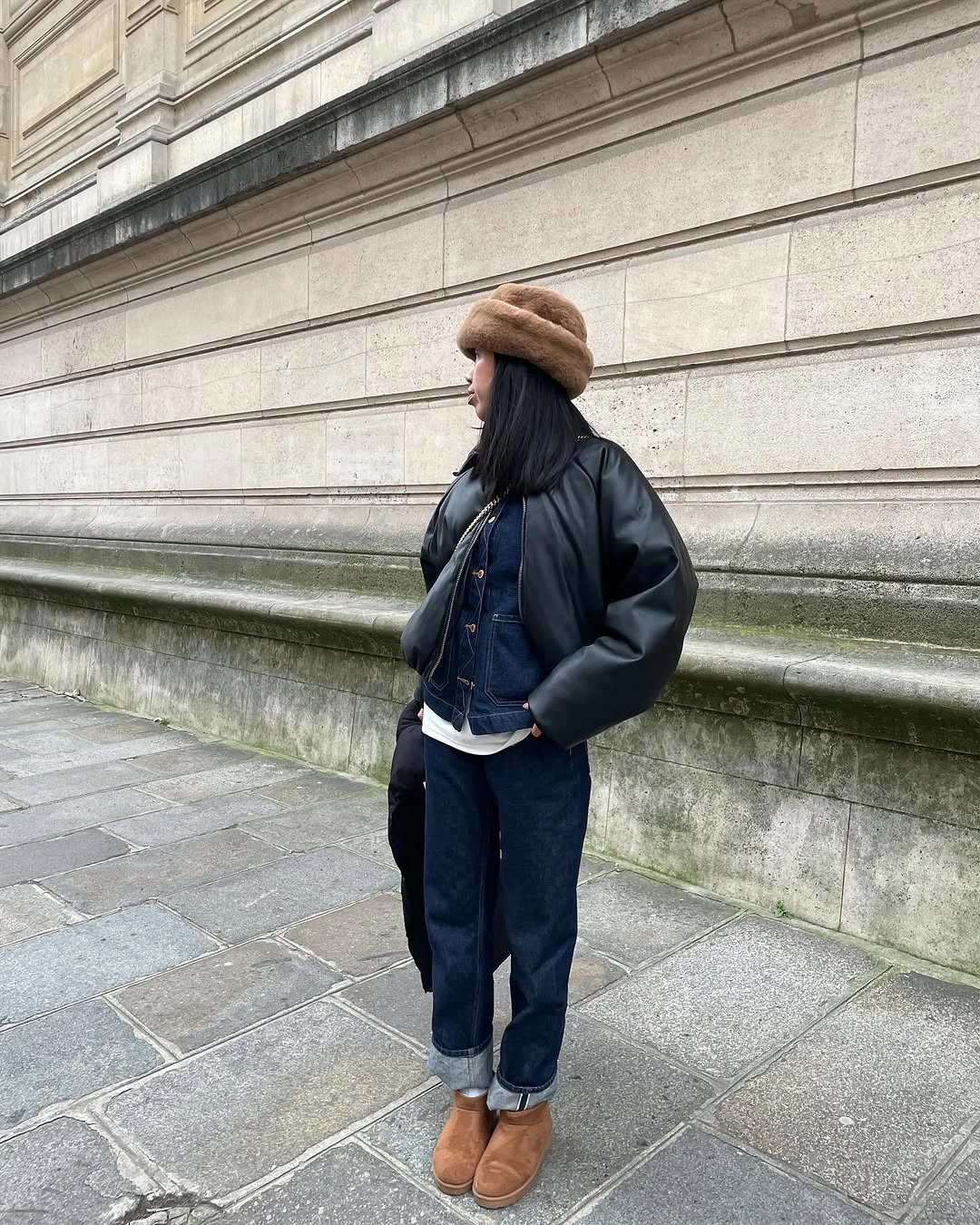
The denim jacket is important because its seams establish a middle layer between the smooth puffer and the jeans. To keep this stack comfortable, use a fitted base beneath the denim layer and make sure the puffer has enough room at the armhole. The small turned-up cuffs also help, showing a light break just above the boots so the lower half does not become one dark column.
Layering two jackets can feel bulky indoors, so this is best treated as an outdoor combination that can be simplified once you arrive. If you remove the puffer, the denim jacket and boots still make a complete casual outfit. A neutral beanie could replace the brown hat, but retaining one warm accessory helps the boots look chosen rather than merely practical.
Dark Textured Coat and Red Cap
The long dark brown textured coat has a strong surface and generous volume, but a small red baseball cap breaks up the deep brown and black palette at the face. The black handbag and dark base layers stay discreet, allowing the cap to function as one precise point of color. That limited accent keeps the outfit energetic without asking the outerwear to become a full print or color statement.
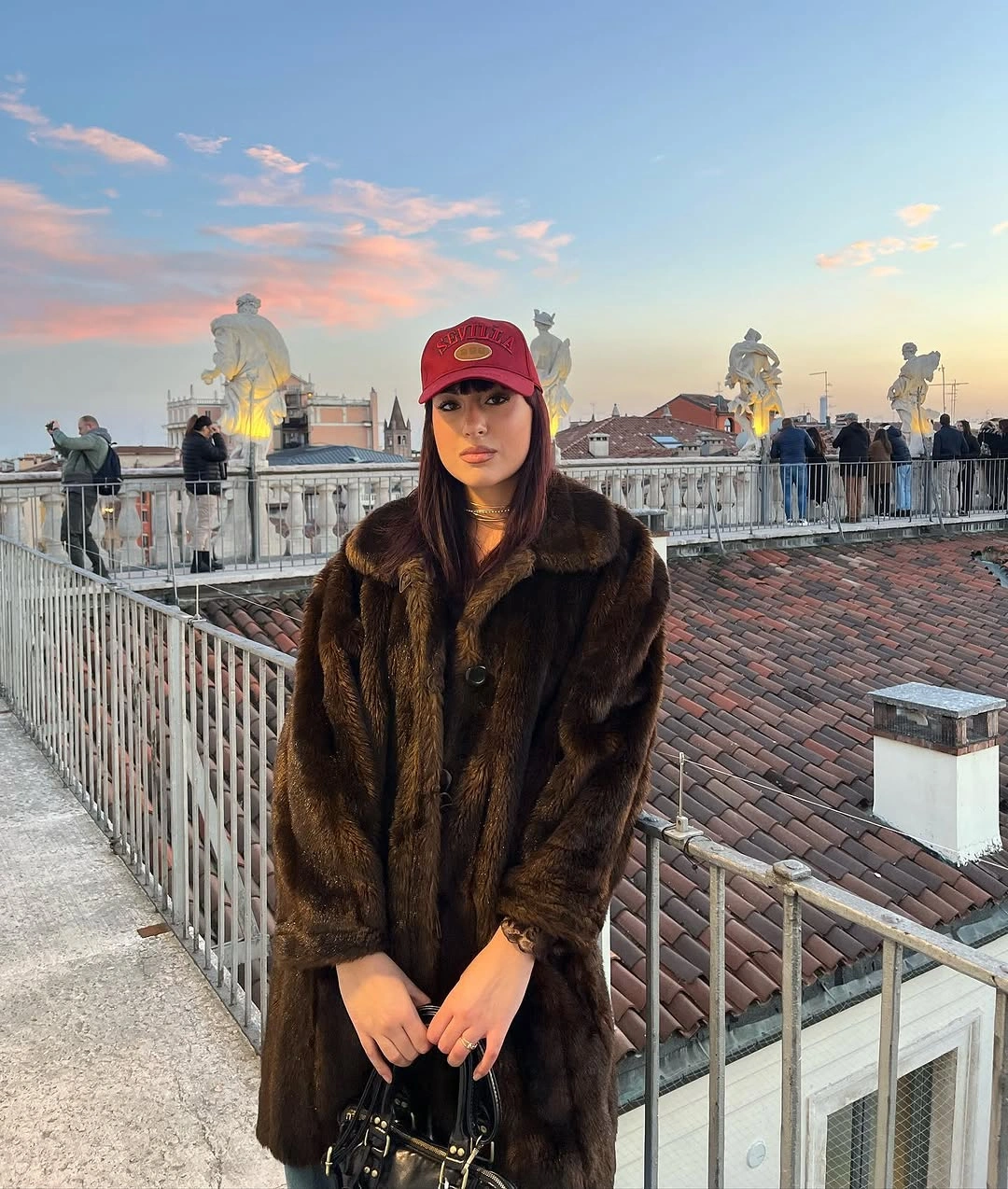
One bright accessory is often enough when outerwear already has a noticeable texture. A cap works especially well because it is small in area and placed high, where it can lift a dark outfit without changing the silhouette. If a cap is not your style, a red lip, small scarf edge, or compact bag could create a similar effect, provided the rest of the accessories remain restrained.
The long coat has visual weight, so the lower layers should stay streamlined rather than adding a wide, patterned trouser. A quiet boot and dark straight pant would support the same outerwear shape for everyday use. Be cautious with more brown accessories, because too many matching shades can blur the coat’s edges instead of letting its texture remain the main surface detail.
White Cropped Jacket, Black Straight Pants
The white textured cropped jacket adds volume near the shoulders and waist, while the black straight-leg trousers and pointed boots draw one clean line below it. A pale turtleneck continues the light section at the neck, and the black handbag repeats the lower half without adding a new color. The outfit succeeds through that deliberate division between soft light texture and a narrow dark base.
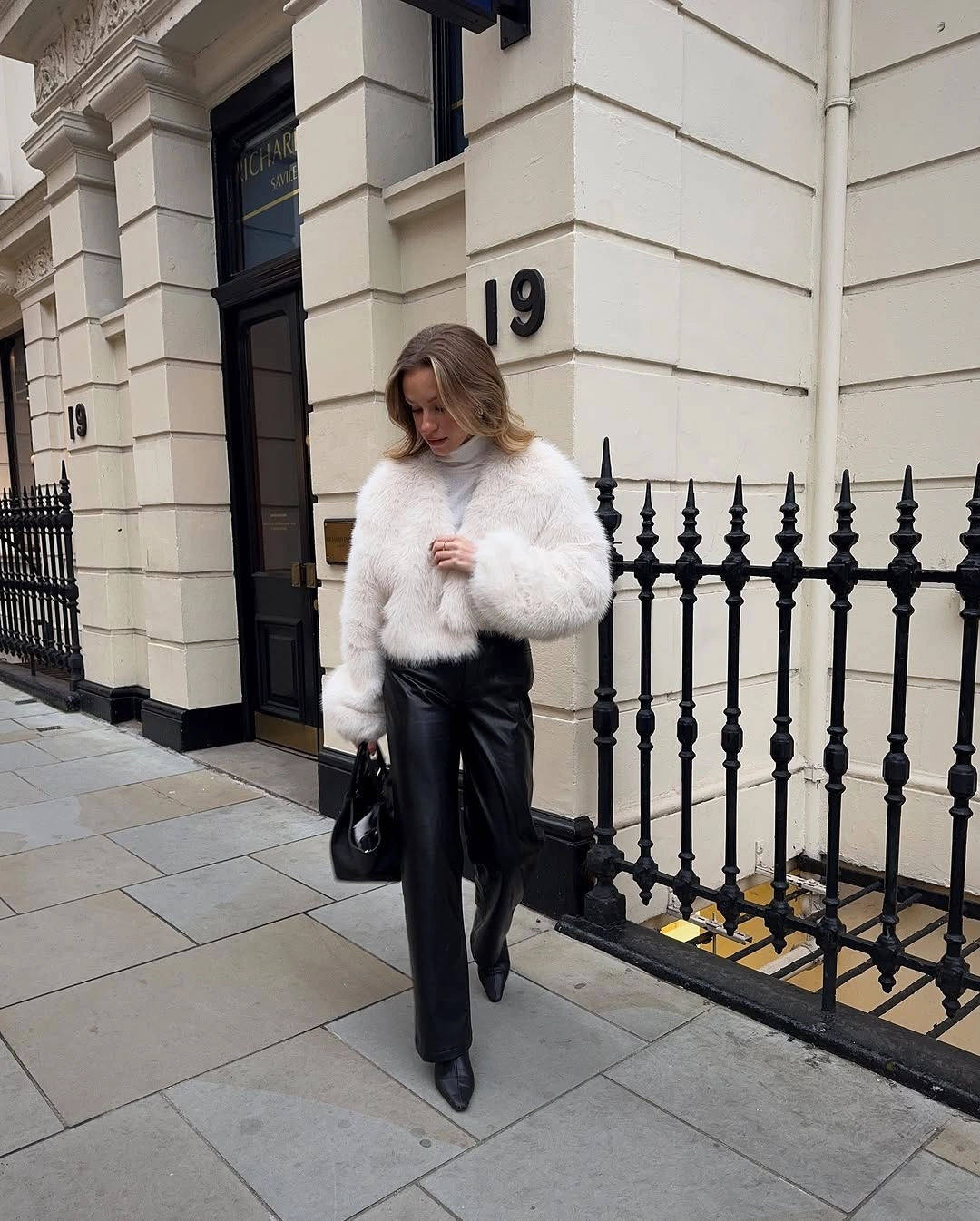
When a cropped layer is full or fluffy-looking, straighter pants keep the overall silhouette from becoming too round. The pointed boot helps lengthen the trousers visually, which is useful if the jacket ends near the waist. You can make the contrast gentler with deep brown pants, but a light skirt or wide pale trouser would remove the strong lower-half anchor that makes this combination work.
The short jacket is decorative enough to lead the look, so jewelry and bag hardware should remain small. For more coverage, add a longer black top beneath it and maintain the dark vertical line through the pants and boots. The practical tradeoff is warmth at the waist, which can be addressed with a high-rise trouser rather than a second bulky layer.
Black Moto Layer With Tall Boots
An oversized black moto-style outer layer sits over a short black hem, sheer tights, and tall boots, creating a compact all-black outfit with a strong top-to-bottom weight. The broad jacket shoulders are balanced by the boot shaft, while the tights form a narrow transition between the mini length and heavier footwear. Earmuffs and a structured bag reinforce the dark palette without making the silhouette busier.
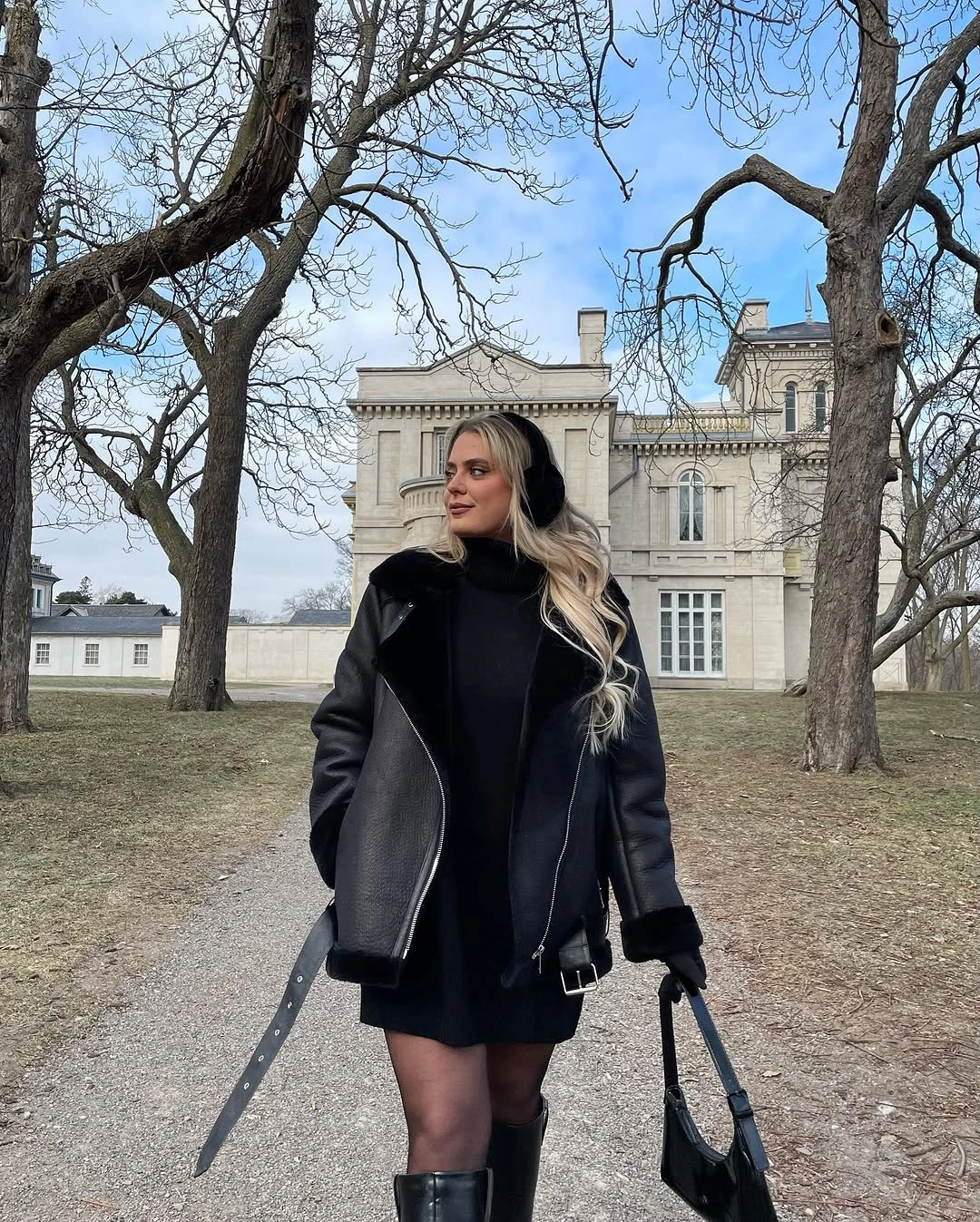
The balance depends on scale: a roomy jacket needs boots with enough height and substance to keep the lower half present. If you use a shorter boot, consider a longer skirt or sweater dress so the proportions do not feel top-heavy. Keeping the tights dark and sheer adds a little contrast, but opaque tights would create a more continuous line for colder or more covered-up styling.
Because every main item is black, different surfaces are doing the visual work rather than color changes. Let the bag have a distinct shape and allow the jacket hardware or trim to remain visible, but avoid layering multiple necklaces or printed scarves. The outfit becomes strongest when it stays about outline and scale, not when it tries to add extra decoration to monochrome pieces.
Pale Tailoring With Decorative Details
The long pale double-breasted coat creates a clean outer frame for the black knit, fitted trousers, knee-high boots, and compact clutch. Small decorative-looking details at the collar and cuffs give the dark base a refined point of interest without changing its minimal palette. That contrast between an uncluttered coat and a more detailed inner layer makes the outfit feel finished but not overly formal.
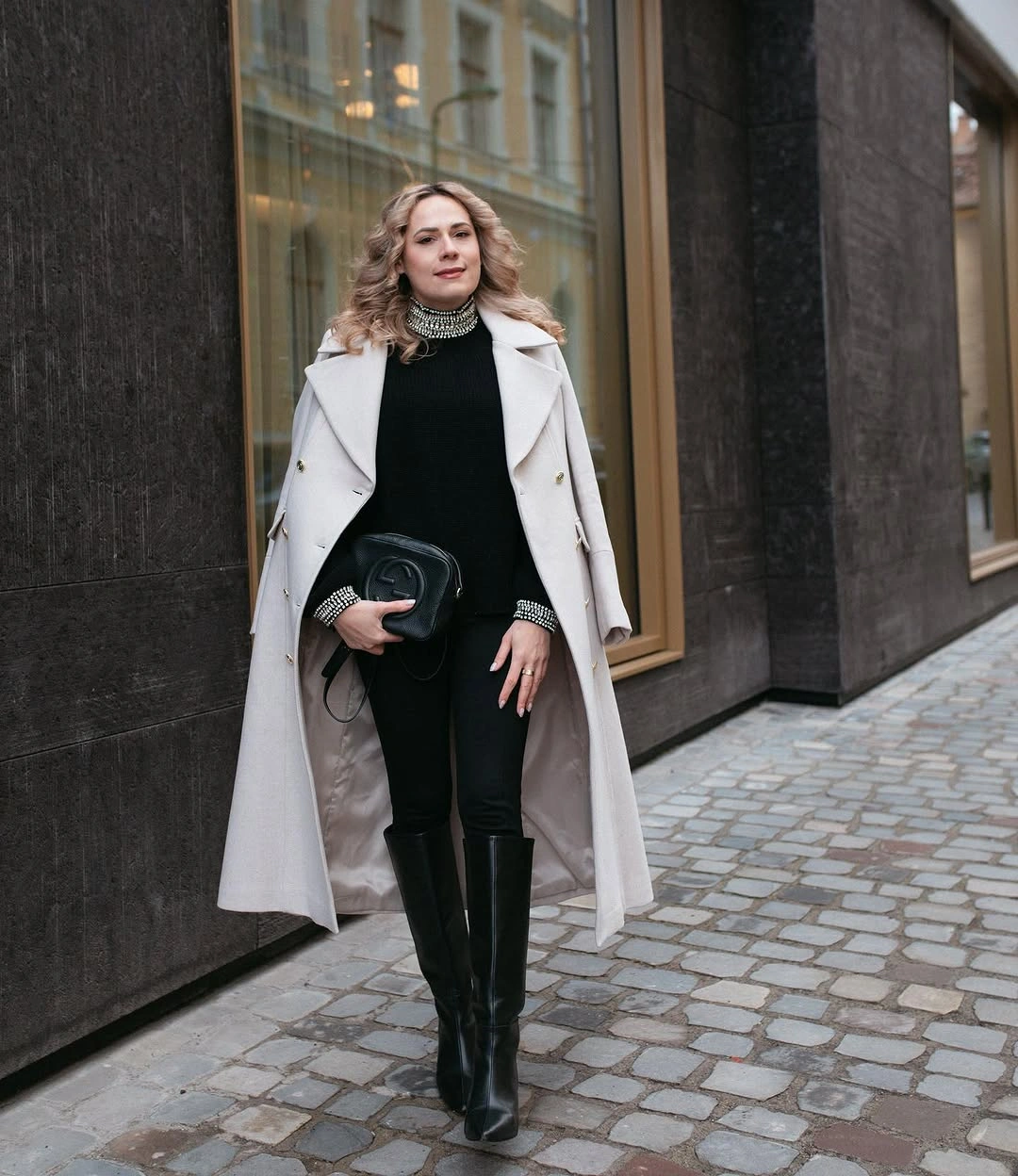
One quiet outer layer can be more useful than several competing accessories, especially when the inner top already has a distinctive neckline or cuff. The coat’s pale color reflects light around the face, while the black trousers and boots establish a clear, stable foundation. If you recreate the idea, keep the bag compact and dark so it supports the lower half instead of cutting across the coat visually.
This kind of tailoring can adapt to many smart-casual plans, but fit matters more than adding extra embellishment. A coat that is too narrow will compress the knit layers, while one that is too wide can obscure the intentional black column underneath. Choose simple jewelry and let the cuff or collar detail remain the small surprise that keeps the palette from feeling unfinished.
Tan Hooded Coat With White Boots
The long tan textured hooded coat carries most of the outfit’s volume, while slim white pants and white-and-black ankle boots brighten the lower half. A dark inner collar detail and black bag repeat one another near the torso, giving the lighter pants a visual connection to the coat. The contrast is effective because the white appears in a focused strip rather than throughout every layer.
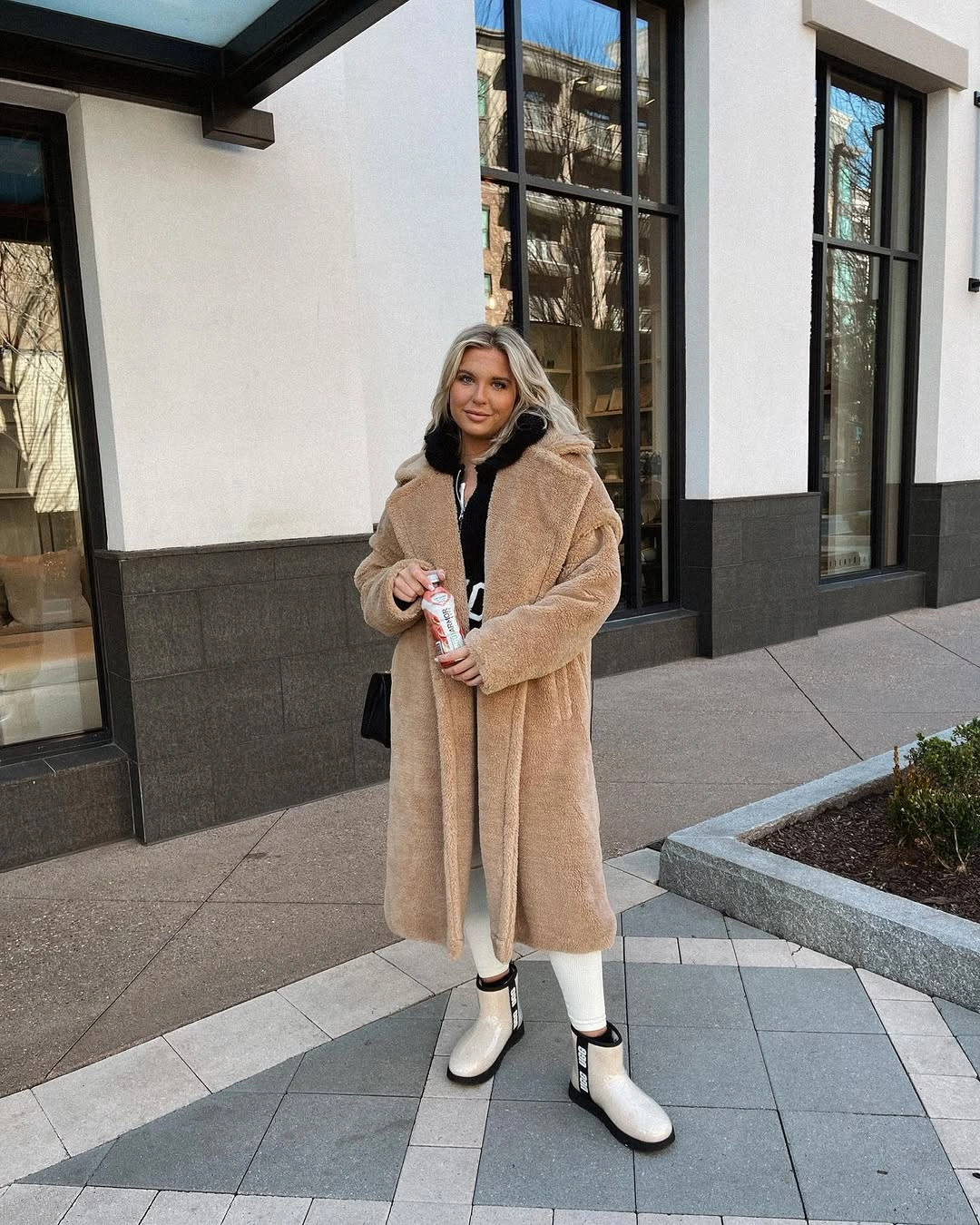
Light pants can make a substantial coat feel less heavy, especially when the boots repeat the same pale note. To keep the outfit grounded, use a darker bag, collar, or sweater near the top instead of adding another light accessory. That small dark element creates a link between the rich tan outer layer and the black boot trim without introducing a separate color story.
A full-length textured coat is already a practical outer layer, so the rest of the outfit should allow movement and avoid excess bulk. Slim or straight pants work well because they create space beneath the coat hem, while wide pale trousers could compete with the coat’s volume. If you change the boots, choose a pair with a visible dark sole or trim to preserve the same balanced finish.
Brown Coat and Ivory Turtleneck
A dark brown double-breasted coat frames an oversized ivory turtleneck, black wide-leg trousers, and a small black crossbody bag. The large folded collar is the crucial feature because it introduces a soft light area exactly where the brown and black layers would otherwise meet. That single generous knit element makes the outfit feel open around the face while leaving the lower half crisp and simple.
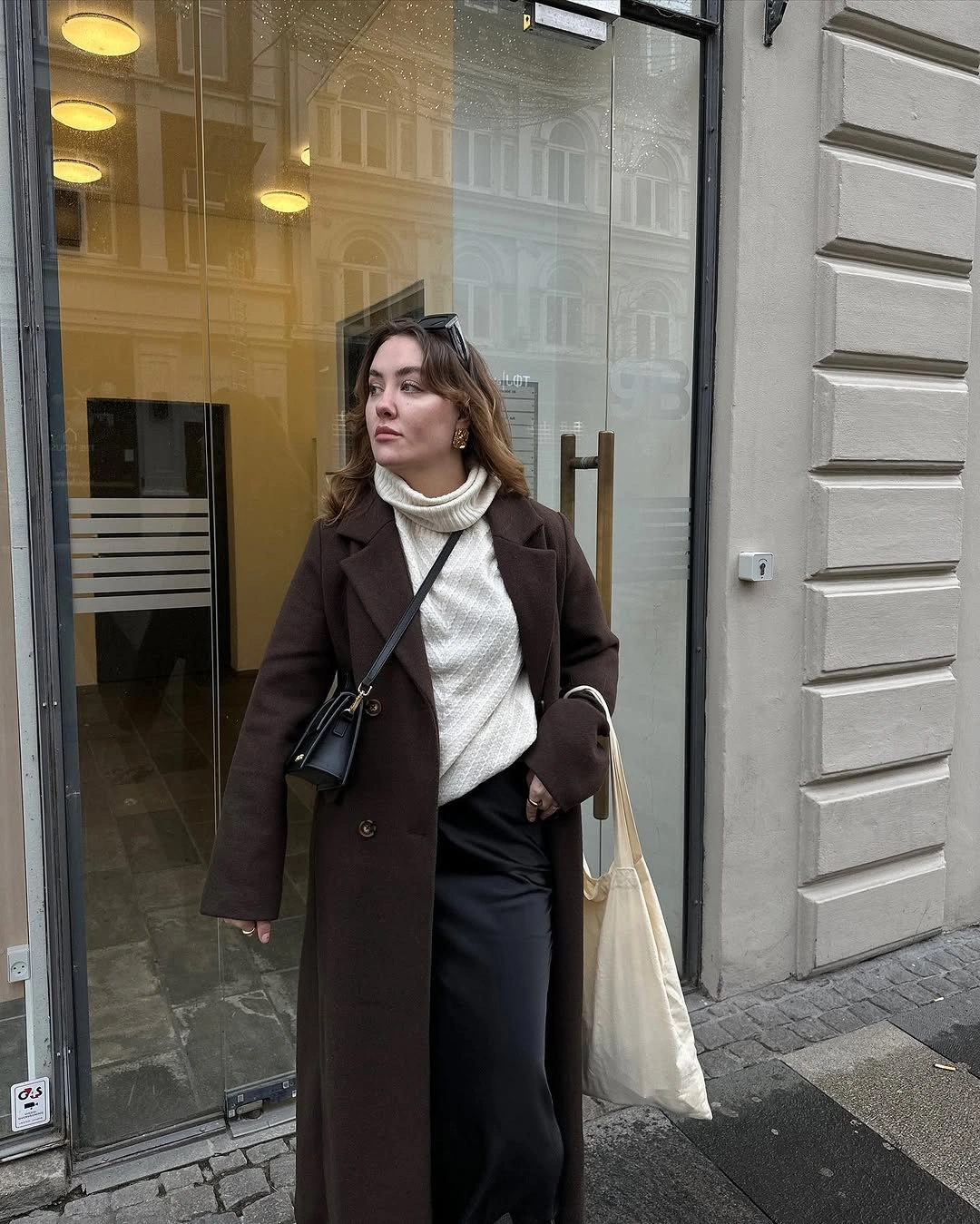
The ivory knit works as a deliberate break, not as another neutral competing with the coat. Let it stay substantial at the neck and keep the trousers dark and uncomplicated so the contrast remains clear. A canvas tote adds a relaxed note, but the black crossbody strap is what maintains continuity through the center of the outfit and keeps the light turtleneck from floating separately.
For winter casual outfits for women, this is a flexible formula because the brown, ivory, and black palette can accept many boot choices without losing its balance. A black ankle boot would keep the trouser line sharp, while a dark brown boot could make the coat feel more continuous. Just avoid adding another oversized scarf, since the folded turtleneck already supplies the soft volume and visual finish at the neckline.