

Soft face-framing layers and curtain bangs have shifted polished hair from stiff and structured to something that moves with you. The glossy natural texture that Asian hair often carries makes it a natural fit for these lived-in shapes, no flat iron required.
This collection of 32 Classy Asian Hairstyles covers the range from long, simple blowouts to short, layered bobs, so there is something for fine strands that lose volume by lunch and thick hair that needs controlled movement. Round faces get lengths below the chin; square faces get soft edges. No grow-out line panic, no fringe that refuses to cooperate.
Long Layered Dark Brown Hair With Middle Part

The deep middle part and prominent layers give thick, straight hair a sense of motion without losing its polished edge. This is a cut that works with the hair’s natural weight, letting each layer fall in a clean line. It suits anyone with thick, straight hair at mid-back length or longer, and the center part helps elongate a round face. Ask your stylist for: mid-back length with prominent long layers, smooth blowout. To recreate the finish, use a large round brush while blow-drying to smooth the shaft and add volume at the roots. The layers will need a trim every eight to ten weeks to keep their shape from turning into a shapeless curtain.
The style holds its sleekness best in moderate humidity; in damp air, the straight texture can soften into a gentle wave, which is not the worst outcome. The lack of bangs keeps the face open and the part sharp, so there is no fringe to fuss with on busy mornings. A shine serum on the mid-lengths and ends helps the dark brown color reflect light evenly, which is the whole point of a smooth blowout.
Mid-Back Wavy Layers With Curtain Bangs
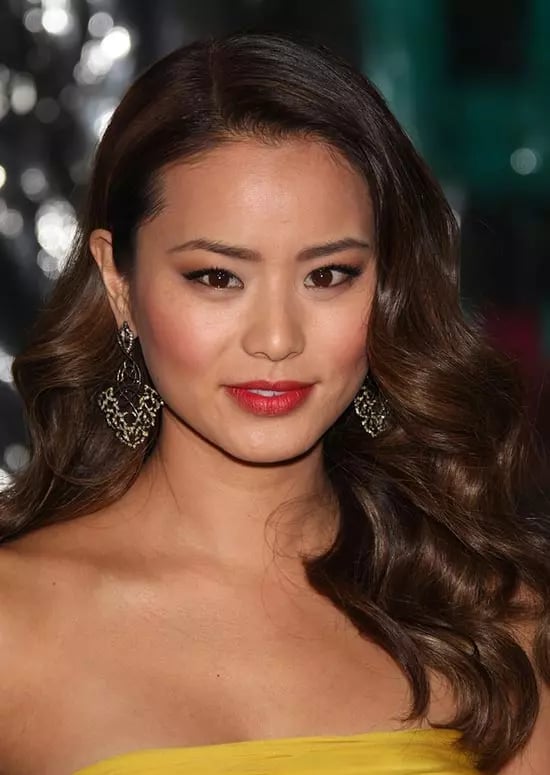
What do you ask for when you want soft, face-framing movement without committing to a full fringe? Curtain bangs that blend into long layers, exactly as seen here. The wavy texture and subtle highlights add dimension, while the middle part lets the bangs fall naturally to the sides. This style suits thick, wavy hair at mid-back length; the curtain bangs soften the angles of a square or oval face. Ask your stylist for: mid-back length, long layers, wavy texture, curtain bangs. To get the waves to cooperate, apply a texturizing spray to damp hair, then either diffuse or let it air dry. The bangs will need a trim every few weeks to keep them from growing into your eyes, and the layers benefit from a cut every eight to ten weeks to maintain the shape.
Mid-Back Wavy Layers With Wispy Bangs and Dark Brown With Highlights

The lived-in color here comes from subtle highlights that catch the light through loose waves, avoiding the stripe effect of chunkier foils. Wispy bangs blend into the layers, softening the transition from fringe to length. Ask your stylist for: mid-back length with soft layers, wispy bangs, loose waves. To keep the waves from falling flat, spritz a sea salt spray on damp hair, then scrunch and either air dry or diffuse. The highlights will need a toner refresh every six to eight weeks to stay warm rather than brassy, and a trim of the ends every ten to twelve weeks keeps the style from looking ragged.
Mid-Back Wavy Hair With Subtle Highlights
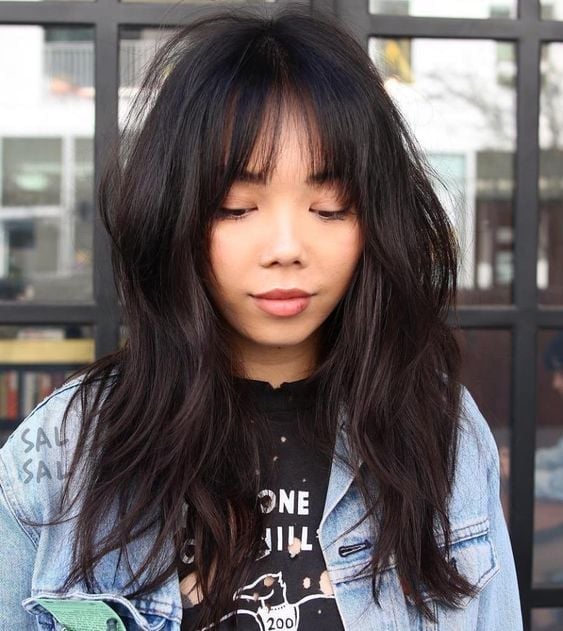
Loose waves on thick, dark hair read as effortless only when they have a bit of gloss to them. The subtle lighter highlights here create dimension without shouting, so the movement shows even from across the room. This is a style for thick, wavy hair at mid-back length or longer; the highlights add depth to dark bases that might otherwise look flat. Ask your colorist for: mid-back length, loose glossy waves, subtle highlights. To keep the shine, apply a glossing serum to damp hair before air drying or diffusing, and let the waves set naturally. The layers need a trim every eight to ten weeks to hold their shape, and the highlights can stretch to a touch-up every three months if you use a color-depositing shampoo in between.
Mid-Back Wavy Hair With Glossy Waves

Set this against a loose air-dried wave and the difference is in the polish: glossy waves from a blowout hold their shape longer and catch the light with a mirror finish. The subtle layers give the thick texture room to move without losing weight. It suits thick, wavy hair at mid-back length or longer, and the middle part balances most face shapes. Ask your stylist for: mid-back length, loose glossy waves, subtle layers. The honest drawback is the effort: a consistent glossy blowout on naturally wavy hair takes a round brush, a heat protectant, and about twenty minutes you cannot skip. Finish with a glossing spray for maximum shine, and trim the layers every eight to ten weeks to keep the ends from splitting.
Mid-Back Straight Hair With Wispy Bangs

Fine, straight black hair that reaches mid-back and appears air-dried saves you a lot of morning effort. The wispy bangs and middle part add softness without requiring heat. This look suits fine, straight hair of mid-back length or longer. Ask your stylist for: mid-back length, wispy bangs. Apply a smoothing serum to towel-dried hair and let it air dry for a natural finish. Trim those wispy bangs about once a month to keep them from drifting into your eyes.
Mid-Back Black Wolf Cut With Blunt Bangs

Is a wolf cut just a shag with a better name? In practice, the difference is in the weight. A wolf cut keeps more density through the midsection, while traditional shag layers can get wispy fast. This version features shaggy, textured layers through mid-back length black hair, finished with blunt bangs and a middle parting. It suits thick, straight hair that needs shape and movement. Ask your stylist for: mid-back wolf cut, blunt bangs. Use a texturizing spray and finger style for a lived-in finish. The blunt bangs keep the look sharp rather than messy.
For hair that tends to lie flat, the layered crown of a wolf cut creates volume that a standard layered cut often cannot. It is a salon cut, not a DIY trim, and requires a stylist who understands how to carve out face-framing pieces without losing length. The trade-off is that the blunt bangs need a trim every six to eight weeks to stay precise.
Mid-Back Dark Brown With Curtain Bangs
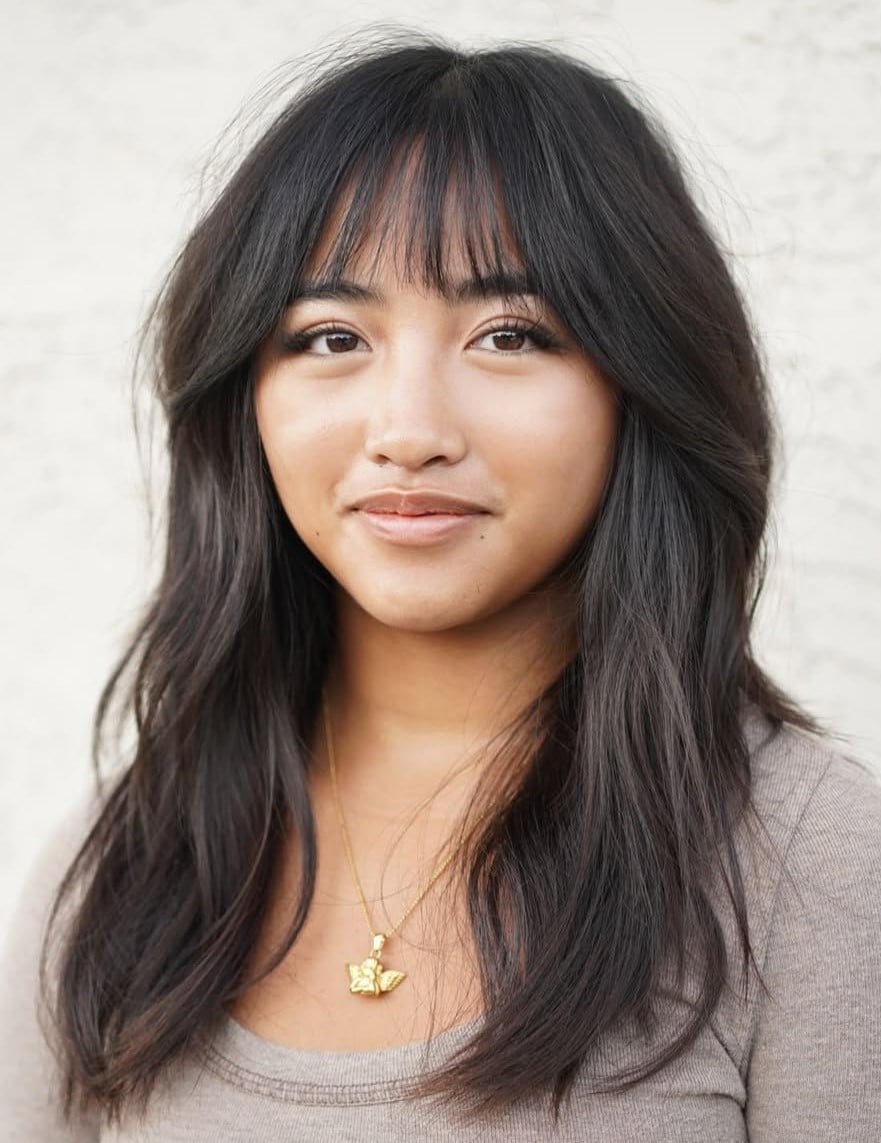
A curtain bang is not a single snip. It is two panels that start shorter at the center and blend into longer face-framing layers. On mid-back dark brown hair with subtle layers and a middle part, the technique creates a soft frame that moves with the hair rather than sitting as a separate piece. This works well on thick, wavy hair; the weight helps the bangs fall open without constant re-styling. Ask your stylist for: mid-back length, curtain bangs, soft layers. Blow-dry the bangs with a round brush, directing them away from the face on each side. The layers throughout the length need a trim every eight to ten weeks to keep the shape from going limp.
The smooth blowout finish relies on a round brush and a nozzle concentrator. A flat brush will pull the curtain bangs too flat against the forehead, which defeats the purpose of the split.
Long Layered Dark Brown Hair With Smooth Blowout

A collarbone-length blowout with prominent long layers and a deep middle part is a test of hair density. It genuinely flatters thick, straight hair of mid-back length or longer because the layers stop the weight from pulling everything flat. The deep middle part elongates a round face without needing any additional volume at the crown. Ask your stylist for: mid-back length, prominent long layers, smooth blowout. Use a boar bristle brush during blow-drying for a sleek finish. If your hair is fine or thin, this cut will expose too much scalp at the part and make the ends look sparse. Trim the layers every eight to ten weeks to maintain the clean line.
Collarbone Wavy Hair With Curtain Bangs

How often does a collarbone length wavy style actually hold its shape past lunch? The answer depends on the bang situation. This cut uses curtain bangs and long layers on thick, wavy dark brown hair with a middle part, and the waves are set with a round brush blowout. The result holds for a full day because the wave pattern is built into the cut, not just the styling. Ask your stylist for: collarbone length, long layers, curtain bangs. Blow dry the bangs to frame the face and let the hair follow the natural wave. A trim every six to eight weeks keeps the curtain bangs from turning into an accidental fringe.
Collarbone Layered Hair With Face-Framing Layers

This cut is a masterclass in weight distribution, a collarbone-length cut with long layers that start around the jaw and soften toward the ends. The dark brown base keeps the look grounded, while the middle-parted curtain bangs open up the face without sacrificing length. Thick, wavy hair is the ideal candidate here, since the layers prevent the shape from feeling bottom-heavy.
Ask your stylist for: collarbone length, long layers, face-framing layers, curtain bangs. The soft layers around the jaw do the work of smoothing angular lines without a heavy blunt line. A trim every six to eight weeks keeps the curtain bangs from turning into a solid fringe.
Collarbone Layered Blowout With Curtain Bangs

A collarbone-length layered blowout with curtain bangs reads as polished because of the volume at the crown and the soft face-framing pieces. The common mistake is asking for curtain bangs that are too short and too heavy. They end up looking like a blunt fringe that overpowers fine hair. The fix is keeping the bangs long enough to blend into the layers, with the shortest point grazing the cheekbone. A mousse applied to damp roots before blow-drying gives the lift this shape needs without extra heat passes.
Collarbone Layers With Face-Framing Curtain Bangs

A deep brown collarbone-length cut with soft face-framing layers and curtain bangs is the kind of shape that lands best in spring and early fall. The middle part and the curtain bangs keep the face open, and the subtle blowout adds movement without looking overwrought. Thick, wavy hair holds the bend in the layers for a full day, so restyling is minimal. Ask your stylist for: collarbone length, soft face-framing layers, curtain bangs. The season matters here because high humidity can collapse the curtain bangs; a texture spray on the bangs only handles that.
Collarbone Layers With Smooth Blowout

A smooth blowout on fine, straight hair requires a specific order of operations. The collarbone-length layers and curtain bangs are set with a round brush that pulls the hair forward and down, creating the face-framing shape. The dark brown base has subtle lighter tones woven through the ends, adding dimension without obvious highlights. This is what keeps the blowout looking intentional rather than flat.
Ask your stylist for: collarbone length, soft layers, curtain bangs, smooth blowout. A smoothing cream applied to damp mid-lengths and ends controls flyaways during drying. The curtain bangs need a trim every four to six weeks to keep them from falling into the eyes.
Collarbone Air-Dried Waves With Curtain Bangs

Is it possible to get soft waves and curtain bangs without touching a blow-dryer? Yes, if the cut is built for it. This collarbone-length cut uses light layers and a middle part so the fine, wavy texture does the bending on its own. The curtain bangs are cut long enough to air-dry into a gentle curve. Ask your stylist for: collarbone length, air-dried soft waves, curtain bangs. The salon does the shaping, then you apply a wave-enhancing spray to damp hair and walk away. Air-dried waves on fine hair can lose their hold by the end of the day, so a dry texture spray at the roots helps extend the shape.
Collarbone Layered Cut With Face-Framing Bangs

A collarbone-length layered cut with a side part and soft face-framing pieces is designed to look air-dried, not fussed over. The side part shifts the weight of the layers, so they sweep across rather than sit flat, which suits round and square face shapes by breaking up the outline. Ask your stylist for: collarbone length layered cut, soft face-framing layers. Medium-density wavy hair holds this shape best; very fine hair may need a texture spray to keep the layers from collapsing into one solid line. A trim every six to eight weeks keeps the ends from feeling heavy.
Collarbone Layers With Blonde Highlights
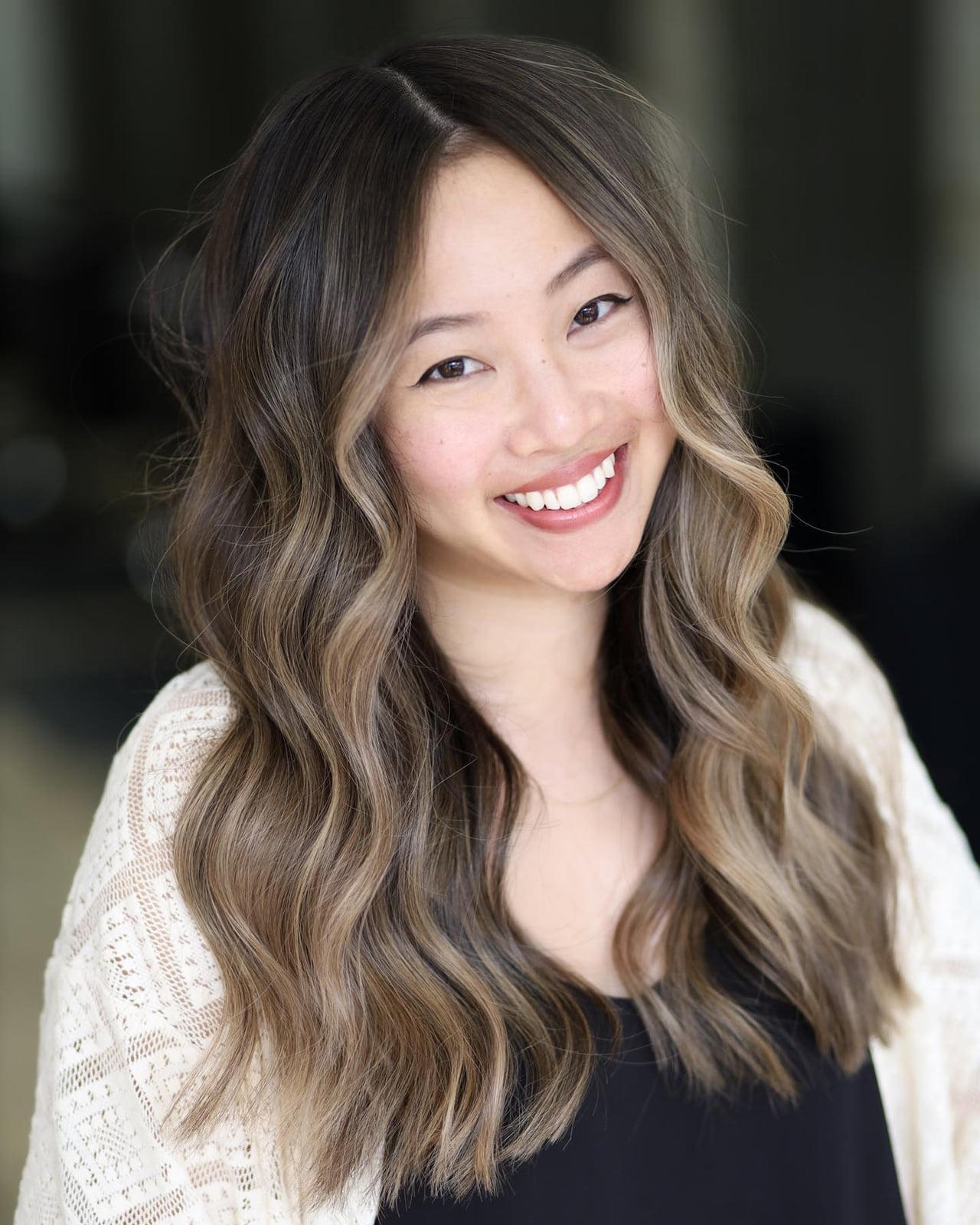
Subtle blonde highlights on a collarbone-length layered cut create dimension without demanding a full color overhaul. The side profile shows the lighter pieces catching the layers, which adds movement to medium-density wavy hair. Ask your colorist for: collarbone length, soft face-framing layers, subtle blonde highlights. The upkeep is the trade-off: highlights need a toning appointment every eight to ten weeks to keep brassiness at bay, and the color grows out more visibly than a single-process shade. A purple shampoo once a week helps stretch the time between appointments.
On the plus side, the layers mean the highlights are concentrated around the face and mid-lengths, so the regrowth at the crown is less obvious than it would be on a one-length cut. A texture spray applied to damp hair and air-dried keeps the waves looking deliberate rather than messy.
Collarbone Wavy Blowout With Face-Framing Bangs

This style looks like a blowout from a salon chair, but the daily version is a different story. The collarbone-length layers and face-framing bangs rely on a side part to swing the shorter pieces away from the eyes, and the subtle highlights in the deep black base add a little depth. Ask your stylist for: collarbone length, wavy blowout, face-framing bangs. The honest drawback is that the bangs need a round brush and a heat tool every morning to curve the right way, and on humid days they may decide to separate into pieces. A dry texture spray at the roots gives the layers enough grip to hold the wave pattern for a few hours.
Collarbone Layers With Side Part Highlights
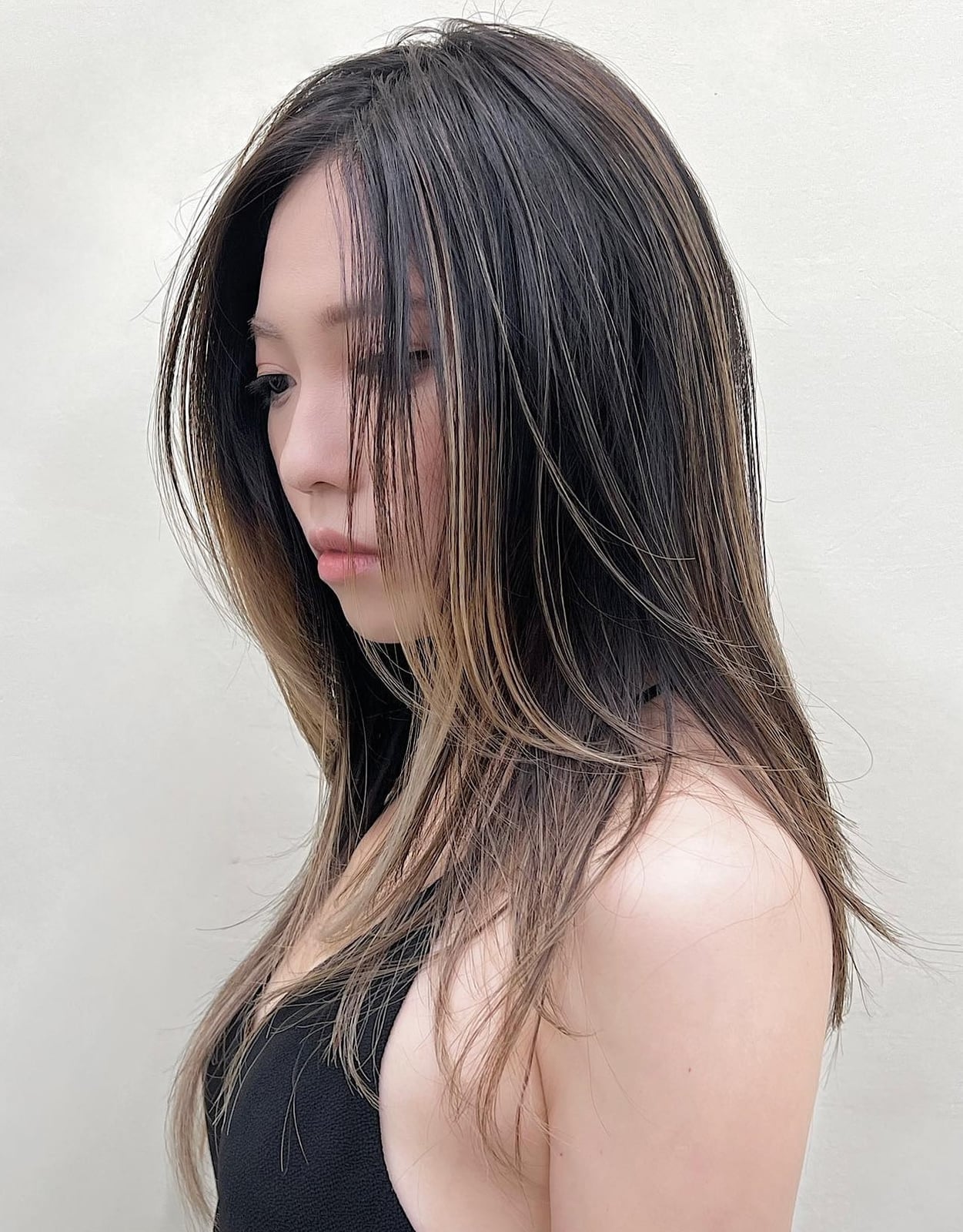
How do you ask for exactly this? Start with the cut: a collarbone-length layered shape with a deep side part, so the shorter pieces sit forward. The subtle blonde highlights are painted into the layers, not woven all over, which keeps the effect soft. Ask your colorist for: collarbone length, soft face-framing layers, side part, subtle blonde highlights. The side profile angle matters here because the lighter strands are concentrated on the top and front sections; from the back, the color stays close to the natural brown. A trim every eight weeks keeps the contrast from looking grown out.
Collarbone Layers Side Part With Highlights and Face-Framing Pieces
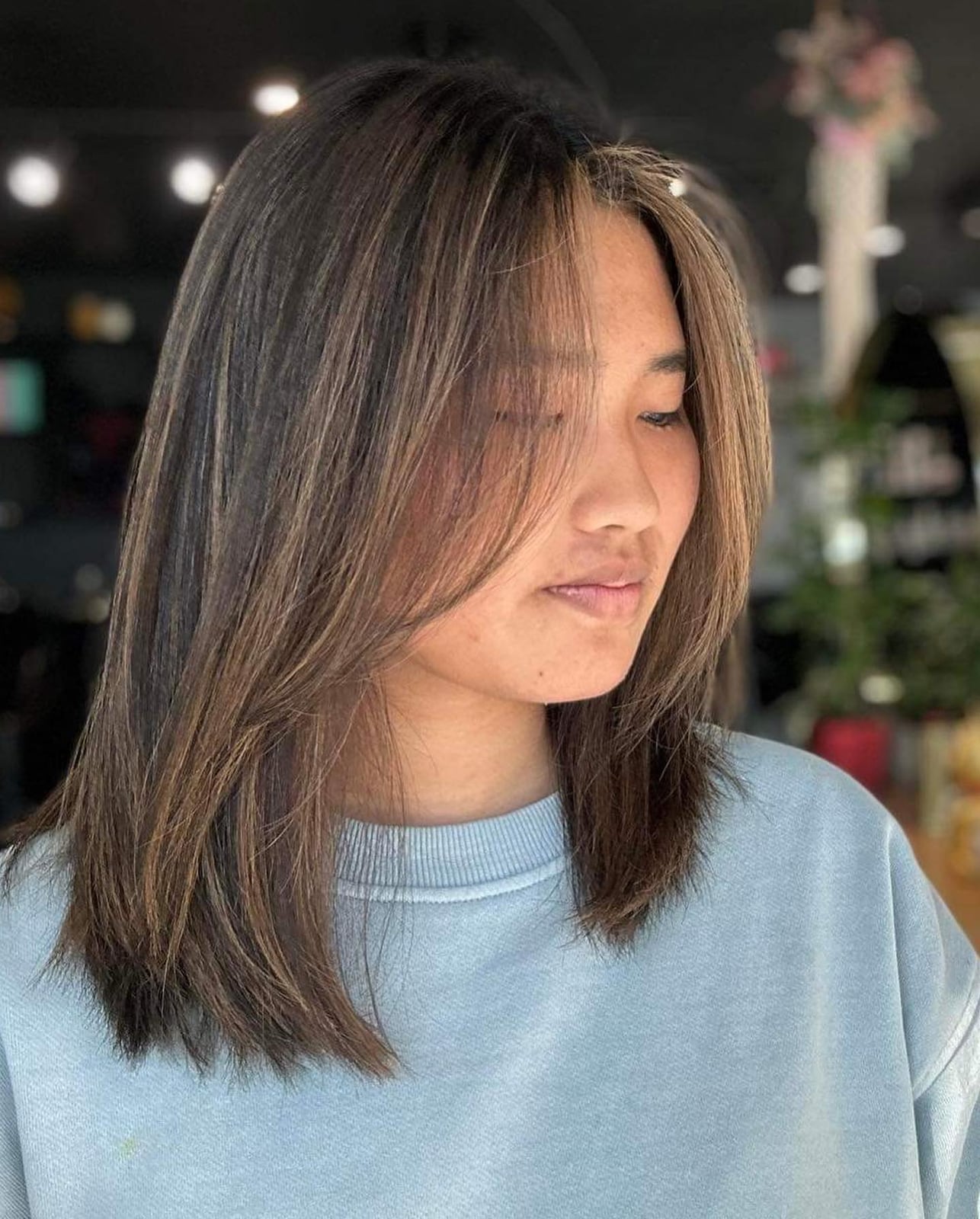
The difference between this and a more dramatic layered cut comes down to how much the face-framing pieces actually frame. Here, the front sections are long enough to tuck behind an ear or fall forward, rather than being cut short enough to sit at the cheekbone. Ask your stylist for: collarbone length, soft face-framing layers, side part, subtle blonde highlights. For medium-density wavy hair, the side part gives the layers a natural swing that a center part would flatten. The blonde highlights are subtle enough that a skipped toning appointment won’t look disastrous, though a purple shampoo every two weeks helps.
Compared to a cut with heavier, more defined layers, this one grows out more gracefully because the soft transition between lengths is less obvious at the six-week mark.
Shoulder Length Long Bob With Wispy Bangs
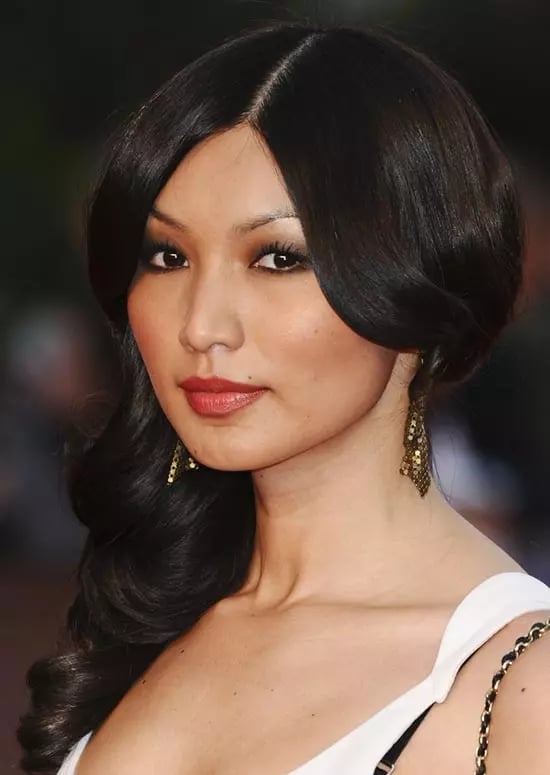
A shoulder-length long bob with wispy bangs relies on the wave pattern to keep the shape from reading as one solid block. Fine hair of shoulder length gets volume from soft, loose waves set with a medium-barrel iron; a smoothing serum before styling prevents the bend from looking frizzy. Wispy bangs soften a round face without shortening the visual line of the cut. Ask your stylist for: shoulder length long bob, wispy bangs, soft waves. The bob line needs a trim every six to eight weeks to keep the ends from splitting.
Shoulder Layered Hair With Wispy Bangs

Does a wispy fringe actually work on shoulder-length layered hair, or is it just more hair to push out of your eyes? It works, provided the layers are cut to blend into the bangs rather than landing an inch below them. Medium-density wavy hair at shoulder length benefits from the softening effect wispy bangs have on a strong jawline, and the lived-in texture hides a missed wash day better than a blunt cut does. Ask your stylist for: shoulder length layered cut, wispy bangs, natural waves. The bangs need a trim every three to four weeks to stay wispy and not turn into a full fringe.
Short Textured Bob With Short Bangs

A short textured bob with short bangs relies on the ends doing the talking, because thick straight black hair does not naturally tousle itself. The cut ends around the ear with a side part, and the slightly roughed-up finish keeps the shape from reading as a helmet. Thick hair needs a texturizing paste worked through the ends for definition that lasts the day; a cream or oil will weigh it flat by noon. Ask your stylist for: short textured bob, short bangs, side part. The bob requires a trim every four to six weeks, and the short bangs need a touch-up every three weeks to stay above the brows. The trade-off is that this cut has zero grow-out grace period: you commit or you grow.
Short Pixie With Layers And Side-Swept Bangs
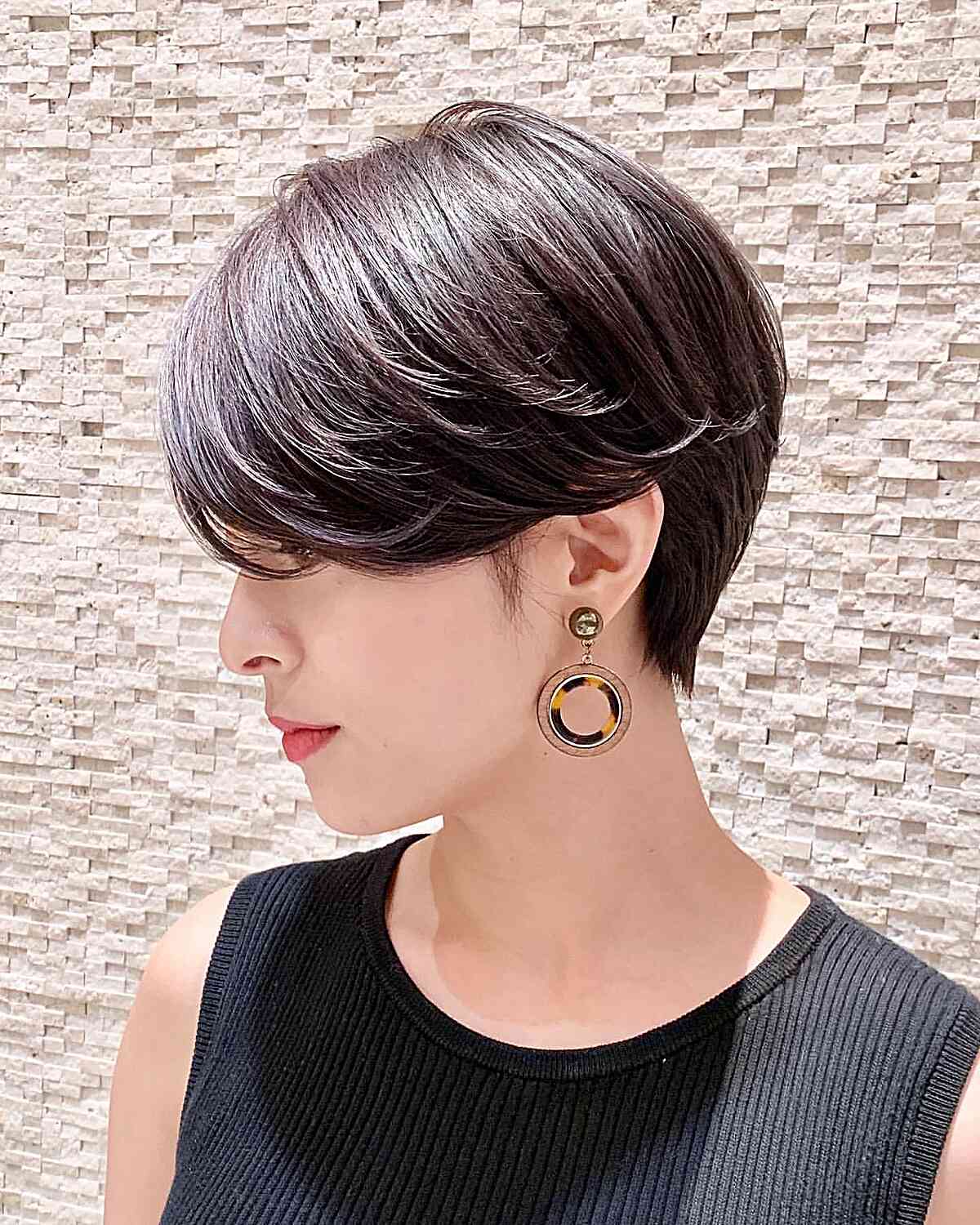
A short pixie with soft layers and side-swept bangs is the kind of cut that looks like it takes five minutes to style, because it does. Fine straight hair at ear length gets its shape from a smooth blowout and a light hold pomade on the bangs to keep them sweeping across the forehead rather than falling into the eyes. The dark brown base with subtle highlights adds dimension without looking like you tried too hard. Ask your stylist for: short pixie cut, soft layers, side-swept bangs. The honest drawback is that a pixie needs a trim every four weeks to keep the nape from looking shaggy, and there is no ponytail backup plan.
Short Pixie Bob With Textured Layers

Wondering how to ask for a short pixie bob that does not read as a generic short cut? The key is the word textured. Fine straight hair at ear length needs layers cut into the interior so the shape has movement rather than sitting flat against the head. The short side-swept bangs and side parting break up the silhouette, and a texturizing spray at the roots lifts the crown without product buildup. Ask your stylist for: short pixie bob, textured layers, short side-swept bangs. The trim schedule runs every four to six weeks, and the grow-out phase is awkward enough that you will want to stick to the schedule.
Chin Length Bob With Voluminous Waves

A chin-length layered bob with a full fringe and a middle part, blown out smooth on fine, straight hair, except the voluminous waves part is the trap people fall into. The design relies on the contrast between a blunt, heavy fringe and soft body through the lengths, but that full fringe is a maintenance commitment, especially on fine hair. It needs a trim every three weeks to stay out of your eyes, and a blow-dry with a round brush every morning to keep its shape rather than splitting into two sad curtains. Ask your stylist for a chin-length layered bob with a full fringe and middle part. The real drawback is that the fringe will look lank by noon if you skip dry shampoo.
Chin Layered Bob With Side-Swept Bangs
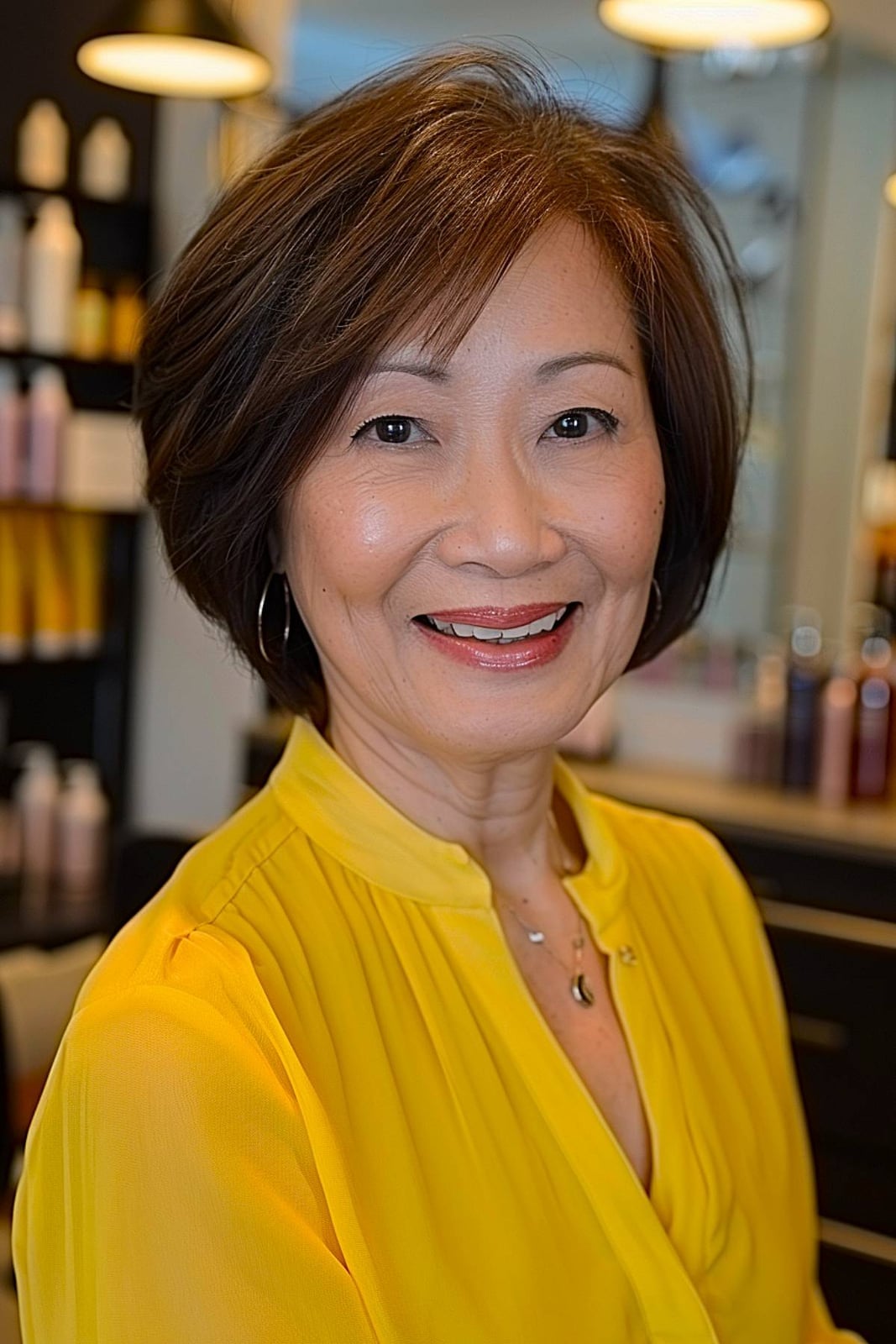
A chin-length layered bob with a side part and soft side-swept bangs, blown out smooth with noticeable volume. This is the voluminous alternative to a sleek, flat bob. The extra lift through the crown and the sweep of the bangs soften a round face in a way a blunt, middle-parted bob cannot. It suits medium-density, straight hair that holds a shape without fighting back. Ask your stylist for a chin-length layered bob with side-swept bangs and a voluminous blowout. A volumizing mousse at the roots before drying keeps the shape alive for a second day.
Chin Layered Bob With Full Bangs

The technique is all about managing two textures at once. The full bangs are cut straight across and dried with a round brush for a polished curve, while the lengths get a large-barrel curling iron for loose, uniform waves that hold without product. The contrast works because both sections share the same dark brown base and glossy finish. Ask your stylist for a chin-length layered bob with full bangs and soft waves. Fine hair needs a lightweight texture spray at the roots to keep the waves from dropping.
Chin Layered Bob With Crown Volume
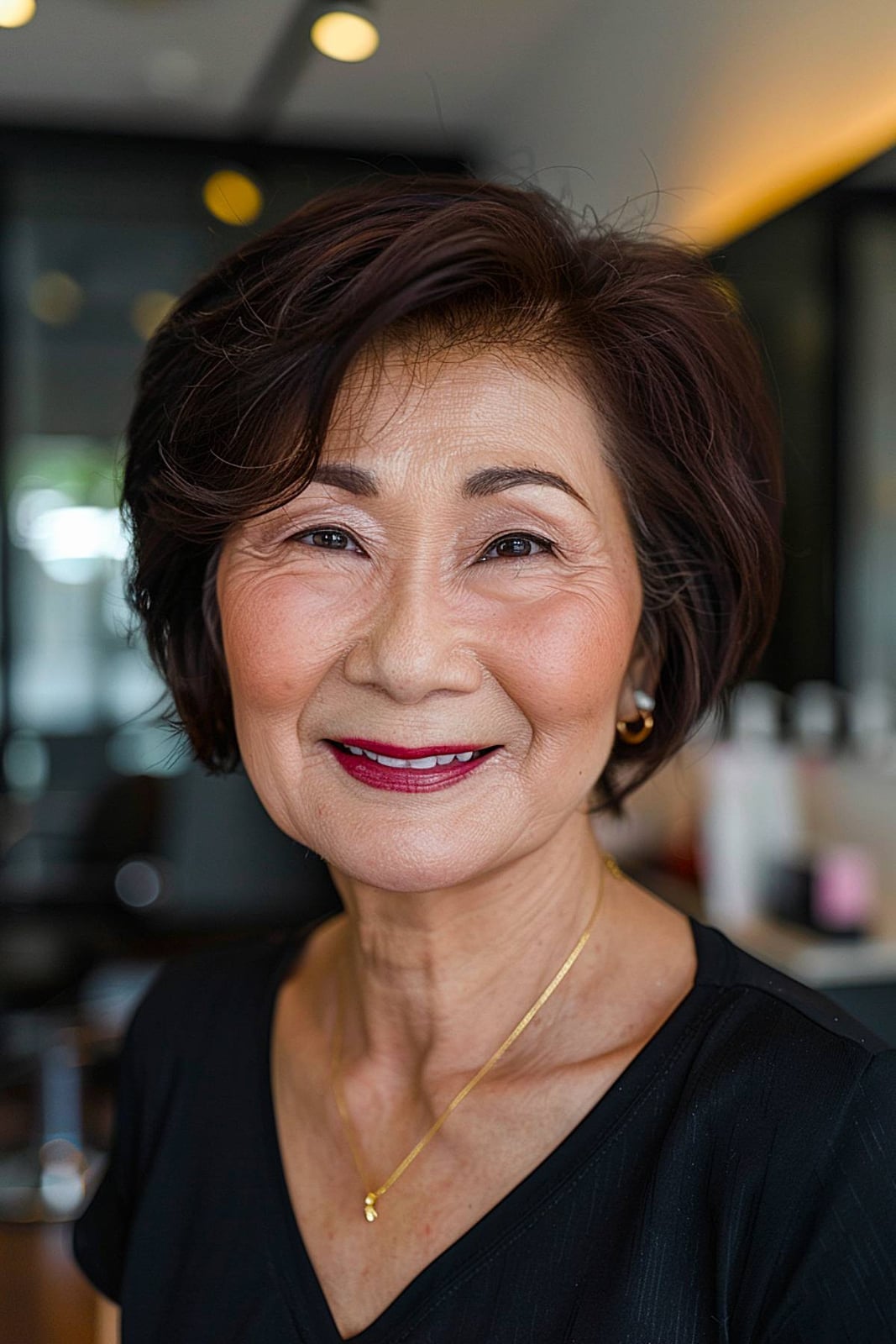
A chin-length layered bob with a side parting and no bangs, blown out for volume concentrated at the crown. This genuinely flatters anyone with a longer face shape who wants width, and it is a pass for those with a round face who need length instead of height. The side part directs the lift to one side, which opens up the face without adding bulk at the jaw. Medium-density, straight hair holds the volume longest. Ask your stylist for a chin-length layered bob with volume at the crown and a side part. Blow-dry the roots upward with a round brush, then cool-shot them to lock the lift.
Chin Length Bob With Blunt Bangs
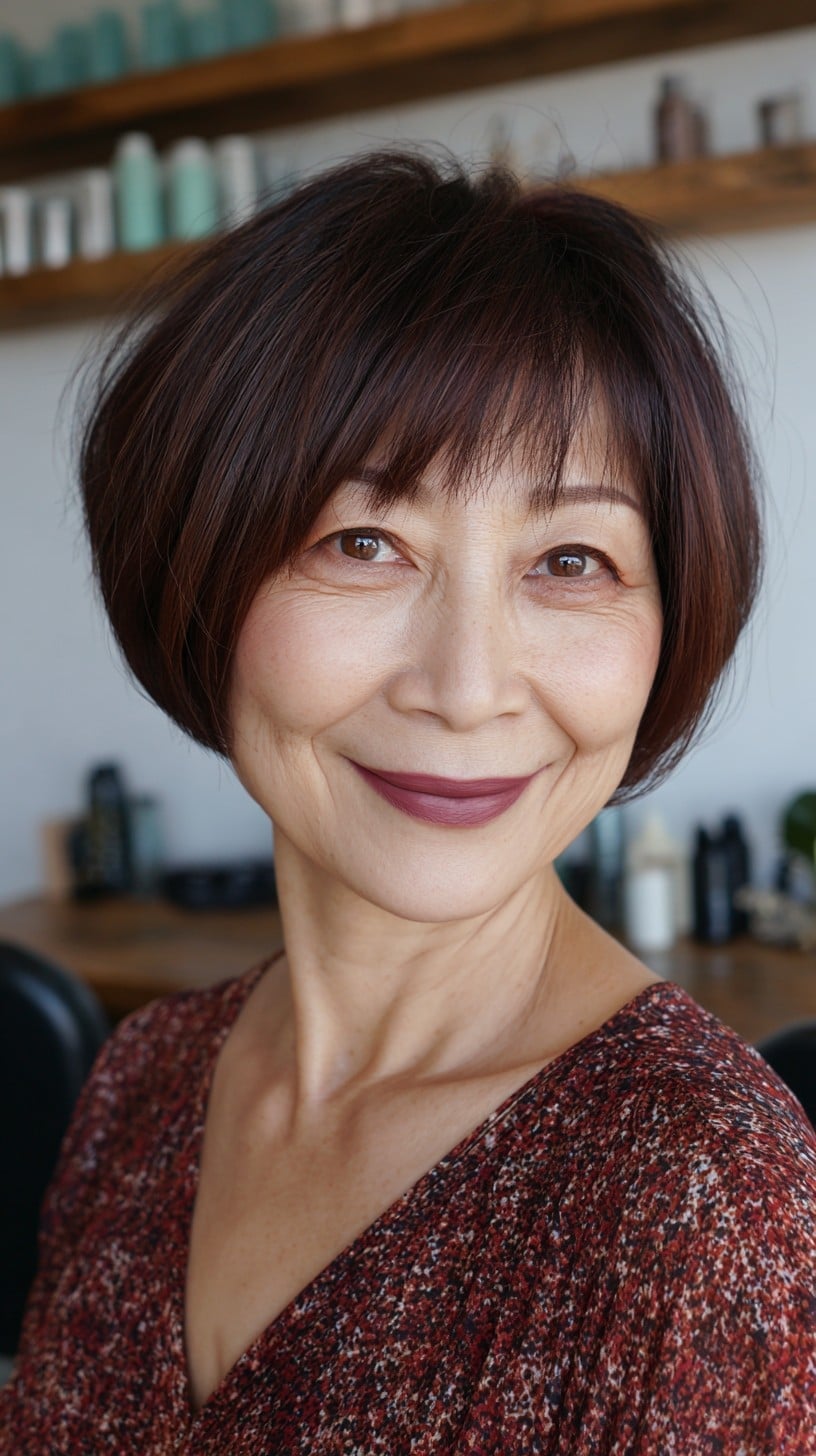
Can a blunt bob with blunt bangs survive a humid commute? Only with the right daily routine. This chin-length bob with thick, straight dark brown hair relies on a razor-sharp line at the ends and across the forehead. The neat blowout must stay smooth: any wave or kink looks like a mistake. It suits thick, straight hair that can handle a flat iron without frizzing. Ask your stylist for a chin-length bob with blunt bangs and a neat blowout. A trim every four weeks keeps the bangs from grazing your lashes and the hemline from softening.
Chin Length Bob With Full Fringe
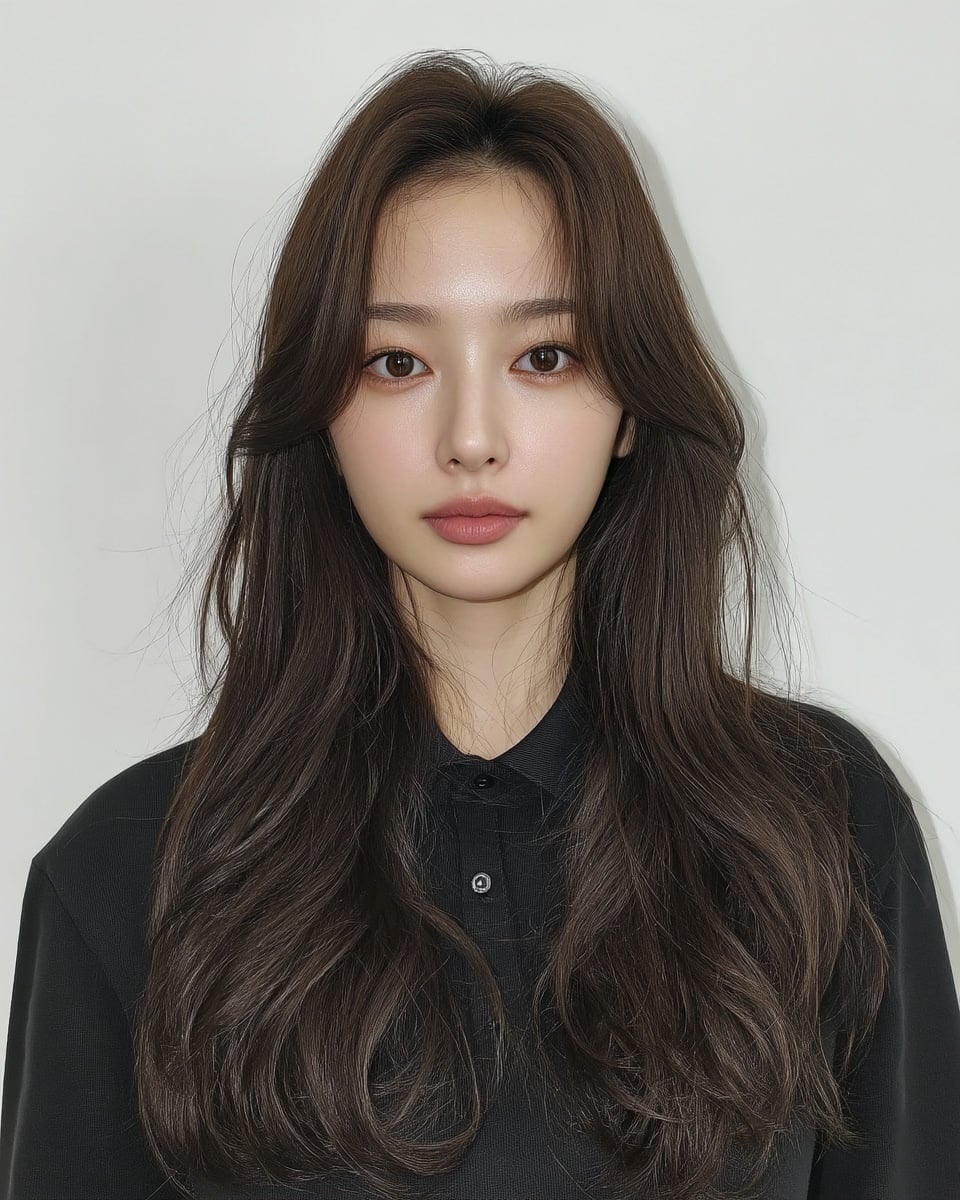
A chin-length bob with a full fringe demands precision: every layer lands exactly at the jaw or below it, and the fringe stops just above the brows. This cut works best on fine, straight hair, where the weight of the bob keeps the ends from flaring out. Ask your stylist for: chin length bob, full fringe, smooth blowout. The blowout with a small round brush on the fringe gives it that soft curve, but the real catch is the trim rhythm. A full fringe needs a touch-up every three to four weeks, and the bob itself every six to eight. Without those appointments, the fringe hits your lashes and the bob loses its clean line.
One honest drawback: a full fringe on fine hair can look sparse by midday if your hair tends to separate. A dry shampoo at the roots keeps it looking dense, but it is not a set-and-forget situation.
Chin Length Blunt Bob With Side Part
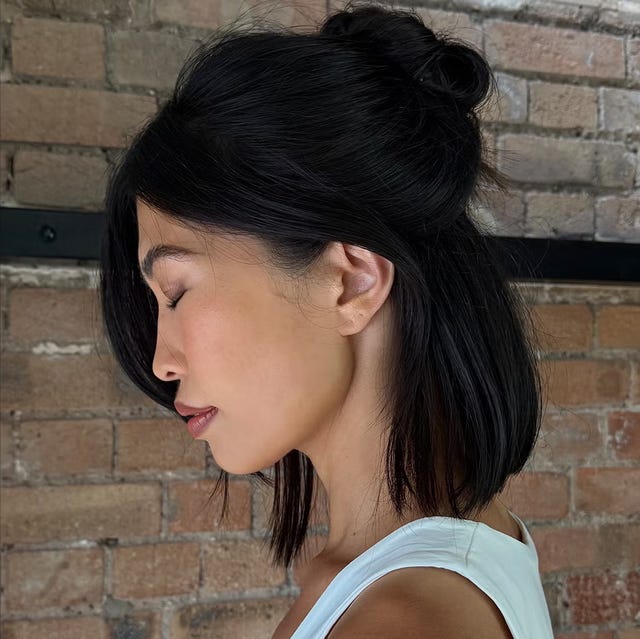
Thick, straight hair holds that line best, since any wave or bend turns a blunt edge into a jagged one. Ask your stylist for: chin length blunt bob, side part, sleek styling. You can maintain the sleekness at home with a flat iron, but the initial cut is a salon job. A blunt bob needs an even, weight-distributed shape that is hard to replicate with scissors in your bathroom mirror. The trim schedule is every eight to ten weeks, which buys you time between visits.
Final Thoughts
Fine hair benefits from blunt ends and strategic layering near the crown to build the illusion of density. Thick hair needs soft internal layers and controlled waves to prevent bulk and keep the shape wearable.
- Schedule trims every 6-8 weeks to maintain blunt lines and shape.
- Use a heat protectant spray before blow-drying or heat styling.
- Incorporate a deep conditioning treatment weekly for shine and smoothness.
- For highlighted hair, use a color-safe shampoo and conditioner to preserve tone.
Embrace polished styles that enhance your natural hair texture and color.
