

Vivid hair color has moved from a weekend experiment to a deliberate, polished choice. The trend now leans into soft face-framing layers and lived-in techniques that let bold hues feel less costume and more intentional.
This collection of 27 looks covers the range from low-upkeep darker vivids to high-impact rainbow gradients, across every length and texture. Whether you struggle with fine hair that falls flat or a visible grow-out line, there is a technique here that works with your schedule and your stylist’s skill. Vivid Hair Color Inspiration is about finding the shade and placement that actually fit your life.
Mid-Back Length Vivid Rainbow Gradient
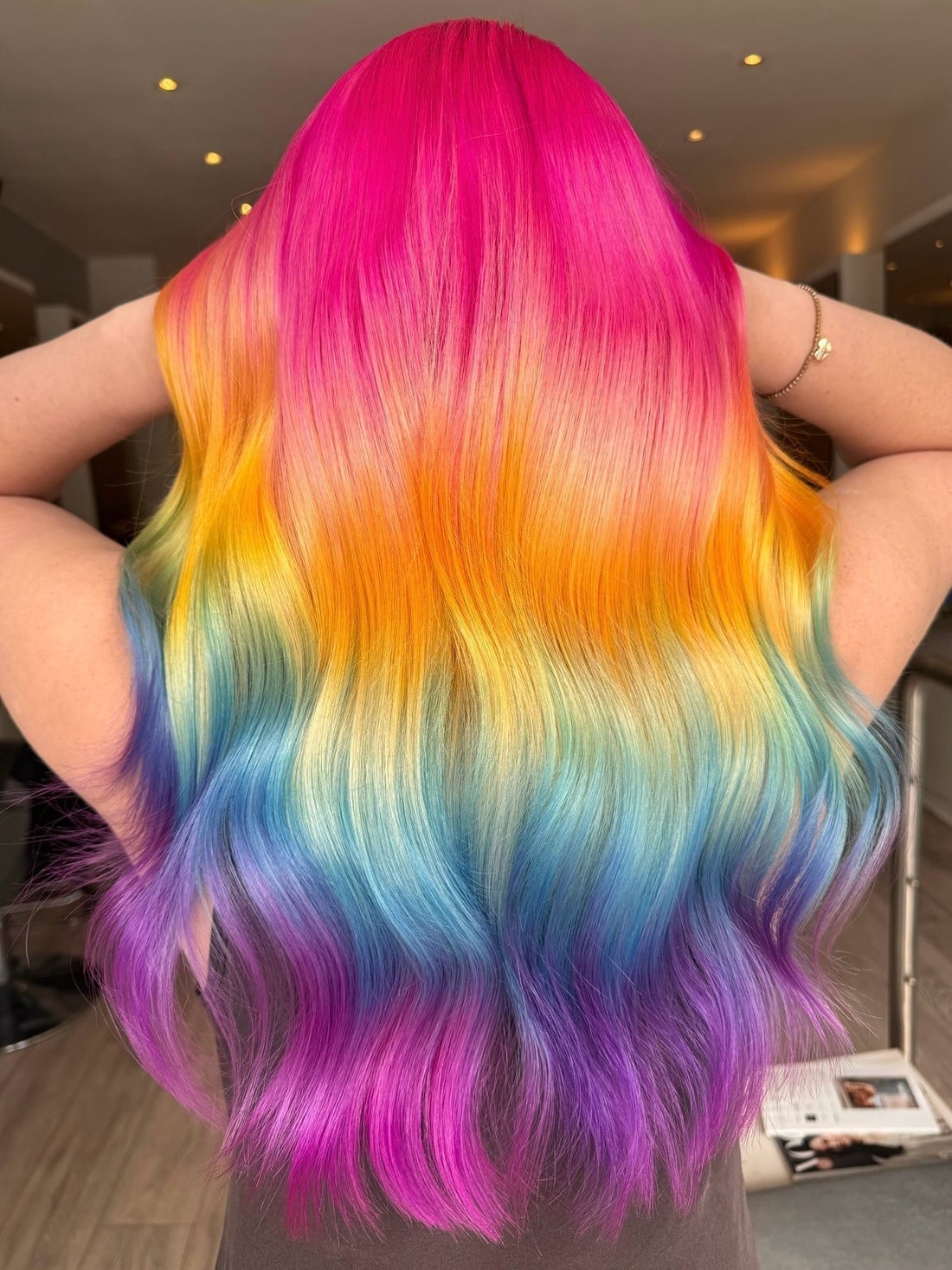
This rainbow gradient is less a single color and more a controlled riot, with pink melting into orange, then yellow, then blue, and finally purple at the ends. The transition is smooth, so no shade stops abruptly and starts another; each one hands off to the next like a relay race where everyone wins. Because the color is built as a gradient rather than separate blocks, the effect reads as one continuous sweep of vivid color.
It suits medium to thick hair that reaches at least mid-back, since the length gives each shade room to breathe. Ask your colorist for: mid-back vivid rainbow gradient, pink to purple. The loose waves help the colors blend optically, and a gloss finish keeps the spectrum looking healthy. Expect to refresh the tone every six to eight weeks, because the brighter the shade, the faster it fades.
Shoulder Length Neon Color Mash-Up
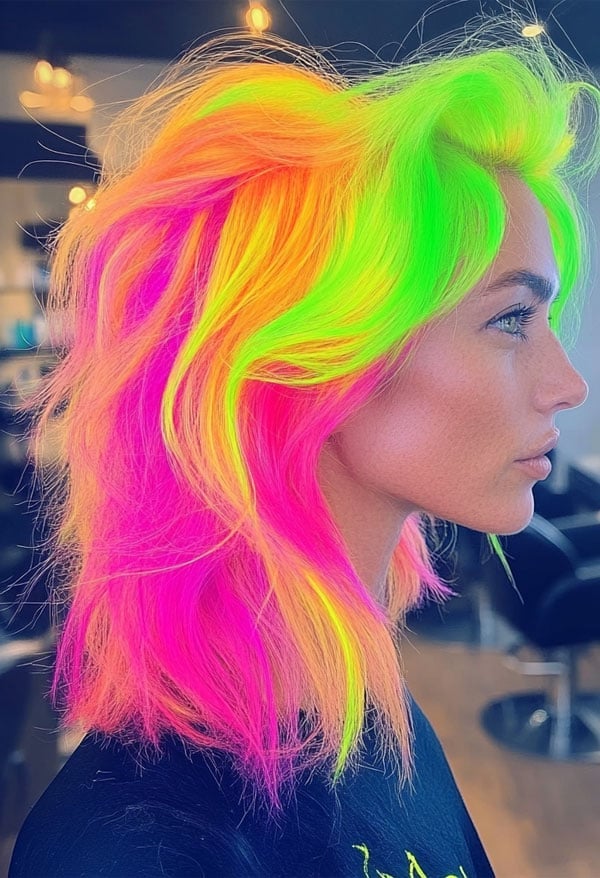
Wondering if neon pink, yellow, and green can live on the same head without looking like a highlighter explosion? They can, when the cut does the heavy lifting. The face-framing bangs and layered shape give the mash-up a deliberate structure, and the middle part keeps the volume balanced on both sides.
This works best on thick, wavy hair at shoulder length, where the texture holds the color and the volume keeps the neon from flattening. Ask your colorist for: shoulder length layered cut, neon pink yellow green color mash-up, face-framing bangs. A texturizing spray will enhance the waves and keep the body in place. Neon shades are notorious faders, so plan on a color refresh every four to six weeks to keep the intensity up.
Mid-Back Icy Blue to Orange Ombré
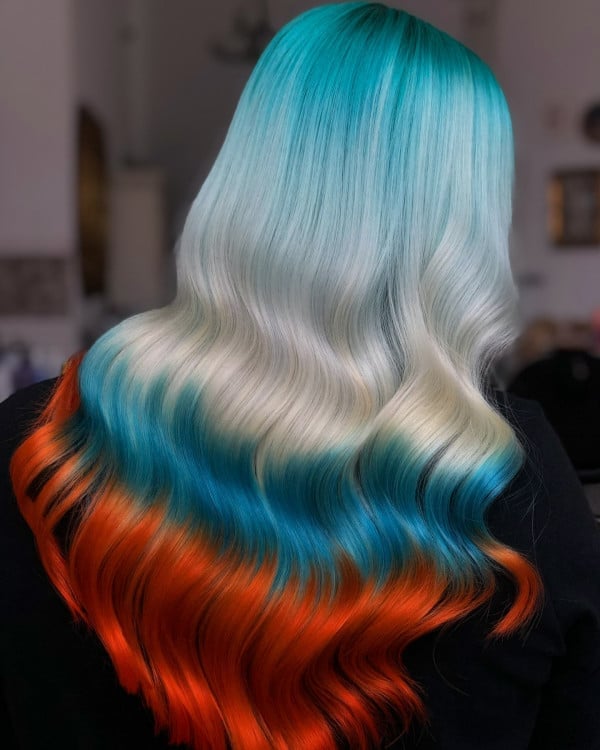
Where a typical ombré moves from dark to light, this one jumps across the color wheel entirely, starting icy blue, passing through white, and landing on fiery orange at the ends. The cool-to-warm contrast defines the look, and the white bridge between them keeps the two tones from muddying each other. It is a bolder cousin of the classic dip-dye, with more drama and less subtlety.
This ombré suits thick, wavy hair at least mid-back in length, where the long canvas shows off the transition. The vertical line of color can elongate oval and long faces, which is a useful trick if you want that effect. Ask your colorist for: mid-back ombré, icy blue to white to orange. The icy blue needs toning to stay frosty, so book a toning appointment every four to six weeks. A heat protectant before styling waves keeps the ends from drying out.
Mid-Back Fiery Orange and Red Gradient
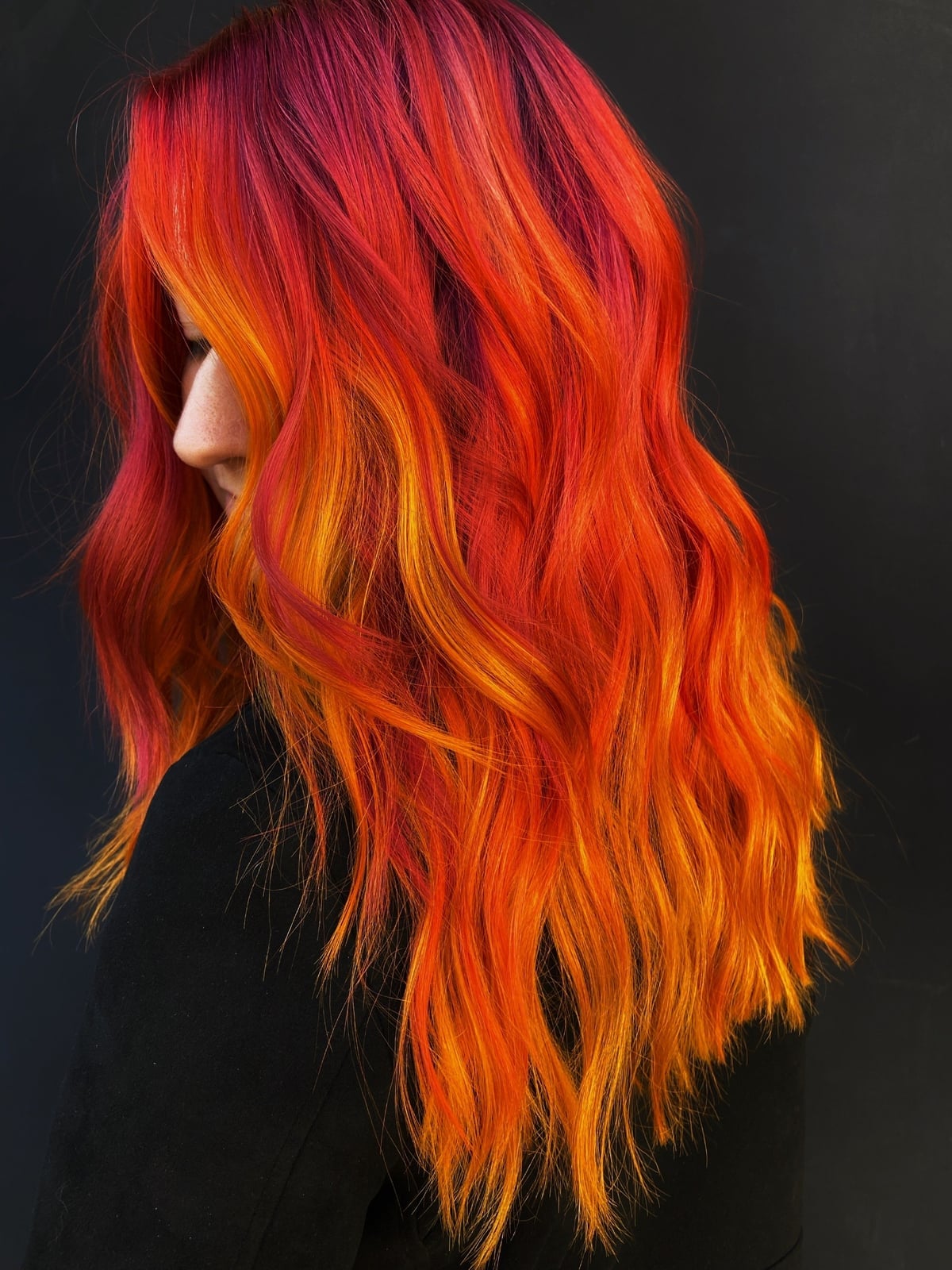
The gradient here is all heat, with orange and red blending so tightly that the eye can’t quite tell where one ends and the other begins. It reads as a single fiery wash rather than two separate colors, which is exactly what a gradient should do. The long layers give the color movement, so the shades catch the light differently as the hair shifts.
This blend suits thick, wavy hair at mid-back length, where the long layers add swing without losing shape. Ask your colorist for: mid-back long layers, fiery orange and red gradient. To keep the tones from turning brassy or muddy, a color-depositing conditioner in a red or orange shade will refresh the pigment between salon visits. The warm tones hold up reasonably well, but plan on a touch-up every six to eight weeks to keep the fire lit.
Mid-Back Rainbow Balayage
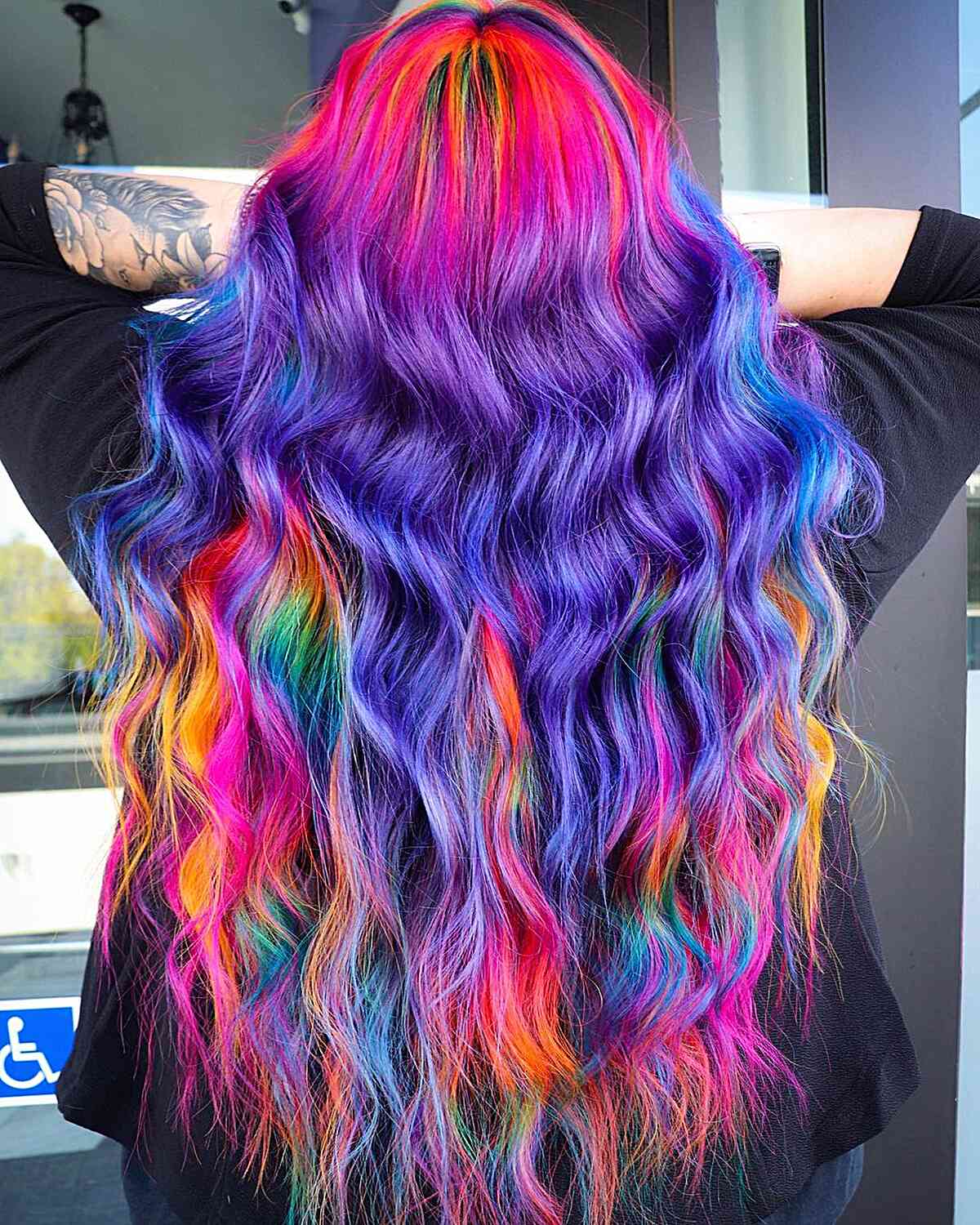
Balayage usually whispers; this one shouts, but it still uses the technique’s signature softness. Instead of painting the whole head one flat rainbow, the colorist hand-paints each section, so the pink, purple, blue, orange, and yellow land where they naturally would if the sun did the work. That means the rainbow has dimension, with some strands brighter and others softer, which keeps it from looking like a wig.
It works on thick, wavy hair at mid-back length, where the layers give the balayage plenty of surface to play on. The softer grow-out is a practical bonus, since the hand-painted color blends into the base as it grows. Ask your colorist for: mid-back rainbow balayage, pink purple blue orange yellow. A large barrel curling iron or letting the natural waves dry will show off the blend. This technique needs fewer touch-ups than a full rainbow, so you can stretch visits to eight weeks or more.
Mid-Back Purple and Pink Balayage
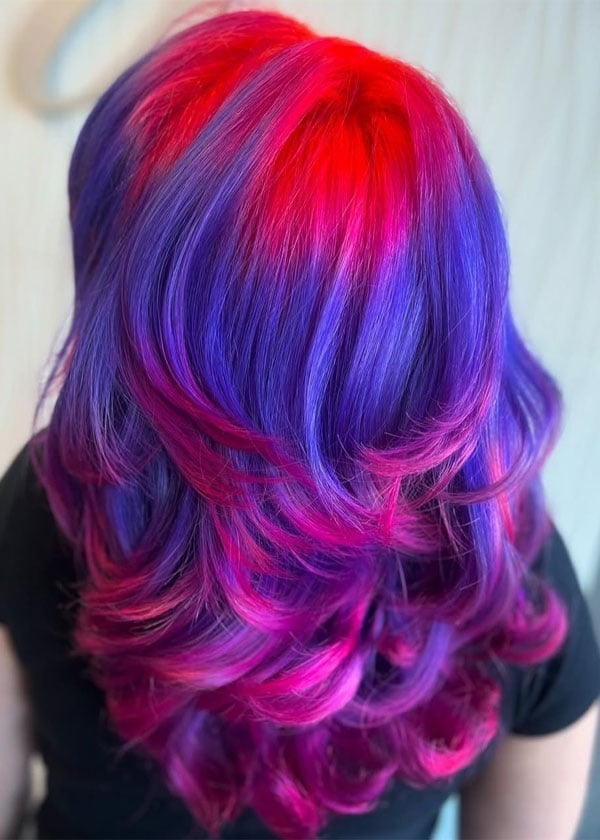
This balayage weaves vivid purple and bright pink through mid-back thick waves, a voluminous blowout that shows off the color depth. The technique leaves dark roots untouched, which means the grow-out phase is less brutal than a full saturation job. Ask your colorist for: mid-back purple and pink balayage, voluminous waves. Thick, wavy hair at mid-back length handles the gradient best. Purple and pink tones fade faster than natural shades; plan for a color-refreshing appointment every four weeks if you want the saturation to hold.
Mid-Back Split Dye Purple and Hot Pink
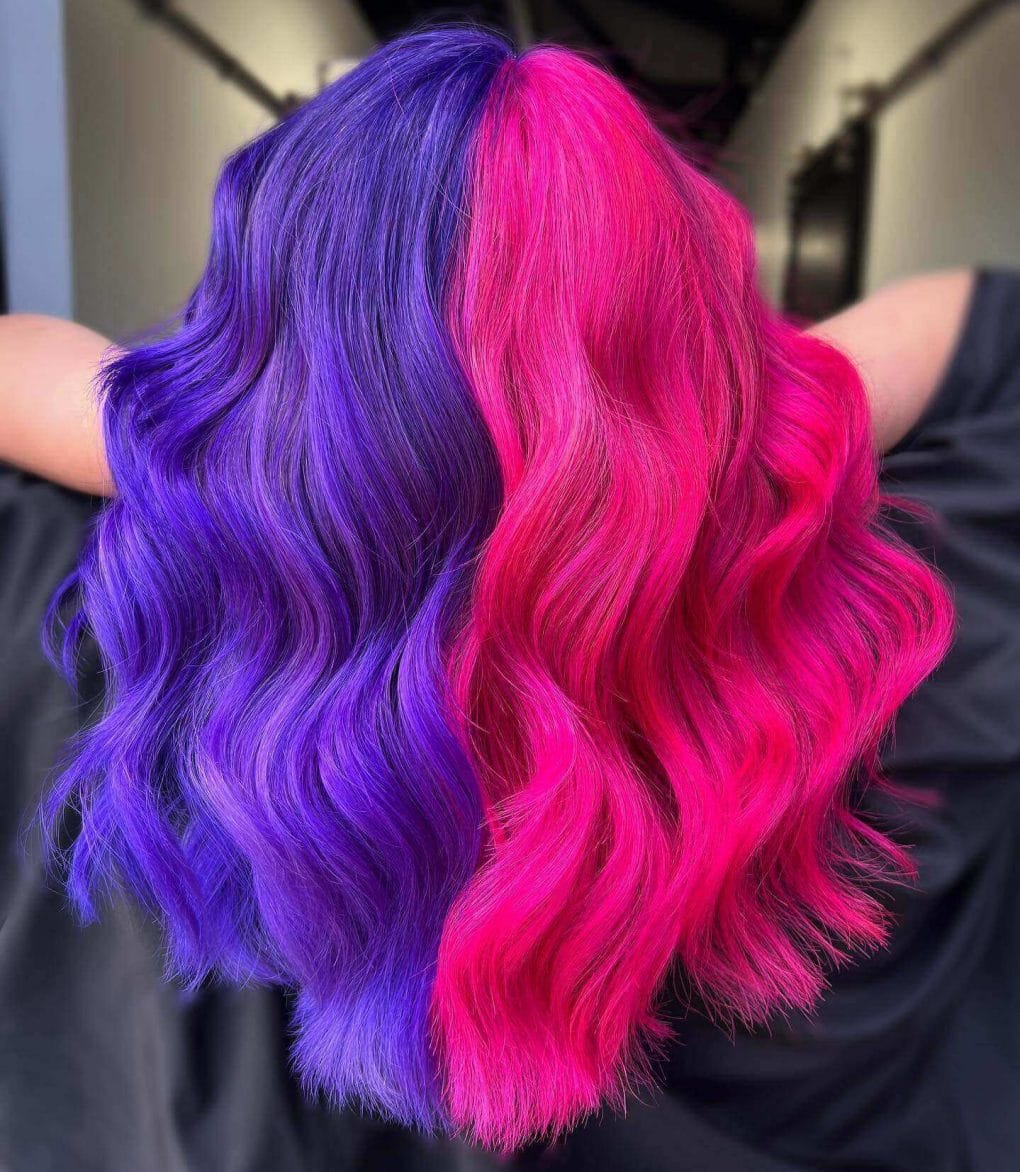
Can a split dye look intentional? Yes, when the two halves are deep purple on one side and hot pink on the other, divided cleanly at the middle part. This is not a technique for the indecisive or the impatient. A full salon session is required, and maintaining two separate vivid shades means two separate fading schedules. Ask your colorist for: mid-back split dye, deep purple and hot pink. Thick, wavy hair at mid-back length gives the contrast room to read. If one side fades faster, the asymmetry looks accidental.
Avoid this if you prefer a low-maintenance color routine. Each wash is a negotiation between two colors that want to bleed into each other. Cold water and color-safe shampoo are required. The look works for parties and events where bold contrast is the point, but daily wear requires a higher tolerance for upkeep.
Mid-Back Split Dye Neon Green and Blue
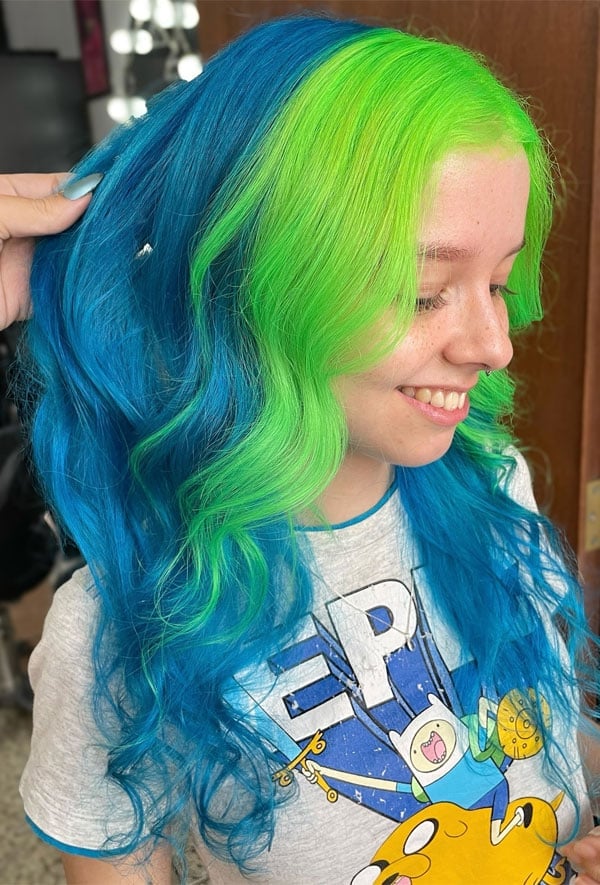
Neon slime green on the right and deep ocean blue on the left, divided by a middle part with curtain bangs softening the edge. The green side has a root shadow; the blue side carries lighter highlights. This split dye lands best in summer, when festival season and outdoor light make the neon pop. Ask your colorist for: mid-back split dye, neon green and deep blue, curtain bangs. Thick, wavy hair at least mid-back length gives the colors room to breathe. The curtain bangs keep the look from reading as costume, grounding the high-voltage contrast.
Winter is a harder sell for this palette: neon green reads differently under gray skies and fluorescent office lights. If you want the same intensity year-round, expect to refresh the green side more often. The blue side holds longer, which creates an uneven fade if you are not diligent.
Mid-Back Pastel Rainbow Waves
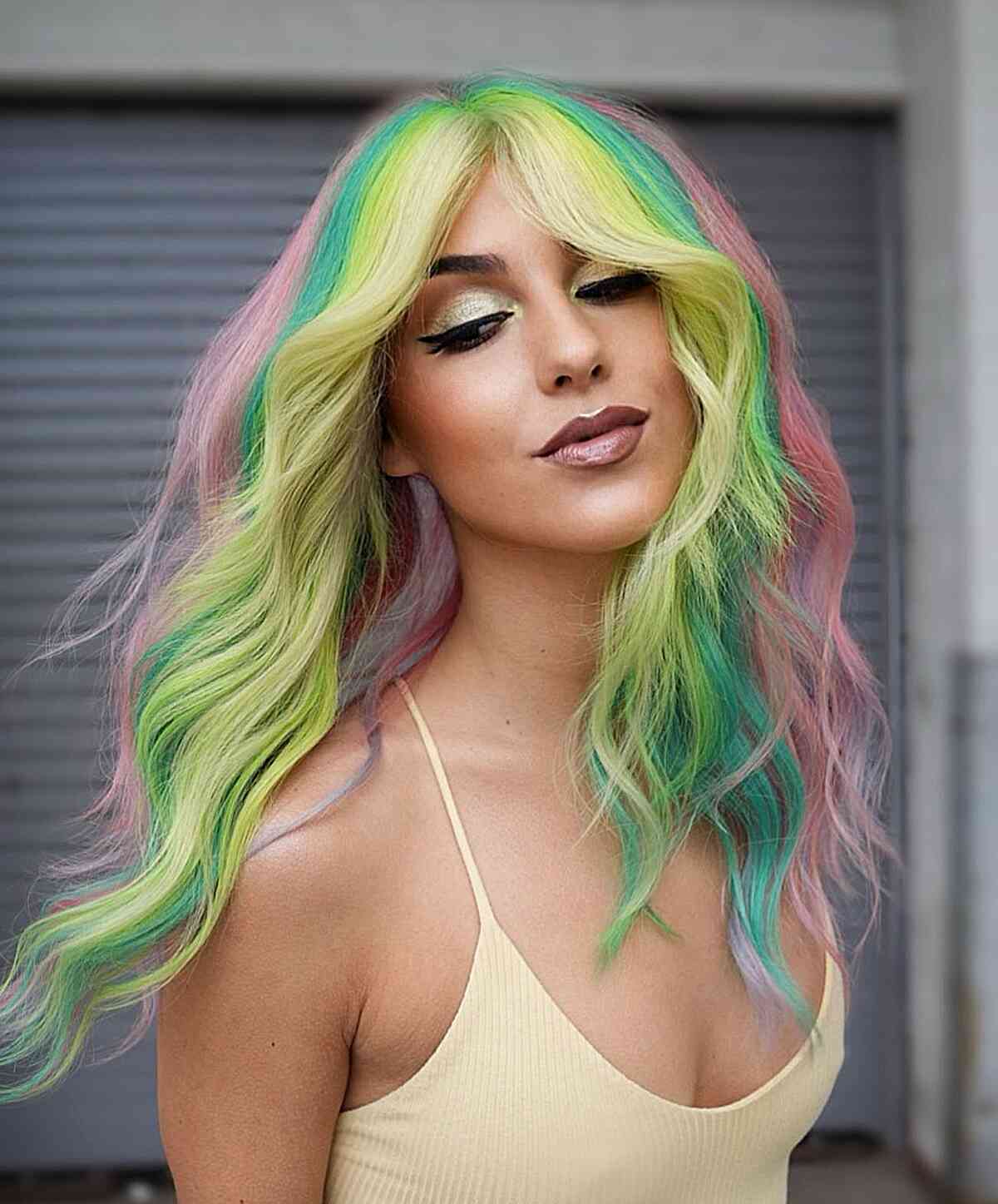
Does a pastel rainbow blend actually work on thick wavy hair, or does it get lost in the texture? It works, provided the base is light enough to register pink, yellow, green, blue, and purple as distinct bands. The curtain bangs frame the face in a way that softens a square or angular jaw. Ask your colorist for: mid-back pastel rainbow blend, curtain bangs, loose waves. Thick, wavy hair at least mid-back length carries the gradient without looking muddy. Pastel shades fade fast; expect to use a toning shampoo weekly and book a color-refreshing session every three to four weeks to keep the rainbow readable.
Collarbone Shag With Holographic Pastels
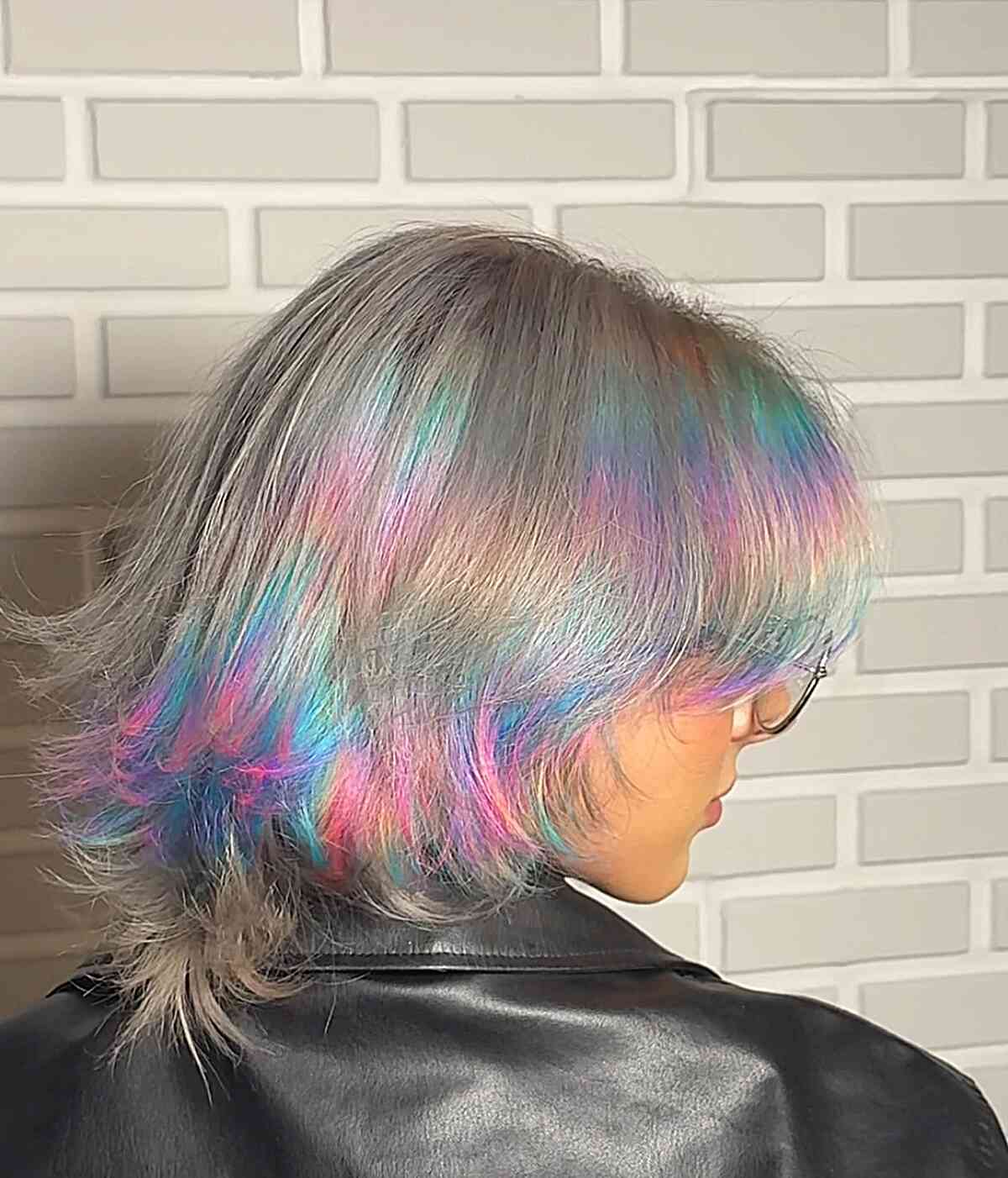
The shag cut adds volume at the crown, which is useful for medium-density wavy hair that can look flat without texture. Ask your colorist for: collarbone shag, wispy bangs, silver with holographic pastel tones. The wispy bangs suit round and oval faces by adding softness at the forehead. A texturizing spray on damp hair, followed by scrunching and air-drying, is enough to make the shag shape do its work.
Collarbone Pastel Purple, Blue, Pink Blend
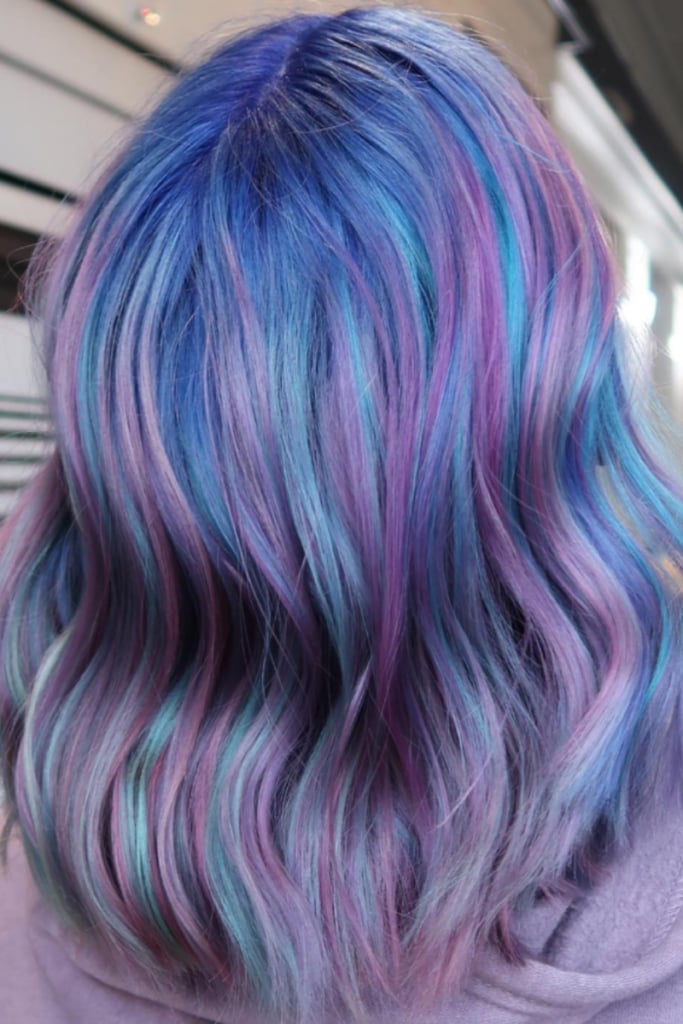
If you’re torn between a pastel blend and a more defined color-blocked look, this one settles it: the shades melt into each other instead of stopping at hard lines. The collarbone-length layers are styled in loose waves with a middle parting, so the purple, blue, and pink tones catch the light from different angles. Medium-density wavy hair holds the soft, multi-dimensional effect best, and the length suits most face shapes. Ask your colorist for a collarbone layered cut with a pastel purple, blue, and pink blend. Pastel shades fade fastest of all vivid colors, so plan on color-depositing products and a heat protectant before styling.
Collarbone Bob Orange and Yellow Blend
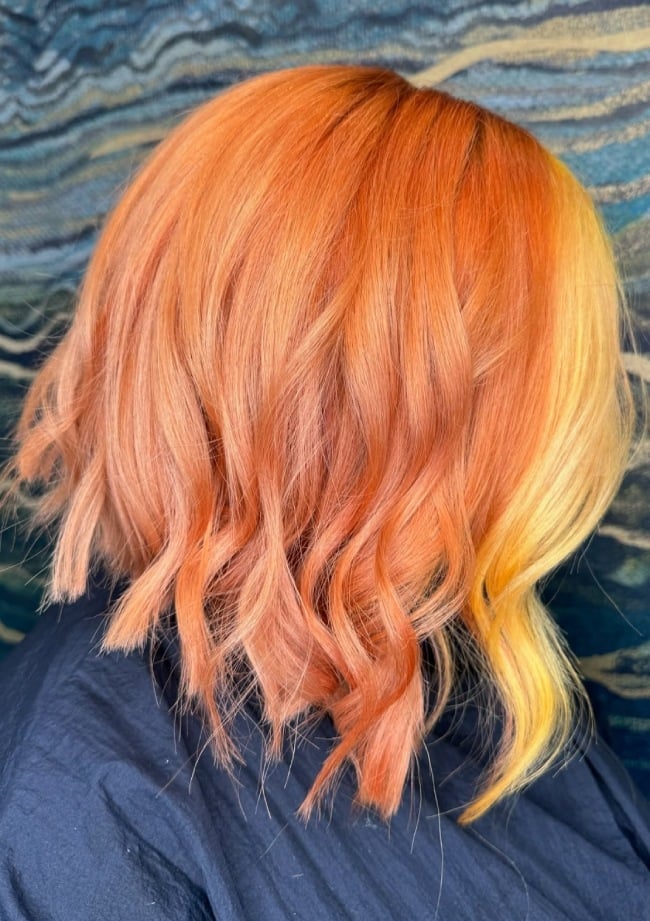
The orange and yellow here are close enough in warmth that the bob looks like one continuous sunset, not two separate colors fighting for attention. Soft, loose waves give the collarbone-length bob texture and movement from the blend. Medium-density wavy hair carries the dimension well, and the soft waves suit most face shapes. Ask your colorist for a collarbone bob with an orange and yellow blend and soft waves. A sea salt spray adds texture without weighing it down, and orange and yellow tones will need regular color upkeep to stay bright.
Collarbone Lob With Rainbow Ombré Ends
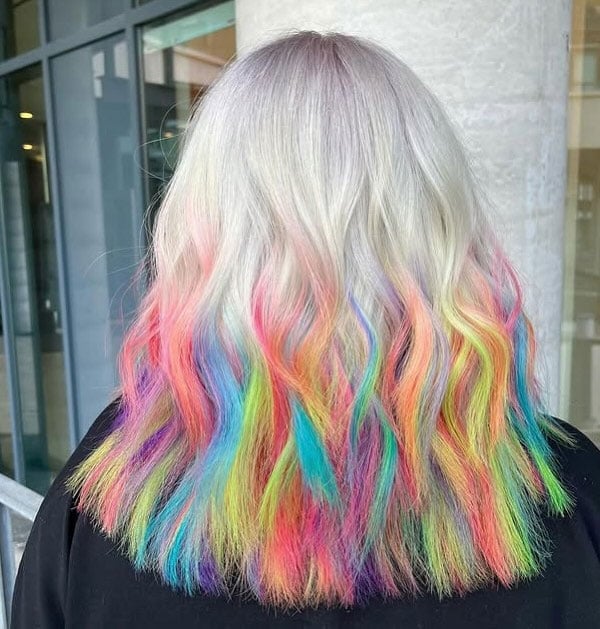
Rainbow color without committing from root to tip? Keep it at the ends, like this collarbone lob. The vivid rainbow ombré sits on the last few inches, so the wavy fine hair keeps its natural movement up top. Fine, wavy hair works in your favor here: the lighter ends move easily and don’t weigh the color down. Ask your colorist for a collarbone lob with rainbow ombré ends. A lightweight serum tames flyaways without flattening the wave. Rainbow ends need frequent refreshing, since color on the ends fades fastest.
Collarbone Lob Vivid Color Melt
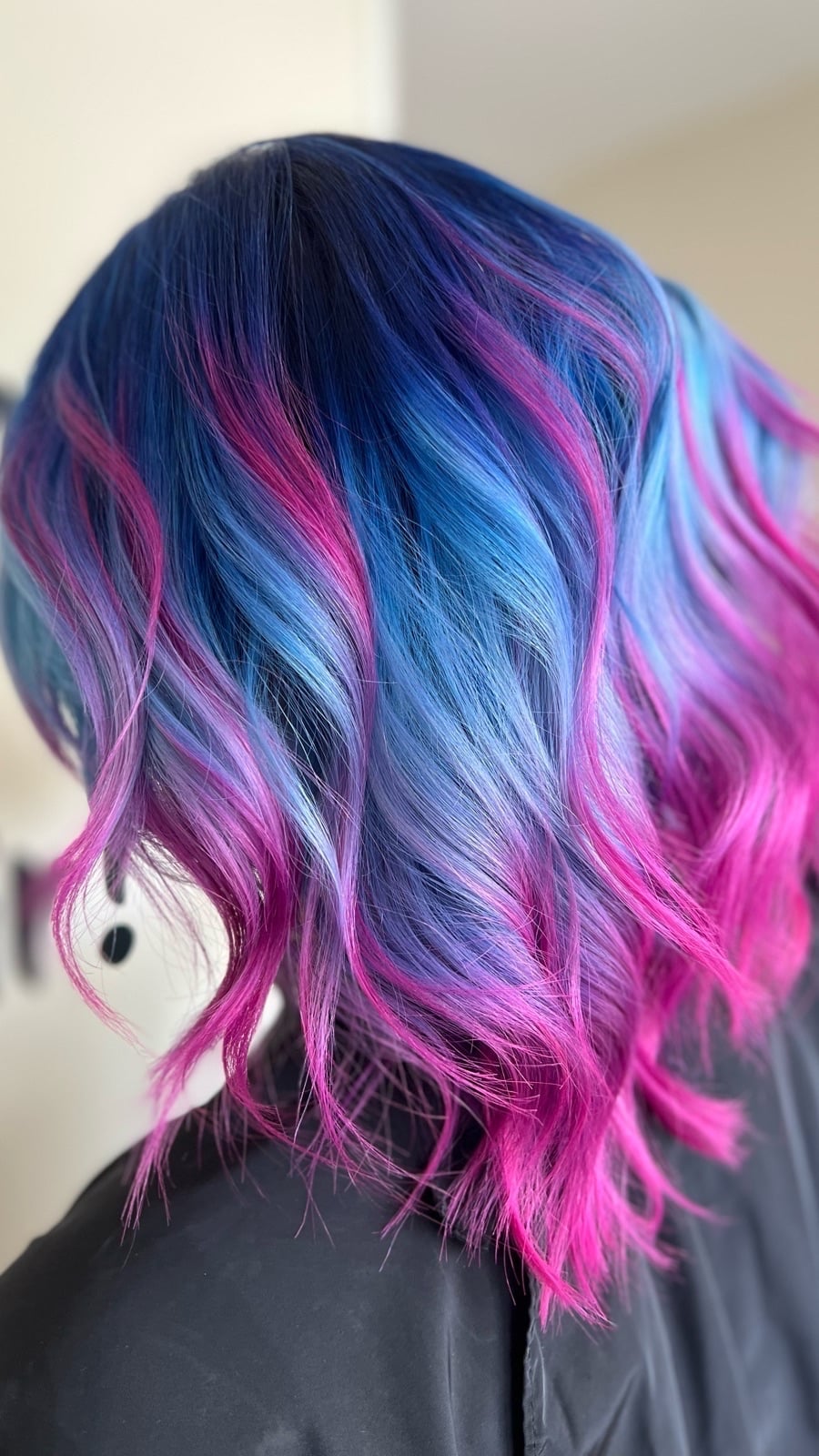
Deep blue, bright pink, and lighter blue blend into each other with no visible line, which is exactly what a color melt is supposed to do. The collarbone lob has curtain bangs and a wavy blowout, so the vivid blend moves with the hair rather than sitting flat. Medium-density wavy hair holds the shape and the color well, and the curtain bangs suit most face shapes. Ask your colorist for a collarbone lob with a vivid blue and pink color melt and curtain bangs. This one is salon-only, and the daily styling effort is real: a heat protectant before the blowout is essential. The honest drawback is that the blend needs professional touch-ups to keep the melt clean, so skipping them lets the colors drift into muddy territory.
Collarbone Shag With Black and Teal
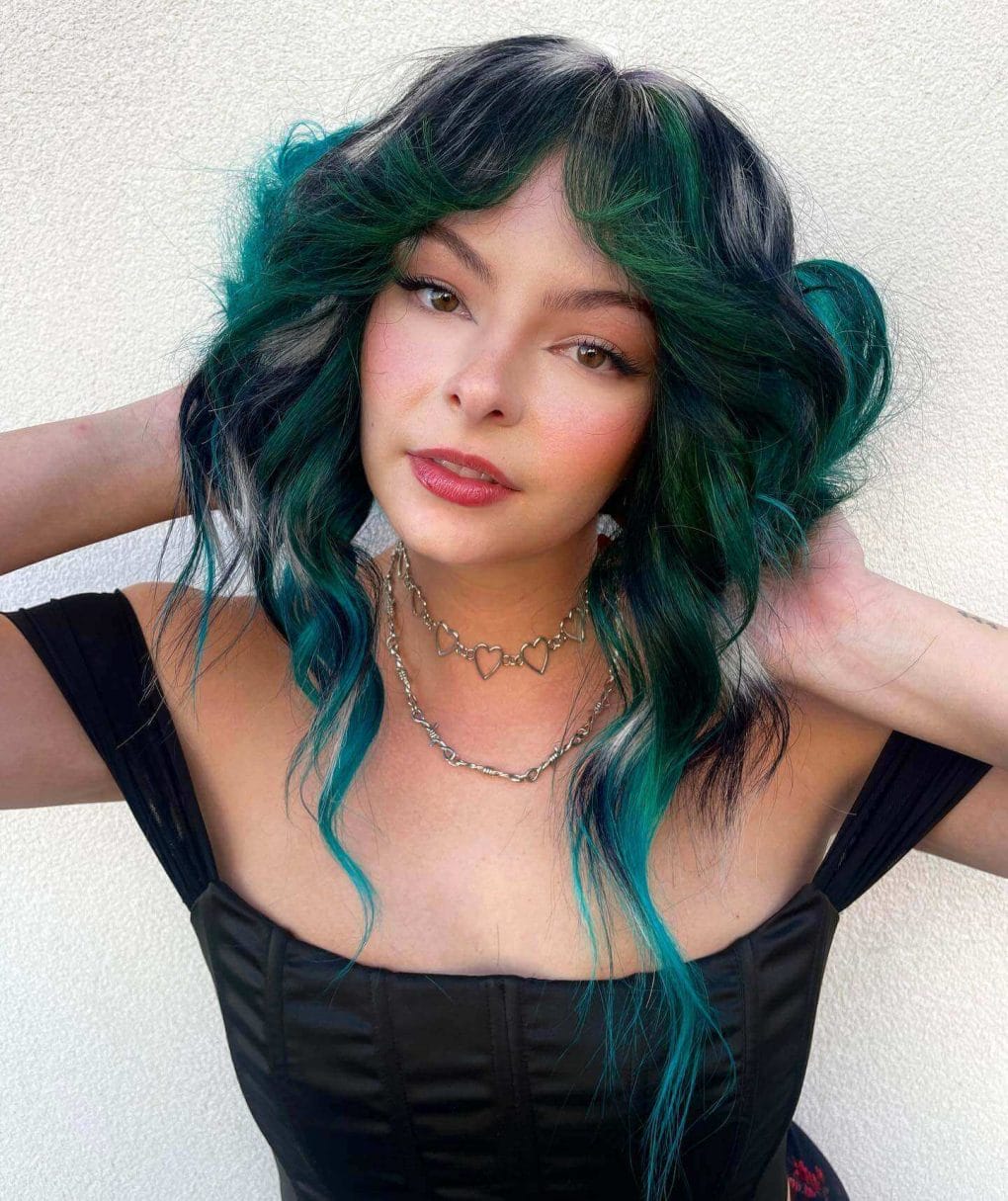
Black base, vivid teal woven through the layers, and full bangs: this is the look for a cool-season event where you want the hair to do the talking. The collarbone-length shag has voluminous waves, which gives the thick, wavy texture plenty of room to move. The full bangs and shag layers suit oval and heart-shaped faces. Ask your colorist for a collarbone shag with full bangs in black and vivid teal. Root product keeps the waves from falling flat. Teal is a demanding color, so expect regular maintenance to keep it from going green.
Mid-Back Straight Yellow, Green, Blue Blend
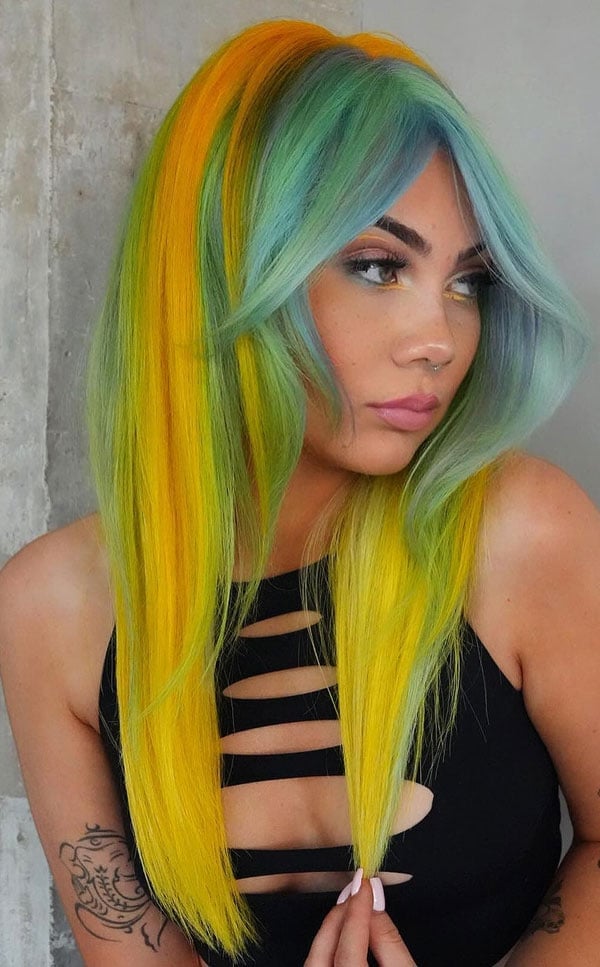
Can fine, straight hair handle a three-color blend without looking weighed down? This version proves yes: a yellow-to-green-to-blue gradient on mid-back length hair with long layers and curtain bangs, all kept sleek and straight. The fine texture lets each saturated shade show clearly instead of muddling together, and the face-framing pieces add movement that a blunt cut would lack.
Ask your colorist for: mid-back straight hair, yellow green blue blend, curtain bangs. A smoothing serum keeps the finish glossy. The lightest shade at the roots means you will need a toning appointment every four to six weeks to keep the yellow from turning brassy, but the grow-out is less obvious than with a dark root.
Mid-Back Neon Streaks and Orange Ends
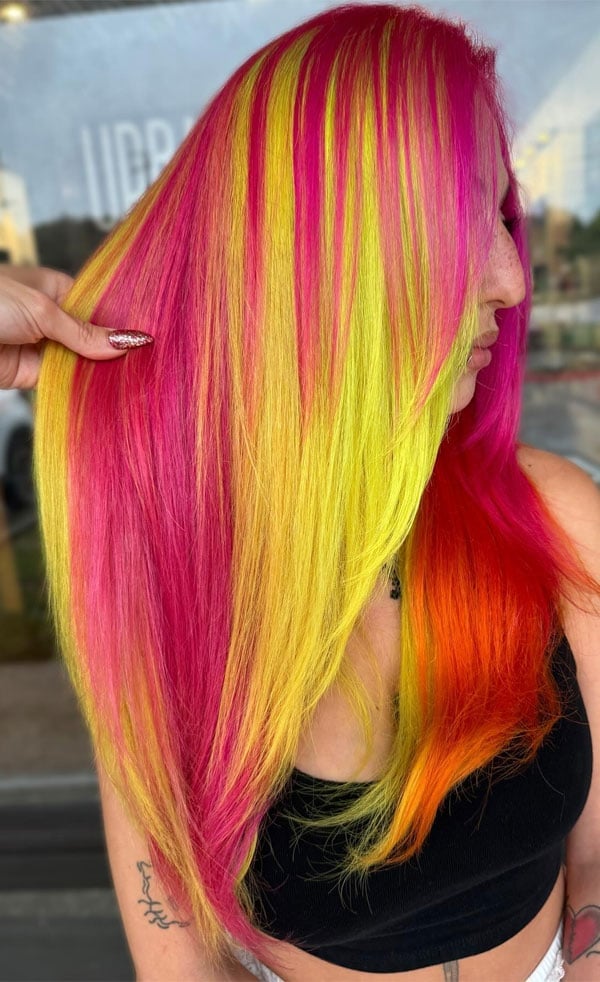
The design here is deceptively precise: thick, straight mid-back length hair gets dense streaks of neon pink and vivid yellow placed throughout, then the ends shift into a unified bright orange. Each streak is painted separately rather than blended, which creates the sharp contrast you see from the side view. The orange ends act as a gradient anchor, so the whole look reads as intentional rather than scattered.
Ask your colorist for: mid-back straight hair, neon pink yellow streaks, orange ends. The technique requires a lightener lift to pale yellow before the neon tones can deposit properly, so plan for a full day in the salon. Because the streaks are distinct, any fading shows up fast, expect a refresh every three to four weeks if you want the pink and yellow to stay that saturated.
Mid-Back Vivid Color Blocking
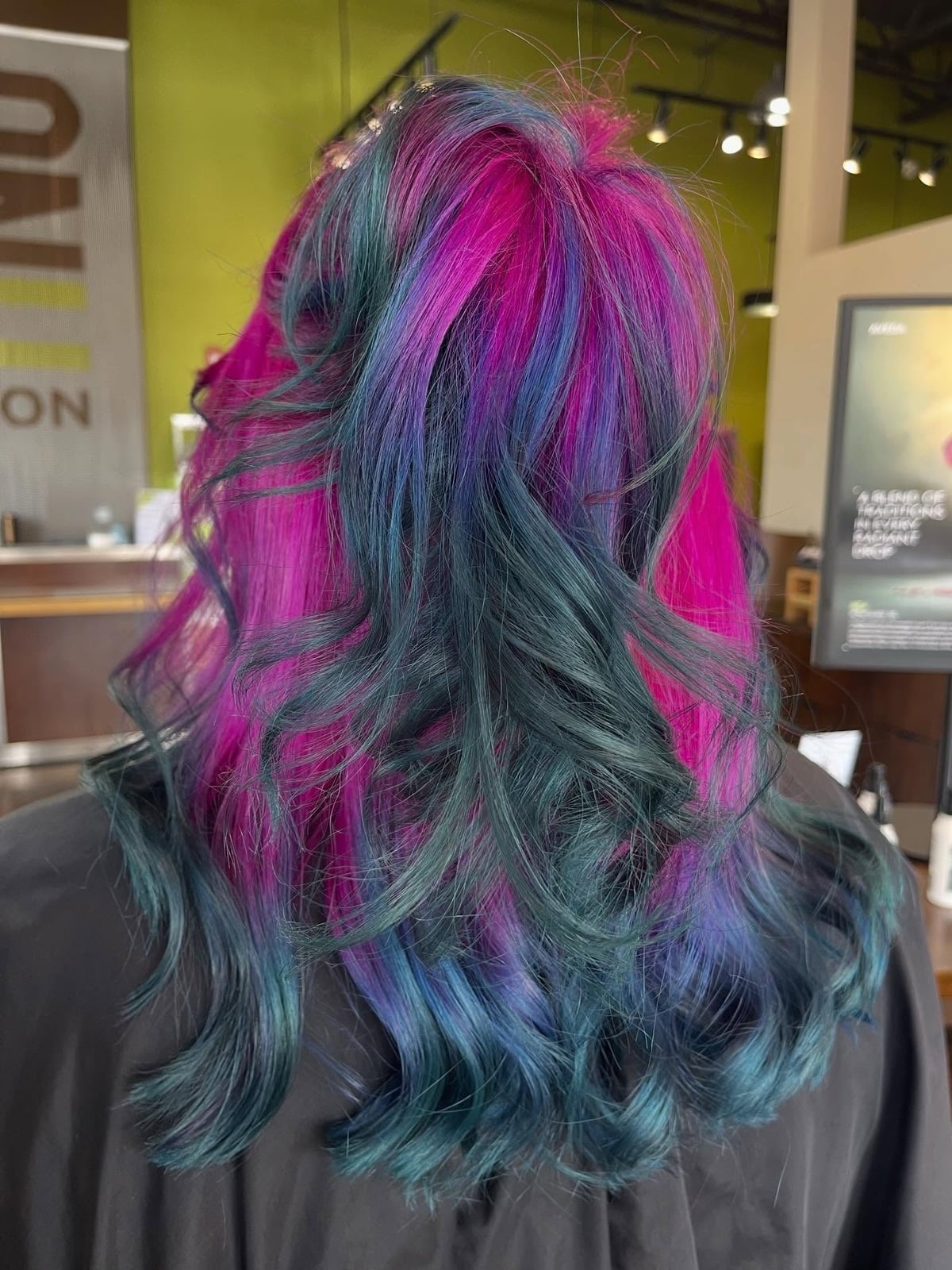
Here, bold pink, teal, and blue are applied in distinct panels on mid-back length thick wavy hair with long layers. Ask your colorist for: mid-back vivid color blocking, pink, teal, and blue. Specify that you want the sections separated by a clear line rather than a soft transition, and bring a reference so the placement matches what you imagine. The loose waves soften the edges slightly without compromising the block effect, which is useful if a hard line feels too graphic.
Mid-Back Dark Blue to Light Blue Gradient
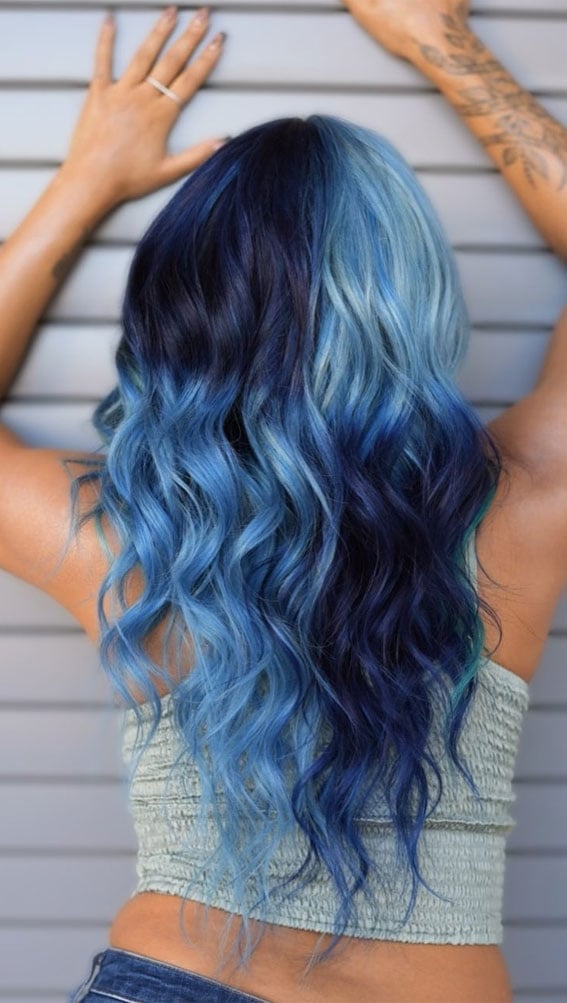
If a rainbow feels like too much commitment, a single-color gradient offers a quieter version of the same idea. This one goes from dark navy at the roots to a bright, almost icy blue at the ends on mid-back length wavy hair with long layers. Compared to a multi-tonal vivid, it looks more polished and less like a festival look, think office-adjacent instead of after-party. The waves help the transition look dimensional, which is key when you are working with one color family.
Ask your colorist for: mid-back dark blue to light blue gradient, long layers. The darker root means you can stretch touch-ups to six weeks, but the light ends will grab any mineral deposits in your water. A purple shampoo once a week keeps the lighter blue from turning greenish, which is the main thing that ages this color.
Mid-Back Blue to Red Ombré
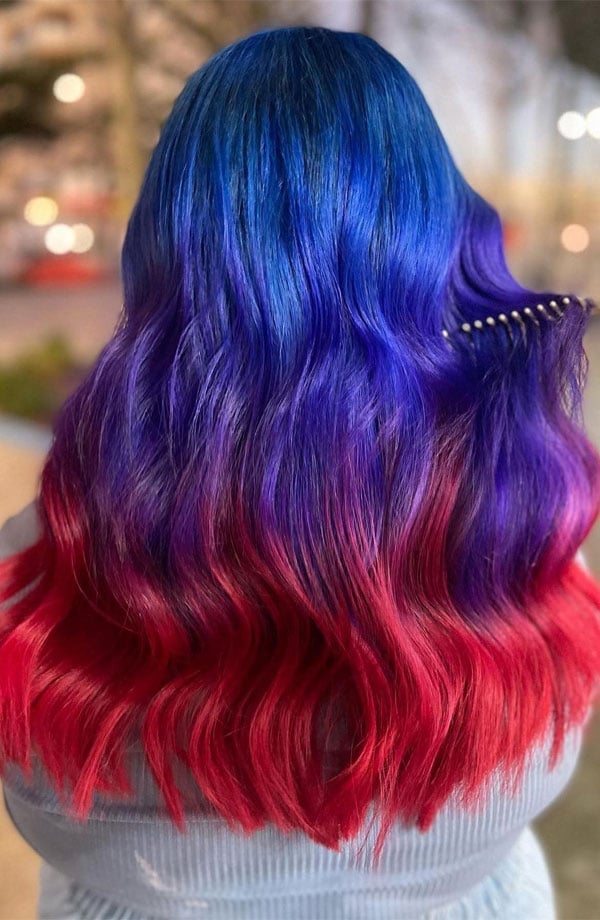
A three-stage ombré from deep blue through purple to bright red on thick, wavy mid-back length hair. The color transition is smooth and spans the full length, so each section has time to read clearly before the next one starts. Thick hair actually works in your favor here: the weight and density hold the pigment longer and let the gradient show across the full width, rather than getting lost in thin strands. The waves add texture that keeps the ombré from looking like a dip-dye line.
Ask your colorist for: mid-back blue to purple to red ombré. The upkeep is the trade-off. Blue fades fastest, red stains longest, and purple sits somewhere in the middle. Expect to use a color-safe shampoo every wash and a toning mask every other week to keep the blue from going muddy. A gloss treatment at the six-week mark helps all three tones stay distinct rather than bleeding into a single dark shade.
Mid-Back Straight Yellow to Blue Rainbow With Blunt Bangs
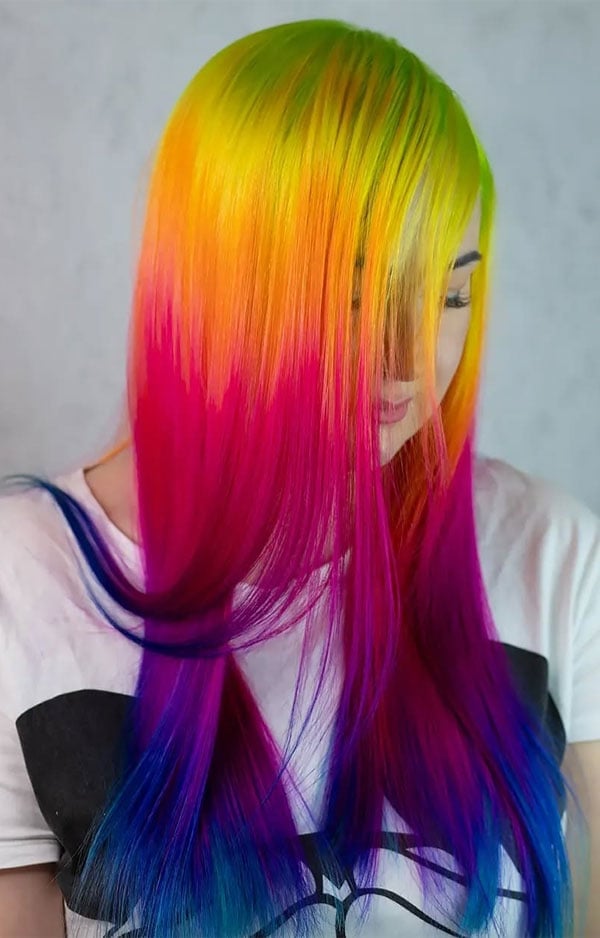
Can a rainbow gradient and blunt bangs coexist without turning into a daily wrestling match? On fine, straight hair at mid-back length, yes, but only with a flat iron and a standing appointment. The yellow-to-blue transition is deliberate, but those bangs will need a trim every three weeks to stay above your eyebrows. Ask your colorist for: mid-back straight hair, blunt bangs, yellow to blue rainbow gradient. This is a salon-only project: the bleach work alone takes about four hours, and the fine texture means the color fades faster than on coarser strands.
Long Voluminous Updo With Multi-Color Strands
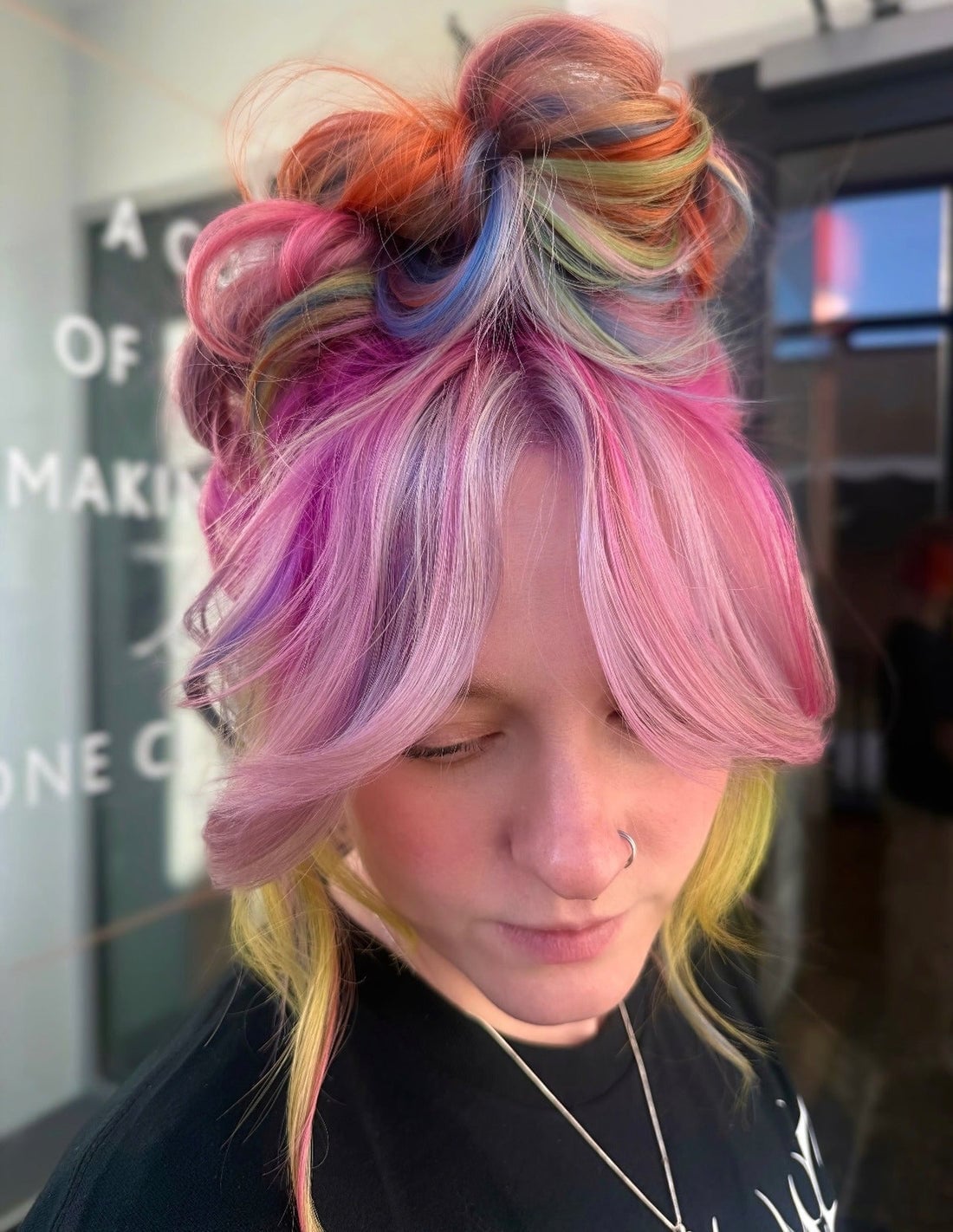
This style weaves pink, yellow, blue, orange, and purple strands so each section sits deliberately, like separate ribbons, even when twisted into an updo. It works well for a wedding or holiday party because the volume and face-framing pieces keep it from feeling too formal. Ask your colorist for: long layered hair, voluminous updo, multi-colored strands. Thick, wavy hair holds the shape without collapsing, and the loose curls let the colors show clearly.
The strands stay distinct even after the updo comes down. A side part and a few wispy pieces around the face keep the look from feeling like a costume. The upkeep is the same as any vivid: a cool-water rinse and a color-safe shampoo every other wash.
Chin Length Wavy Bob Sunset Blend
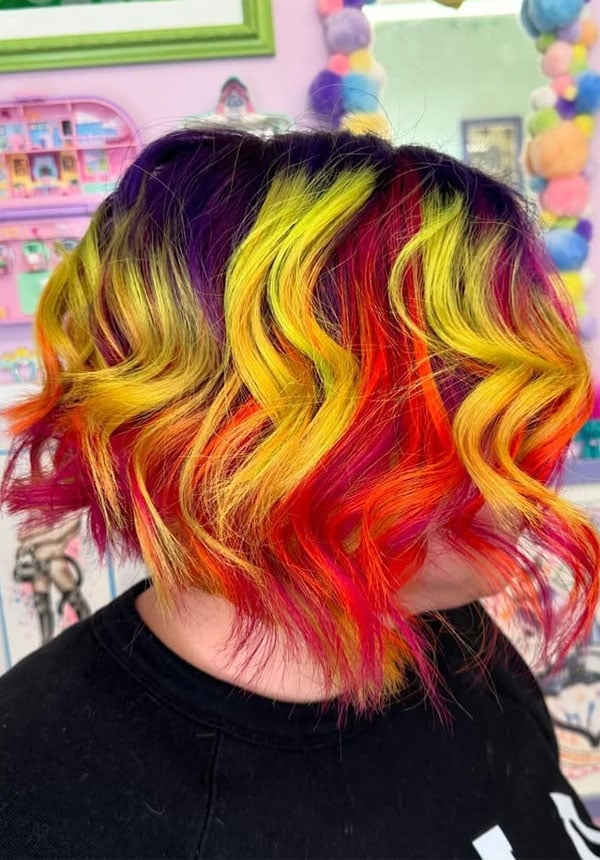
Does a sunset blend work on a bob that barely reaches your chin? When the colors are red, orange, and yellow and the texture is wavy, it does. The side part lets the warm tones wrap around the jaw, which softens a square face and adds dimension to a round one. Ask your colorist for: chin length wavy bob, fiery sunset blend. Medium density hair holds the waves without going flat, and a texturizing spray on damp strands keeps the shape for two days. The warm shades fade warmer, so a color-depositing conditioner in a copper tone will stretch the time between salon visits to about six weeks.
Chin Length Bob Blue to Yellow Gradient
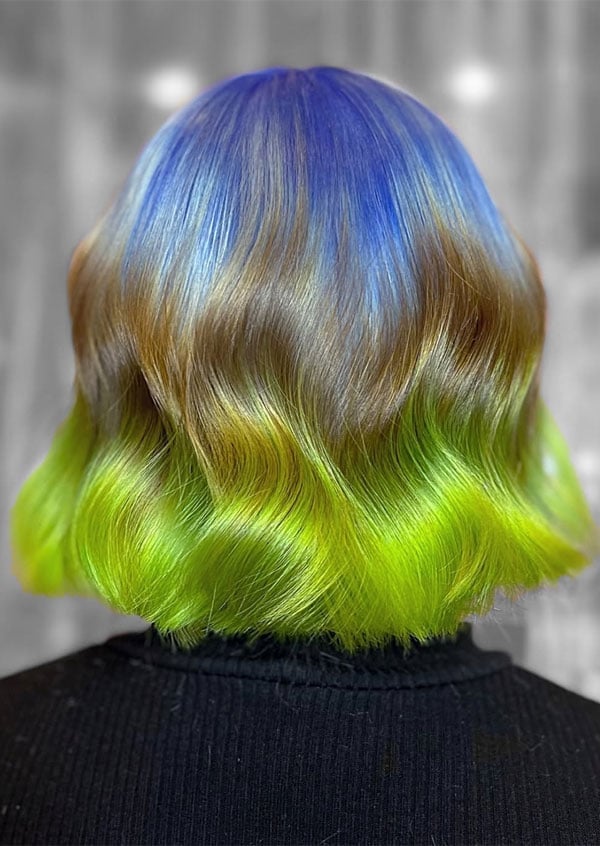
The gradient here moves from blue at the roots through green to neon yellow at the ends, which means the colorist had to pre-lighten the ends to a pale blonde before applying the yellow. That transition is the trick: each shade is painted on wet hair and blended with a damp brush so no hard line appears. Ask your colorist for: chin length bob, blue to green to yellow gradient. The back view with a middle parting shows the symmetry of the fade, and the soft waves keep the colors from looking striped. Medium density hair at chin length gives the gradient enough surface to read clearly without needing extra length. Blue and green tones are notoriously stubborn to remove, so commit to this one for a few months.
Chin Length Bob With Color Stripes
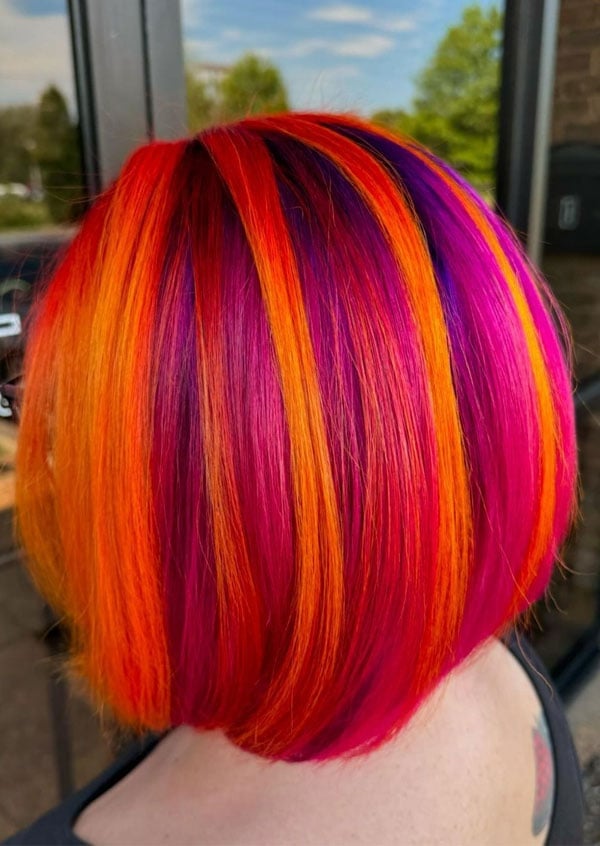
This is not a foil-and-paint situation; each stripe is sectioned off and saturated individually so the colors stay pure rather than bleeding into one another. Ask your colorist for: chin length bob, pink orange purple stripes. Fine, straight hair is actually ideal here: the sleek surface lets the stripes read as clean lines rather than fuzzy blocks. To keep the precision, ask for the stripes to be about half an inch wide and placed an inch apart. A smoothing serum after blow-drying will seal the cuticle and keep the colors looking saturated rather than chalky.
Shoulder Length Neon Aqua and Green Split Dye
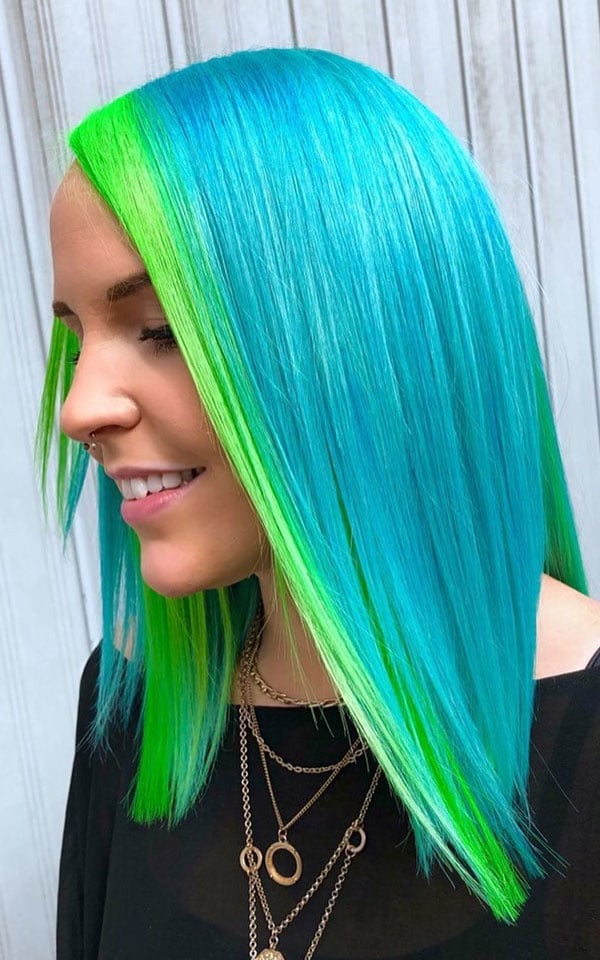
A multi-tonal color melt is a safer bet, but a split dye is a commitment, and this one commits to neon aqua on one side and neon green on the other. Sleek straight styling makes the division clear. Fine, straight hair at shoulder length carries the two-tone contrast best; the straight texture keeps the line crisp. Ask your colorist for: shoulder length straight hair, neon aqua and neon green split dye. This is a salon project. The lightening and two separate vivid formulas take about three hours in the chair.
Short Undercut Bob Vivid Color Blocks
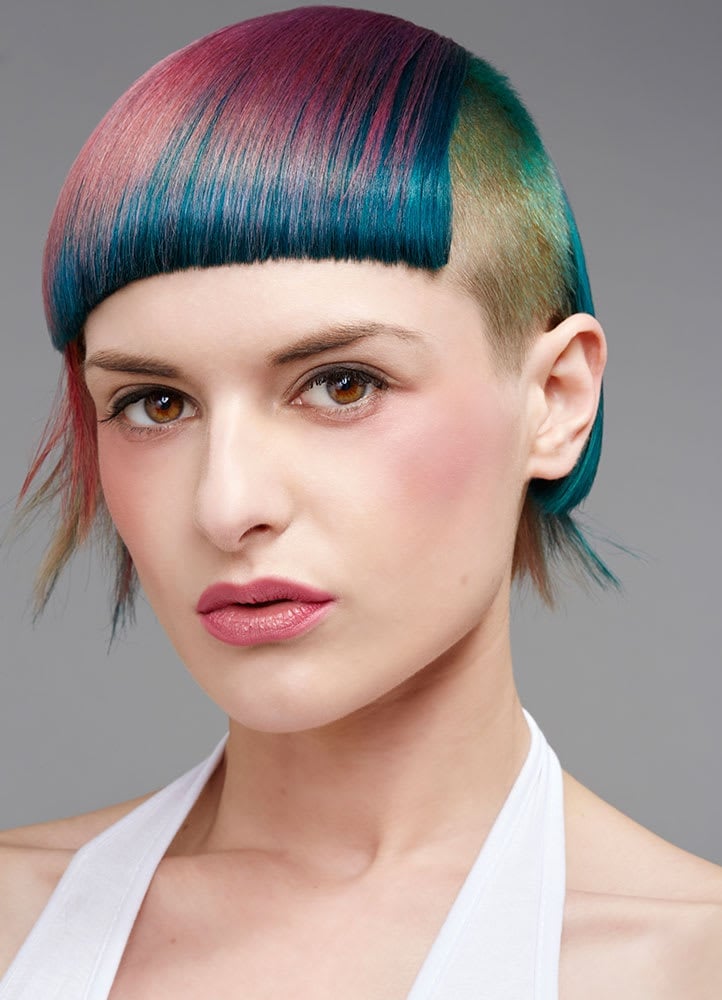
The undercut bob is already a high-maintenance cut, and adding vivid blocks of teal, pink, and green raises the stakes. The ear length, blunt bangs and side parting create a geometric canvas for the three separate color sections. Fine, straight hair holds the sharp color boundaries well. Ask your colorist for: short undercut bob, blunt bangs, teal pink green color blocks. A trim every four weeks keeps the undercut shape clean, and the vivid tones need a toning appointment every three to four weeks. The real drawback is the grow-out: the undercut demands consistent upkeep, and the color blocks will shift as the hair grows.
Final Thoughts
Before you book the appointment, consider your maintenance commitment. Darker vivids and balayage techniques grow out more gracefully than stark root-to-tip applications. For lower upkeep, choose a root shadow or a color melt that blurs the grow-out line. Fine hair benefits from a single saturated shade rather than multiple lightening layers; thick hair can handle more complex color blocking without looking busy.
- Wash hair with cool water and color-safe shampoo to preserve vibrancy.
- Use a color-depositing conditioner or mask weekly to refresh tones.
- Avoid heat styling or use a heat protectant spray to prevent color fade.
- Schedule professional toning appointments every 4-6 weeks for upkeep.
- Consider a color-safe leave-in treatment to maintain hair health and shine.
Embrace the bold. Vivid colors are an art form for your hair.
