

Stitch braids build a clean, geometric pattern right at the scalp, turning protective styling into deliberate design. This season, the focus is on precision: sharp part lines, symmetrical sections, and a polished finish that keeps the look intentional from root to tip.
Across 30 ideas, you get the full range of Classy Stitch Braids Hairstyles, from waist-grazing lengths to sculpted updos and ponytails. Whether your hair is fine or dense, straight or coily, these styles hold their shape without constant fuss. If your braids tend to frizz at the edges or unravel by midweek, the layouts here offer a tighter, longer-lasting solution.
Long Straight Black Stitch Braids With Middle Part
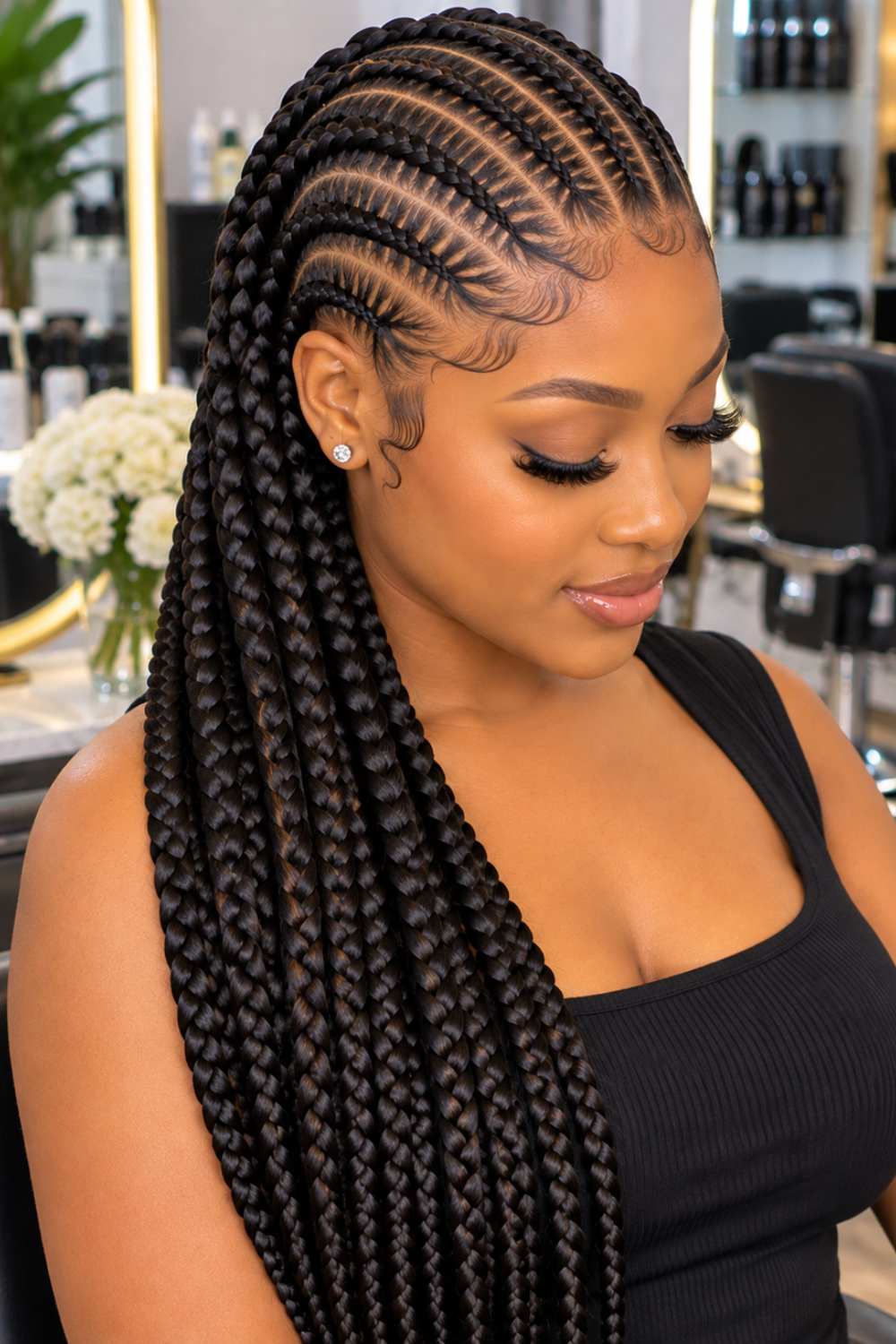
The precision here is the point: each stitch line along the scalp runs in a clean, unbroken row, and the middle part splits them into two even panels. The braids themselves are long, thick, and straight, falling past the shoulders in a deep black that reads as glossy rather than flat. This is a salon-only build, no shortcuts, because the scalp pattern requires a steady hand and even tension throughout.
Ask your stylist for: long, thick stitch braids with a precise scalp pattern. The straight texture and dense thickness help the rows sit tight against the head, which is what gives the style its polished structure. A middle part like this works on most face shapes, though it particularly suits oval and long faces by keeping the visual weight balanced on both sides. Upkeep is straightforward: keep the scalp clean with a light oil applied every few days, and let the braids air dry completely after washing to avoid mildew at the roots.
Thick Geometric Stitch Braids Down The Back
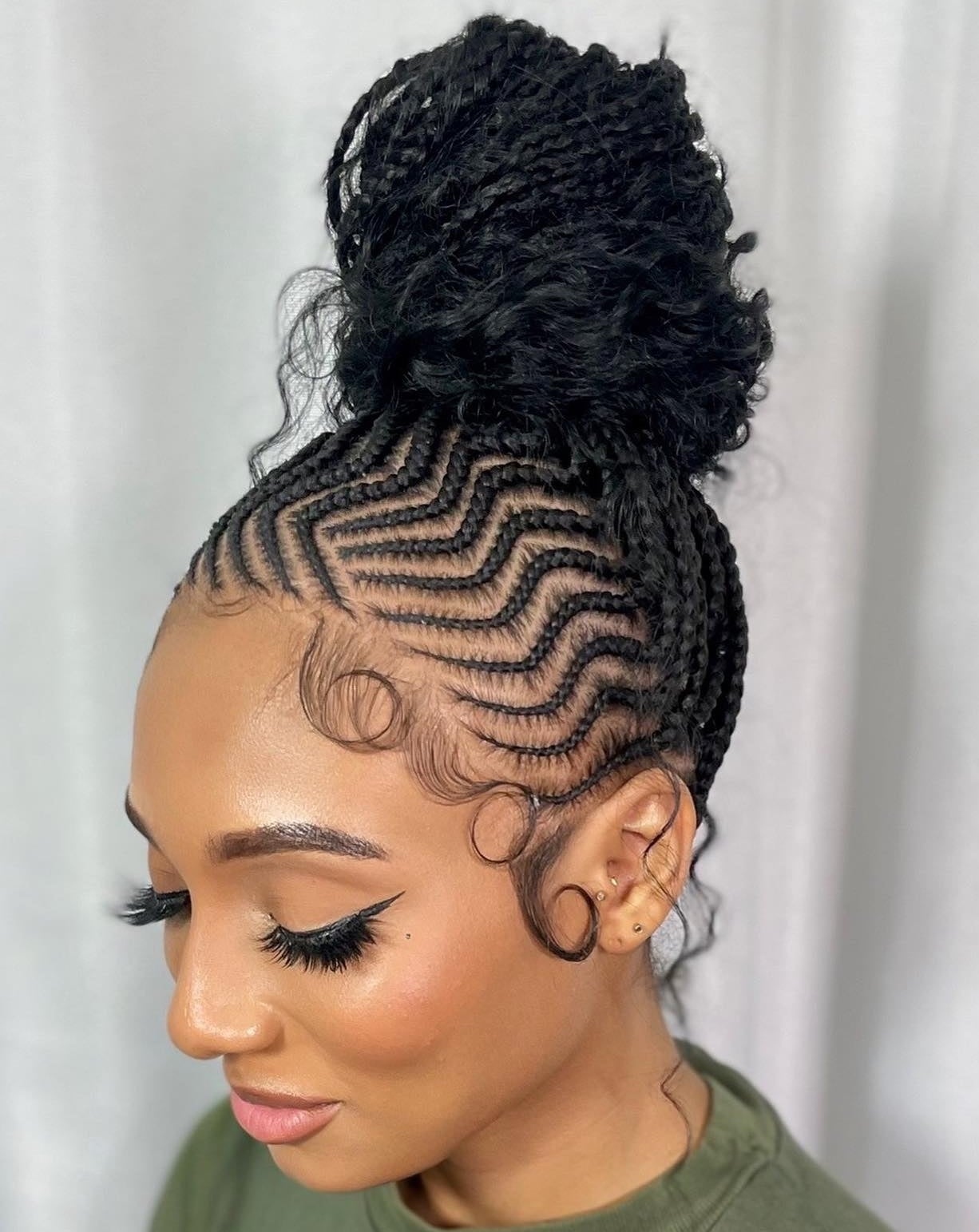
Does a geometric scalp pattern actually suit your face shape, or is it just the photo doing the work? The truth is, the middle part and the symmetrical rows on both sides create a mirror effect that works for round and square faces by adding vertical lines that draw the eye downward. For long faces, the same geometry can feel elongating, so you would want the pattern to sit wider at the temples instead of running in narrow, parallel tracks.
Ask your stylist for: stitch braids with a defined geometric scalp pattern, long and thick. The thick texture is what gives the braids body so they hang with weight instead of wisping out. Straight hair holds the geometric lines most cleanly, but medium texture works too if your stylist adjusts the parting width. The key is the part sharpness: a fine-tooth comb during the initial install keeps each row distinct, and a light spritz of hairspray on the scalp parts maintains that crisp look between washes.
Mid-Back Stitch Braids With Neat Lines
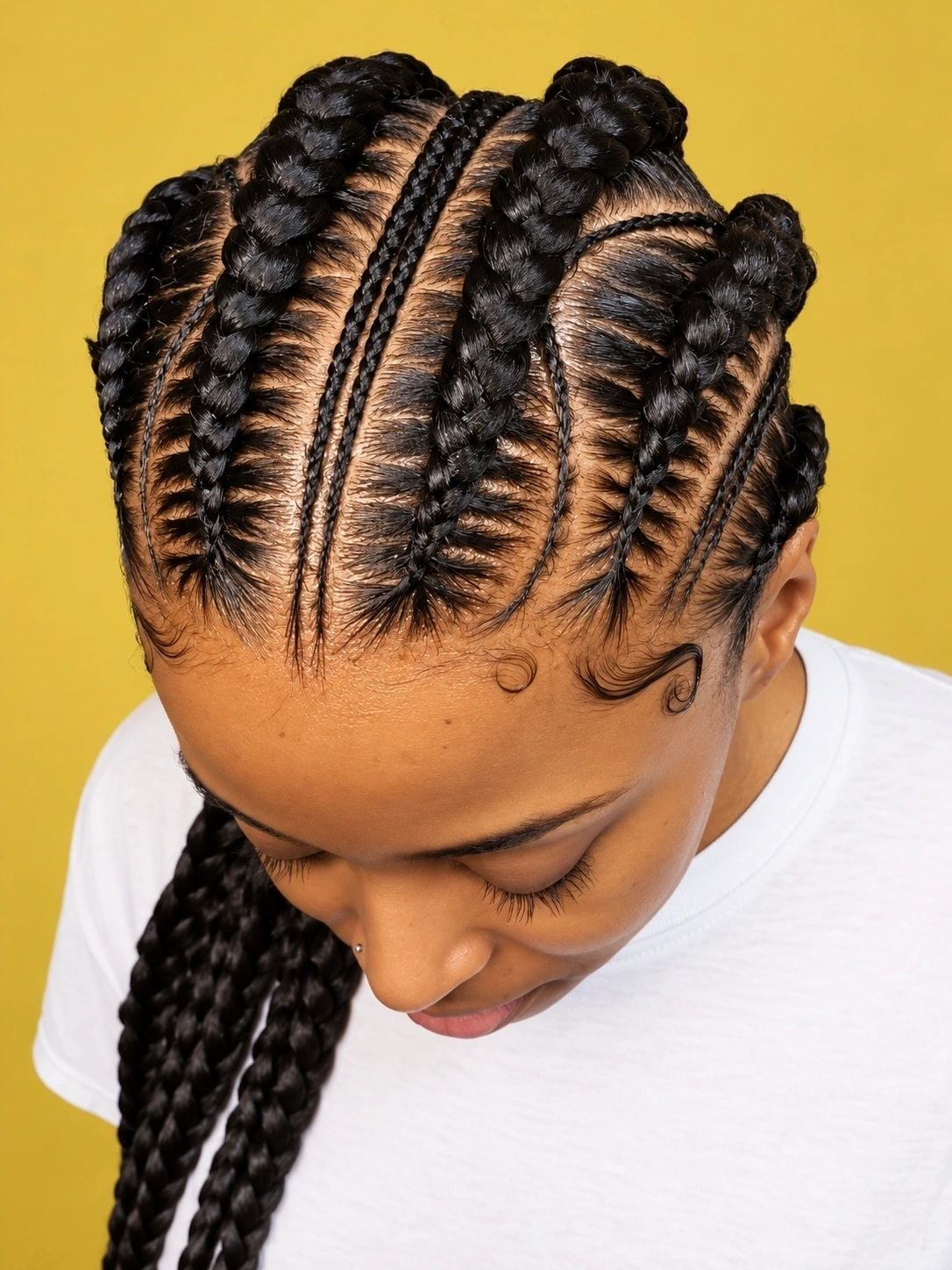
Neat stitch lines are not just about aesthetics: they determine how long the style holds its shape. When each part is clean and even, the braids stay tight against the scalp for longer, which means fewer touch-ups between salon visits. This mid-back version stops at a practical length that keeps the weight manageable while still giving you enough braid to pull back or pin up.
Ask your stylist for: mid-back stitch braids with neat, geometric scalp patterns. The front view of this style shows how the middle part and the symmetrical rows frame the face without bangs. This is a salon-only style, because the parting precision and consistent tension are hard to replicate at home. Daily upkeep is low: a small amount of hairspray on the parts keeps them defined, and you can refresh the braids’ appearance by gently running a lightly oiled palm over the length to smooth any flyaways. Expect to return for a touch-up every four to six weeks as new growth softens the scalp lines.
Elegant Long Stitch Braids Middle Part
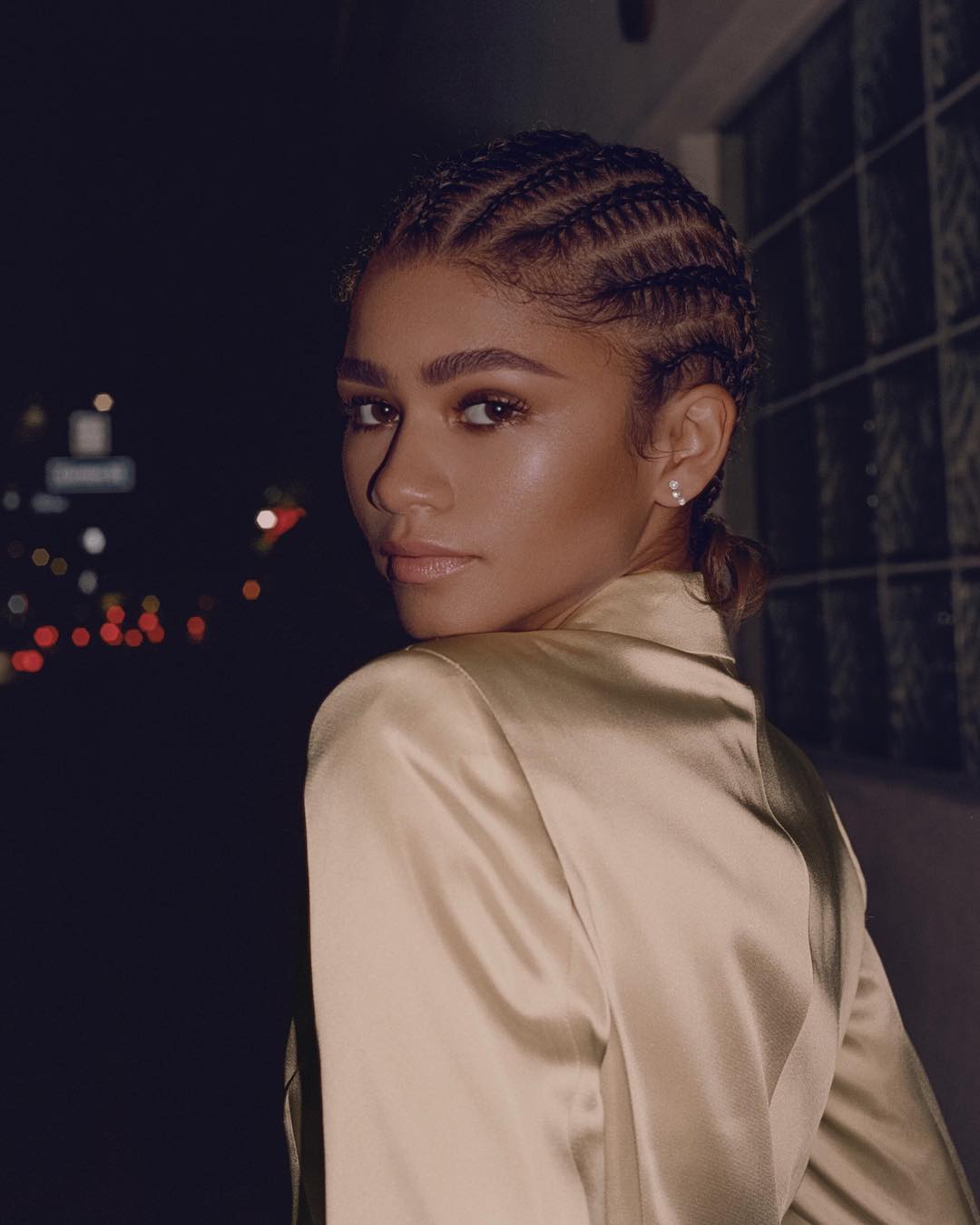
A center part on stitch braids versus a deep side part: the difference is in the visual weight. A middle part distributes the scalp pattern evenly, which gives a calm, symmetrical look. The side part, by contrast, draws attention to one side of the geometric design, making it feel more dynamic. This side view shows a middle part with the braids falling straight and smooth, the clean parting lines acting like a center spine for the whole style.
Ask your stylist for: long stitch braids with very clean, precise scalp lines. The straight texture here is essential: it allows the parts to sit flat against the scalp without kinking or puffing at the roots. The long length means the braids have some weight, which helps them hang evenly rather than flipping or curling at the ends. This style suits oval and long faces best, because the middle part and vertical lines add length rather than width. To keep the parting lines sharp at night, sleep on a silk scarf to reduce friction and prevent the edges from blurring.
Sharp Geometric Scalp Stitch Braids
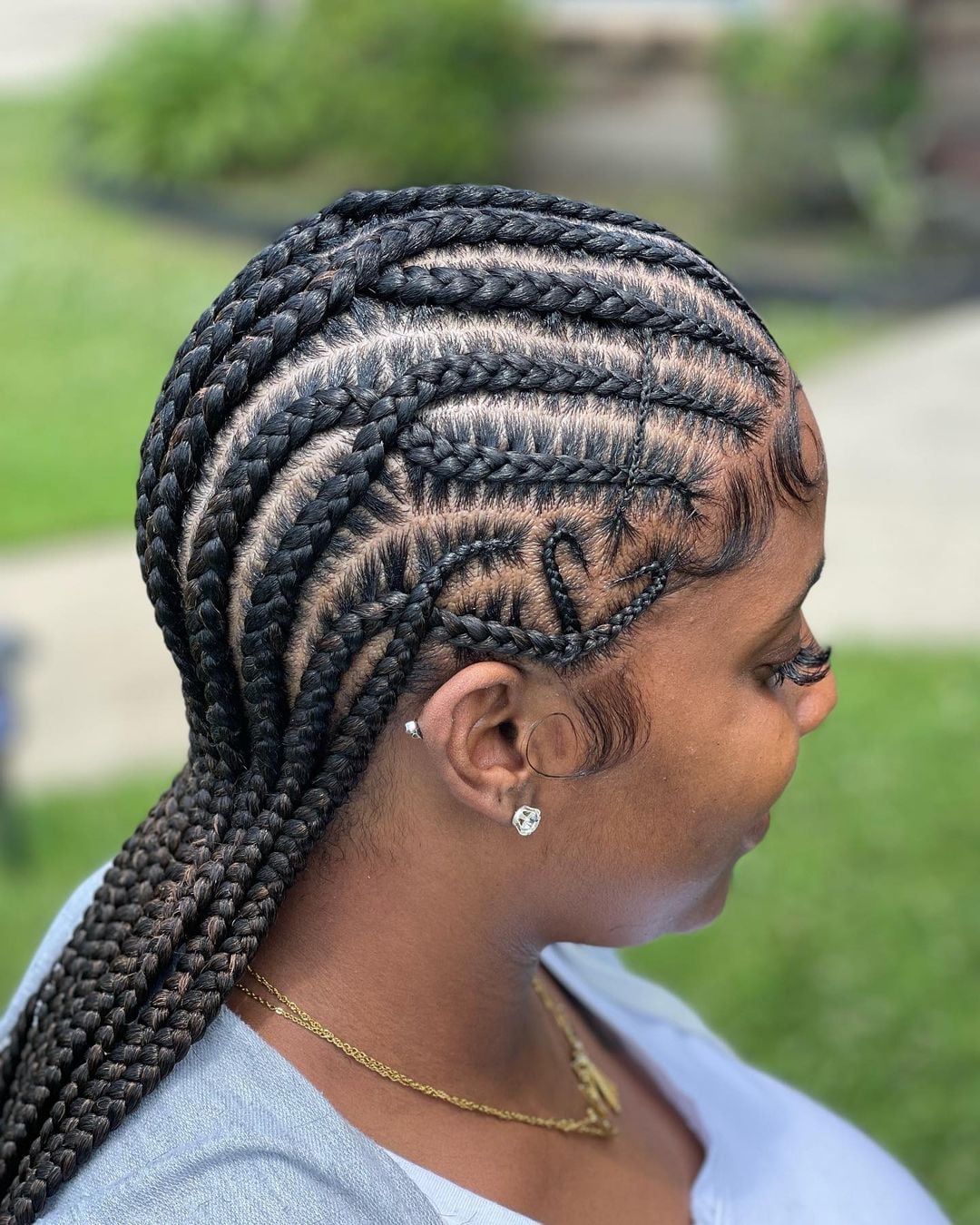
Summer events and outdoor festivals call for a style that does not wilt in heat or humidity, and a sharp geometric scalp pattern delivers exactly that. The braids are long, black, and straight, with the geometric lines running from the hairline back toward the crown in a repeating pattern that shifts as you move. The middle part keeps everything centered and intentional, no need for constant rearranging.
Ask your stylist for: long stitch braids with sharp geometric scalp patterns. The straight texture and medium to thick density are ideal: fine hair might not hold the geometric lines as visibly, and very curly texture can distort the pattern at the roots. The middle part here works to elongate a round face by drawing the eye vertically. For the season, apply a small amount of anti-frizz serum to the braid ends to keep them smooth through humid days. This style requires a salon visit, so book a full installation session a few days before your event to allow the braids to settle.
Intricate Geometric Pattern Stitch Braids
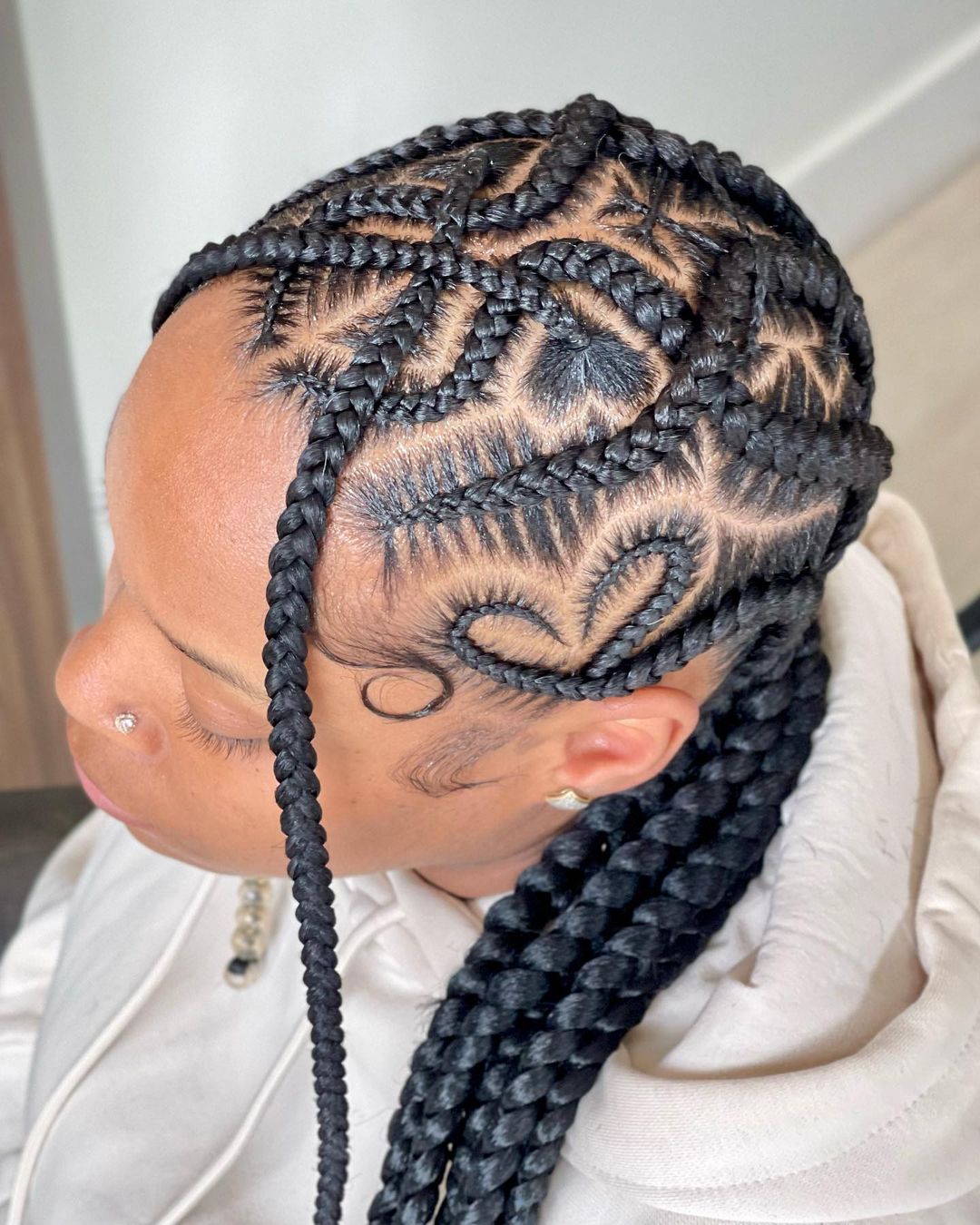
The geometric pattern here runs from the hairline back to the crown, each stitch line meeting the next at a precise angle. That level of detail takes a skilled hand and a solid block of time in the salon chair. It works best on straight, medium-density hair that can hold a clean part, and it suits most face shapes because the pattern stays on the scalp. Ask your stylist for: stitch braids with intricate geometric scalp patterns. The hours involved and the fact that any regrowth will blur the design faster than a looser braid would are the main drawbacks.
Mid-Back Straight Black Stitch Braids
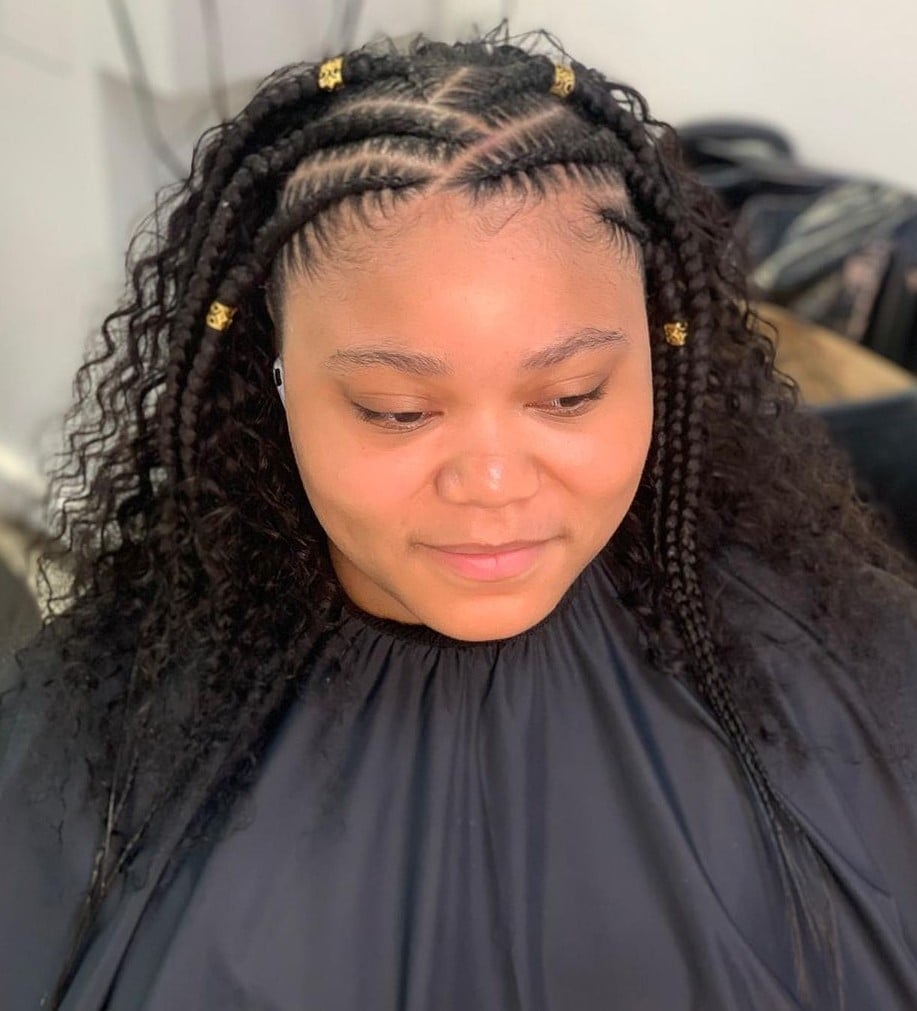
How do you describe a geometric scalp pattern so the stylist knows exactly what you want? Bring a photo and point out the angle of the stitch lines. This version hits mid-back with a middle part and a straight texture that lets every clean line show. The length and the parting together can elongate a rounder face. Ask your stylist for: mid-back straight stitch braids with a geometric scalp pattern. For daily wear, skip heavy creams near the scalp. A lightweight oil on the shaft keeps the braids sharp without making them look greasy by noon.
Close-Up Stitch Braids With Baby Hairs
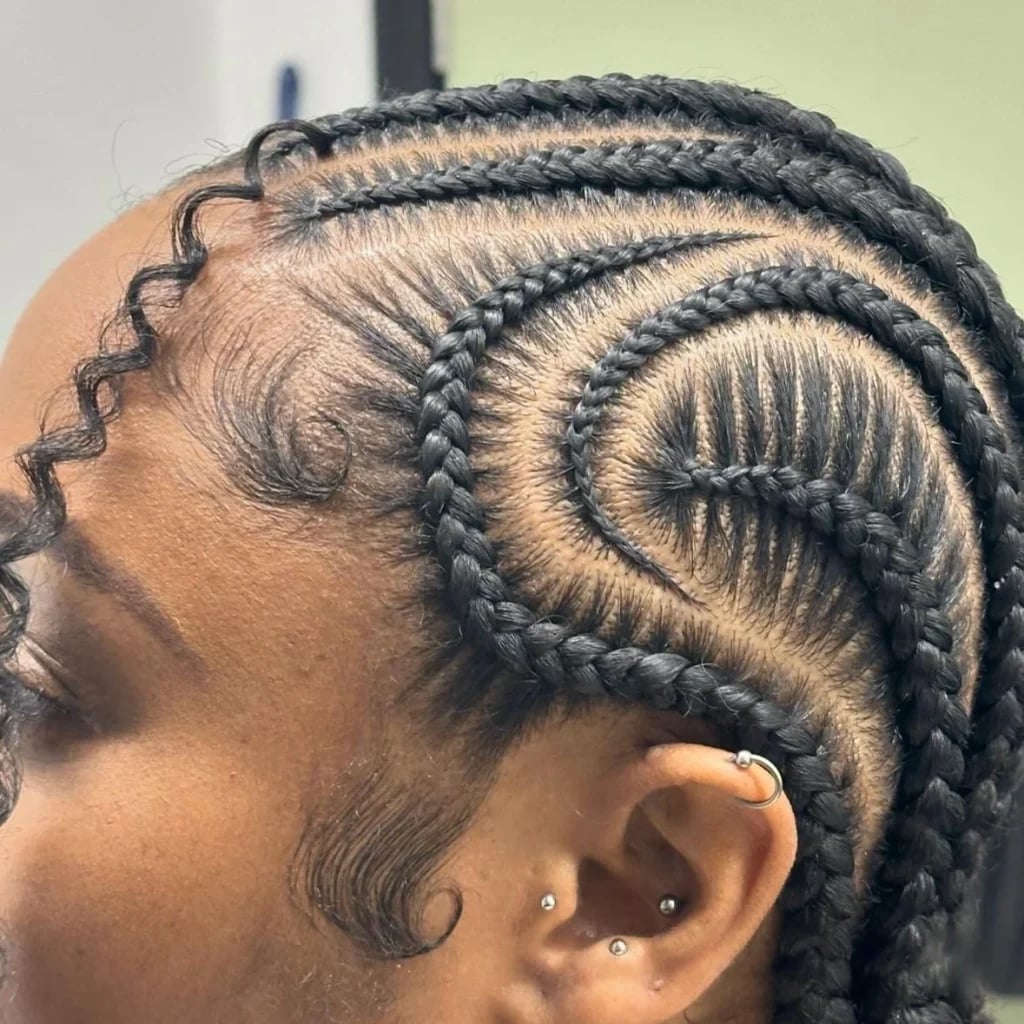
The stitch pattern sits tight against the scalp, each row uniform from the middle part outward. That kind of precision is a salon specialty. A DIY attempt at this density and evenness usually ends in frustration and a redo. Ask your stylist for: stitch braids with neatly styled baby hairs along the hairline. The hair is black, straight and dense, which helps the stitch lines stay clean and defined. To keep the baby hairs in place, use a soft brush and a light gel, then let them air-dry before you move.
Geometric Stitch Braids With Loose Ends
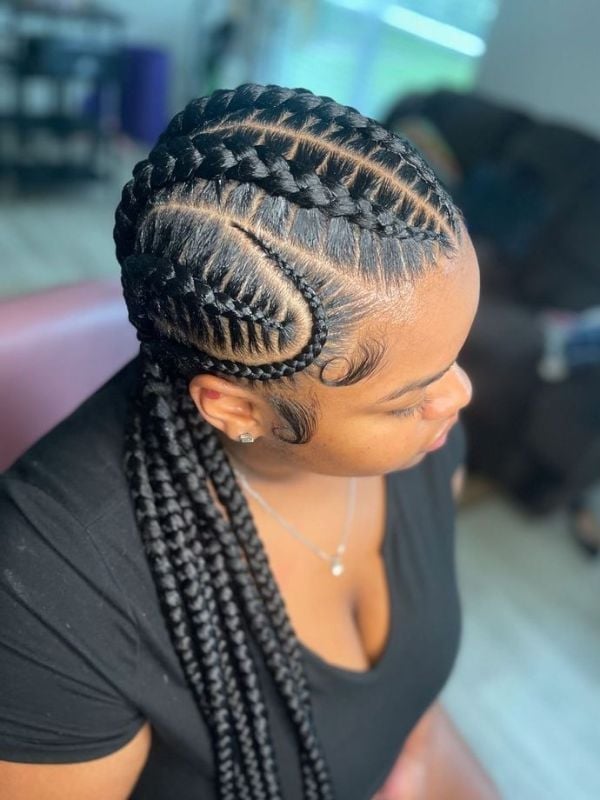
The scalp section is all geometry, but the length past the shoulder is left loose, thick and unbraided. That contrast gives you a structured look without the weight of fully braided ends. The baby hairs along the hairline are neat and add a finished edge. Ask your stylist for: stitch braids with geometric scalp patterns and loose, thick ends, plus baby hairs. To keep the loose sections from drying out, apply a moisturizing serum from mid-length down. You will need to detangle the ends gently, ideally with fingers first and a wide-tooth comb second.
Clean Scalp Stitch Braids Wavy Ends
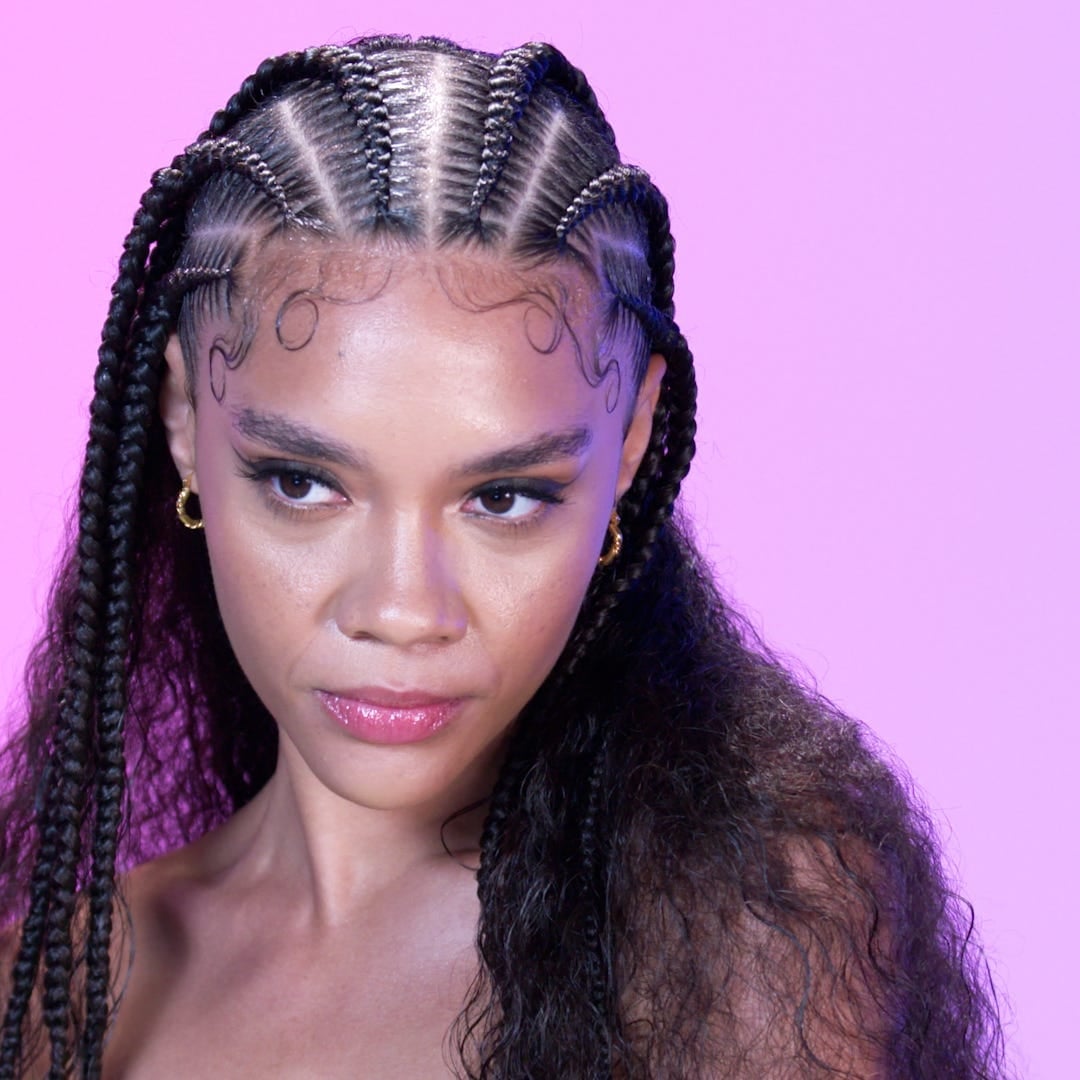
Clean stitch lines run from the middle part back across the crown, then the braids fall into loose, wavy strands. The contrast is intentional: straight geometry on the scalp, soft movement at the ends. This style works best on thick, straight hair that can hold a wave without product overload. Ask your stylist for: stitch braids with clean scalp lines and loose, wavy ends, plus baby hairs. The honest drawback is that the wavy sections can frizz faster than fully braided hair, especially in humidity. A satin scarf at night helps maintain the wave pattern overnight.
Stitch Braids With Long Curly Ends
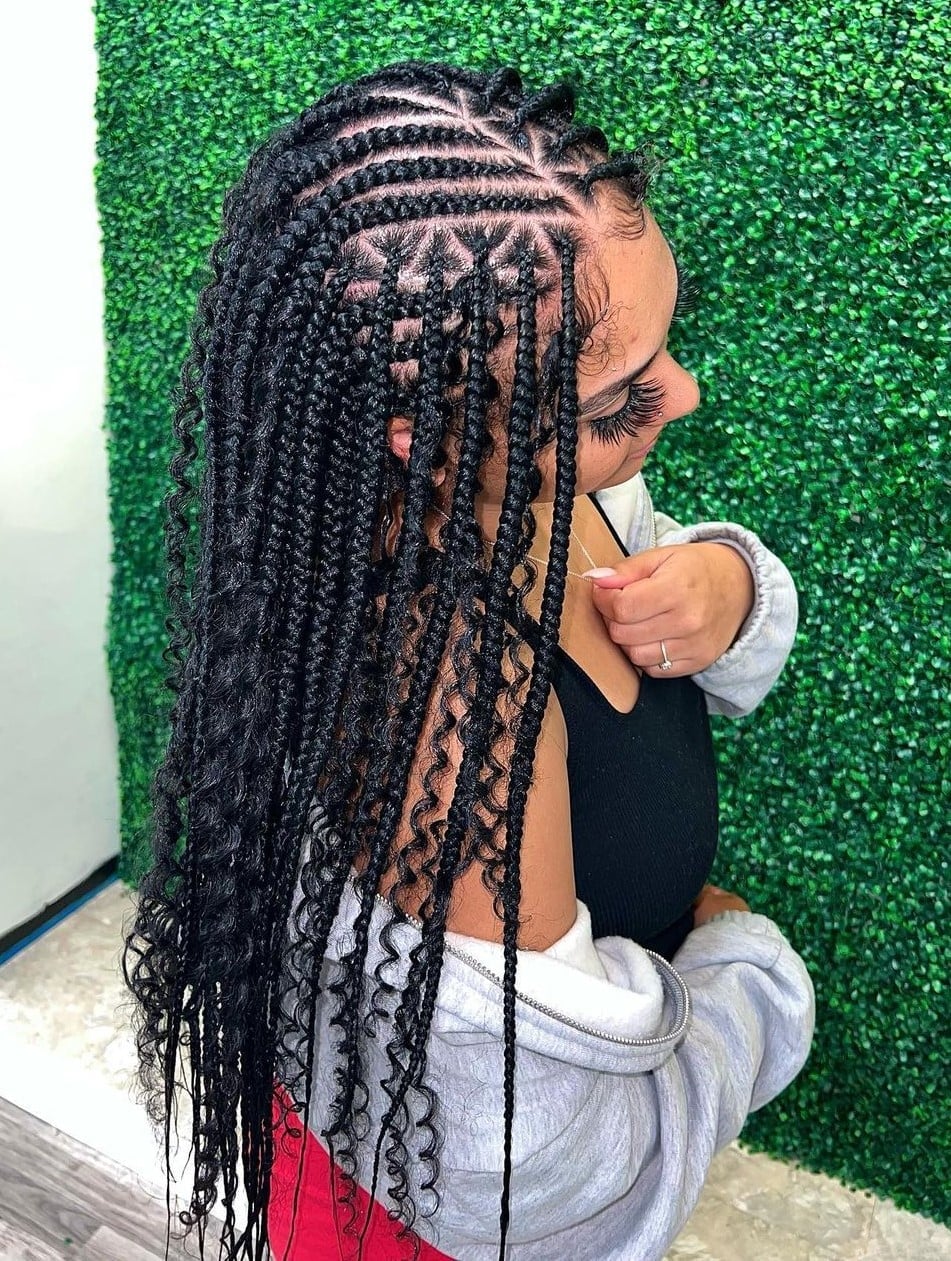
Wondering how to get movement out of a protective style that usually lays flat? The answer is curly ends, and this version does it with long, thick braids that transition from a neat scalp pattern into loose waves. The side view shows off the contrast: precise stitch lines at the root, free-flowing texture everywhere else. Ask your stylist for stitch braids with a neat scalp pattern and long, curly ends.
This style suits most face shapes, thanks to the middle parting and the length that falls past the shoulders. It works best if your natural hair is on the thicker side, since those curls need some volume to register. The waves at the end also mean you get a softer silhouette than a straight braid, which is a bonus if you prefer a less severe line. A curl-defining spray or a light mist of water refreshes the texture between washes.
Wavy Black Box Braids With Stitch Pattern
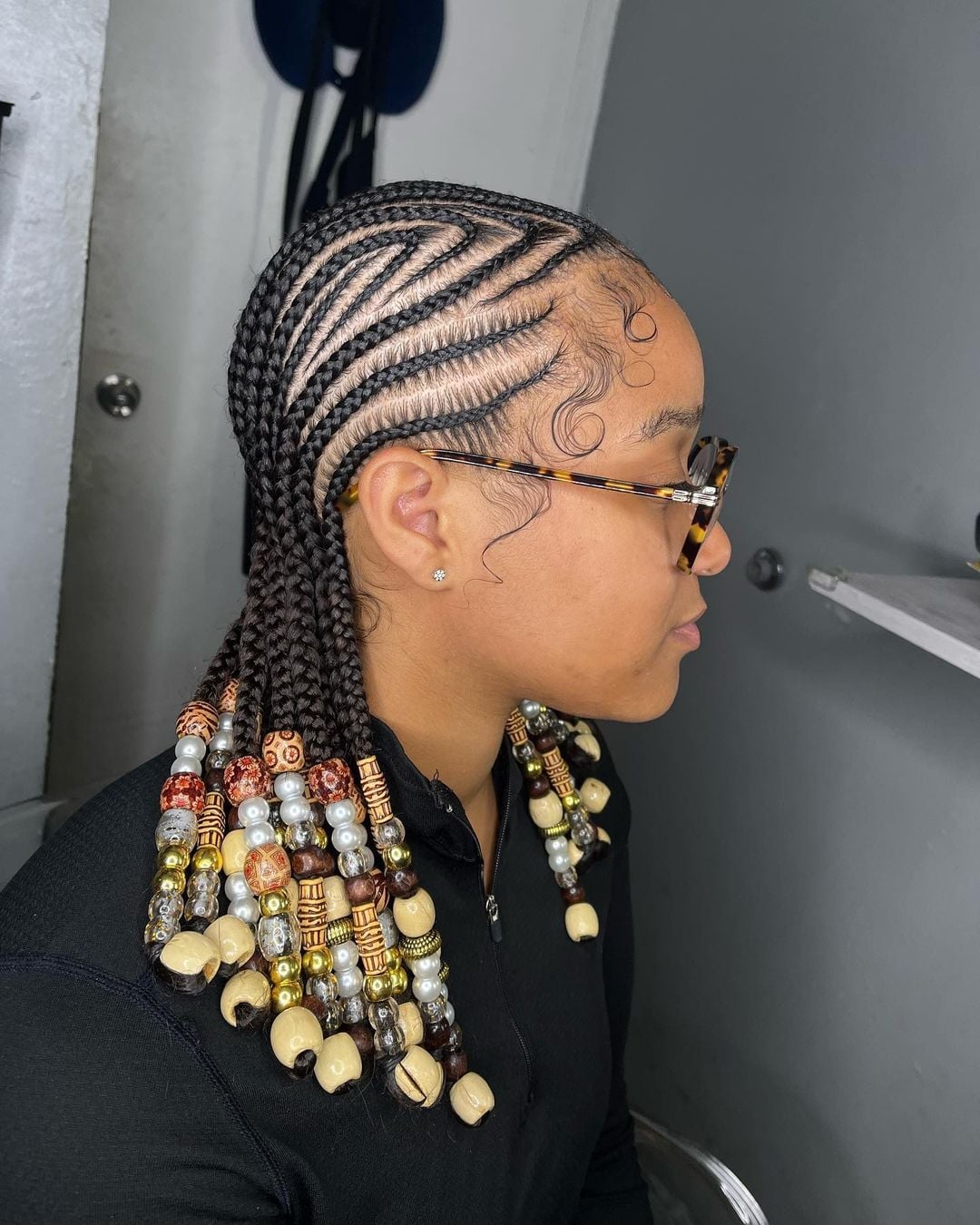
The clever part of this style is how the stitch pattern runs along the scalp while the braids themselves stay wavy and loose. Instead of a solid wall of braid, you get that geometric precision at the root and then soft, curly ends that move freely. A few curly tendrils break up the line around the face, which keeps the front from looking too boxy. Ask your stylist for mid-back wavy box braids with a stitch pattern and curly ends.
The technique here is about spacing: each stitch line needs to be even for the pattern to read clearly, and the braids need to be thick enough to hold the wave without frizzing. This style requires a salon visit. A leave-in conditioner keeps the wavy texture soft and manageable.
Wavy Black Braids With Butterfly Accents
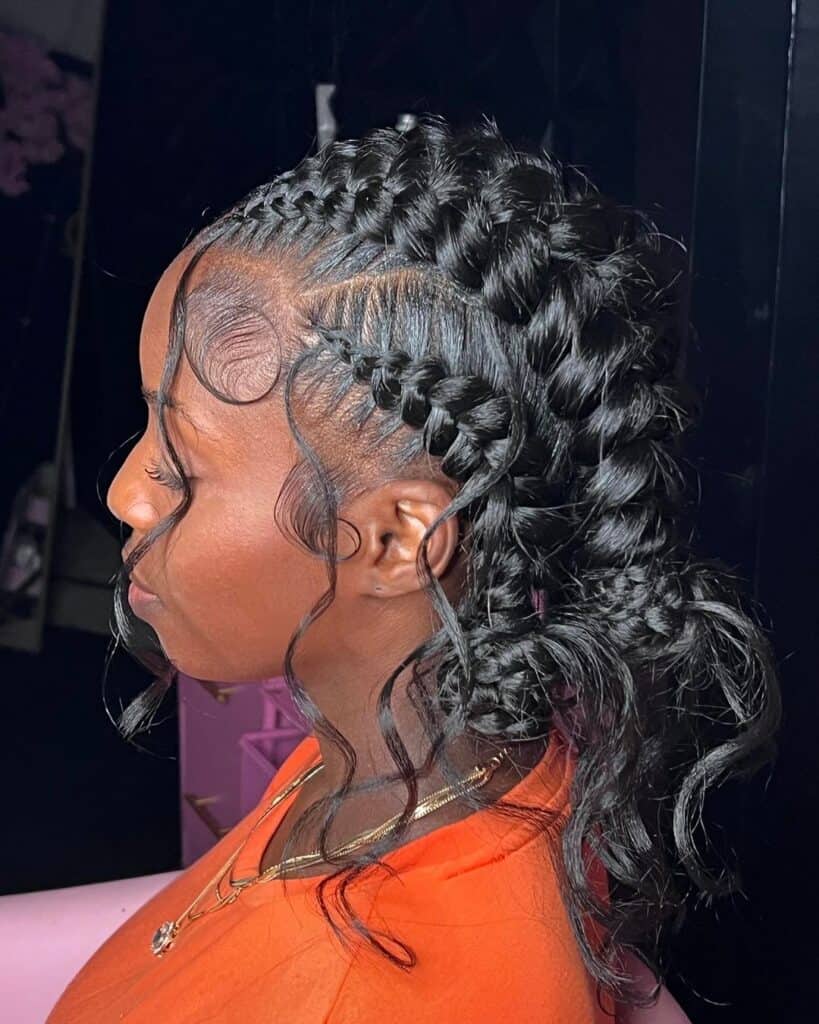
A set of mid-back braids gets an upgrade with small pink and purple butterfly accents woven into the black waves. The stitch pattern on the scalp anchors the style, so the playful details are integrated into the braids. The curly ends add a natural finish, which balances out the bright color pops. Ask your stylist for mid-back wavy braids with a stitch pattern and butterfly accents.
This is a festival or party style, because those accents need to be seen and the braids need to stay put through movement. The butterflies should be securely attached during installation to avoid losing them during wear. The wavy texture helps the accents blend in instead of sitting stiffly on top.
Two Large Braids With Brown Highlights
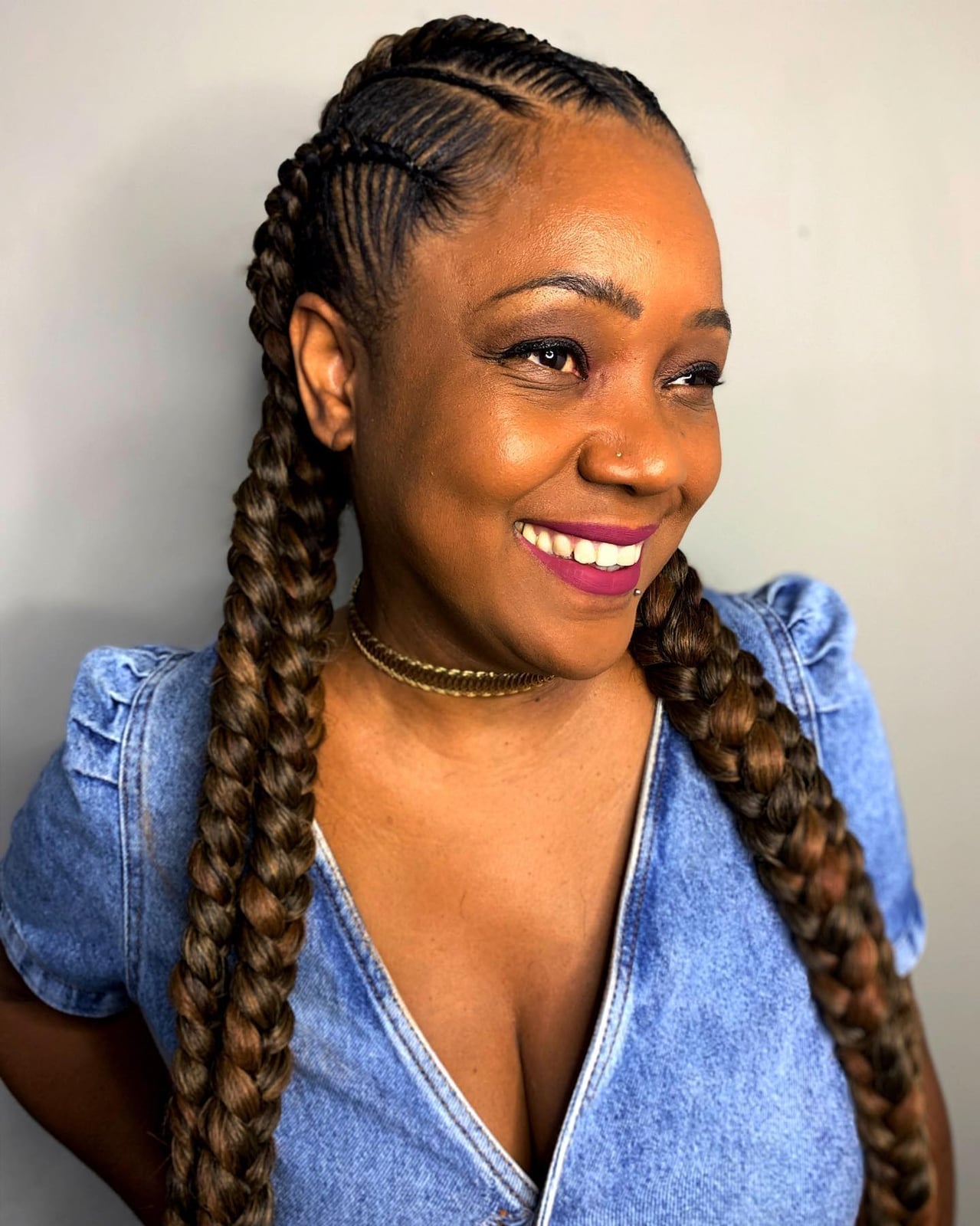
Compare this to a full head of thinner stitch braids and the difference is immediate: two large braids make a bolder statement. The front view shows thick, wavy braids with subtle lighter brown highlights running through a dark brown base, giving dimension without looking busy. The stitch patterns on the scalp stay clean and precise, which keeps the whole thing from feeling heavy. Ask your stylist for two large, wavy stitch braids with subtle brown highlights.
Where a full set of small braids reads as texture, this reads as shape. It suits most face shapes because the braids sit wide at the root and fall to mid-back, creating a strong vertical line. The highlights are the detail that separates it from a solid color style, but they work best when kept subtle. A color-safe shampoo and conditioner maintain the vibrancy of the lighter tones. If you want a style that gets noticed without requiring a full head of braids, this is the one.
High Ponytail With Wavy Ends
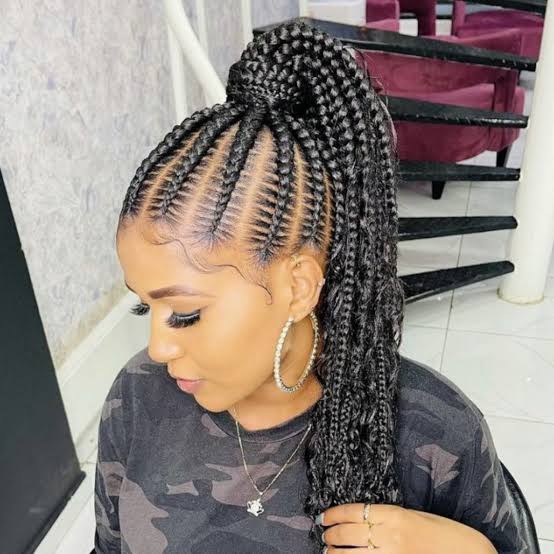
Does a braided ponytail actually hold its shape for more than a day? It does when the braids are stitched into a high ponytail from the start. The front view shows neat stitch lines on the scalp leading into a thick ponytail that falls with wavy texture at the ends. The black color keeps the look sleek, and the ponytail sits high enough to move freely without pulling. Ask your stylist for stitch braids in a high ponytail with wavy ends.
This style requires a salon visit since the ponytail needs to be built into the braiding pattern from the start. Once installed, it holds for several weeks with minimal upkeep. Secure the ponytail with a strong elastic and wrap a few braids around it for a seamless finish. The wavy ends mean you do not need to add heat or extra styling to get movement.
Mid-Back Braided Ponytail With Stitch Lines
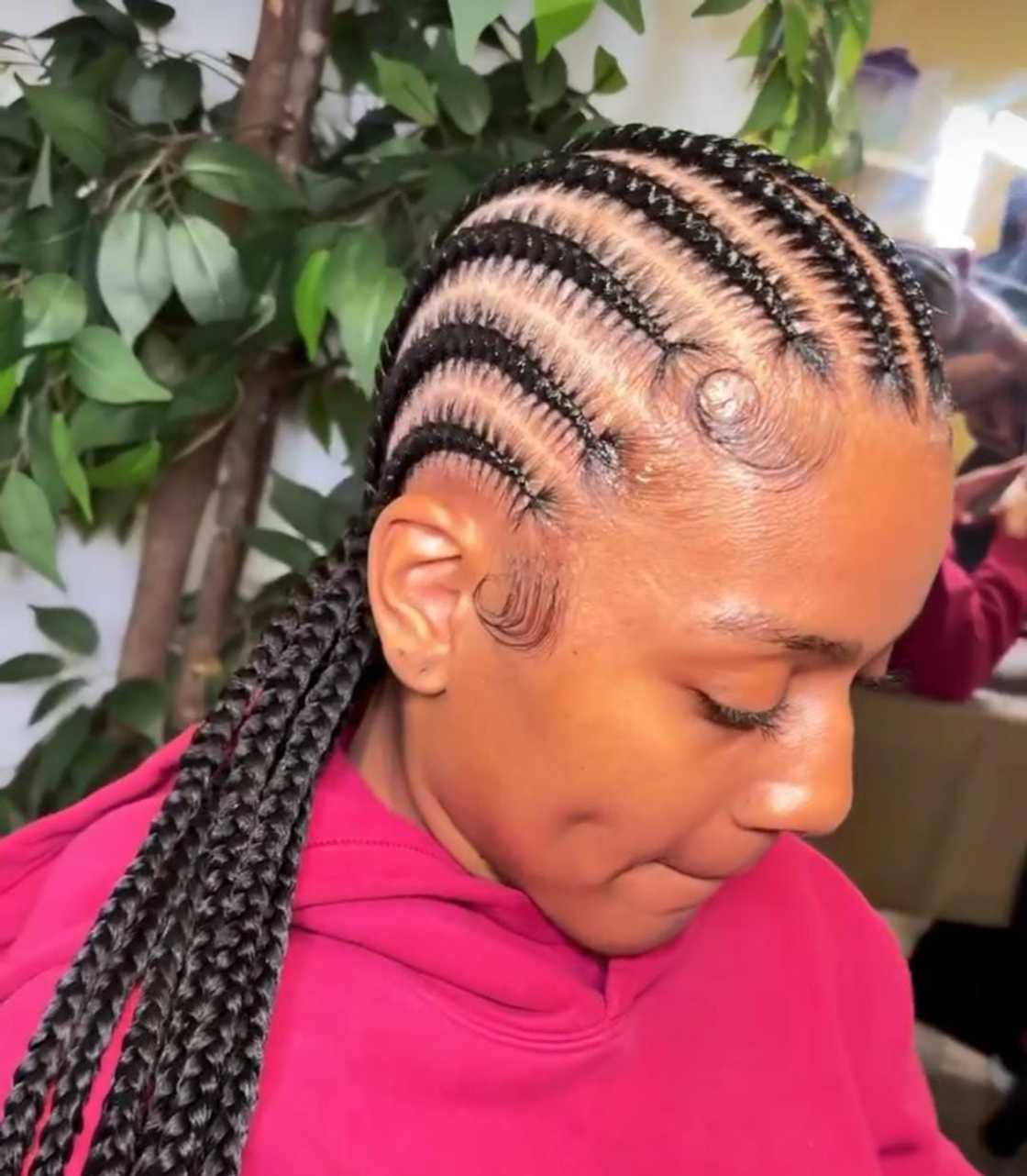
The clean stitch lines across the scalp turn a standard ponytail into a deliberate look. These thick black braids stay straight and dense all the way to the mid-back, with sharp partings that keep the pattern readable from a side view. Tight stitch work puts tension on the hairline over time, so this style works best for thick, resilient strands that can handle the pull. Ask your stylist for: mid-back stitch braids into a sleek ponytail with sharp partings. A few braids wrapped around the elastic base conceal the band and add a finished edge.
Stitch Braids Into Mid-Back Ponytail
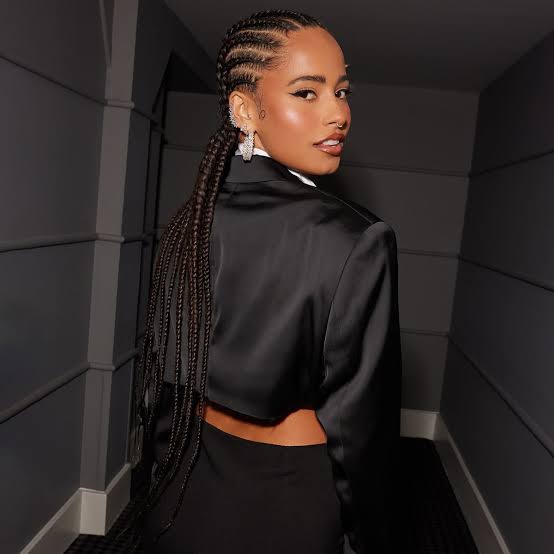
The trick here is how the individual stitch braids feed cleanly into a single ponytail without any visible transition. A middle parting splits the scalp work evenly, and each braid stays straight and thick from root to the mid-back length where they gather. The stylist sections the hair into precise rows, braids each one to the nape, then gathers them into one ponytail that reads as a single mass. Ask your stylist for: stitch braids into a mid-back ponytail with precise scalp patterns. A silk scarf at night keeps the ponytail smooth and the braids from roughening against the pillow.
Mid-Back Ponytail With Geometric Patterns
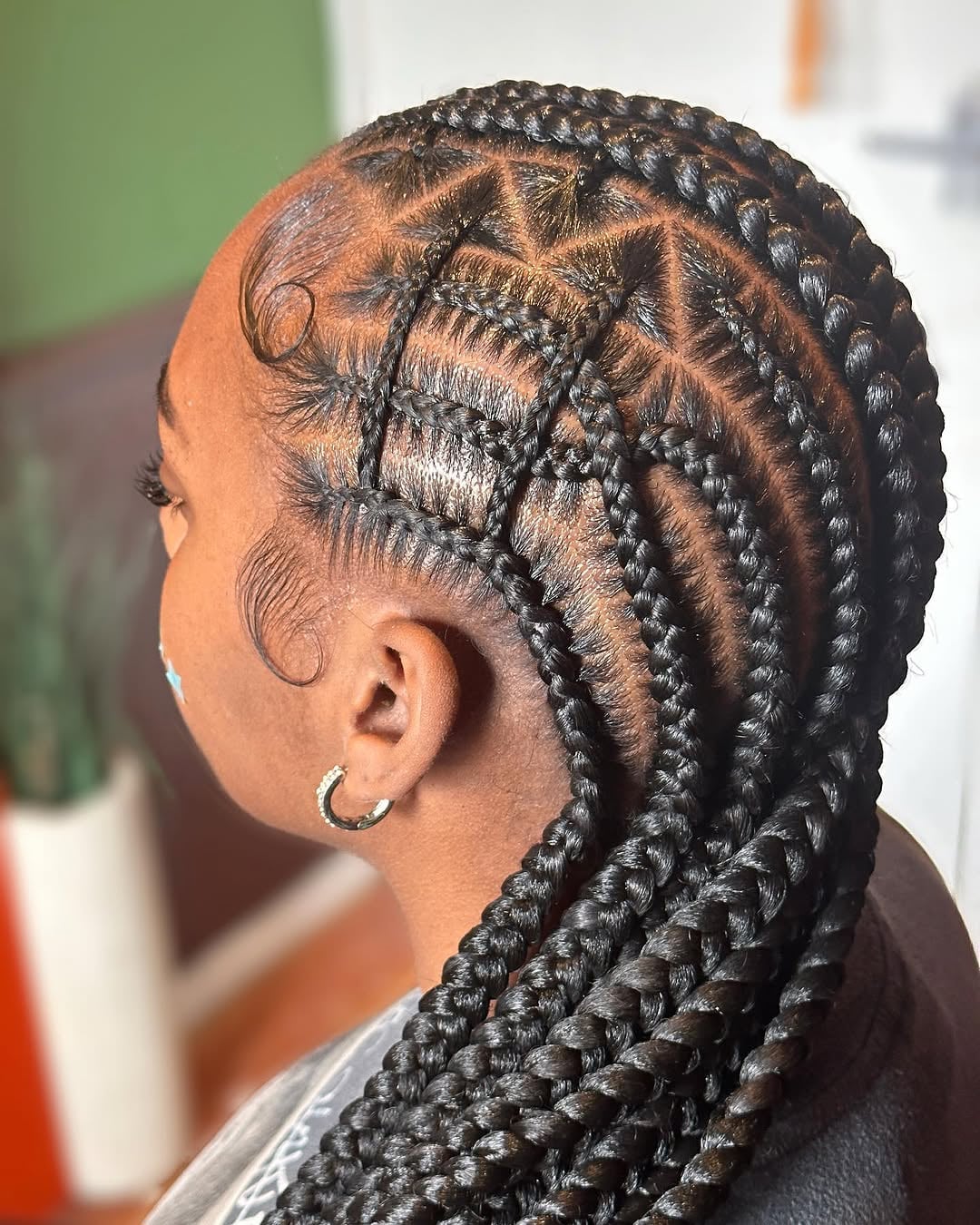
Can geometric scalp patterns work on a round face? They can, because the sharp angles and straight lines add structure that balances softer curves. This side view shows thick black braids forming clean geometric shapes, then falling into a single ponytail that hits the mid-back. The immaculate partings keep every angle readable. Ask your stylist for: mid-back stitch braids into a single ponytail with geometric scalp patterns. A finishing spray holds the lines crisp and stops flyaways from blurring the pattern.
Zig-Zag Stitch Braids With Blonde Highlights
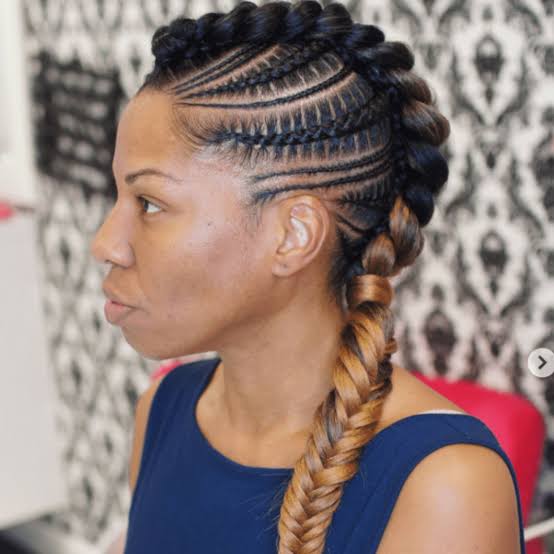
Zig-zag patterns catch light differently than straight lines, which makes this a natural fit for summer when the sun hits the scalp work at odd angles. The black braids carry blonde highlights through the ponytail, adding dimension that a single shade cannot deliver. Laid edges frame the face without the weight of full bangs, so the focus stays on the zig-zag stitch patterns. Ask your stylist for: stitch braids into a ponytail with zig-zag patterns and blonde highlights. A color-depositing conditioner keeps the blonde from pulling brassy between touch-ups.
High Ponytail With Geometric Stitch
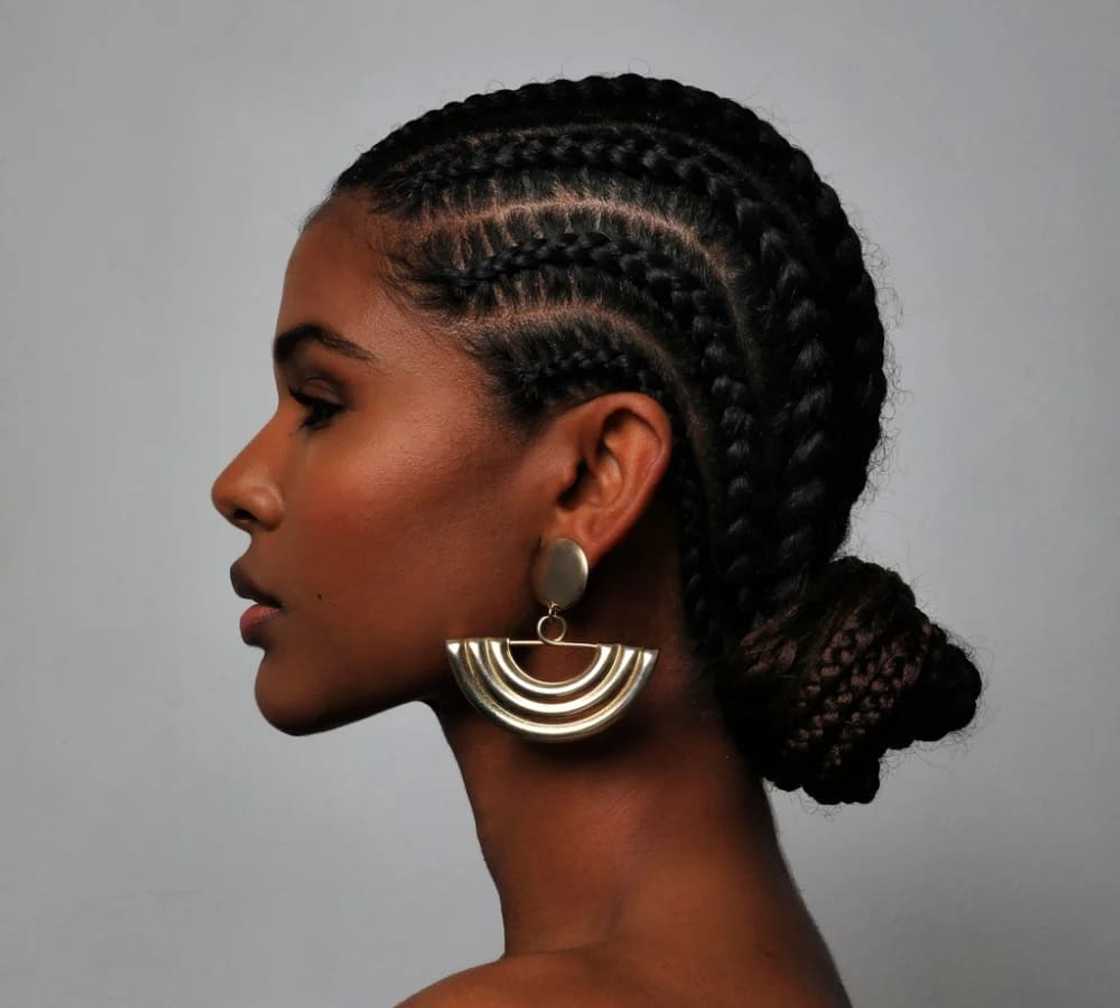
Start with the ponytail height: you want it sitting at the crown, not the nape, with all the braids swept upward into it. The geometric patterns here run across the scalp in defined sections, and styled baby hairs soften the hairline without hiding the design. Ask your stylist for: stitch braids into a high ponytail with geometric scalp patterns and baby hairs. The dark braids against the partings make every angle of the pattern read clearly, which is harder to achieve with lighter colors.
Star Pattern Stitch Braids With Ponytail
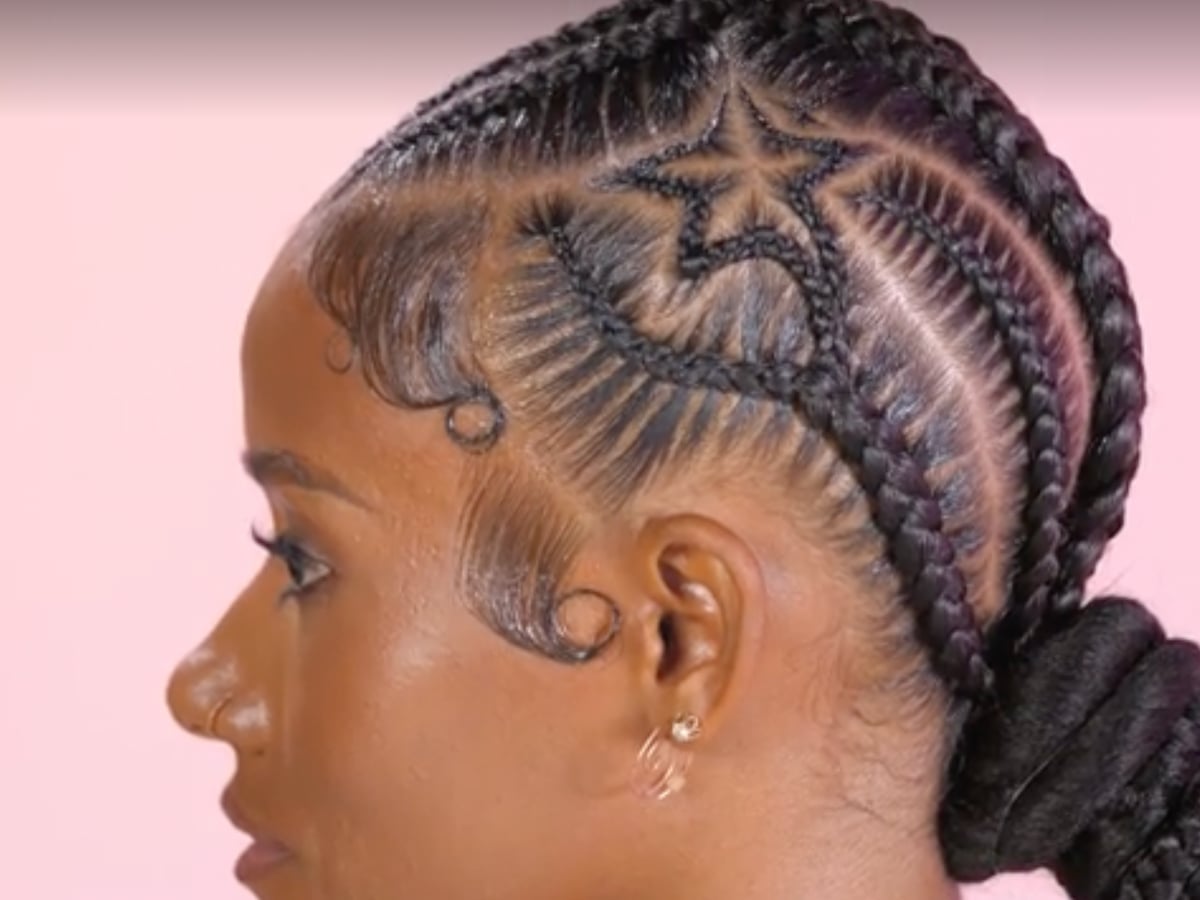
A star pattern on the scalp is a bold way to finish stitch braids, and this design pulls the whole thing back into a thick ponytail. The dark, precise braids and artfully styled baby hairs make it a look that is deliberate. Ask your stylist for: stitch braids with a star pattern, pulled into a thick ponytail with baby hairs. An edge brush and a bit of gel are all you need to sculpt the hairline. This works best on thick hair and suits most face shapes. The hold is solid for days, especially with a satin scarf at night.
Fan Pattern Double Braided Buns
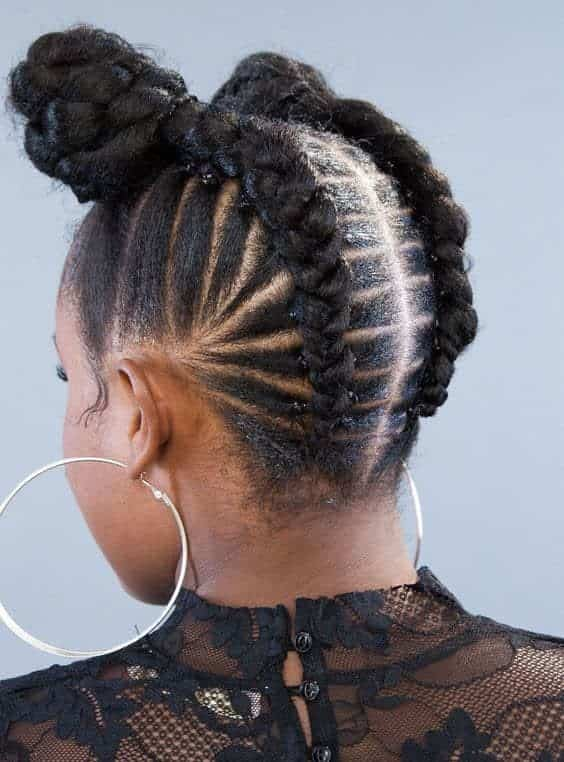
A fan pattern radiating from the crown toward two braided buns requires serious precision. The back view here shows how the dark stitch lines lead the eye upward, creating a balanced silhouette. Ask your stylist for: stitch braids with a fan pattern into two large top buns. The honest trade-off: if your stylist has an off day, the fan can look uneven, and fixing it means starting over. This is one for thick hair and formal occasions. The buns hold well, but the scalp pattern is where the real work lives.
Half-Up Bun With Braided Front
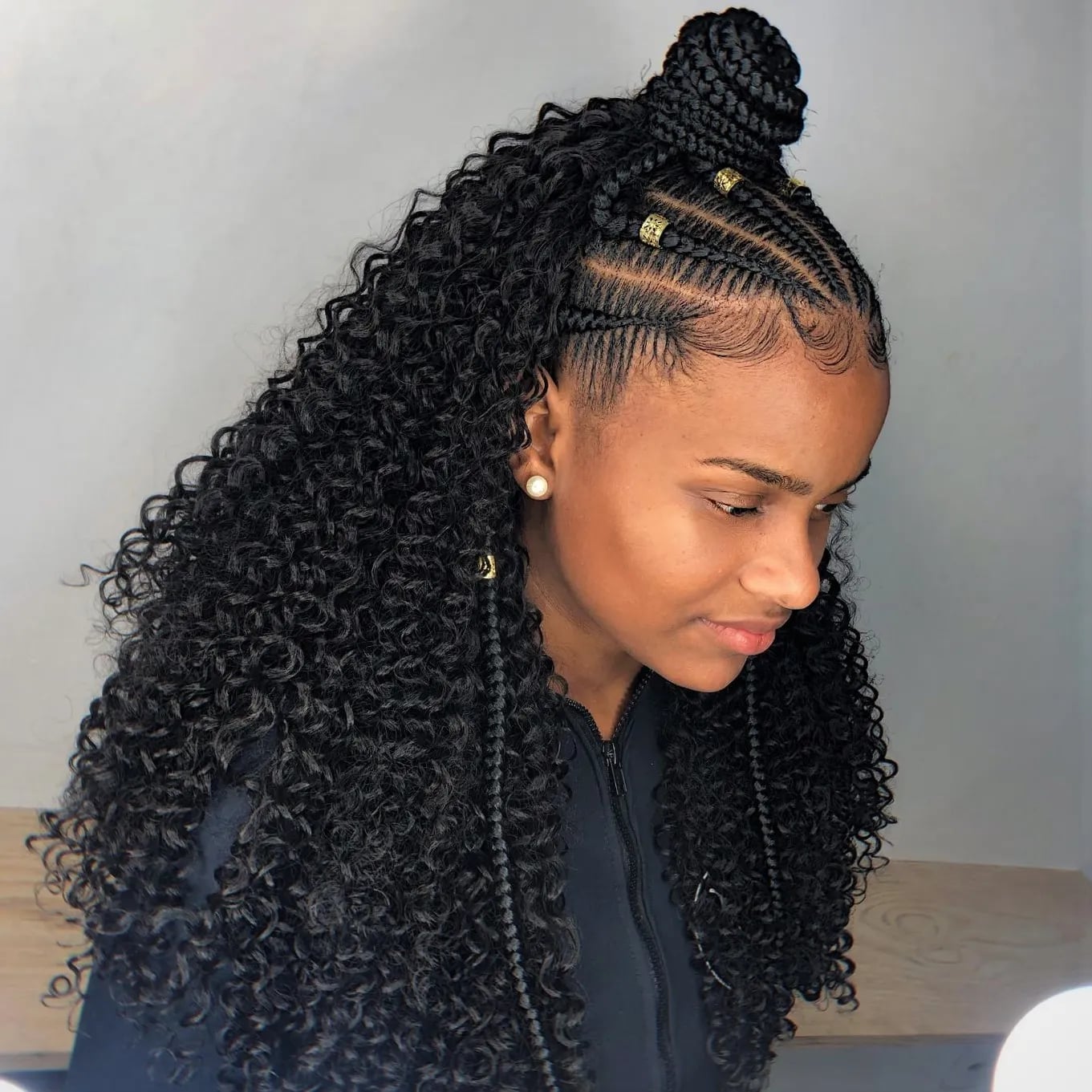
Can you combine stitch braids with curly extensions and gold beads without it looking like too much? This half-up bun proves yes, as long as the braided front is clean and the bun sits high. The voluminous curls add texture while the beads catch the light. Ask your stylist for: stitch braids to a half-up bun with curly extensions and gold beads. This is strictly a salon project: the beads need to be threaded and secured so they don’t slide, and the braid pattern requires a steady hand. The result is a versatile style that holds for a week or more.
Braided Updo With Gold Beads
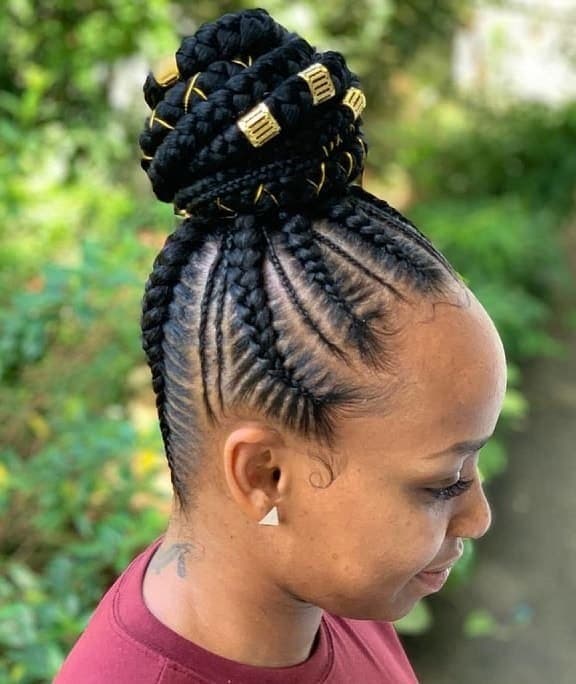
Gold cylindrical beads transform a high braided bun from simple to deliberate. The dark stitch braids sweep into a tightly wrapped bun, with the beads spaced along the braids for a balanced finish. Ask your stylist for: stitch braids into a high bun with gold beads and laid edges. The technique involves braiding the beads into the sections as you go, so each one stays put. This is an updo that holds firmly for formal events without constant adjustment. Neat hairline styling completes the polished effect.
Geometric Pattern Braided Bun
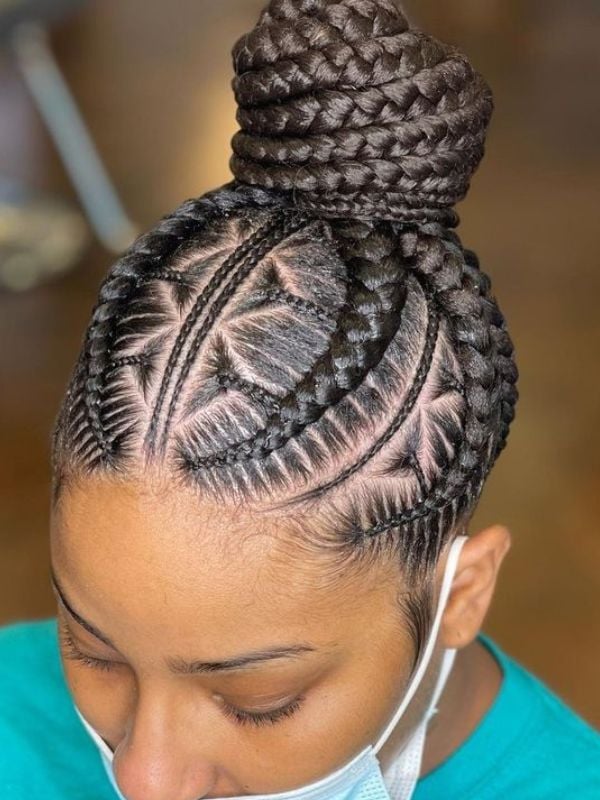
Geometric scalp patterns create a visual foundation that makes a crown bun feel grounded rather than floating. The dark, precise stitch lines here lead straight into a large, tightly wound bun. Ask your stylist for: stitch braids with geometric scalp patterns into a large bun. This design suits thick hair best, as the pattern needs density to read clearly. The bun holds securely for days with minimal fuss. A strong-hold hairspray helps keep both the scalp lines and the bun shape intact.
Shoulder Length Stitch Braids With Bantu Knots
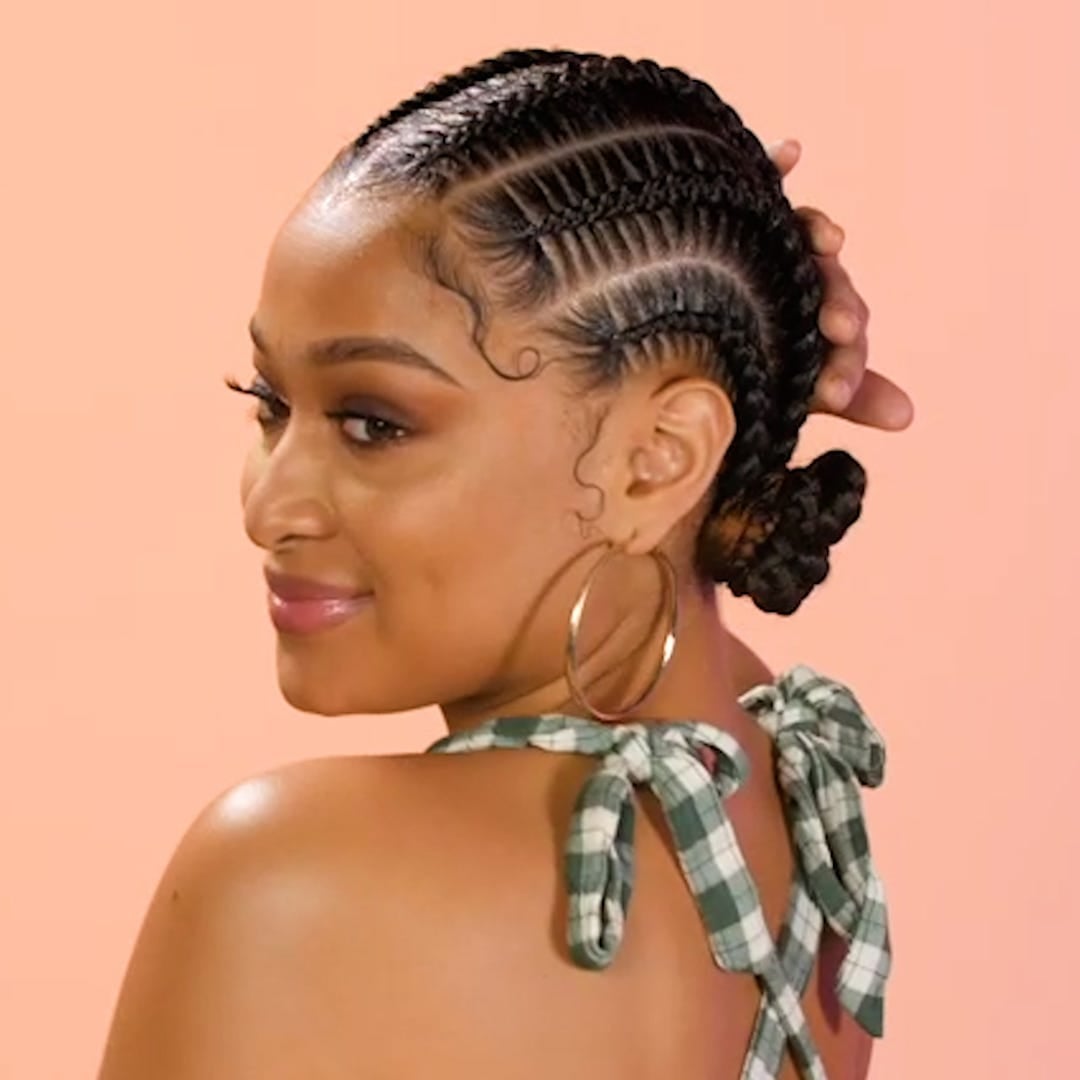
What do you do with stitch braids when they reach shoulder length and you want something less predictable than a ponytail or a bun? Two bantu knots at the back. The middle part keeps the scalp pattern clean, and the knots sit right at the crown, which gives the whole style a lifted, finished shape. Ask your stylist for shoulder-length stitch braids with two bantu knots at the back. The straight, black braids hold the knots firmly, so you can sleep on them and still have defined coils in the morning.
Upkeep is mostly about the knots. A small dab of pomade on each one stops the ends from frizzing or loosening, and you will want a silk scarf or bonnet at night to protect the braided section. The knots themselves last about a week before the tension needs re-setting, but the stitch braids underneath stay neat for three to four weeks with a standard maintenance routine.
Mid-Back Straight Braids With Baby Hairs
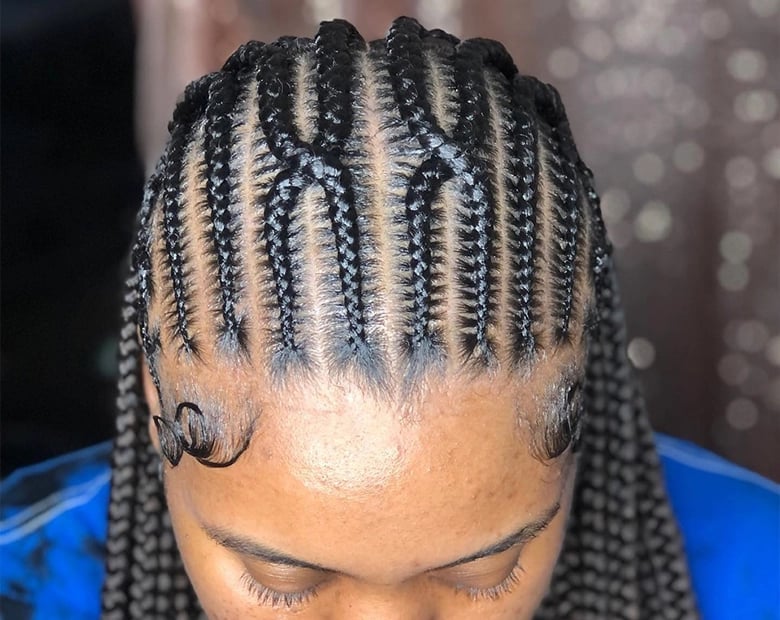
An intricate stitch braid pattern on the scalp demands precision, and the trade-off is that the smaller, tighter sections are more vulnerable to unraveling if the edges catch on collars or scarves. The mid-back length and thick, straight texture help, because the weight of the braids keeps the rows flat and the parts defined. Ask your stylist for mid-back straight stitch braids with curled baby hairs. The front-facing baby hairs add softness, but they also require a styling gel and a fine-tooth comb every morning to stay shaped. Anyone who wants a low-touch style should skip the baby hair detail and keep the hairline clean instead.
Wavy Thick Long Braids Geometric Pattern
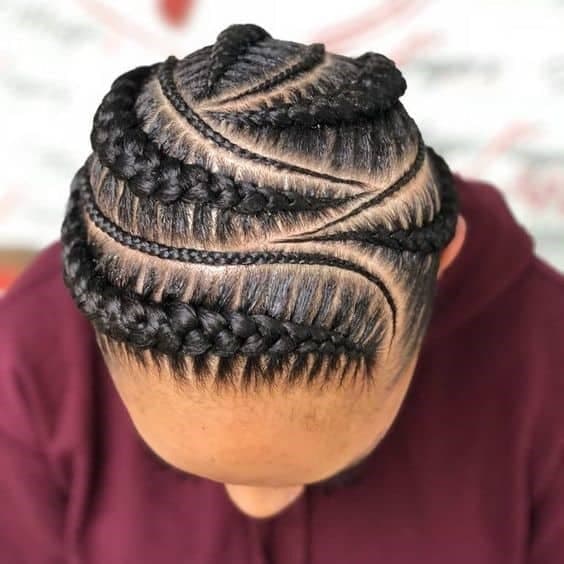
A straight stitch braid gives you clean, sharp lines, but a wavy version reads as more undone and voluminous. The geometric scalp pattern is the same either way, so the real decision is what happens below the part. Ask your stylist for long, thick, wavy stitch braids with geometric scalp patterns. The wavy texture adds about an inch of visual width, which makes the braids feel fuller than a straight set of the same length. That works well for anyone with fine or medium density who wants a thicker silhouette without adding extra hair. The wavy finish also hides new growth at the root line a little longer than straight braids do.
Long Wavy Braids With Brown Undertones
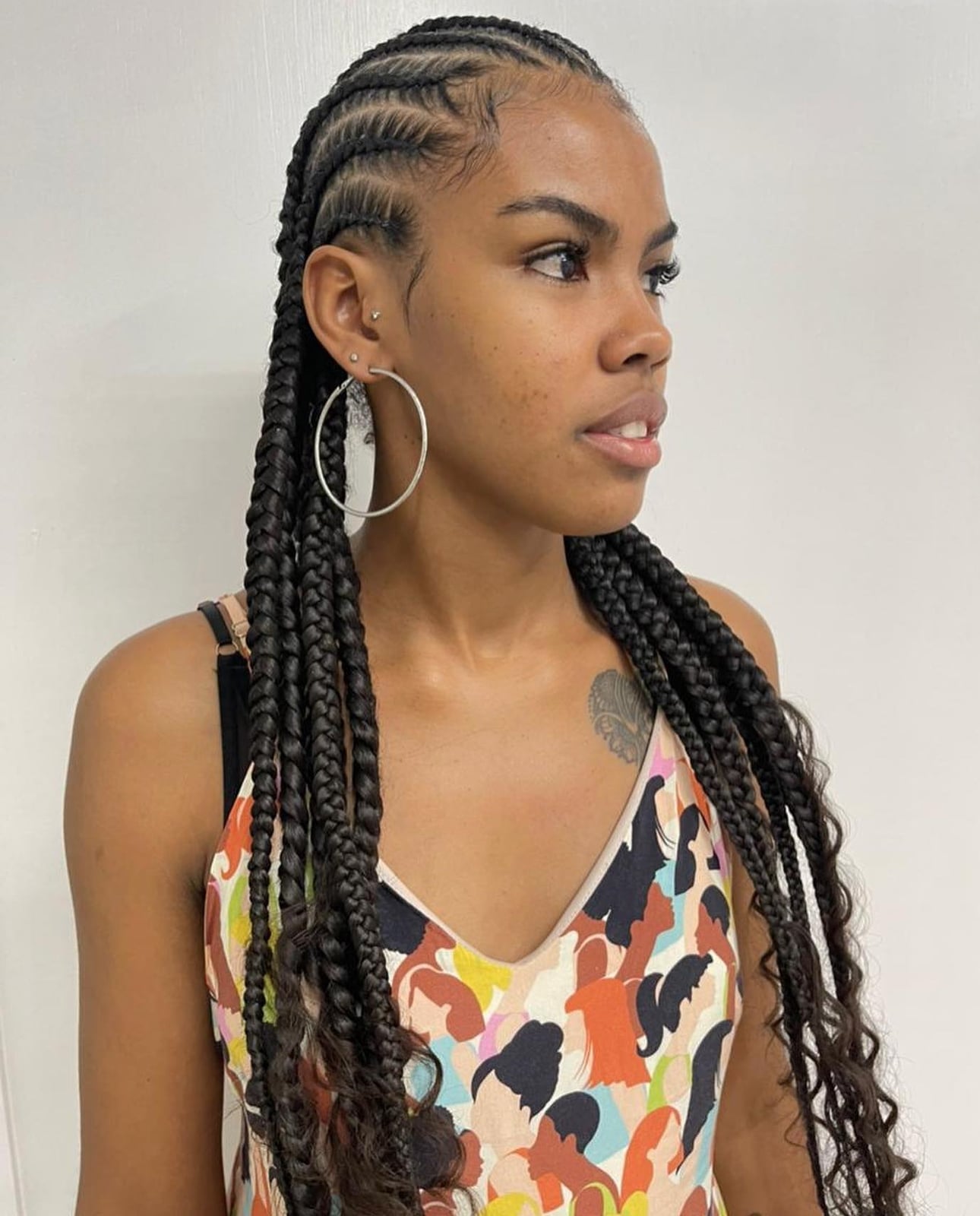
To add dimension to solid black braids without a full highlight, ask your stylist for long, thick, wavy stitch braids with brown undertones and neat scalp patterns. The undertone sits beneath the black surface color, so it shows only when the braid moves or curls. That keeps the overall look dark and uniform while stopping it from feeling flat. The wavy texture helps here because the bends in the braid scatter the light more than a straight braid would. A color-safe shampoo preserves the undertone longer, and a dry shampoo at the roots keeps the part crisp between washes.
Stunning Stitch Braids Ponytail Styles
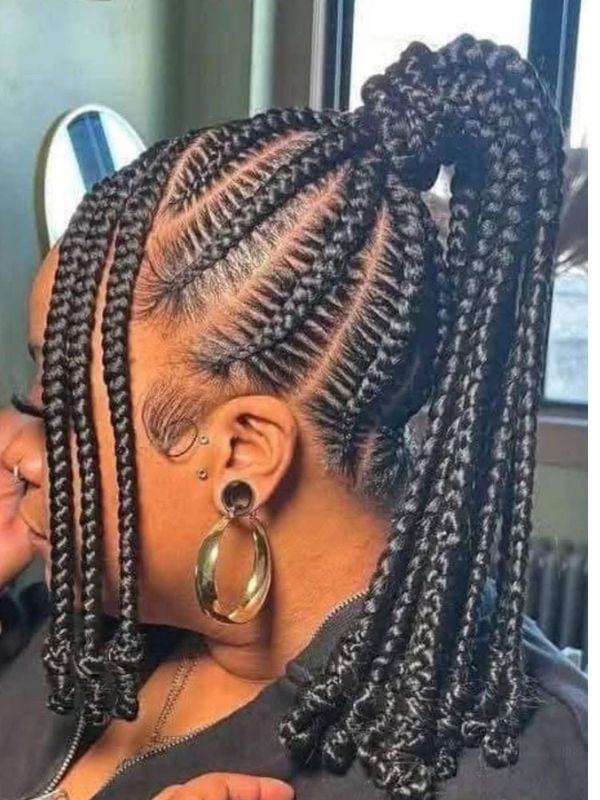
A geometric stitch pattern on the scalp that funnels into a high, thick ponytail is one of those styles that looks like it took a whole day to build. It does. The scalp pattern requires a second pair of hands to map the lines, and the ponytail section needs to be braided upward so the transition from flat scalp to hanging braid is seamless. Ask your stylist for a polished stitch braids ponytail style with geometric patterns. This is not a DIY project, and the stylist time usually runs three to four hours. The payoff is a ponytail that stays tight for ten days without re-braiding, as long as you wrap the base at night.
Final Thoughts
For maximum impact and longevity, prioritize styles with consistently neat stitch lines and a secure hold, especially if your hair is prone to frizz or unraveling. Consider adding a finishing spray for extra polish.
- Schedule touch-ups for stitch details every 2-4 weeks to maintain scalp definition.
- Use a satin bonnet or scarf at night to protect braids from friction and frizz.
- Apply a lightweight braid sheen or oil sparingly to the scalp and braids for moisture.
- Avoid excessive manipulation or pulling on the braids to prevent tension and breakage.
Stitch braids offer endless opportunities for sophisticated style.
