

Blue hair has moved past the fringe and into the mainstream, with techniques that range from a subtle midnight depth to a full-on electric statement. The shift is toward lived-in color and softer lines, so a melt or balayage often replaces a hard block of tone.
This collection of 32 Trendy Blue Hair Color ideas covers every length from a chin bob to mid-back, every texture from fine to coily, and upkeep levels from a few weeks between toning sessions to a more relaxed ombré grow-out. Whether your struggle is a fringe that fights you or a fine hair type that needs a clean, blunt baseline, there is a blue here that works with your schedule.
Mid-Back Length Metallic Silver Blue Melt
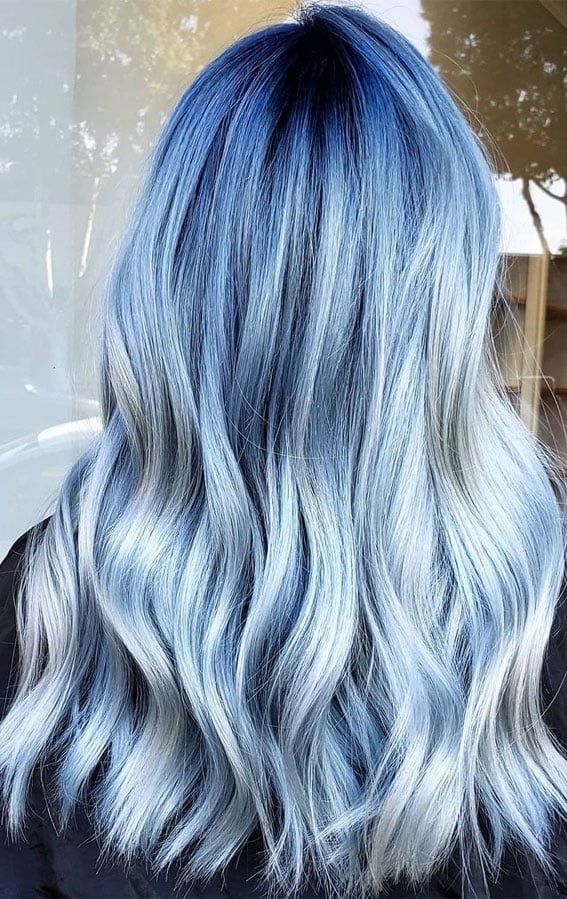
This gradient starts at the root with a dark base and moves into a metallic silver blue, not a solid color or a simple highlight. This melt effect works best on thick, wavy hair starting at mid-back length, where the layers can catch the shift from shadow to light. Ask your colorist for: mid-back metallic silver blue melt with dark roots. A serum keeps the shine going, and a trim every six to eight weeks stops the layers from losing their shape.
The back view tells the story: the dark root is deliberate, not regrowth, and the silver blue takes over through the ends. A middle part shows off the symmetry of the fade. If your hair is fine, the melt can still work, but the contrast will be less pronounced because the lighter sections need a strong base to pop against.
Mid-Back Length Bright Turquoise Balayage
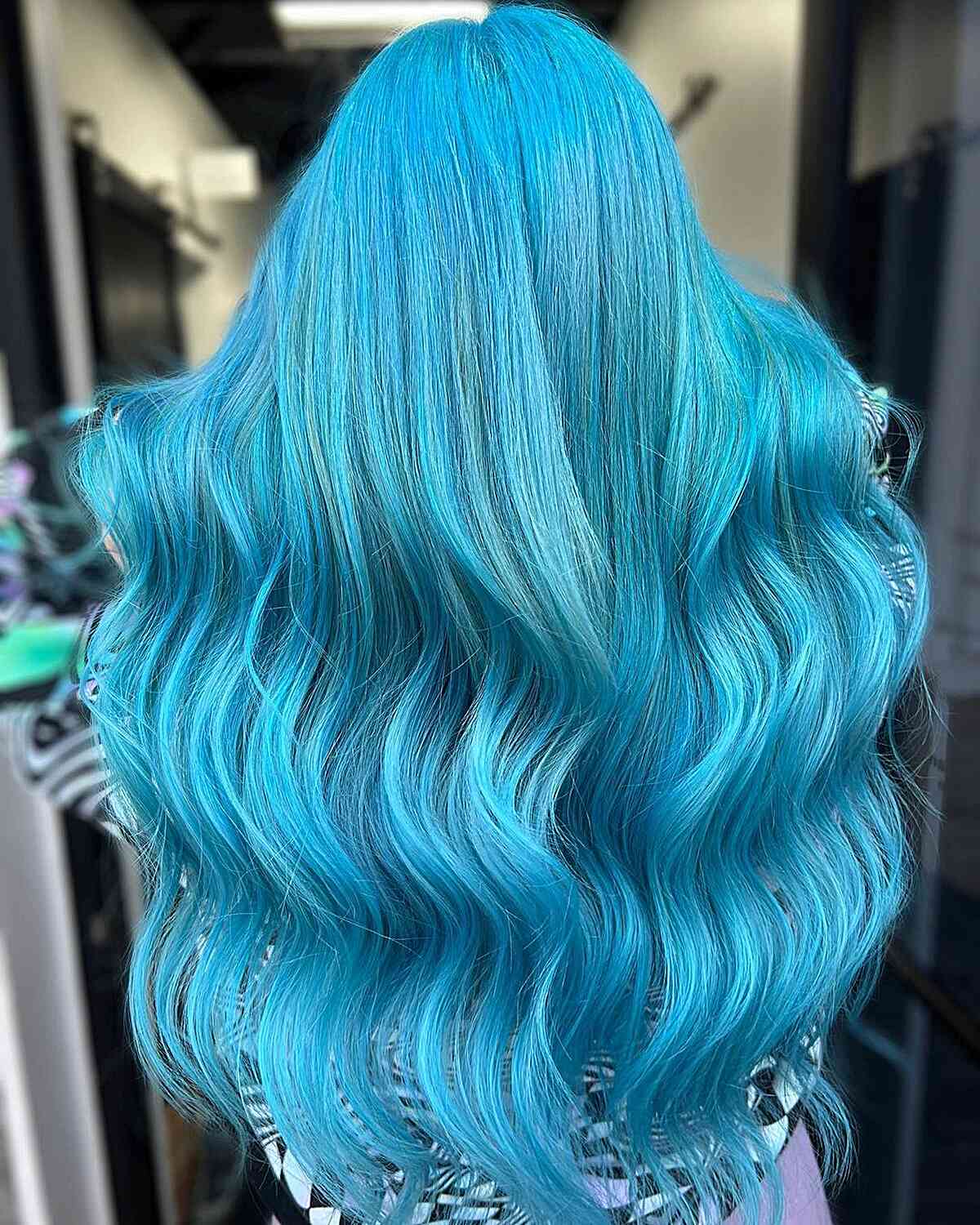
If a pastel blue reads as too quiet, this bright turquoise balayage is the louder cousin. The balayage technique paints color onto sections by hand, so the transition from a darker root to the turquoise ends feels soft rather than striped. Thick, wavy hair starting at mid-back length holds the vibrancy best. Ask your colorist for: mid-back bright turquoise balayage with layers. A middle part suits oval and long faces by drawing the eye down the length.
The glossy finish here is part of the appeal: turquoise can read matte if the cuticle is rough, so a clear gloss at the bowl helps. This is not a color that hides. It asks for a commitment to maintenance, since turquoise fades faster than deeper blues and leaves a greenish cast if the water is hard.
Collarbone Length Light Blue With Streaks
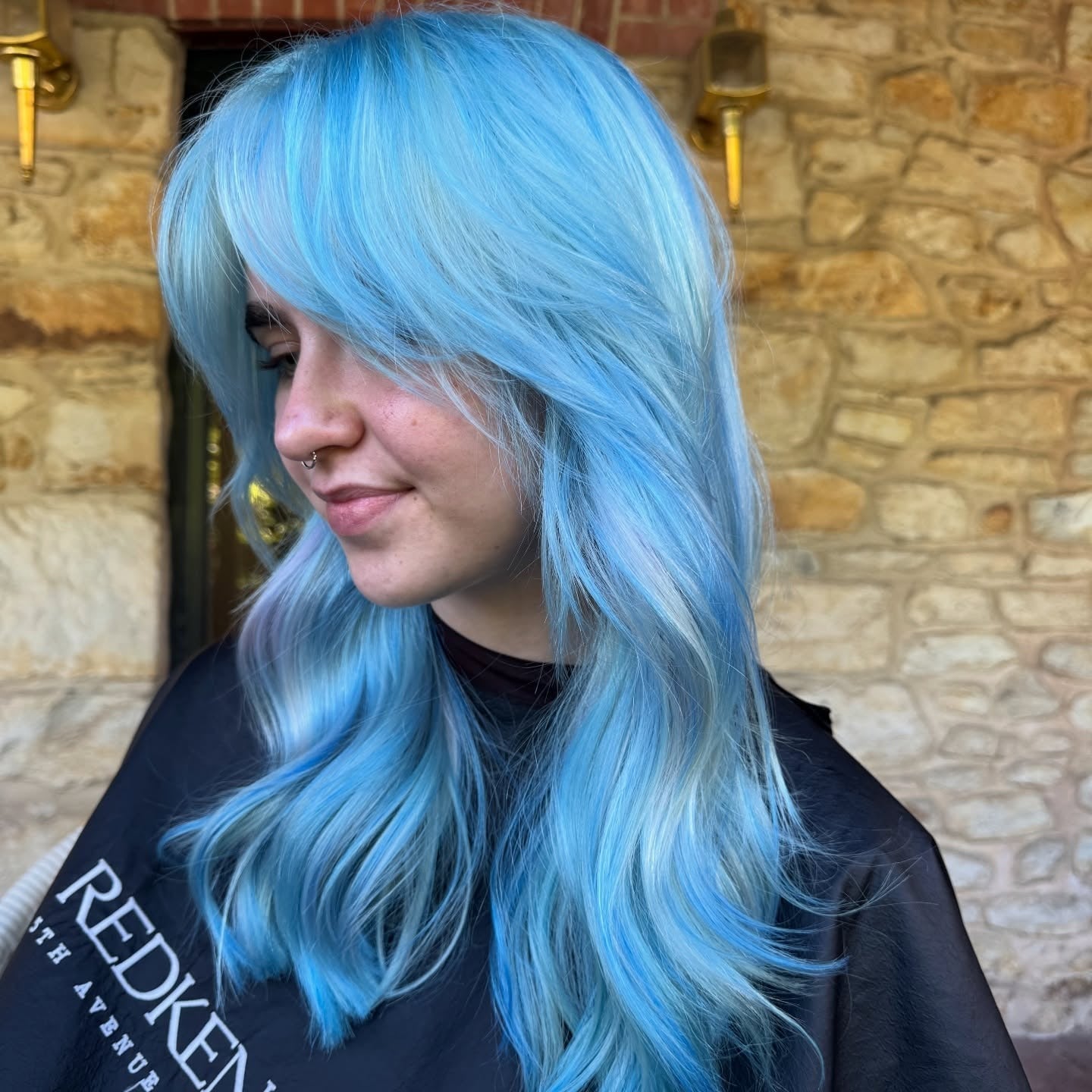
How do you get light blue without it washing into a flat pastel? Add streaks. This collarbone-length cut keeps a light blue base and tucks in subtle lighter streaks for dimension, so the color reads as layered rather than solid. Curtain bangs frame the face and break up the color field. Ask your colorist for: collarbone light blue hair with subtle streaks and curtain bangs. This works for thick hair that can handle the lightness without going see-through.
The blowout styling here is intentional: smooth waves show the separation between the base and the streaks. A middle part keeps the bangs balanced. If your hair is fine, skip the full light blue base and ask for streaks only over a darker root, which adds depth without the upkeep of an all-over pastel.
Collarbone Length Deep Blue With Violet Undertones
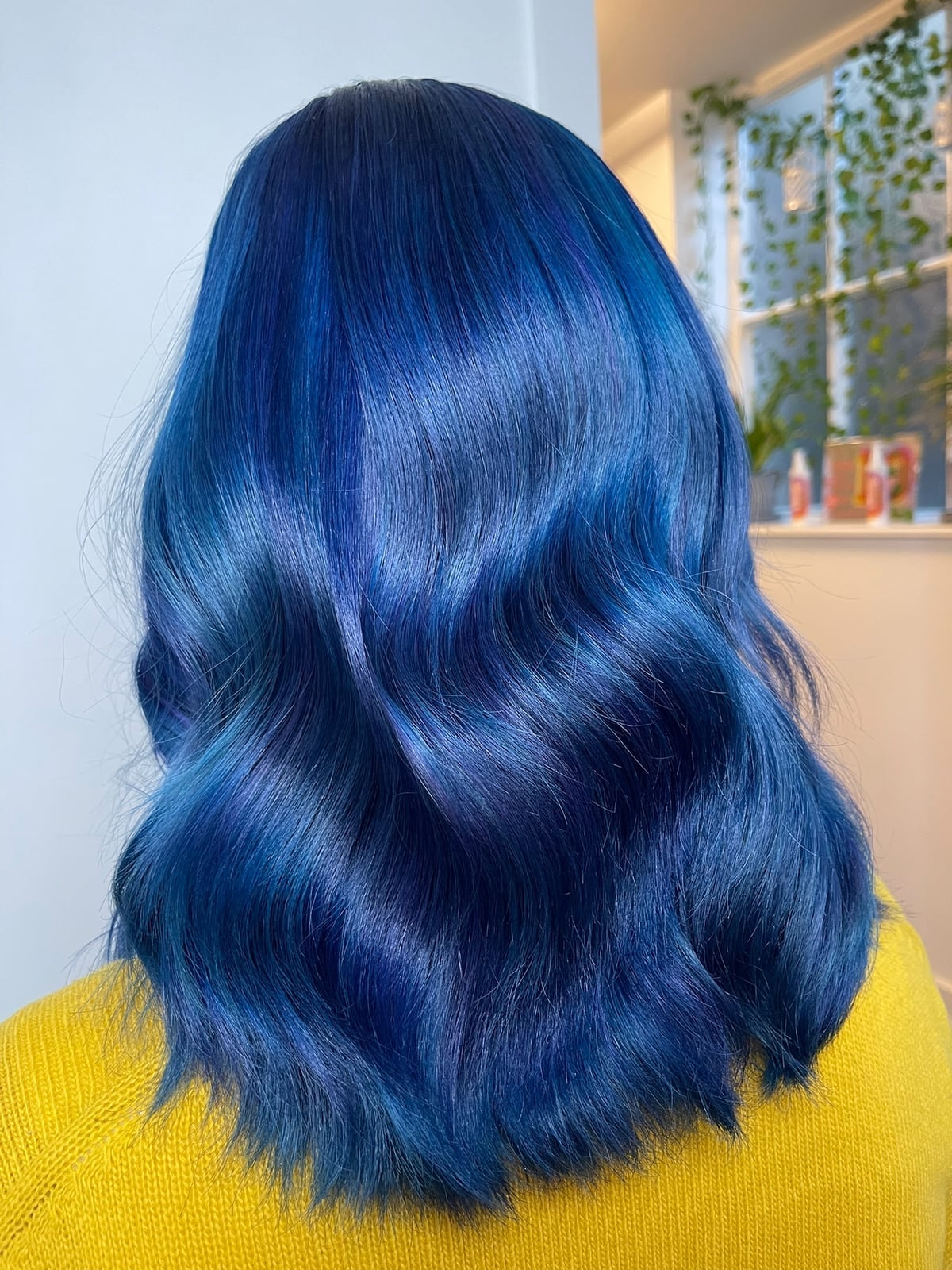
This deep blue base carries violet undertones that shift in different lighting, so the hair looks navy in a dim room and plum-tinged in direct sun. The collarbone length keeps the color close to the face, where the undertones catch attention. Medium-textured hair with subtle layers handles the gloss well. Ask your colorist for: collarbone length deep blue with violet undertones, loose waves.
The upkeep here is about the violet. Violet is a warm note inside a cool blue, so it fades faster than the blue base. A toning appointment every four to six weeks keeps the shift from turning muddy. A glossing spray between washes adds the shine that makes the undertones readable. A middle part suits round faces by lengthening the silhouette.
Mid-Back Midnight Blue With Subtle Highlights
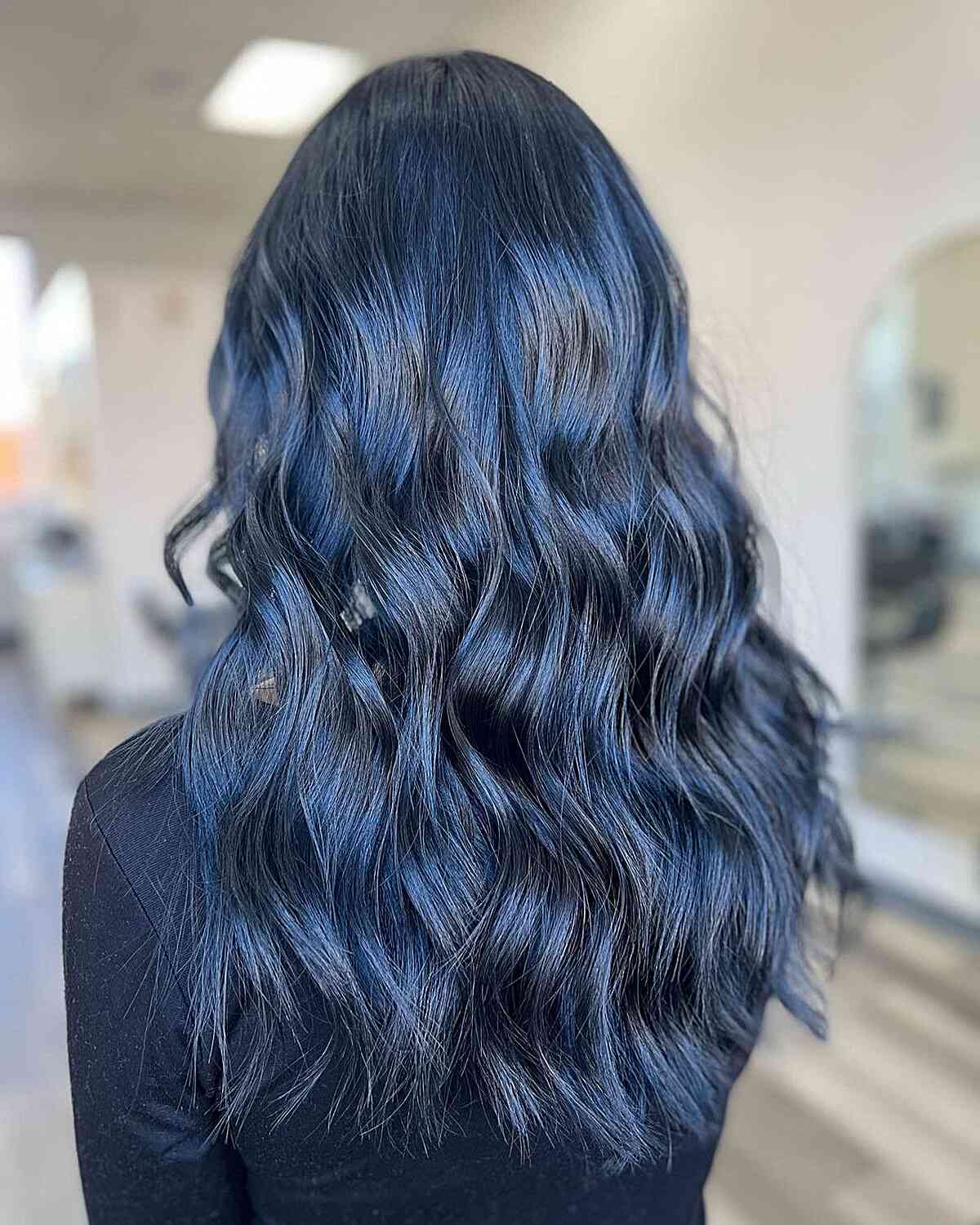
Midnight blue works as a bridge between natural and bold: it looks black from a distance and shows as blue in direct light. This mid-back length style uses subtle lighter blue highlights woven through the layers, so the color has movement. Thick, wavy hair starting at mid-back length benefits from the depth of the base. Ask your colorist for: mid-back midnight blue with subtle lighter highlights.
This is a strong choice for autumn or winter, when darker tones feel right and the sun is low enough to catch the highlights. A middle part shows the dimension evenly. A wave-enhancing mousse keeps the texture defined, and a trim every six to eight months preserves the length. The downside is that the highlights fade into a greenish tint if not toned, so a purple shampoo every other wash helps.
Collarbone Length Light Blue With Lighter Streaks and Curtain Bangs
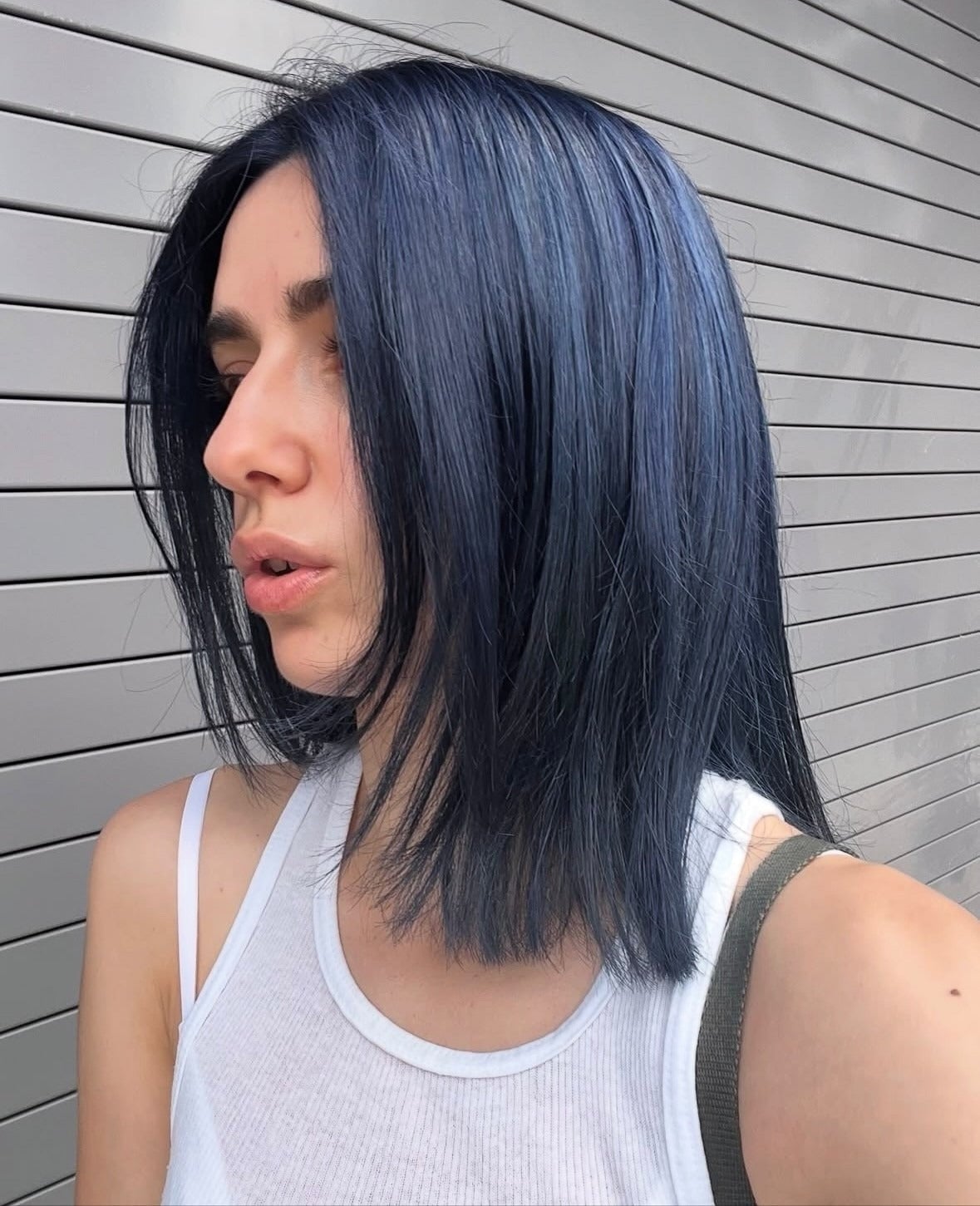
Those lighter streaks within a light blue base are painted on section by section, not woven in as foils. Ask your colorist for: collarbone length light blue hair with subtle streaks and curtain bangs. Thick, wavy hair starting at collarbone length holds the dimension best, and the curtain bangs soften square and round faces. A smoothing cream and a round brush give the blowout its polished finish without extra heat passes.
Mid-Back Dark Base With Bright Blue Highlights

Can a dark base handle bright blue highlights without looking muddy? Yes, when the highlights are concentrated toward the ends and the base stays deep enough to anchor them. Ask your colorist for: mid-back dark base with bright blue highlights on ends. A middle part works with oval and long faces, and the wavy, thick texture helps the blue streaks stay defined.
The dark base means you can skip a full bleach, which saves your hair a round of processing. A texturizing spray at the mid-lengths lifts the highlighted sections so they catch light from different angles.
Collarbone Length Dark Blue With Blue Undertones
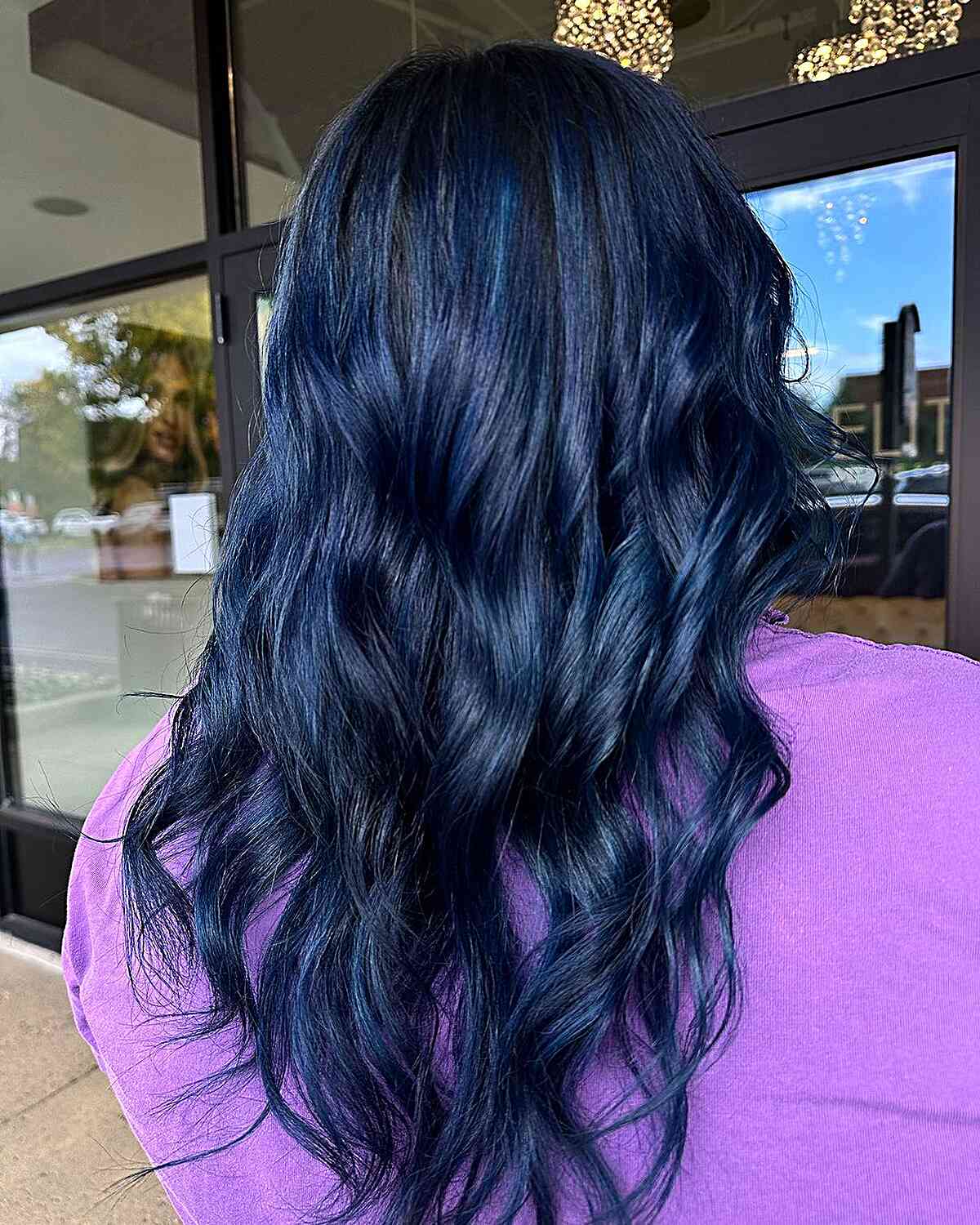
This is the color you choose when you want blue but not everyone needs to know from across the room. Ask your colorist for: collarbone length dark blue with subtle blue undertones, loose waves. The side part adds width to narrow faces, and the medium wavy texture keeps the deep shade from looking flat. The honest drawback: those subtle undertones can pull brassy after a few washes if you skip a blue-toned shampoo. A shine serum restores the glossy finish between toning appointments every four to six weeks.
Shoulder Length Vibrant Electric Blue

Vibrant electric blue requires the hair to be lifted to a very pale blonde first, which is why this is a salon-only project. Ask your colorist for: shoulder length vibrant electric blue with long layers. A side part suits oval faces, and the wavy, medium-density texture softens what could be an intense block of color. A sea salt spray adds grip so the layers separate naturally. A trim every six to eight weeks keeps the shape from growing shaggy.
Mid-Back Dark Blue With Lighter Blue Highlights
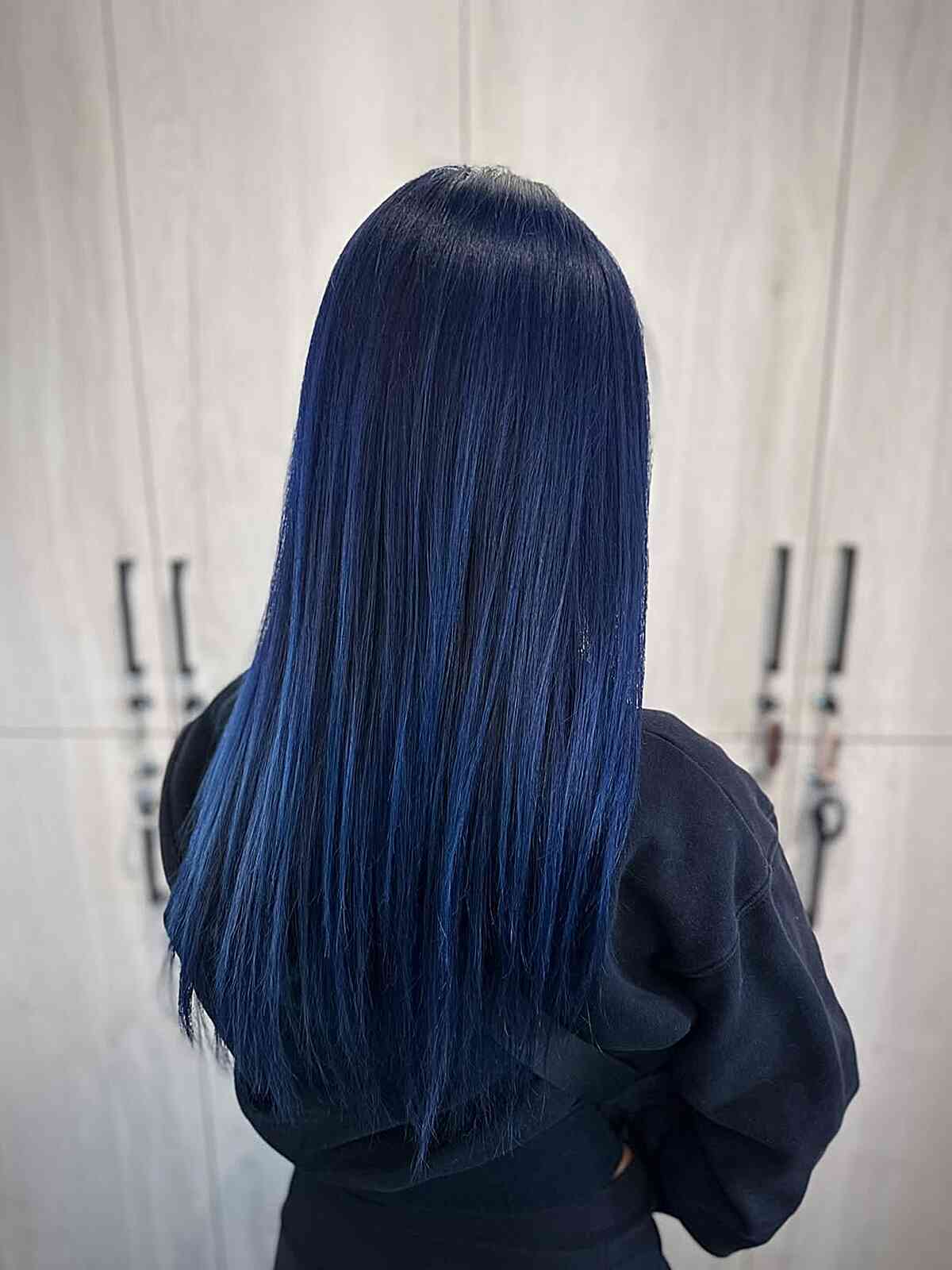
Lighter blue highlights on a dark blue base create dimension without committing to a full bright color. Ask your colorist for: mid-back dark blue with lighter blue highlights, styled straight. A middle part elongates a round face, and the thick, glossy texture makes each highlight visible as the hair moves.
The highlights are placed throughout, not just at the ends, so the color stays dimensional as it grows. Use a heat protectant before straightening to preserve the gloss. A trim every six to eight weeks prevents the ends from thinning out the dark base. A toning appointment every four to six weeks keeps the lighter pieces from shifting greenish.
Shoulder Length Blue Ombré With Full Bangs
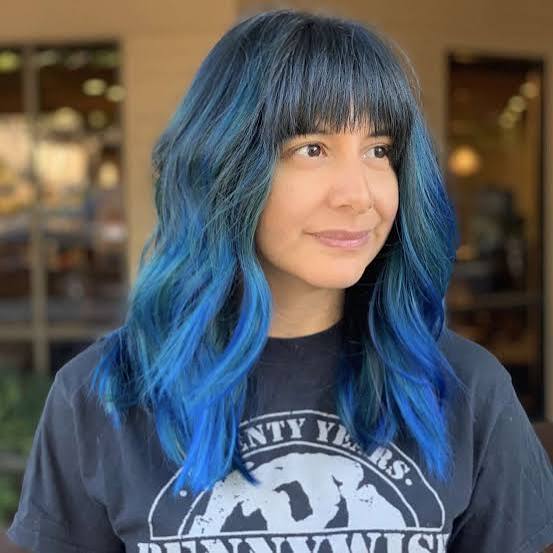
Wondering how to blend blue into your length without a hard line? This shoulder-length cut layers the color from a deeper root into a bright blue ombré at the ends, with full bangs carrying the lighter tone too. Wavy, thick texture helps the transition look gradual, not chopped. Ask your colorist for: shoulder length blue ombré with full bangs. Full bangs soften the forehead and work well with oval and long face shapes.
Shoulder Length Vibrant Electric Blue With Showcasing A Thick
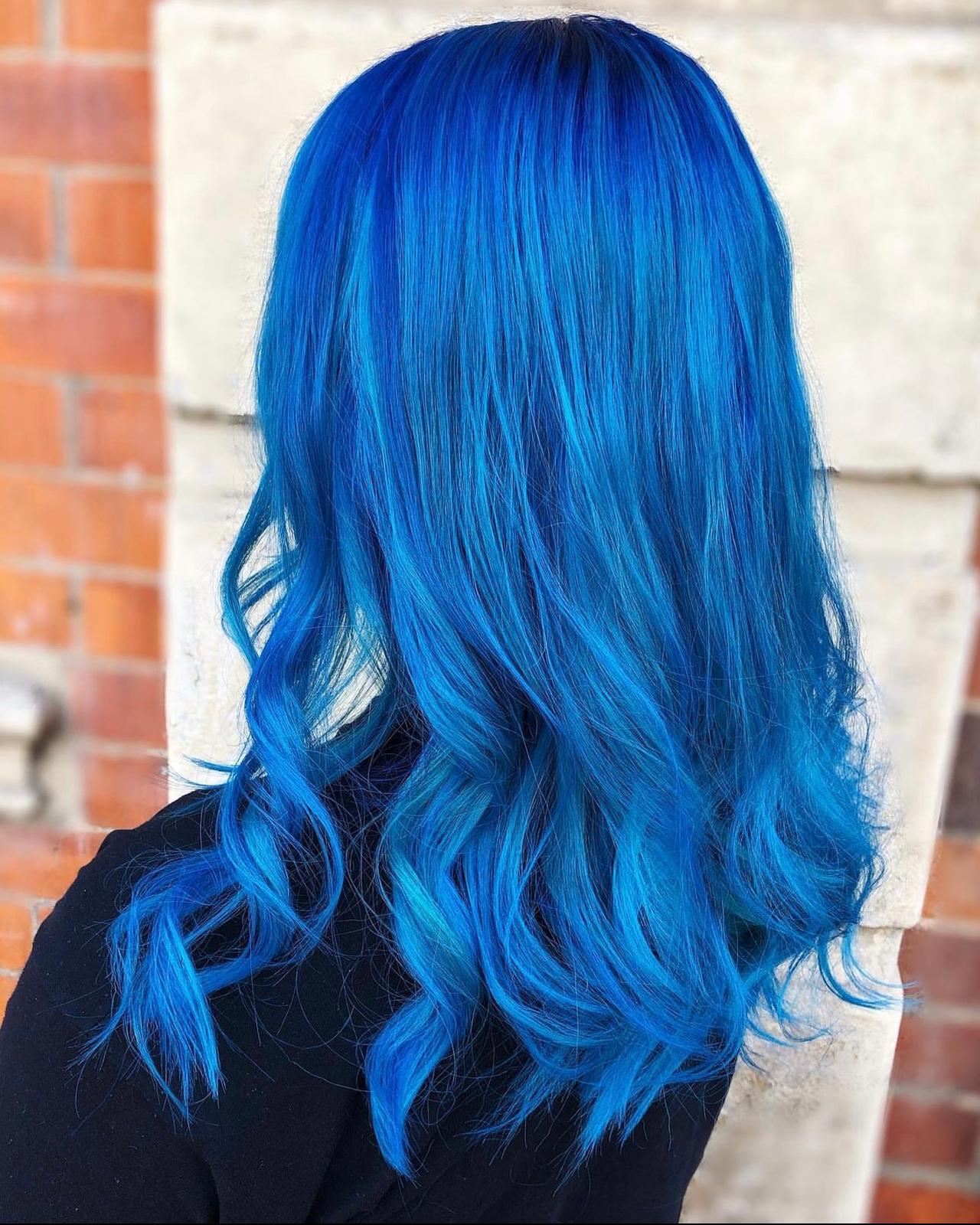
That uniform, glossy electric blue demands a salon appointment every time. The color is applied as a single formula on pre-lightened hair, then maintained with a color-depositing conditioner every second wash. Shoulder-length wavy hair looks thick and healthy, but roots show by week three on anyone darker than a level eight. A middle part flatters oval faces, and the uniform tone means zero camouflage.
Collarbone Bob Black Base With Blue Highlights
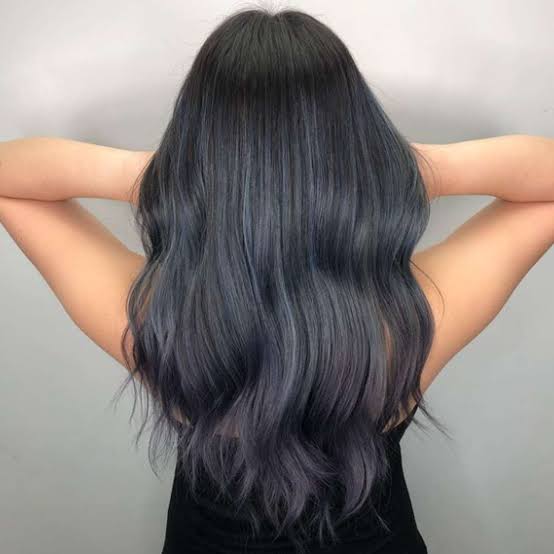
Does a black base with blue highlights work on cooler tones? The bob here uses a true black foundation with vibrant blue woven through the mid-lengths and curtain bangs, creating contrast without covering the whole head. Wavy, thick texture keeps the highlights from looking sparse. Ask your colorist for: collarbone bob with curtain bangs and blue highlights. The curtain bangs soften a square or round jawline, and the black base means root regrowth is nearly invisible for six weeks.
Collarbone Blunt Bob Cobalt Blue Dip-Dye
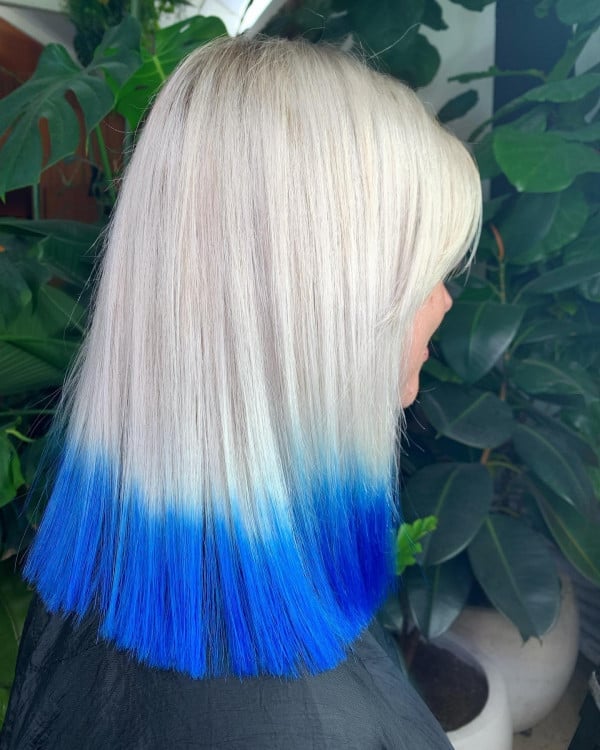
The precision here is the point: a collarbone blunt bob with blunt bangs, kept straight, where the platinum blonde root area stops and the cobalt blue dip-dye starts at a clean horizontal line. Fine, straight hair holds that sharp demarcation best. Ask your colorist for: collarbone blunt bob with platinum roots and cobalt blue dip-dye ends. The side part suits oval and heart faces, and the blunt baseline needs a trim every six to eight weeks or the line starts to soften.
Vibrant Blue Pixie Cut With Short Bangs
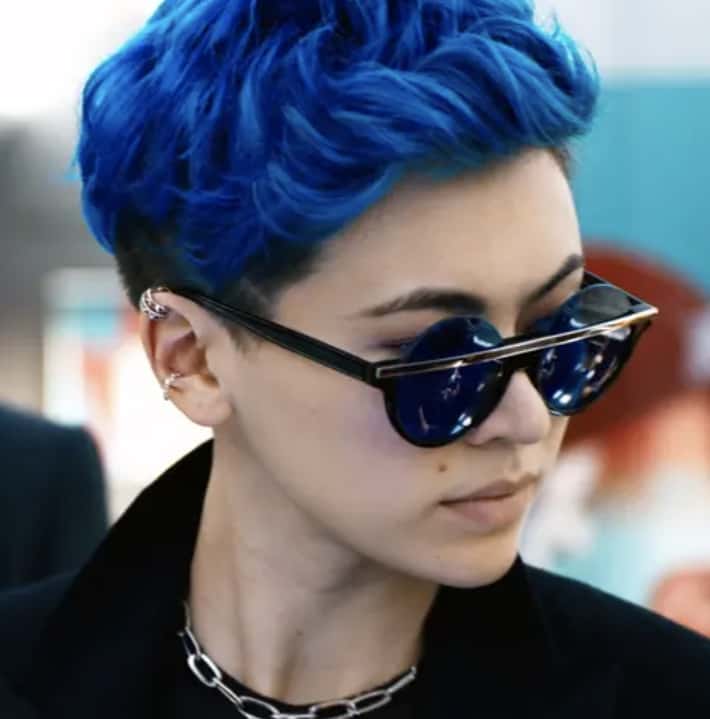
It is not a spring-only choice, but the vibrant blue pixie lands hardest when the sun hits. Ear-length with short bangs and a side part, the cut relies on fine, curly texture for volume, no flat iron needed. Ask your colorist for: vibrant blue pixie cut with short bangs. This works for oval and square faces, and the upkeep is a trim every four to six weeks, not a toning appointment.
Collarbone Lob Deep Blue Color
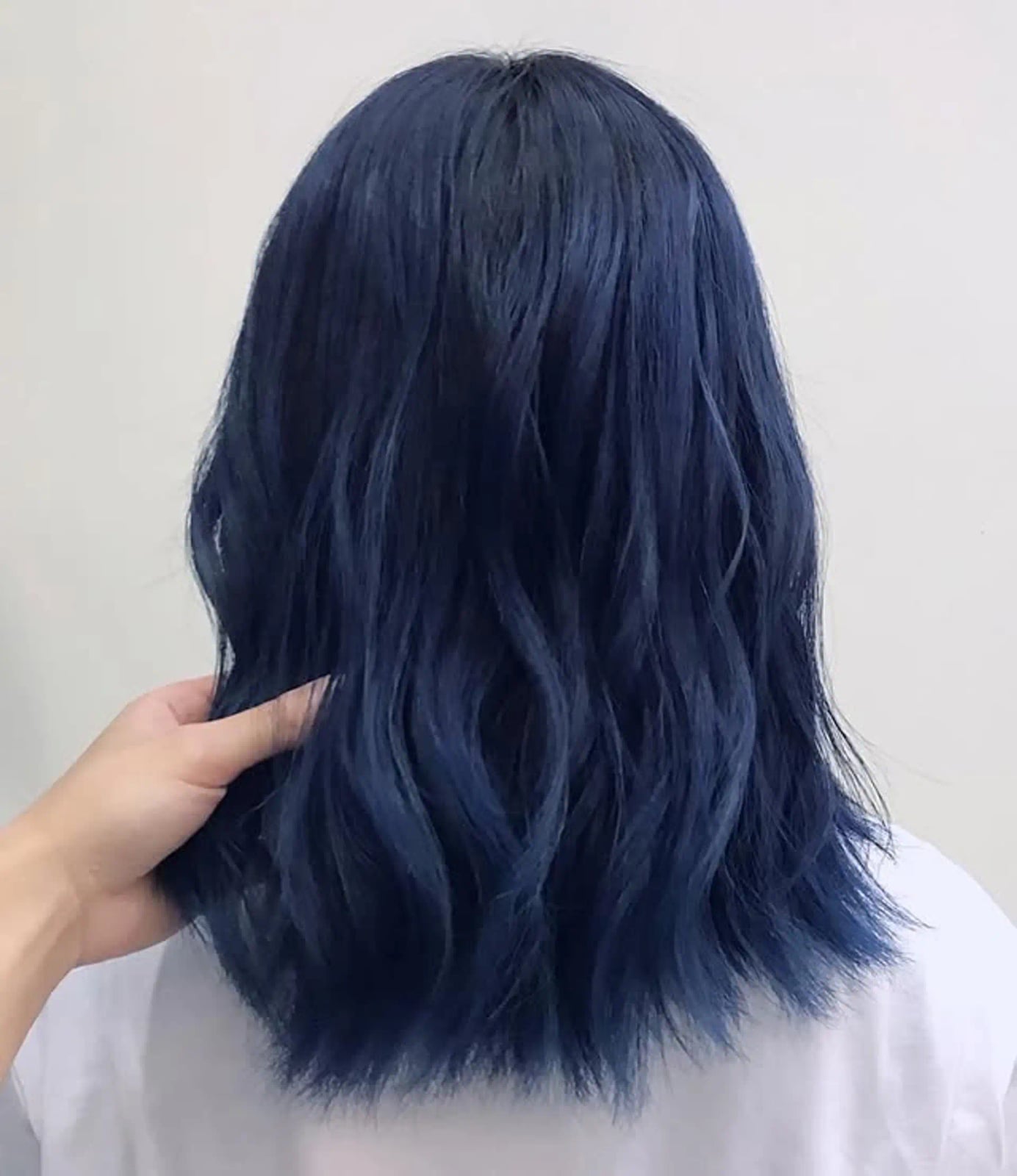
A single solid shade across a collarbone-skimming lob is the one-color look that asks the least of you. The deep blue reads as almost black in low light and only reveals its true hue when the sun hits it, which means the grow-out is forgiving and the tone stays even for weeks. Ask your colorist for: collarbone length deep blue lob, styled wavy. A middle part works well with oval and long face shapes. Use a color-depositing conditioner every second wash to stop the blue from fading to a murky green. A trim every six to eight weeks keeps the hemline sharp.
Arctic Fox Aquamarine Semi-Permanent Color

How do you get that specific aquatic blue that looks like a lagoon filtered through a coral reef? The answer is a semi-permanent formula applied to pre-lightened hair. The teal blue tone with darker roots creates a lived-in gradient that softens the line between dyed and natural. Ask your colorist for: teal blue application with darker roots. This approach works on any texture, though thick wavy hair holds the pigment longer. The vividness depends entirely on how light the base is, so expect a bleaching session first. A side part and air-dried waves keep the finish casual.
Collarbone Deep Blue With Darker Roots
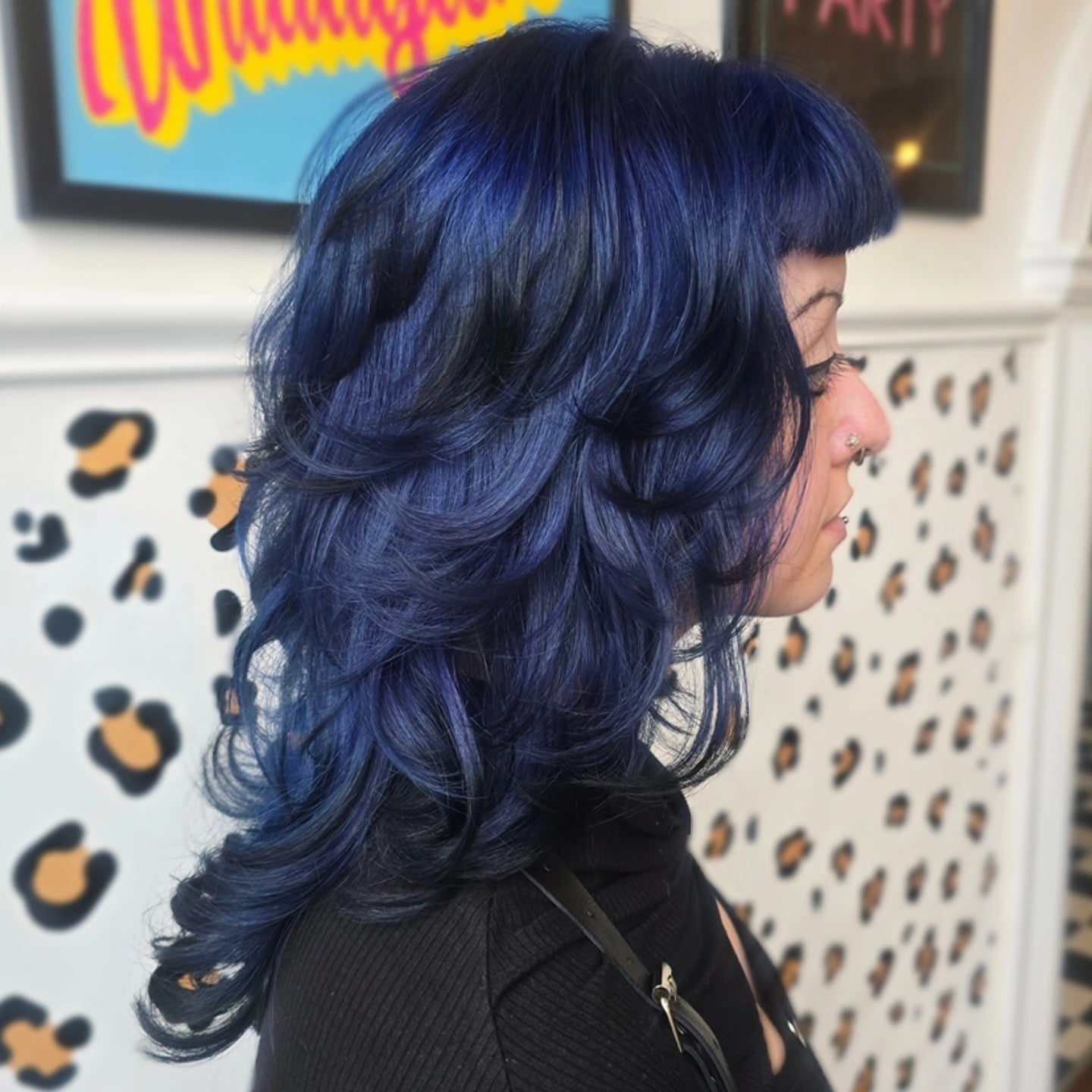
A deep vibrant blue that darkens at the root sounds like a clever grow-out plan, but the darker base can look like grown-out roots instead of a deliberate shadow if the transition is too abrupt. The collarbone length with soft waves and micro bangs keeps the look precise. Ask your colorist for: collarbone length deep vibrant blue with darker roots, soft waves. Thick wavy hair holds the dimension best. The root line needs a refresh every six weeks to avoid looking like you simply skipped a touch-up.
Ear Length Electric Blue Spiky Cut
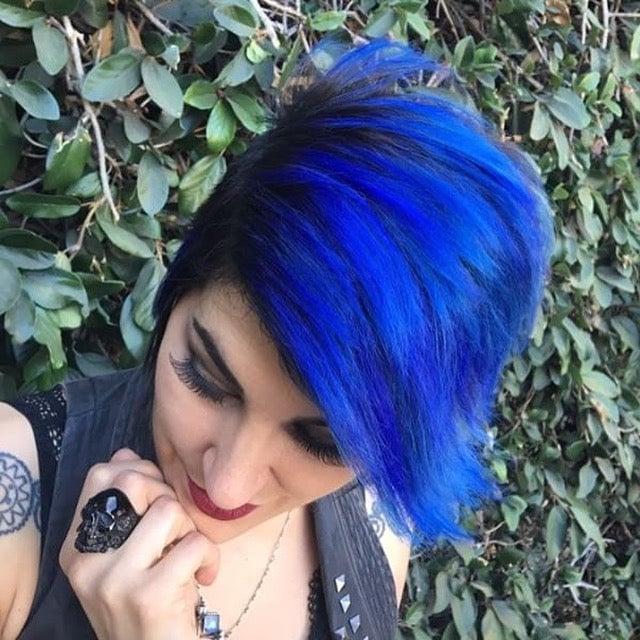
An ear-length spiky cut in vibrant electric blue is a high-impact look that leaves no room for guesswork. The fine straight texture and choppy bangs need a precise cut, and the bold all-over color requires an even bleach lift before the blue can land clean. Ask your colorist for: ear length vibrant electric blue spiky cut with choppy bangs. This is a salon job, not a bathroom-mirror project. A strong hold wax or paste keeps the spikes defined, and a trim every four to six weeks is non-negotiable to maintain the shape. The side part adds a little softness to the hard angles.
Mid-Back Blue Ombre Light to Dark
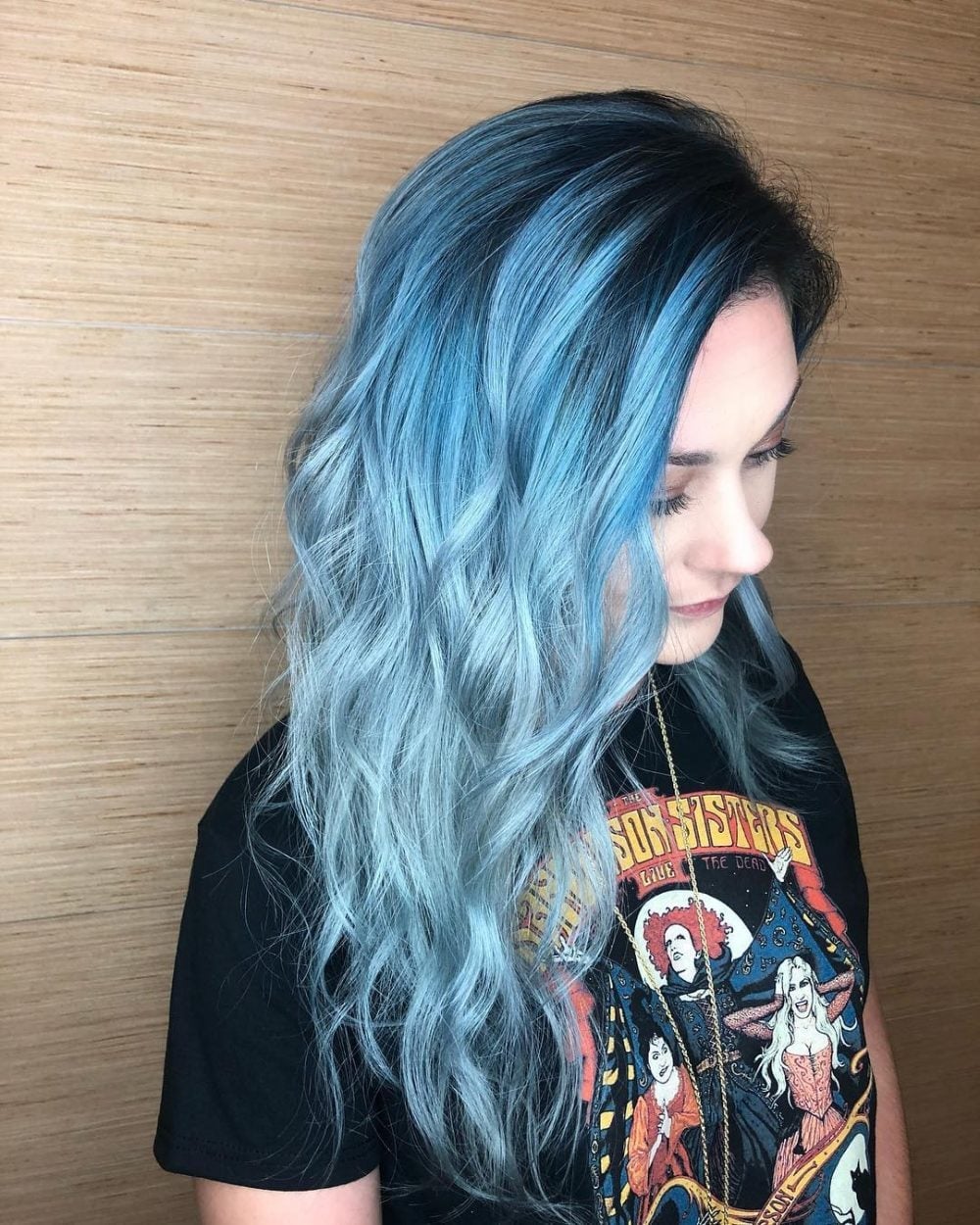
An ombre that moves from a light icy blue at the roots to a deeper blue at the ends is a different animal than one that fades into a non-blue shade. The gradient stays within the same color family, which means less risk of a muddy transition zone. Ask your colorist for: mid-back blue ombre from light icy blue to deep blue. Medium wavy hair at mid-back length shows off the color shift best. A side part and loose layers keep the effect soft. The trade-off is that a blue-to-blue ombre is subtle enough that some people will just think you have highlights. A sulfate-free shampoo extends the life of both tones.
Chin Length Bob With Bright Blue Streaks
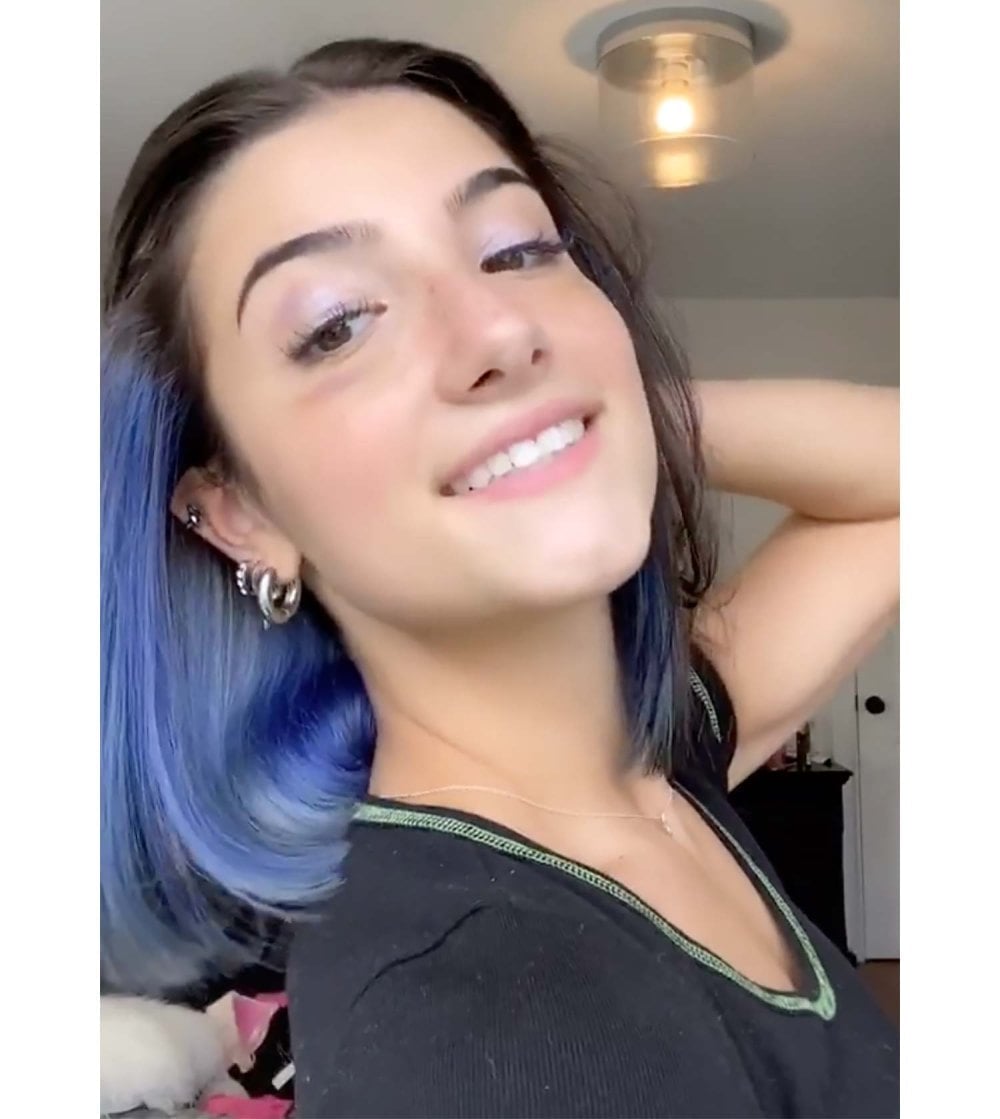
Can bright blue streaks work without a full commitment to fantasy color? On a dark base, they act as an accent, not a costume. The dark base keeps the root line low-maintenance, while the bright blue streaks add contrast on the sides of a chin-length bob. Fine, straight hair shows the contrast best, and a side part helps the blue peek out from the dark. Ask your colorist for: chin length bob with dark base and bright blue streaks. A blowout with a smoothing serum keeps the finish sleek without weighing down fine strands.
Chin Length Bob Pastel Blue And Turquoise
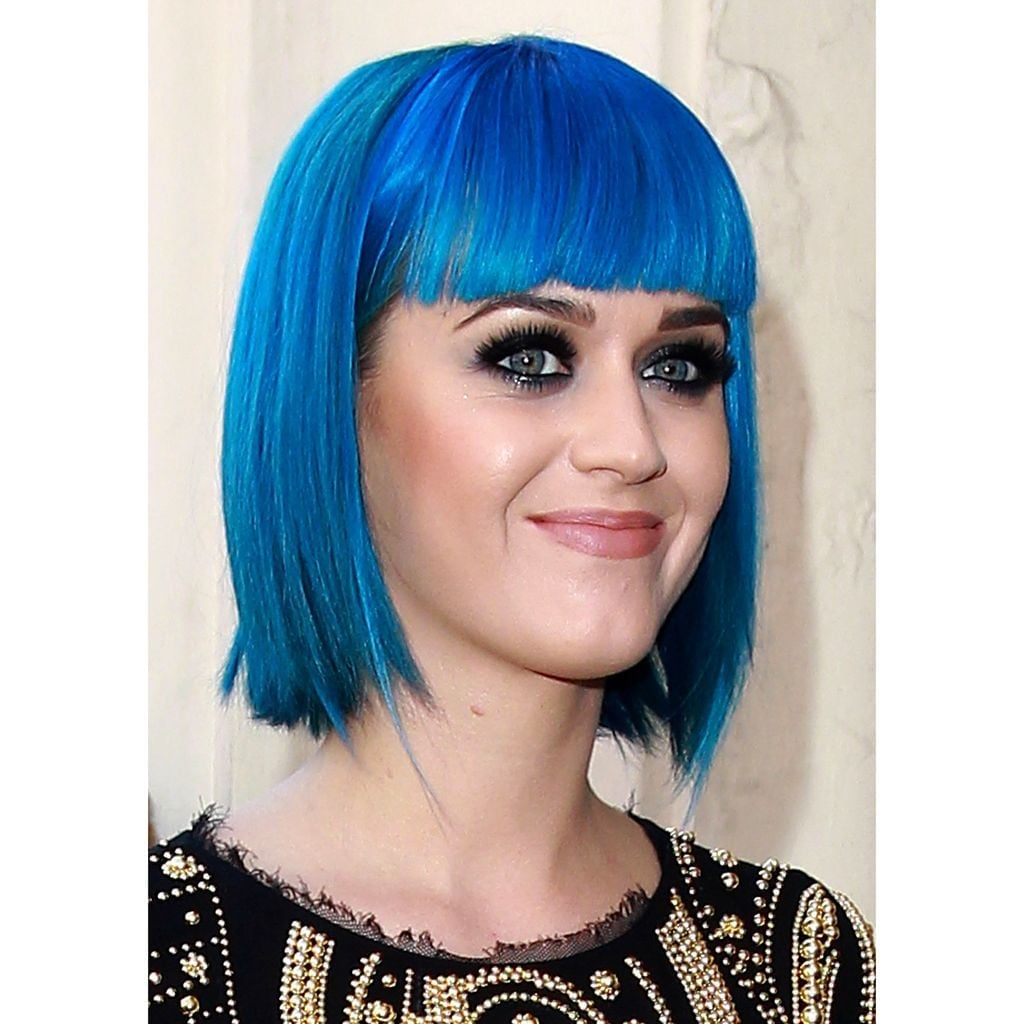
A blend of two pastel tones, not a single wash of color, defines this chin-length bob. Pastel blue and turquoise weave together with blunt bangs, creating a soft ombre that shifts as the hair moves. Fine, straight texture lets the pastel hues read clearly without muddiness. Ask your colorist for: chin length bob with pastel blue and turquoise blend, blunt bangs. The blunt bangs land right at the brow, giving the look a clean, graphic edge. Poker-straight styling keeps the focus on the color.
Mid-Back Icy Blue To Blonde Ombre With Orange Ends
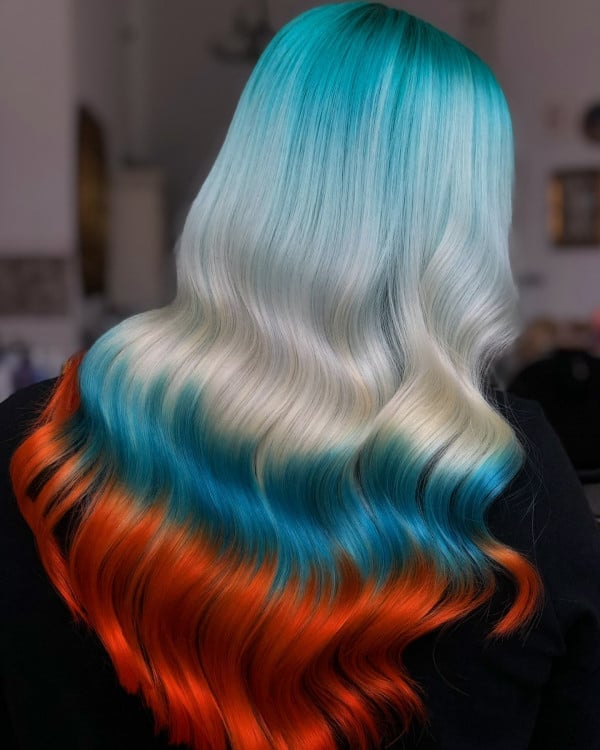
A three-stage ombre this long requires a plan. The roots are an icy blue that fades to blonde in the mid-lengths, then lands on vibrant orange at the ends. On thick, wavy hair at mid-back length, the gradient has enough canvas to transition smoothly. A middle parting shows the full color arc from top to bottom. Ask your colorist for: mid-back ombre with icy blue roots, blonde mid-lengths, orange ends.
Upkeep for this one is honest: the icy blue at the roots wants a toner every three to four weeks to stay cool rather than drift to green. The orange ends are semi-permanent and need refreshing about every four weeks. Color-safe shampoo and cool water extend the life of all three tones. A trim every eight weeks keeps the ends healthy enough to hold the orange pigment.
Chin Length Multi-Tonal Blue Bob
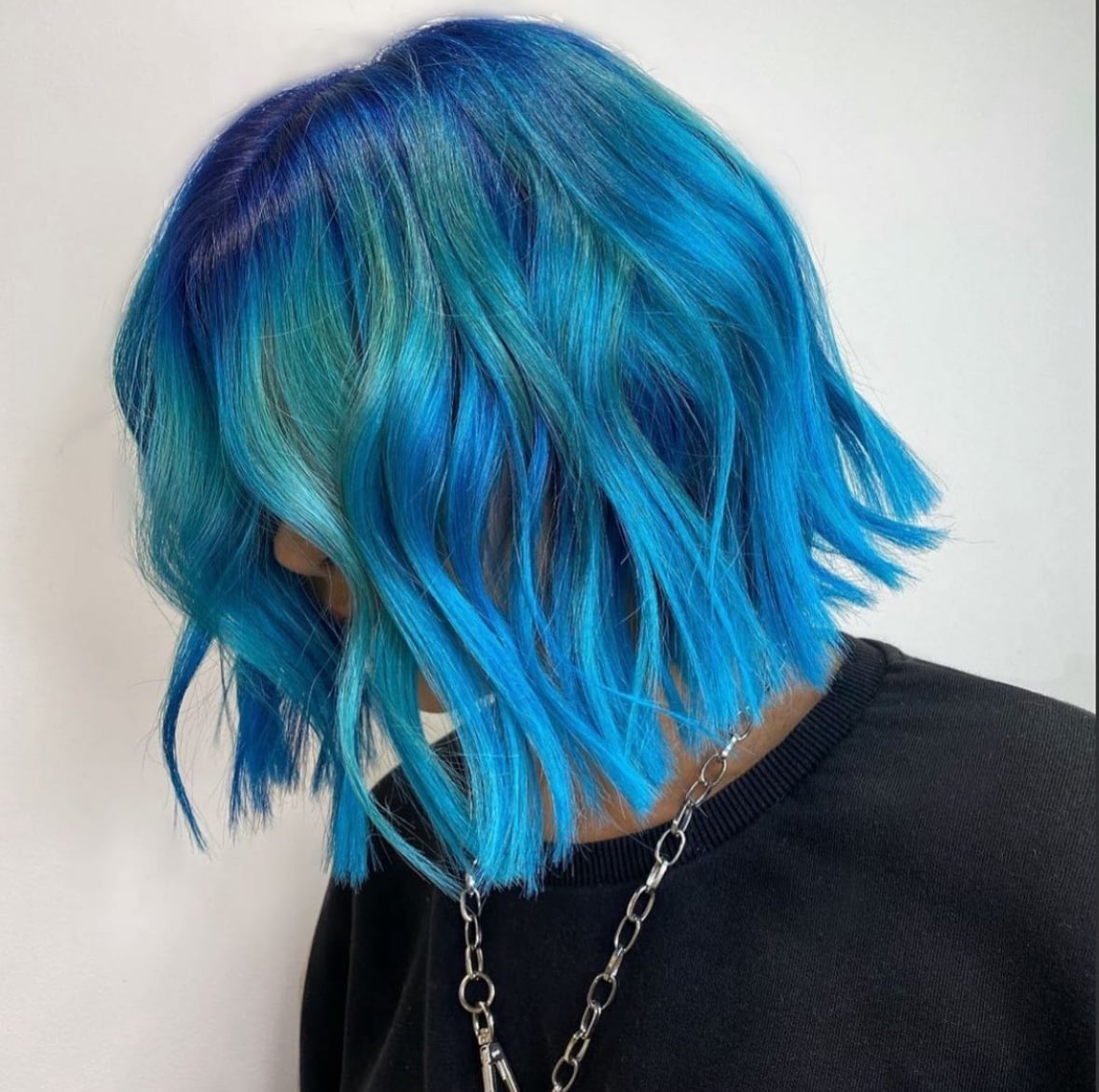
A chin-length bob with choppy, wavy layers makes a natural home for multiple blue tones. The color here layers bright aqua against teal and deeper navy undertones, so the cut’s movement reveals different shades with each turn of the head. Medium-density, wavy hair catches the color variation in the waves. Ask your colorist for: chin length bob with multi-tonal blue, choppy wavy layers. This is a strong look for spring or summer, when the brighter aqua and teal tones feel especially fresh against lighter clothing. A side part and a wavy blowout let the layers do the work.
Mid-Back Dark Base With Emerald Green Dip-Dye
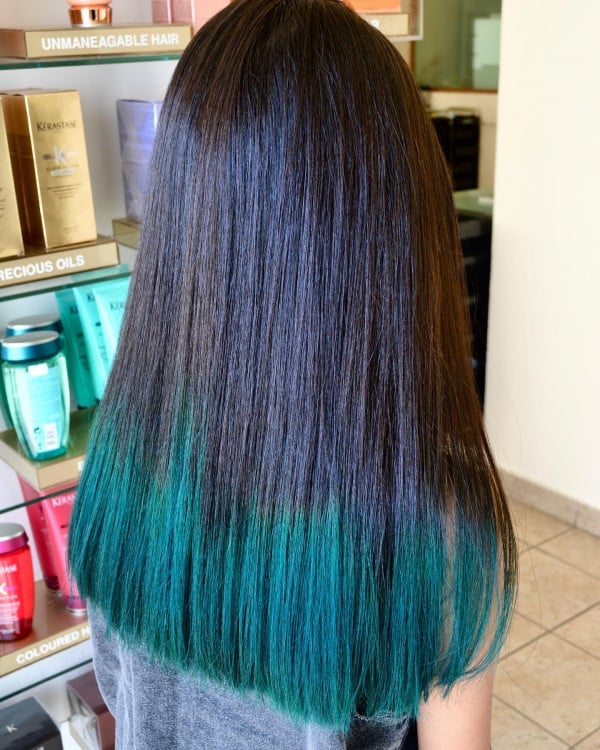
A dip-dye looks best when the color change is crisp. The emerald green here is applied only to the last few inches of mid-back length, leaving the dark root area untouched. Thick, straight hair carries the color block cleanly, with no texture to blur the transition. Ask your colorist for: mid-back dark base with emerald green dip-dye ends.
When you sit in the chair, bring a reference that shows the exact dip-dye placement you want. Your stylist will section the hair and apply the green from the mid-lengths down, using foils to keep the dark base separate. A middle part and straightened styling emphasize the line where the color starts. The emerald tone needs a refresh about every four weeks to keep it saturated instead of transparent.
Chin Length Vivid Blue Blunt Bob
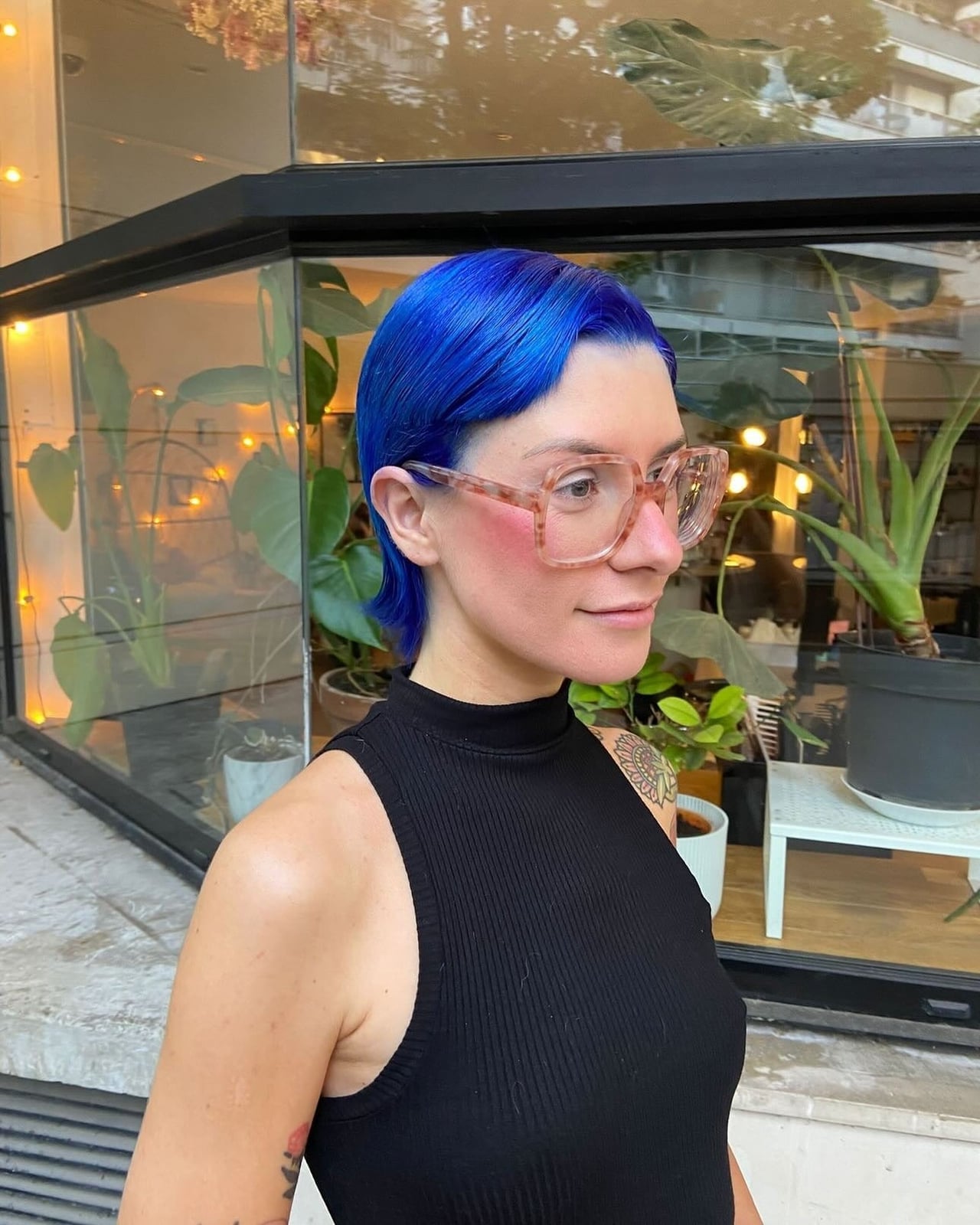
Micro bangs and a sharp blunt line leave nowhere to hide, which is exactly the point. The vivid blue color is uniform and glossy, a single-note commitment that works because the cut is so precise. Ask your colorist for: chin length vivid blue blunt bob with micro bangs. Fine, straight hair starting at chin length gets the sleekest finish; micro bangs suit oval and heart faces. Vivid blue fades fast on fine strands, so a toning appointment every three weeks keeps it from looking washed out.
Collarbone Bob Vivid Blue With Teal Highlights
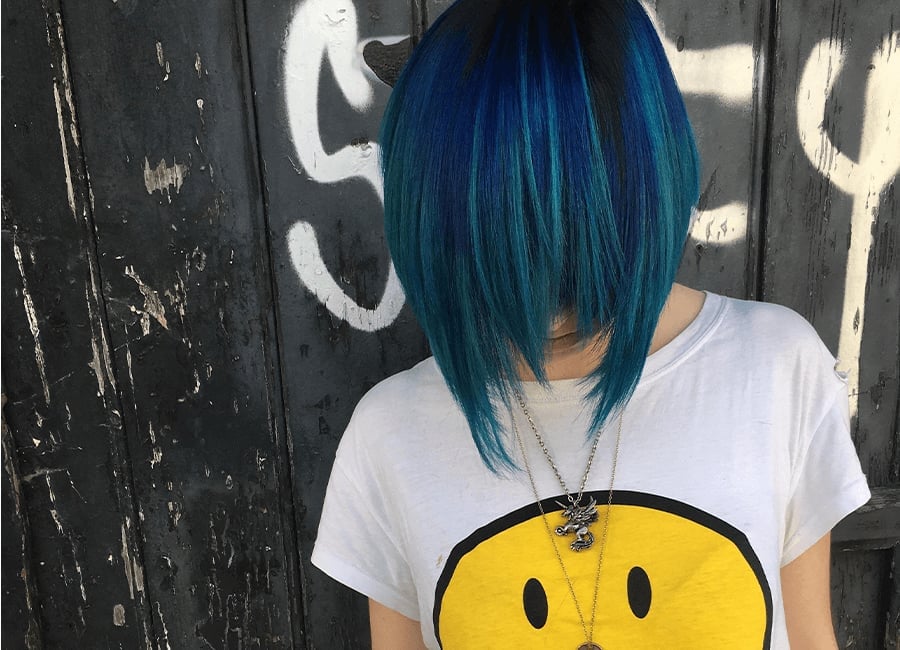
A vivid blue base is one thing, but the teal highlights woven through this collarbone bob give it dimension that a solid color cannot match. The smooth blowout and thick, straight texture let each tone catch the light separately. Ask your colorist for: collarbone bob with vivid blue and teal highlights, styled blowout. Thick, straight hair starting at collarbone length holds the contrast best; a middle part suits oval and long faces. Getting those teal pieces placed precisely is a salon job, not a bathroom-mirror project, and about two and a half hours in the chair.
Mid-Back Black to Bright Blue Ombre
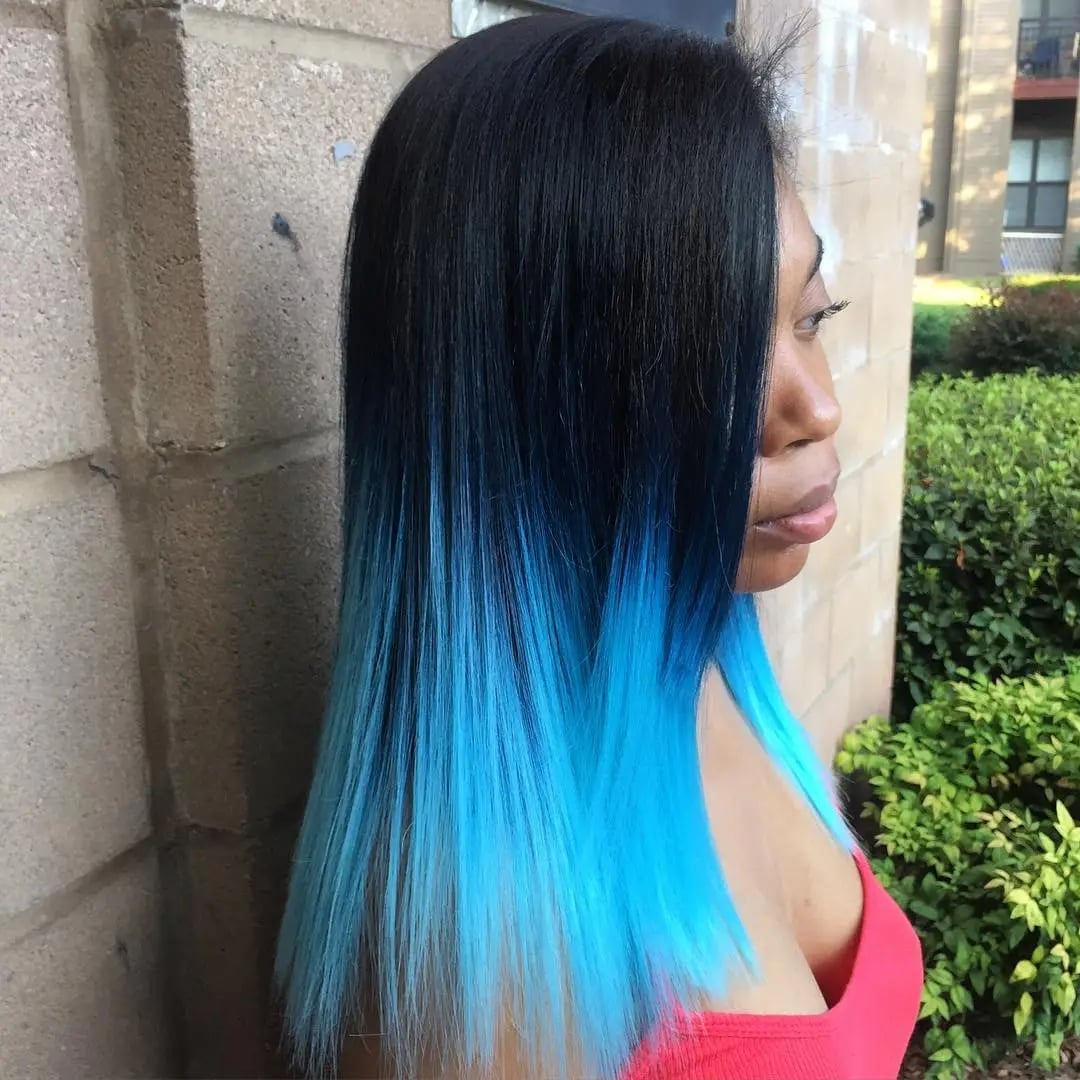
An ombre that starts deep black at the roots and shifts to bright blue at the ends gives you grown-up polish at the top and a party at the hem. Long layers keep the transition gradual rather than abrupt, and the air-dried texture keeps it from looking overdone. Ask your colorist for: mid-back black to bright blue ombre, long layers.
The bright blue ends need a bleach lift first, which means this is a salon-leaning process that takes three to four hours. Upkeep is straightforward: a color-safe shampoo and a trim every six to eight weeks. Fine, straight hair starting at mid-back length carries the weight of the color without the ombre line looking heavy.
Collarbone Shag Teal Roots To Grey Black
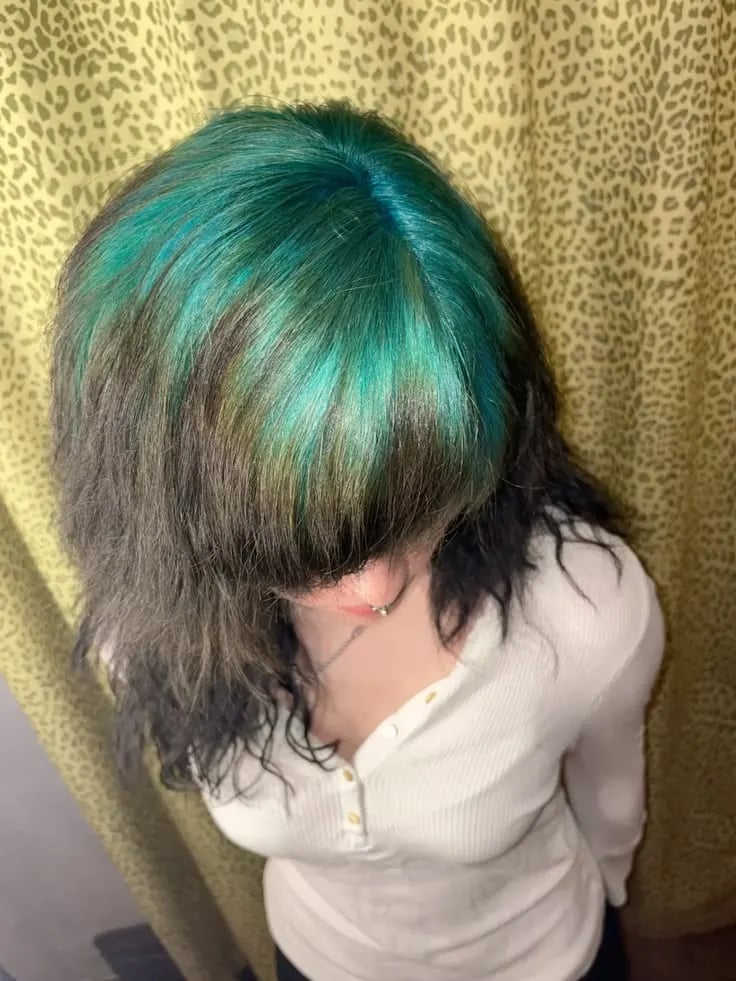
The shag cut does the heavy lifting here, with curtain bangs and a middle part framing the face, but the color is what stops you. Teal roots transition into dark grey and black at the ends, a gradient that looks like it grew that way. Ask your colorist for: collarbone shag with teal roots to dark grey and black ends. Thick, wavy hair starting at collarbone length lets the shag layers move and the color shift show. Curtain bangs soften square and round faces. The teal at the roots is painted on, not bleached, which makes it a salon-leaning process that takes about two hours.
Chin Length Sleek Bob Vibrant Electric Blue

Can a chin-length bob hold an electric blue that bright without looking like a costume? Yes, if the cut is sleek and the finish is glossy. The middle part keeps it severe, not silly. Ask your colorist for: chin length sleek bob in vibrant electric blue. Fine, straight hair starting at chin length gives the smoothest reflection; a middle part suits oval and long faces. A flat iron and a shine serum are the only tools you need, and a trim every six to eight weeks keeps the line sharp.
Collarbone Shag Teal Roots With Dark Base
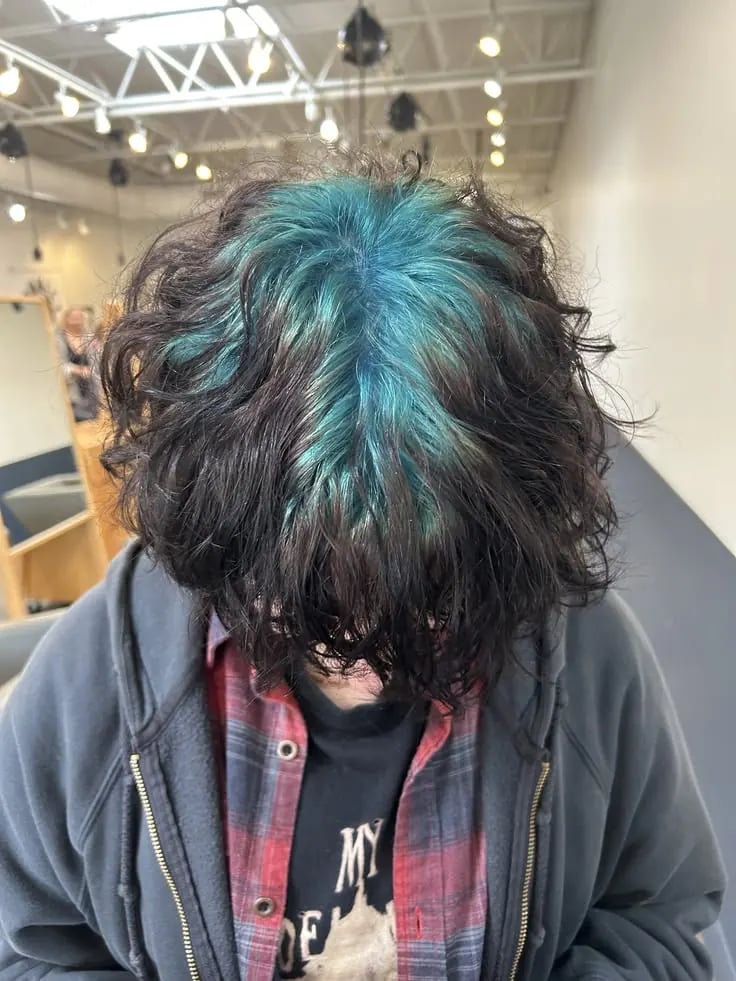
The teal roots hit at the part line and melt into a darker base, which means the grow-out actually looks like part of the design. This shag lands at the collarbone with curtain bangs, cut for thick, wavy texture that benefits from air-drying. The teal roots and dark base combo straddles the line between spring and fall, so it works for a transitional season. Ask your colorist for: collarbone shag with teal roots and dark base. A texturizing spray encourages the lived-in waves, and the shag cut needs a trim every six to eight weeks to keep the layers from getting heavy.
Chin Length Split Dye Blue And Black Bob
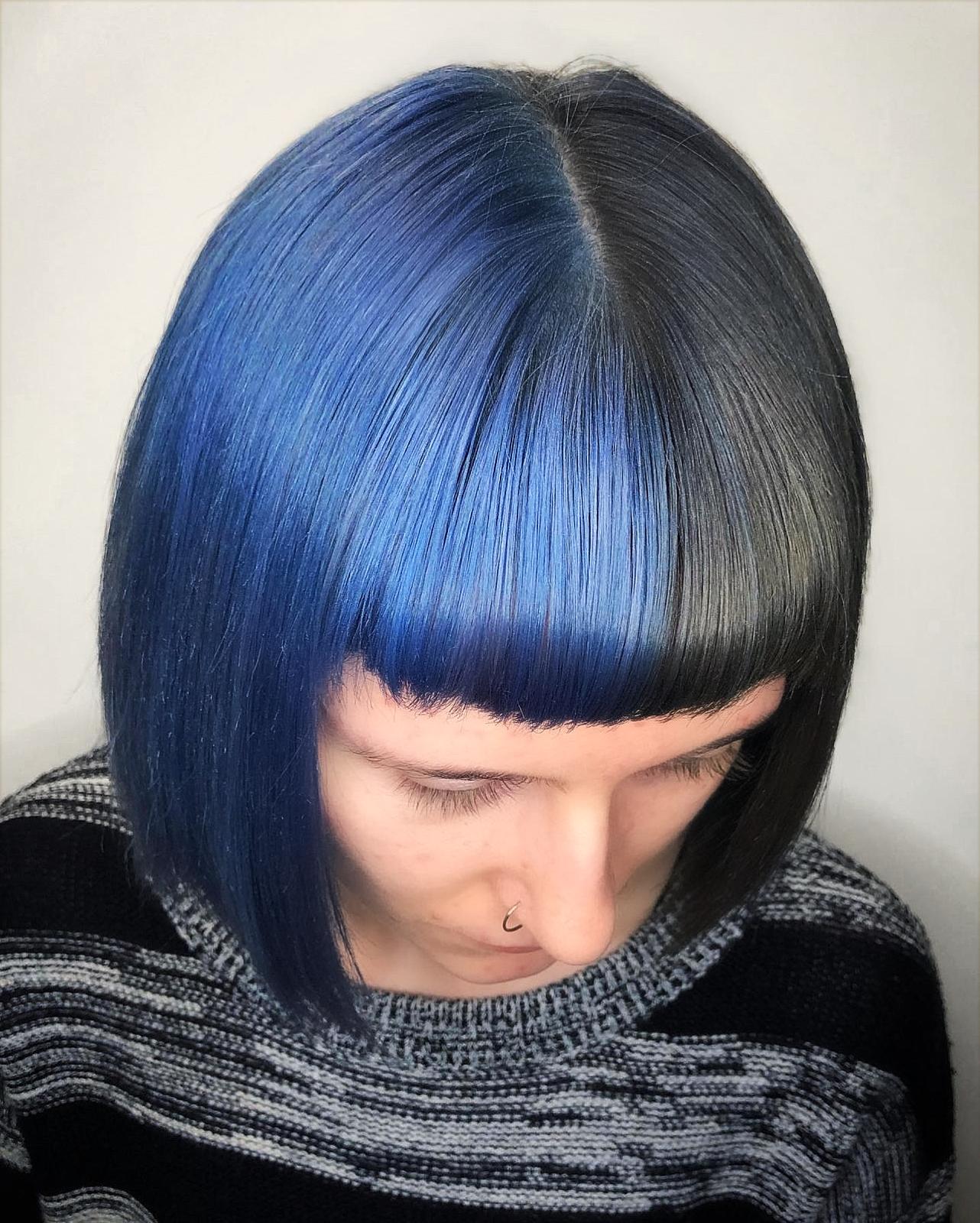
One side deep blue, the other black, divided by a middle parting and micro bangs, the split dye demands precision. The chin-length bob is cut straight and fine, so every line shows. Ask your colorist for: chin length bob with split dye blue and black, micro bangs. Maintaining the contrast means toning the blue side every two to three weeks and keeping the black side fresh with a gloss. The real drawback is that any overlap at the part line blurs the split, so you are committed to clean sections and regular touch-ups.
Final Thoughts
For a vibrant all-over blue, darker natural bases may need two bleaching sessions to lift enough. If low maintenance matters more, choose a balayage or ombré technique that grows out without a harsh line. Fine hair does best with a blunt base and minimal layers; a round face benefits from length below the chin. Choose the blue that speaks to you and wear it with confidence.
- Use color-safe shampoos and conditioners to preserve vibrancy.
- Wash hair with cool water to minimize color fading.
- Schedule toning sessions every 4 to 6 weeks to maintain blue tones.
- Limit heat styling and always use a heat protectant.
- Plan for root touch-ups every 6 to 8 weeks, depending on growth rate.
