

The salt and pepper haircut is no longer a waiting game; it is a choice you make on purpose. In 2027, the trend leans toward short, layered cuts that show off the natural contrast between dark base and silver strands, with a fringe or textured crown to sharpen the line.
29 ideas in this collection range from a cropped pixie to mid-back layers, all built around the same honest palette. If your fine hair falls flat or your fringe will not sit, the right cut fixes both. Classy Salt and Pepper Hair works best when the shape does the talking, not the color.
Angled Bob With Side-Swept Bangs

A sharp angled bob with a side-swept fringe and a smooth blowout uses geometry to do the heavy lifting. The front pieces fall longer than the back, creating a line that draws the eye down rather than across, which makes it a smart pick for fine, straight hair that needs the illusion of density. Ask your stylist for: chin-length angled bob, longer in front, side-swept fringe. This cut suits square or round faces because the angle and fringe break up width without adding bulk. A flat iron keeps the ends sleek, or a round brush can soften the look during a blowout; plan for a trim every six to eight weeks to maintain the crisp edge.
Textured Pixie With Piecey Fringe

Strategic layering is what gives this short pixie its piecey, almost feathery finish. The stylist cuts into the top and crown at varied lengths so each section separates from the next, which is exactly what fine wavy hair needs to look like it has more going on than it does. Ask your stylist for: short pixie with piecey texture and a textured fringe. The short fringe stays light and moves independently rather than lying flat, so it softens angular face shapes without requiring daily fussing. A dab of texturizing paste on dry ends defines the separation, and the cut needs a refresh every four to six weeks to keep the shape precise.
Curly Pixie With Textured Crown

Can fine curls actually hold volume in a short cut? Yes, when the crown is cut with deliberate texture and the sides stay close. This pixie uses short, layered sections on top to give each curl a place to spring from, while the swept fringe keeps the face visible instead of buried under shrinkage. Ask your stylist for: pixie cut with textured crown and short swept fringe. Fine curly hair at ear length benefits from the height at the crown, which balances round or oval faces. A diffuser on low heat encourages the natural wave pattern without flattening it, and a light hold spray keeps the shape intact; expect to book a trim every six to eight weeks.
Chin Length Bob With Blunt Fringe

People often think a blunt fringe on fine hair will look heavy, but the mistake is going too thick or too straight across without considering the hair’s natural density. This chin-length bob avoids that by keeping the fringe light and pairing it with a smooth, straight silhouette, so the blunt edge looks intentional. Ask your stylist for: chin-length bob, blunt fringe, smooth finish. The blunt line can shorten a long face effectively, but the cut needs fine, straight hair that starts at chin length to sit correctly. Daily flat ironing or a paddle brush blow-dry is required for that sleek finish, and a trim every six weeks is required to prevent the fringe from losing its precision.
Pixie Cut With Choppy Bangs

A pixie with choppy bangs works best when the cut leans into texture. The bangs are cut at uneven lengths and swept to the side, which adds movement to fine wavy hair that might otherwise lie flat against the scalp. Ask your stylist for: short pixie with choppy side-swept bangs and textured finish. This shape suits fine, wavy hair starting at ear length, because the choppy ends add volume without actual bulk. A texturizing spray or a dab of pomade on the bangs and top layers defines the separation, and the cut needs a trim every four to six weeks to keep the choppy edges from looking ragged.
Short Layered Cut With Wispy Fringe

Wondering what to actually say to get that lived-in, soft look? Ask your stylist for: short layered cut, wispy fringe, soft waves. The wispy nature of the fringe is key here: it should graze the brows and blend into the sides, not sit as a solid line. For fine, wavy hair starting at chin length, this cut adds volume and movement without weighing things down. The side parting and blowout finish keep the texture defined. A trim every six to eight weeks maintains the shape and keeps the fringe looking fresh.
Layered Pixie With Side-Swept Fringe
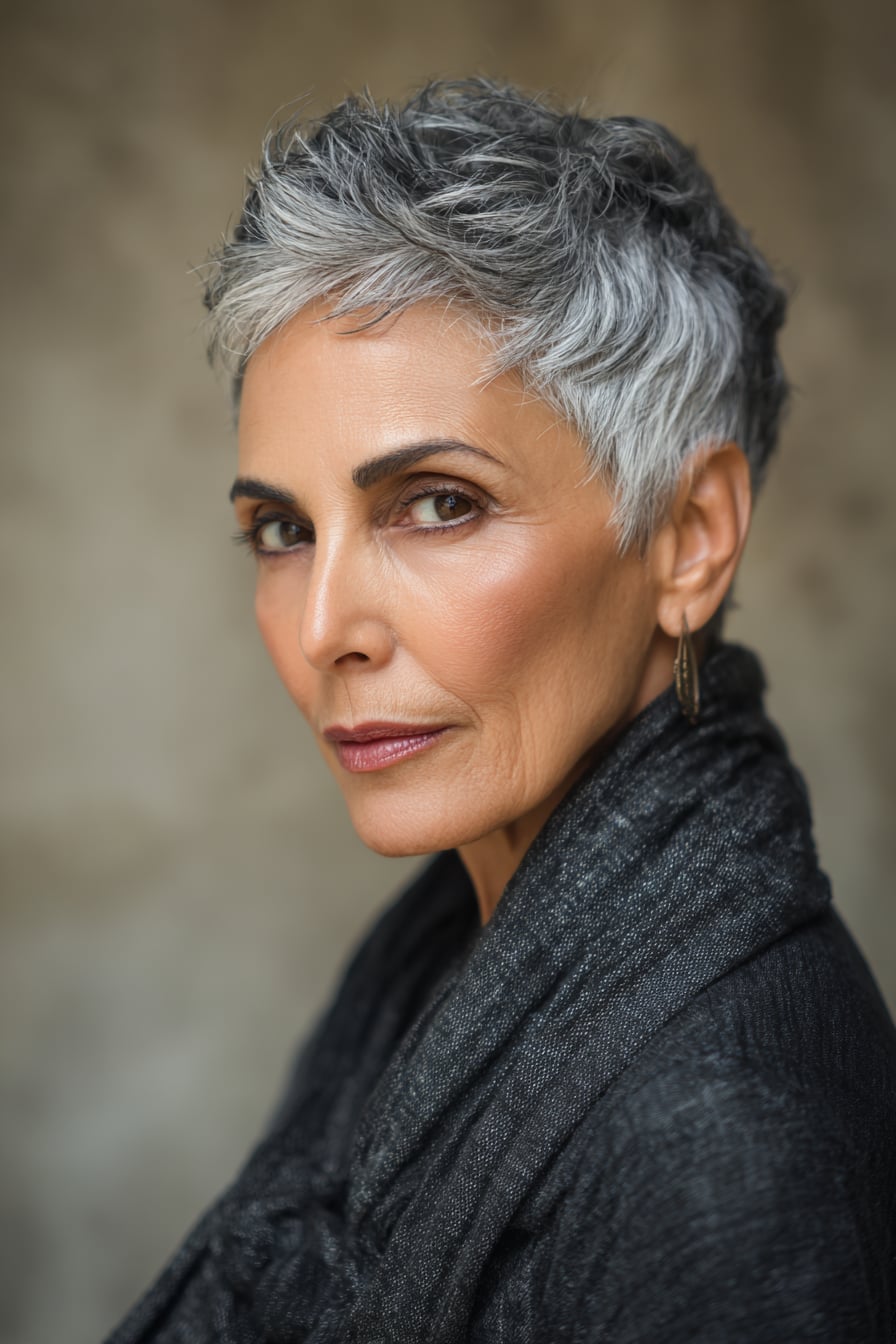
The design of a layered pixie with a side-swept fringe relies on the fringe doing the heavy lifting: it needs to sweep across the forehead with enough weight to stay put but enough lightness to look airy. The fine, layered texture here is swept upwards at the crown, which prevents that dreaded helmet effect. A styling paste applied to the top layers and the fringe gives definition without stiffness. This cut demands a trim every four to six weeks to keep the side-swept shape precise and the layers from losing their structure.
Short Pixie With Soft Swept Bangs

It is easy to mistake soft swept bangs for a blunt fringe, especially on fine hair, but the difference is everything. A short pixie with soft swept bangs uses gentle layers that feather across the forehead instead of cutting straight across. The bangs are short enough to sweep to the side with a small round brush, creating a shape that softens the hairline without hiding it. For fine, wavy hair starting at ear length, this cut avoids the harsh line that can make a pixie feel severe. A trim every four to six weeks keeps the bangs at the right length.
Tapered Pixie With Textured Finish

The construction of a tapered pixie starts at the nape with a close taper that gradually releases into longer layers at the crown. The short, swept bangs sit forward, blending into the side layers without a visible seam. For fine hair at ear length, the tapering adds definition along the hairline while the textured finish on top creates lift. A texturizing cream or pomade worked through the crown and bangs gives that deliberate, piecey separation. The cut keeps its shape for about four to six weeks before the taper needs refreshing.
Asymmetrical Pixie With Textured Shape
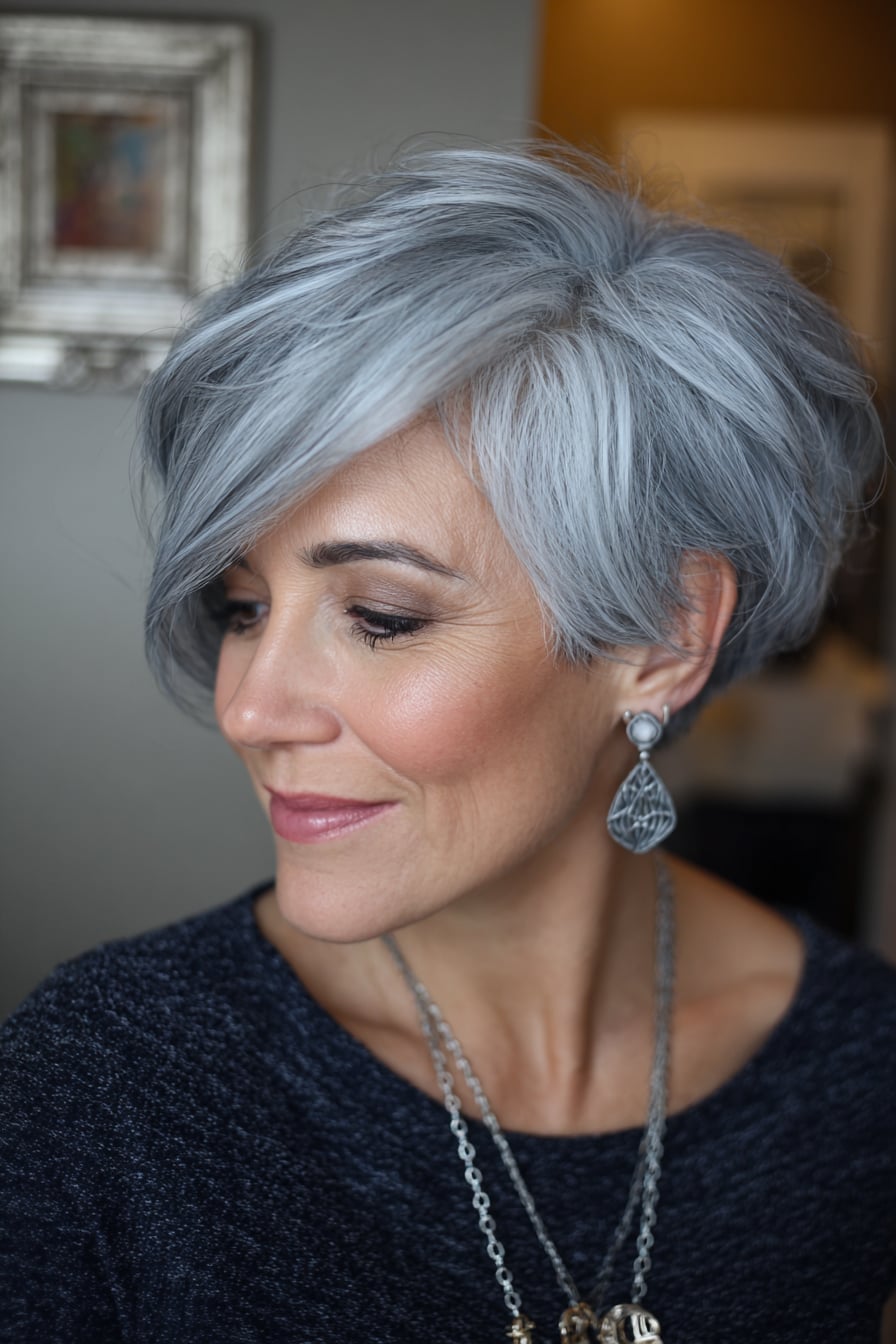
An asymmetrical pixie works best when one side is visibly shorter than the other, creating a dynamic line that draws the eye across the face. The side-swept bangs on the longer side add to the imbalance, which makes it ideal for fine, straight hair that needs visual interest. Oval and heart-shaped faces tend to handle the asymmetry well, as the uneven length can balance a narrower chin. A texturizing spray or wax applied to the layers defines the shape and keeps the shorter side from looking sparse. A trim every four to six weeks preserves the contrast between the two sides.
Textured Pixie With Side-Swept Bangs

Is a textured pixie cut truly wash-and-wear? With fine, straight hair like this, not exactly. The short, layered shape and side-swept bangs need a dry texturizing product worked through the crown every morning to hold the piecey finish. Ask your stylist for: short textured pixie with side-swept bangs. Without that lift, the fine strands fall flat by midday. A trim every four to six weeks keeps the silhouette sharp and the bangs out of your eyes.
Choppy Pixie With Textured Layers

A standard pixie can turn flat on fine, straight hair; a choppy pixie with textured layers avoids that entirely. The short, uneven pieces prevent the cut from looking too uniform, and the side-swept fringe breaks up the hairline. Ask your stylist for: choppy pixie cut with textured layers and side-swept fringe. The disconnection adds visual fullness where there isn’t much. Just don’t let anyone soften those ends.
Textured Pixie Bob With Tousled Waves
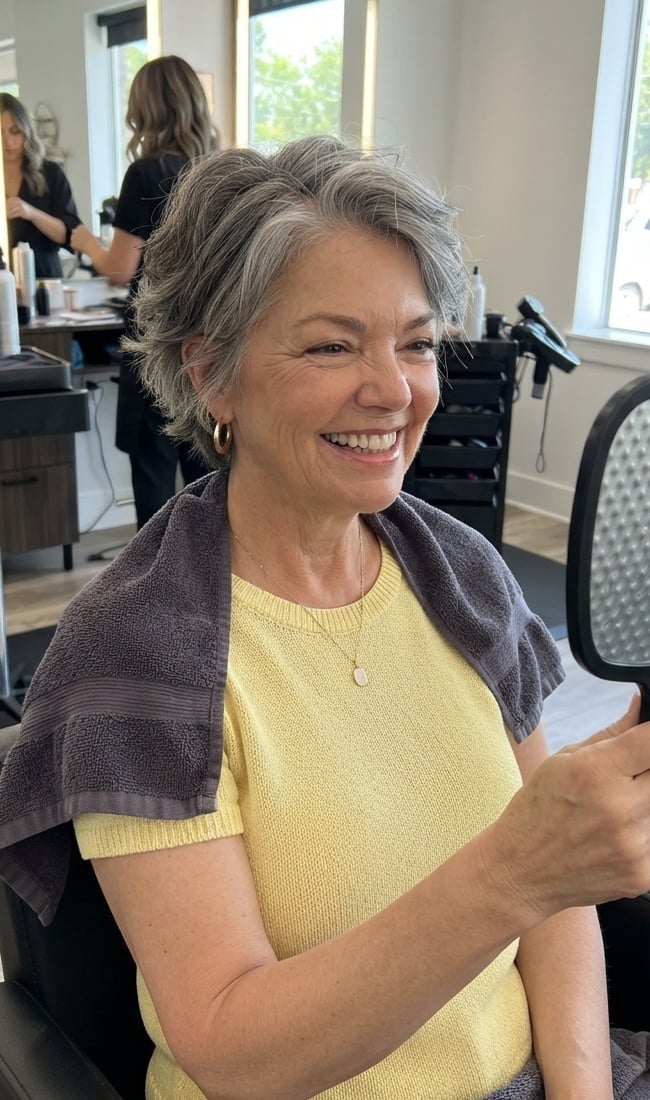
How do you ask for the right kind of messy? A textured pixie bob with tousled waves falls just to the ear, with a short side-swept fringe. The fine, wavy texture needs a cut that works with the natural bend, not against it. Ask your stylist for: pixie bob with tousled waves and short side-swept fringe. The layers are cut into the wave pattern so the piecey finish looks deliberate, not like a bad hair day you could not fix.
Short Layered Bob With Textured Finish
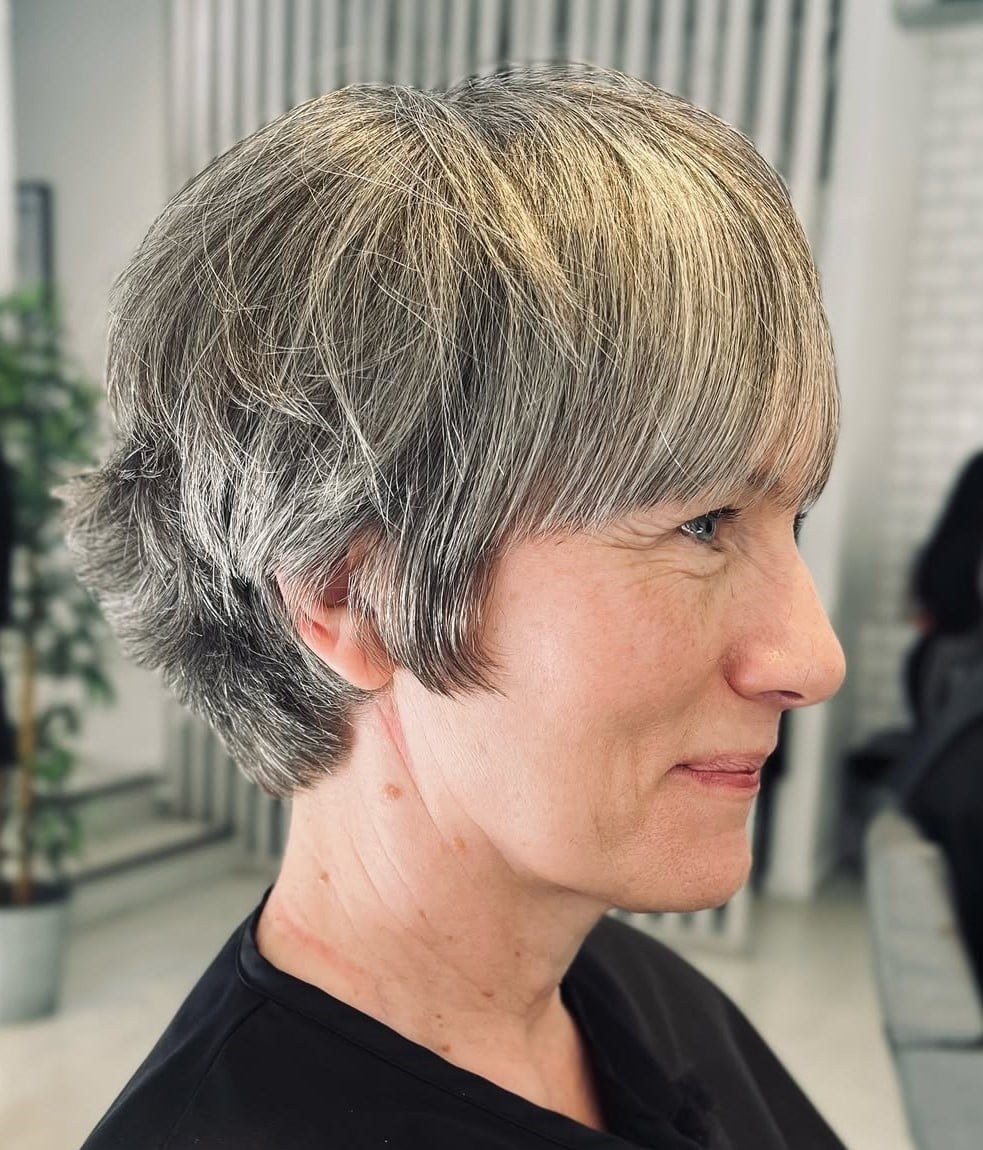
The design of a short layered bob with a textured finish relies on removing weight through the interior, not just the perimeter. The cut ends around the ear, with a short fringe and fine, wavy texture. Ask your stylist for: short layered bob with textured finish and short fringe. The stylist point-cuts into the ends so each section sits separately rather than blending into a solid line. Silver strands woven through the salt and pepper add contrast that emphasizes the movement.
Collarbone Bob With Loose Waves

A collarbone bob with loose waves and no bangs works best for medium density hair that can hold a curl without collapsing. The side parting and soft wave pattern draw the eye down, which balances a round face by adding vertical length. Ask your stylist for: collarbone length bob with loose waves and side parting. The natural salt and pepper blend shows more dimension when the waves catch the light. Skip this cut if your hair is very fine and straight; the waves won’t hold without significant heat styling.
Collarbone Bob With Soft Waves, Side-Swept

Does a side-swept fringe make a collarbone bob harder to maintain? Not really. This cut uses soft layers throughout the length and a side-swept fringe that blends into the shape rather than demanding its own routine. The dimensional grey tones, darker at the roots and lighter through the ends, create depth without obvious regrowth lines. Medium density wavy hair is the sweet spot here; the layers prevent boxiness while the side-swept fringe softens angular jawlines. Ask your stylist for: collarbone bob with soft layers and side-swept fringe. A volumizing spray before blow-drying and a large round brush gives it bounce. Trim every eight to ten weeks, and schedule a toner every six to eight weeks if you want the grey to stay cool rather than warm.
Shoulder Length Layers With Wavy Texture

There is no blow-dryer involved here, and that is both the appeal and the catch. This shoulder length cut uses soft layers that hit just past the collarbone with a side parting, letting thick, wavy hair air-dry into its natural salt and pepper blend. The mix of grey and darker strands creates dimension without salon intervention. For thick hair, the layers are essential. They remove weight so the waves form instead of falling flat.
The honest trade-off is that air-dried texture on thick hair can read as untidy until it fully settles, which takes about an hour after washing. A curl-enhancing cream or a few scrunches with sea salt spray usually solves it. Who should skip this cut? Anyone with very fine or straight hair, because the loose waves need density to hold their shape rather than collapse into a single line. Trim every eight to ten weeks to keep the layers visible, not swallowed by the weight.
Layered Lob With Ash Blonde Undertones

Here is a cut that proves grey does not have to look flat. This shoulder length layered lob uses fine wavy texture to carry a salt and pepper base with subtle ash blonde undertones woven through. The ash tones keep the grey from warming up into yellow or beige as the weeks pass. Fine hair benefits from the lob length because the layers add lift without needing heavy product. Ask your colorist for: a layered lob with soft waves and ash blonde undertones. Dry texture spray separates the waves and shows off the tonal variation. The upkeep is a trim every eight to ten weeks and a toning appointment every six to eight weeks to maintain that cool, dimensional effect. Straight hair will lack the wave structure, so this cut prefers texture.
Collarbone Layered Bob With Volume

Volume from a bob does not have to puff into a triangle. The trick is in the layering and the blow-dry technique. This collarbone length layered bob uses graduated layers through the back and sides, paired with side-swept bangs, to create height at the crown that tapers into a soft, wavy finish. Thick hair responds well here: the layers control bulk while the voluminous blowout pushes the shape outward and down. Ask your stylist for: a collarbone layered bob with a voluminous wavy blowout and side-swept bangs. Focus on root lift during styling with a large round brush, then let the ends curve naturally. The color is a true salt and pepper blend that looks deliberate against the volume. Trim every eight to ten weeks; a root shadow is unnecessary since the darker base provides intentional contrast.
Shag Haircut With Curtain Bangs
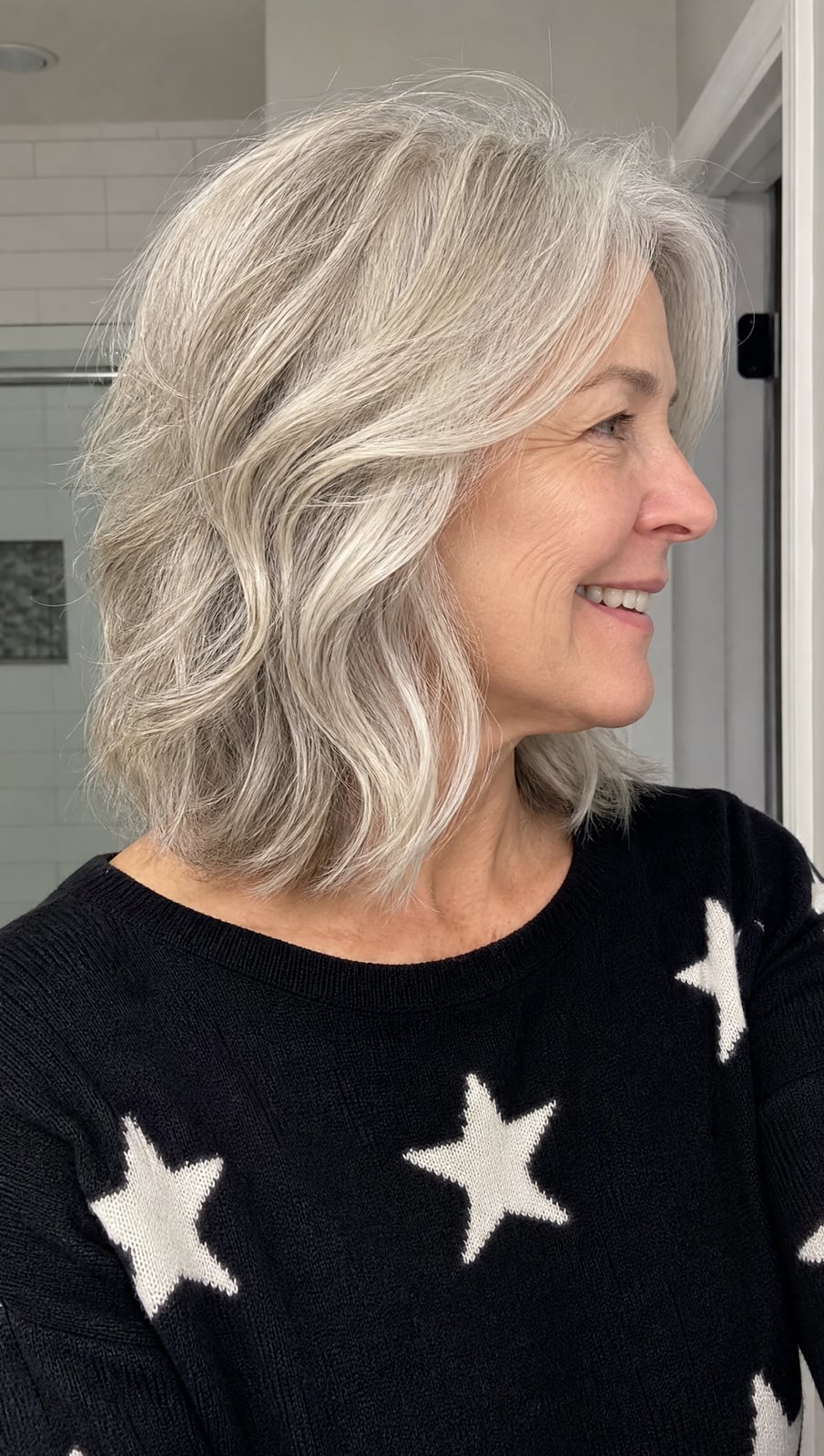
The shag works best on hair that has something to say, and thick, wavy salt and pepper hair has plenty. This collarbone length shag uses deep layers throughout with curtain bangs framing the face from a middle parting. The result is movement without weight, and the curtain bangs soften the forehead while the frays at the ends prevent a blunt line. Who genuinely flatters this cut? Anyone with medium to thick wavy hair who wants shape without constant heat styling. The dimensional salt and pepper grey needs no extra color work when the cut does the work.
Who should pass? Anyone with very fine or straight hair, because the shag can read as sparse rather than intentionally sparse if there is not enough density or wave to fill the layers. A texturizing spray and air-drying or diffusing enhances the shape without a round brush. Trim every eight to ten weeks to keep the curtain bangs at the right length, and skip the heavy conditioners near the roots, which weigh down the lift.
Chin Length Bob With Natural Curls

A chin-length bob built for natural curls relies on the cut for shape, not the products. The middle parting and defined curl pattern create volume around the face without needing a round brush. Fine curly hair can collapse under too much product, so a lightweight curl cream applied to damp hair and diffused on low heat is the standard play. Ask your stylist for: chin-length bob, defined natural curls, middle parting. A trim every eight to ten weeks keeps the shape balanced, which is the real enemy of the curly bob.
Collarbone Straight Hair With Layers

Straight collarbone layers with a middle parting rely on precision cutting to keep the line clean and the movement visible. The dimensional grey tones here are built into the cut, not added after, so the layers catch the light at different points. On fine straight hair, a flat iron set to medium heat with a heat protectant gives that smooth finish without frying the ends. Ask your stylist for: collarbone length straight hair with layers, dimensional grey. A trim every eight to ten weeks keeps the ends from looking sparse, which is the main risk with fine hair at this length.
Shoulder Layered Lob With Blowout

A layered lob with a smooth blowout looks like it should be easy to replicate at home, but that sharp side-part line is a salon skill. The ash blonde undertones in the salt and pepper grey need a cool-toned toner to keep the blend clean, and a round brush technique that pulls the ends under is not something a quick blast with a dryer achieves. Ask your stylist for: shoulder length layered lob, smooth blowout, side parting. A trim every eight weeks keeps the lob from turning into a shapeless mid-length, and a toning appointment every six to eight weeks stops the ash from warming up.
Shoulder Length Layers With Soft Waves

Shoulder-length layers with soft waves and face-framing pieces are the answer for anyone wondering if salt and pepper hair can look soft rather than severe. The blended grey tones here are seamless, so the face-framing pieces around the jaw soften a square face shape without adding bulk. Medium wavy hair takes a large barrel curling iron well, but a quick blow-dry with a paddle brush also gives a natural bend. Ask your stylist for: shoulder length layers with face-framing pieces, soft waves. A trim every eight to ten weeks keeps the layers from losing their shape.
Mid-Back Layers With Air-Dried Waves

Mid-back layers with subtle movement and side-swept bangs are the low-commitment option for those who want length without daily styling. The natural grey color here is uniform, so the air-dried waves rely on the cut to add interest.
Start with damp, thick wavy hair and apply leave-in conditioner from mid-lengths to ends. Scrunch upward while the hair is wet, then let it dry without touching it. The side-swept bangs need a quick blast with a dryer to set the direction, then the rest of the hair dries naturally. Ask your stylist for: mid-back layers, natural grey, air-dried waves, side-swept bangs. A trim every ten to twelve weeks keeps the ends healthy without sacrificing length.
Mid-Back Layers With Wavy Blowout

A wavy blowout on thick, mid-back length hair is the kind of design that looks polished without trying to hide the natural salt and pepper blend. The side parting and loose waves work with the blended grey tones, letting the darker roots transition into lighter silver strands. This cut suits thick wavy hair that already reaches at least mid-back; the blowout simply adds a salon-level finish. Ask your stylist for: mid-back layers, loose wavy blowout, salt and pepper blend.
Maintaining the shape and the blended colour means booking a trim every 10 to 12 weeks. At home, a large round brush and a blow dryer are the tools for recreating that smooth, wavy finish. The waves hold best when the hair is fully dry before you release each section from the brush.
Mid-Back Layers With Ash Blonde Highlights

Can a dramatic contrast still look natural? Yes, when the base is dark and the highlights are a mix of ash blonde and silver. Long layers and curtain bangs frame the face without losing the mid-back length, and the loose waves show off the dimension. This is a salon-only colour placement, so the honest drawback is the upkeep: those light strands can lean brassy without a toning appointment every four to six weeks. Ask your colorist for: mid-back layered hair, curtain bangs, ash blonde and silver highlights.
Mid-Back Layers With Silver Highlights

High-contrast silver highlights on a black base rely on a precise technique: the colorist takes fine sections and places the light pieces close to the root, then weaves them through the ends. On thick wavy hair at mid-back length, the silver creates a different effect with every wave. The middle parting and the lack of bangs keep the focus on the color shift. Ask your colorist for: mid-back layered wavy hair, black with silver highlights.
The layers are cut to follow the hair’s natural wave pattern, so the shape falls into place as it dries. A side view shows how the silver strands wrap around the darker sections, creating that dramatic flow. This is a high-contrast look, and it is not meant to be subtle.
Chin Length Bob With Natural Grey, Wavy
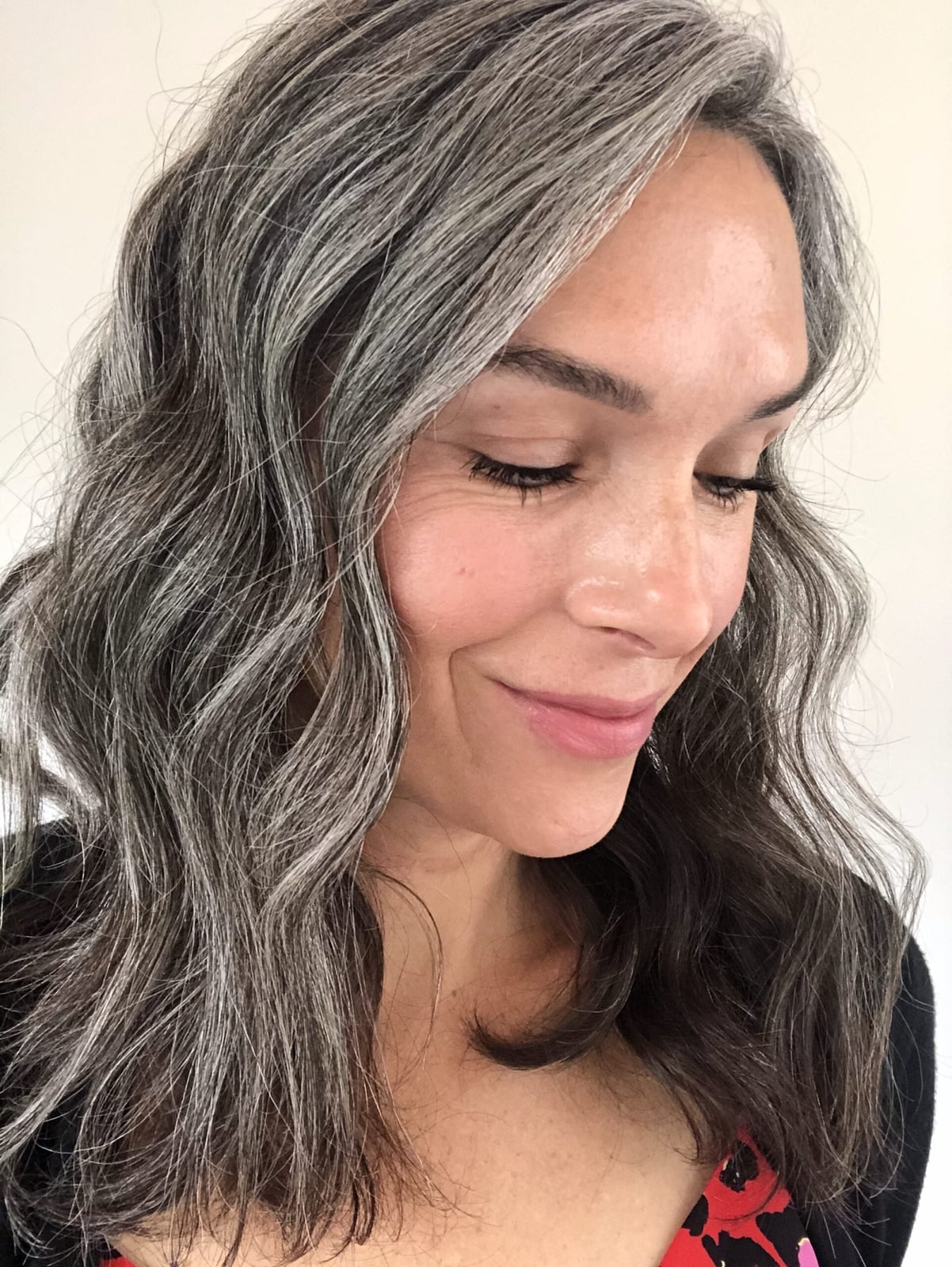
A chin-length bob with loose waves and a side parting shows off the natural salt and pepper transition. The medium-density wavy texture keeps the shape soft, and the blend of lighter and darker strands adds depth. The transition period can look brassy if you skip a purple shampoo for too long. Ask your stylist for: chin-length wavy bob, loose waves, natural salt and pepper. A trim every 8 to 10 weeks keeps the bob from losing its shape, and a wave-enhancing cream is all you need for styling.
Final Thoughts
Fine hair needs a blunt baseline with strategic layers to build volume. Thick hair benefits from textured layers or a shag to remove weight and prevent bulk. Round faces let the length fall below the chin; long faces add volume at the sides.
- Schedule trims every 6-8 weeks to maintain sharp lines on bobs and pixies.
- Use a purple shampoo sparingly to keep grey tones bright and prevent brassiness.
- Incorporate a deep conditioning treatment weekly to keep texture smooth.
- Protect hair from heat styling with a thermal spray to prevent damage.
Embrace your natural shade with a cut that makes it shine.
