

Honey blonde balayage layers warm, sun-lightened tones over a darker base so the grow-out stays soft. This season the shift is toward richer caramel undertones and face-framing slices that keep the color from feeling flat.
These 25 takes on trendy honey blonde balayage span mid-back lengths, shoulder-grazing cuts and bobs with curtain bangs, so there is a match for fine strands, thick texture, round faces and anyone who wants a lived-in color that does not demand a root touch-up every four weeks. The collection solves two real annoyances: a fringe that refuses to sit and a warm blonde that turns brassy before the second shampoo.
Mid-Back Length Honey Blonde Balayage With Loose Waves
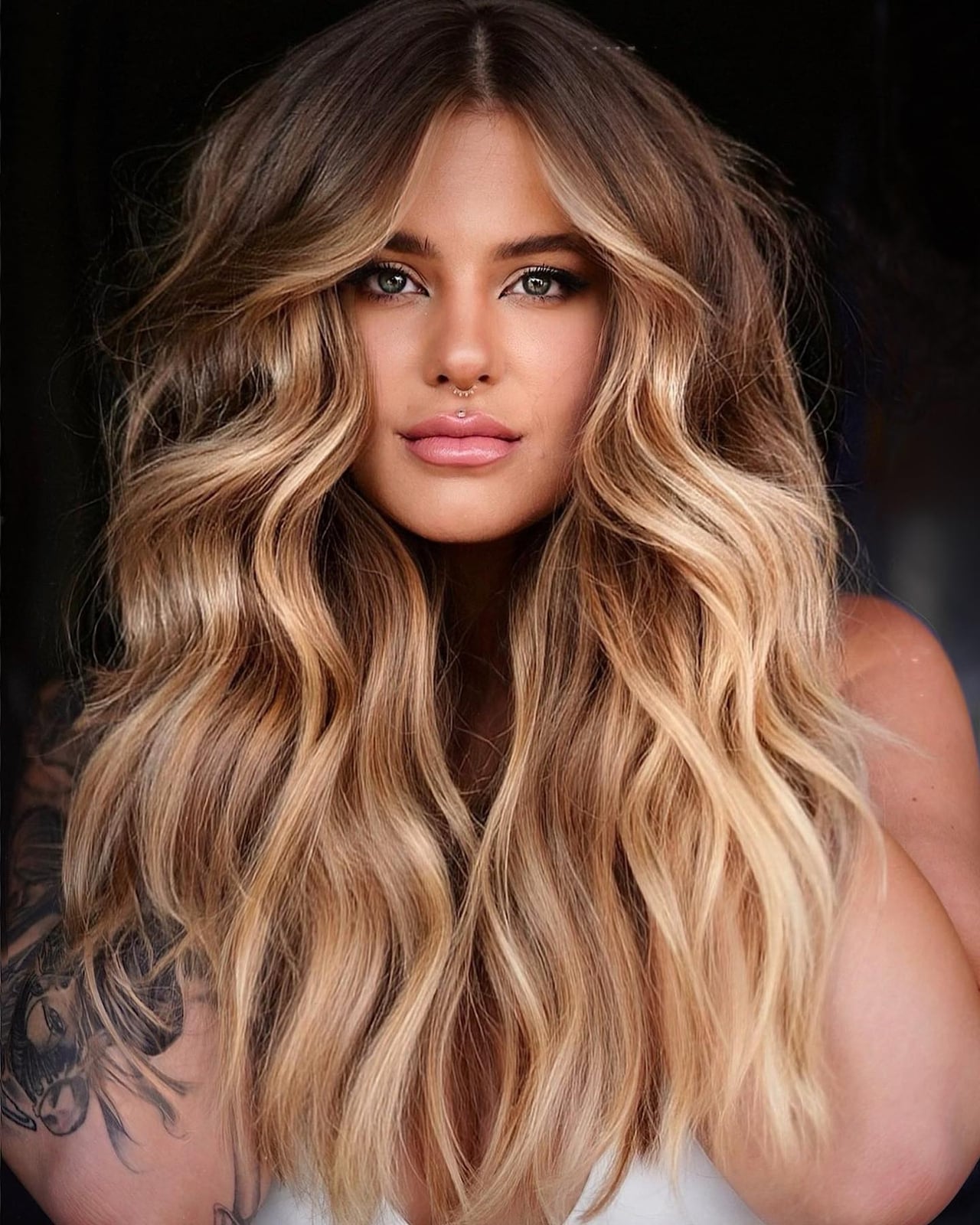
This is a classic honey blonde balayage on thick, wavy hair that hits mid-back, styled in loose waves with a middle parting. The layers are cut to move with the wave pattern, so the lighter pieces land where they catch the most light instead of sitting in a solid block. The warm honey tones melt into the base without a harsh line. Thick, wavy hair starting at mid-back length works well for this technique. Oval, heart, and diamond face shapes benefit from the soft framing the layers provide. Ask your colorist for: mid-back length balayage with warm honey blonde tones, styled in loose waves. The layers create movement that a one-length cut cannot match.
The loose waves are not a happy accident. A large barrel curling wand shapes each section, and a trim every six to eight weeks keeps the ends healthy enough to hold a curl. No bangs, no extra fuss, just a shade that looks like it came from a long afternoon in the sun.
Glossy Mid-Back Honey Blonde Balayage With Layers
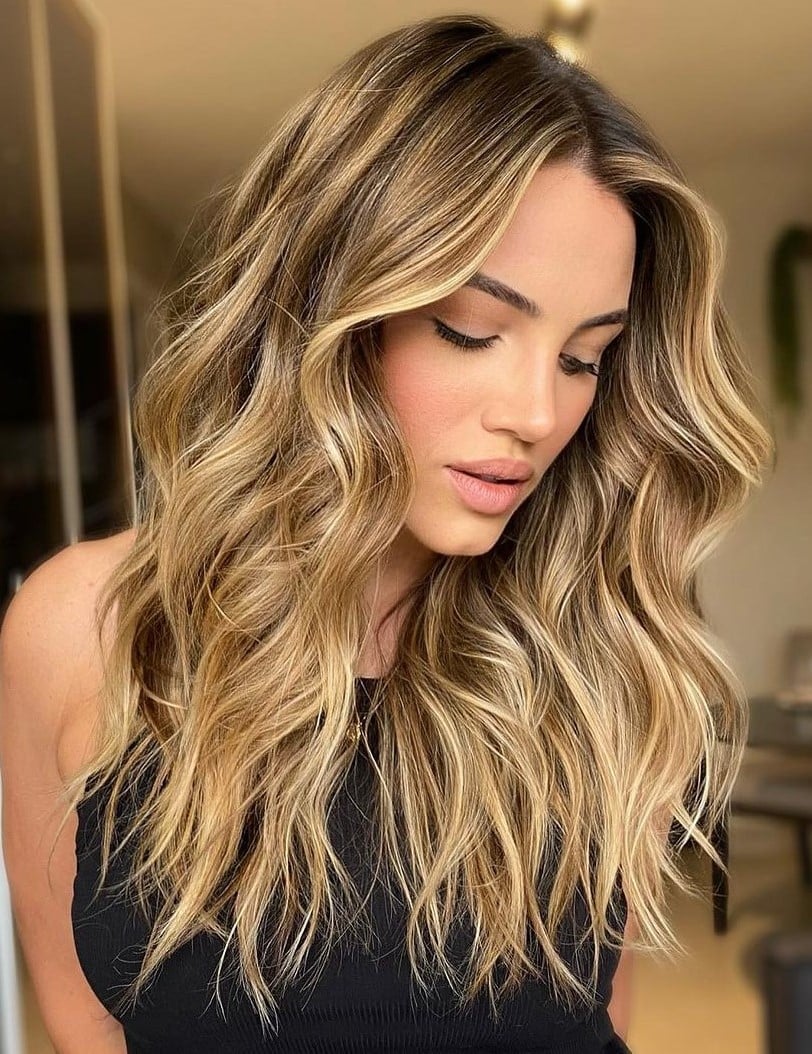
The balayage technique here is straightforward: the colorist paints the honey and blonde tones onto the surface of each section, so the transition looks painted on. Mid-back length layers give the gloss somewhere to reflect, and the middle parting keeps the application symmetrical. Thick, wavy hair at this length works well, and oval or square face shapes get a balanced frame from the layers. Ask your colorist for: glossy mid-back balayage with natural honey and blonde tones, styled in loose waves. A shine serum applied to damp hair before blow-drying locks in the finish.
The layers are cut to stack subtly, so the balayage looks dimensional. A trim every six to eight weeks maintains the shape. No bangs, no heavy product, just a gloss that makes the color look wet.
Voluminous Mid-Back Waves With Vibrant Honey Balayage
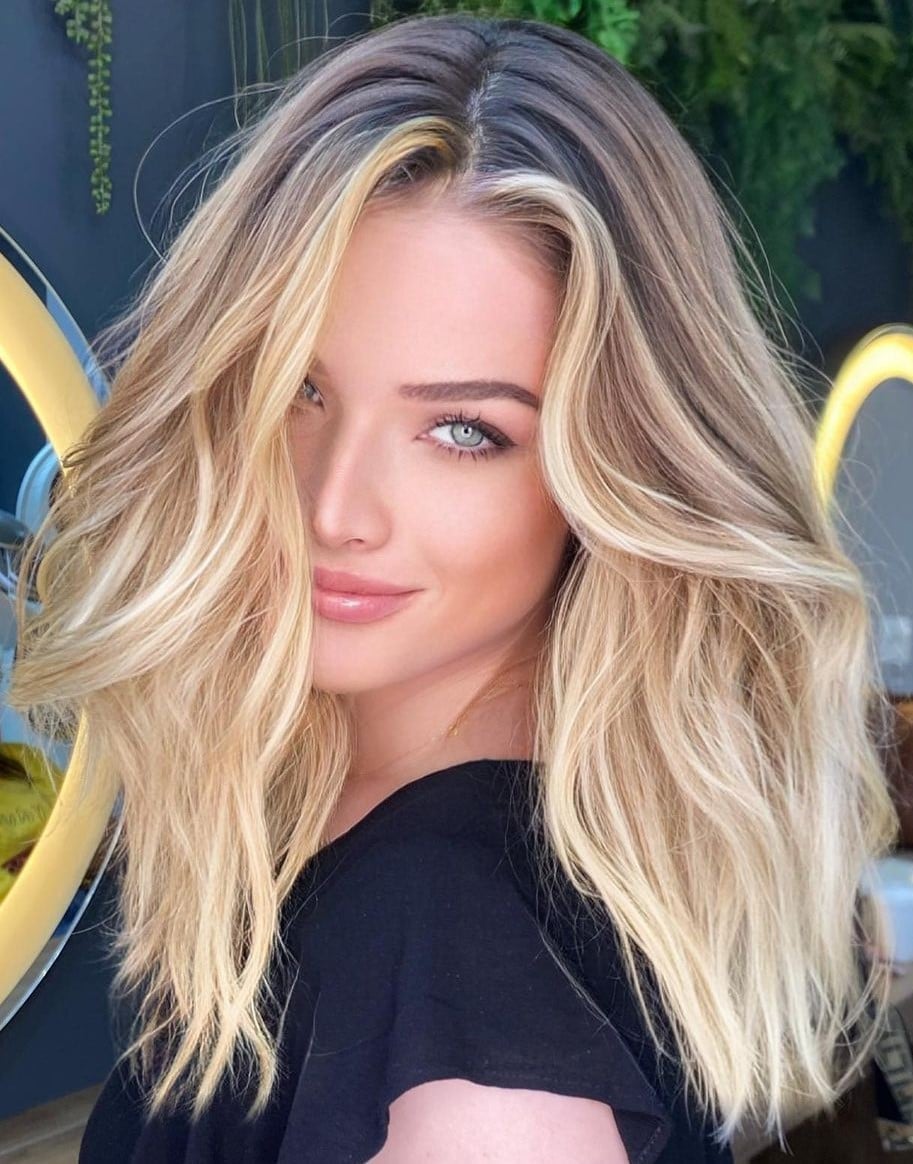
A blowout gives this balayage more lift than soft waves would. The difference is in the root: a round brush pulls the hair up and away from the scalp, so the honey tones sit on top of a fuller silhouette. Long, layered hair at mid-back length or longer holds the volume, and oval or round face shapes get extra elongation from the height. Ask your colorist for: voluminous mid-back balayage with vibrant honey blonde tones, styled in waves. A volumizing spray at the roots before styling keeps the shape from falling flat by midday. The layers are cut to support the lift, and a trim every six to eight weeks prevents the ends from dragging the volume down.
Rich Caramel Honey Blonde Balayage In Loose Waves
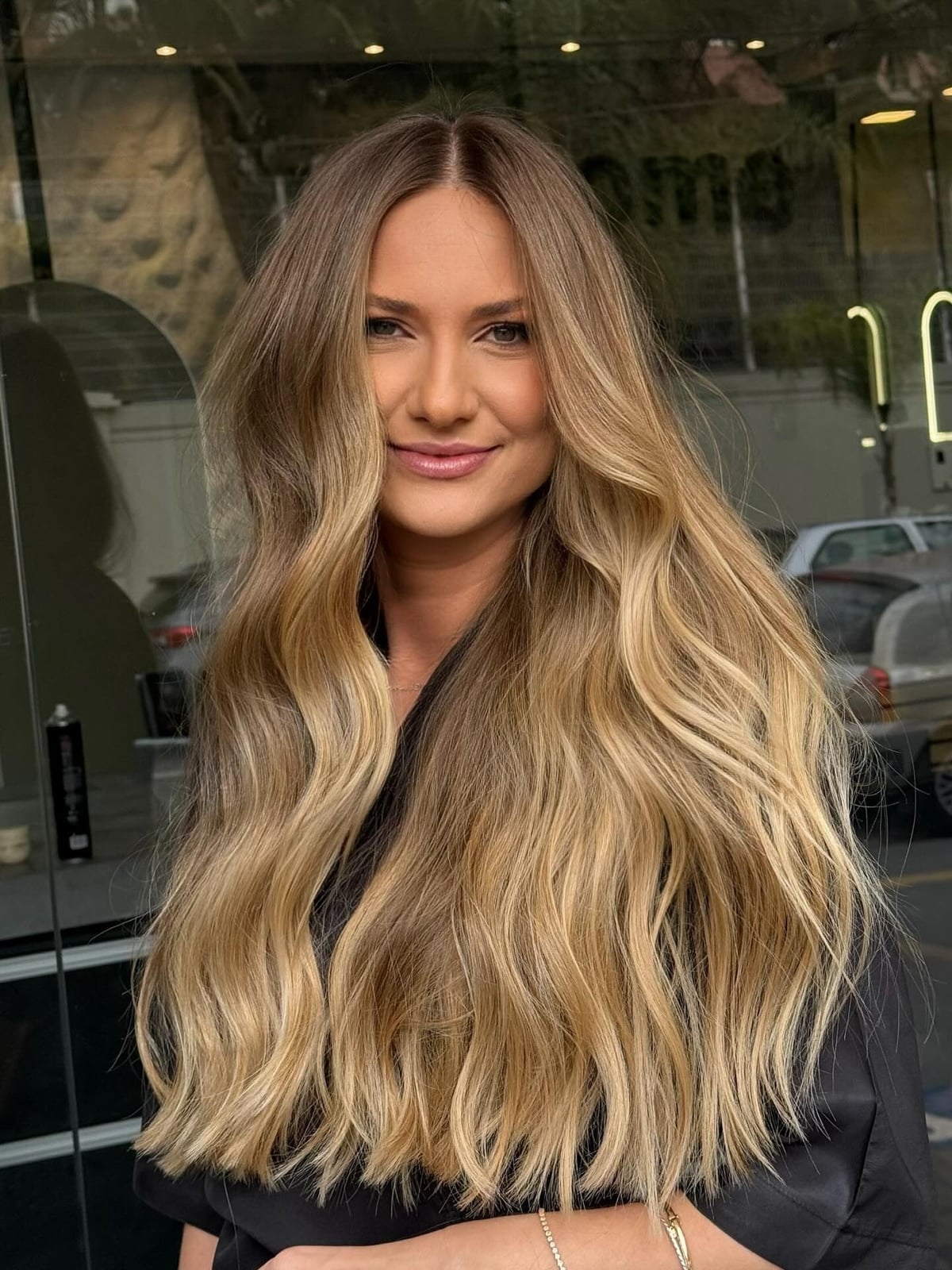
The caramel tones in this balayage lean deeper than a standard honey, giving the mid-back length a warmth that suits cooler months. The loose waves and middle parting let the darker base peek through, so the color reads as dimensional rather than solid. Thick, wavy hair at this length carries the richness without looking heavy, and oval or square face shapes get a balanced frame from the layers. Ask your colorist for: mid-back length balayage with rich caramel honey blonde tones, styled in loose waves. A heat protectant before styling keeps the gloss intact. The layers are cut to move with the wave pattern, and a trim every six to eight weeks maintains the shape. This is the shade that bridges summer glow into autumn without a hard reset.
Dimensional Mid-Back Honey Blonde Balayage Blowout
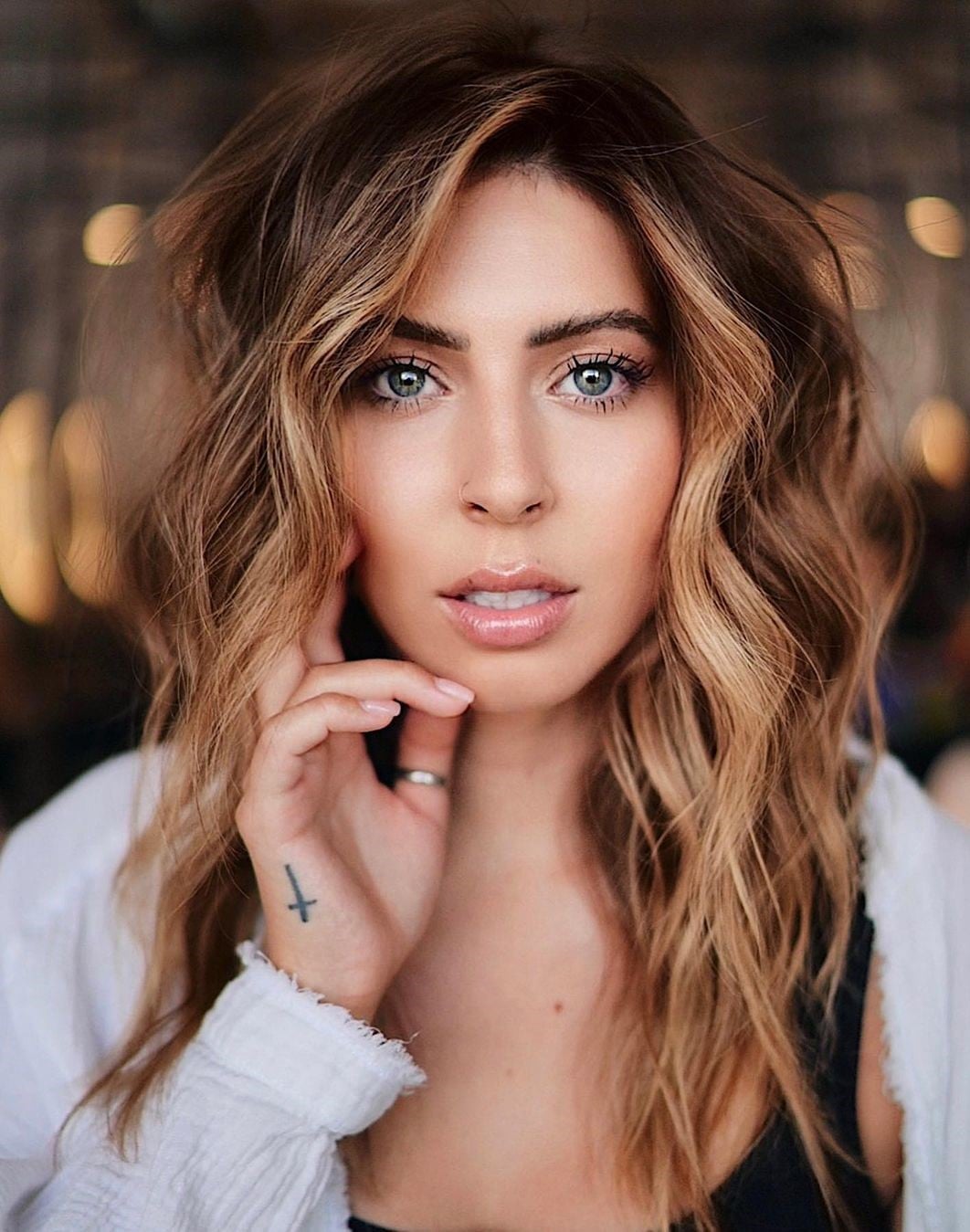
How do you ask for a honey blonde that looks layered rather than flat? Start with the technique: the colorist paints lighter pieces onto a mid-back length base, keeping the root slightly darker so the grow-out looks intentional. The blowout styling here uses a round brush to smooth the cuticle and add volume at the crown, making the dimensional tones catch the light evenly. Thick, wavy hair at this length holds the shape, and oval or heart face shapes benefit from the soft framing. Ask your colorist for: mid-back length balayage blowout with rich, dimensional honey blonde tones. Be specific about the root shadow: request a tone that is one shade darker than the ends. A trim every six to eight weeks keeps the ends polished. No bangs, just a blowout that shows off the color’s depth.
Glossy Mid-Back Waves With Vibrant Honey Balayage, Wavy
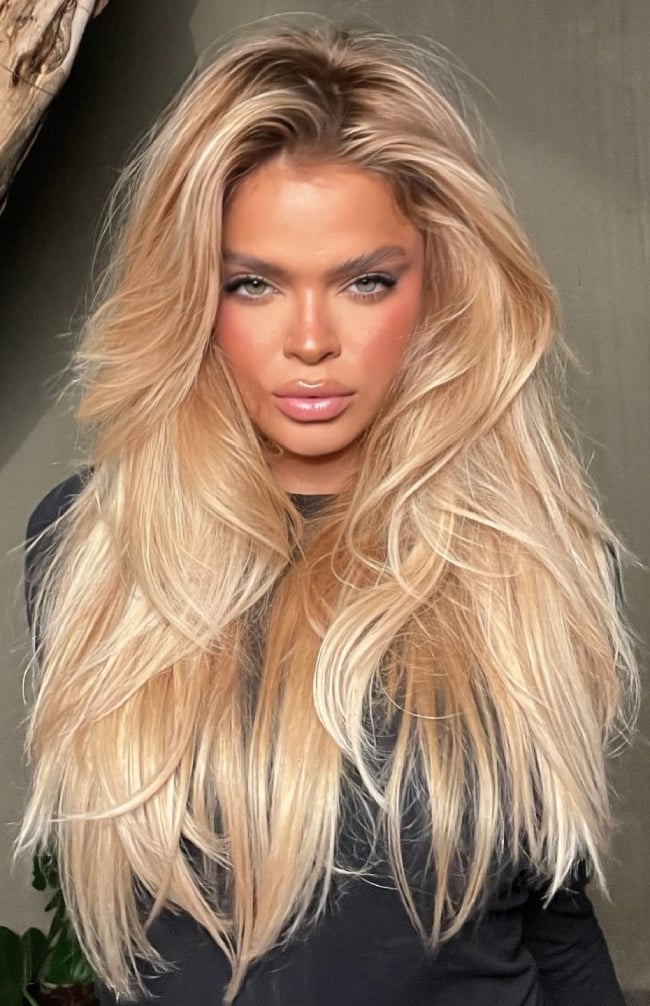
Thick, wavy hair at mid-back length gets a glossy finish from a vibrant honey blonde balayage. The voluminous waves create a dimensional look. Ask your colorist for: glossy mid-back balayage with vibrant honey tones. A glossing spray helps maintain that reflective shine between washes. Plan a trim every six to eight weeks to keep the layers from losing their shape.
Sun-Kissed Mid-Back Honey Blonde Balayage
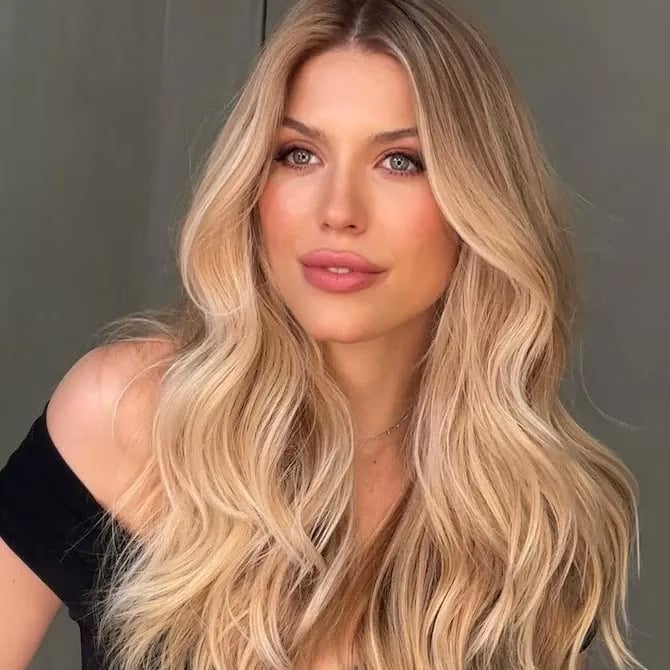
This is a mid-back honey blonde balayage built for the warmer months. Loose waves on thick, wavy hair create a sun-kissed effect, with lighter blonde tones melting into a warmer base. The middle parting keeps the distribution even.
The lighter pieces sit where the sun would naturally hit, which makes the grow-out look intentional rather than accidental. This is a solid choice for summer vacations or any season where you want your hair to look like you just came back from the coast. Ask your colorist for: a sun-kissed honey blonde balayage with a middle part. A texturizing spray enhances the lived-in texture without weighing the waves down.
Natural Root Honey Blonde Balayage With Face-Framing
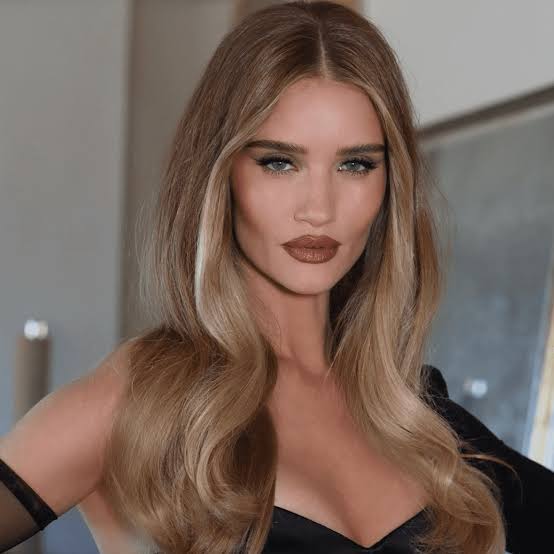
The natural root here does the heavy lifting for low maintenance. Mid-back length hair in loose waves keeps a darker base near the scalp, then transitions to lighter blonde tones toward the ends. Soft face-framing highlights pull the lighter shade closer to the face, which softens the transition from the root.
Ask your colorist for: mid-back balayage with a natural root and face-framing highlights. The darker base means you can stretch the time between root touch-ups, which is the whole point of a lived-in color. Thick, wavy texture holds the shape of the wave pattern without much effort. A middle parting keeps the face-framing pieces balanced on both sides.
Honey Balayage With Dark Roots And Face-Framing Pieces
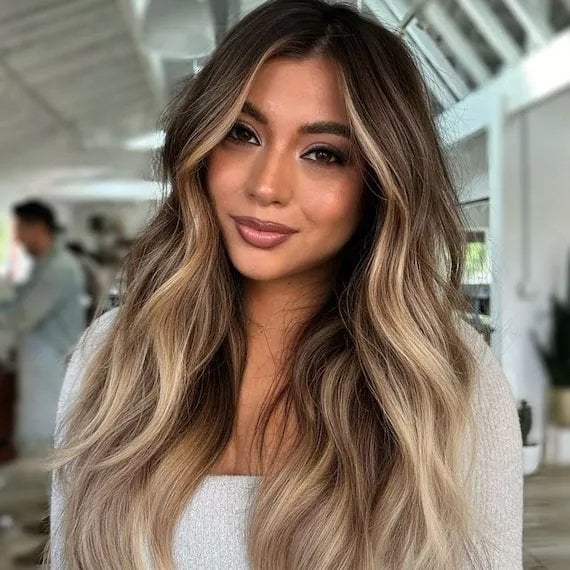
Dark roots paired with bright honey blonde highlights create a deliberate contrast on mid-back length hair with long layers. The face-framing pieces bring the lighter shade forward, which adds dimension around the face. Thick, wavy texture with a middle parting gives the color room to read as seamless rather than striped. Ask your colorist for: mid-back balayage with dark roots and face-framing pieces. A trim every six to eight weeks keeps the layers defined, and the darker root base means you can let the grow-out ride for several weeks.
Voluminous Mid-Back Balayage With Money Piece
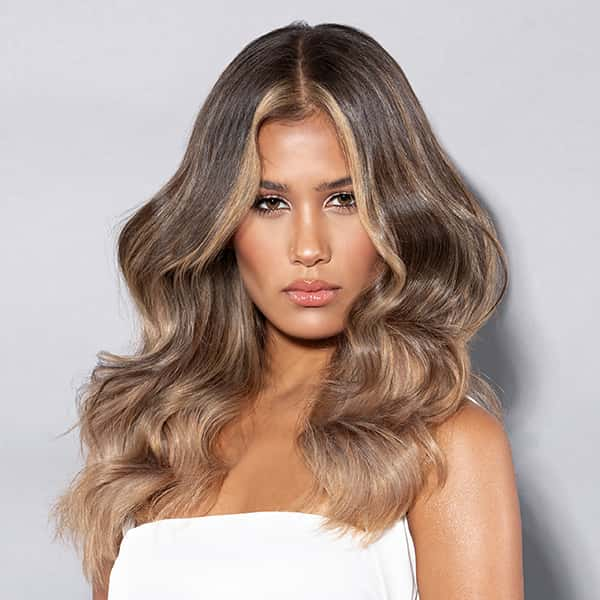
A money piece works best when it has contrast to play against. Here, mid-back length hair with long layers and voluminous waves keeps darker roots throughout, then places a brighter honey blonde money piece at the front. The middle parting lets the face-framing section sit exactly where it should.
The money piece will need more frequent toning than the rest of the color, since the lighter strands near the face are more exposed to heat styling and UV. Ask your colorist for: mid-back balayage with darker roots and a face-framing money piece. Thick, wavy texture supports the volume without extra product. A trim every six to eight weeks keeps the long layers from looking straggly.
Back View Honey Balayage With Darker Roots
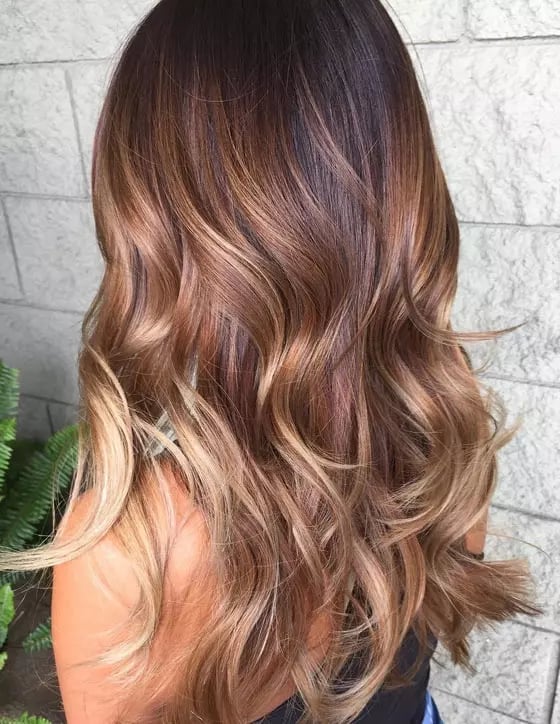
The back view of a balayage tells you more about the technique than the front ever will. This mid-back length style uses a darker root base that softens into lighter honey tones through the mids and ends, creating a gradient that looks deliberate without being harsh. The loose waves and middle parting let the color transition read clearly from root to tip.
Thick, wavy hair at mid-back length is the ideal canvas for this kind of blend. The darker roots mean fewer salon visits for root touch-ups, and the honey tones add warmth without going brassy. Ask your colorist for a honey blonde balayage with a darker root base and seamless blend through the lengths. A trim every six to eight weeks keeps the ends healthy and the color gradient sharp.
Sun-Kissed Mid-Back Balayage With Soft Transitions
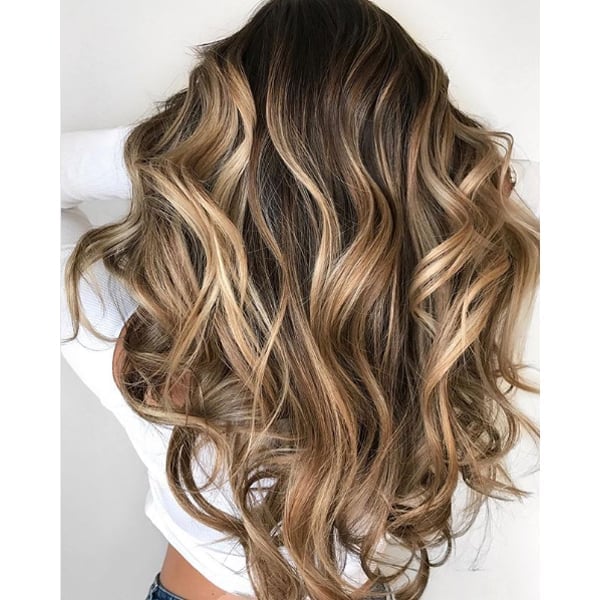
What makes this balayage work is the softness of the transition between the darker base and the warm blonde tones. The back view reveals a honey blonde balayage where the highlights don’t start at the root but emerge gradually, giving that sun-kissed effect that looks grown in rather than painted on. Thick, wavy hair at mid-back length carries this technique well because the texture diffuses the color line naturally. Ask your colorist for a honey blonde balayage with soft transitions and a darker base. It’s a low-maintenance option for anyone who wants dimension without the every-six-weeks root appointment.
Side View Honey Blonde Balayage Blowout
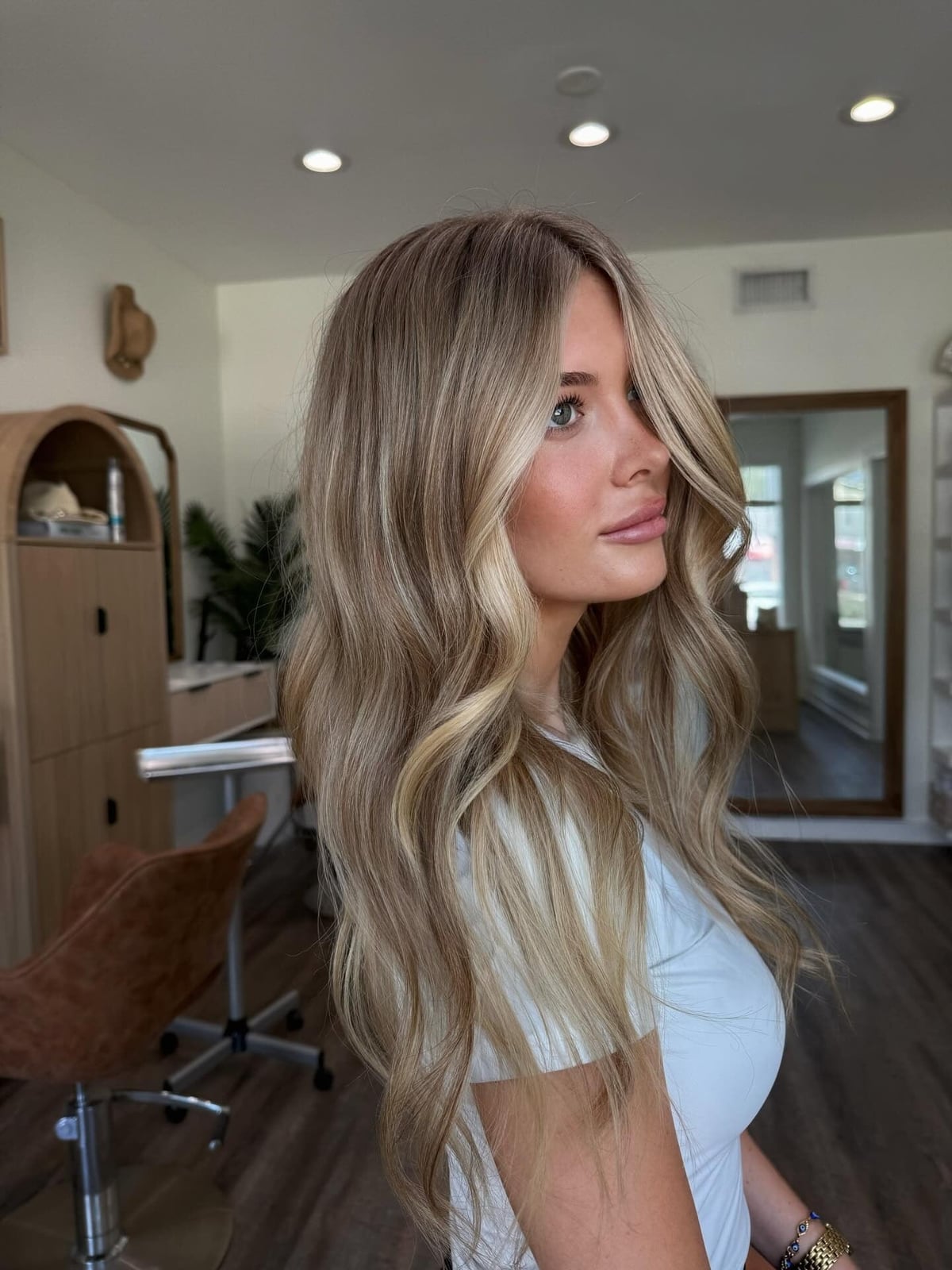
How do you ask for a balayage that looks good from every angle? Start with the side profile. This long, wavy hair with subtle layers shows how a honey blonde balayage can fall forward and still look natural. The side view shows warmer tones while the darker base stays in the background. Thick, wavy hair at mid-back length or longer is the right starting point. Ask your colorist for a long balayage blowout with a natural honey blonde blend and subtle layers. A blowout with a round brush gives it that smooth volume, and a trim every six to eight weeks keeps the layers from losing their shape.
Rich Honey Tones In Mid-Back Waves
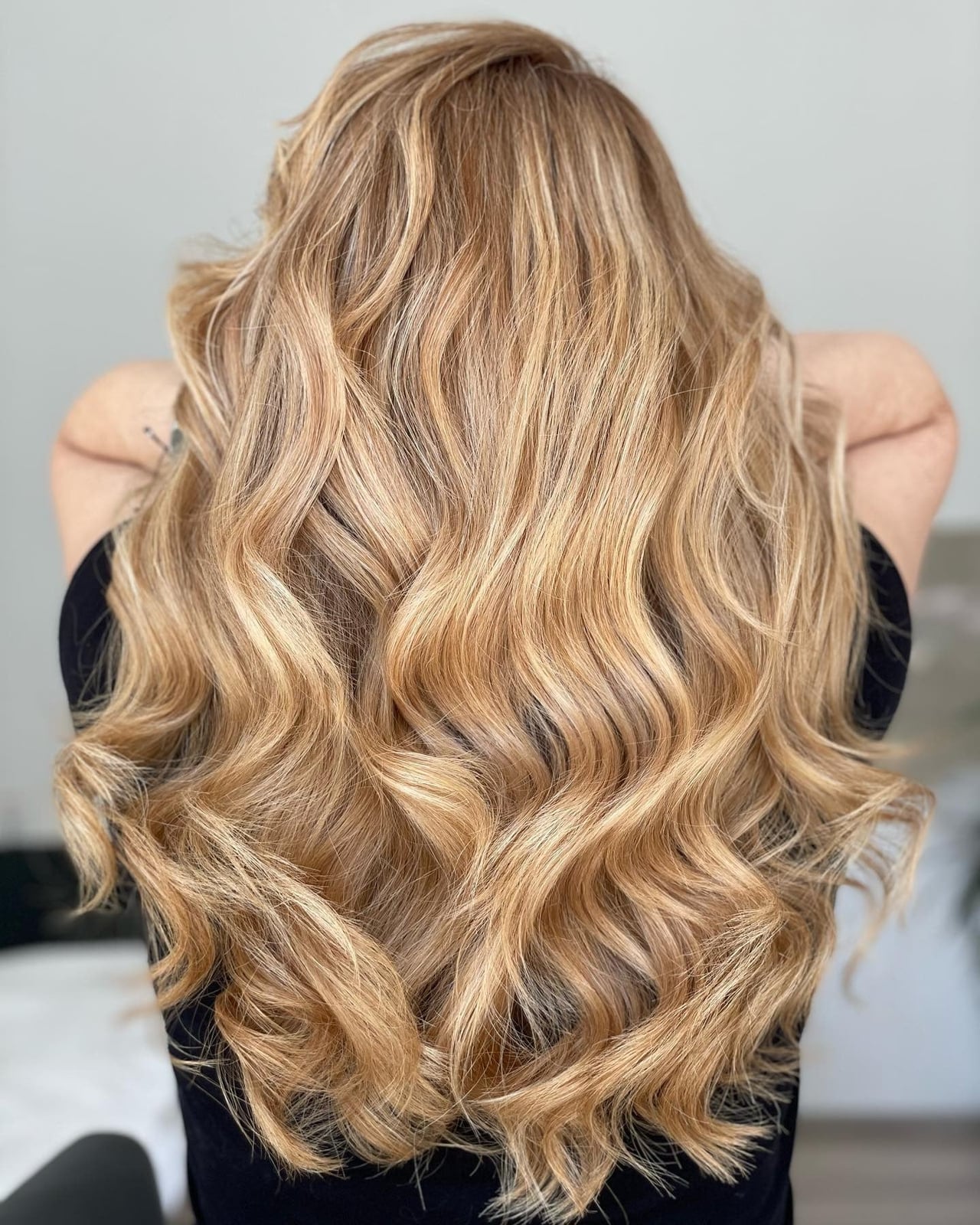
The richness of the honey tones here comes from the depth of the base color. This mid-back length style uses a deeper brown root that lets the lighter honey strands pop without looking washed out. The thick, wavy texture holds the waves long enough that the dimension is visible even on a second-day style. Long layers throughout keep the weight manageable. Ask your colorist for a mid-back balayage with rich honey tones and dimension through the lengths. A texturizing spray on damp hair before air-drying or diffusing will emphasize the wave pattern. Plan for a toning appointment every eight to ten weeks to keep the honey warm and free of brassiness.
Glossy Mid-Back Waves With Honey Blonde Balayage and Long Layers
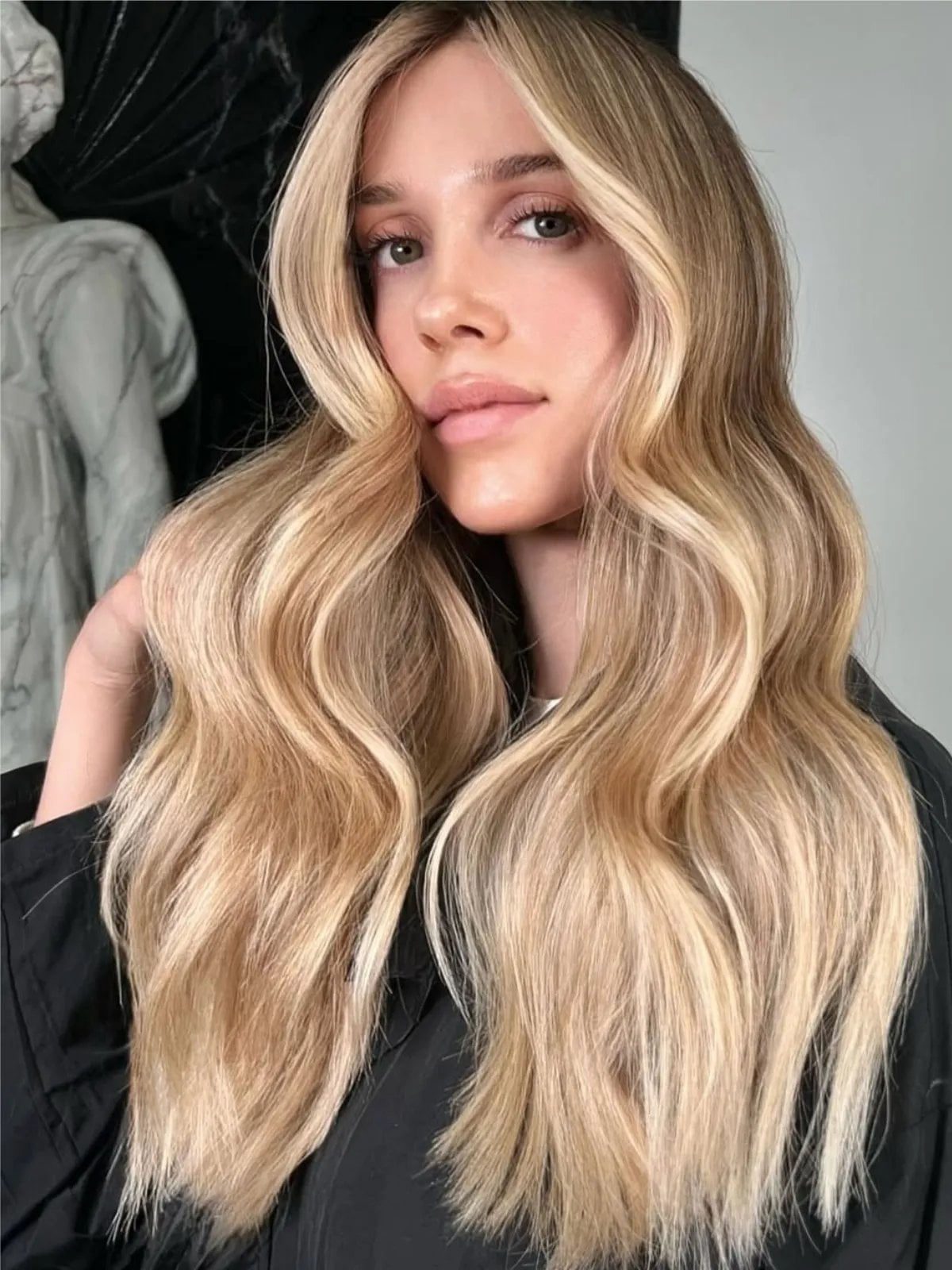
A glossy finish on a honey blonde balayage is about the technique after the color is done. This front view shows mid-back length hair with a middle parting and loose waves, the honey tones catching the light evenly from root to end. The long layers allow the balayage to sweep through the hair rather than sitting in one zone, and the thick, wavy texture gives the gloss something to reflect off. Ask your colorist for a honey blonde balayage with a glossy finish and long layers. A shine spray after styling adds that extra polish without weighing the waves down. A trim every six to eight weeks keeps the ends from dulling the gloss.
Shoulder Length Honey Blonde Balayage With Root Shadow
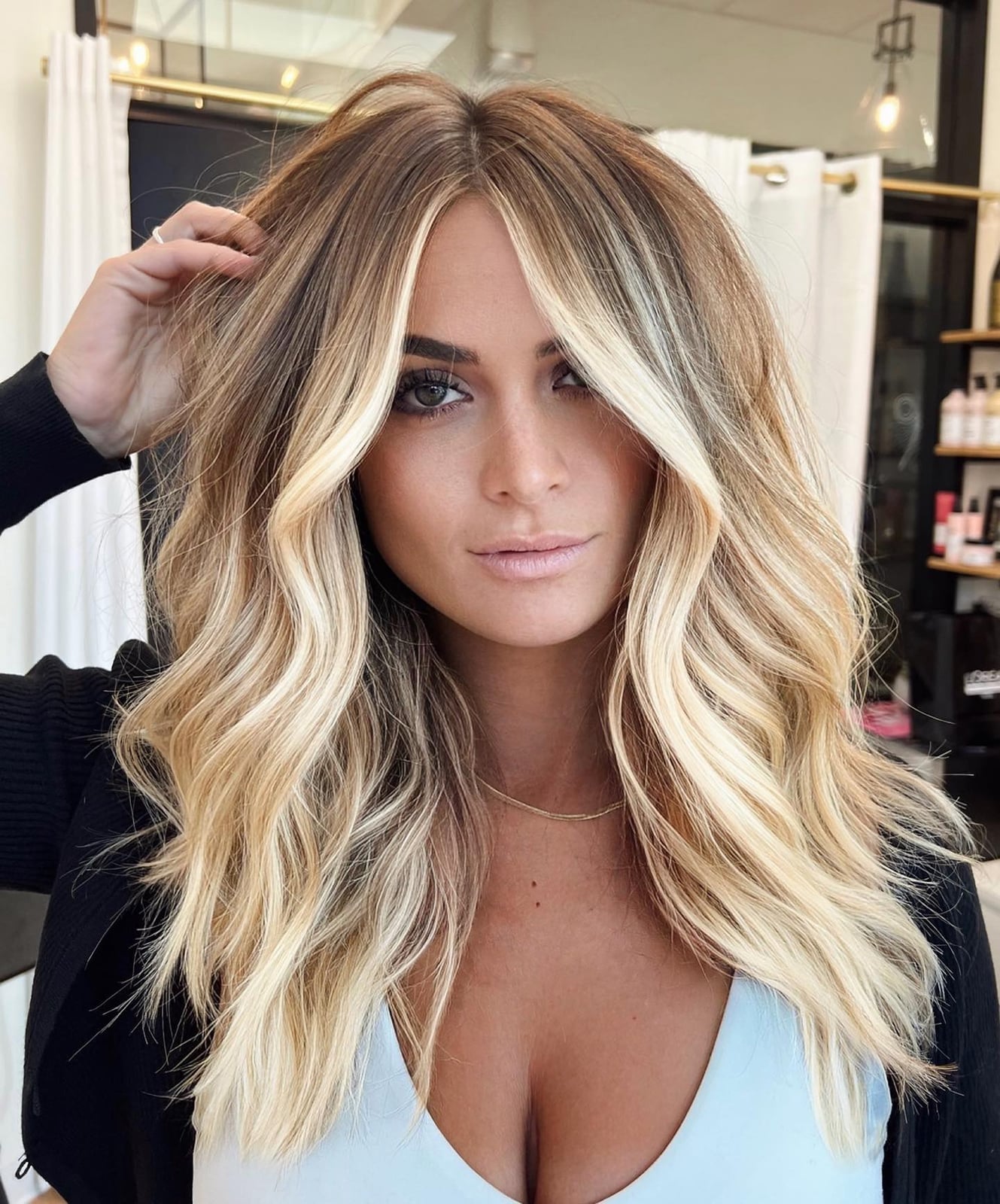
Wondering how to get that lived-in color without the constant upkeep? A root shadow is the answer, especially on a shoulder-length cut with thick, wavy texture. The darker base blends into honey blonde balayage through the mid-lengths and ends, creating a soft, natural transition that grows out gracefully. Ask your colorist for: a root shadow with shoulder-length honey blonde balayage. This technique works well for round and oval face shapes, and it buys you at least an extra two weeks between touch-ups.
Dimensional Shoulder Length Honey Balayage
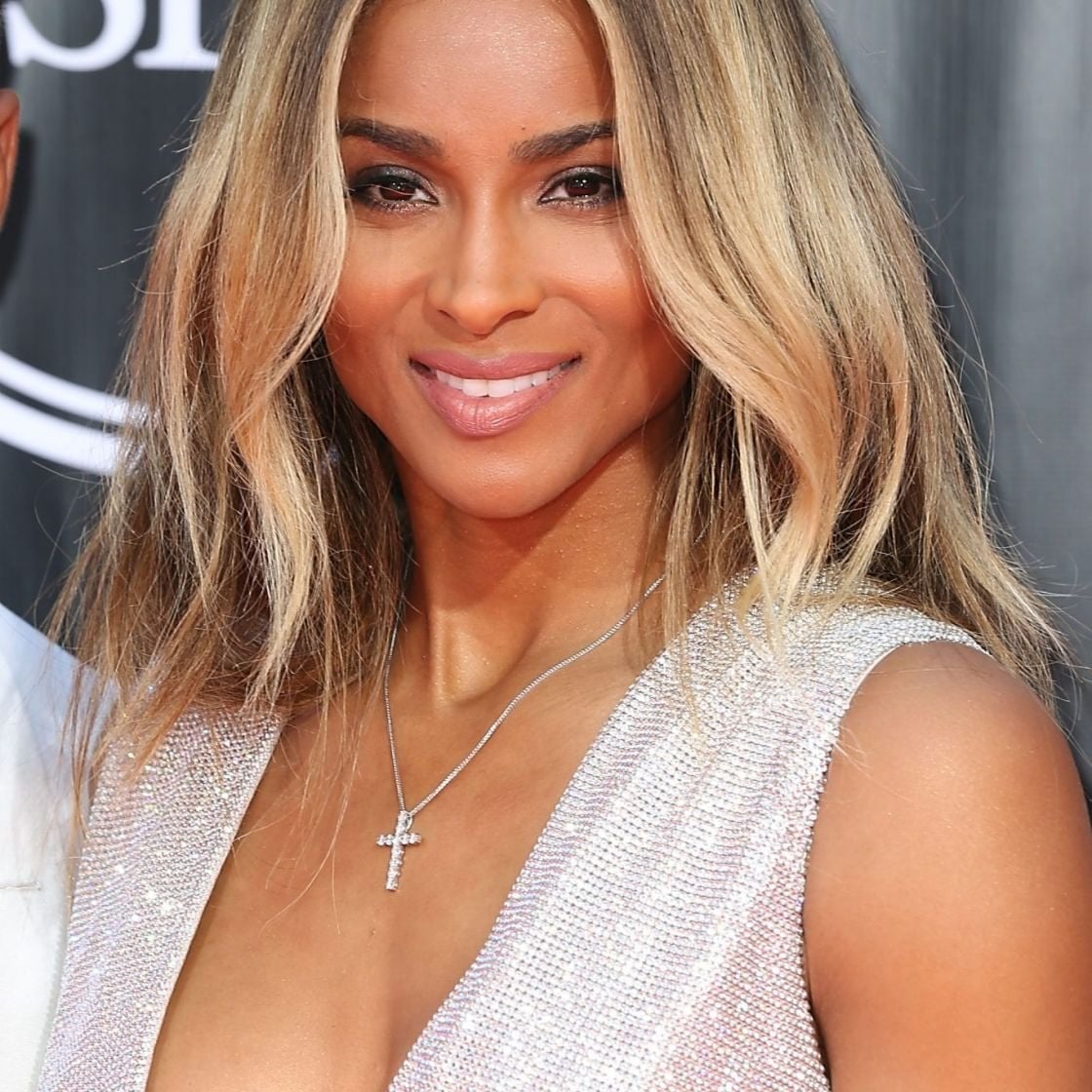
Solid color can feel flat, especially on thick, wavy hair. A dimensional honey blonde balayage adds depth by weaving in both warm blonde and lighter honey tones throughout the mid-lengths and ends. The result is a natural, lived-in finish that catches light differently with every wave. Ask your colorist for: dimensional shoulder-length honey blonde balayage with loose waves.
This approach suits oval and heart face shapes, and the layers in the cut help the color fan out rather than sit in a solid block. A trim every six to eight weeks keeps the shape clean, and the color itself needs a toning appointment roughly every ten to twelve weeks depending on how warm you want it.
Back View Shoulder Balayage With Darker Base
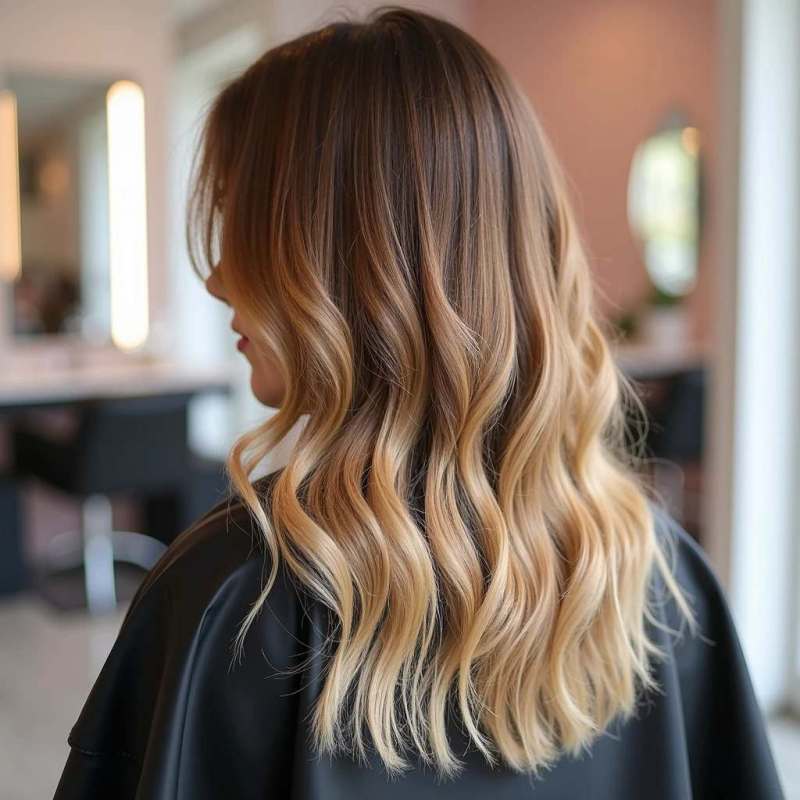
The back view tells the real story of a balayage: a darker brown base at the roots that gradually releases into lighter honey blonde ends. On collarbone-length hair with thick, wavy texture, this transition creates a soft, blended effect that never looks stripey. Ask your colorist for: a collarbone-length balayage from dark brown to honey blonde. The darker base means you can go six to eight weeks between root touch-ups, and a trim at the same interval keeps the ends from looking straggly. It works for any face shape because the color does the work, not the cut.
Collarbone Bob With Curtain Bangs And Honey Balayage
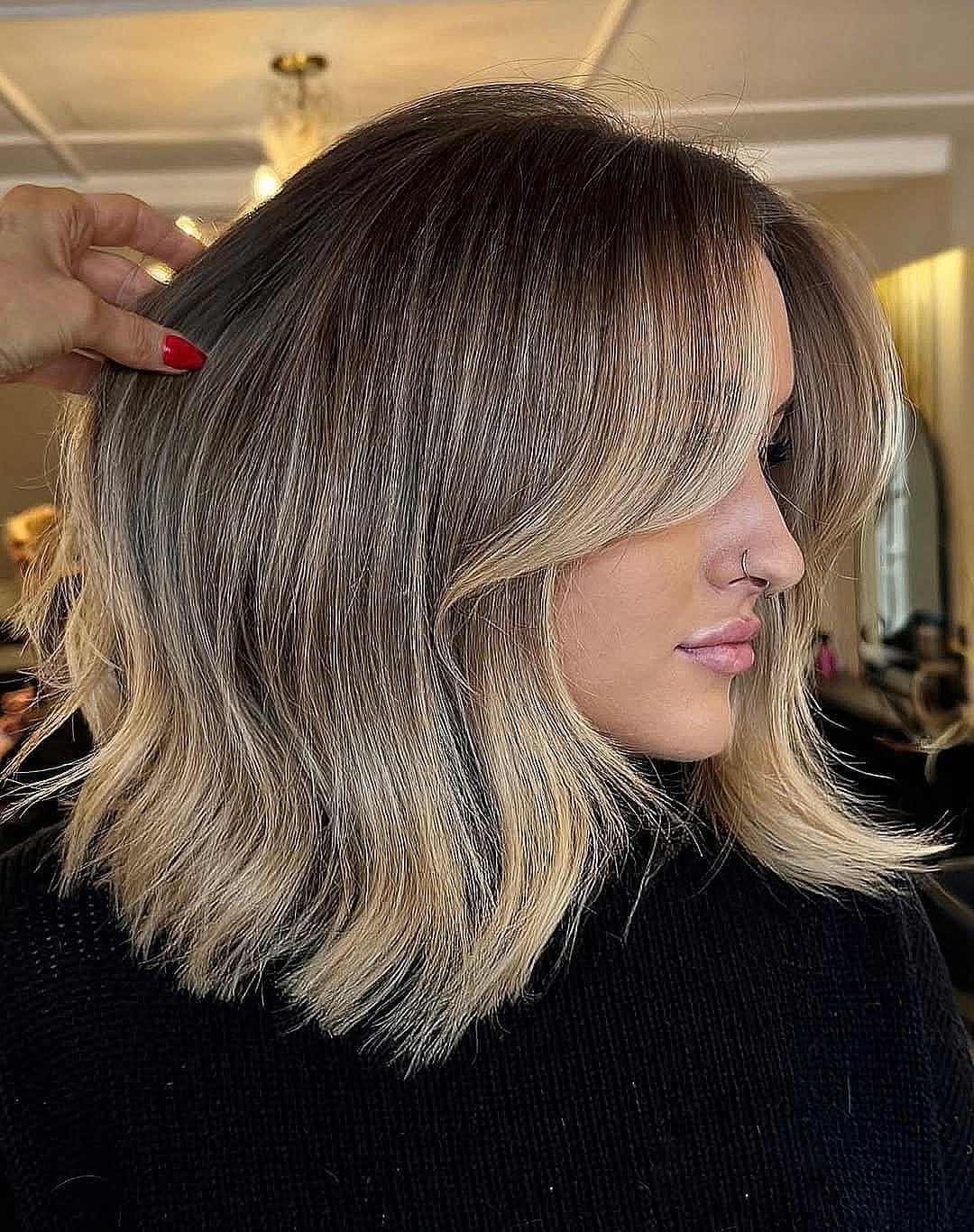
How do you ask for curtain bangs without ending up with a blunt fringe? Be specific. A collarbone bob with curtain bangs and honey blonde balayage starts with the cut: the bangs should sweep away from the face, not hang straight down. Ask your colorist for: a collarbone bob with curtain bangs and honey blonde balayage. The soft waves in the styling keep the bangs integrated, and the balayage adds dimension without needing a full head of highlights. This suits round and heart face shapes because the bangs soften the forehead without shortening the face. A trim every six to eight weeks keeps the bangs at the right length.
Collarbone Length Balayage With Face-Framing Layers
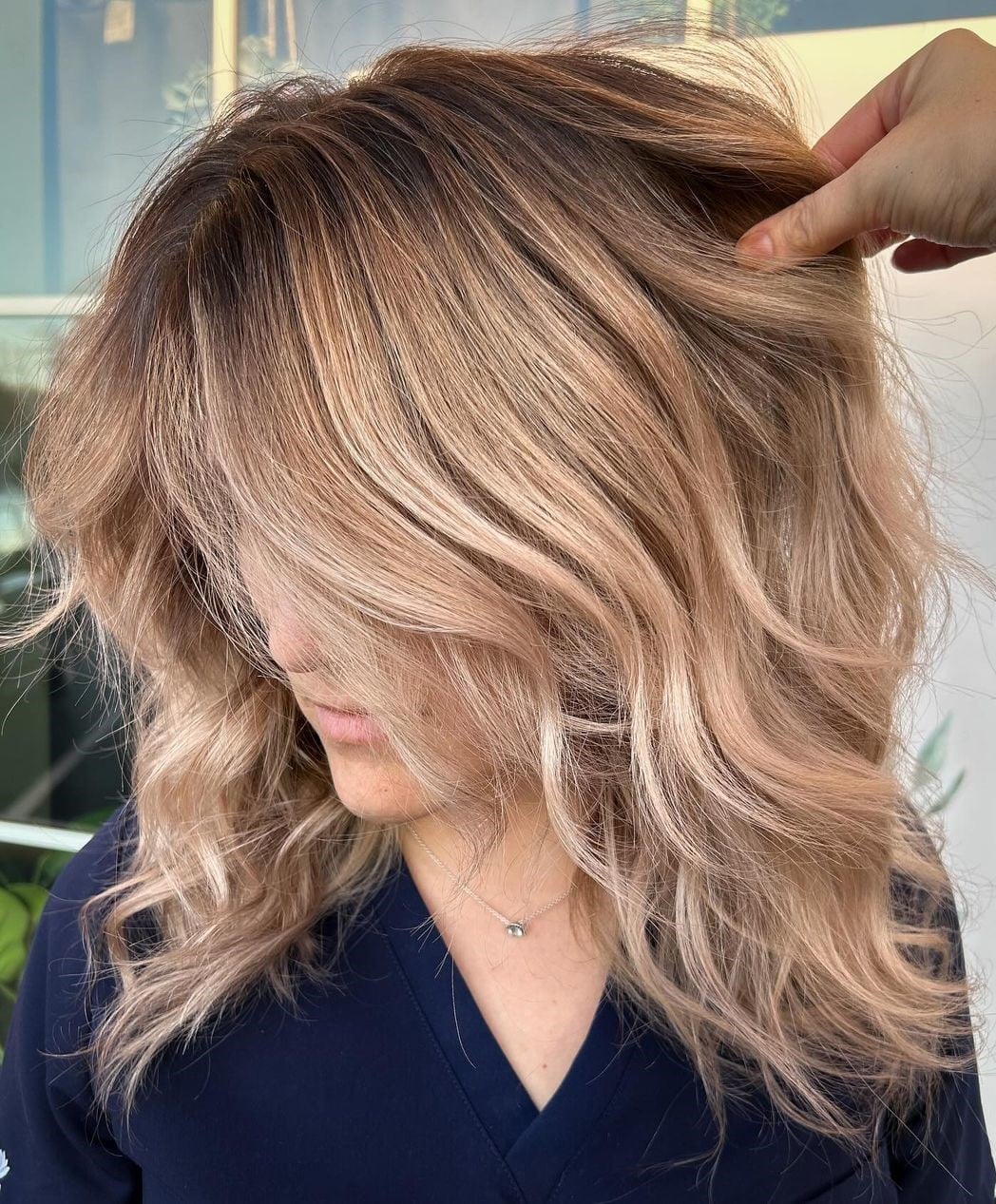
Face-framing layers and balayage work together to create movement that a one-length cut cannot match. On collarbone-length hair with thick, wavy texture, the layers are cut shorter around the face and blend into the length, so the honey blonde balayage lands precisely where the light hits. Ask your colorist for: a collarbone-length balayage with face-framing layers and a middle part.
The technique uses lighter pieces painted onto the layers themselves, not scattered randomly. This approach suits oval and square face shapes because the layers soften the jawline without adding bulk at the sides. A trim every six to eight weeks maintains the layer shape, and a toning appointment every ten to twelve weeks keeps the honey tones from shifting too warm.
Collarbone Honey Balayage With Curtain Bangs and Wavy Blowout
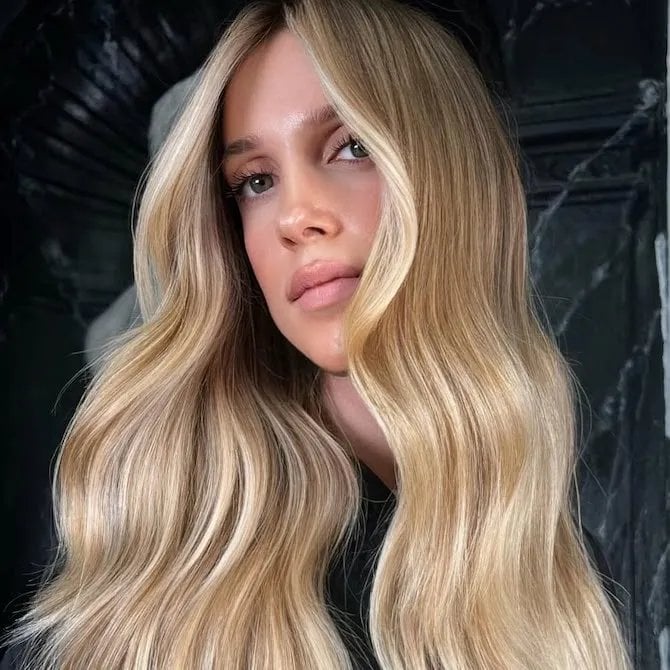
The design here is precise: collarbone-length hair with fine, wavy texture, curtain bangs, and a honey blonde balayage that blends lighter blonde pieces into a warmer base. The middle parting keeps the face-framing layers symmetrical, but fine hair has a habit of showing every root shadow faster than thicker textures do. The honest drawback is that curtain bangs on fine hair need a touch-up trim every six weeks, not eight, or they lose their shape. Ask your colorist for: collarbone length balayage with curtain bangs and a blend of blonde and warm tones. Round and heart face shapes get the most from this because the bangs soften the forehead without adding bulk.
Fine Textured Bob With Honey Balayage And Bangs
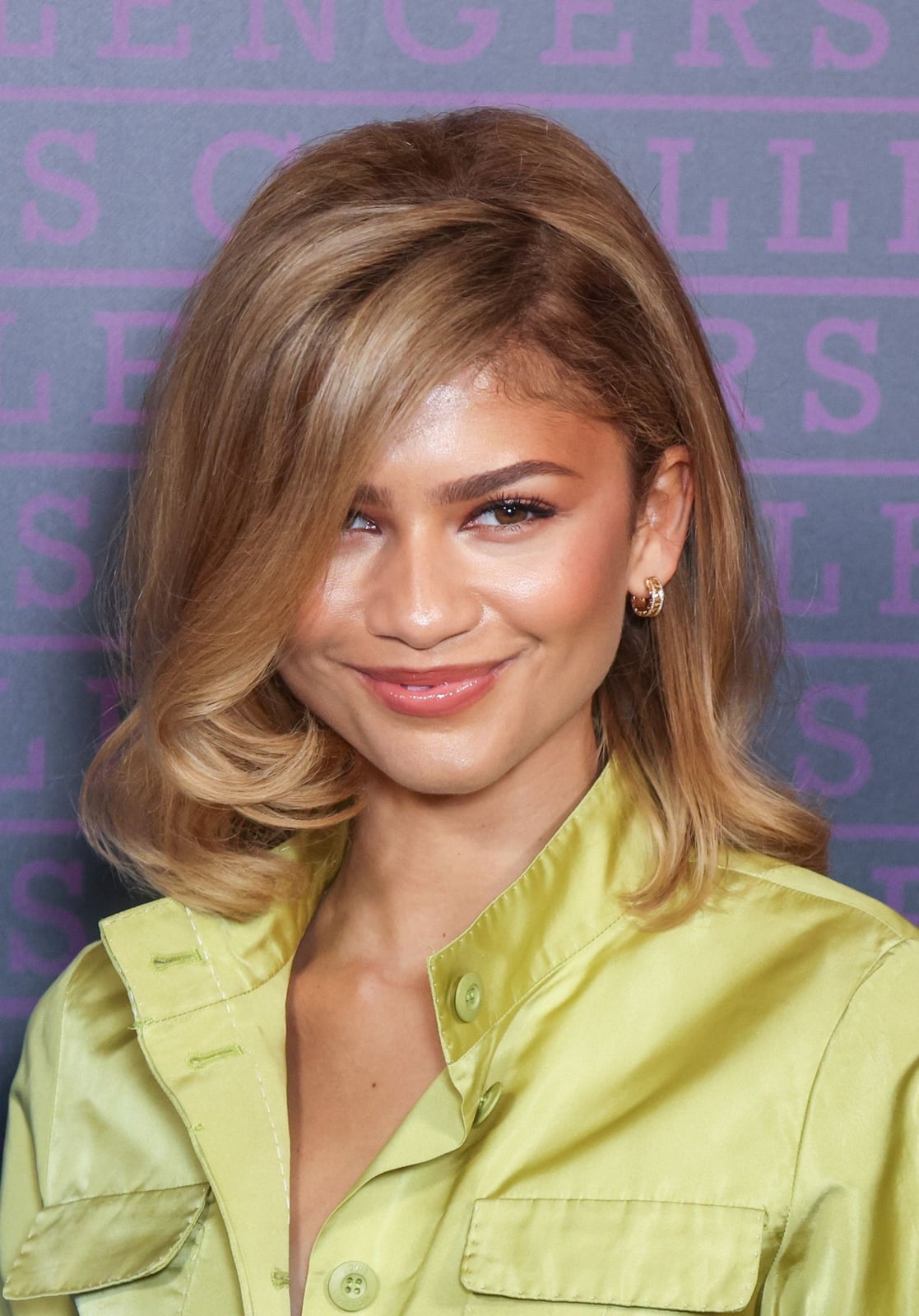
Can fine hair pull off a bob with curtain bangs and honey blonde balayage? Yes, with the right base. This collarbone bob uses a side parting and face-framing layers to create the illusion of density where it counts. The honey blonde balayage adds dimension without weighing the hair down, which is the risk with solid color on fine textures. Ask your colorist for: collarbone bob with curtain bangs, honey blonde balayage, and face-framing layers. The cut suits round and oval face shapes because the side parting breaks up symmetry. A volumizing mousse before blow-drying gives fine hair the lift it needs to hold the bob’s shape.
Mid-Back With Airy Curtain Bangs And Honey Balayage
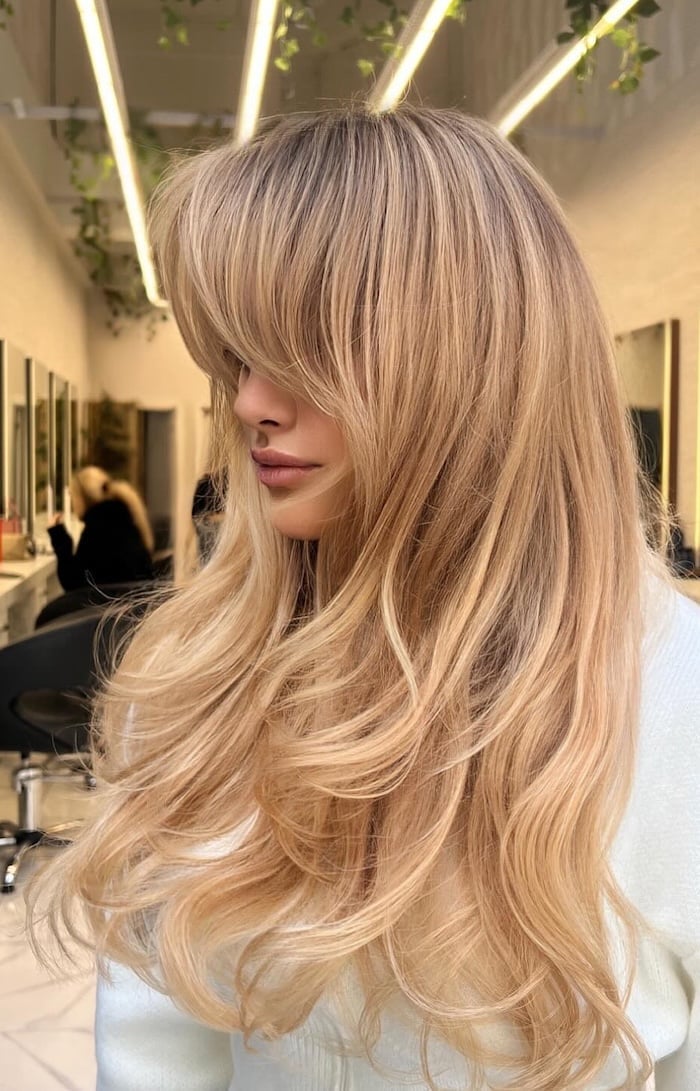
Airy curtain bangs on mid-back length hair are a deliberate choice that keeps the length while adding movement around the face. This look pairs thick, wavy texture with a honey blonde balayage applied through the ends, leaving the root slightly deeper for a natural transition. The soft waves and middle parting let the bangs sit exactly where they should: sweeping without hanging straight. Ask your colorist for: mid-back balayage with airy curtain bangs, styled in soft waves. Oval and heart face shapes benefit most because the bangs soften a wider forehead without shortening the face too much.
Mid-Back Balayage With Darker Base and Curtain Bangs
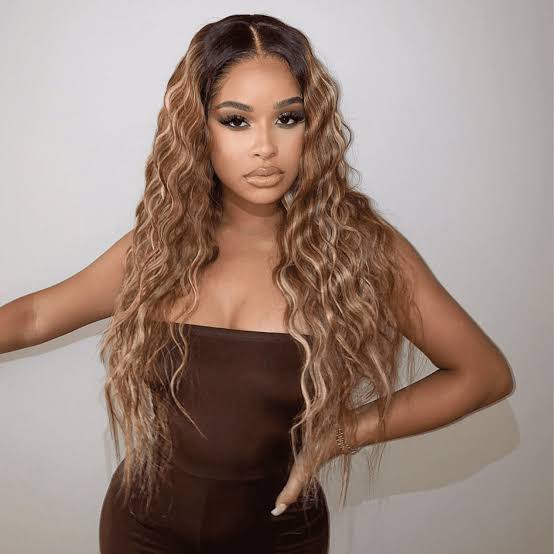
An all-over honey blonde can look flat after a few weeks, especially on thick, wavy hair. This version uses a darker base at the roots that graduates into lighter blonde tones through the mid-lengths and ends, creating depth that a single shade cannot match. The curtain bangs and middle parting keep the face-framing sections light without making the whole head look bleached. Ask your colorist for: mid-back balayage with curtain bangs, lighter blonde tones, and a darker base. The darker base also means fewer root touch-ups: a toning appointment every ten to twelve weeks is usually enough. Oval and round face shapes suit this because the darker roots add contrast without harsh lines.
Mid-Back Curls With Honey Balayage and Curtain Bangs, Wavy
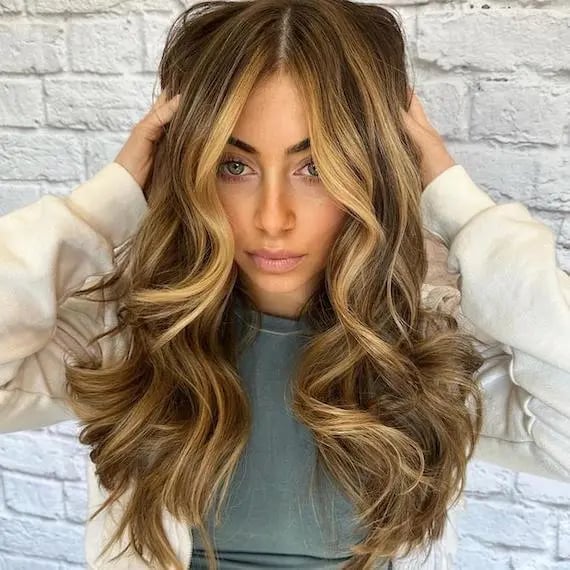
Loose curls and honey blonde balayage work best in the warmer months, when the goal is a relaxed finish. This mid-back length style uses curtain bangs to frame the face, with soft, loose curls that let the lighter blonde pieces appear unevenly bright. The darker roots keep the look lived-in, which means it suits casual occasions and outdoor events where a stiff style would feel out of place. Ask your colorist for: mid-back balayage with soft curls and curtain bangs, styled for a lived-in effect. A diffuser helps define the curls without disturbing the color placement, and the cut works for oval and heart face shapes.
Final Thoughts
For a natural balayage effect, focus on blending techniques that mimic sun-kissed highlights. If you have fine hair, opt for lighter tones to avoid overwhelming your texture.
- Refresh balayage tones with a color-depositing conditioner every 4-6 weeks.
- Use a sulfate-free shampoo to protect color vibrancy.
- Deep condition weekly to maintain shine and health of wavy textures.
- Trim split ends every 8-10 weeks to preserve cut integrity.
Embrace the warmth and dimension of honey blonde.
