

The shag haircut has shed its rock-and-roll past for a more refined, polished silhouette. Soft face-framing layers and lived-in color are the hallmarks of this updated version, making it a go-to for anyone wanting texture without the choppy look.
These 34 ideas range from collarbone lengths to mid-back styles, with options for fine, thick, curly, or straight textures. Classy Shag Hair works for anyone who wants movement and volume without the daily fuss of high-maintenance styling. A fringe that refuses to sit or fine hair that falls flat in a standard cut? This collection solves those specific struggles.
Collarbone Shag With Soft Wispy Bangs

The collarbone shag relies on its soft face-framing layers to avoid looking like a 70s relic. The medium brown base with subtle highlights adds depth without the stripe effect. This cut suits medium-density wavy hair that already grazes the collarbone, and the side part and wispy bangs soften round and oval faces rather than fighting them. Ask your stylist for a collarbone shag with soft wispy bangs and face-framing layers. A texturizing spray gives the loose waves definition, and a trim every six to eight weeks keeps the layers from turning into a shapeless blob.
Short Chin Shag With Textured Wispy Bangs

Not every shag needs length to make a point. This chin-length version with wispy bangs and textured layers is the more practical cousin of the long, thick shag. Fine, wavy hair benefits from the shorter baseline because the layers hold shape rather than collapsing. The middle part and chin-grazing length elongate a round face, and the ash blonde with root shadow gives it a grown-in feel from day one. Ask your stylist for a short shag with wispy bangs and textured layers. A texturizing paste and a trim every six weeks keep the fringe from drifting into awkward territory.
Long Wavy Shag With Curtain Bangs
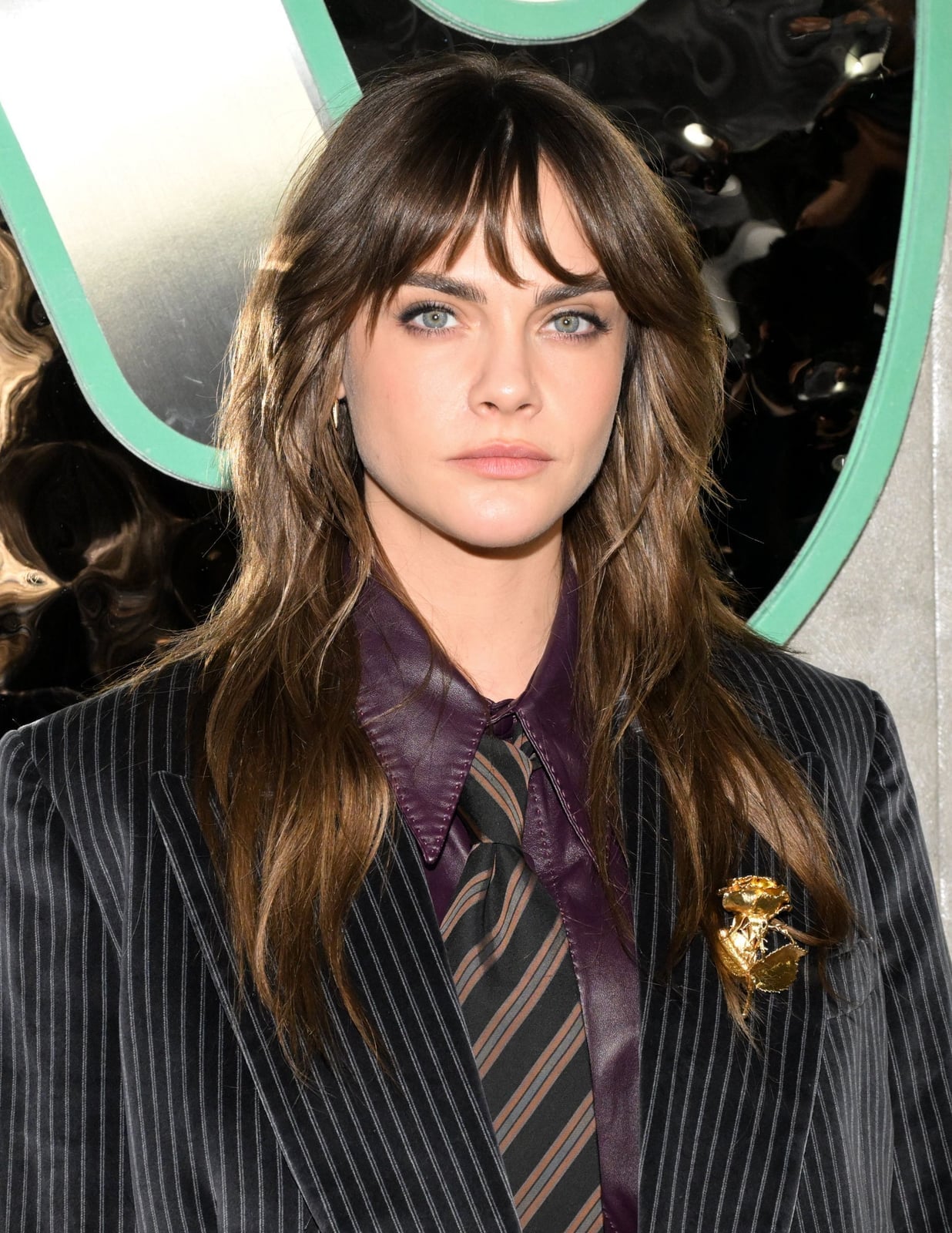
Wondering how to request a shag without your stylist getting scissor-happy on length you spent two years growing? The exact words matter. This version hits mid-back with curtain bangs and face-framing layers that blend into the cut without stopping abruptly. It works on thick, wavy hair that needs movement without losing weight. The dark brown base with subtle lighter pieces adds a lived-in dimension that keeps the shag from reading as costume. Ask your stylist for a long shag with curtain bangs and face-framing layers. For the consultation, bring a photo showing the layer graduation starting well below the ear, not at the crown.
Mid-Back Shag With Natural Waves
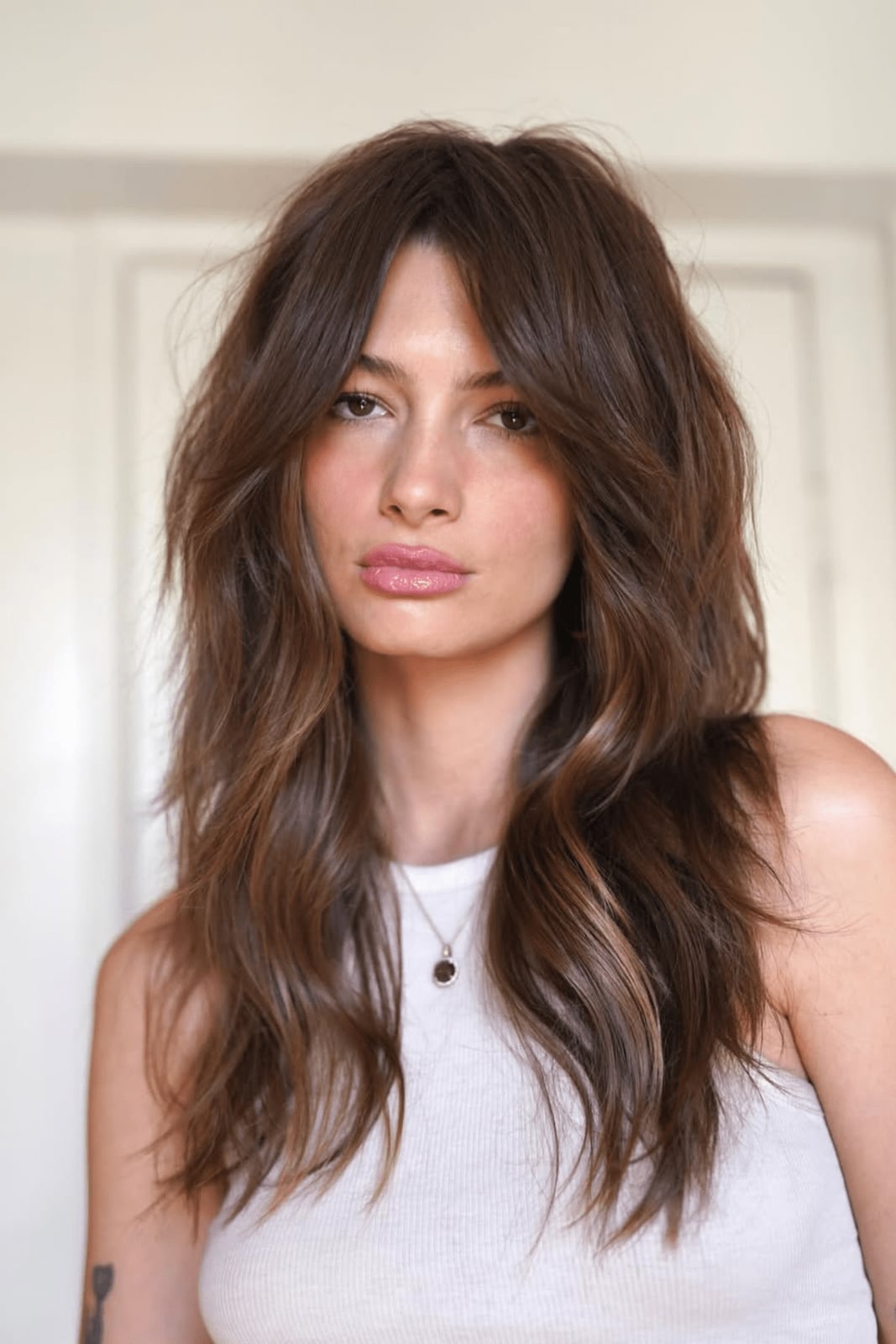
A shag that air-dries well is a rare thing. This mid-back version with curtain bangs and face-framing layers uses the same dark brown base with subtle lighter pieces, but the texture does the work, not the blowout. The layers are cut to follow the wave pattern rather than fight it, so the shape holds as the hair dries. Medium-density wavy hair of at least mid-back length benefits most, and the baseline grows out evenly because the face-framing pieces soften the transition. Ask your stylist for a mid-back shag with curtain bangs and natural waves. A curl enhancer on damp hair is enough for styling, and the baseline needs a trim every eight to ten weeks.
Long Ash Blonde Shag With Dimension
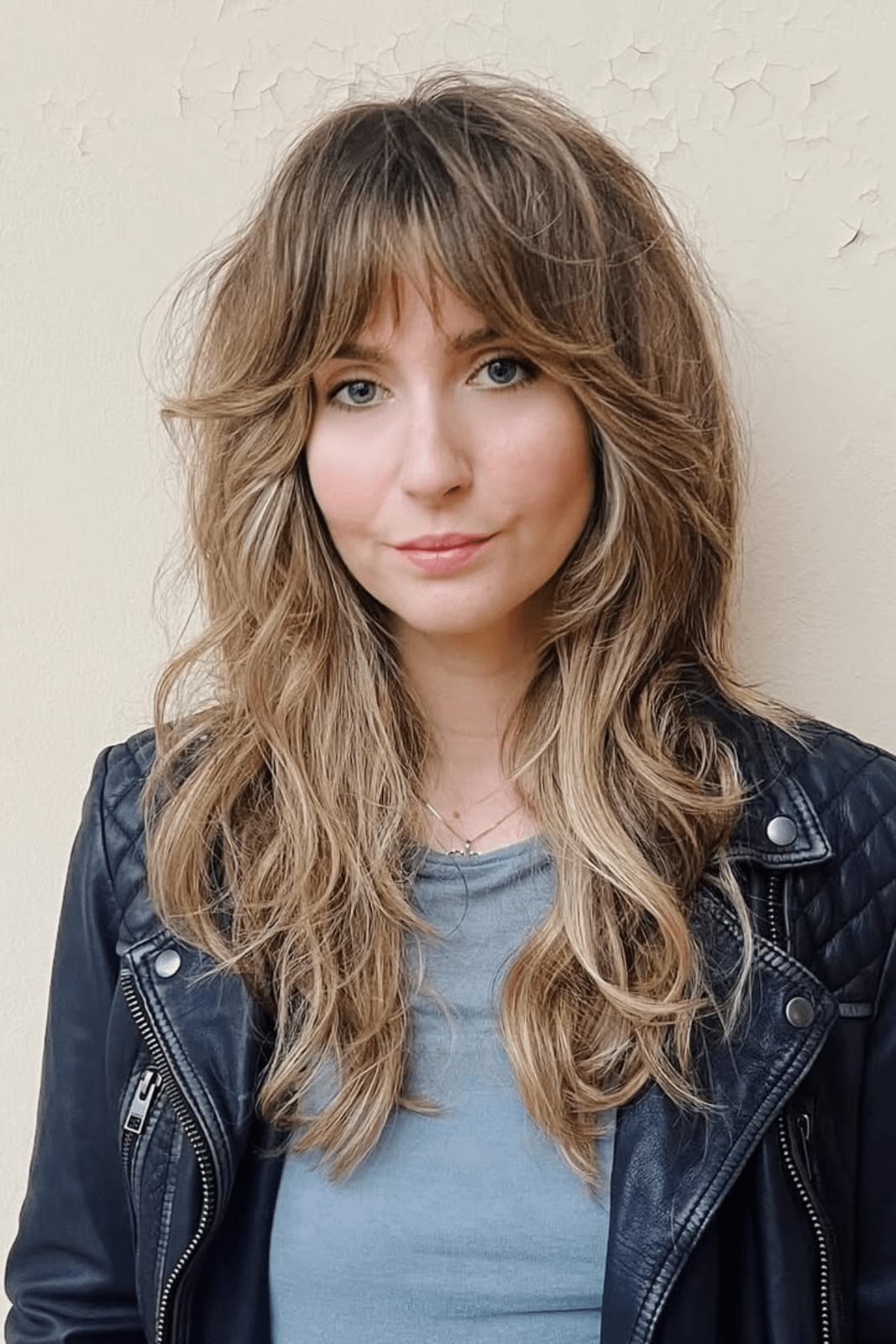
Color technique in a shag is about placement, not volume. This long version uses ash blonde highlights on a dark blonde base, painted through the face-framing layers and curtain bangs where the cut already moves. The highlight placement follows the layer pattern, so the dimension looks intentional. Thick, wavy hair of mid-back length benefits from the lighter pieces because they break up the density without extra thinning. Ask your stylist for a long shag with curtain bangs and ash blonde highlights with dimension. A purple shampoo every other wash keeps the ash tone clean, and the baseline needs a trim every eight to ten weeks.
Platinum Blonde Shag With Volume
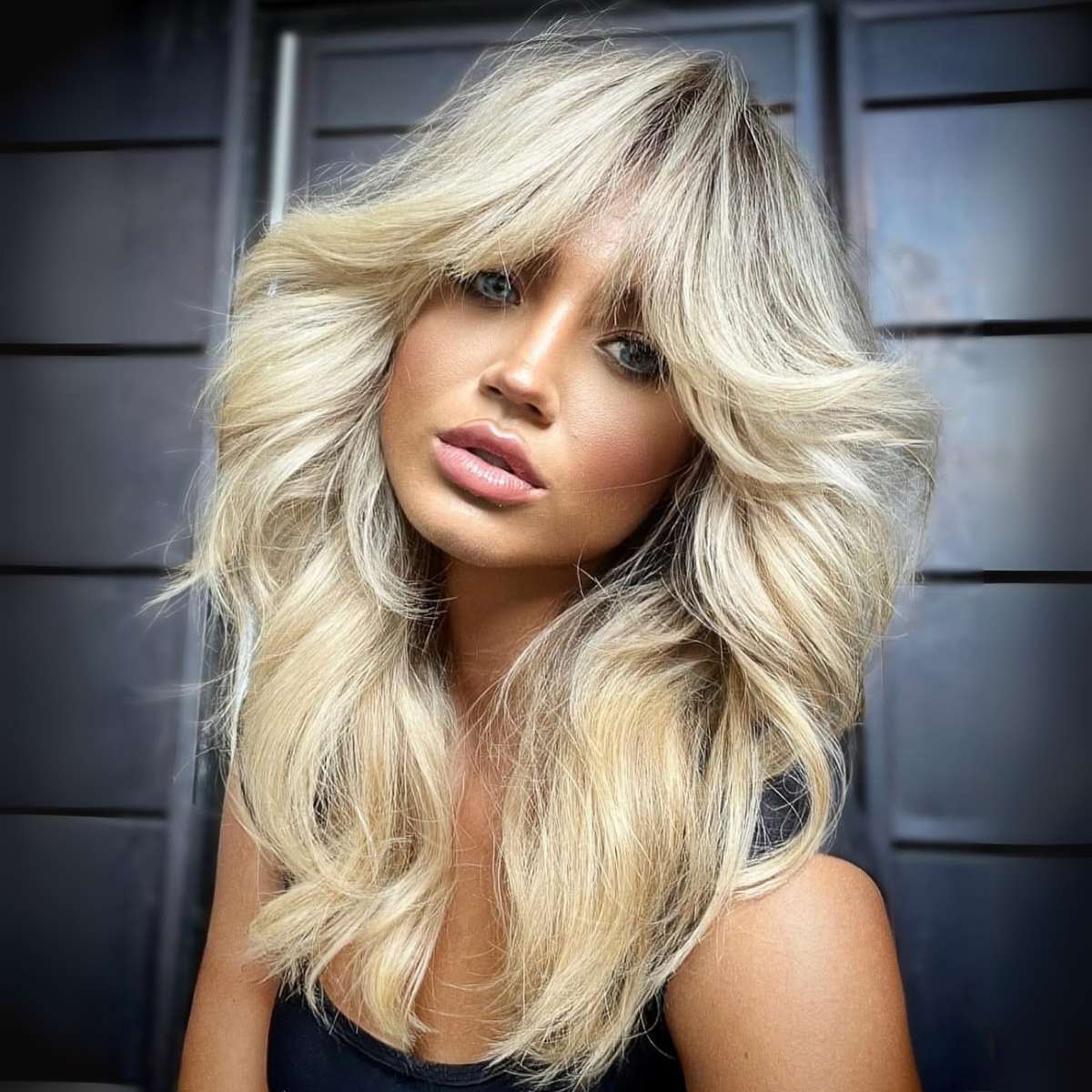
Does your thick, wavy hair tend to turn into a triangle by noon? This mid-back shag with curtain bangs solves that with heavy layers that start high, so volume sits where you want it. Ask your stylist for: long shag, voluminous blowout, curtain bangs, platinum blonde. A round brush and a heat protectant at the roots are your main tools; tone every four to six weeks to keep the platinum from reading yellow.
Platinum Collarbone Shag With Curtain Bangs
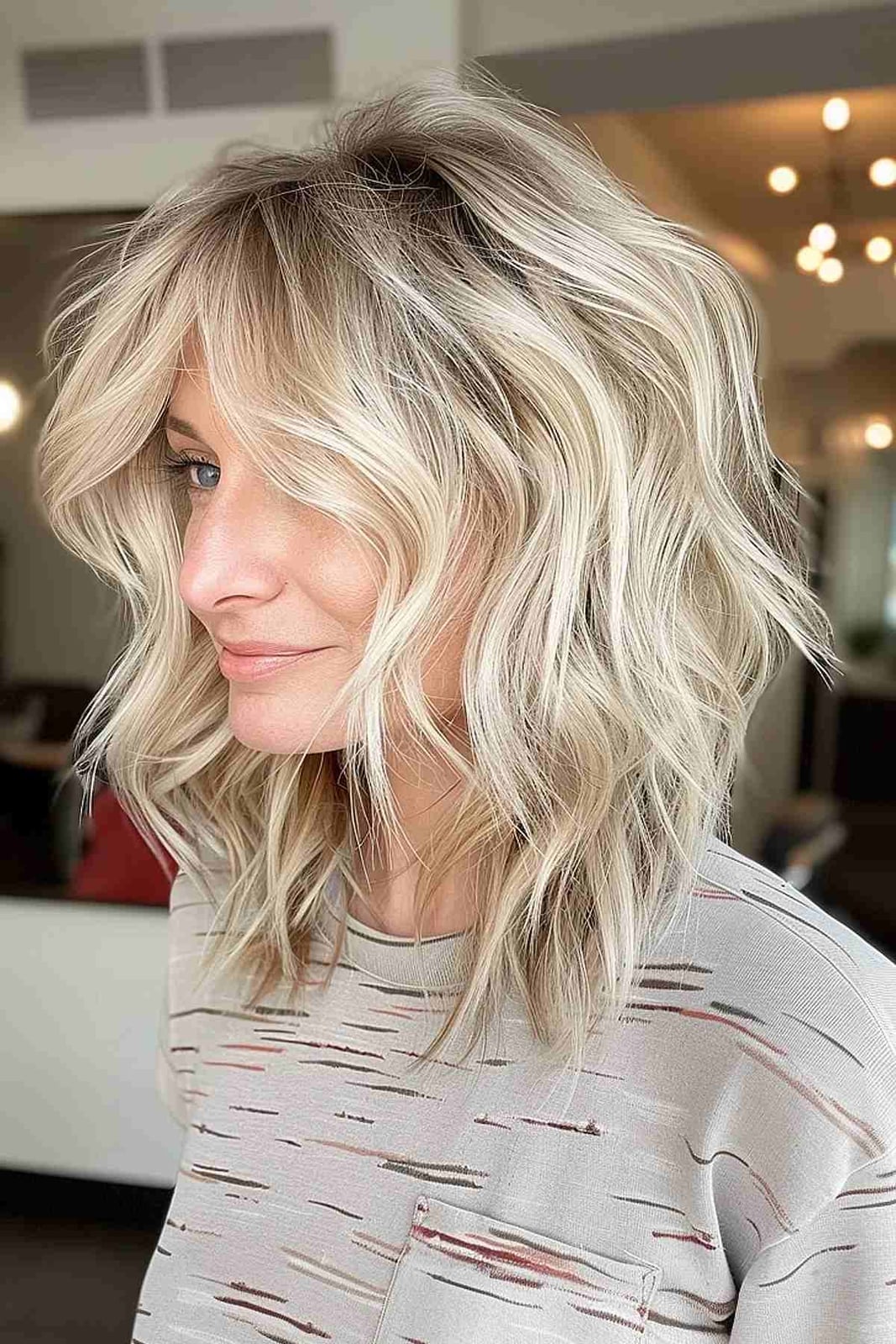
Platinum at collarbone length is a commitment, not a weekend project. This shag uses choppy layers and soft curtain bangs to keep the weight off fine-to-medium wavy hair, but the color demands a salon visit every four to six weeks. Ask your stylist for: collarbone shag, curtain bangs, platinum blonde with root shadow. A purple shampoo at home buys you an extra week between toning appointments. The root shadow is not optional here; it is what stops the grow-out from looking like a rental.
Collarbone Shag With Blunt Bangs

Curtain bangs whisper; blunt bangs announce. This collarbone shag swaps the soft fringe for a straight-across line that makes the layered waves underneath feel more deliberate. Ask your stylist for: collarbone shag, blunt bangs, ash blonde with root shadow. If you are used to wispy bangs, expect a firmer commitment: blunt bangs need a trim every three to four weeks, and you cannot pin them to the side when you get bored. The ash blonde base with root shadow keeps the overall look from feeling too severe.
Ash Blonde Collarbone Shag With Face-Framing Layers

Not sure how to describe the soft graduation around your jawline? This collarbone shag has face-framing layers that blend into curtain bangs, so the longest piece still hits the collarbone while the shortest sits near the cheekbone. Ask your stylist for: collarbone shag, face-framing layers, curtain bangs, ash blonde. The ends benefit from a smoothing serum to keep the subtle highlights from looking dry. The soft wave pattern does the work; no aggressive styling required.
Classy Ash Blonde Shag With Face-Framing Bangs

A side parting changes the game on a shag. This collarbone-length version uses face-framing bangs that sweep across, which softens a square or angular jaw. Ask your stylist for: collarbone shag, face-framing bangs, ash blonde. The lighter highlights are subtle enough that you can stretch the toning to eight weeks. A round brush and a low heat setting are enough to set the direction of the bangs; the wave pattern falls naturally from the layered cut.
Golden Blonde Shag With Textured Layers
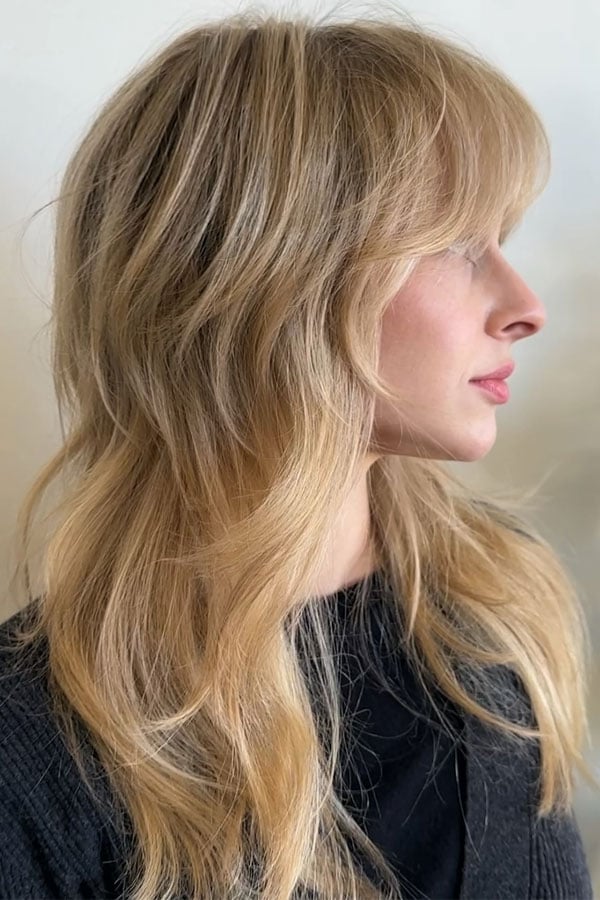
The textured layers in this collarbone shag are the design, not an extra detail. Each section is cut to separate from the next, which gives wavy, medium-density hair visible movement instead of a single blunt shape. Ask your stylist for: collarbone shag, textured layers, wispy bangs, golden blonde. The wispy bangs and side part keep the weight off the face, so the whole cut looks deliberate. A blowout finish is the default here, and maintaining it means applying a texturizing spray to damp hair before diffusing or rough-drying. That layered shape starts to soften around six weeks; a trim every seven to eight weeks keeps the golden blonde shag from becoming a grown-out blob.
Shoulder Length Ash Blonde Shag

The ash blonde highlights here are painted sparingly through the top and crown, not packed in from root to tip. That technique keeps the shoulder-length shag from looking stripey while still lifting the base shade. Ask your stylist for: shoulder length shag, side-swept curtain bangs, ash blonde. The fine, wavy texture holds the soft curtain bangs in place without a ton of product, and the side part helps the face-framing layers land where they should. A toning appointment every four to six weeks is what keeps the ash from warming up to a brassy yellow, especially if you wash in warm water.
Shoulder Shag With Voluminous Waves

Voluminous waves on fine hair are not a set-it-and-forget-it proposition. The face-framing layers in this shoulder-length shag create the structure, but the lift has to come from a volumizing spray at the roots and a round-brush blow-dry on each section. Ask your stylist for: shoulder length shag, voluminous waves, curtain bangs. The honest drawback is that the volume drops by midday on humid days unless you lock it with a flexible-hold hairspray. This is a salon cut, not a bathroom-mirror job, and the curtain bangs need a dry trim every three weeks to stay out of your eyes. If you are not willing to spend ten minutes styling, skip this one.
Copper Red Shag With Blunt Bangs
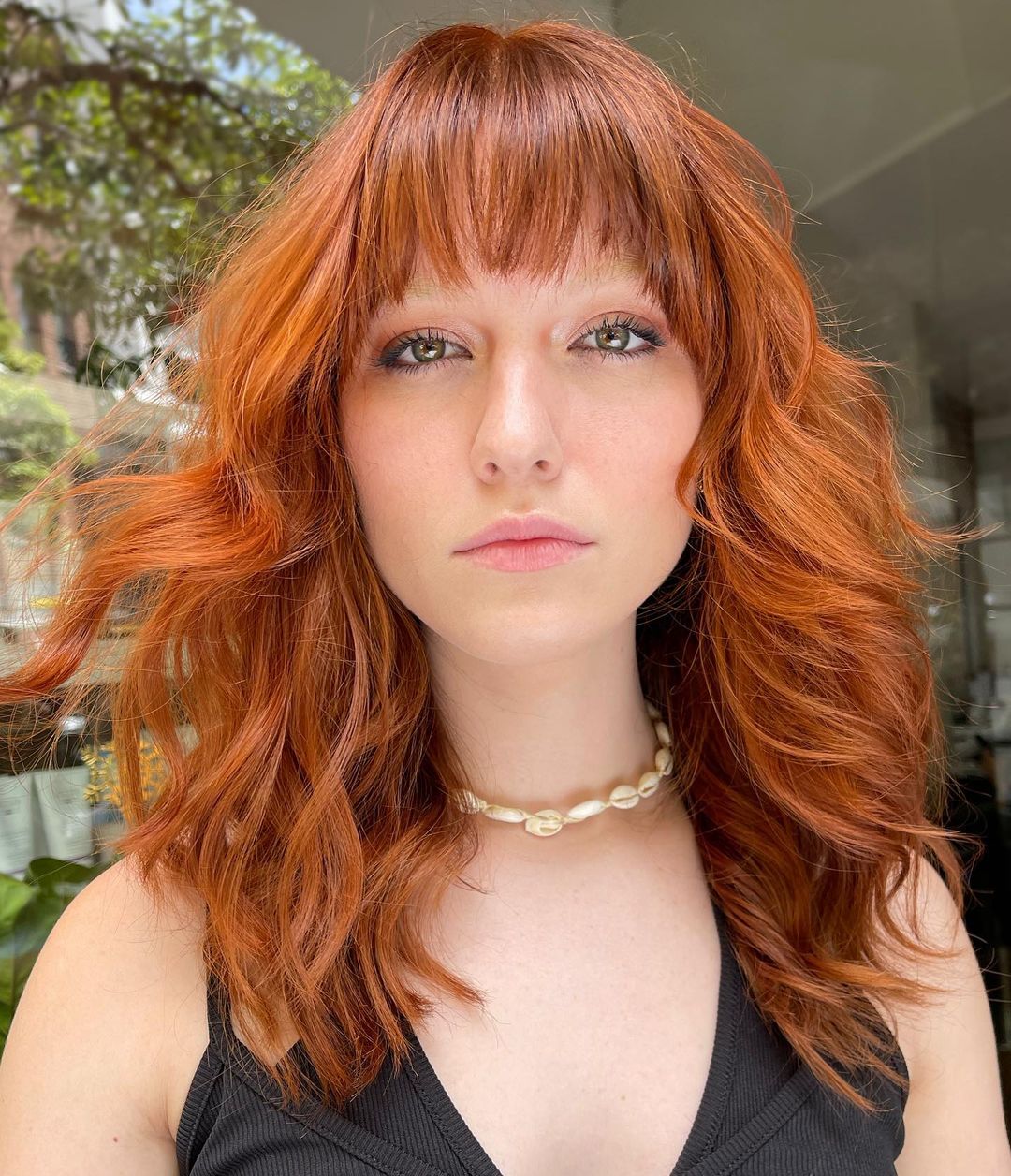
Can a shag be a seasonal statement? This copper red version answers yes. The blunt bangs and shoulder-length layers sit on thick, wavy hair that would otherwise feel heavy, and the vibrant copper shade turns the whole cut into an autumn anchor. Ask your stylist for: shoulder length shag, blunt bangs, vibrant copper red. The middle part and textured waves keep the blunt fringe from reading as severe, which is the risk with a straight-across bang on a shag. For a less seasonal approach, swap the copper for a cooler ruby or a darker auburn. A color-depositing conditioner every other wash extends the vibrancy between full salon color appointments.
Shoulder Length Shag With Messy Waves
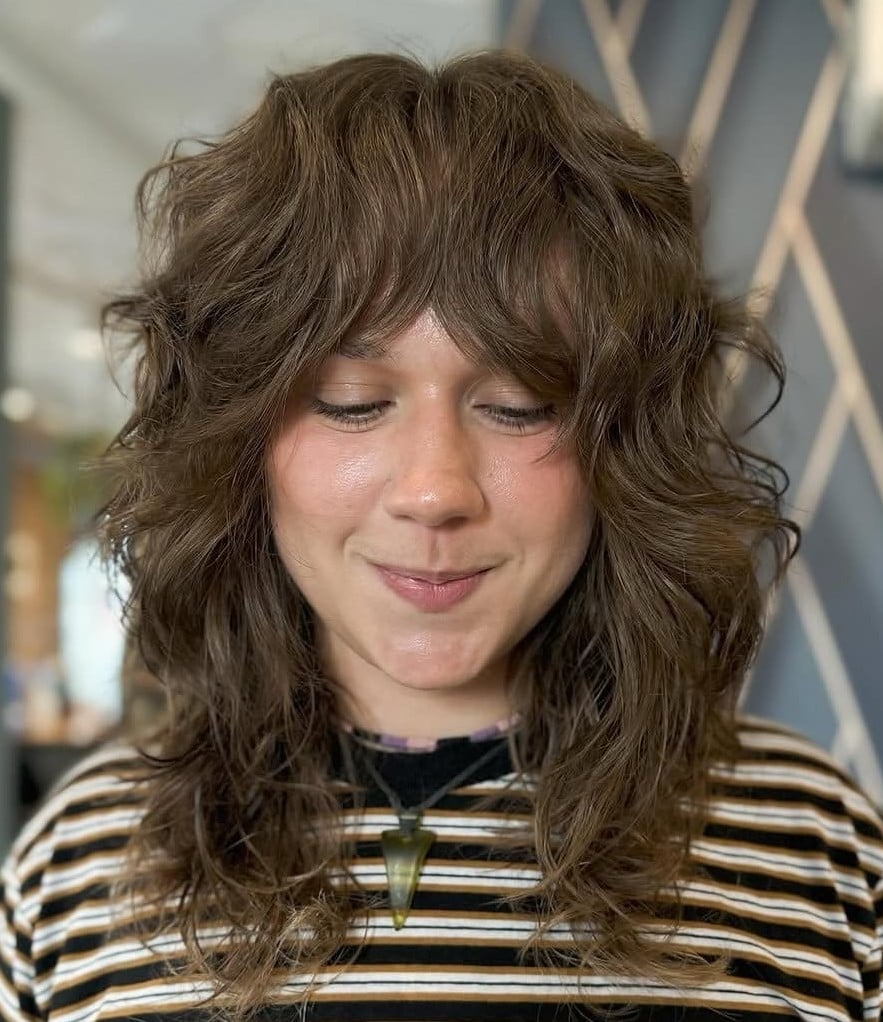
Choppy layers and messy waves are a match made for thick hair that usually feels like too much. The shoulder-length shag cuts through the density by removing weight from the interior, so the medium brown base moves instead of sitting flat. Ask your stylist for: shoulder length shag, choppy bangs, messy waves. The choppy bangs here are cut with a point-cutting technique that prevents them from looking blunt or heavy. Thick, wavy textures hold the messy finish without much effort, while fine hair would likely fall flat within an hour. This is a cut for someone who wants to wake up, scrunch, and go.
Chin Length Shag With Curtain Bangs
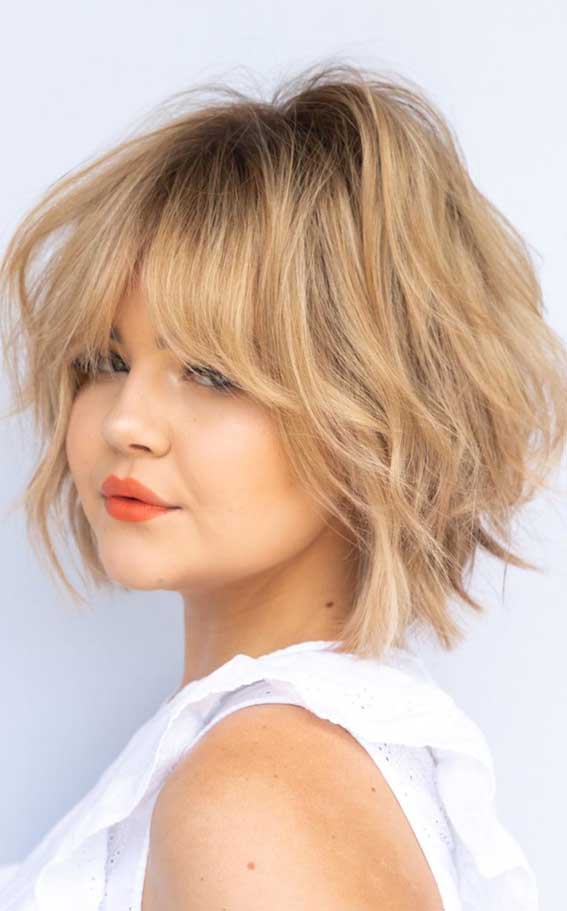
Can a shag at chin length still deliver on the movement without swallowing your face? It can, when the curtain bangs are cut to sweep just past the cheekbones and blend into the layers. Ask your stylist for: chin length shag, curtain bangs. The ash blonde base with subtle highlights keeps the medium density texture looking textured, and the middle parting lets the bangs frame the face symmetrically.
Chin Shag With Blunt Bangs

A chin length shag with blunt bangs is a design of contrasts: the sharp fringe anchors the cut, while the tousled waves keep it from feeling severe. On fine hair, the trade-off is time. You will need a texturizing spray and a few minutes of scrunching to get that soft, wavy finish, since fine texture tends to fall smooth on its own. The medium brown base with subtle lighter highlights adds depth, which helps the layers read clearly. Ask your stylist for: chin length shag, blunt bangs, textured waves. A middle parting keeps the balance, and a trim every six weeks preserves the blunt edge.
The result is a cut that looks styled, not just cut. The wavy texture gives it a modern, lived-in feel that still holds a clean line.
Chin Length Shag With Choppy Bangs, Wavy
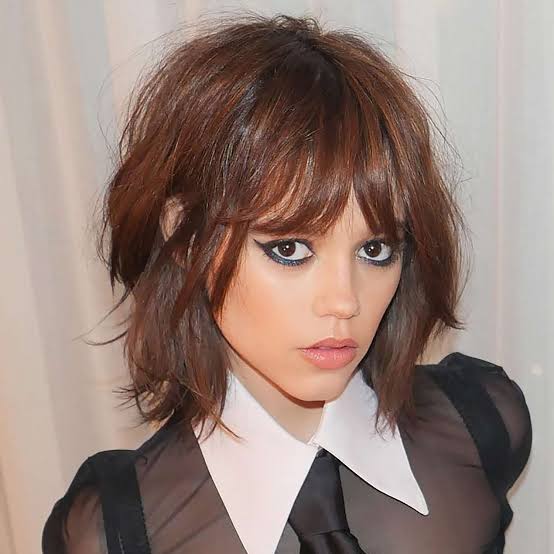
The trick to choppy bangs on a chin length shag is how they are cut: point-cut into the fringe so the ends taper and blend into the layers instead of sitting as a solid block. On fine, wavy hair, that technique lets the bangs move with the wave pattern instead of fighting it. The air-dried finish keeps the whole cut relaxed, while the medium brown base with subtle highlights gives the texture dimension. Ask your stylist for: chin length shag, choppy bangs, air-dried texture.
Short Dark Brown Shag With Choppy Bangs
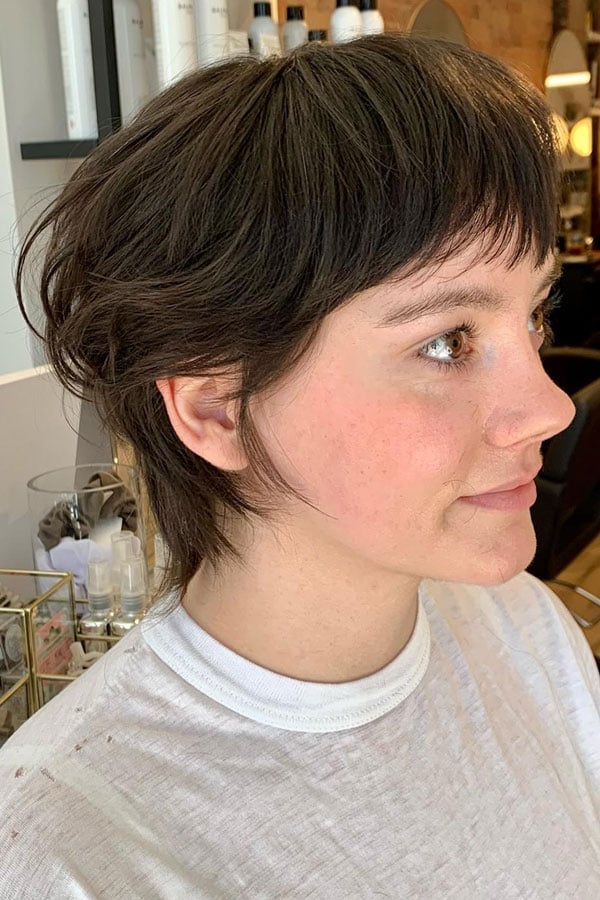
An ear length shag in dark brown is a bold move, and the short choppy bangs make it bolder. The style relies on texture to carry it, which is where the honest trade-off lives: fine, wavy hair this short needs product and heat styling to keep the choppy layers visible, otherwise it can settle into a plain crop. The side view matters here, since the layers are cut to stack and lift. Ask your stylist for: short shag, choppy bangs, dark brown. This is a salon cut, not a DIY trim, and the drawback is that it grows out fast.
Medium Shag With Wispy Bangs
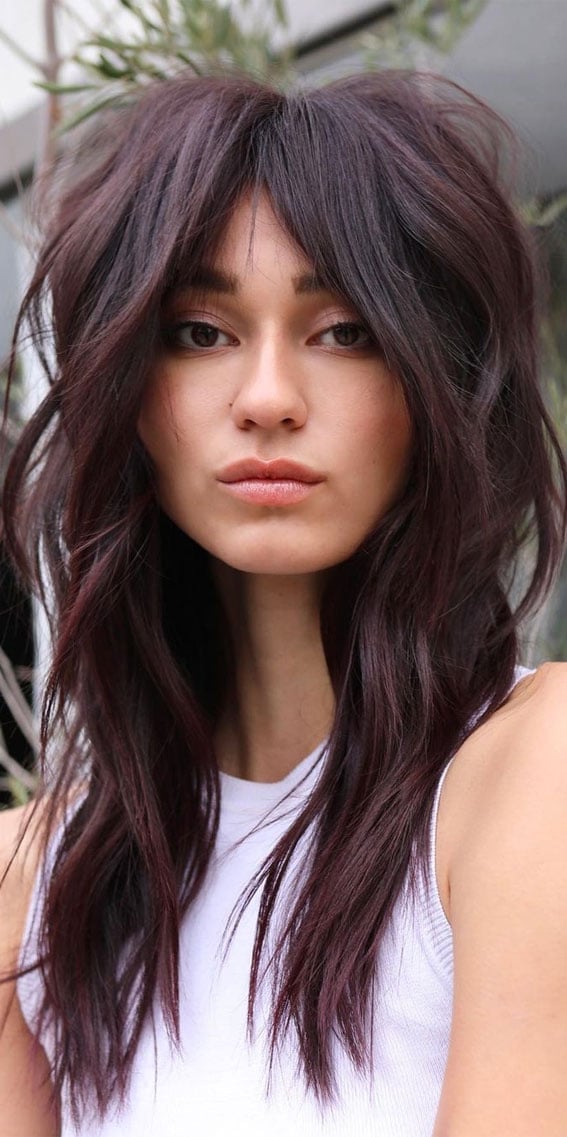
Who actually pulls off a medium shag with wispy bangs? Medium density, wavy hair starting at collarbone length, since that texture gives the face-framing layers something to grip. The rich burgundy base with subtle lighter tones does the heavy lifting here: it adds perceived thickness to the hair and makes the wispy fringe look soft rather than sparse. The full fringe and middle parting balance a round or oval face by drawing the eye downward. Ask your stylist for: medium shag, wispy bangs, face-framing layers. The slightly wavy, textured finish keeps it office-appropriate without looking stiff.
Collarbone Shag With Blended Layers
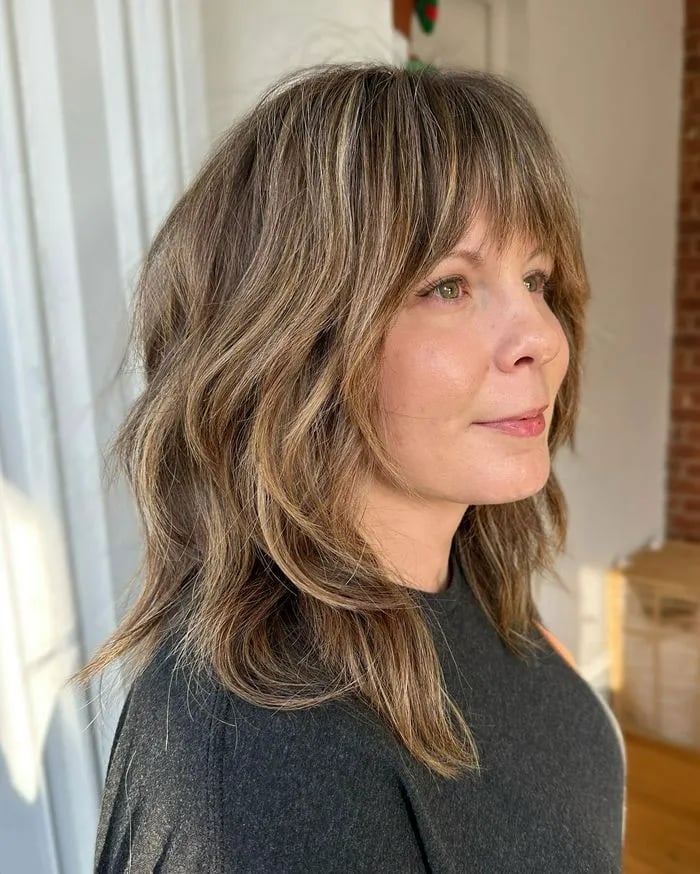
The clever thing about soft, blended layers is that they don’t announce themselves. This collarbone shag uses them to add movement and volume to medium-density wavy hair without the harsh lines a traditional shag can leave behind. The wispy bangs and side part keep the face open, while the subtle lighter highlights add depth that makes the texture look natural. Ask your stylist for a collarbone shag with wispy bangs and blended layers. This cut grows out gracefully, so a trim every six to eight weeks is enough to keep the shape intact.
Dark Brown Collarbone Shag With Texture

Textured layers are the backbone of a good shag, and on thick, wavy dark brown hair they do the heavy lifting. The stylist carves out weight from the interior so the hair moves freely, then uses a middle part and curtain bangs to frame the face without losing density. The result is a cut that looks air-dried and lived-in from day one. Ask your stylist for a collarbone shag with curtain bangs and textured layers. This is a salon technique through and through: the point is to remove bulk precisely, not hack away at random.
Dirty Blonde Shag With Textured Layers, Collarbone

The dirty blonde base with lighter highlights is a smart choice for a collarbone shag because it adds depth to the wavy texture without looking flat. The wispy curtain bangs and middle part keep the face open, and the layers are cut to move with the hair rather than against it. On medium-density hair, this cut can look a bit shapeless if you skip the styling step. A curl-enhancing cream or a quick scrunch while the hair is damp gives it the definition the layers need. Ask your stylist for a collarbone shag with wispy curtain bangs and textured layers.
The honest trade-off: this cut is designed for air-dried ease, but if your hair is on the finer side of medium density, the layers can disappear. You will need to add a little product or a quick blow-dry to make the shape read. It is a salon cut that asks for a bit of effort at home, not a set-and-forget situation.
Dark Blonde Shag With Balayage
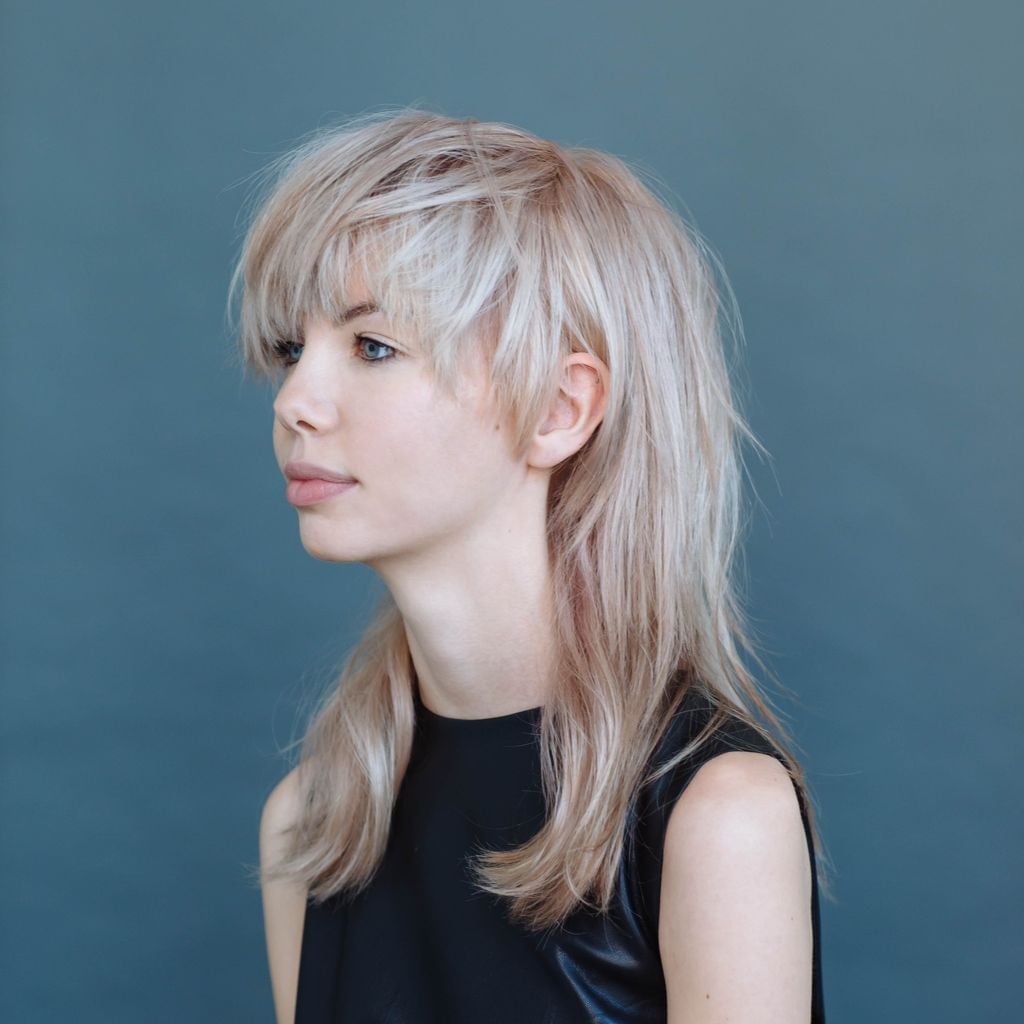
Solid color on a shag can make the layers look flat, which is where balayage earns its place. A dark blonde base with hand-painted highlights adds dimension that follows the face-framing pieces and textured layers, so the cut reads as more sculpted than a single-process shade would. The side part and soft waves give it a polished finish that works for the office or a dinner out. Ask your stylist for a collarbone shag with face-framing pieces and dark blonde balayage. If you prefer a more uniform tone, stick with a glossed solid color, but you will lose the depth that makes this cut pop.
Collarbone Shag With Textured Ends
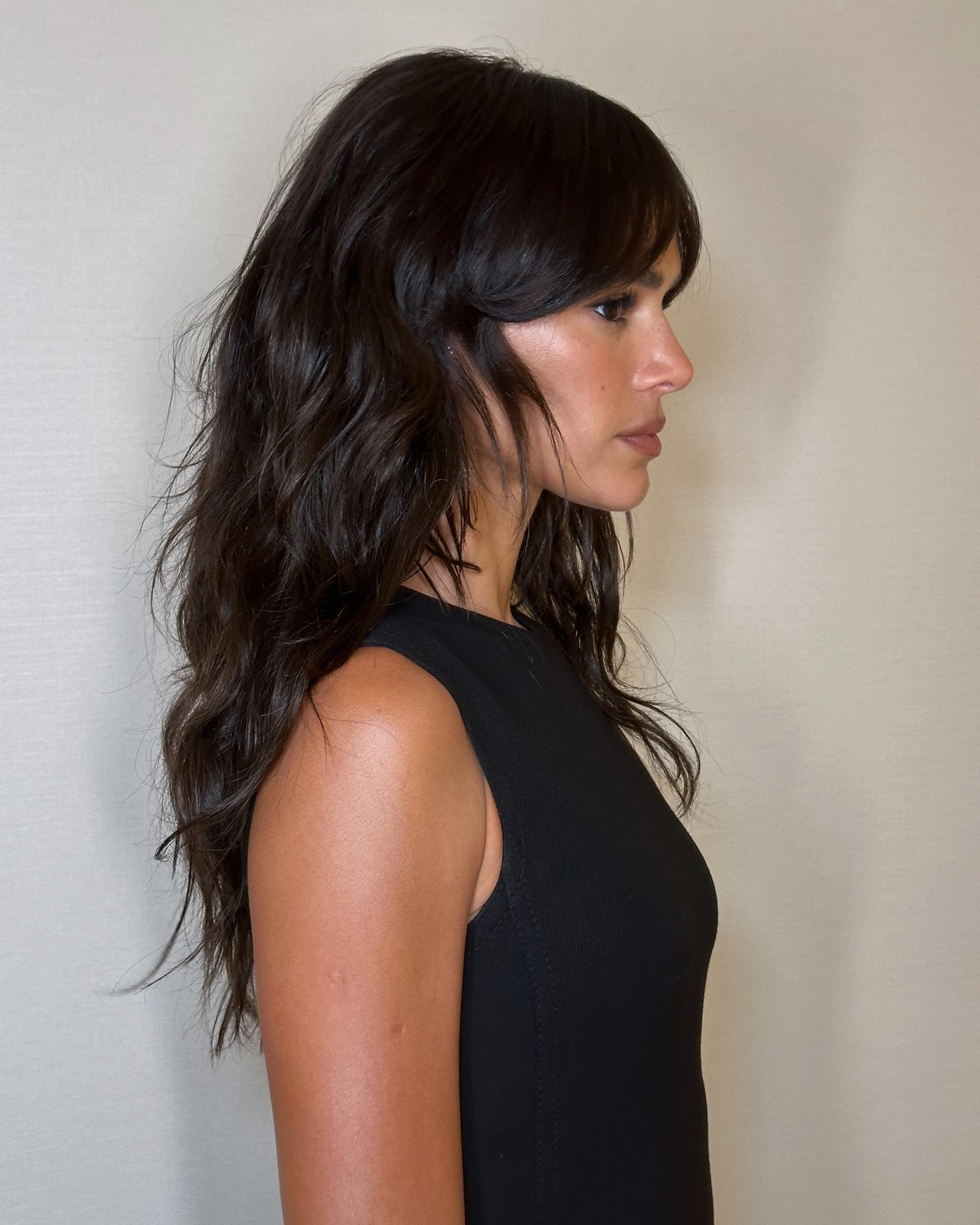
Not every shag needs bangs, and this collarbone version proves it. The choppy layers are concentrated at the ends, creating a textured finish that adds movement to thick, wavy hair without shortening the face with a fringe. The middle part and dark brown base keep the look grounded, while the textured ends give it a modern, slightly undone feel. Ask your stylist for a collarbone shag with choppy layers and no bangs. The key is to specify that you want the texture concentrated at the ends, not throughout the mid-lengths, so the shape stays clean and the layers do not get lost.
This cut is a salon-leaning choice because the point-cutting technique that creates the textured ends requires precision. A good stylist will know how much weight to remove to keep the hair looking full, not stringy.
Collarbone Shag With Full Fringe
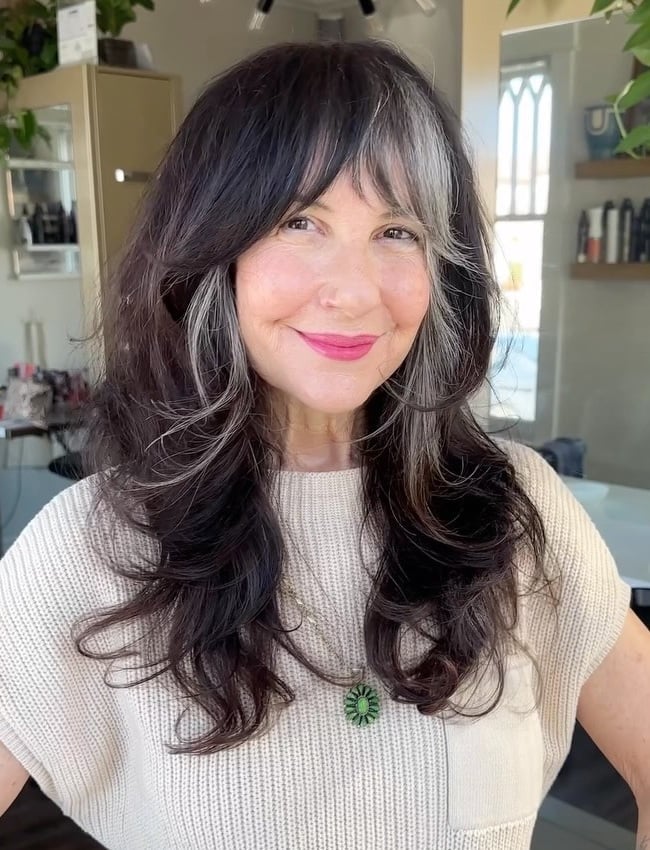
The full fringe frames the face, but the real trick is the grey streaks woven through the dark brown base. They add depth around the face without a full color commitment. This collarbone shag with face-framing pieces and feathered layers suits medium density, wavy hair, and the full fringe can visually shorten a longer face. Ask your stylist for: collarbone shag, full fringe, grey streaks. The side part keeps the fringe from feeling too heavy, and loose waves soften the overall effect. A trim every six to eight weeks keeps the fringe from grazing your eyes, which is the difference between neat and unkempt.
Red Shag With Full Fringe and Soft Waves
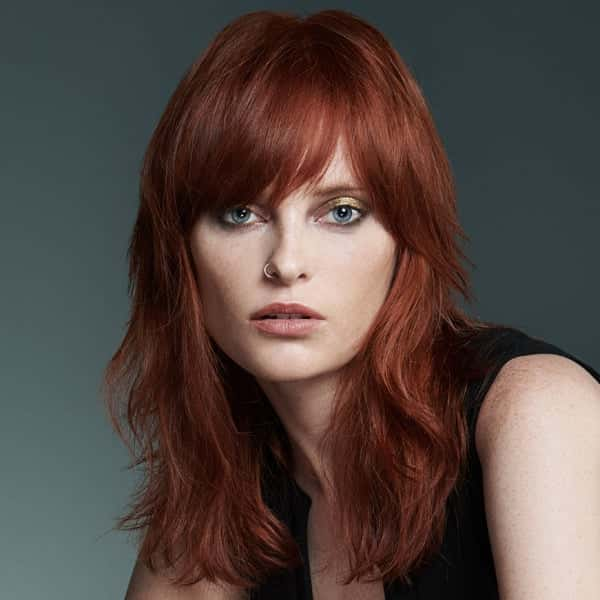
A solid red base is a commitment, and this collarbone shag with a full fringe and choppy layers makes that commitment visible. The rich color fades faster than most, so expect to refresh the tone every four to six weeks with a color-depositing conditioner. Blow-dry the fringe with a round brush to keep it sweeping softly into the waves, and a trim every six to eight weeks maintains the shape. The middle part and soft blowout create a polished finish with a classic feel.
Light Blonde Collarbone Shag
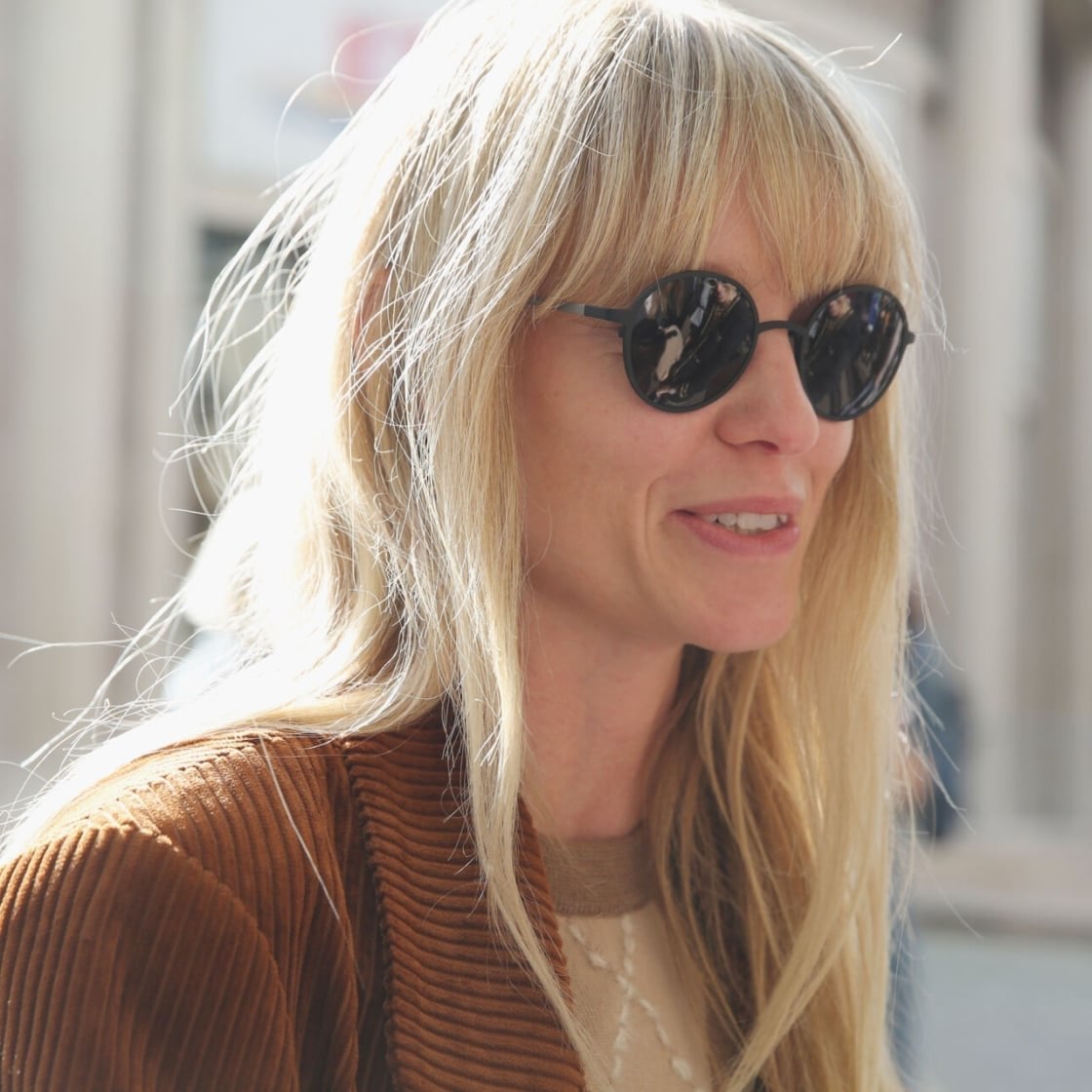
Cutting a full fringe into fine, wavy hair is a balance act. The key is keeping the fringe light and airy, so it doesn’t weigh down the hair or overpower the face. This light blonde collarbone shag with choppy layers and a subtle side part is styled air-dried, which suits its fine texture. Ask your stylist for: collarbone shag, light blonde, full fringe. The choppy layers give it movement, and the fringe adds structure without needing a lot of styling effort. A trim every six to eight weeks keeps the fringe from turning into a curtain.
Collarbone Shag With Curly Bangs
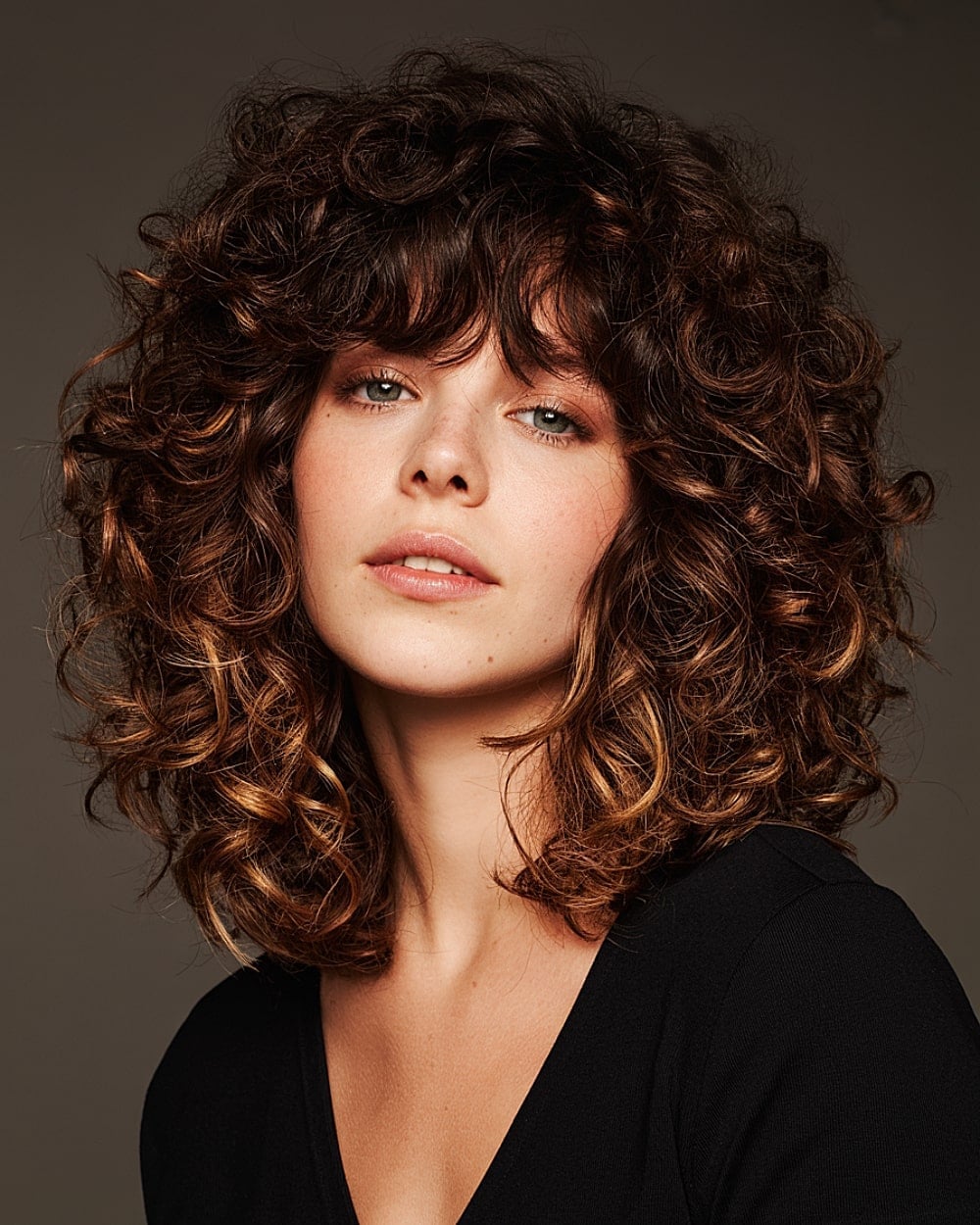
Curly bangs are a bold move, and on thick, curly hair they either look intentional or like a happy accident. The collarbone shag with curly bangs and a middle part works best when the layers are cut to enhance the natural curl pattern, not fight it. The dark brown base with caramel highlights adds dimension, making the volume feel deliberate. Ask your stylist for: collarbone shag, curly bangs, caramel highlights. Styling is a salon-leaning endeavor: you will need a curl-defining cream and a diffuser to avoid frizz. Bangs this short need frequent trims, every eight to ten weeks, to keep them from growing past your eyes.
Shoulder Length Shag With Defined Curls
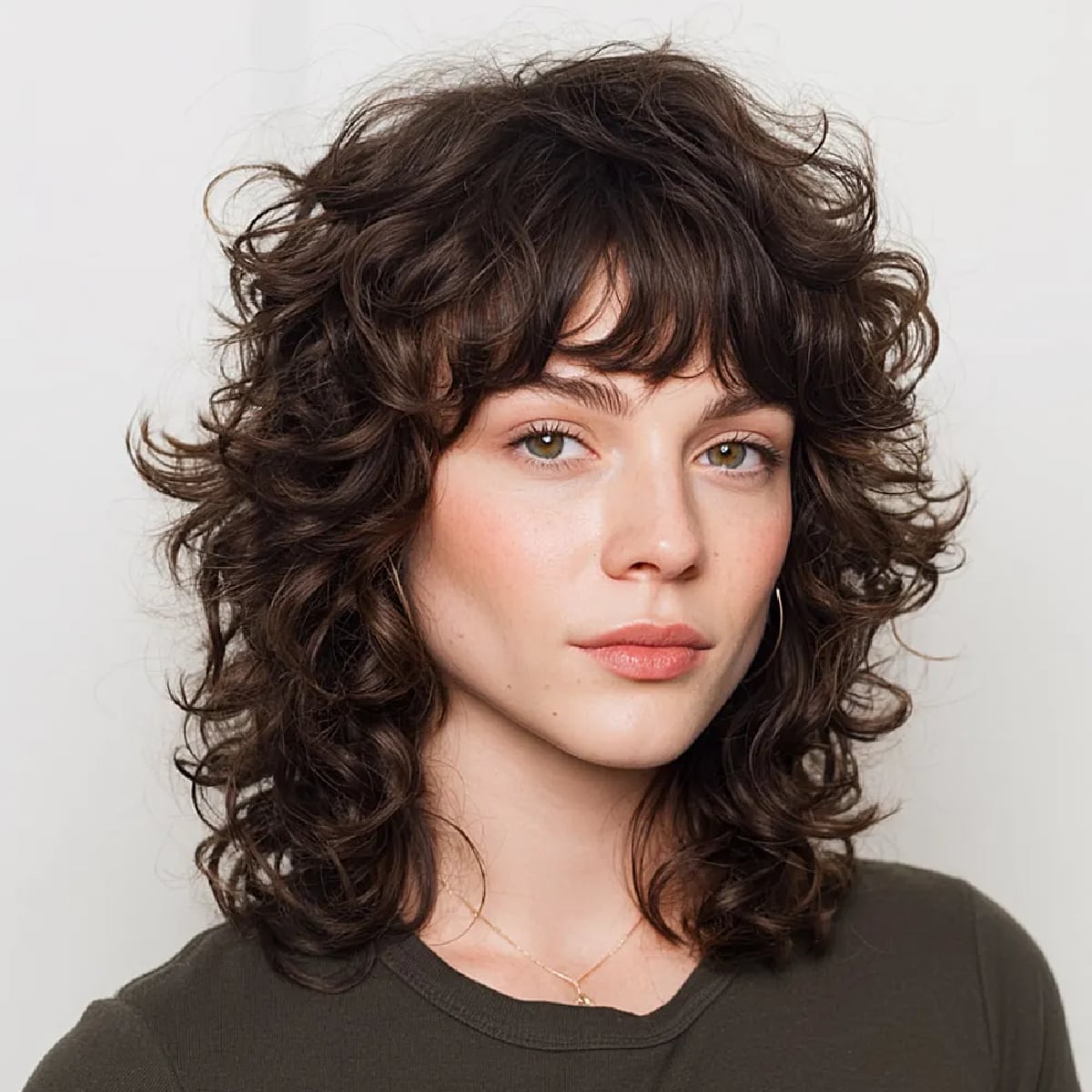
Does your thick, curly hair always feel like it’s doing too much? This shoulder length shag with choppy bangs and a middle part is the answer. The layers are cut to let your natural curls spring up without turning into a triangle. The defined, air-dried curls give it a polished, lived-in look. Ask your stylist for: shoulder length shag, choppy bangs, defined curls. This cut is ideal for anyone with thick, curly texture who wants to manage volume without losing shape. A trim every eight to ten weeks keeps the curls from losing their form.
Mid-Back Shag With Grey Streaks
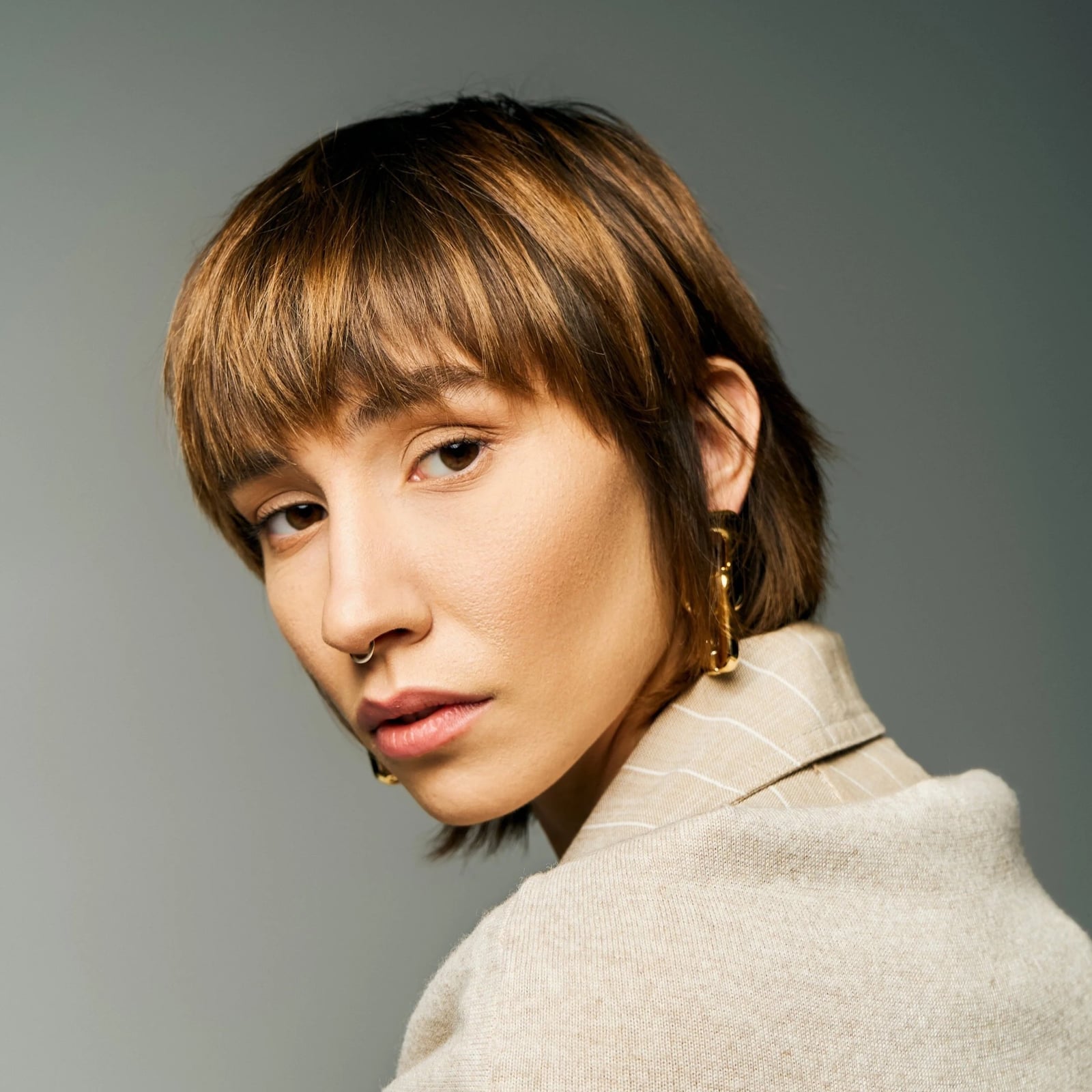
The design here relies on textured ends to keep fine, wavy hair from looking weighed down at collarbone length. A side parting and subtle highlights add a bit of depth without requiring a full color overhaul. Ask your stylist for: mid-back shag, face-framing pieces, dark brown with grey streaks. This cut works best on medium-density hair that already has some wave, since the air-dried finish is the point. Use a color-safe shampoo to protect the highlights, and plan a trim every eight to ten weeks to keep the ends from splitting. The trade-off is minimal styling time, which is the whole idea.
Grey Shag With Curtain Bangs
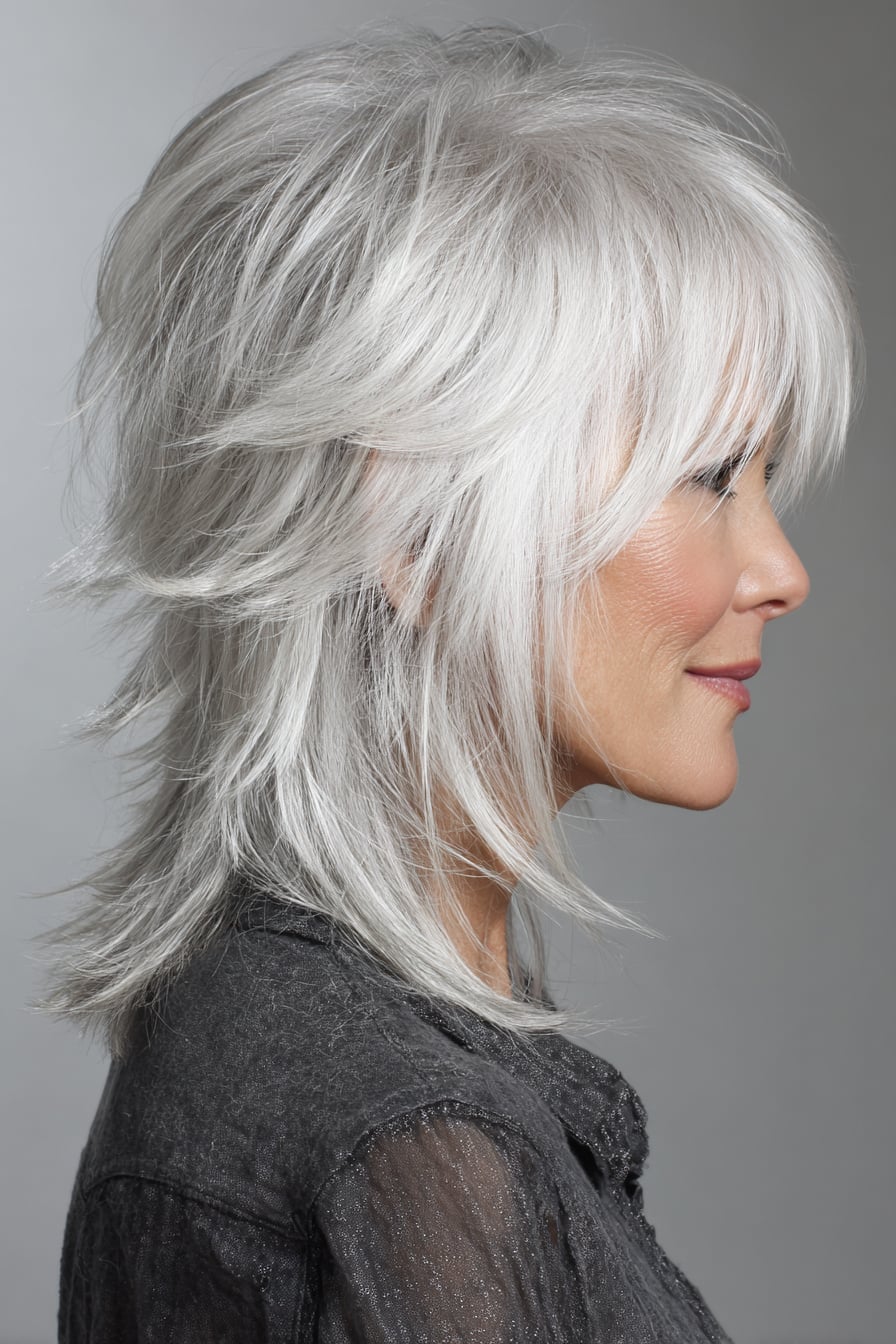
The layering technique here uses choppy internal cuts to build texture without removing weight from the perimeter, so the collarbone length stays substantial. Curtain bangs are cut to blend into the sides, softening the transition between layers. Ask your stylist for: collarbone shag, curtain bangs, grey color. Fine, wavy hair benefits from this approach because the layers create the illusion of density. The grey base with lighter highlights adds dimension that a single flat tone cannot match.
Long Shag With Choppy Layers
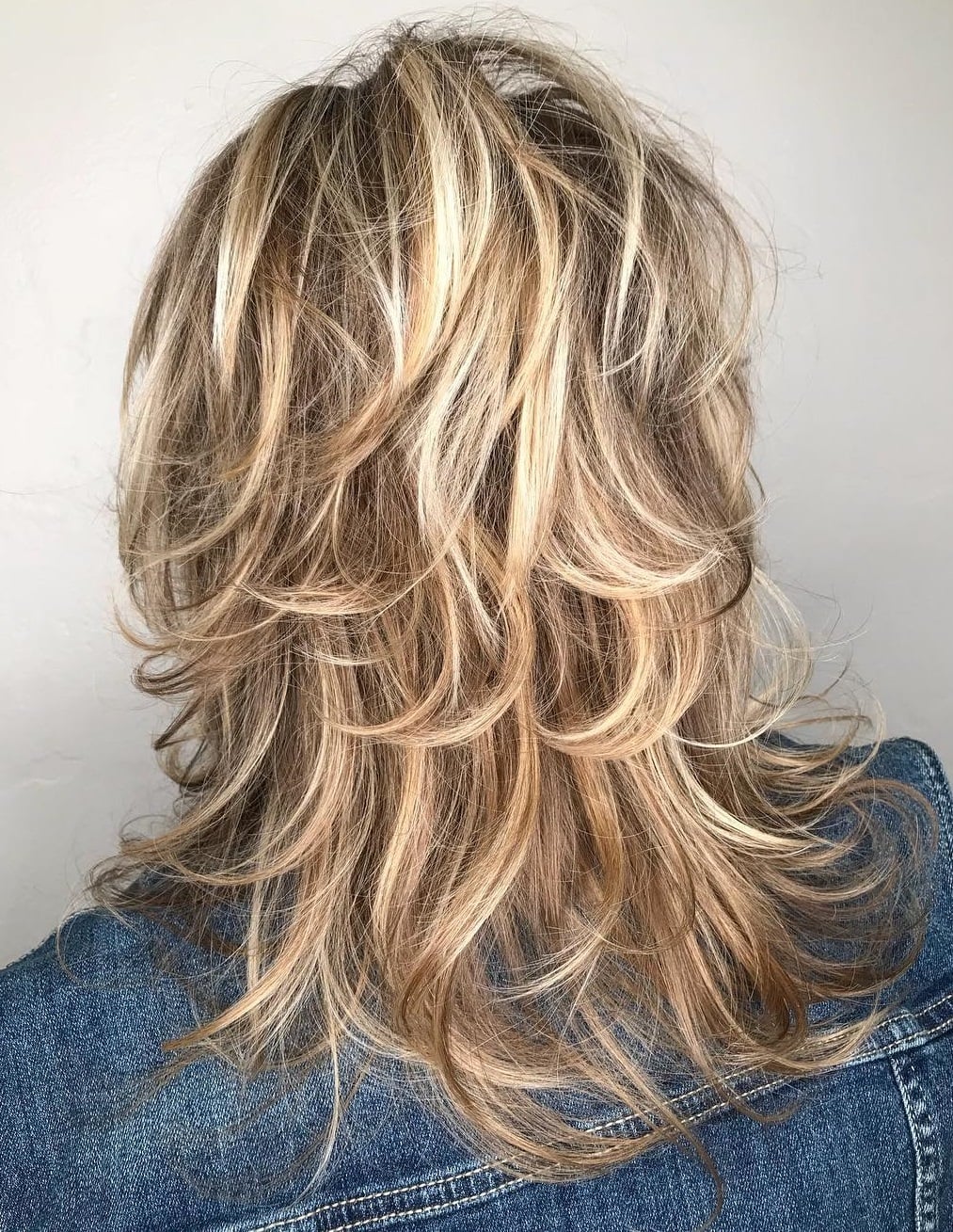
Heavy, choppy layers at mid-back length create a lot of shape, but they also expose the ends to more wear. On thick, wavy hair, this cut reduces bulk and encourages movement, which is the upside. The downside is that those visible layers require a salon cut every time, not a DIY trim, and split ends show up faster on blonde hair with this much internal texturing. Ask your stylist for: mid-back shag, choppy layers, no bangs.
If your hair is on the finer side, the heavy layering can make it look thinner rather than fuller. A texturizing spray applied to damp hair helps define the waves, but the shape itself depends on the original cut being precise. This is a style that looks best fresh from the salon, not six weeks later.
Mid-Back Blonde Shag With Heavy Layers
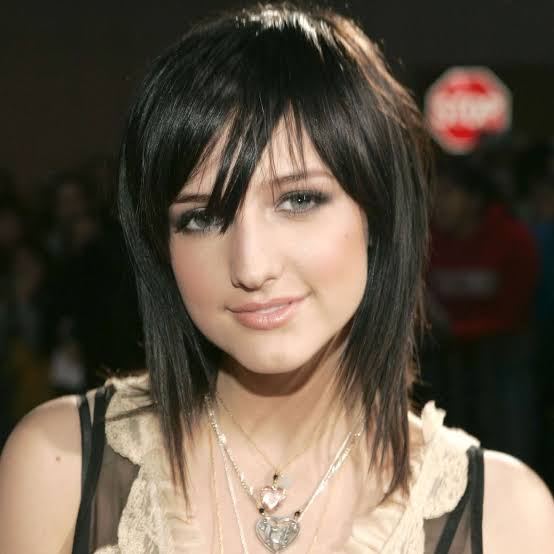
Wondering how to give fine hair more body without resorting to a shorter length? The textured layers in this collarbone shag do the work. Side-swept bangs and a side parting break up the line, and the air-dried finish keeps it from looking overdone. Ask your stylist for: mid-back shag, heavy choppy layers, blonde with highlights. Fine, wavy hair gets the most out of this cut because the layers add perceived volume and movement that a blunt shape cannot. The highlights add dimension, which helps the texture look natural.
Final Thoughts
For fine or thin hair, opt for shags with blunt ends and fewer, strategically placed layers to maintain density. For thick hair, embrace the layers to reduce bulk and enhance movement.
- Schedule a trim every 6-8 weeks to maintain the shag's layered shape.
- Use a texturizing spray or sea salt spray on damp hair for enhanced waves.
- Air-drying or diffusing is ideal to preserve natural texture and minimize heat damage.
- For colored shags, use color-safe shampoos and conditioners to maintain vibrancy.
Find your signature shag by balancing texture, length, and color.
