

Choppy layers have traded their grunge-era reputation for something more refined: think soft, textured movement rather than sharp, jagged ends. This season, the look leans into lived-in color and glossy natural texture, with face-framing layers and curtain bangs taking center stage across every length.
Here are 21 takes on Classy Choppy Layers, from low-upkeep collarbone cuts to more dramatic stacked bobs, designed for fine hair that needs volume, thick hair that needs weight removed, or any texture in between. If your current cut falls flat by midday or your fringe refuses to cooperate, one of these shapes will fix it.
Collarbone Shag With Soft Curtain Bangs
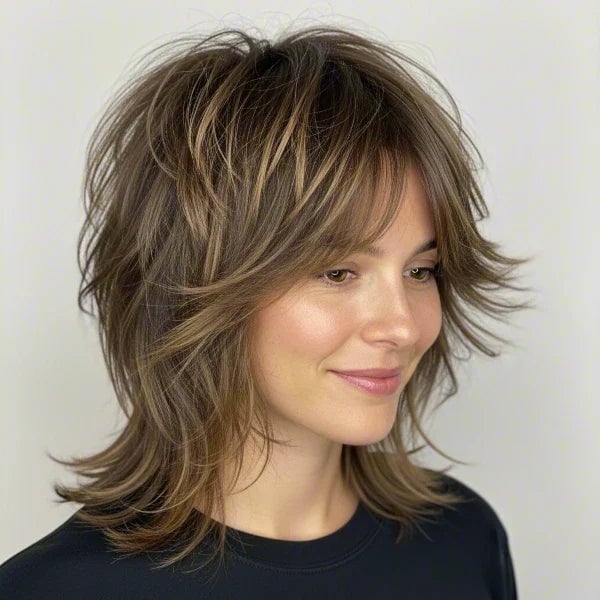
The shag cut is essentially a masterclass in what happens when you let the layers do the talking, and this collarbone version with soft curtain bangs proves the point. It suits medium-density wavy hair that starts at the collarbone, and the curtain bangs soften round and heart faces without demanding a full fringe commitment. Ask your stylist for: collarbone shag with choppy layers and soft curtain bangs. Use a round brush during blow-drying to encourage the waves, and plan on trimming those bangs every four to six weeks. The collarbone length means the grow-out phase looks intentional rather than neglected.
Dark Brown Collarbone Bob With Choppy Bangs
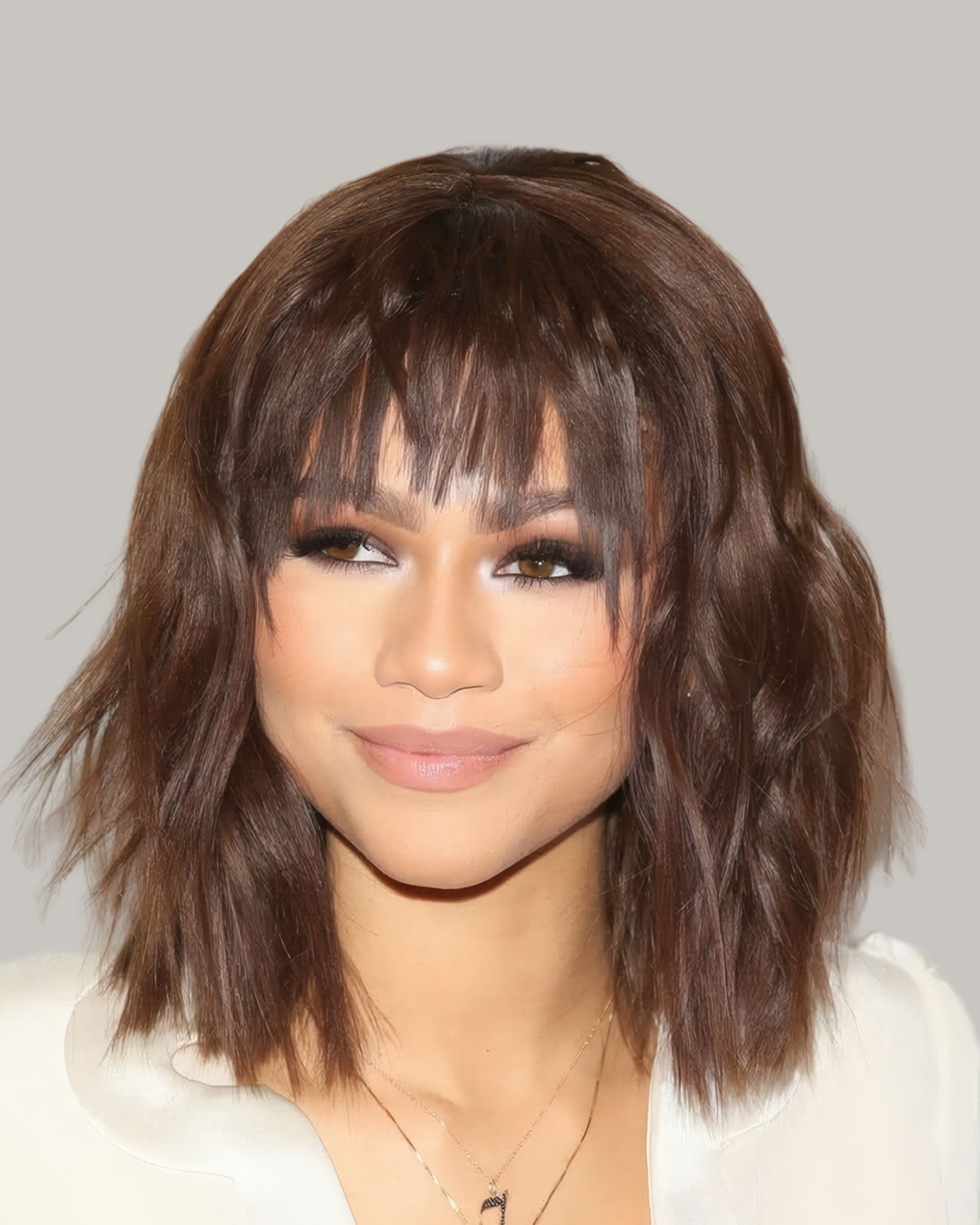
A blunt bob sits there and dares you to find movement in it. This collarbone bob with choppy layers and curtain bangs does not have that problem. The dark brown base keeps it polished, while the choppy bangs and layers create the kind of separation a one-length cut cannot touch. It is a better pick for anyone who wants a bob but finds the blunt version too stiff. Ask your stylist for: collarbone bob with choppy layers and curtain bangs. The wavy blowout styling shown here is the default for this cut; a texturizing spray on damp hair before air-drying gives the same piecey finish.
Shoulder Length Shag With Wispy Bangs

How do you ask for messy texture that looks deliberate? You ask for a shoulder-length shag with choppy layers and wispy bangs. The shag structure handles the volume, the wispy bangs keep the front soft, and the center part keeps the whole thing from tipping into retro territory. The dark brown with blonde highlights adds depth so the layers read clearly. Ask your stylist for: shoulder length shag with choppy layers and wispy bangs. Use your fingers, not a brush, to style it piecey.
Chin Length Bob With Side Swept Bangs

A chin-length bob with choppy layers and side-swept bangs is the haircut equivalent of a tailored jacket that lets you sit on the floor. The daily styling reality is this: a quick blast with a texturizing spray, a few finger-combs through the layers, and you are done. The side-swept bangs land diagonally across the forehead, which softens square jawlines without needing much fuss. Ask your stylist for: chin length choppy bob with side-swept bangs. Plan on a trim every six to eight weeks to keep the ends from looking straggly rather than intentionally textured.
Ash Blonde Collarbone Shag With Wispy Bangs

The collarbone shag with wispy bangs builds volume into the cut without relying on product. For fine wavy hair, that is a meaningful distinction. The choppy layers and wispy bangs add body, and the ash blonde shade with darker roots adds depth so the texture reads clearly. Ask your stylist for: collarbone shag, choppy layers, wispy bangs. The root shadow needs a toning appointment every six to eight weeks to keep the ash tone from warming up, though that is standard for any cool blonde.
Dark Blonde Shoulder Shag With Face-Framing Bangs

Wondering if face-framing bangs actually work with choppy layers without turning into a mess? This shoulder-length shag proves they do, especially on medium-density wavy hair. The dark blonde base with lighter highlights adds depth, while the choppy texture around the face softens the overall shape. Ask your stylist for: shoulder length shag, choppy layers, face-framing bangs. Dry texturizing spray enhances the piecey look, and a trim every six to eight weeks keeps the shape from losing its edge.
Long Blonde Hair With Face-Framing Layers
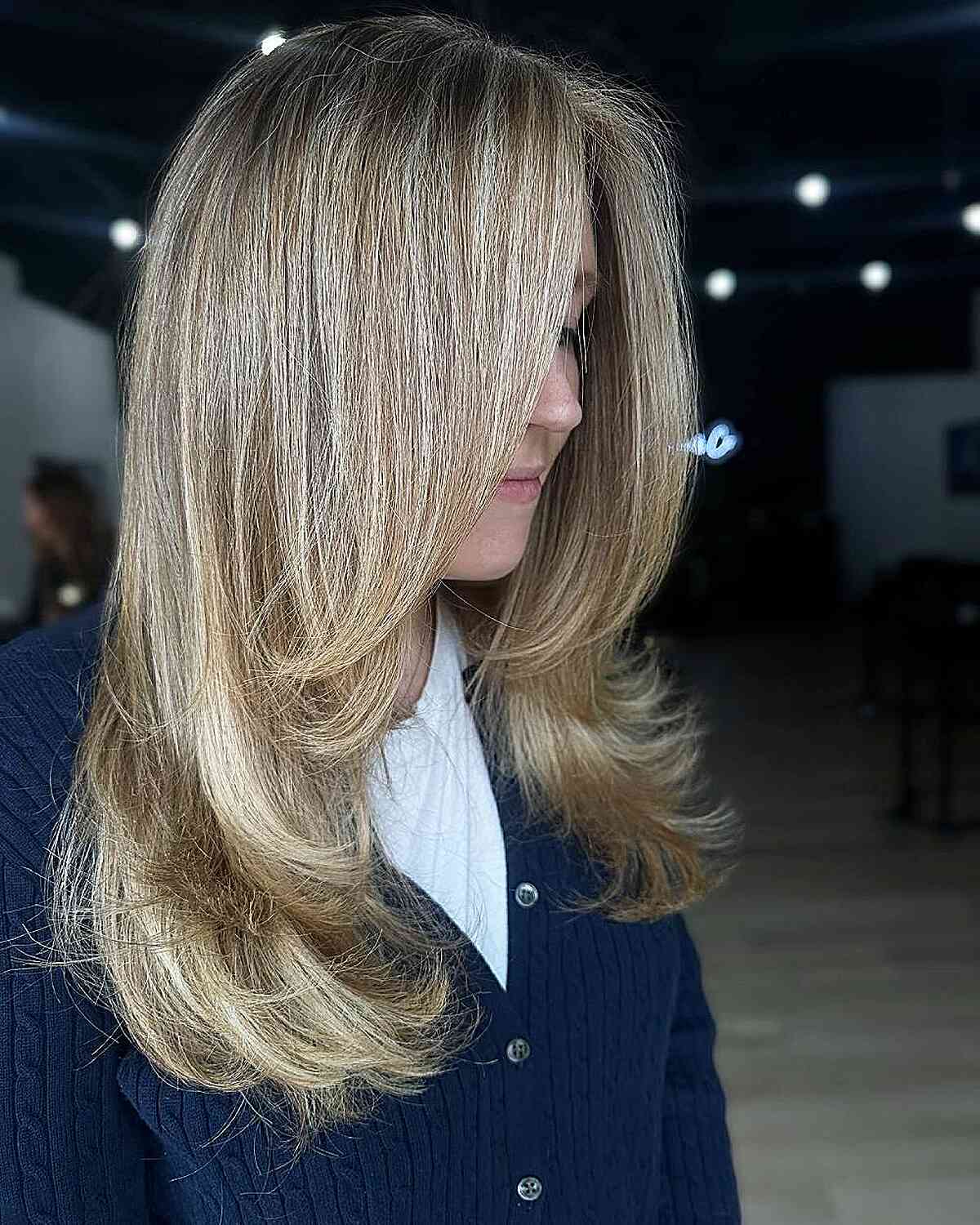
Long layers on thick straight hair create movement without sacrificing length. This mid-back cut uses face-framing bangs to break up what can otherwise look like one solid sheet of blonde. A smooth blowout keeps it polished enough for a formal event or a dinner out. Ask your stylist for: long hair with face-framing choppy layers and bangs. A flat iron on the ends after blow-drying gives that glassy finish, and a trim every eight to ten weeks maintains the shape without losing length.
Because the hair is thick, the layers sit visibly instead of disappearing into the density. The contrast between the smooth surface and the cut-in pieces is what makes the style look deliberate.
Collarbone Lob With Long Choppy Layers

On fine straight hair, long choppy layers do not thin the ends. They add the movement that otherwise requires a curling iron. This collarbone lob skips bangs entirely, which simplifies grow-out: no awkward fringe phase to navigate. The blonde shade with a visible root shadow and subtle highlights gives depth to an otherwise one-note color. Ask your stylist for: collarbone lob with long choppy layers, no bangs. A smoothing serum on damp hair before blow-drying controls flyaways, and a trim every eight to ten weeks keeps the layers from looking straggly.
Collarbone Lob With Choppy Layers
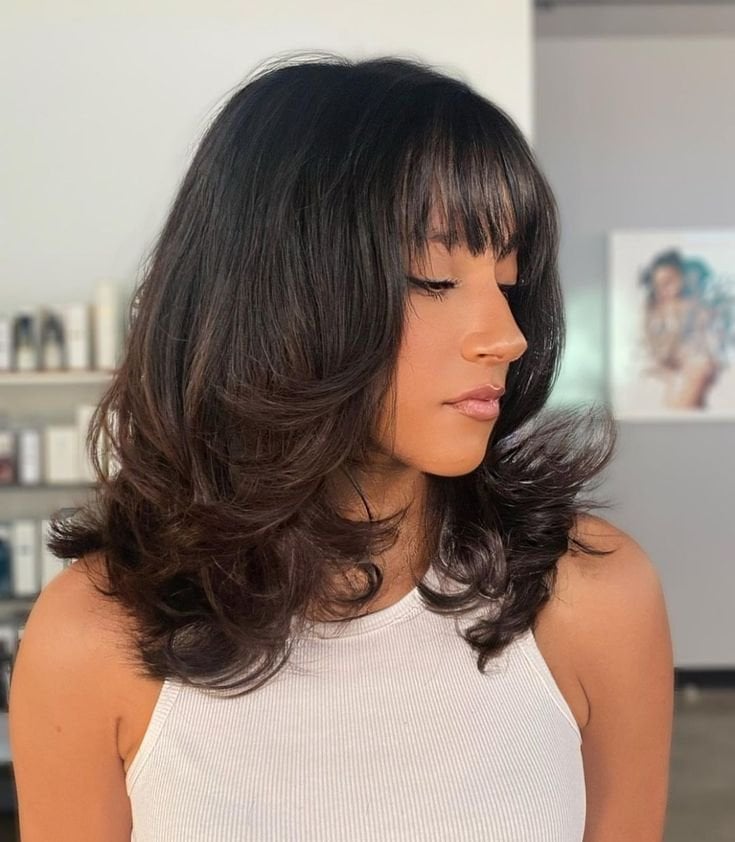
Set this layered lob against a blunt collarbone bob and the difference is immediate: one sits heavy, the other moves. The choppy layers and soft curtain bangs on thick wavy hair create volume that a solid cut would flatten. The dark brown shade keeps the texture the star, no highlights needed to fake dimension. Ask your stylist for: collarbone lob with choppy layers and curtain bangs. A blow-dry with a round brush lifts the roots, and a trim every six to eight weeks preserves the curtain bang shape. If your hair tends to fall flat, this cut gives it somewhere to go.
Collarbone Bob With Textured Choppy Ends
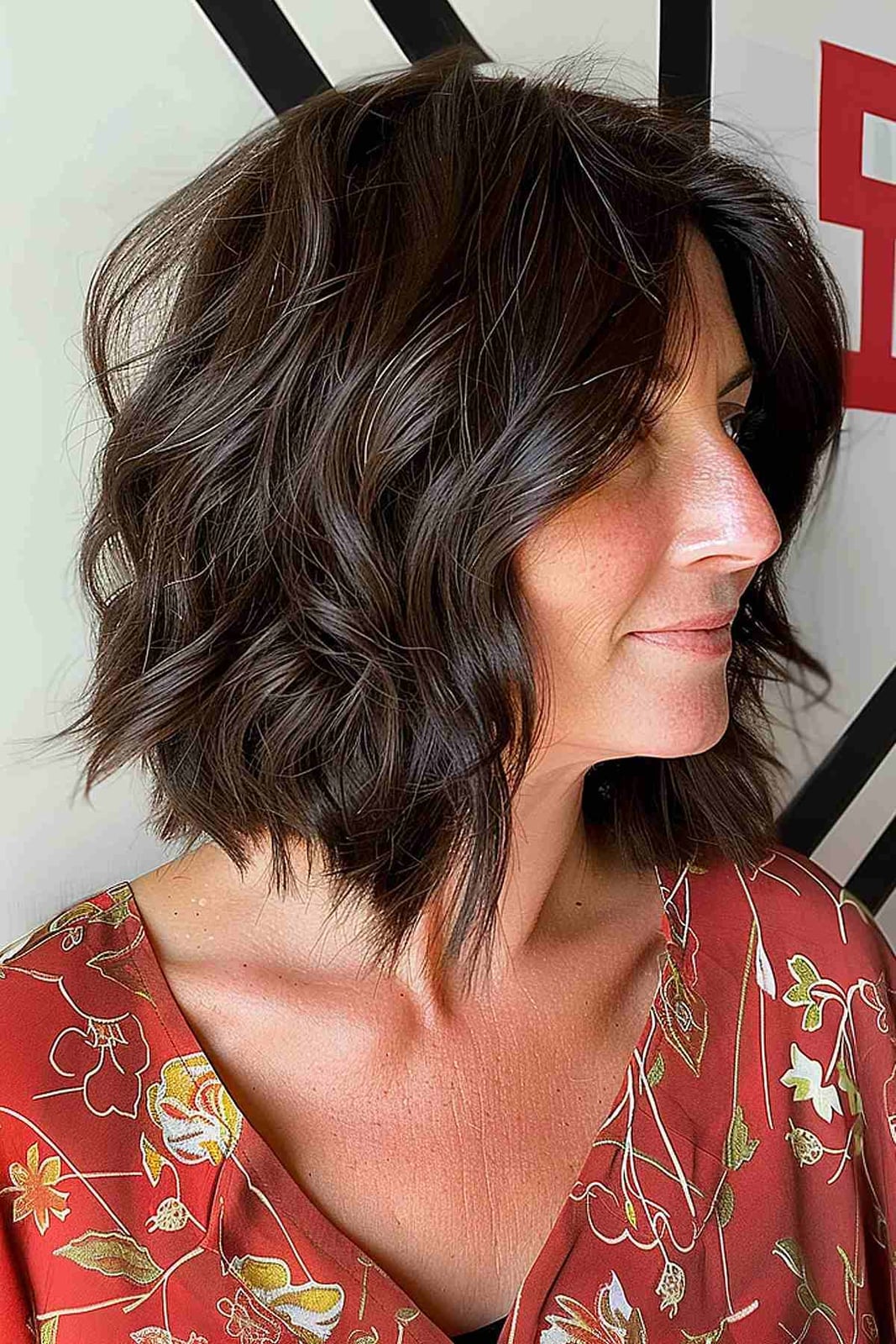
Choppy ends on a collarbone bob require a specific daily routine: a smoothing cream on damp hair, then air-dry or diffuse. Skip the round brush, because the goal is texture, not tension. The dark brown base with subtle lighter pieces and curtain bangs frames the face without demanding constant heat styling. Ask your stylist for: collarbone bob with choppy layers and curtain bangs. The lived-in glossy finish means day two actually looks better than day one. A trim every six to eight weeks keeps the ends from turning into a single blunt line.
Collarbone Lob With Face-Framing Layers
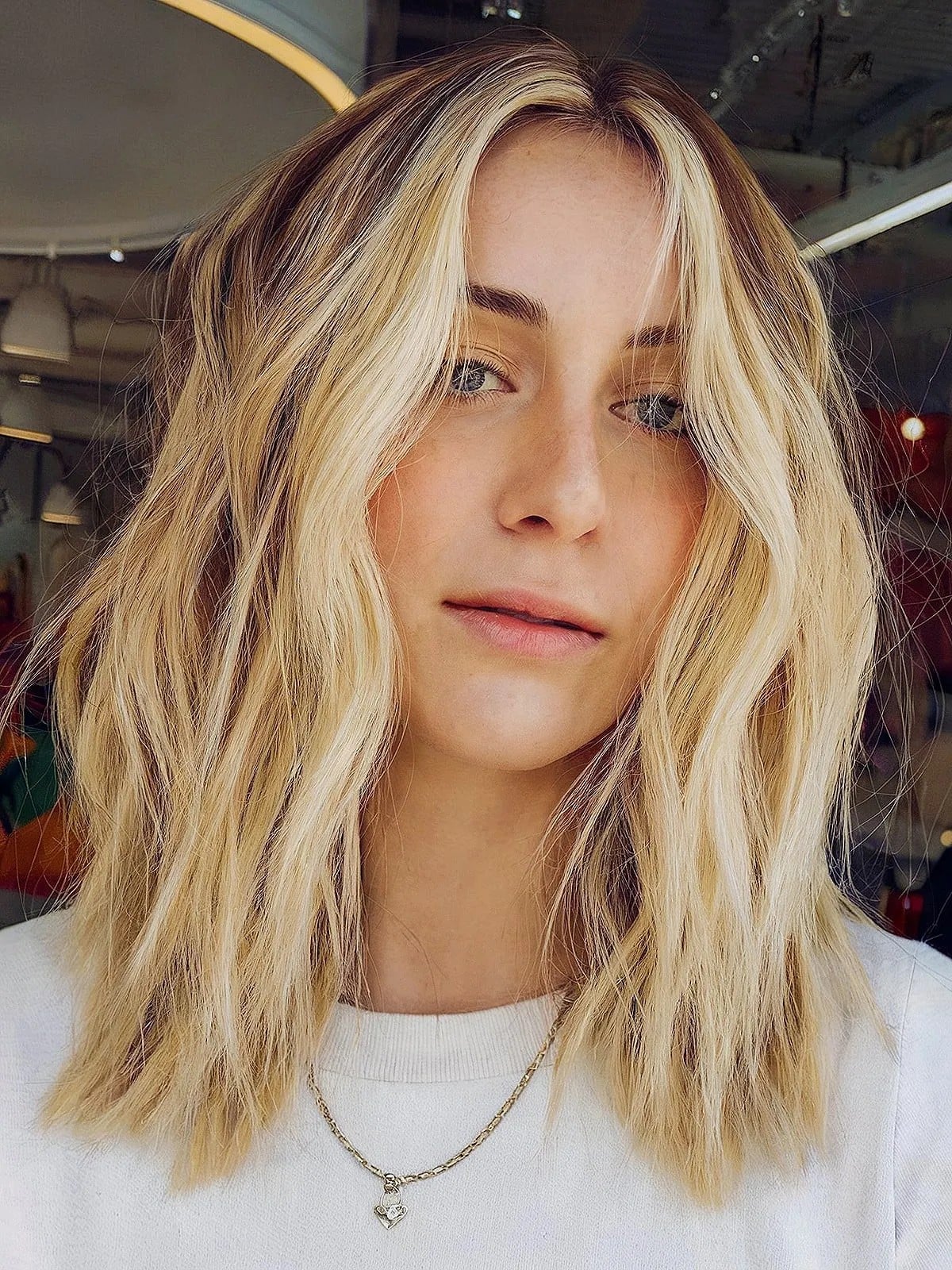
The design trick here is that the face-framing layers start high enough to clear the collarbone, so the lob keeps its weight while the front pieces move independently. A collarbone lob with choppy layers and face-framing layers is essentially two cuts in one: a bluntish base and a softer front edge. Medium density wavy hair that starts at collarbone length takes this best; the face-framing pieces suit most faces by adding a diagonal line. Ask your stylist for: collarbone lob with choppy layers and face-framing pieces.
The real drawback on fine hair is that the choppy ends can split faster than a blunt cut, so a trim every six to eight weeks is the difference between intentional texture and frayed ends. The honey blonde with highlights helps blend the layers further, giving the whole cut a lived-in look that does not need a flat iron every morning. Scrunch a wave-enhancing product into damp hair and let air dry for the intended result.
Mid-Back Shag With Piecey Texture
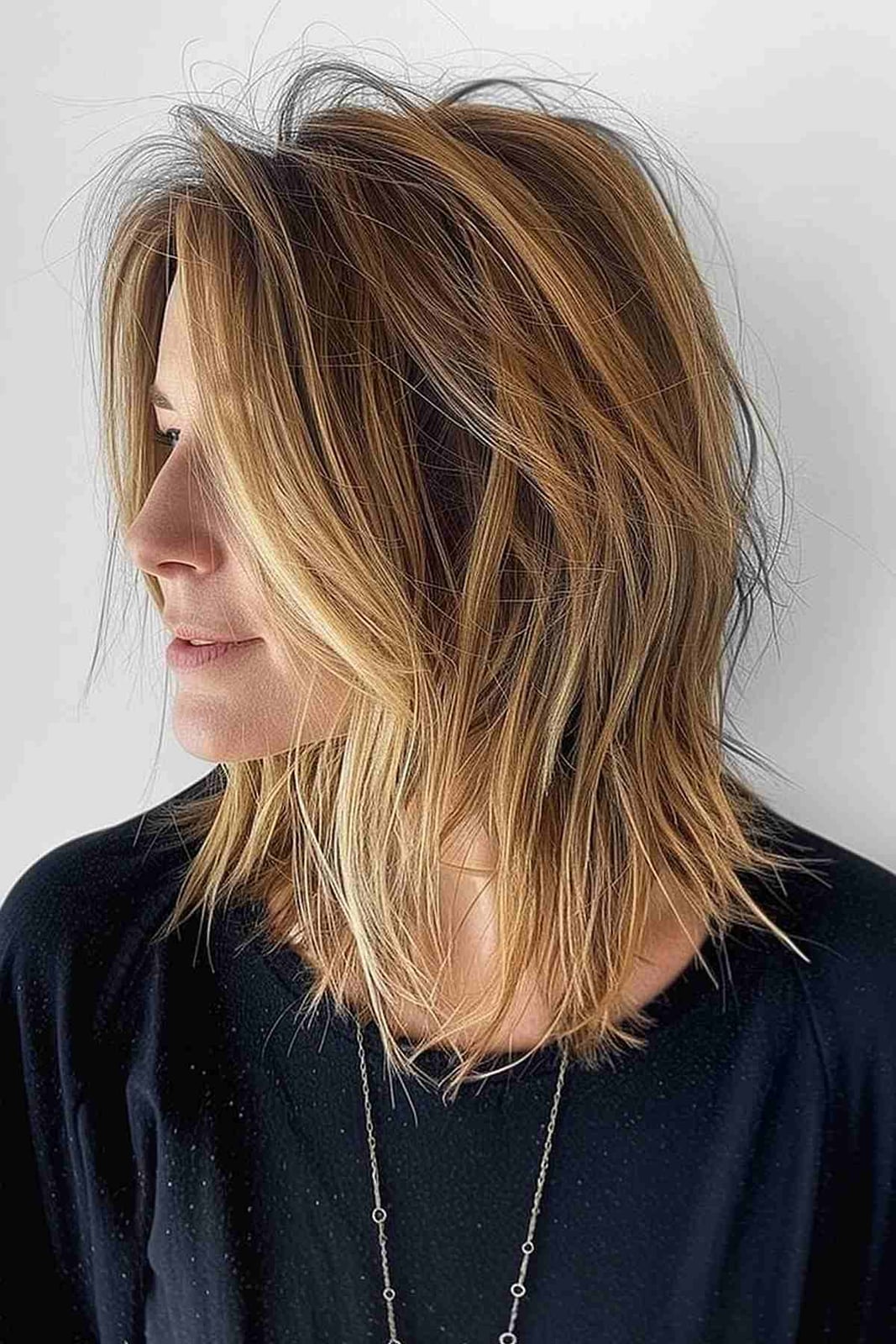
Can fine, wavy hair handle a shag this long? Yes, if the layers are cut to create piecey texture instead of just removing weight. A mid-length haircut with choppy, shag-like layers and prominent face-framing pieces works because the ash blonde with lighter highlights visually separates each layer, so the hair looks textured. Fine wavy hair that starts at mid-back length gains movement without losing its shape. Ask your stylist for: mid-length shag with choppy layers and face-framing pieces.
The piecey finish is the standout feature. A texturizing spray or paste applied to damp ends, then air dried, defines each layer without making the hair look stiff. The highlights do the work of keeping the cut from looking flat, which is the risk with fine hair and a long shag. Trim every eight to ten weeks to maintain the choppy ends.
Long Thick Hair With Choppy Layers
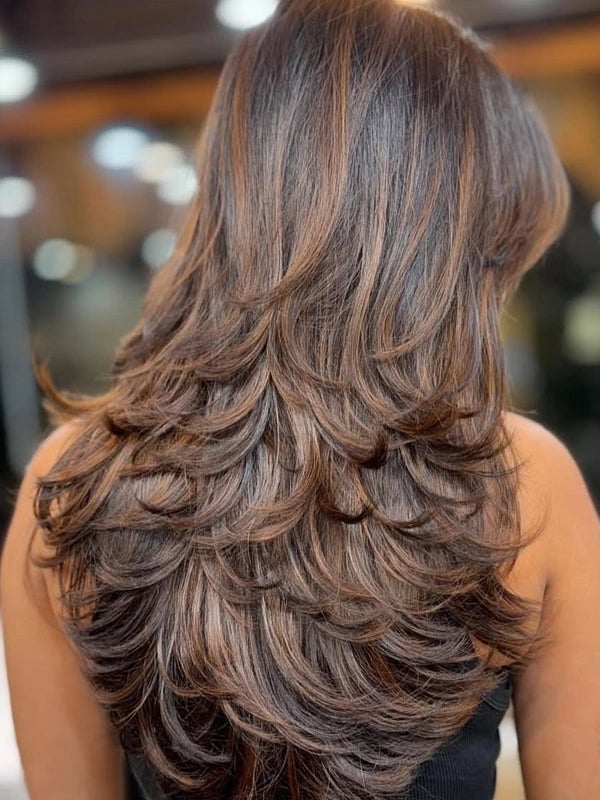
Thick hair has a specific problem: it can look heavy even when it is long, and blunt ends amplify that. Long, thick hair with choppy layers cut to create significant volume and texture, especially towards the ends, solves that by removing weight from the interior while keeping the overall length. The brown with lighter highlights woven throughout enhances the layered effect, giving each wave a place to land. This suits thick hair of any density that can carry length; the choppy layers add movement without sacrificing the feeling of long hair. Ask your stylist for: long thick hair with choppy layers. A volumizing mousse at the roots before blow-drying lifts the crown, and a trim every eight to ten weeks keeps the layers defined.
Neck Length Stacked Bob
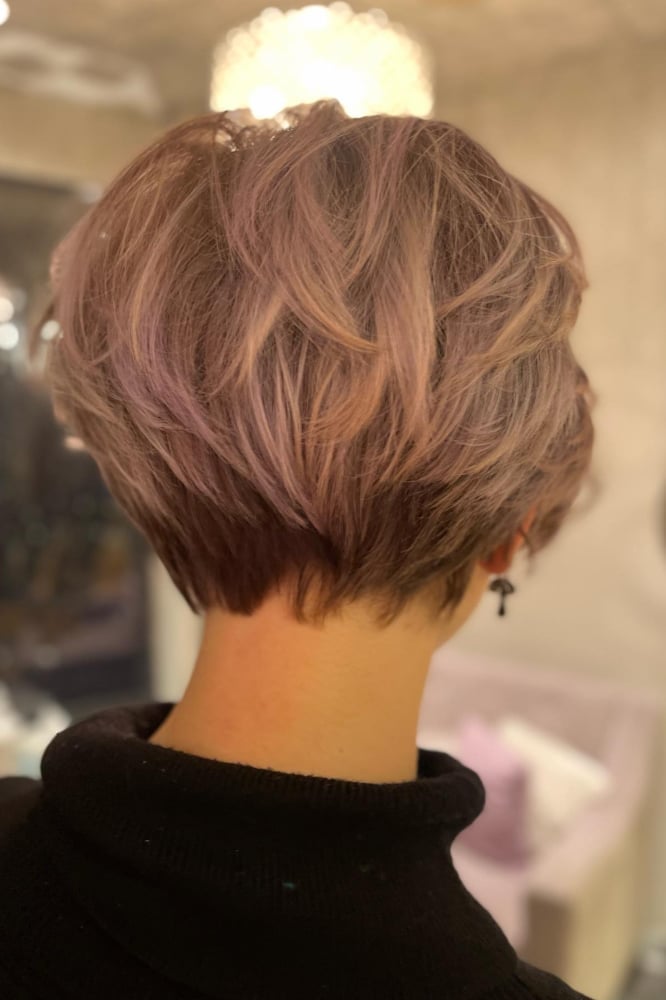
The common mistake with a stacked bob is thinking it can be faked at home with a pair of scissors and a mirror. A neck-length stacked bob with choppy, textured layers requires precision: the stacking needs to graduate evenly from the nape to the crown, or the shape collapses into a triangle. Wavy thick hair that starts at neck length is the ideal candidate because the natural wave supports the stacked volume. Ask your stylist for: neck length stacked bob with choppy layers. This is a salon-only cut, not a DIY proposition, because the back layers need to be sectioned and cut while the head is in a neutral position. A texturizing product on the ends enhances the choppy effect.
Collarbone Shag With Platinum Blonde Roots
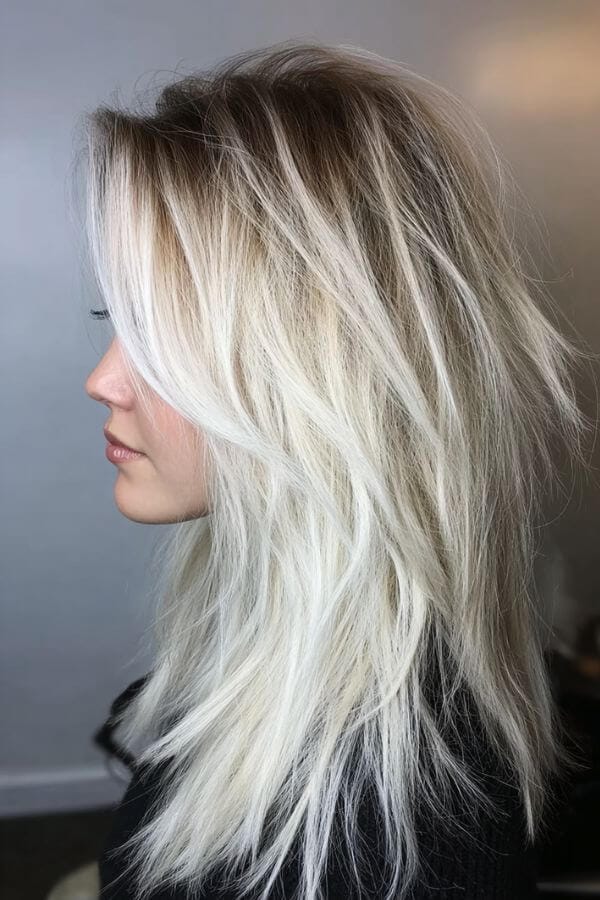
This is not a grow-out, it is a deliberate root shadow. A collarbone-length shag with choppy layers and wispy curtain bangs uses dark roots to anchor the platinum blonde, so the contrast looks planned. Fine wavy hair that starts at collarbone length works here because the shag layers add volume that the fine texture cannot supply on its own. Ask your colorist for: collarbone shag, choppy layers, wispy curtain bangs, dark roots to platinum. The real drawback is brassiness: platinum over dark roots needs a purple shampoo in the rotation and a toning appointment every four to six weeks, or the blonde shifts yellow. The air-dried texture and side parting keep the whole look low-effort, which is the point.
Blonde Collarbone Cut With Curtain Bangs

Can curtain bangs actually add volume instead of just sitting there? On this collarbone cut with fine wavy hair, the answer is yes. The curtain bangs are cut to blend into the longer layers, so they sweep to the sides and create lift at the crown during a voluminous blowout. Subtle blonde highlights add dimension without extra weight. Ask your stylist for: collarbone cut with curtain bangs, voluminous blowout. Blow-dry with a round brush, lifting at the roots for fullness, and plan for a trim every six to eight weeks to keep the bangs from grazing your eyes.
Collarbone Bob With Face-Framing Layers and Blonde With Highlights
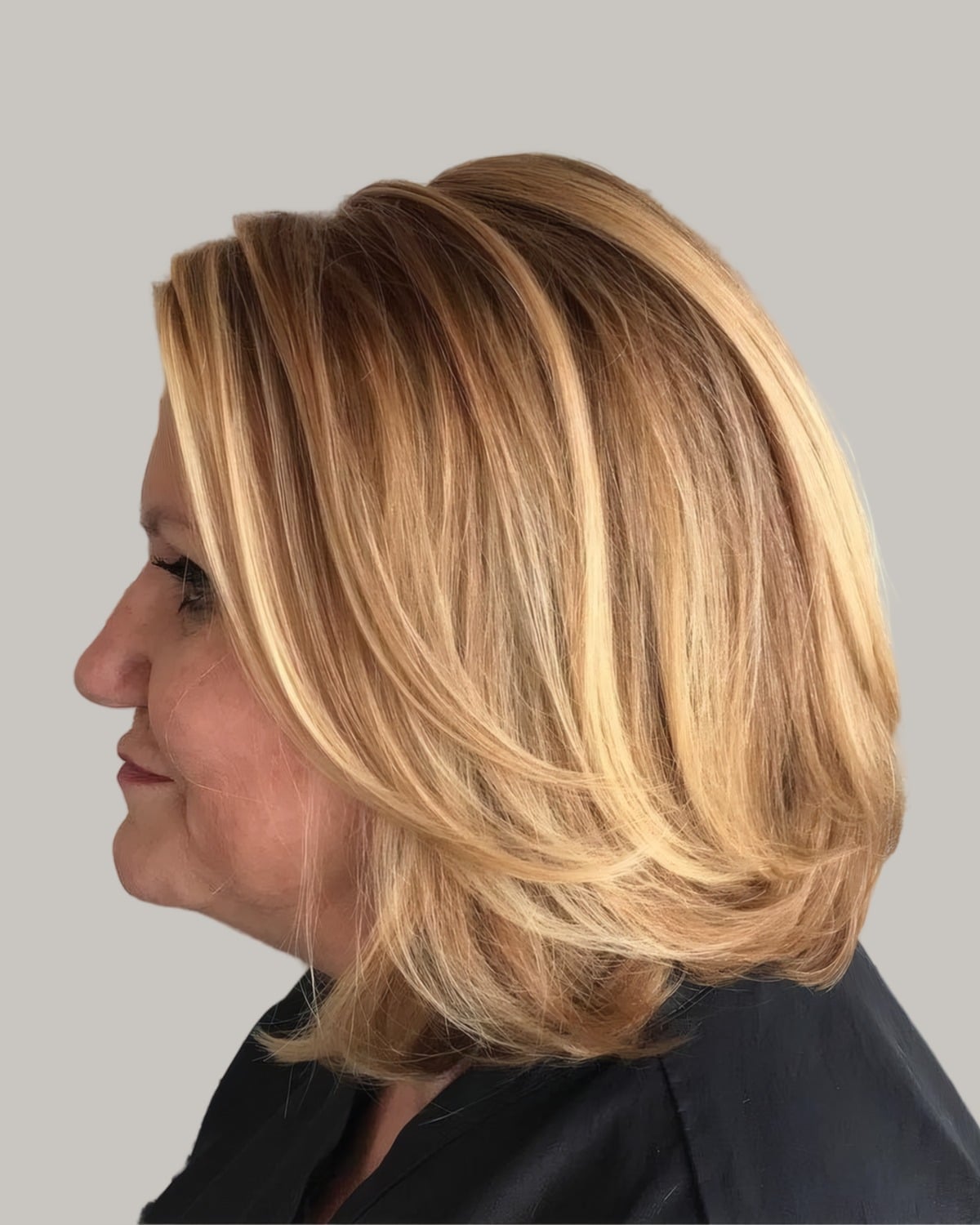
Face-framing layers add movement to a collarbone bob cut with fine, straight hair. Those shorter pieces around the jaw create motion that blunt ends alone cannot deliver. The side view shows how the subtle choppy layers keep the shape from looking flat, while the blonde highlights add dimension at each layer.
The blowout with volume at the roots helps the face-framing pieces curve forward without falling limp. A volumizing spray applied to damp roots before drying gives the lift that fine hair needs. A trim every six to eight weeks preserves the precision of the face-framing sections, because once they grow past the collarbone, the intended shape softens.
Chin Length Choppy Bob With Wavy Texture
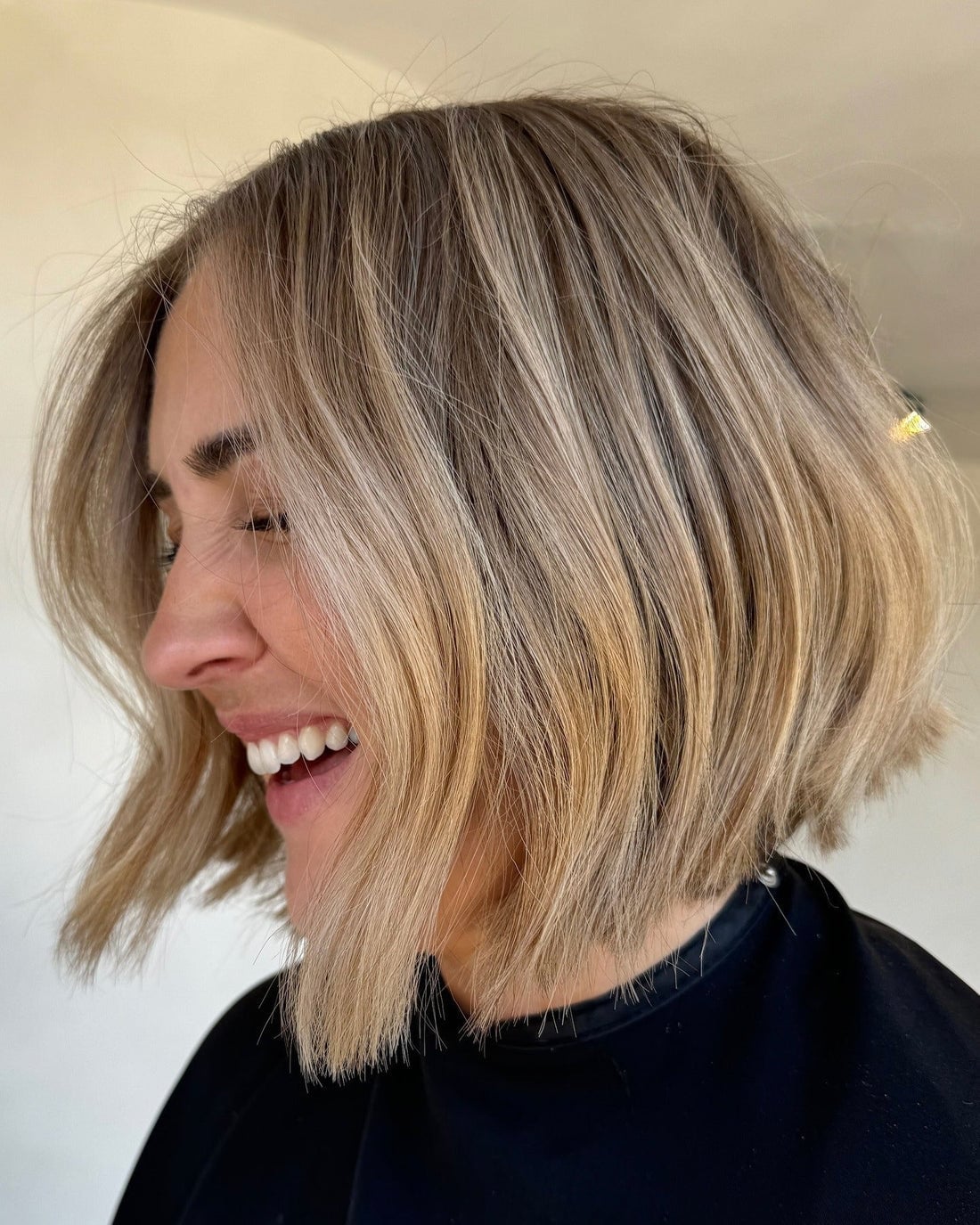
A chin length choppy bob with wavy texture relies on the cut to do the work. The choppy ends create definition in the wave pattern, so each piece lands at a different point around the jaw. The lived-in color with darker roots adds depth that keeps the choppy ends from reading as frayed. Apply a texturizing cream to damp hair and scrunch for definition; the waves hold their shape without extra heat. Trim every six to eight weeks to keep the choppy ends from turning into a single blunt line.
Short Choppy Bob With Wispy Bangs
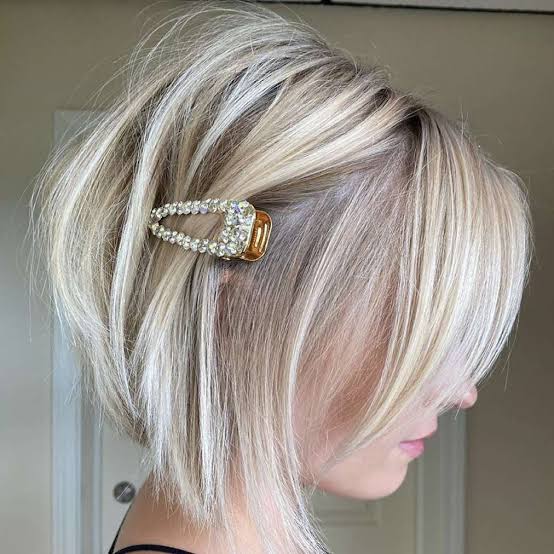
Why trust a professional with a short choppy bob? Because the wispy bangs on fine, wavy hair need a precise graduation. Too heavy and they sit flat; too light and they disappear. A stylist cuts the bangs to blend into the ear-length layers, creating that textured finish without looking bitten. The root shadow on platinum blonde adds contrast that makes the choppy texture pop. This is a salon-only situation: the piecey effect comes from how the layers are angled, not from any home trimming. Plan for a trim every six weeks to keep the shape crisp.
Ear Length Stacked Bob, Dark Brown
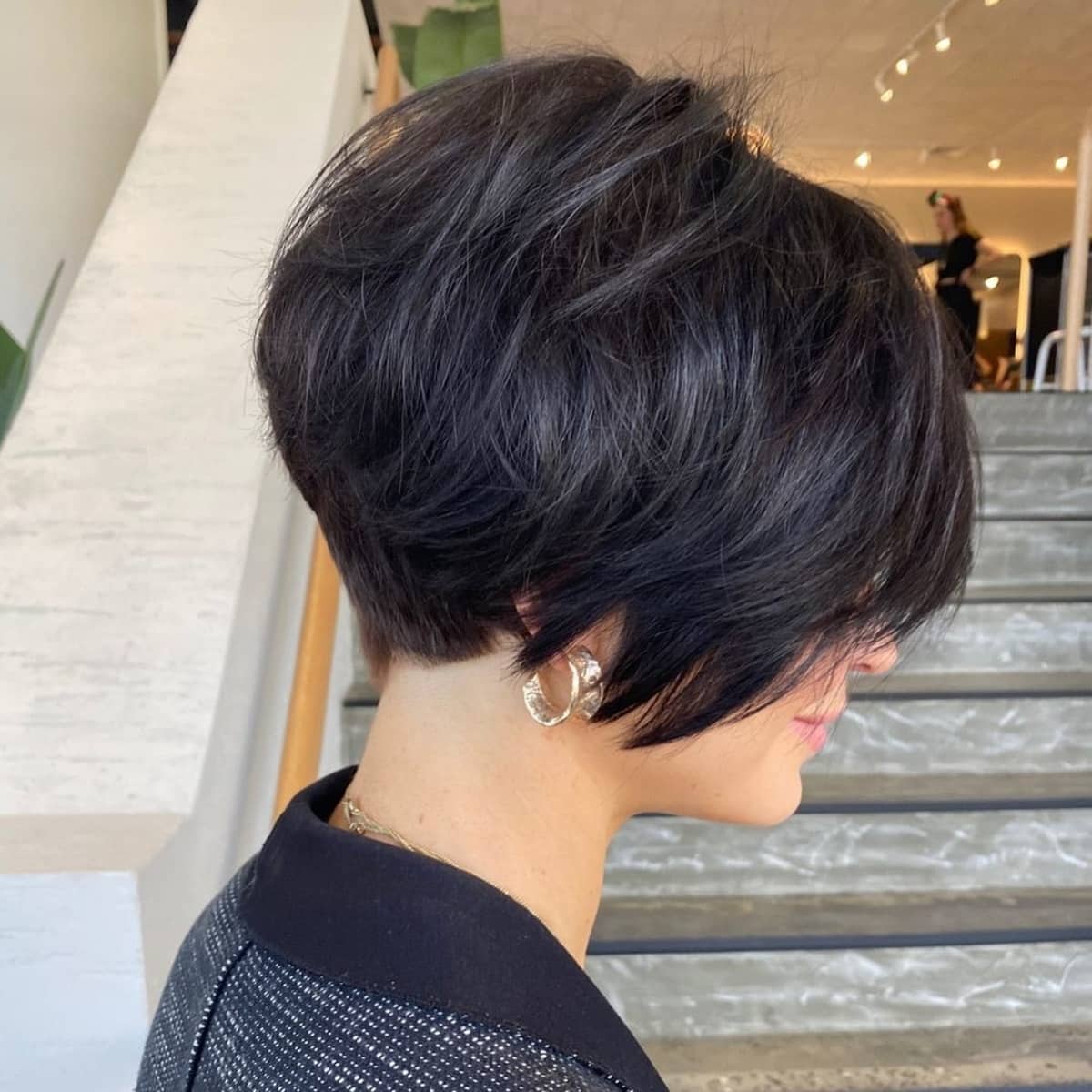
The stacked construction on an ear length bob creates volume where thick, straight hair can otherwise sit like a solid block. The back is cut shorter than the front, building a wedge of layers that push the hair outward. The side view reveals how the choppy layers break up the density, preventing a helmet-like silhouette. A smooth blowout with a side parting keeps the shape sleek without fighting the natural weight. A trim every six to eight weeks maintains the stacked angle; skip a trim and the back loses its lift.
Ear Length Choppy Pixie With Choppy Bangs

This choppy pixie haircut leans on its textured finish to make the cut, with ear-length layers and choppy bangs that break up the silhouette. The reddish-brown base with subtle highlights gives the fine, wavy hair some depth, though the same texture that makes the choppy layers pop can turn rebellious. Frizz is a real risk, so a texturizing paste or wax is your friend for defining the pieces. Ask your stylist for an ear-length choppy pixie with choppy bangs, and plan on a trim every four to six weeks to keep the shape sharp.
Final Thoughts
Fine hair benefits from shorter, stacked shapes or blunt-cut layers that create density at the baseline. Thicker hair can handle longer, more diffused choppy layers to remove weight and add movement without sacrificing length.
- Trim every 6-8 weeks to maintain the choppiness and shape.
- Use texturizing spray or sea salt spray on damp hair for enhanced waves and piecey-ness.
- Air-dry or use a diffuser on a low heat setting to preserve natural texture and prevent frizz.
- Apply a heat protectant before using styling tools; dry shampoo can refresh styles between washes.
Embrace the texture, own the chop.
