

The shag haircut is back, and for curly hair it is a surprisingly practical match. The graduated layers and defined shape work with natural texture rather than against it, giving curls room to move without turning into a triangle.
Across 31 variations of the simple curly shag, you will see cuts that solve the usual struggles: fine curls that fall flat, thick curls that get too heavy, and bangs that refuse to cooperate. The range goes from chin-length bobs to mid-back lengths, with options for curtain bangs, full fringes, and lived-in color. Every version starts from the same premise: let the curl set the shape.
Chin Length Curly Shag With Full Fringe

A chin-length shag with a full fringe sounds like a lot of hair, and it is, but that is the point. The side part keeps the dense dark brown curls from turning into one solid block, while the fringe lands somewhere between playful and practical. This cut works best for thick, curly hair that already has some weight to it, because the shag layers remove bulk without losing shape. Ask your stylist for: chin length shag, full curly fringe, side part. The full fringe does the heavy lifting for round and oval face shapes, shortening the visual length of the face. Air drying is the only move here, and the fringe needs a trim every four to six weeks to stay out of your eyes.
Textured Chin Length Shag With Curly Bangs
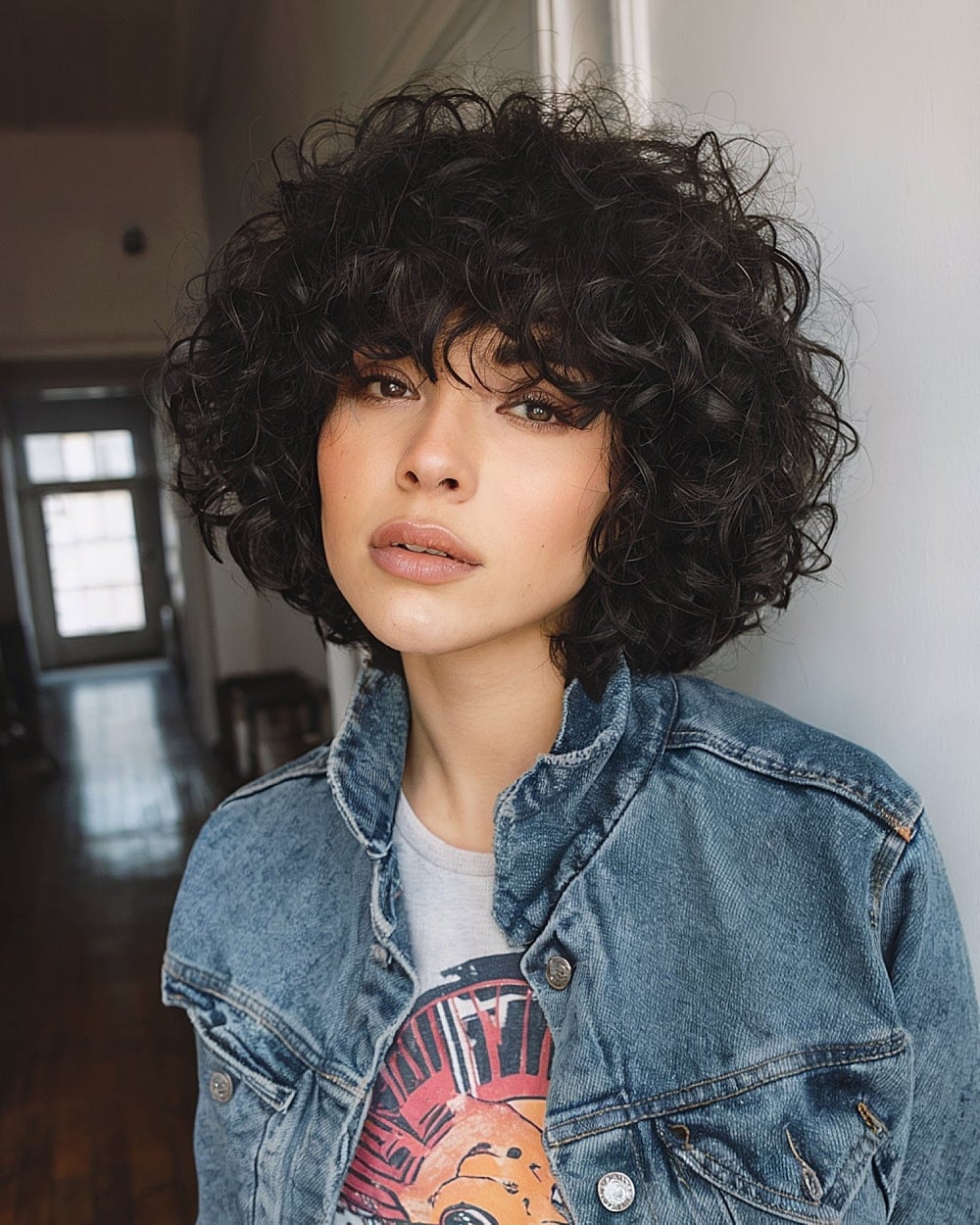
How do you explain a textured chin-length shag to someone who has never cut curly hair? Start with the shape. The dark brown curls end at the chin, but the layers are cut short enough that the hair does not sit flat, it stacks. The full fringe of curly bangs is cut separately so it curls forward instead of blending into the sides. Ask your stylist for: chin length shag, full curly bangs, side part. The side part adds volume on one side, which can soften a square jawline. You want the stylist to point-cut the ends so each curl has its own termination point rather than a blunt line. A trim every six to eight weeks keeps the shape from growing into a triangle.
Shoulder Length Dark Brown Curly Shag
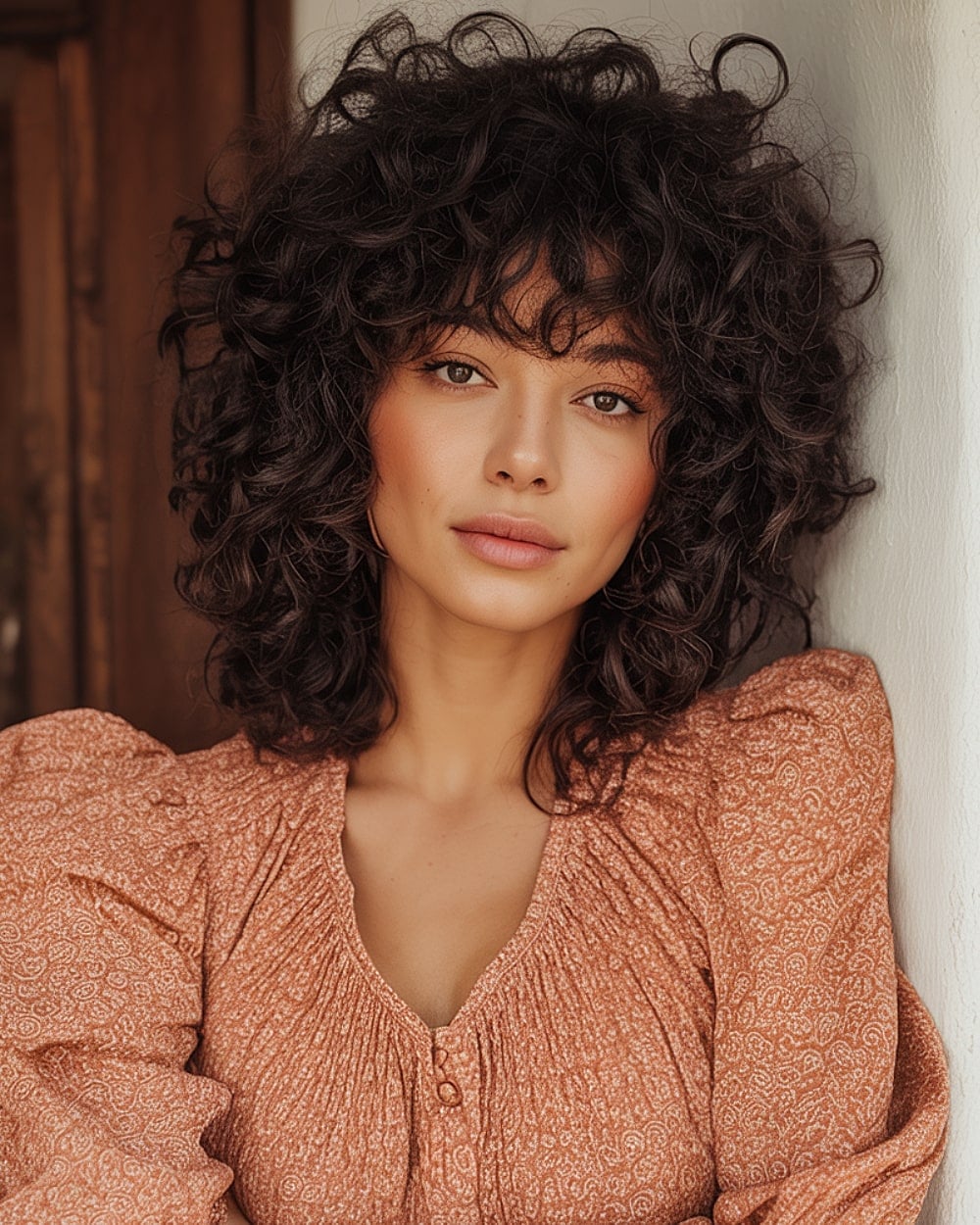
A shoulder-length curly shag relies on the middle part to split the volume evenly, and the dark brown curls here do exactly that. The face-framing bangs are cut to hit just below the cheekbones, which gives the front some movement without losing the overall density.
Daily wear is straightforward: the curls hold their shape from a diffuser or air drying, but the middle part means you cannot hide uneven growth on one side. The layers need a trim every six to eight weeks, otherwise the bottom edge starts to look heavier than the crown. For longer face shapes, the shoulder length and middle part add width at the sides, balancing the proportions.
Defined Curls On Shoulder Length Shag

The shag cut is not usually associated with perfect curl definition, but here it is. The dark brown shoulder-length hair has layers cut so each curl coil sits on its own, rather than tangling into its neighbor. The face-framing bangs are cut to curve around the temples, and the middle part keeps the distribution even. Ask your stylist for: shoulder length shag, face-framing curly bangs, middle part. The trick is in the layering pattern: shorter interior layers lift the crown, while the perimeter stays long enough to weigh the ends down. This cut elongates round faces by drawing the eye vertically. A curl cream applied to damp hair is all it takes to maintain the definition.
Light Brown Shag With Textured Layers
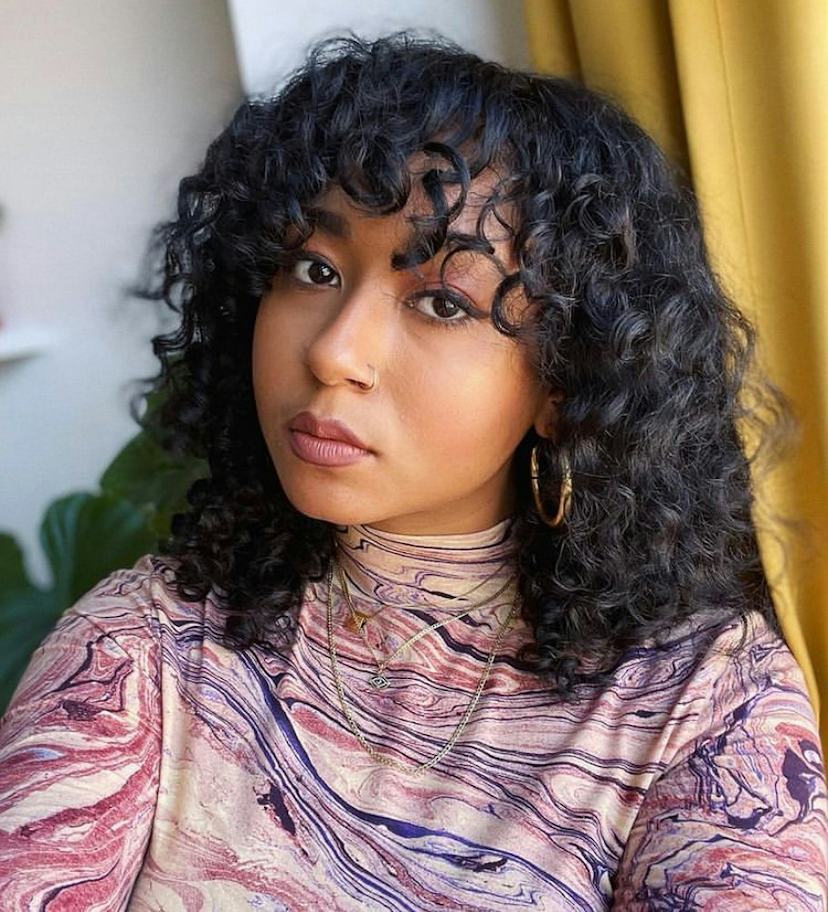
This is not a uniform shag where every layer hits the same spot. The light brown base has highlights that create variation across each textured layer, so the cut looks airier than a solid dark version would. The face-framing bangs are cut to blend into the sides, and the middle part opens up the center of the face.
What makes it work is the contrast between the lighter color and the volume of the curls. The textured layers are cut with a point-cutting technique that removes weight from the ends, so the hair moves without feeling heavy. Ask your stylist for: shoulder length shag, face-framing bangs, light brown. The layers soften a square jawline by adding width at the cheekbones. A texturizing spray on damp curls enhances the separation between each layer.
Platinum Blonde Shag With Curtain Bangs
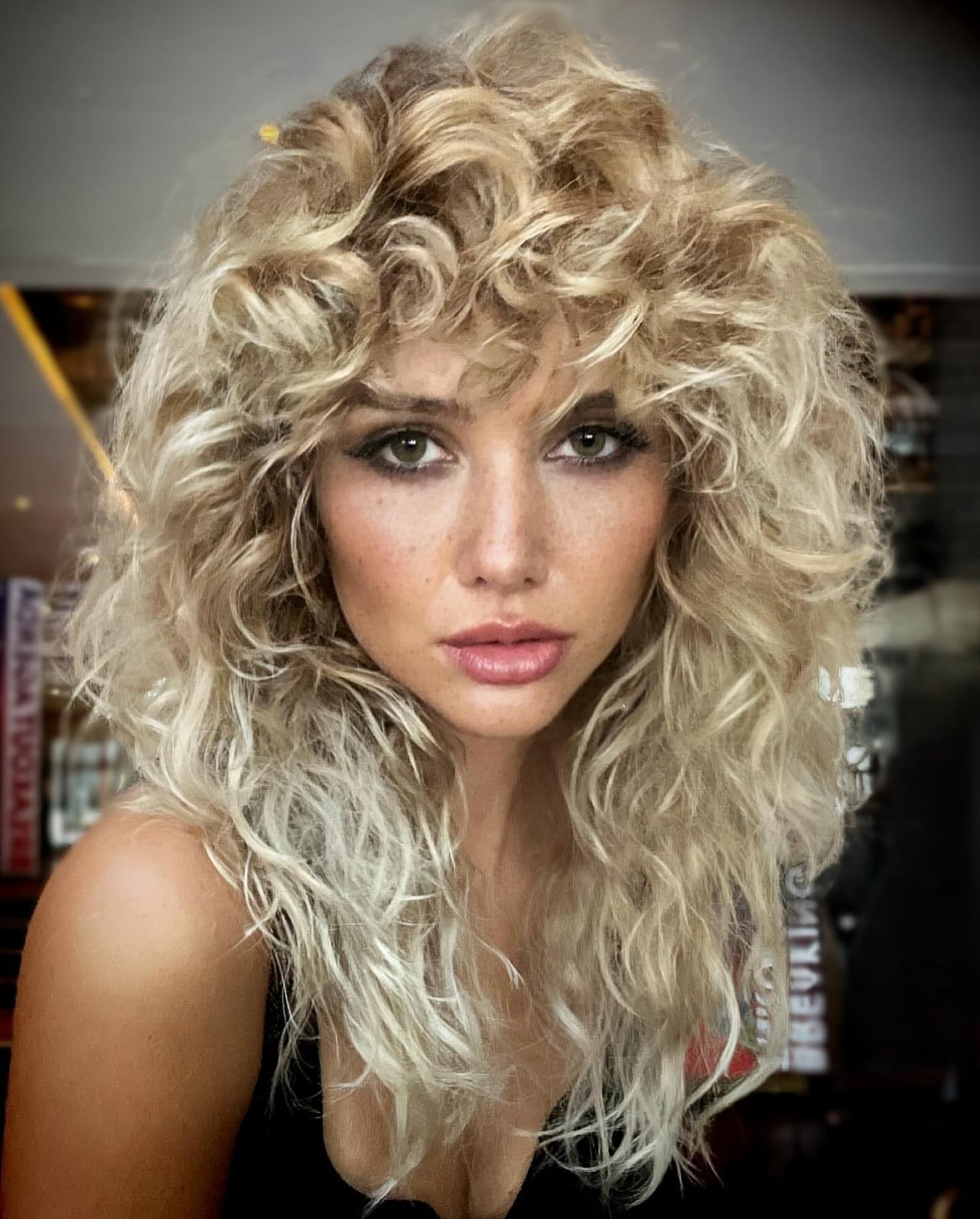
Should you go platinum or stick with a deeper blonde? A shoulder-length shag with curtain bangs makes the decision easier: you can have both. The platinum blonde shade is bold, but the darker roots keep it grounded, so the grow-out looks intentional. The curly texture and air-dried finish add volume without extra heat styling. Ask your stylist for: shoulder length shag, platinum blonde, curtain bangs, middle part. Thick, curly hair at shoulder length works best here, and curtain bangs suit most face shapes. Use a purple shampoo to keep the tone from turning brassy, and diffuse to define the curls. This is a statement look for a fashion-forward season.
Voluminous Shoulder Length Shag
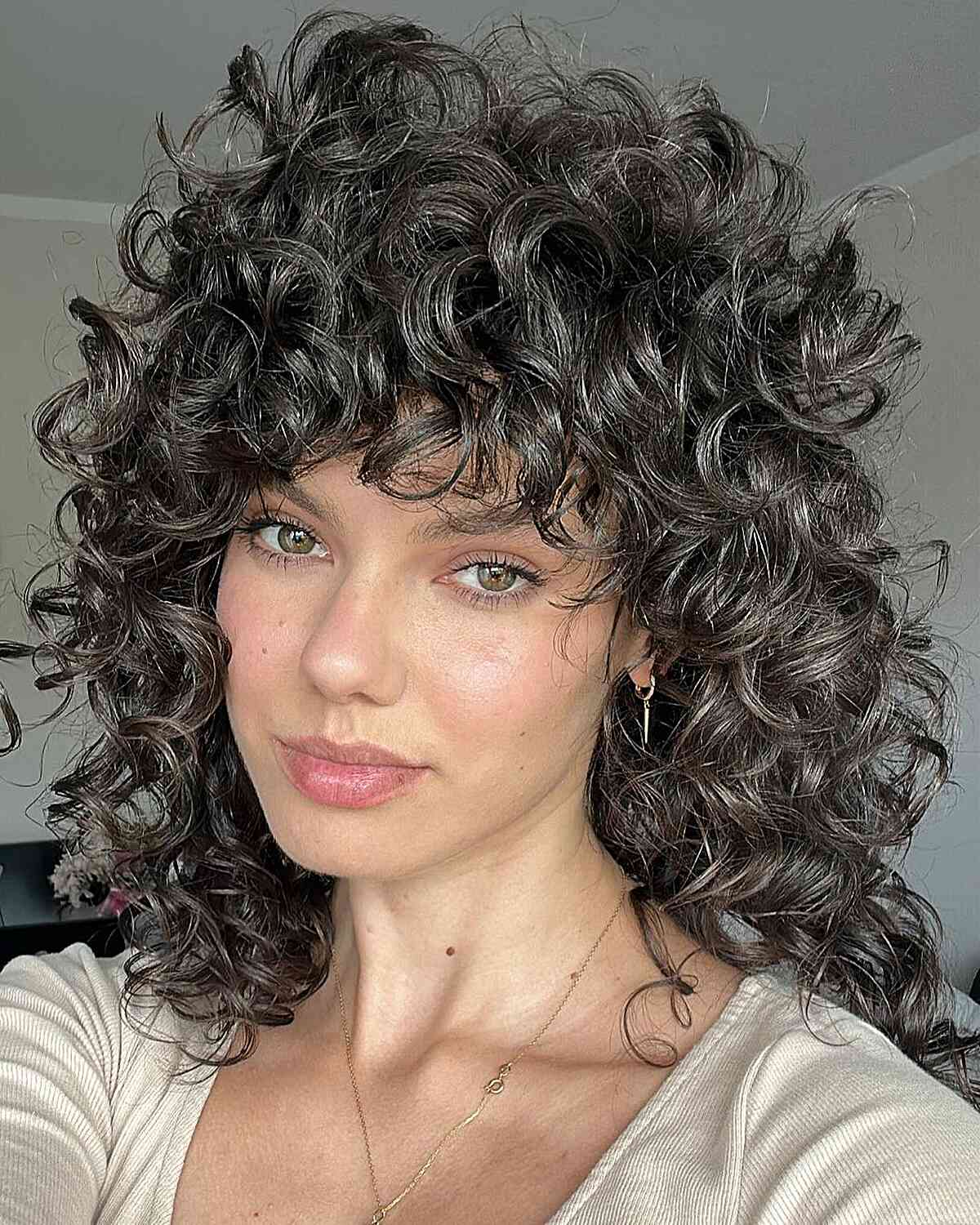
The design of a voluminous shoulder length shag with full bangs and a middle parting relies on thick, curly hair to create that bounce. The dark brown base with subtle lighter pieces adds depth without overpowering the shape. This cut genuinely flatters those with thick, curly hair at shoulder length; the full bangs work best on oval and heart faces. Ask your stylist for: shoulder length shag, full bangs, dark brown with subtle highlights. Anyone with finer or straighter hair should pass, as the volume depends on natural density and curl pattern.
Reddish-Brown Shag With Bouncy Curls
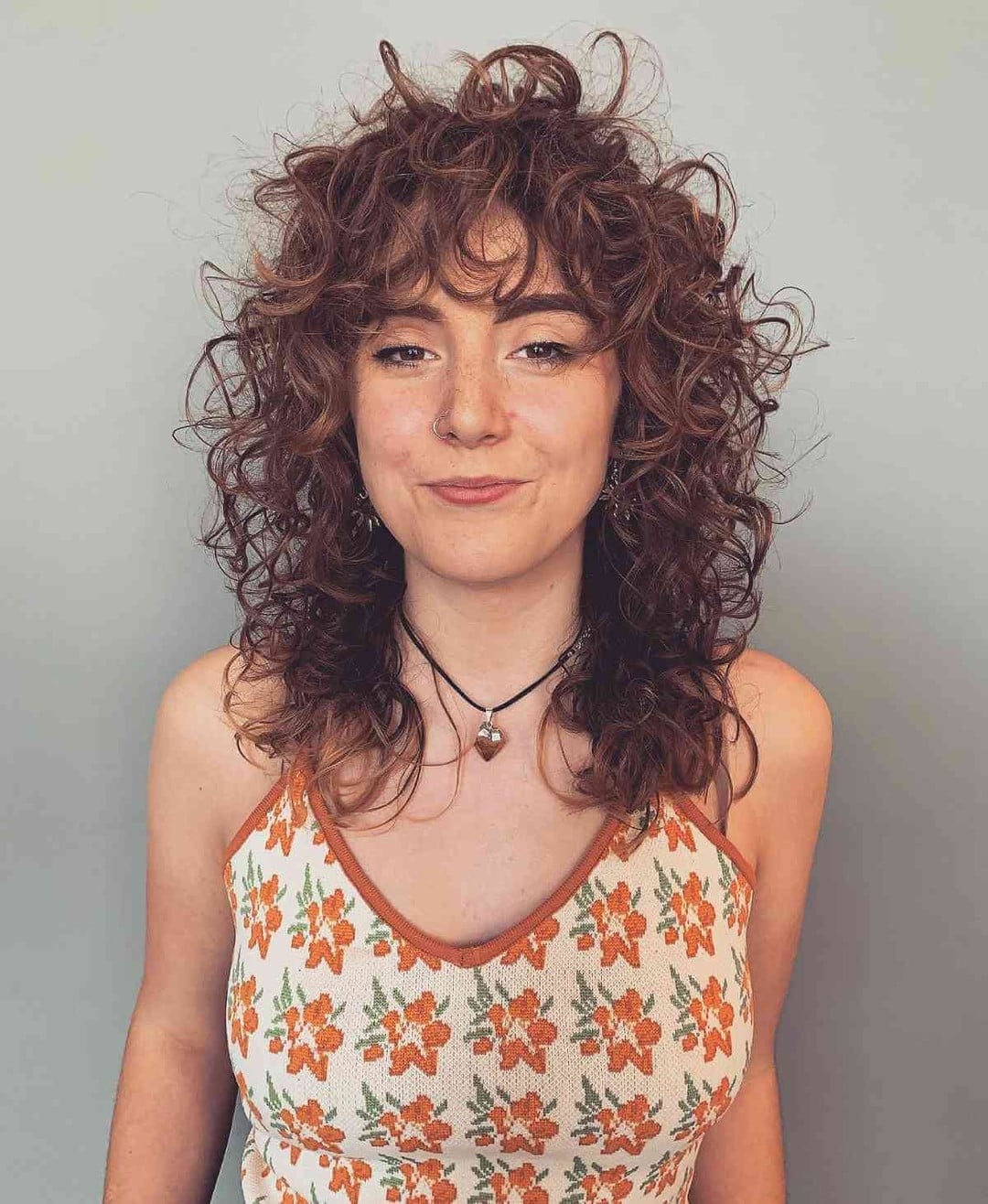
Defined, bouncy curls on a reddish-brown shag with copper highlights require more than a good cut. The shoulder-length shag with short, curly bangs and a side parting gives the shape, but the real work is in the air-dried finish. A curl-defining cream applied to damp hair, followed by scrunching, locks in the bounce without crunch. The reddish-brown base with lighter copper pieces adds dimension that makes each curl stand out. Ask your stylist for: shoulder length shag, short curly bangs, reddish-brown with copper. To keep the definition, trim every six to eight weeks. The short bangs need a touch-up more often than the rest of the cut.
Dark Brown Shag With Curtain Bangs

The technique behind a dark brown shag with curtain bangs and a middle parting starts with the cut. The shag layers are cut to follow the natural curl pattern, so the defined curls stack without losing shape. The curtain bangs are cut longer at the sides to blend into the shoulder-length body, softening the overall silhouette. The dark brown base with subtle lighter brown highlights adds dimension without distracting from the texture. Ask your stylist for: shoulder length shag, dark brown, curtain bangs, middle part. Thick, curly density is key here, as the layers rely on volume to hold their shape.
Medium Density Shag With Defined Curls
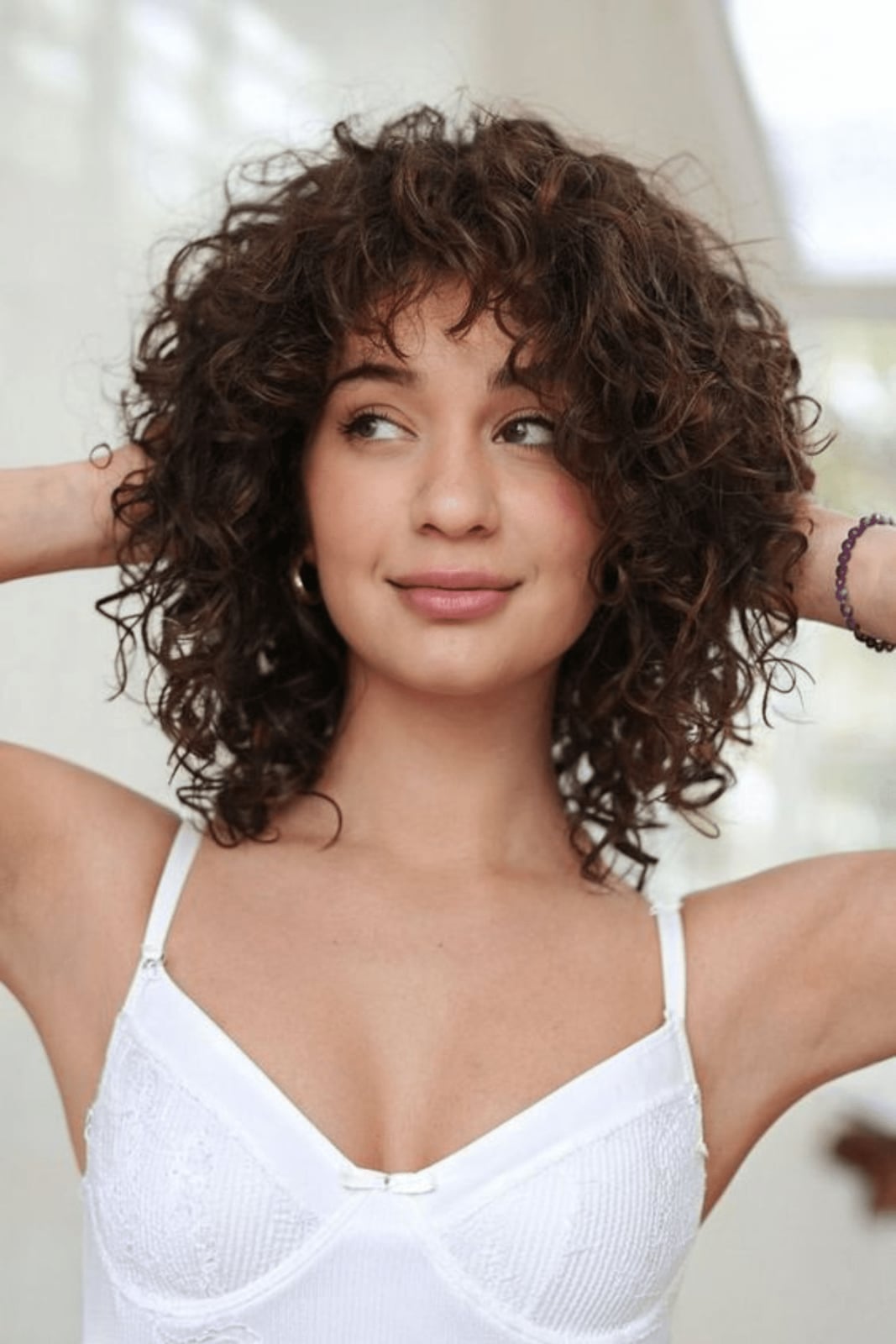
What makes a medium density shag with defined curls at collarbone length work is the balance of weight and movement. The dark brown base with lighter pieces adds dimension without overwhelming the medium texture. The defined curly bangs and air-dried finish keep the cut from looking flat. Ask your stylist for: collarbone length shag, defined curly bangs, dark brown with lighter pieces. The collarbone length is long enough to show the shag layers but short enough to keep the curls bouncy. Oval faces benefit most from the curly bangs, which hit just above the brows.
Medium Brown Shag With Wispy Bangs

Want wispy bangs without a full fringe? The trick is in how you ask. A collarbone-length medium brown shag with blonde highlights and a side part already creates texture, but the wispy bangs are what keep it from feeling heavy. They blend into the layers instead of sitting as a separate curtain, so the whole cut moves together. Medium density curly hair holds this shape well because the wispy ends don’t weigh down the curl pattern. Ask your stylist for: collarbone length shag, wispy bangs, medium brown with blonde highlights. To soften a square face, have the bangs cut to graze the cheekbones instead of sitting straight across.
Requesting wispy bangs is a conversation, not a command. Tell your stylist you want the bangs to be see-through at the ends and to feather into the side layers. A light hold spray keeps them from drifting into your eyes, but the real maintenance is the trim every six to eight weeks. Let the bangs grow a quarter inch past your comfort zone before booking, because that slight length is what gives them that airy, not blunt, finish.
Warm Brown Collarbone Shag With Balayage
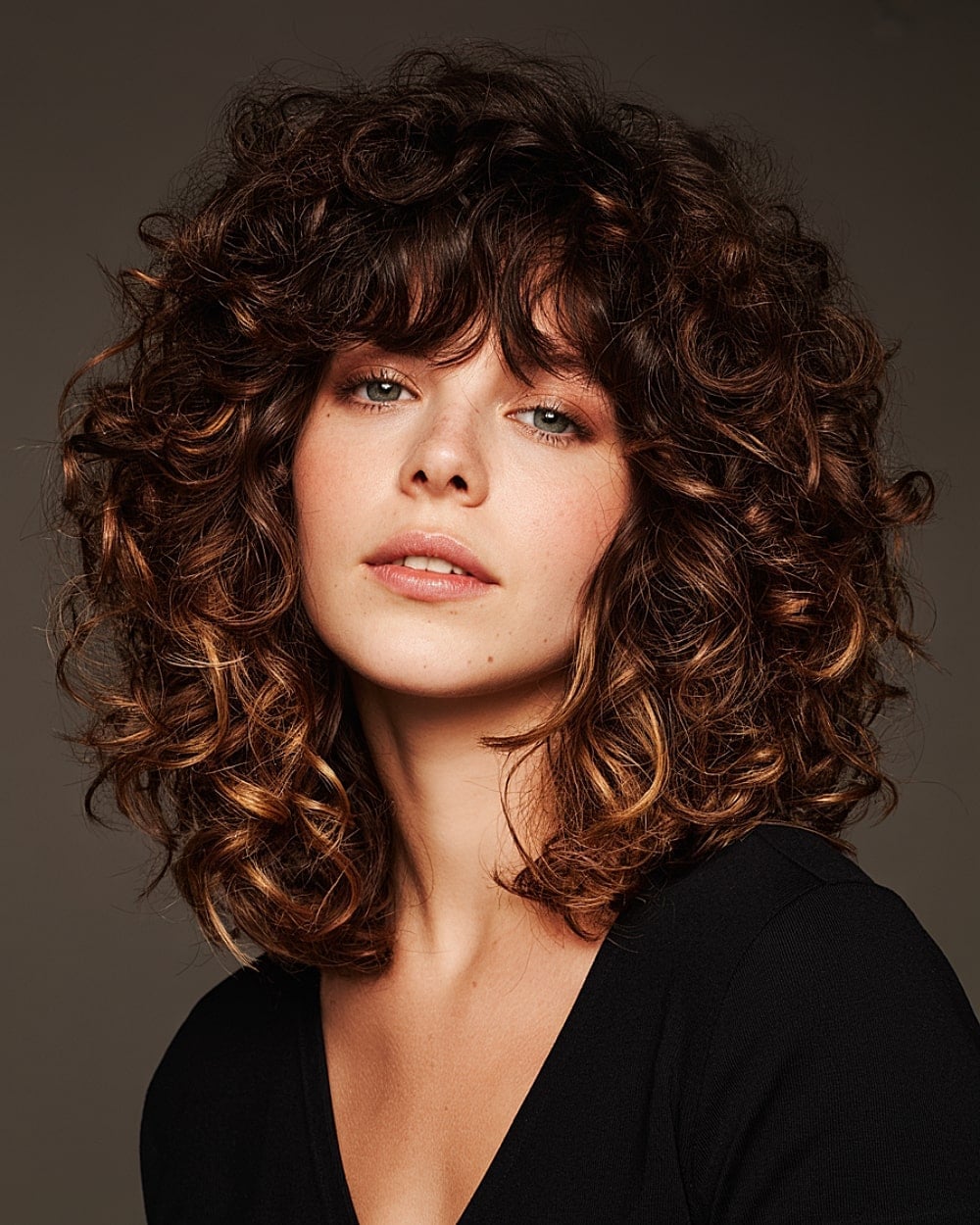
A solid warm brown shag is fine. A warm brown shag with balayage is better. The difference is dimension: the balayage highlights catch light at the ends of the curls while the base stays rich near the roots, so the cut looks deeper than it actually is. This collarbone length shag with full bangs and a side part works best on thick curly hair, where the balayage can travel through multiple layers without getting lost. Ask your stylist for: collarbone length shag, warm brown with balayage, side part.
For fall and winter, the warm brown base keeps the color from going ashy, and the balayage saves you from root touch-ups every month. The air-dried texture in the photo is the point: the balayage shows up in the curls without needing a blowout. A color-safe shampoo and a trim every six to eight weeks are all this cut asks of you.
Collarbone Shag With Curtain Bangs
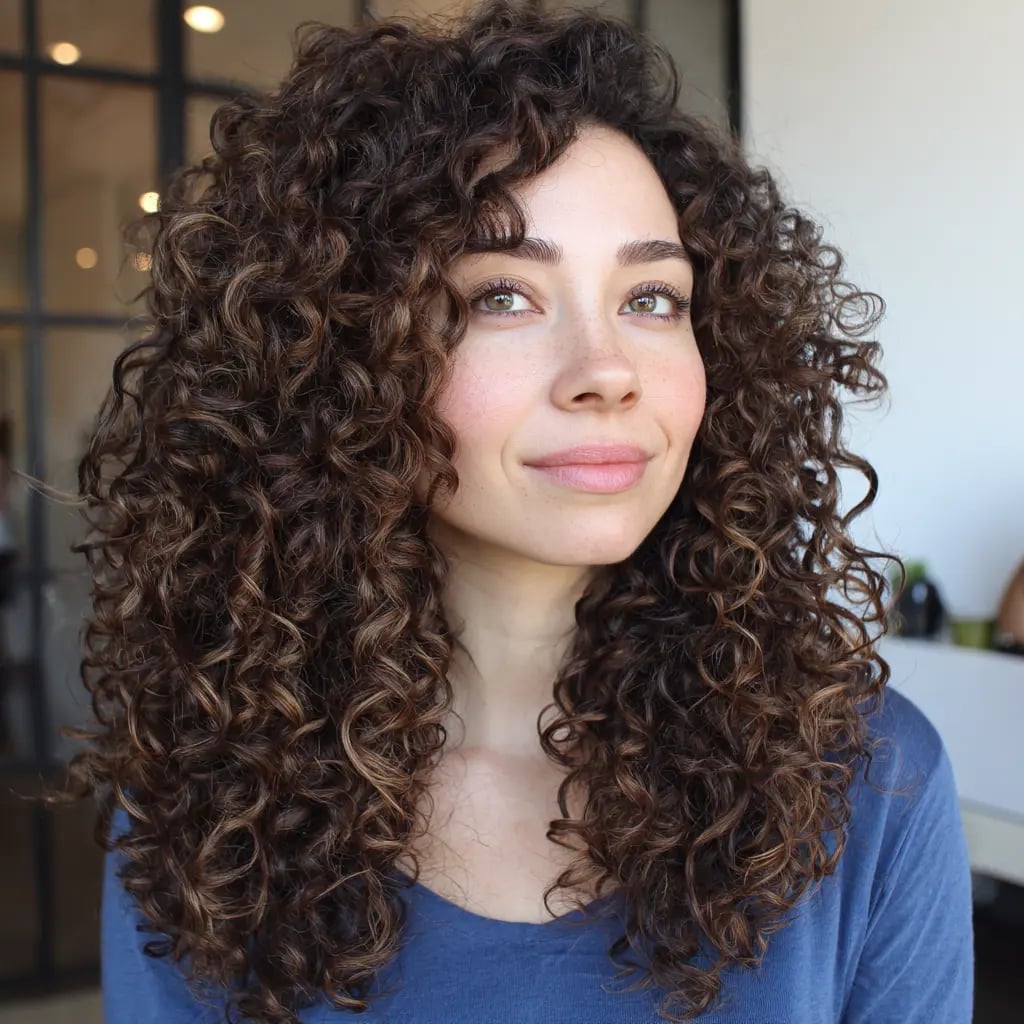
Curtain bangs on a curly shag require a specific compromise. They need to be long enough to curl without shrinking into micro-bangs, but short enough to actually frame the face. This collarbone-length dark brown shag with subtle lighter highlights gets it right: the curtain bangs hit below the cheekbone when dry, and the side part lets them sweep in one direction. Thick curly hair at this length has enough weight to keep the bangs from bouncing up too high. Ask your stylist for: collarbone length shag, dark brown with highlights, curtain bangs, side part.
The upkeep is where most people bail. Curtain bangs on curly hair need a trim every six to eight weeks, and you cannot skip the curl cream on wash days. Apply it when hair is soaking wet, then air dry. The bangs will settle into their natural S-shape, and the rest of the shag will follow. No diffuser required.
Collarbone Shag With Face-Framing Layers
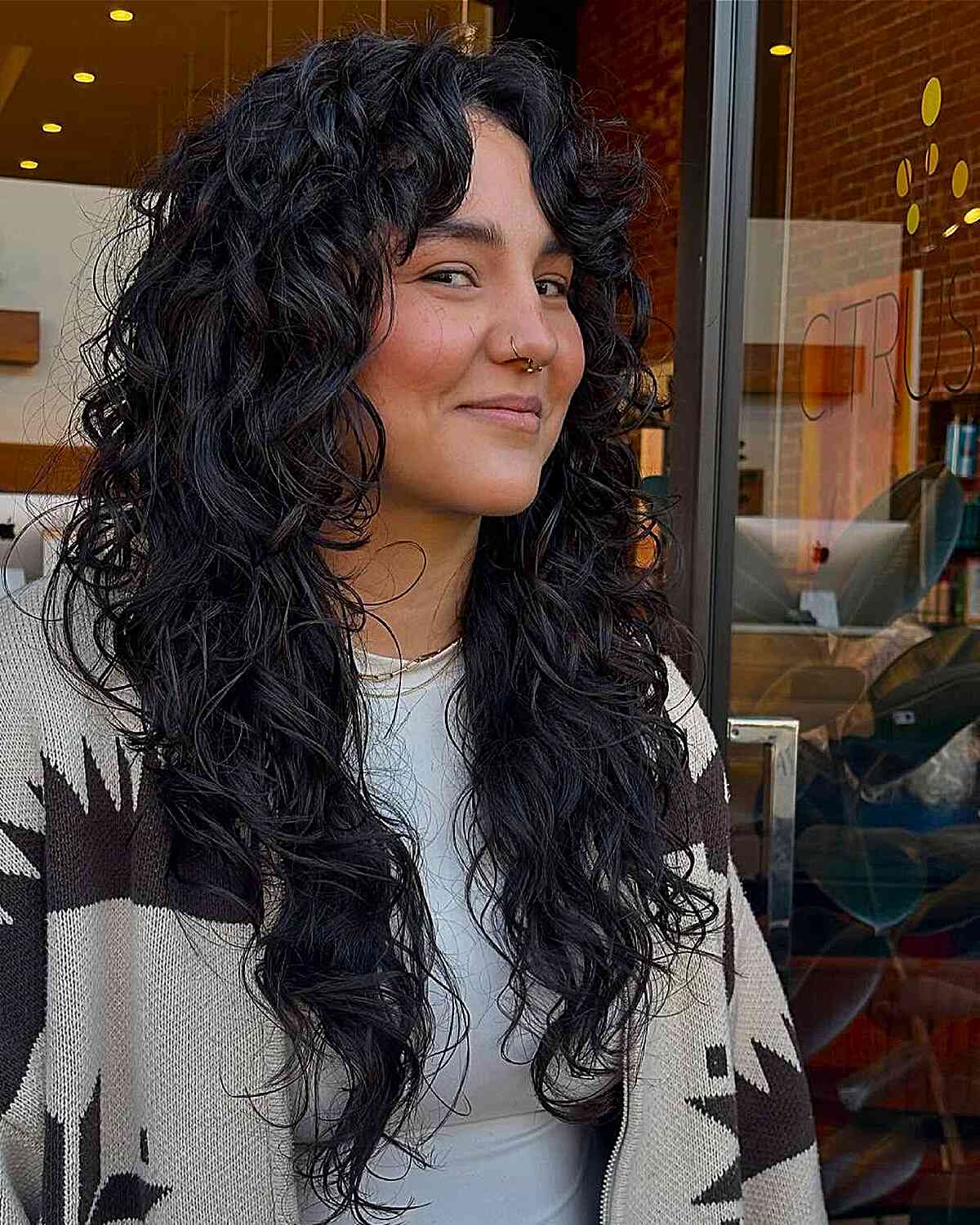
Face-framing layers on a shag are not the same as standard layers. Standard layers remove weight evenly; face-framing layers are cut shorter at the front and graduated into the length, so the curl pattern stacks around the jaw and cheekbones. This collarbone-length dark brown shag with lighter balayage uses that technique to keep the front of the hair lighter than the back. Medium density curly hair benefits from this because the layers prevent the curls from clumping into one heavy triangle shape. Ask your stylist for: collarbone length shag, face-framing layers, dark brown with balayage, side part.
The balayage reinforces the technique: the lighter pieces land exactly where the layers are shortest, drawing the eye to the face. A side part lets the shorter layers on one side fall forward while the other side stays tucked. A texturizing product on the ends after air drying gives the layers separation without stiffness.
Collarbone Length Thick Curly Shag
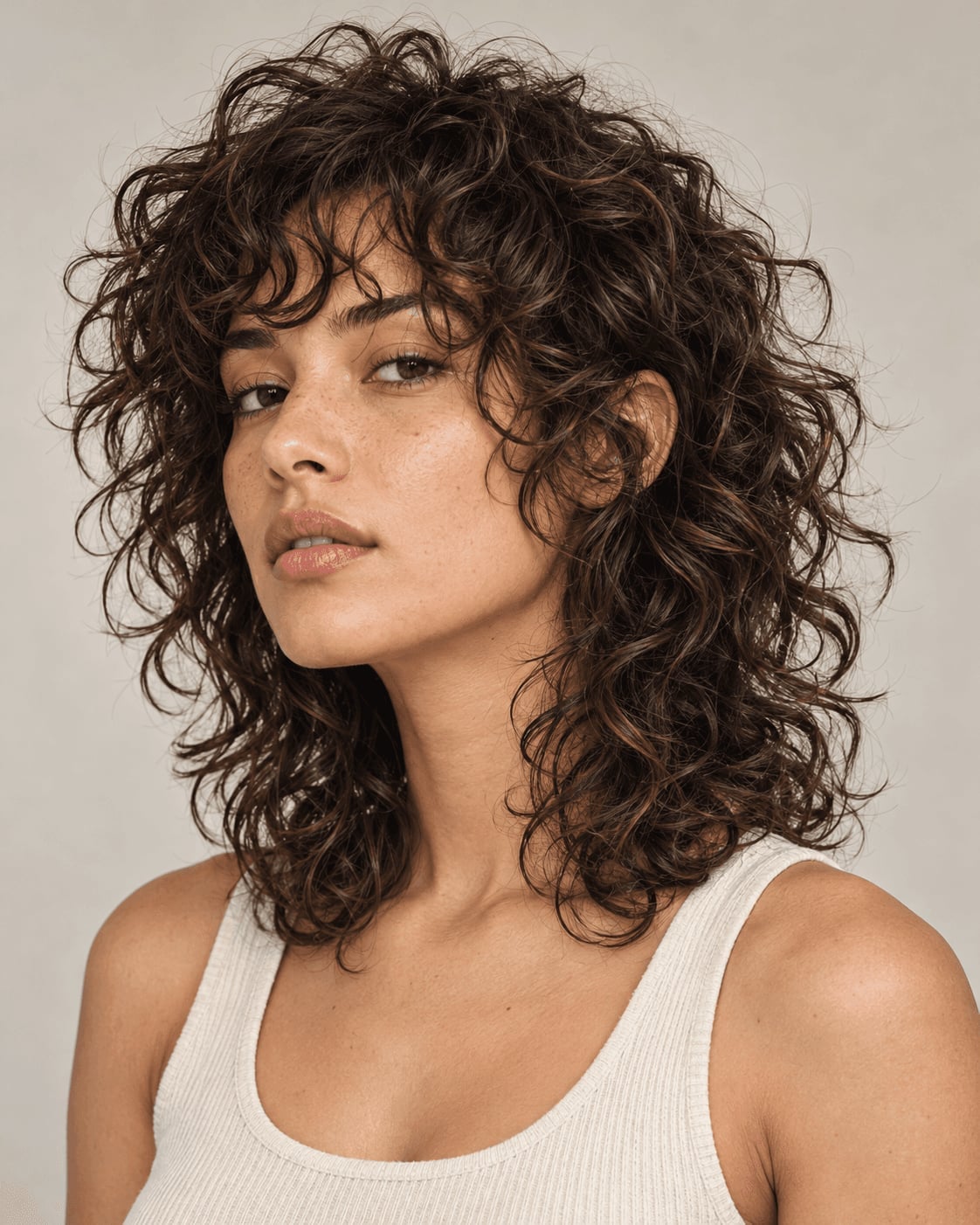
A collarbone-length dark brown curly shag with full bangs and a middle parting is a test of your stylist’s layering skills. The middle part means the hair falls symmetrically, so each side needs the same internal structure. The full bangs sit straight across, which works on oval and heart faces because they shorten the forehead without widening it. Thick curly hair at this length has enough density to hold the shape, but the layers need to be carved out from the inside to prevent a mushroom silhouette. Ask your stylist for: collarbone length shag, full bangs, dark brown with subtle highlights.
Collarbone Shag With Lived-In Texture
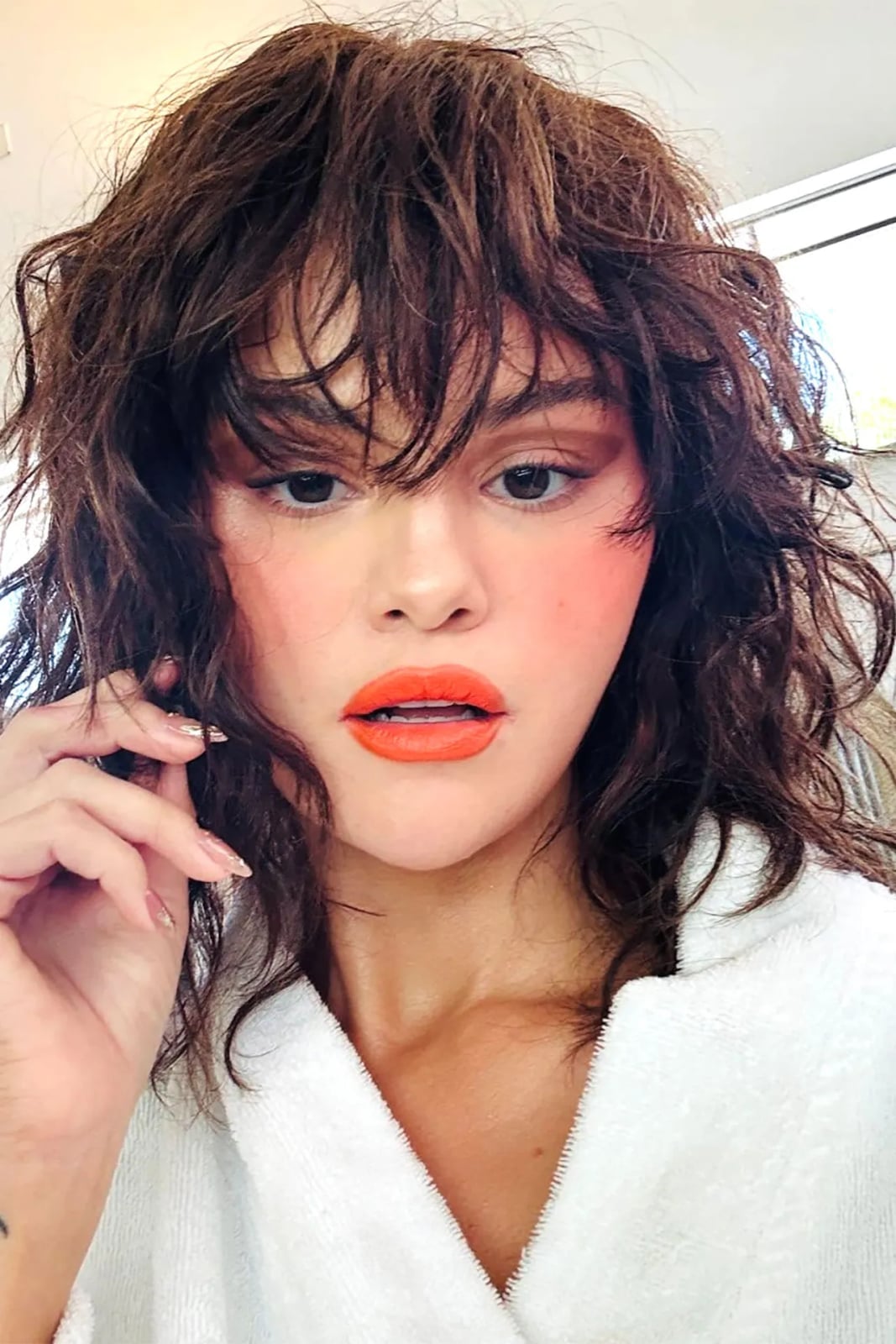
There is a difference between air-dried and neglected, and this collarbone shag lands on the right side. The dark brown base with subtle lighter strands keeps the thick wavy texture looking like it did its own thing without requiring a full diffuser session.
Ask your stylist for: collarbone length shag, dark brown, curtain bangs, lived-in texture. The curtain bangs soften round faces, but the trade-off is that the lived-in finish demands a trim every six to eight weeks. Skip this if you want a polished, blow-dried look every day; this version reads best when you embrace the air-dried reality.
Collarbone Shag With Textured Layers
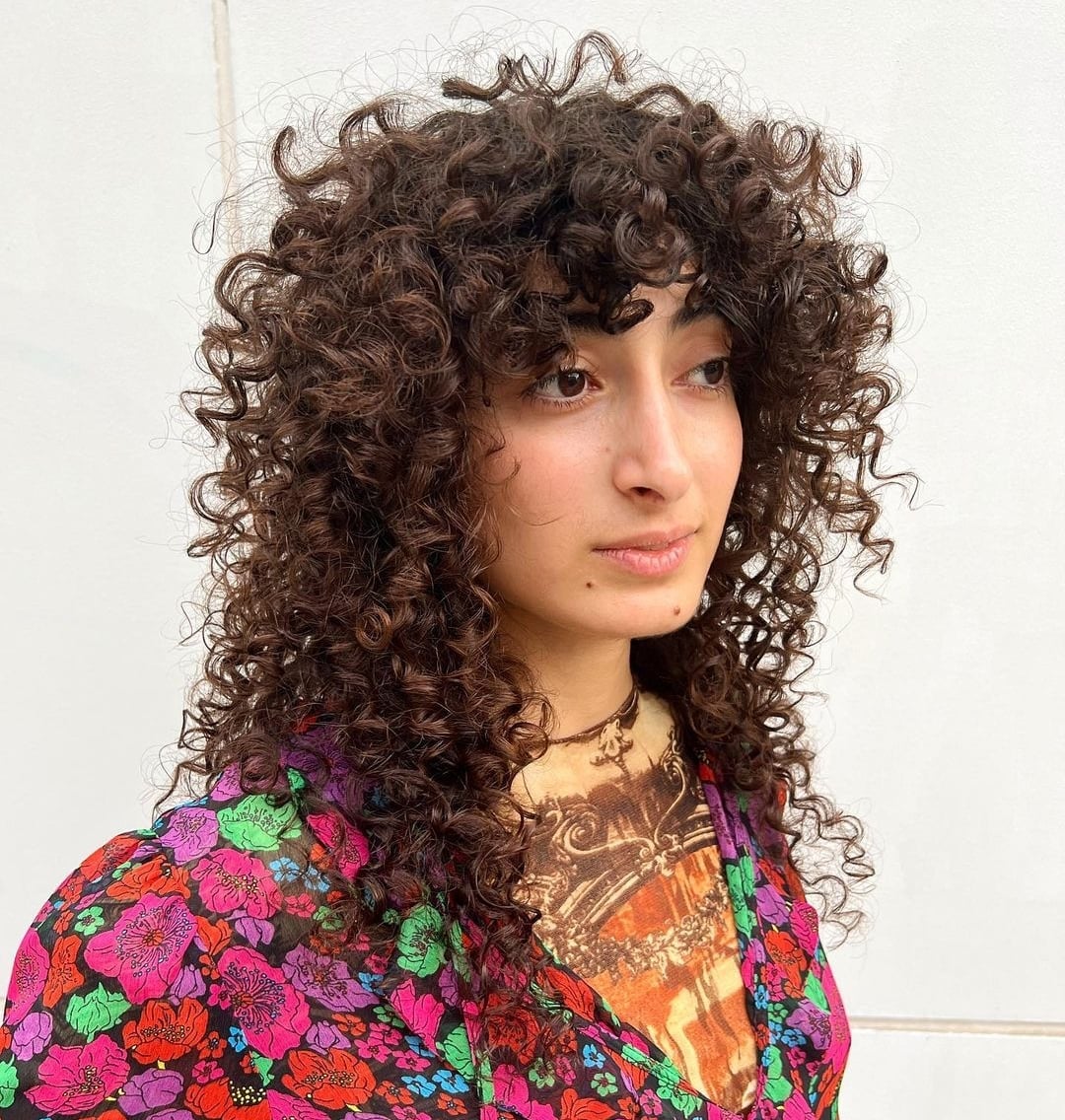
A shag is designed to add volume, and on thick curly hair the textured layers actually have room to do their job. This collarbone-length version uses a middle parting and curtain bangs to frame the face without losing the cut’s signature lift at the crown.
Ask your stylist for: collarbone length shag, dark brown, curtain bangs, textured layers. The thick curly texture holds the shape well, so you do not need much more than a curl cream and air drying. This cut genuinely flatters most face shapes because the curtain bangs soften the forehead and the layers add width where needed. Curls that tend to shrink up should start at collarbone length when dry.
Face Framing Shag With Curtain Bangs
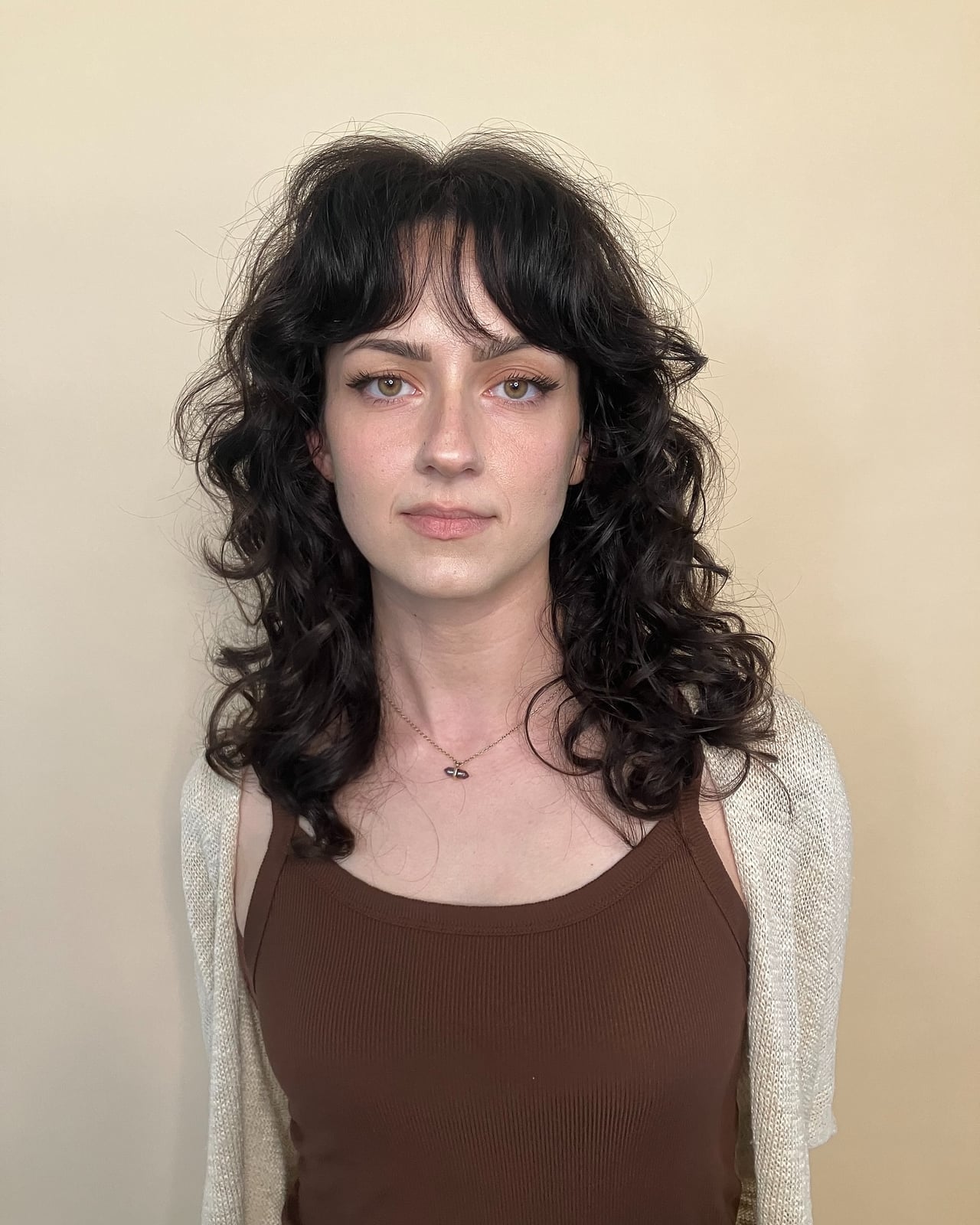
Does a shag with face-framing layers still hold its shape after a few days? With the right cut, yes. This collarbone shag uses a middle parting and visible layers that wrap around the jaw, so the curl pattern has built-in direction even when the second-day texture kicks in.
Ask your stylist for: collarbone length shag, face-framing curtain bangs, dark brown, middle part. To keep the framing looking deliberate, use a diffuser on low heat to encourage the front pieces to curl away from the face. Plan on a trim every six to eight weeks to stop the face-framing layers from blending into the length.
Grey Shag With Voluminous Curls
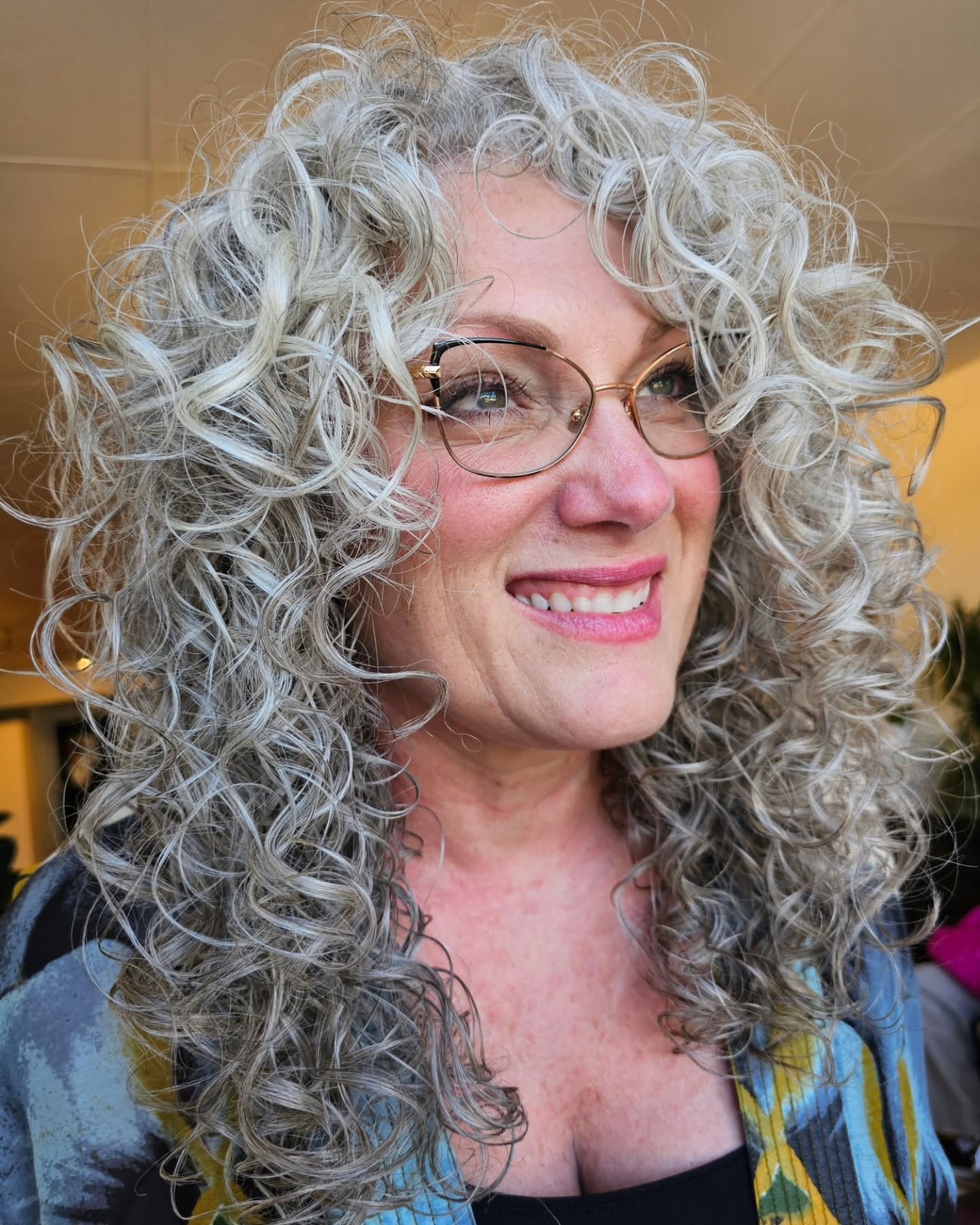
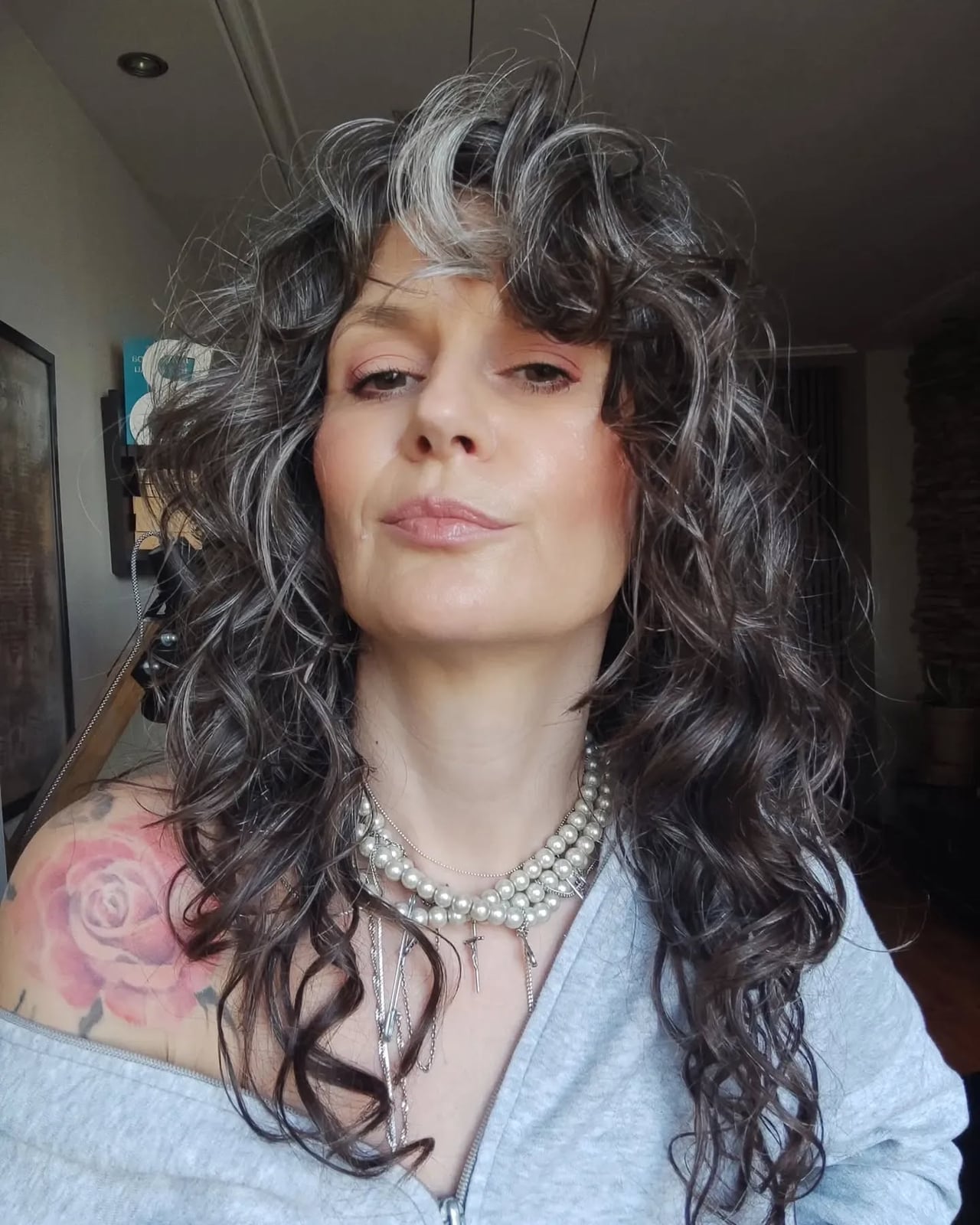
Natural grey hair has a coarser texture that holds a shag’s shape longer than finer strands, so the voluminous curls here are not an accident of good styling. The shoulder-length cut uses face-framing bangs and a side parting to break up the grey, while the blonde highlights prevent the silver from reading as one flat block.
Ask your stylist for: shoulder length shag, grey with blonde highlights, face-framing bangs, side part. The thick curly texture gives the shag its lift at the crown without backcombing. A silver-tone shampoo used once a week keeps the blonde from warming up against the grey base.
Vibrant Red Collarbone Shag
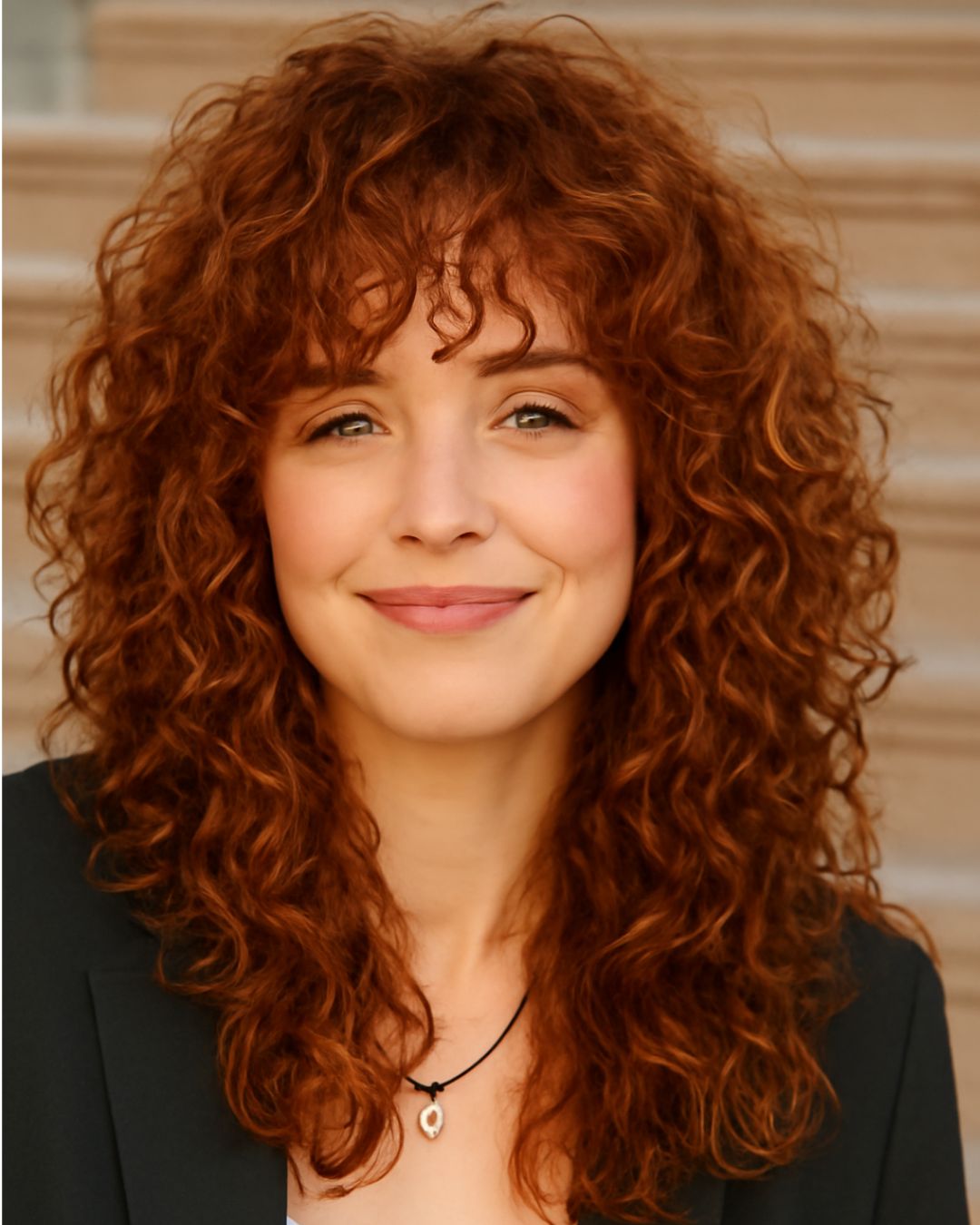
Red is a commitment, but on a collarbone shag with full bangs, the payoff is instant. The thick curly texture and middle parting give the shag its volume, while the full bangs anchor the bold color at the forehead.
Ask your stylist for: collarbone length shag, vibrant red, full bangs, middle part. The full bangs work best on oval and heart face shapes, and the red shade makes this cut a statement option for fall or holiday events. Color-safe products are non-negotiable here, since red fades faster than any other shade and the shag’s layers show every shift in tone.
Blonde Collarbone Shag With Blowout
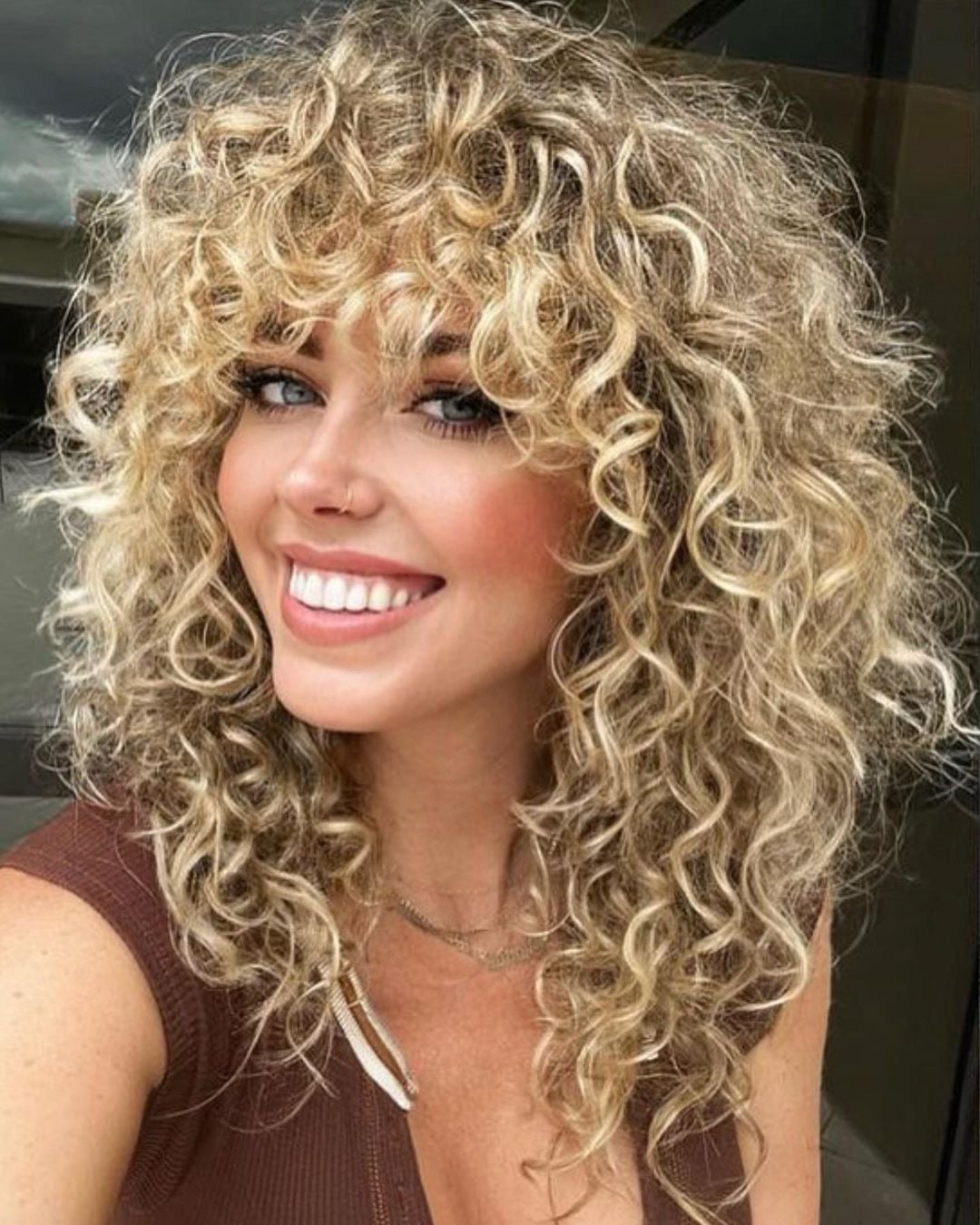
You could spend an hour wrestling a round brush at home, or you could just book a salon blowout and let someone else deal with the angles. A collarbone-length shag with curtain bangs and a middle parting, this blonde version relies on a root shadow to soften the grow-out line and a round brush to coax thick, curly strands into that bouncy, tousled shape. Ask your stylist for: collarbone length shag, blonde with root shadow, curtain bangs, middle part, blowout. A heat protectant is essential if you attempt it yourself, but the real shortcut is a pro who knows how to make a shag’s layers fall exactly right. Plan on a trim every six to eight weeks to keep the shape defined.
Collarbone Shag With Soft Curtain Bangs, Wavy To Curly

Is your hair fine to medium density and naturally wavy to curly? This collarbone-length shag with soft curtain bangs is designed for you. The dark brown base with subtle lighter highlights adds depth without overwhelming fine strands, while the curtain bangs soften a square jaw and the layers add movement. Ask your stylist for: collarbone length shag, dark brown with highlights, soft curtain bangs, side part. A texturizing spray applied to damp hair encourages the natural wave pattern and keeps the face-framing pieces visible. This shape looks deliberately undone with minimal styling effort.
Collarbone Length Shag With Full Bangs
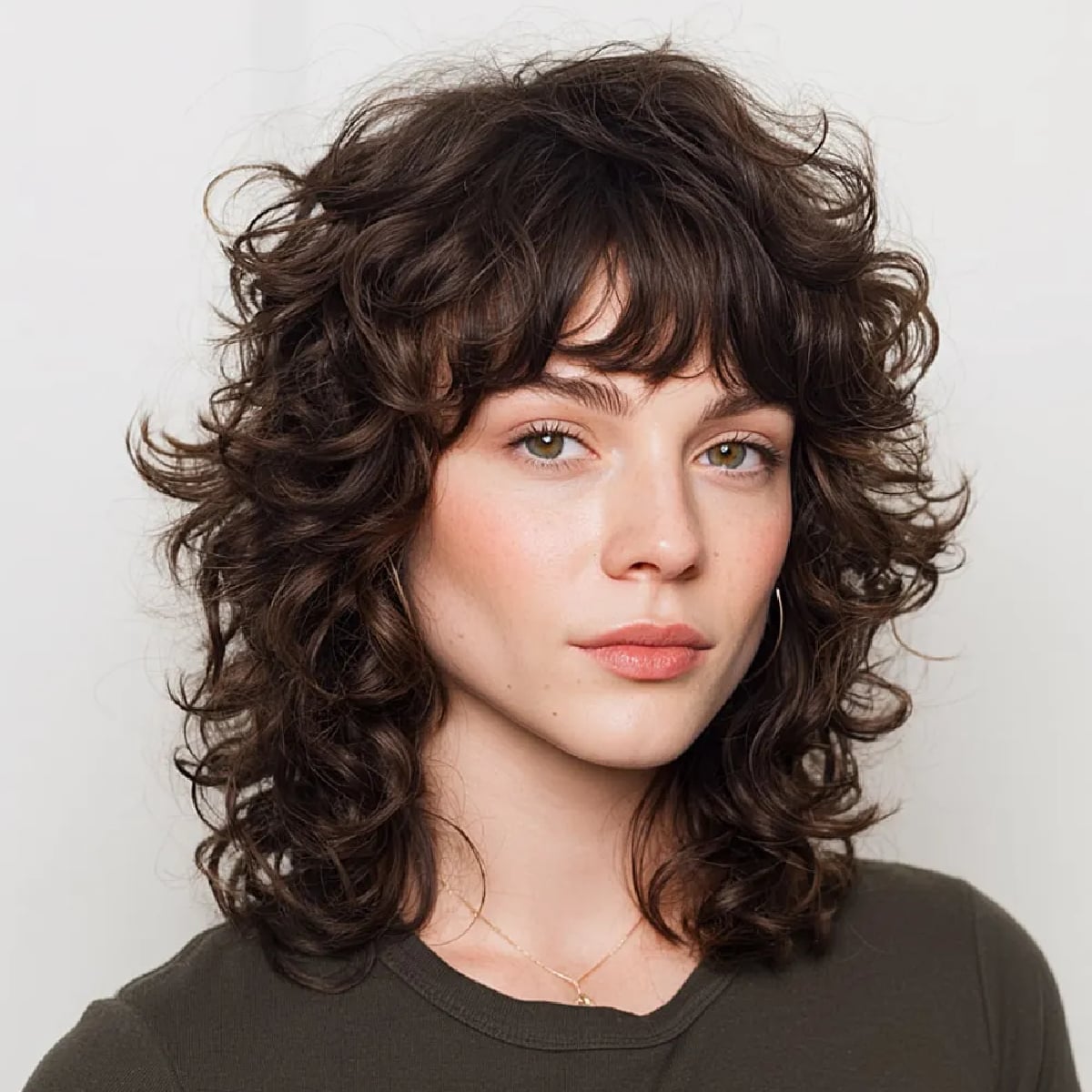
Full bangs on a curly shag require a specific kind of commitment. They need a trim every three weeks to stay out of your eyes, and they dry faster than the rest of your hair, so you are either diffusing them first or accepting a slightly crooked fringe until the next wash. This collarbone-length version in dark brown uses medium-density curls and a middle parting to balance the bangs with the layered shape below. Ask your stylist for: collarbone length shag, full bangs, dark brown, middle part. Low heat helps the bangs dry evenly without frizz, and a curl cream keeps the ends from splaying. Plan on a full trim every six to eight weeks to maintain the shag’s structure.
Collarbone Shag With Full Volume Curls
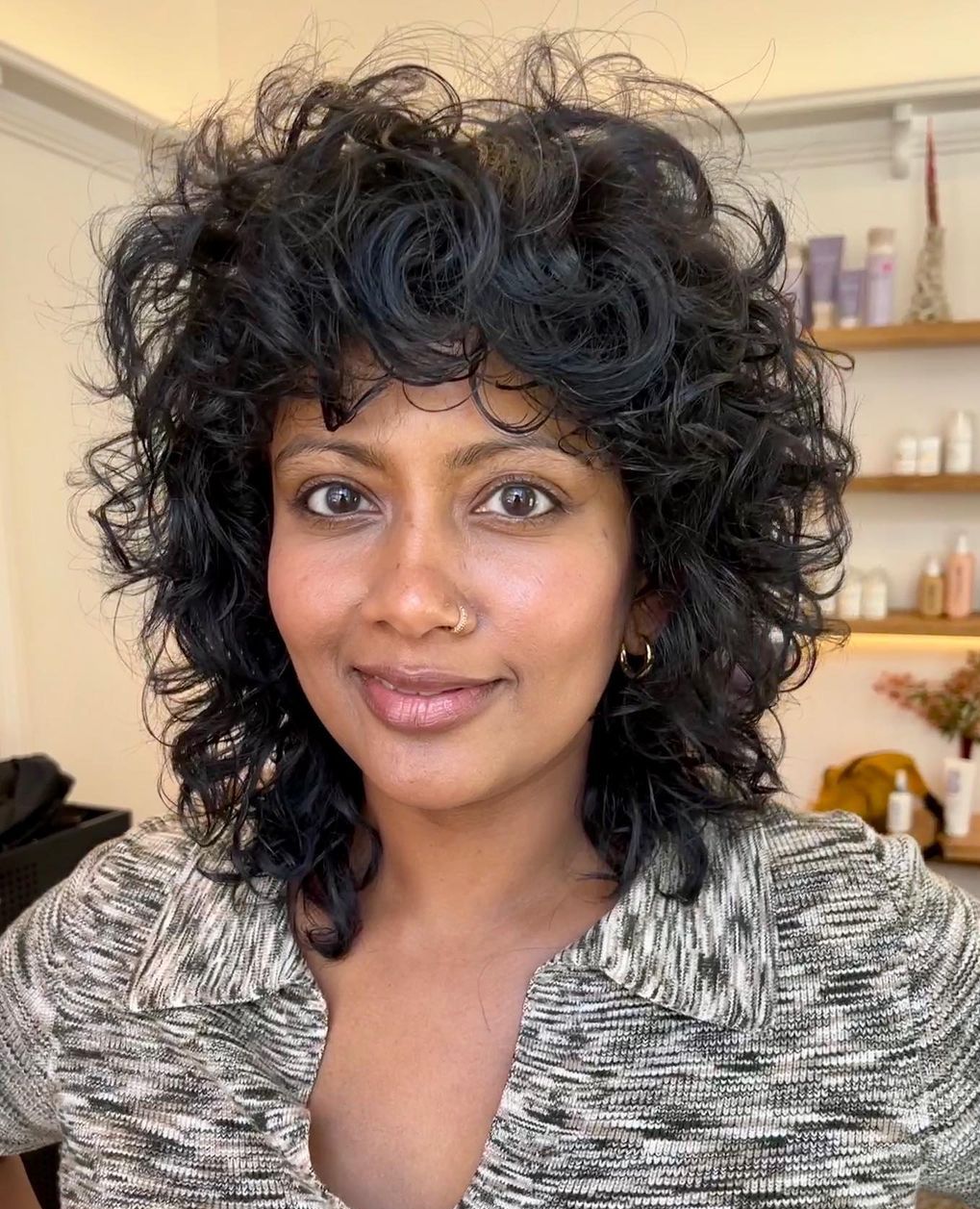
Full volume curls on a thick shag are about distribution. The layers remove bulk from the sides and crown so the hair does not sit like a helmet, while the curtain bangs open up the face and prevent the weight from pulling everything flat. This collarbone-length cut in dark brown uses a middle parting to let the curls fall symmetrically. Ask your stylist for: collarbone length shag, dark brown, curtain bangs, middle part. A curl-enhancing mousse applied to soaking wet hair and air dried gives the shape lift without crunch. The technique is straightforward: scrunch, walk away, and let the shag’s cut do the rest.
Mid-Back Curly Shag With Balayage

Longer shags need more deliberate layering to keep the shape from looking like a triangle. This mid-back version on thick, curly hair uses a dark brown base with blonde balayage that starts below the chin, so the color adds dimension on the curls’ peaks without exposing the root line. Shaggy bangs anchor the front, while the back layers stack to create that rounded, voluminous silhouette. Ask your stylist for: mid-back shag, dark brown with blonde balayage, shaggy bangs, middle part. A deep conditioner once a week keeps the balayaged ends from drying out, and a trim every eight to ten weeks prevents the layers from growing past the shape’s sweet spot.
Fiery Red Mid-Back Curly Shag
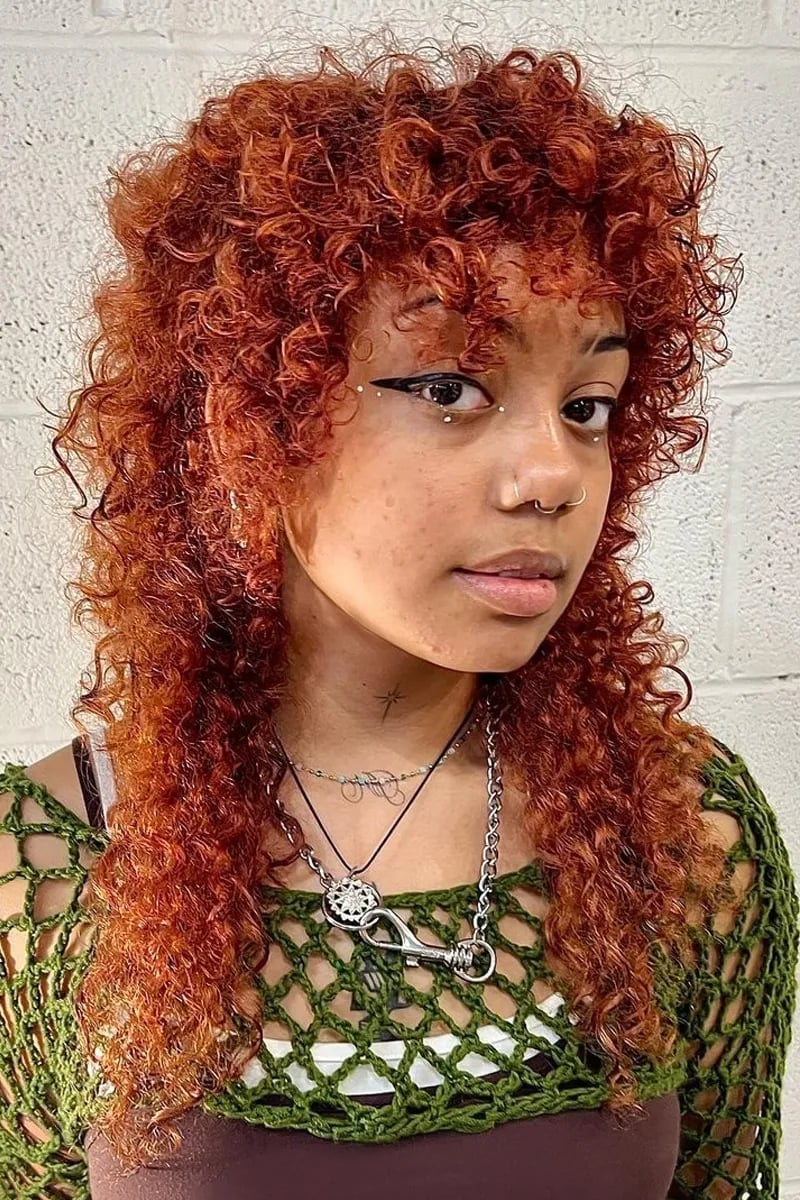
A mid-back curly shag in fiery red is not the same as a burgundy one. The difference is in the temperature: this shade leans warm and bright, which makes the shaggy bangs and dense curls look deliberate. The middle parting keeps the volume distributed evenly, so the layers don’t collapse into a single heavy mass. It is a salon-only color commitment, and the vibrancy asks for a color-depositing conditioner between appointments. Trims every eight to ten weeks maintain the shape. Ask your stylist for: a mid-back shag, fiery red, shaggy bangs, and a middle part.
This cut suits dense, curly hair that already reaches mid-back length. The shaggy bangs work best on oval faces, where they can frame without overwhelming. It is a look for fall or winter, when a saturated red adds warmth without competing with seasonal layers.
Mid-Back Shag With Choppy Bangs

A mid-back shag with choppy bangs relies on density to hold its shape. The dark brown base with subtle lighter balayage adds dimension without requiring a full color overhaul. Thick, curly texture is ideal here: it keeps the choppy bangs from disappearing into the rest of the cut. A styling paste helps define the bangs individually, and a trim every eight to ten weeks prevents the ends from tangling. Ask your stylist for a mid-back shag, dark brown with balayage, choppy bangs, and a middle part.
Back View Mid-Back Curly Shag
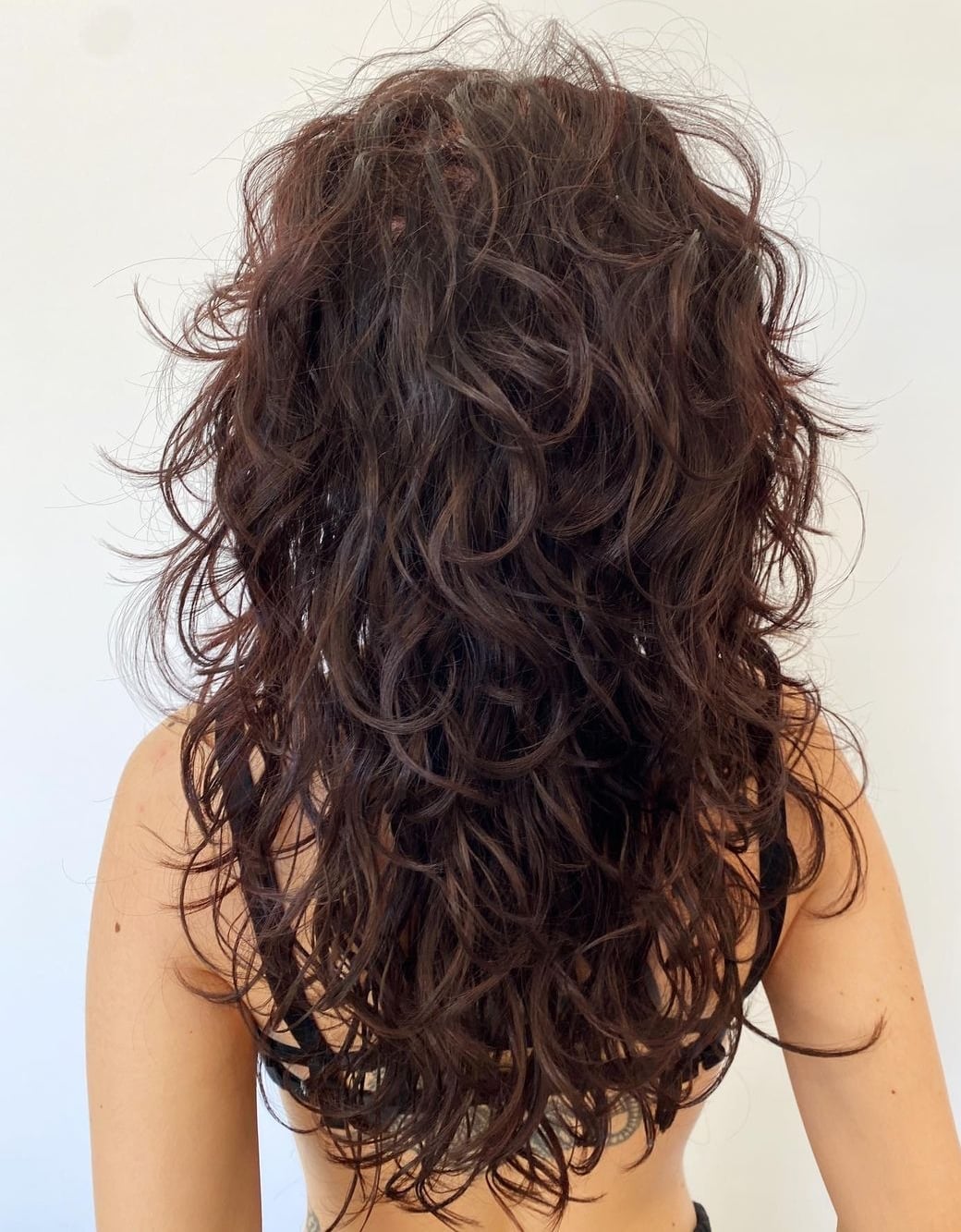
The back view of a mid-back curly shag reveals what the front conceals: the layers are distributed evenly from crown to ends, creating a gradual taper that avoids a blunt line. The dark brown color keeps the focus on the cut itself, and the air-dried texture lets the natural curl pattern dictate the movement. There is no parting visible from this angle, which means the volume is consistent across the entire width. The layers are cut so that each one falls slightly shorter than the one below, a detail that prevents the hair from looking like a single curtain of curls.
This cut is best suited for thick, curly hair that has enough weight to hold the shape without collapsing. The layered structure adds movement, so the hair swings rather than sits still. Ask your stylist for a mid-back shag with a layered cut in dark brown.
Back View Shoulder Shag With Layers
Wondering if a shoulder-length shag works for your curl pattern? The back view here shows how stacked layers create a rounded silhouette that lifts the crown without removing too much length. The brown base with highlights adds depth, and the thick, curly texture fills out the shape naturally. A middle parting keeps the volume balanced on both sides. This cut suits oval, round, and square faces because the shoulder length elongates while the stacked layers soften the jaw. Ask your stylist for a shoulder-length shag with stacked layers, brown with highlights, and a middle part.
Back View Blonde Shag With Texture
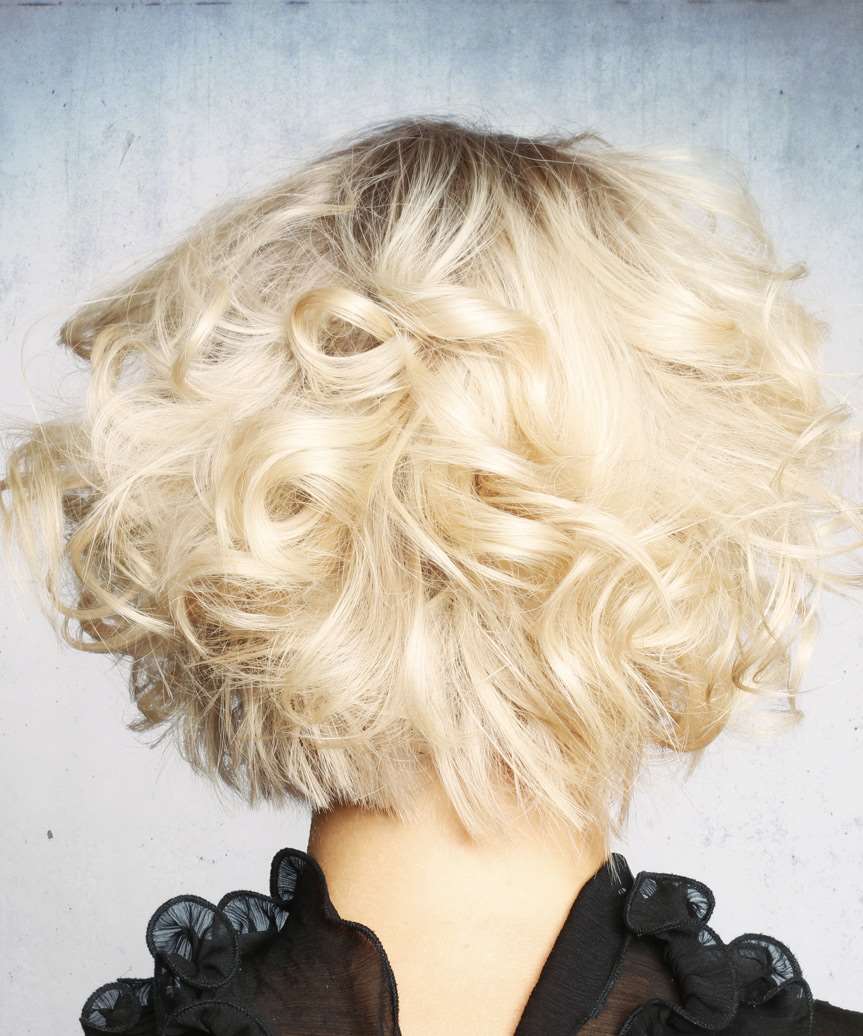
A collarbone-length blonde shag with a soft blowout is built on technique, not luck. The back view shows how the layers are cut to stack at the crown and graduate toward the ends, which creates volume at the top and movement at the bottom. The subtle blonde highlights add dimension without requiring a full bleach. Thick, curly texture responds well to a blowout with a round brush: it smooths the cuticle while preserving the shape of the layers. Ask your stylist for a collarbone-length shag with blonde highlights and a soft blowout.
How To Style The Curly Shag
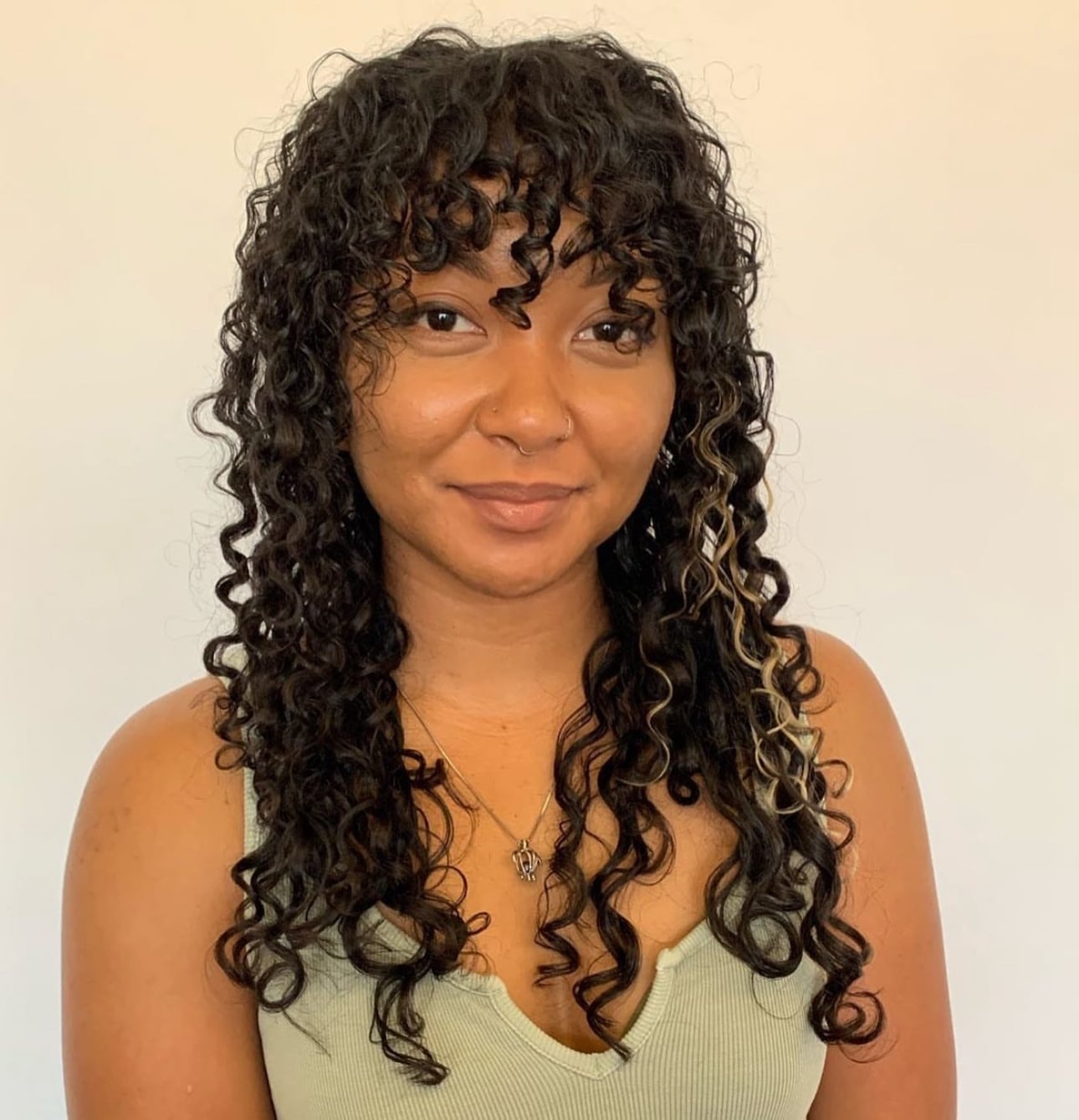
Start with damp hair and a wide-tooth comb. A curly shag relies on its layers to do the work, so skip the brush and let your natural texture lead. Apply a curl cream from mid-lengths to ends, then scrunch upward to encourage curl formation. Air drying is the low-effort path, but a diffuser on low heat speeds things up without frizz.
For a polished finish, let curls set completely before touching them. Once dry, gently separate any clumps with your fingers and fluff the roots at the crown for volume. The fringe bangs should fall forward naturally; a quick blast of cool air from a dryer resets their direction. A texture spray or a light-hold gel keeps definition without stiffness. This is a ten-minute routine that works with your curl pattern.
Final Thoughts
For fine curls, focus on shorter shags with blunt ends to maximize volume. For thick curls, embrace longer lengths and textured layers to manage weight.
- Trim every 6-8 weeks to maintain the shag’s shape and layers.
- Air dry or diffuse to preserve natural curl pattern.
- Use a curl-defining cream or mousse for texture.
- Refresh curls with water or a leave-in conditioner between washes.
Find the shag that celebrates your natural curl.
