

A well-executed curly cut is less about following a trend and more about working with your hair’s natural movement. Right now, soft face-framing layers and curtain bangs are taking center stage, replacing heavy, blunt shapes that can weigh down curls.
This collection of 25 ideas for Classy Curly Hair Cutting covers the full spectrum, from short, bold pixies to long, layered lengths. Whether you have fine curls that need a density-preserving blunt line or thick hair begging for weight-reducing layers, there is a shape here that solves the struggle of a cut that does not quite behave. Expect practical advice on fringe styles, layering techniques, and the upkeep each look demands.
Short Layered Pixie With Short Fringe
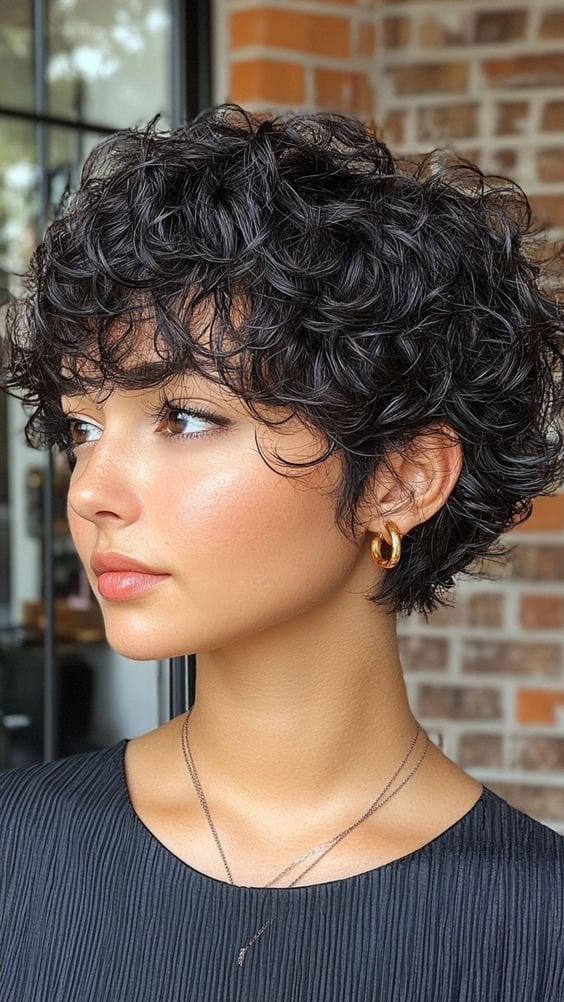
A short layered pixie on dense, dark brown curly hair is a study in controlled volume. The short fringe lands around the ears, framing the face without swallowing it. This cut works best for thick, dense curly hair starting at ear length or shorter, and it suits oval and square faces particularly well. Ask your stylist for: a short layered pixie with a face-framing fringe. The air-dried finish keeps the texture soft and natural, which is exactly the point.
Layered Chin Length Bob No Bangs
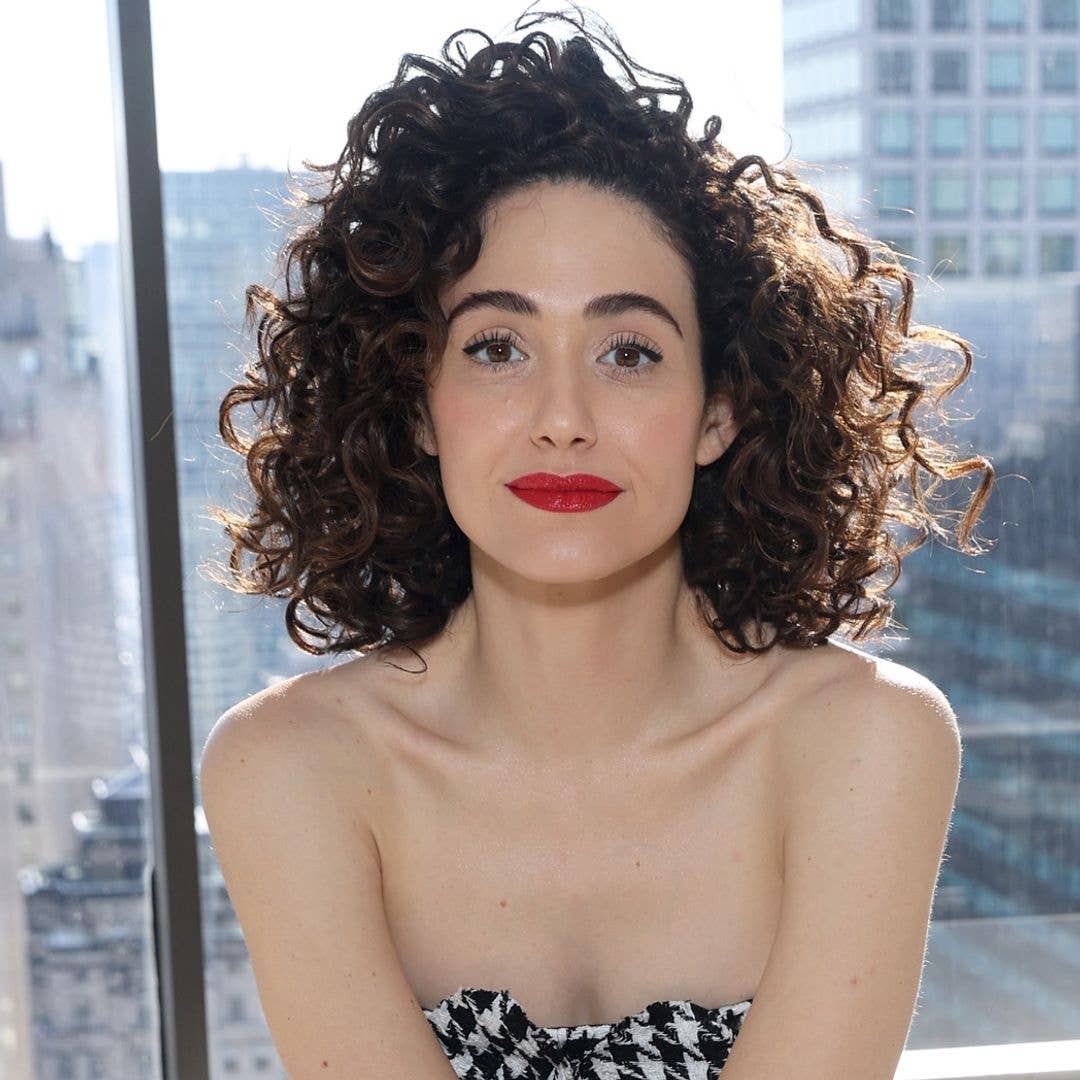
Can a chin-length bob on dense, dark brown curly hair avoid looking like a triangle? Yes, with the right layering. This cut uses visible layers to distribute volume evenly, so the shape stays rounded rather than bottom-heavy. It works best for thick, dense curly hair starting at chin length, and the lack of bangs helps elongate round faces. Ask your stylist for: a chin-length layered bob, no bangs. The specific technique involves cutting layers into the interior of the curl pattern, which gives the bob its textured movement.
Chin Length Bob With Short Fringe

A chin-length bob without bangs keeps the hair off the face, but a short fringe changes the entire effect. This version, on dense dark brown curly hair, draws attention upward and softens the jawline. It is a good choice for thick curly hair that needs more structure around the face.
Compared to a no-bang bob, the short fringe adds a deliberate focal point. Ask your stylist for: a chin-length bob with a short fringe. The fringe sits above the eyebrows, so it creates a clear focal point, which matters when the hair is full and curly.
Short Layered Cut With Curly Bangs
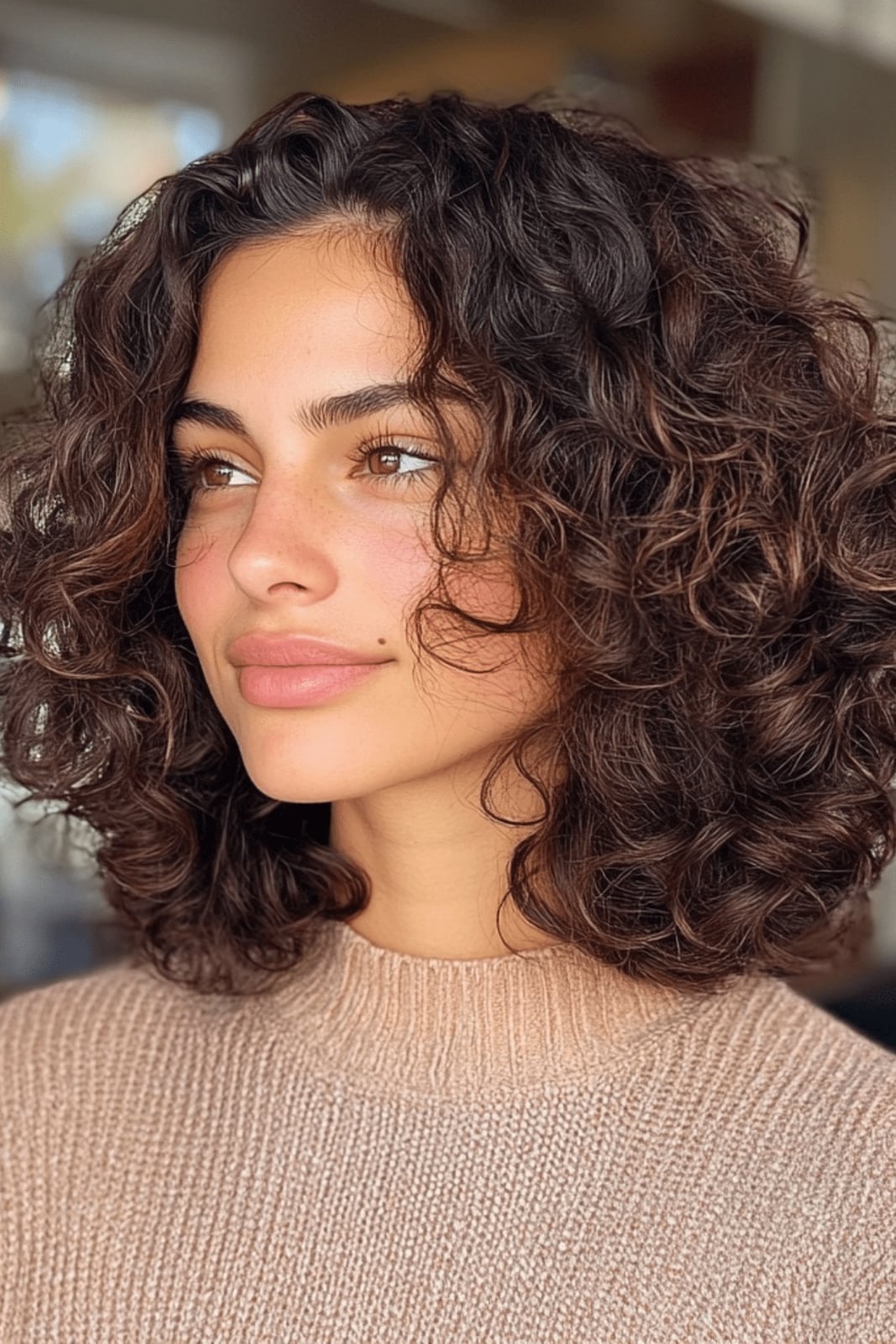
A short layered cut with defined curls gains an extra dimension from short curly bangs. On a dark brown base with subtle lighter highlights, the bangs read as a continuation of the curl pattern rather than a separate element. The technique for cutting short curly bangs involves dry-cutting each curl individually, so they sit without looking heavy. This cut works for fine to medium curly hair starting at ear length, and the bangs soften square faces. Ask your stylist for: a short layered cut with short curly bangs.
Voluminous Pixie With Textured Bangs
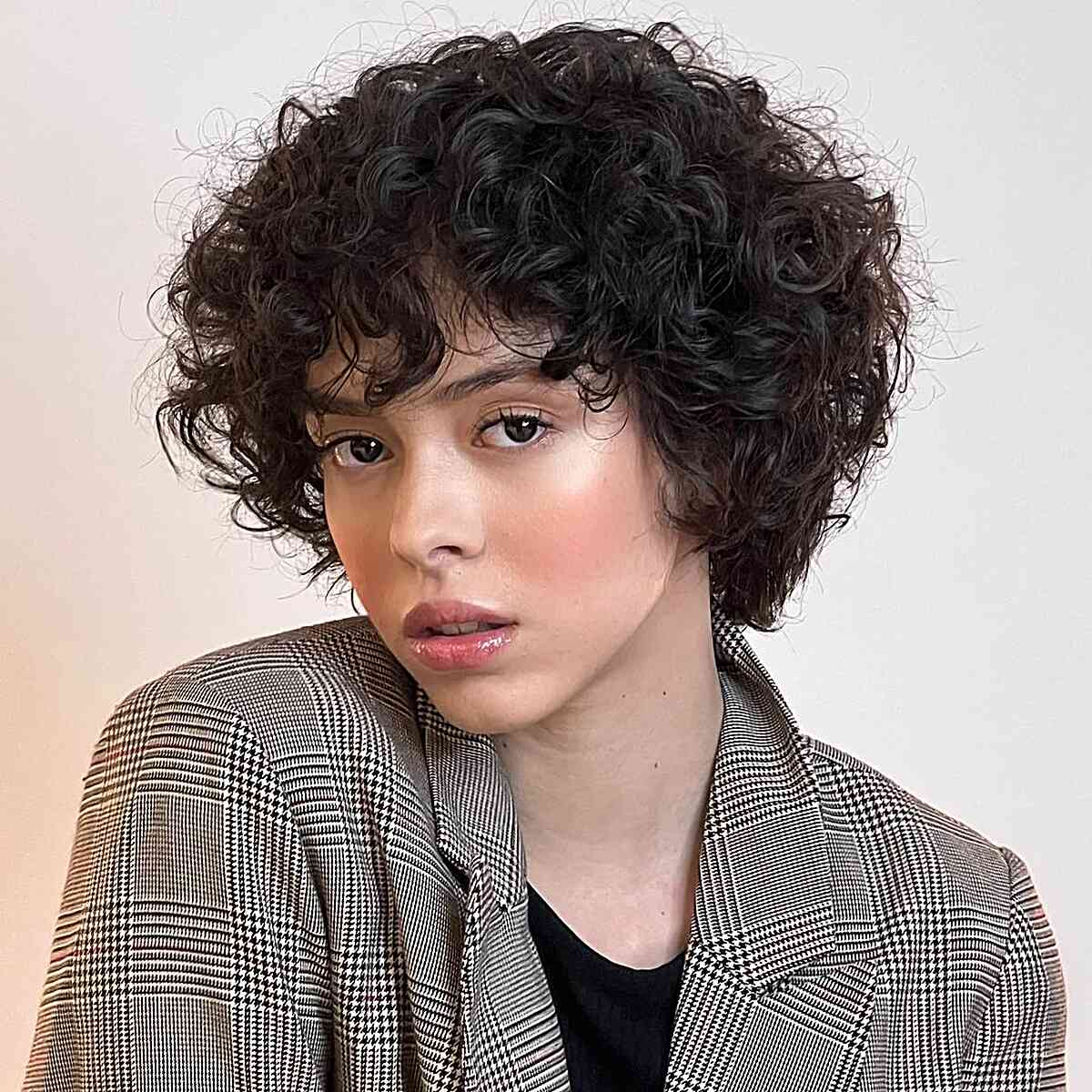
A voluminous pixie with textured bangs relies on height at the crown to balance the short sides. On black curly hair, the air-dried finish keeps the density visible and the texture soft. The side parting adds lift, which helps the cut maintain its shape between trims. This style suits thick, dense curly hair starting at ear length and works for most face shapes. Ask your stylist for: a voluminous pixie with short textured curly bangs. A lightweight curl cream on the bangs and top helps define the curls without weighing them down. Trims are needed every four to six weeks to keep the silhouette sharp.
Textured Pixie Cut With Fringe
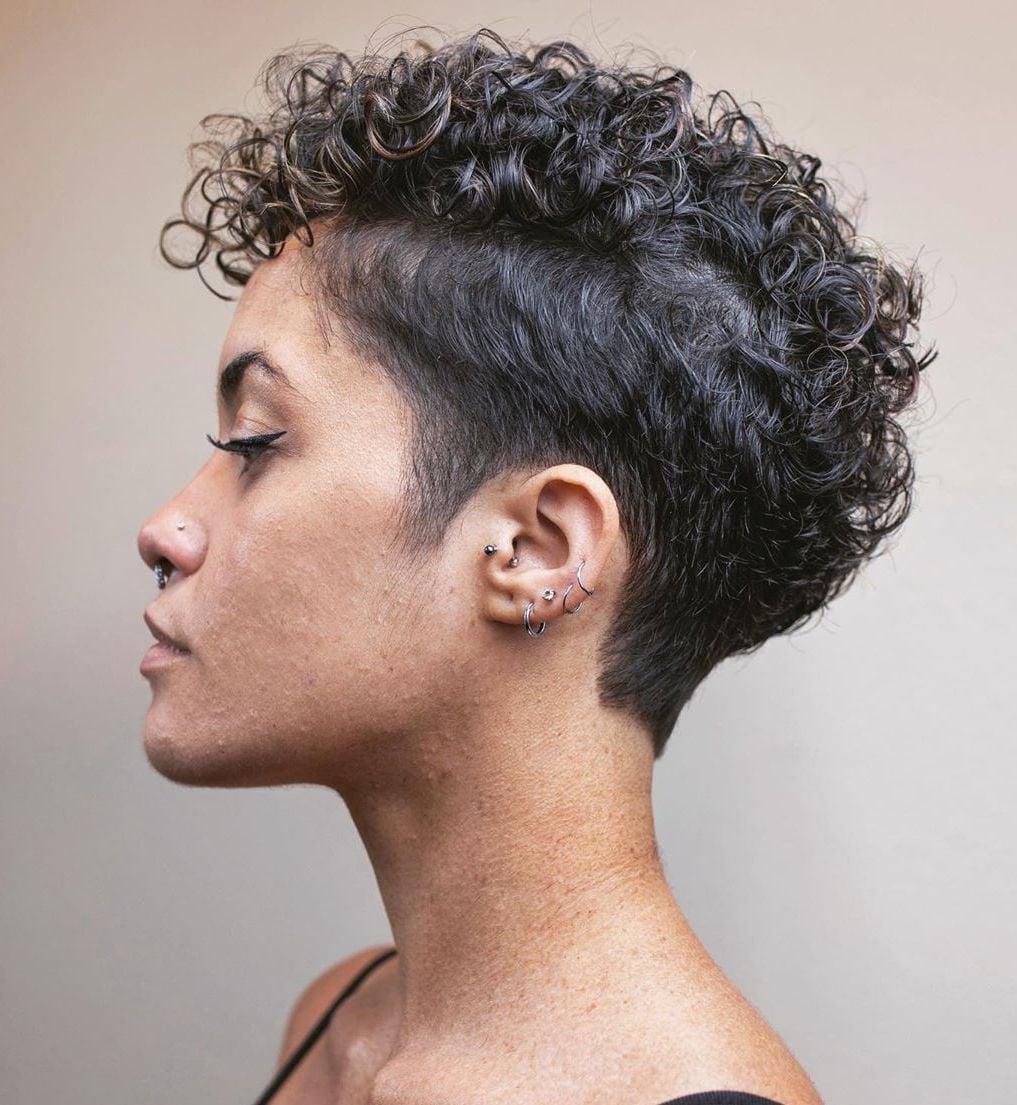
This short pixie relies on a textured fringe to define the style, and it works because the curls are dense enough to hold the shape. It is a cut for thick, dark brown curly hair that already reaches the ears, and the fringe softens angular faces nicely. Ask your stylist for a short pixie with a textured fringe. Maintenance is key: that fringe needs a trim every four to six weeks to keep its messy look from turning into just mess. A curl paste on damp hair, a quick scrunch, and air drying keeps the pattern honest between visits.
Short Layered Cut With Side Part
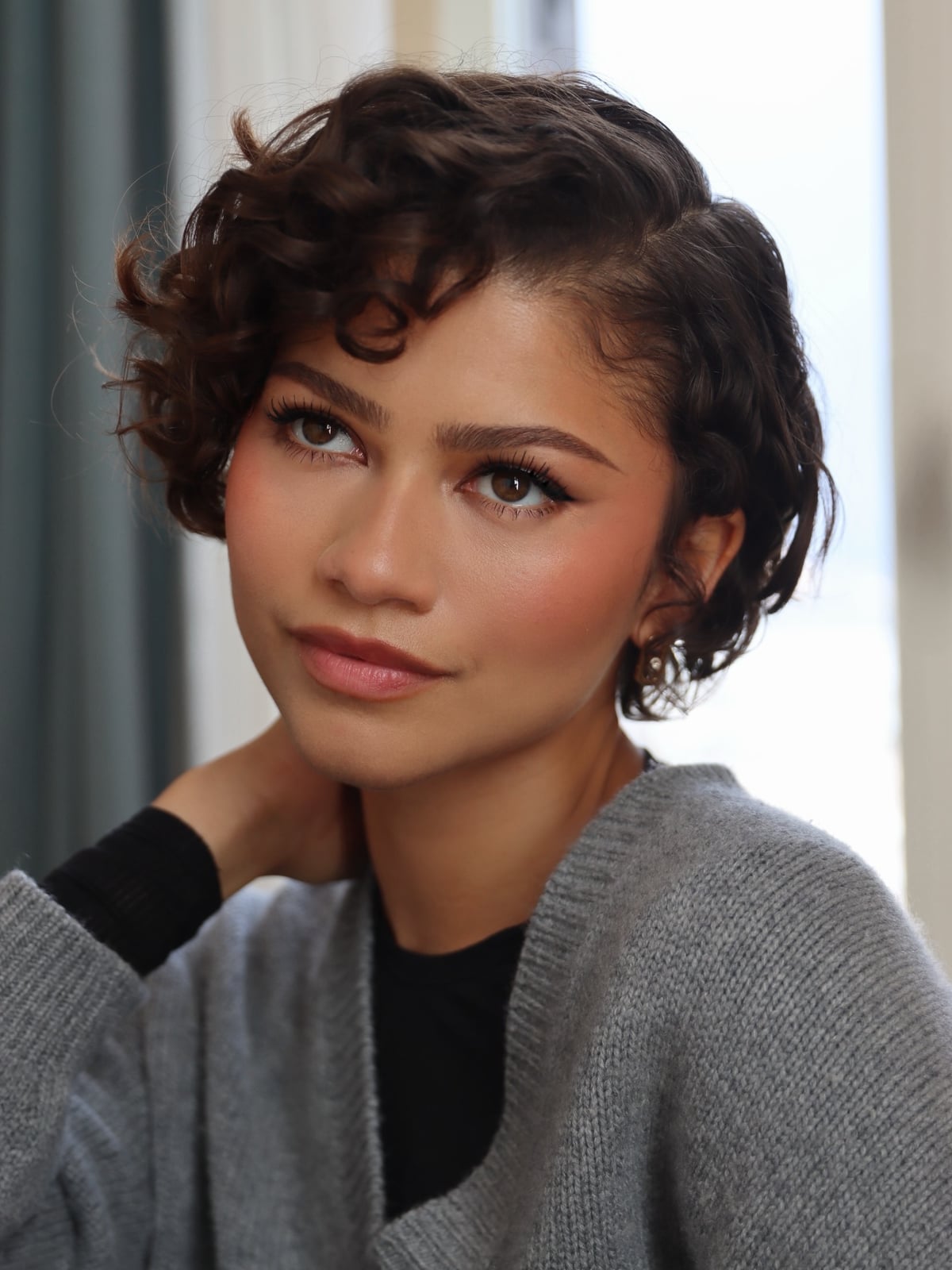
Is your fine curly hair looking a little flat? A side part and curtain bangs can give it volume and movement without adding weight. This short layered cut ends around the ear, and the dark brown curls are fine, so the layering keeps the shape light. Curtain bangs also soften a strong jawline, which is a quiet bonus. Ask your stylist for a short layered cut with curtain bangs, side part. A texturizing spray scrunched into damp hair, then air drying, gives the fine texture grip. Plan on a trim every six to eight weeks to keep the curtain bangs from growing into just bangs.
Short Layered Cut With Wispy Bangs, Ear
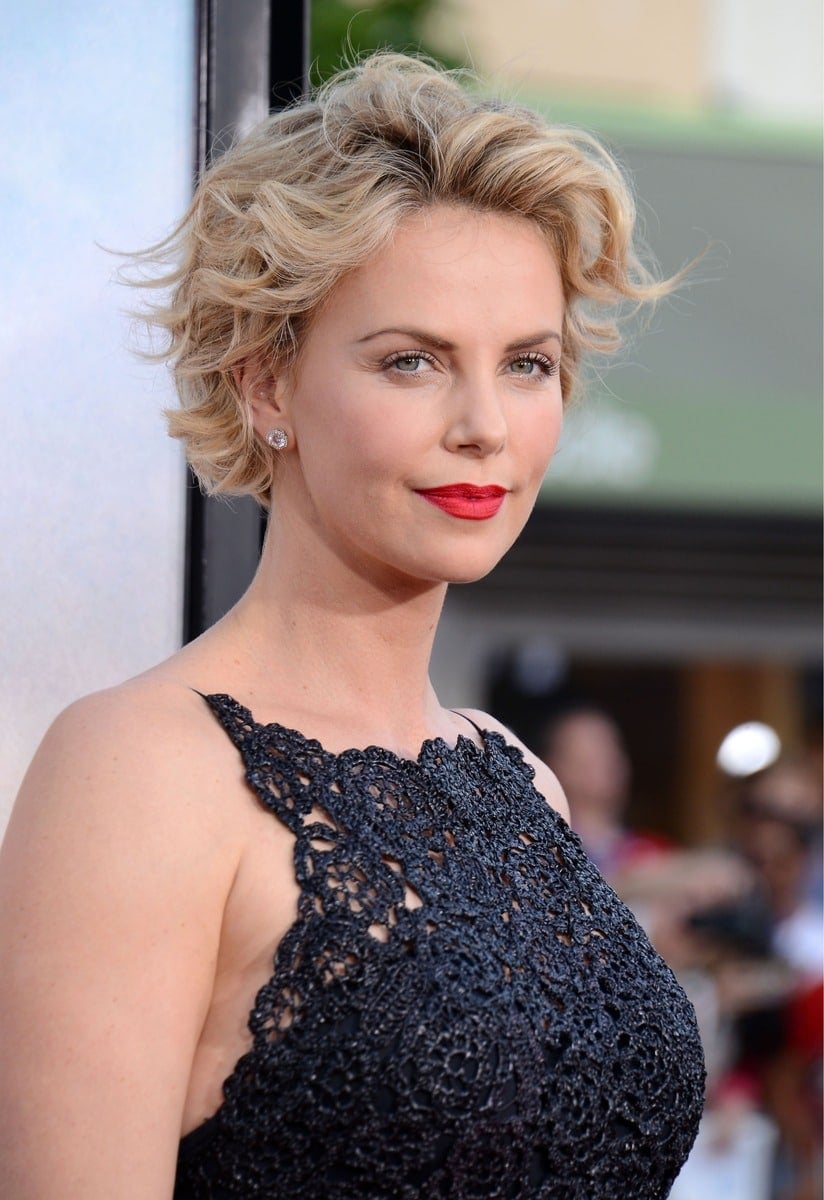
Where a fuller bang can feel heavy on fine, wavy curly hair, wispy bangs keep the same face-framing effect with less weight. This ash blonde cut ends around the ear, with short layers and a side part that build volume at the crown. Wispy bangs soften a square face without demanding constant styling. Ask your stylist for a short layered cut with wispy bangs. A texturizing spray and a tousle with your fingers, then air drying, gets the texture to land. The layers need a trim every six to eight weeks, but the wispy fringe will forgive a slightly longer stretch.
Layered Lob With Curtain Bangs
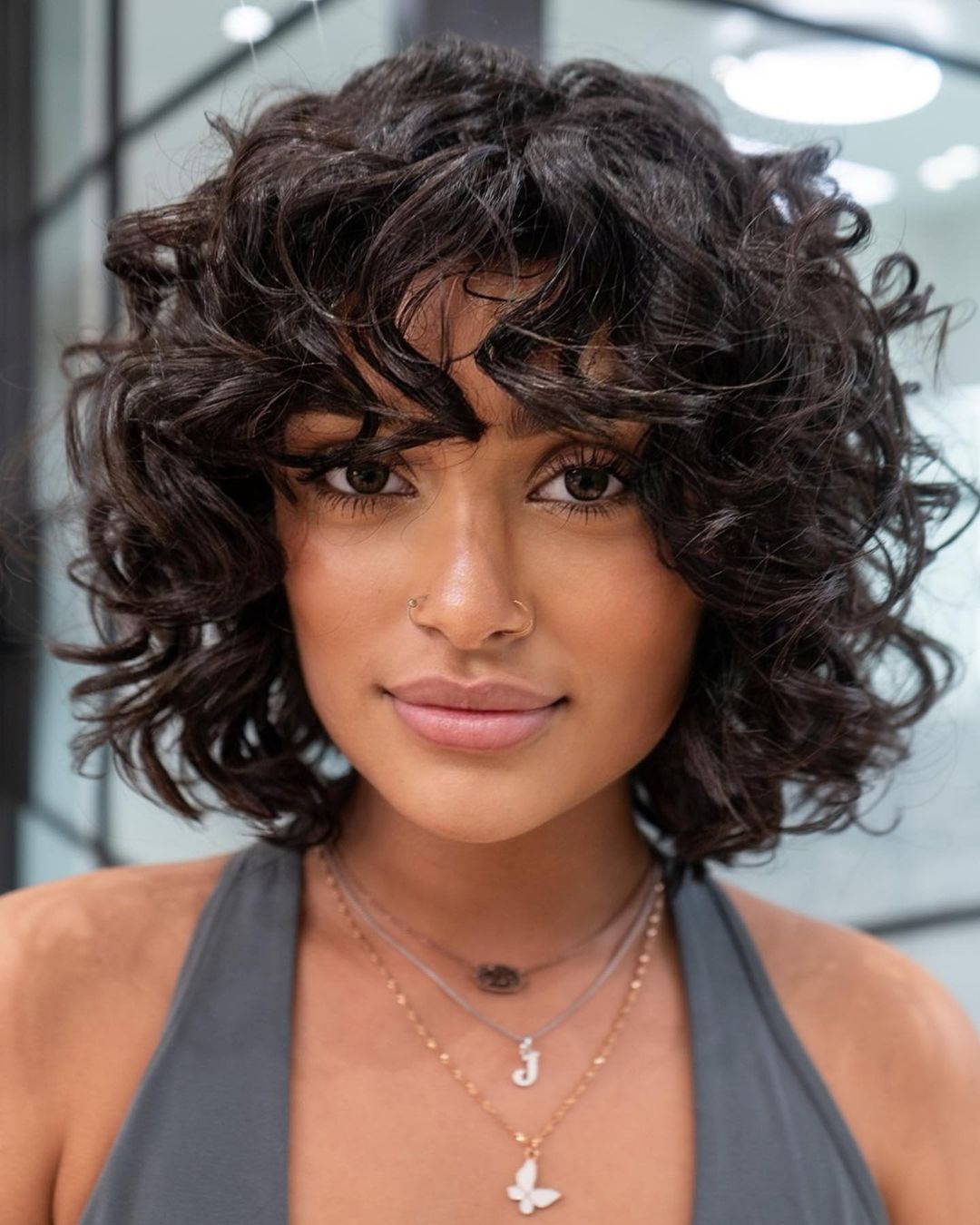
Start with the length: collarbone, no shorter. Then ask for face-framing layers that start at the chin, so the fine dark brown curls keep their movement. Curtain bangs soften a round face and blend into the layers as they grow. Ask your stylist for a layered lob with curtain bangs. Be specific about the fringe: it should hit the cheekbones and sweep outward, not sit heavy on the forehead. The subtle lighter highlights add depth without changing the base. A trim every six to eight weeks keeps the baseline clean.
Collarbone Layers With Defined Curls
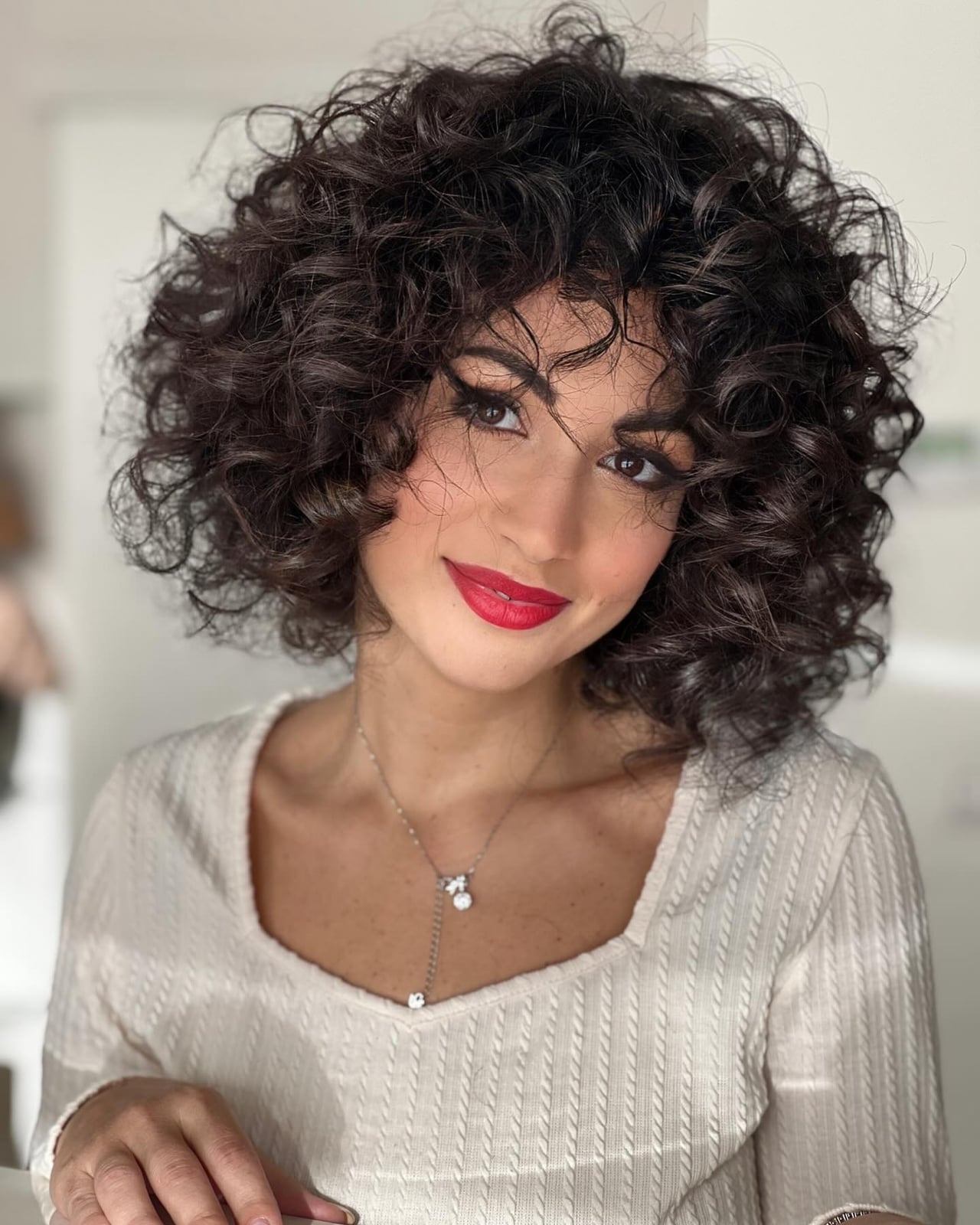
Thick curls at collarbone length can be a lot of hair, and the fix is layers that reduce the weight while keeping the shape. This cut has no bangs, so all the attention goes to the defined dark brown curls and the middle part. It suits dense curly hair well, since the layers keep the silhouette from turning into a triangle. Ask your stylist for collarbone length layers, no bangs. To get that air-dried definition, apply a curl cream to sopping wet hair, scrunch, and leave it alone. A diffuser speeds things up if you are impatient. The layers hold their shape for six to eight weeks before they need a refresh.
Collarbone Layers With Defined Curls, Dark Brown
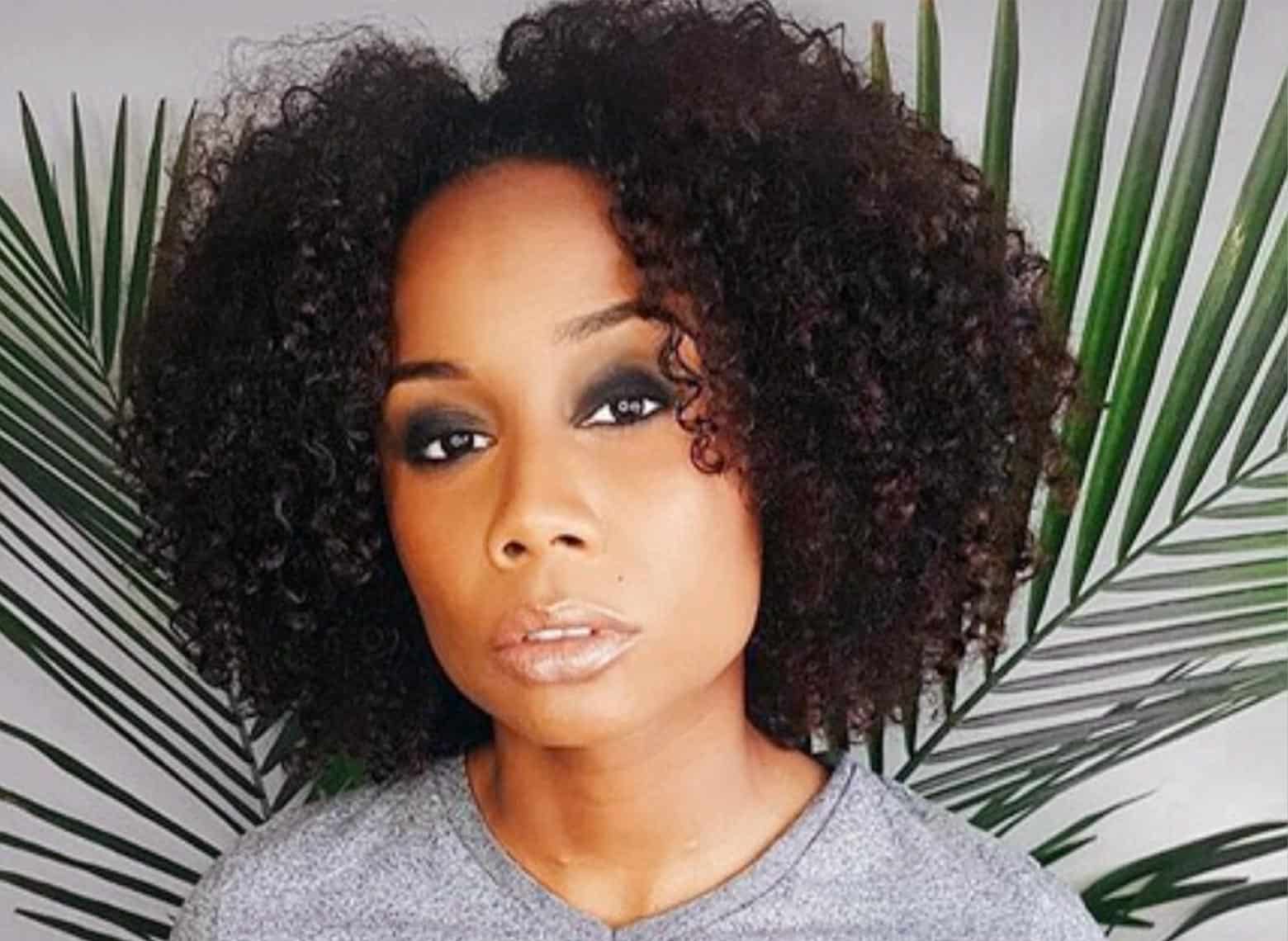
The design principle here is simple: remove weight without removing length. In thick dark brown curly hair cut to collarbone length, the stylist carves internal layers that let each curl spring up rather than hang heavy. No bangs means the eye travels straight down the middle part, so the volume stays centered. Ask your stylist for: collarbone length layers, no bangs. The technique works best on hair with enough density to hold shape, thin hair might lose the definition the layers are meant to create. A curl-defining cream applied to wet strands, followed by scrunching and air drying, encourages the pattern the cut sets up. Trims every six to eight weeks keep the layers from growing into a single blunt block.
Layered Collarbone Cut Natural Curls
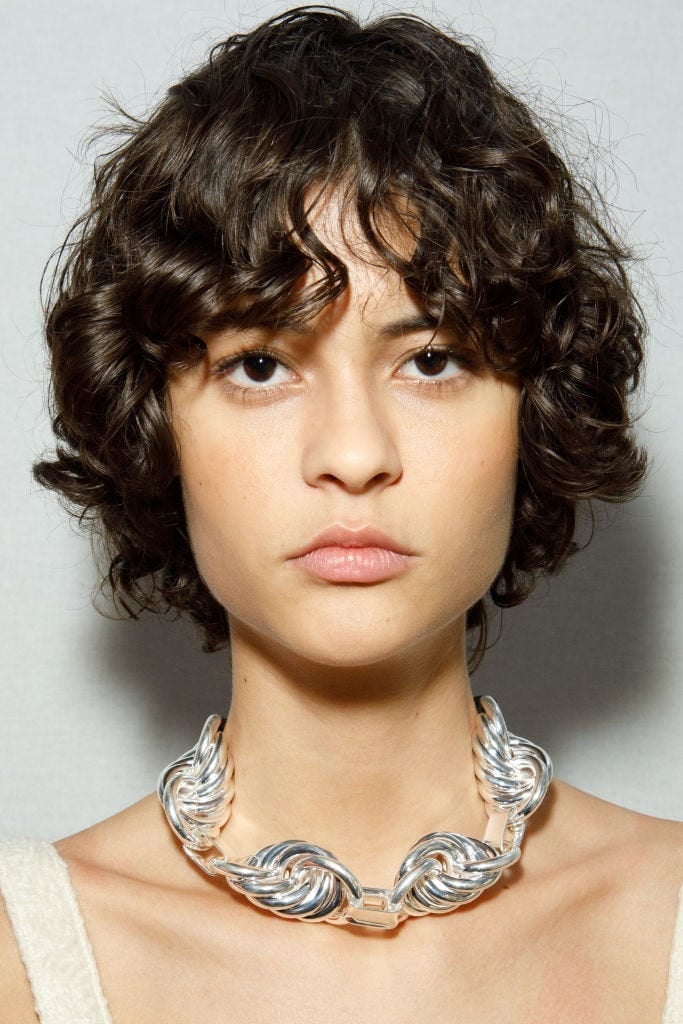
A collarbone-length layered cut with a side part sounds straightforward, but the trade-off is real. The side part creates volume on one side, which works well for round or square face shapes, but it also means the layers fall unevenly if your curl pattern is inconsistent. This is a salon-leaning cut: a stylist needs to see how your curls clump before cutting, and you cannot replicate that angle at home. Ask your stylist for: collarbone length layered cut, no bangs, side part. The result is a natural finish that relies on your curl pattern doing its job, not on products or tools. If your curls are prone to frizz, the uneven weight distribution from the side part may exaggerate it.
Chin Length Bob With Curtain Bangs
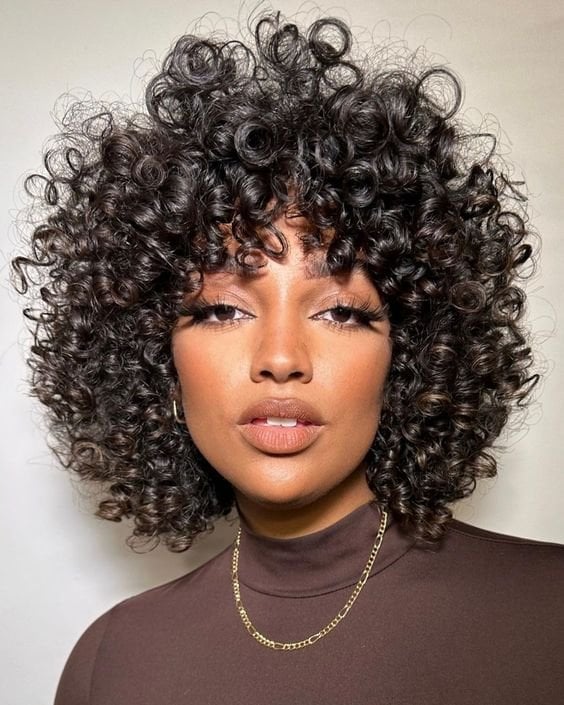
Can a chin-length bob with curtain bangs actually soften a round face? Yes, but only if the bangs are voluminous enough to create diagonal lines. In thick, dark brown curly hair with subtle lighter highlights, the curtain bangs should hit just below the cheekbone when dry, framing without covering. The chin-length bob itself adds structure, while the bangs break up the roundness. Ask your stylist for: chin-length bob with curtain bangs. This cut suits dense, thick curls, fine hair may not have the body to keep the bangs from parting too wide. The air-dried finish keeps the look casual, but the shape is planned. Skip this if your hair shrinks more than two inches when dry; the bob may land above the chin.
Layered Bob With Short Bangs, Chin
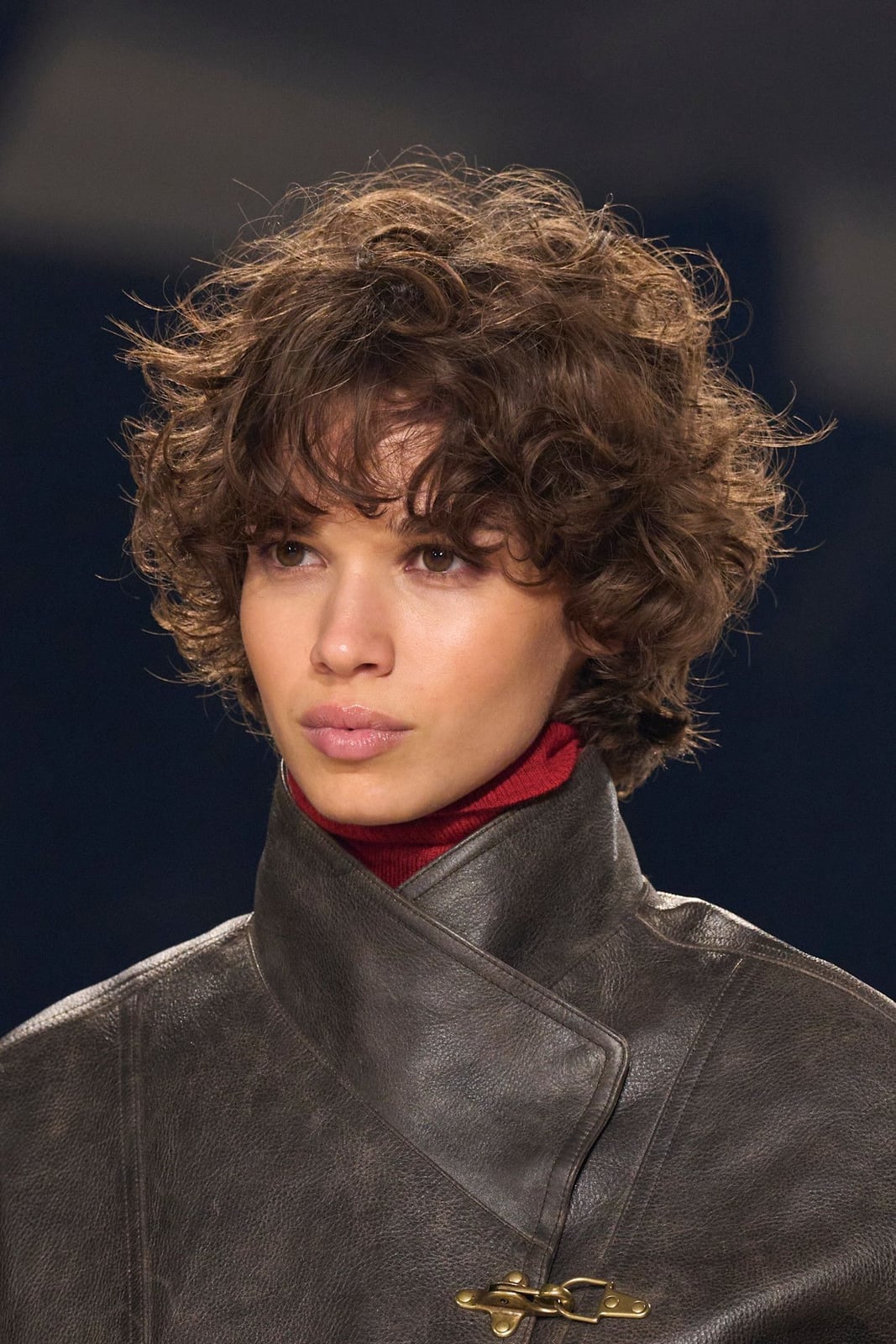
Short bangs on curly hair: how short is too short? For a chin-length layered bob in medium brown with medium density curls, the bangs should hit the mid-forehead when dry. Any shorter and they might bounce up to the hairline. Any longer and they lose the playful contrast with the bob length. Ask your stylist for: chin-length layered bob with short bangs. The layers throughout the bob prevent the sides from looking too heavy, and the middle parting keeps the bangs centered. When you sit in the chair, be specific about the bang density: you want them substantial enough to frame the face but not so thick they weigh down the curl. A curl cream applied to damp bangs and left to air dry gives the softest finish.
Shag With Short Curly Bangs
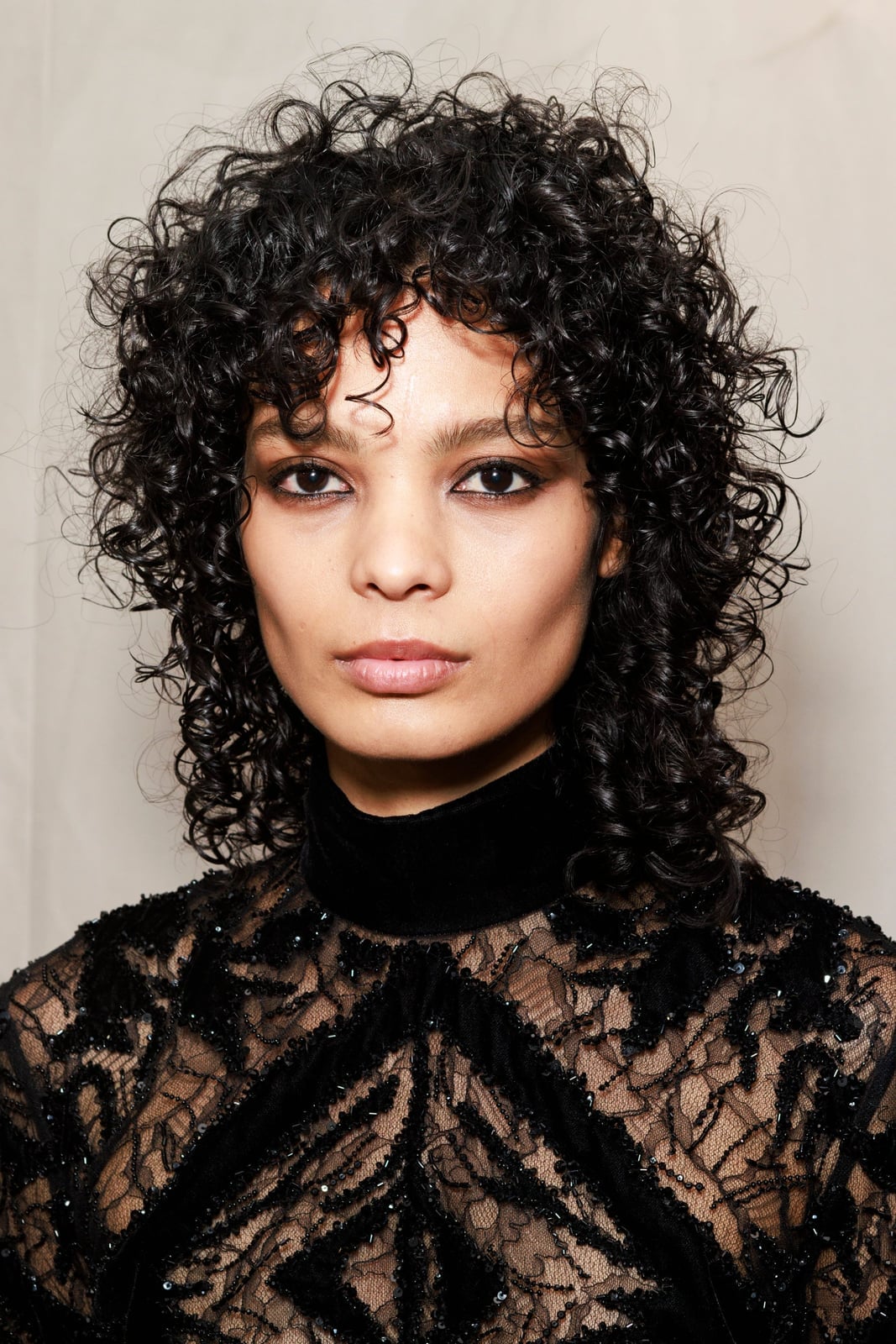
Ask your stylist for: shoulder-length shag with short curly bangs. Styling is quick: a texturizing spray on damp hair, scrunch, and air dry or diffuse on low heat. The bangs need a trim every eight to ten weeks, or they start to blend into the layers and lose the shape. The shag’s layered structure means less time with a brush and more time letting the cut do its thing. Medium density hair holds the texture best; very fine hair may not give the shag enough body.
Shoulder Length Cut With Wispy Bangs
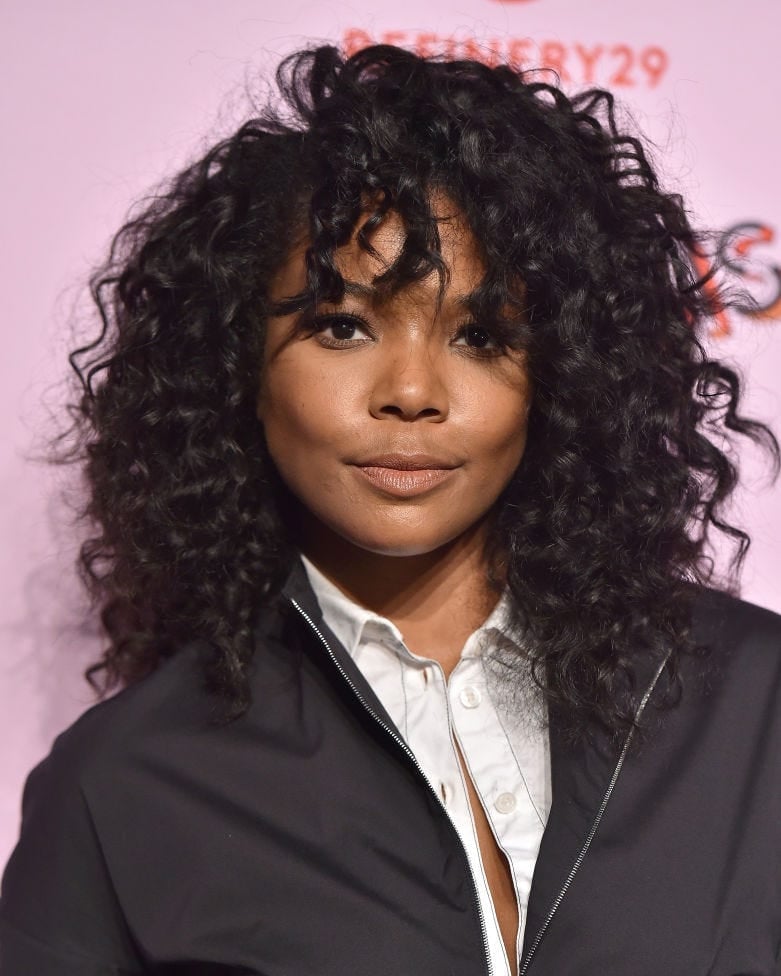
In shoulder-length curly hair, the layering technique does double duty: it carves out volume at the crown while keeping the ends light enough to curl without weighing down. The wispy bangs here are cut so they blend into the sides rather than sitting as a separate piece, which softens the overall line. Ask your stylist for: shoulder length cut with wispy bangs. Medium to thick curl patterns hold this shape best, and the side parting adds asymmetry that keeps the silhouette from looking too round.
Mid-Back Layers With Full Bangs
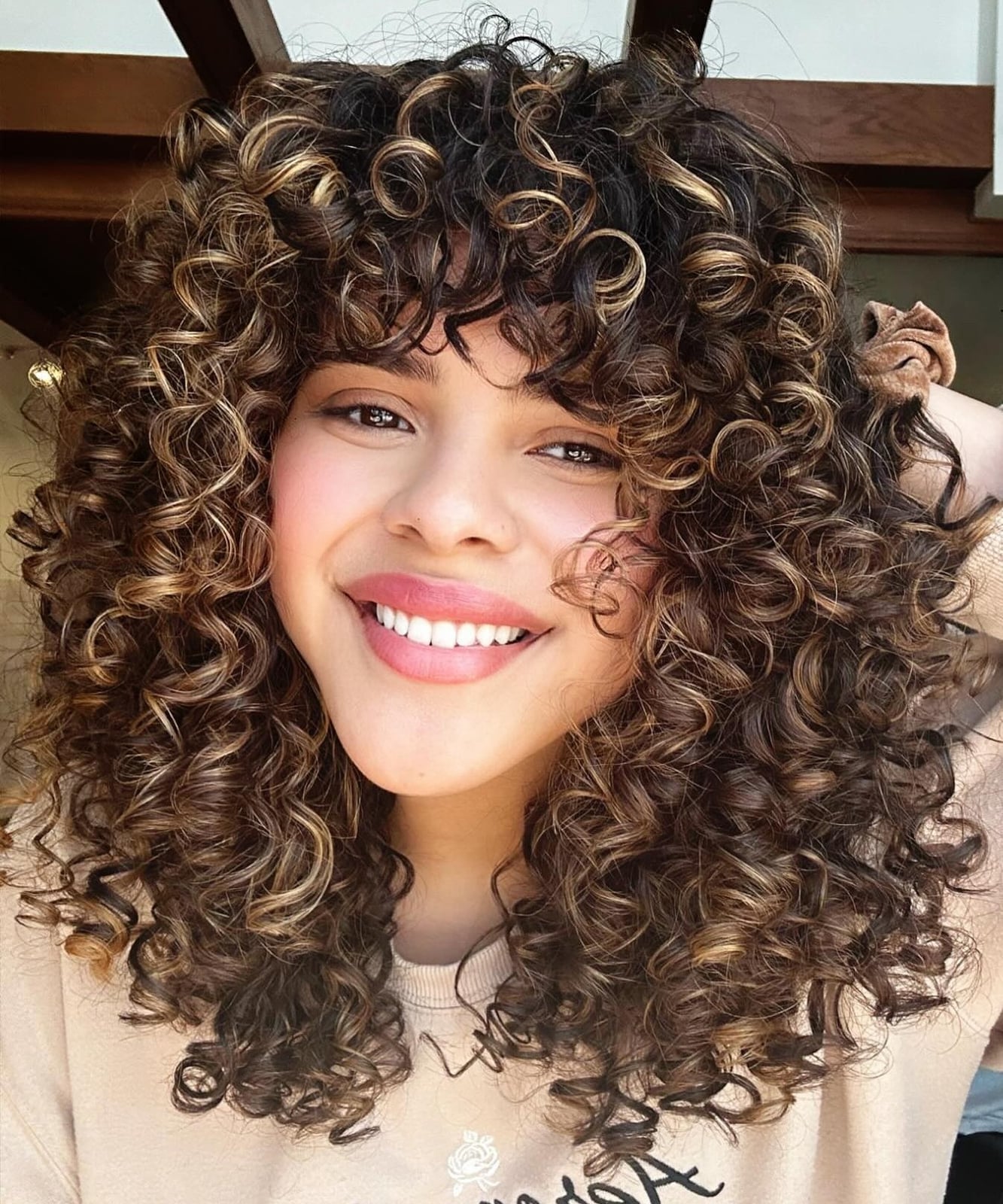
The honey highlights in this mid-back cut add warm contrast against the dark brown base, making the style work for golden-hour gatherings and holiday parties. Full bangs on thick curly hair hit just above the brow, letting the darker base peek through. Ask your stylist for: mid-back length layers with full bangs. The middle parting keeps the weight balanced on both sides, which helps the layers move together and avoids a triangle shape. Dense curls with some natural lift are the ideal starting point here. The cut works with what you already have.
This style lands naturally in the cooler months, when a heavier fringe feels seasonal and the honey tones warm up darker winter wardrobes. The shape also holds up well at festive events where you want the hair to make an entrance without requiring constant re-styling.
Mid-Back Layers With Loose Waves
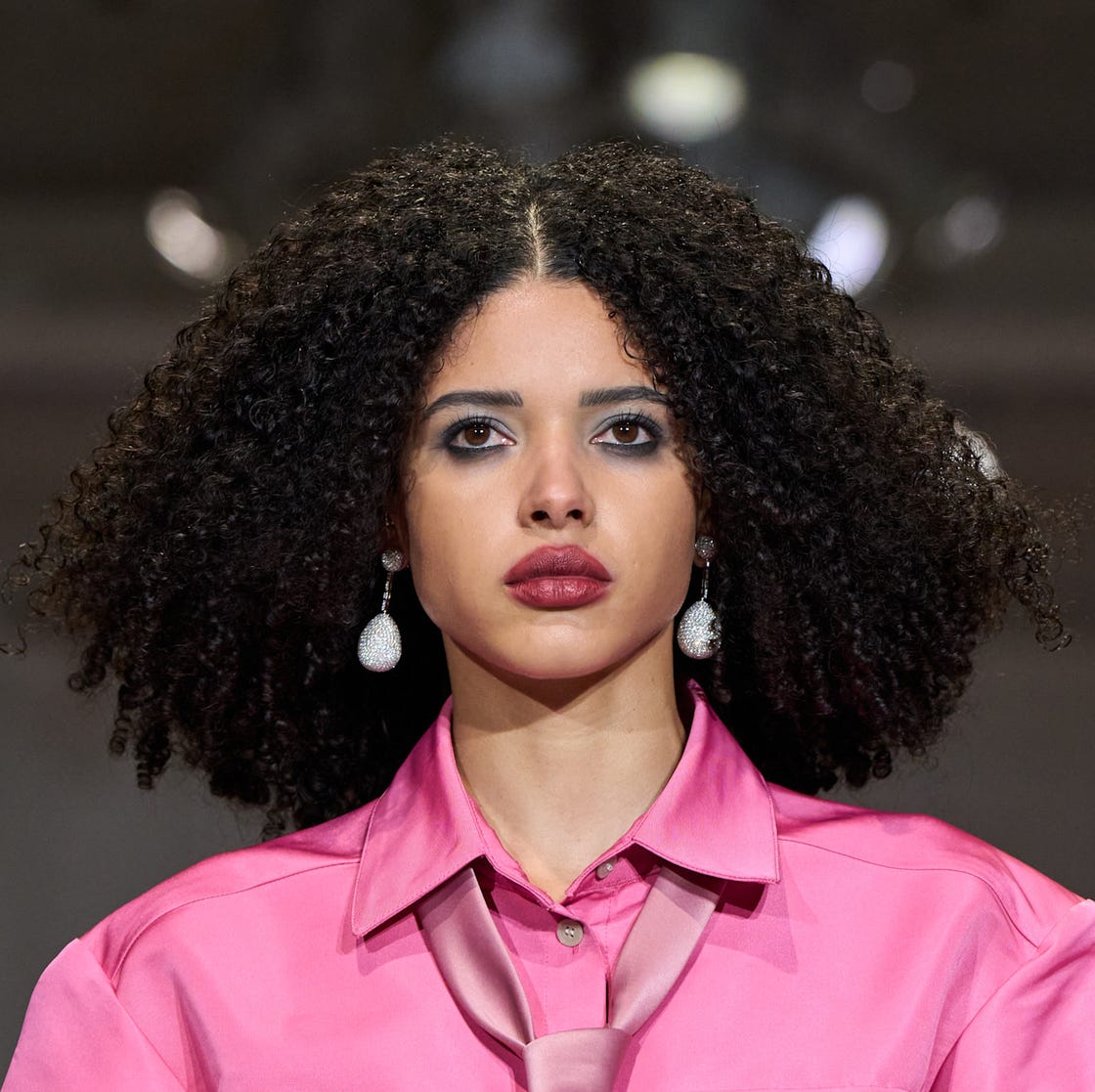
The layers here are cut to reduce bulk at the ends, which is the main trick for keeping thick curly hair from becoming a single heavy block of texture. Without that internal shaping, mid-back curls tend to lose definition below the shoulders and appear more weight than wave. Ask your stylist for: mid-back length layers, no bangs. The blonde highlights add dimension, but the scissors do the real work.
This cut needs regular maintenance, the layers grow out faster than a blunt hemline, and the shape starts to look top-heavy around week ten. Curl patterns that are very tight or prone to shrinkage may find that the layers shorten up more than expected after drying, so bring a photo of your air-dried texture to the consultation.
Long Layered Cut With Defined Curls
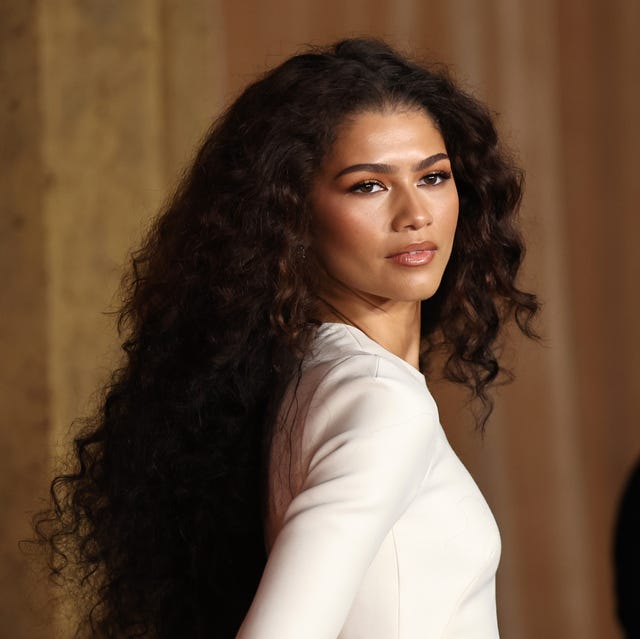
Can long layers make a round face look longer? With a side part and curls that fall below the chin, yes. The trick is keeping the layers soft enough that they cascade rather than stack. The side view here shows how the weight stays at the ends while the crown lifts naturally. Ask your stylist for: long layered cut, no bangs, side part. Dark brown curls with this much definition need minimal interference: a trim every eight to ten weeks and a curl cream applied to wet hair are usually enough. This cut suits thick textures that can hold the shape without product buildup. Curl patterns that are fine or low density may find the length pulls the wave out too much.
Mid-Back Layers With Caramel Highlights
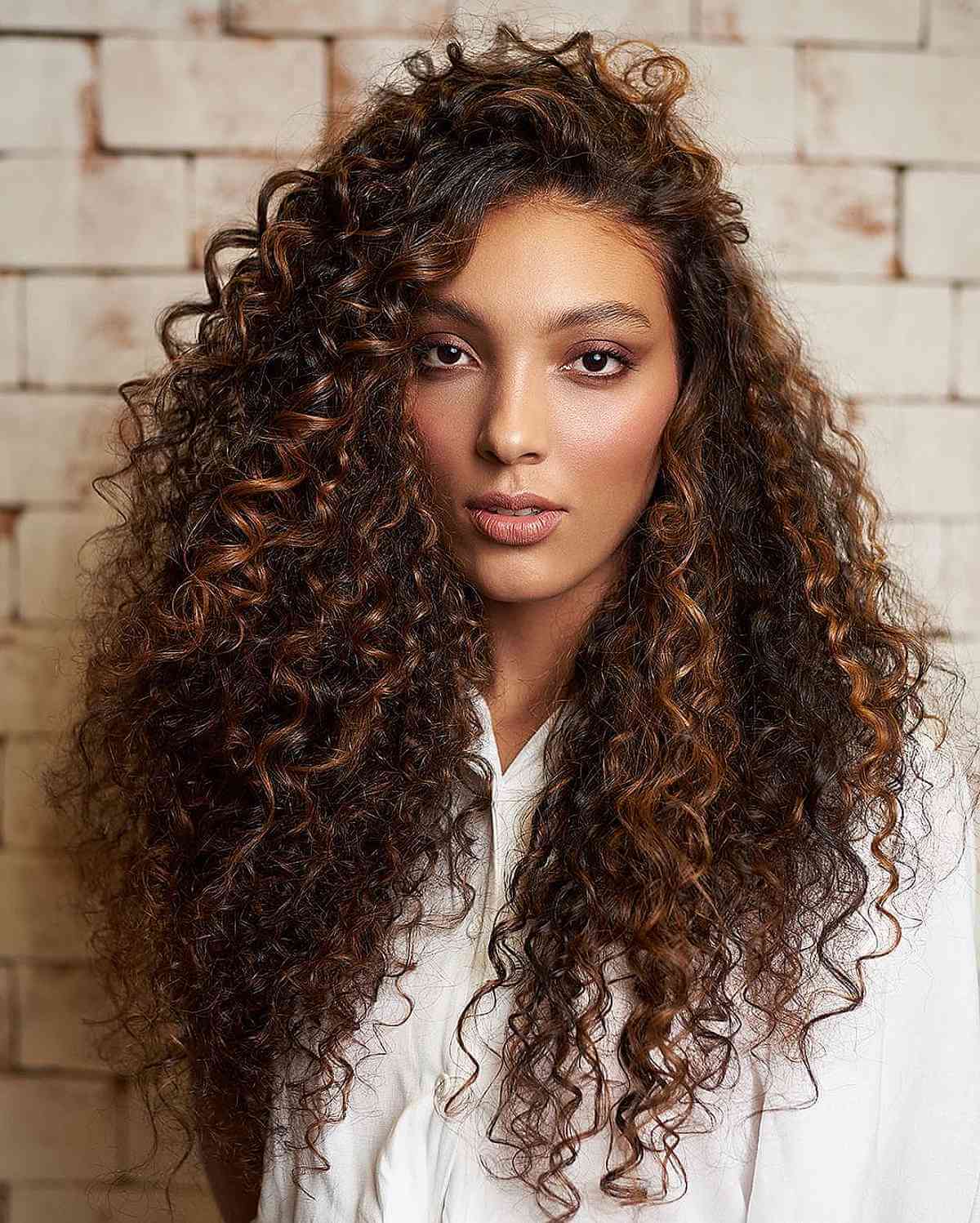
Caramel highlights show in thick, voluminous curls through strategic placement: the colorist paints lighter pieces onto the surface layers and keeps the darker base underneath, so the caramel pops when the hair moves instead of disappearing into the mass. Ask your stylist for: mid-back length long layers, no bangs. The layers are cut to follow the curl pattern, which means the highlights land on different levels of the wave and create depth without looking striped. Thick, dense textures benefit most from this approach because the internal layers prevent the hair from puffing out sideways. A side parting breaks up the symmetry and lets the caramel tones catch light from one side.
What to request at the salon: bring a reference photo of voluminous curls with caramel highlights that start a few inches from the root. Ask the colorist to weave the highlights through the mid-lengths and ends only, and to keep the base dark brown so the grow-out stays soft.
Long Layers With Balayage Dimension
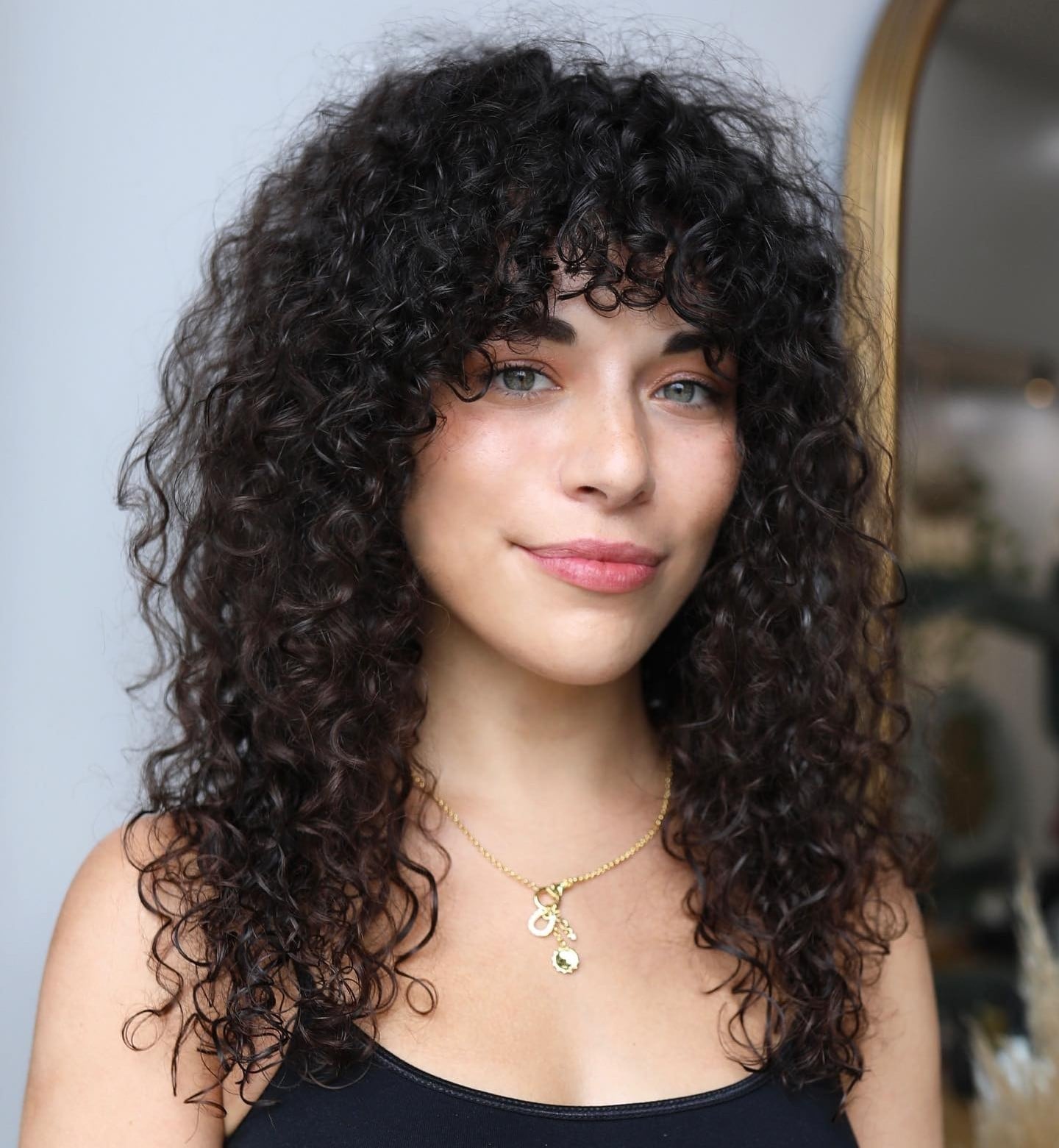
The design here is deceptively simple: long layers cut through thick, dark brown curls, with balayage highlights placed to catch light on the curves. That side parting helps the color show movement instead of just streaks. This is a cut that works best when the layers are long enough to let the curl pattern do its thing, so the mid-back length is key.
Maintaining the dimension on dark brown hair means scheduling a toning appointment every 10 to 12 weeks to keep the balayage from turning brassy. At home, a curl cream and scrunching while damp is all it takes; air drying or diffusing preserves the shape. Trim every 8 to 10 weeks to keep the ends healthy. No bangs here, but the layers frame the face anyway.
Mid-Back Length With Long Layers
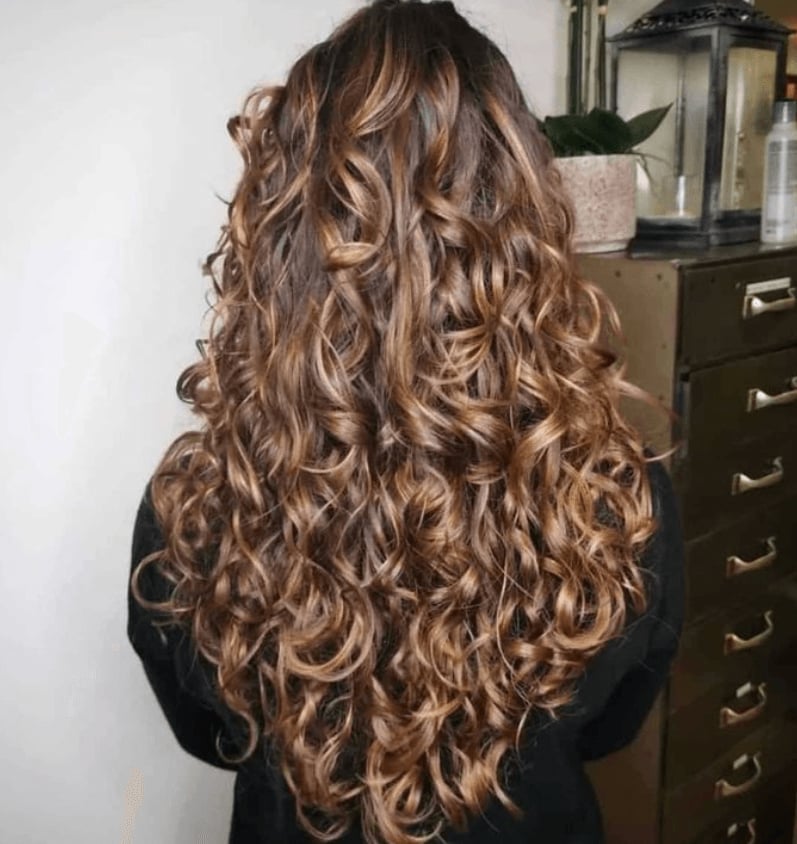
Long layers in thick, dense curly hair are cut to remove weight without sacrificing length. The technique involves carving the layers through the interior so the curls stack and separate instead of collapsing into a triangle shape. A middle part and mid-back length keep the silhouette elongated. No bangs means the volume starts lower, which suits thick textures that can handle the density. The result is movement that looks deliberate, not accidental.
Elegant Updo With Swept Up Bangs
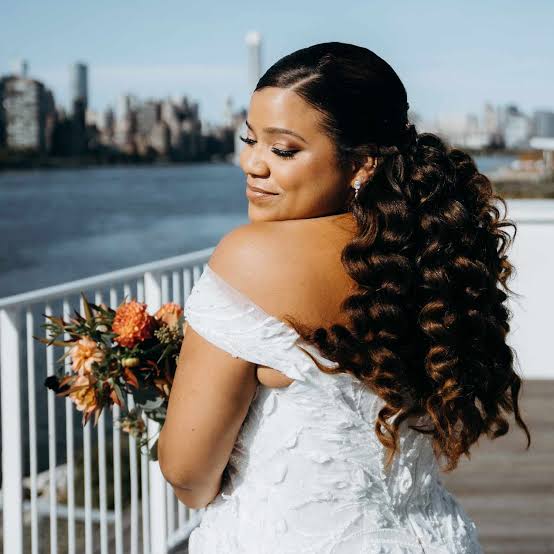
An updo that actually uses the curl texture instead of fighting it. The ponytail sits at the crown, with the thick dark brown curls gathered into a soft, rounded shape that holds without pins fighting gravity. The swept-up bangs are the trick: they add height and keep the front from looking flat, which is useful for formal events where you want the hair to look polished but not stiff.
This style lands naturally in warmer months or for occasions where you want hair off the neck but still want to show off the curl pattern. A side parting visible in the back helps the updo feel softer than a slicked-back version. The layers inside the cut give the ponytail enough texture to stay interesting, so it does not look like a scrunchie job gone wrong.
Salt and Pepper Bob With Defined Curls
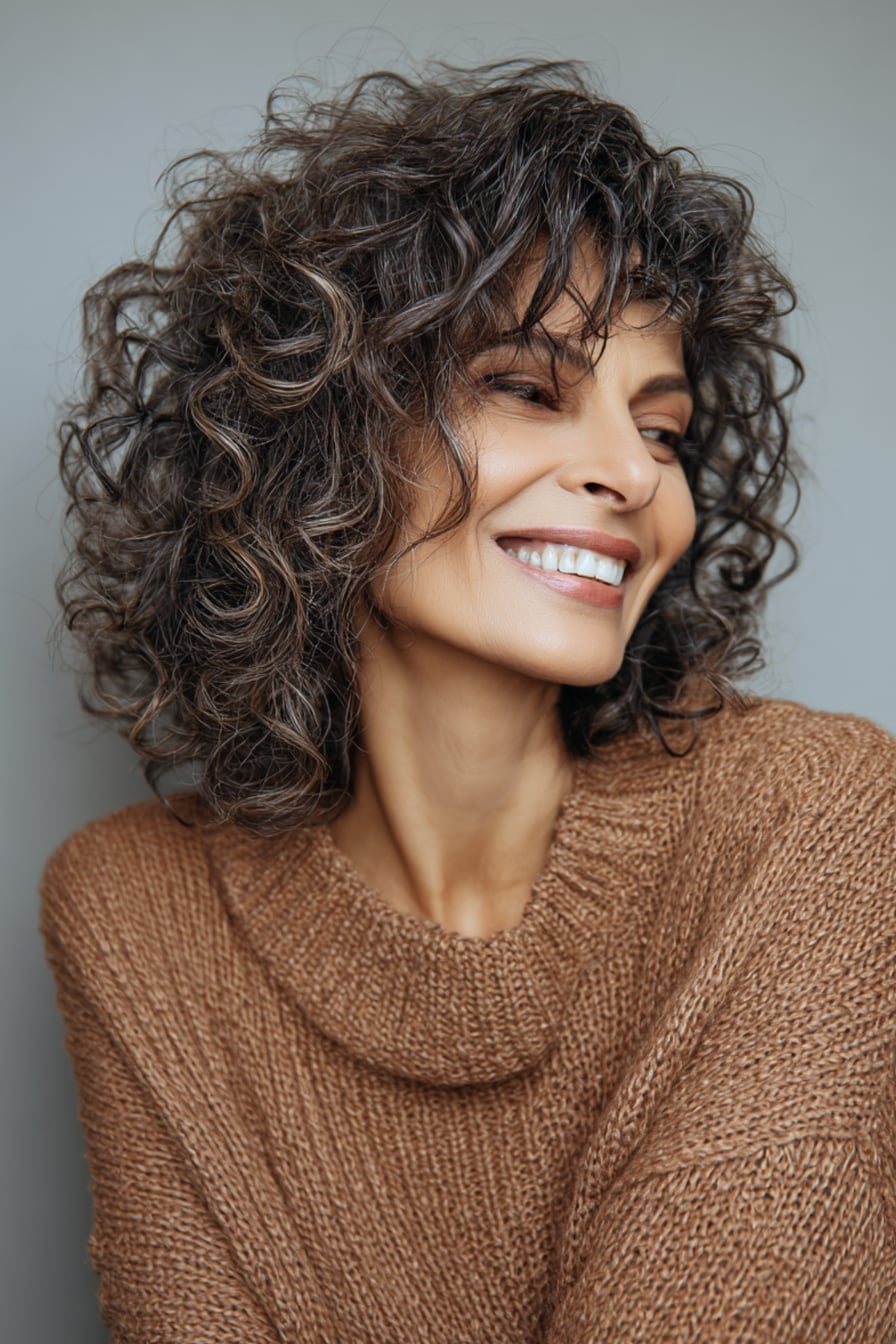
A solid-color salt and pepper bob looks uniform, but this one adds dark brown lowlights for depth. The contrast makes the grey look more deliberate and less like you just stopped coloring. Achieving this tone at home is risky, mixing grey and dark lowlights requires a colorist who understands how to place the darker pieces so they shadow the curl without muddying it. Salon is the safer bet. The chin-length layered bob with a side part and defined curls works best on fine to medium density hair that can hold the shape without getting too heavy.
This is not the bob for someone who wants low maintenance in the color department. The lowlights need refreshing every 8 weeks to keep the contrast sharp. But for the dimensional effect, it is worth the chair time.
Layered Chin Length Bob With Highlights
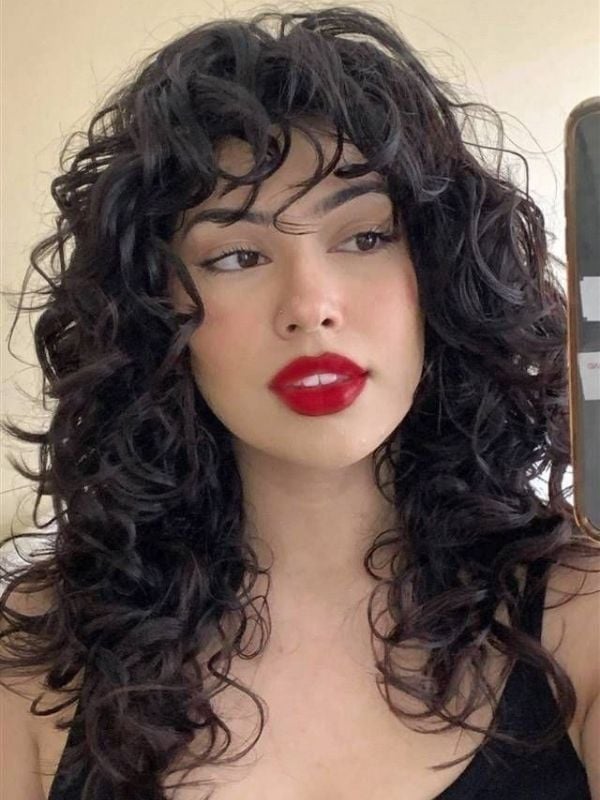
So you want a chin-length bob that does not sit there like a helmet. The trick is the highlights placed to follow the layers, so the lighter pieces hit the curls at different heights. Ask your stylist for a chin-length layered bob with subtle highlights. The dense dark brown base keeps it grounded, while the lighter strands add dimension without looking stripey. No bangs keeps the focus on the shape and the texture. A middle part and air-dried styling let the cut do the work. This is a straightforward request that a good stylist can execute in under two hours.
Final Thoughts
Fine curls hold density best with a blunt baseline and minimal internal layers. Thick curls need more layers to release weight and let each ringlet spring up. Let your natural texture decide the shape, not a trend.
- Trim every 6-10 weeks to maintain shape and prevent split ends.
- Refresh curls with a leave-in conditioner and curl-defining cream.
- Air dry or use a diffuser on low heat to preserve curl pattern.
- Deep condition weekly to maintain moisture and elasticity.
Embrace your natural texture with a cut that celebrates it.
