

The line between polished and relaxed keeps blurring, and these hairstyles are happy to live right on it. Soft face-framing layers, curtain bangs, and lived-in color are carrying the moment, with glossy natural texture doing the heavy lifting.
Here are 32 Classy Casual Hairstyles that span low upkeep to high, short to long, and salon to DIY. Whether your hair is fine, thick, wavy, or straight, there is a version here that works. If fine hair that falls flat or a grow-out line that shows up too soon sounds familiar, this collection has your answer.
Voluminous Layered Shag With Side Bangs
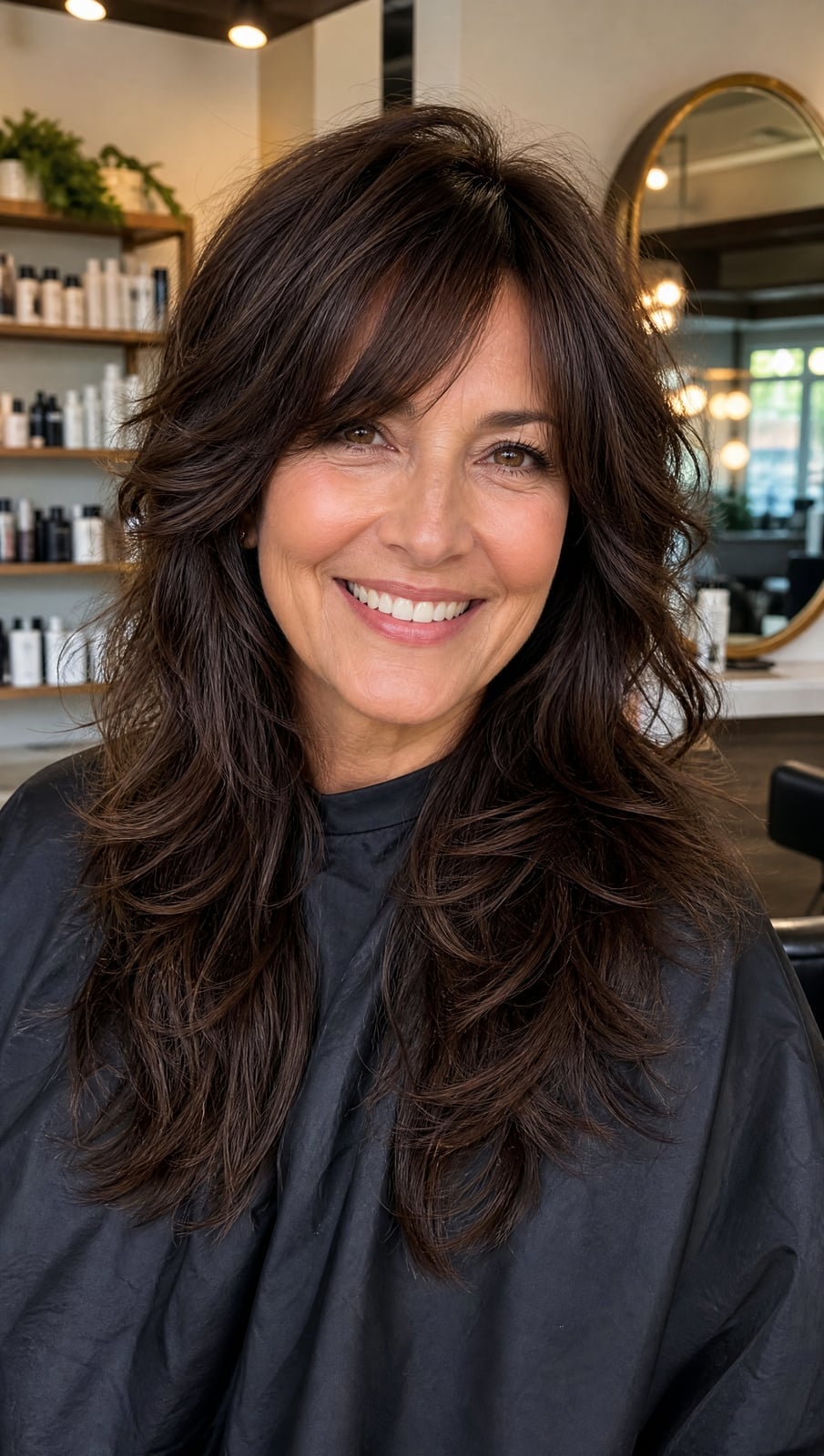
A shag this layered does not need a second invitation to add volume. Thick, wavy hair at mid-back length catches the cut best, because the internal layers remove weight without collapsing the shape. Side-swept bangs also work to soften a square or round face, though fine hair may find the shag reads as sparse rather than airy. Ask your stylist for: mid-back layered shag with soft waves and side-swept bangs. The layers need a trim every 10 to 12 weeks to keep their shape from turning ragged.
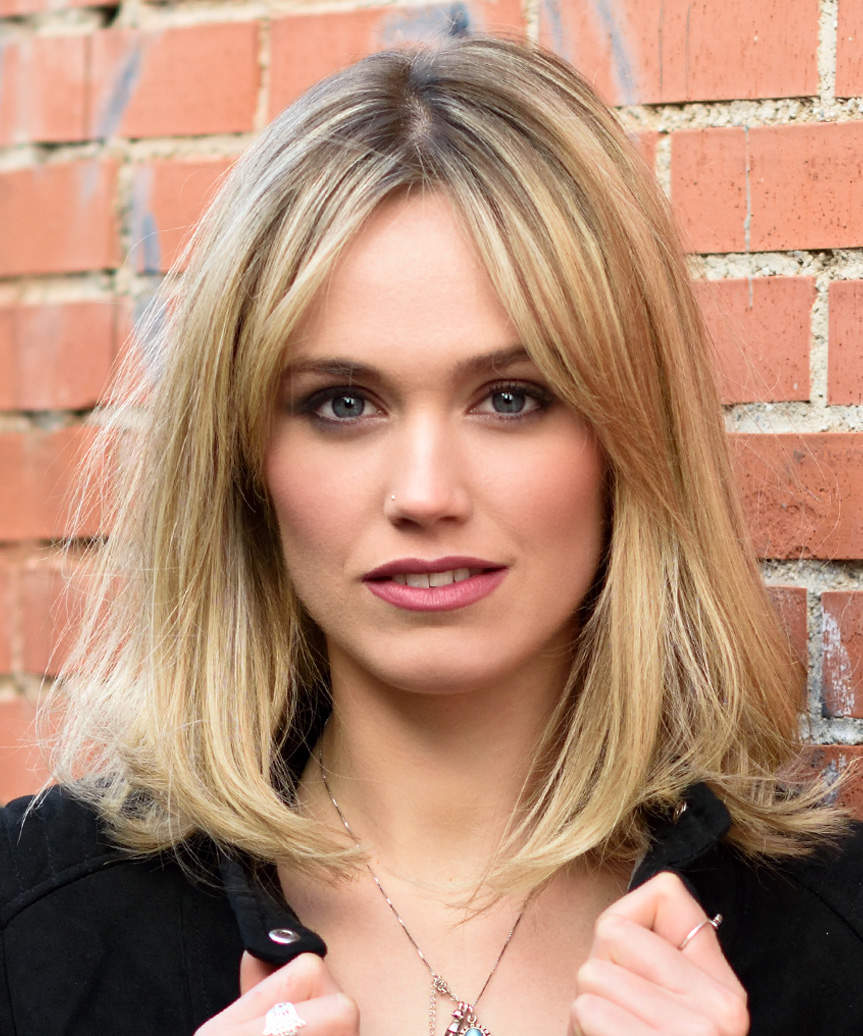
Shoulder Length Blowout With Wispy Bangs
Wondering how to get that smooth, polished finish without fighting your hair all morning? The answer lies in the blowout technique and the wispy bangs, which add softness without demanding precision. The shoulder length suits fine to medium density hair, and the side part helps the soft waves fall in a flattering arc. Ask your stylist for: shoulder length blowout with soft waves and wispy bangs. A round brush at the roots during drying creates the volume, and a light-hold hairspray keeps the polish intact.
Collarbone Lob With Curtain Bangs
The lob is cut with a blunt baseline at collarbone length, and the curtain bangs are sliced to blend into the sides rather than sit as a separate piece. This construction gives fine, straight hair the illusion of density at the ends, while the middle parting keeps the face open. Ask your stylist for: collarbone lob with soft waves and curtain bangs. A large barrel curling iron adds the soft bend, and the baseline needs a trim every six to eight weeks to stay clean.
Collarbone Blowout With Face-Framing Layers
Compared to a solid lob, the face-framing layers here add movement around the jaw and cheekbones, which changes how the style wears over the day. The collarbone length and wavy texture of medium density hair hold a blowout well, and the warm brown base with blonde highlights gives the layers a visible gradient. Ask your stylist for: collarbone wavy blowout with curtain bangs and face-framing layers. A volumizing mousse at the roots before drying lifts the crown, and trims every 8 to 10 weeks keep the layers from growing past the sweet spot.
Collarbone Wavy Blowout With Curtain Bangs
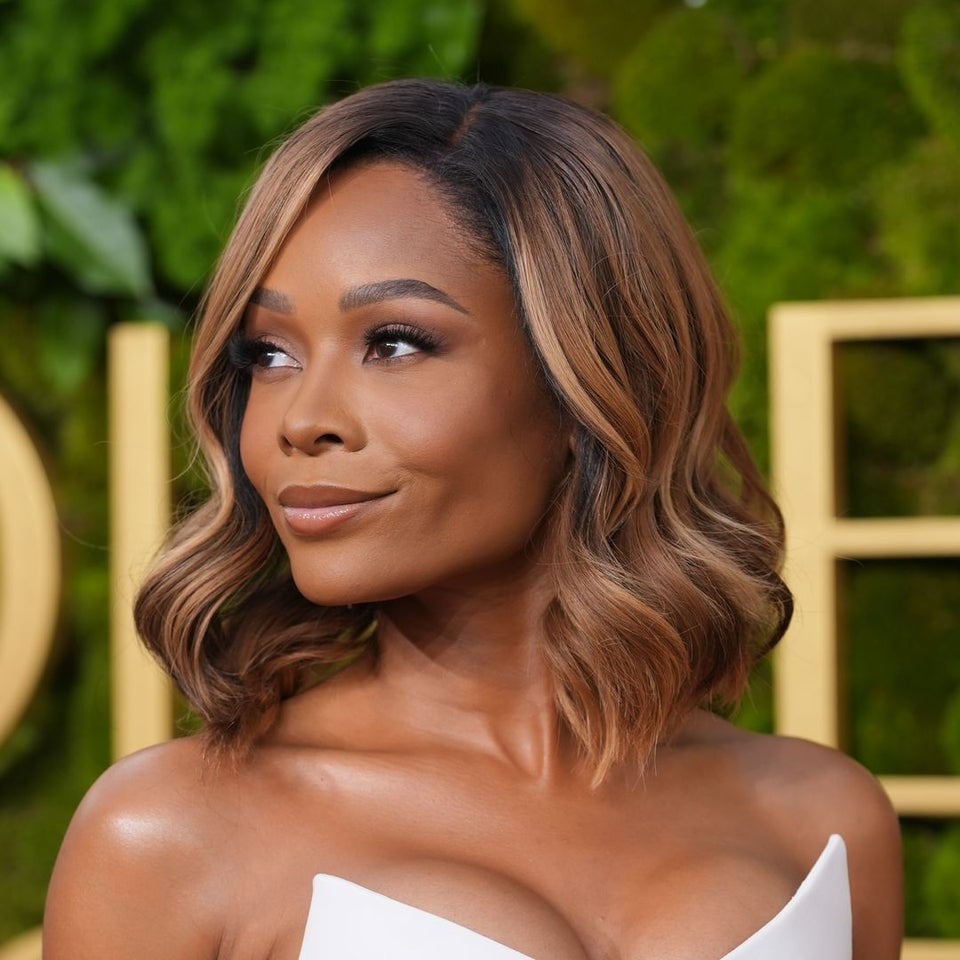
Where the previous look used warm brown and blonde for contrast, this version stays closer to a dark brown base with subtle blonde highlights, which makes the waves read as one continuous texture. The collarbone length and medium density wavy hair still hold a blowout, but the curtain bangs here feel softer because the darker base does not compete with the highlights. Ask your stylist for: collarbone wavy blowout with curtain bangs. A heat protectant before blow drying is essential, and quarterly toning keeps the blonde from shifting brassy.
Shoulder Length Layers With Curtain Bangs
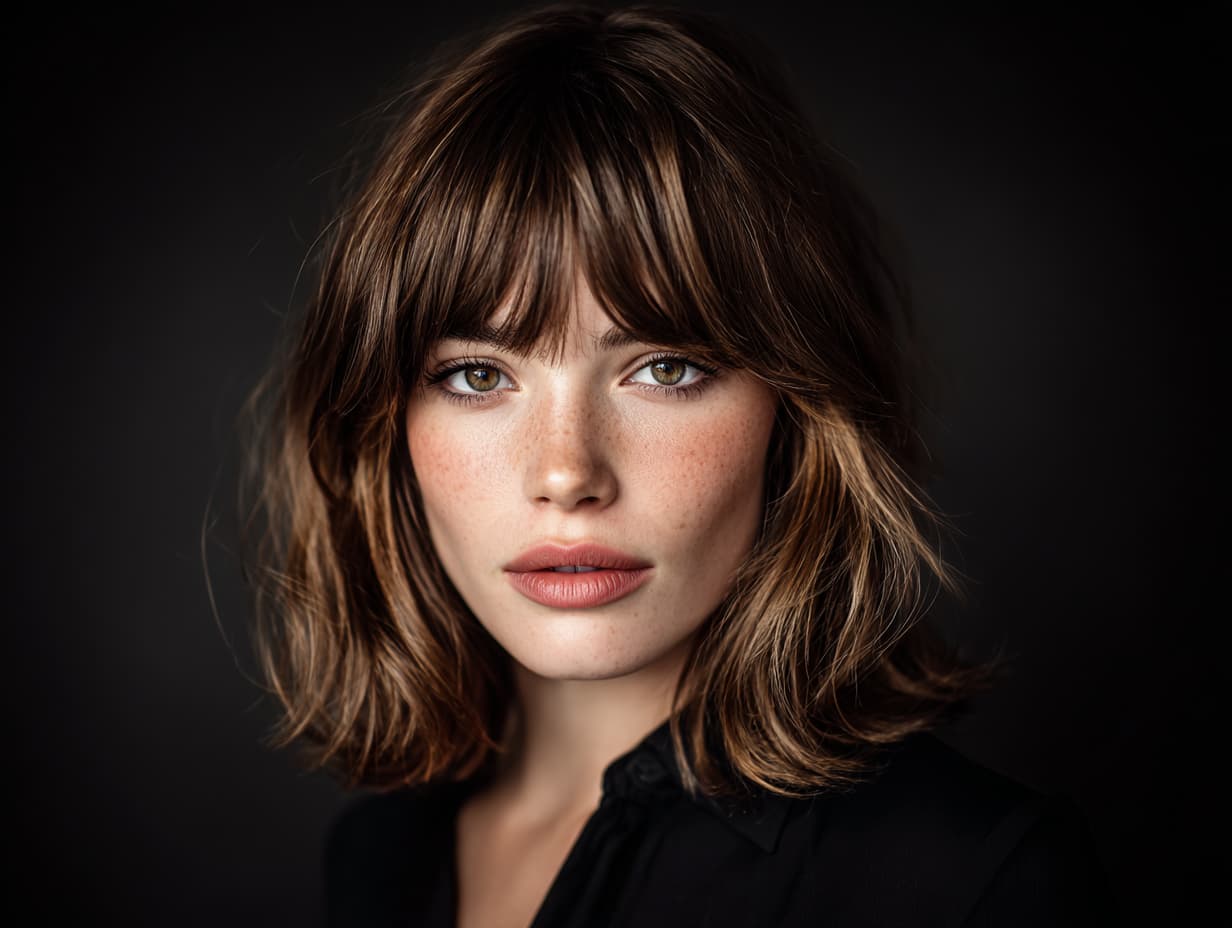
Wondering if curtain bangs will actually work with your texture? On wavy, medium-density hair at collarbone length, they do. The soft layers and curtain bangs are styled in a casual blowout, with the middle parting letting the face-framing pieces fall where they should. The brown base with subtle blonde highlights adds dimension without needing a full color overhaul. Ask your stylist for: shoulder length layered cut with curtain bangs and a casual blowout. This combination genuinely flatters most face shapes, since the bangs can be swept to widen a narrow forehead or soften a square jaw. Blow-dry with a round brush to encourage the bend, then finish with a texturizing spray for that lived-in hold.
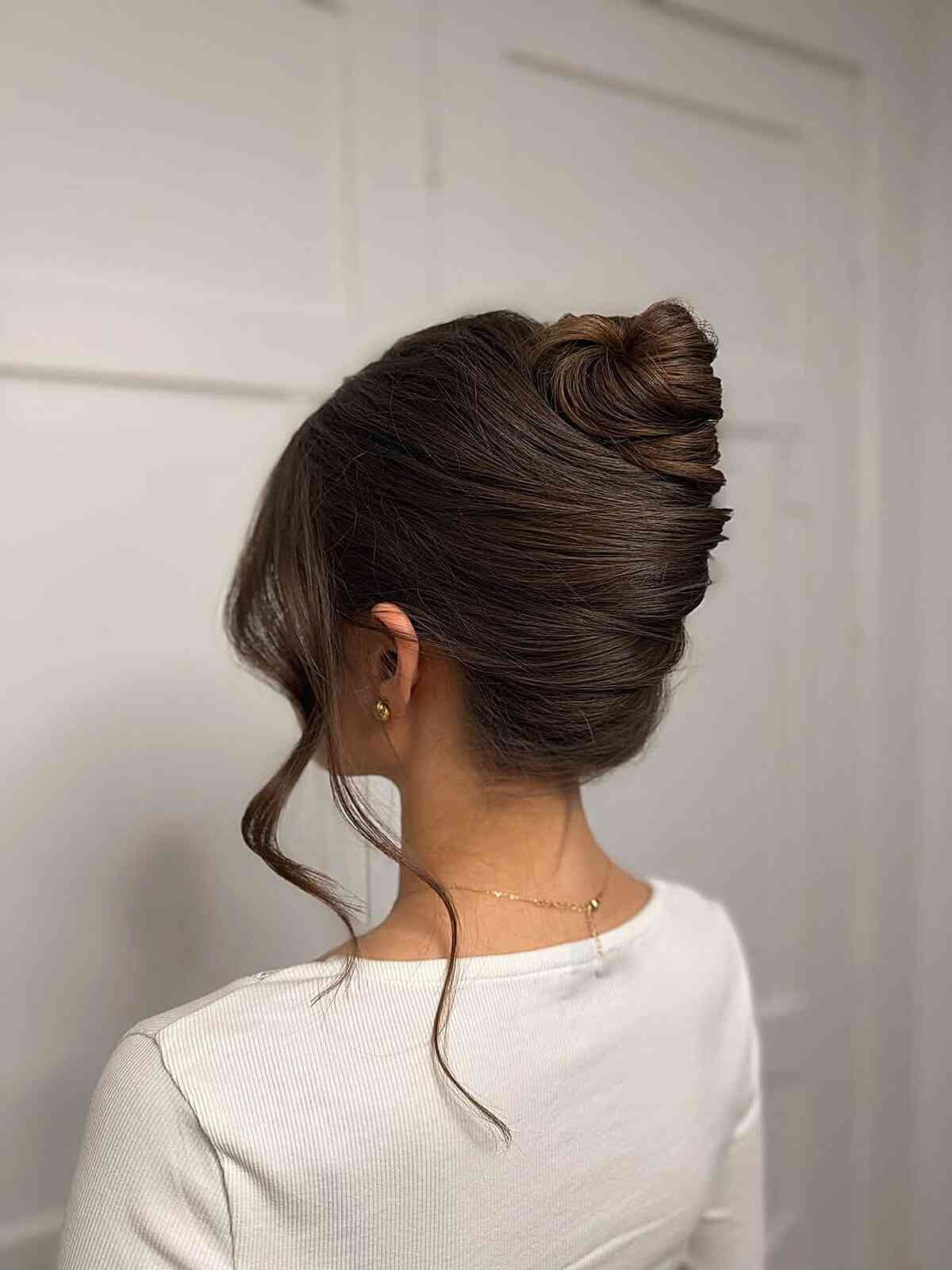
Voluminous Crown Updo With Face-Framing Pieces
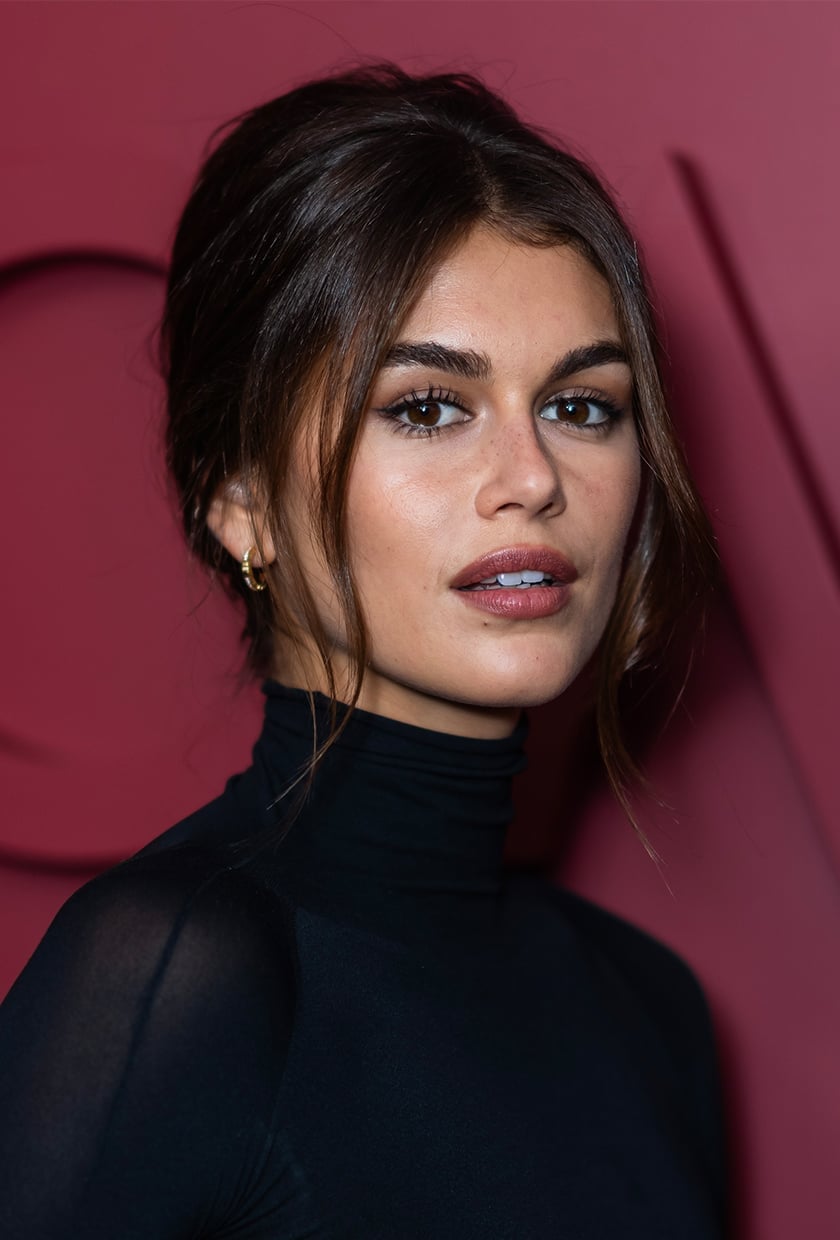
The voluminous crown is the structural anchor here. Thick, wavy dark brown hair is pulled back from a middle parting, with the crown section lifted and secured to create height. Face-framing pieces are left out to soften the front. Ask your stylist for: pulled back updo with a voluminous crown and face-framing pieces. The technique relies on backcombing at the crown before pinning, then smoothing the surface layer over it. A texturizing spray applied to damp hair before styling gives the waves enough grip to hold the shape. This design holds well through a full workday or an evening event without sagging.
Collarbone Low Bun With Wispy Bangs
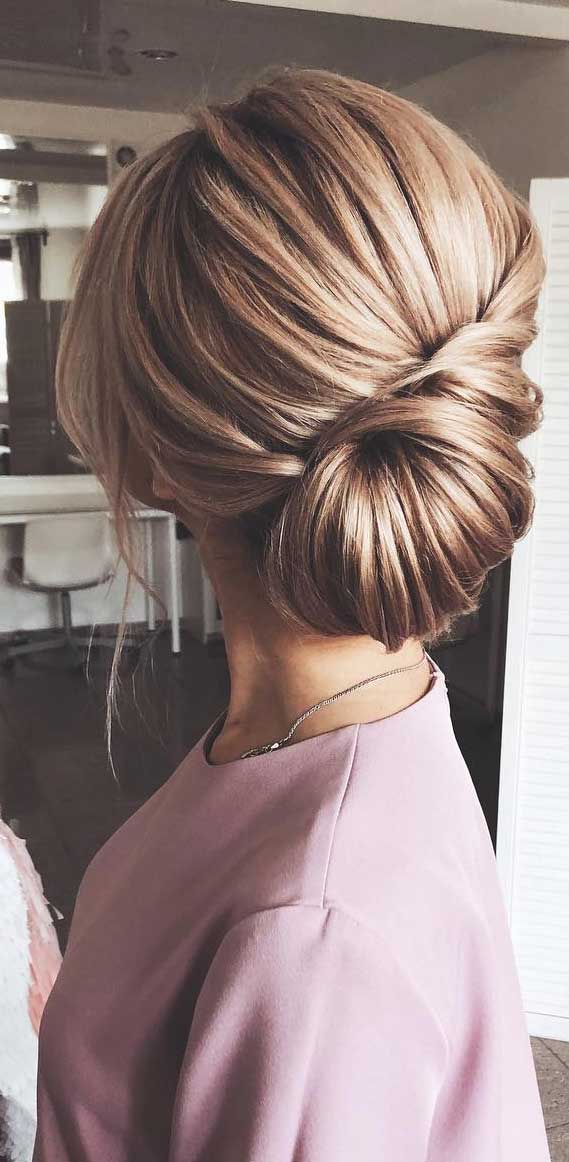
The twisted knot sits at the nape, built from collarbone-length honey blonde hair with subtle highlights and a side parting. Wispy bangs break up the smooth finish, keeping the bun from reading as severe. Ask your stylist for: collarbone length low bun with wispy bangs. The twist technique involves sectioning the hair into two pieces, twisting each away from the face, then wrapping them together into a knot. On thick, wavy texture, the bun stays secure with minimal pinning. Pull out a few strands around the hairline for a softer perimeter. The baseline benefits from a trim every six weeks to keep the ends clean.
Collarbone Low Bun With Ash Blonde Highlights
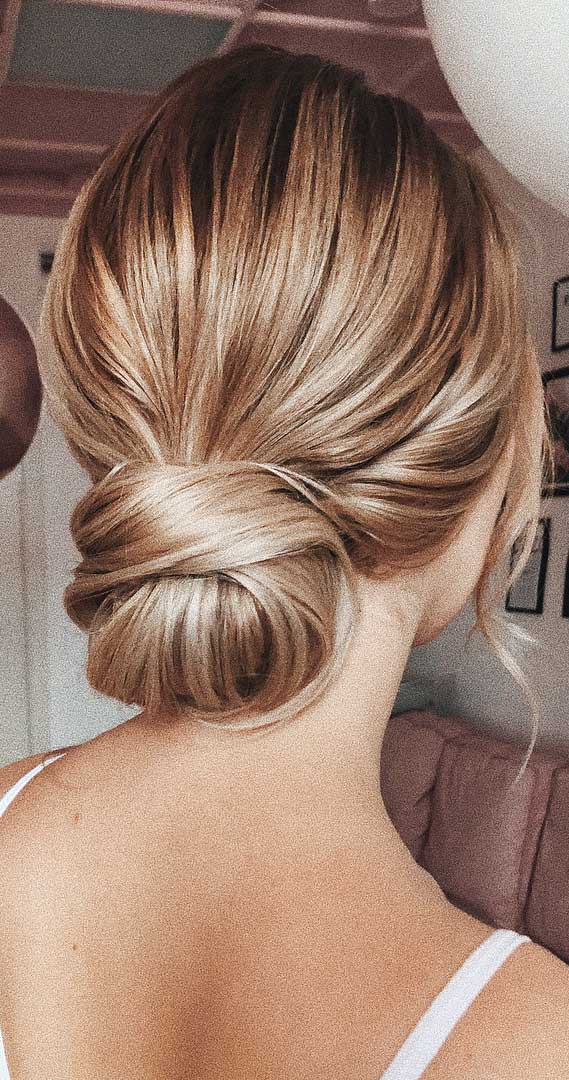
This low bun takes a different path from the thicker version in section 8. Here the hair is wavy and fine, which means the twisted knot has a sleeker, more delicate silhouette. The ash blonde base with subtle highlights and wispy bangs creates a cooler tone overall. Ask your colorist for: collarbone low bun with wispy bangs and ash blonde highlights. Fine hair benefits from a texturizing spray applied to dry strands before twisting to keep the bun from slipping. The side parting adds asymmetry, and the wispy bangs soften round or square face shapes. A toning appointment every six to eight weeks helps keep the ash tone from warming up.
Collarbone Low Bun With Subtle Waves
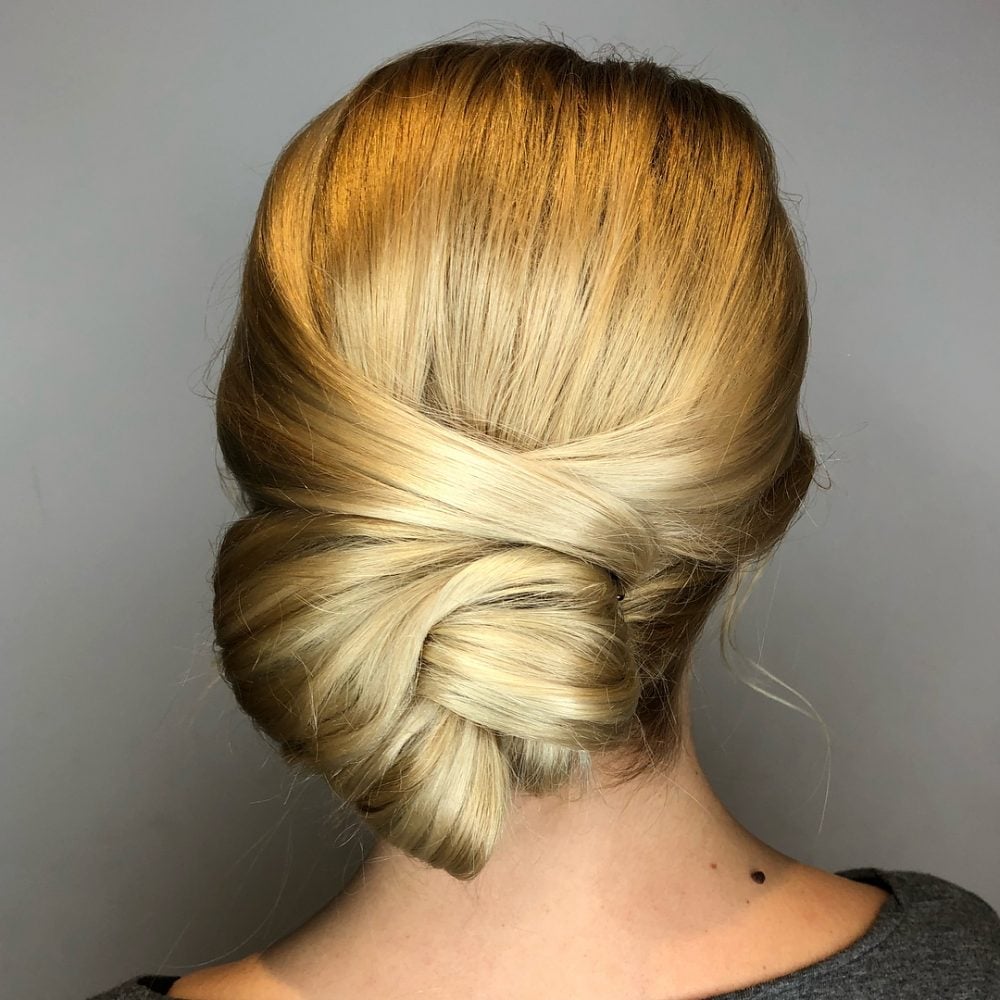
How does a low bun hold up when there are no bangs to hide the hairline? The answer is in the texture. Thick, blonde hair at collarbone length is twisted into a voluminous knot at the nape, with subtle waves running through the surface. The side parting adds visual interest to an otherwise symmetrical shape. Ask your stylist for: collarbone length low bun with subtle waves. A few face-framing pieces are pulled out to soften the perimeter. The waves are set with a curling wand before the hair is gathered, so the texture holds even after the bun is pinned. A trim every six weeks keeps the ends from looking ragged.
Mid-Back Half-Up With Wavy Strands
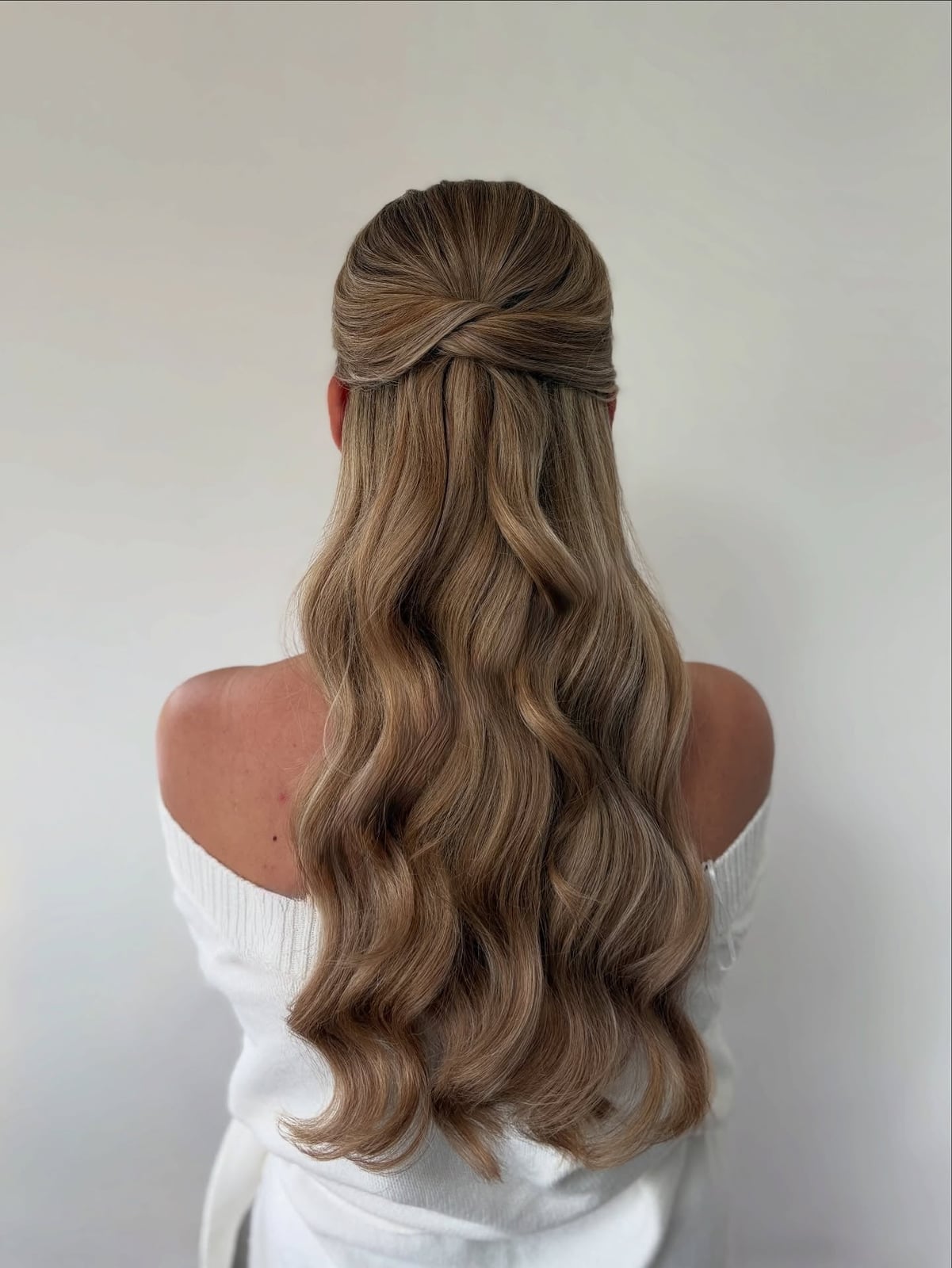
The half-up here is built around a knot at the back of the crown, which gives the style its structure while the hair falls in loose waves to mid-back. Medium to thick hair holds the gather without slipping, and the light brown base with subtle highlights adds depth so the waves read individually.
Ask your stylist for: mid-back half-up style with loose wavy strands. Before gathering, spritz a texturizing spray through the lengths to give the waves grip, then secure the top section with a snag-free elastic. The knot keeps the style in place for a full day, and the loose strands keep it from looking like a formal updo.
Mid-Back Braided Updo With Low Bun
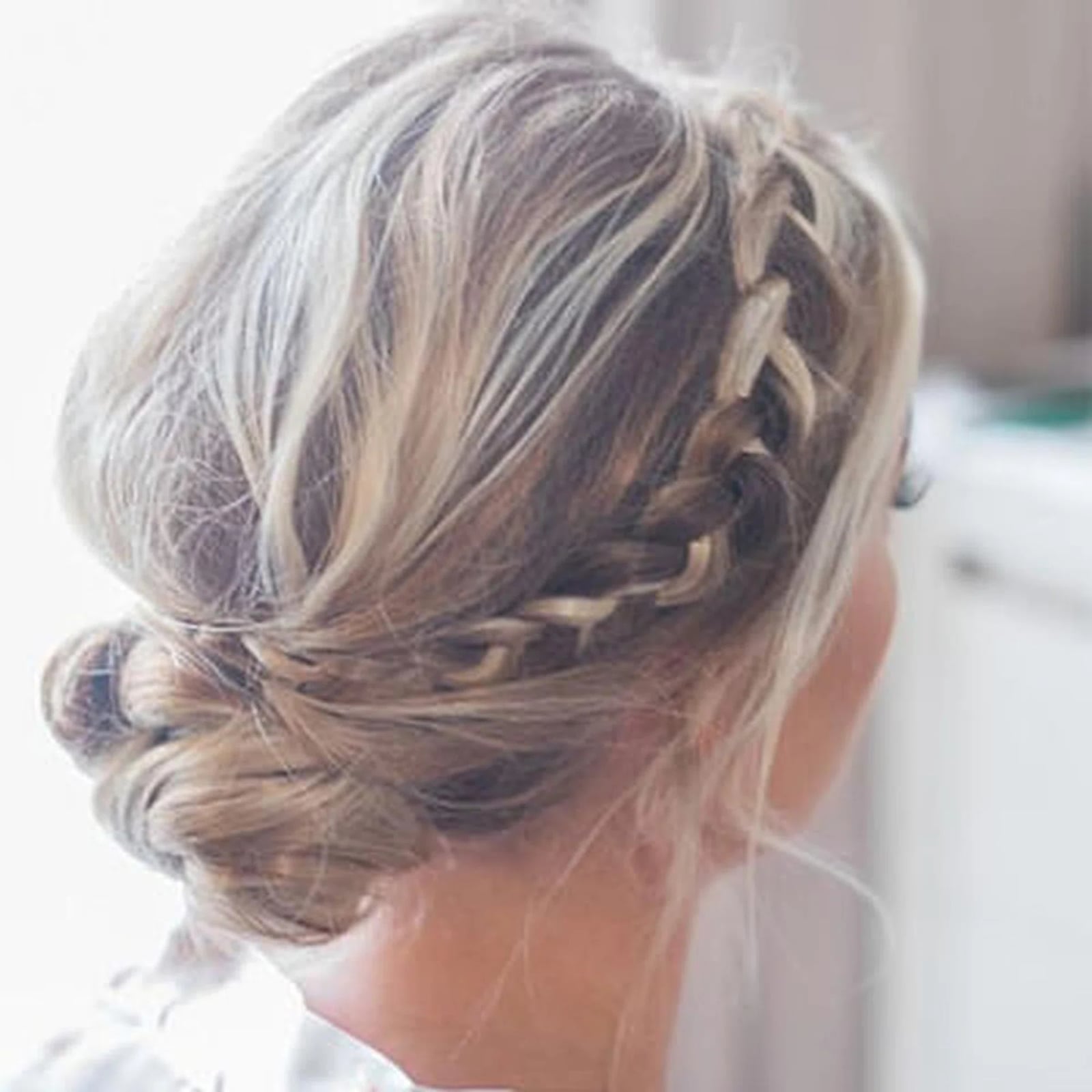
The braid detail here is the anchor, woven from the side into a low bun at the nape, with soft waves left around the crown to keep the whole thing from reading as severe. It suits medium-density wavy hair of mid-back length that can be braided and bunned without snapping, and the ash blonde with highlights picks out the braid’s texture so the weave is visible from across the room.
Ask your stylist for: mid-back braided updo with a low bun and soft waves. Lightly mist the finished style with hairspray to hold the braid and bun in place, and smooth any flyaways with a dab of pomade. The side parting keeps the braid’s path clean, and the low placement means it holds without tugging at the roots.
Mid-Back Ponytail With Ash Blonde Highlights
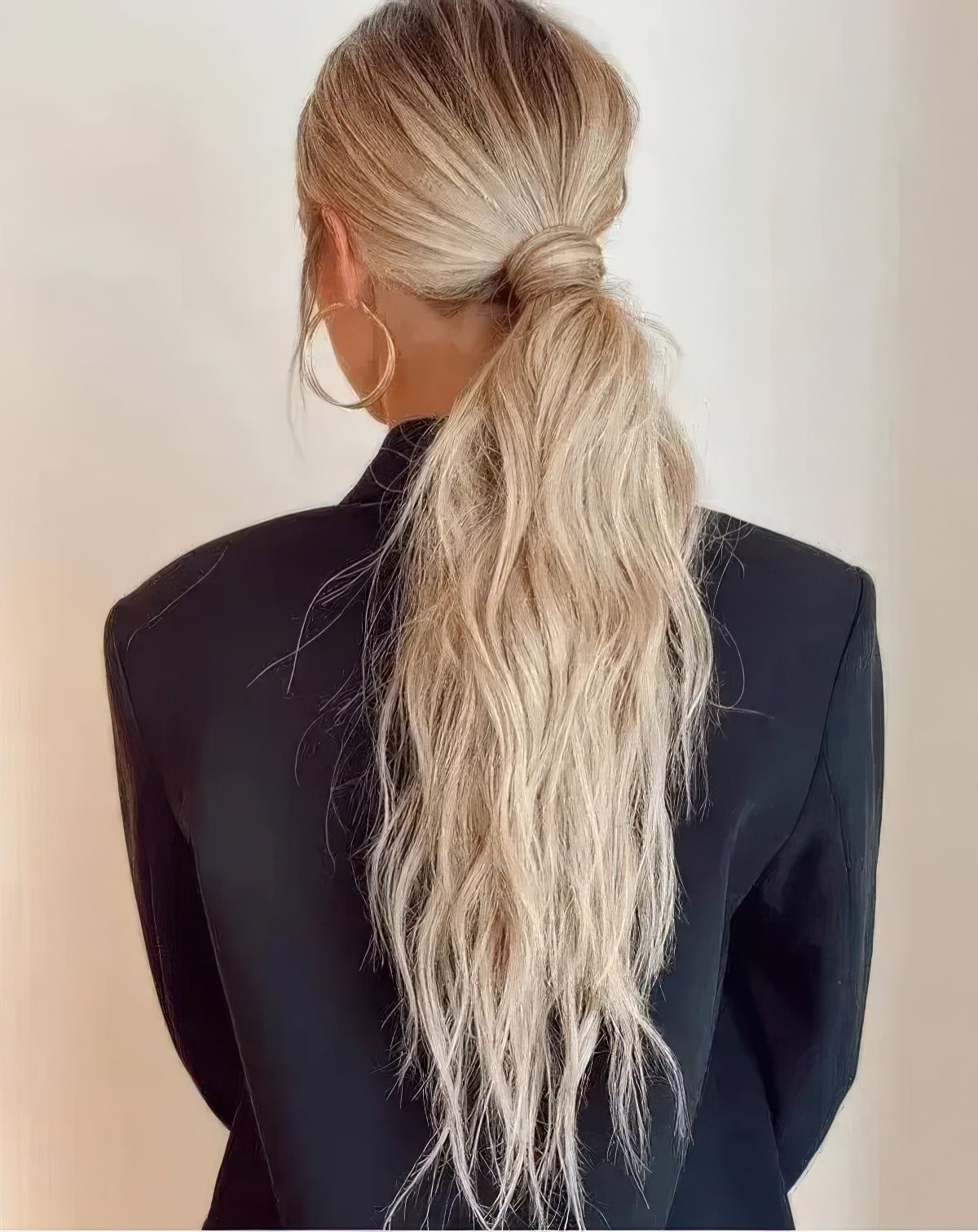
This is the ponytail for days when a sleek version would fall flat by noon. The loose wavy texture through the length gives fine hair body, and the ash blonde with highlights stops the tail from reading as a single pale rope. Ask your stylist for: mid-back high ponytail with loose wavy texture. The challenge with fine, wavy hair is keeping the base smooth while the tail stays textured, so wrap a strand of hair around the elastic for a polished finish. Plan on a trim every ten to twelve weeks to keep the layers from looking straggly, and expect the waves to soften by evening, which is fine, the style is built to relax.
Mid-Back Blowout With Face-Framing Layers
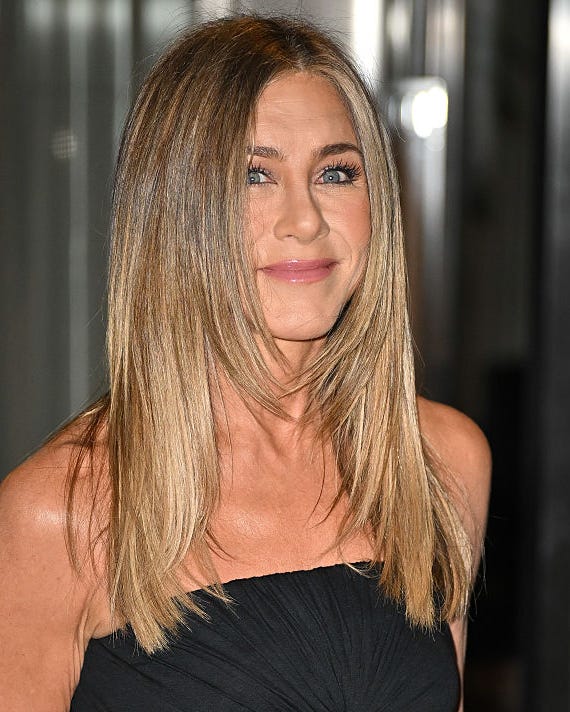
Does your fine, straight hair go flat by lunch no matter what you do? A mid-back blowout with face-framing layers is the workaround. The layers cut through the length so the hair moves instead of hanging, and the blonde with subtle highlights adds dimension that gives the illusion of volume even when the roots are lying down. This cut suits fine, straight hair of mid-back length, and the face-framing pieces soften most face shapes without needing a full fringe.
Ask your stylist for: mid-back blowout with face-framing layers. Spray a volumizing product at the roots before blow-drying to give the crown lift, and keep the layers trimmed every eight to ten weeks so they don’t lose their shape. The middle parting keeps the style symmetrical, and the blowout holds for a day, but expect the face-framing pieces to lose their curl first.
Mid-Back Low Ponytail With Wavy Tail
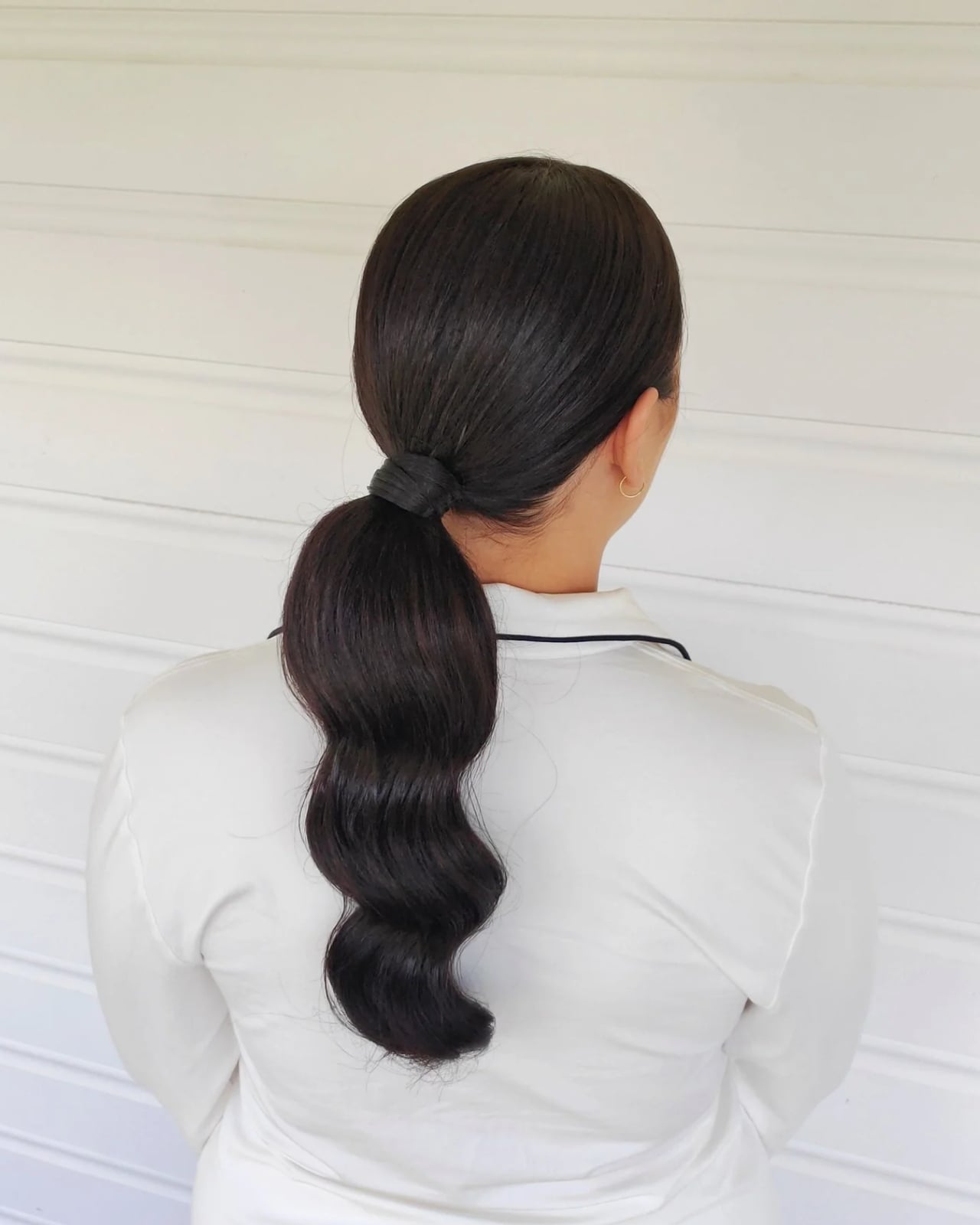
The trick to this low ponytail is the contrast between the sleek base and the wavy tail. The top is smoothed back from a middle parting, while the dark brown, thick hair below the elastic falls in deep waves that add movement to mid-back length. It suits thick, wavy hair that can carry weight without the tail looking thin, and the low placement means it sits comfortably all day.
Ask your stylist for: mid-back low ponytail with a smooth finish and wavy tail. Run a smoothing serum through the crown before pulling it back, then apply a wave defining product to the tail to define the waves. The smooth base holds without frizz, and the wavy tail keeps the style from reading as too strict, which gives it a relaxed feel.
Mid-Back Low Bun With Honey Blonde Highlights
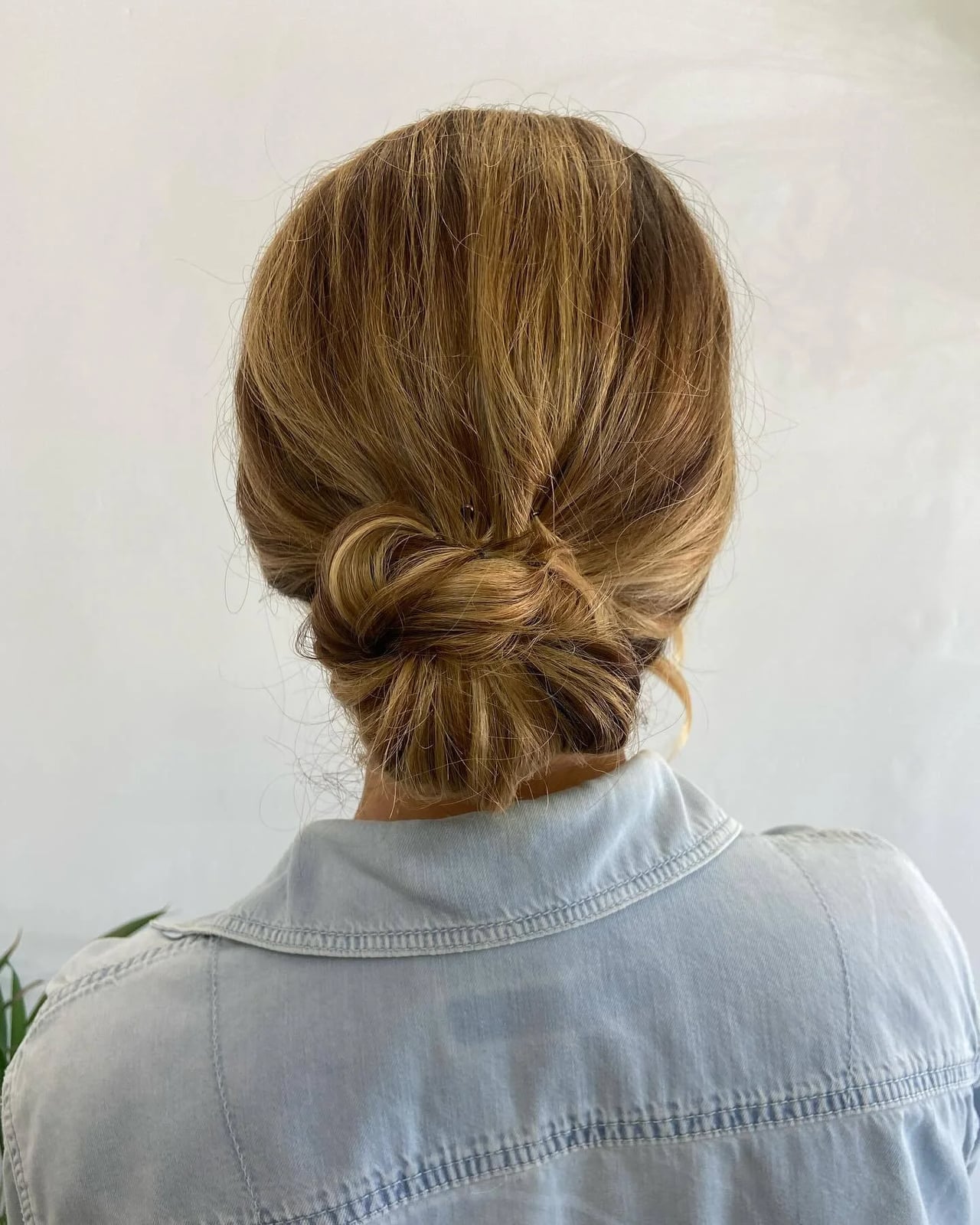
The low bun sits at the nape from mid-back, wavy hair with visible layers. Honey blonde highlights on a brown base add dimension. Ask your stylist for a mid-back low bun with visible layers and honey blonde highlights. The drawback? A low bun can flatten the crown over time, so gently pull out strands around the face for a softer effect. Schedule trims every 8 to 10 weeks to keep the layers from losing their shape.
Long Messy Bun With Loose Tendrils
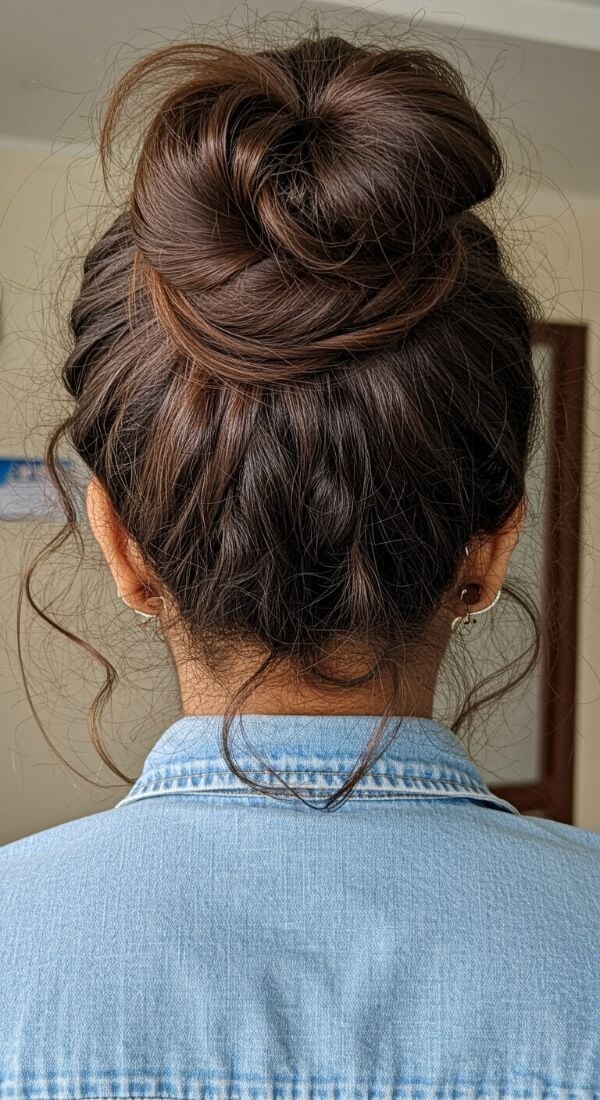
To get a just-threw-it-up look that stays intentional, start with long, dark brown hair that has some natural wave or texture. Apply a texturizing spray on damp hair for grip and volume. Gather the hair into a high ponytail, twist it loosely, and wrap it around the base, securing with bobby pins that match your hair color.
Pull out several tendrils around the nape and ears, and let them fall naturally. This is a DIY style through and through, no salon required. The hold is casual by design, so expect to adjust it once or twice during the day.
Long Low Side Bun With Smooth Finish
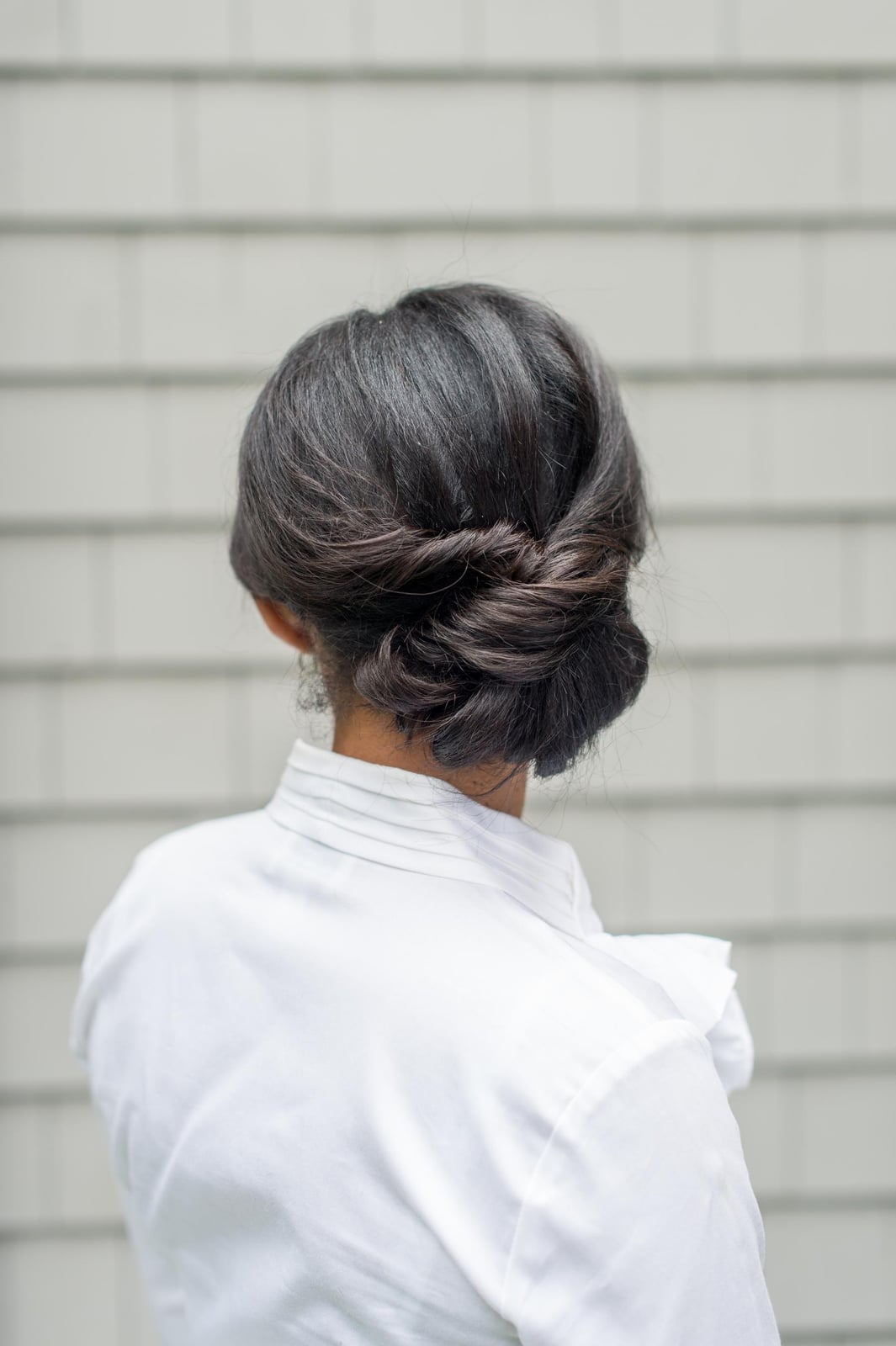
A low side bun with a smooth finish is the more polished cousin of the messy version. It requires long, dark brown hair with medium density and a straight texture that can be neatly twisted and tucked. Ask your stylist for a long low side bun with a smooth finish. The upkeep is straightforward: apply a smoothing serum to damp hair before styling, and use a fine-tooth comb for a sleek part. A trim every 8 to 12 weeks keeps the ends clean, and the style holds all day with minimal fuss.
Mid-Back Sleek Low Bun
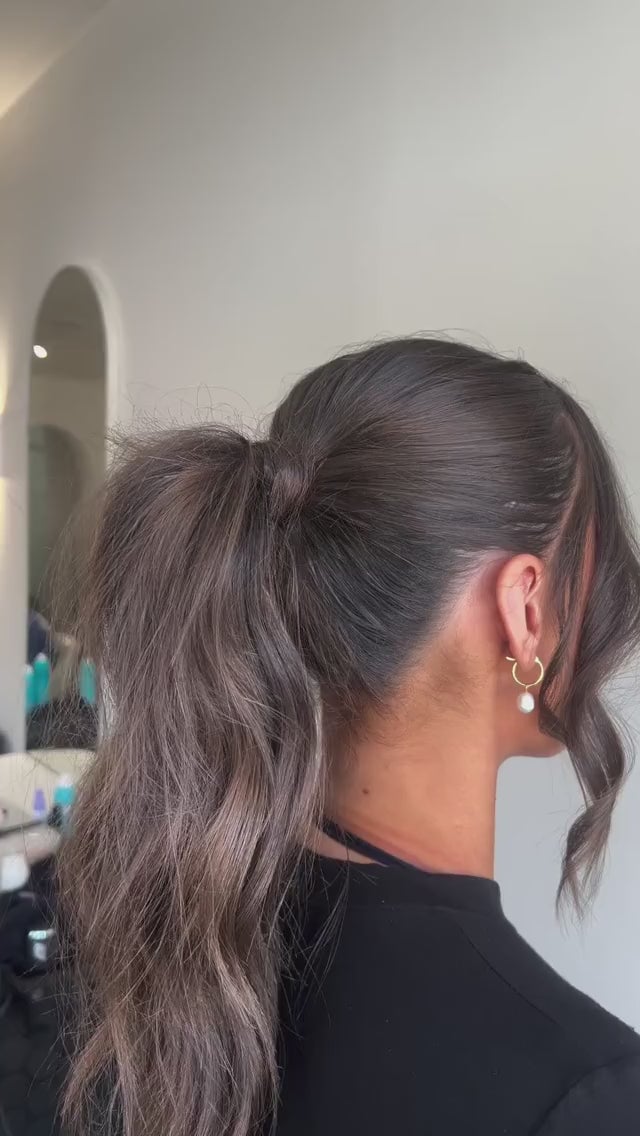
The sleek low bun is built on tension and precision, starting with mid-back, platinum blonde hair that is perfectly straight and fine. The tight knot at the nape requires every strand to cooperate. Ask your stylist for a mid-back sleek low bun. A boar bristle brush on damp hair creates the high-gloss finish, and the hold is firm enough to last through a workday or an evening event. The color needs a toning appointment every 4 to 6 weeks to keep the platinum from turning brassy.
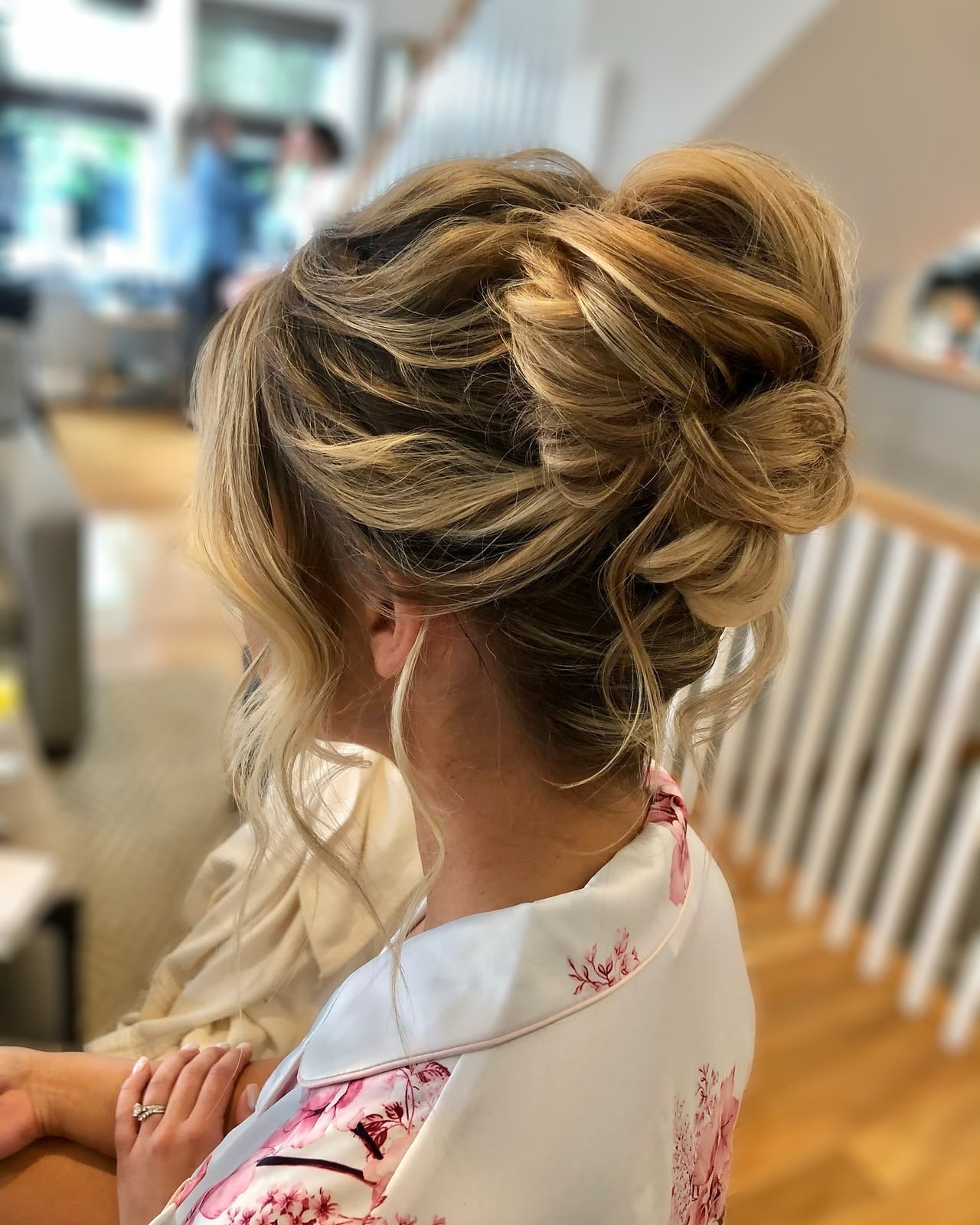
Messy Bun With Face-Framing Pieces
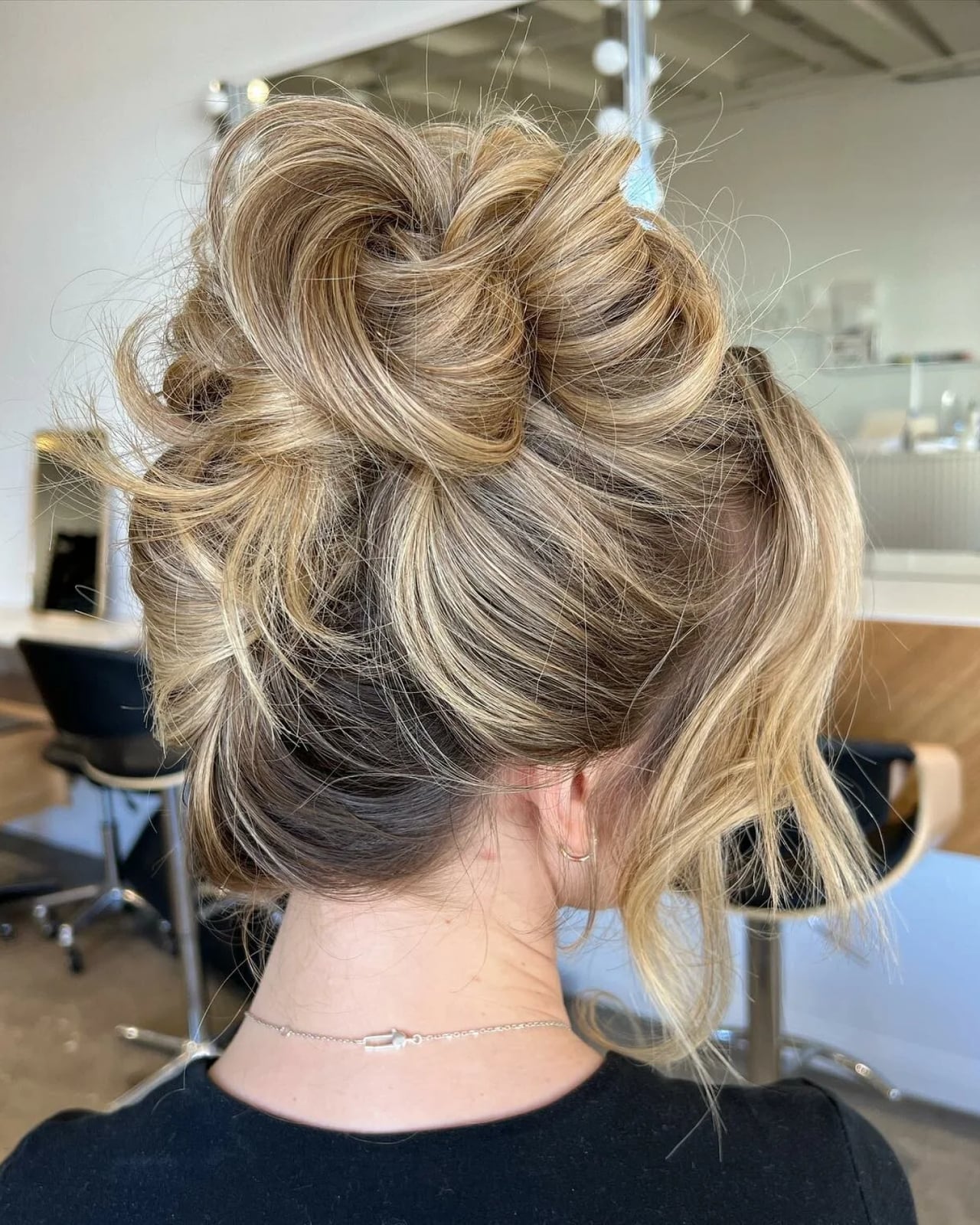
A messy bun with face-framing pieces is the easiest shortcut to looking put together without trying. Start with thick, wavy, blonde hair with highlights, gather it into a loose bun at the crown, and pull out a few strands around the face and neck. Ask your stylist for a messy bun with face-framing pieces. A texturizing spray adds grip and volume, and the whole thing takes about five minutes at home. The hold is relaxed, which is exactly the point.
Textured Ash Blonde Pixie Cut
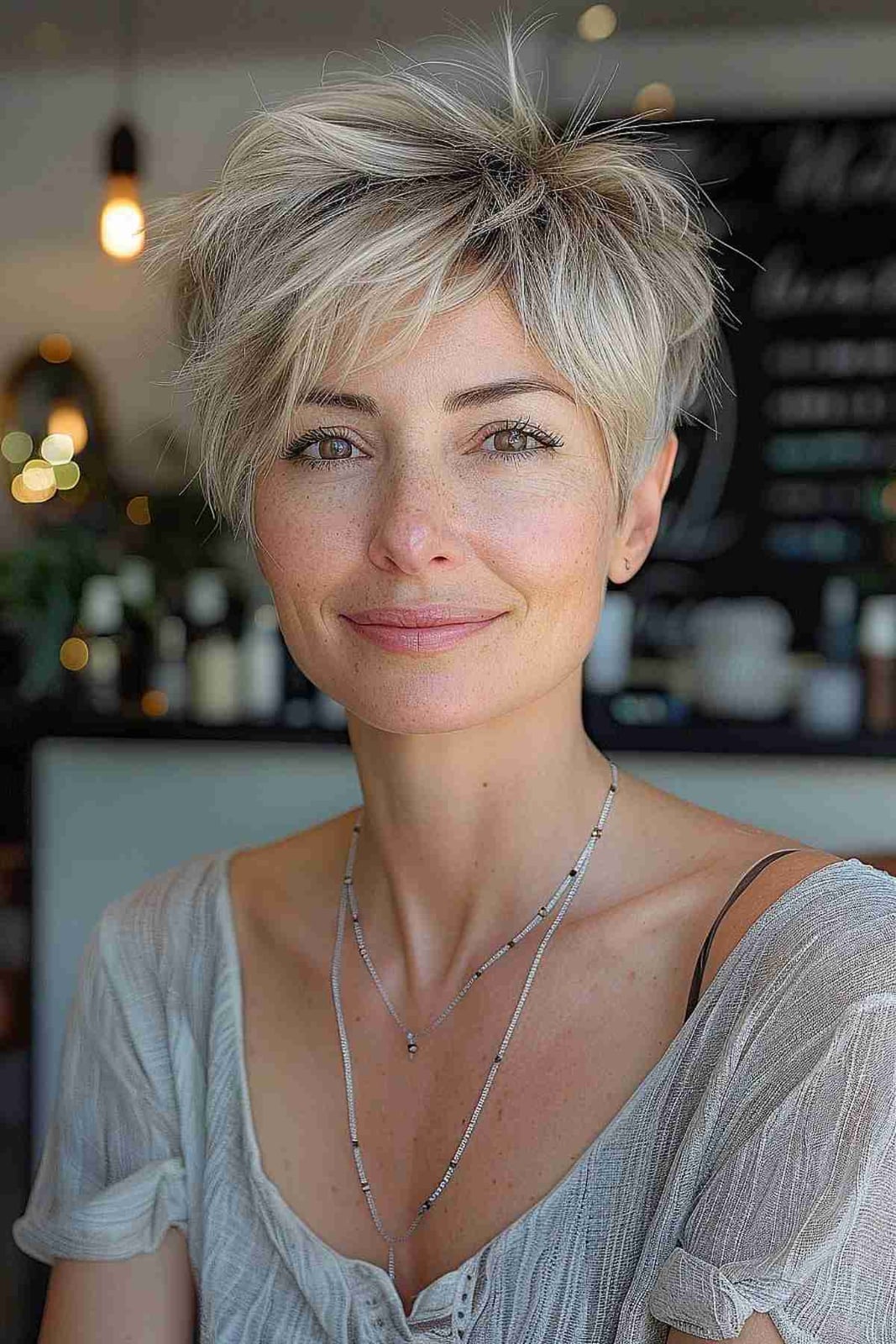
Can fine, straight hair pull off a pixie? Absolutely, when the cut is built for texture rather than bulk. This ash blonde version uses subtle layers and a side-swept finish to create movement where there isn’t much natural wave. The side parting adds a little volume at the crown, which helps the shape hold its own. Ask your stylist for: textured pixie cut with side-swept finish. Fine hair benefits from a matte wax or paste worked through dry strands to define the layers. A trim every four to six weeks keeps the silhouette sharp.
Textured Grey Pixie With Tousled Styling
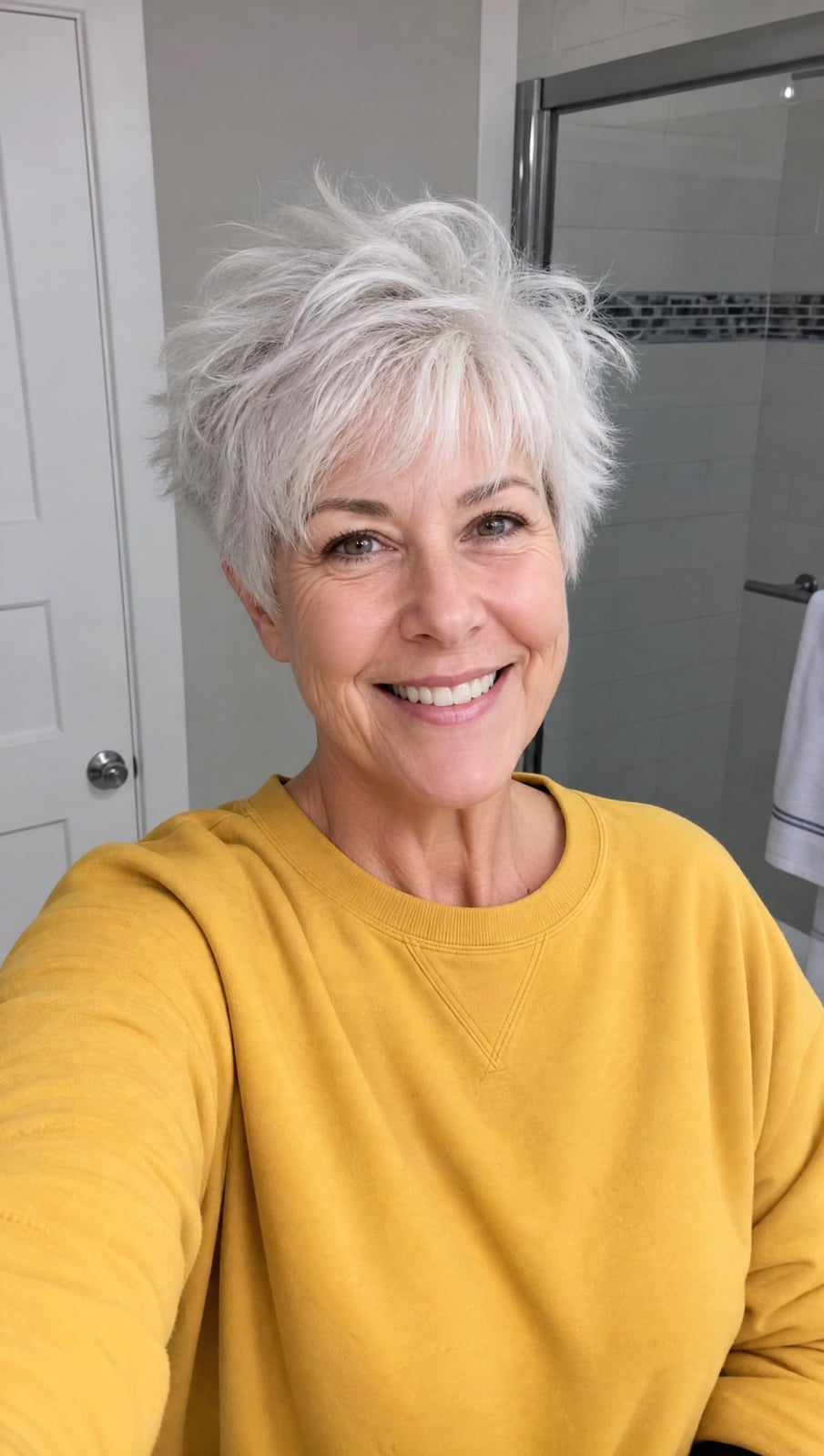
A sleek pixie is one thing. A tousled one is another. This grey version trades polished smoothness for choppy layers and a straight fringe, giving it a lived-in feel. Fine, thick texture lets the cut hold its shape without much effort. Ask your stylist for: textured pixie cut with straight fringe and tousled styling. Work a small amount of pomade through dry hair to reinforce the separation. Plan on trims every four to six weeks to keep the fringe from overtaking your eyebrows.
Collarbone Angled Bob In Platinum Blonde
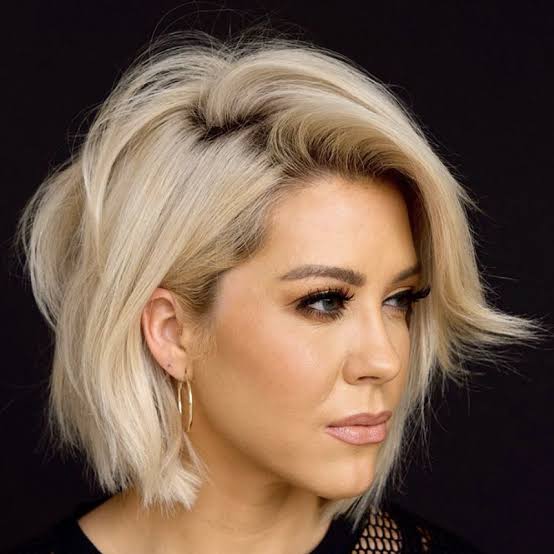
An angled bob is cut shorter in the back and gradually longer toward the front, creating a clean diagonal line that adds visual interest to fine, wavy hair. This collarbone-length version in platinum blonde uses a side parting to emphasize the asymmetry. The fine texture keeps the shape light, which is key for an angled cut. Ask your stylist for: collarbone length angled bob in platinum blonde. A smoothing serum helps control any frizz along the longer front pieces. The platinum shade needs a toning appointment every four to six weeks to stay cool.
Chin Length Wavy Bob In Dark Brown
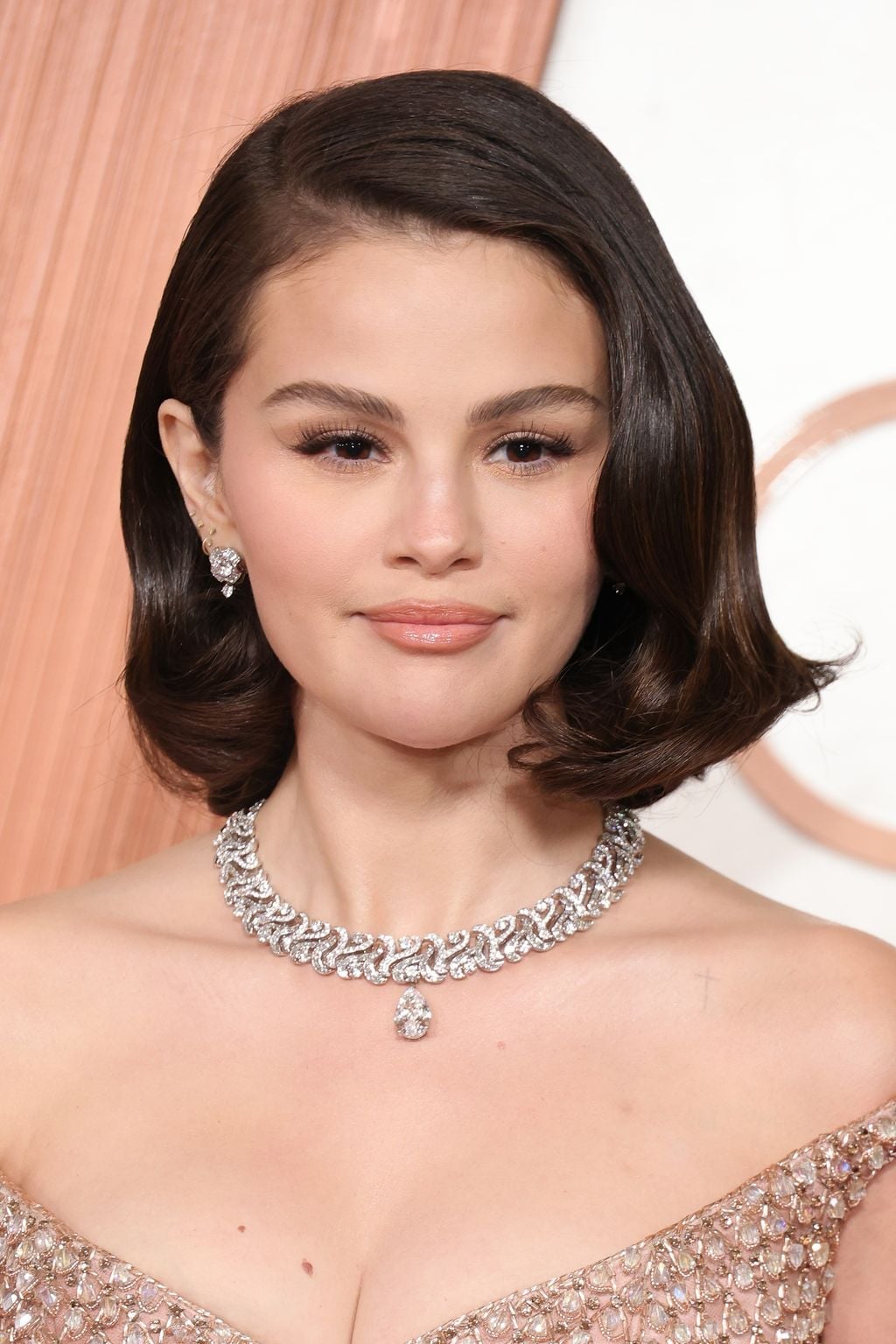
A chin-length bob with soft waves is a straightforward request that delivers. The dark brown shade keeps it understated, while the side parting and gentle wave pattern add volume to fine hair without needing much product. The length hits right at the chin, which gives the cut a clean frame. Ask your stylist for: chin length wavy bob in dark brown. A curl-defining cream applied to damp hair enhances the natural bend. Trims every six to eight weeks maintain the shape and prevent the ends from looking straggly.
Chin Length Ash Blonde Bob With Lowlights
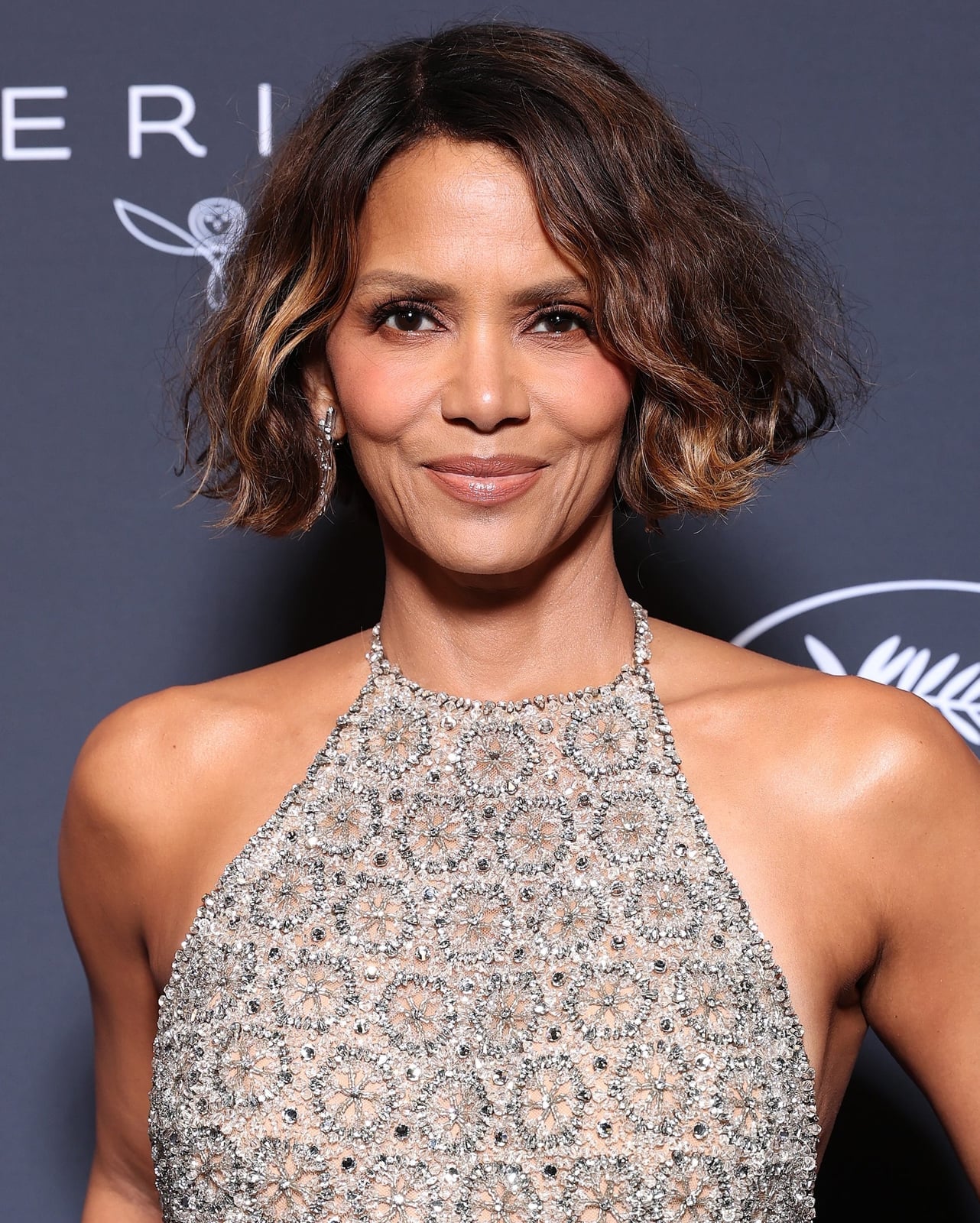
Where a blunt bob has a single clean line, this chin-length version uses textured ends and lowlights to create depth. The ash blonde base gets dimension from darker strands woven through, which also helps the color grow out more naturally. Short bangs and a side parting keep the look current without requiring daily heat styling. Ask your stylist for: chin length ash blonde bob with short bangs and lowlights. The lowlights mean you can stretch toning to every six to eight weeks instead of four.
Chin Length Sleek Bob In Ash Blonde With Emphasizing The Sharp
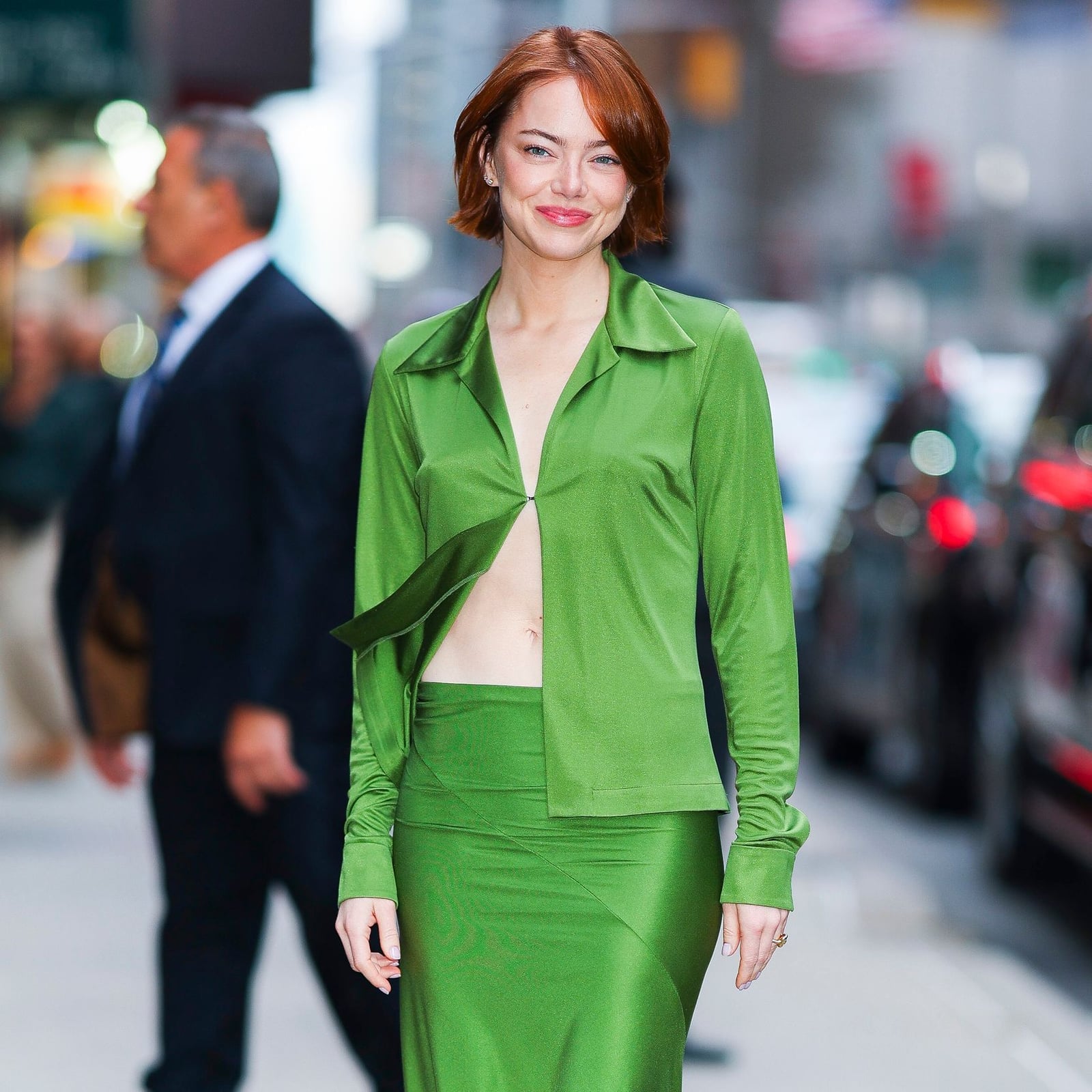
It works best on fine, straight hair at chin length, and a middle parting keeps the geometry clean. Ask your stylist for: chin length blunt bob, straight and sleek, in ash blonde. A flat iron with a smoothing serum delivers the glassy finish this cut demands, and the blunt edge needs a trim every six to eight weeks. Without that schedule, the sharp line softens into something that looks accidental rather than intentional.
Chin Length Blunt Bob In Black
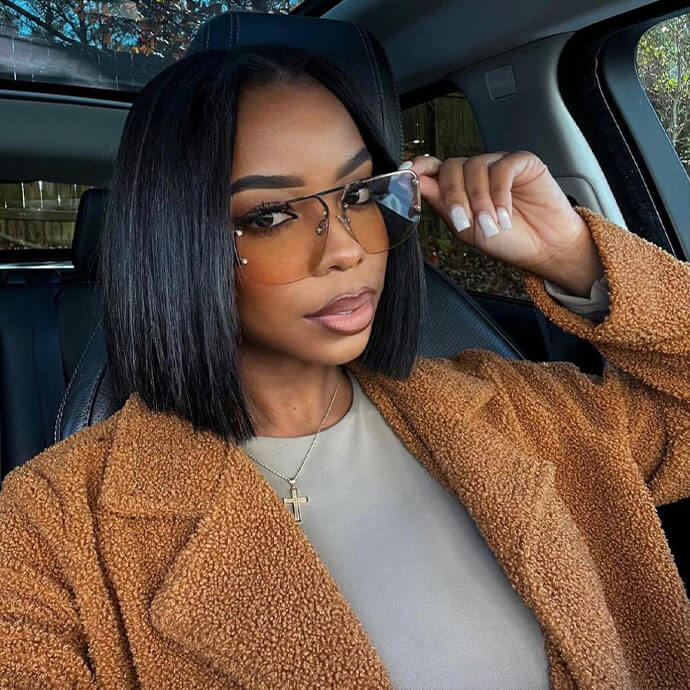
Can thick, straight hair look polished without layers? Yes, if the cut is a chin-length blunt bob in black with a side parting. The weight of the hair works for the shape rather than against it, creating a clean line that holds its form. Ask your stylist for: chin length blunt bob, straight and sleek, in black. This is a cut that suits most face shapes, but it really rewards those with strong jawlines and a lot of natural density.
Chin Length Blunt Bob With Copper Highlights
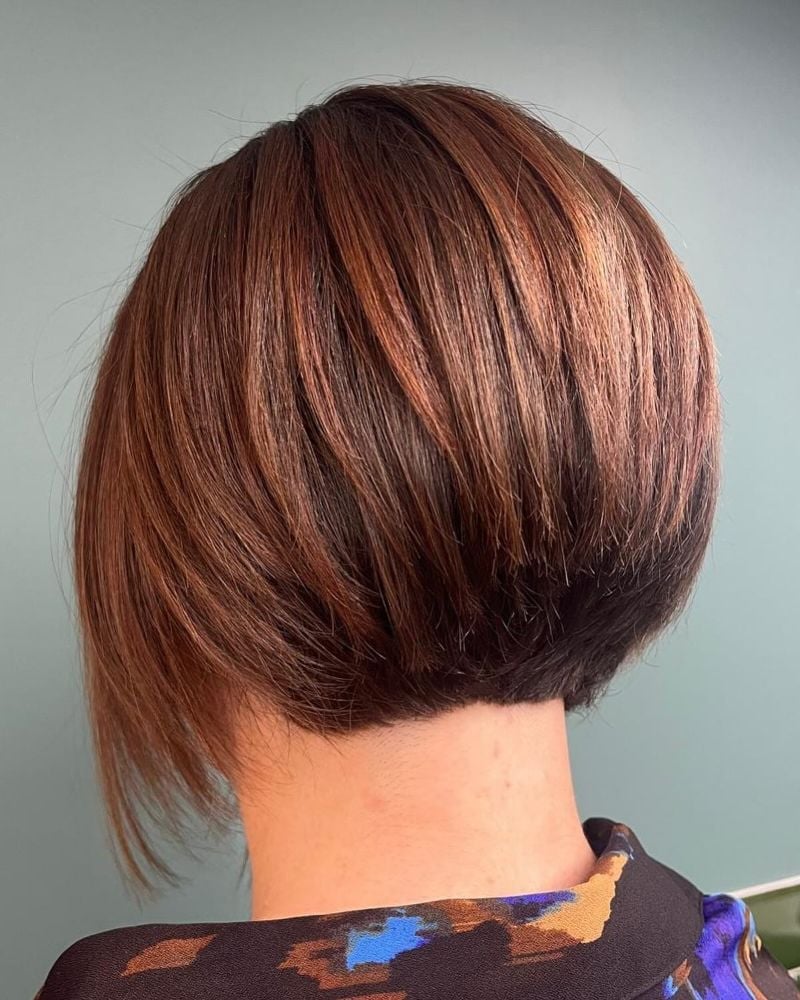
A chin-length blunt bob in rich brown with copper highlights relies on the precision of the cut first and the color second. The blunt edge creates a single, unbroken line from the middle parting to the chin, and the copper pieces add dimension without breaking that silhouette. Ask your colorist for: chin length blunt bob with copper highlights. The highlights work best on thick, straight hair, where they sit on the surface rather than disappearing into texture.
Collarbone Bob With Vintage Waves
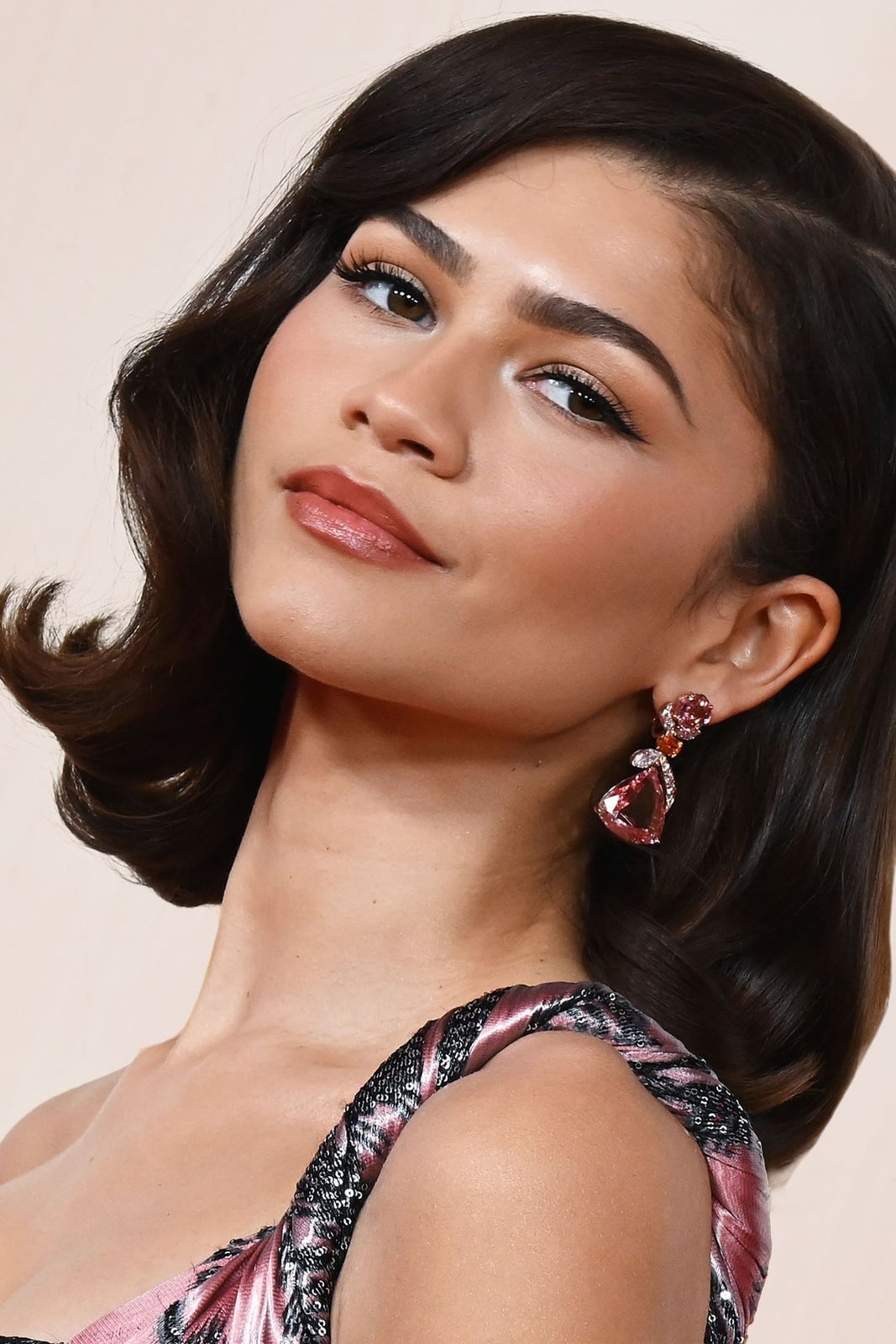
How do you get those deep, glossy waves that look like they belong in a 1940s film still? The starting point is a collarbone bob in dark brown, with enough length for the wave to curve without collapsing. A side part and a side-swept bang anchor the shape. Ask your stylist for: collarbone bob with vintage waves and a side-swept bang. Thick, wavy hair holds the curl best, and a strong-hold hairspray is non-negotiable if you want the wave to last past the first hour.
Collarbone Layered Bob With Soft Blowout
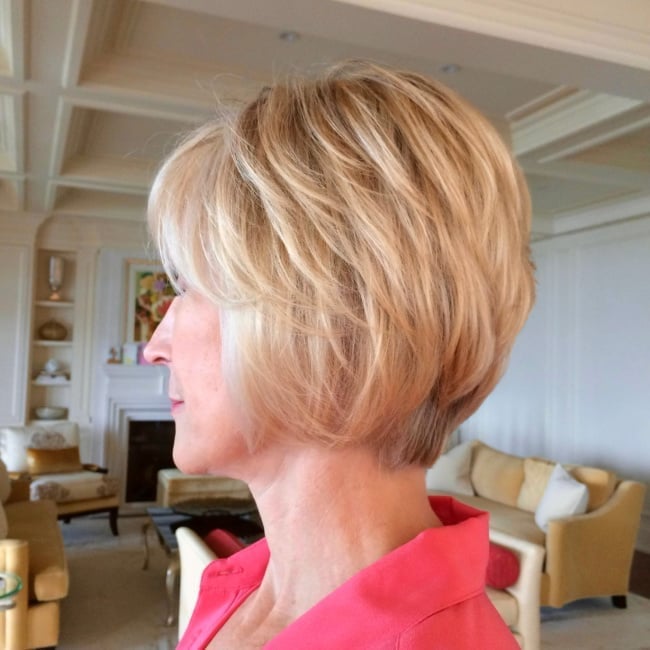
A collarbone layered bob with a soft blowout sits between a sleek bob and a full-on curly style. The layers give it movement, and the subtle blonde highlights catch the light in a way that a single block of color cannot. Ask your stylist for: collarbone layered bob with a soft blowout. Thick, wavy hair responds best to this treatment, and a volumizing spray at the roots before blow-drying keeps the shape from falling flat. Plan on trims every eight to ten weeks to maintain the layered structure.
Collarbone Ponytail With Curtain Bangs and Blonde With Highlights
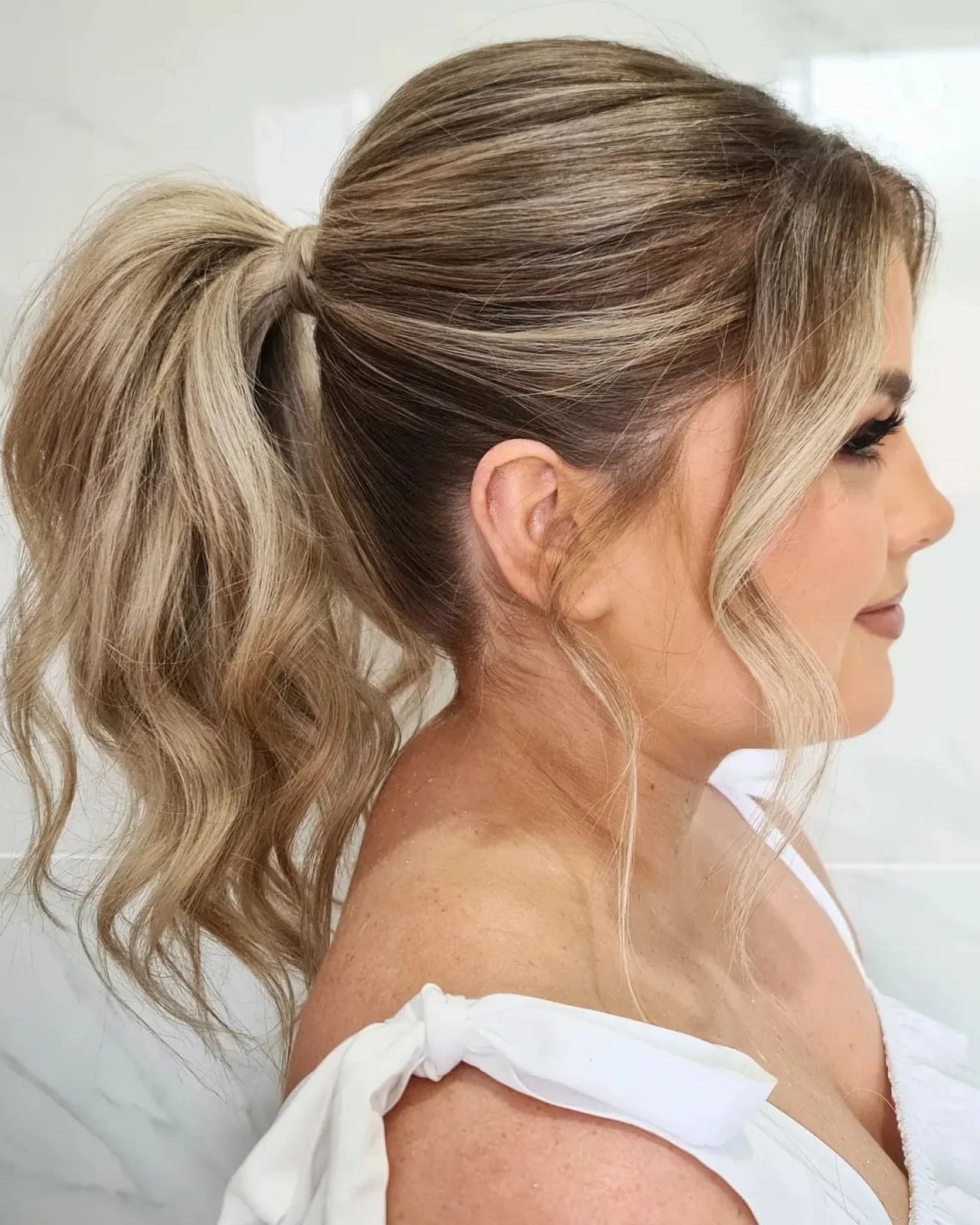
A high ponytail with soft waves and curtain bangs is a clever way to get volume without a full blowout. The collarbone length means the hair has enough weight to hold the ponytail base, while the face-framing pieces soften the silhouette. This style suits round and square face shapes particularly well, as the vertical line of the ponytail lengthens and the bangs break up width. Ask your stylist for: collarbone ponytail with soft waves and curtain bangs. A smoothing serum on the ponytail base keeps flyaways at bay, and the bangs need a trim every four to six weeks to stay in shape.
Ear Length Stacked Bob In Blonde
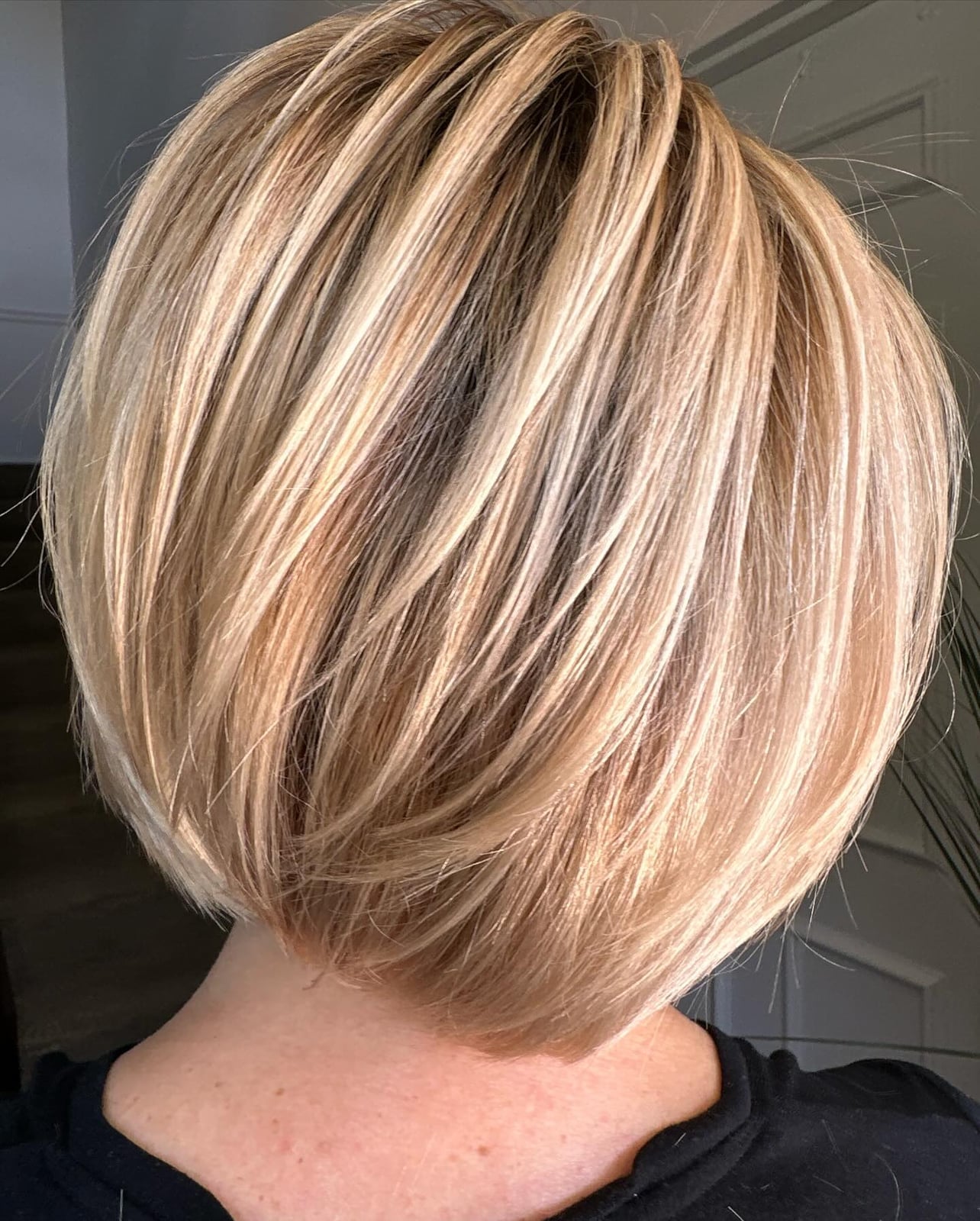
A stacked bob uses graduated layers at the nape to create lift and a rounded silhouette from the back. At ear length, the cut keeps the front clean and the crown full, which works best on straight, thick hair that can hold the shape. The stacked back adds volume where fine hair often falls flat, so those with medium to high density get the most out of it. Ask your stylist for: ear length stacked bob with a smooth blowout. Blonde highlights add dimension without changing the cut’s sharp lines. Trims every four to six weeks are non-negotiable to keep the stacked effect from looking blunt.
Final Thoughts
For fine hair, prioritize styles that create volume, like a textured bob or a blowout with layers. For thick hair, opt for sleek buns or updos that control bulk, or embrace natural waves in longer cuts.
- Trim blunt bobs and sharp lines every 6-8 weeks.
- Tone blonde shades every 8-12 weeks to keep them cool.
- Use a heat protectant spray before blowouts or curling.
- Secure updos with pins that match your hair color.
- Let wavy textures air-dry partially before styling cream.
Find your signature blend of classy and casual.
