

The wolf cut started as a punk statement, but the 2027 version is a quieter rebel. It keeps the signature choppy layers and face-framing texture while dialing back the volume for a sleeker, glossier finish that works with air-dried waves or a polished blowout.
27 ideas for Classy Wolf Cut Hair cover shoulder to mid-back lengths, with options for blunt bangs, curtain fringes, or no bangs at all. The collection solves the struggle of fine hair that loses shape by lunch or thick hair that becomes a triangle of layers. Each cut balances edge with enough structure to feel intentional, not accidental.
Shoulder Length Wolf Cut With Heavy Layers

Heavy layers on a shoulder-length wolf cut do not thin the hair out; they give it somewhere to move. This design works best on thick, straight hair that can support the weight removal at the ends while keeping density through the midshaft. A side parting and face-framing pieces elongate oval and long faces without adding width. Ask your stylist for: shoulder length wolf cut with heavy layers and face-framing. A texturizing spray on dry hair is enough to define the shape, no round brush required. Plan for a trim every six to eight weeks to keep the layers from dropping past the shoulder.
Collarbone Wolf Cut With Choppy Bangs
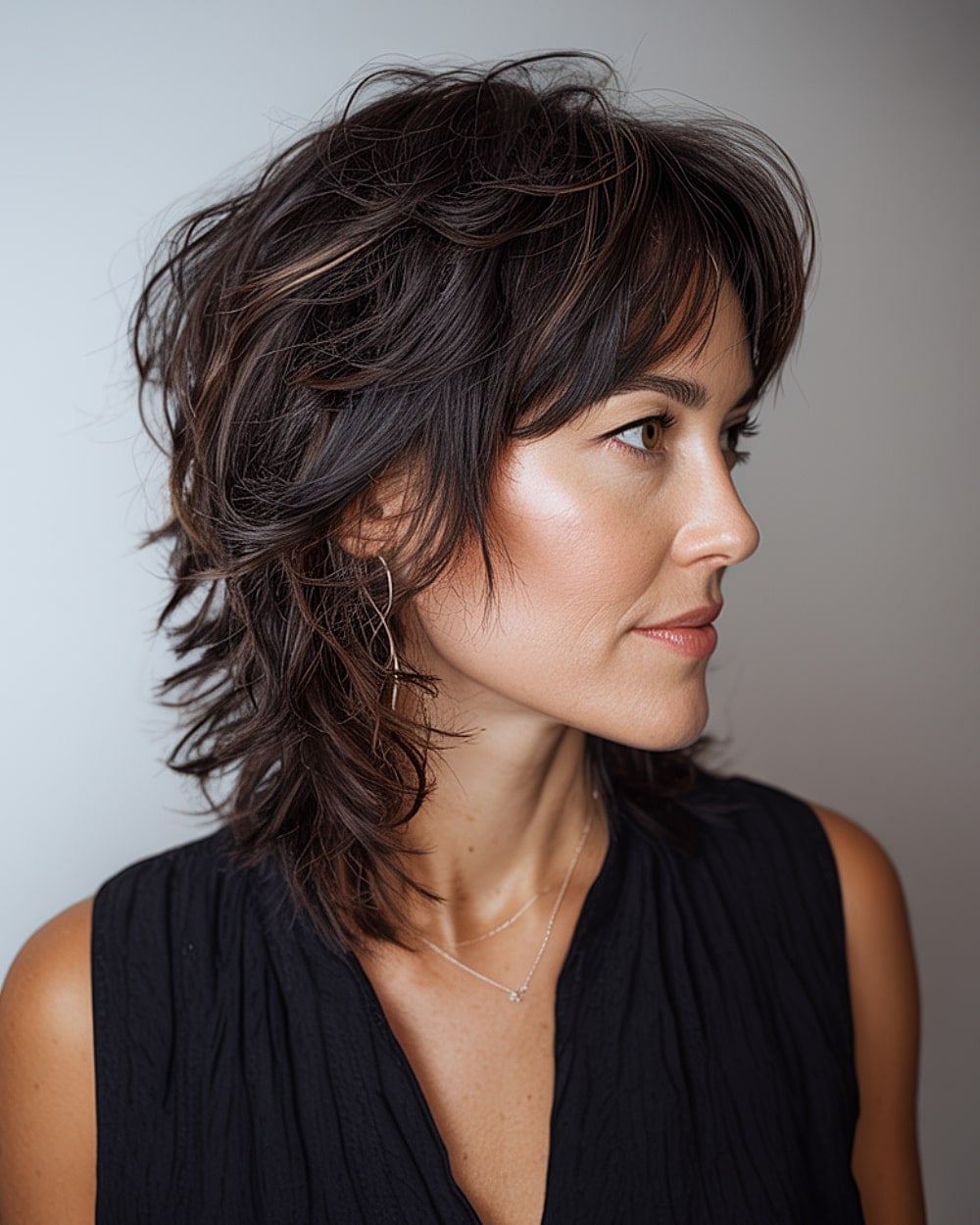
How do you ask for a wolf cut that does not look like you did it yourself? With the right words. This collarbone-length version uses shag-like layers and choppy bangs that land just above the brow, so the fringe has weight but no blunt line. The dark brown base with visible highlights adds dimension without needing a full color service. Choppy bangs of this density balance round faces by shortening the vertical line of the forehead. Ask your stylist for: collarbone length wolf cut with choppy bangs and visible highlights. A sea salt spray on damp hair, scrunched, is the only styling step.
Shaggy Wolf Cut With Choppy Layers

A uniform shag relies on even layering all over; the shaggy wolf cut does not. Here the choppy layers are concentrated around the crown and the face, leaving the collarbone-length ends heavier. The difference is texture: the wavy, thick hair gets its movement from those disconnected interior pieces rather than from a curling iron. A middle part suits oval and long faces by keeping the volume symmetrical. Ask your stylist for: collarbone length shaggy wolf cut with choppy bangs and middle part. Use a diffuser on low heat to encourage the existing wave pattern.
Collarbone Wolf Cut With Curtain Bangs

Curtain bangs and face-framing layers turn a wolf cut into something that passes for polished. The straight, thick hair falls in a textured blowout, with the fringe sweeping away from the center rather than sitting across the forehead. Those subtle lighter pieces around the face keep the dark brown base from reading as one solid block. Curtain bangs soften square and round faces by breaking up the horizontal line at the jaw. Ask your stylist for: collarbone length wolf cut with curtain bangs and face-framing layers. Blow-dry the bangs away from the face with a round brush; baseline trims every six to eight weeks maintain the shape.
Textured Collarbone Wolf Cut No Bangs

Without bangs, a wolf cut risks reading as a standard layered cut. A longer face-framing line works for almost any face shape. Here the textured layers start just below the cheekbone on medium, wavy hair, so the collarbone length has visible movement without the fringe commitment. The subtle highlights are the only concession to color. The cut defines the shape. Ask your stylist for: collarbone length wolf cut with textured layers, no bangs. A texturizing balm on damp waves is enough; trim the layers every eight to ten weeks.
Edgy Collarbone Wolf Cut With Choppy Fringe

The design here relies on tension: the side part pulls structure into the wavy medium-density hair, while the choppy fringe breaks the silhouette just above the brows. The subtle lighter layers on the dark brown base are not a highlight. They are a texture cue, catching the eye where the cut shortens. Medium density, wavy hair at collarbone length holds this shape best, and a side part suits oval and heart faces. Ask your stylist for: collarbone wolf cut with choppy fringe and subtle layers. Work a texture paste through the ends to define the fringe; trims every 6-8 weeks keep the edge.
Refined Collarbone Wolf Cut With Curtain Bangs, Dark Brown

Why does an air-dried wolf cut look so deliberate on fine, wavy hair? Because the cut does the work. The collarbone length keeps the weight manageable, while the curtain bangs soften the face and the choppy layers add movement without bulk. This is the version you reach for on a warm day when heat styling is not happening. Fine, wavy hair at collarbone length benefits from the reduced weight, and the curtain bangs soften square and round faces. Ask your stylist for: collarbone length wolf cut with curtain bangs and choppy layers. Air dry with a bit of mousse for natural texture; trim the baseline every 8 weeks.
Thick Curly Collarbone Wolf Cut With Full Bangs
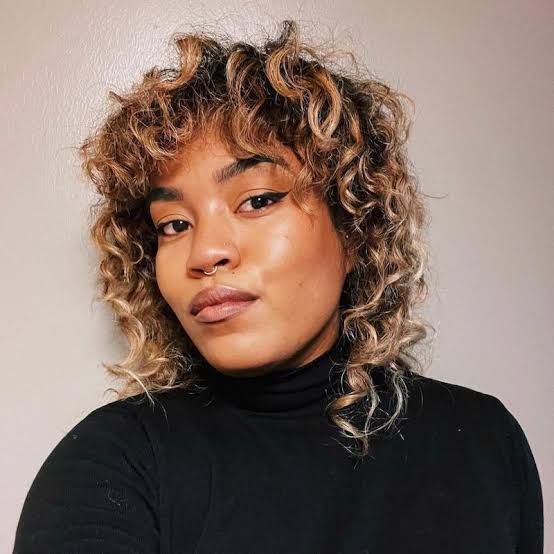
Thick, curly hair at collarbone length often fights its own volume, but the wolf cut’s graduated layers give it direction. The full bangs anchor the front, while the honey blonde highlights on the dark brown base add dimension to each curl. This cut treats density as an asset, not a problem. Thick, curly hair at collarbone length is the ideal candidate, and full bangs can balance longer faces. Ask your stylist for: collarbone length curly wolf cut with full bangs and honey highlights. Use a curl-defining cream and air dry or diffuse; trims every 8-10 weeks maintain the shape.
Collarbone Wolf Cut With Micro Fringe
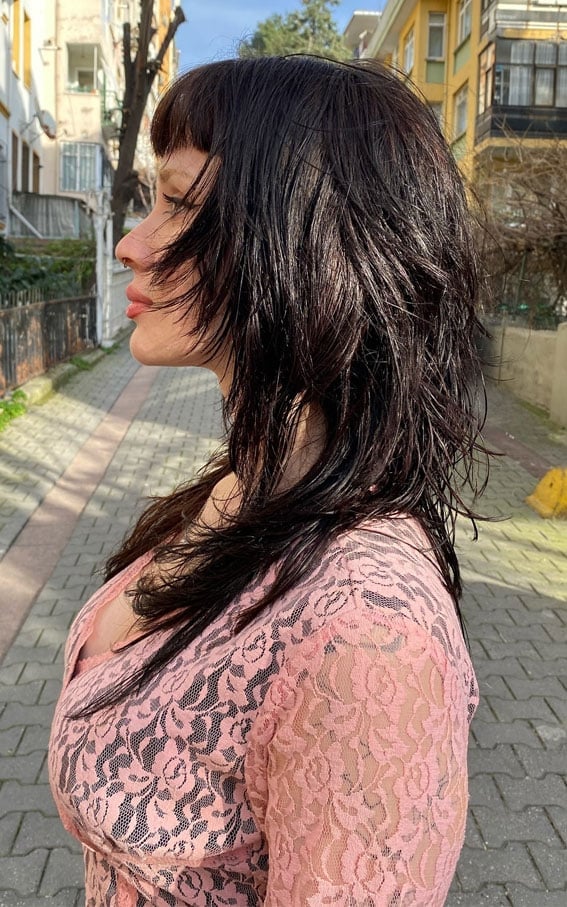
Can a micro fringe make the wolf cut feel fresh again? Yes, if you are willing to commit to the shorter brow line. The collarbone length keeps the rest of the cut wearable, while the straight, thick texture gives the micro fringe a blunt, deliberate finish. Thick, straight hair at collarbone length holds this fringe best, and the micro fringe suits oval and heart shapes. Ask your stylist for: collarbone length wolf cut with micro fringe. Apply a smoothing serum to the fringe to keep it sharp; trim the baseline every 8 weeks.
Collarbone Layered Cut With Blunt Bangs
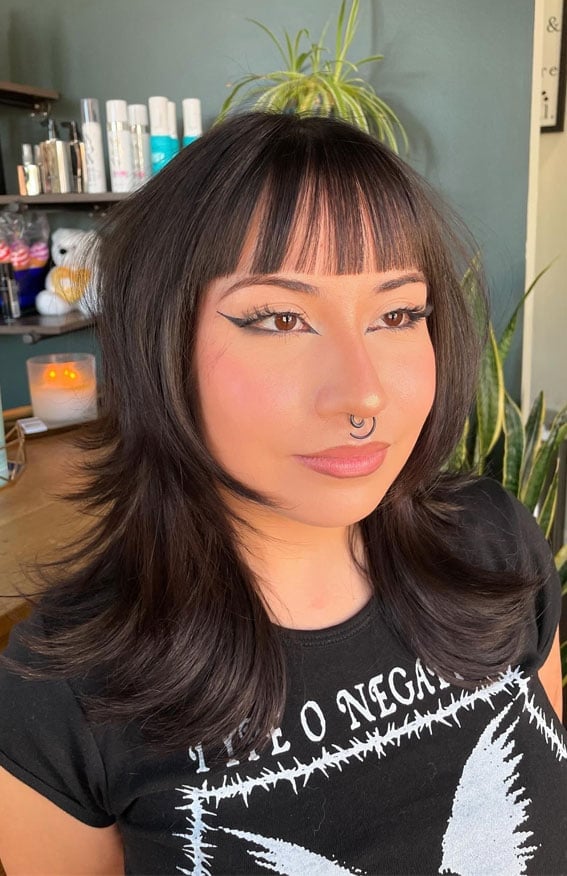
The blunt bangs are the star here, but they are also the reason this cut is harder to DIY than it looks. The collarbone length and straight, medium-density texture make the layers read as clean rather than choppy, while the blunt bangs demand a straight, even line. You can trim the bangs yourself between salon visits, but the initial cut needs precision. Medium density, straight hair at collarbone length works well, and blunt bangs suit oval and long faces. Ask your stylist for: collarbone layered cut with blunt bangs. Keep the blunt bangs trimmed every 3-4 weeks for sharpness; use a light serum for shine.
Shoulder Length Wolf Cut With Short Fringe

A short fringe adds immediate structure to a shoulder-length wolf cut. Medium density, wavy hair holds the shape best here, and the fringe works well for oval and heart faces. Ask your stylist for: shoulder length wolf cut with short fringe and textured layers. Work a texturizing spray through the fringe each morning to keep the definition from falling flat. Trims every six to eight weeks stop the bangs from grazing your eyes.
Textured Shoulder Wolf Cut With Curtain Bangs
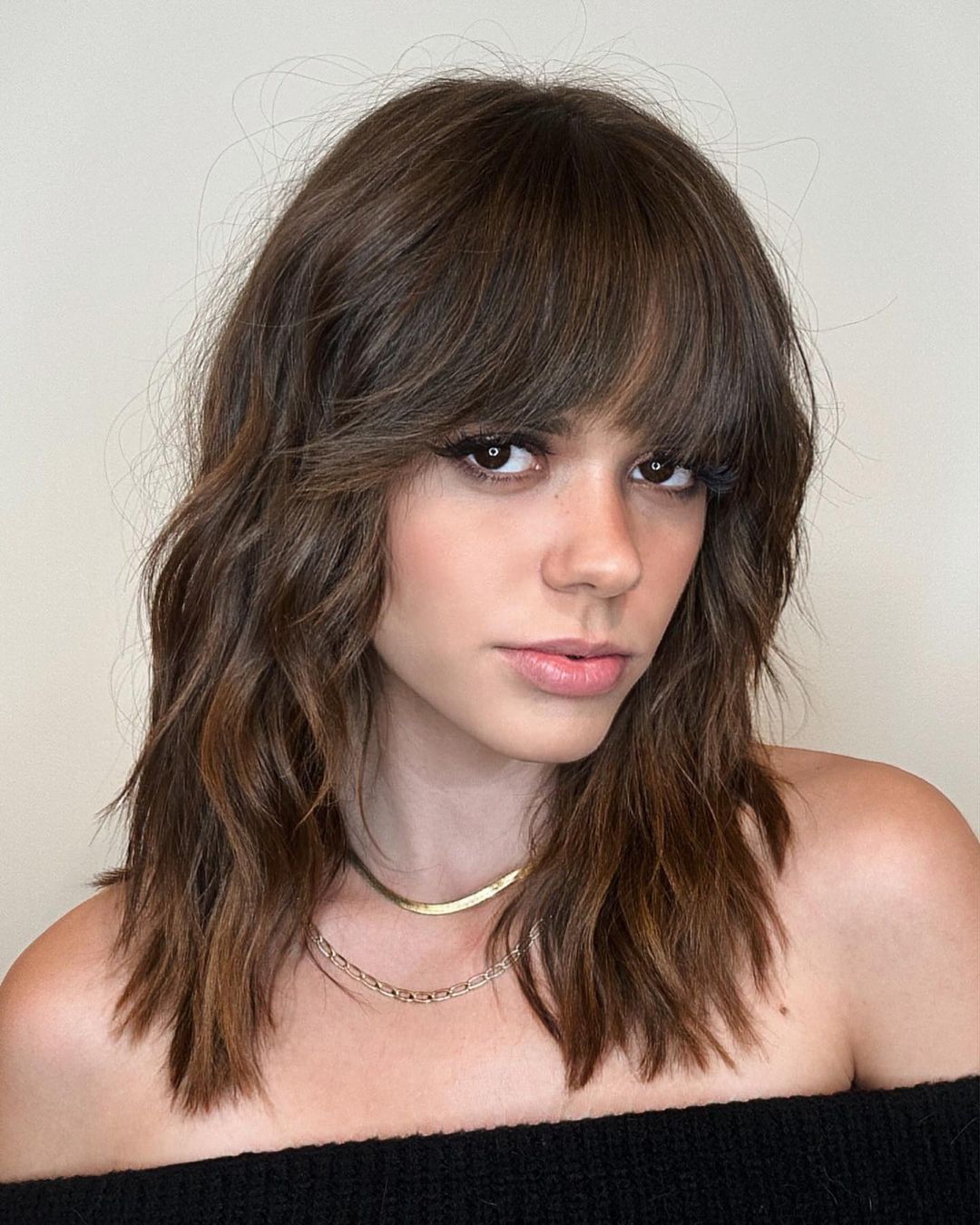
A sleek, straight wolf cut can feel severe, but the wavy, textured finish here softens the whole silhouette. The curtain bangs frame the face without committing to a full fringe, which makes them a strong choice for square and round faces. Ask your stylist for: shoulder length wolf cut with curtain bangs and textured layers. A blow dryer with a nozzle and a round brush is all you need to smooth the bangs into place; the rest of the hair stays intentionally undone.
Shoulder Wolf Cut With Heavy Face-Framing

A collarbone wolf cut with heavy face-framing pieces relies on volume to show off its structure, and that is where fine hair hits a wall. The layers are designed to lift, but straight, fine textures need product to keep the shape from collapsing by midday. Ask your stylist for: shoulder length wolf cut with heavy layers and face-framing. A texturizing spray at the roots helps, and the side parting suits oval and long faces best. This one is for thick hair that holds a blowout on its own.
Ash Blonde Shoulder Wolf Cut With Curtain Bangs

An ash blonde wolf cut at shoulder length relies on the cool tone to separate the layers and give the textured shape more depth. Fine, wavy hair takes the color well, but the lift process is a salon-leaning commitment. Ask your stylist for: shoulder length ash blonde wolf cut with curtain bangs. A purple shampoo every few washes keeps brassiness away, and a baseline trim every eight weeks preserves the length. Curtain bangs soften round and square faces without shortening the overall line.
Curly Shoulder Wolf Cut With Full Bangs
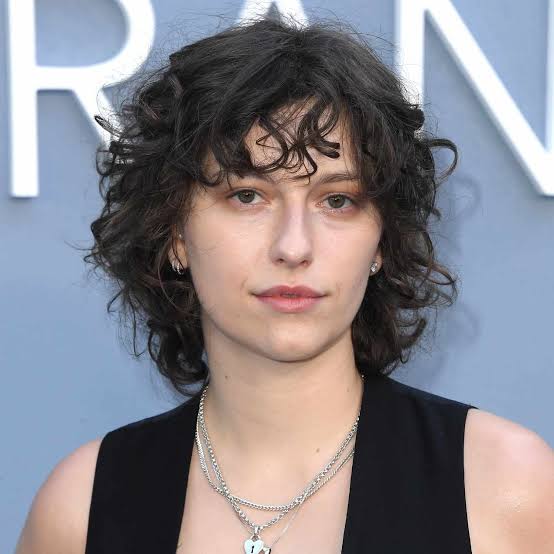
Can a wolf cut work on thick curls without looking like a triangle? Yes, if the layers are cut into the shape while the hair is dry. The full bangs and shoulder length balance the volume, and the blonde highlights add separation so each curl stands out. Ask your stylist for: shoulder length curly wolf cut with full bangs. Scrunching with a styling cream is all this cut needs, making it a low-effort choice for warm weather. Oval and long faces handle the full bangs best.
Voluminous Black Collarbone Wolf Cut
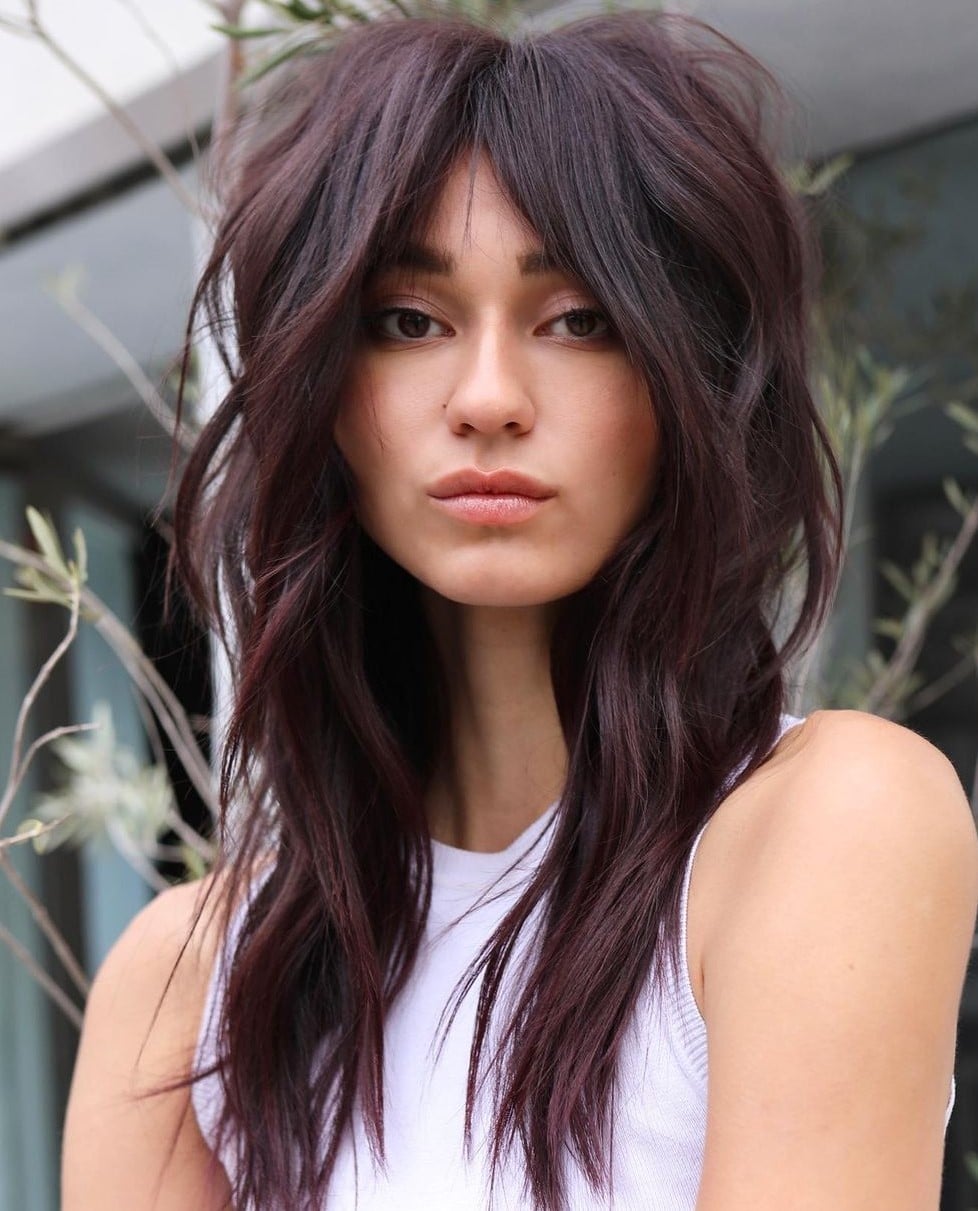
There is something satisfying about a deep auburn wolf cut that looks rich, especially when it hits mid-back length and keeps a full fringe. The thick, wavy texture here is air-dried, so the volume comes from the cut itself. A middle part keeps the fringe symmetrical and lets the layers fall where they should.
Ask your stylist for: mid-back wolf cut with full fringe. This shape works best on thick, wavy hair that can hold the volume without product. If your hair is fine, use a volumizing spray at the roots before air-drying or a quick blast with a diffuser. The fringe needs a trim every three to four weeks, but the length can go six to eight weeks between appointments.
Ash Blonde Collarbone Wolf Cut With Wispy Bangs

A collarbone-length wolf cut with wispy bangs is a low-commitment entry point for anyone curious about shaggy layers. The fine, wavy texture here is air-dried, so the shape holds its form without looking slept on. The side part and the wispy bangs soften the overall edge. Ask your stylist for: collarbone length ash blonde wolf cut with wispy bangs. The ash blonde base with a root shadow means you can push toning appointments to every six weeks, though the bangs need a trim every four weeks to stay out of your eyes. Fine hair holds the shape best when the layers are cut close together instead of spaced far apart.
Ash Blonde Collarbone Wolf Cut With Soft Waves

A collarbone wolf cut with curtain bangs and soft blowout waves looks polished, but there is a catch. The fine, wavy texture here needs heat styling to hold that smooth curve, and without it the layers can fall flat. The middle part lets the curtain bangs frame the face evenly, which works well for round and square face shapes. Ask your stylist for: collarbone length ash blonde wolf cut with curtain bangs. The subtle pink undertones in the blonde require a toning appointment every four to five weeks to keep the color from turning brassy. If you prefer air-dried styles, this particular shape may disappoint you.
Ash Blonde Shoulder Wolf Cut With Choppy Bangs, Wavy

Where a polished blowout wolf cut feels deliberate, this shoulder-length version with choppy bangs leans into the mess. The fine to medium density wavy texture here is tousled, which makes the ash blonde base and root shadow look lived-in from day one. The side part and choppy bangs add movement without requiring a round brush. Ask your stylist for: shoulder length ash blonde wolf cut with choppy bangs. This cut suits anyone who wants texture without the maintenance of a full fringe. The choppy bangs can be trimmed at home between salon visits, but the color needs a toning appointment every six weeks.
Platinum Blonde Ear Length Wolf Cut

An ear-length wolf cut in platinum blonde is a short cut that does not look like a crop. The fine, straight texture here is styled with a soft blowout, and the side-swept bangs keep the shape from reading as severe. The side parting allows the layers to stack visibly instead of blending into one block. Ask your stylist for: short platinum blonde wolf cut with side-swept bangs. This cut works well for fine hair because the short length and close layers create volume at the crown that longer cuts cannot. The side-swept bangs suit most face shapes, though oval and heart shapes benefit most. The platinum base needs a toning appointment every three to four weeks.
Edgy Black Ear Length Wolf Cut
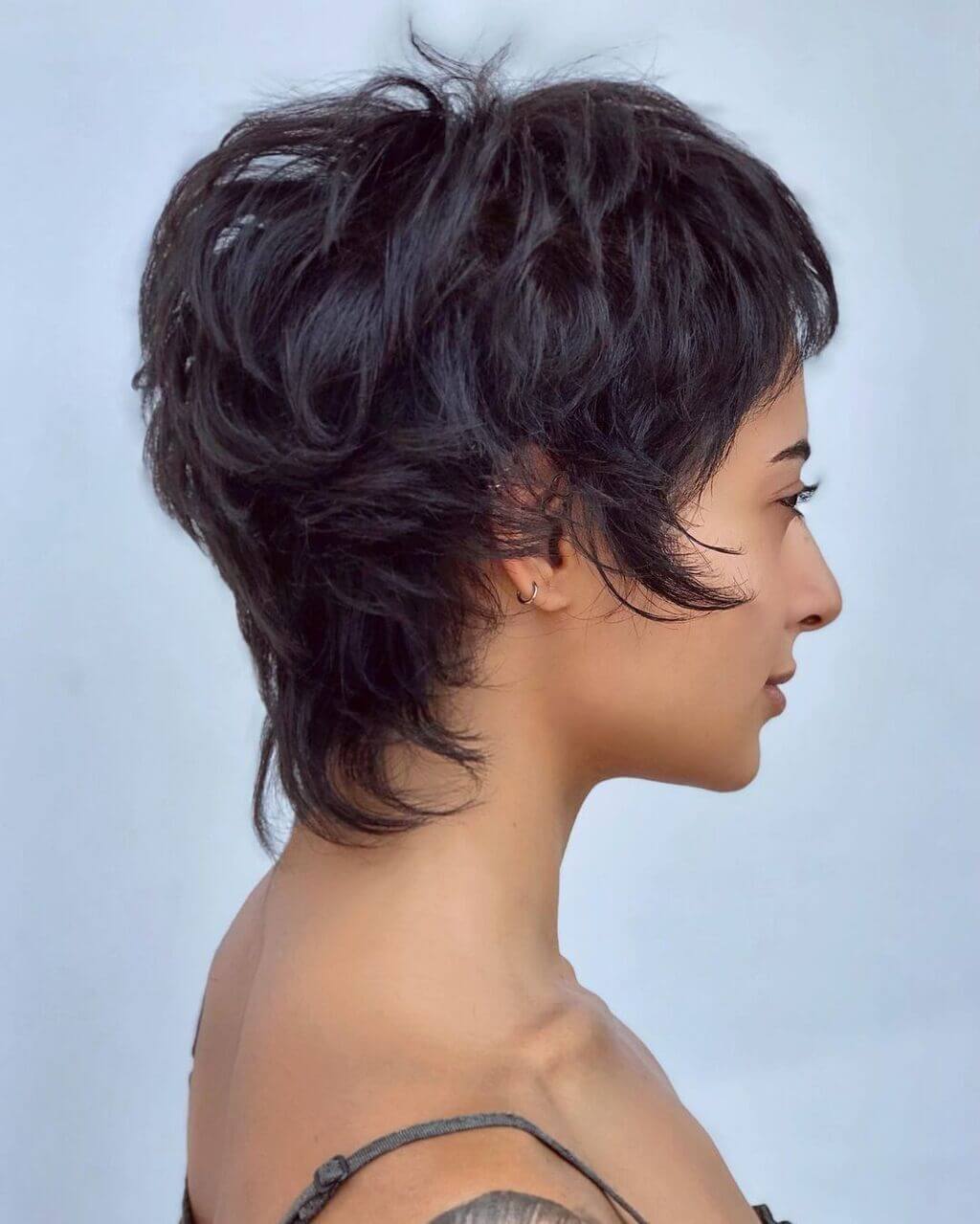
This ear-length wolf cut foregoes bangs entirely and lets the short, choppy layers do the talking. The side part and thick, wavy texture give it a deliberately disheveled shape that still looks put together. Recreating this tousled effect at home is possible with a texturizing paste worked through dry hair, but achieving those precise short choppy layers is a task best left to a professional stylist. Ask your stylist for: short black wolf cut with choppy layers. Expect a trim every four to six weeks to keep the silhouette from losing its edge.
Chin Length Wolf Cut With Streaky Color
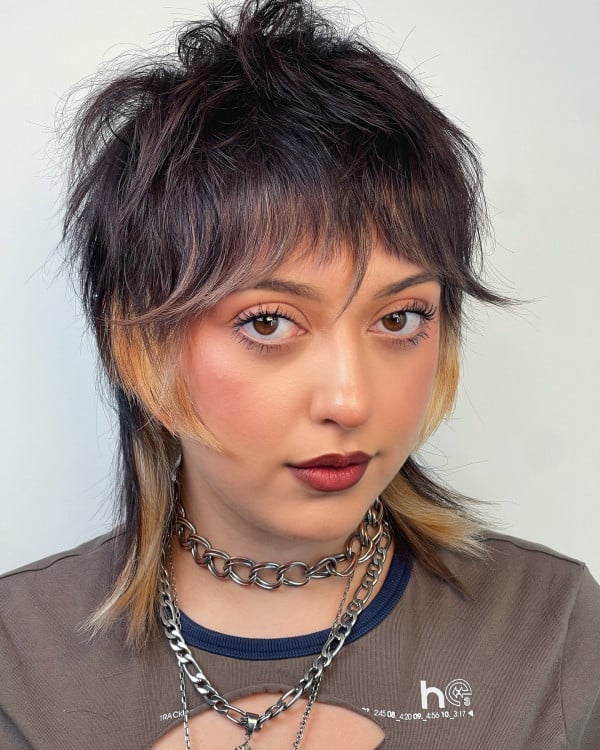
This chin-length wolf cut pairs short, choppy bangs with a dark base and contrasting blonde and red streaks. The technique relies on fine, straight hair to make the color bands look graphic, not blended. A middle parting keeps the punk-chic contrast centered and precise.
Ask your colorist for: chin length wolf cut with short choppy bangs and color streaks. The baseline needs a trim every six weeks to stop the shorter layers from overtaking the shape.
Mid-Back Auburn Wolf Cut With Full Fringe

Why does this copper red wolf cut feel so right for autumn? The wispy bangs and choppy layers land at the collarbone, but the color is what sells the season. A deep copper base with blonde highlights adds warmth without going brassy. The wavy, medium-density texture and middle parting keep it from looking costumey. Ask your colorist for: mid-back wolf cut with full fringe in deep auburn. A toning appointment every six to eight weeks preserves that copper clarity.
Mid-Back Wolf Cut With Curtain Bangs

This long wolf cut reaches mid-back with curtain bangs and face-framing layers that soften the whole silhouette. The copper base with subtle highlights and wavy, medium-density texture give it a lived-in feel rather than a freshly-cut one. The middle parting and textured blowout let the layers fall naturally around the face.
Ask your stylist for: mid-back wolf cut with curtain bangs and face-framing layers. The visual anchor of the cut is how the face-framing pieces graduate into the longer layers below. A trim every eight to ten weeks maintains the shape without losing length.
Honey Blonde Mid-Back Wolf Cut
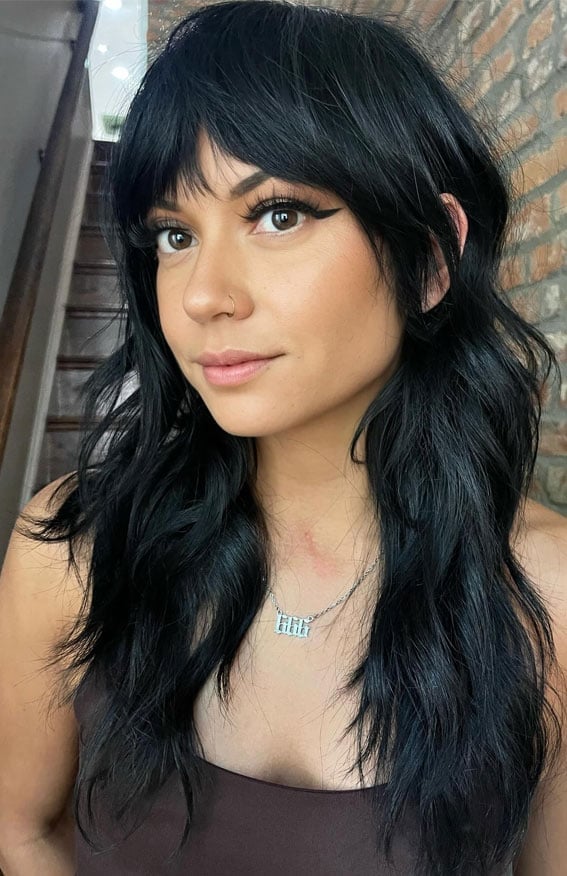
This mid-back wolf cut in honey blonde with lighter highlights relies on a blowout with soft waves to show off its thick, wavy texture. The curtain bangs and middle parting frame the face without requiring daily heat styling. The lighter highlights add dimension to the honey base, but that lightness also means more upkeep.
Ask your colorist for: mid-back honey blonde wolf cut with curtain bangs. A color-depositing conditioner between toning appointments keeps brassiness at bay. Trim every eight to ten weeks to keep the flowing layers from turning into one shapeless length.
Mid-Back Wolf Cut With Choppy Layers
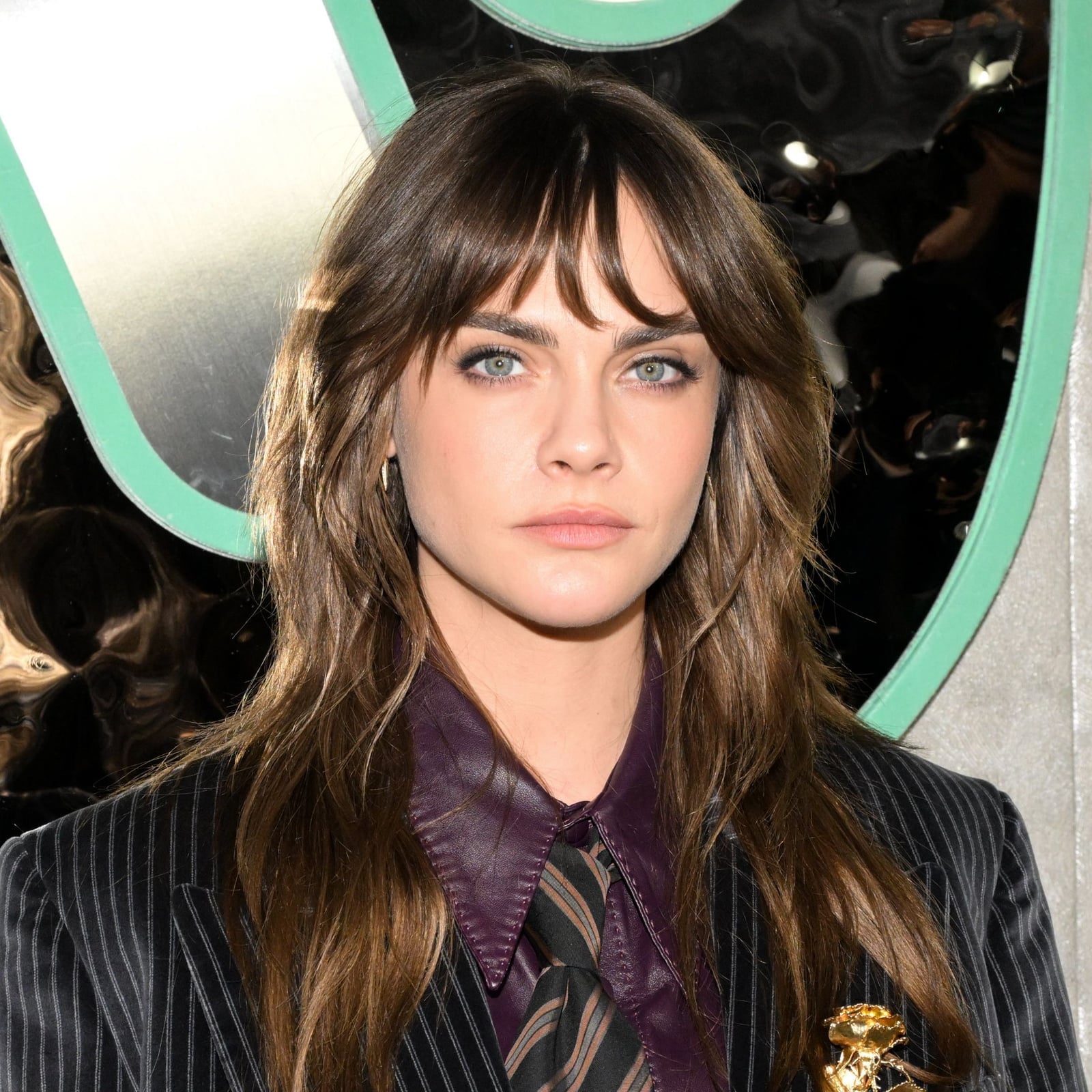
A mid-back wolf cut with choppy layers and curtain bangs is a length that keeps the shape’s signature texture visible without losing weight. The choppy sections are what give this cut its volume, but they also demand a deliberate hand when styling. Thick, wavy hair at this length handles the layers best; the curtain bangs soften square and round faces without fighting the rest of the shape. Ask your stylist for: mid-back wolf cut with choppy layers and curtain bangs.
The drawback is predictable: left unstyled, those choppy pieces can look messy instead of textured. Damp hair scrunched with texturizing spray and left to air dry defines the layers in about five minutes. Trim the baseline every eight to ten weeks to stop the mid-back length from dragging the cut’s shape downward.
Mid-Back Curly Wolf Cut With Caramel Highlights
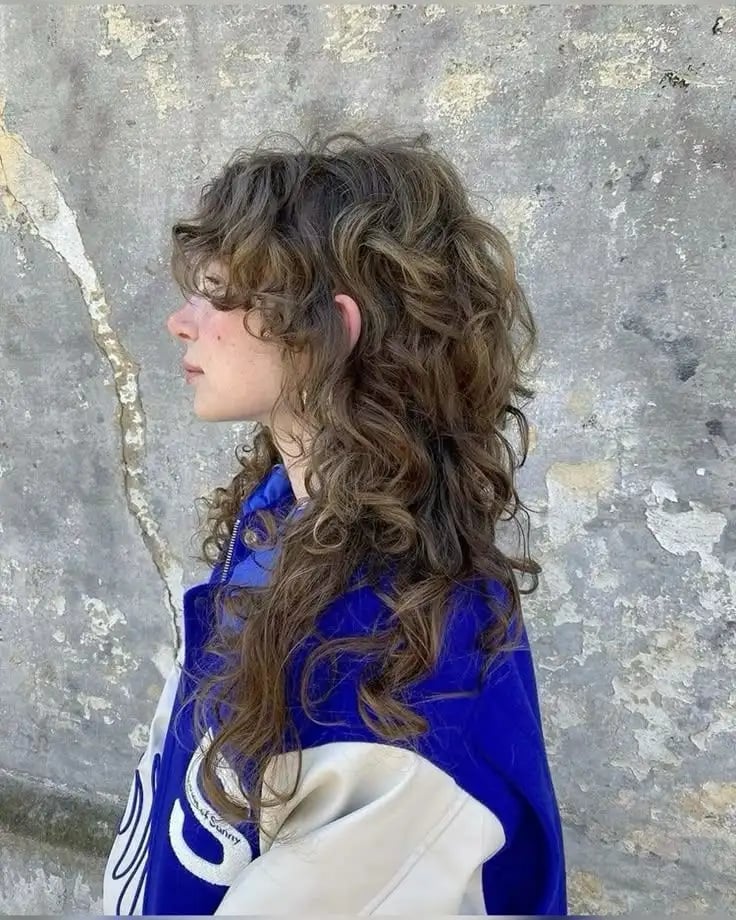
A mid-back curly wolf cut with caramel highlights uses the cut’s choppy bangs and layers to let each curl land separately rather than clump. The dark brown base with visible caramel pieces adds dimension without needing a full highlight appointment. Thick, curly hair at this length gains definition from the choppy sections, and the bangs suit oval and heart faces by breaking up the curl pattern at the hairline. Ask your stylist for: mid-back curly wolf cut with choppy bangs and caramel highlights. A curl-defining cream worked through damp hair and left to air dry is all the styling this texture needs.
Final Thoughts
For finer hair, keep a blunt baseline at the perimeter and let the layers begin a few inches lower to preserve density. Thicker hair can handle the full shag treatment, with layers starting closer to the crown to shed bulk and add movement. Bangs are the wildcard: curtain styles need less frequent trims than a full fringe, but both require a honest conversation with your stylist about your morning routine.
- Trim the baseline every 6-10 weeks to maintain shape.
- Refresh face-framing layers and bangs every 4-6 weeks.
- Use texturizing spray or mousse on damp hair for air-dried styles.
- Protect from heat with a spray when using hot tools for blowouts.
The classy wolf cut is your canvas for refined edginess.
