

Long curly hair is having a moment that is less about perfect spirals and more about texture that looks like you. Curtain bangs, soft face-framing layers, and lived-in color are the quiet stars of the season.
This collection of 28 ideas covers shoulder-length cuts with bangs, collarbone shags, and mid-back lengths with balayage. Whether your curls are fine and need lift or thick and need shaping, there is a cut here that solves the problem of a fringe that won’t sit or a grow-out line that shows too fast. Trendy Long Curly Hair works best when the shape does the work.
Shoulder Length Curls With Curtain Bangs

Here’s a cut that lets curly hair do the talking without turning into a triangle. The shoulder-length shape with layers keeps the volume at the sides, while the curtain bangs break up what could otherwise be a heavy curtain of curls. This is a balanced look for medium-density curly hair starting at shoulder length, and those bangs soften round and heart faces without demanding constant styling. Ask your stylist for: shoulder length layers with curtain bangs. Use a curl-enhancing product and let the hair dry naturally, then trim the baseline every six to eight weeks to keep the shape from growing out into an unintentional pyramid.
Collarbone Layers With Full Curtain Bangs
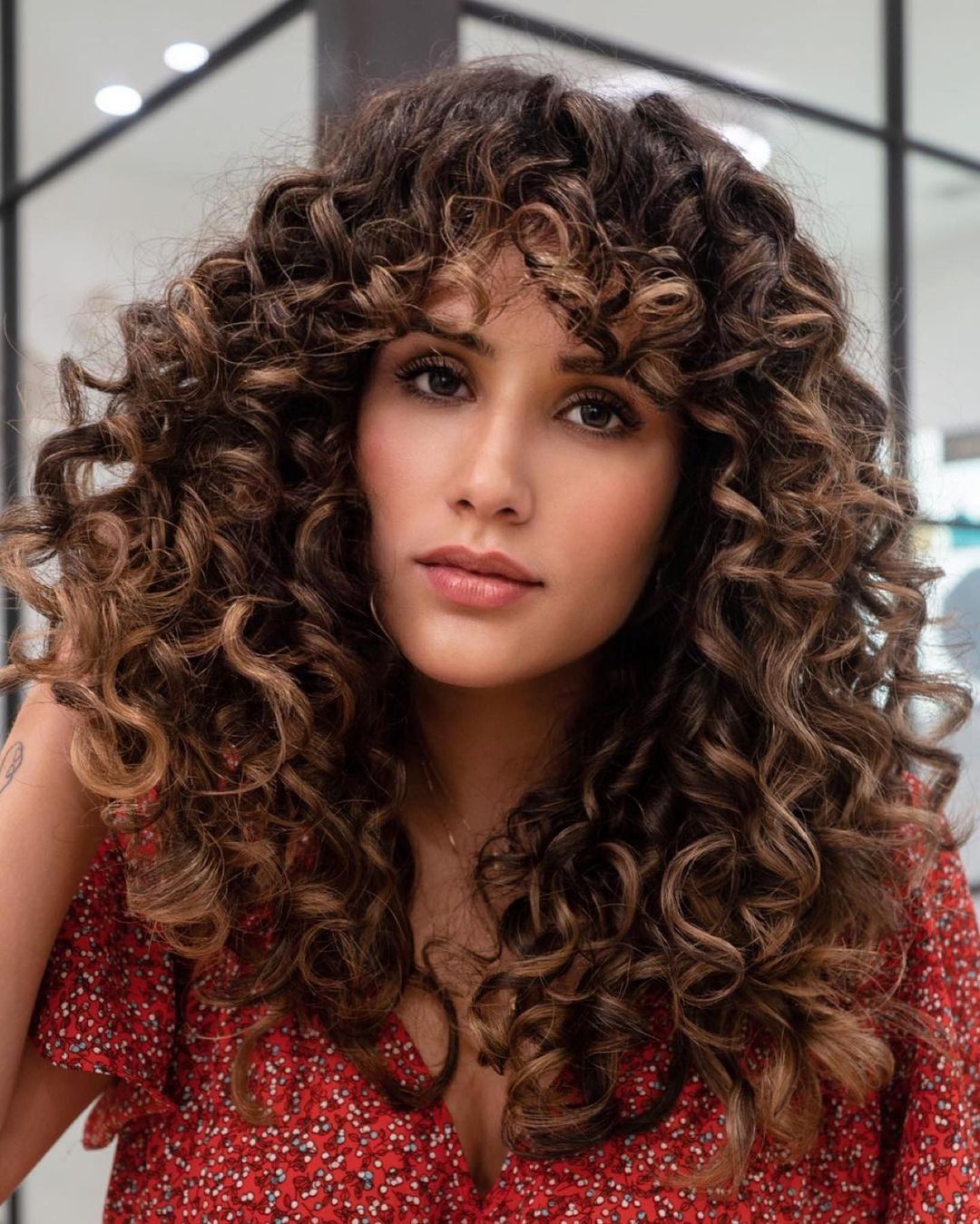
Want the curtain bang effect but with more presence? This collarbone-length cut pairs full, prominent curtain bangs with thick, curly hair, so the fringe actually reads instead of vanishing into the mass. The middle part and substantial bangs suit most face shapes, especially if you like a defined frame. Ask your stylist for: collarbone length layers, full curtain bangs, dark brown with auburn tones. When you sit in the chair, emphasize that you want the bangs to stay heavy, not wispy, and the layers to start around the cheekbones. A diffuser will help those curls hold their shape.
Mid-Back Waves With Honey Blonde Balayage
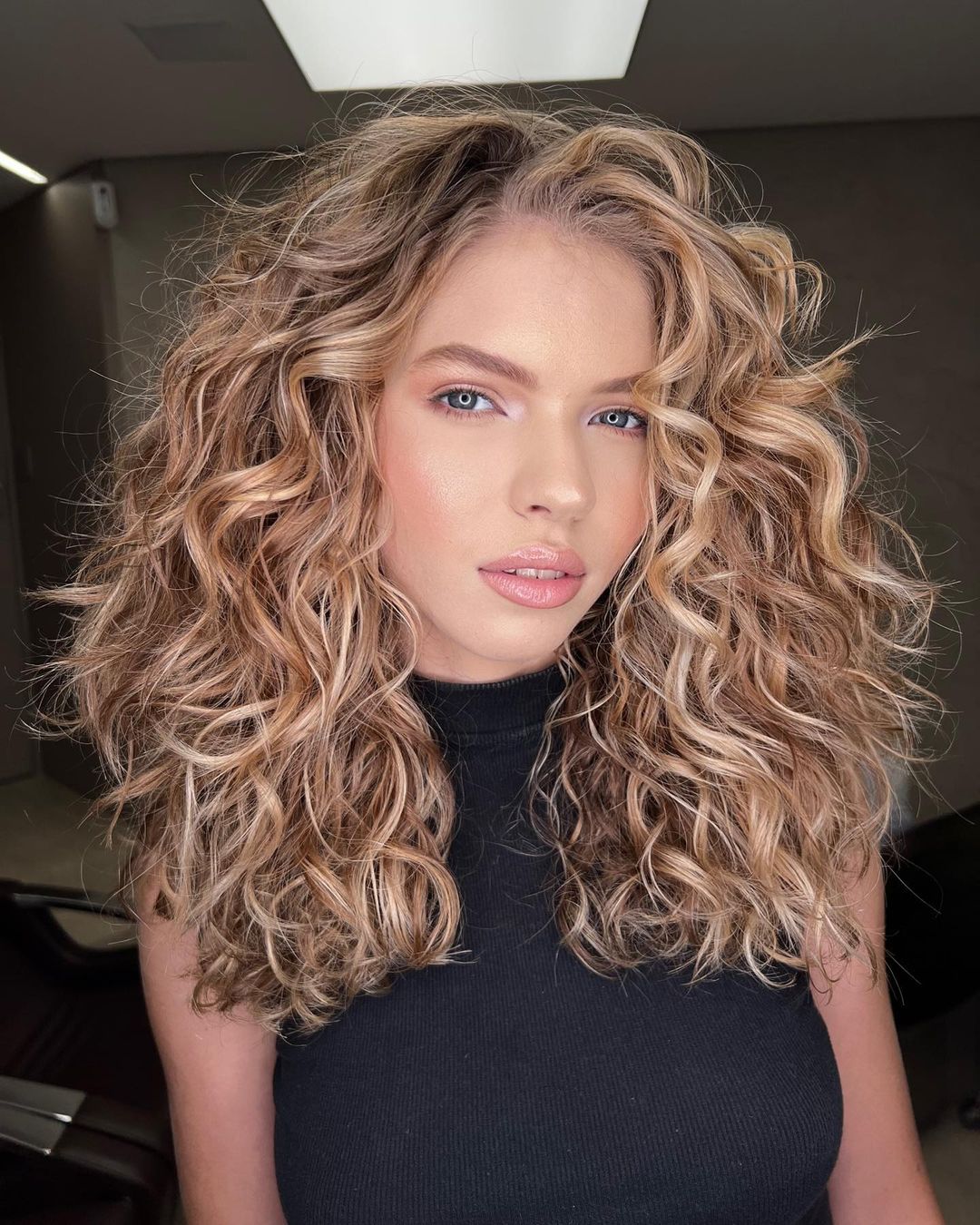
The smart part of this look is how the long layers and the honey blonde balayage work together. The layers create movement, so the waves at mid-back length don’t lie flat, and the balayage lightens the ends and mid-lengths, which makes each wave catch a different shade. Curtain bangs soften the face and tie the whole thing together. Ask your stylist for: mid-back layers, loose waves, honey blonde balayage. To style, use a large barrel curling iron and let the waves cool before brushing them out. Keep the color fresh with a gloss every eight to ten weeks, and trim the ends to keep the balayage looking lived-in rather than grown out.
Collarbone Shag With Tousled Curtain Bangs
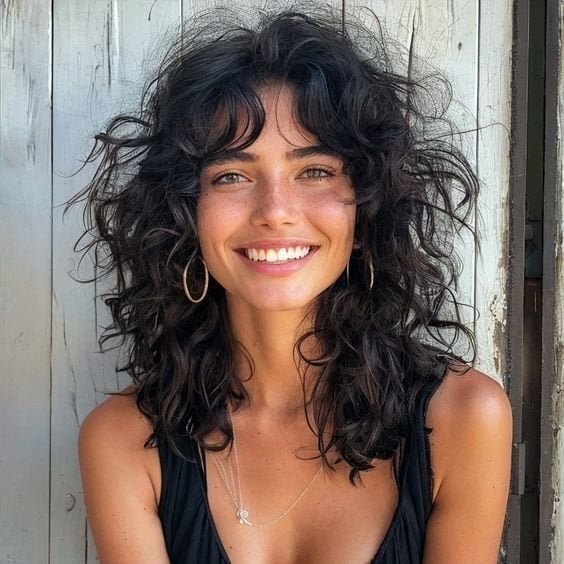
This one is for the days when you want to look like you did something without doing much. The collarbone shag with visible layers and curtain bangs has a tousled, air-dried texture that reads as deliberate, not messy. It suits medium-density wavy-curly hair and most face shapes, since the layers frame the face without committing to a heavy fringe. Ask your stylist for: collarbone length shag, tousled curtain bangs. A sea salt spray will enhance the texture, and the shag layers need a trim every six to eight weeks to keep their shape. It’s the kind of cut that works for a casual weekend or a busy week.
Shoulder Length Bouncy Curls and Bangs, Layers
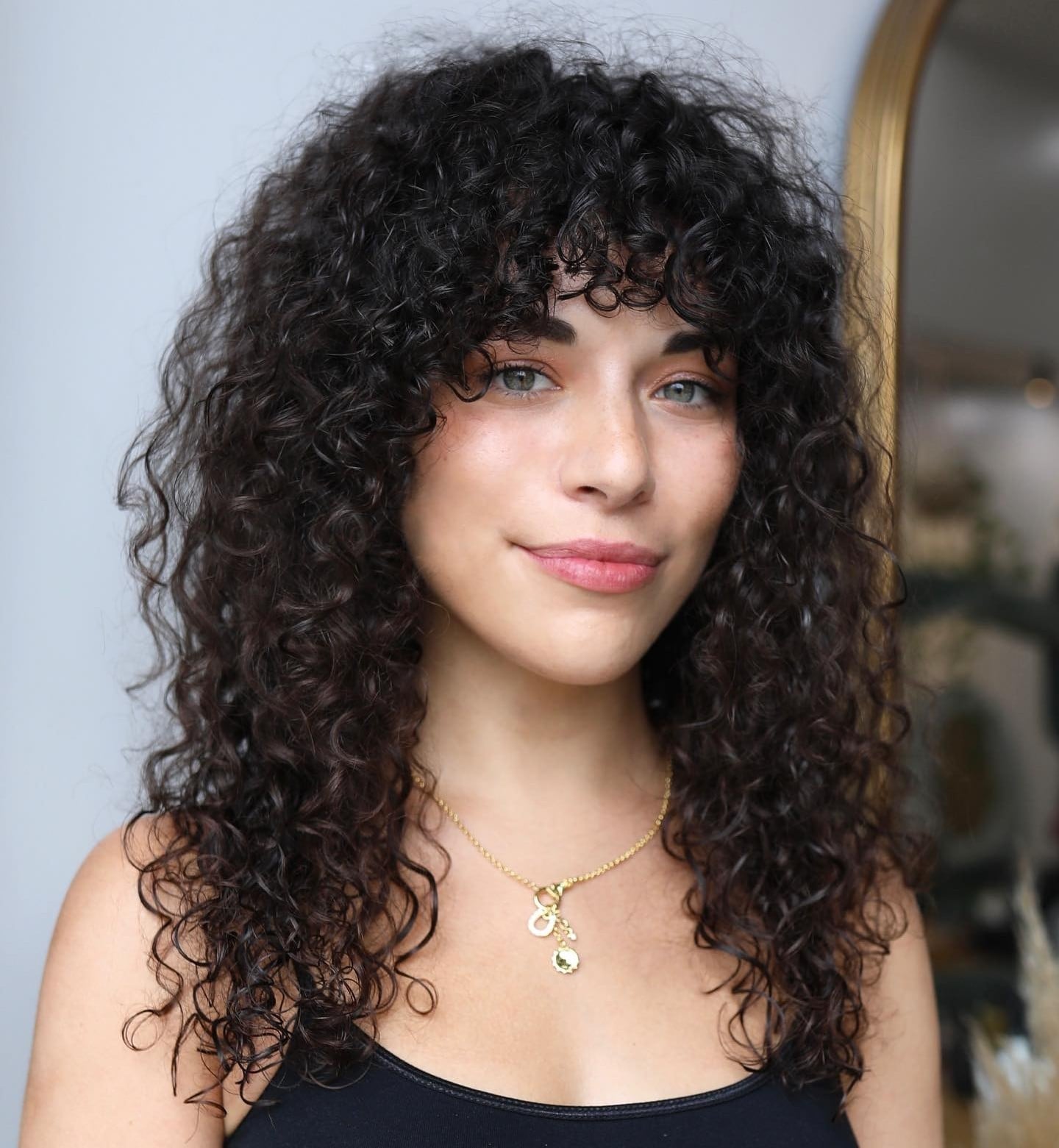
If your hair is thick and curly, this cut gives you bounce instead of bulk. The shoulder-length layers and shag cut remove weight so the curls spring up into defined, bouncy shapes, and the curtain bangs add softness around the face. It’s a flattering option for thick curly hair of shoulder length, especially if you like a middle part. Ask your stylist for: shoulder length layers, bouncy defined curls, curtain bangs. To keep those curls popping, use a curl cream and a diffuser, and trim the bangs between cuts so they don’t grow into your eyes. The result is a vibrant, low-maintenance style that holds its shape.
Mid-Back Auburn Curls With Curtain Bangs
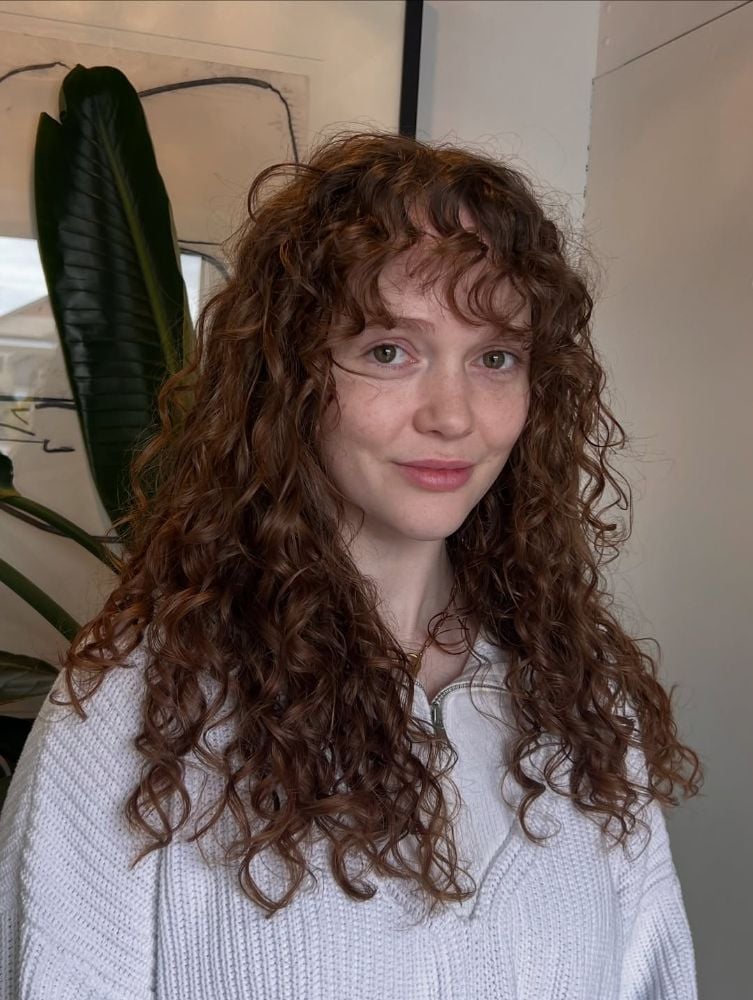
Is auburn the warm-toned red that finally works on curly hair, or are you better off with copper? Auburn sits closer to brown than copper does, which means it reads as natural rather than dyed. On thick, mid-back curls with a middle part and curtain bangs, the effect is a soft dimension that catches light. The air-dried texture keeps it from looking overly styled.
Ask your colorist for: auburn with mid-back layers and curtain bangs. The shade suits fair to medium skin tones best; on deeper bases it can look flat unless you add a dark root shadow. Curly hair holds auburn well because the texture diffuses the color, so regrowth is less obvious than on straight hair. A gloss treatment every six weeks keeps the red from drifting into orange.
Mid-Back Black Hair In High Ponytails
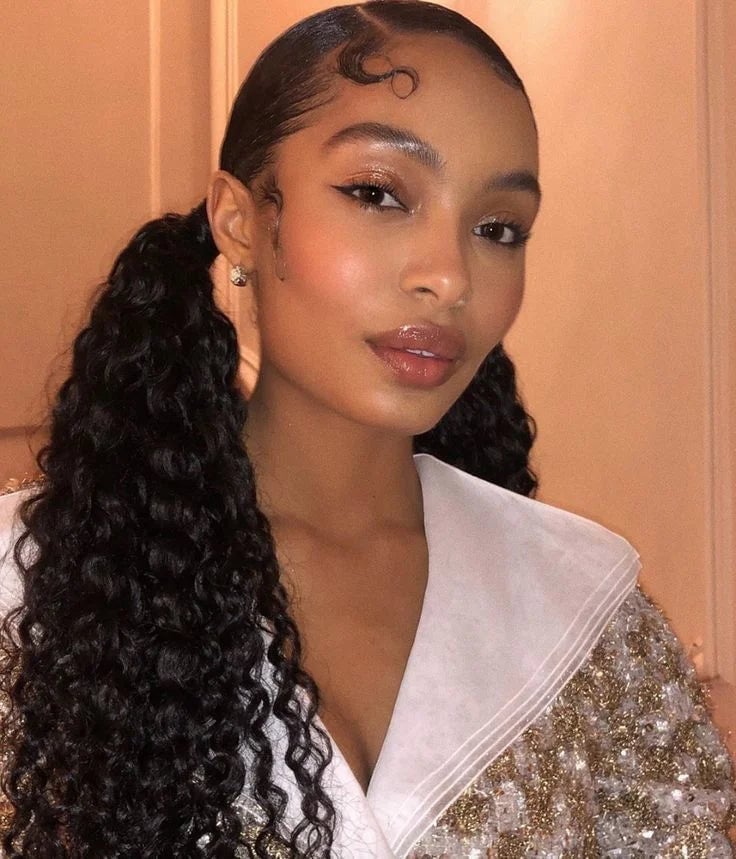
Two high ponytails on curly hair require a specific build: the front is slicked smooth with strong hold gel, then the remaining length is left to its natural curl pattern. Here, the thick black hair reaches mid-back, and the baby bangs complete the contrast between polished edges and voluminous texture. The side parting keeps the symmetry balanced.
Ask your stylist for: mid-back high ponytails, slicked edges, baby bangs. For the slicked front, apply gel on damp hair and smooth with a fine-tooth comb before securing the ponytails. Baby bangs need a trim every two to three weeks to stay at that deliberate length. This is not a quick five-minute style; budget about twenty minutes for the slicking and pinning alone.
Long Defined Black Curls With Baby Hairs
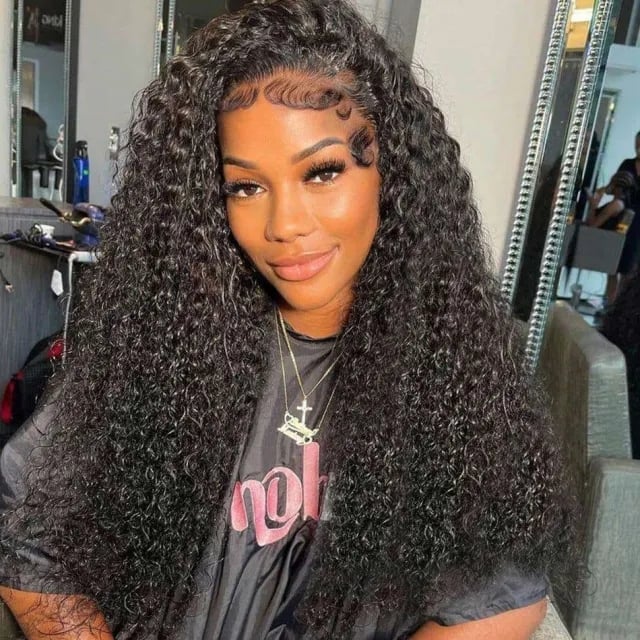
The precision here is in the curl definition, not the cut. Long layers let the thick black hair form glossy, consistent ringlets down to mid-back, while wispy baby hairs soften the hairline without adding bulk. A side parting keeps the shape from being too round, and the air-dried finish proves that definition does not require a diffuser.
Ask your stylist for: mid-back defined black curls, wispy baby hairs. To maintain the definition, apply a curl cream on soaking wet hair and then do not touch it until it is fully dry. The baby hairs need light trimming every four weeks; they will look ragged faster than the rest of the length. A trim every eight weeks keeps the long layers from losing their shape at the ends.
Shoulder Length Dark Brown With Full Bangs
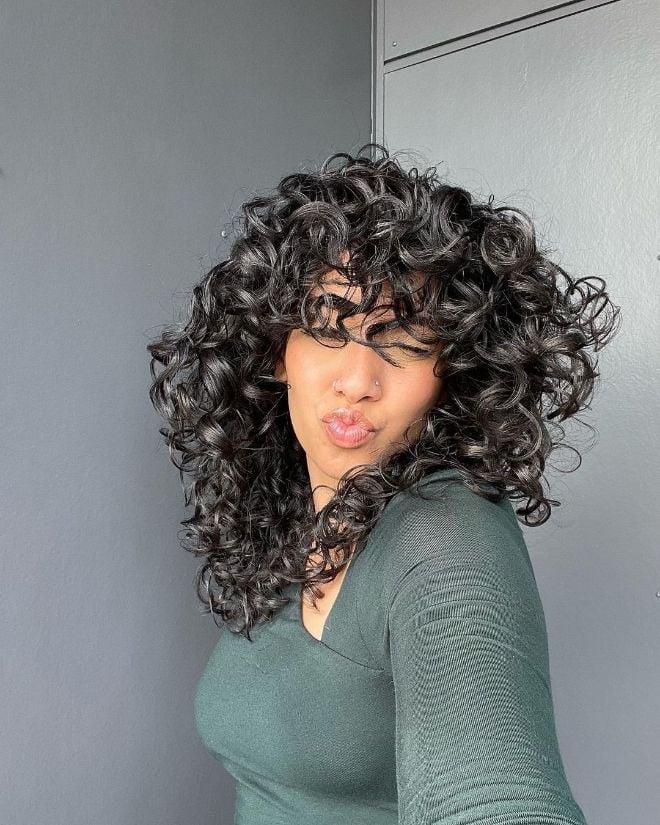
Can curly hair handle full bangs without looking like a helmet? Yes, but the trick is the cut. The bangs here are cut to hit just below the brows when dry, and the side parting prevents the weight from sitting evenly across the forehead. Thick, dark brown curls at shoulder length provide enough texture to keep the bangs from reading as a solid block.
Ask your stylist for: shoulder length layers, full bangs, dark brown. The layers throughout the body stop the shape from pooling into a triangle. Full bangs on curly hair will shrink about half an inch as they dry, so your stylist should cut them longer than you think you want. This cut suits oval and long faces; on rounder shapes, the bangs can shorten the face too much.
Shoulder Length Dark Brown With Volume
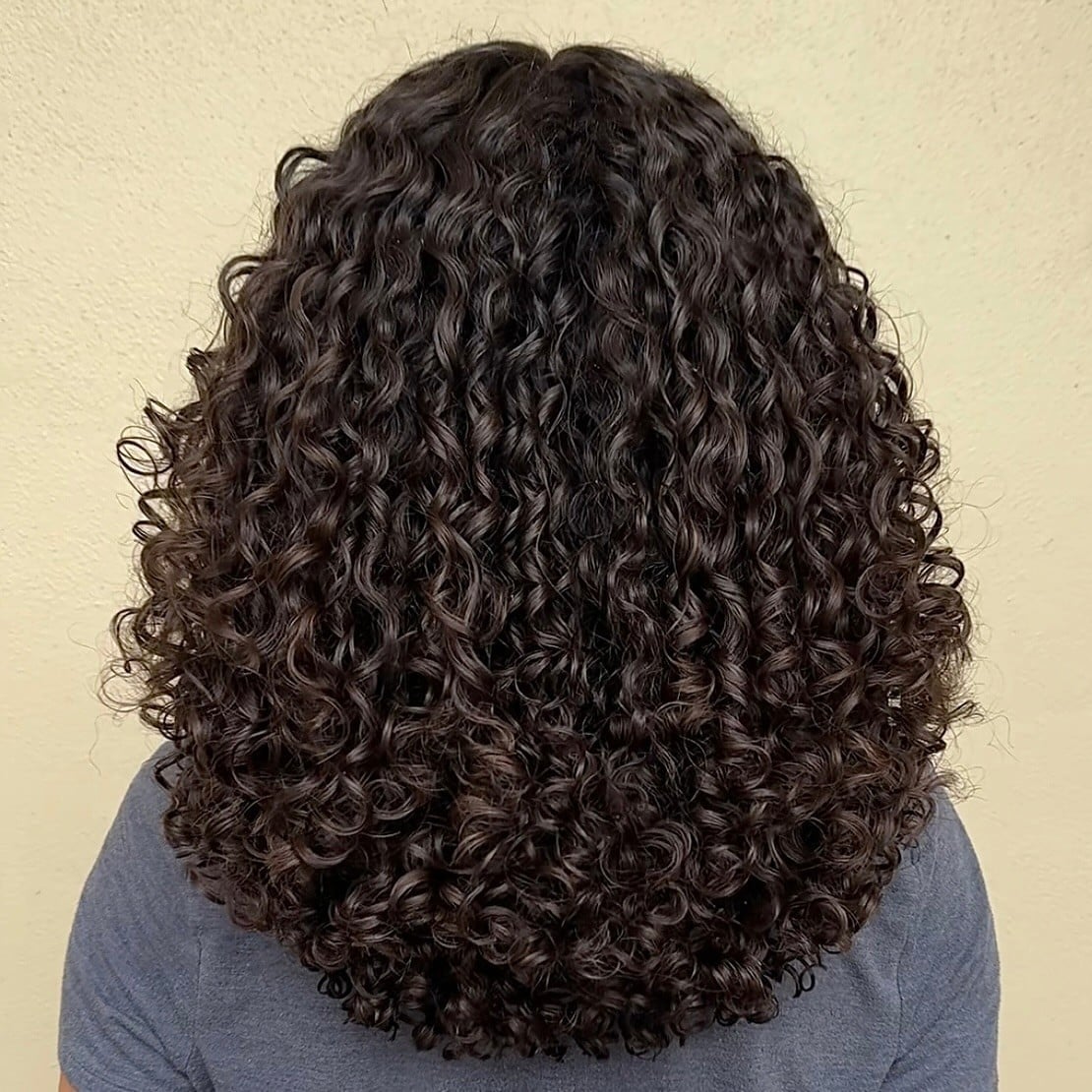
The back view tells the honest story: this is pure geometry. Thick, dark brown curls cut in layers that stack at the shoulders create a rounded silhouette that holds its shape without product. The air-dried finish means the volume is structural, not teased into place. No bangs here, so the fullness is concentrated in the body.
Ask your stylist for: shoulder length layers for maximum volume. This shape works best on medium to thick density; fine curls at this length tend to look stringy rather than full. The layers should be cut on dry hair so the stylist can see the natural spring pattern. A trim every six weeks maintains the round shape, because the silhouette flattens fast once the ends split.
Shoulder Length Dark Brown Volume, Close-Up Take
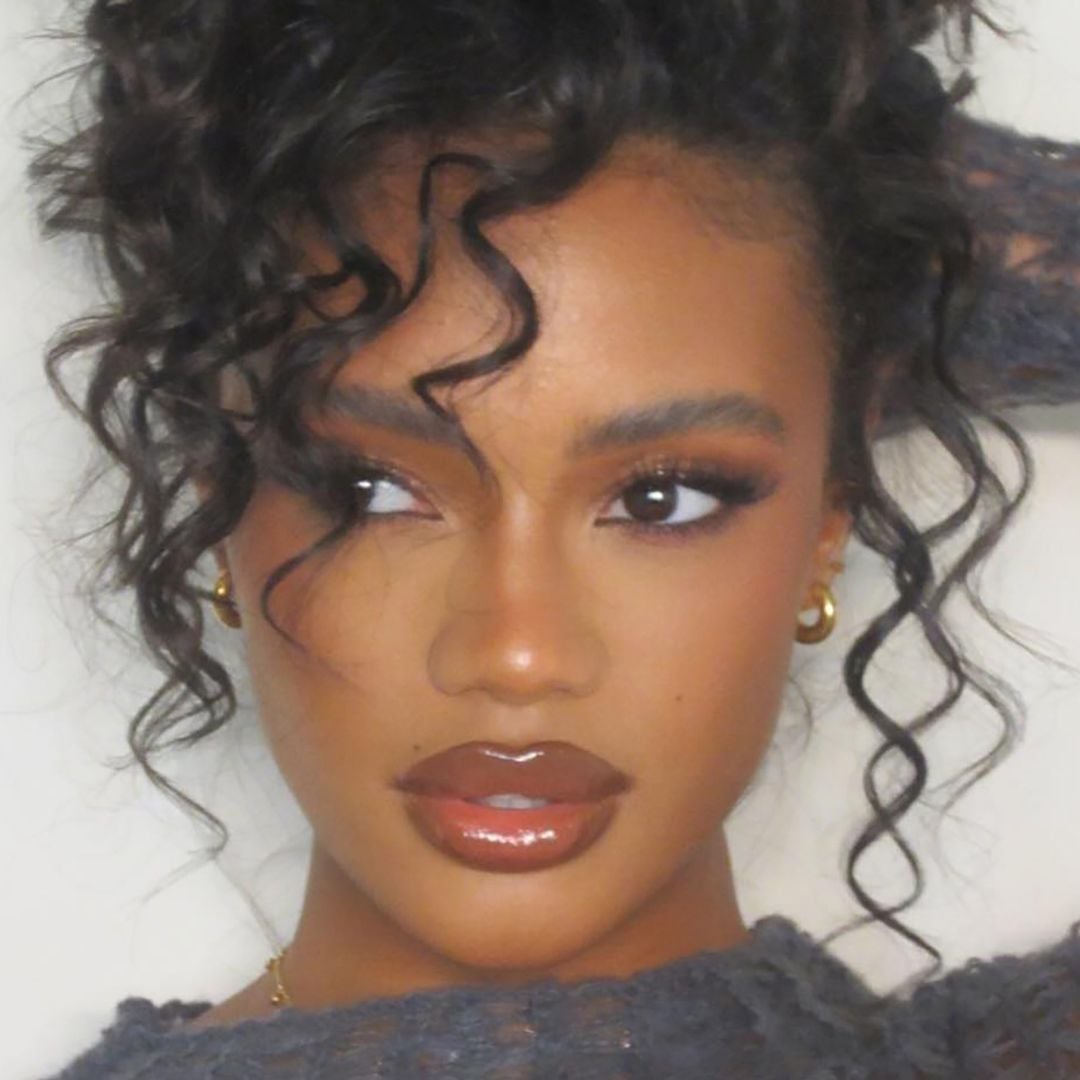
This cut banks on one thing: volume. The layers are cut through thick, dark brown curls that fall to the shoulders, and the consistent curl pattern does the rest, lifting everything up and out from a middle parting. It is a lot of hair, and that is the point. But volume like this does not happen by accident. You will spend time with a diffuser on a low setting, coaxing each section upward, and even then, humidity can flatten the whole thing by afternoon. The trade-off is real: this style asks for daily effort, not just a good cut. Ask your stylist for: shoulder length layers for volume, dark brown. If you are not ready to commit to the styling routine, this one will wear you out before it wears well.
Shoulder Length Soft Curls With Highlights
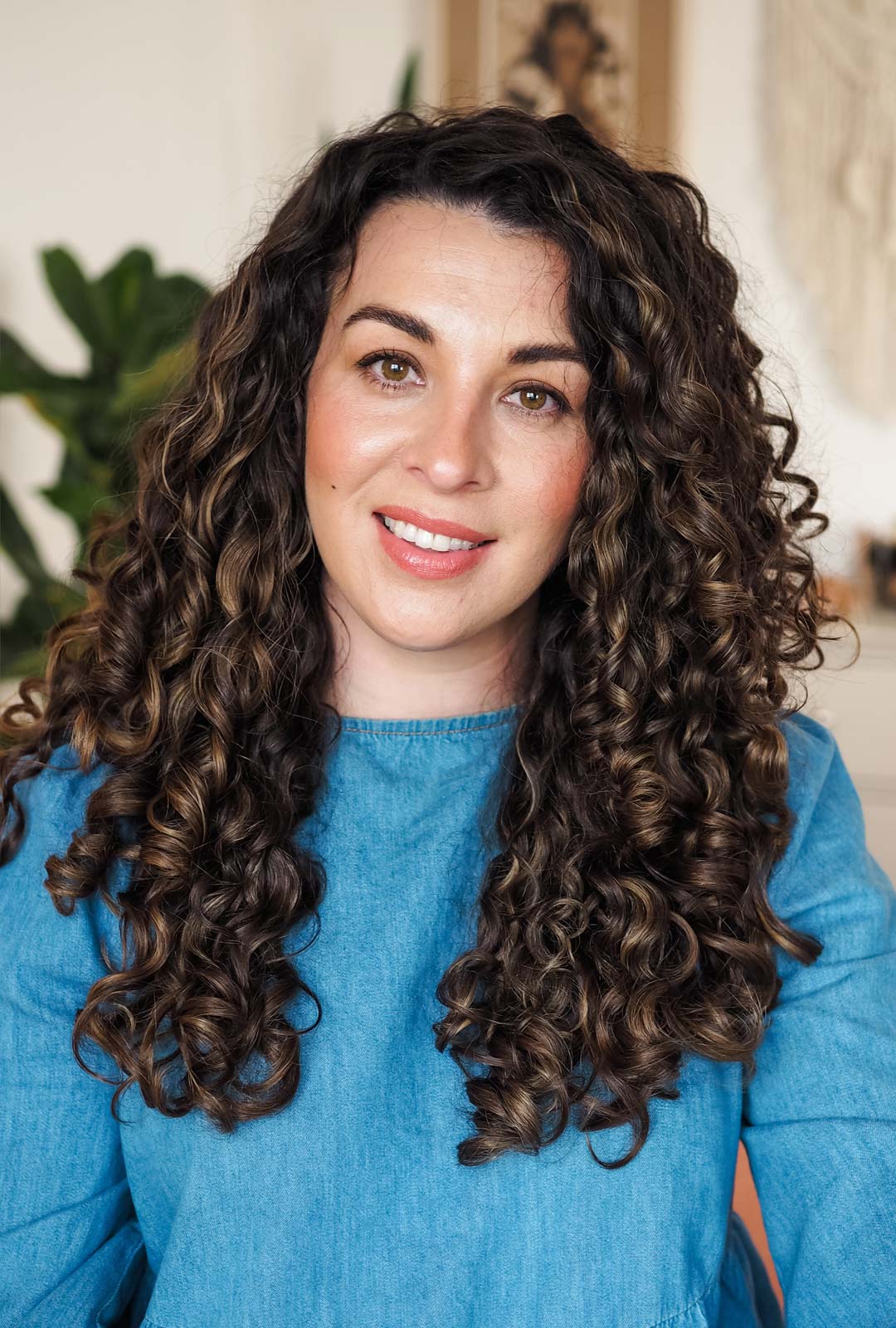
If you want loose, soft waves but your hair naturally does its own thing, this is the closest you will get without fighting it. The shoulder length layers are cut to move, and the subtle lighter brown highlights add dimension so the wave pattern reads clearly. On medium-density wavy-curly hair, the technique is simple: scrunch a texturizing spray through damp hair, then air dry or diffuse on low. The side parting keeps the softness from looking shapeless. Ask your stylist for: shoulder length layers, soft loose curls, subtle highlights. A trim every six to eight weeks keeps the ends from dragging the waves down.
Collarbone Dark Brown With Blonde Highlights
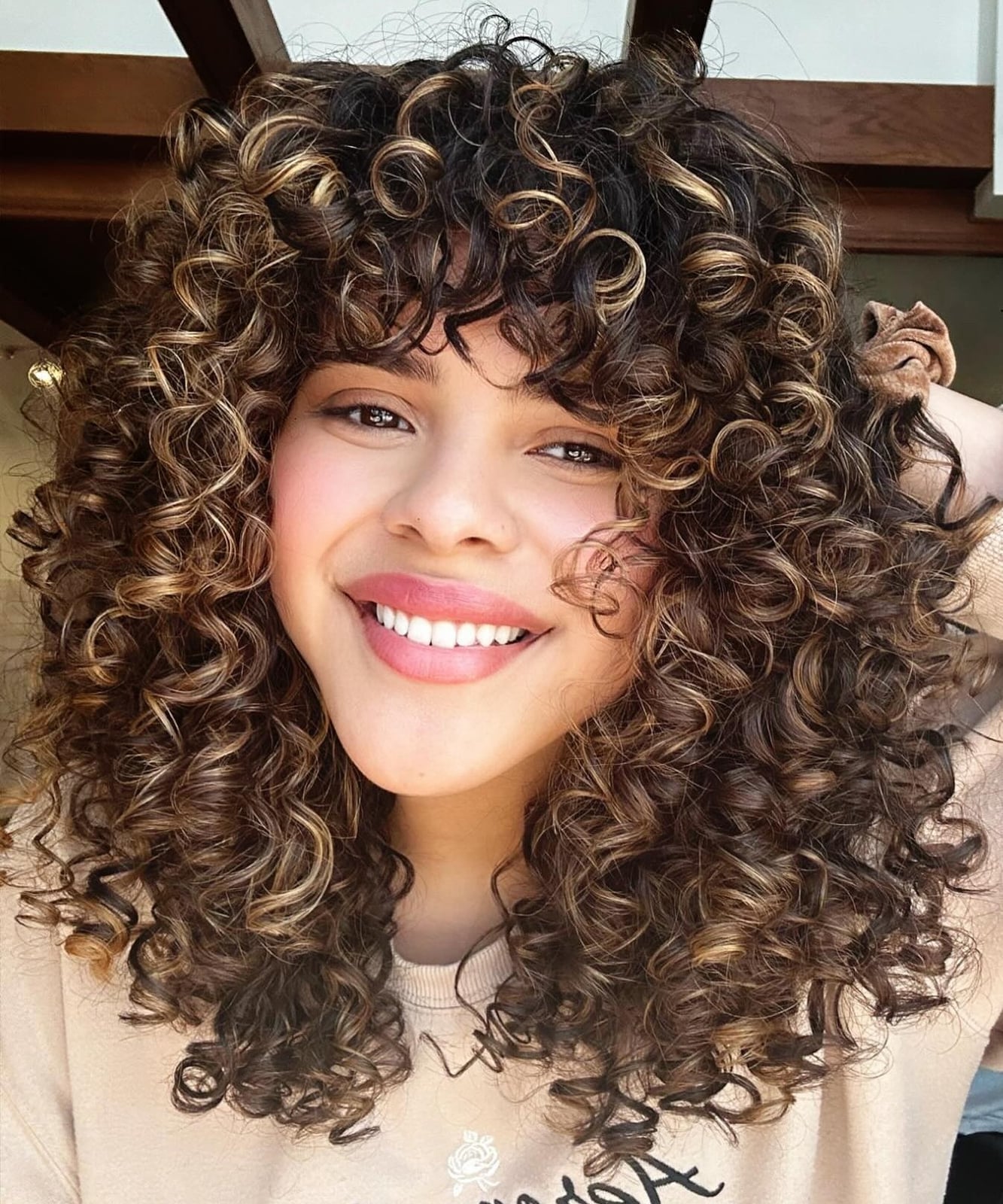
How do you get blonde highlights on dark brown curls without the grow-out looking harsh? You put them close to the face and let the curtain bangs do the blending. The collarbone length layers keep the thick texture from feeling heavy, while the blonde pieces frame the face and soften the transition. The catch is upkeep: blonde against dark brown shows its roots in about six weeks, so you will be back in the chair for a toner or a root shadow before the curls even think about losing shape. Air drying keeps the natural texture and saves you from heat damage. Ask your stylist for: collarbone length layers, curtain bangs, dark brown with blonde highlights.
Collarbone Dark Brown Defined Curls
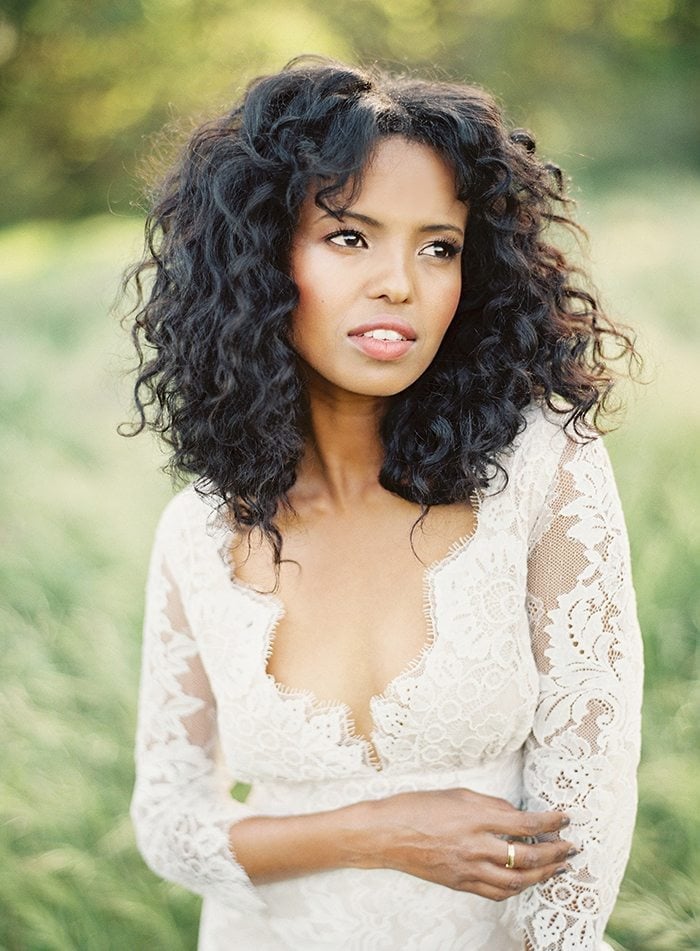
The genius of this cut is how the collarbone length works with thick, curly hair to give each strand its own shape. The layers are cut so the curls stack and separate, not clump, and the subtle lighter brown highlights make the definition pop without looking striped. This one suits anyone with thick, curly hair who wants movement without losing length. The side parting adds a little asymmetry, which keeps the shape from feeling round. Ask your stylist for: collarbone length layers, defined loose curls, subtle highlights. If your hair is fine or thin, this much layering might make it look sparse, so consider that before you commit.
Collarbone Fine Curls With Subtle Highlights
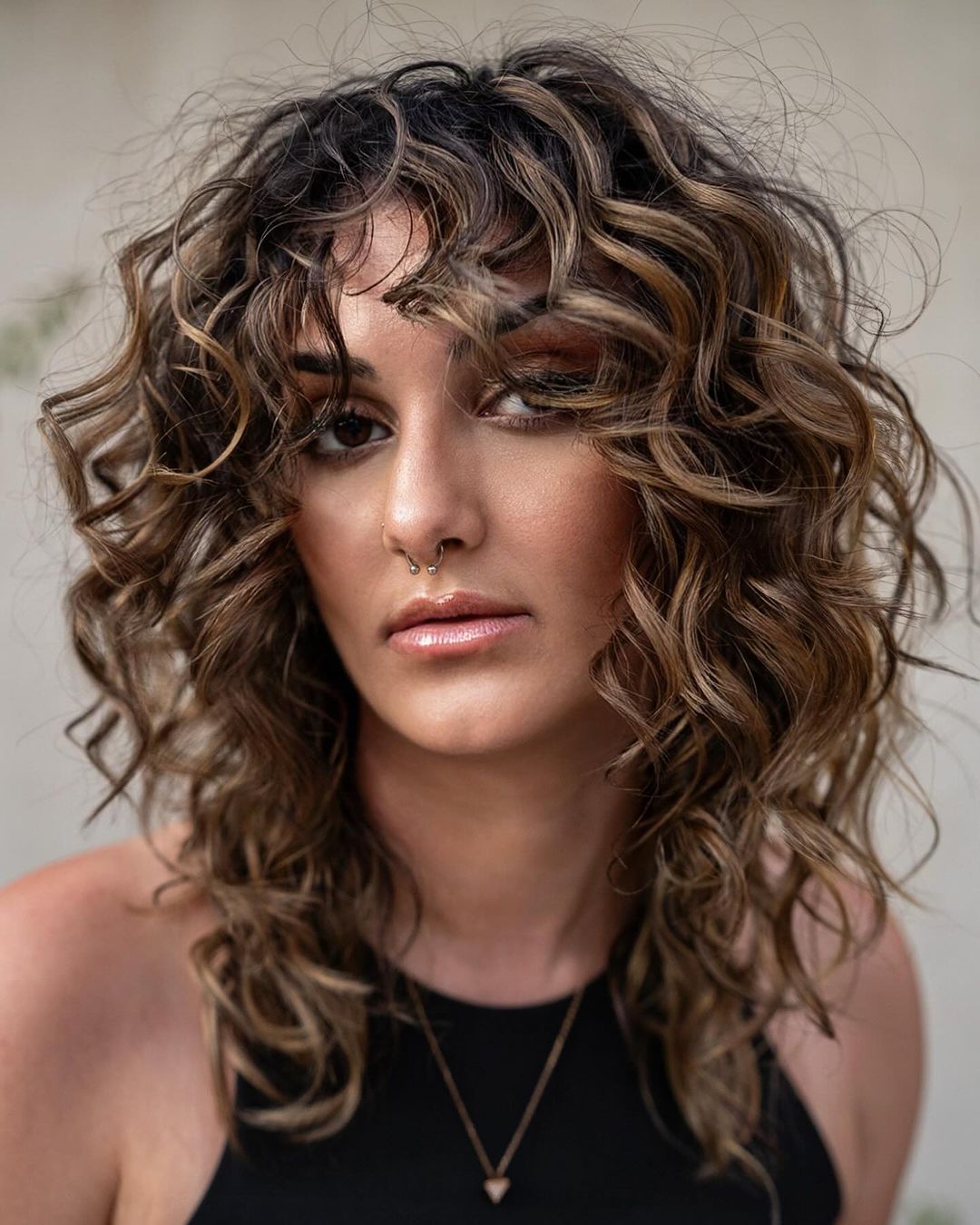
Fine curly hair usually means a choice between definition and volume, and this cut tries to give you both. The collarbone length layers remove just enough weight to let the curls spring up, while the medium brown base with subtle highlights adds dimension that makes each strand read clearly. The catch: on fine hair, definition is a salon thing. The stylist shapes the layers so the air-dried curls land in the right place, and you can maintain it with a lightweight curl enhancer. Skip the heavy creams, they will flatten everything. Ask your stylist for: collarbone length layers, defined air-dried curls, medium brown with highlights. If you want to air dry and go, this is as close as it gets, but do not expect the definition to survive a humid day.
Shoulder Length Voluminous Curls
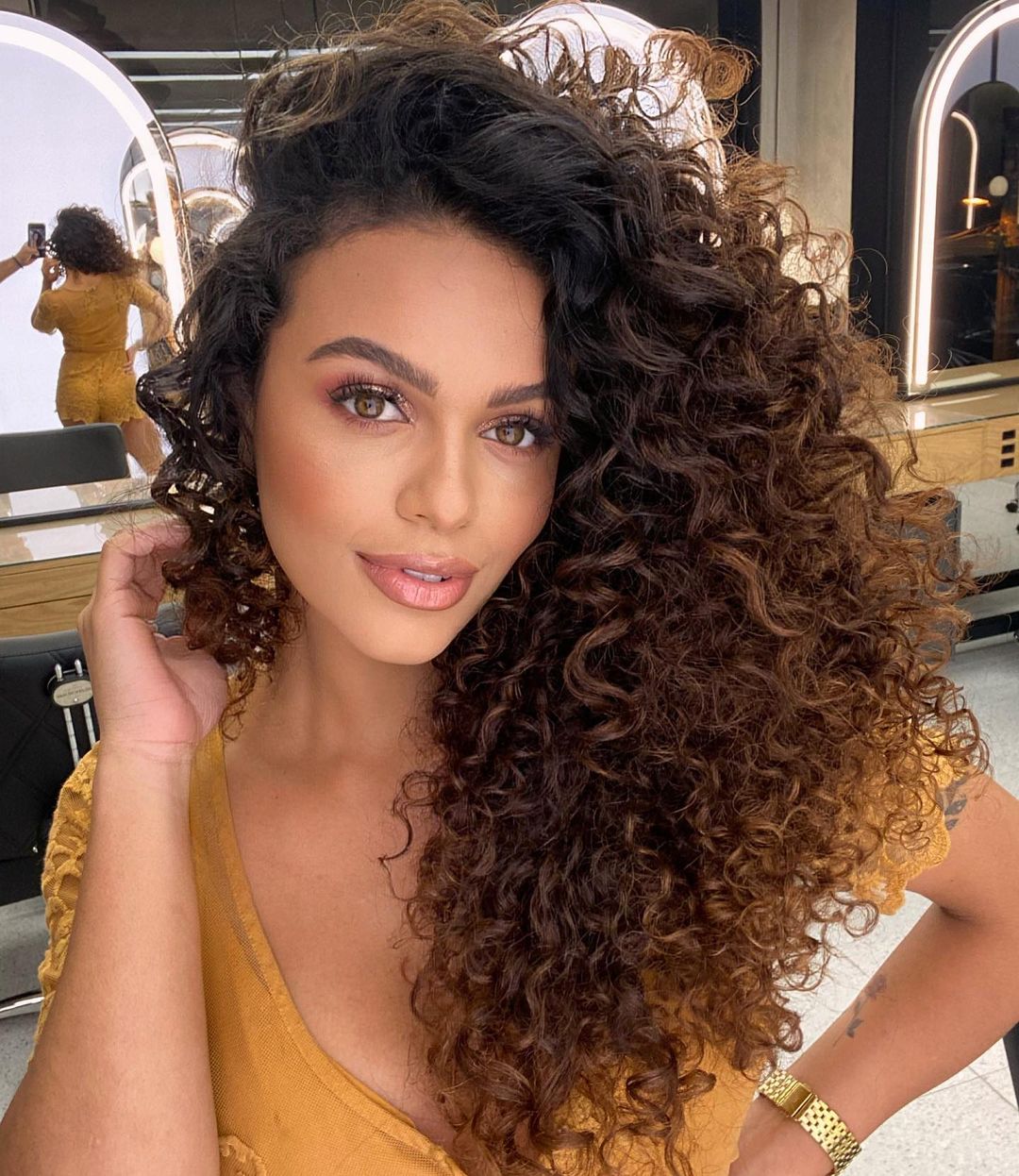
A side parting and caramel balayage give shoulder-length curls dimension. The dark brown base keeps the roots grounded while the lighter pieces visually expand each curl. Medium density hair benefits most from this approach: the layers lift the shape without making it look thin. Ask your stylist for: shoulder-length layers for volume, caramel balayage.
This cut lands differently than a blunt shoulder-length shape. The layers soften the outline so the hair moves instead of sitting in a single block. If you prefer your curls to feel large and airy, the caramel placement pushes that effect further. A trim every six to eight weeks keeps the ends from thinning out.
Mid-Back Dark Brown With Caramel Balayage
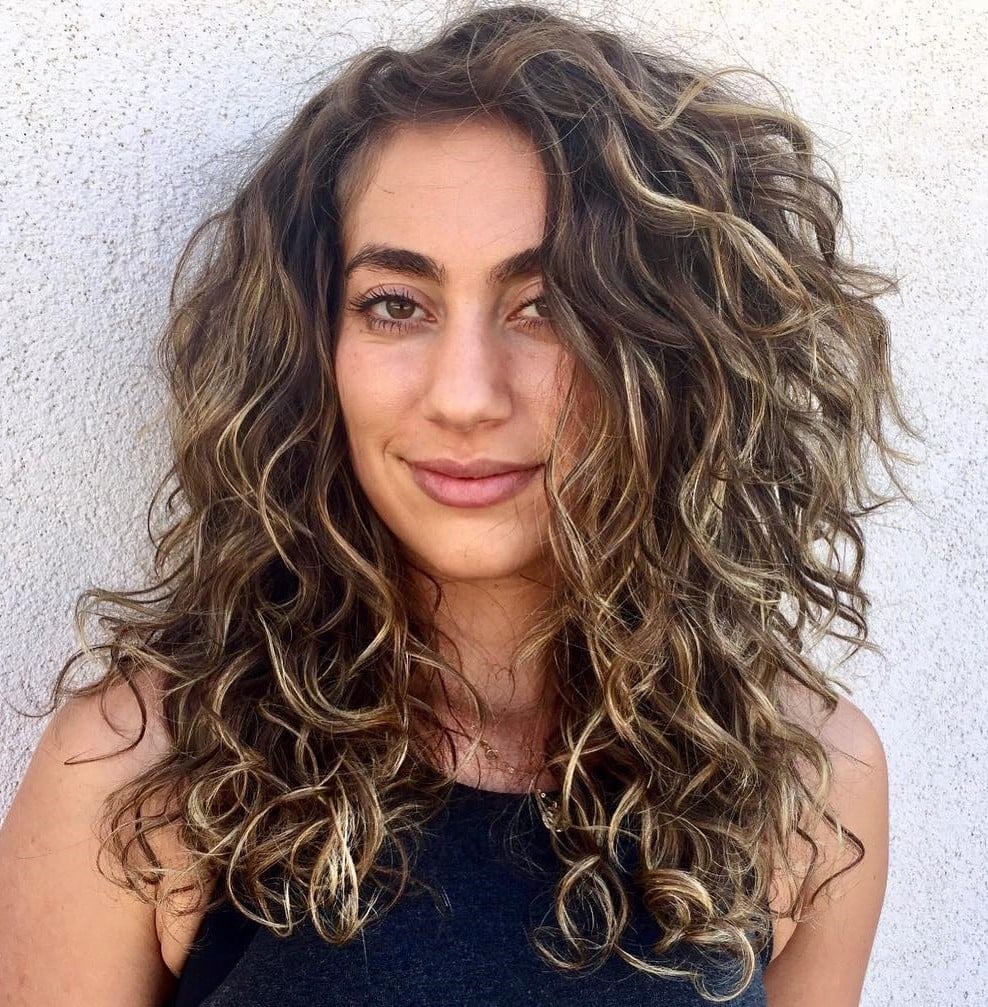
The caramel balayage is painted onto the ends and roots, which creates a soft fade from dark brown to warm gold. On thick wavy hair, that freehand technique avoids the stripe effect that foils can leave on looser textures. The side parting lets the lighter pieces fall forward without needing bangs. Ask your colorist for: mid-back layers, dark brown with caramel balayage.
This approach works because the balayage follows the wave pattern instead of fighting it. A stylist paints each section by hand, placing the lighter color where the wave peaks, so the contrast lands naturally when the hair dries. The color build looks as if the sun did the work, not a bowl of bleach. A toning appointment every eight to ten weeks keeps the caramel from pulling orange.
Mid-Back Wavy Hair With Blonde Balayage
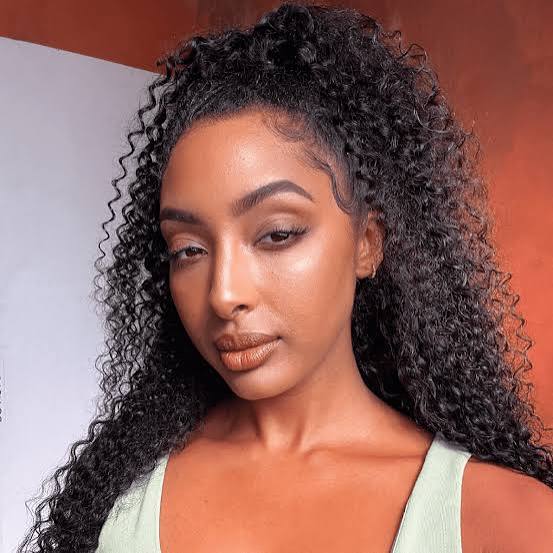
When the day demands your hair stay out of the way, a high ponytail on mid-back wavy hair with blonde balayage is the answer. The contrast between the dark brown base and the lighter pieces gives the ponytail a deliberate look. Ask your stylist for: mid-back layers, wavy texture, dark brown with blonde balayage. It is a practical shape for gym sessions, humid commutes or any moment when air-drying is the only realistic option.
Mid-Back Dark Brown With Highlight Dimension
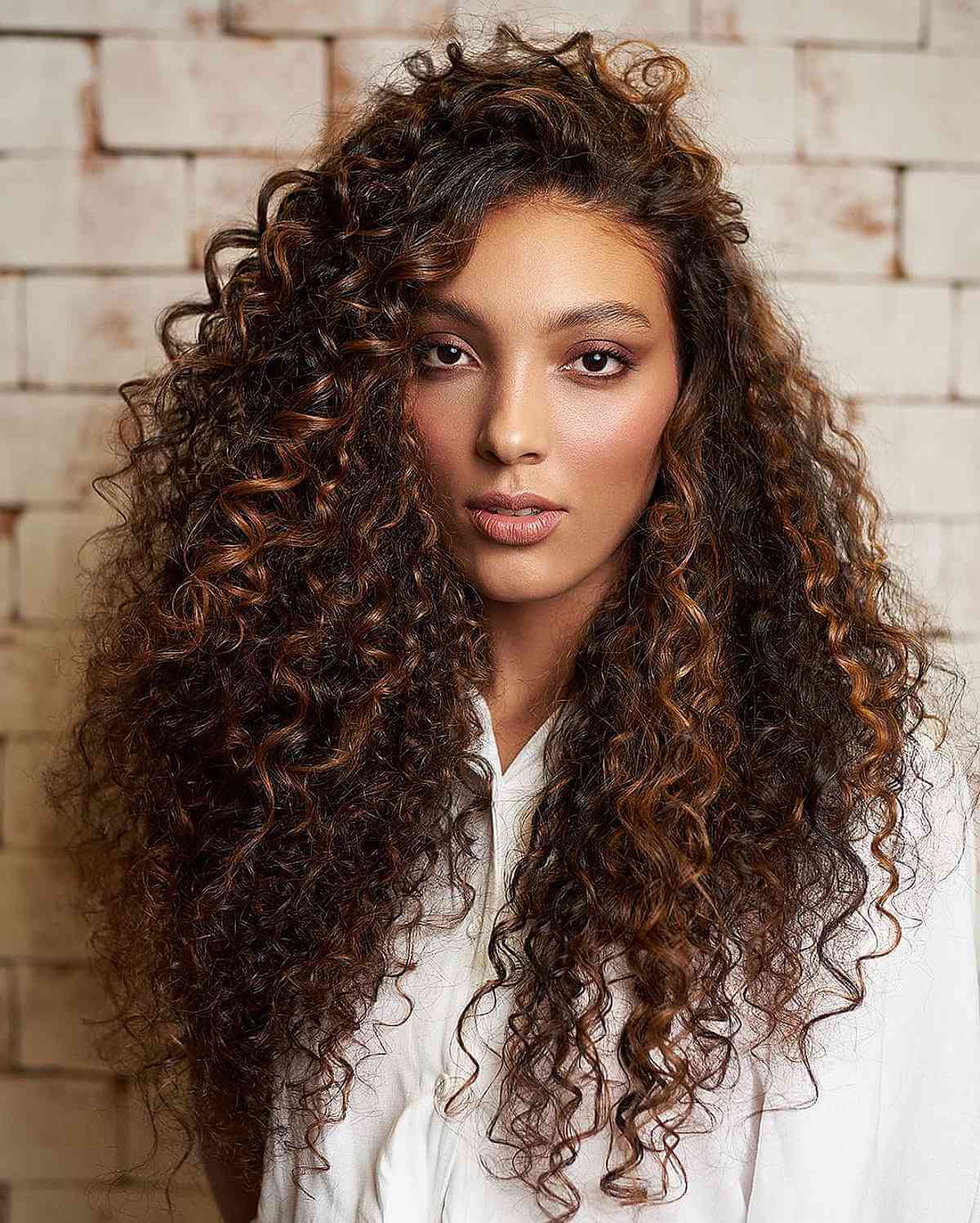
Warm blonde and auburn highlights layered over a dark brown base create a color build that changes with the light. On thick curly hair at mid-back length, the multiple tones prevent the hair from reading as a single flat block. The middle parting splits the color evenly, so each side mirrors the other. Ask your colorist for: mid-back layers, defined curls, dark brown with warm blonde and auburn highlights.
To get this effect, ask for babylights through the crown and slightly thicker ribbons of auburn around the front pieces. The combination keeps the overall look dimensional without turning brassy. A gloss treatment every six to eight weeks refreshes the warmth and restores the shine that curls can lose between salon visits. The cut itself uses long layers to avoid removing too much weight from the ends.
Mid-Back Volume With Subtle Highlights
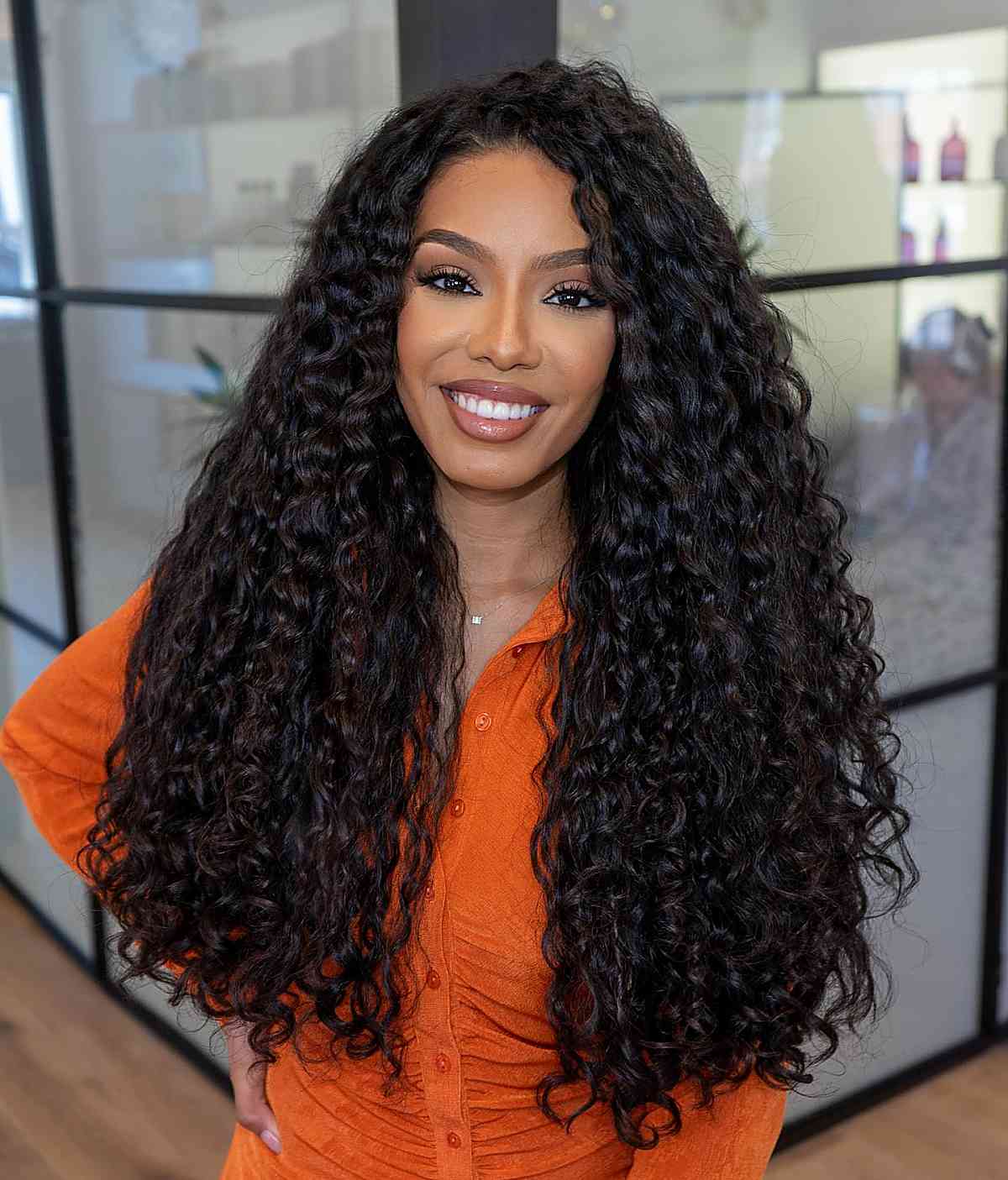
This approach works best for those with medium to high density hair. If the hair is fine, the same cut can collapse under its own weight, so a shorter length or more aggressive layering would be a better fit. The layers are cut to follow the curl pattern, which keeps the shape round and full rather than triangular. A trim every six to eight weeks maintains the volume at the ends.
Mid-Back Natural Volume With Highlights and Long Layers
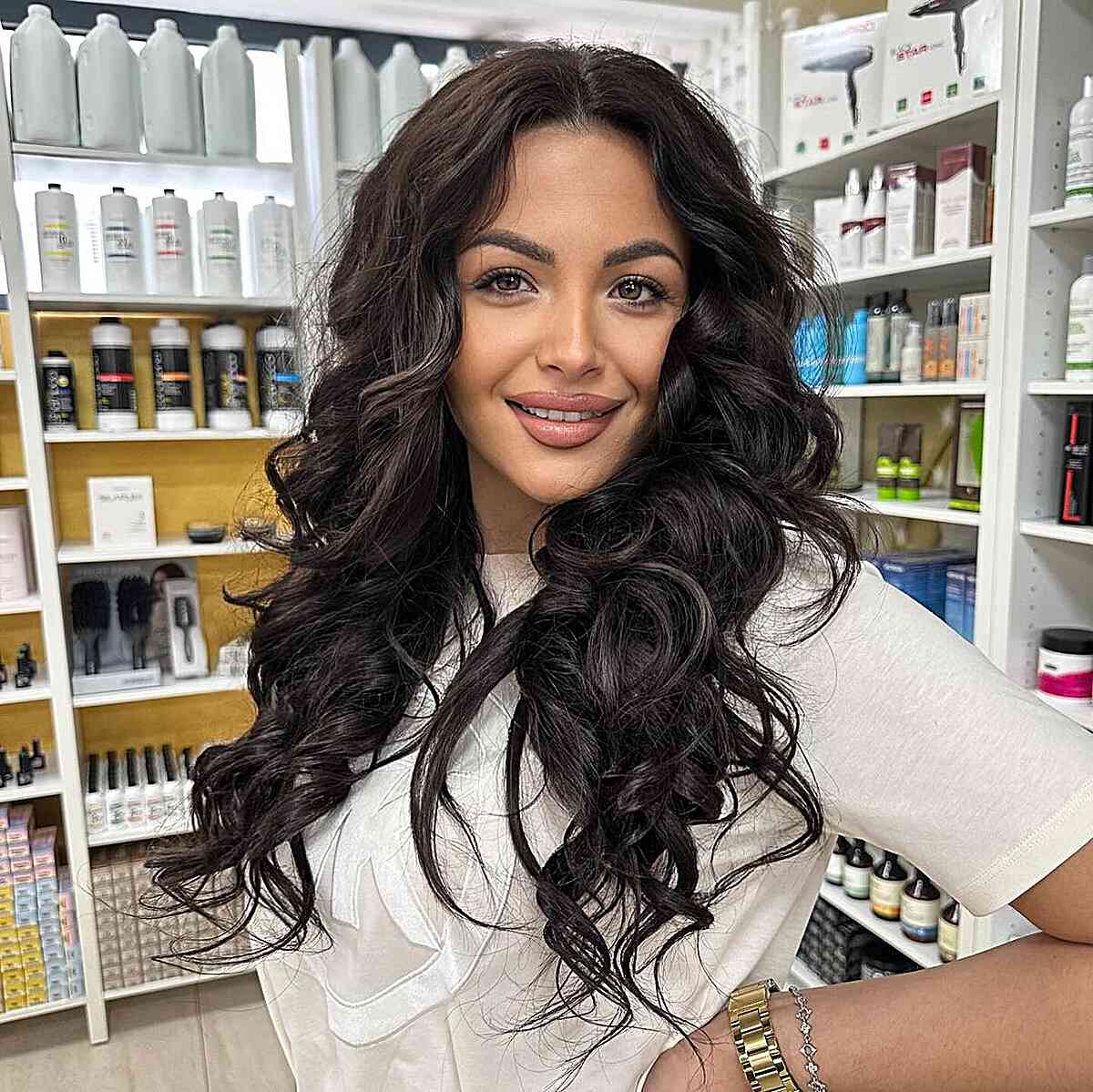
This is not a blowout that requires a round brush and patience. It is air-dried curly hair that happens to cooperate. Start with damp hair after a shower, apply a leave-in conditioner and a curl cream, then let it dry without touching it. The side parting and long layers do the work of creating that lifted root. Ask your stylist for: mid-back long layers, subtle highlights. A trim every eight to ten weeks keeps the ends from getting stringy, but between cuts the shape holds its own.
Mid-Back Voluminous Curly Ponytail
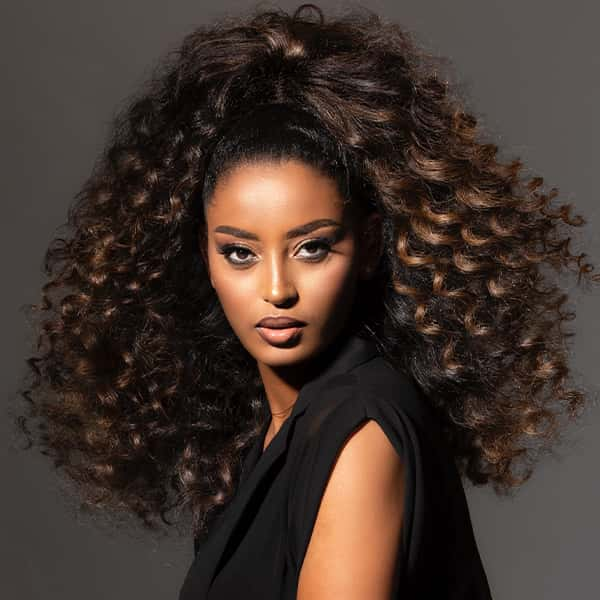
A ponytail on curly hair is not a quick pull-back; it is a deliberate shape. The hair is gathered high on the crown, and the weight of thick curls creates a rounded silhouette. The warm highlights and visible root shadow add dimension that a single flat color cannot deliver.
This is the hairstyle for a day that starts with a brunch and ends with a dance floor. It stays off the neck, which matters when humidity is high. Use a strong hair tie and a dab of serum on the flyaways. The cut itself requires a salon visit for the long layers that let the ponytail swing without looking blunt.
Mid-Back Dark Brown High Ponytail
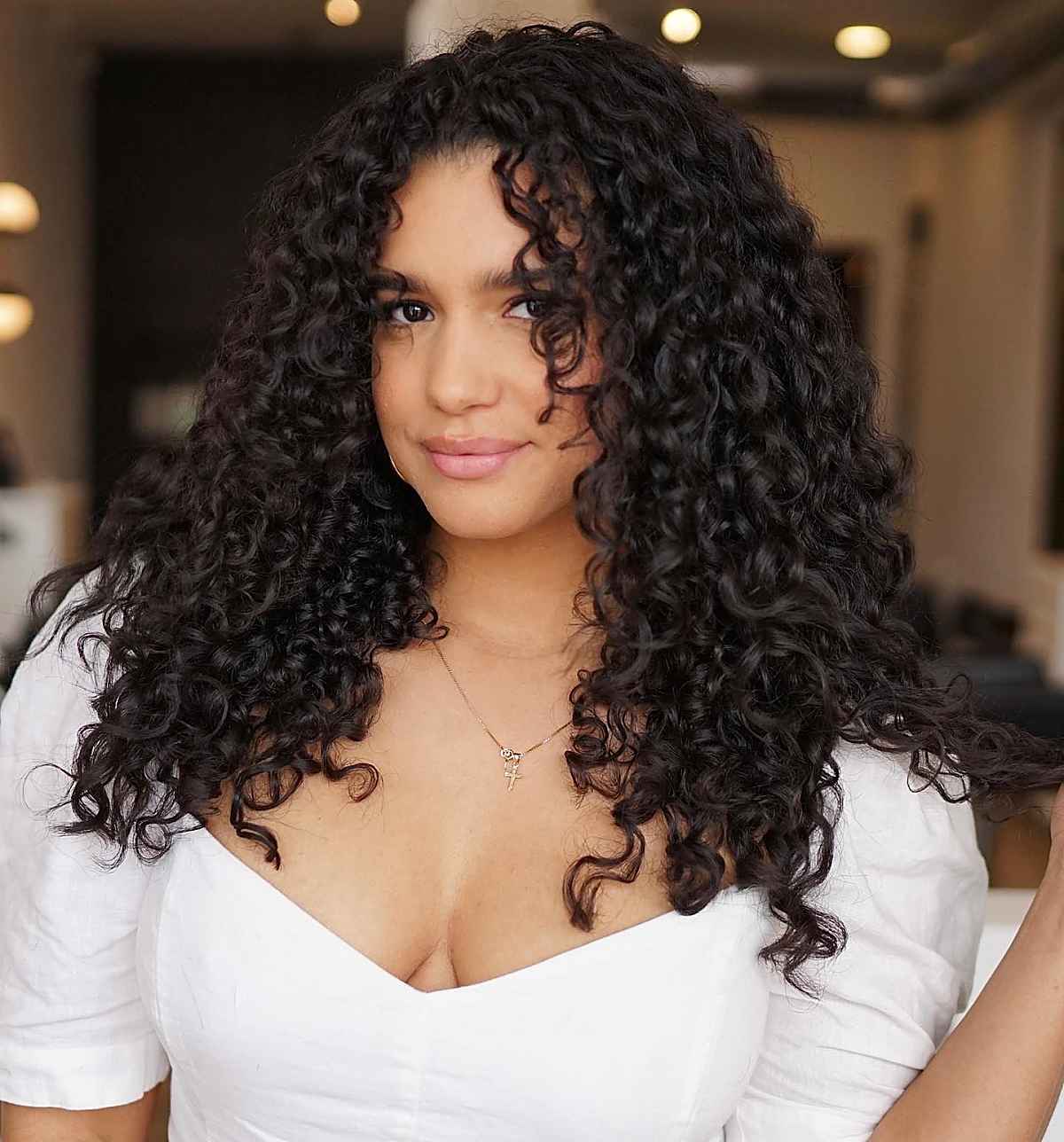
A high ponytail on curly hair works when the cut does the job. Long layers through the mid-back length let each curl stack neatly into the elastic without bulk at the base. The subtle blonde highlights show clearly from the back, which matters for a back-view photo.
The curl pattern here is consistent from root to end, which means the stylist cut the layers while the hair was dry and curly. That is a salon skill, not a DIY project. A trim every eight weeks maintains the shape, and a shine spray applied before gathering the hair gives the gloss a healthy finish.
Mid-Back Dark Brown With Blonde Highlights, Close-Up Take

The design here is straightforward: thick dark brown curls at mid-back length with subtle blonde highlights woven through the mass. The layers keep the shape rounded, and the middle part splits the color evenly so the lighter pieces add dimension, not stripes. Ask your colorist for: dark brown with subtle blonde highlights, mid-back layers. This suits medium to thick curly hair that can handle the contrast without the highlights disappearing into the density. The upkeep is a trim every eight to ten weeks and a toning appointment every six to eight weeks to keep the blonde from drifting brassy against the dark base. The highlights need regular maintenance, otherwise the grow-out line becomes obvious faster than you expect.
Mid-Back Volume With Lighter Highlights, Middle
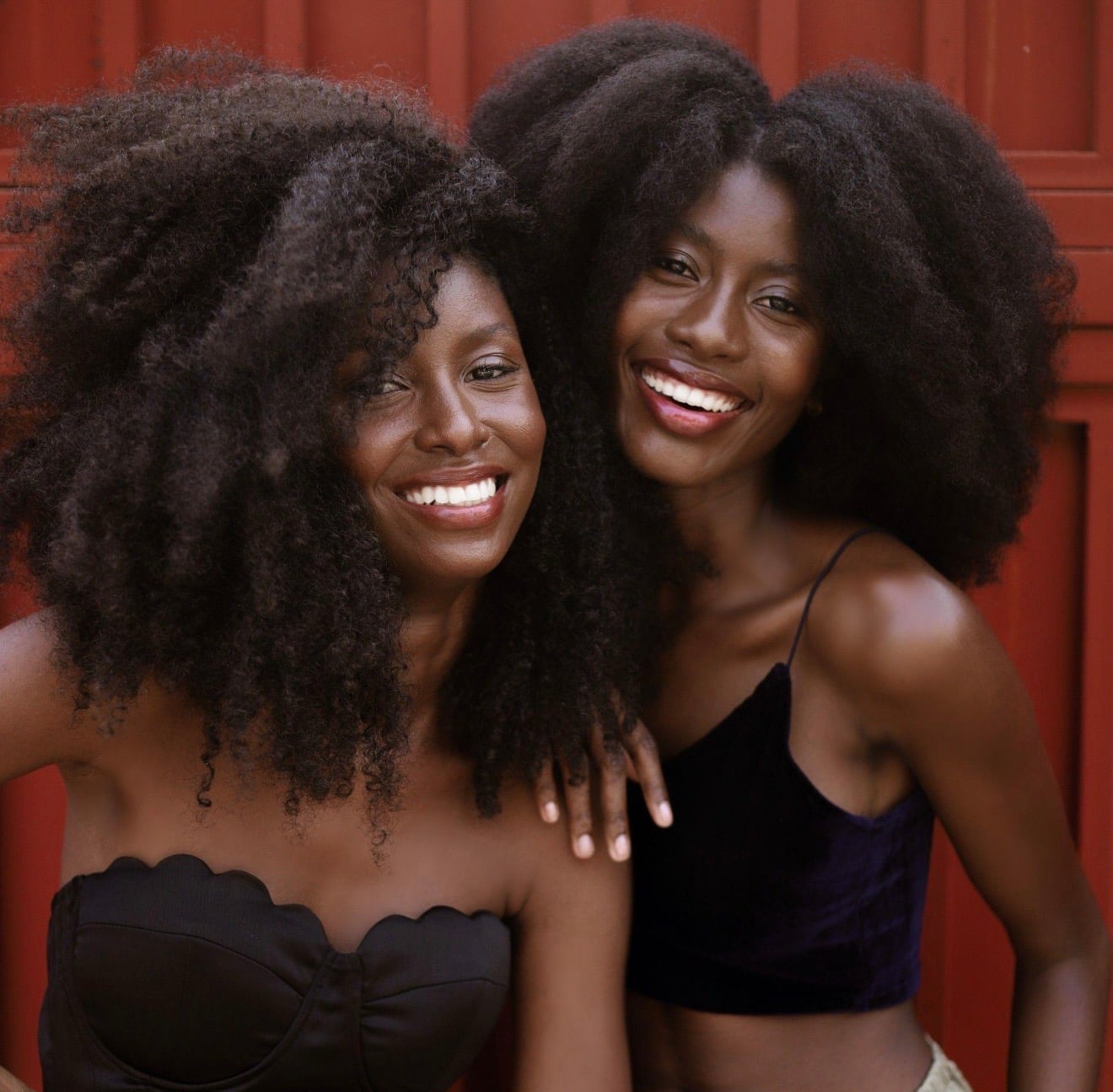
The middle parting and thick coily texture here create a symmetry that suits oval and heart-shaped faces. The volume is concentrated at the sides, which balances a narrow jaw or a high forehead. The subtle lighter brown highlights add depth without the harsh line of a single-process color.
Ask your stylist for: mid-back layers for volume, subtle highlights. The layers are cut into dry hair so each curl sits at its own length, which prevents the triangle shape that happens when curly hair is cut wet and blunt. A hydrating leave-in conditioner applied after washing keeps the coils defined. Air drying or diffusing on low heat preserves the natural texture without frizz.
Mid-Back Balayage With Copper and Blonde Tones
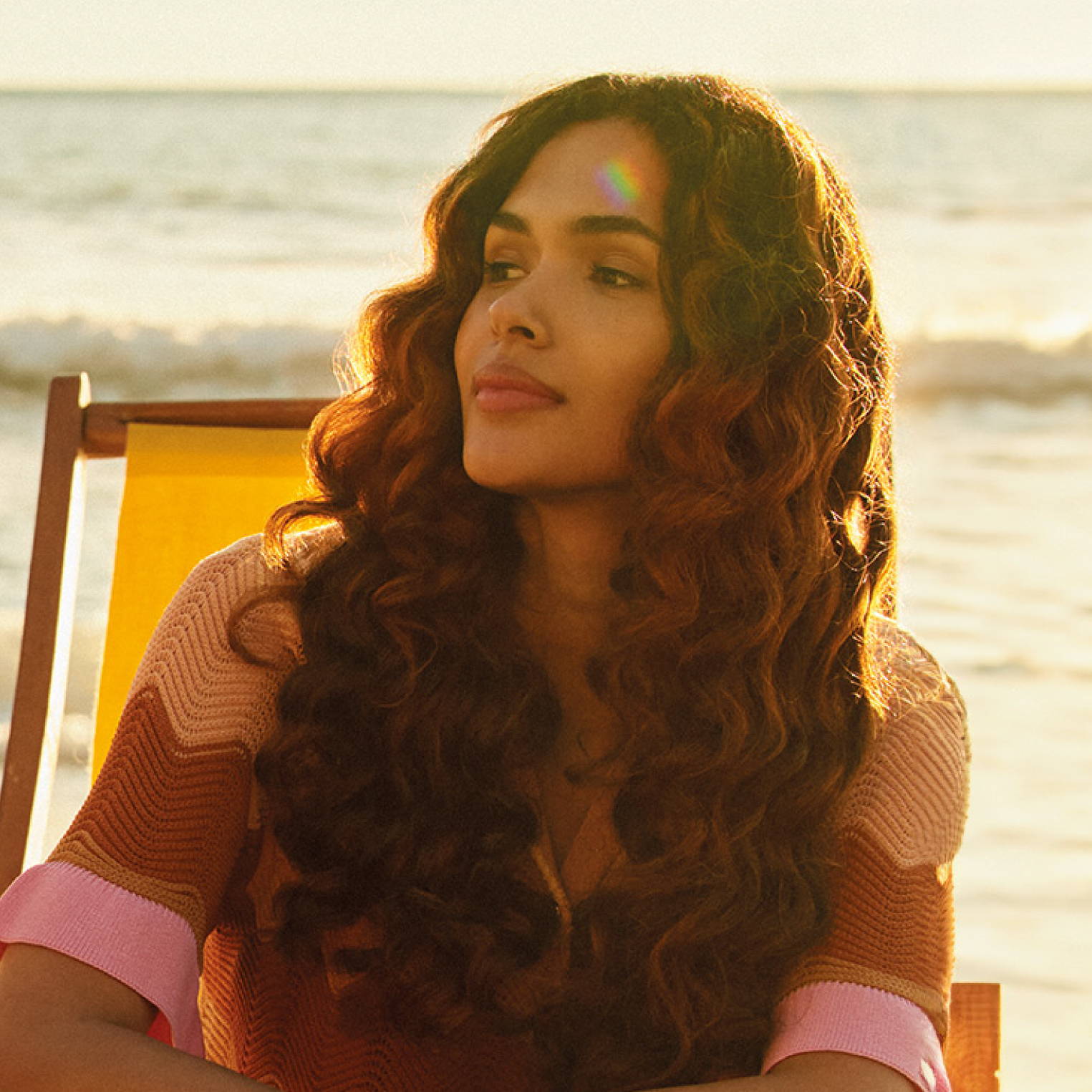
Can a balayage feel both warm and bright at once? This one does: the dark brown base carries copper and blonde pieces that shift in appearance depending on how the curls fall. The side parting lets the color show as a gradient instead of a block, which is exactly what you want when the hair is this thick and this long.
Set this against a caramel-only balayage and the difference is in the range. Caramel stays in one family, while copper and blonde give you a warmer glow with lighter ends that still hold onto the dark root. Ask your colorist for: mid-back layers, dark brown with copper and blonde balayage. The technique suits thick, curly hair that falls to mid-back, since the layers let each tone show instead of blending into a single muddy shade. Air dry it and the natural texture does the rest, no heat needed to make the dimension visible.
Mid-Back Defined Curls With Lighter Balayage
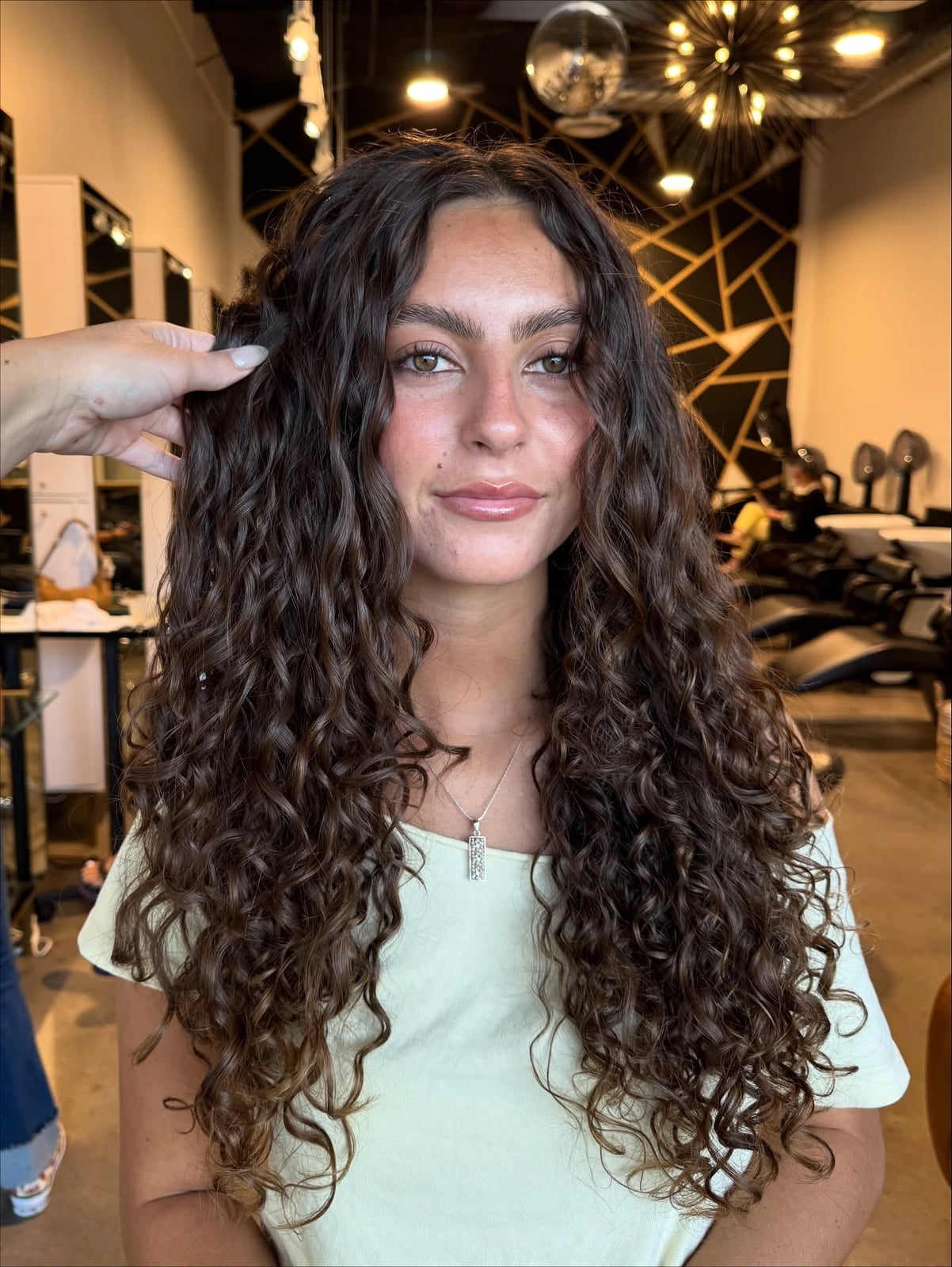
The design here relies on the contrast between the dark brown base and the lighter brown balayage that starts below the ears, which gives each defined curl its own edge instead of letting the length read as one flat color. A middle part keeps the face open while the thick, air-dried texture carries the volume. Ask your stylist for: mid-back layers, dark brown with lighter brown balayage, defined natural curls. The technique for air-drying comes down to applying a curl cream to damp hair, then leaving it alone so the pattern sets without frizz. A trim every eight to ten weeks keeps those layers from growing out into a heavy triangle.
Mid-Back White Blonde Fine Curls
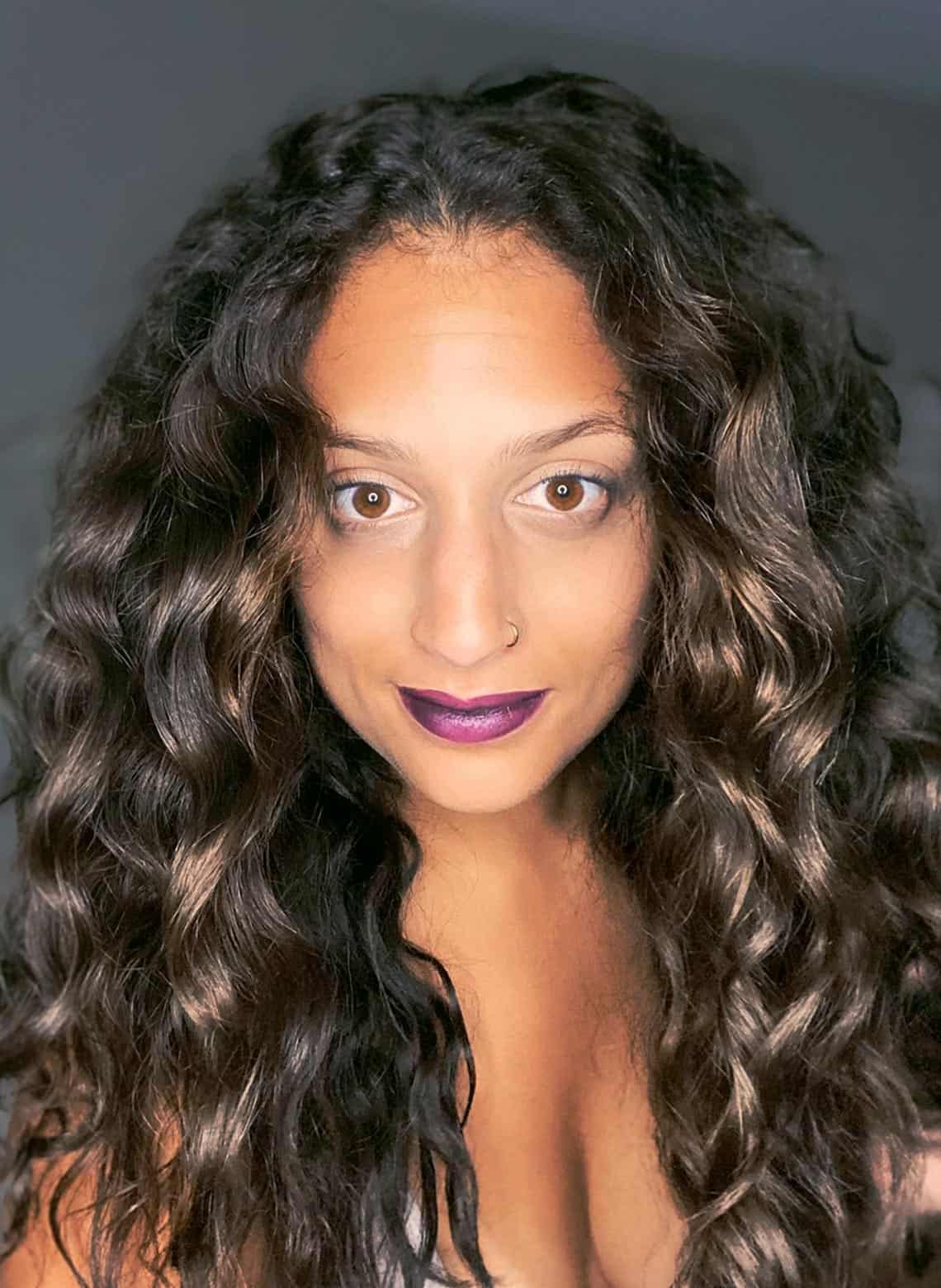
White blonde on fine curls is a commitment, and the shade looks deliberate. The mid-back length gives the fine texture enough weight to stretch the curl pattern, while the long layers stop it from collapsing into a flat curtain. Ask your colorist for: mid-back layers, fine texture, white blonde color. This is a salon-leaning process because lifting fine hair to white blonde takes more than one session, and the upkeep is where most of the work lives.
Expect to reach for a purple shampoo on a weekly basis to keep brassiness away, and a deep conditioning treatment just as often since fine, lightened curls lose moisture fast. The middle part keeps the shape symmetrical, which matters when the hair is this light and any unevenness shows immediately. A gloss or toner appointment every six to eight weeks will hold the white tone between full color visits, otherwise the shade drifts toward yellow before you notice it.
Final Thoughts
For fine, curly hair, prioritize layers that add lift without removing too much weight, and consider strategic face-framing bangs to enhance shape. For thick, curly hair, focus on cuts that manage volume and define the curl pattern, such as long layers or strategic shaping.
- Trim every 8-12 weeks to maintain shape and remove split ends.
- Deep condition weekly to keep curls hydrated and defined.
- Use a sulfate-free shampoo and conditioner to preserve moisture.
- Air-dry or use a diffuser on a low heat setting to protect curl pattern.
- Refresh curls between washes with a leave-in conditioner or curl refresher spray.
Embrace your natural texture with cuts designed to shine.
