

The butterfly haircut uses short, face-framing layers that blend into longer lengths, creating the shape its name suggests. This season, the cut leans softer than its 90s predecessor, with curtain bangs and lived-in color replacing sharp angles and chunky highlights.
These 22 variations of the classy butterfly haircut span from chin-length bobs to mid-back lengths, with options for fine, thick, wavy, or straight textures. Each section answers a common frustration: layers that fall flat, a fringe that won’t sit, or a grow-out line that shows too fast. You will find a version that holds its shape between trims.
Mid-Back Butterfly Cut With Curtain Bangs
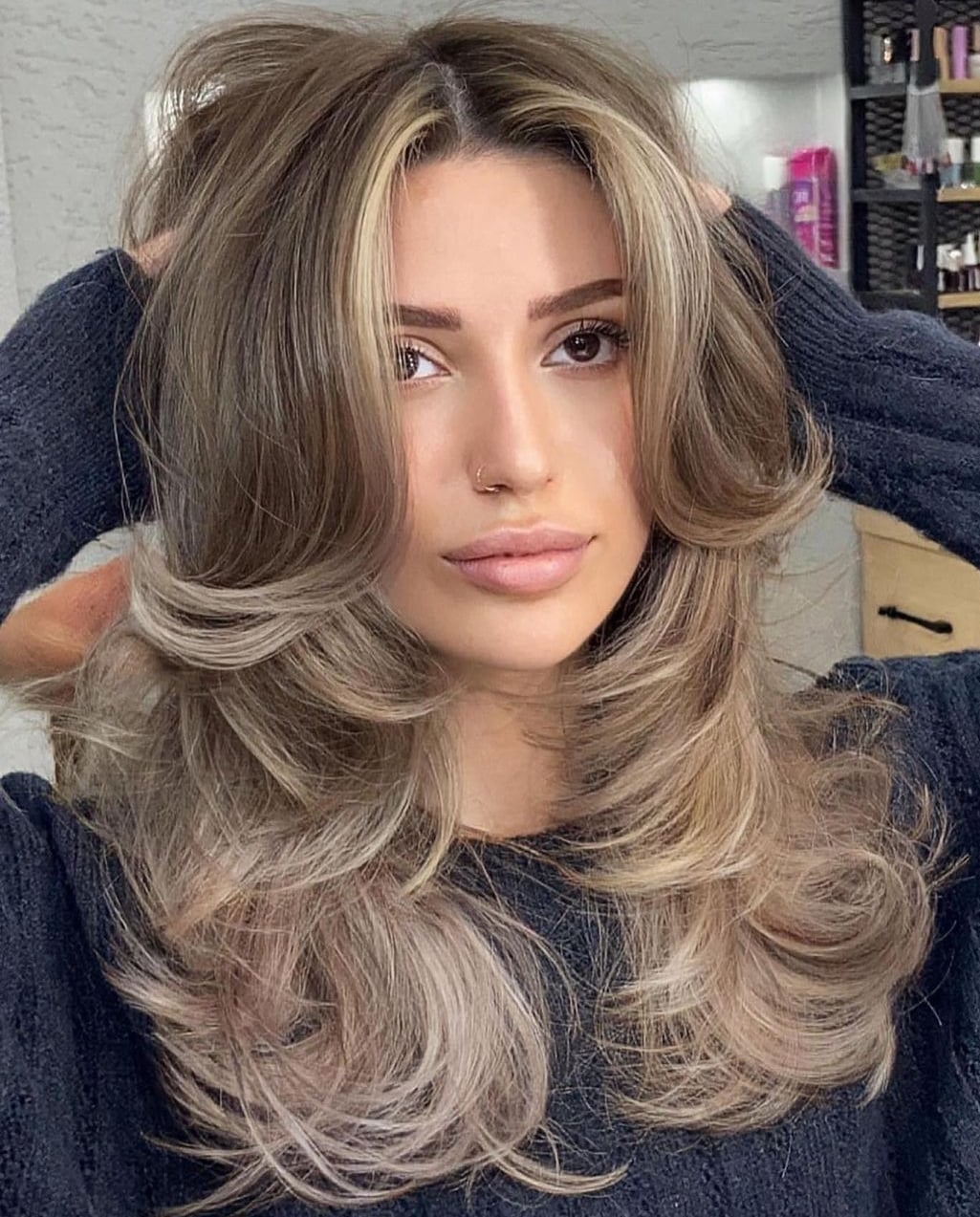
The butterfly cut is a lesson in controlled chaos: long, voluminous layers that soften at the edges, all held together by a mid-back length that keeps it wearable. The curtain bangs split right at the brow bone, so the shortest layers around your cheekbones create the face-framing effect. Thick, wavy hair benefits most here. The natural texture gives the cut its bounce without a fight. Oval and heart-shaped faces will find the proportions line up without much adjustment. Ask your stylist for: mid-back butterfly cut with voluminous curtain bangs. Use a round brush to push the layers upward at the root, then let the waves fall where they may.
Collarbone Butterfly With Wispy Curtain Bangs
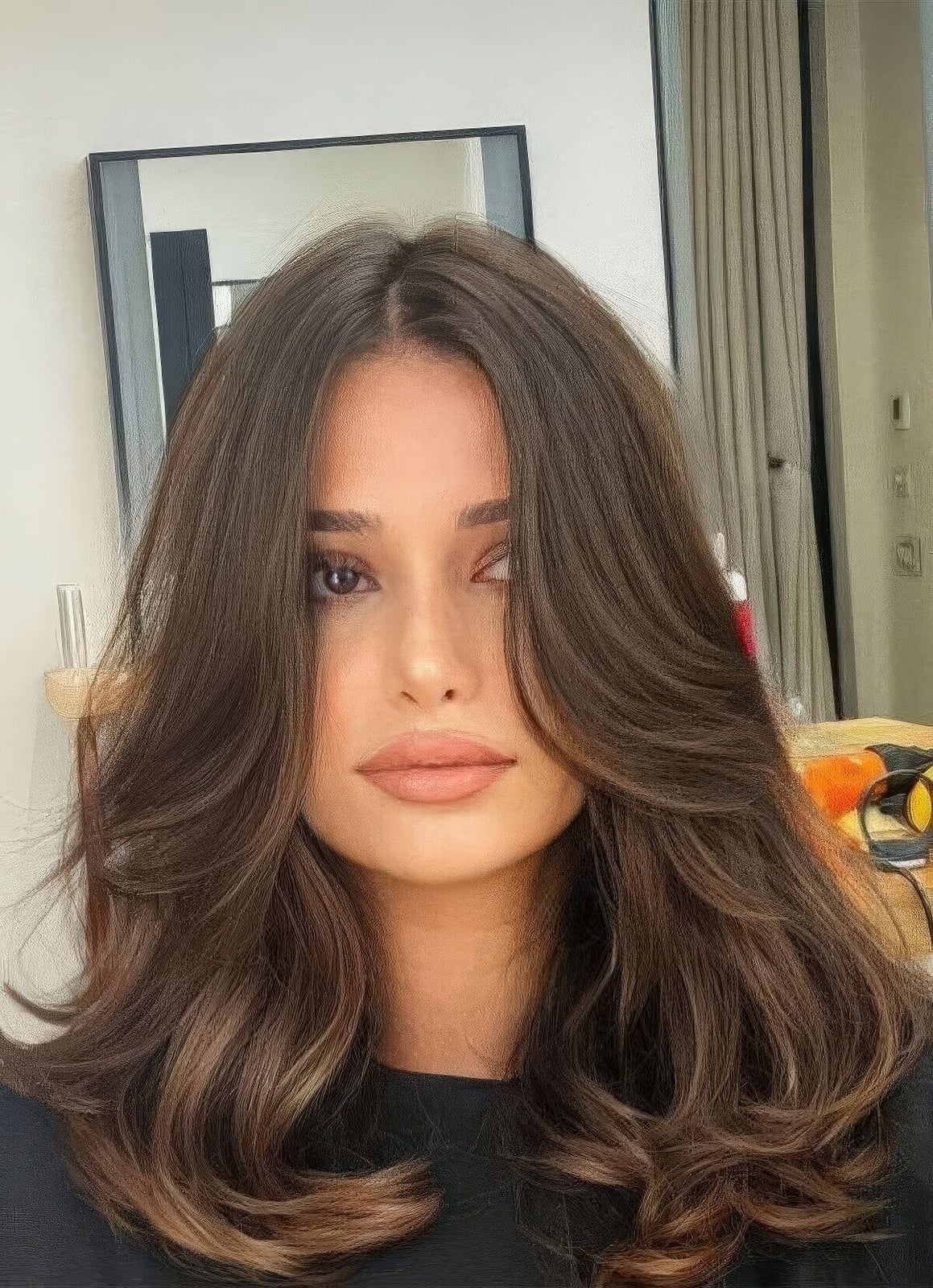
That soft, feathery front comes from wispy curtain bangs that feather across the temples rather than sitting heavy on the forehead. On a collarbone-length butterfly cut, those lighter ends prevent the face-framing layers from looking like a solid block of hair. The dark brown base with subtle lighter layers adds depth without obvious contrast. Square and round faces benefit from the vertical lines the layers create. Ask your stylist for: collarbone butterfly cut, wispy curtain bangs. A texturizing spray on the waves keeps the definition going past day one.
Medium Brown Collarbone Butterfly With Volume

A collarbone butterfly cut with a medium brown base sits somewhere between the full shag and a tidy lob. The difference is the layers are shorter at the crown, which means the volume sits higher on the head rather than pooling at the ends. The curtain bangs and soft waves create that rounded silhouette from the front. Thick, wavy hair wears this well because the cut removes weight without removing length. Ask your stylist for: collarbone butterfly cut, medium brown with subtle highlights. A volumizing mousse on damp roots before blow-drying gives the lift that lasts through a workday.
Dark Blonde Collarbone Cut With Ash Highlights
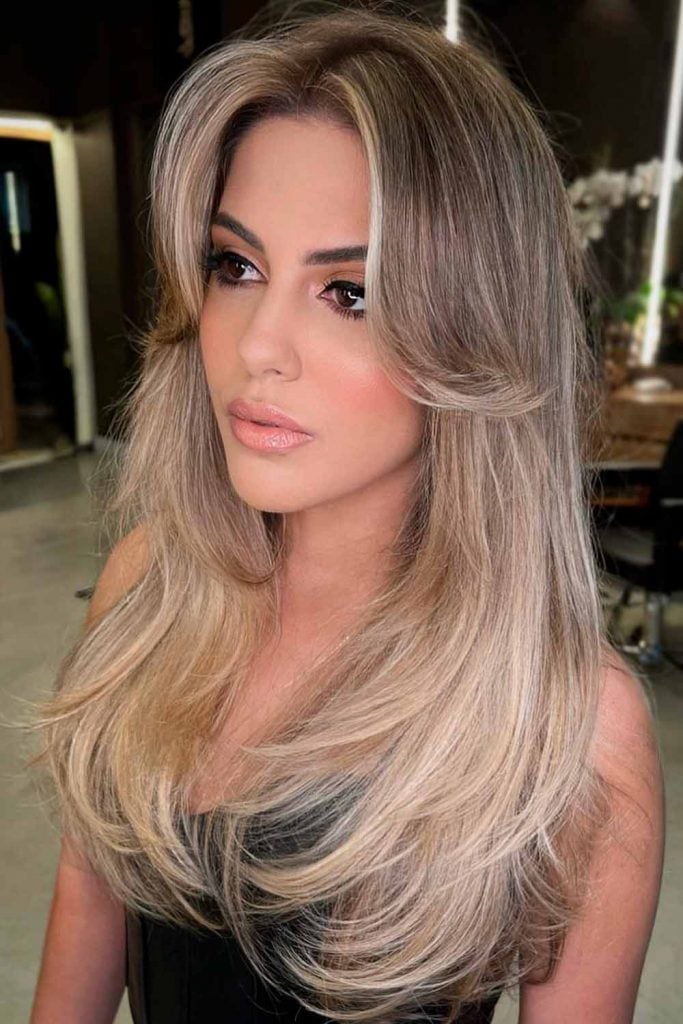
The collarbone butterfly cut on a dark blonde base with ash blonde highlights is built on contrast. The ash pieces are woven through the face-framing layers and curtain bangs, so the lighter tones catch the eye where the cut does its work. On thick, wavy hair, the cooler highlights stop the overall shape from reading as one flat block of warmth. The middle parting keeps the layers symmetrical from the front. Ask your stylist for: collarbone butterfly cut, dark blonde with ash highlights. A purple shampoo once a week preserves the cool tone, and the baseline needs a trim every six weeks to keep the collarbone length clean.
Collarbone Layers With Dark Brown Highlights
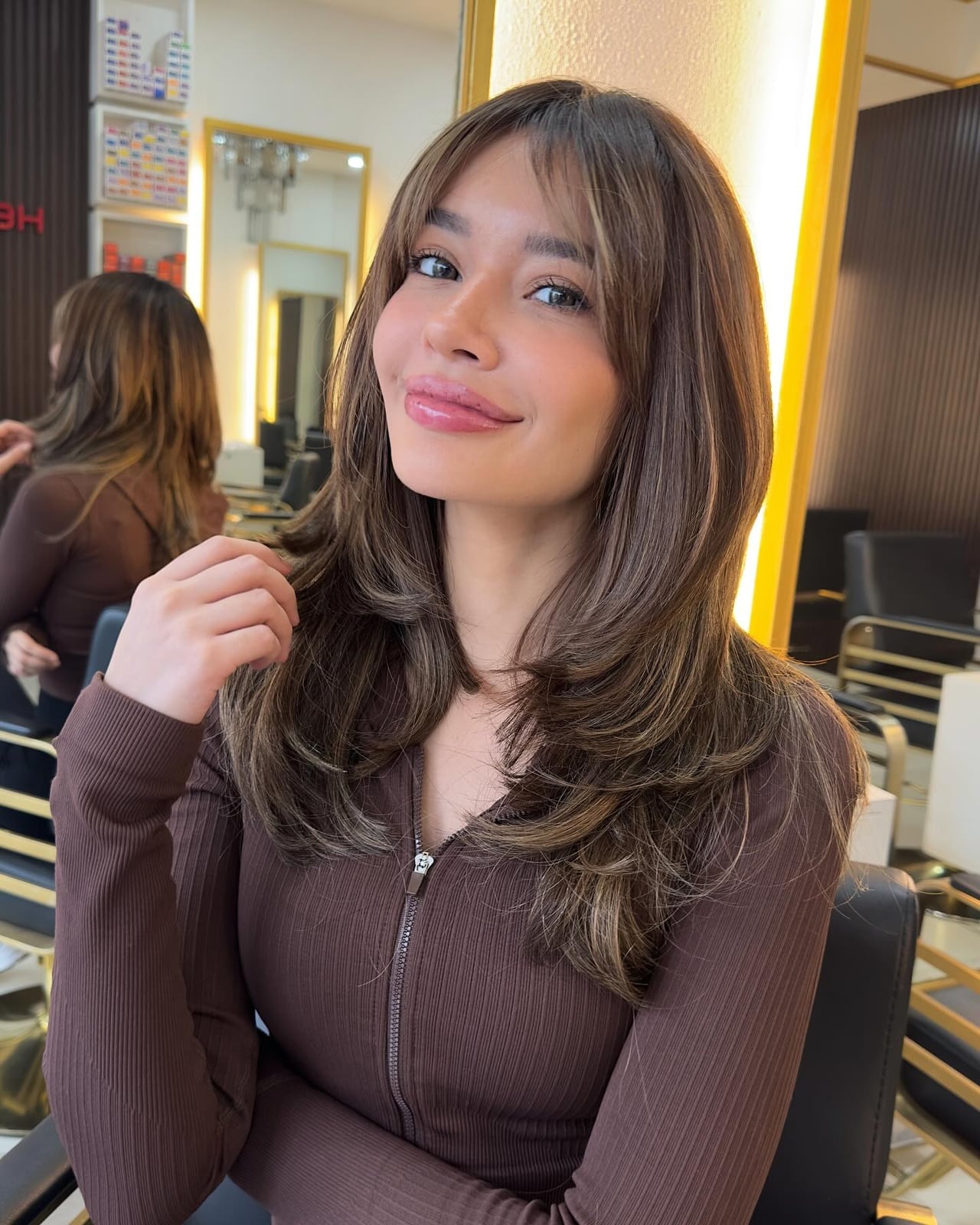
On thick, straight hair, a collarbone-length layered cut tends to sit heavier than it does on wavy textures. The dark brown base with subtle highlights adds visual separation between the layers, so the shape looks defined. The curtain bangs soften the front without demanding daily heat. Layers around the jawline soften a square or angular jaw. Ask your stylist for: collarbone layered cut, dark brown with subtle highlights. A smoothing serum on damp hair keeps the ends polished, and a trim every six weeks preserves the clean line at the collarbone.
Wavy Collarbone Butterfly With Side Part
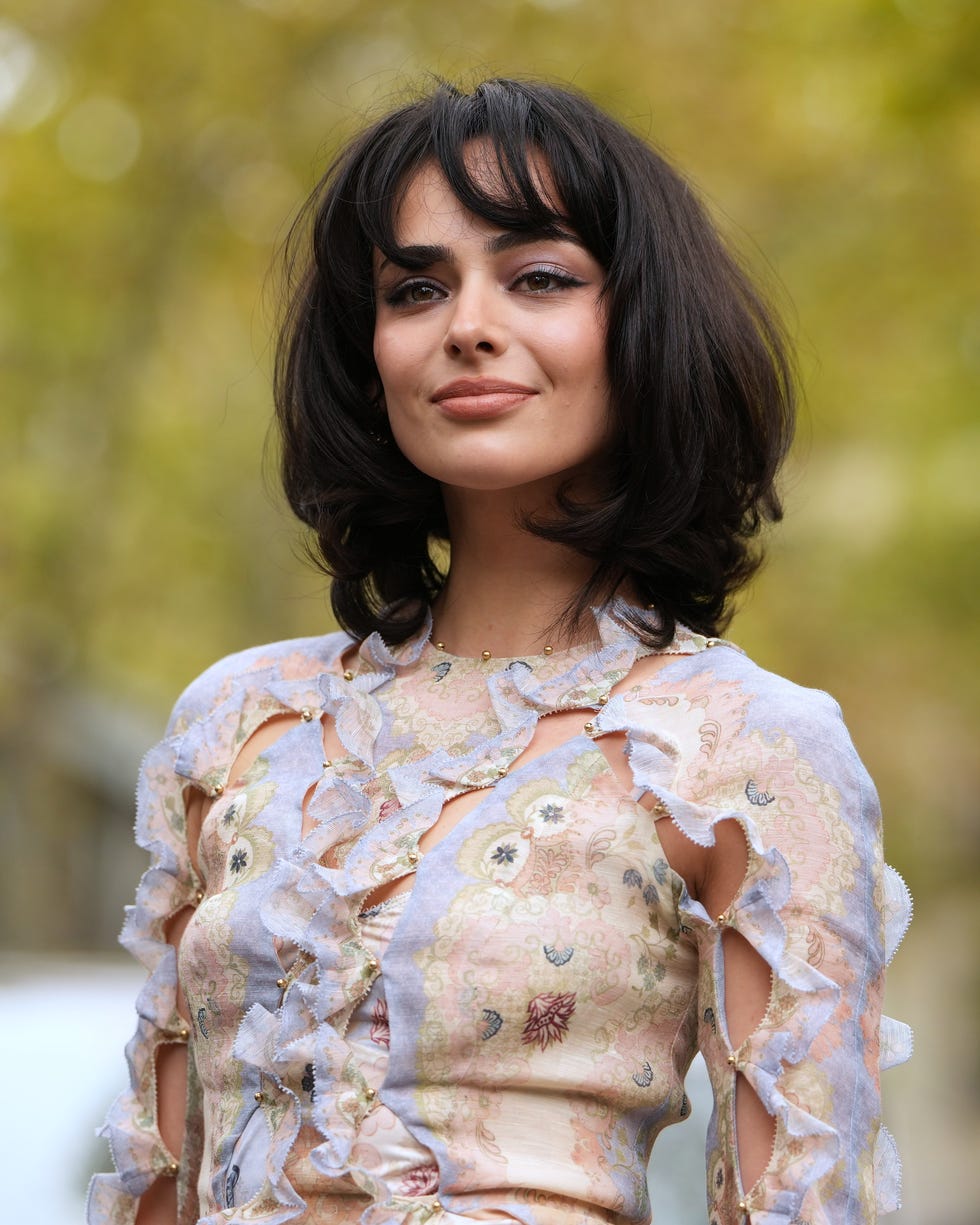
Can a side parting change the whole silhouette of a butterfly cut? It can. A collarbone-length butterfly cut with curtain bangs and a deep side part shifts the volume to one side, creating a softer, asymmetrical frame. This approach suits longer face shapes, as the diagonal line across the forehead and the weight at the jaw add width where you want it. Ask your stylist for: collarbone butterfly cut with side part. A texturizing spray is your friend here. It gives the waves grit without weighing them down. Plan for a trim every six to eight weeks to keep the layers sharp.
Blonde Collarbone Layers With Side Part
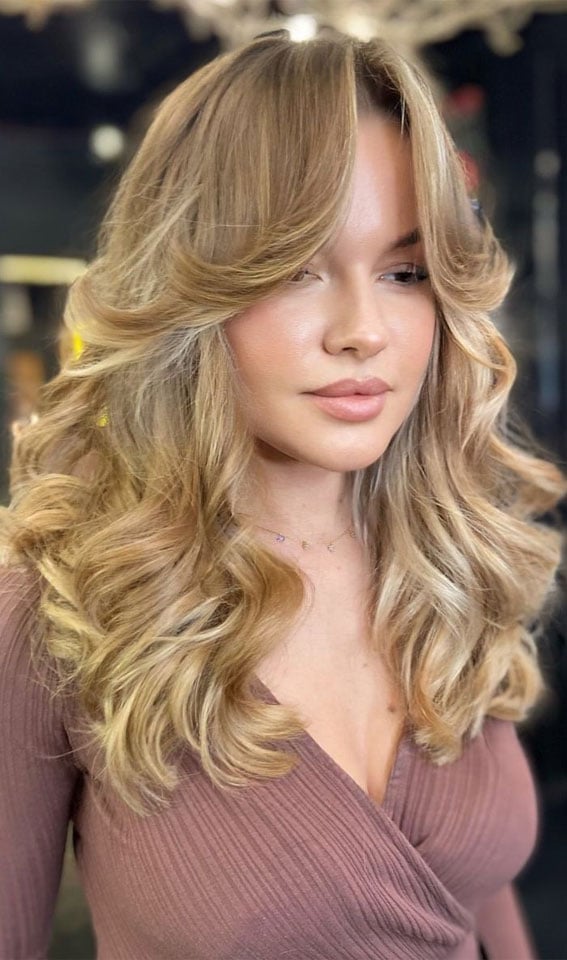
Soft, flowing layers on fine, wavy hair are a salon achievement, not an at-home experiment. A collarbone butterfly cut with curtain bangs and a side part relies on precise point-cutting to keep the ends light and movable. Recreating that airy texture with a round brush and a blow-dryer takes practice; most people end up with a flat root or a frizzy end. Ask your stylist for: collarbone butterfly cut with side part, blonde highlights. Root volume comes from the cut itself, not styling products. Book a trim every six weeks.
Chin Length Butterfly Bob With No Bangs
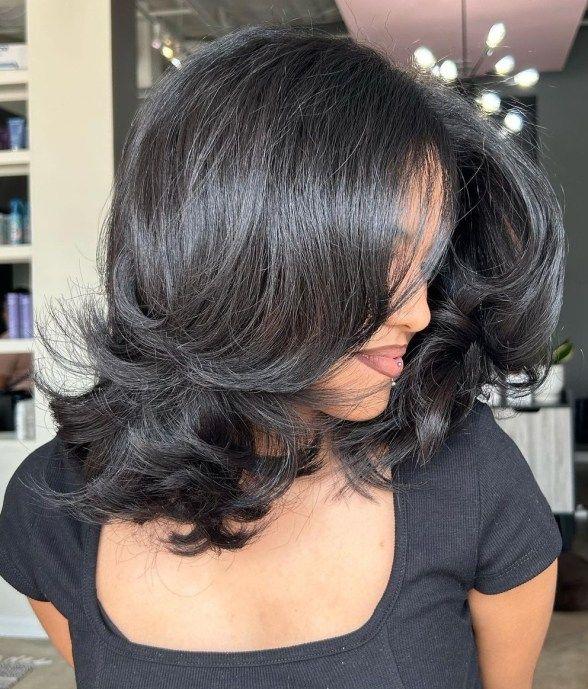
A chin-length butterfly bob with no bangs is a precise shape that trades face-framing coverage for a cleaner line. The layers stack around the crown and taper toward curled ends, giving the bob its volume without any fringe to soften the forehead. This cut leaves the upper half of the face exposed, which can feel severe on longer or angular face shapes. Ask your stylist for: chin length butterfly bob, no bangs. It works best on thick, straight to wavy hair that holds the internal layering. A curling iron on the ends completes the style.
Shoulder Length Butterfly With Fine Waves
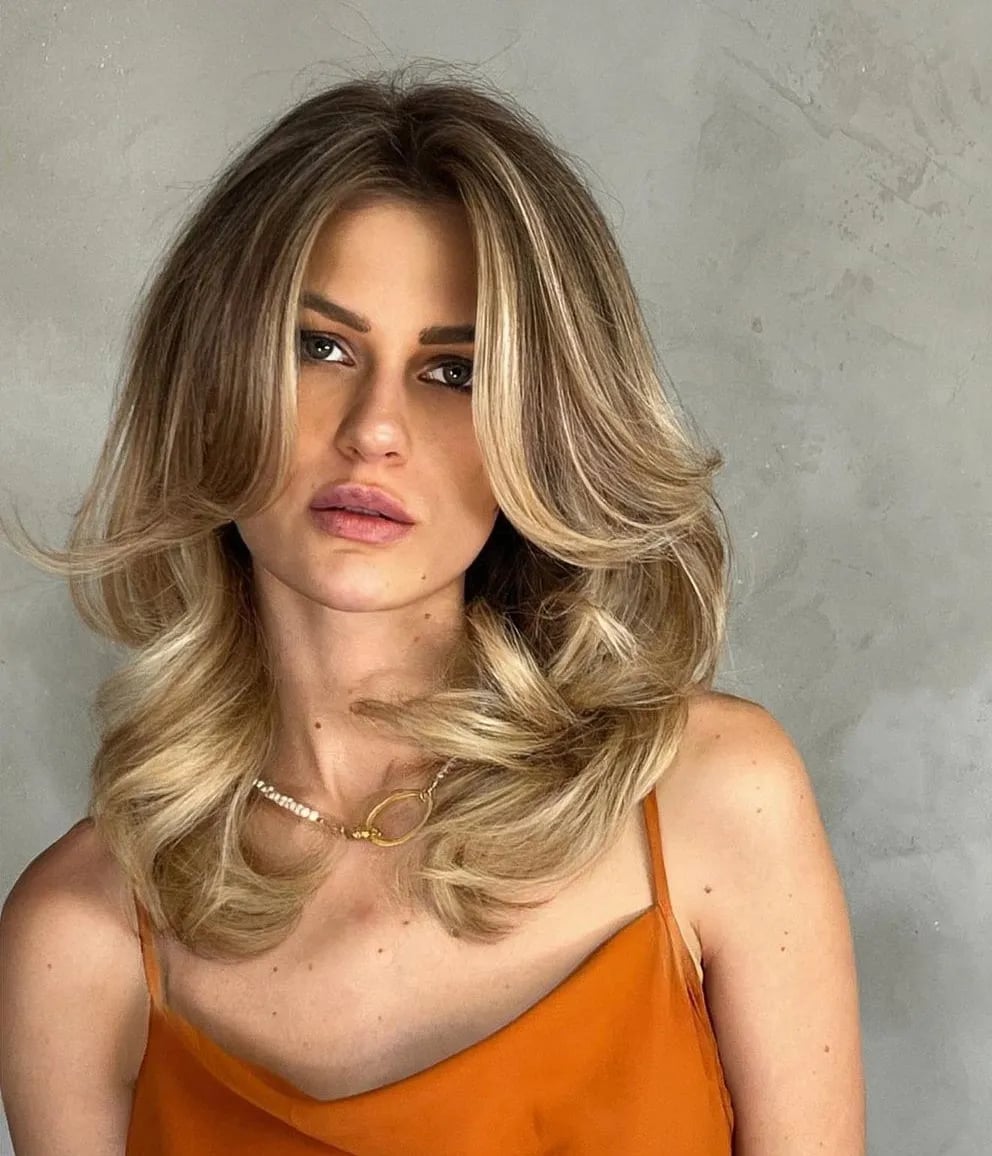
Does a butterfly cut hold volume on fine hair? Only if the layers hit the right spots. A shoulder-length version with curtain bangs and face-framing layers creates movement where fine textures usually go flat, the front sections. The shorter internal pieces lift the crown, while the longer perimeter keeps the length. Ask your stylist for: shoulder length butterfly cut with curtain bangs. A texturizing spray adds the grit fine waves need to hold shape. The trade-off is visible: the layers need a trim every six weeks, or the ends start to look stringy.
Mid-Back Length With Long Flowing Layers
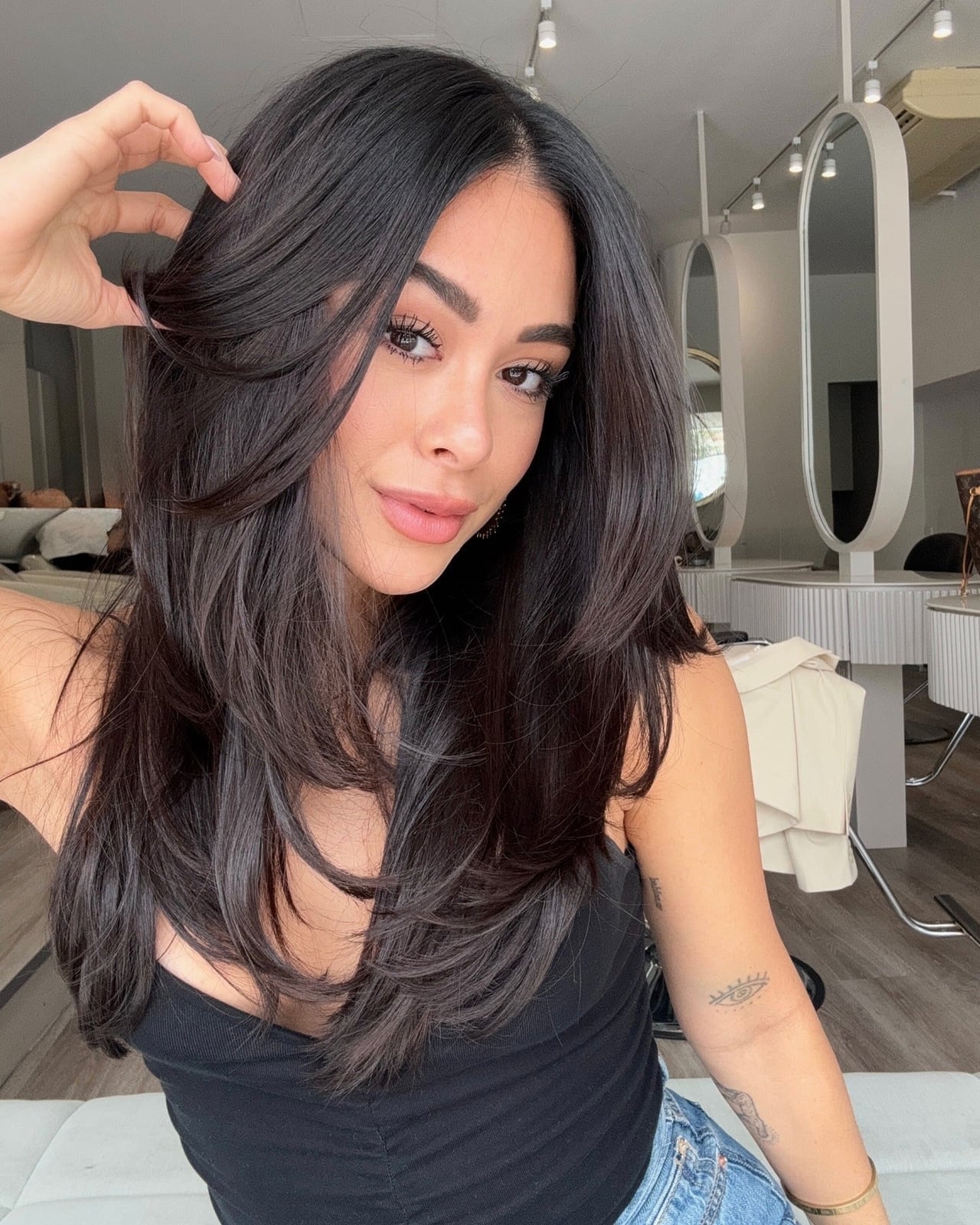
The layers are subtle, meant to remove weight from thick, wavy hair without creating a dramatic stacked shape. This cut suits warmer months when air-drying is the plan, not a compromise. Ask your stylist for: mid-back length with long flowing layers, no bangs. A styling cream and a scrunch are all the styling it asks for. Trims come every eight to ten weeks, which is about as relaxed as upkeep gets for this length.
Long Rich Brown Butterfly With Voluminous Blowout
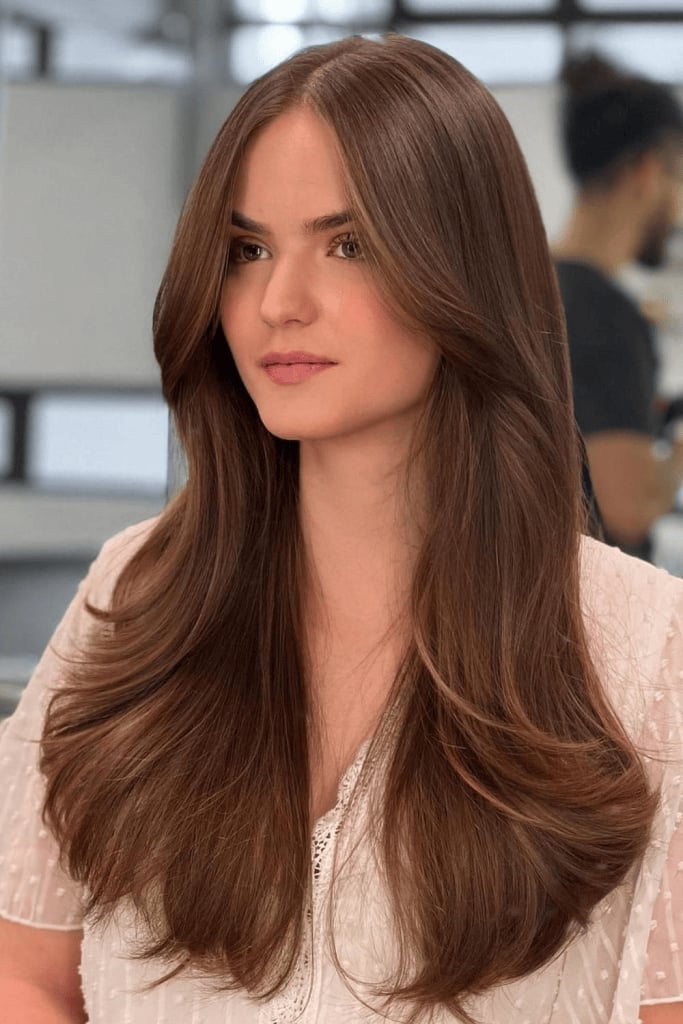
The blowout here is doing more than just adding lift. It is the structural support that makes the butterfly cut read as rounded rather than just layered. A middle part and curtain bangs soften the transition between shorter face-framing pieces and the length. Thick, straight hair holds this shape well. A square face shape benefits from the soft volume at the jawline.
Ask your stylist for: long butterfly cut, rich brown, voluminous blowout. The technique involves a large barrel brush on every section, rolling under at the ends and lifting at the crown. Work from the nape upward. The result holds its shape for two days with dry shampoo at the roots. A trim every eight weeks keeps the layers precise enough to catch the air from the dryer.
Long Dark Brown Butterfly With Layered Sections
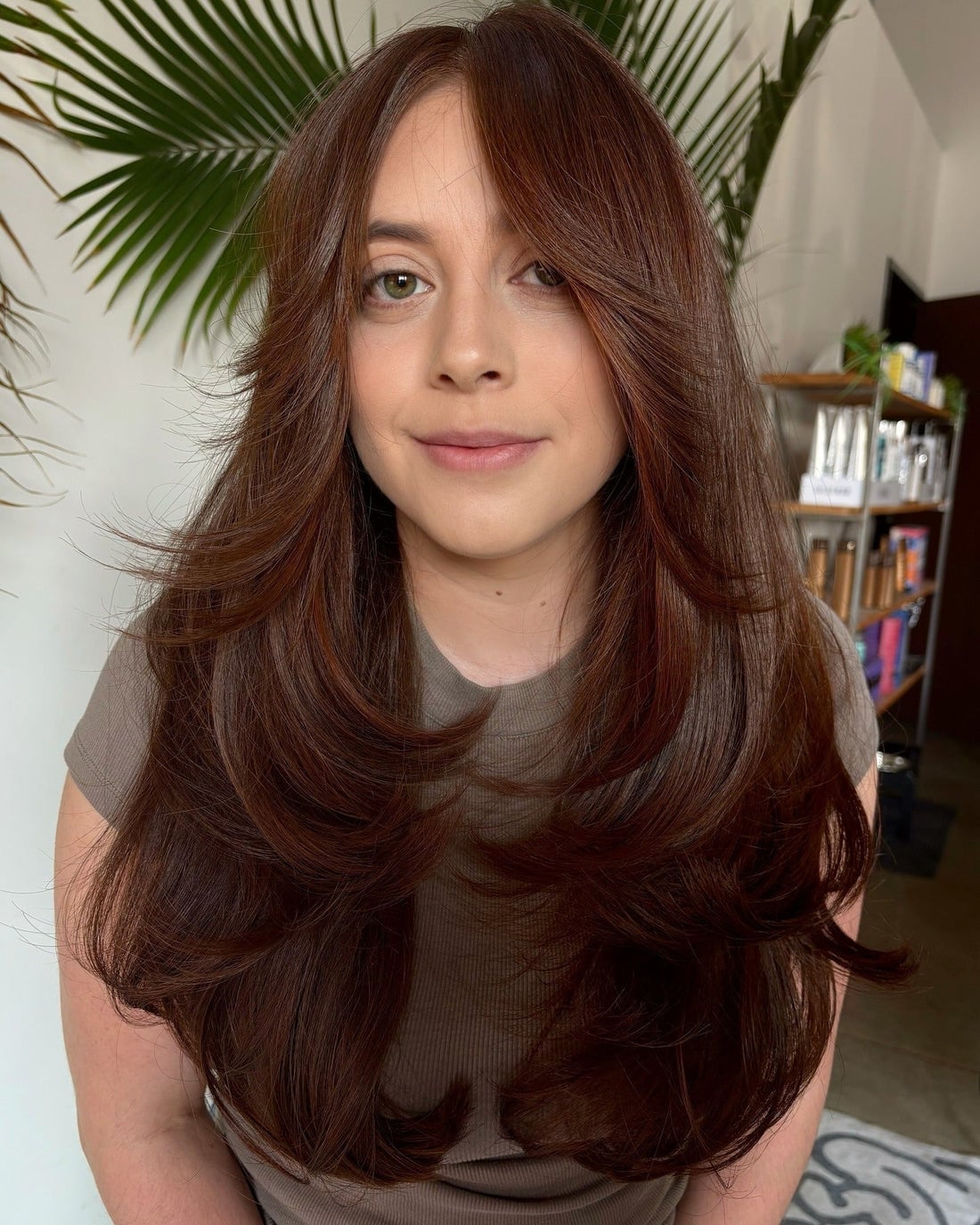
The layered sections here are cut so the shortest pieces sit right at the jaw, then graduate into longer lengths that blend into the body of the hair. Curtain bangs soften the transition, and the subtle lighter pieces against the dark brown base add just enough contrast to make each layer visible. Medium density, wavy hair holds this shape best. The wave pattern helps the layers stack without looking blunt. Ask your stylist for: long butterfly cut, dark brown with subtle pieces. A smoothing cream on damp hair enhances the wave and reduces frizz. Trim every eight to ten weeks to keep the face-framing sections from growing past their intended point.
Long Dark Brown With Balayage Highlights
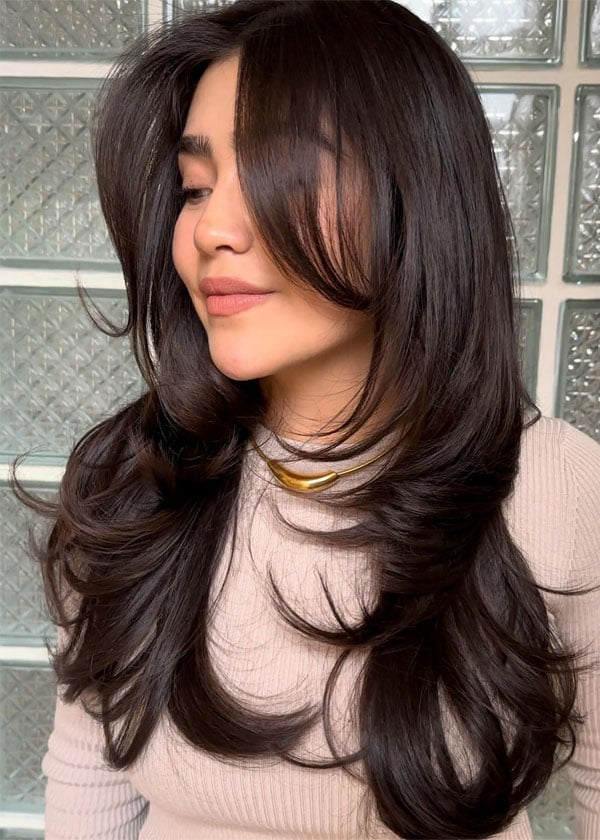
Balayage on a butterfly cut does two things at once: it lightens the ends that move most, and it leaves the root area dark so regrowth is not obvious. The curtain bangs catch some of the lighter pieces too, which keeps the face-framing sections from looking like a separate color block. Thick, wavy hair at long length is the ideal candidate here. The texture gives the layers natural separation, and the density prevents the balayage from reading as sparse.
Ask your stylist for: long butterfly cut, dark brown with balayage. A sea salt spray on damp hair, then air-drying or diffusing, produces the loose wave shown. The color needs a toning appointment every six to eight weeks to keep the lighter pieces bright. Trim rhythm is the standard eight to ten weeks.
Mid-Back Dark Brown Butterfly With Volume
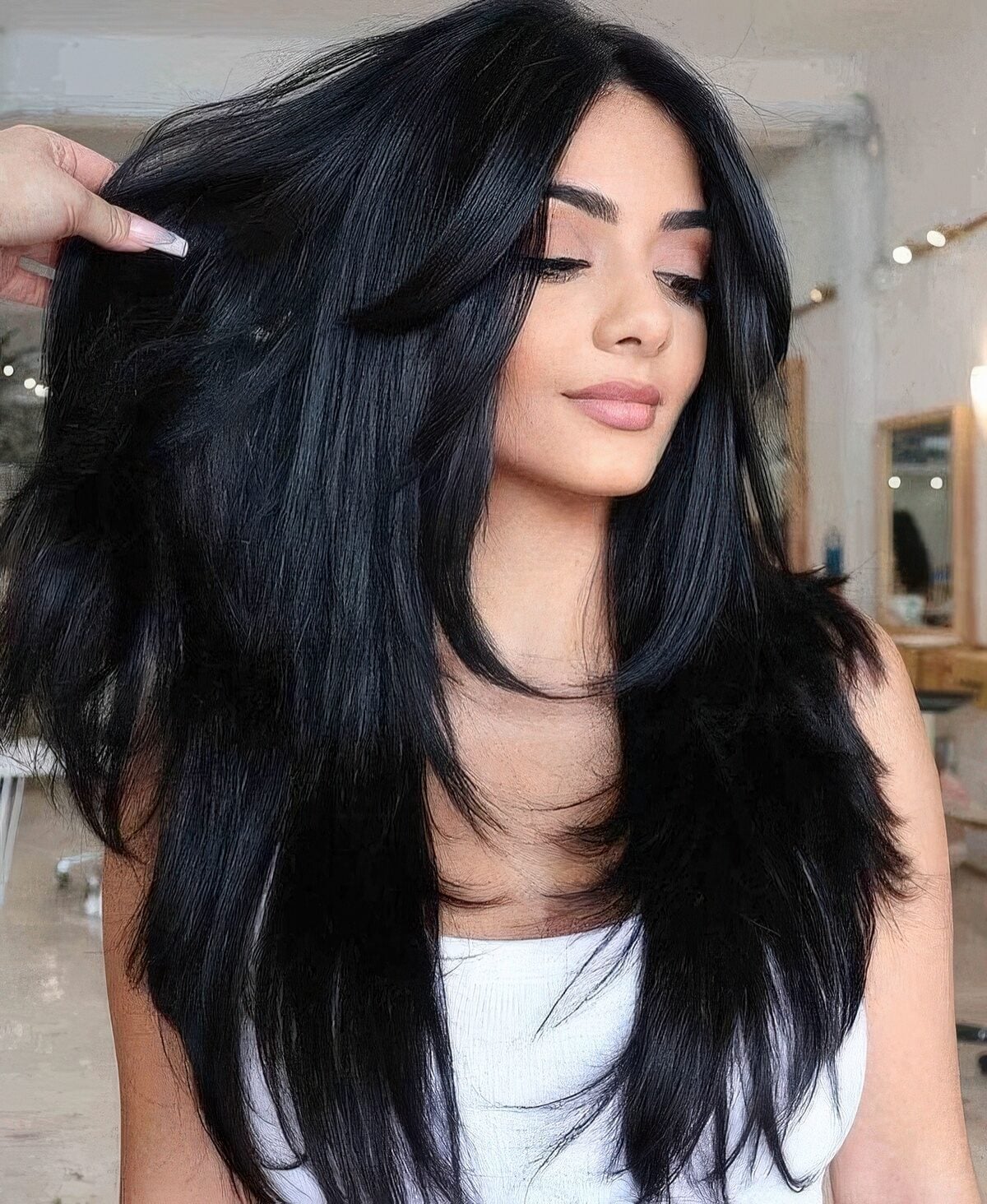
A shorter butterfly at mid-back rather than waist-length trades some drama for more visible layer movement. The volume here comes from the cut itself, the shorter interior layers lift the longer ones, so a blowout is not strictly required. Dark brown with subtle highlights adds depth without demanding frequent root touch-ups. Thick, wavy hair suits this version because the texture keeps the layers from falling flat against each other. Ask your stylist for: mid-back butterfly cut with volume. A volumizing spray at the roots before blow-drying reinforces the shape. A trim every eight weeks maintains the lift. Compare this to a long version, which relies more on the blowout for volume. This cut does it on its own.
Mid-Back Rich Brown With Blonde Highlights
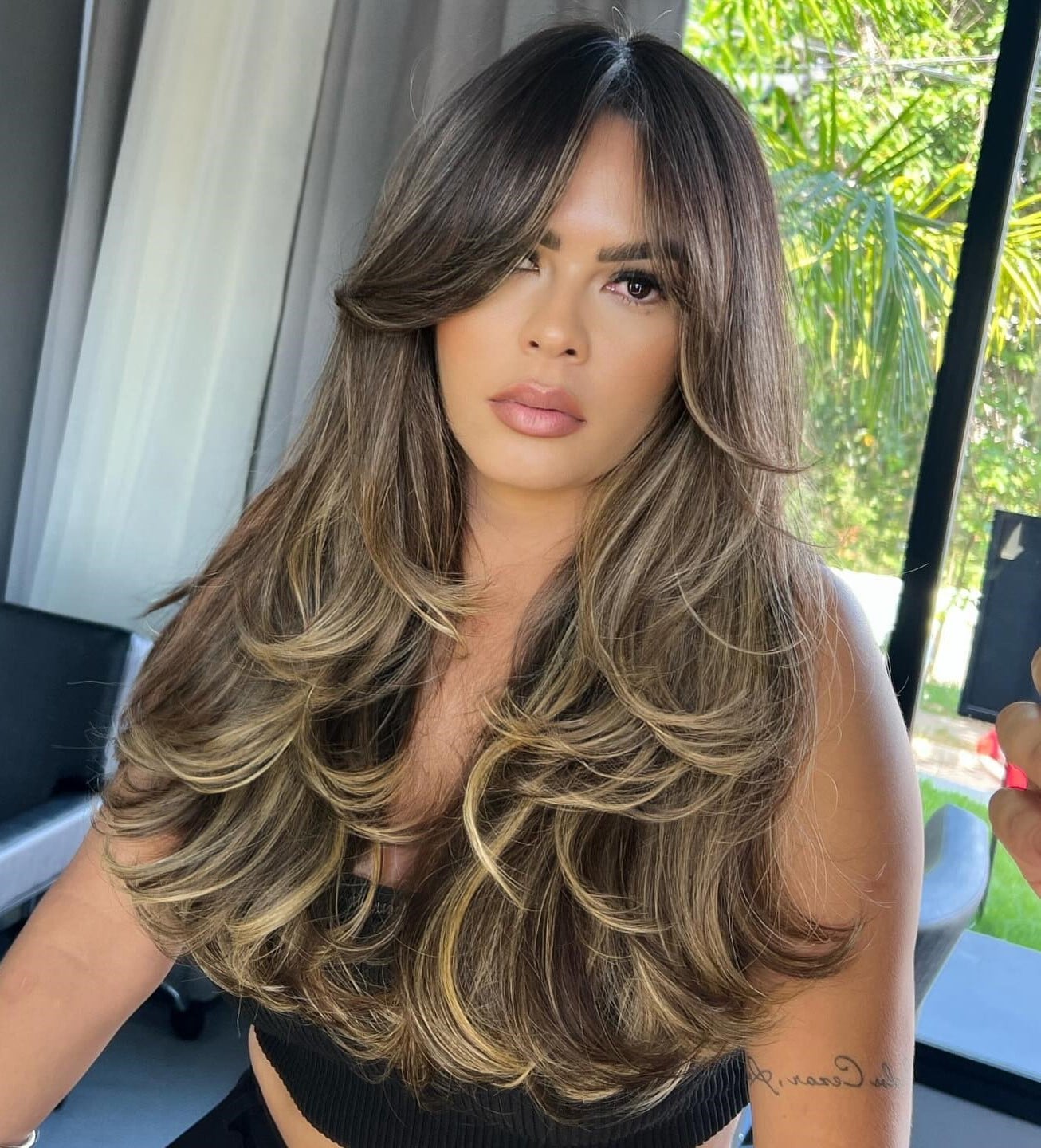
The blonde highlights here sit mostly on the face-framing layers and the ends, which draws attention to the butterfly cut’s signature shorter pieces without requiring full-head lightening. Rich brown base keeps the overall look warm and low-maintenance. Thick, wavy hair at mid-back length holds the layers well, the texture prevents the shorter sections from sticking out. Ask your stylist for: mid-back butterfly cut, rich brown with blonde highlights. A color-depositing conditioner in a warm tone applied every second wash keeps the brown rich and the blonde from turning brassy. Trim every eight weeks to maintain the precision of the face-framing layers.
Mid-Back Dark Blonde With Honey Highlights
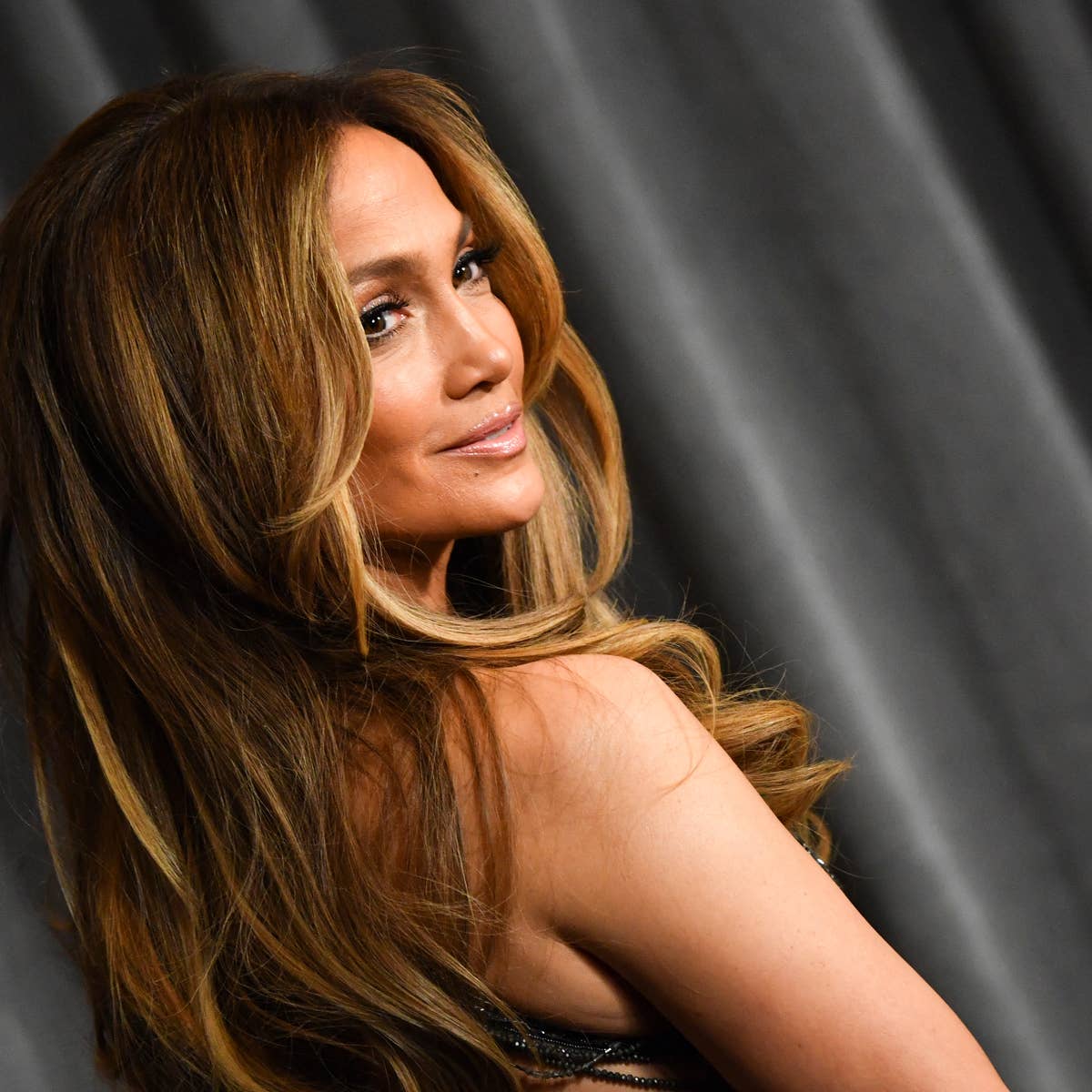
A side parting shifts the weight of this mid-back butterfly cut, so the face-framing layers and curtain bangs frame the face. The honey blonde highlights on a dark blonde base add more dimension than a single-process shade would, which matters when the days get longer. Thick, wavy texture holds the shape without coaxing.
Ask your colorist for: mid-back butterfly cut, dark blonde with honey highlights. A glossing treatment at the sink keeps the blonde from turning brassy between appointments, and the cut needs a trim every eight to ten weeks to keep the layers from growing into a shapeless wedge. The result is polished enough for the office and relaxed enough for weekends.
Mid-Back Light Brown With Blonde Highlights and Curtain Bangs
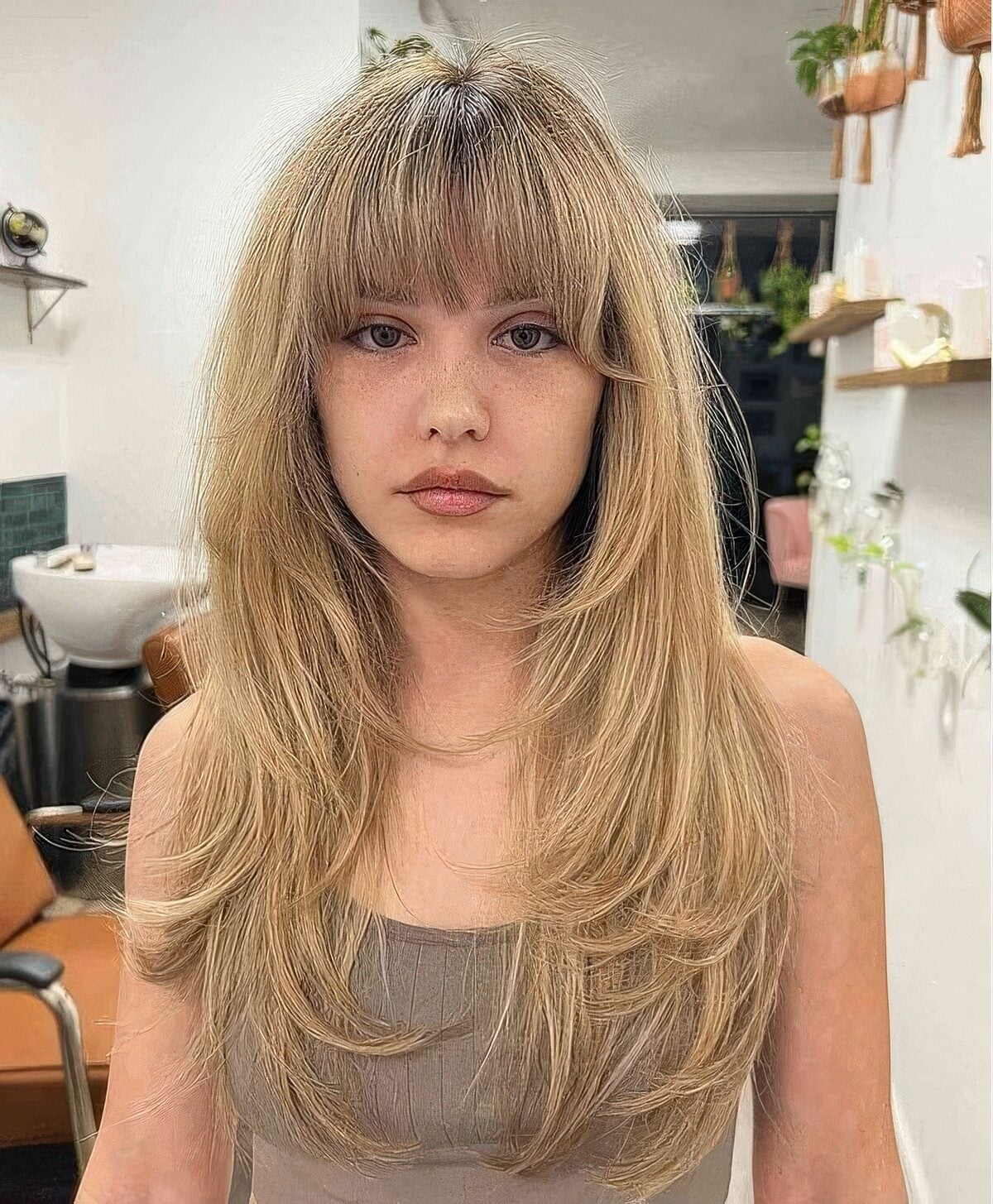
How do you describe the winged sections that give a butterfly cut its lift? Ask for layered wings specifically. In this mid-back version on a light brown base with blonde highlights, the wings are the short pieces that fan out from the cheekbones while the rest of the length stays connected. Fine, wavy texture benefits from that internal structure; the layers create volume where the hair lacks density on its own.
Ask your stylist for: mid-back butterfly cut with layered wings.
- Curtain bangs that blend into the top layer, not cut as a separate piece.
- Blonde highlights placed mostly around the face and through the wings.
- A soft U-shape at the hemline so the layers stack instead of dropping straight.
Mid-Back Ash Blonde With Feathered Layers
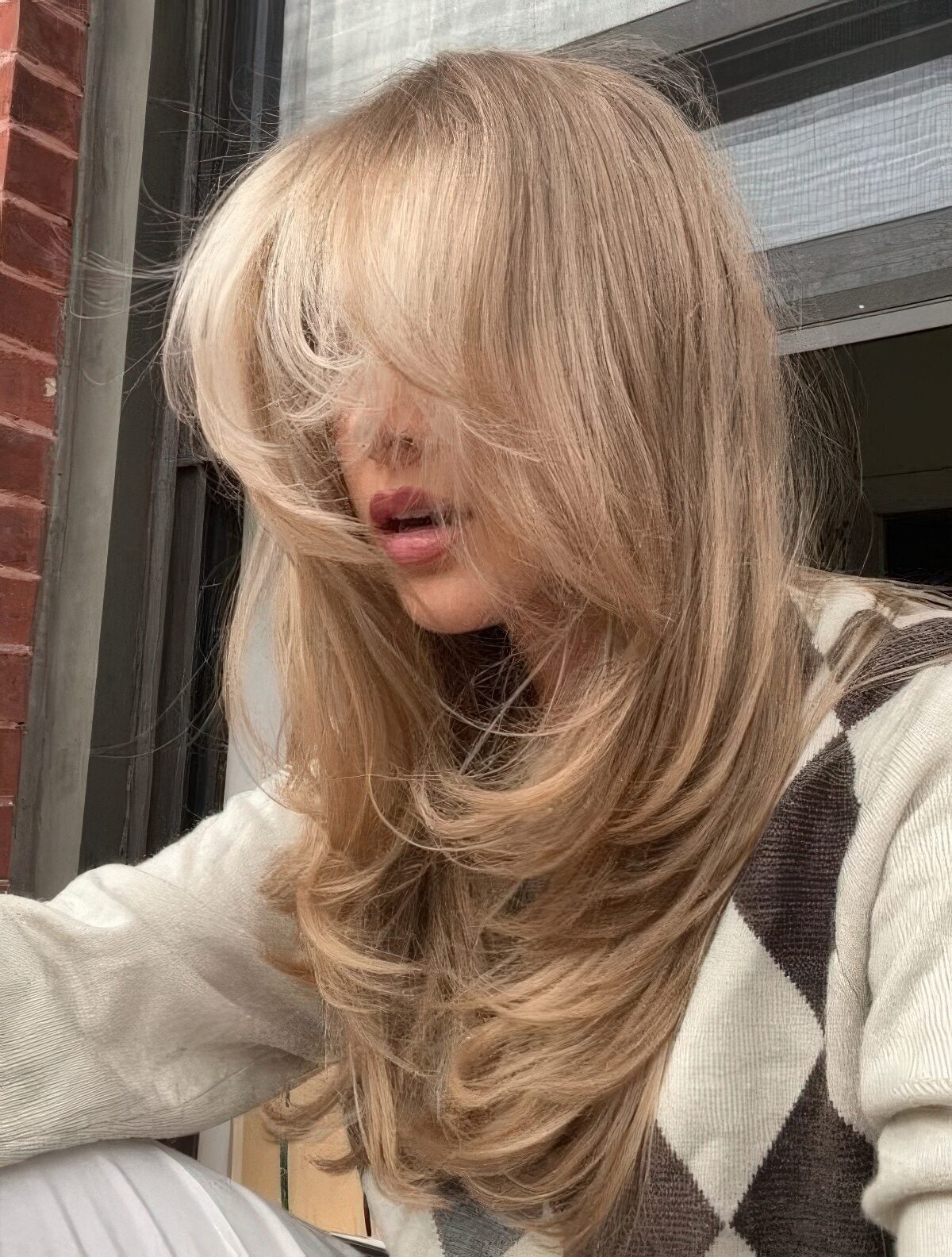
Feathered layers are cut with the shears pointed into the ends rather than straight across, which gives each piece a tapered, wispy finish. On a mid-back butterfly cut in ash blonde with subtle highlights, that technique prevents the fine, wavy texture from looking bottom-heavy. The layers stack toward the crown, so the volume sits higher than the shoulders. Curtain bangs are feathered the same way, softening the transition from short to long.
Mid-Back Copper Red Butterfly With Dimension
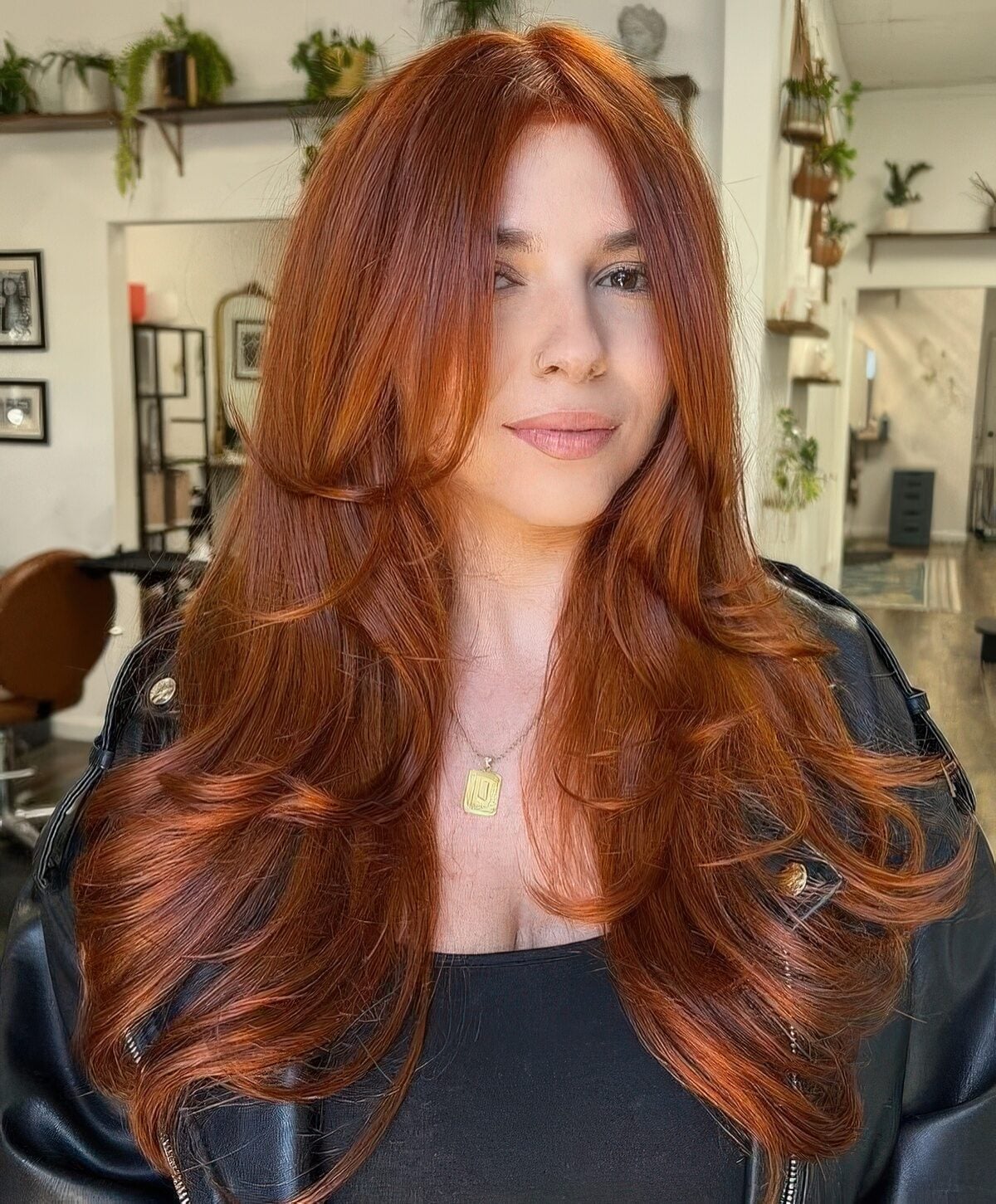
A single copper red tends to read flat under indoor light, which is why subtle dimension matters here. The mid-back butterfly cut in this photo uses a base tone with scattered lighter pieces through the face-framing layers and curtain bangs, so the color shifts when the hair moves. Medium-density wavy texture is the sweet spot: dense enough to support the layered structure, porous enough to hold copper pigment without fading to orange in three washes.
Ask your colorist for: mid-back butterfly cut, copper red with subtle dimension. The dimension is not a full highlight pattern; it is a few fine ribbons of a lighter copper around the hairline and through the crown. A color-depositing conditioner every other wash extends the vibrancy between salon visits.
Mid-Back Butterfly With Swept Bangs

Swept bangs require less upkeep than a full fringe, but they are harder to shape at home than curtain bangs. In this mid-back butterfly cut on a dark brown base with subtle highlights, the bangs are cut to sweep to one side instead of parting in the center, which means the shortest point lands near the temple. The layered waves through the cut need a round brush to keep the bend consistent; air drying lets the layers fall in random directions. A salon cut is worth the trip because the angle of the sweep determines whether the bangs stay put or slide into your eyes by noon.
Ask your stylist for: mid-back butterfly cut with swept bangs.
Long Dark Brown With Side-Swept Layers
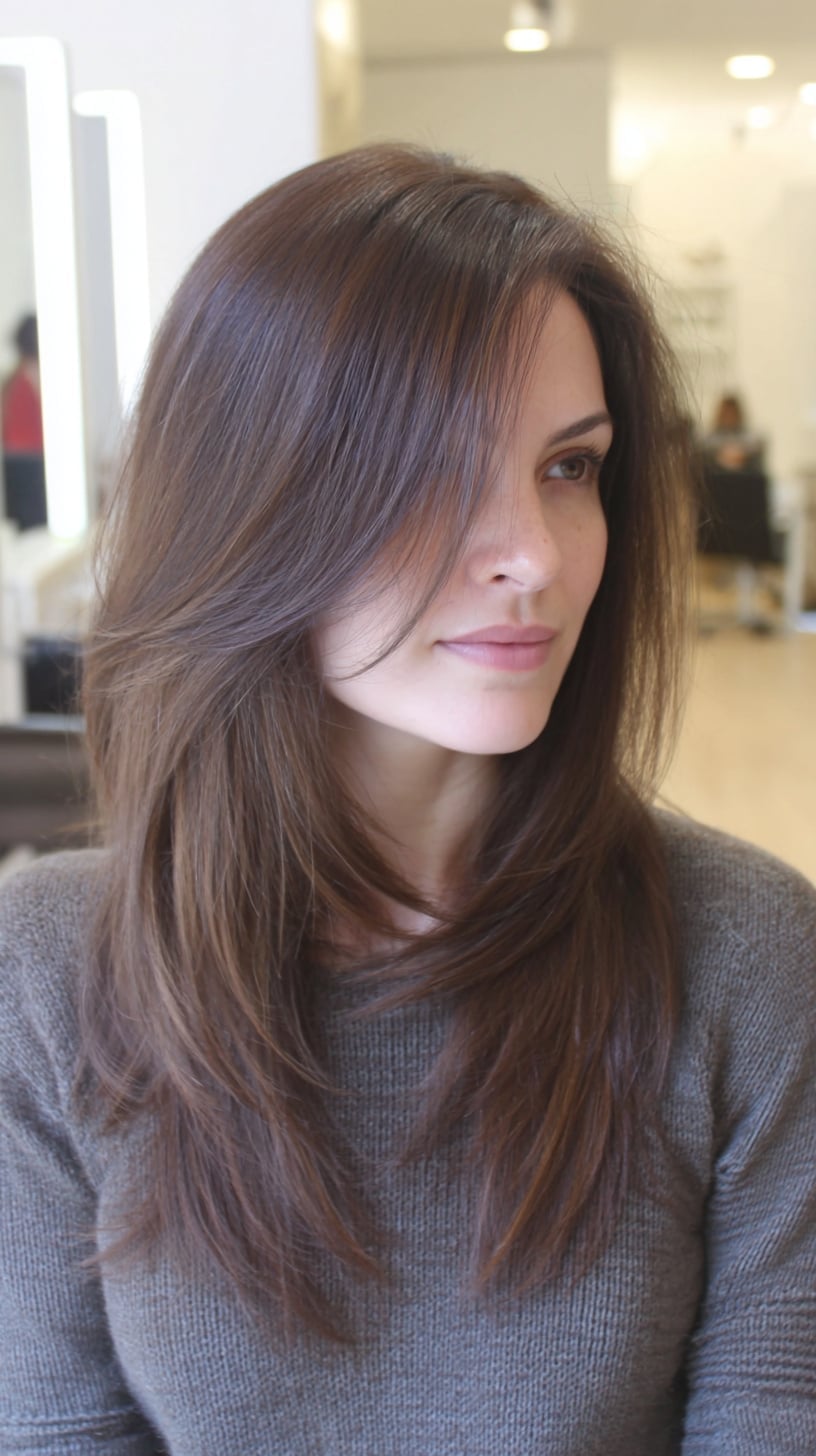
The side-swept layers in this long butterfly cut are designed to catch movement, not lie flat. The curtain bangs and side parting push the wavy, medium-density texture forward, creating the shape the cut promises. Ask your stylist for: long butterfly cut with side-swept layers. A smoothing serum at the ends keeps the dark brown base looking polished; a trim every eight to ten weeks stops the layers from losing their shape.
Mid-Back Beige Blonde With Caramel Highlights
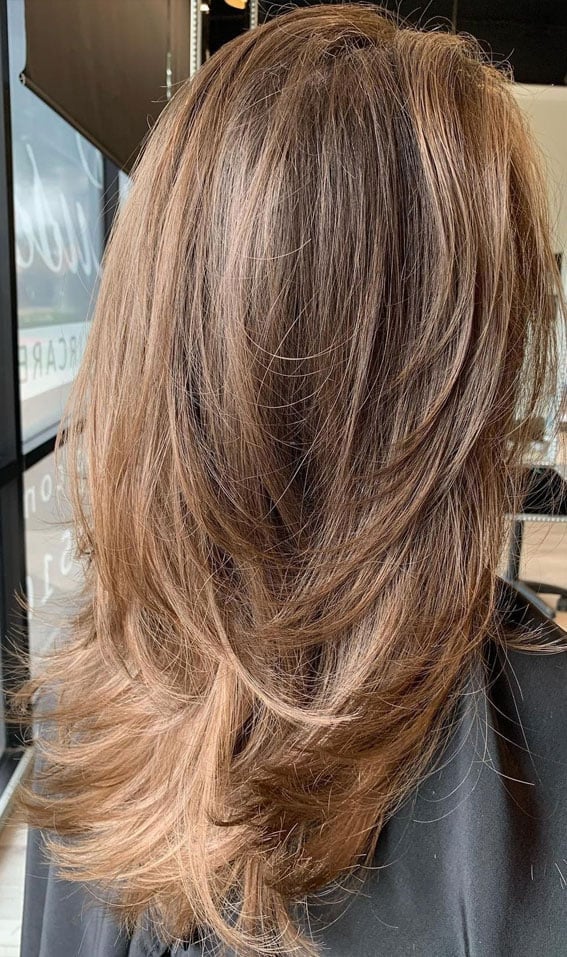
The cascading layers on this mid-back butterfly cut rely on a beige blonde base with caramel highlights to show dimension from every angle. With no bangs, the fallback is entirely on the blowout and gentle waves to keep the thick, wavy hair from sitting too heavy.
Styling time is the main consideration. A butterfly cut at this length needs heat and a round brush to lift the layers off each other, or the texture will collapse the shape by mid-afternoon. Anyone with very dense, coarse hair should ask for extra internal layering to keep the cascade from reading as one solid block. Ask your stylist for: mid-back butterfly cut, beige blonde with caramel highlights.
Final Thoughts
Fine hair benefits from keeping one blunt baseline and concentrating the short layers around the face. Thick hair needs well-distributed interior layers to prevent bulk at the ends. Both textures gain from a round-brush blowout that lifts the crown.
- Trim the baseline every 8 to 10 weeks to maintain shape.
- Refresh face-framing layers every 6 to 8 weeks.
- Use a round brush during blow-drying to enhance volume.
- Apply a heat protectant spray before styling.
- Consider a gloss or toner every 6 to 12 weeks for color vibrancy.
Embrace the modern butterfly for a timelessly layered look.
