

Blonde hair for 2027 leans into shades that feel intentional, not accidental. Dimensional color, lived-in roots, and a soft, glossy finish are replacing the flat, one-note blondes of past years.
This collection of 33 aesthetic blonde hair ideas covers the full spectrum, from low-maintenance balayage to high-impact platinum. Whether your hair is fine or thick, straight or wavy, there is a shade and technique here that will work with your texture and your schedule. These looks solve the common struggles of brassiness, a harsh grow-out line, or color that fades too fast. Find the blonde that actually works for you.
Rich Honey Blonde With Caramel Highlights
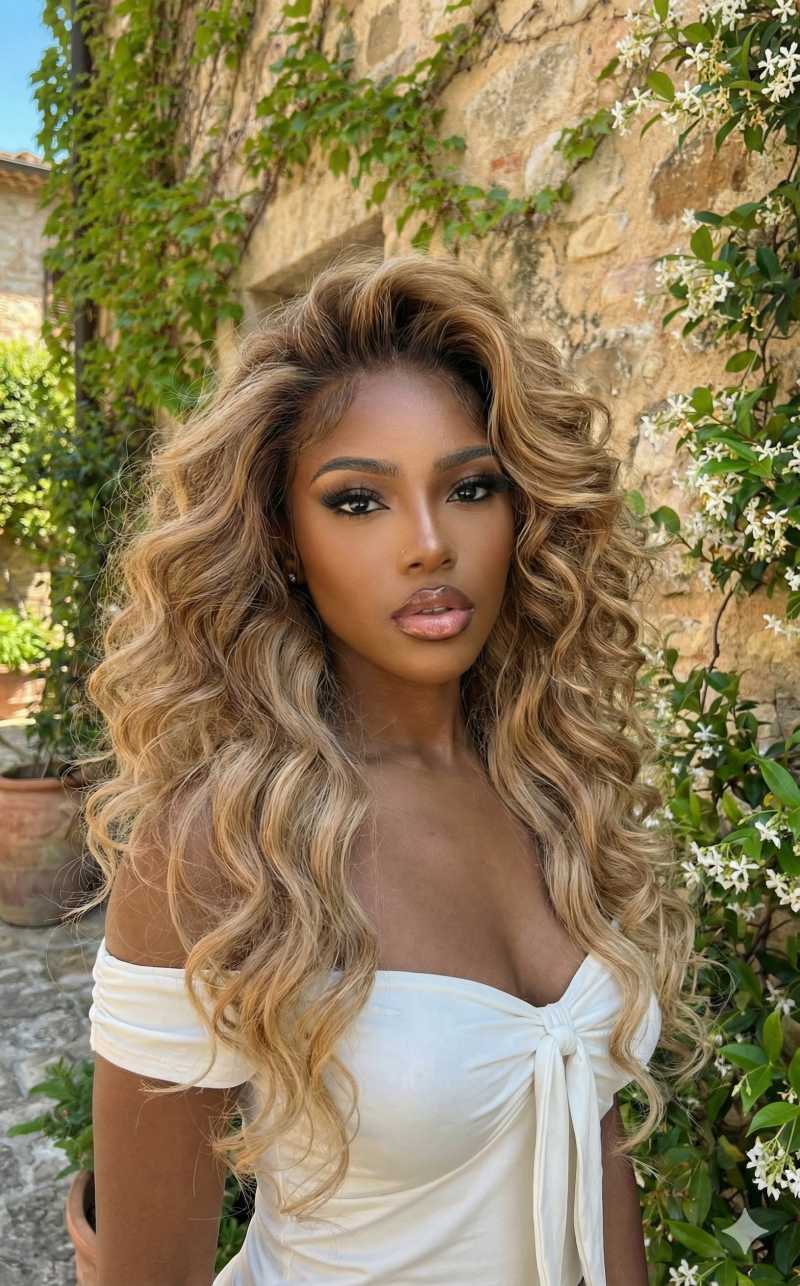
There’s a reason honey blonde with caramel highlights keeps showing up in the aesthetic blonde hair conversation: the warm base gives curly textures a depth that flat, single-tone color can’t touch. The lighter caramel pieces stand out as each curl turns, so the movement of thick, mid-back length hair does half the styling work for you. This is a color that rewards volume, which is why it suits naturally thick, curly hair best, and the middle part with layers keeps it from looking like one heavy block of color.
Ask your colorist for: honey blonde base with caramel highlights, layered cut, styled in curls. The highlights should be placed strategically around the crown and face, not scattered evenly, so the dimension looks intentional. A large barrel curling iron will help you recreate the voluminous curl pattern at home, but the real maintenance is the shape: curly layers need a trim every eight weeks or they start to lose their bounce.
Striking Platinum Blonde With Soft Waves
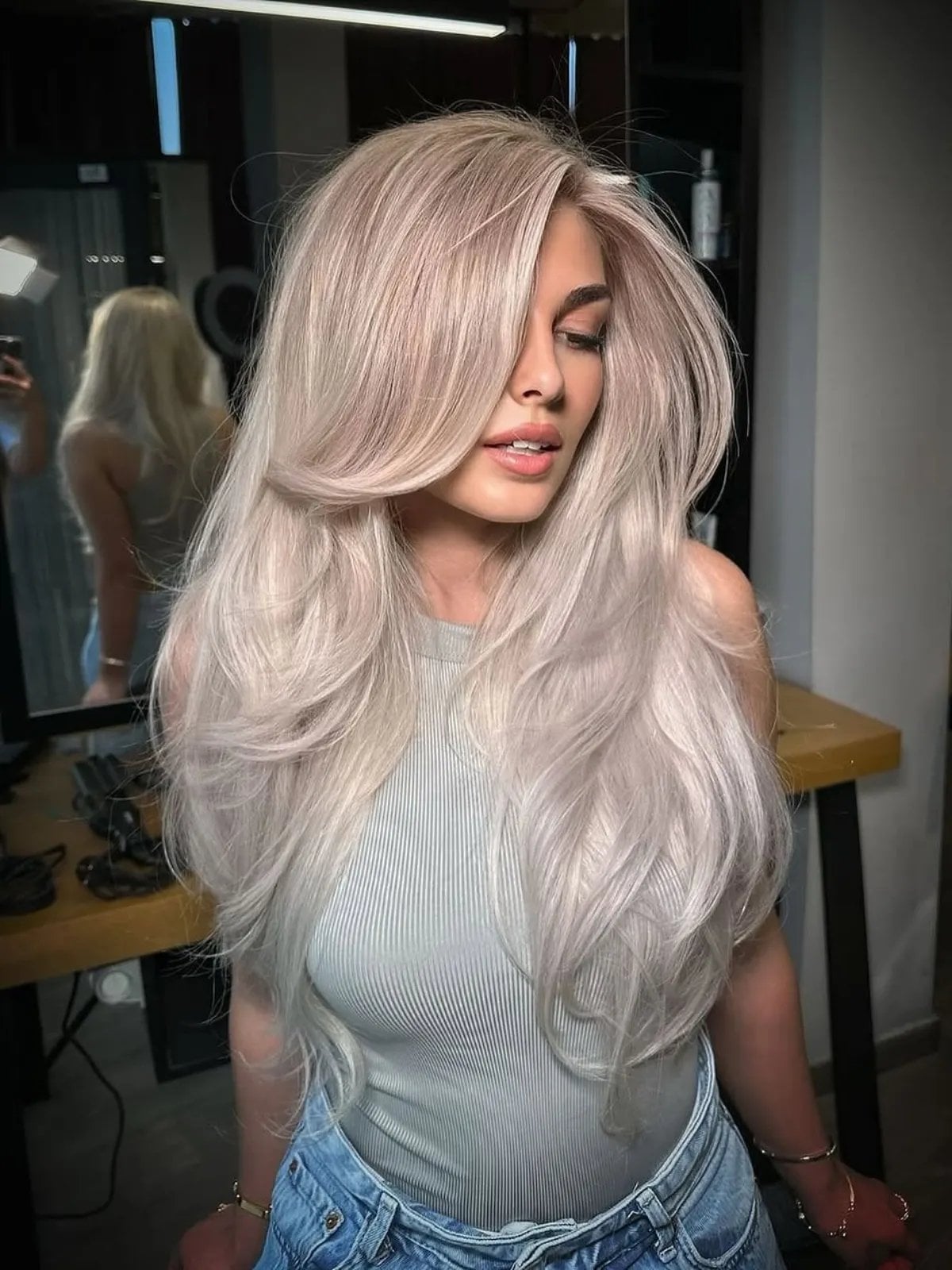
Platinum blonde with waves walks a fine line between icy and brassy, and the difference is all in the application. This version keeps the color uniform from root to end, with no shadow or lowlight to soften the impact, which is exactly what makes it striking on thick, mid-back length hair. The side parting and long layers give the soft waves a place to land without turning into a shapeless mass, and the glossy sheen suggests a fresh toner rather than a grow-out.
Ask your colorist for: uniform platinum blonde, long layers, styled in soft waves. The precision needed here is non-negotiable: any uneven lift will show up as yellow patches on thick hair, so expect a multi-step lightening process in the chair. At home, a purple shampoo once a week keeps the tone cool, and a large barrel wand will help you replicate the soft waves without heat damage.
Uniform Creamy Vanilla Blonde With Soft Waves
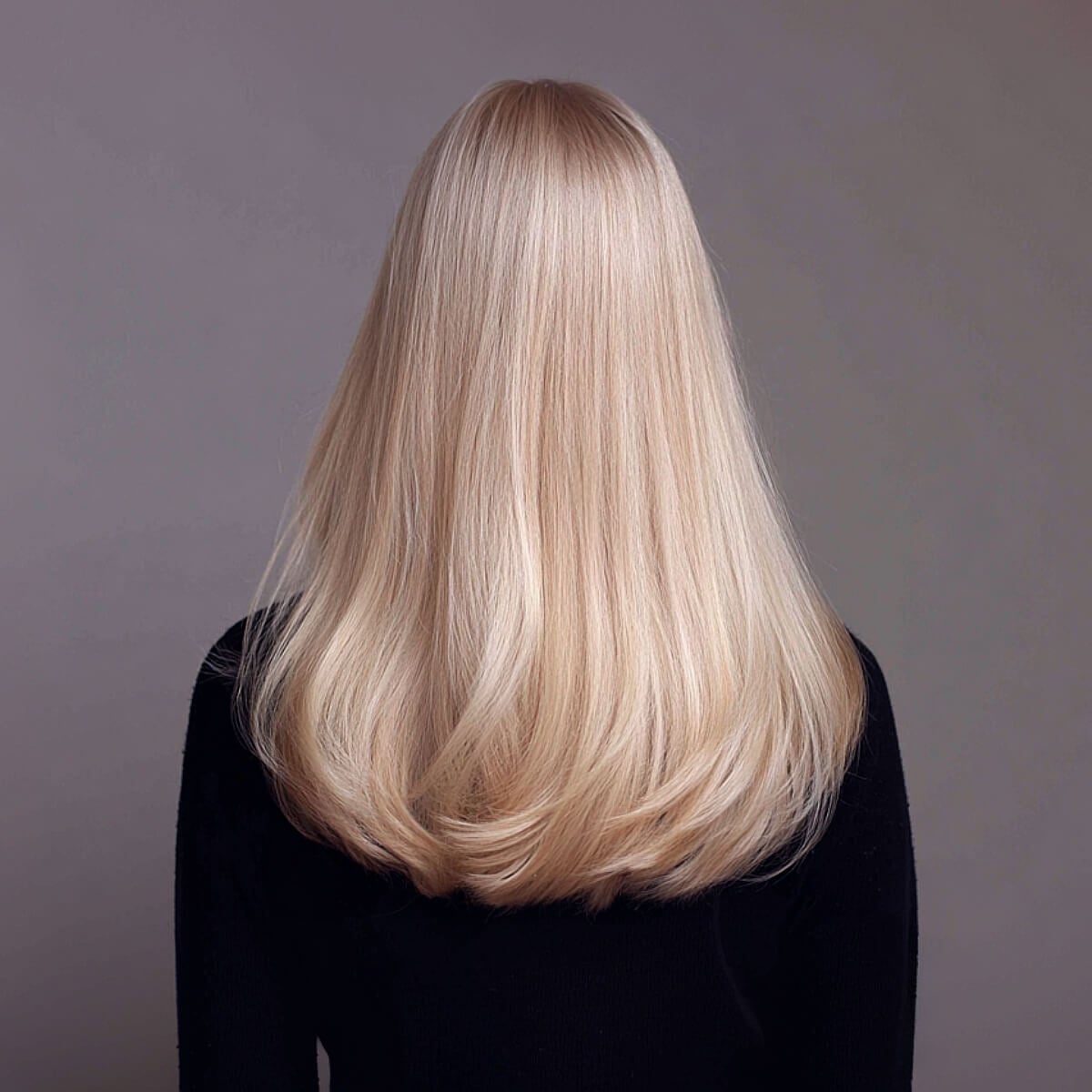
A creamy vanilla blonde in a single, uniform shade is a low-maintenance choice only if you accept that it needs regular attention. The back view here shows how the color reads as one smooth, glossy surface, which is flattering on fine, mid-back length hair because it doesn’t break the line with contrast. The middle part and soft waves add a little volume where fine texture tends to fall flat, and the straight-to-wavy transition keeps it looking natural rather than stiff. Ask your colorist for: uniform creamy vanilla blonde, soft waves, fine texture. A weekly color-depositing conditioner will keep the vanilla tone from drifting yellow, and air drying with a diffuser is the easiest way to get those soft waves without a lot of heat.
Wavy Ash Blonde With Curtain Bangs
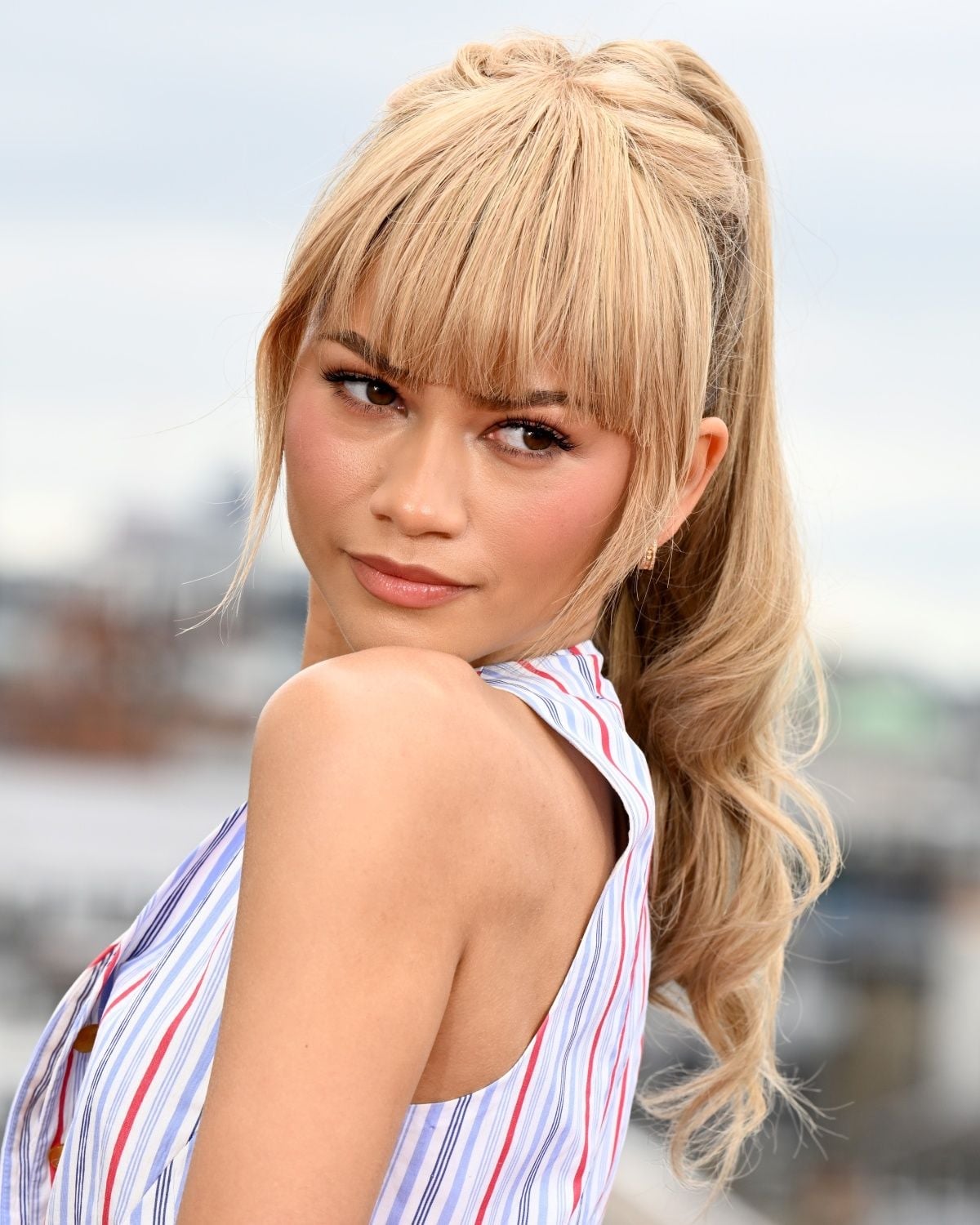
How do you ask for a color that looks this lived-in without sounding vague? Start with the ash blonde base and subtle lighter highlights, then move on to the cut. The curtain bangs are the real request here: they should start at the cheekbone and blend into the long layers, so they frame the face without a full fringe. On thick, wavy hair at mid-back length, this combination softens a square or heart-shaped face, because the bangs break up the width while the waves keep the length from dragging everything down. Ask your colorist for: ash blonde with subtle highlights, long layers, curtain bangs. A texturizing spray on the waves will give them definition, and blow-drying the bangs forward with a round brush is the only way to get that curve to hold.
Shoulder-Length Ash Blonde With Curtain Bangs
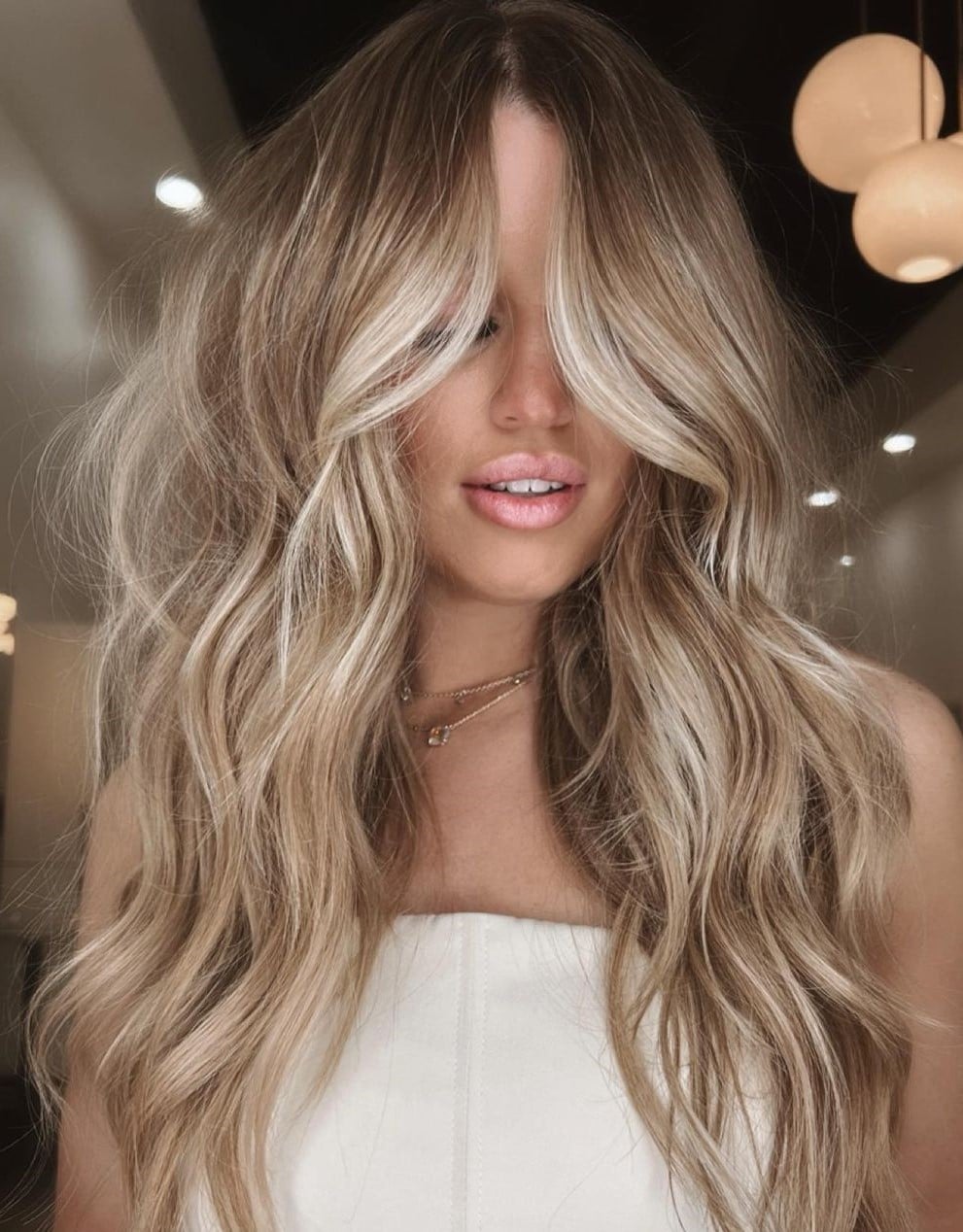
Shoulder-length ash blonde with curtain bangs is the more practical cousin of the long, wavy versions you see everywhere. The shorter length means less weight, so the loose waves hold their shape longer, and the lighter highlights around the face do the work of brightening without a full color change. It’s a good middle ground for medium-density, wavy hair: enough length to feel like hair, but not so much that it drags the waves straight. Ask your stylist for: shoulder-length ash blonde, curtain bangs, loose waves. The bangs need a trim every four to six weeks, and a round brush with a blow dryer is the daily tool to shape them into that soft curve.
Mid-Back Ash Blonde With Subtle Highlights
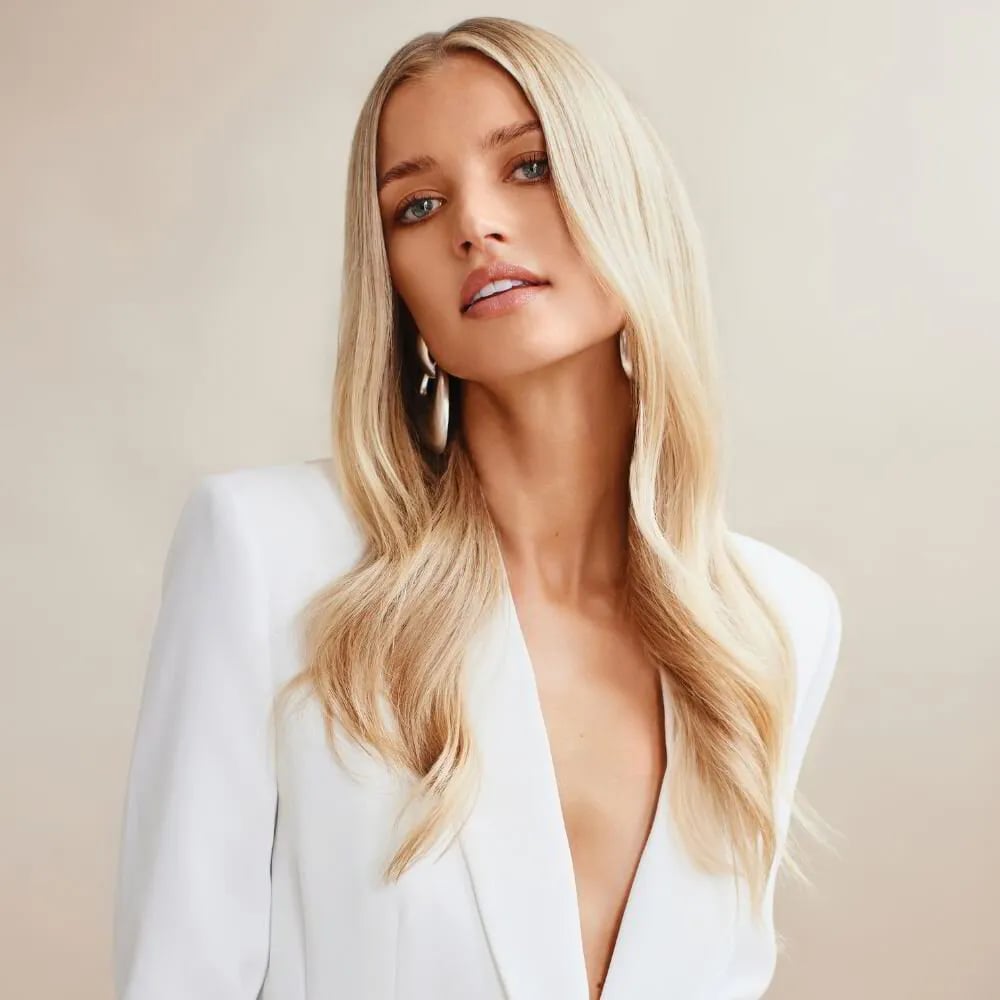
An ash blonde base with lighter highlights running through thick, wavy hair that hits mid-back is closer to a lived-in brunette than a flat, bleached look. The side part and soft layers give it movement without losing density. This combo works best on hair that already has wave and body; very fine strands may not carry the weight of the color contrast. Ask your colorist for: mid-back ash blonde with subtle highlights, soft layers, side part. Ash tones can pull brassy after a few weeks, so a purple shampoo is not optional. A glossing serum keeps the shine that makes dimensional color look healthy.
The benefit of subtle highlights on a darker base is that the grow-out is genuinely soft. You can stretch eight to ten weeks between appointments before the root line becomes obvious. The ash undertone needs a toning refresh every four to six weeks to stay cool. If you want a low-maintenance blonde that still looks polished, this is the one. If you hate toning, pick a warmer shade.
Beige Blonde Balayage With Darker Roots
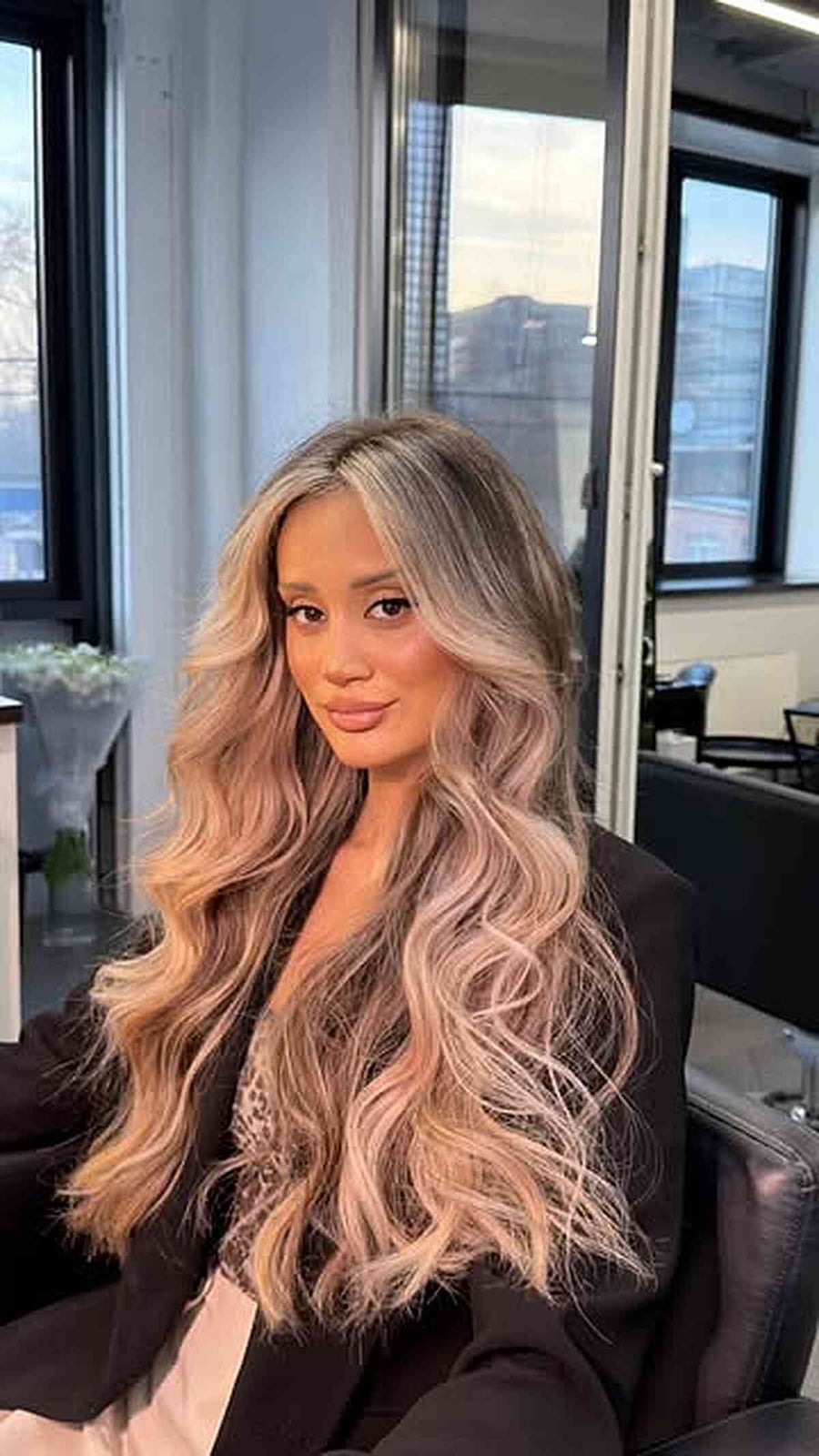
Balayage is a freehand painting technique where the colorist applies lightener only to selected sections of the mid-lengths and ends, leaving the roots darker. Here the result is a beige blonde that blends into thicker, darker roots on wavy, mid-back length hair. The middle part and long layers let the color look like one seamless piece. Ask your colorist for: beige blonde balayage, darker roots, long layers. The darker root is not a mistake: it cuts down the regrowth timeline to roughly every ten to twelve weeks.
Maintenance is minimal. The waves keep the lived-in feel that balayage is built for. Loose waves are the default styling here because they show the color shift from dark to light. This is a casual, everyday look that does not need heat styling.
Long Platinum Blonde With Face-Framing Highlights
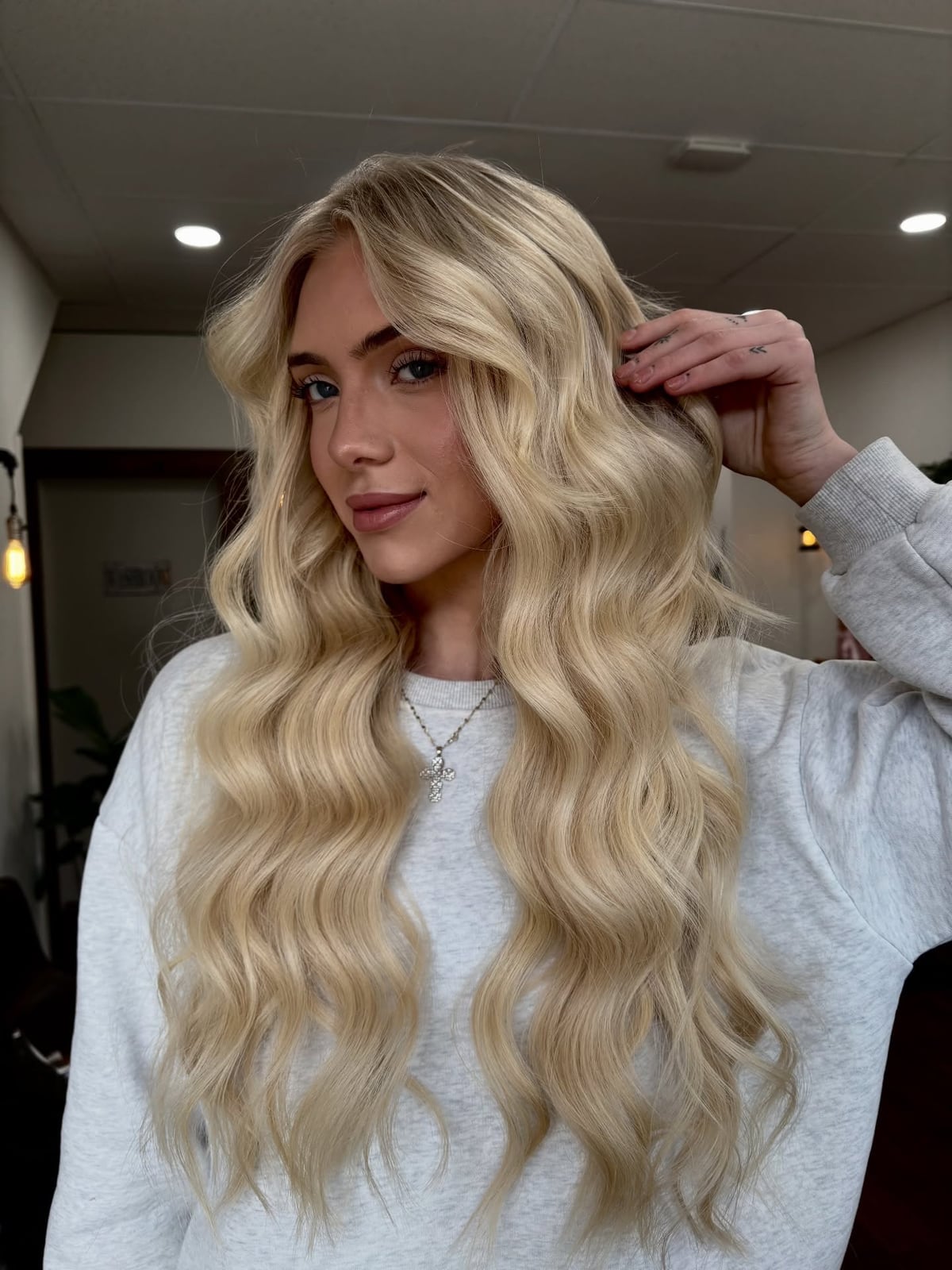
Who actually pulls off a bright platinum that goes all the way down to the waist? Thick, wavy hair, for one: the density stops the light shade from looking stringy. The curtain bangs and face-framing highlights are cut shorter around the face, which keeps the bold color from washing out the features. A middle part works here because the highlights are concentrated at the front, so the color does not feel flat. Ask your colorist for: long platinum blonde, curtain bangs, face-framing highlights. This is a statement shade for evenings or occasions where you want the hair to arrive before you do.
Platinum at this length is not a spontaneous decision. The salon time is three to four hours for the initial lift, and root touch-ups land every four weeks. The curtain bangs need trimming every six weeks. If your hair is fine or damaged, the bleach required for this level of lightness may cause breakage. If you have the density and the patience, the payoff is a shade that looks glamorous and carefully chosen.
Collarbone Lob With Dark Blonde Balayage
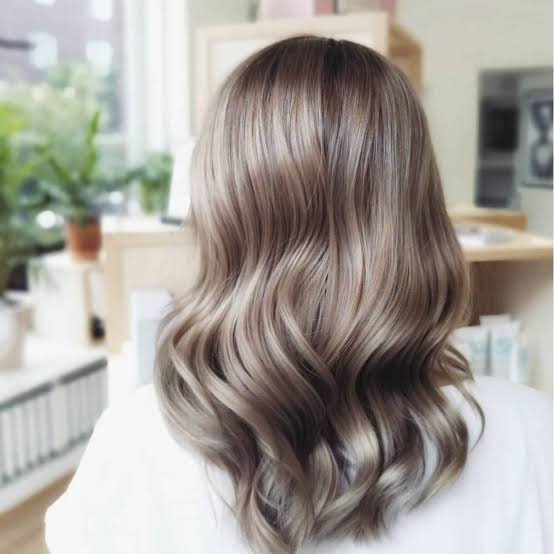
A lob at the collarbone with a dark blonde base and lighter blonde balayage is the kind of color that looks like it might have happened from a sunny summer. The back view shows how the balayage sits on the surface of the waves and does not saturate every strand, so the dark base stays visible. This is a medium-length cut with no bangs and a middle part, which keeps the silhouette simple. Ask your colorist for: collarbone lob, dark blonde base with balayage.
When air-dried, the balayage softens into a gradient that grows out without a harsh line. Damp hair encourages the natural wave pattern. This is a workable, everyday lob that does not demand a round brush.
Collarbone Ash Blonde With Wind-Swept Bangs
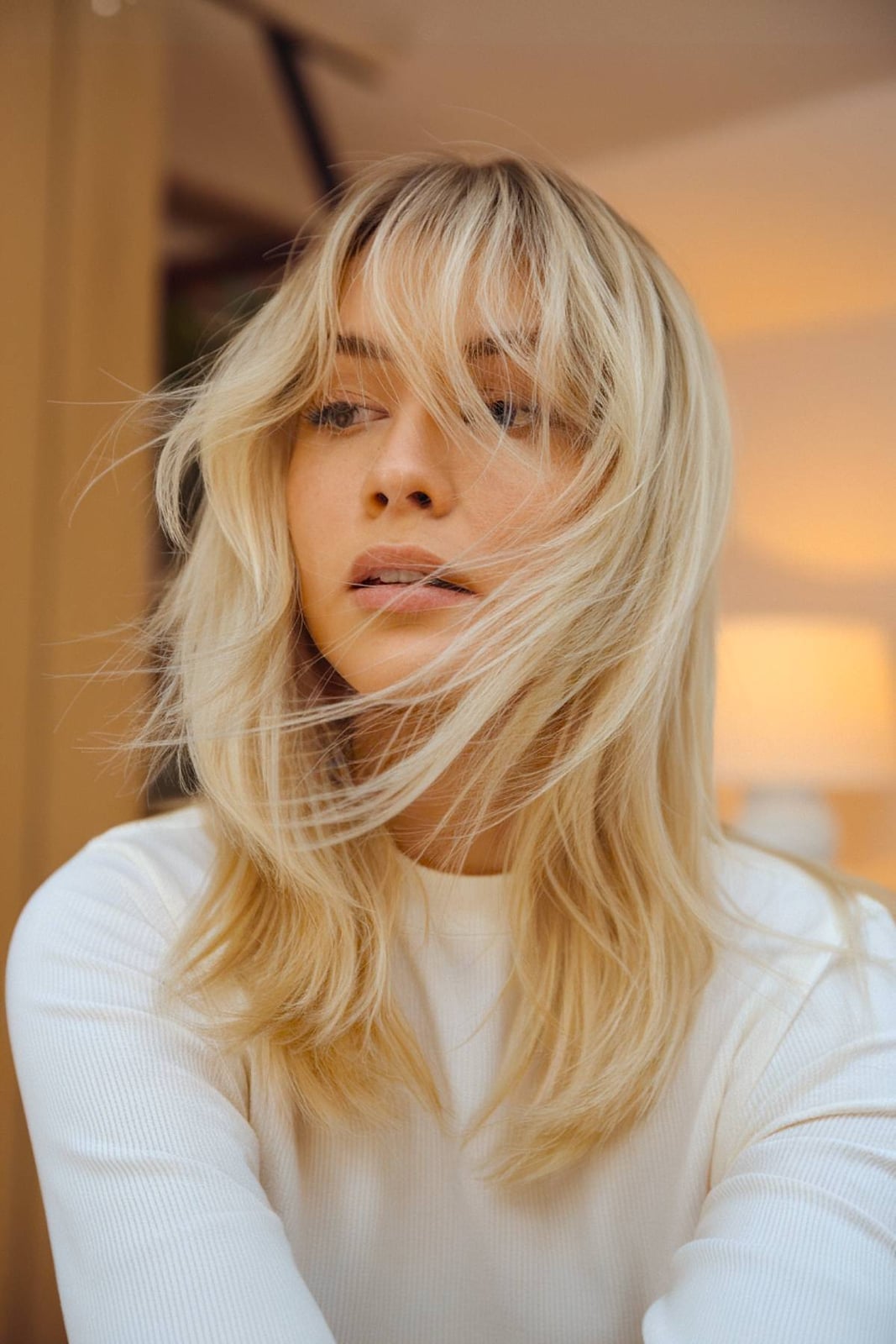
A collarbone-length cut with fine, wavy texture and an ash blonde shade enhanced by delicate highlights is a subtle alternative to a stark platinum. The wind-swept curtain bangs add softness around the face without the commitment of a full fringe. This is not a shade you can mix from a box at home: achieving the cool, muted ash tone and the fine highlights requires a colorist who can lift the hair evenly without going brassy. Ask your colorist for: collarbone ash blonde, subtle highlights, wind-swept curtain bangs. The bangs are cut to feather outward, so they blend into the layers instead of sitting heavy.
A light styling paste on the bangs keeps them in that tousled, just-stepped-outside shape. The remaining hair air-dries with a little texture spray. This is a salon-leaning look in both color and cut; attempting it at home risks uneven lift and a tone that reads more yellow than ash.
Collarbone Beige Blonde With Subtle Highlights
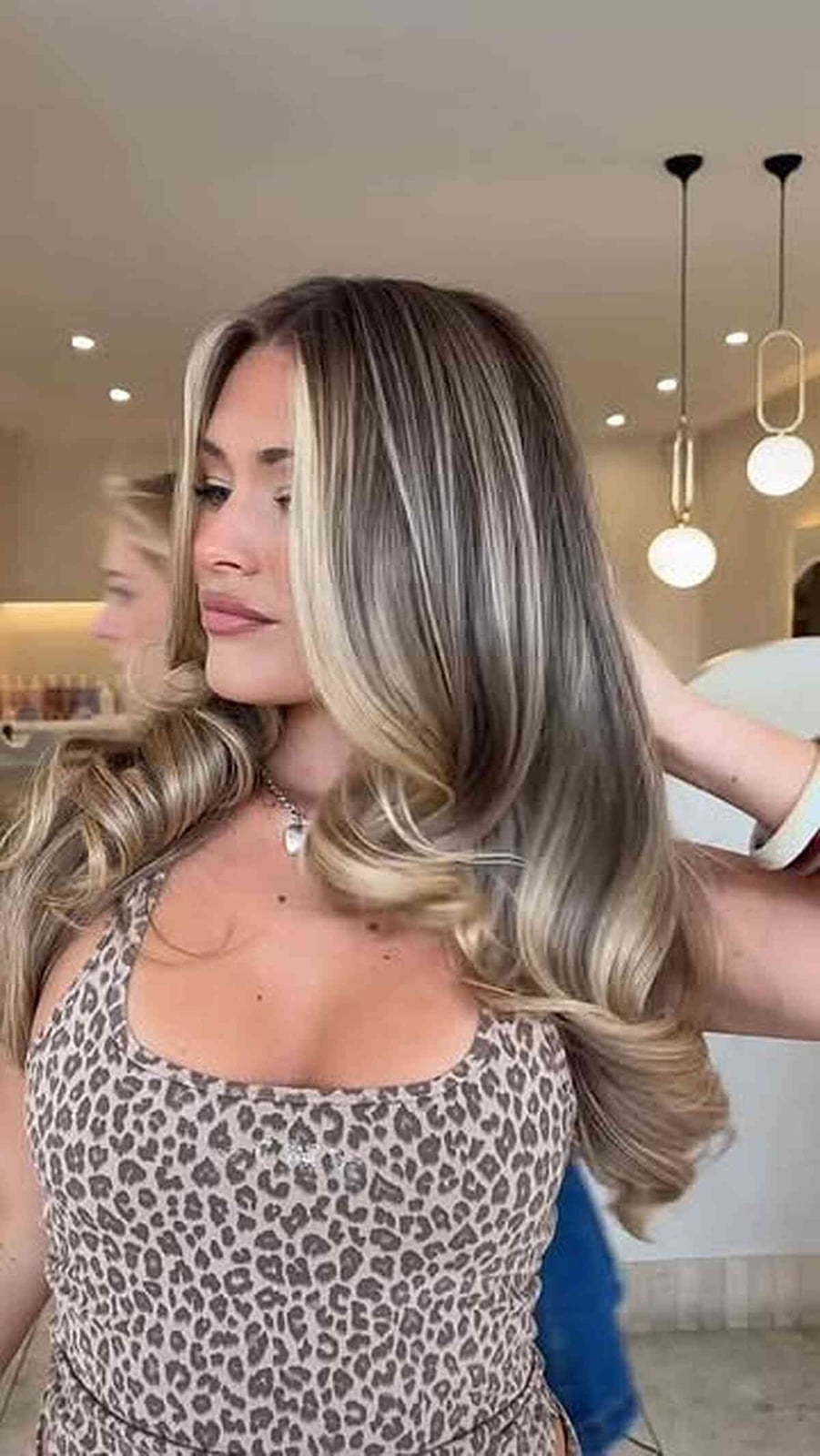
What exactly is beige blonde? It is a muted, warm-neutral shade that sits somewhere between champagne and sand, and it is having a moment. This collarbone-length cut uses subtle highlights lifted just a shade lighter than the base, so the dimension looks natural. The side part and soft waves give medium-textured hair a polished finish without fighting its natural bend. A side part can also balance angular jawlines and soften a square face.
Ask your colorist for: collarbone beige blonde with subtle highlights, soft waves, side part. Beige blonde grows out kindly. A smoothing serum helps the blowout last a second day, and you will probably skip the salon for six to eight weeks before the tone feels off.
Shoulder-Length Platinum Blonde Bob
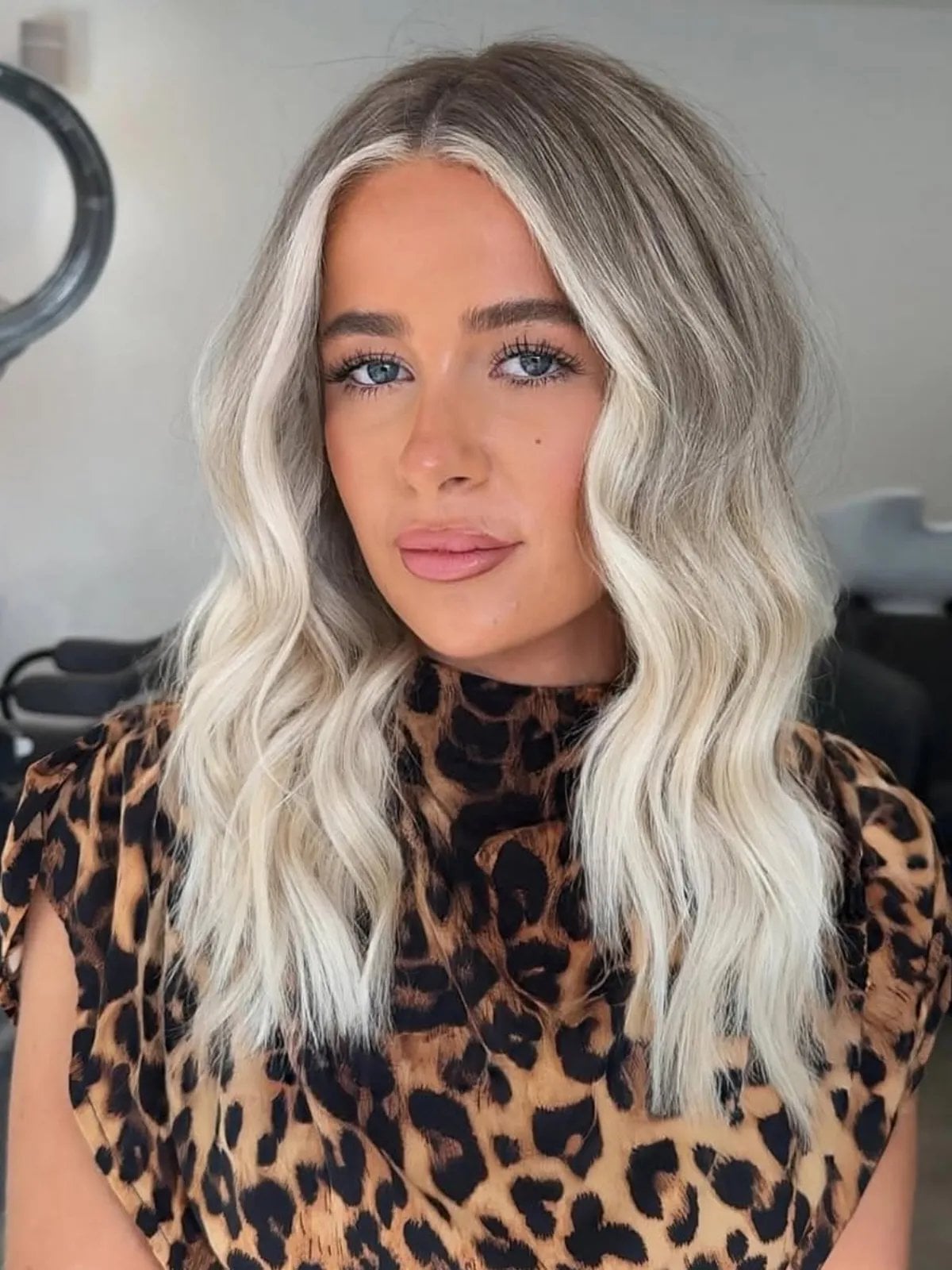
A platinum blonde bob at shoulder length is a geometry problem: the cut has to be precise enough that the color looks deliberate, not accidental. The middle part and soft waves here add movement so the bright tone does not read flat. Medium-textured hair holds the wave well, and volume at the sides helps balance round and square face shapes. Ask your colorist for: shoulder-length platinum blonde bob, soft waves. The gloss finish is the sign of a good blowout, not a miracle product.
Mid-Back Golden Blonde With Blonde Highlights
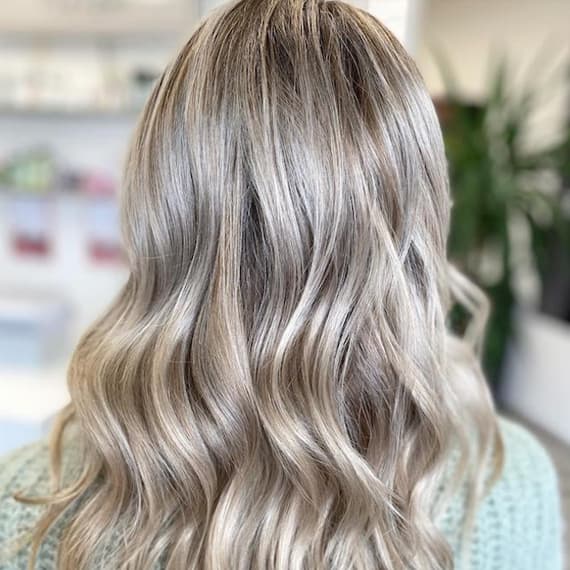
Golden blonde with lighter highlights is a trick that works best on thick, wavy hair. The density gives the color depth, and the waves catch the lighter pieces so they read as dimension rather than streaks. This mid-back length with a middle part and no bangs keeps the focus on the color gradient. Thick hair can handle the long layers without losing shape, and the warmth in the base tone makes the lighter highlights look sun-bleached rather than salon-painted.
Ask your colorist for: mid-back golden blonde with highlights, soft waves. If your hair is fine, the same formula can look heavy; ask for thinner foils or a balayage instead. The grow-out on golden blonde is gentle, and a color-safe shampoo will keep the warmth from turning brassy for about six weeks.
Collarbone Creamy Vanilla Blonde With Balayage
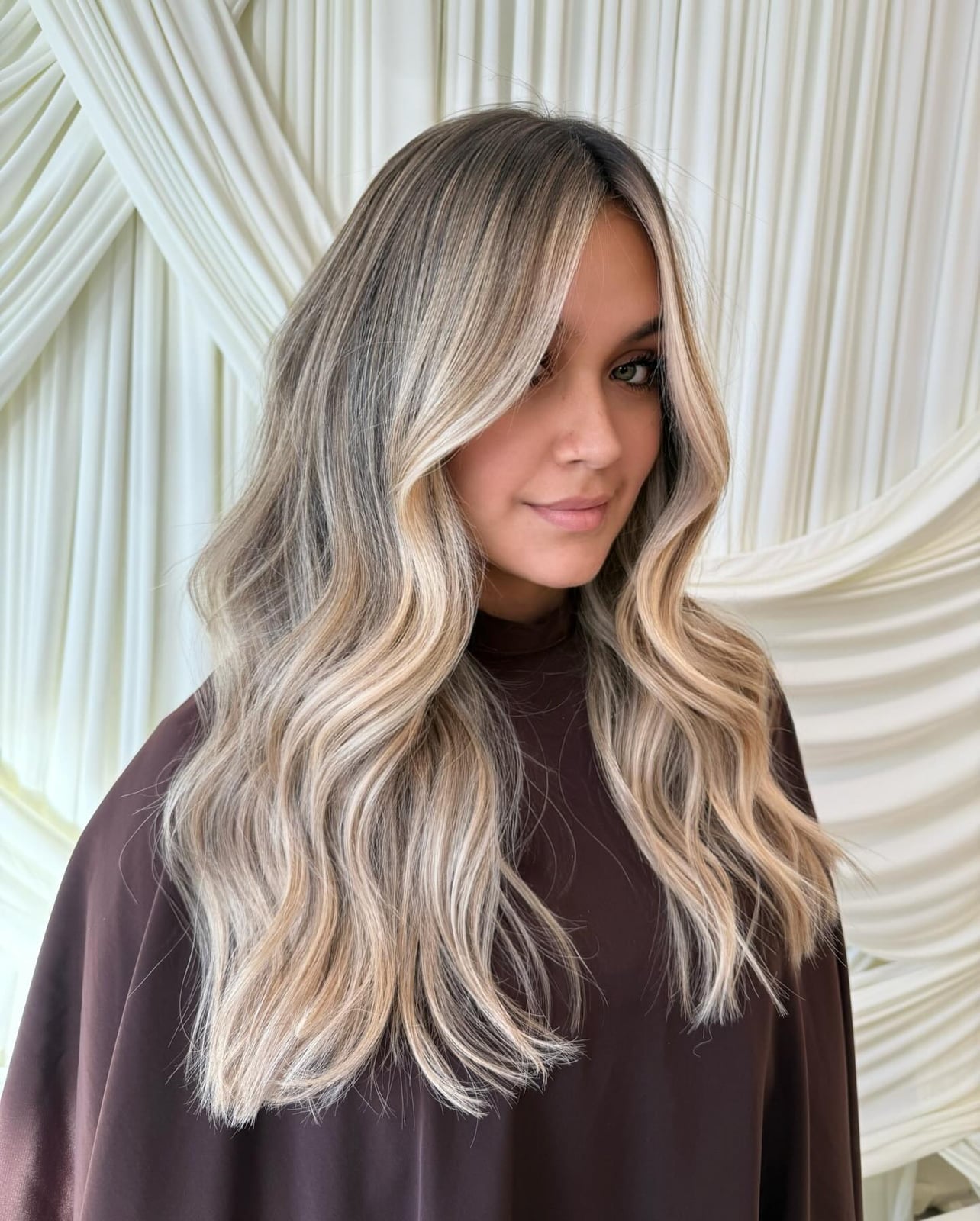
Can a creamy vanilla blonde look lived-in without looking faded? Balayage is the answer. The hand-painted technique places the lightest pieces away from the roots, so the grow-out is soft and the curtain bangs stay darker at the base. This collarbone cut on thick, wavy hair keeps the balayage from disappearing into the density. The drawback is that the curtain bangs need a trim every four weeks to keep their shape, and loose waves require a heat tool unless you are naturally wavy.
Ask your colorist for: collarbone creamy vanilla blonde with balayage, curtain bangs. The vanilla tone is warmer than platinum but cooler than honey, so it works as a middle ground for anyone hesitant about going too golden or too ashy.
Mid-Back Bronde With Root Shadow and Waves
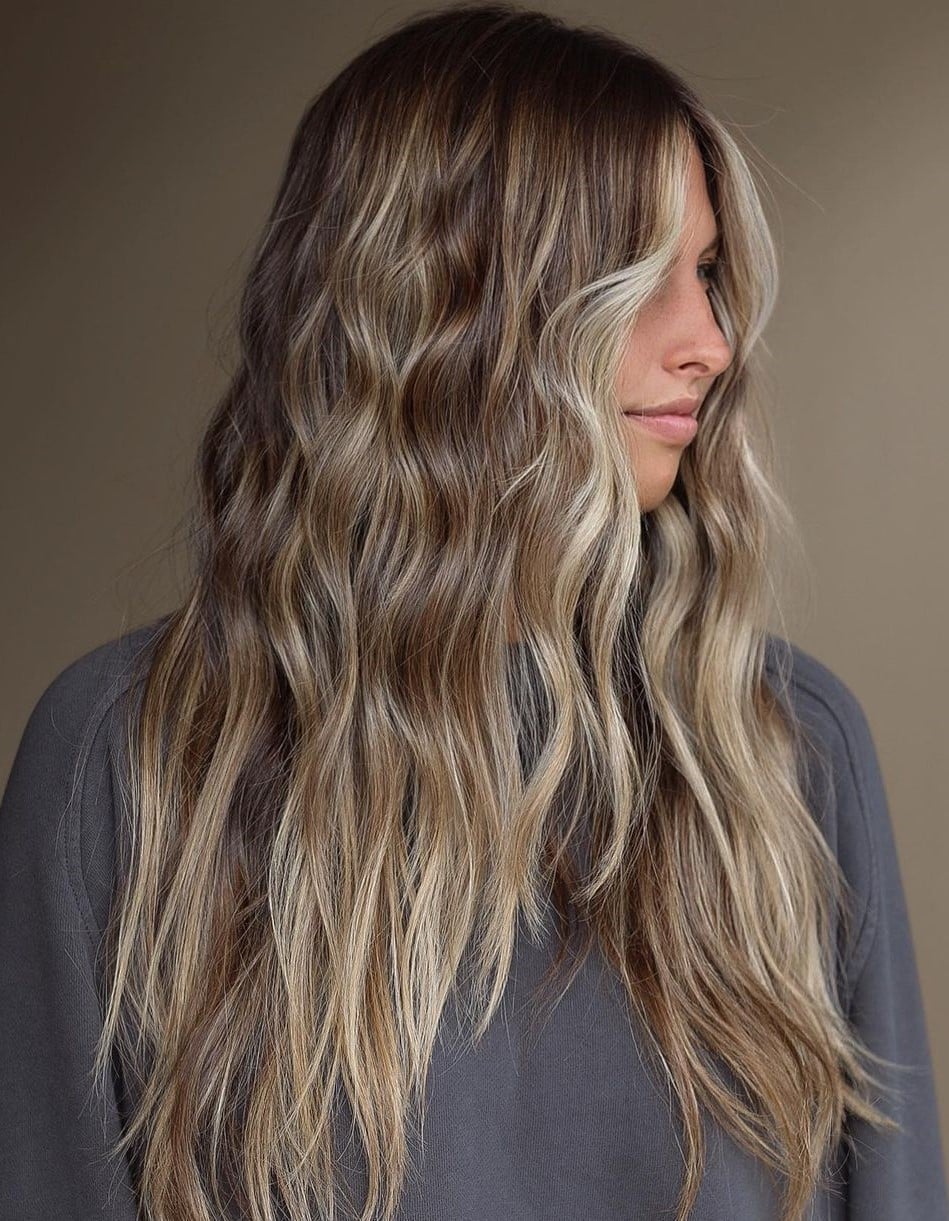
Bronde with a root shadow is the smarter cousin of solid bronde. Solid bronde can look flat as it grows, especially on thick, wavy hair. The root shadow here keeps the base darker at the scalp, then the subtle highlights and lighter ends create a gradient that looks deliberate. The curtain bangs and middle part soften the contrast, so the color does not feel severe. Thick, wavy hair at mid-back length has enough weight to hold the wave pattern without extra product.
Ask your colorist for: mid-back bronde with root shadow, curtain bangs, wavy style. The root shadow buys you about eight weeks before the grow-out line becomes obvious. That is two extra weeks compared to a full highlight, which matters if you like the color to earn its keep.
Collarbone Ash Mushroom Blonde With Dimension
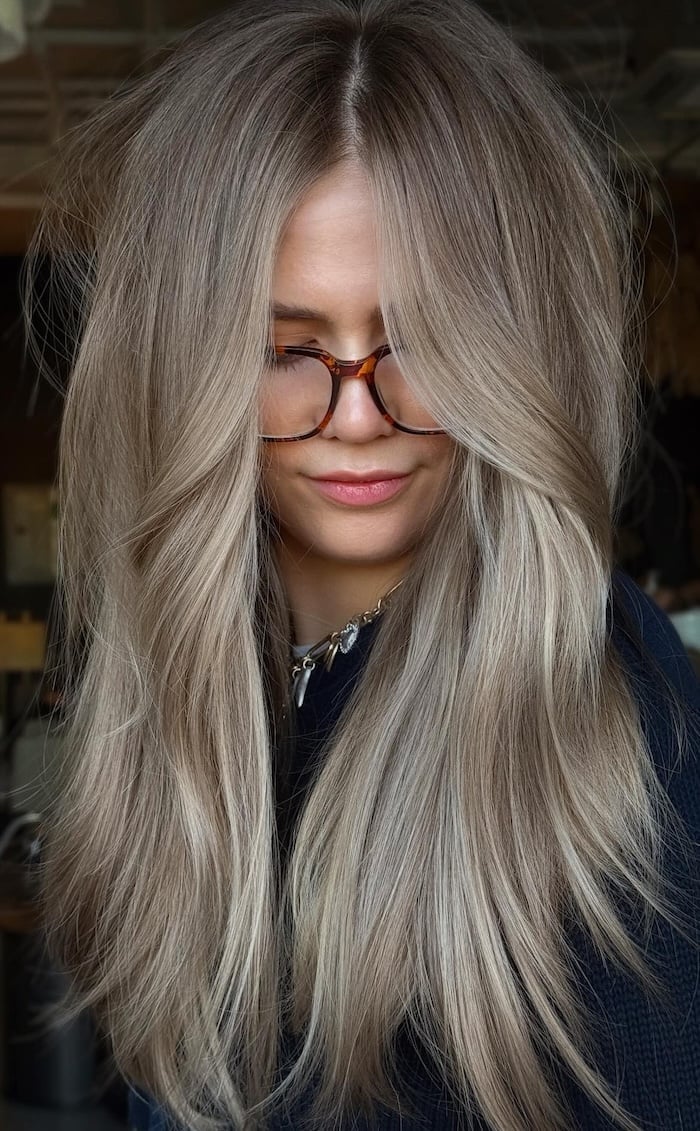
Ash mushroom blonde relies on a cool, muted base with scattered lighter pieces to keep it from reading flat. On fine, wavy hair at collarbone length, curtain bangs and subtle layers add the movement the tone needs. Ask your colorist for: collarbone ash mushroom blonde, cool dimension, curtain bangs. A purple shampoo once a week preserves the coolness between toning appointments.
Shoulder-Length Natural Blonde With Side-Swept Bangs
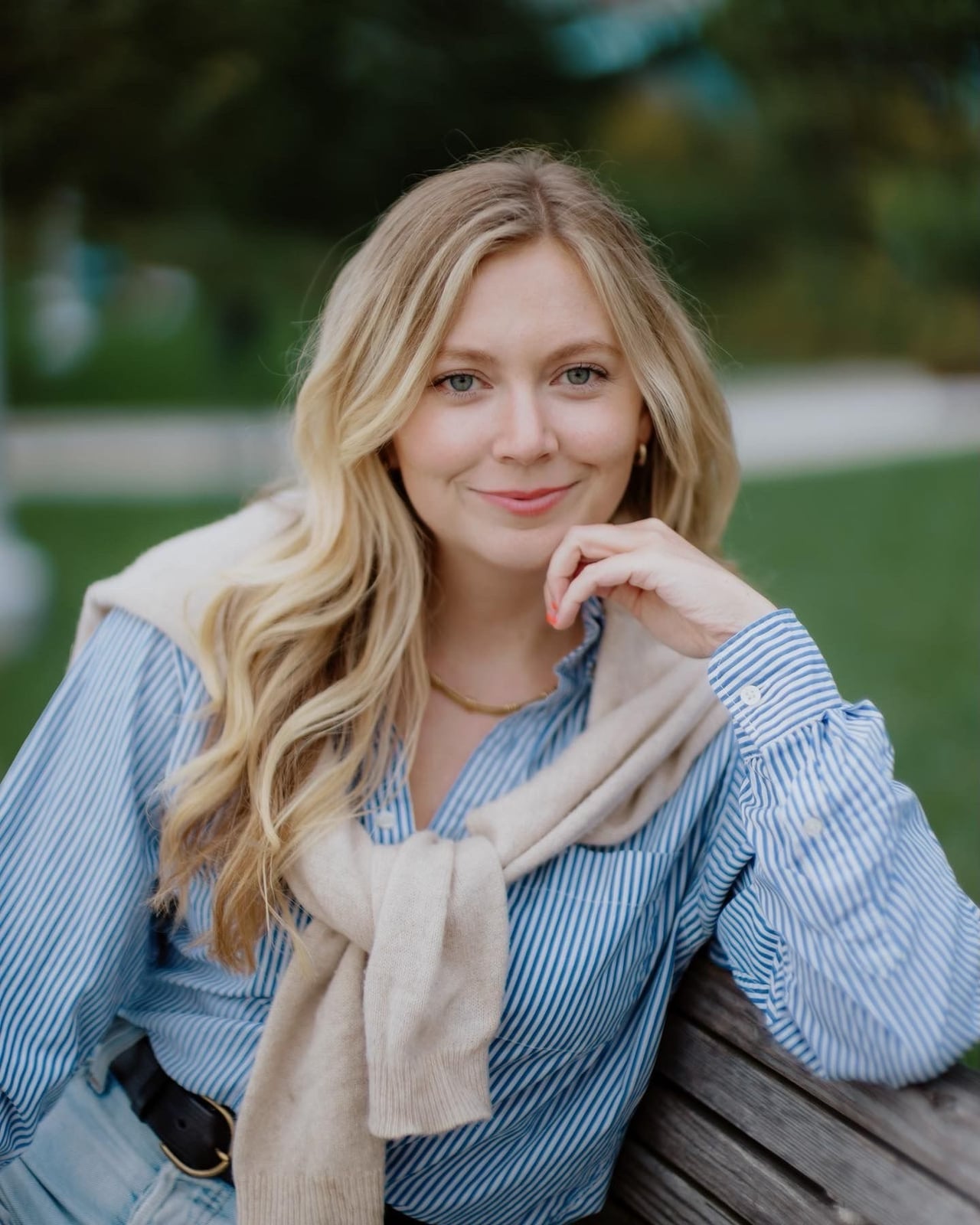
What do you call a shade that looks untouched but still has dimension? Natural blonde with subtle highlights, placed to keep the base intact. Shoulder-length hair with long layers and side-swept bangs suits medium-density, wavy textures. Ask your colorist for: shoulder-length natural blonde, side-swept bangs, long layers. This is a salon-leaning color, but the grow-out is low-stakes, so you can stretch the next appointment to ten or twelve weeks.
Mid-Back Ash Blonde With Root Shadow
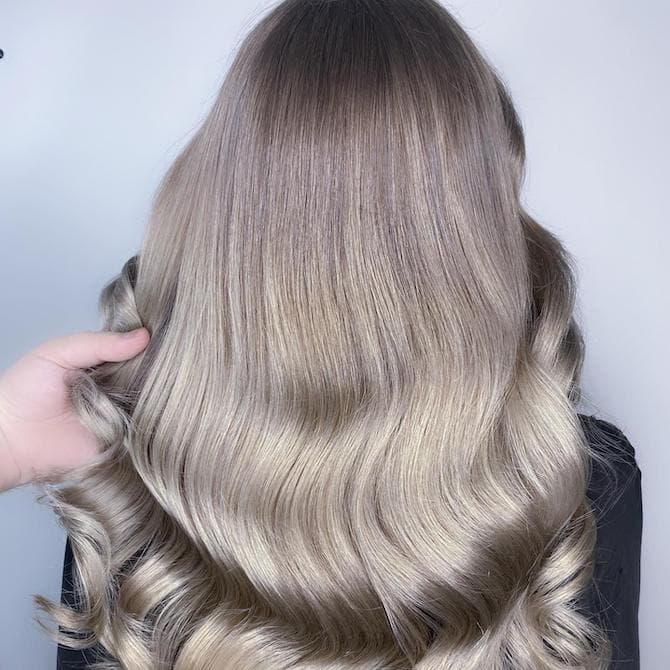
A root shadow changes how an ash blonde wears over time. The darker base at the part means new growth blends in, not announces itself. On long, thick, wavy hair at mid-back, an ash blonde base with lighter blonde highlights and a subtle root shadow creates depth without heaviness.
Ask your colorist for: mid-back ash blonde with root shadow, lighter highlights. A sulfate-free shampoo helps the cool tone hold its ground. Plan for a gloss or toner refresh every eight to ten weeks, even though the root itself can go longer.
Collarbone Honey Blonde With Face-Framing Layers
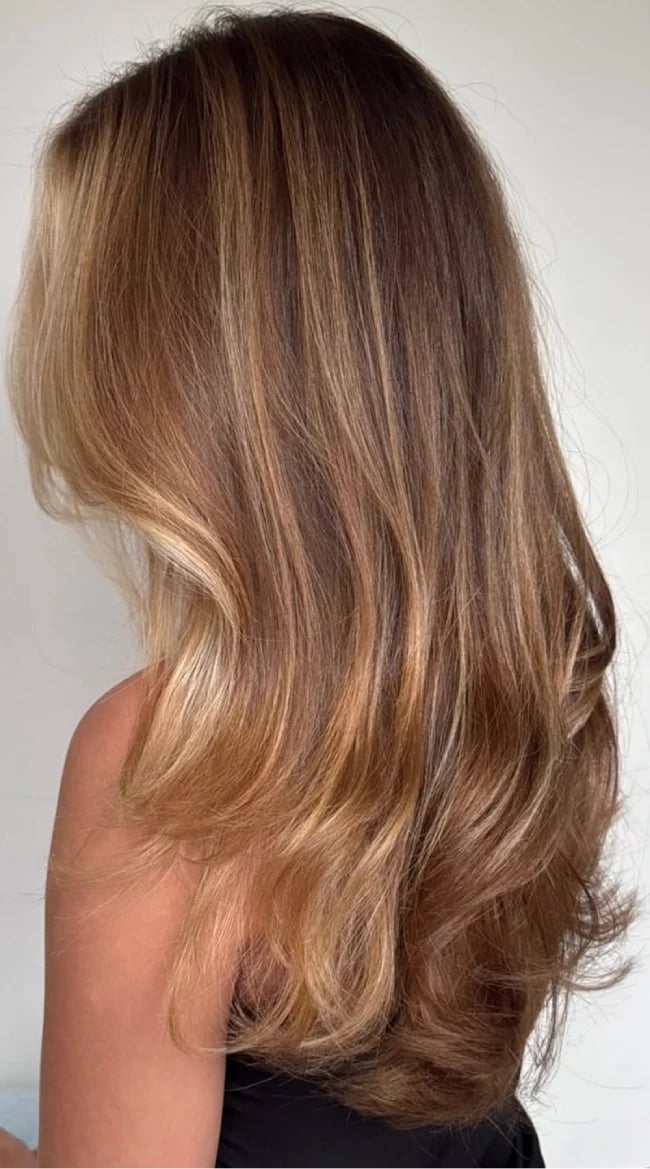
Honey blonde sits between beige and true gold, so it works across seasons. The lighter face-framing pieces can pull brassy faster than the rest of the hair. On collarbone-length, wavy hair with medium density, face-framing layers and a side parting keep the shape soft. Ask your colorist for: collarbone honey blonde with highlights, face-framing layers. Skip this if you hate scheduling a toning appointment every six weeks.
Shoulder Platinum Blonde With Ash Tones
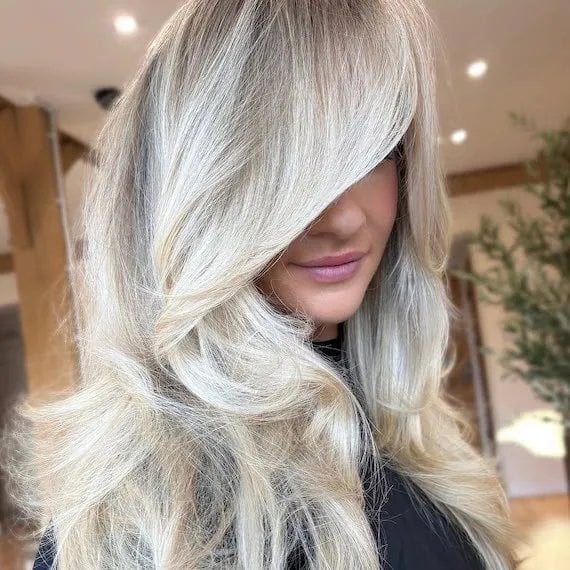
Platinum blonde with ash tones reads as cooler and more muted than a straight white platinum, which gives it a more deliberate finish. Fine, wavy hair at shoulder length benefits from the lift in volume that curtain bangs and loose waves provide. Ask your colorist for: shoulder-length platinum blonde with ash tones, curtain bangs. This color works best on hair that is already in good condition, because the lightening process is intensive.
Mid-Back Ash Blonde With Face-Framing Layers
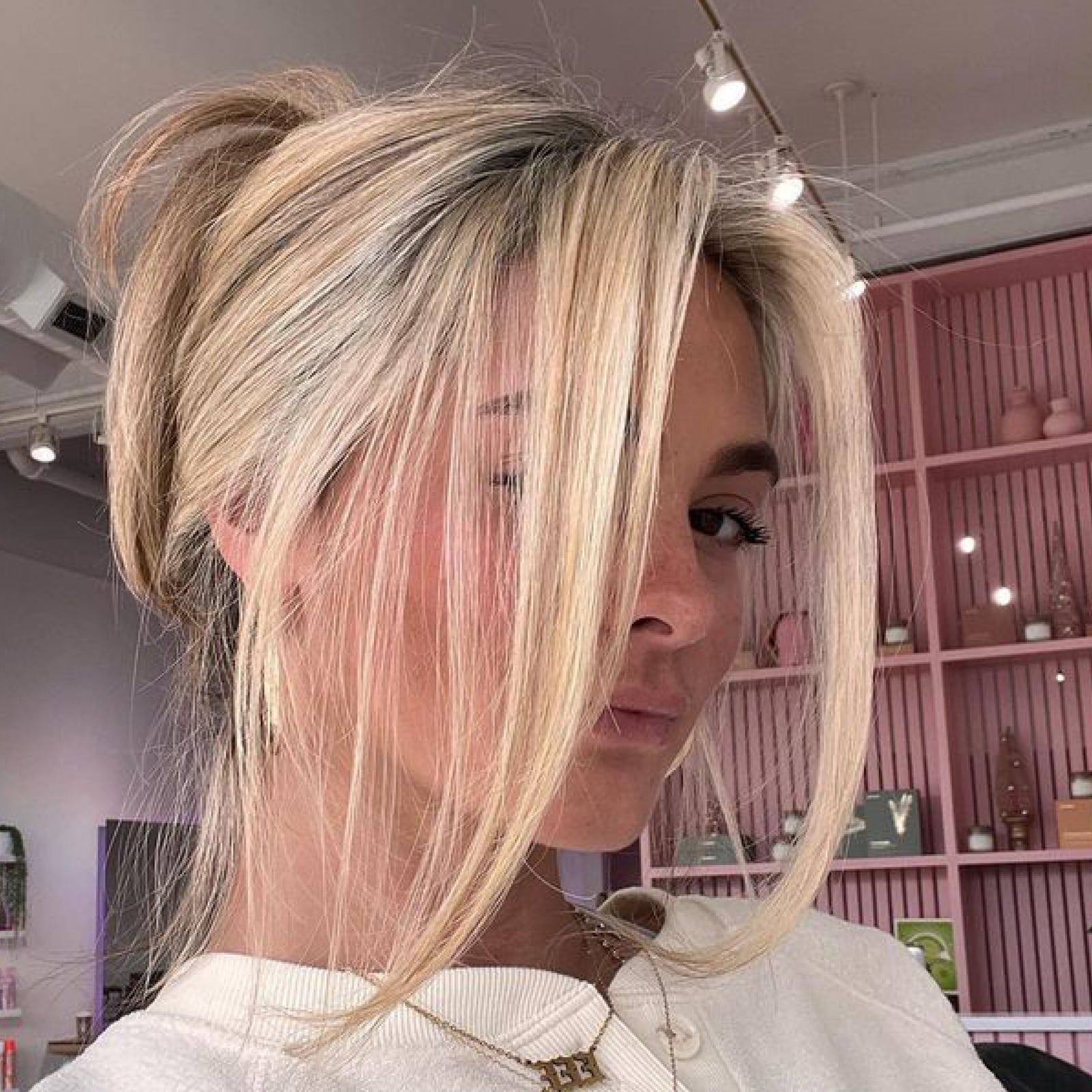
These face-framing layers are cut soft rather than sliced in, so the movement stays subtle. Fine, wavy hair at mid-back length benefits from that gentle graduation around the jaw, while the curtain bangs soften a square or angular face. Ask your colorist for: mid-back ash blonde with subtle highlights, curtain bangs, face-framing layers.
The difference between this and a heavier set of layers is that the shape reads as one piece, not separate chunks. Blow-dry the bangs forward with a round brush and let the rest air-dry into its natural wave. A trim every eight weeks keeps the face-framing pieces from growing into a shag.
Collarbone Ash Blonde With Subtle Highlights, Wavy
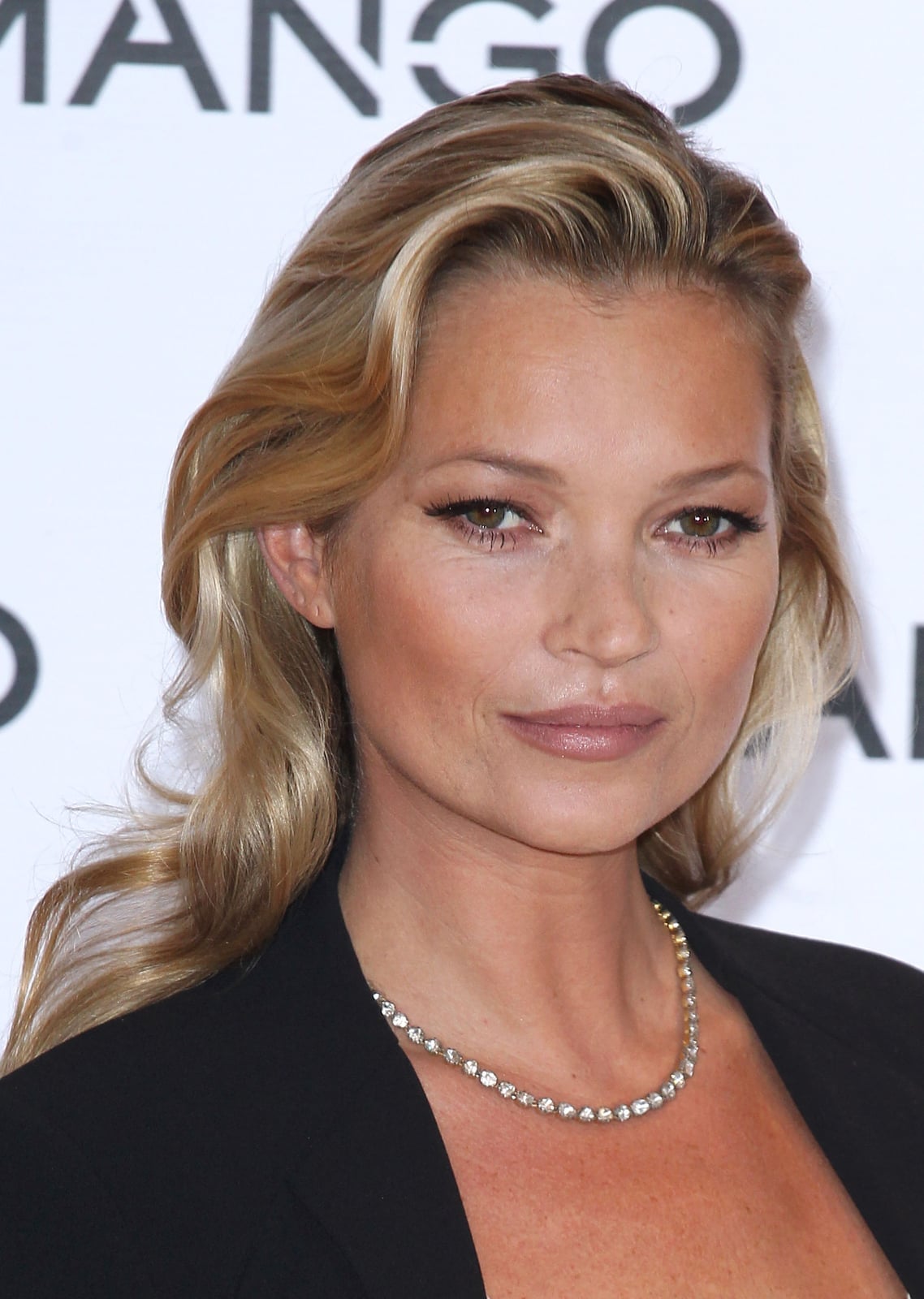
Ash blonde with subtle highlights relies on a soft tonal shift rather than contrast. The colorist paints fine, weaved sections through the mid-lengths and ends, avoiding the root to keep the base dark. Fine, wavy hair starting at collarbone length holds that delicate lift without looking stripy. Ask your colorist for: collarbone ash blonde with subtle highlights, loose waves.
Collarbone Ash Blonde Balayage With Face-Framing
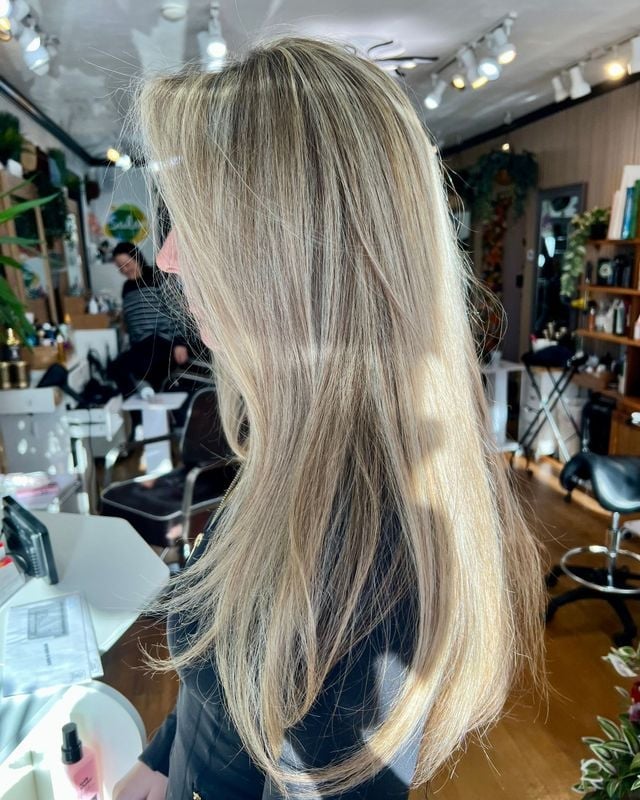
How do you ask for a grown-out ash blonde that still looks intentional? Say the words balayage and face-framing together. The balayage lightens from a darker root through the mid-lengths to lighter ends, while thinner pieces around the face add brightness without a full highlight. Medium-density, wavy hair at collarbone length carries that graduation naturally. Ask your colorist for: collarbone ash blonde balayage, face-framing layers.
Mid-Back Honey Blonde Balayage
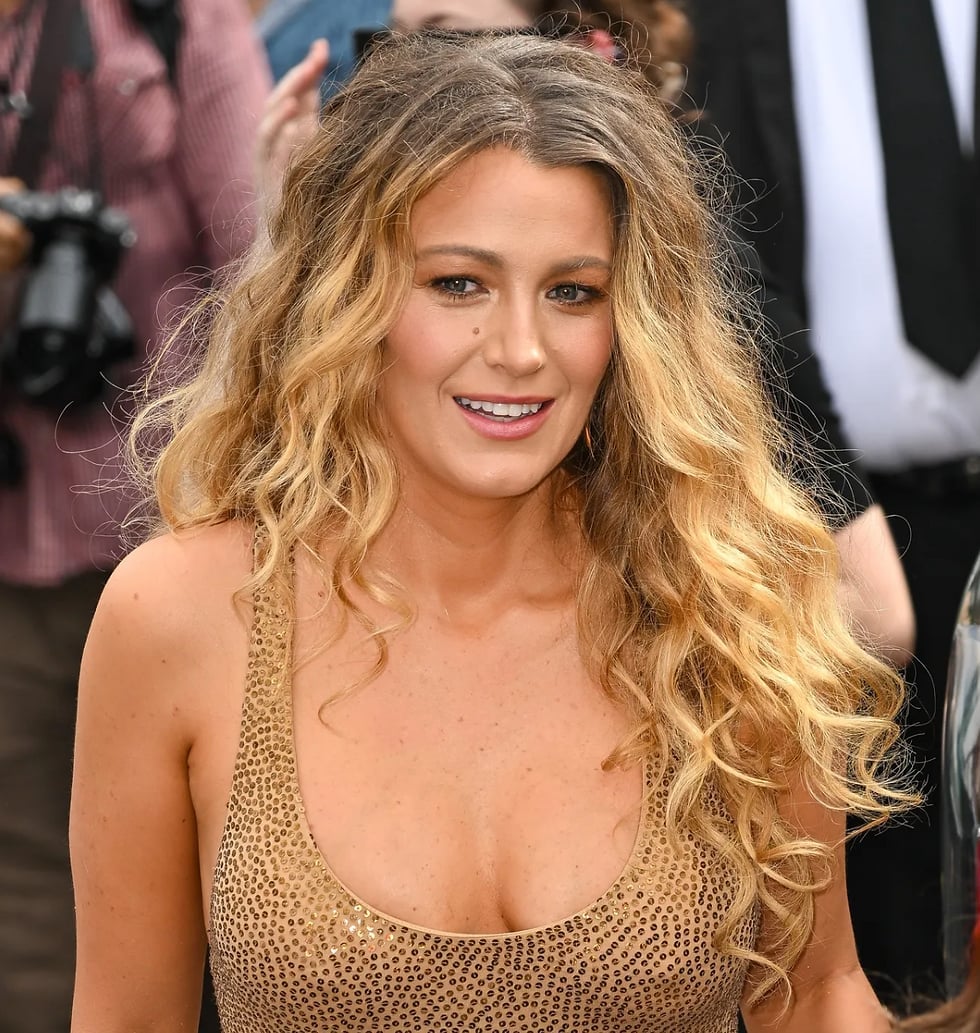
Honey blonde balayage on thick, wavy hair is less about placement precision and more about how the light catches the depth. The colorist paints freehand sections from the mid-lengths down, leaving the root area deeper, which creates a dimensional blonde that shifts between gold and beige. Thick hair needs that internal contrast so the wave pattern reads clearly instead of as one solid block. Ask your colorist for: mid-back honey blonde balayage, loose waves.
Balayage on thick hair takes more time in the chair, usually two to three hours depending on density. The grow-out is forgiving, though: a touch-up every ten to twelve weeks keeps the dimension fresh without a hard root line.
Mid-Back Platinum Blonde With Wispy Bangs
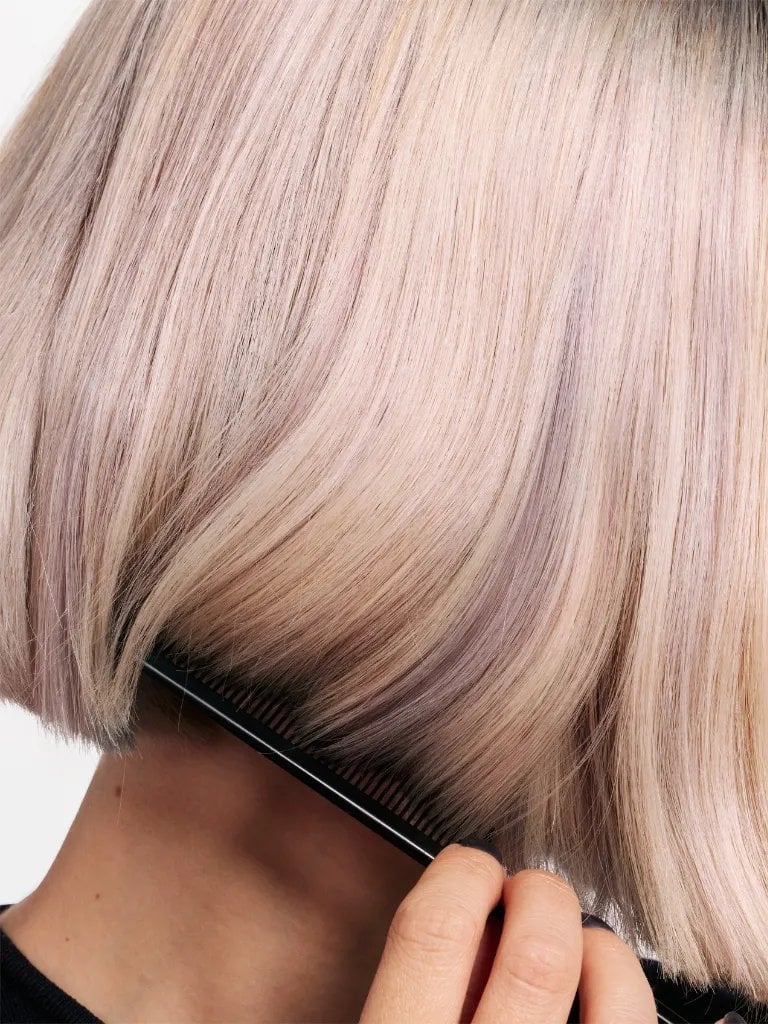
A mid-back platinum with wispy bangs is a different commitment than a solid platinum bob. The root shadow at the crown makes the regrowth less glaring, but the bangs are the real gatekeeper. Fine, wavy hair at mid-back length works for this shade, though wispy bangs need a quick blow-dry with a round brush every morning to sit correctly. Ask your colorist for: mid-back platinum blonde, wispy bangs, root shadow.
This is not a DIY color. Platinum requires a full salon lift and a toner appointment every four to six weeks to keep brassiness away. The drawback: if you skip that toning rhythm, the ash tone slides into yellow within two washes.
Mid-Back Honey Blonde With Lighter Highlights
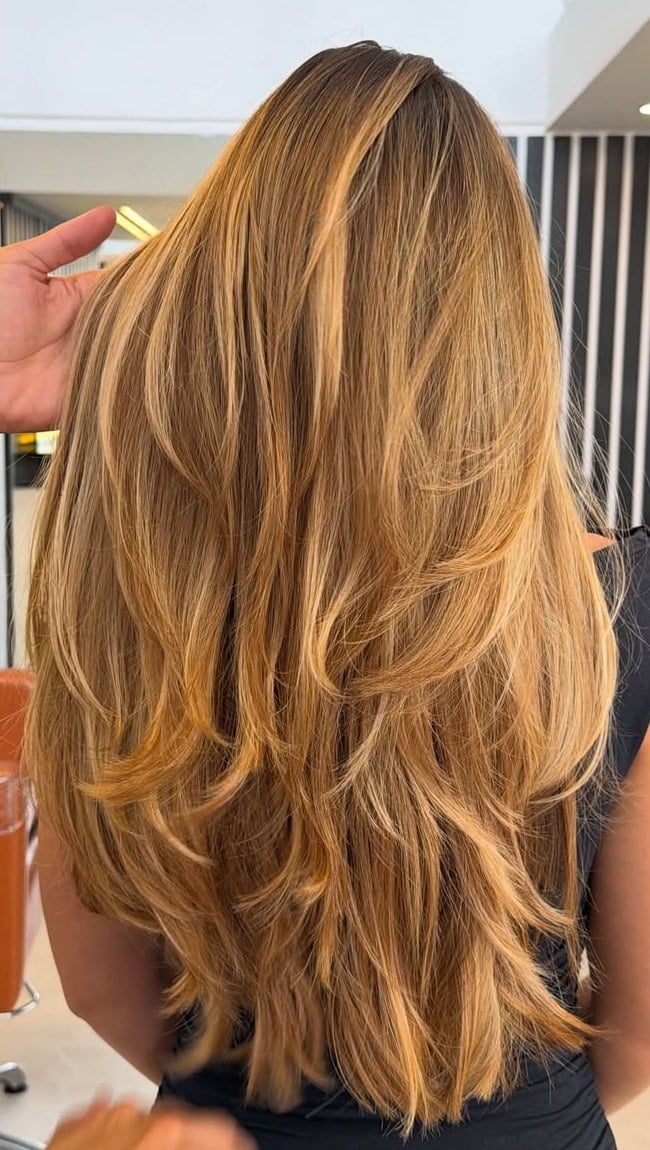
A layered cut gives thick, wavy hair movement so the honey blonde base and lighter highlights create dimension instead of a flat block of color. This style relies on natural body, because the layers need volume to show their shape without collapsing into a triangle.
If your hair is fine or thin, skip this one. The weight of mid-back length plus multiple layers can make fine strands look straggly. For those with density, the payoff is a warm, sunlit effect that shifts as you move. Ask your colorist for: mid-back honey blonde with lighter highlights, layered cut. The cut needs a trim every six to eight weeks to keep the layers crisp, but the color itself grows out gently.
Mid-Back Golden Blonde With Subtle Highlights, Wavy
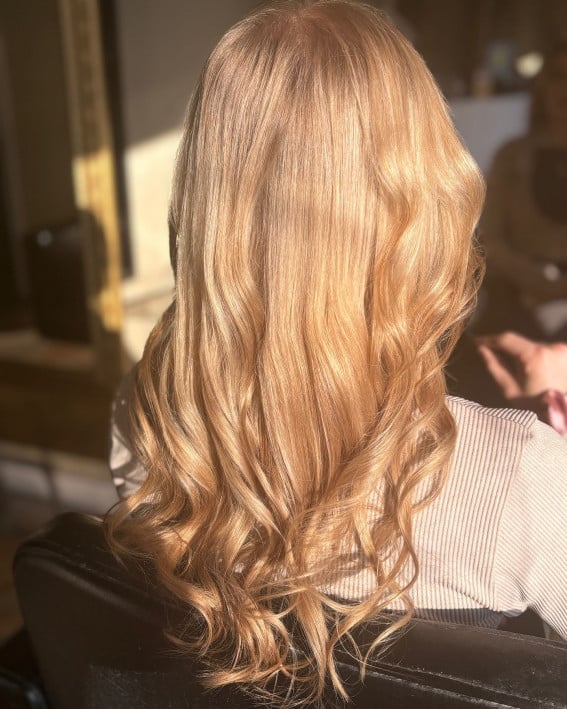
A rich golden blonde reads warmer and more saturated than a honey tone, which is heavier on caramel. The subtle lighter highlights here are woven close to the base, so the effect is a glossy sheen rather than obvious streaks, and on thick, wavy hair cut to mid-back it catches light like a freshly polished floor. It is the right choice if you want a sunny color that does not shout. Ask your colorist for: mid-back golden blonde with subtle highlights. This is a color that wants a warm base to begin with; if your natural shade is ashy, the golden pigment can look brassy within a few washes.
Chin-Length Platinum Blonde Bob With Curtain Bangs
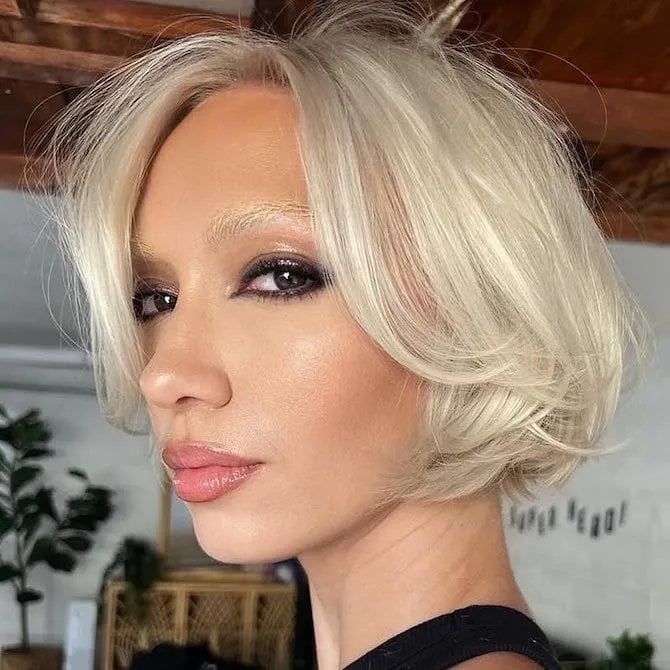
A chin-length bob relies on precision, and the curtain bangs soften what could otherwise be a severe line. On fine, slightly wavy hair, the middle part and soft waves add the illusion of volume without extra weight. The platinum is the hard part: it demands a lightener that lifts evenly and a toner that keeps it icy, not yellow. Ask your colorist for: chin-length platinum blonde bob, curtain bangs. For the cut, a trim every four to six weeks keeps the bob sharp, while the color needs a toning appointment every three to four weeks to hold that white-silver tone. If you air-dry, the waves fall out quickly; a round brush on the bangs is the fastest fix.
Collarbone Ash Blonde Lob With Wispy Bangs
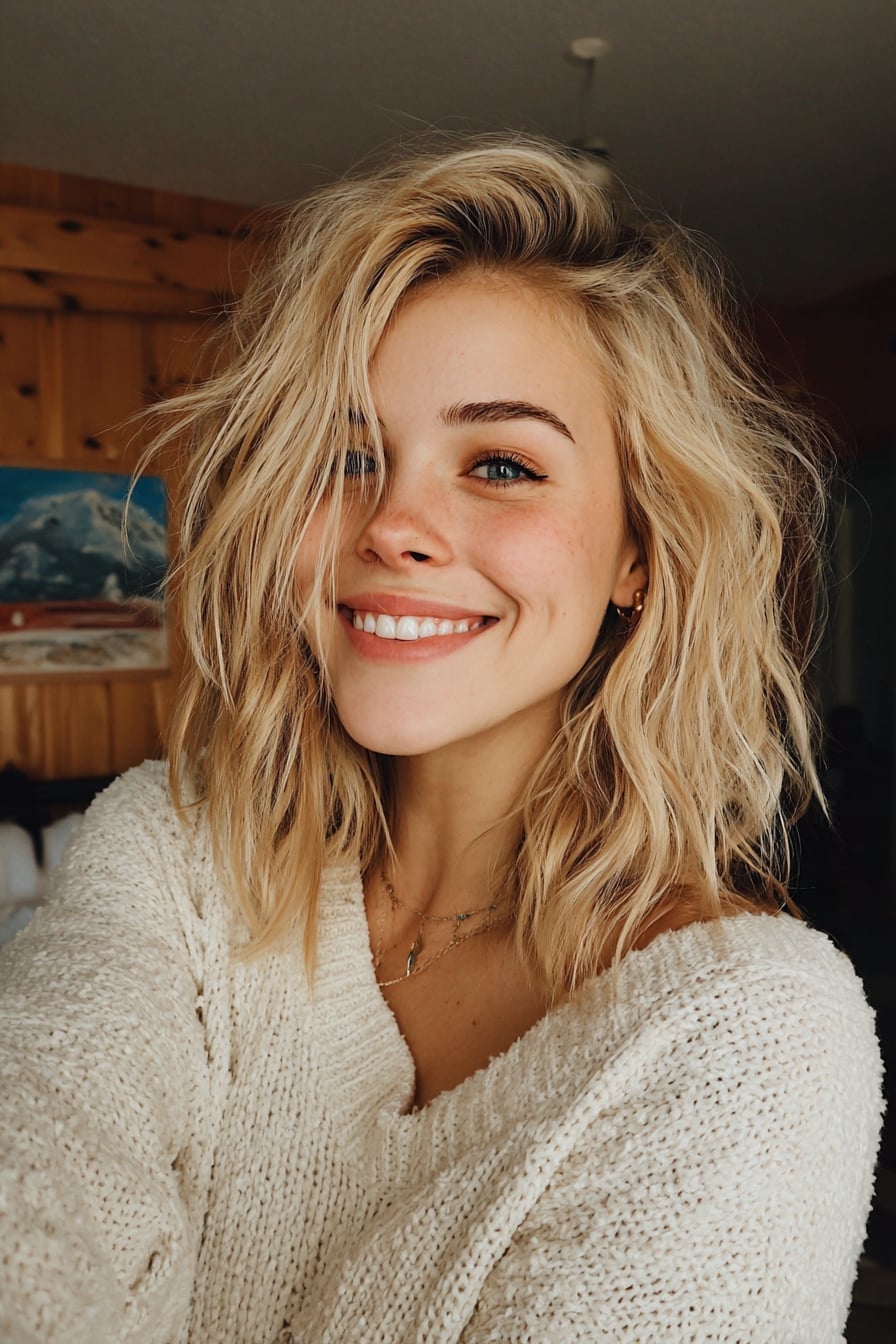
How do you get that lived-in, just-rolled-out-of-bed look without looking like you actually did? The lob is the shape, ending at the collarbone with wispy bangs and a side parting, but the real trick is the messy waves. On medium-textured hair, you can skip the heat and use a texturizing spray on damp hair, scrunching as it dries. That is the DIY route: the cut itself is simple, but the ash blonde shade is not. Ask your colorist for: collarbone ash blonde lob, wispy bangs. If you are doing the color at home, a purple shampoo is your friend, but a salon toner is more reliable for keeping the ash from turning greenish on brassy undertones.
Collarbone Ash Blonde With Loose Waves
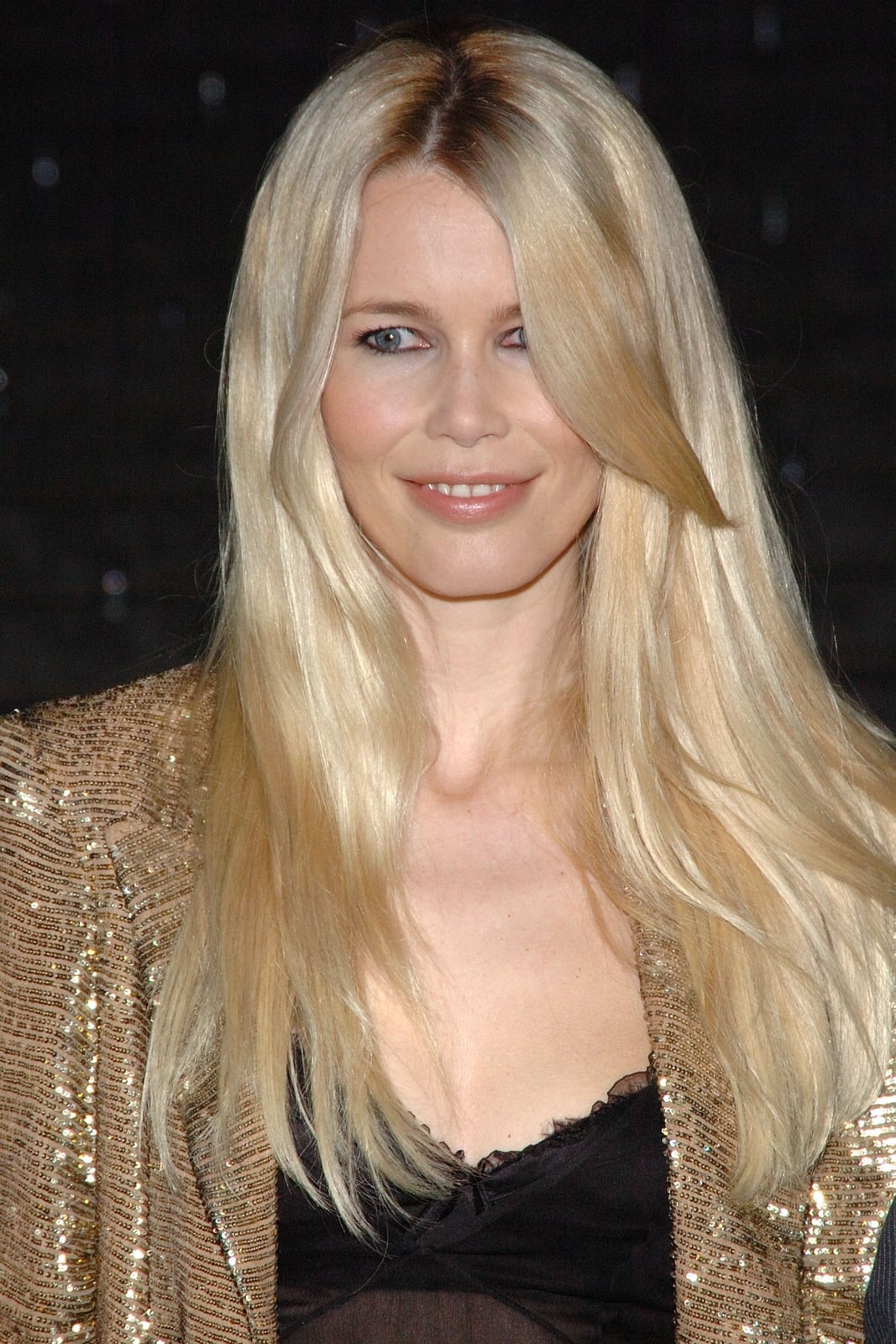
Ash blonde on fine, wavy hair has a habit of looking flat if you skip the texture, so the loose waves here are doing double duty. On collarbone-length hair with a side parting, the waves add movement and make the subtle highlights visible. The ash tone is cool, which means it will pull gray if your base is too dark or too warm. Ask your colorist for: collarbone ash blonde with highlights, loose waves. A toning conditioner once a week keeps the ash from going brassy, and the waves hold better if you set them with a curling iron on low heat, then break them up with your fingers. The cut itself is low-maintenance, with a trim every six to eight weeks.
Mid-Back Honey Blonde With Balayage and Loose Waves
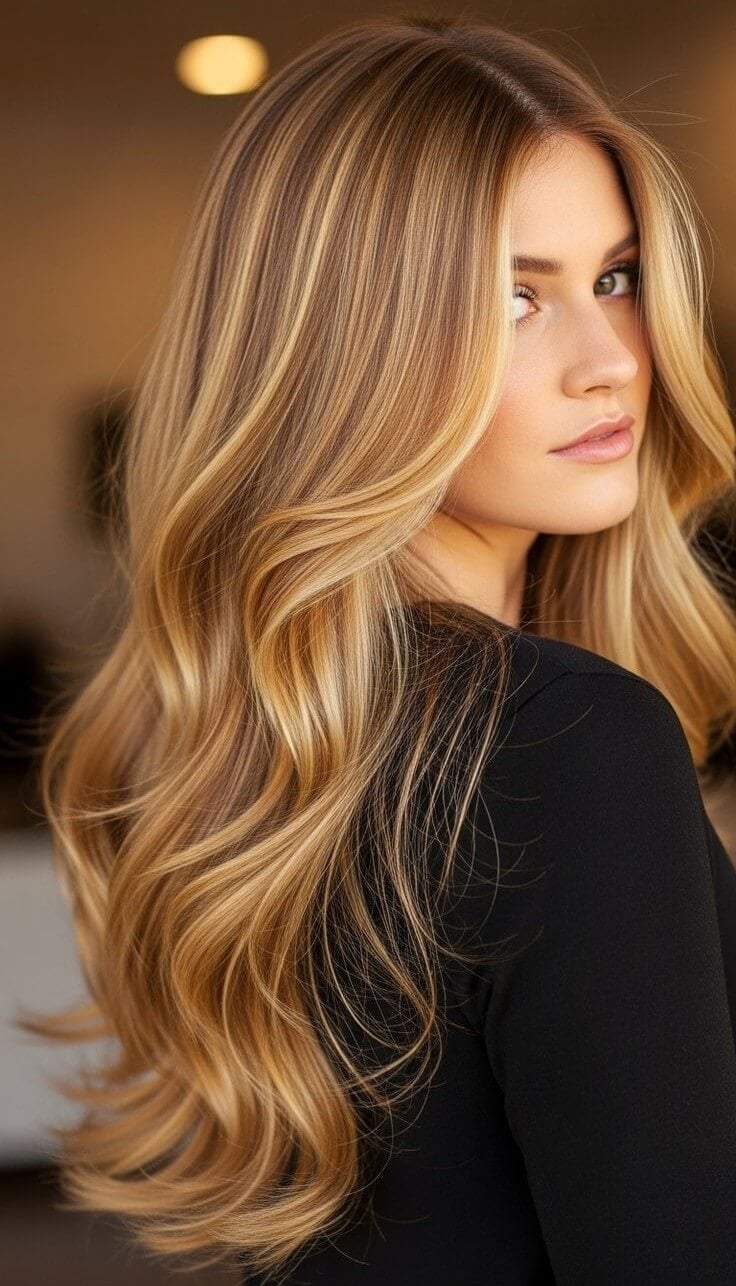
Honey blonde is a warm, inviting shade, but it is not a set-it-and-forget-it color. The subtle balayage here keeps the mid-back length from feeling flat, but that golden tone has a reputation for pulling brassy between appointments. A purple shampoo only does so much; a toning gloss every four to six weeks is the real fix. Ask your colorist for: mid-back honey blonde with balayage, soft waves.
This works best on thick, wavy hair that can handle the weight of a full balayage without turning spongy. The middle parting and loose waves are forgiving on a second-day refresh, but be honest about your tolerance for upkeep. If you hate scheduling gloss appointments, this is not the shade for you.
Collarbone Platinum Blonde With Ash Tones and Curtain Bangs
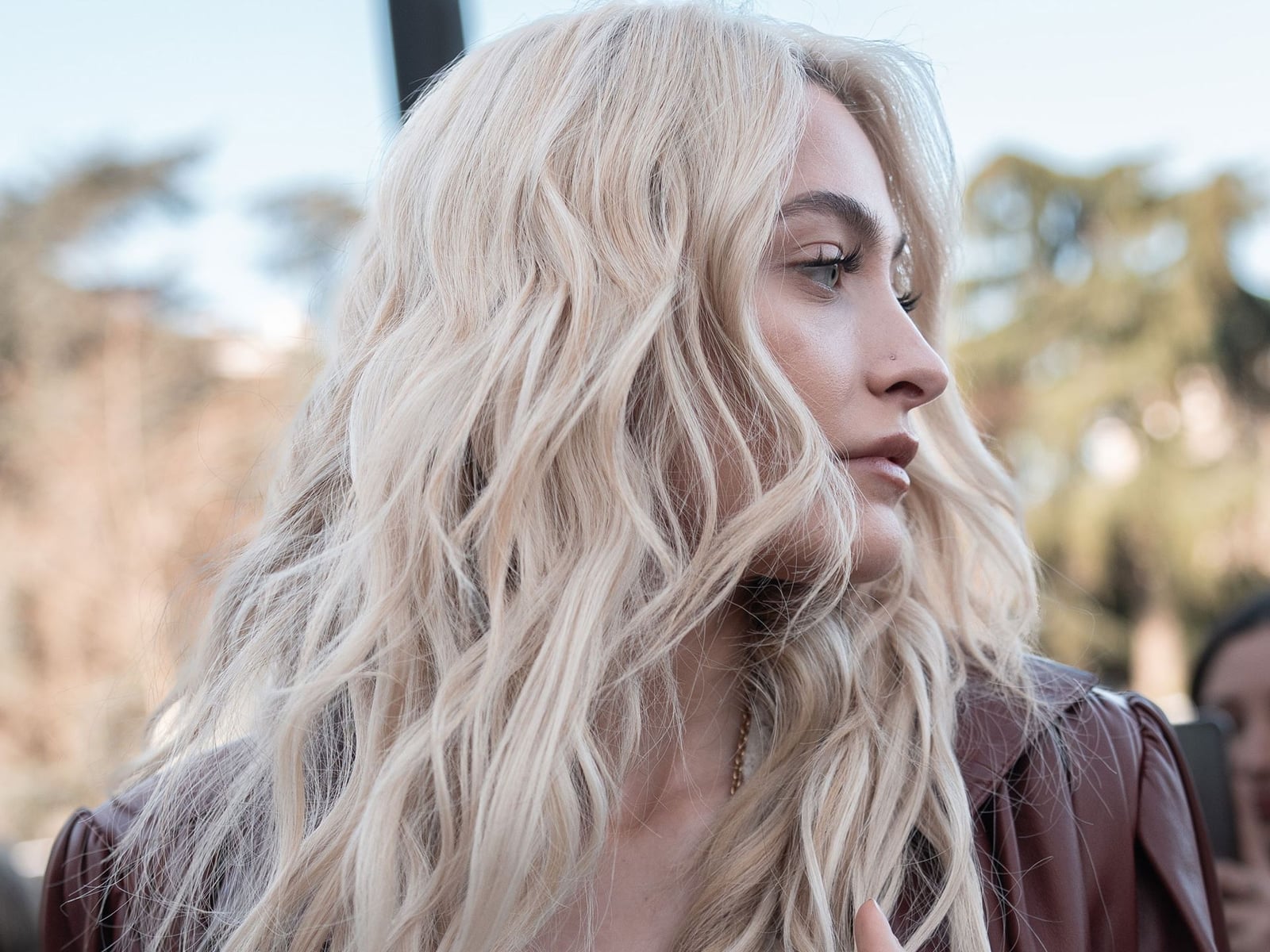
The design here relies on two factors: the ash tone keeps platinum from reading as an ice cube, and the curtain bangs break up what is otherwise a blunt collarbone line. Thick, wavy hair gives the face-framing layers enough weight to actually sweep to the sides. Ask your colorist for: collarbone platinum blonde with ash tones, face-framing layers. Fine hair will struggle here; the ash pigment can look flat without enough density to reflect it.
Mid-Back Golden Blonde With Sun-Kissed Highlights
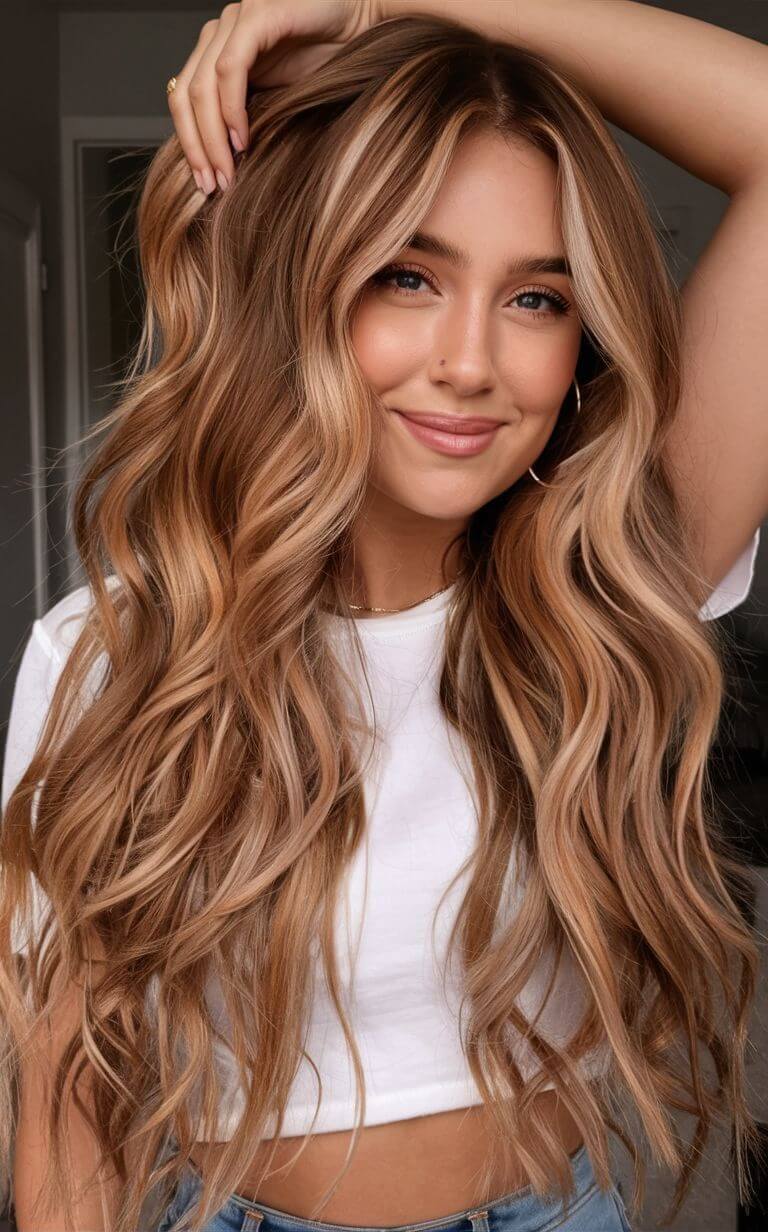
Sun-kissed highlights on a warm golden blonde base are basically summer in a color formula. The lighter pieces are concentrated around the face and ends, which mimics how the sun actually lightens hair over a season. Ask your colorist for: mid-back golden blonde with sun-kissed highlights, face-framing layers.
This shade reads as vacation hair even in January, so it pulls double duty for everyday wear and travel. The loose waves and middle parting keep the grow-out natural, and a hydrating mask once a week prevents the highlighted lengths from feeling brittle. Thick, wavy hair holds the wave pattern without needing a curling iron touch-up halfway through the day.
Final Thoughts
For a natural, low-maintenance blonde, opt for balayage with a darker root shadow. For a bolder statement, choose a uniform platinum or bright golden blonde, understanding it will require more frequent salon visits.
- Schedule toning glosses every 4-6 weeks to maintain cool or warm tones.
- Deep condition hair weekly to combat dryness and maintain shine.
- Use color-safe shampoos and conditioners to preserve vibrancy.
- Protect hair from heat styling with a quality heat protectant spray.
Find the blonde that truly shines for you.
