
Movement reads more clearly when it meets something controlled. That is one reason December hairstyles can feel polished without becoming elaborate: a smooth crown can sharpen the effect of loose bends, while a crisp perimeter can make even subtle motion easier to notice. The contrast gives the eye a place to settle, then a direction to follow, which is often more convincing than adding detail for its own sake.
Placement changes the personality of a hairstyle before any accessory enters the conversation. Hair brought close to the head can make a neckline or profile feel more exposed, while fullness around the shoulders creates a softer frame and a different sense of proportion. The useful question is not simply how complicated the style looks, but where its visual weight sits and what that placement does around the face.
A Clean Bob Defined by Its Perimeter
The lower edge of this brunette bob does most of the visual work. It falls in a compact line around the jaw and upper neck, giving the haircut a substantial outline even though the surface stays smooth and relatively quiet. Because there is little visible curl or exaggerated lift, the shape reads first as a precise silhouette rather than as a textured style.
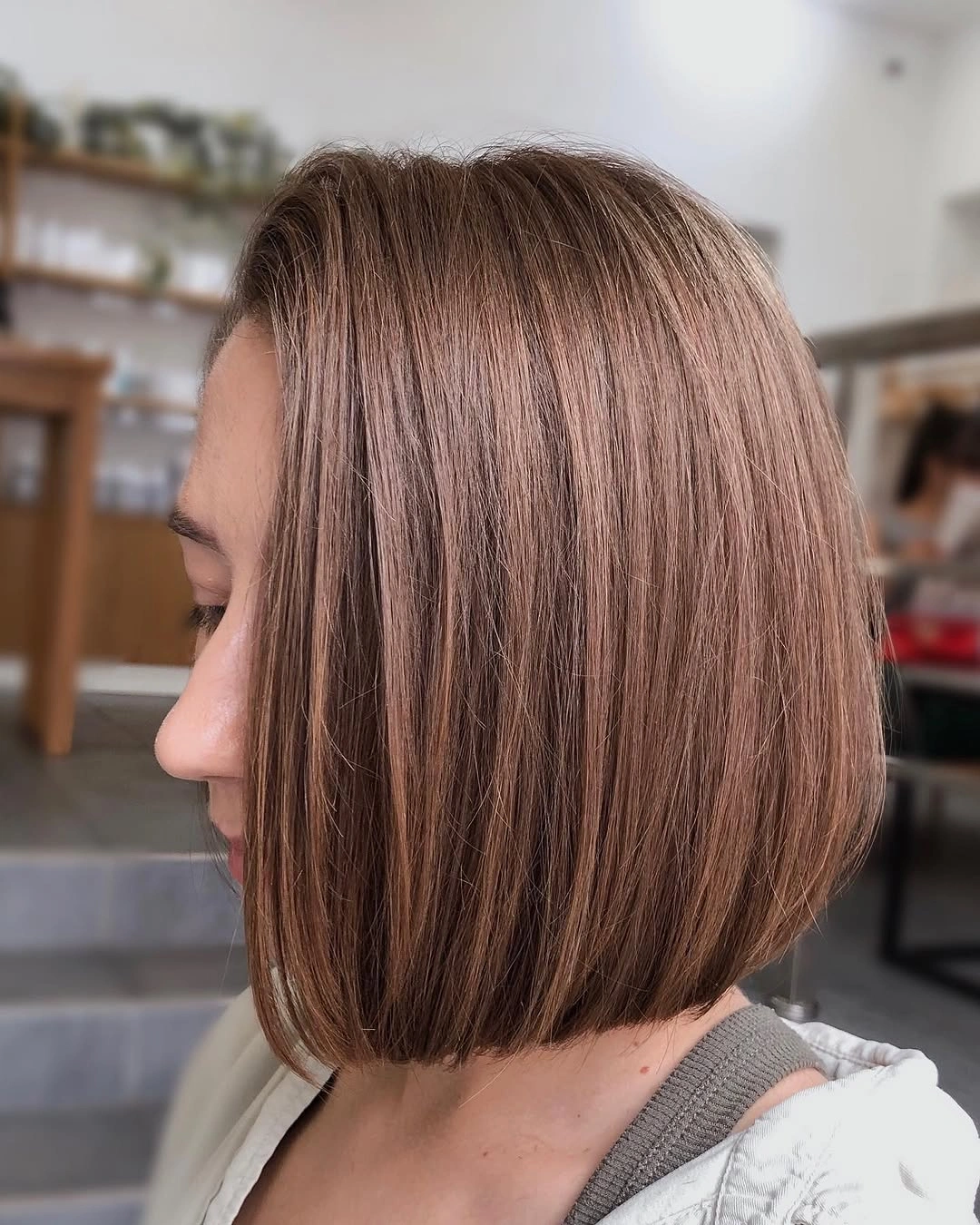
Photo via Instagram
Subtle warm variation through the brown adds dimension without breaking that clean geometry. The sides curve inward just enough to keep the bob from looking rigid, while the restrained crown volume preserves the rounded profile from top to bottom. I like this balance because the haircut looks considered without needing an extra styling gesture to explain itself.
This is a useful reference if the cut itself is meant to carry the interest. A strong perimeter can be more expressive than added waves or accessories when the goal is a compact, confident shape.
Straight Length Makes Tonal Contrast More Visible
Long, straight hair makes the color placement especially easy to read here because the lengths fall in broad, separate planes. The brighter front section sits clearly against the deeper root area and darker hair behind it, so the contrast feels directional rather than scattered. The relatively even lower edge also keeps attention on that shift in tone instead of competing with a highly layered outline.
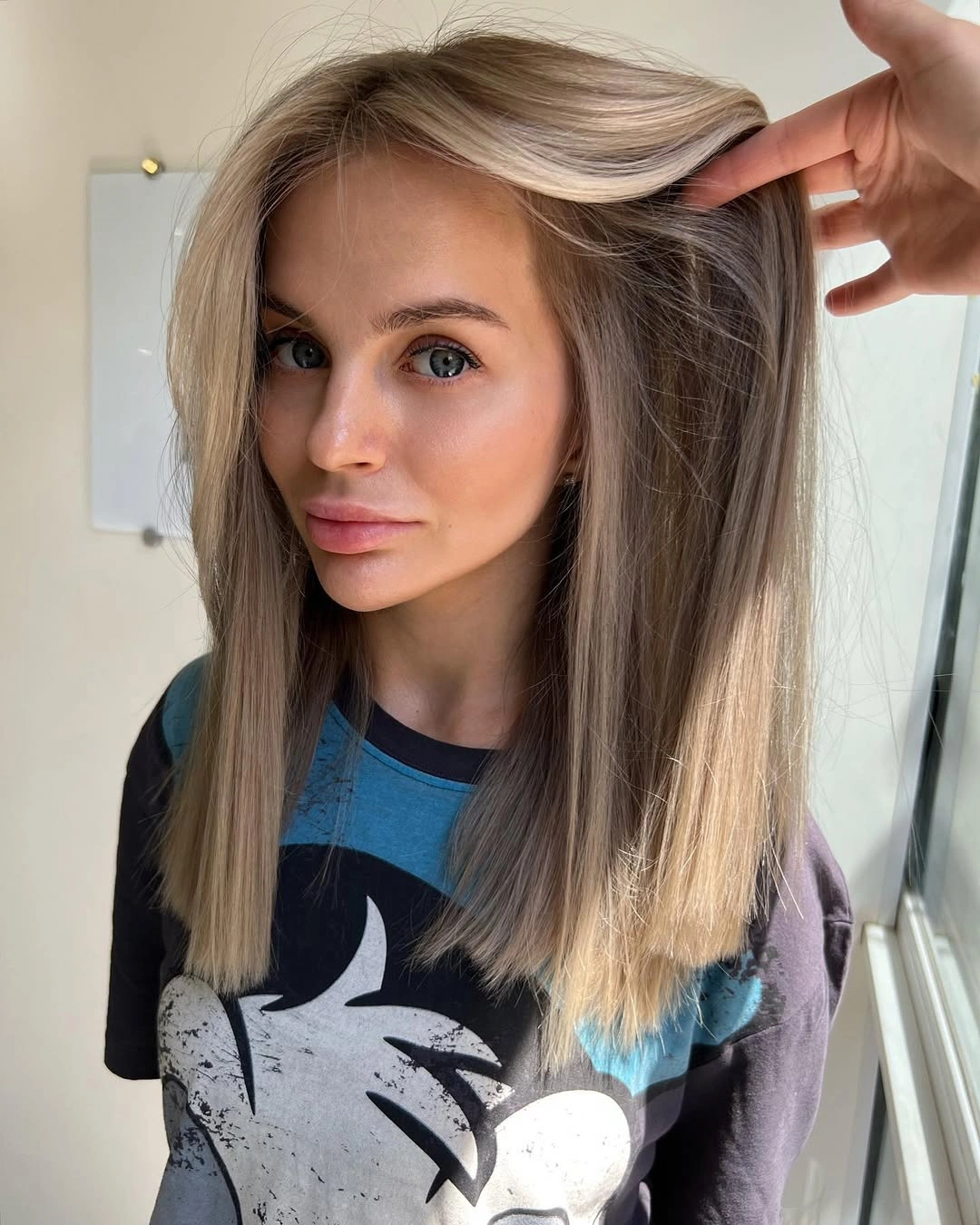
Photo via Instagram
Lifting the front section away from the side of the head reveals how much the lighter area changes the frame around the face. It creates a brighter ribbon at the front while the deeper color remains visible underneath and toward the crown, giving the overall look more depth. For December hair color inspiration, that placement is more informative than simply choosing a light or dark shade in isolation.
The main decision to borrow is where the brighter section begins and how wide it appears beside the face. A narrower accent would read more quietly, while a broader front panel would make the contrast a much stronger part of the hairstyle.
Long Layers Create Movement Without Heavy Texture
The center part gives this chestnut style a stable starting point, but the interest comes from the long layers that curve away from the face and continue into the lower lengths. The shortest visible pieces begin high enough to shape the cheek and jaw area without separating dramatically from the rest of the hair. That keeps the overall silhouette full while still allowing the front to move.
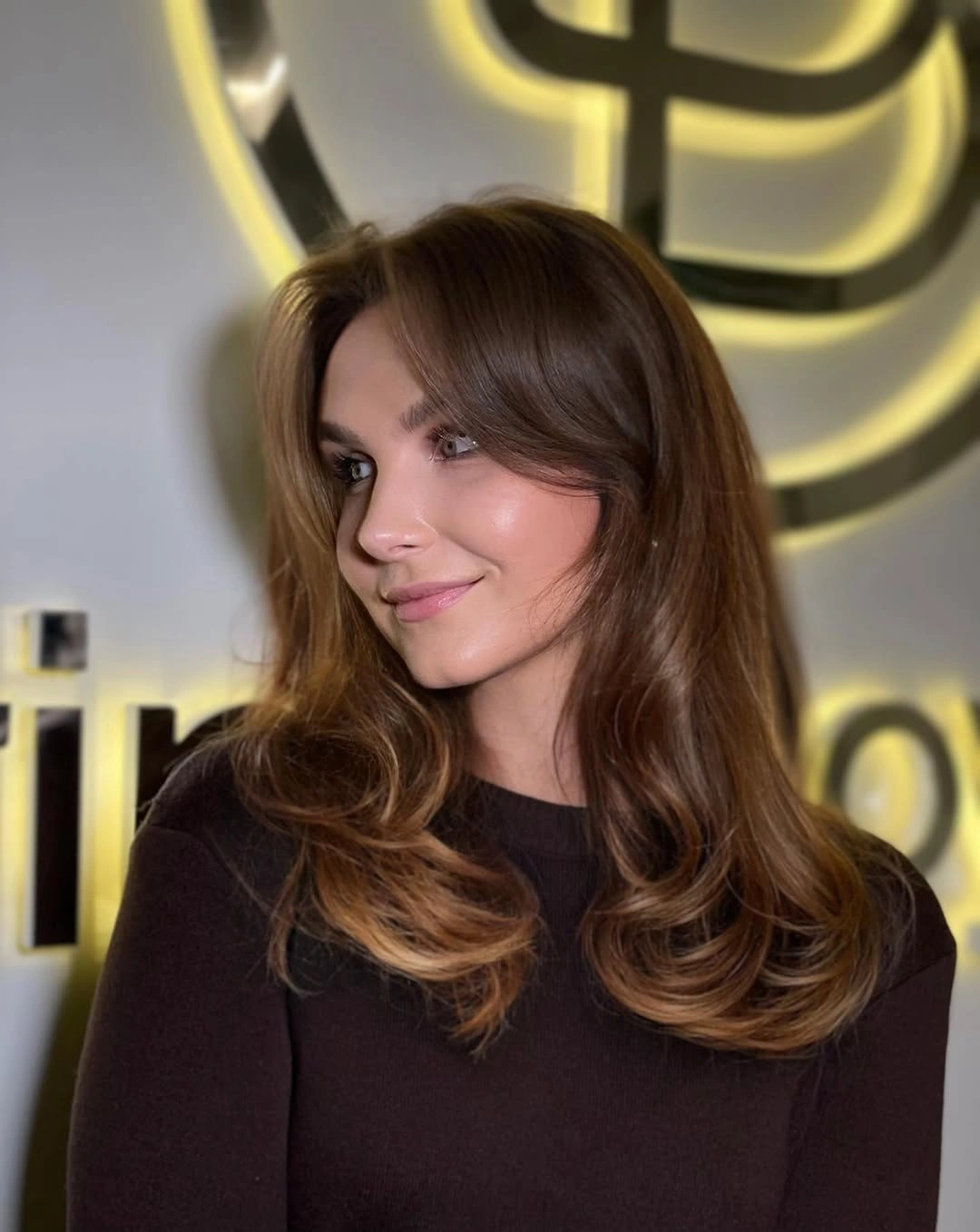
Photo via Instagram
Rounded bends near the lower sections help the layered ends feel connected rather than chopped into separate tiers. Instead of creating dense curl texture, the styling gives each layer enough direction to show where the cut changes while preserving a smooth, substantial body of hair. The result is softer than a pin-straight finish but more controlled than a heavily tousled one.
For a similar effect, the most important choice is where the shortest face-framing layer begins. Moving that point higher or lower changes how strongly the cut emphasizes the cheek, jaw, or lower length even before the ends are styled.
Dimensional Color Follows the Shape of Waves
Broad waves give this long brunette hair a generous, flowing rhythm, but the lighter dimensional sections are what make each bend especially visible. As the hair curves, deeper brown and softer lighter tones alternate across the surface, so the color seems to trace the direction of the wave. That relationship gives the length depth without making the contrast look abrupt.
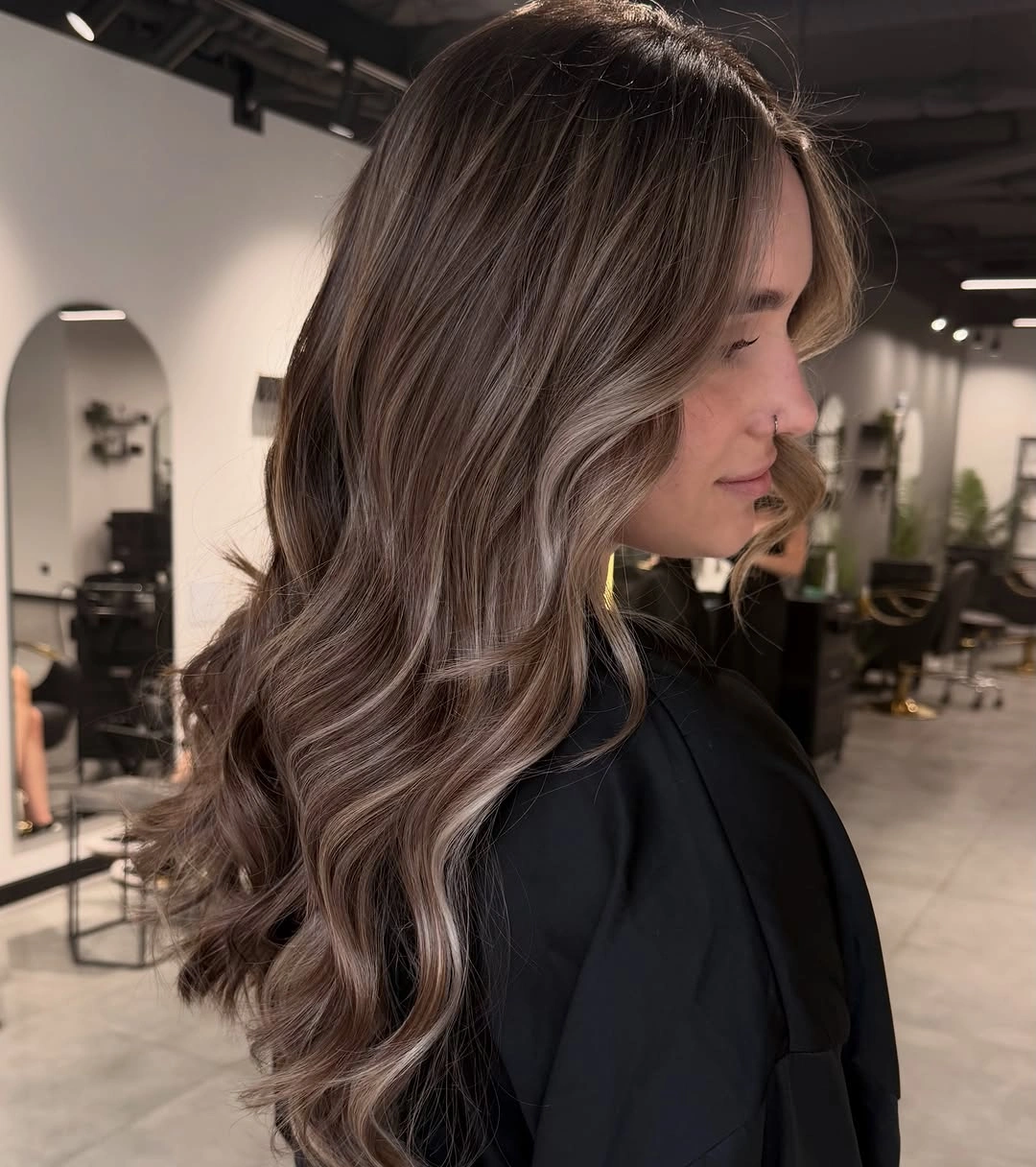
Photo via Instagram
The front section bends away from the face, bringing some of that tonal variation into the framing rather than leaving all of it behind the shoulders. This is a useful detail for anyone drawn to dimensional brunette color because the size of the lighter sections changes how strongly the waves are outlined. Broader ribbons feel more graphic, while finer variation would read as a subtler shimmer through the same shape.
The color and the wave pattern work best here because neither is treated as an isolated feature. If you are choosing a reference, notice how the lighter areas sit inside each large bend rather than looking only at the overall shade.
Twisted Half-Up Detail Keeps Length in Focus
Two upper side sections are twisted back toward the center, where they meet in a compact overlapping detail before the remaining hair falls loose. That construction narrows the shape around the crown and creates a clear focal point at the back without gathering most of the length. The long waves below remain broad and visible, so the hairstyle still reads primarily as loose hair.
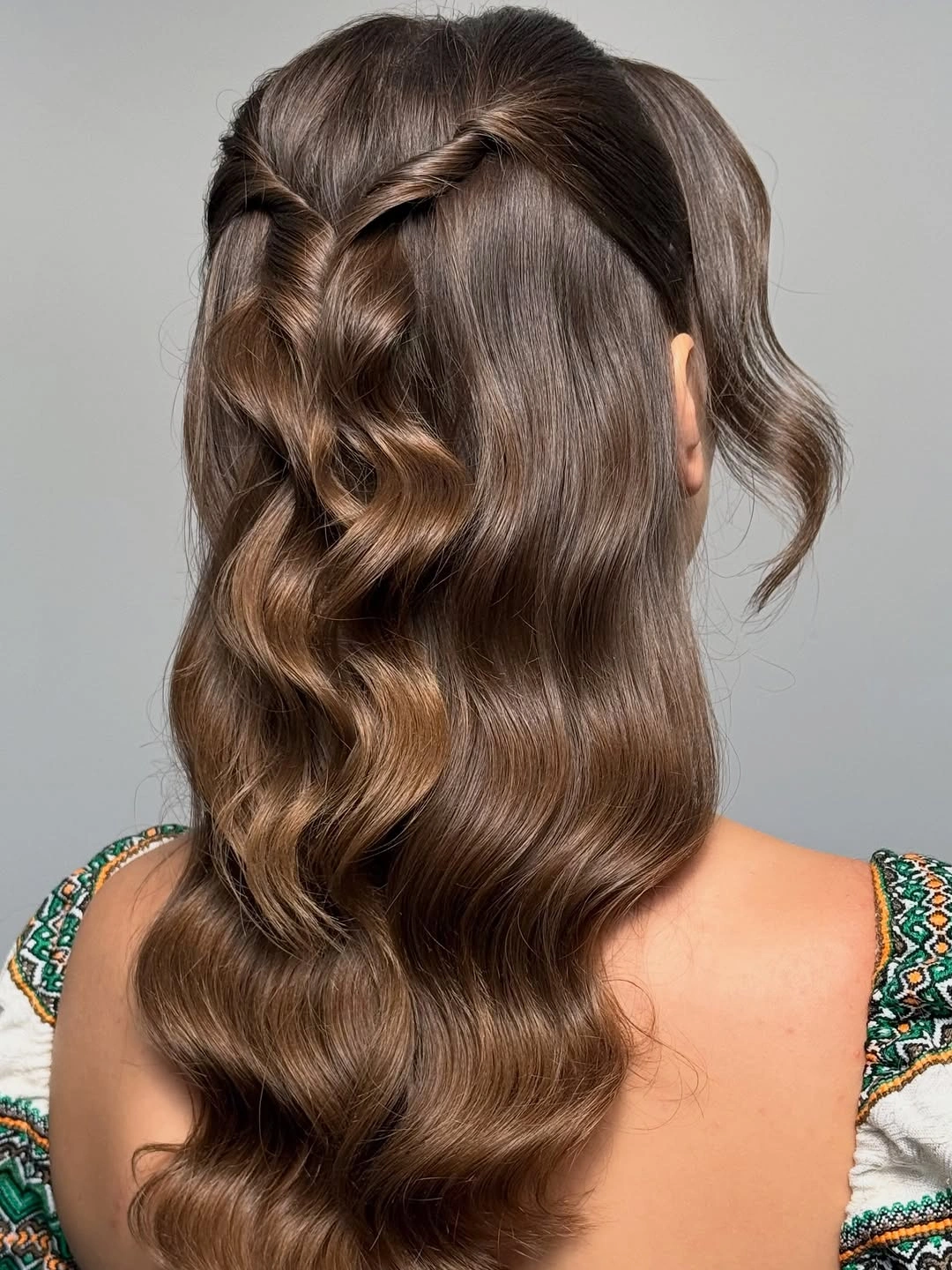
Photo via Instagram
What makes the balance work is the difference in scale between the small upper detail and the much larger sweep of hair underneath it. The twists add direction and structure near the crown, while the waves continue through the back without being interrupted by a large knot or bulky gathered section. I prefer that restraint here because it gives the style interest from behind without crowding the silhouette.
This half-up approach suits someone who wants a little more back detail while keeping the length visually dominant. The twisted center becomes noticeable when the hair is seen from behind, but the waves still provide most of the movement and presence.
A High Ponytail Built on Sleek Placement
The ponytail sits high enough to shift the visual center of the hairstyle upward, while the crown and sides are pulled into a very smooth, close shape. That contrast gives the silhouette its strength: the head remains clean and controlled, then the long tail drops from a clearly defined point. It is a simple December hairstyle idea whose impact comes from placement rather than added detail.
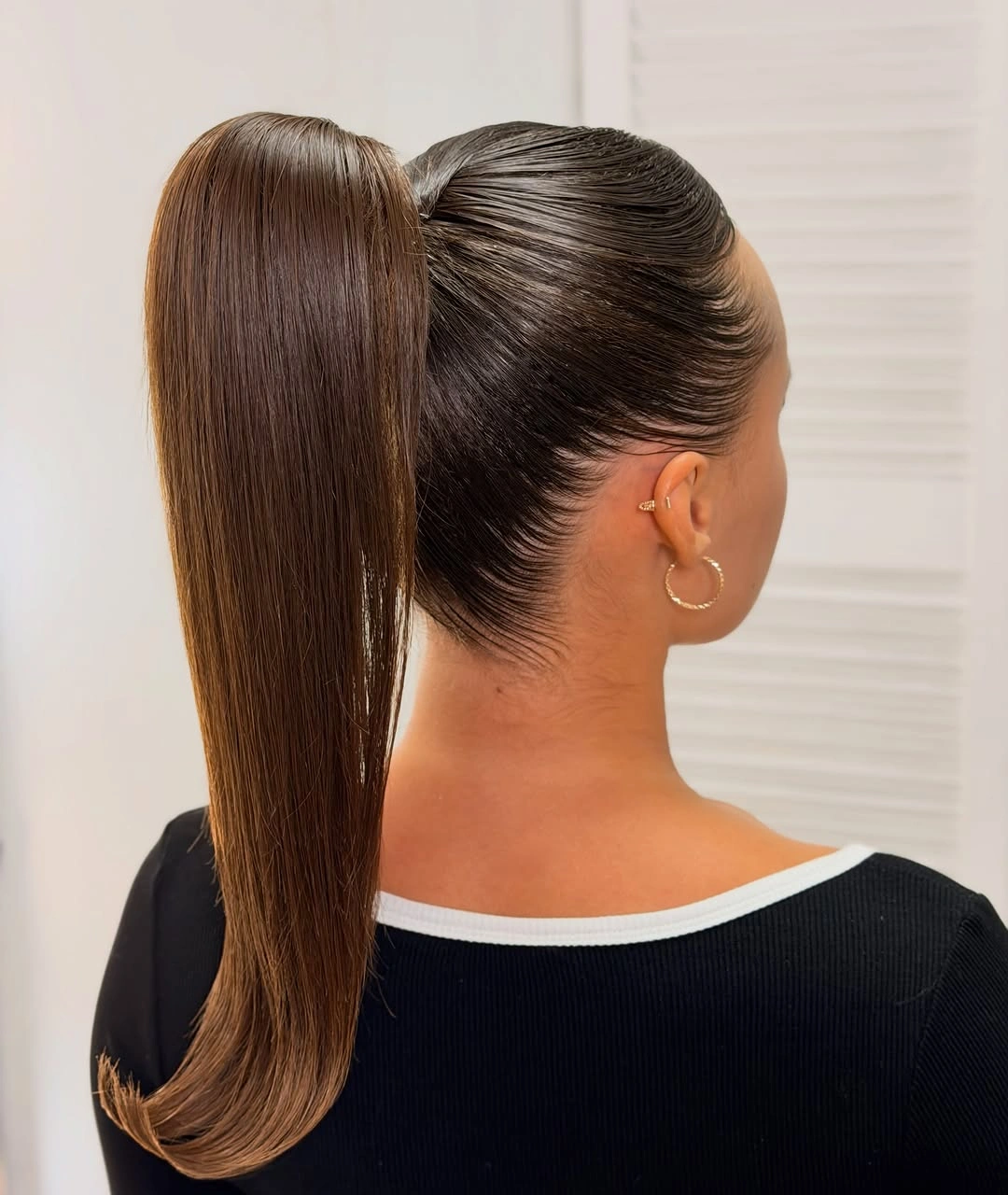
Photo via Instagram
Keeping the ponytail predominantly straight makes the gathering point even more important because there is little curl or extra volume competing with it. The tail falls in one long, polished column before curving slightly near the ends, so the eye follows its vertical direction. I like how this keeps the hairstyle graphic without making the straight length look stiff.
Moving the ponytail lower would change the entire proportion, not merely the fastening point. Here, the higher position creates lift and makes the sleek line around the head part of the design.
A Low Updo With Wrapped Dimension
Most of the hair is concentrated at the nape, where broad overlapping sections create a rounded, wrapped shape rather than a flat knot. The placement keeps the upper head relatively smooth and lets the width develop lower down, which gives the updo a grounded silhouette. A few curled pieces remain free near the face and neck, introducing movement without loosening the entire structure.
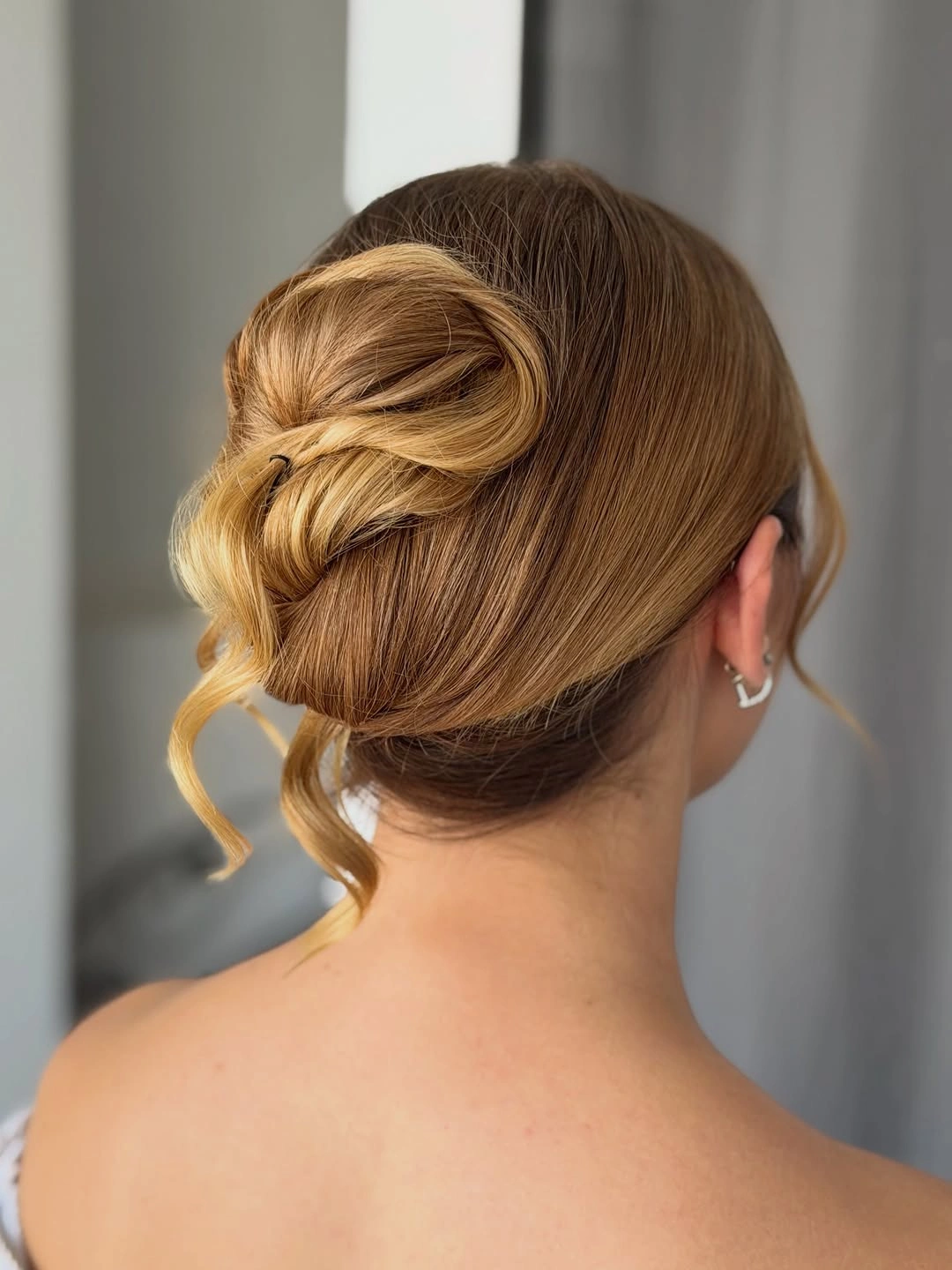
Photo via Instagram
The surface of the bun is especially useful to notice because its dimension comes from visible direction. Sections sweep into and around one another, so the eye can follow their curves even though the overall shape remains compact. There is no need for a decorative focal point when the wrapped construction already gives the back enough variation and depth.
The loose curls change the mood more than their size suggests because they interrupt an otherwise controlled outline. Keeping only a few defined pieces free preserves that contrast instead of turning the whole updo into a deliberately undone style.
Minimal Half-Up Control Preserves Straight Length
Only the upper side sections are drawn away from the face, leaving nearly all of the very long, straight hair visible from the front. That small adjustment opens the temple area and creates a clearer line around the face without turning the hairstyle into an obvious updo. The length still dominates, which is precisely why the restrained gathering feels intentional rather than unfinished.
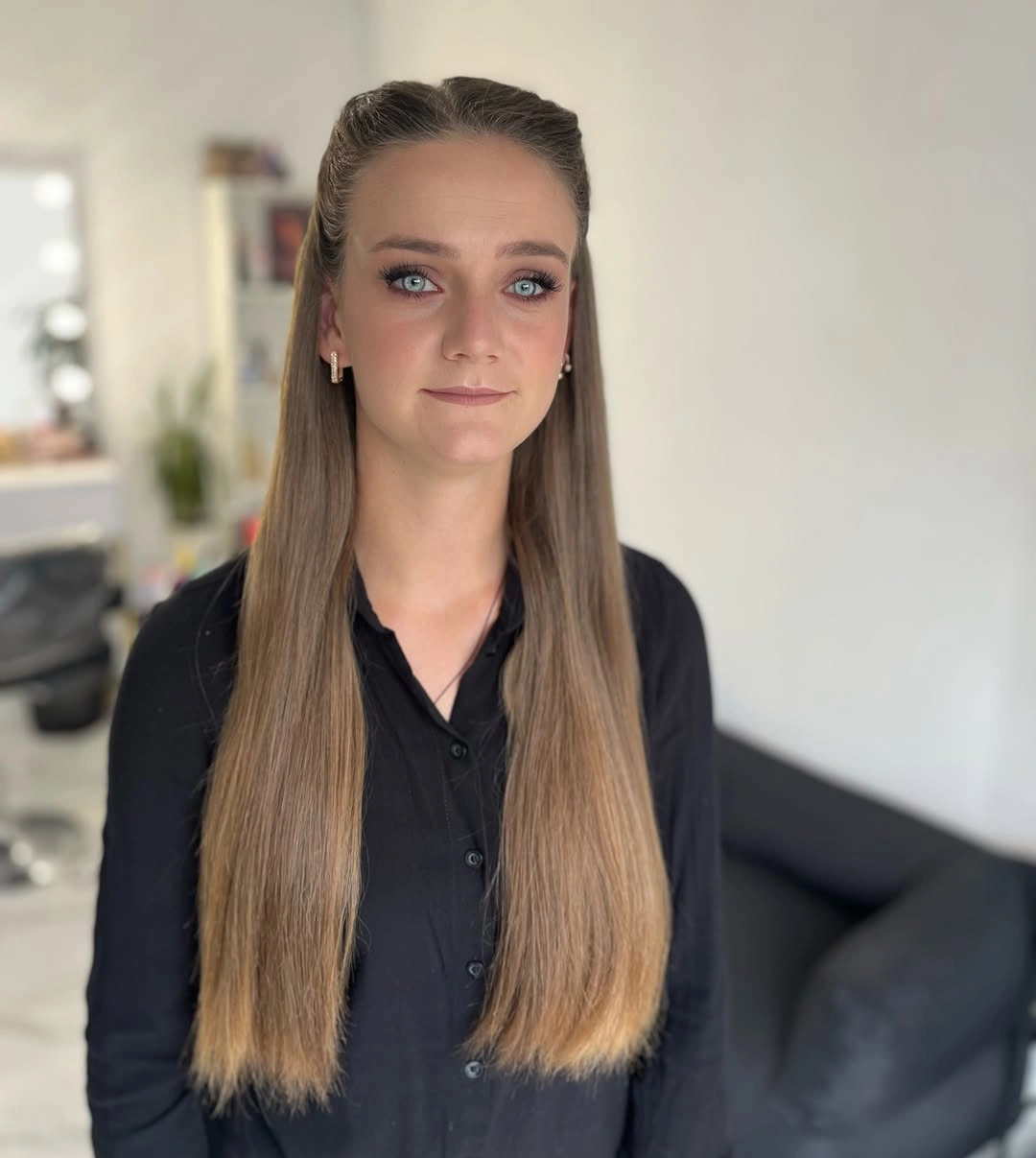
Photo via Instagram
The straight surface makes the difference between secured and loose hair easy to read. Near the top, the sides sit closer and more controlled; below, the lengths fall freely in long vertical lines toward the chest. This proportion works especially well if the appeal of wearing hair down is its uninterrupted length, but some separation around the face is still desirable.
A style this restrained depends on how much hair is taken back from each side. A smaller section keeps the effect almost invisible from the front, while a broader one would expose more of the face and give the upper shape greater presence.
Broad Waves Turn Length Into a Rhythm
The defining feature here is not simply that the hair is long, but that the movement repeats on a generous scale. Wide S-shaped bends travel through the dark lengths in a continuous sequence, producing broad ridges instead of many small curls. That larger wave pattern makes the hairstyle feel expansive while keeping the overall outline cohesive from the crown through the lower sections.
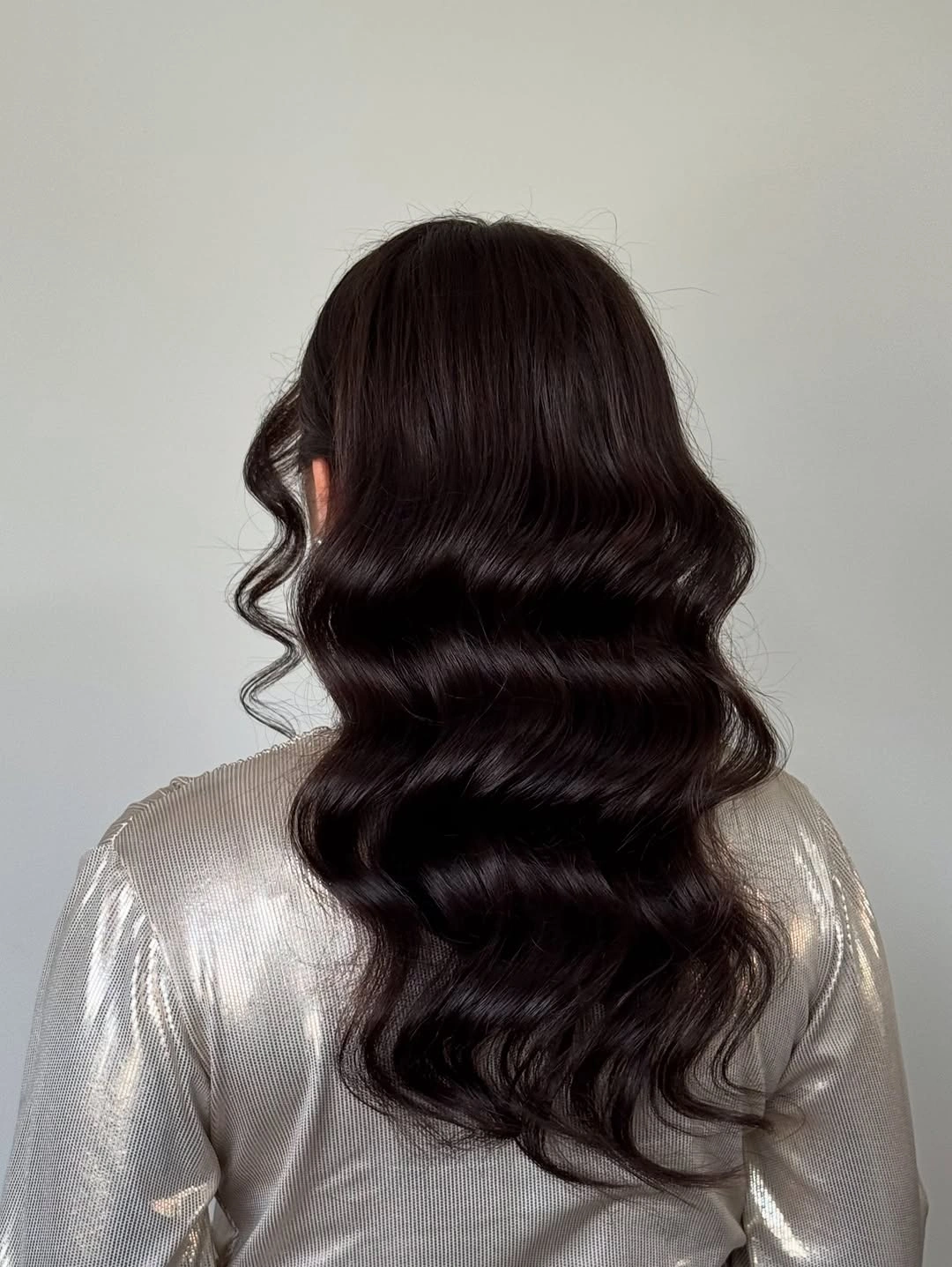
Photo via Instagram
The smooth, glossy surface makes light collect along each raised curve, so the wave pattern becomes almost sculptural from the back. Dark hair intensifies that effect because the highlights and shadows mark every change in direction clearly. For long December hairstyle inspiration, this is a useful example of how wave size can shape the entire impression without adding accessories or gathered sections.
The continuity matters as much as the individual bends. If a reader wants this kind of effect, the strongest reference point is the uninterrupted sequence of large waves rather than a specific curl at the ends.
Half-Up Height Changes Where Fullness Begins
The upper section is gathered at the back of the crown, raising the point where the hairstyle begins to spread while leaving most of the length loose. That elevated gathering creates a subtle lift before the waves widen through the back, so the fullness does not begin only near the shoulders. The result feels more structured at the top without sacrificing the impression of abundant long hair.
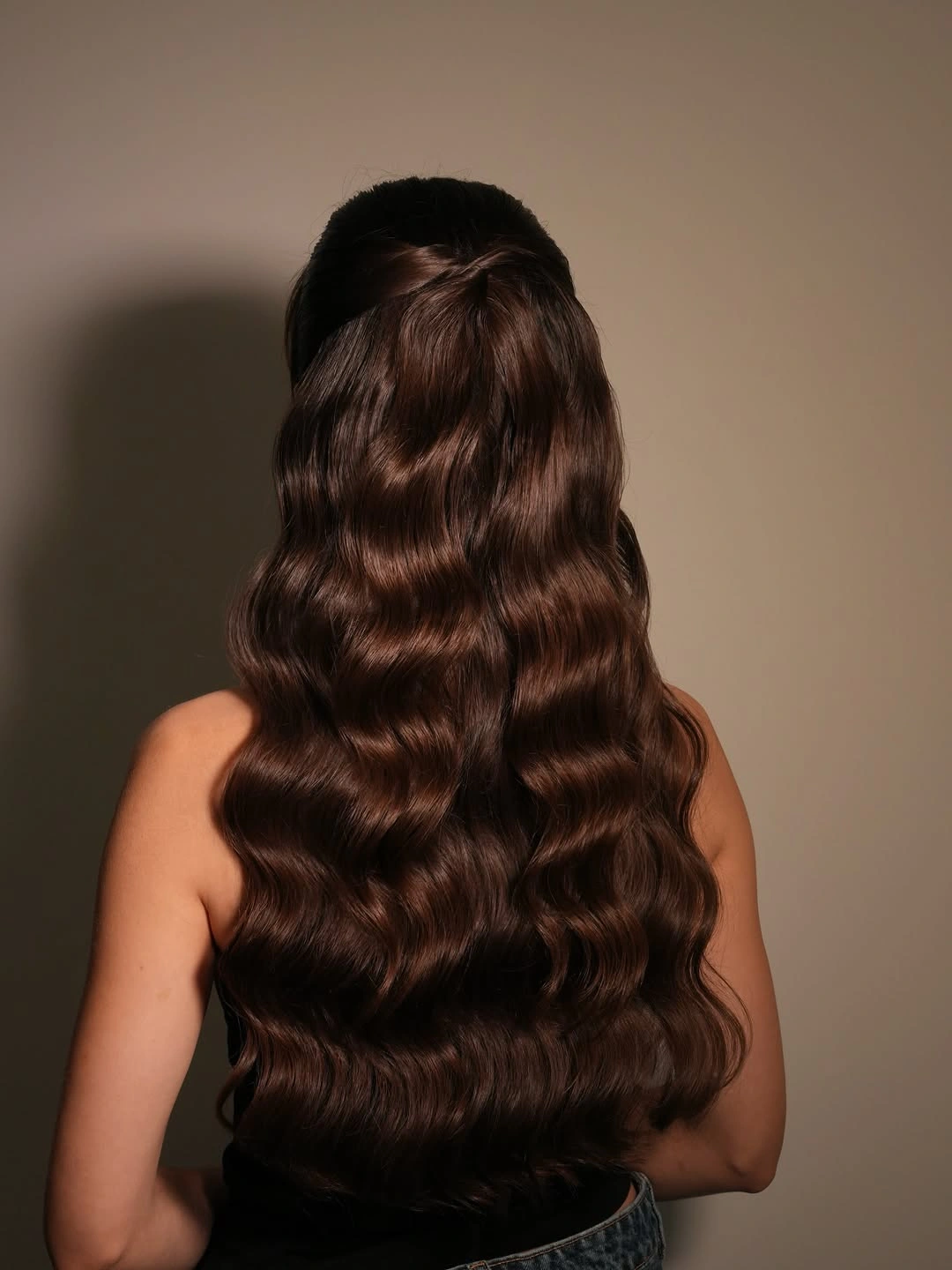
Photo via Instagram
Below the gathered section, the waves continue in broad, repeated bands rather than breaking into separate curls. Their scale keeps the lower half visually connected, which prevents the half-up detail from looking like an isolated piece sitting above unrelated texture. I especially like how the raised crown and long wave pattern cooperate instead of competing for attention.
Gathering the upper section lower would make the hairstyle feel more relaxed and shift more of the fullness toward the lower lengths. Placing it higher, as shown here, gives the back silhouette a stronger vertical lift before the waves begin to fan outward.
Straight Front Pieces Give a Low Bun Presence
The compact bun sits low and close to the head, while long straight pieces are deliberately left free at the front. That contrast shifts much of the hairstyle's visible character toward the face instead of concentrating every detail at the back. From this angle, the pulled-back sides form a clean foundation and the loose sections create two strong vertical lines around the features.
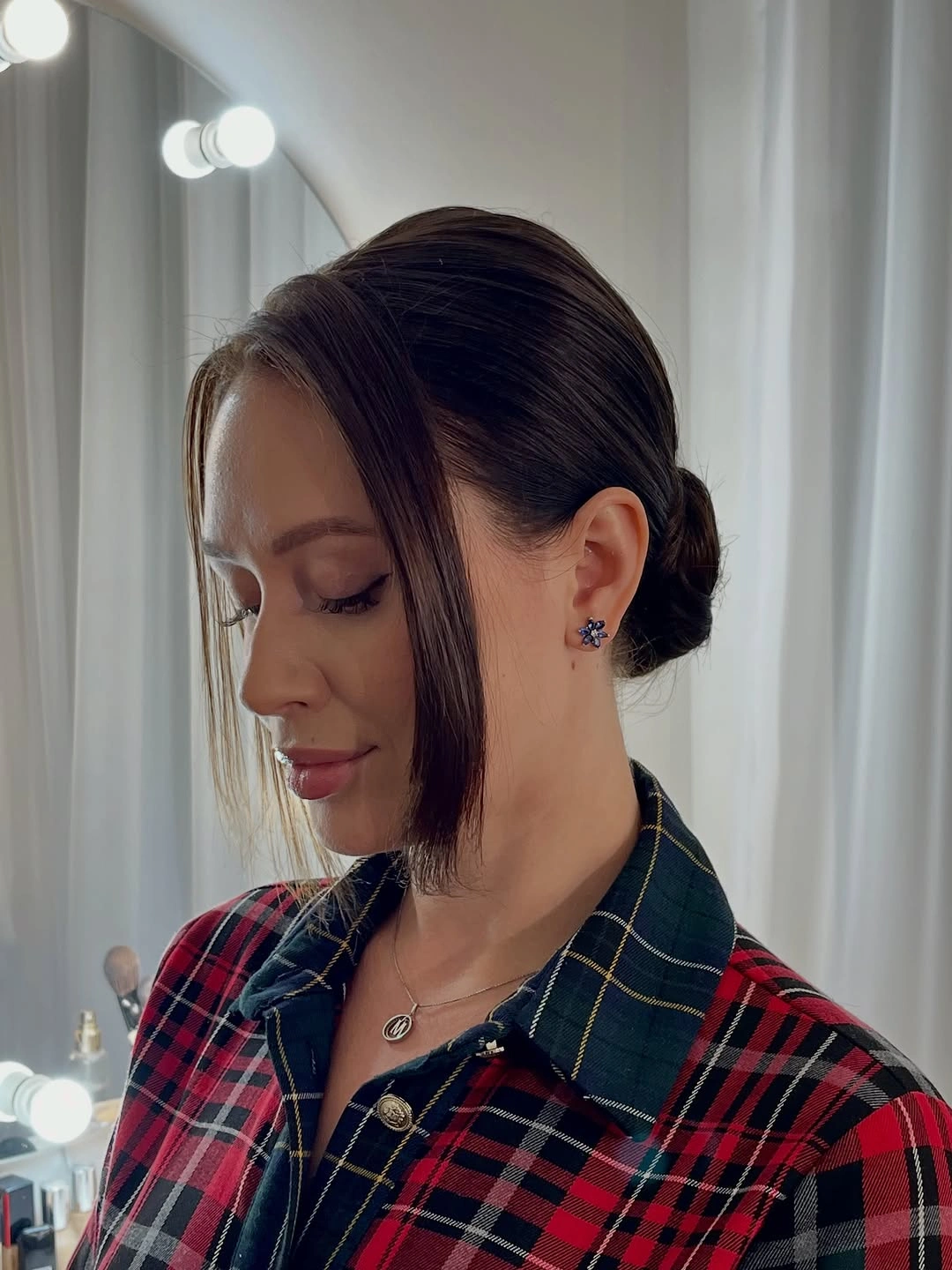
Photo via Instagram
Keeping those front pieces smooth and straight makes their placement unusually clear. They do not dissolve into soft curls or blend gradually into the gathered hair, so their length becomes part of the silhouette in its own right. I like the slight severity of that choice here because it gives the restrained low bun a sharper front view without adding volume around the crown.
This is especially useful if the hairstyle needs to remain interesting in portraits taken mostly from the front or three-quarter view. The bun can stay discreet at the nape while the face-framing pieces supply the visible detail.
One Loose Curl Changes a Wrapped Low Bun
The low bun has a visibly directional surface, with broad sections sweeping into the rounded shape instead of meeting in a flat, uniform coil. Hair through the crown follows that same controlled flow, so the eye is led gradually toward the gathered area. The effect feels sculpted but not rigid because the overlapping curves remain easy to distinguish.
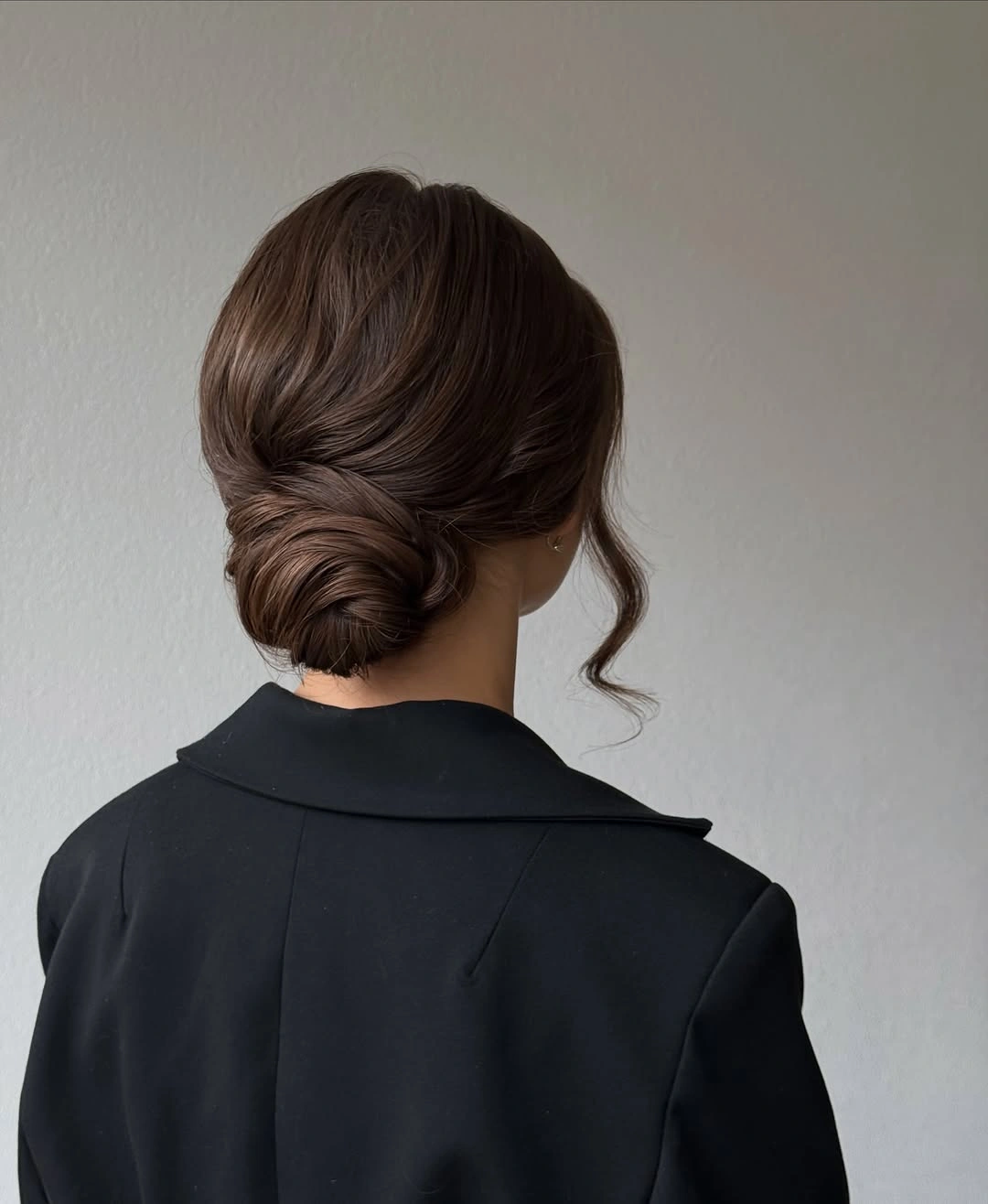
Photo via Instagram
A single curled tendril beside the face breaks that continuous gathered outline at exactly one point. Because the rest of the hairstyle is so contained, the curl has more visual weight than a scattering of fine loose strands would have. Its curved line also echoes the rounded movement of the bun while introducing that shape somewhere the hairstyle can be seen from the side.
There is something appealingly specific about limiting the looseness to one defined piece. It makes asymmetry part of the hairstyle rather than treating flyaway texture as a general finish across the whole head.
A Low Half-Up Detail Lets Waves Dominate
The upper sides are brought together softly at the center back, creating a small point of definition without building significant height over the crown. That low-key gathering leaves the head shape relatively natural and directs attention downward into the long loose lengths. The half-up element reads as an interruption in the flow rather than the hairstyle's largest feature.
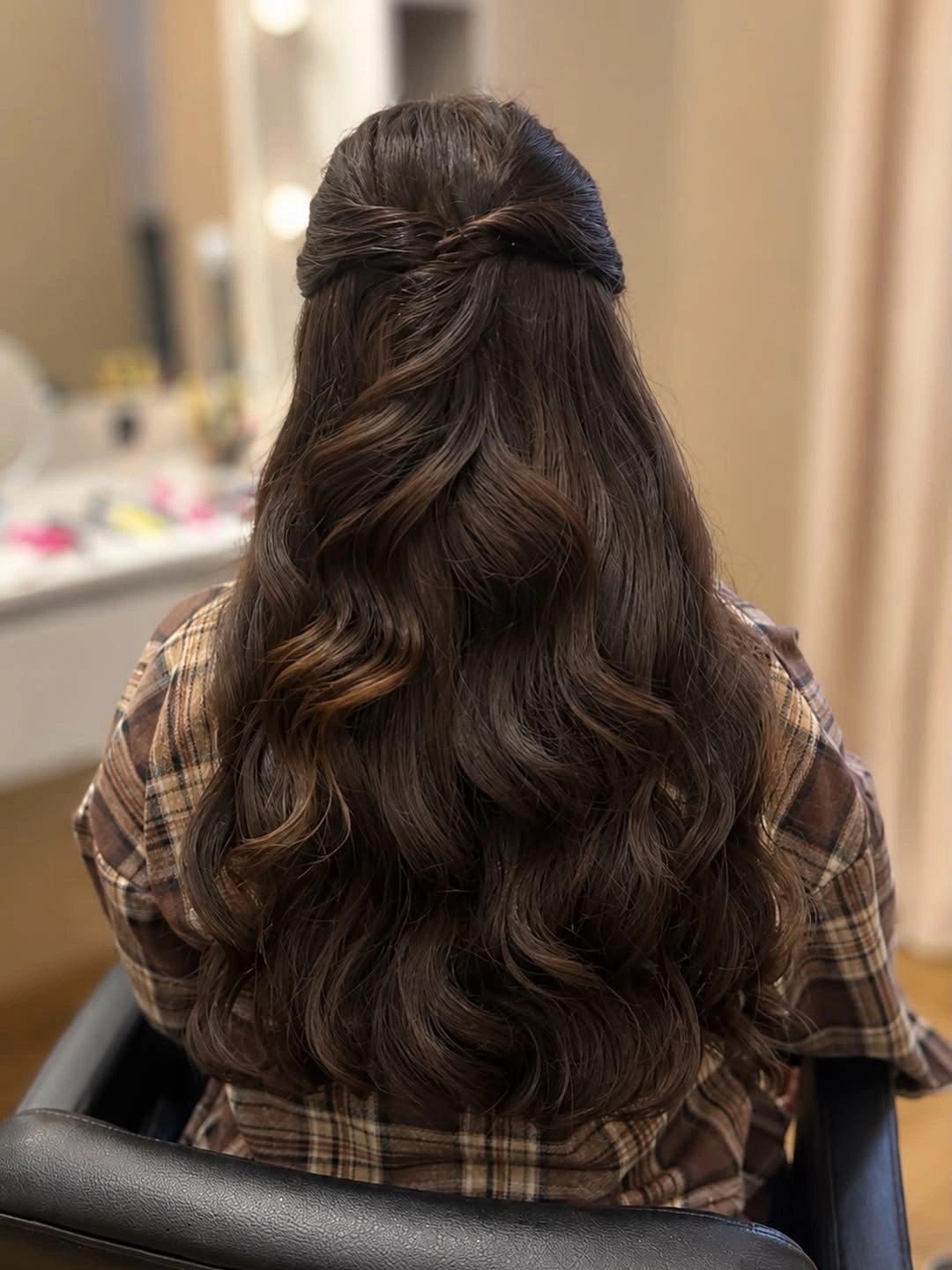
Photo via Instagram
Large relaxed waves give the lower hair its fullness, spreading across the back in broad sections rather than narrow individual curls. Because so much of the length remains free, the silhouette retains a generous sense of width and movement even where the upper hair has been controlled. I prefer this proportion when the appeal of long hair is meant to remain obvious rather than being absorbed into an elaborate half-up construction.
The small center detail is enough to organize the upper sections without competing with the length below. It gives the back a focal point, then allows the waves to take over almost immediately.
Pinned Curls Build Height Into the Updo
The curls are concentrated high and toward the back, so texture does more than decorate the hairstyle – it actually builds its volume and outline. Repeated rounded shapes stack through the upper section, creating visible height while the sides are directed inward toward that fuller area. The updo therefore feels dimensional from the front even though much of its hair is gathered away from the shoulders.
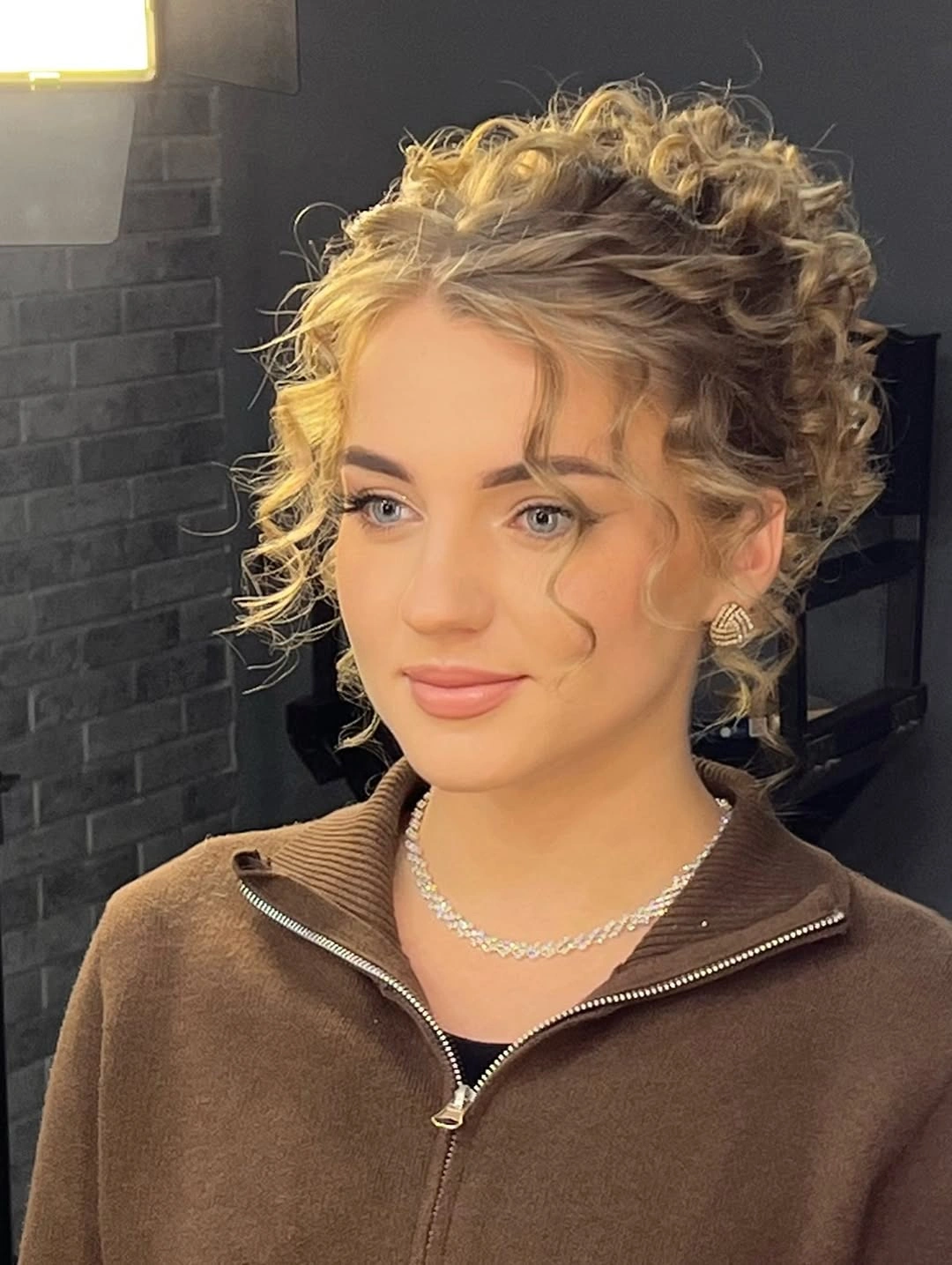
Photo via Instagram
Several curled pieces remain visible around the face, which is important because they connect the elevated texture behind the head to the front view. Instead of a smooth hairline followed by a sudden mass of curls at the back, the shape transitions through smaller curves at the temples and cheeks. That continuity makes the volume feel intentional from more than one angle.
The key choice here is how much curl remains visible around the face compared with the amount gathered above and behind it. Leaving a few defined pieces forward keeps the texture present in a portrait without making the entire front equally full.
Gentle End Curves Give Long Layers Shape
The long face-framing sections open away from the center and then merge gradually into the rest of the light-brown length. Their shape is noticeable without creating a dramatic step between short and long pieces, which gives the haircut a softer transition around the face. Most of the hair remains smooth, so the layering rather than pronounced curl becomes the main source of movement.
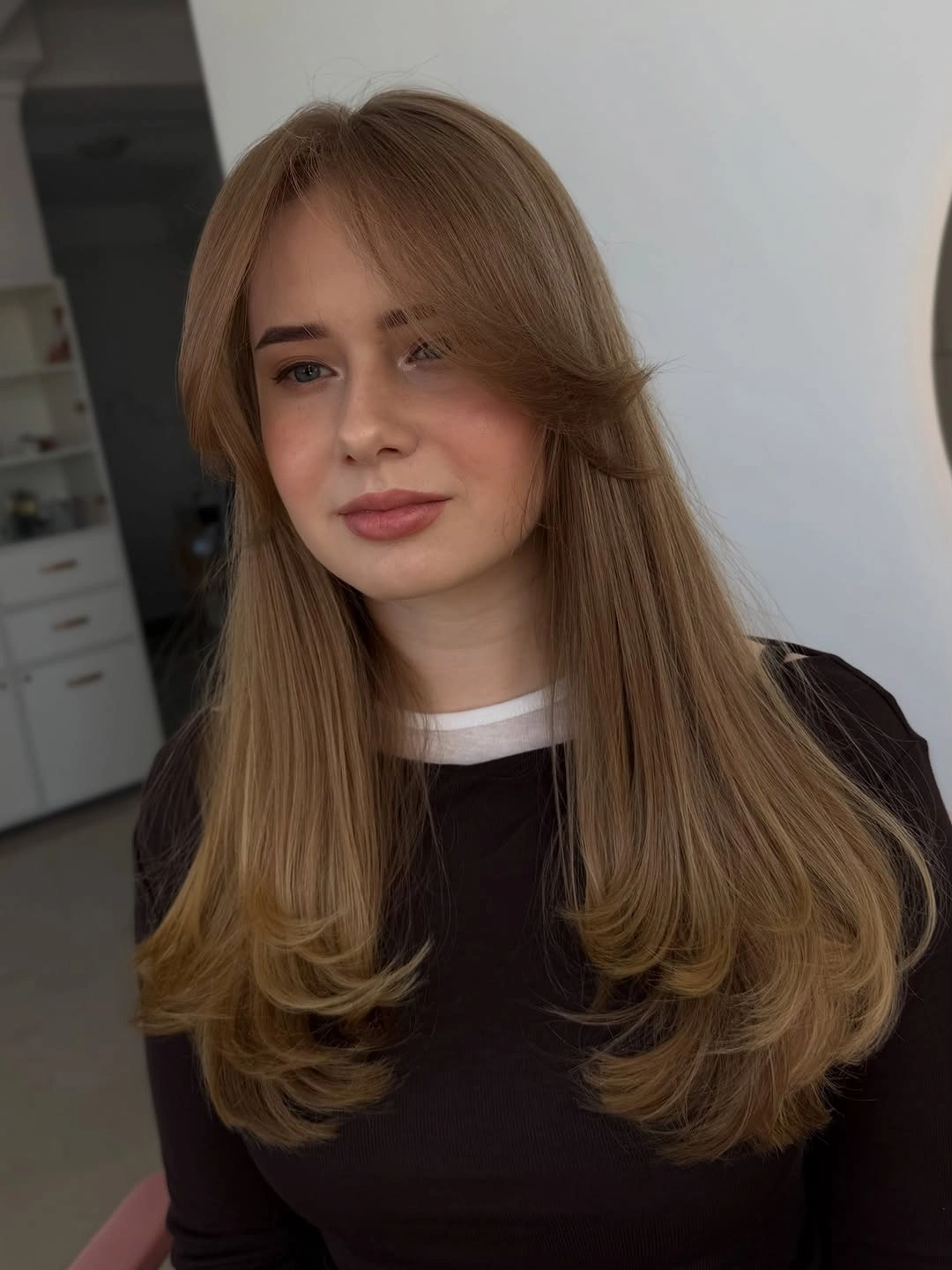
Photo via Instagram
Near the lower lengths, the ends bend into broad curves that keep the straight silhouette from dropping in a completely vertical line. Those turns help reveal where different layers finish, adding shape without creating the repeated ridges of a full wave pattern. It is a quieter effect, and that restraint suits the long, blended cut particularly well.
This is a useful reference when the goal is visible shaping without making textured styling the dominant feature. The haircut and the direction of the ends do enough to create movement even while the overall surface stays relatively smooth.
Higher Waves Bring Fullness Upward
The waves begin relatively high through the blonde lengths, so fullness appears well before the hair reaches the shoulders. That placement gives the style a broad silhouette from the upper sections downward instead of saving all the movement for the ends. The center part keeps the front orderly while the expanding bends create most of the visible volume.
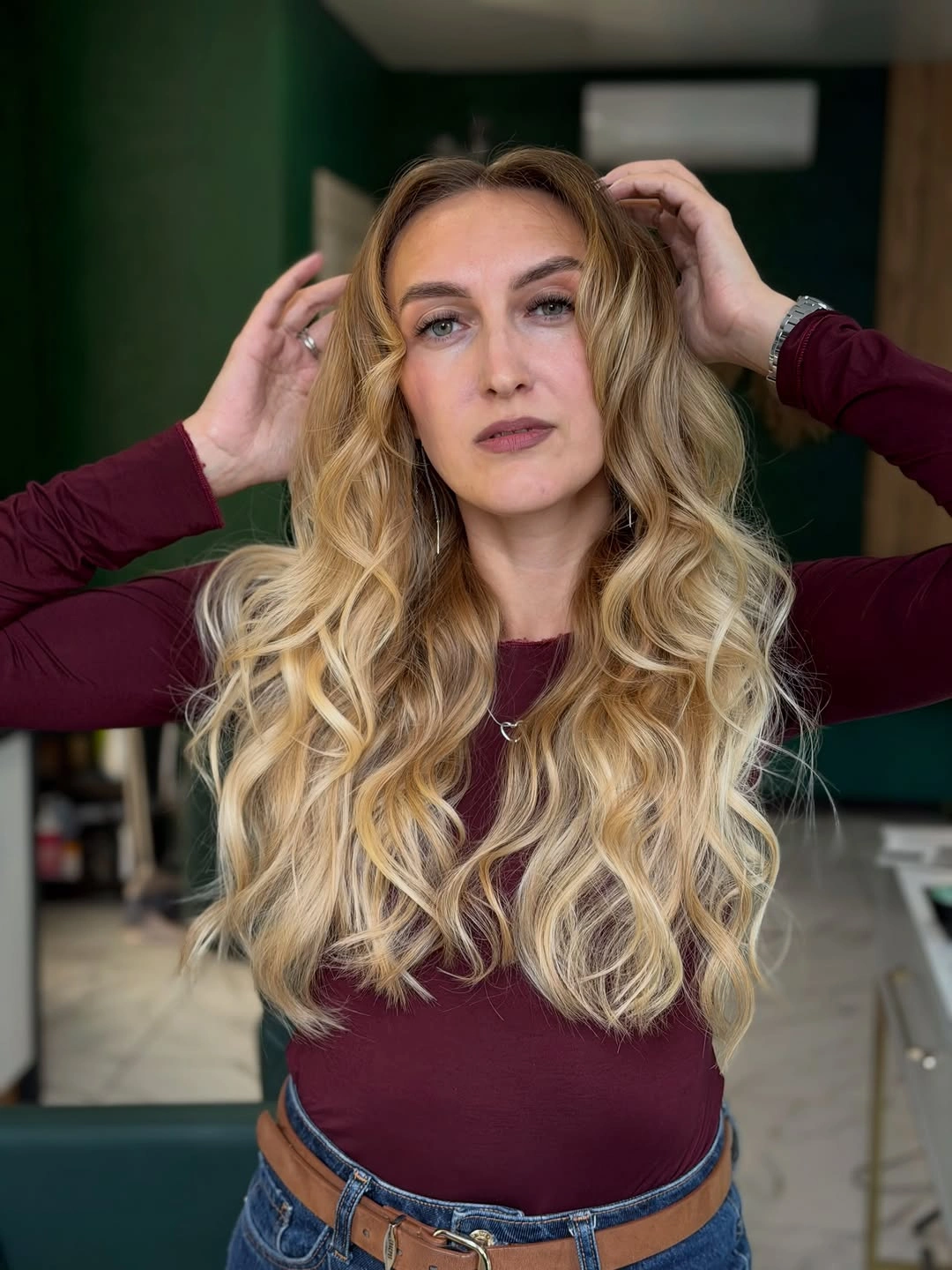
Photo via Instagram
Because the first major curves sit fairly high, the hair spreads outward in several places rather than forming one heavy cluster near the bottom. The wave pattern is loose enough to keep the length readable, yet substantial enough to change the overall width of the hairstyle. I like that the movement feels generous without turning the crown itself into the main event.
The starting height of the first major bend is worth noticing when choosing this kind of wave reference. Beginning the movement higher creates fullness through more of the length, while a lower starting point would leave the upper silhouette much closer.
Lower Bends Keep Long Hair Relaxed
This very light blonde style keeps the upper area comparatively smooth, allowing the movement to emerge farther down the length. The center part and close upper silhouette make the first soft bends more noticeable when they finally appear, creating a gentler transition from straightness to motion. Fullness is present, but it is concentrated lower rather than pushed toward the crown.
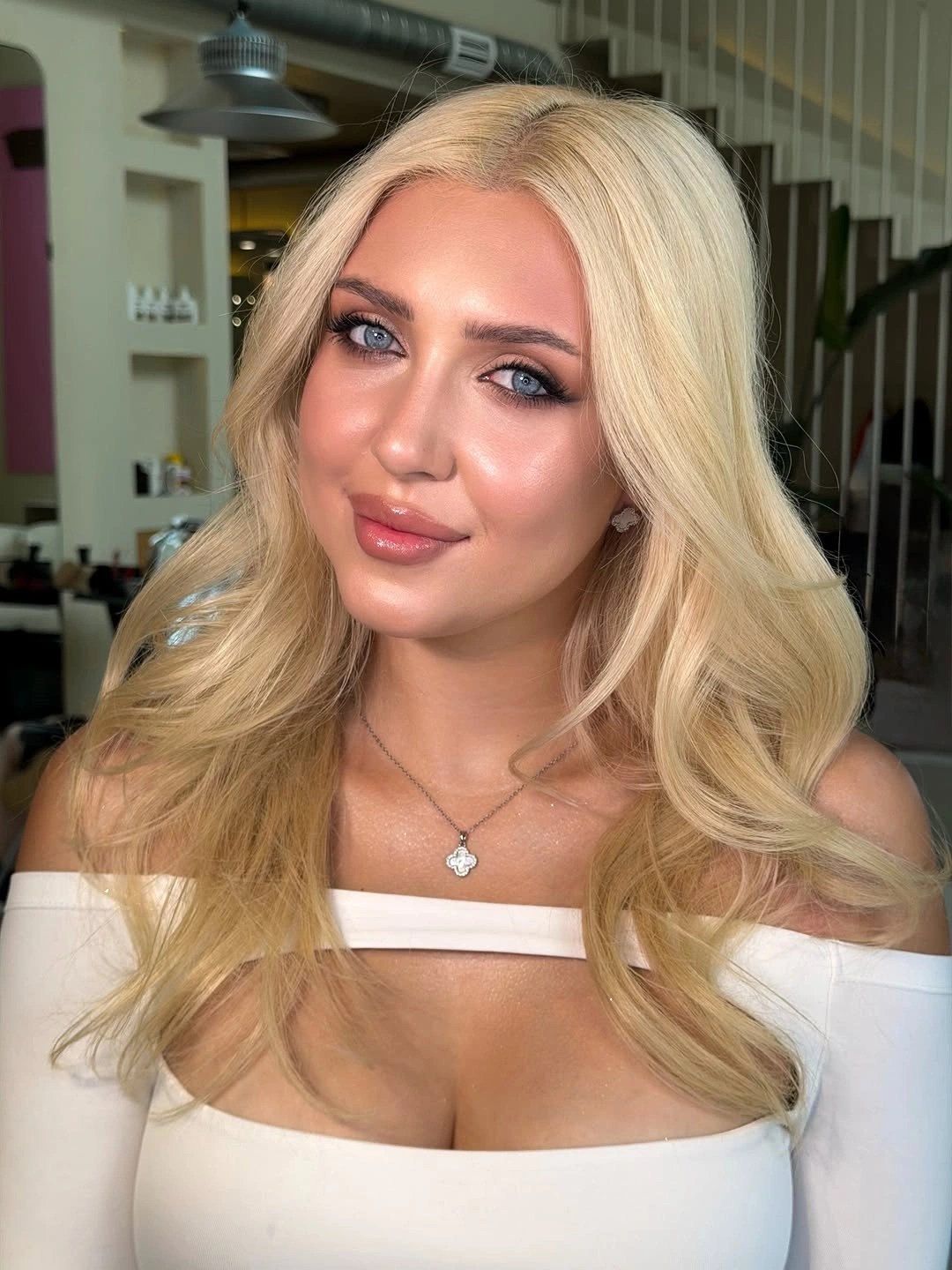
Photo via Instagram
Around the face, the front sections curve softly instead of falling in rigid vertical lines, which keeps the center part from feeling severe. Farther down, the bends stay loose and widely spaced, so the hairstyle retains an airy sense of length rather than turning into dense curl texture. The result suits someone who prefers visible movement without a strongly sculpted upper shape.
This approach leaves more visual calm near the roots and lets the movement arrive gradually. It is a useful distinction for anyone who likes long waves but does not want volume to begin immediately around the upper sides of the head.
Precision Defines This Compact Low Bun
Every visible section of the dark hair is directed cleanly toward a small bun at the back of the head, creating an uninterrupted line from the hairline to the gathering point. There are no loose front pieces competing with that path, so the exact placement of the bun becomes unusually easy to read. The profile feels concise because the hairstyle stays close to the head from front to back.
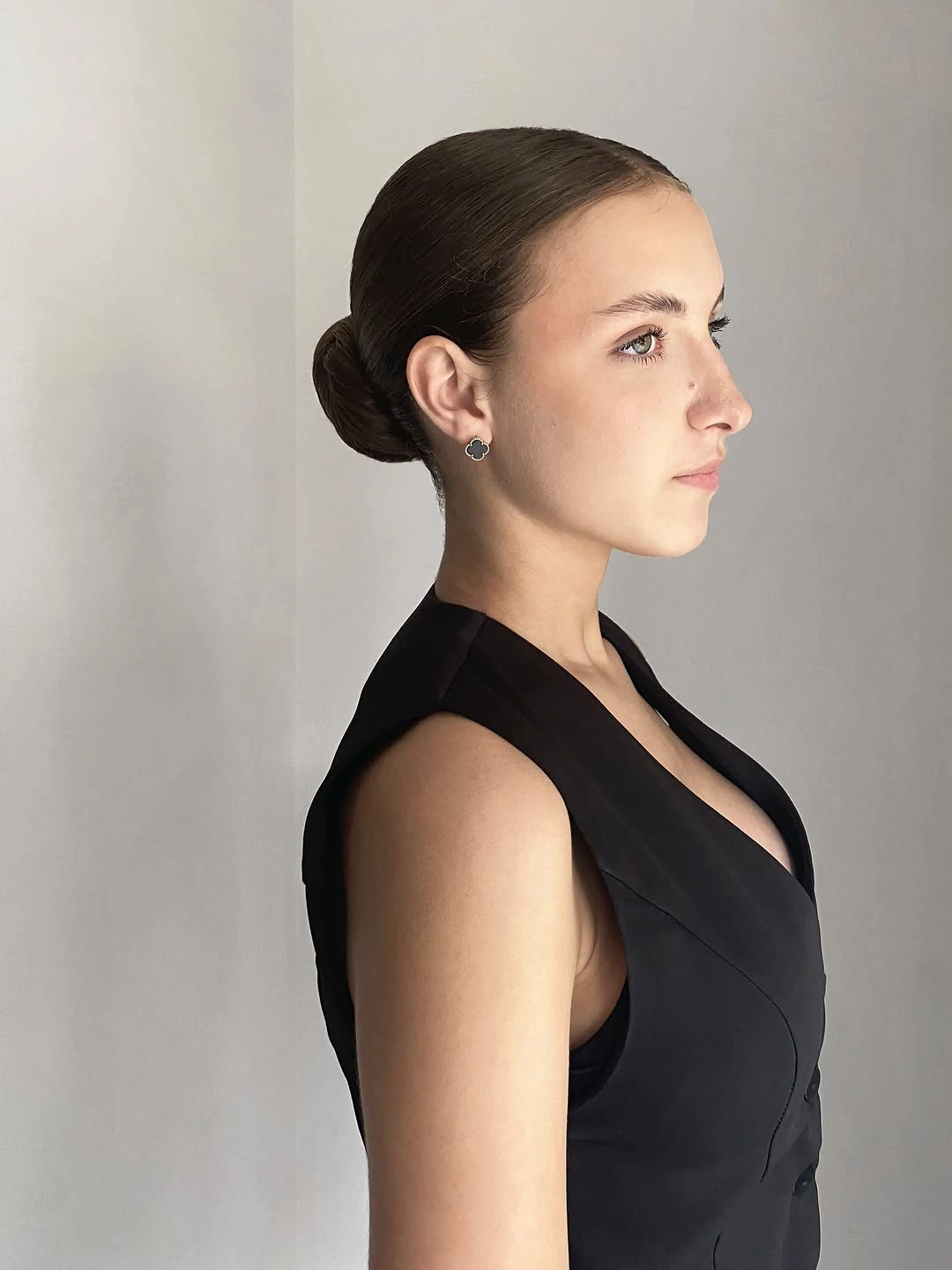
Photo via Instagram
The bun itself is compact and rounded, adding only a modest amount of volume at the nape instead of widening the silhouette. That restraint makes surface direction especially important: the smooth top and sides need no ornament because their continuity is already the feature. Among simple December hairstyles, this one gets its impact from precision rather than decorative detail.
With so little extra texture, small changes in placement would be immediately noticeable. Keeping the bun close and low preserves the streamlined profile, making accuracy of shape more important than added complexity.
Side-Swept Waves Put Warm Color in Motion
A deep side part sends most of the long warm brunette hair toward one shoulder, giving the silhouette a strong directional bias instead of dividing the length evenly on both sides. The broad polished waves reinforce that sweep because each bend follows the same general path downward. The result feels intentionally asymmetrical while still keeping the wave pattern smooth and coherent.
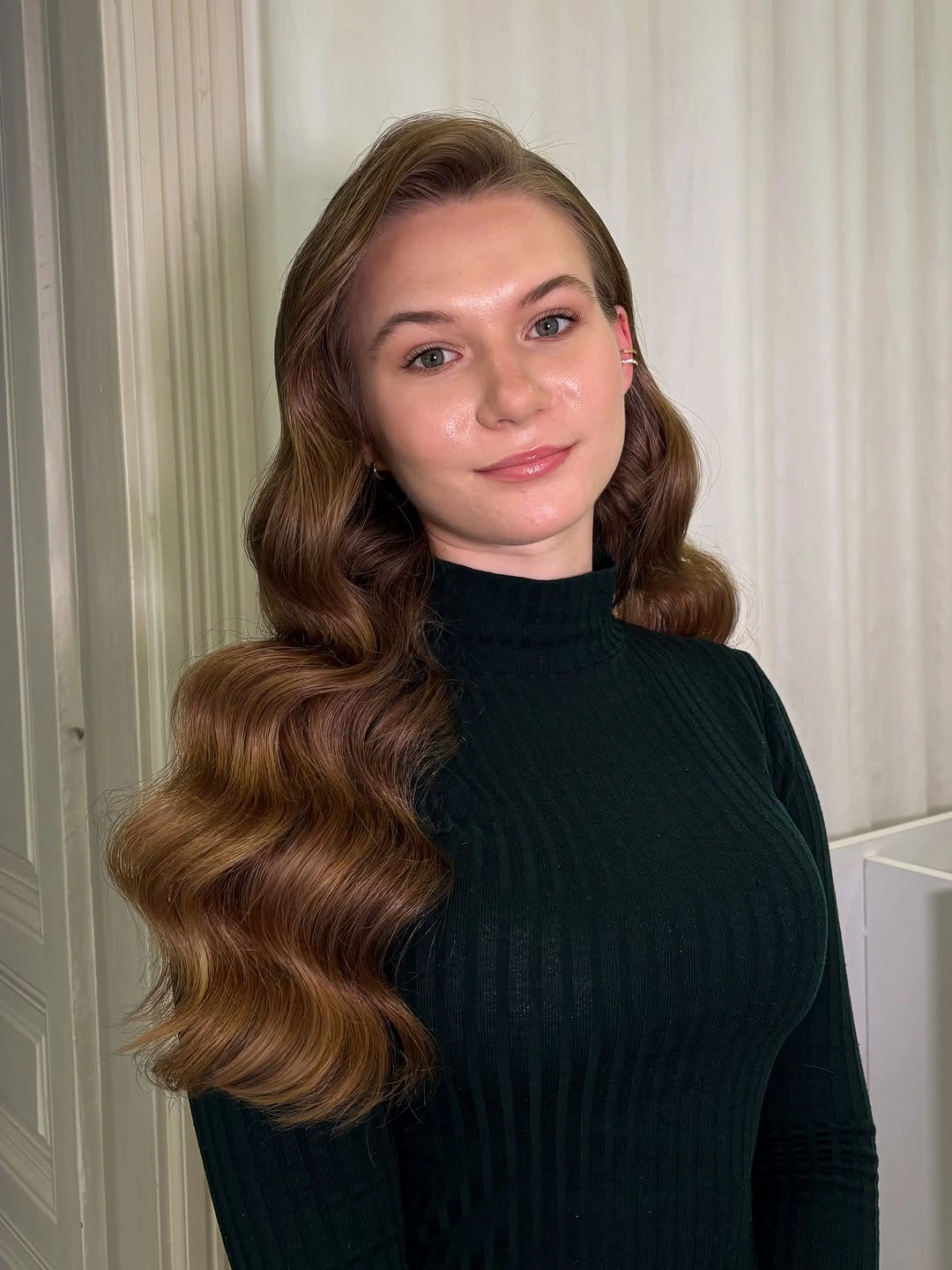
Photo via Instagram
Warm brown and auburn-looking tones become more noticeable where the curved sections catch the light, especially along the raised ridges of the waves. That makes the color variation part of the movement rather than a separate effect layered over it. For warm brunette hair color inspiration, the useful detail is how directional styling exposes several tones across one continuous side sweep.
Bringing most of the length over one shoulder also changes how much of the neckline remains visible on each side. That makes the direction of the hair a styling decision in its own right, especially when the front of an outfit matters as much as the back view.
Smooth Fullness Meets One Defined Curl
The upper section is glossy and controlled, but it is not pressed completely flat against the head. A little fullness remains through the crown before the hair is guided into the rounded low bun, giving the profile a softer rise and fall. That shape prevents the gathered style from looking severe even though the surface itself is notably smooth.
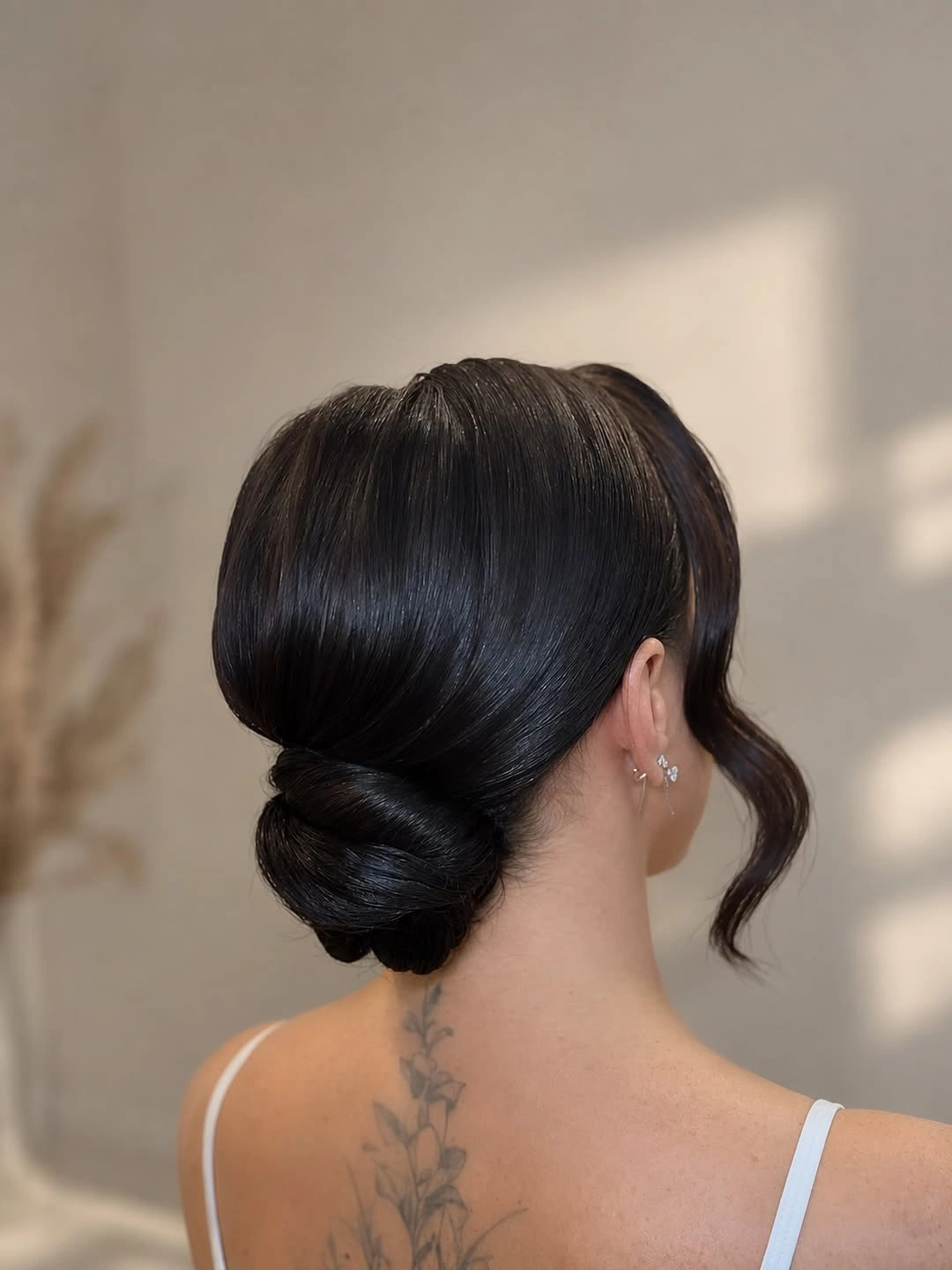
Photo via Instagram
At the back, the bun stays compact and rounded, while one curled strand near the face introduces a much narrower line of movement. The contrast is easy to see because the rest of the hair forms broad, polished surfaces rather than scattered texture. I like how that single curl draws attention forward without disrupting the substantial shape created behind it.
From a side or three-quarter angle, the smooth crown, rounded bun, and isolated curl can all be read at once. Their different directions give the hairstyle character without requiring additional ornament or a larger amount of loose texture.