Minimalist winter dressing begins with a decision about where the eye should rest. A long coat can give loose trousers a defined frame, while a shorter jacket changes the balance by bringing more attention to boots and hemlines. Minimalist winter outfits for women become more interesting when length, volume, and color placement are chosen deliberately instead of making every piece compete for notice.
A restrained palette does not have to mean flat textures or identical shapes. One outfit might depend on the clean edge of a tailored coat, while another finds its character in generous sleeves, a patterned shoe, or the contrast between a plush jacket and structured footwear. Look for the relationship between the strongest piece and the quieter ones, then adapt that relationship with the clothes and accessories you already want to wear.
An Olive Coat Frames Wide Black Trousers
The olive coat sets a long vertical frame around a nearly continuous black center, from the simple top to the trousers that widen near the ground. Because the coat stays open, the difference between its straighter outer edges and the loose trouser legs remains easy to read. The structured black handbag adds a compact shape at hand level without interrupting the dark foundation.
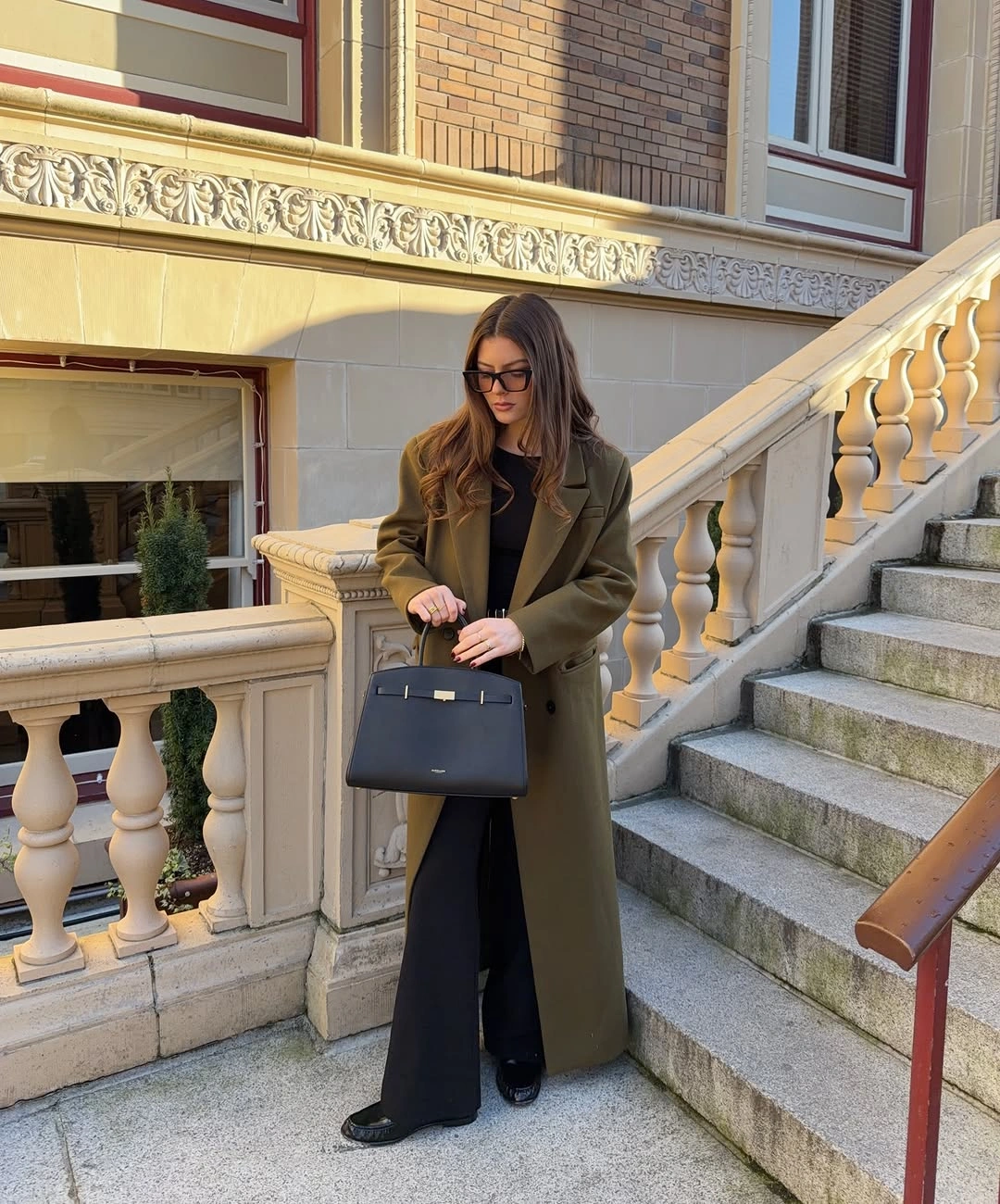
Photo via Instagram
This combination shows how wide-leg trousers can look deliberate alongside substantial outerwear rather than visually disconnected from it. Keeping the inner colors closely related allows the coat to act as a border, so the outfit gains its shape from a contrast in proportions instead of extra detailing. The small metal accents on the handbag stay secondary, since the coat and trouser widths do most of the work.
Sunglasses and the top-handle bag sharpen the otherwise relaxed silhouette, while the coat’s olive tone keeps the palette from reading as solid black. The useful detail is the pairing of a long outer line with an expansive trouser leg, not an attempt to disguise that volume.
All Black Dressing Through Precise Tailored Details
At first glance, this outfit is almost entirely black, yet its definition comes from separate shapes rather than added color. The long double-breasted coat has visible lapels, buttons, and a straight outer line, while the dark trousers continue toward polished shoes beneath it. A sliver of pale fabric at the neckline creates a small break near the face without dividing the look into obvious color blocks.
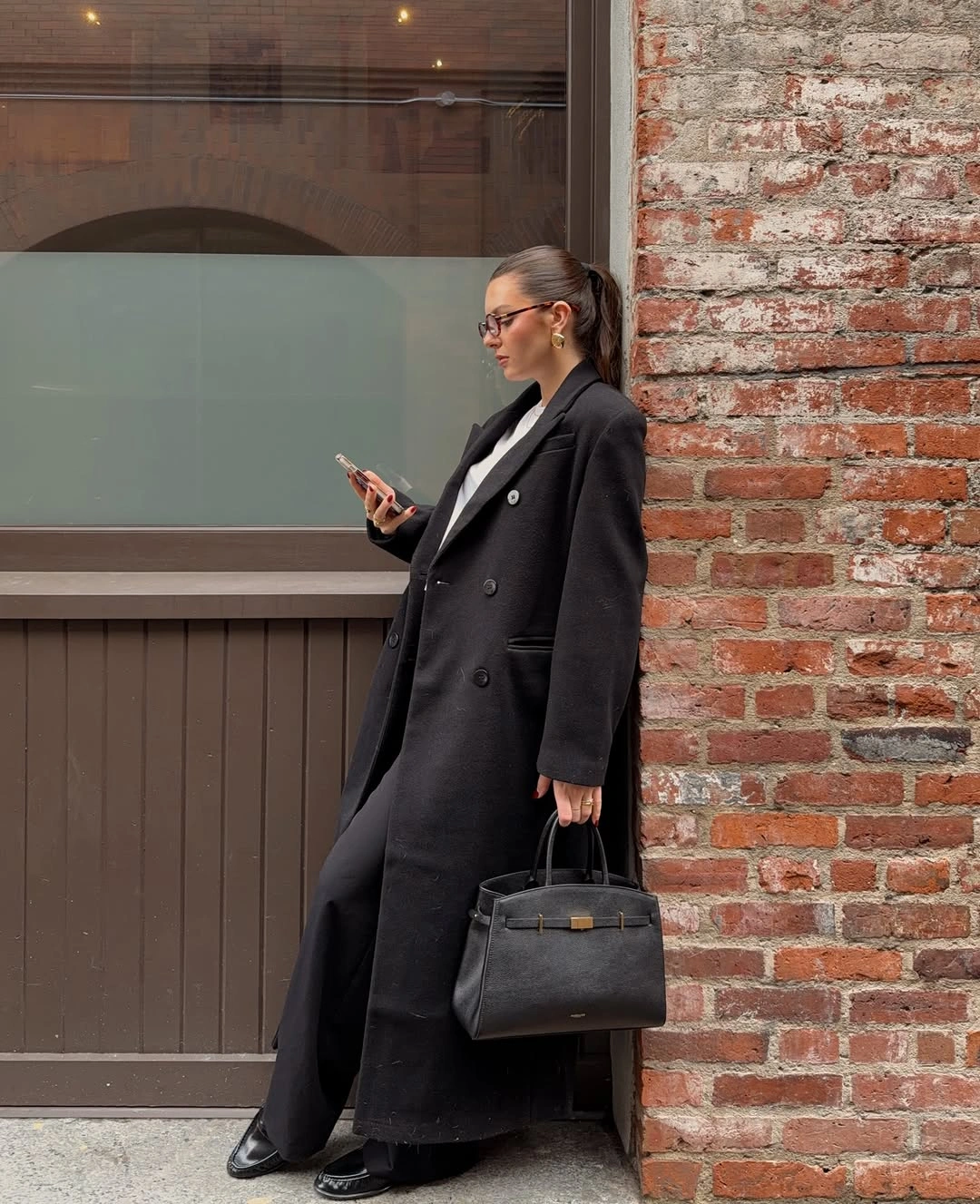
Photo via Instagram
The handbag is especially important here: its firm, rectangular outline echoes the coat’s tailored construction but sits at a different scale. That repetition gives the look a clear visual rhythm, so there is no need for a contrasting bag or bright footwear just to create interest. To borrow the idea, pay attention to clean coat edges, a defined bag shape, and one restrained neckline detail.
Sunglasses and pulled-back hair leave the coat’s lapels visually prominent instead of adding another focal point above the shoulders. Black clothing can still have depth when button placement, bag structure, and small pale details each have a distinct role.
Chocolate Brown Tailoring Meets Relaxed White Trousers
The long chocolate-brown coat introduces a more layered form of minimalism because several details could draw attention. Its high fastening, large buttons, tied waist, and sweeping lower panels establish a tailored shape, but pale blue shirt cuffs and wide white trousers keep the center from looking uniform. The contrast appears at different levels, rather than being concentrated in a single statement accessory.
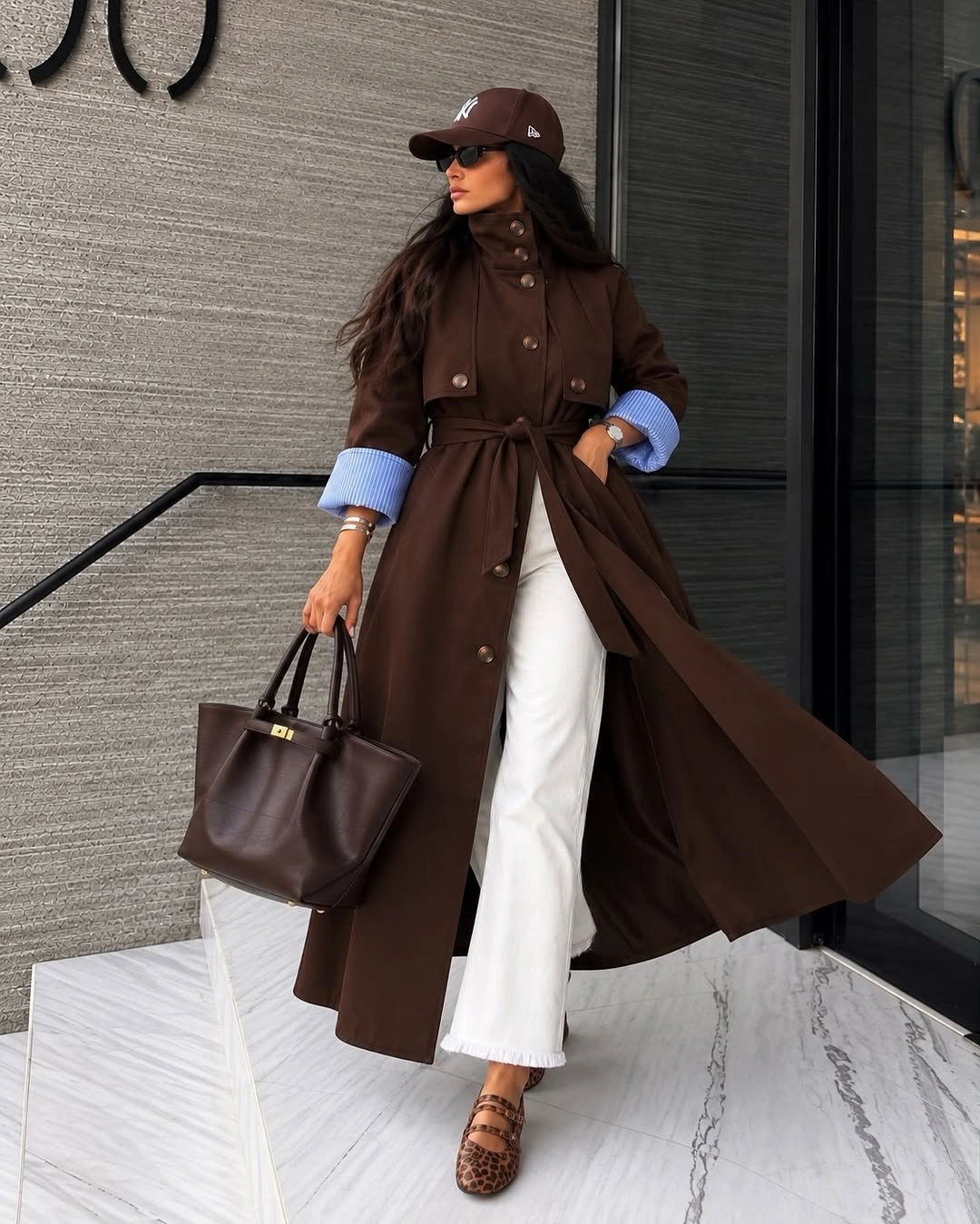
Photo via Instagram
A brown baseball cap and substantial brown tote make the outfit less formal, while patterned flats add a small patch of visual movement near the ground. The useful lesson is in scale: the cap is compact, the bag is large, and the loose trousers give those accessories a broad foundation. Repeating brown in the coat and accessories connects the casual details to the more structured outer layer.
Letting a pale trouser leg show beneath a richly colored coat gives the longer garment a clear visual break. The patterned footwear can remain a modest finishing detail because the coat, cap, and tote already establish a consistent brown family.
A Denim Dress Balances Voluminous White Sleeves
Instead of relying on a coat, this look builds definition through the tension between a fitted denim layer and a white blouse with generous sleeves. The blue button-front dress creates a relatively narrow central line, while the blouse expands around the upper arms and wrists. That difference in volume gives the combination shape even though the garments keep to familiar colors and straightforward details.
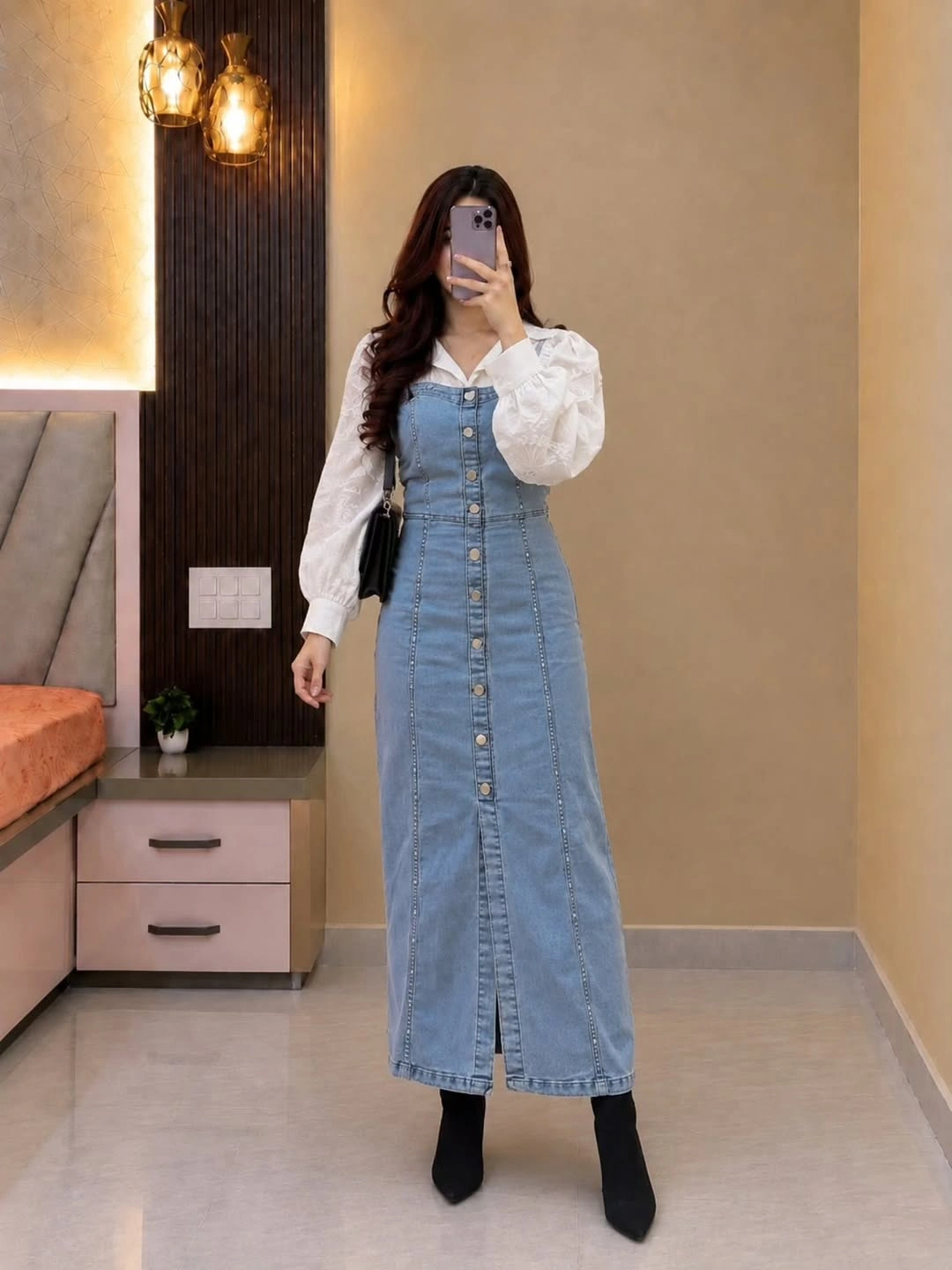
Photo via Instagram
The denim extends close to the ankles, leaving the black pointed boots visible beneath its hem. This long stretch of blue makes the white sleeves more pronounced without the help of a decorative belt, and the small dark shoulder bag sits to one side of the central silhouette. The layering idea is to let one piece provide structure and another contribute the most noticeable volume, rather than asking both to do the same job.
The buttons provide a repeated vertical detail down the dress, giving the denim a rhythm that contrasts with the blouse’s rounded sleeves. Keeping the bag and footwear dark preserves the emphasis on that construction instead of turning every accessory into another statement.
A Short Cream Jacket Meets Tall Brown Boots
A compact off-white textured jacket changes the proportions immediately, with its plush collar and rounded outline concentrating volume above the waist. Underneath, a pale high-neck layer continues the light palette, while a short dark lower layer and sheer-looking dark hosiery create a distinct break before the boots. Rather than extending the outerwear toward the ground, the outfit leaves the tall footwear to define much of the lower silhouette.
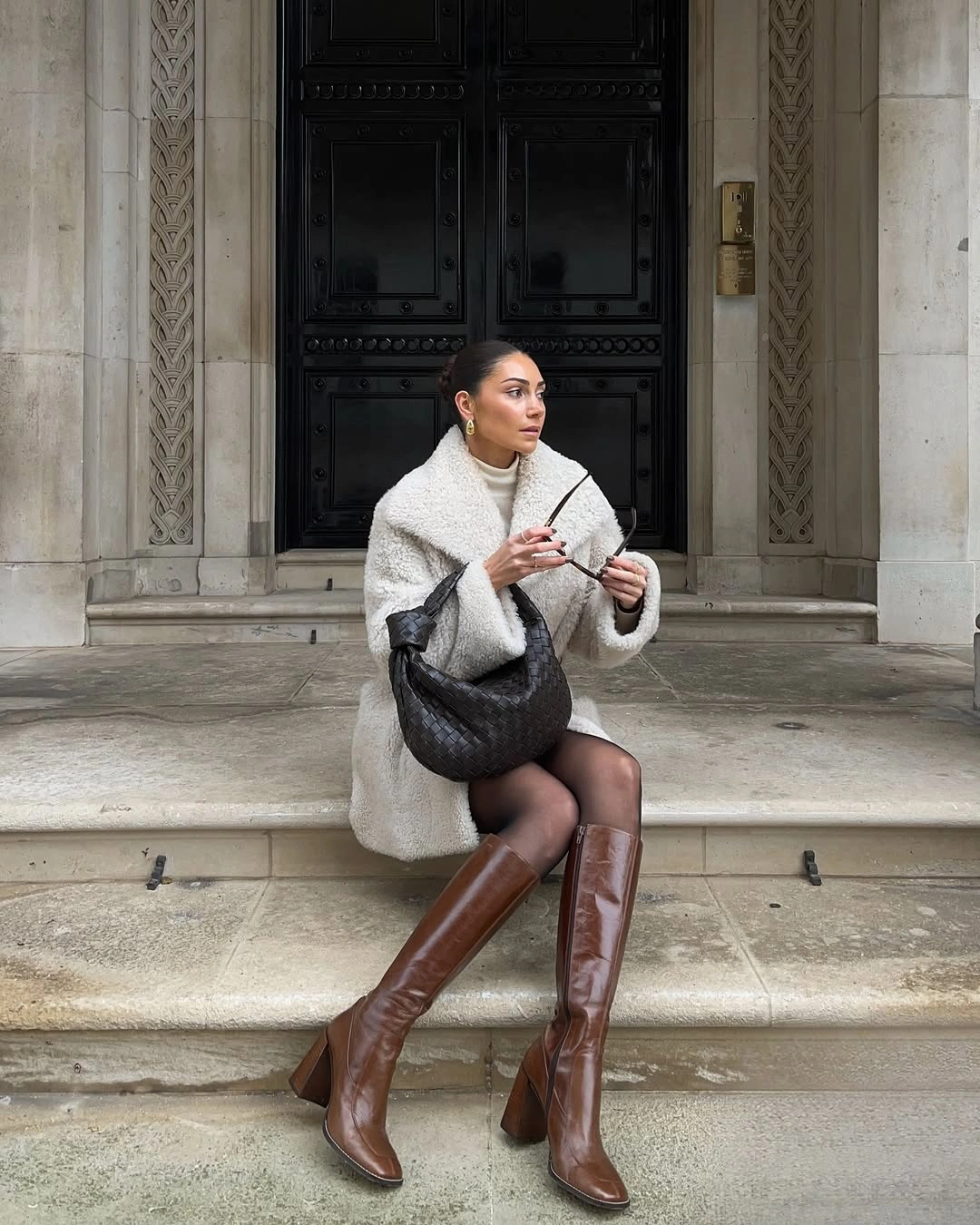
Photo via Instagram
The tall brown boots bring a different kind of visual weight, with long shafts and prominent block heels that counter the jacket’s softer outline. Since the dark bag and hosiery already establish deeper accents, the brown footwear reads as a warm third tone instead of an isolated color choice. A similar composition can begin with the relationship between the bottom edge of a short jacket and the top of a tall boot, before more visible layers are introduced.
The black bag has a woven-looking surface, but its dark color keeps that texture quieter than the pale jacket or the brown footwear. Soft, compact volume at the top and strong boot shapes below give this outfit its particular balance, with a narrow dark transition between them.
Winter Whites Gain Definition Through Varied Textures
An almost entirely pale outfit can still contain plenty of visual detail when its surfaces behave differently. Here, the long white plush-looking coat creates a soft outer silhouette around a cream knit with a noticeably raised pattern, while light fitted legwear continues the color toward the shoes. The snowfall and timber building provide a contrasting backdrop, making the various pale layers easier to distinguish without introducing another dominant clothing color.
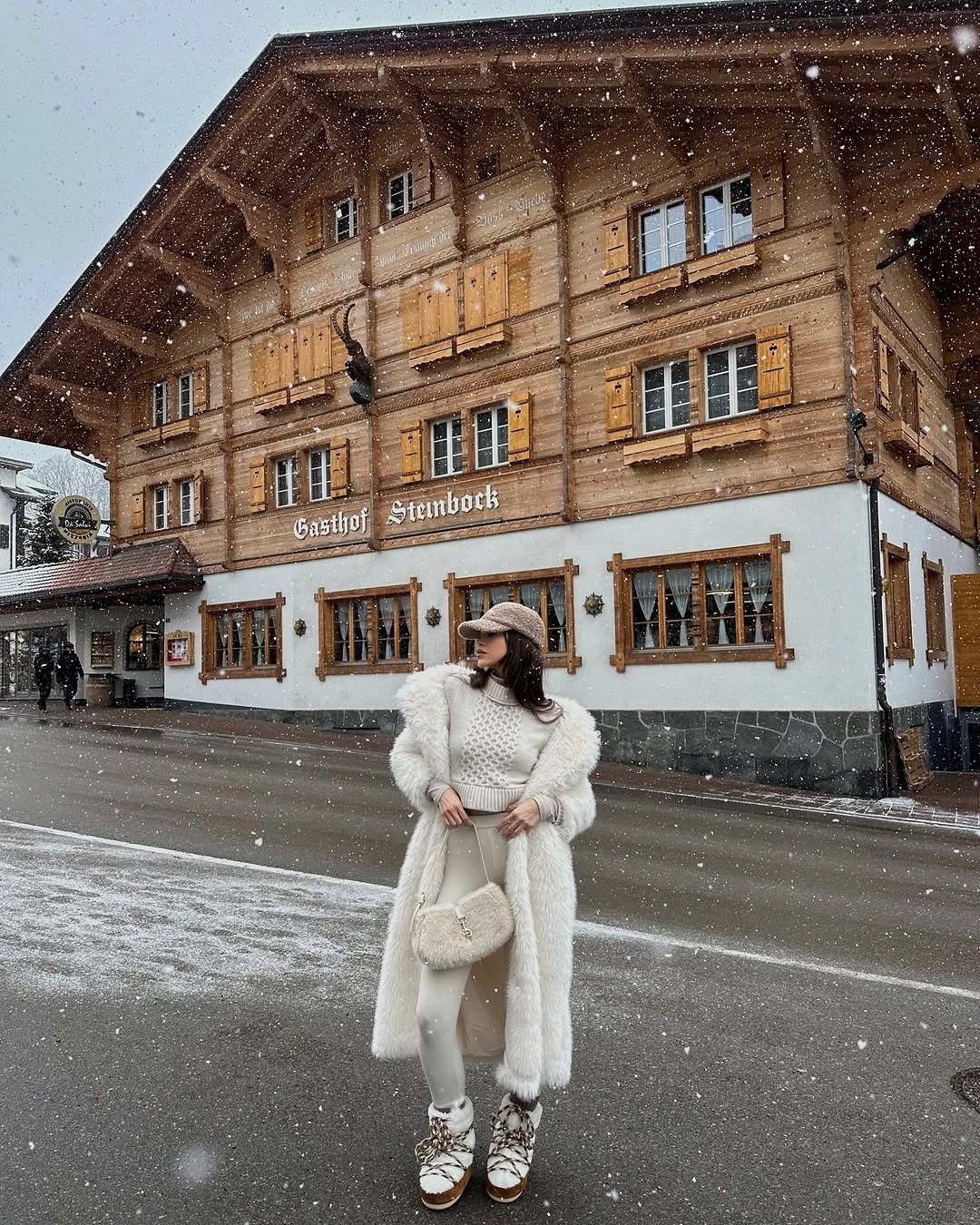
Photo via Instagram
Smaller accessories prevent the white palette from becoming a single uninterrupted shape. A beige baseball cap adds a smooth, compact detail above the textured coat, while the little fuzzy handbag repeats its soft surface at a much smaller scale. The patterned lace-up boots introduce darker markings and visible fastening details near the ground, giving the outfit a more intricate finish than plain pale footwear would provide.
When putting together a tonal winter outfit, vary the visible surfaces before adding another strong color. A textured knit, a substantial outer layer, and patterned footwear can each contribute something different while preserving the overall light palette.
A Taupe Teddy Coat With Defined Black Accents
The taupe coat makes its impression through a broad, softly textured surface that extends well below the knees. Its generous collar and overlapping front give the silhouette an enveloping outline, while the dark clothing visible at the opening creates a narrow central contrast. Instead of adding another substantial layer of visual detail, the outfit allows the coat’s surface and length to establish its main character against the decorated outdoor setting.
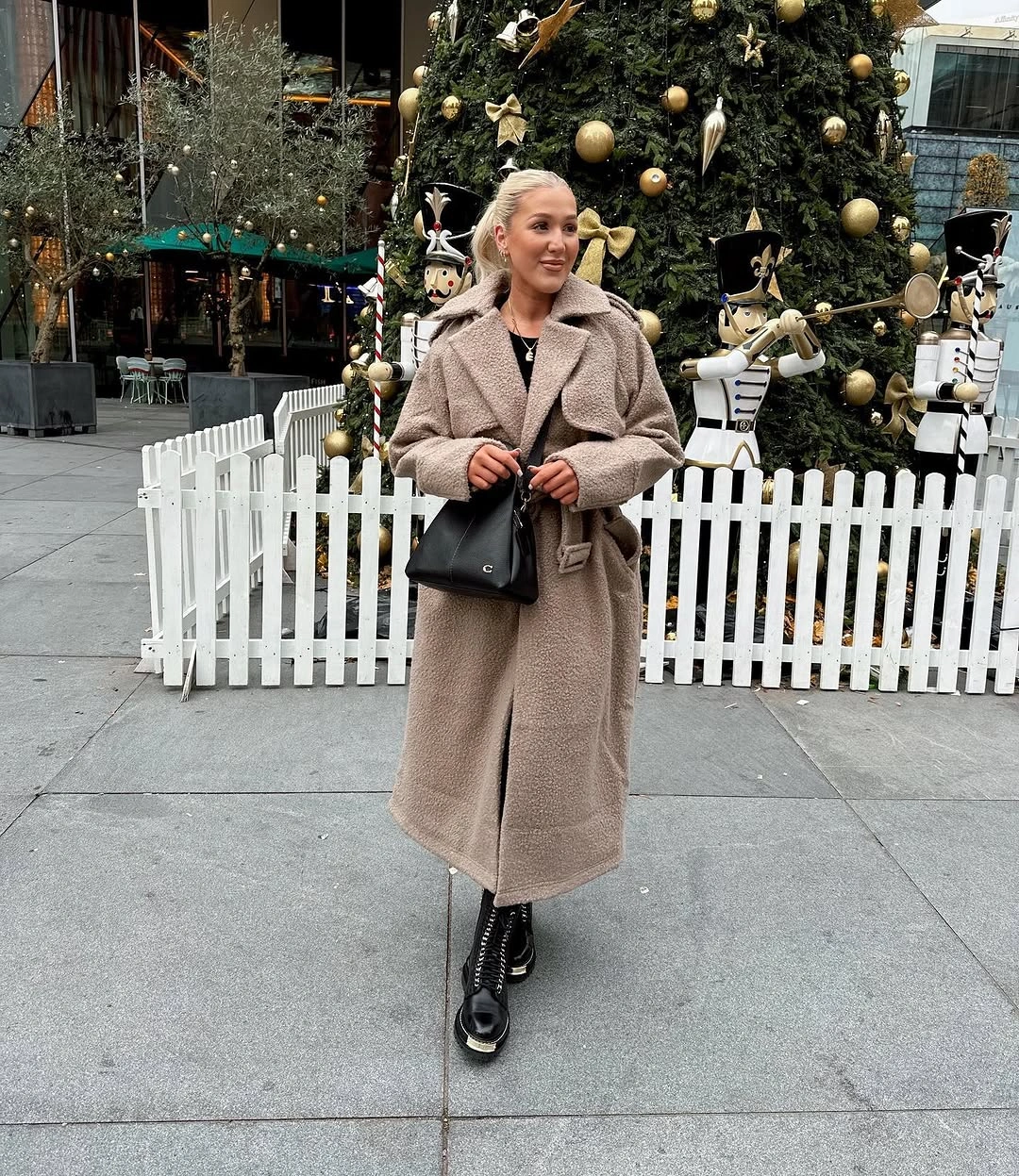
Photo via Instagram
Black lace-up boots give this combination an important change in texture and shape. Their visible eyelets, lacing, and defined soles create a much sharper finish than the coat’s rounded, plush-looking exterior, while the compact black handbag repeats that darker weight at hand level. Keeping these smaller elements within one color family makes the contrast feel organized rather than dividing attention among several competing accessories.
The styling principle is to place precise, darker details against a larger soft surface. A textured taupe coat can remain the dominant feature when footwear and accessories establish firm visual boundaries without introducing an additional statement pattern.
Colorful Accessories Refresh a Restrained Camel Coat
A long camel-toned coat establishes a relatively quiet starting point, but the accessories make this combination much more playful than a conventional neutral outfit. Loose faded gray jeans extend below the coat, and rounded tan shoes keep the lower portion within similarly muted colors. That understated foundation leaves room for the scarf, cap, and shoulder bag to introduce stronger color without making the outfit depend on bright garments from head to toe.
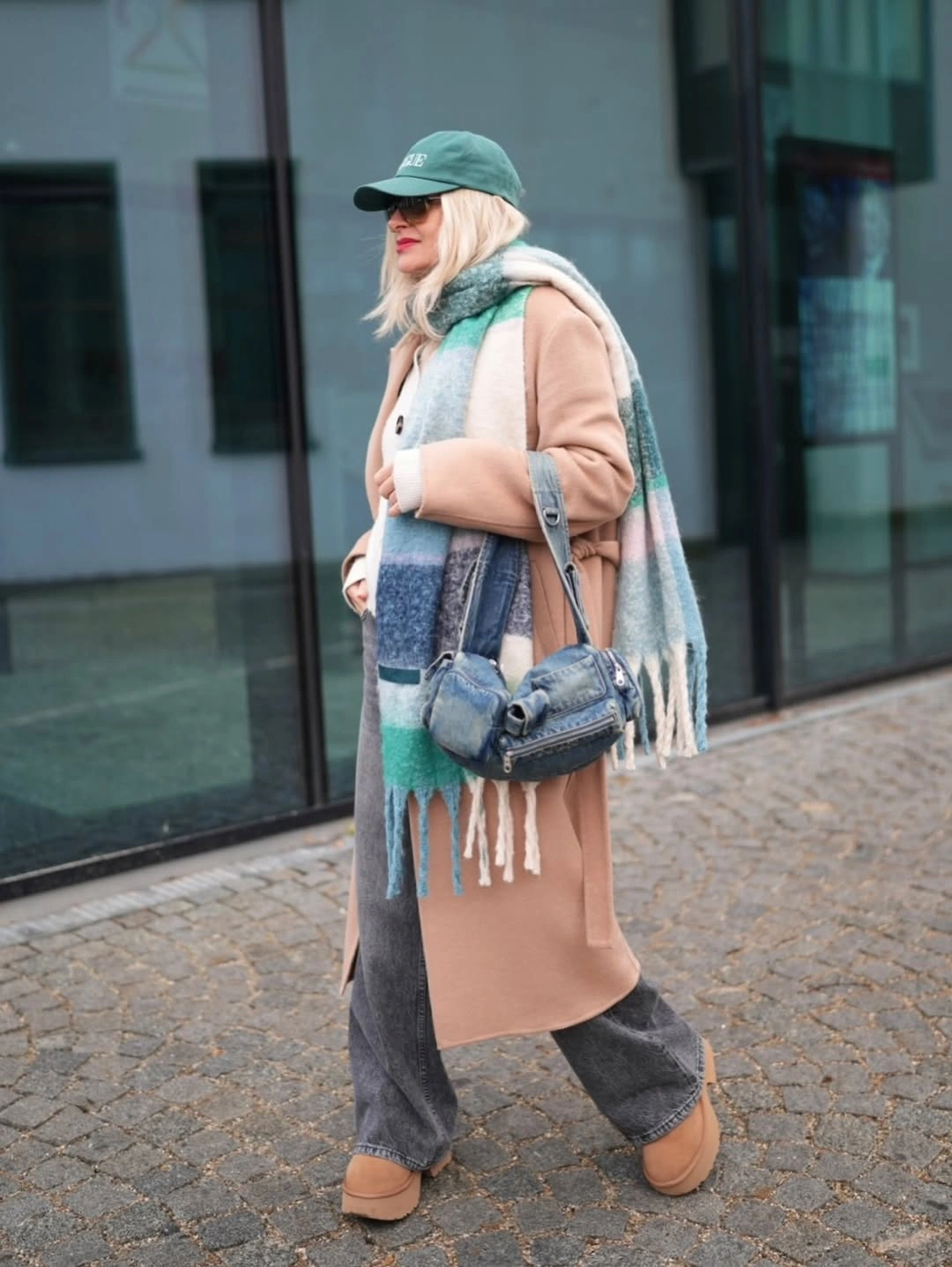
Photo via Instagram
The long fringed scarf carries several cool shades, including blue, green, and pale sections, so it becomes the most noticeable decorative element. A green baseball cap picks up one part of that palette near the face, while the blue shoulder bag places another related accent farther down the body. Their colors are not identical, but the repeated cool tones establish a connection that feels more considered than three unrelated accessories.
You can use this approach when a neutral coat and loose denim need a more individual finish without changing their basic proportions. Choose a multicolored scarf as the starting point, then let smaller accessories repeat selected shades instead of trying to match every piece exactly.
Dramatic Brown Texture Meets Relaxed Cuffed Denim
The dark espresso-brown jacket dominates this seated outfit because its dense, shaggy-looking surface extends outward around the shoulders and arms. Beneath that abundance of texture, the gray jeans have a noticeably looser shape and turned-up cuffs, creating a familiar casual foundation. The difference between the expansive upper layer and the denim’s simpler surface makes the jacket expressive without needing a print or an additional bright accent.
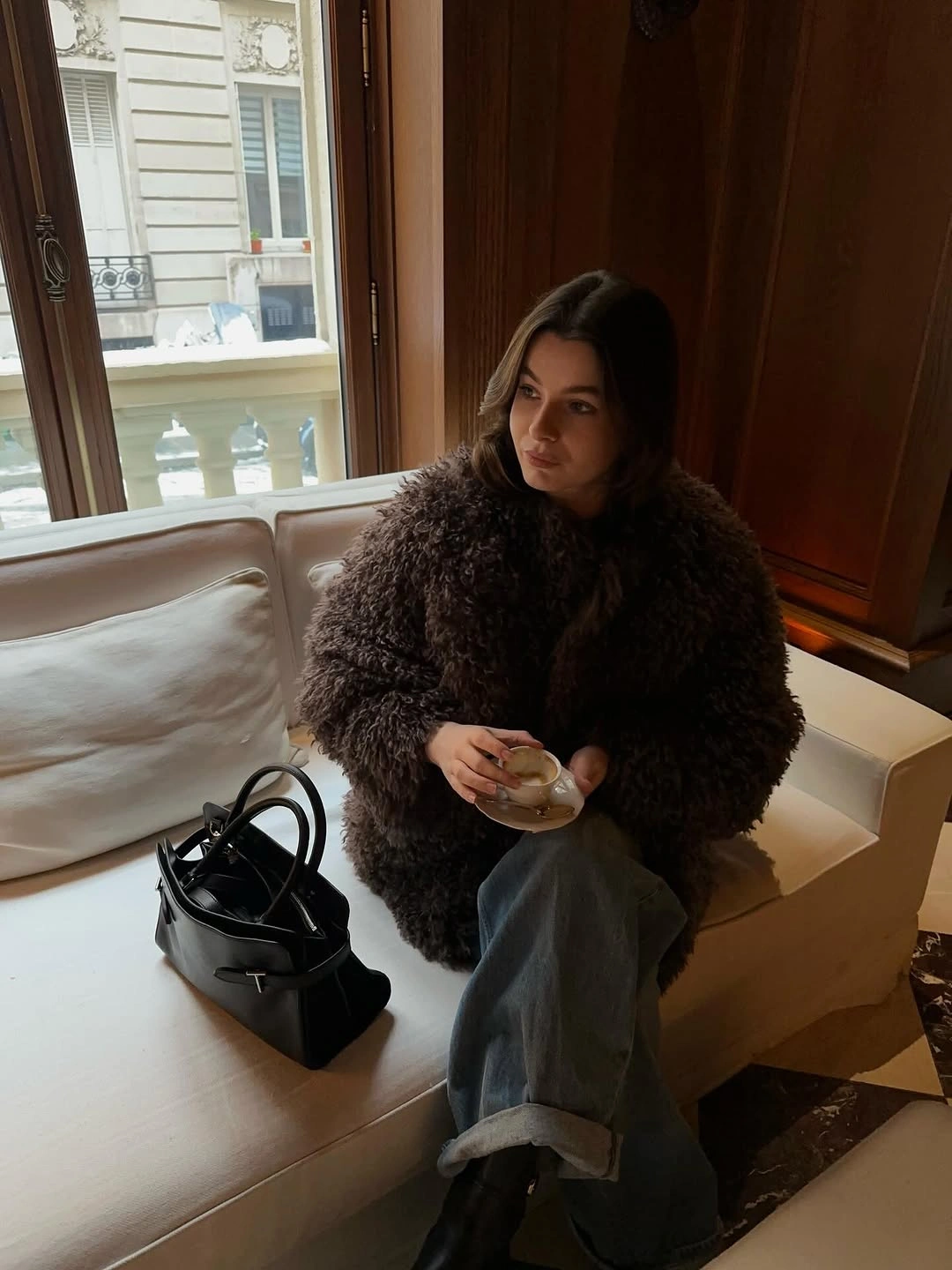
Photo via Instagram
A black structured handbag placed beside the outfit brings a useful contrast in construction. Its defined handles and compact body look especially precise next to the jacket’s irregular, fluffy outline, while the visible dark footwear connects it to the lower portion of the look. The rolled denim hems also expose a clear change in fabric thickness, providing a small but noticeable styling detail beneath the much more dramatic outer layer.
For a similar combination, let one heavily textured garment take up most of the visual attention and keep the surrounding shapes recognizable. Relaxed jeans and a structured dark bag can balance a prominent jacket without competing with the quality that makes it distinctive.
An Ivory Coat Anchored by a Brown Tote
A long ivory coat creates an elongated shape through its open front and softly hanging belt detail, with pale clothing continuing beneath it almost to the ground. The light trousers remain visible below the coat, while pointed neutral shoes provide a subtle change in tone at the bottom. Instead of breaking this arrangement into obvious contrasting sections, the outfit keeps the clothing closely related in color and lets the length of each layer establish its proportions.
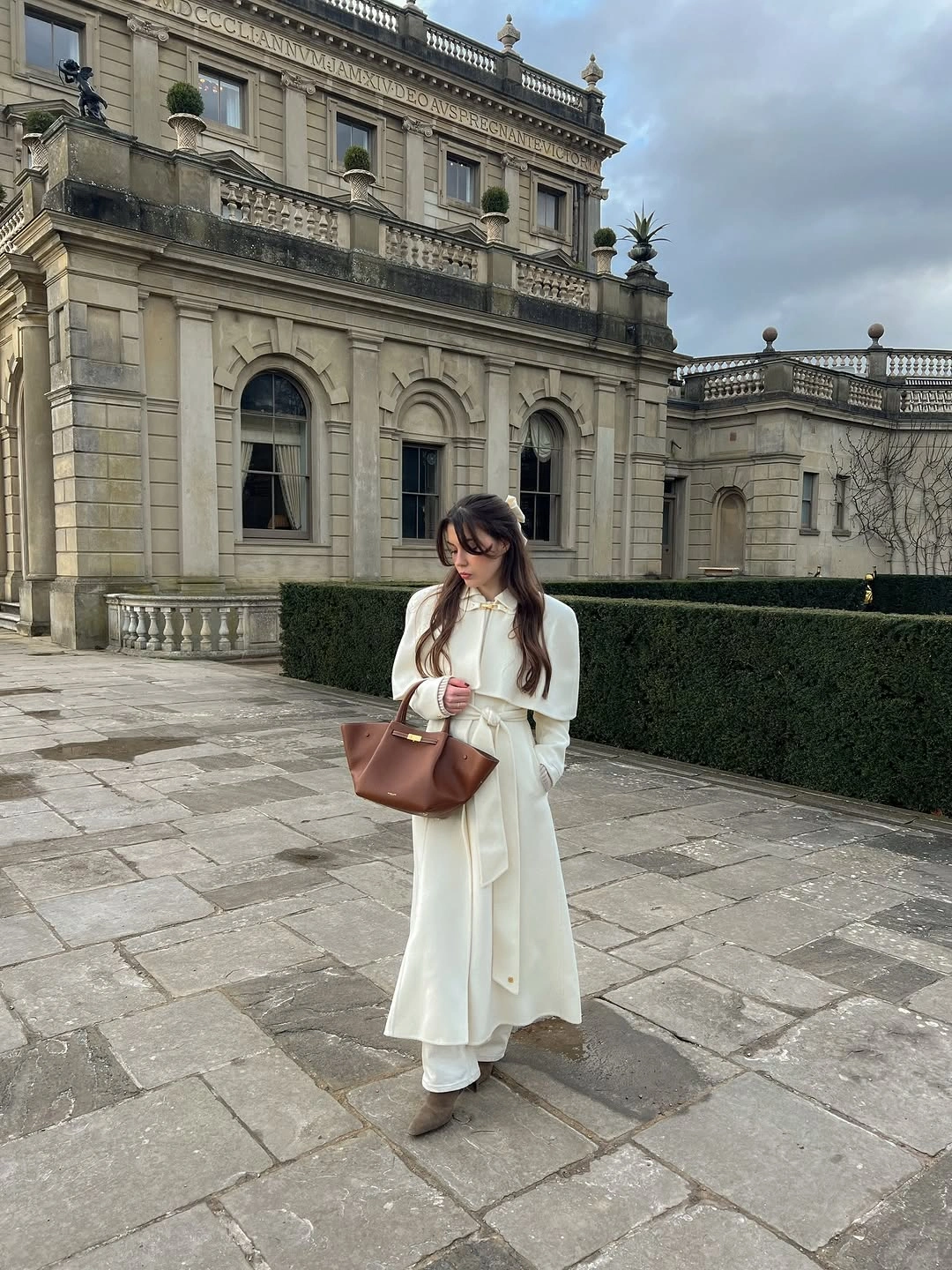
Photo via Instagram
The large warm-brown tote has a more prominent role than a typical finishing accessory because it introduces the only substantial dark color area. Its generous rectangular body and defined handles contrast with the long, flowing coat, bringing a recognizable structure to one side of the silhouette. By keeping the shoes understated and the inner clothing pale, the combination gives that single brown accessory enough presence to organize the entire palette.
A substantial handbag can provide the color contrast that an otherwise tonal outfit needs, particularly when the surrounding garments have similar shades and extended lengths. The important choice is not simply adding brown to ivory, but allowing the bag’s shape and placement to balance the uninterrupted pale clothing.
A Cropped Brown Jacket Refines Wide Black Trousers
The short chocolate-brown jacket concentrates its fuzzy-looking texture around the shoulders and upper body instead of extending that volume down the entire silhouette. Below it, wide black trousers create a comparatively smooth, uninterrupted shape that draws attention to the difference between the two garments. The jacket’s compact length becomes especially important because it establishes a clear boundary before the trousers begin their longer, looser line.
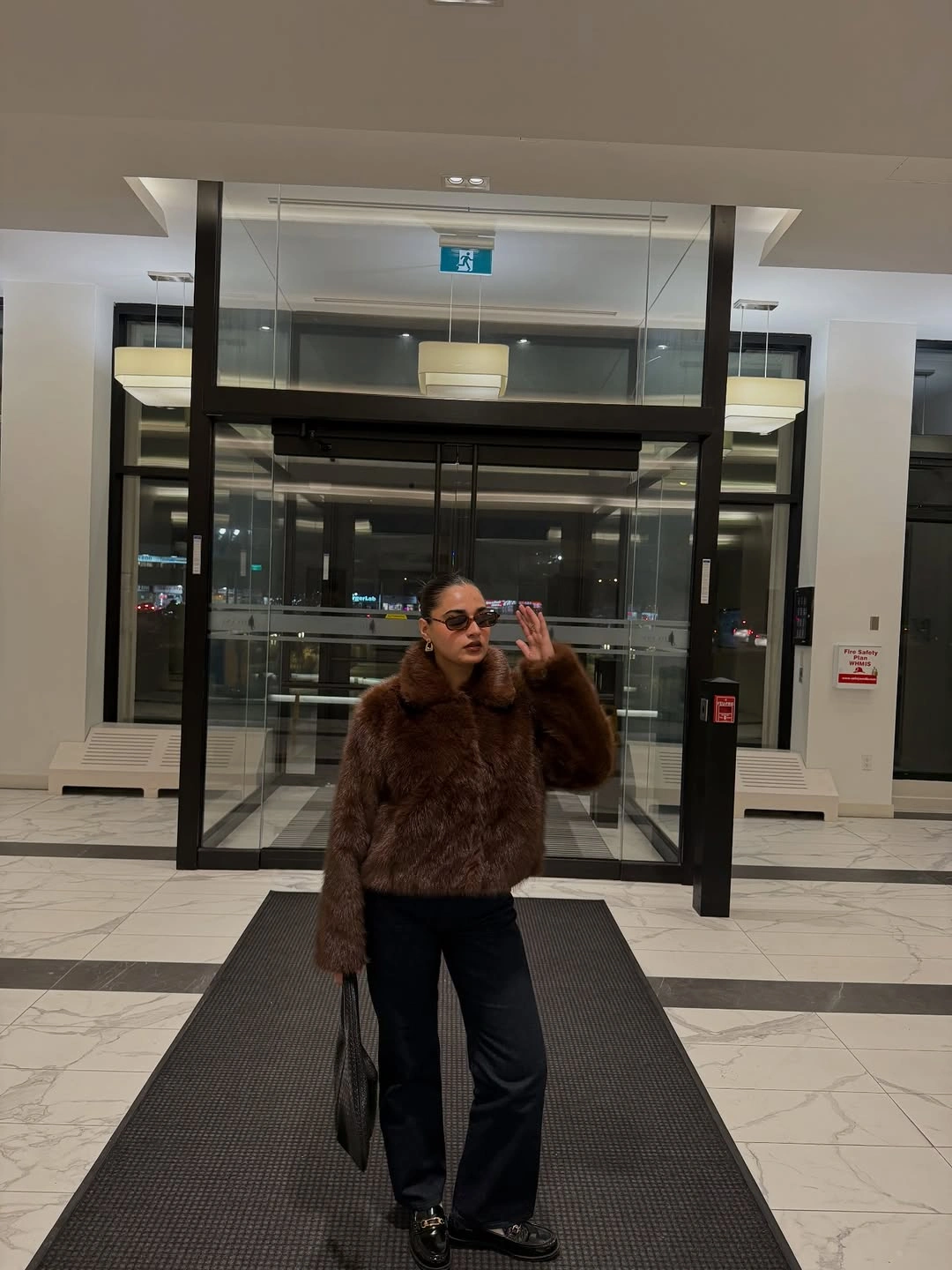
Photo via Instagram
Dark footwear with small metallic details adds a precise finishing point near the ground, while the narrow handbag maintains the understated accessory palette. These pieces introduce structure without trying to imitate the jacket’s prominent surface, leaving the contrast between plush and smooth materials easy to recognize. When working with a similarly cropped outer layer, consider how its lower edge meets the trousers rather than automatically adding more accessories for definition.
Sunglasses give the outfit another sharp detail near the face, but the strongest relationship remains between the jacket’s concentrated volume and the trousers’ extended shape. Keeping the lower half relatively plain allows the textured brown layer to feel intentional rather than overwhelming.
A Long Dark Coat Seen From Behind
Seen from behind, this outfit reveals how much a minimalist silhouette can communicate without visible buttons, lapels, or elaborate front-facing details. The long dark coat falls in a relatively straight shape, with pale blue denim appearing below its hem and a large soft black bag resting against one side. That small separation between the dark outerwear and lighter jeans creates a clear ending point for the coat without relying on a bright accessory.
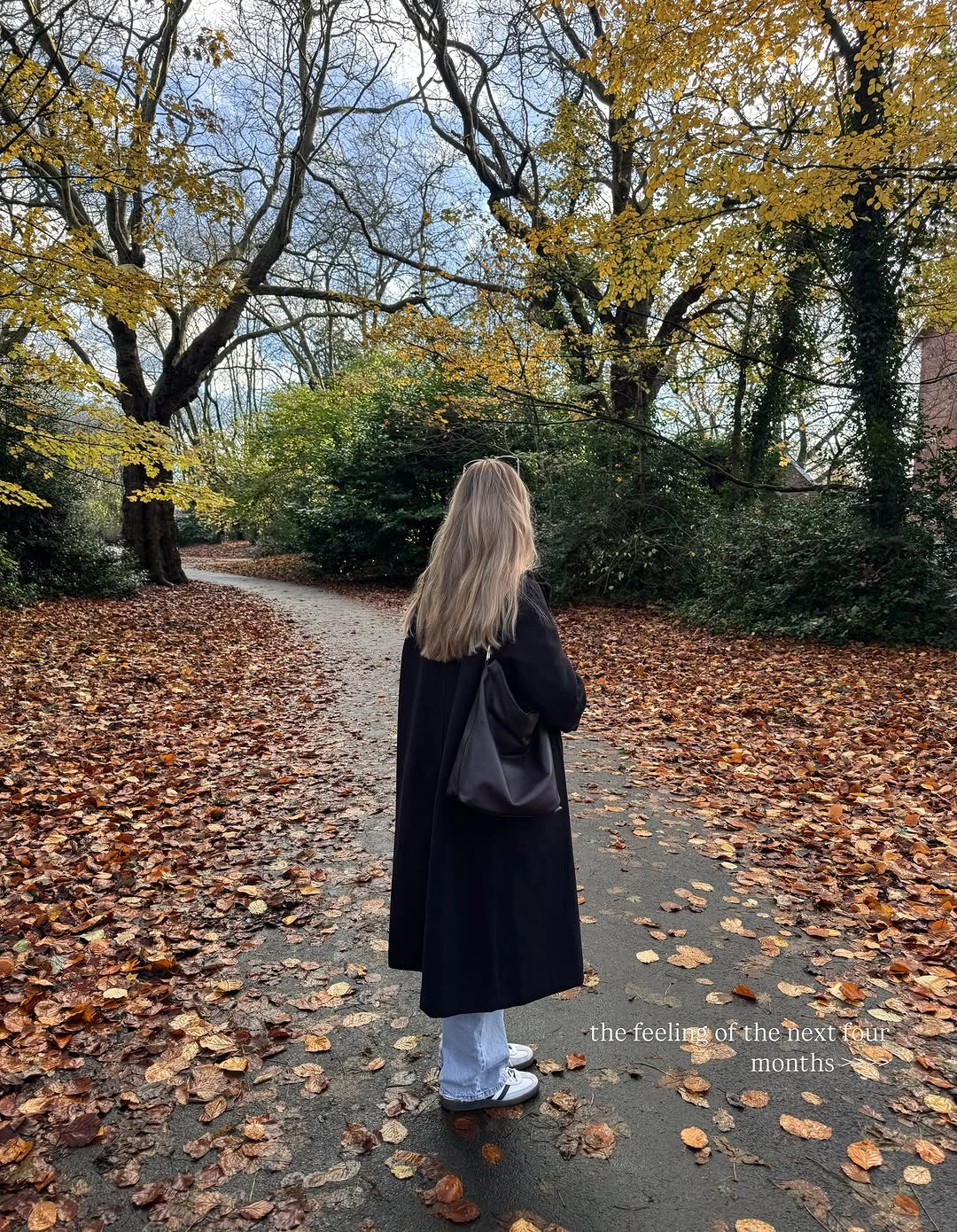
Photo via Instagram
The shoulder bag deserves attention because its relaxed, gathered outline contrasts with the coat’s straighter vertical edges. Positioned high on one shoulder and extending along the back, it introduces a gentle asymmetry that changes how the otherwise simple shape is perceived. The exposed denim and dark footwear complete the lower portion without competing with the bag, demonstrating how placement and proportion can make familiar pieces feel thoughtfully combined.
A rear view also makes the relationship between coat length and trouser exposure particularly noticeable. When choosing a long coat for relaxed denim, consider how much of the jeans remains visible below the hem and whether a softly shaped bag complements the outerwear’s outline.
A Spotted Cream Coat With Simple Denim
Irregular brown and black markings scattered across the cream coat give this combination a strong visual identity, particularly because the pattern continues along its substantial length. The coat also has a pronounced plush-looking surface, so both color variation and texture contribute to its presence. Blue jeans and dark shoes remain visible below the hem, introducing familiar, uncomplicated shapes beneath an outer layer that already carries most of the outfit’s detail.
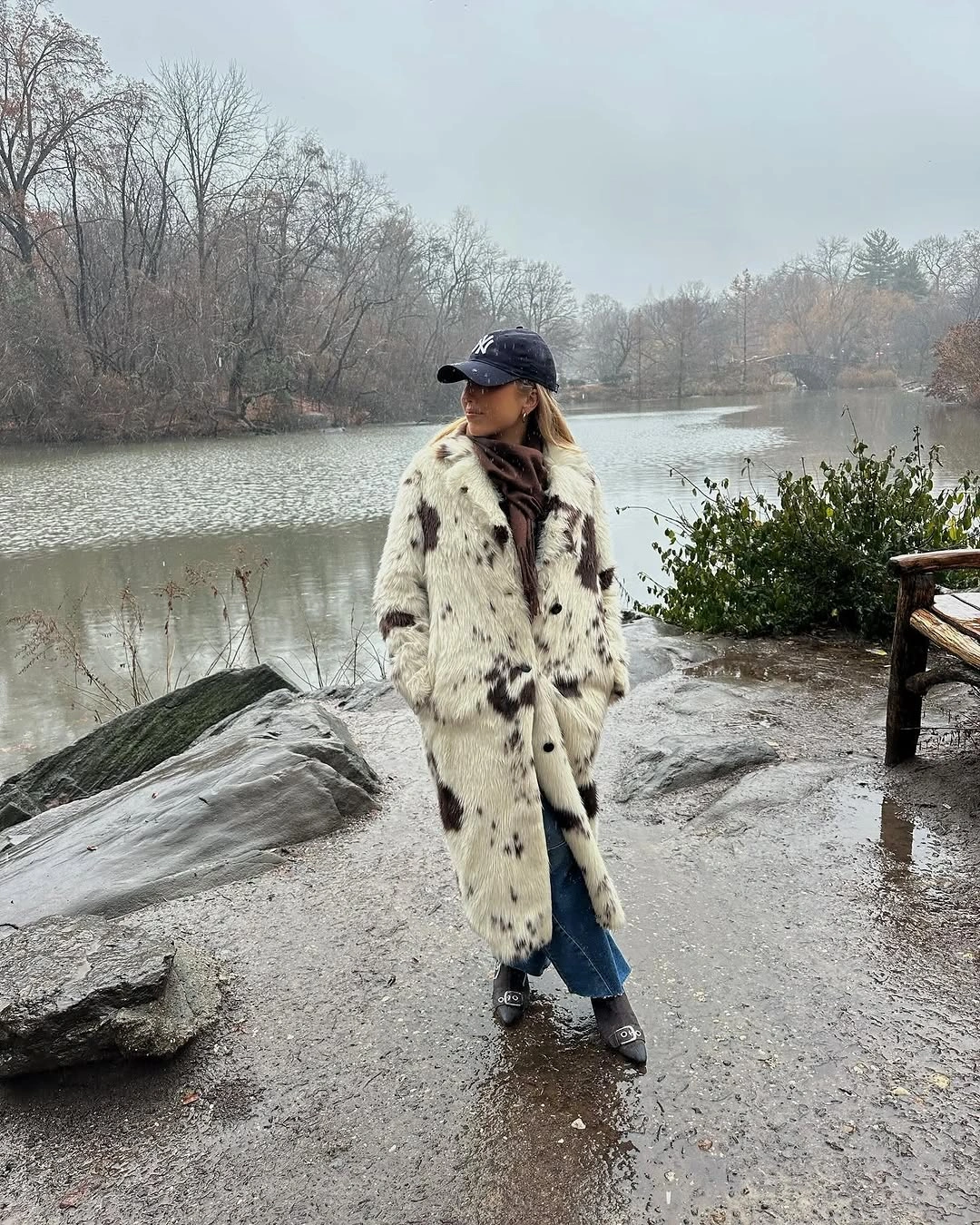
Photo via Instagram
A dark baseball cap and brown scarf bring the look toward a casual direction without adding another competing pattern. The scarf contributes a warmer, deeper color near the neckline, while the cap creates a defined shape above the coat’s irregular markings. This is a useful approach to minimalist winter styling when you enjoy patterned outerwear: allow the print to occupy the largest area, then select surrounding pieces that establish continuity rather than demanding equal attention.
The contrast between expressive outerwear and ordinary denim is what makes the combination particularly adaptable as a styling idea. A spotted coat does not require equally decorative accessories when its markings, texture, and length already provide several distinct visual elements.
White Accents Break Up an All Black Outfit
Small areas of white give this predominantly black outfit a distinctive rhythm without changing its overall dark appearance. The oversized blazer establishes a straight, structured upper silhouette, while a short black layer beneath it leaves sheer dotted tights visible along the legs. Black loafers paired with white socks create a crisp contrast near the ankles, making a relatively modest accessory detail surprisingly important to the full composition.
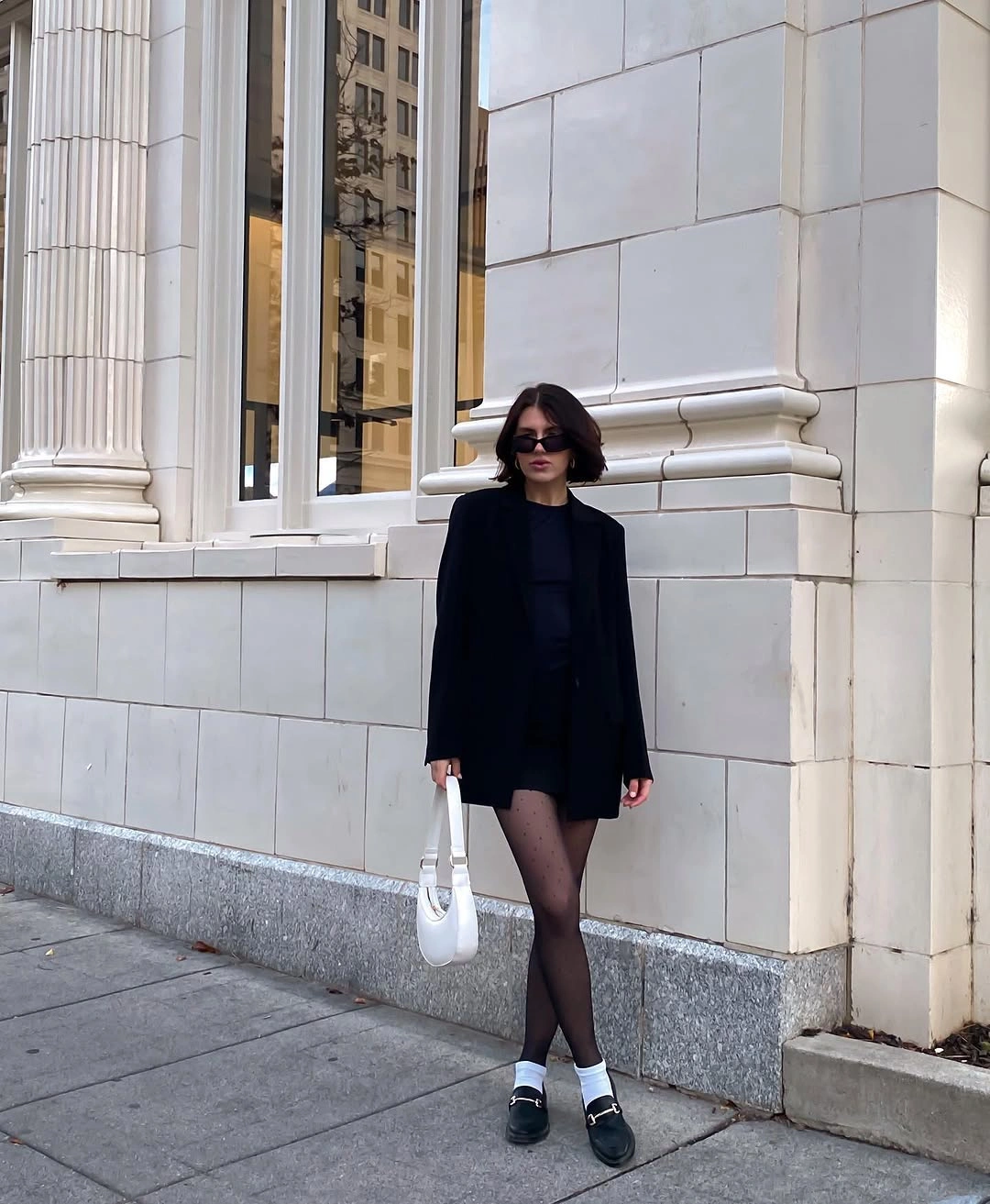
Photo via Instagram
The sculptural white handbag introduces a second pale accent at hand level, creating a visual connection with the socks even though the pieces have very different shapes. Meanwhile, the tights contribute a quieter pattern through their evenly spaced dots, adding detail between the solid black garments and footwear. Rather than introducing several contrasting clothing colors, the outfit distributes small light elements across separate areas, allowing each one to remain noticeable.
This approach works when you want a dark outfit to have more definition without abandoning its limited palette. Repeating a small contrasting color in accessories at different heights can establish balance, while subtle hosiery details introduce another layer of visual interest.
A Quilted Burgundy Bag Sharpens Plush Outerwear
Deep brown and wine-colored tones create a closely related palette in this seated combination, but the most interesting distinction comes from the surfaces rather than their shades. The voluminous plush-looking outer layer has an irregular, soft-edged appearance, while the burgundy handbag features clearly defined quilted sections arranged in a repeating diagonal pattern. These contrasting textures provide enough variation to make the dark composition feel detailed without introducing a noticeably lighter garment.
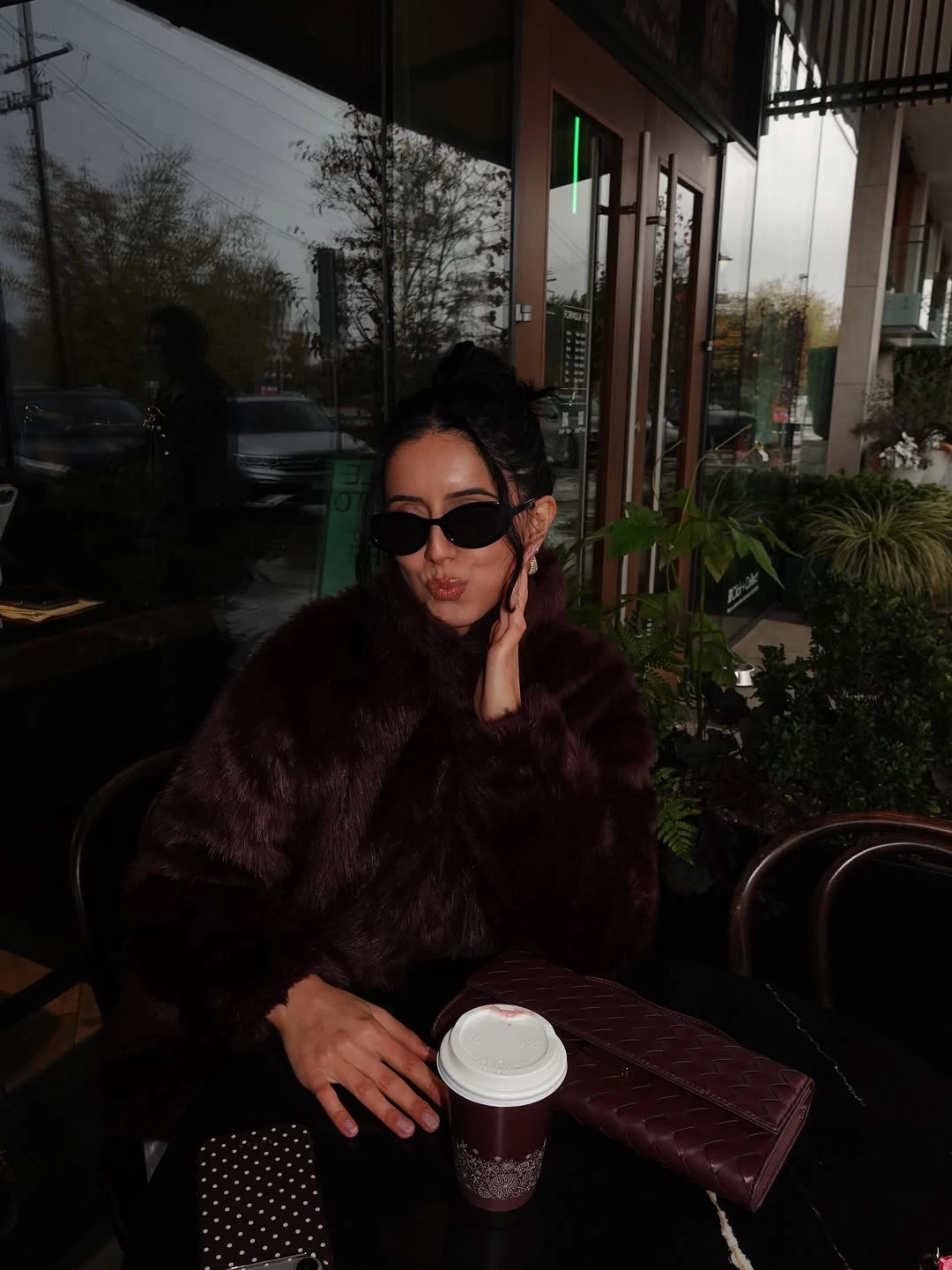
Photo via Instagram
The rectangular bag brings a controlled geometric shape into a setting dominated by the outer layer’s abundant texture. Its stitched pattern gives the eye a series of precise lines to follow, while the dark sunglasses preserve the restrained color direction around the face. If you favor closely related brown and burgundy shades, this combination suggests choosing accessories with recognizable construction details instead of relying on bright contrasts to distinguish individual pieces.
The quilted surface and plush outerwear do not need to match exactly in color because their shared depth already creates a connection. Allowing one piece to appear soft and irregular while another introduces repeated geometric detail is a specific way to give a dark minimalist outfit more character.
Cream Texture Against Flowing Chocolate Brown Trousers
The cream coat introduces generous volume through its rounded shape and thick, fluffy-looking surface, but the outfit does not become narrow beneath it. Instead, chocolate-brown trousers continue the relaxed proportions with wide legs that fall toward light tan shoes. This creates an interesting relationship between two substantial shapes, with the pale upper layer drawing attention first and the darker fabric giving the lower half a clear visual presence.
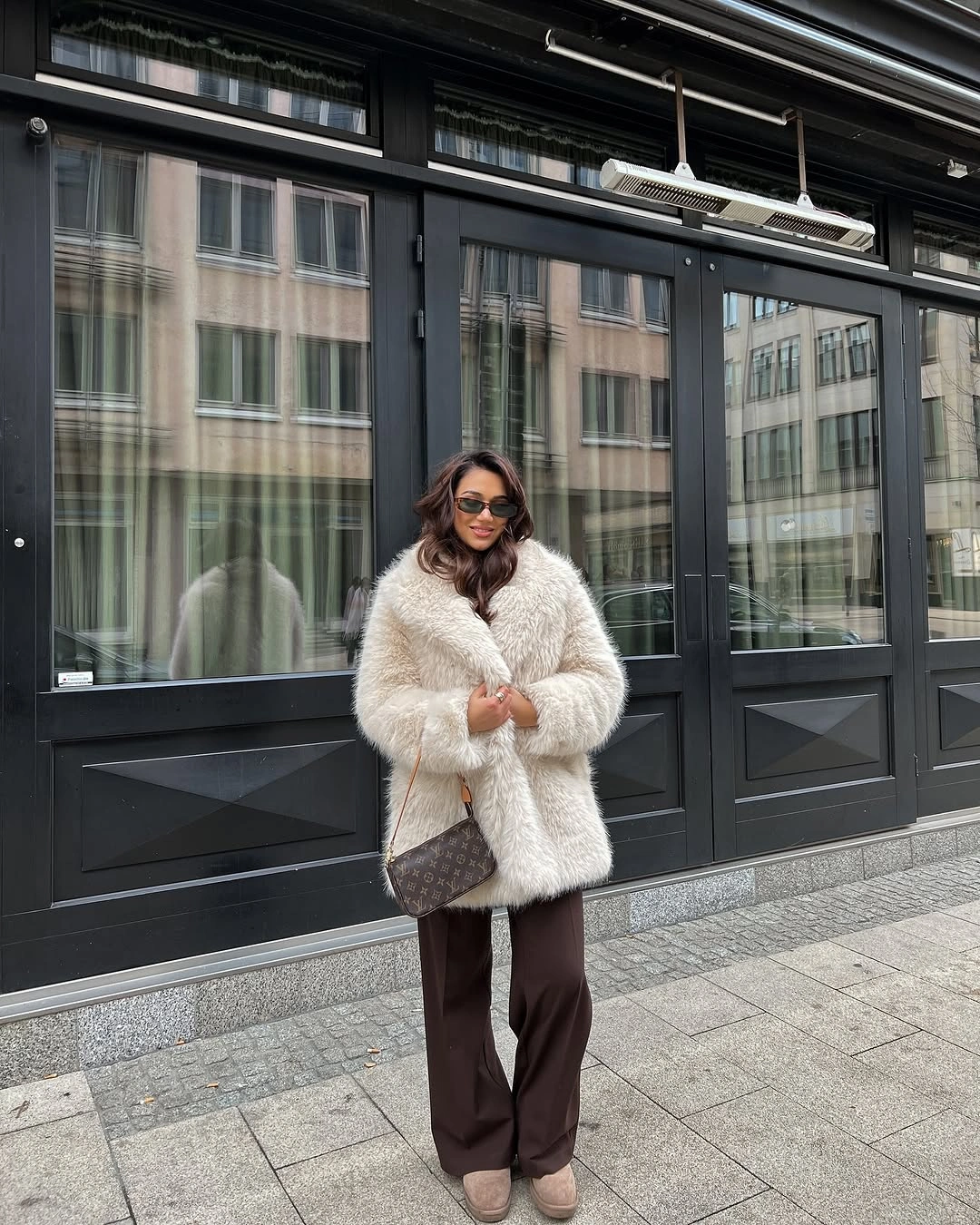
Photo via Instagram
A small patterned crossbody bag interrupts the broad surfaces without adding much bulk, and its darker coloring connects naturally with the brown trousers. The light tan rounded shoes introduce another pale element near the ground, creating a subtle connection with the cream coat despite their different shades and textures. For a similar minimalist winter outfit, consider how a lighter outer layer can sit above wide dark trousers without requiring either garment to become more fitted.
The combination feels cohesive because its strongest contrast comes from color placement rather than competing decorative details. Allowing the coat and trousers to share a relaxed silhouette gives the small handbag and understated footwear enough room to contribute without changing the outfit’s character.
Glossy Black Layers Under a Textured Cropped Jacket
A cropped gray-brown jacket brings a soft, irregular texture to an outfit built around much smoother black surfaces. The fitted high-neck top has a comparatively matte appearance, while the short black skirt reflects light more noticeably, creating a distinction between two pieces in the same dark color family. That change in finish becomes especially visible beneath the jacket’s textured sleeves and open front, giving the combination depth without relying on a printed garment.
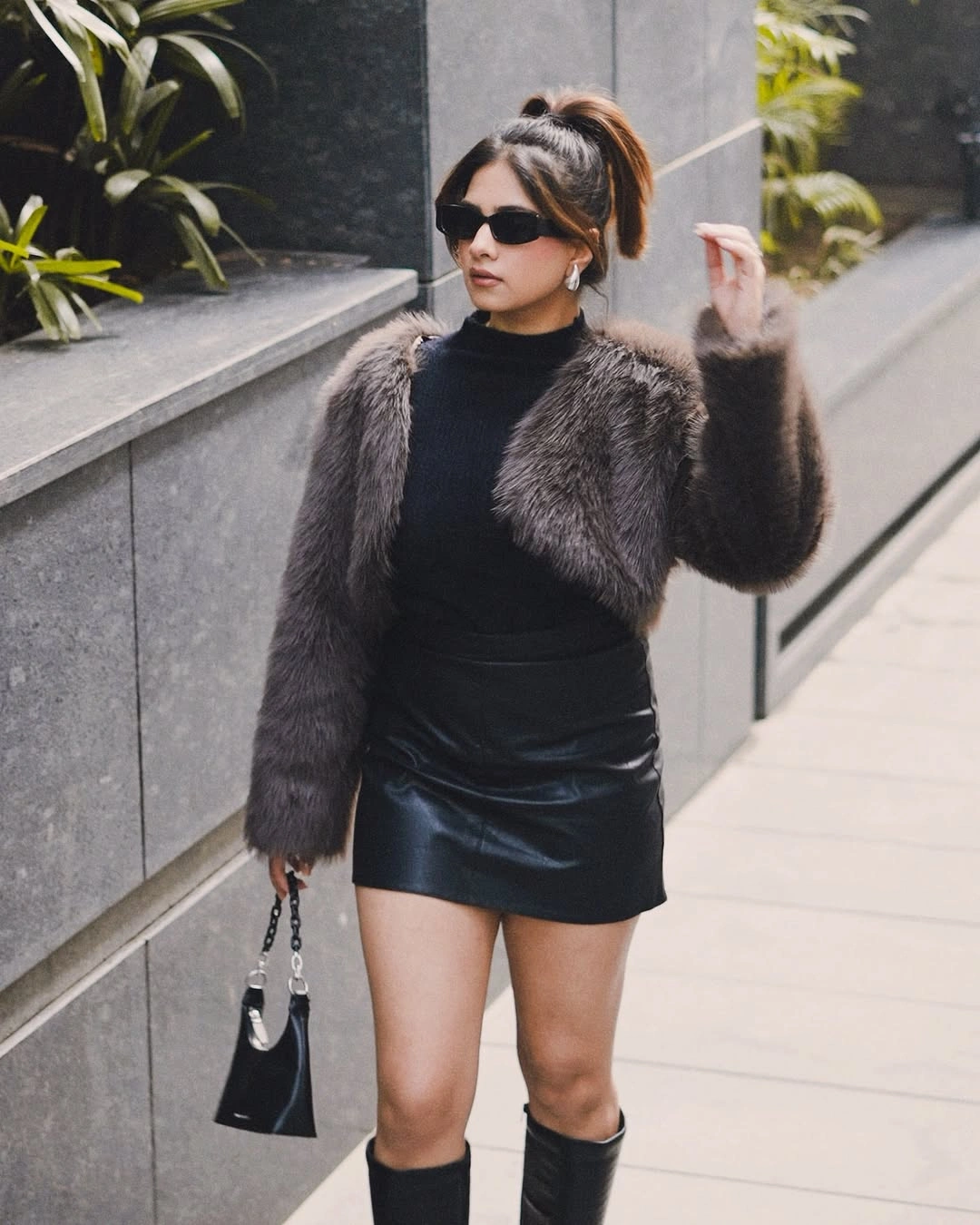
Photo via Instagram
Tall black boots extend the darker palette below the skirt, while the narrow handbag introduces a small metallic chain detail beside the outfit. Slim sunglasses contribute another precise shape near the face, contrasting with the jacket’s less defined edges and keeping the accessories visually consistent with the fitted inner layers. When combining several dark pieces, pay attention to how each surface catches light, since a glossy finish can establish contrast even when the clothing colors remain closely related.
The cropped jacket leaves the skirt and fitted top clearly visible, so each material contributes to the overall composition rather than disappearing beneath the outer layer. Here, the most distinctive choice is the relationship between soft gray-brown texture and reflective black, with the boots extending that darker visual foundation.
Tan Layers Framed by Sharp Black Accents
This combination places several warm neutral shades between two strong black elements, creating a distinct color arrangement from neckline to footwear. A black high-neck top appears beneath the beige jacket, whose light textured trim and darker tan panels give the upper half several visible boundaries. The fitted brown trousers continue the middle portion of the palette before tall black boots introduce another decisive change in color and surface.
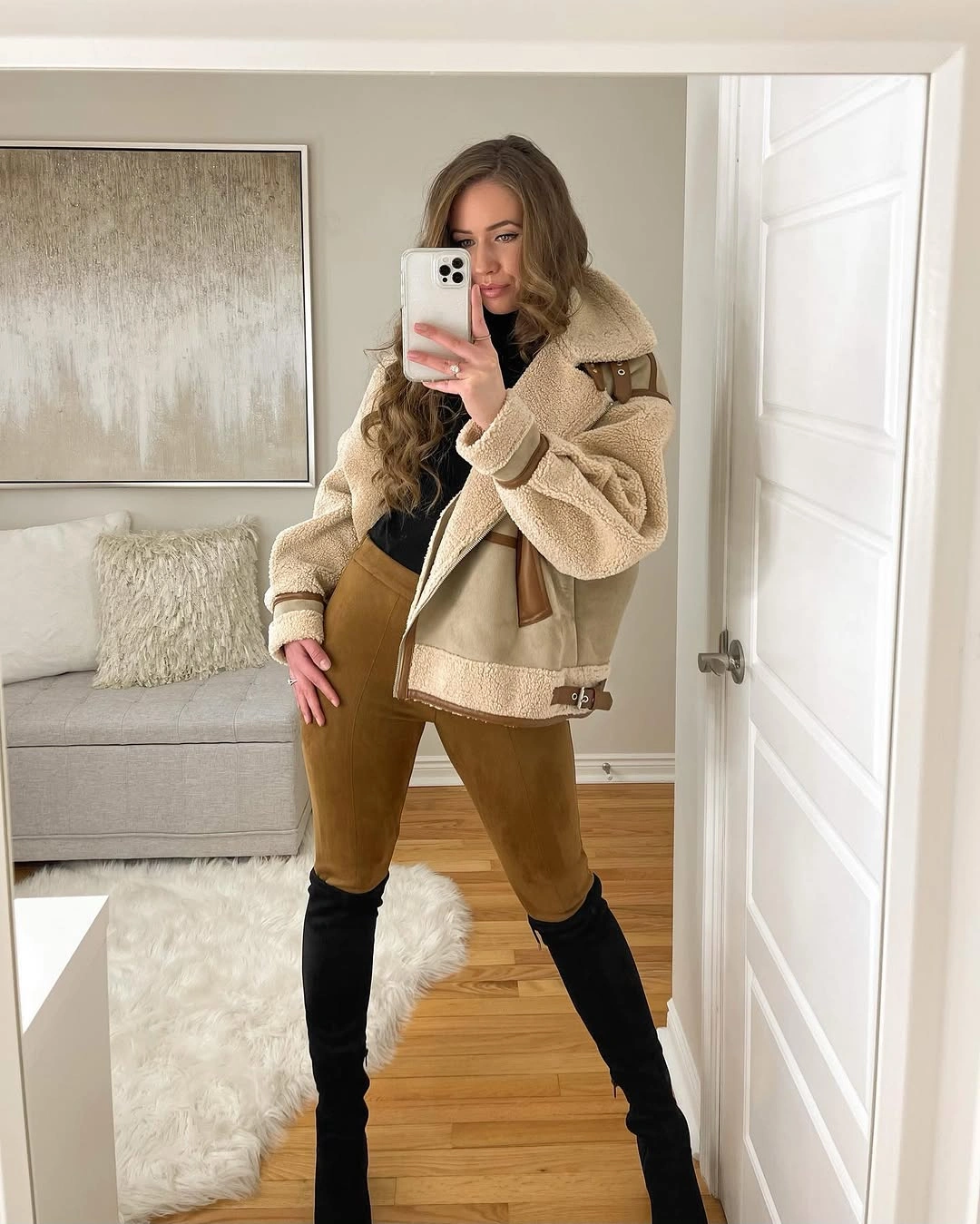
Photo via Instagram
The jacket’s contrasting panels make its construction a central part of the outfit, especially where pale trim meets the smoother beige and brown sections. Rather than matching the trousers exactly to the outerwear, the combination uses neighboring warm shades that remain distinguishable, while the black boots and neckline establish consistency at opposite ends. This is a useful way to approach tonal dressing when identical colors would make the separate garments harder to recognize.
The tall boots create a long dark section beneath the brown trousers, giving the lower silhouette a stronger finish than similarly colored footwear would provide. Repeating black at the neckline makes that choice feel connected to the upper body, while the jacket’s pale edging remains the main textured detail.
White Winter Accessories Lighten a Camel Coat
The camel coat provides a smooth, warm-toned outer layer, but the white accessories give this combination its most recognizable character. Oversized plush earmuffs introduce rounded shapes beside the hair, while thick white mittens repeat that light color around the hands. A pale knit visible beneath the open coat and light trousers extend the same direction through the clothing, making the accessories feel integrated rather than simply added at the end.
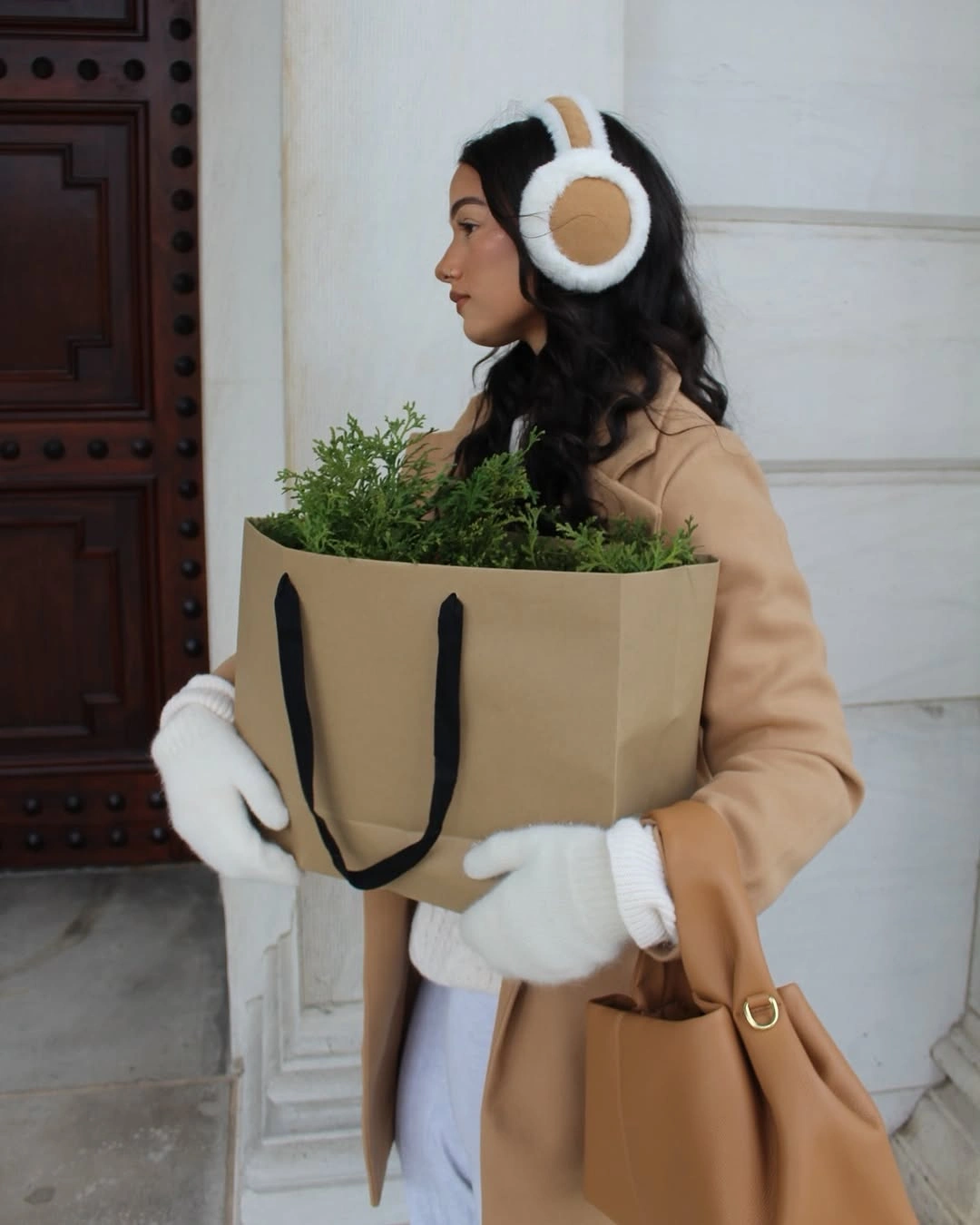
Photo via Instagram
The tan shoulder bag brings another warm neutral into the composition, remaining closer to the coat’s coloring than the brighter white accessories. This creates two related groups: camel and tan in the larger outer shapes, then cream and white in the smaller details and visible inner clothing. If you want to introduce noticeable winter accessories without relying on vivid colors, repeating a pale shade in several clearly separated places can make their shapes stand out against a darker coat.
The earmuffs and mittens contribute different silhouettes despite sharing a similarly soft appearance, giving the upper body and hands their own points of interest. Their repeated white coloring also connects with the pale knit, so the camel coat remains an organizing layer instead of competing with every accessory.
A Belted Black Coat Reveals a Sculpted White Hem
The dark coat creates a defined outer silhouette through its structured shoulders, overlapping front, and wide belt positioned at the waist. Its gold-toned buckle becomes a concentrated detail near the center, while a white decorative hem emerges below the coat and introduces a contrasting shape farther down. The pale edge has a scalloped appearance that differs sharply from the coat’s straighter lines, making the relationship between the two lengths especially noticeable.
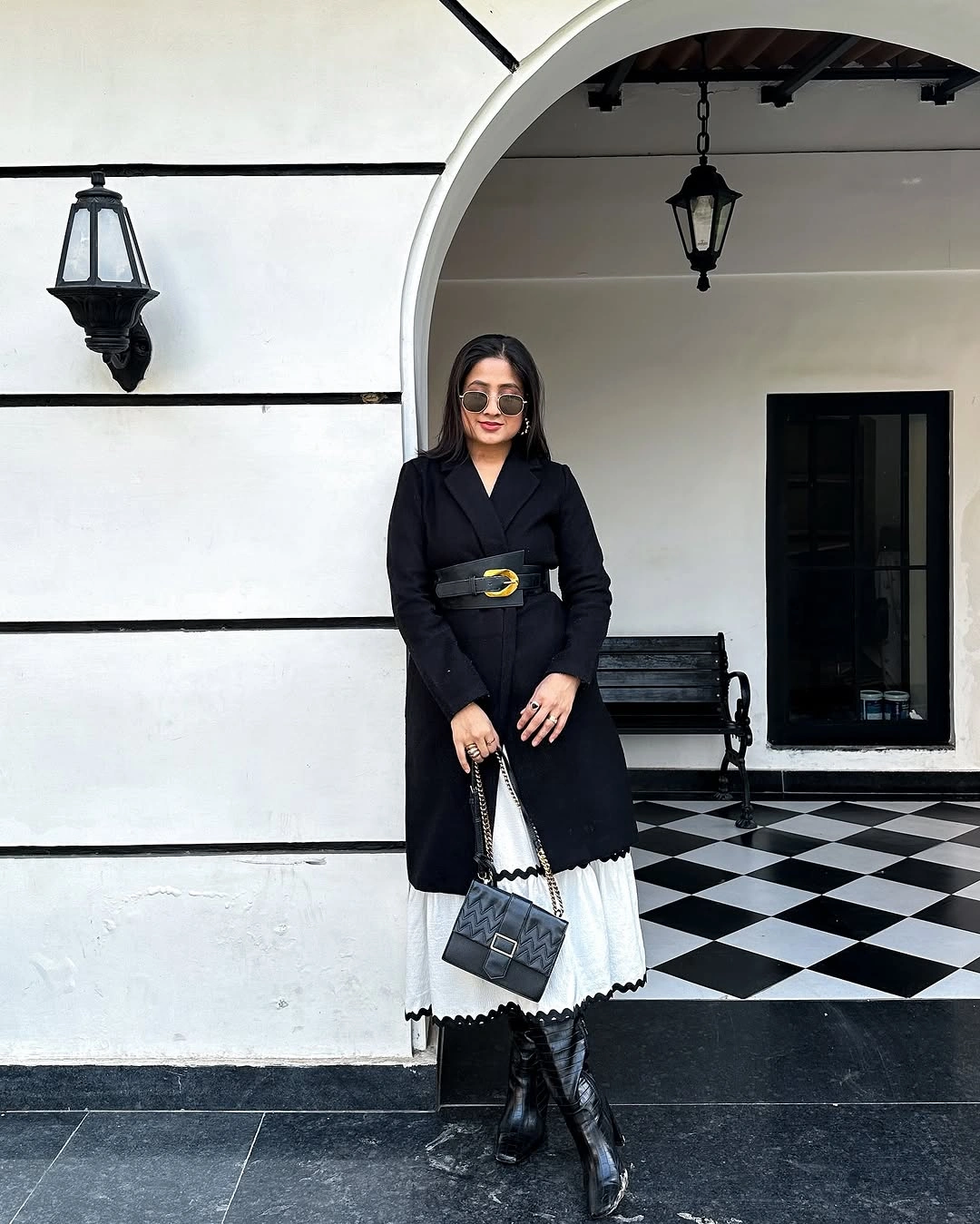
Photo via Instagram
Dark heeled boots extend below the contrasting hem, bringing the lower portion back into the coat’s color family and keeping the white detail visually contained between darker areas. A small quilted handbag with a chain strap adds geometric surface detail without introducing another dominant shade, while the sunglasses reinforce the compact dark accessories. The combination demonstrates how an otherwise restrained outfit can accommodate a decorative garment edge when the surrounding pieces provide clearly defined shapes.
The belt buckle and white hem attract attention at different heights, with one emphasizing the waist and the other marking the transition between outerwear and footwear. Their contrasting forms give this particular black coat outfit its distinctive structure, allowing the scalloped detail to remain expressive without requiring additional color or pattern.