Three decisions can change an entire outfit without adding another piece: where a hem ends, how much space a silhouette occupies, and which color catches your attention first. Those relationships make minimalist outfits for 2027 more interesting than a simple exercise in wearing fewer clothes. A generous cut can be just as precise as a fitted one, provided the proportions have a clear purpose and the eye has somewhere natural to settle.
Restraint does not require a wardrobe stripped of personality. I find the most convincing minimalist styling often includes something slightly unexpected, such as a dramatic length, an unusual surface, or a color that refuses to disappear into the background. What matters is whether that decision belongs to the larger composition. Once you begin noticing how garments interact rather than judging each piece separately, simplicity becomes a much more expressive way to dress.
A Long Black Coat Gives Wide Trousers Direction
The first thing I notice is how the black coat creates a defined vertical outline around trousers that seem almost unrestricted in width. Its long, relatively straight shape gives the gray fabric a boundary without trying to compress it, allowing two generous silhouettes to coexist. This is the kind of proportion play I appreciate in minimalist outfits: the clothes have presence because their shapes are considered, not because every available detail has been added.
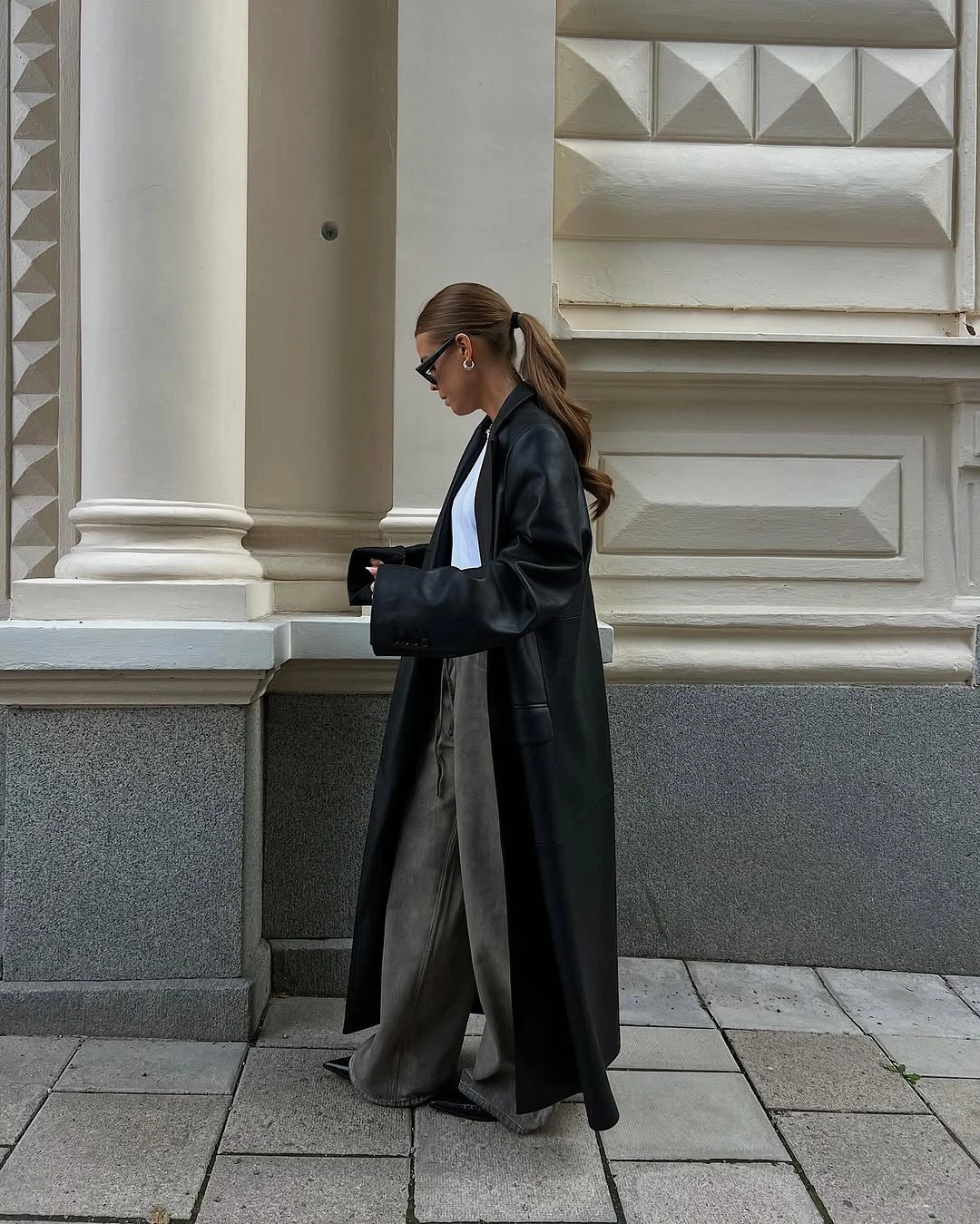
Photo via Instagram
Look more closely at the narrow white layer between the black outerwear and darker inner clothing. That small interruption matters because it separates the upper pieces without creating another expansive block of color, preserving the coat’s strong vertical effect. The gray trousers bring movement and a softer outline to the lower half, while the smooth, dark exterior of the coat keeps the entire combination from reading as an indistinct collection of oversized pieces.
The pointed dark footwear visible beneath the trouser hem adds a sharper finish to all that loose fabric. I particularly like that the outfit allows the trousers to remain expansive rather than shortening the coat or tightening another piece merely to make the proportions more conventional.
One Black Dress With a Fresh Casual Finish
A relaxed black dress can do considerably more than serve as a plain starting point. Here, the short sleeves, easy fit, and calf-length hem form one continuous dark shape with little interruption, which gives the clothing a wonderfully uncomplicated appearance. Instead of looking unfinished, the silhouette leaves room for the accessories to establish its character, proving that minimalist casual outfits do not need sharp tailoring to feel thoughtfully assembled.
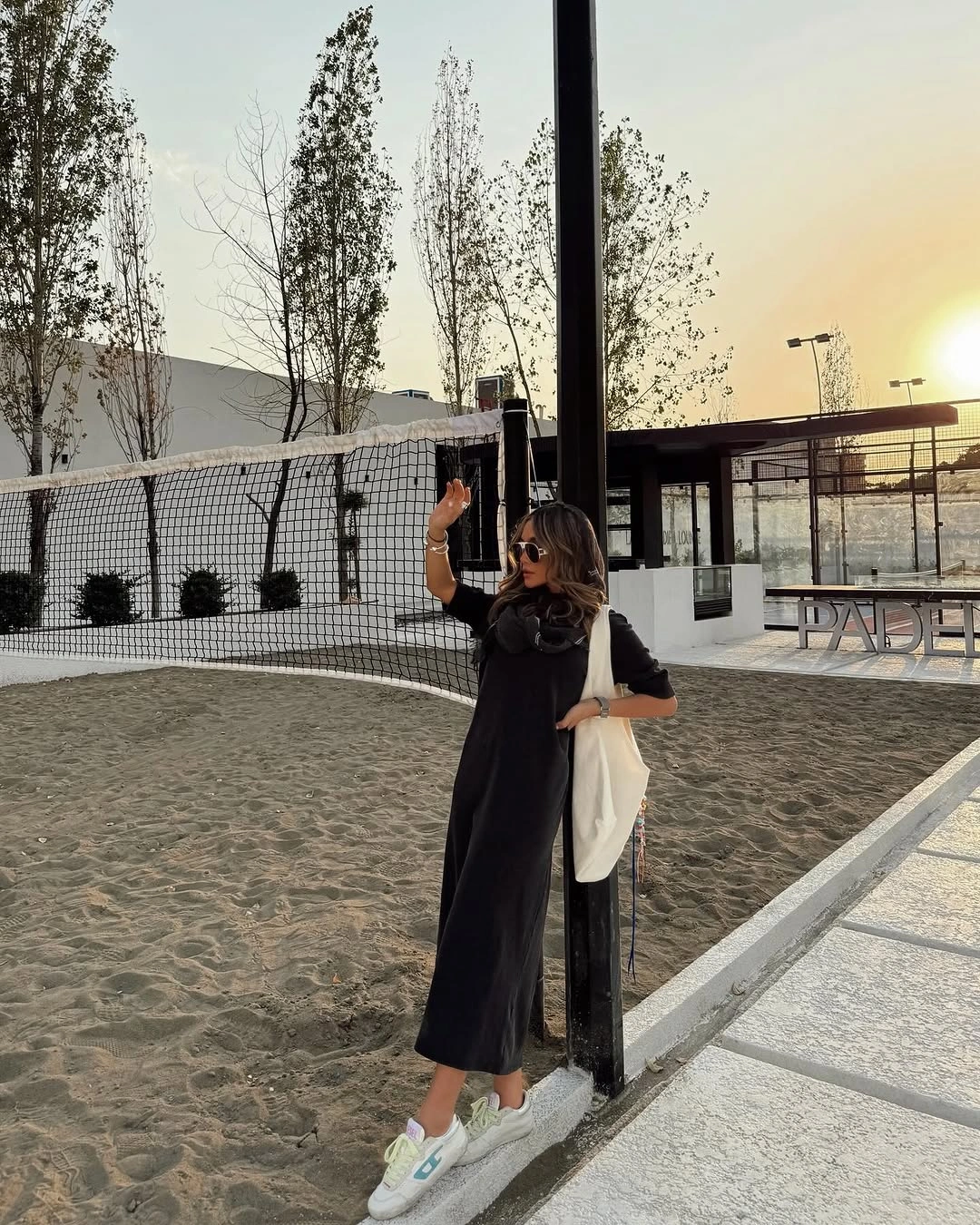
Photo via Instagram
The generous off-white tote is particularly important because it introduces a substantial light shape against the dark dress. It is large enough to become part of the overall composition rather than disappearing as a minor detail, while the white sneakers bring that brightness down toward the feet. Their small colored accents keep the footwear from appearing overly formal or pristine, creating a relaxed visual connection between the practical-looking bag and the otherwise uninterrupted dress.
I like the contrast between the dress’s quiet simplicity and the more active shapes of the tote and sneakers. The outfit would look quite different with narrow heels and a tiny handbag, but this casual combination has its own clarity without needing those dressier references.
Deep Blue Makes Relaxed Neutral Dressing More Distinctive
This deep-blue jacket is a good reminder that minimalist dressing does not have to begin with black, beige, or gray. Its boxy outline, visible front buttons, and relaxed sleeves create an identifiable shape above the white shirt and loose pale trousers. I especially like how the blue feels decisive without becoming visually overwhelming; it occupies one clear part of the silhouette while the lighter garments beneath it establish a more open, continuous foundation.
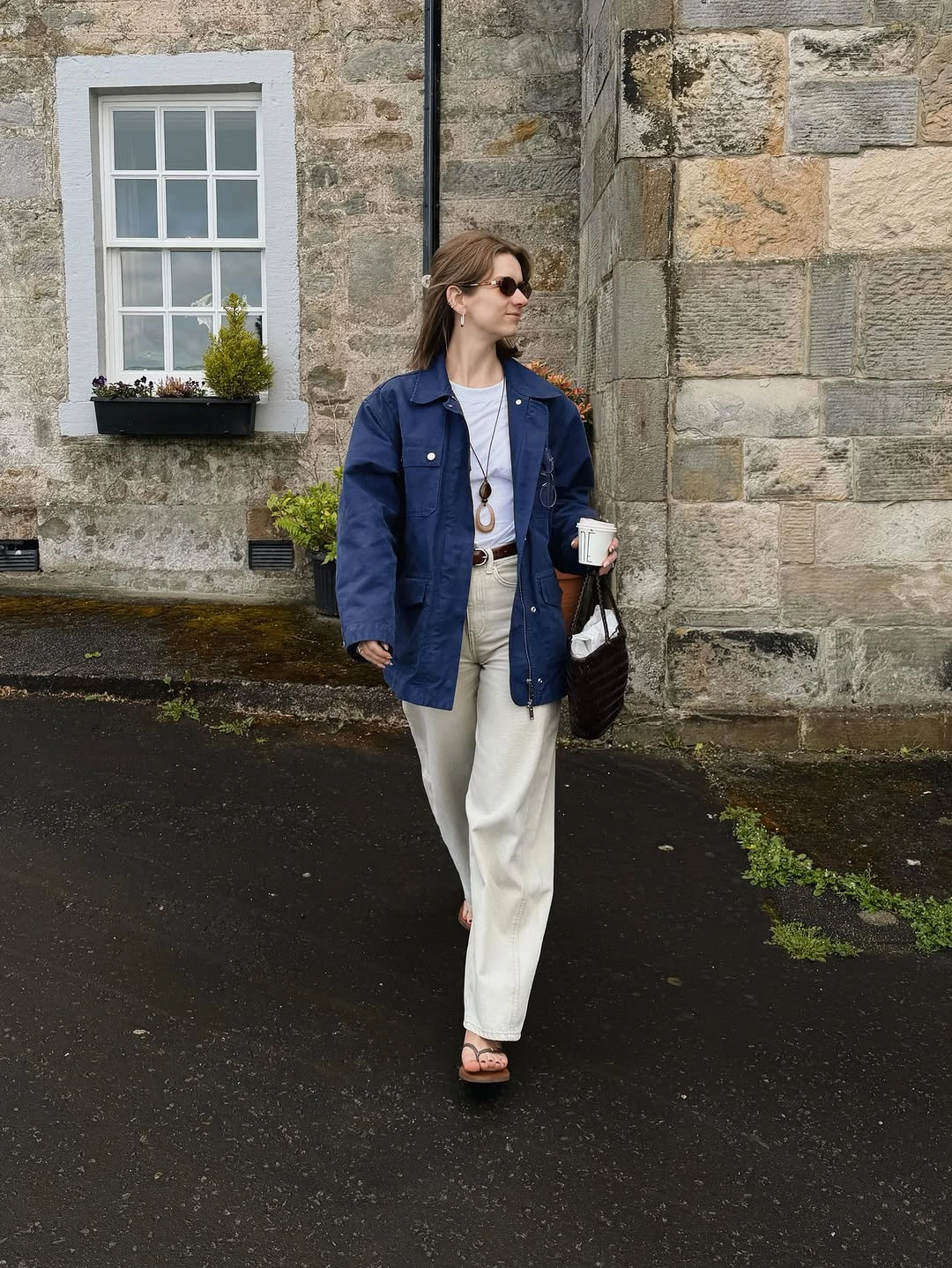
Photo via Instagram
The trousers have enough width to make the outfit feel casual, and the flat brown sandals reinforce that easygoing impression without adding another substantial layer around the feet. There is a thoughtful relationship between the squared-off jacket and the softer trouser shape, but neither piece seems designed to cancel the other out. The brown footwear also introduces a warmer note than the blue-and-white combination alone would provide, making the palette feel less rigid while remaining uncomplicated.
The long pendant necklace creates a slender vertical detail against the white shirt, gently interrupting the broader shapes around it. Together with the dark shoulder bag and sunglasses, it gives this colorful minimalist outfit just enough personal detail to avoid looking overly coordinated.
A Taupe Trench Coat With an Unexpectedly Relaxed Edge
The appeal of this taupe coat lies partly in its familiar construction: the collar, front buttons, and loose straight silhouette give it the recognizable structure of classic outerwear. Yet the outfit does not try to maintain that formal character from head to toe. The coat falls generously around the body, with the understated neutral shade allowing its cut and dark button details to remain visible without relying on strong color contrast.
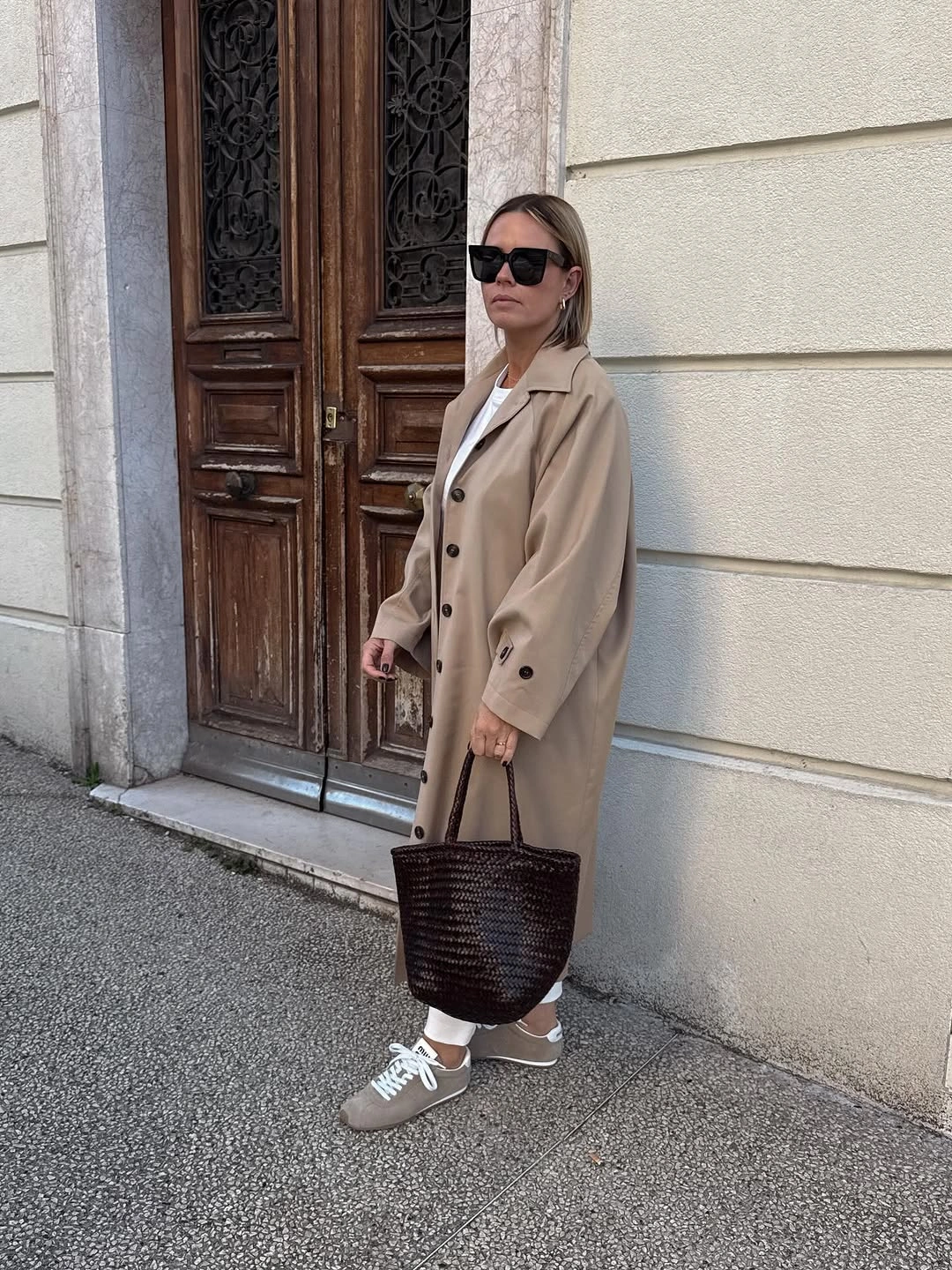
Photo via Instagram
Neutral lace-up sneakers change the mood considerably, bringing a more casual shape beneath the longer coat. I find that pairing more interesting than simply choosing footwear that matches the coat’s traditional appearance, because the difference feels natural rather than exaggerated. The dark woven handbag contributes another kind of contrast through its rounded, textured form, which stands apart from the coat’s smoother appearance while remaining within a restrained, earthy palette.
The oversized black sunglasses add a crisp graphic note near the face, contrasting with the softer taupe clothing. What makes this combination persuasive is its willingness to let traditionally tailored outerwear and everyday accessories occupy the same outfit without forcing either into a different role.
Black and White Tailoring With a Precise Finish
Black and white may be a familiar minimalist pairing, but the proportions here make it feel particularly deliberate. The fitted black blazer creates a relatively compact upper section, while the straight white trousers establish a longer, uninterrupted area of light below. I appreciate the clean separation between the two colors because it makes the tailoring easy to read, allowing the blazer’s defined shape and the trousers’ simpler lines to carry the outfit without decorative additions.
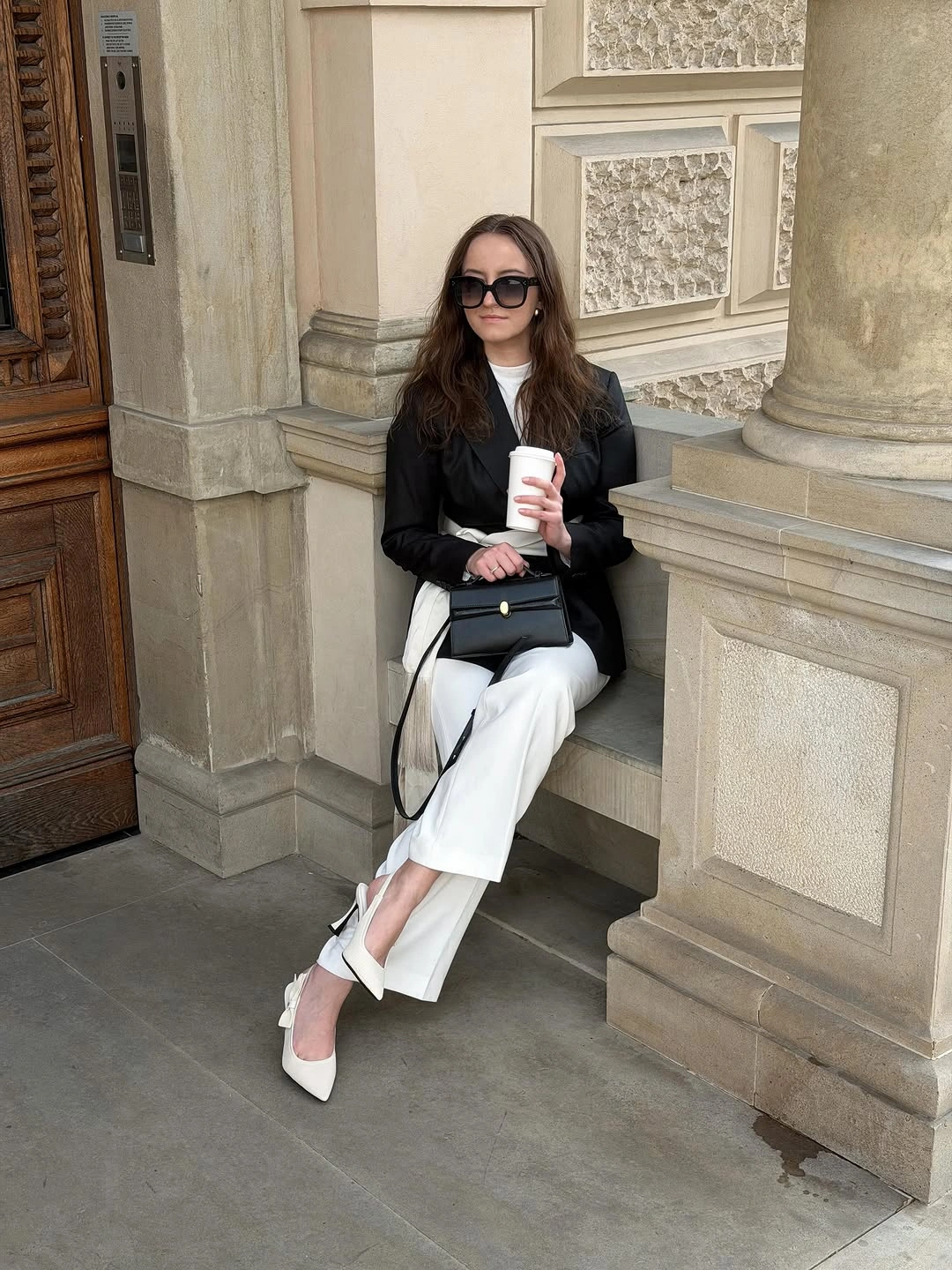
Photo via Instagram
The small structured black handbag repeats the jacket’s color on a much smaller scale, giving the upper half another point of definition against the pale trousers. Meanwhile, the white layers beneath the blazer connect visually with the lower half instead of introducing a third competing shade. That repetition is especially effective in elegant minimalist outfits because the accessories feel integrated into the color arrangement rather than attached afterward as unrelated finishing pieces.
White pointed heels extend the light-colored lower silhouette while introducing a sharper shape at the feet. The result feels polished without relying on an elaborate combination, and I particularly like how the precise accessories complement the tailoring instead of competing with its clean black-and-white geometry.
Deep Plum Gives Oversized Minimalism a Softer Direction
There is something appealing about an outfit that allows two generous silhouettes to occupy the same space without looking disconnected. The roomy plum top has rounded sleeves and a softly structured outline, while the very wide dark trousers continue that sense of ease below. Instead of relying on a sharply defined waist or obvious tailoring, the combination finds its direction through closely related dark colors and the difference between the rounded upper shape and straighter falling trouser legs.
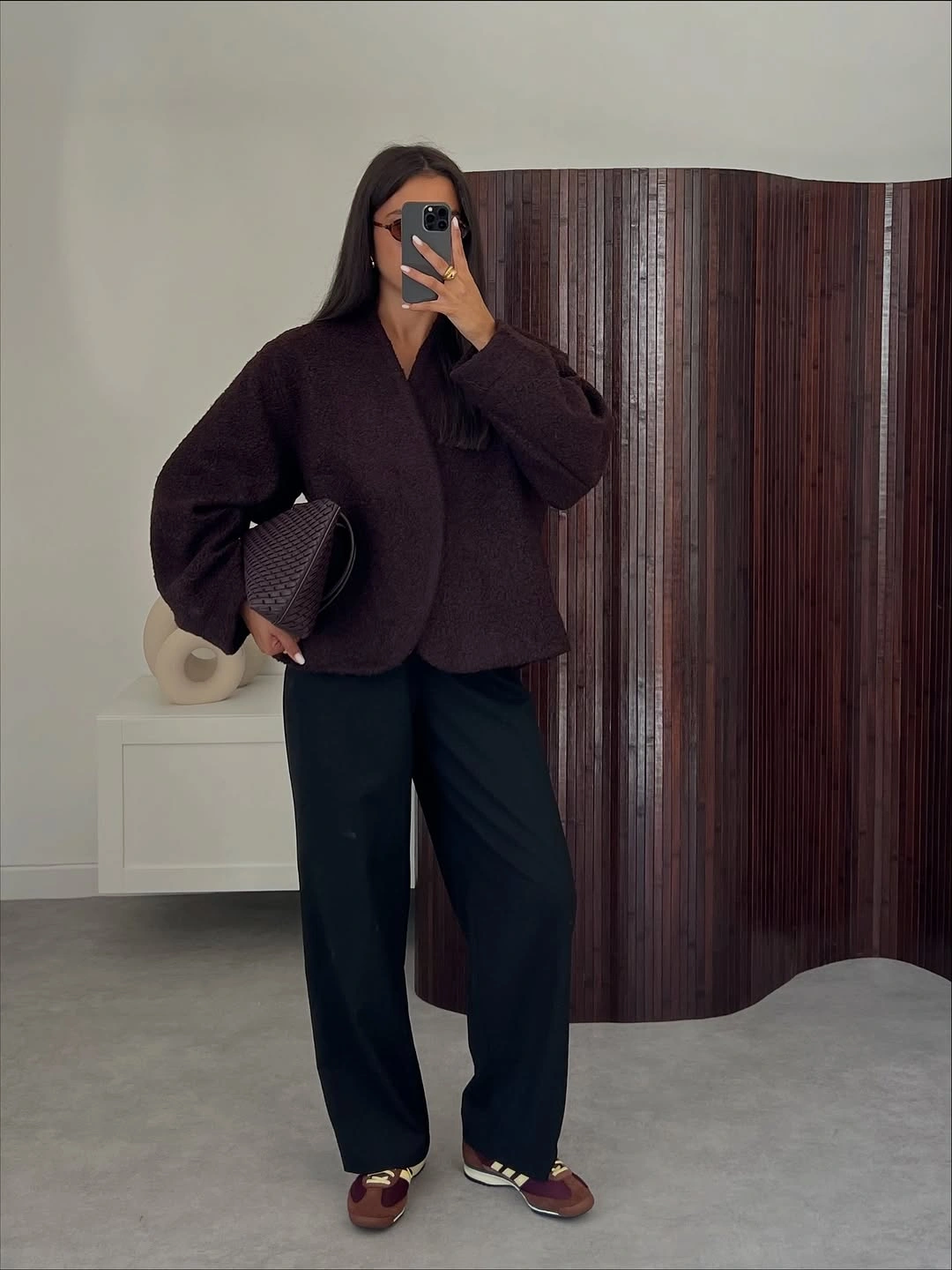
Photo via Instagram
The textured clutch adds a particularly interesting dimension because its deep plum shade relates closely to the top while its patterned surface catches attention differently. This kind of coordination feels more considered than matching every accessory exactly, since the color remains familiar but the finish changes. For dark minimalist outfits, that distinction can make an otherwise subdued combination more engaging without dividing the silhouette into numerous contrasting sections.
Burgundy sneakers bring the palette down to the feet, with small yellow details providing a playful interruption that does not dominate the outfit. I like that the footwear feels casual rather than overly refined, giving the expansive trousers a relaxed ending and preventing the deeper colors from becoming too serious.
A Pale Long Coat Finds Definition Against Black
The light beige coat makes its impression through length rather than decorative construction. Its generous silhouette moves around the black trousers, allowing the darker clothing underneath to appear as a separate vertical area instead of disappearing into the outer layer. What interests me here is the way the pale coat remains visually substantial despite its understated color, with the long hem providing enough movement and presence to make the combination feel complete.
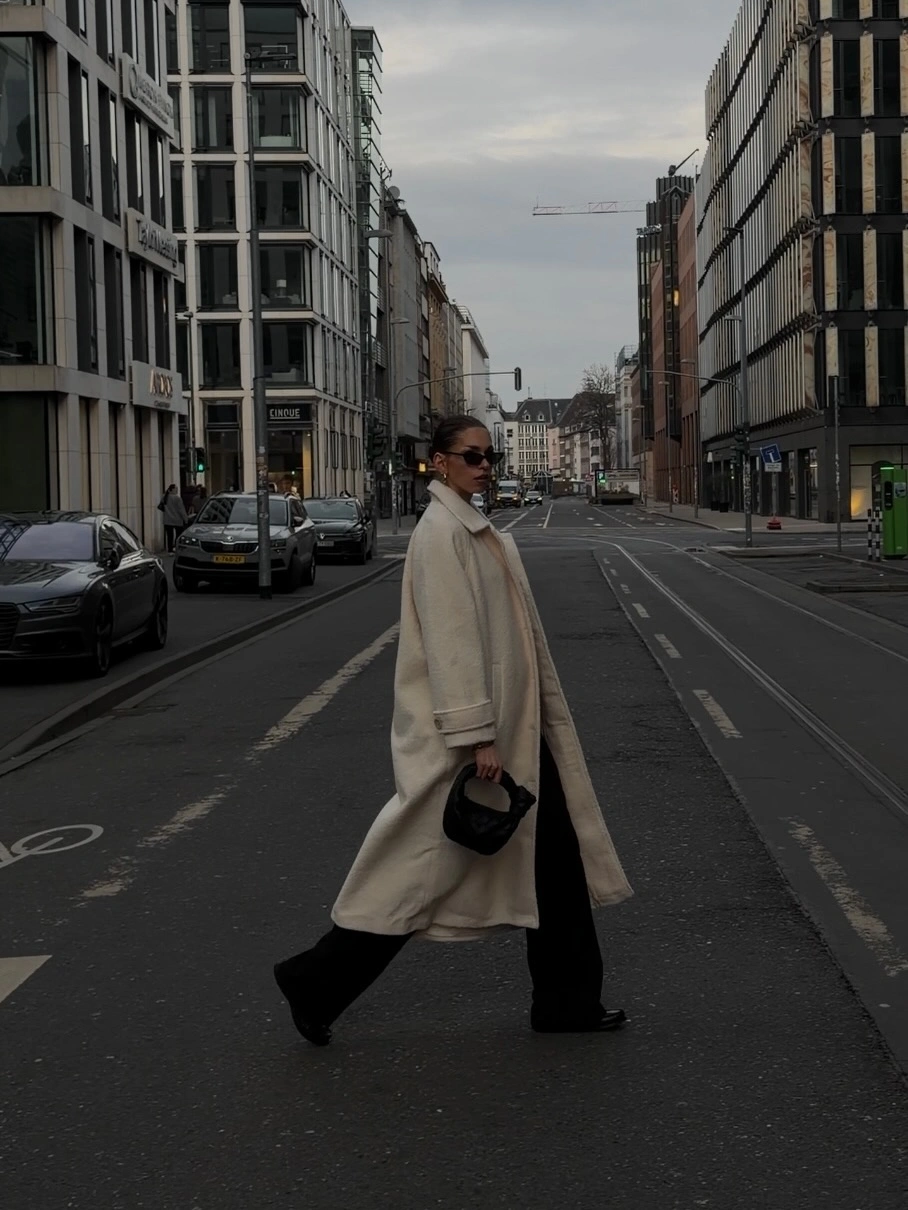
Photo via Instagram
The extended pale scarf changes how that length is perceived, creating another soft line that travels down the front of the outfit. Because it stays close to the coat’s color, the scarf reads as an extension of the outer silhouette rather than a distinctly separate accessory. The black trousers provide a contrasting foundation beneath those longer pale layers, and their generous width keeps the outfit relaxed instead of creating an overly narrow or formal appearance.
The small black handbag introduces a contained shape beside the much larger coat, giving the accessories a different sense of scale. Dark footwear continues the trouser color toward the ground, allowing the outerwear and scarf to remain the most noticeable parts of this elegant neutral combination.
A Long White Scarf Changes Black Tailoring Completely
An off-white scarf becomes almost architectural when it falls this far down a black outfit. Rather than sitting around the neckline as a compact accessory, its two narrow lengths create distinct pale lines across the tailored blazer and loose trousers. I find the placement especially effective because it changes the way the black clothing is perceived without concealing the jacket’s shape or adding another substantial garment to the silhouette.
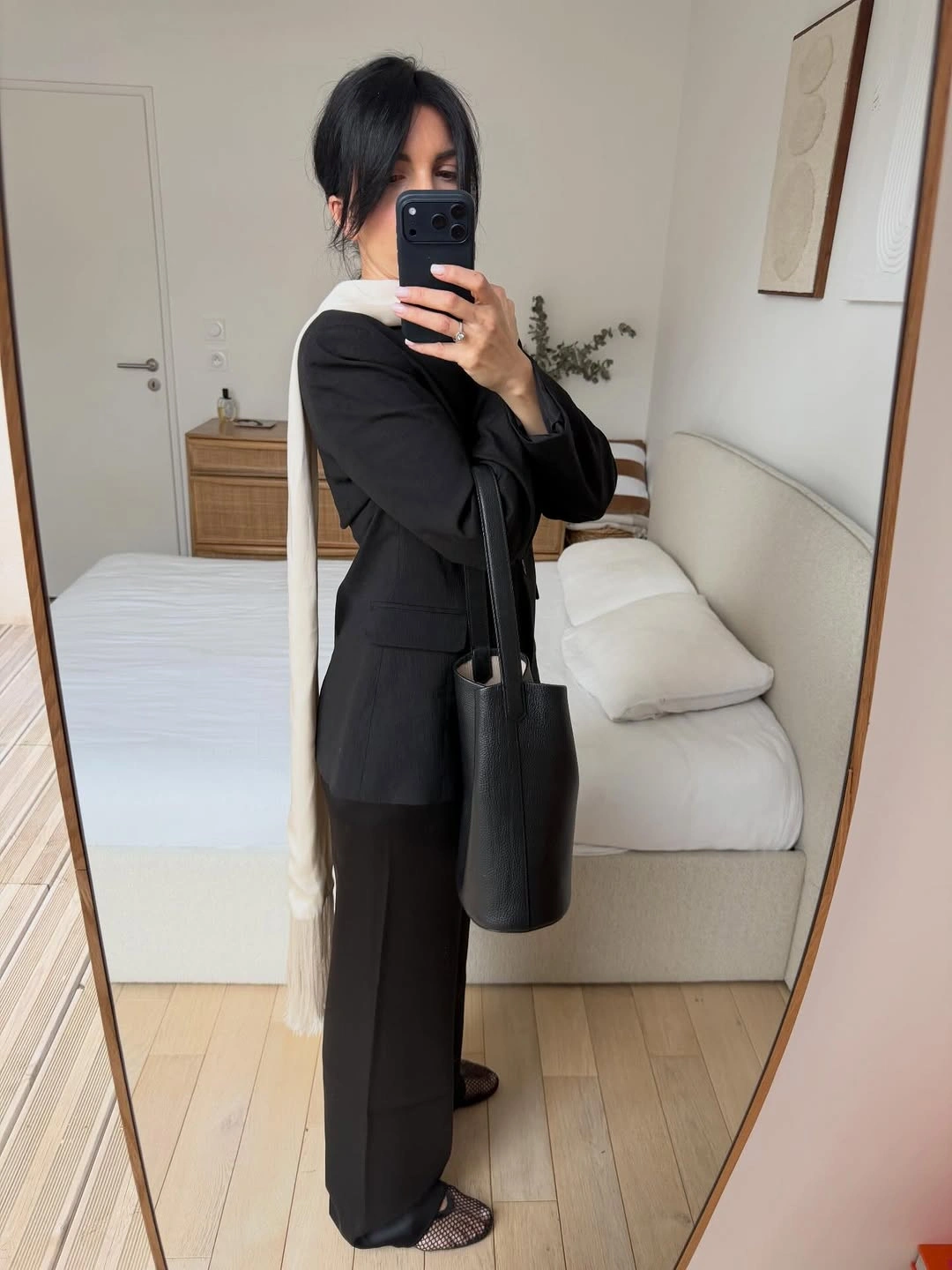
Photo via Instagram
The black blazer provides recognizable tailoring through its lapels and defined shoulders, while the trousers introduce a more relaxed amount of volume below. These two elements would already form a straightforward minimalist combination, but the scarf brings an unexpected sense of length to the center of the body. Its pale color remains concentrated in a narrow area, so the contrast feels graphic and precise rather than dividing the outfit into large competing blocks.
A simple black shoulder tote continues the dark rectangular shapes established by the tailoring, while the low-profile footwear leaves the trouser hem visually uncomplicated. What makes this minimalist chic outfit memorable is the scarf’s unusual proportion, not the number of separate pieces involved.
A Sculpted White Top Makes Simple Trousers Interesting
The white sleeveless top carries most of the design interest here, and its shape deserves a closer look. The upper section follows a narrower line before the lower edge flares outward, creating a distinct silhouette without requiring additional layers or decorative details. Against the dark trousers, that change in shape becomes especially noticeable, making the top feel more expressive than an ordinary straight-cut sleeveless piece while keeping the overall composition remarkably clear.
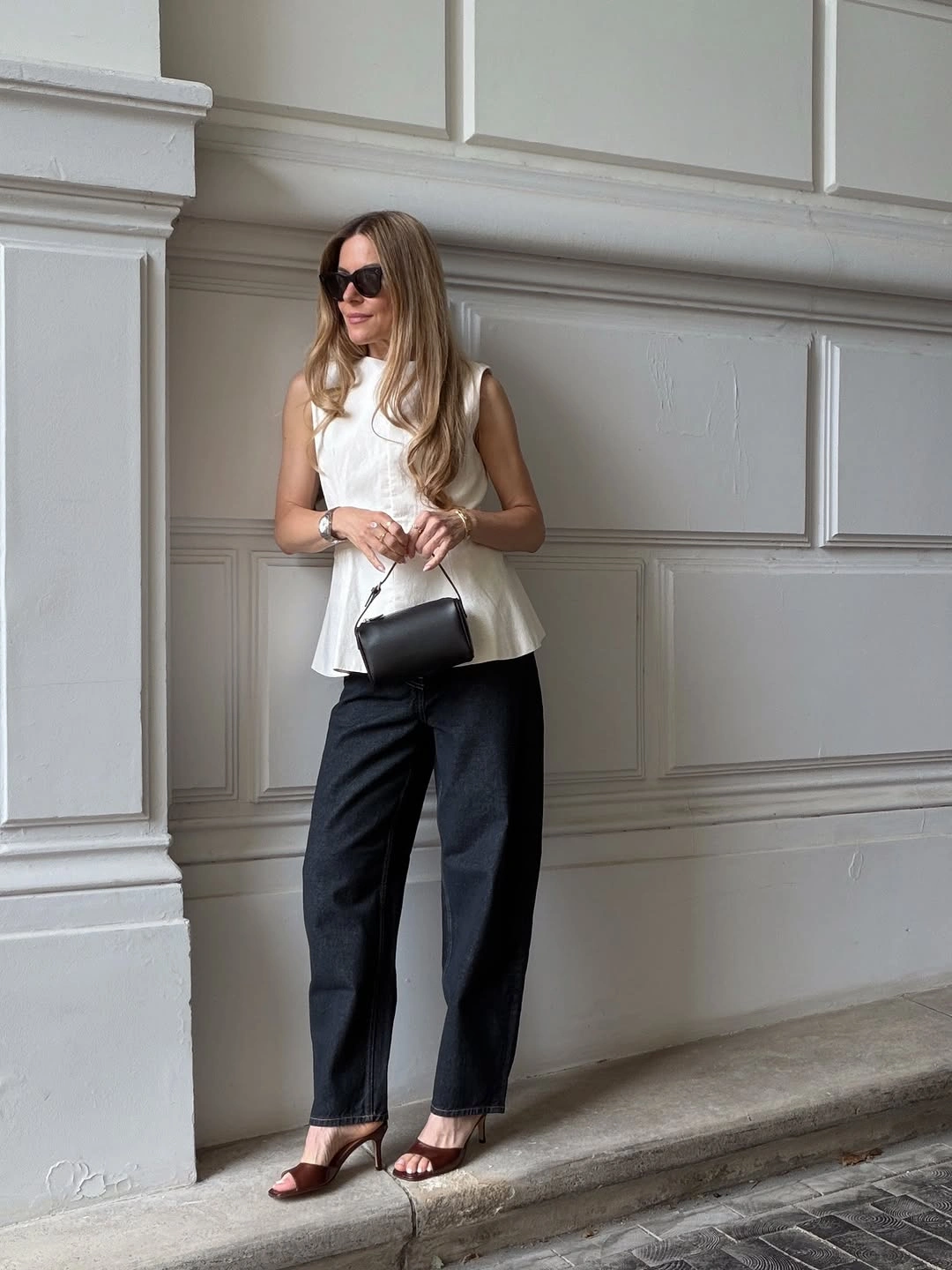
Photo via Instagram
The dark trousers provide a useful contrast because their relatively straightforward shape does not imitate the movement of the white top. Their full length gives the outfit a defined lower section, while the small black handbag introduces another dark detail without interrupting the light upper half. This relationship is worth considering when choosing elegant minimalist summer outfits: interesting construction in a single garment can do more visually than adding several accessories around a simpler cut.
Dark red open-toe heels bring a restrained change of color to the feet, giving the otherwise black-and-white composition a slightly unexpected finish. The red does not need to appear elsewhere to feel intentional, because its placement is distant enough from the sculpted top to establish a separate point of interest.
Warm Tan and Small Details Create Subtle Contrast
This golden-tan jacket has enough character in its cut to make a complicated outfit unnecessary. The broad collar, visible patch pockets, and boxy outline establish a series of substantial shapes, while the warm color stands apart from the dark trousers below. I particularly appreciate the jacket’s slightly rounded volume, which gives the upper half a softer appearance without losing the definition created by its collar and front construction.
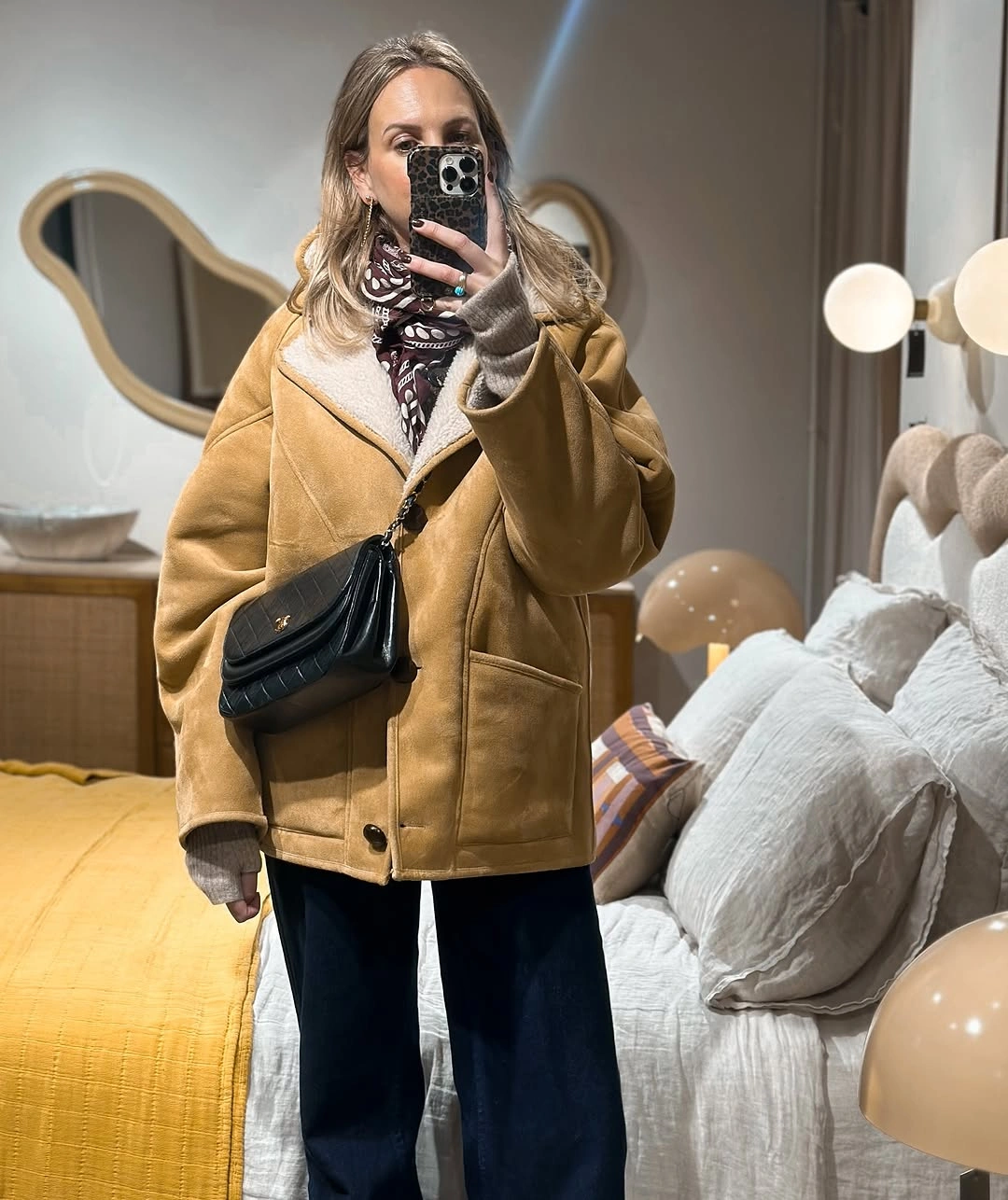
Photo via Instagram
Several smaller details make the combination more layered than it initially appears. Gray clothing shows at the neckline and cuffs, introducing cooler areas beside the tan jacket, while the dark patterned scarf contributes a finer arrangement of contrasting shapes near the face. Those details operate at different scales, allowing the eye to move between the broad jacket, narrow exposed layers, and compact scarf pattern without making the earthy minimalist palette feel excessively coordinated.
The black crossbody bag adds a diagonal line across the jacket, interrupting its mostly rectangular construction and connecting visually with the darker trousers. I like that the outfit has room for this slight irregularity, demonstrating how casual minimal chic can come from the interaction of several modest details rather than an insistence on perfectly matching surfaces.
An Oversized Black Blazer Sharpens Relaxed Gray Denim
The shoulders of this black blazer are deliberately broad, giving the upper half a defined outline that contrasts with the loose, faded gray jeans. I like that the denim retains its casual character rather than being disguised by the tailoring, with visible folds and a relaxed leg shape that feel distinctly different from formal trousers. The combination has a subtle 90s-inspired attitude, but its appeal comes from the way two familiar silhouettes meet without either losing its identity.
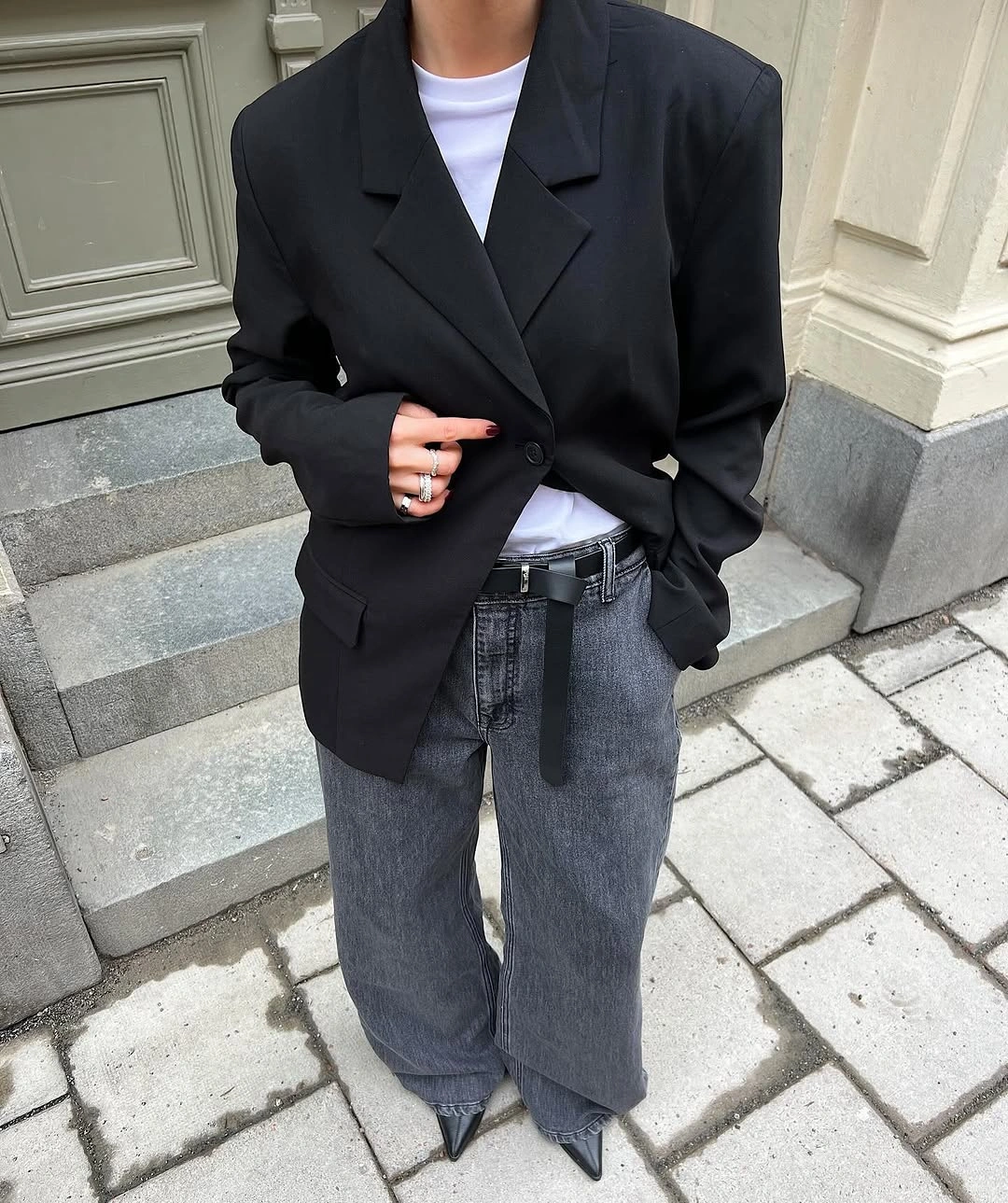
Photo via Instagram
The plain white crew-neck shirt deserves more attention than it might initially receive because it creates a clean separation between the dark blazer and washed denim. A black belt introduces a narrower detail at the waist, with its extended end adding a slightly irregular line beneath the jacket. Silver rings provide small points of brightness around the hands, bringing personal detail to minimalist casual dressing without making the outfit dependent on elaborate jewelry or decorative layers.
Pointed dark shoes give the loose jean hems an unexpectedly precise ending, which I prefer here to footwear that would make the silhouette uniformly relaxed. The contrast works because the shoes add definition at the ground while leaving the jeans’ generous shape untouched.
Soft Gray and Beige With a Dark Textural Interrupt
Not every neutral outfit needs to rely on matching shades to feel cohesive. This combination moves between a light beige overshirt, a soft gray crew-neck top, and pale cropped trousers, creating gentle distinctions that become noticeable through their placement rather than through strong color changes. The loose outer layer leaves the gray center visible, while the trousers continue the lighter palette below, giving the outfit an understated quality that feels relaxed without becoming visually shapeless.
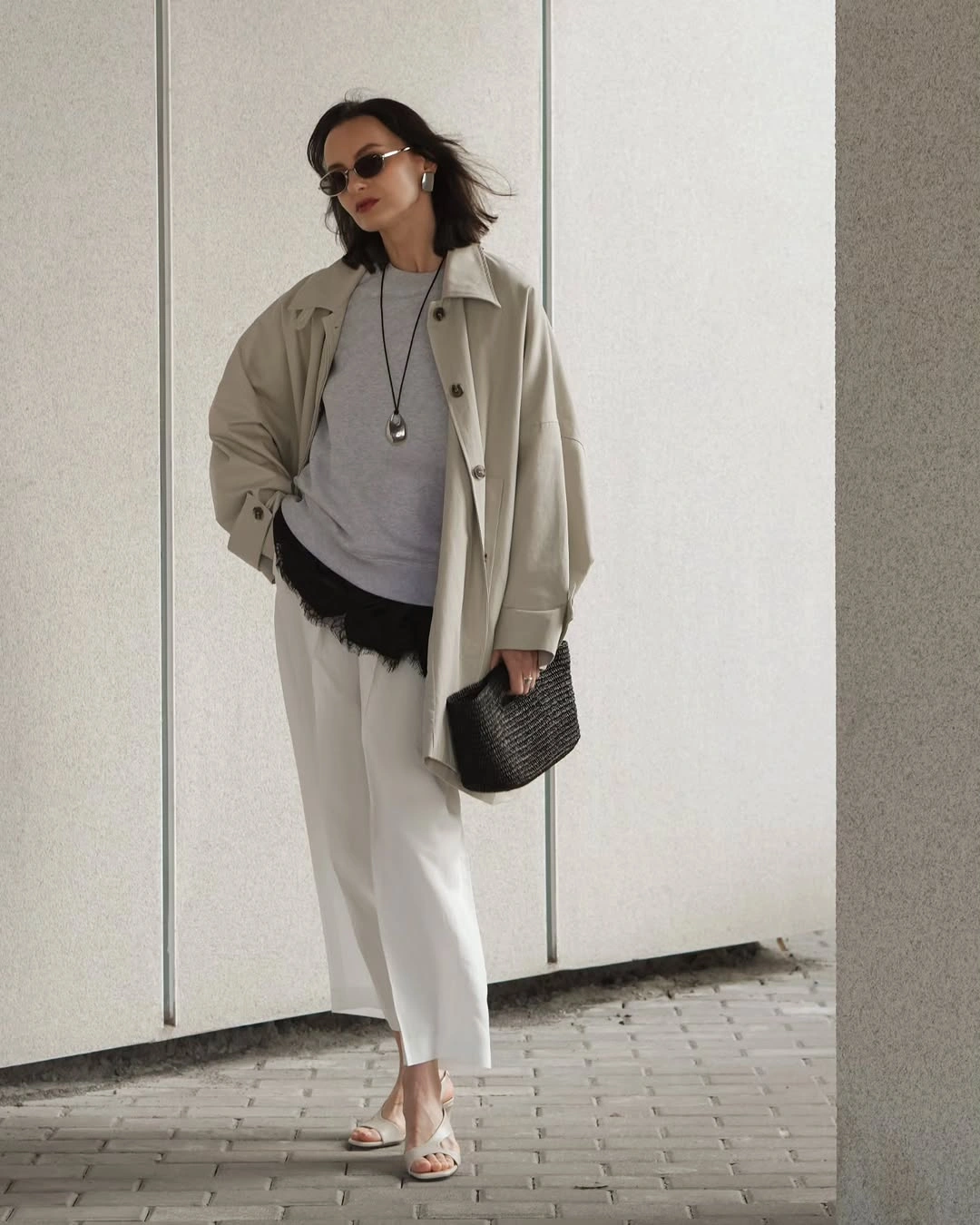
Photo via Instagram
What makes this arrangement more distinctive is the dark fringed detail positioned near the hip, which interrupts the otherwise smooth, pale clothing with a concentrated area of texture. The small dark handbag provides another point of visual weight, but its compact woven-looking surface differs from the softer fringe nearby. I find that distinction interesting because the dark elements do not simply repeat one another; they introduce separate textures and shapes while helping define the middle of the loose silhouette.
The long pendant necklace adds a finer vertical detail across the gray top, drawing attention toward the center without requiring a contrasting neckline. Cropped trousers and pale open sandals leave the ankles visible, giving the lower half a lighter finish than a continuous full-length trouser shape would provide.
Camel Brown Tailoring Finds Its Match in Accessories
This warm camel-brown jacket has a particularly pleasing relationship with the black clothing underneath it. The structured collar, visible buttons, and straight outer edges create a substantial frame around the darker top and short lower layer, allowing the two colors to remain distinct rather than blending into a continuous neutral silhouette. I appreciate the depth of the brown here because it feels richer than pale beige without requiring a bright contrasting accent to establish its presence.
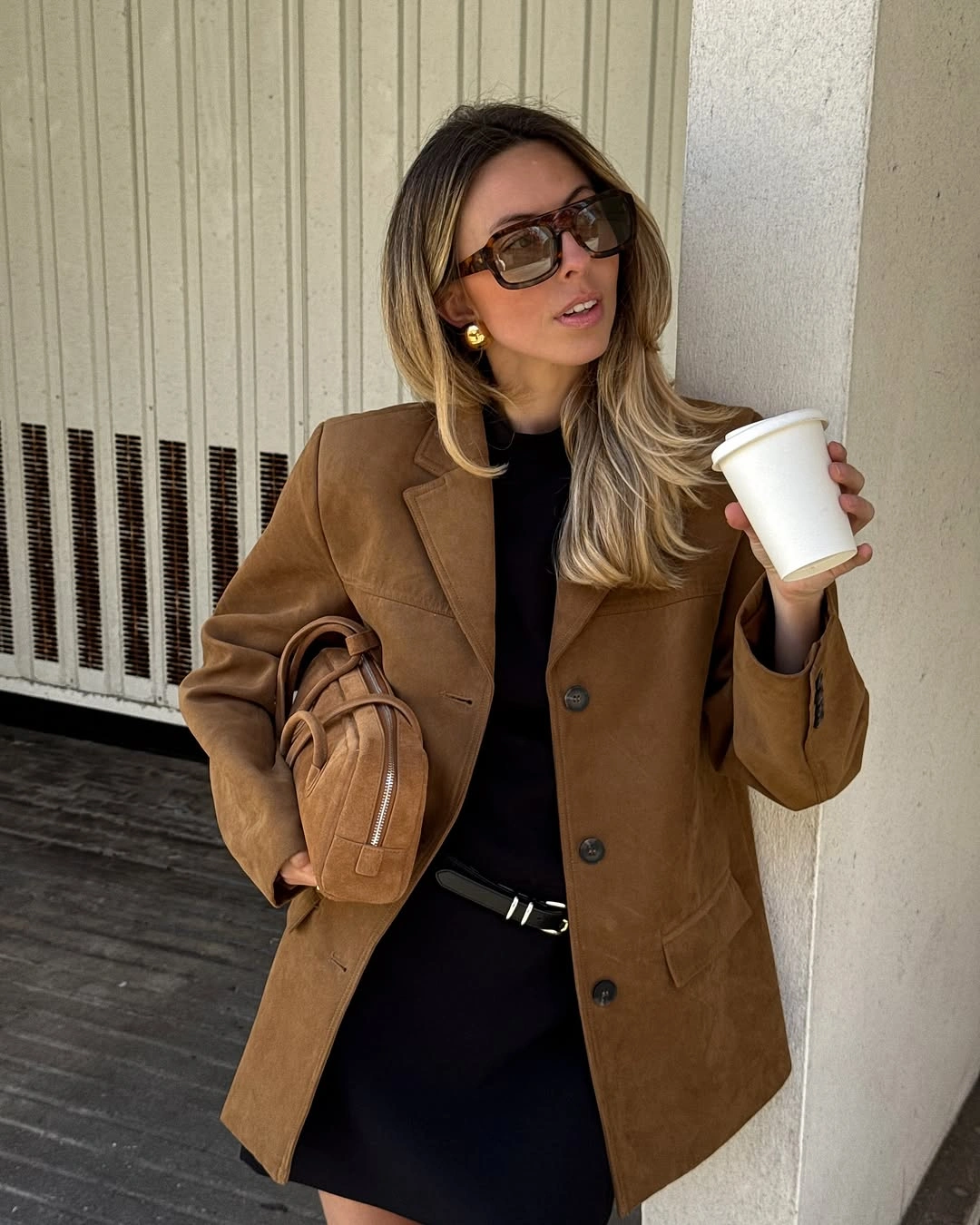
Photo via Instagram
The rounded brown shoulder bag is the detail that makes the color arrangement more deliberate, echoing the jacket while introducing a completely different shape. Its curved outline sits against the jacket’s straighter construction, creating a relationship that feels coordinated without becoming a perfectly matched set. This is a useful distinction in earthy minimalist outfits: repeating a color does not mean repeating the same surface, proportion, or geometry, and the variation can make an otherwise straightforward combination more interesting.
A narrow black belt adds definition within the darker clothing, while the gold earrings bring a small warm accent close to the face. The tinted sunglasses complement that restrained palette, leaving the brown jacket and rounded bag to carry most of the outfit’s visual character.
Charcoal Draping Creates an Unexpected Architectural Silhouette
Symmetry is not a requirement for minimalism, and this charcoal ensemble makes a convincing case for allowing a garment’s outline to be irregular. The broad cape-like layer extends across the shoulders before falling into an uneven edge, creating an angular silhouette that feels more architectural than conventional fitted tailoring. Beneath it, longer dark layers introduce folds and overlapping shapes, allowing the outfit to develop visual complexity without relying on print, bright color, or obvious decoration.
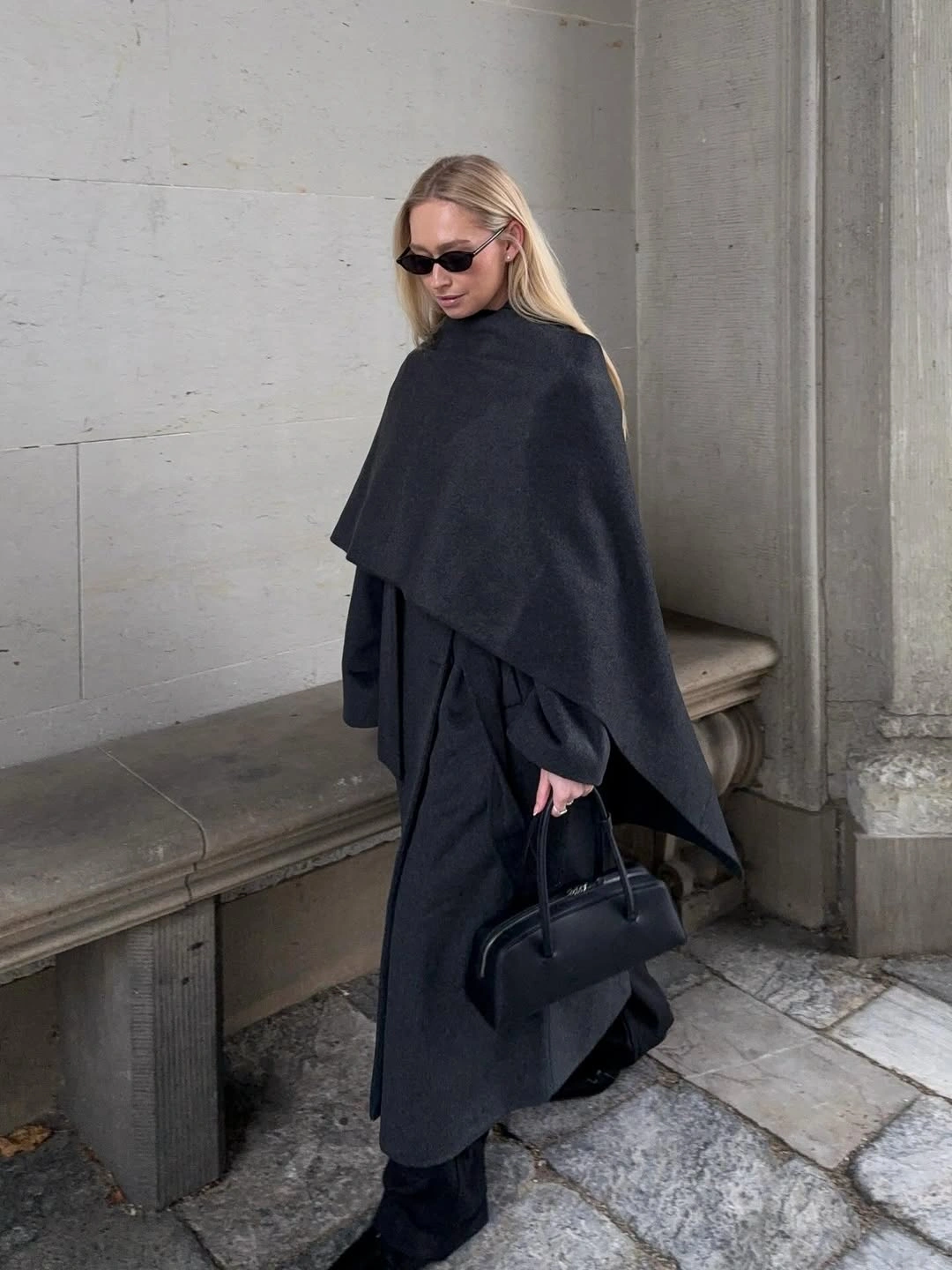
Photo via Instagram
The closely related charcoal and black shades make the draping easier to appreciate because the eye is not constantly redirected by separate color blocks. Instead, attention moves toward the shoulder line, the changing lengths, and the way the overlapping fabric falls around the body. I particularly like this more sculptural interpretation of dark minimalist dressing, although it asks for a different kind of styling judgment than a simple jacket-and-trouser combination: the silhouette itself becomes the primary design decision.
The structured black handbag provides a compact geometric shape beside the irregular draping, offering a satisfying contrast in construction. Narrow sunglasses and dark footwear continue the restrained appearance without competing with the dramatic shoulder arrangement, allowing the garment’s unusual outline to remain fully visible.
A Rounded Pale Jacket Looks Different From Behind
The back of an outfit often reveals proportions that are less obvious from the front, and this pale oversized jacket is an especially good example. Its rounded volume, generous sleeves, and loose lower edge create a soft outline that extends outward rather than following a sharply tailored shape. With the dark jeans falling loosely beneath it, the silhouette feels intentionally spacious from shoulder to hip, demonstrating how casual minimalist outfits can depend on the overall cut rather than decorative details.
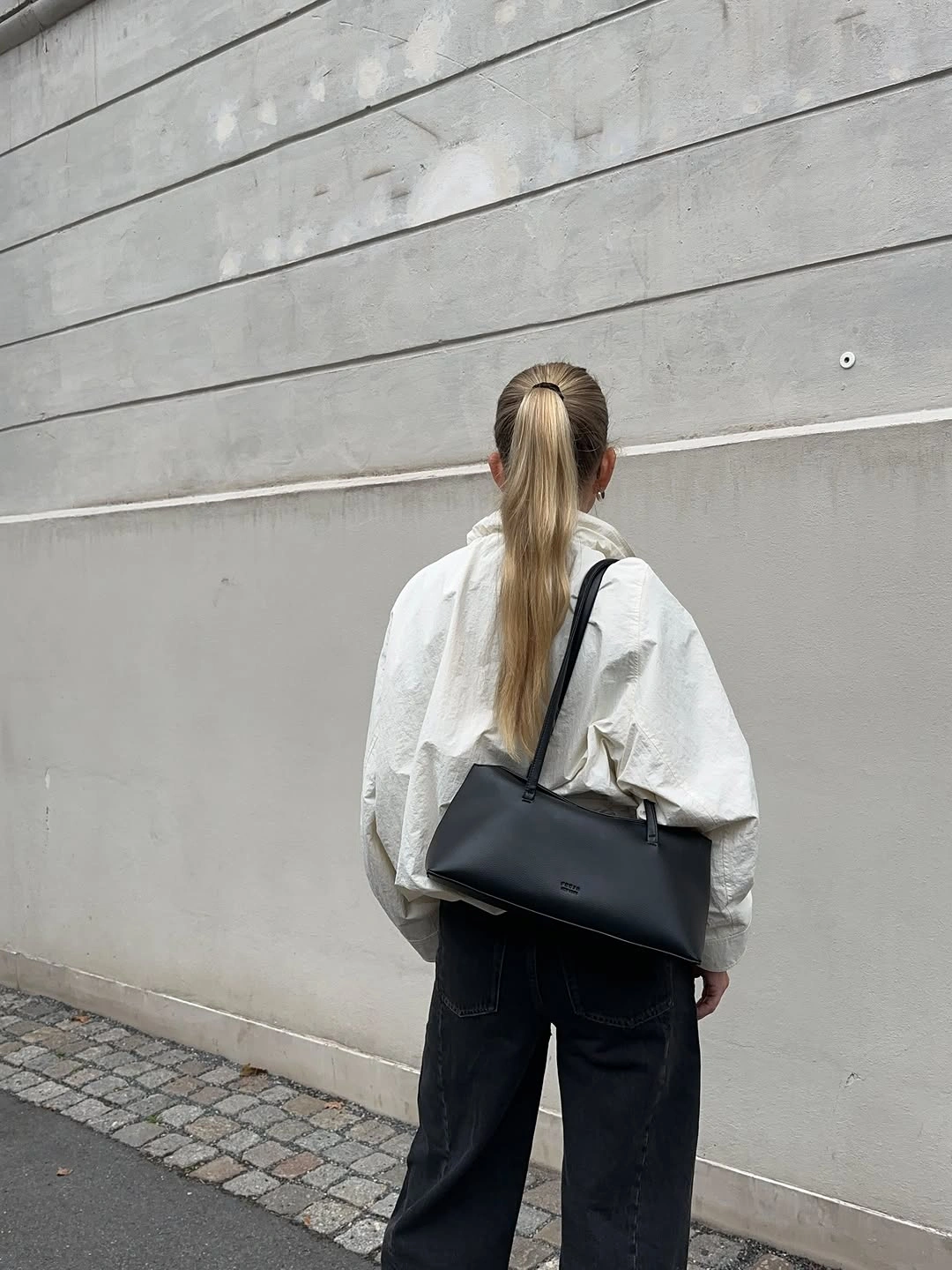
Photo via Instagram
The black shoulder bag changes the composition in a particularly practical visual way, with its strap crossing the pale jacket and creating a clear diagonal line. Its structured shape contrasts with the rounded outerwear, while the dark color connects naturally with the jeans underneath. I find the placement more interesting than a small accessory hanging invisibly at the side, because the bag becomes part of the outfit’s rear silhouette and gives the otherwise broad, light-colored jacket a defined interruption.
The high ponytail keeps the neckline and upper back relatively unobstructed, making the jacket’s generous shoulder shape easier to see. What I like most is how little the outfit relies on front-facing styling gestures; the relationship between jacket, bag, and denim is already strong from an angle that is often overlooked.
Shaggy Brown Trim Brings Texture Into Minimalist Dressing
The shaggy brown trim on this jacket is impossible to overlook, and I think that is precisely why the outfit works. It follows the front opening in two thick vertical sections, creating a textured frame around the black top while changing the apparent size of the jacket itself. The brown body has a comparatively straightforward shape, but the generous trim introduces irregular edges and movement, giving the upper half a distinctive character without relying on patterns or multiple contrasting colors.
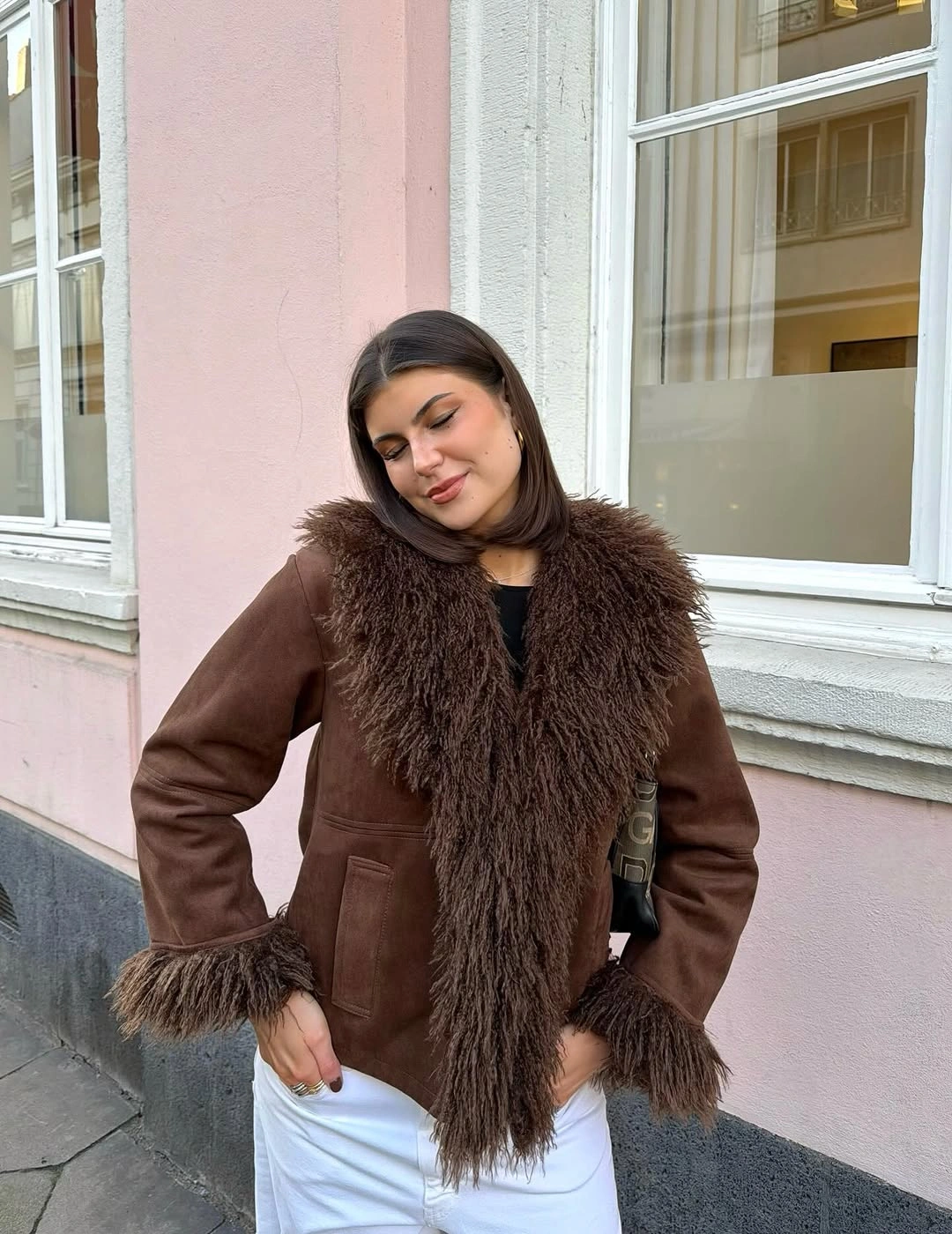
Photo via Instagram
What prevents the texture from overwhelming the combination is the clear separation between the darker upper garments and the white trousers below. Brown and black sit close together in visual weight, allowing the shaggy surface to create distinction where a stronger color contrast might otherwise appear. The white lower half offers a noticeably cleaner area, making the difference between the elaborate jacket detailing and the simpler trousers feel intentional rather than accidental.
I especially appreciate how the same shaggy trim reappears at the cuffs, connecting the sleeves to the jacket’s dramatic front. That repetition gives the brown minimalist aesthetic a recognizable design rhythm, allowing the garment’s texture to provide much of the personality that additional accessories might otherwise supply.
Cropped Brown Texture Changes the Shape of Black Layers
Cropped outerwear can change the character of a long outfit dramatically, particularly when its surface is as visually dense as this dark-brown jacket. The textured shape sits around the upper body, ending well above the extended black layers beneath it and creating a distinct change in proportion. I like the slightly unconventional result because the jacket feels substantial despite its shorter length, while the darker clothing continues downward without adopting that same bulky outline.
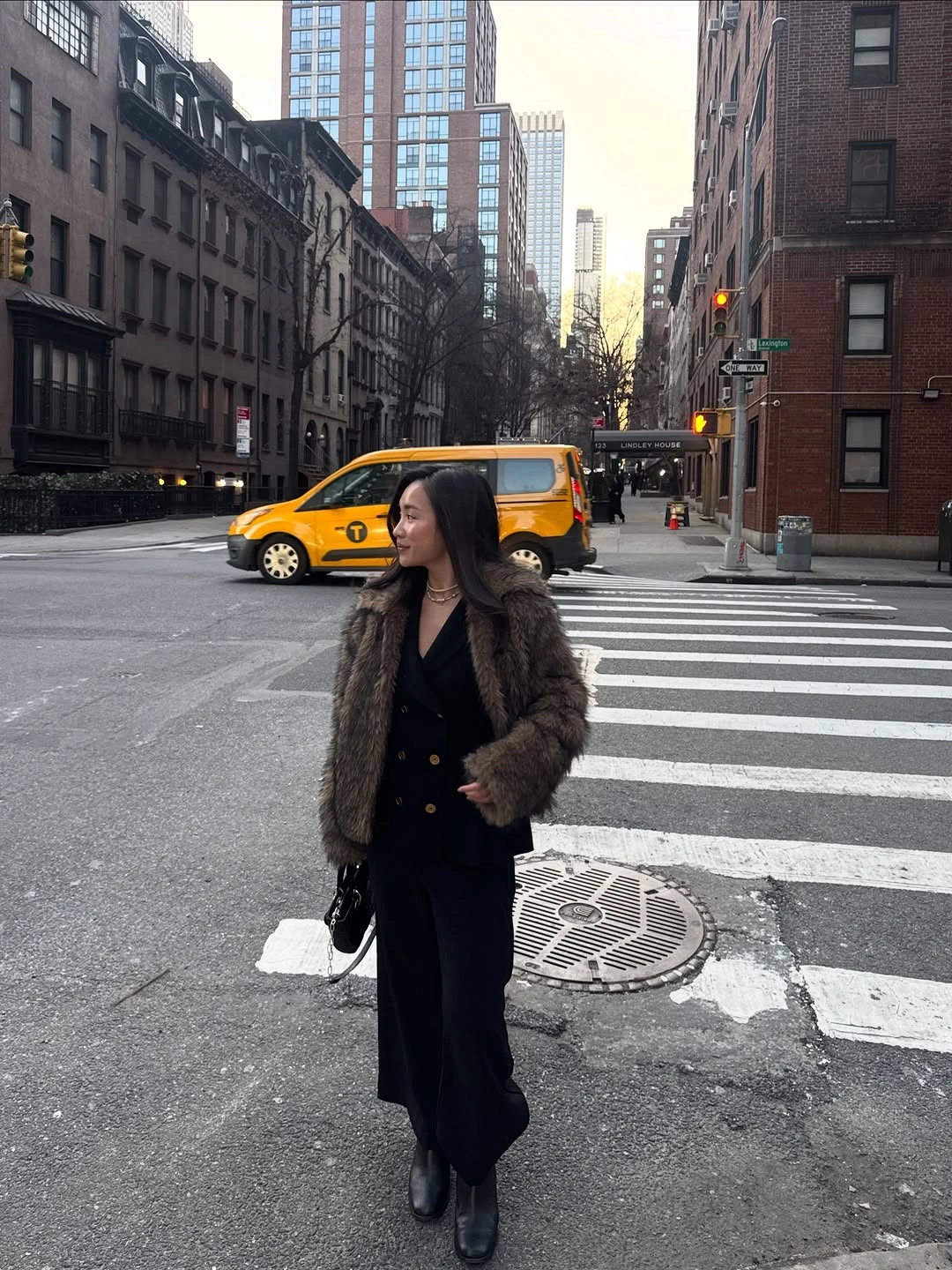
Photo via Instagram
The black lower layers have a flowing appearance that gives the outfit movement, contrasting with the more compact and irregular surface of the brown jacket. Rather than treating the long silhouette as something that needs to be shortened or divided into additional sections, the outfit allows that extended dark shape to remain visible. The relationship feels particularly relevant to textured minimalist chic, where the placement of visual density can matter more than adding another recognizable garment or accessory.
Dark boots emerge beneath the long lower layers, providing a firm finish that remains connected to the black clothing above. The small black handbag works within that same dark palette, and I prefer its restrained appearance here because the cropped jacket already gives the upper silhouette plenty of character.
Pale Tailoring Gives Simple Shorts a More Deliberate Shape
There is an appealing looseness to this combination of an oversized pale blazer, white crew-neck shirt, and light knee-length shorts. The jacket extends well below the waist, creating a longer upper silhouette than the shorts and shirt would establish on their own. Instead of making the outfit conventionally formal, the tailoring introduces structure to familiar casual pieces, giving minimalist summer dressing a slightly more considered appearance without sacrificing its relaxed proportions.
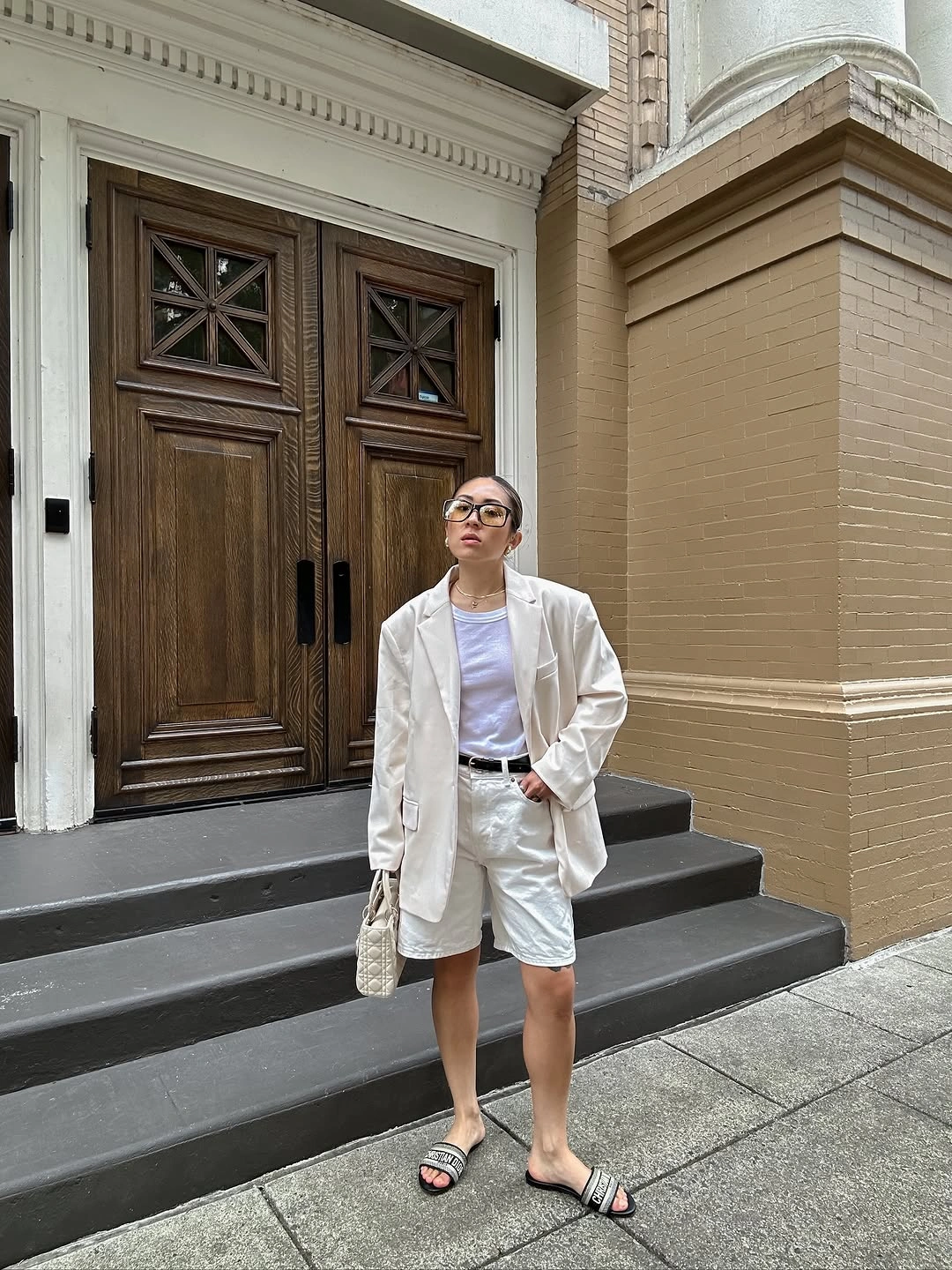
Photo via Instagram
The dark belt is an important detail because it establishes a clear horizontal division among the light garments, making the transition from shirt to shorts immediately visible. That line is especially useful beneath the open blazer, where several pale surfaces might otherwise blend together. The small patterned bag adds a restrained decorative element, but the overall effect remains centered on the contrast between the jacket’s extended shape and the comparatively short lower garment.
Striped slide sandals bring a modest graphic detail to the feet, giving the predominantly pale outfit an informal finish. I like how the exposed legs preserve the open feeling created by the shorts, while the oversized blazer supplies enough visual presence to make the combination feel like a complete outfit rather than simply a shirt-and-shorts pairing.
Earthy Stripes and Draped Layers Create Quiet Complexity
Several different shapes coexist in this earthy combination, yet the limited brown-and-cream palette gives them a sense of continuity. The cream top features narrow horizontal stripes that introduce a regular pattern between the pale beige head covering and the generous taupe trousers. I find the arrangement particularly interesting because the stripes provide a measured visual rhythm while the surrounding garments take on less predictable shapes, preventing the outfit from feeling either overly rigid or completely unstructured.
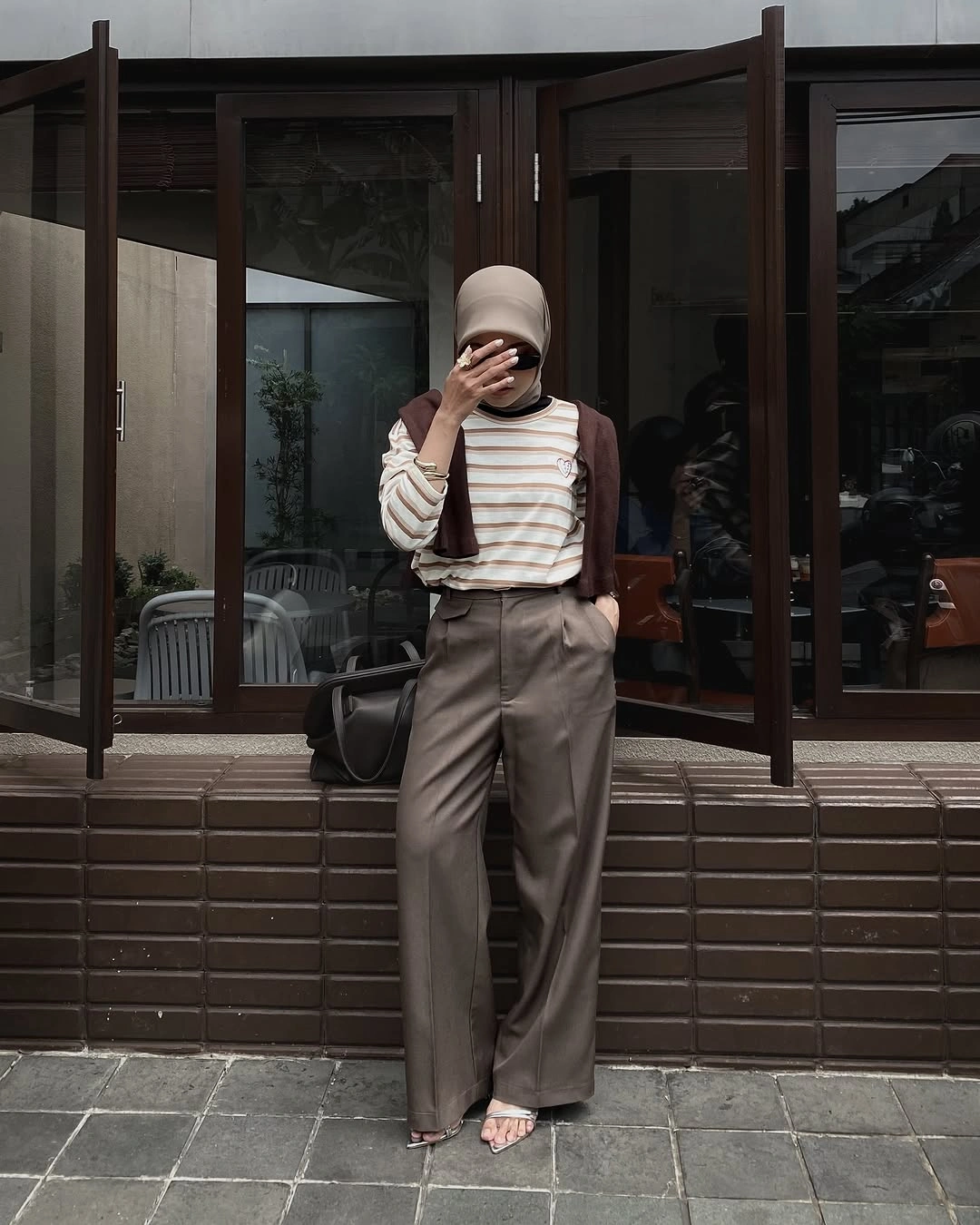
Photo via Instagram
The darker brown layer draped over the shoulders changes the upper silhouette through its placement rather than through conventional tailoring. Its hanging ends introduce diagonal and vertical lines against the striped top, with the deeper shade creating a noticeable area of visual weight near the shoulders. The high-waisted trousers then establish a very different kind of presence below, using broad pleats and generous leg width to produce volume that contrasts with the closer shape of the head covering.
A dark handbag connects with the deeper brown near the shoulders, while the visible open-toe footwear gives the long trousers a less enclosed finish. What I appreciate about this soft neutral aesthetic is the coexistence of stripes, draping, pleats, and closely related colors, each offering a different contribution without demanding a separate focal point.
Wide Charcoal Pleats Give a Beige Trench New Proportions
The charcoal trousers are unusually wide, but their deep pleats make the volume look structured rather than simply loose. Each fold contributes to a series of vertical lines that remain visible beneath the gray top, giving the lower half an almost architectural presence. Against that expansive silhouette, the beige trench-style coat introduces another substantial shape, and I like how its open front allows the different proportions to be seen rather than hiding the relationship beneath a closed outer layer.
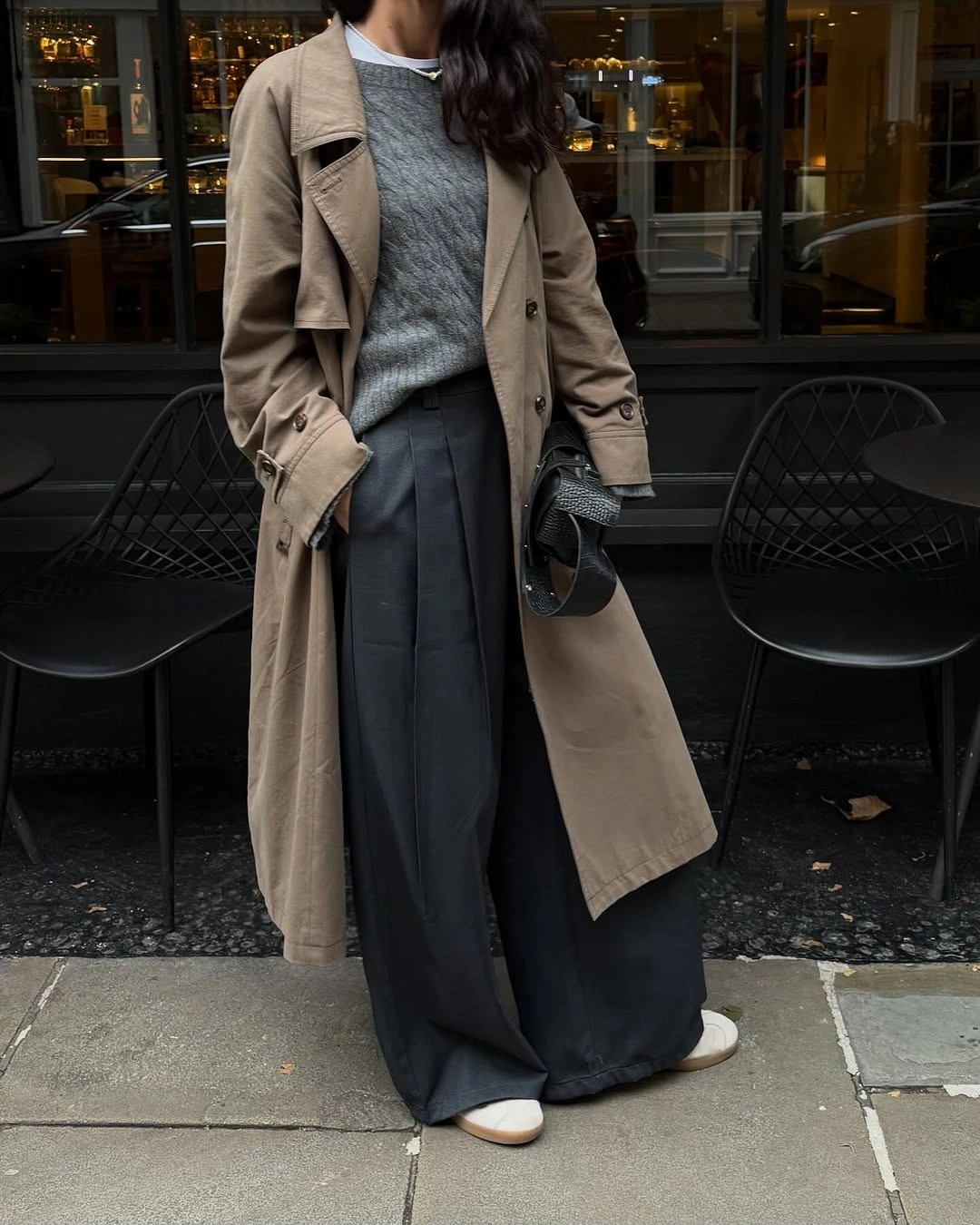
Photo via Instagram
There are three noticeable levels of color here: the light beige coat, the medium gray top, and the darker charcoal trousers. Their placement creates a gradual shift in depth rather than the abrupt separation of a high-contrast outfit, allowing the eye to follow the garments’ shapes without losing track of where one ends and another begins. This is a useful approach to modern minimalist outfits when several generously cut pieces are worn together, because the color arrangement can clarify their individual outlines.
Light rounded-toe shoes appear beneath the wide trouser hems, interrupting the charcoal near the ground and relating subtly to the beige coat above. The dark bag stays close to the deeper tones, leaving the pleats, coat length, and softly contrasting footwear to establish the outfit’s distinctive sense of proportion.
A Red Top Energizes Brown Tailoring and Blue Denim
The vivid red top immediately changes the character of this dark-brown blazer, bringing a concentrated area of color into an otherwise familiar tailored combination. Rather than spreading red through several accessories, the outfit allows it to occupy the space between the blazer’s open fronts, where it becomes a clear focal point. What makes the pairing interesting is the warmth shared by the red and brown, which creates a relationship that feels deliberate without making the two shades blend together.
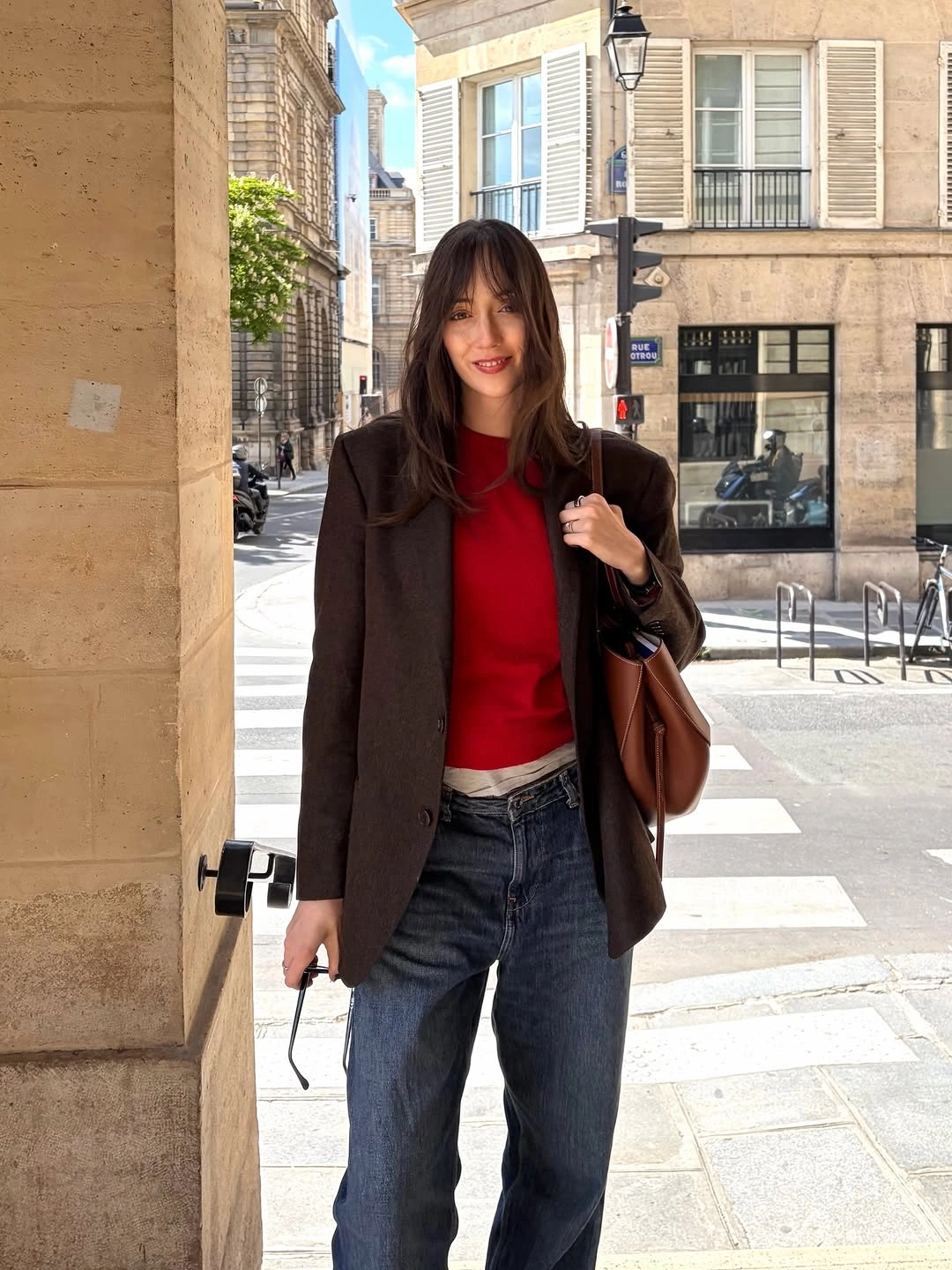
Photo via Instagram
Relaxed blue jeans introduce a completely different attitude beneath the structured jacket, bringing an everyday quality to the sharper upper half. Their familiar blue wash also creates an appealing distinction from the warmer colors above, preventing the combination from becoming an entirely tonal arrangement. For colorful minimalist outfits, I find this kind of separation particularly convincing because the clothes retain their recognizable identities: the blazer remains tailored, the denim stays casual, and the red top connects them without trying to imitate either.
The brown shoulder bag reinforces the jacket’s warm color, while a narrow glimpse of pale fabric at the waist provides a subtle break before the blue denim begins. That small light edge is especially effective beside the saturated red, giving the transition between the upper layers and jeans a more nuanced appearance than a simple uninterrupted meeting of three colors.