A winter work wardrobe can lose its sense of ease long before it loses warmth. The best winter outfits for work avoid that problem by giving weight, length, and contrast a quiet purpose instead of simply accumulating fabric. Once the silhouette has a clear order, substantial layers can feel composed and personal rather than like a practical compromise made in a hurry.
Long before adding one more layer, decide what the silhouette needs most in order to feel balanced. It may be a clearer waist, a stronger ending at the ankle, or a small shift in value near the face, but it rarely needs all of those at once. That gentler method leaves room for different routines and proportions while keeping the final look thoughtful through a full workday.
Brown Texture With Relaxed Blue Denim
A dark brown textured sweater sits above loose blue jeans, brown footwear, and a small brown bag, creating a rich top half without making the outfit too formal. The texture gives the knit visual depth, while the denim keeps the lower half familiar and easy. This works well when a structured jacket feels like too much but a plain sweatshirt would leave the outfit without a clear point of interest.
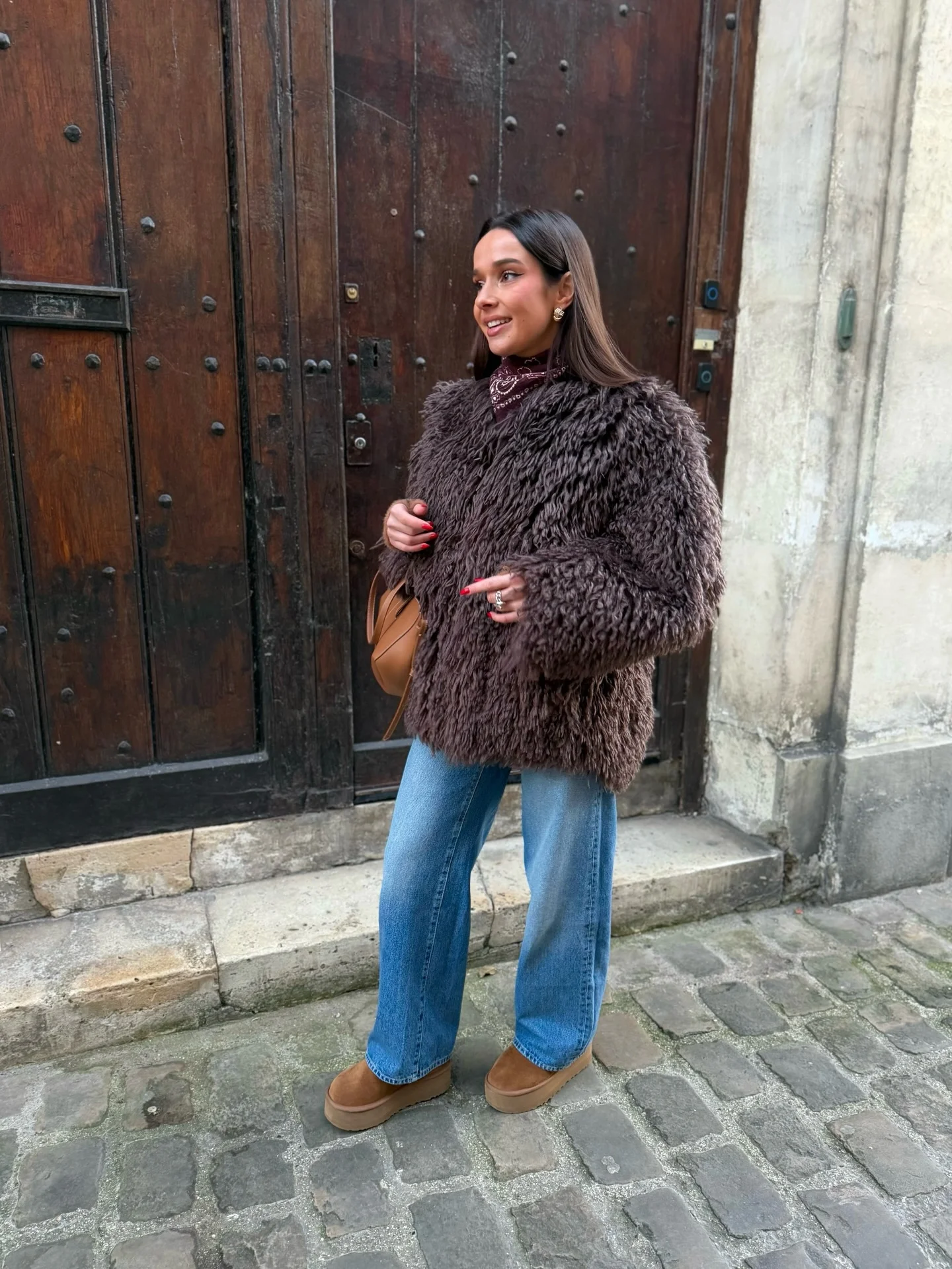
The balance comes from keeping the sweater weight above a more relaxed leg shape. If the jeans are wide, let the top have a defined shoulder or shorter hem so the silhouette does not become equally loose everywhere. A smooth dark brown knit could give a quieter version, but the textured surface here is what makes the earth-tone palette feel warm and dimensional rather than merely dark.
Brown footwear is a useful finish because it repeats the sweater family without needing an exact match. Black shoes would make the outfit more graphic, while white sneakers would introduce a brighter, more casual note. The limitation of a textured knit is care: it can catch on bags or outerwear, so choose a shoulder strap that does not constantly rub across the most visible surface.
Cream Coat and Powder Blue Knit Layers
A cream outer layer, powder blue ribbed turtleneck, short black skirt, dark tights, and burgundy tote create a carefully spaced palette. The pale blue knit softens the contrast between cream and black, while the bag adds one deeper note without overwhelming the outfit. It feels polished because every color has a role: light outside, soft center, dark base, and a compact warm accessory.
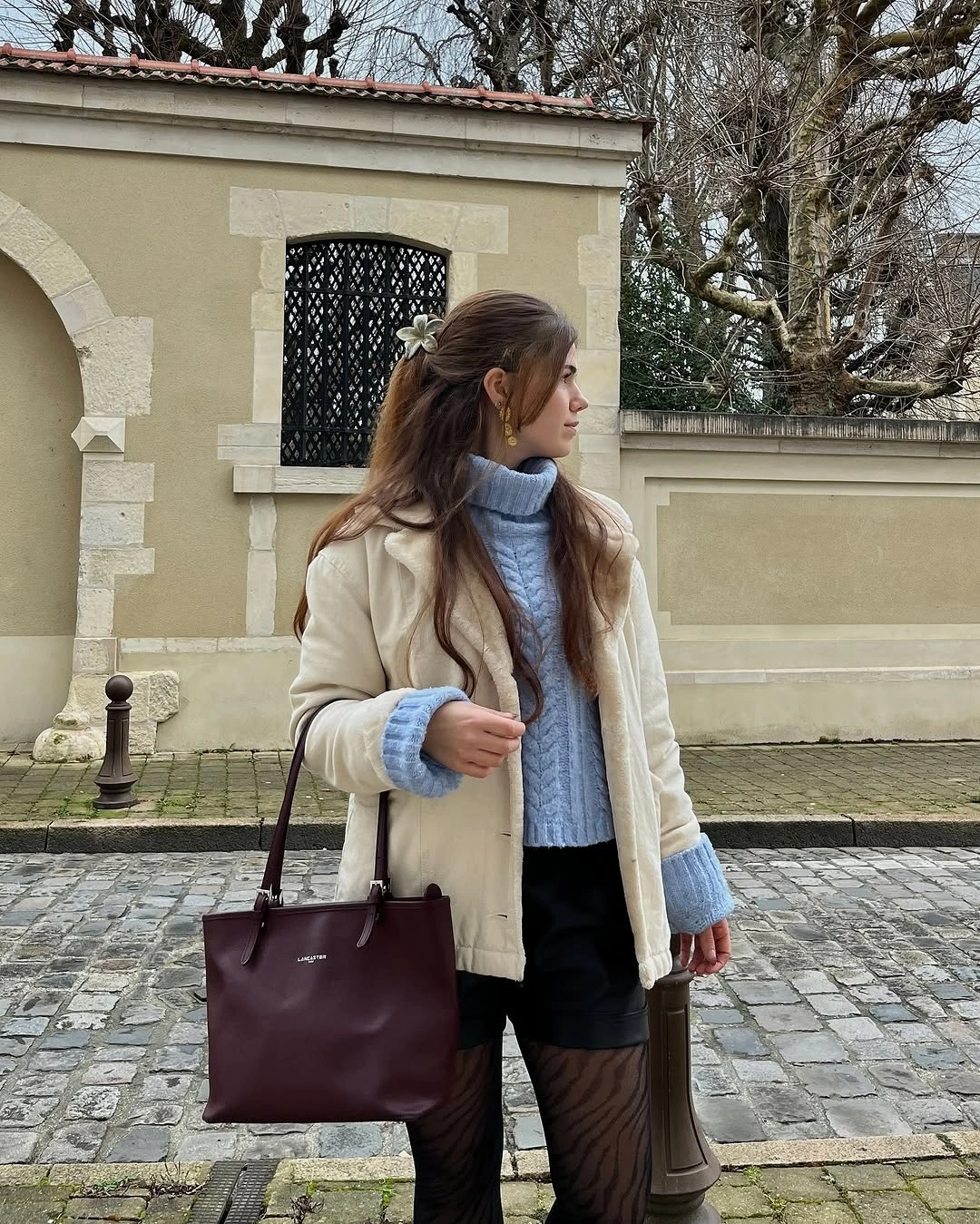
The best detail is the visible ribbed neck, which keeps the pale blue from looking flat beneath the cream coat. A similar effect could come from a fine-gauge sweater with a raised collar, provided the neckline remains clear when the outer layer is open. Keep the skirt and tights simple; their job is to anchor the lighter upper section, not to add another competing texture or color.
A burgundy tote is practical in this palette because it introduces warmth without competing with the soft blue. If a large bag feels heavy for your commute, use the same color in a smaller structured shoulder bag and keep the shoes dark. The short skirt is a personal coverage choice, so longer lengths, tailored shorts, or straight trousers can preserve the same cream-blue-black idea more comfortably.
Long Camel Coat Over Dark Winter Layers
A long camel-colored coat creates a clear vertical line over dark layers, knit headwear, gloves, and a dark bag. The coat holds the warm color near the body’s full length, while the darker pieces recede and keep the silhouette from becoming visually busy. This is a strong way to let one outer layer do most of the seasonal work without asking the clothes underneath to match it exactly.
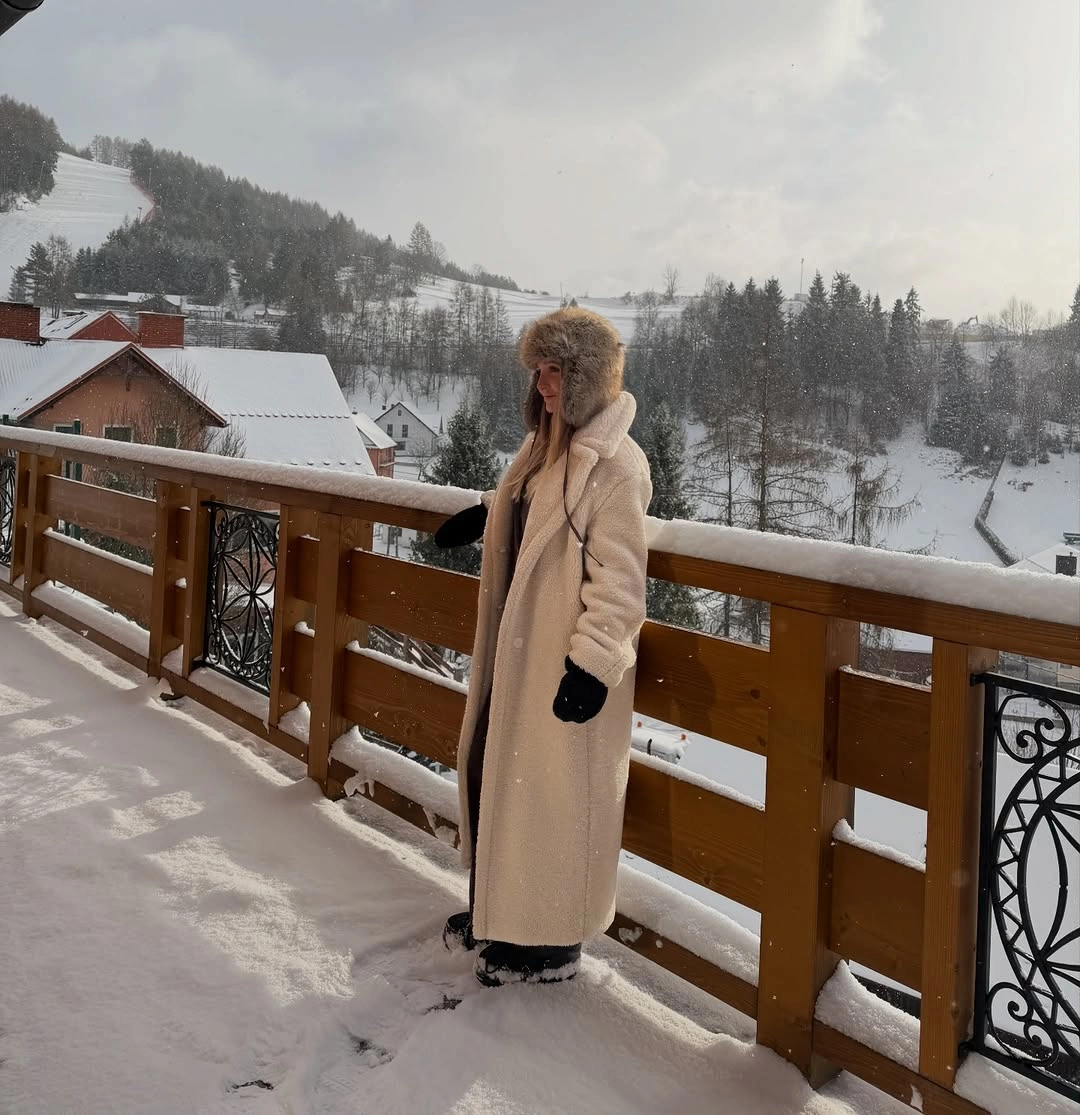
Length is what makes this coat effective. It extends past the hip and gives the eye one continuous line, which can be helpful when several warm layers are needed underneath. If your coat is shorter, compensate with a slimmer trouser or a boot that closely matches the lower layer. That will preserve some of the same vertical calm without pretending every coat needs to be ankle-length.
Dark gloves and bag are sensible because they make the camel color feel more defined, yet they do not have to be perfect black. Deep brown or charcoal can keep the palette softer. The practical tradeoff with a long hem is movement on stairs and public transit, so check how the coat opens when walking; a useful winter layer should feel graceful in motion, not merely look good while standing still.
Belted Brown Coat With Sharp Black Accessories
A long dark brown coat is shaped by a belt, then paired with black tights, pointed pumps, and a black bag. The belt is the decisive feature because it prevents the heavy fabric from obscuring the waist and gives the darker lower half a clear place to begin. The result reads composed without needing a bright color or a complicated mix of fabrics.
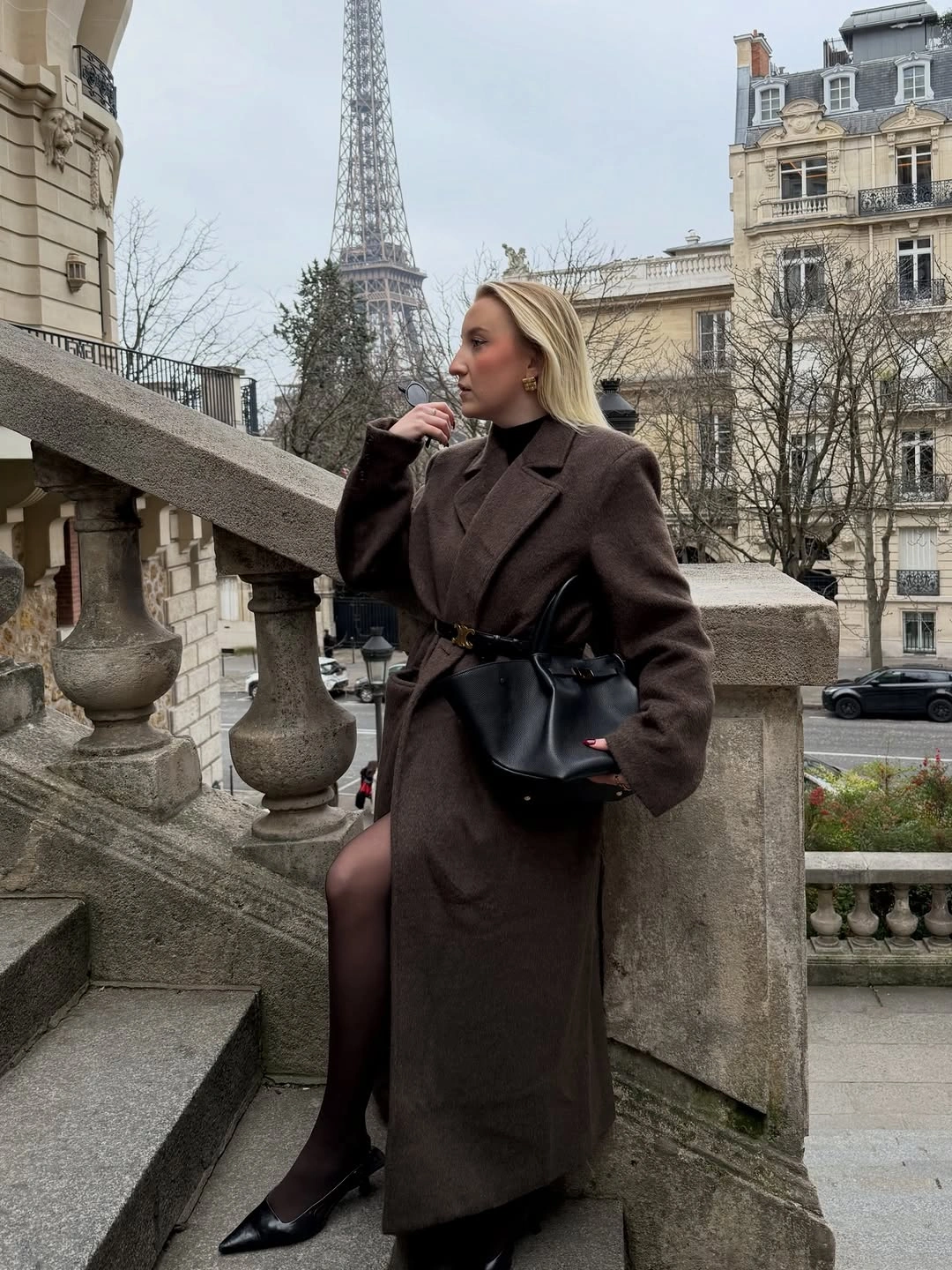
When a coat carries this much visual weight, a simple black base is often the most useful supporting choice. It lets the coat’s lapels, belt, and long hem remain visible instead of creating a new point of contrast at every layer. For a softer version, swap pointed pumps for a low black boot; the clean dark line remains, but the outfit may feel more practical for a day involving more walking.
A belt should sit where it feels comfortable rather than where a styling rule says it belongs. Moving it a little higher or lower can change the proportion dramatically, especially over thick layers. The sharp shoe adds polish, but it may not be the most forgiving option on wet ground; a block heel or smooth flat can preserve the black finish while being a more realistic choice for a long commute.
White Knit and Burgundy Gloves as Contrast
A generous white draped knit and pale lower layer are interrupted by burgundy leather gloves and warm gold earrings. The gloves create a concentrated point of contrast against the light fabric, making the outfit feel considered without breaking its soft, nearly monochrome mood. Their placement near the sleeve cuff also gives the eye a clear stopping point within the flowing white shape.
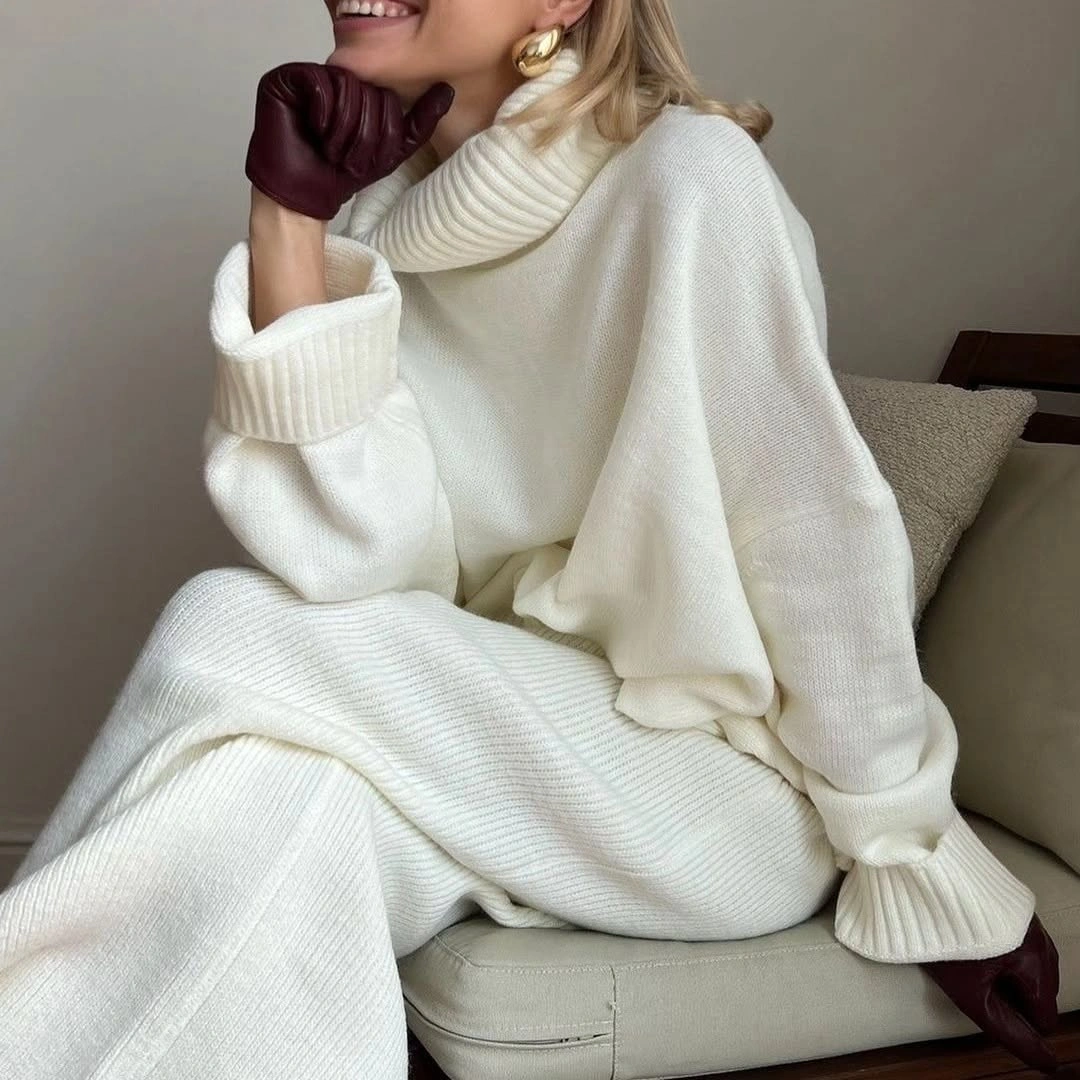
White knitwear benefits from one small dark or warm accessory because it can otherwise become visually diffuse. Burgundy is effective here because it has depth without the brightness of true red. A brown glove, dark plum scarf, or muted wine bag could create a comparable effect, but use only one of those accents at a time so the relaxed white layers remain the quiet foundation.
The flowing knit looks comfortable, although ample fabric can catch on chair arms or bunch beneath a coat. Choose a thinner version for a full day indoors, or reserve the larger shape for a work setting with less outerwear layering. The pale palette may require more frequent care, yet the small burgundy detail proves that maintenance does not have to prevent a light winter outfit from feeling expressive.
Ivory Column Grounded by Dark Boots
An ivory beanie, long scarf, pale coat, loose light trousers, dark boots, and brown tote create a soft vertical column. The dark footwear is especially important because it gives the eye a firm endpoint after several pale layers. Without it, the outfit could drift together; with it, the light pieces feel intentionally stacked and the long scarf looks like part of a continuous line.
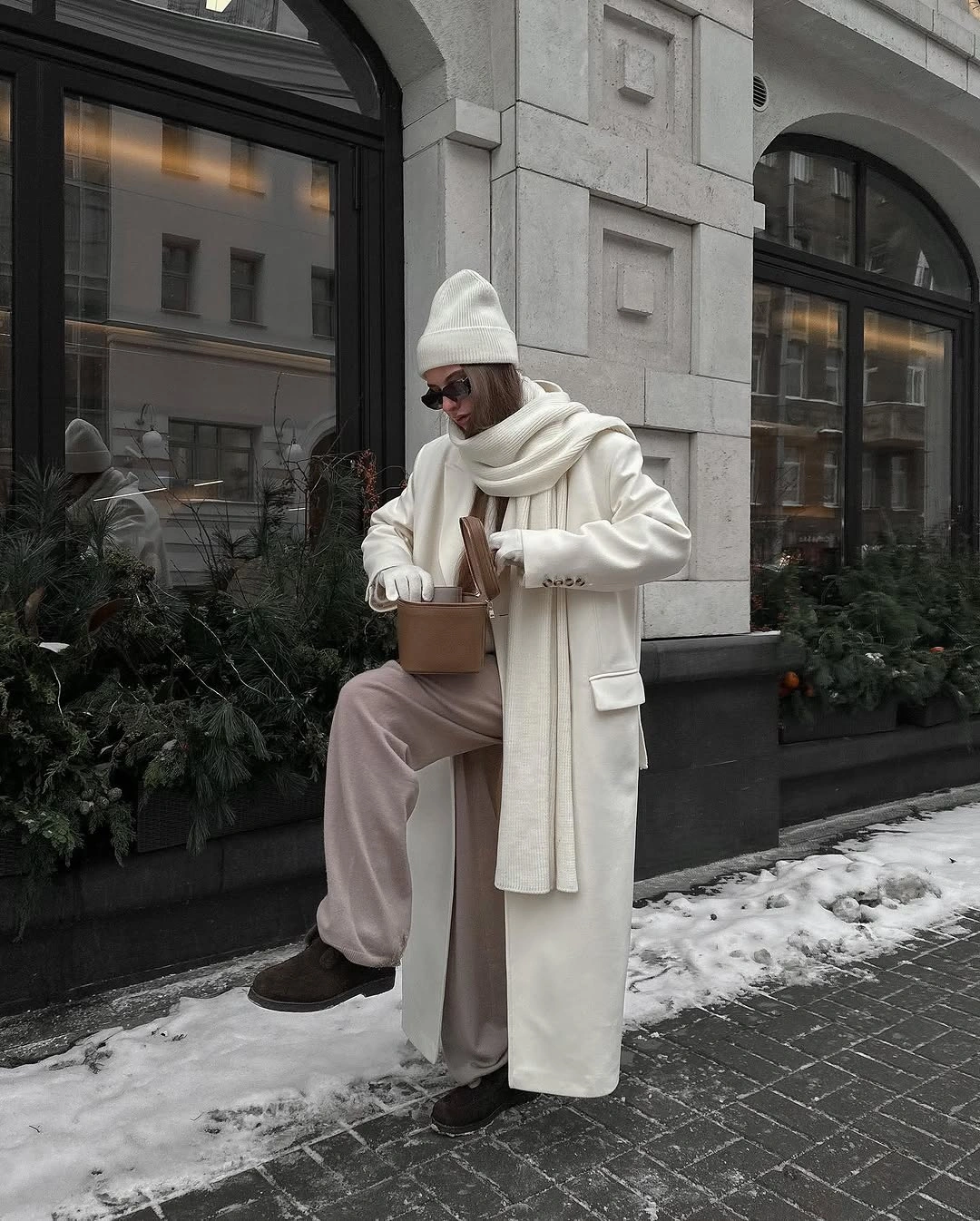
This is an easy palette to adapt with cream, oatmeal, or light gray rather than one exact ivory tone. The key is keeping most of the upper layers within a close family while letting the boots remain noticeably darker. A longer coat or scarf can reinforce the vertical effect, but make sure the fabric does not create so much volume around the neck that the face and collar area disappear.
Dark boots are practical on days when pale footwear would be difficult to maintain, and they help the loose trouser hem feel anchored. The tote brings a second warm note, so avoid adding a third contrasting accessory in red or blue. This kind of pale column looks most successful when the fabric edges stay clean and the trousers do not drag, because the simplicity leaves little room for careless proportions.
White Texture and Brown Trousers in Balance
A large white textured coat sits over brown trousers with a brown shoulder bag, creating a warm-and-light balance that feels soft rather than stark. The volume of the coat is noticeable, so the quieter trousers and bag are useful anchors beneath it. The pairing is especially appealing when you want a pale outer layer but do not want the full outfit to read as entirely white from every angle.
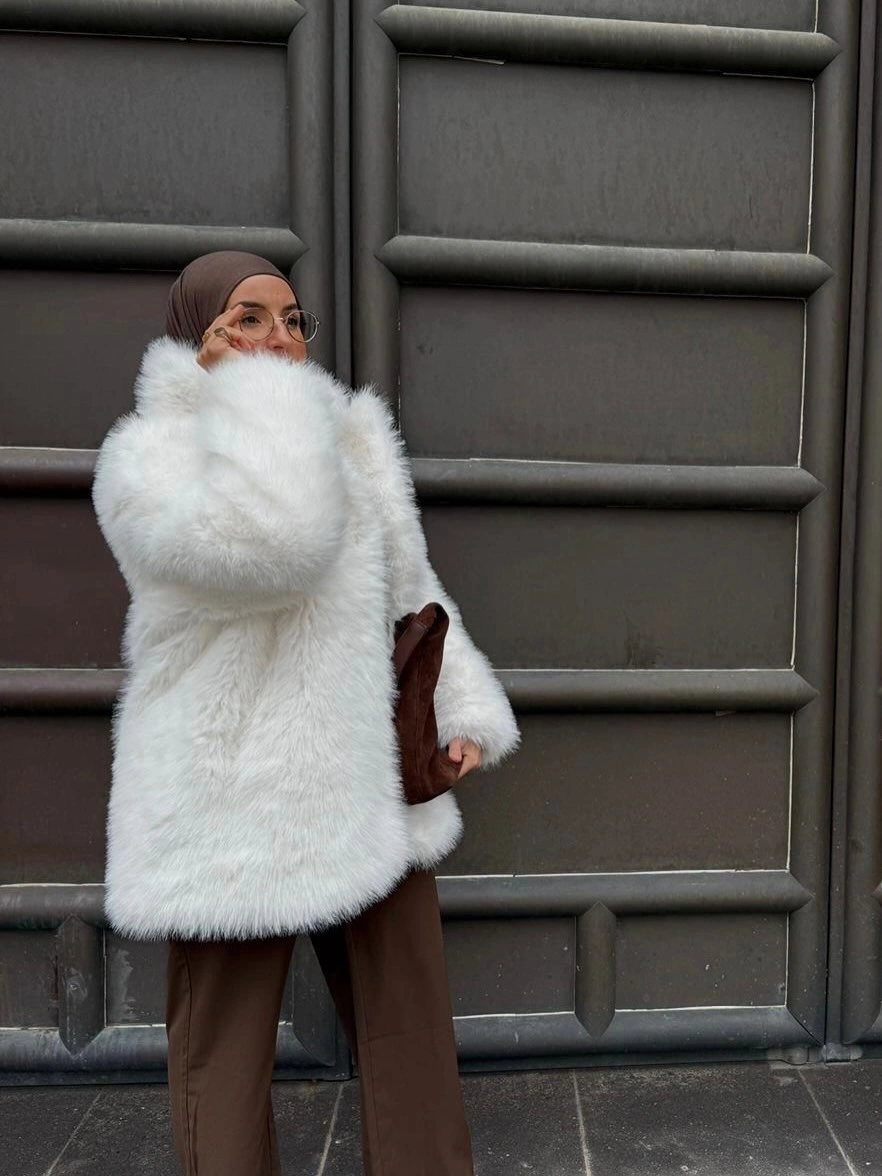
The brown lower half gives the textured coat a grounded feeling, and it also makes the pale fabric look cleaner by comparison. If brown trousers are not your preference, deep olive or dark taupe could serve a similar role. Keep the bag within that darker family, then let the coat remain the largest visual surface. A bright scarf would pull attention away from the texture that makes the outfit distinctive.
High-volume outerwear can make a smaller bag feel visually useful, but choose a strap that sits comfortably over the fabric and does not flatten it too much. A large tote might be more practical for work materials, though it could make the upper body look crowded. This outfit is cozy without feeling heavy because the brown trousers create a clear change in tone below the coat’s generous shape.
Gray Outer Layer Framed by White Accessories
A long gray coat or cardigan is brightened by a white knit beanie and cream scarf, while dark tights keep the lower half concise. The light accessories sit near the face and soften the gray without requiring a colored coat. This placement is useful because it creates warmth in the palette where people naturally look first, then lets the darker lower layers quietly hold the silhouette in place.
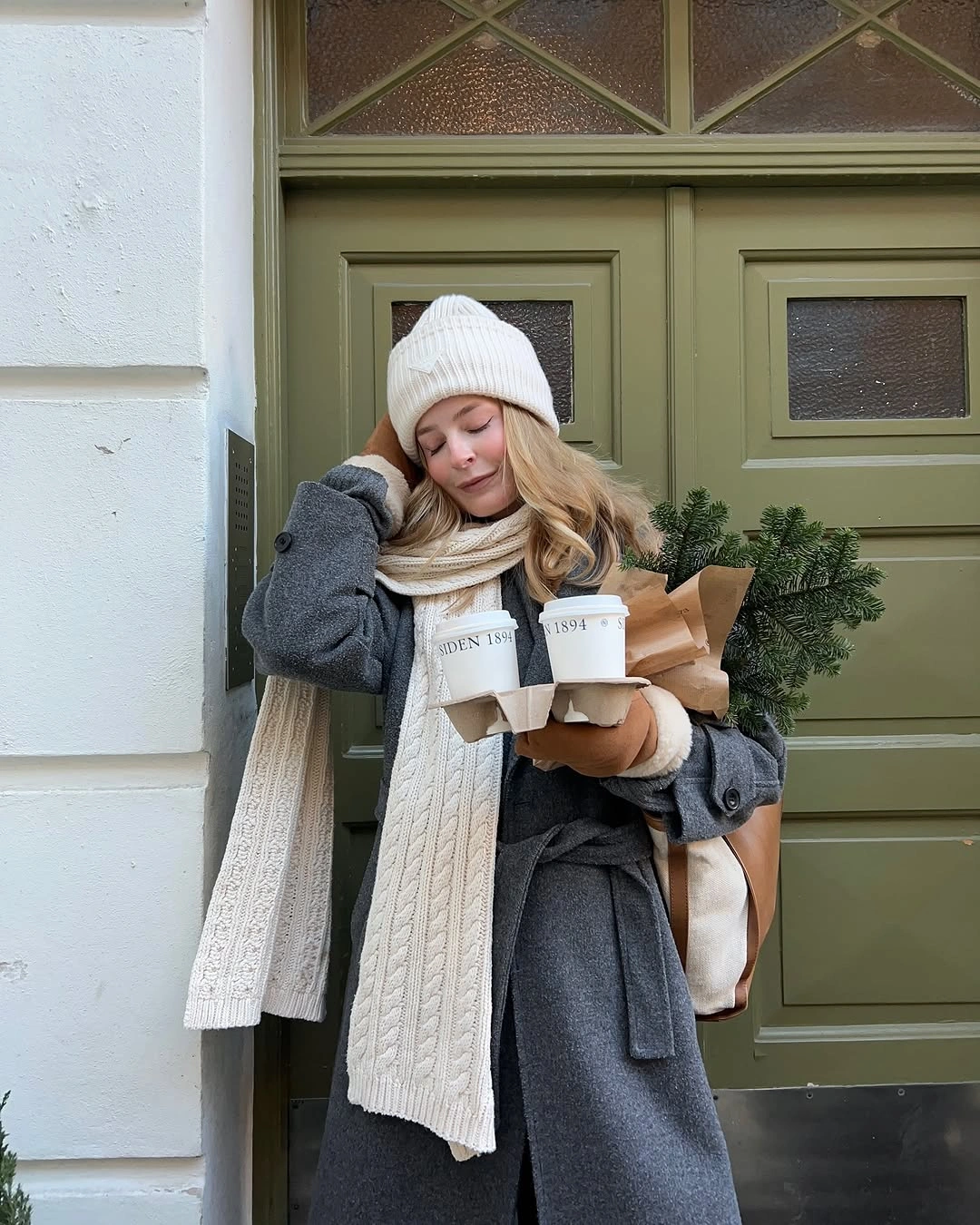
The beanie and scarf do not need to match exactly, but they should feel close enough in value that they read as one soft frame. A bright white hat with a yellowed scarf would make the effect less calm. Gray outerwear is flexible, so you can switch the dark tights for charcoal trousers or blue jeans; the important part is leaving the pale accessories visible rather than burying them beneath a closed collar.
Light knit accessories are practical for warmth but can pick up makeup, rain spots, and bag friction more visibly than darker options. Choose pieces that wash well if they will be frequent commute companions. The deeper lower half is a helpful counterweight here, allowing the scarf and hat to look intentionally fresh without asking every item in the outfit to be pale or high-maintenance.
Pink Scarf Over Black Tailored Layers
A long black coat and black leather-look trousers are softened by a white knit and a wide pink scarf. The scarf is the gentle interruption that keeps the dark layers from feeling closed, and its length creates a vertical path down the front of the outfit. This is a clear example of using one soft color to change the mood of an otherwise structured, dark workwear base.
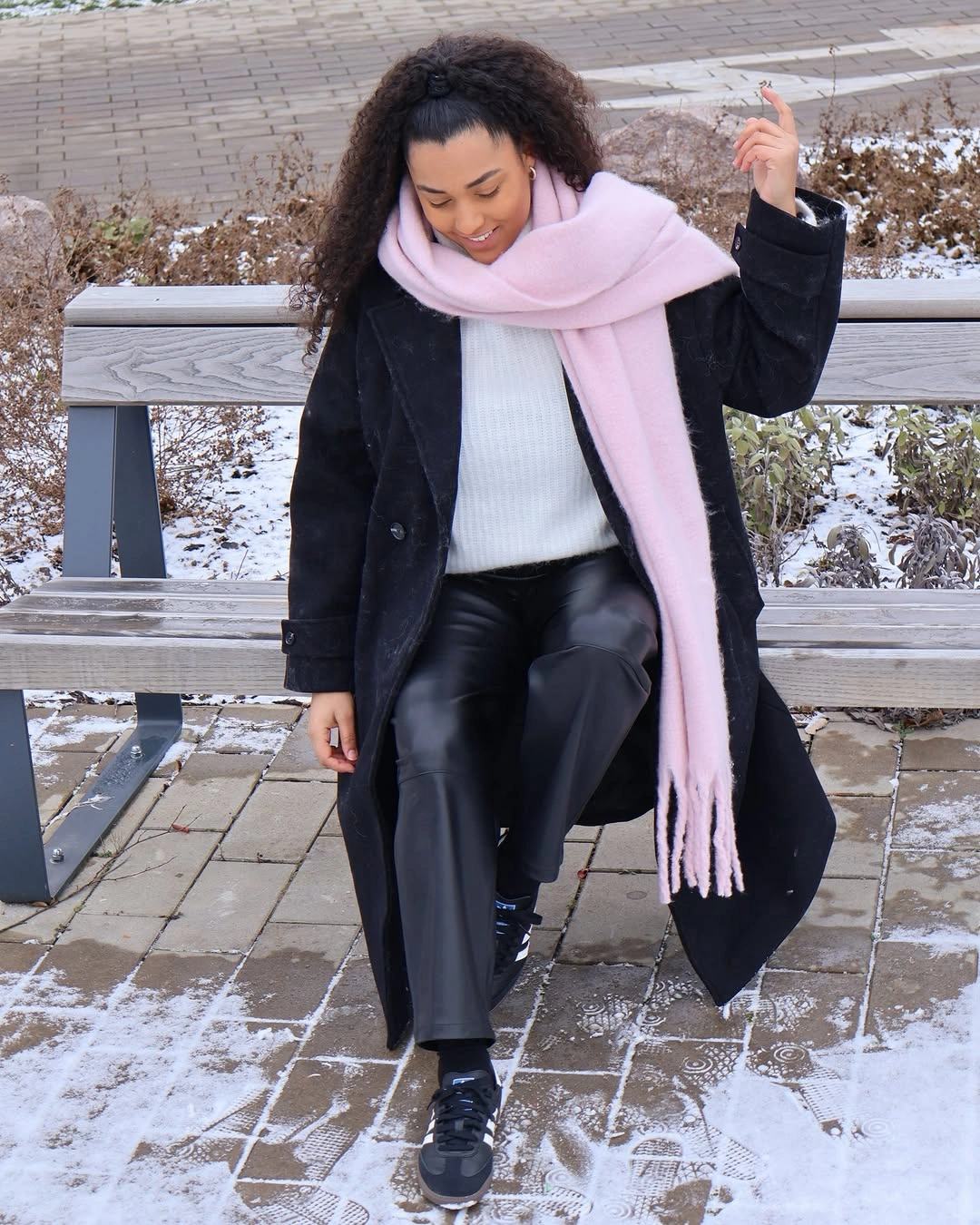
Pink works because it stays concentrated in the scarf rather than spreading through shoes or bag. If you prefer another color, dusty blue, muted sage, or burgundy can offer the same idea as long as the tone has enough softness against black. Keep the knit light underneath so the scarf does not disappear; the pale center gives the warm accent a place to stand out.
The leather-look trousers add a little sheen, which helps distinguish them from the matte coat. Their practical limitation is comfort across a long seated day, so a flexible fabric or a darker straight trouser could be a sensible substitute. The scarf remains the important decision, and it can be removed indoors without leaving the black-and-white foundation feeling unfinished.
Brown Textured Coat With Tall Boots
A dark brown textured coat, pale hat, white lower layer, tall brown boots, and burgundy bag form a layered warm palette. The pale trousers create a bright break between the substantial coat and the boots, while the bag adds a deeper color note near the waist. The result has richness without relying on a busy print, because every detail belongs to the same earthy family.
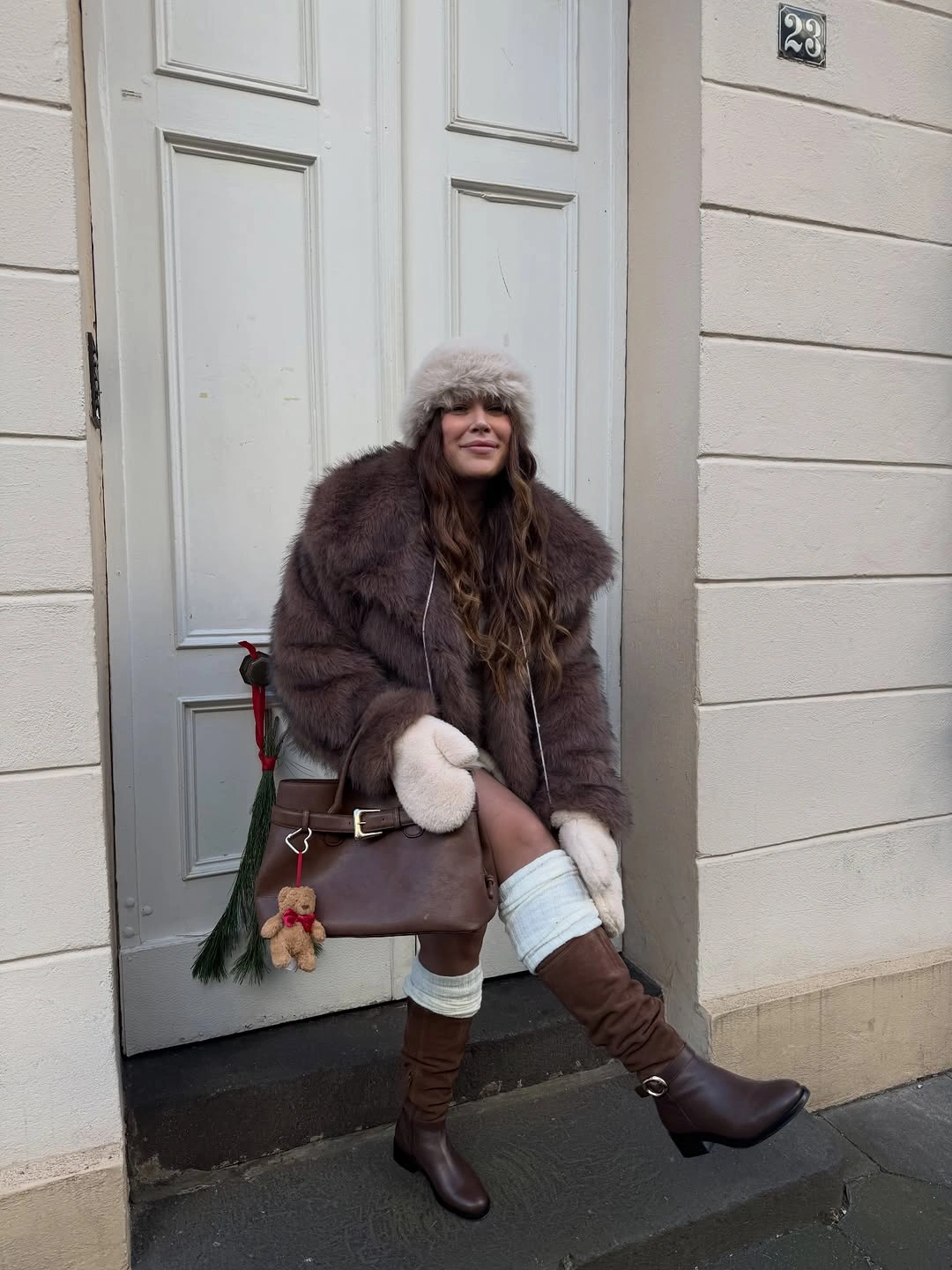
The white lower layer is useful because it prevents the brown coat and boots from visually joining into one long dark mass. A cream knit dress, pale trousers, or light skirt with tights could all create the same break. Keep the bag small enough that it does not cover the coat’s texture too much; the outer layer is the real focal point, and its surface is what gives the outfit character.
Tall boots can be excellent for an outfit with a shorter or lighter lower layer, but they need enough room at the calf to remain comfortable through a workday. A shorter ankle boot would reduce the dramatic line but still echo the coat color. Burgundy adds warmth beautifully here, though a dark brown bag would be the lower-contrast choice if you want the palette to feel even quieter.
Deep Brown Knit With Cream Trousers
A deep brown draped knit contrasts with loose cream trousers, dark boots, and a brown shoulder bag. The light trousers make the upper texture look more deliberate, while the dark footwear gives the wide hem a stable base. This pairing is a practical answer to the question of how to wear a substantial winter knit without letting it dominate the full outfit from shoulder to ankle.
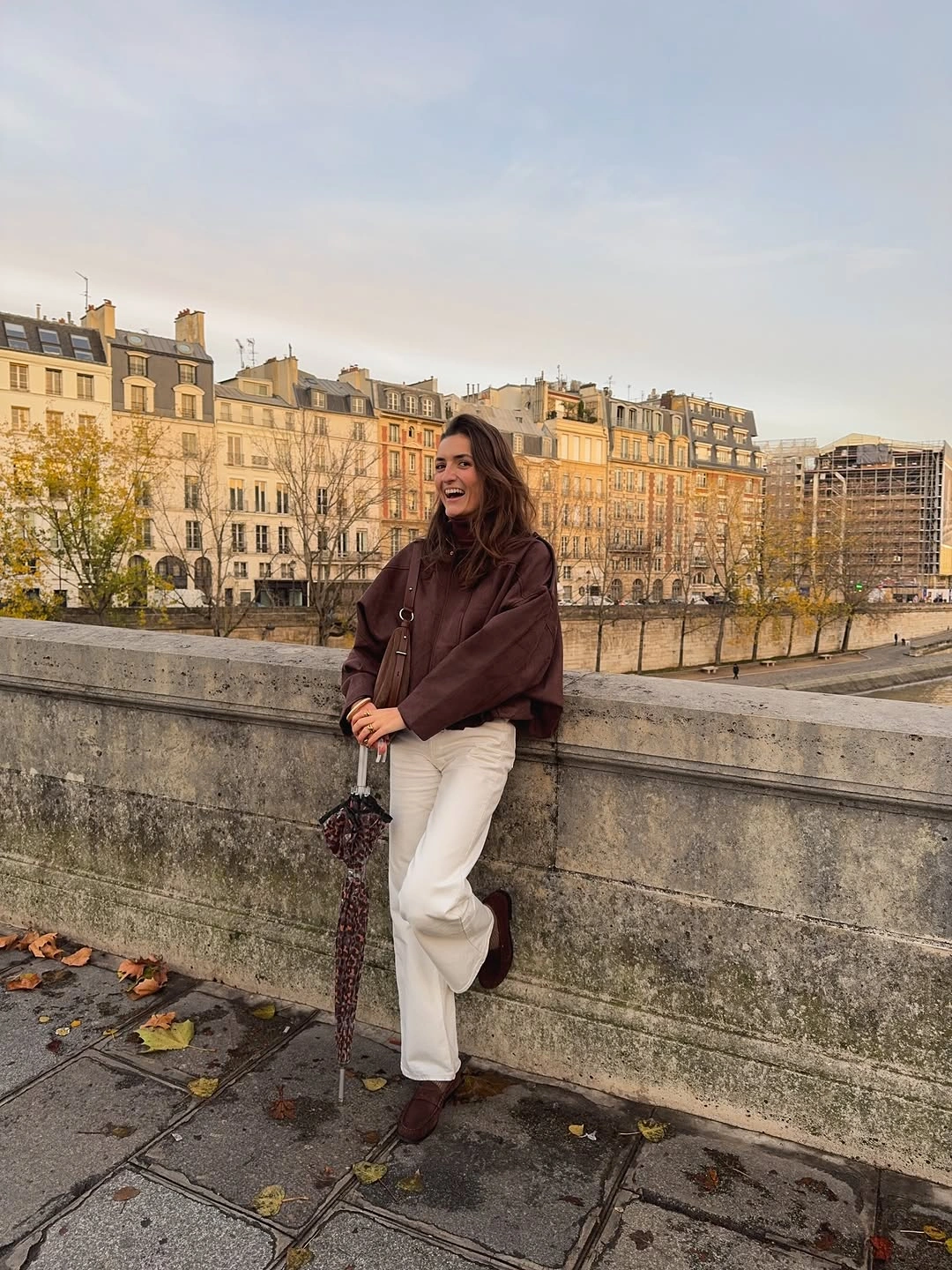
The knit has a softer, wrapped line, so the trousers work best when they are clean and uncomplicated. Avoid a heavily pleated or patterned lower half, which would compete with the drape at the waist. A straight cream trouser could make the combination feel more tailored, while a relaxed version keeps the mood gentler. Either way, the value contrast is doing more than any additional accessory could.
Brown and cream are forgiving colors for winter workwear because they feel warm without requiring exact matches between pieces. The tradeoff is that cream hems can show splashes and dirt, especially with a longer leg. Choose a length that clears the ground and a boot that can take daily wear, then the softer color balance will remain practical as well as visually calm.
Charcoal Coat With Burgundy Knit Accessories
A charcoal coat is framed by a burgundy scarf, matching knit hat and gloves, brown boots, and dark tights. The repeated burgundy pieces create a clear path through the outfit, connecting the face, hands, and coat opening without needing a colored garment underneath. This is a useful way to add warmth to gray outerwear while keeping the main coat neutral enough for regular work rotation.
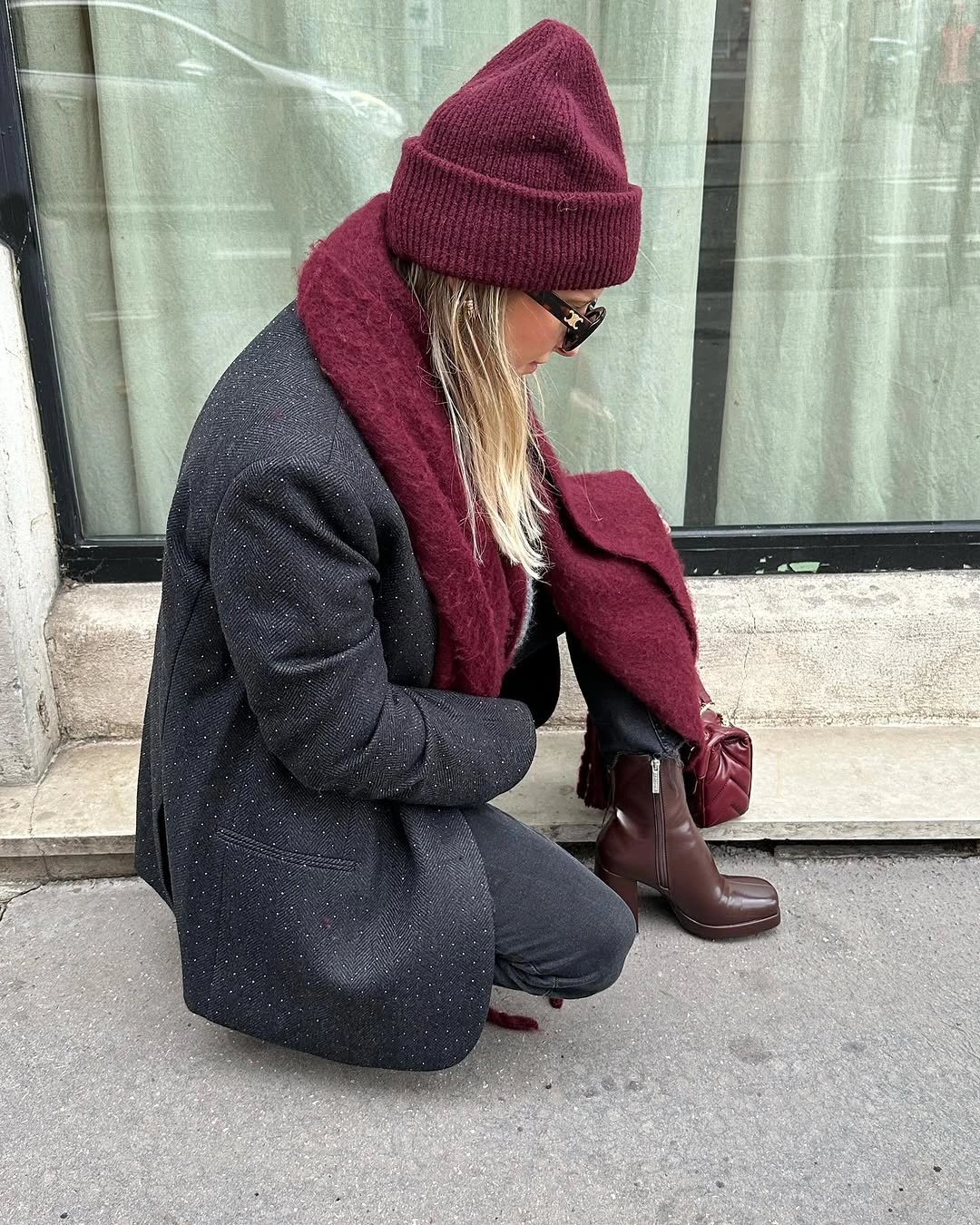
The accessory repeat works because every burgundy piece is relatively small. A burgundy coat plus scarf plus bag would be a very different level of intensity, but hat, scarf, and gloves stay light enough to remove or adjust through the day. If matching items feel too coordinated, choose one wine-colored scarf and let the hat remain charcoal; the color route will still be visible but less emphatic.
Charcoal is gentler than black beside burgundy, making the red-brown shade look rich rather than harsh. Brown boots fit naturally with the gloves and scarf, though black boots would make the outfit more graphic. Knit accessories are also the easiest parts to refresh seasonally, so this formula can change mood quickly without replacing the dependable gray coat that does most of the practical work.
Camel Coat With a Small Red Beret
A camel long coat, dark trousers, tall brown boots, black bag, and red beret use one small warm accent to change an otherwise earthy palette. The red sits high near the face, so it has presence without needing to appear anywhere else. The coat remains the largest color field, yet the beret adds a point of personality that makes the long simple line feel less expected.
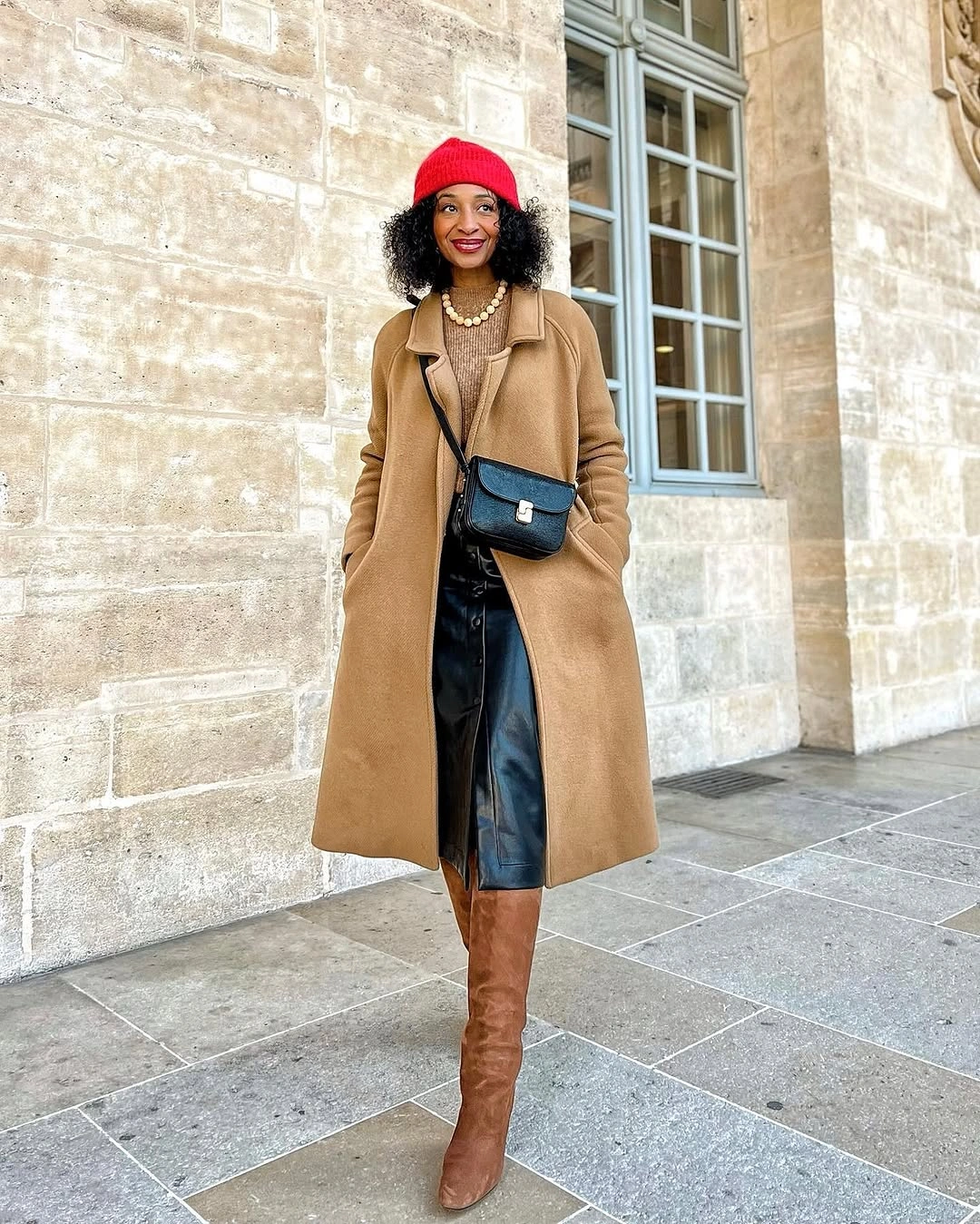
Small headwear is a useful place for color when the rest of the outfit has already been settled in neutrals. A muted berry, rust, or deep plum cap could create a related feeling if bright red is not your preference. Keep the bag and boots dark or brown, then the beret will look intentional instead of like an isolated item introduced after everything else was chosen.
A long coat and tall boots make a strong vertical silhouette, but the beret should feel comfortable and secure rather than purely decorative. If you do not enjoy hats, move the accent to a scarf knot or glove instead. The visual lesson remains the same: one small, warm piece can give a camel coat a new mood without challenging its quiet workwear usefulness.
Gray Tailoring With Structured Black Accessories
A gray double-breasted coat is paired with a black quilted chain bag, dark leggings, and pointed black boots in a close detail view. The accessories reinforce the coat’s tailored lapels and buttons through their sharper shapes and darker value. This creates a polished contrast without relying on a bright color, which can be useful for a workplace wardrobe built around neutral outerwear.
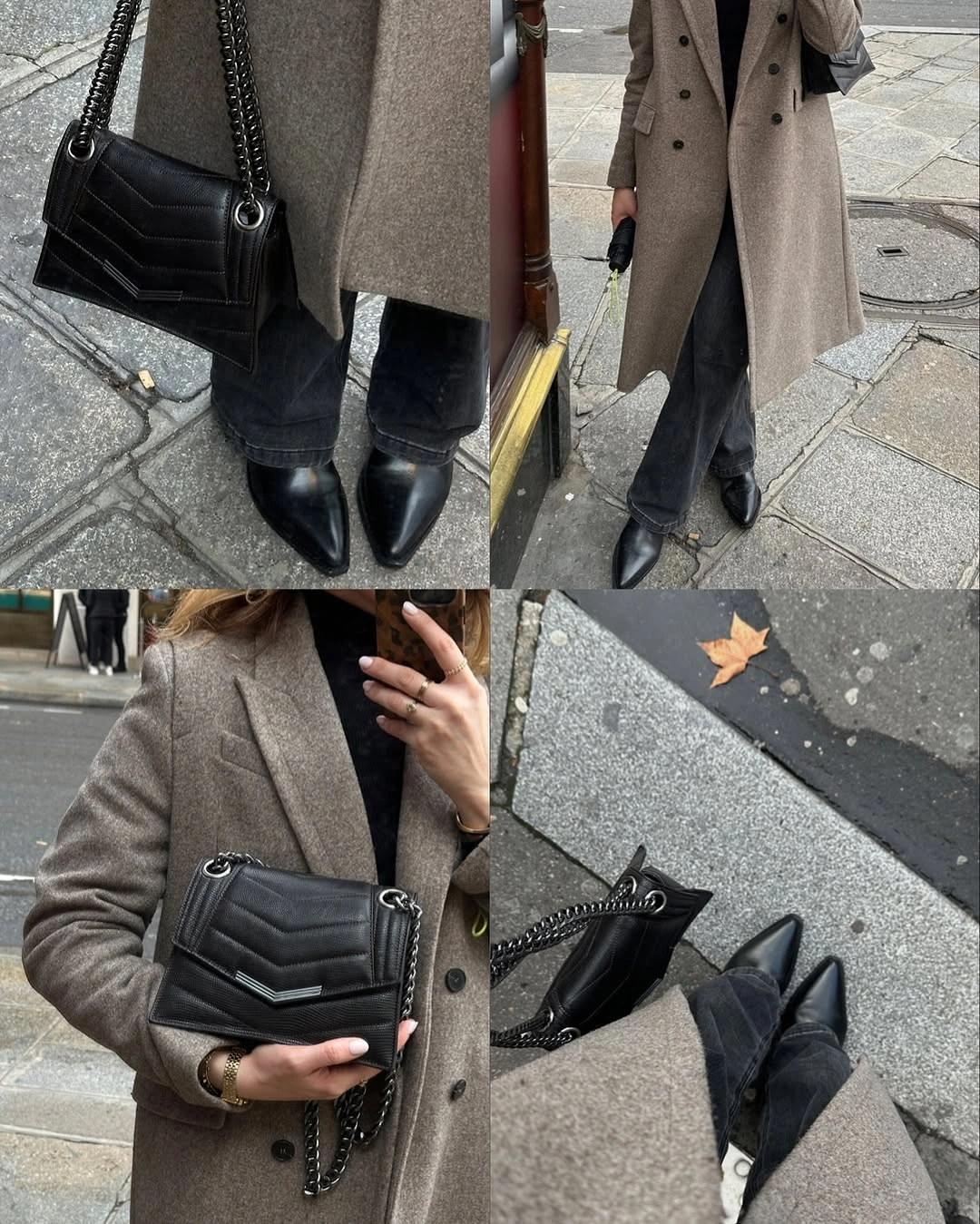
The bag and boots work together because both have defined edges, giving the softer gray coat a little architectural structure. A smooth leather-style tote or plain ankle boot could provide a less formal variation while keeping the same principle. Avoid a slouchy oversized bag if you want the tailored quality to remain clear; the coat already has enough volume and needs accessories that hold their own shape.
Gray is flexible enough to accept black, navy, brown, or burgundy companions, but black produces the cleanest, most graphic effect. The tradeoff is that it can feel serious if every layer is dark, so a light knit collar or subtle scarf can be helpful near the face. These choices pair naturally with a business outfit guide when you want more neutral styling ideas.
Brown Coat With a Compact Black Crossbody
A warm brown textured coat is worn with black trousers, black sunglasses, and a compact black crossbody bag. The coat becomes the unmistakable center because every supporting item stays dark and quiet. Its surface looks rich against the smooth black pieces, which is why the outfit feels more dimensional than a simple brown-and-black color description might suggest.
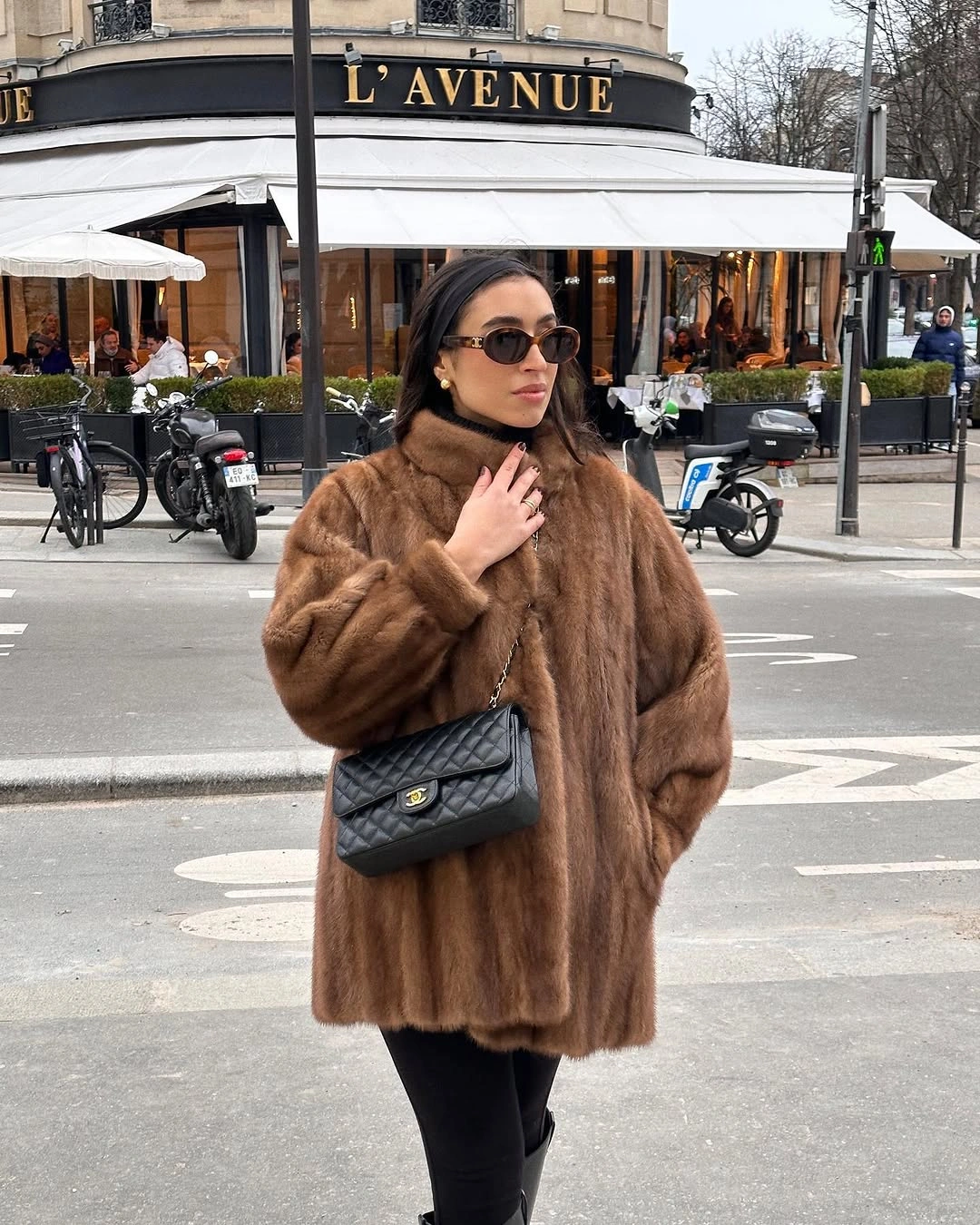
When one coat has a lot of texture, a small matte bag is often more effective than a large glossy one. It supplies function without covering or competing with the outer layer. Black trousers are a straightforward partner, but charcoal denim could make the combination more relaxed while preserving the low-contrast base. Keep the shoe similarly restrained so the brown coat remains the visual point of arrival.
The coat’s warmth comes from visible texture rather than a claim about its exact material, so it can work with many interpretations of brown outerwear. A smoother wool-look coat would feel more formal, while a shorter textured jacket would make the outfit more casual. The important takeaway is that a dark neutral base gives the brown layer space to register as a real styling decision, not just a utility layer.
Dark Textured Jacket Above Cream Trousers
A deep brown textured jacket sits over cream trousers with a light knit cap, small brown bag, and dark belt. The pale trousers brighten the lower half, while the belt quietly marks the waist beneath the heavier top layer. This arrangement makes the jacket feel intentional and substantial without forcing the whole outfit into a single dark block from shoulder to ankle.
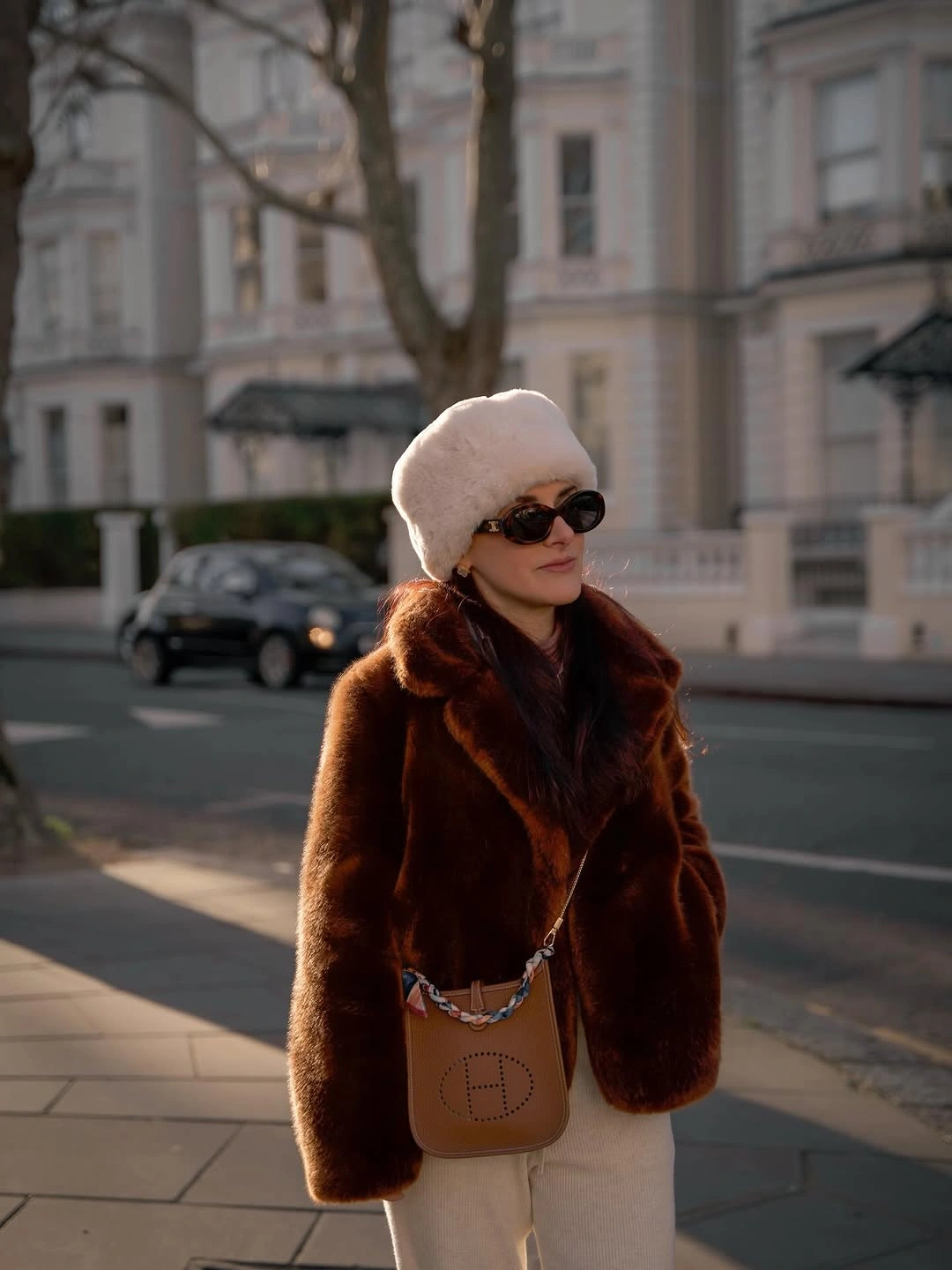
The jacket’s shorter length helps the cream trousers remain visible, which is important when the lower color is doing so much balancing work. If your jacket is longer, choose a straight trouser and a more defined shoe to retain some structure. A light hat repeats the trousers’ value near the face, but it should stay simple so it does not compete with the jacket’s already tactile surface.
Cream trousers can feel more special than standard blue denim, yet they need a little attention to hem length and cleaning. A darker brown bag is a practical companion because it hides daily marks and continues the jacket’s warmth. The dark belt is a small but useful bridge, giving the eye a midpoint between brown texture above and pale fabric below.
Tan Trimmed Coat Over Black Base Layers
A tan coat with pale trim is layered over black leggings or trousers, black lace-up boots, and a black bag. The light trim outlines the coat and makes its edges more visible against the dark base, while the boots provide a firm finish below the slim silhouette. This is a strong formula for a coat that needs to feel warm and substantial without obscuring the shape underneath.
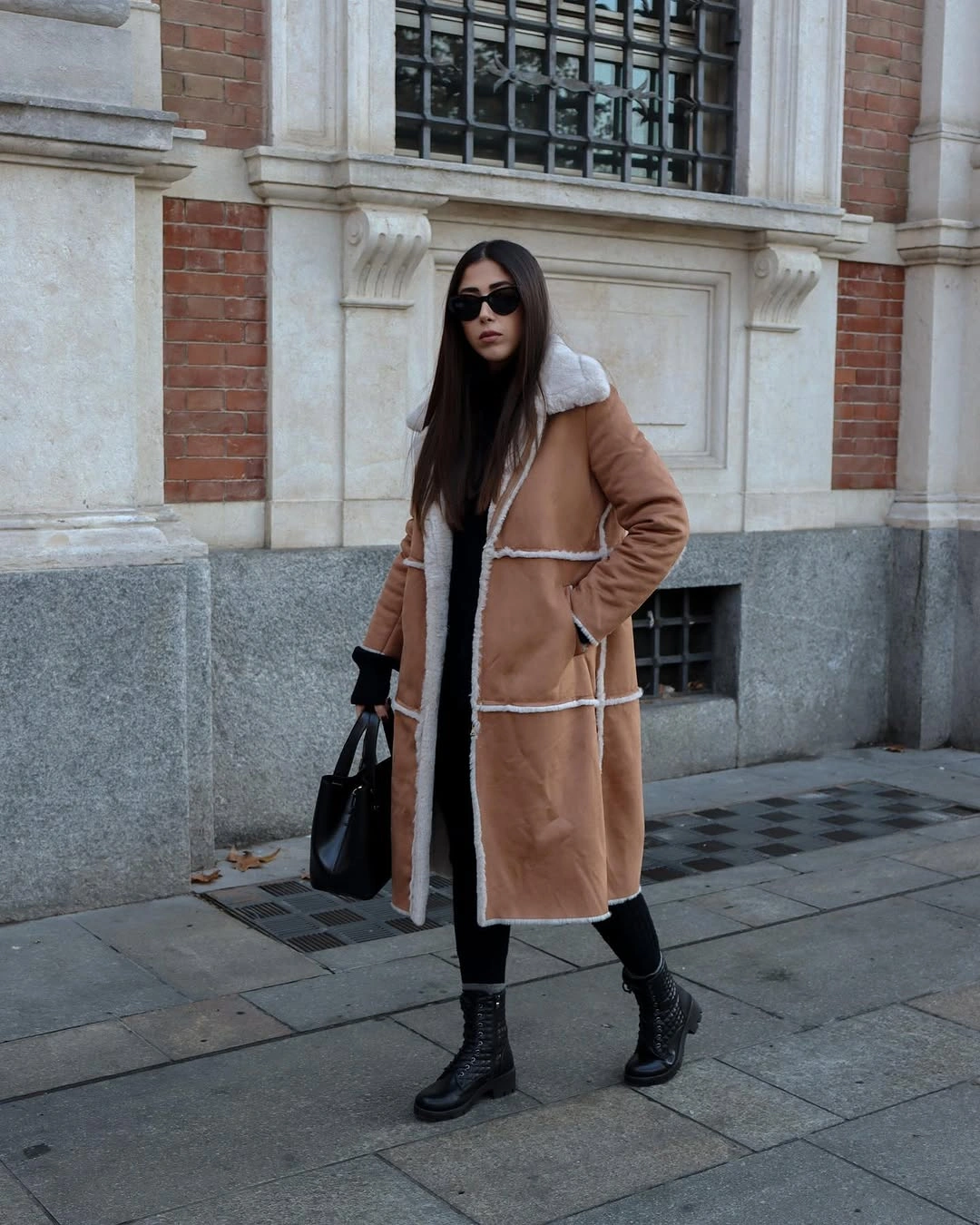
The black base is effective because it lets the tan coat hold all the warmth in the outfit’s palette. If full black feels too stark, try charcoal leggings and a dark brown boot, but keep them close in value so the trim remains legible. A pale scarf could be added, though it should not cover the coat’s neckline if the trim is one of the details you want to preserve.
Lace-up boots add practical traction and visual weight, yet they can make a slim lower half feel more utilitarian than office-polished. A smooth ankle boot would soften the mood while keeping the dark anchor. The coat itself remains versatile because it relies on a clear outline and calm supporting pieces, not on a specific location, event, or imagined temperature.
Cream Jacket With One Orange Bag Accent
A pale textured jacket, black hat, blue jeans, black boots, and bright orange structured bag make a neutral outfit memorable through one concentrated color. The orange bag is placed away from the face but still visible against the cream layer, giving the eye a single warm destination. Everything else remains quiet enough that the bag feels chosen, not accidentally bold.
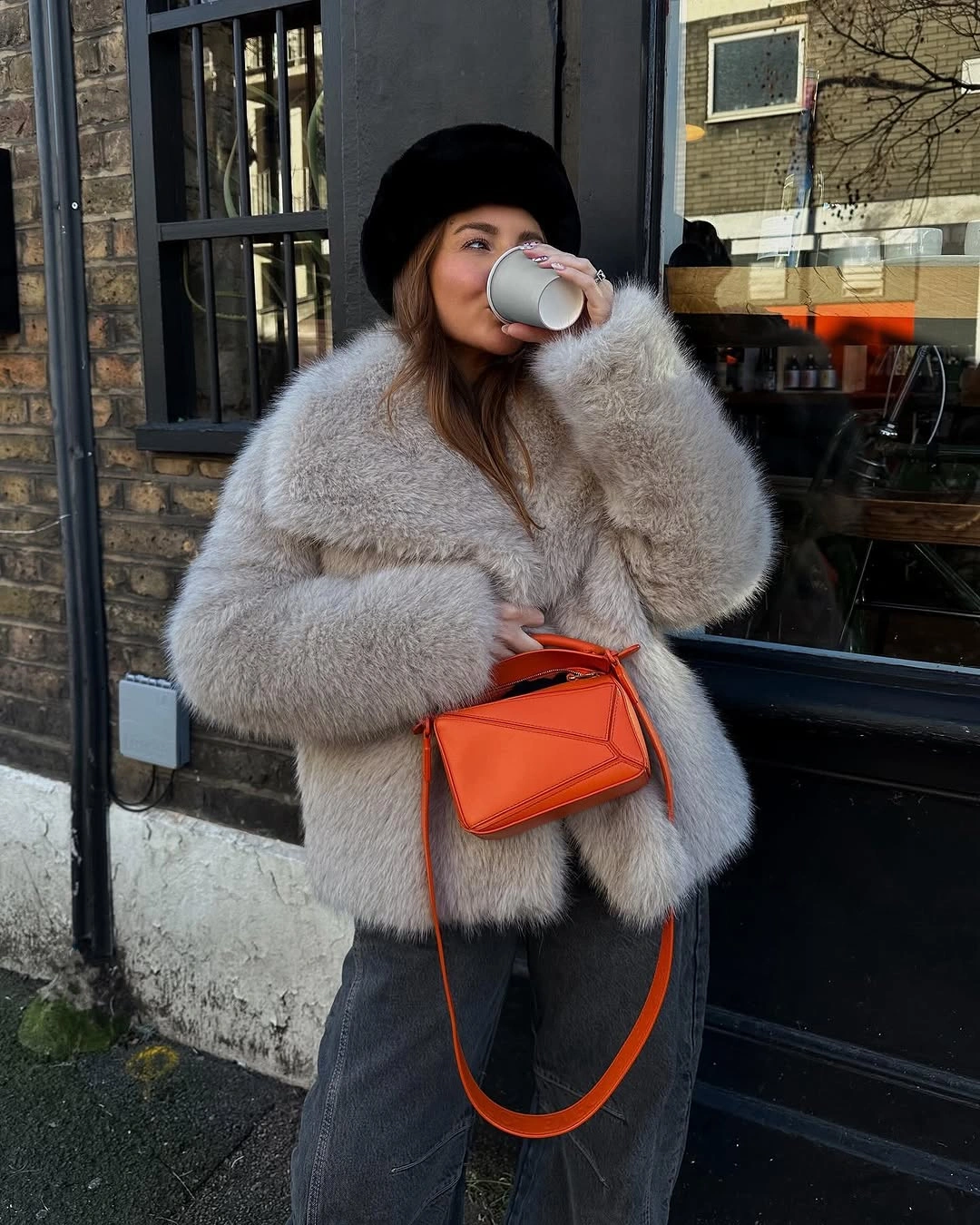
This is an easy way to try a vivid accessory without committing to a colorful coat or trouser. Keep the rest of the look within cream, black, and denim, then let the bag carry the brighter note. Rust, red, or cobalt could create a similar effect, but the strongest version uses one saturated piece only. Multiple colorful accessories would weaken the clean contrast that makes this work.
A structured bag is especially useful beside soft outerwear because it gives the outfit a crisp shape. Its practical downside is that a small bag may not hold work essentials, so use the color idea on a larger tote if needed. The jeans make the combination casual enough for a relaxed office, while a dark straight trouser would shift the same palette toward a more formal daily routine.
Dark Layers With a Saturated Red Scarf
A dark outer layer is given warmth by a saturated red scarf placed high around the face, with small jewelry details catching light nearby. The scarf is the immediate color focus, so the surrounding layers can stay quiet and deep without looking blank. This is a simple styling decision with a strong effect, especially when a winter work outfit otherwise relies on charcoal, black, or dark brown.
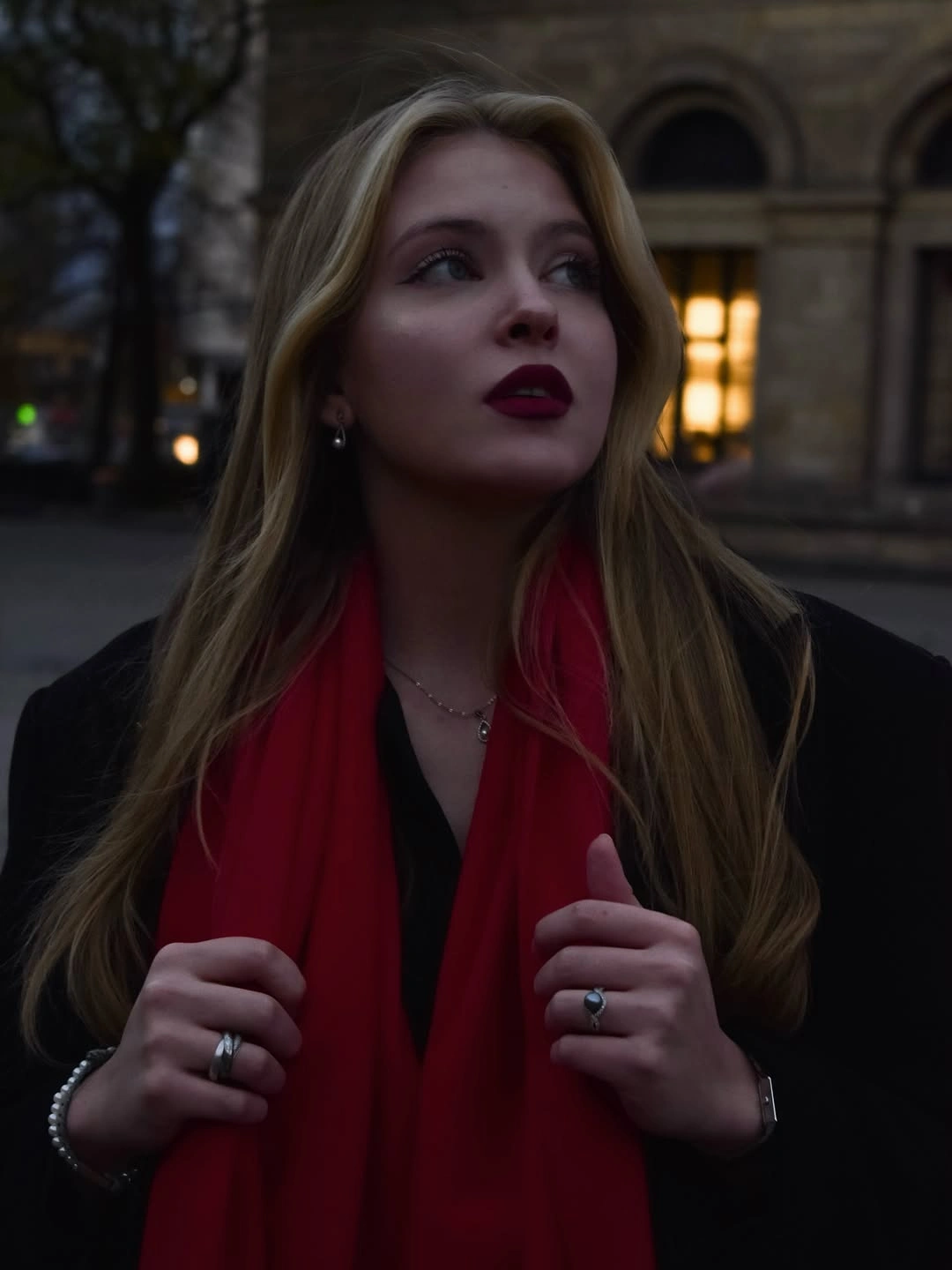
Red works best here when it is allowed to remain a single note. A matching red bag or shoe might be appealing, but it would change the calm focus of the scarf. If bright red feels too direct, choose cranberry, wine, or deep rose instead; those tones still warm dark layers while sitting closer to the reflective mood of the surrounding palette.
A scarf is also the easiest accent to remove once indoors, which makes it practical for a setting with different comfort needs throughout the day. Choose a fabric with enough body to stay in place without constant adjustment, but avoid an overly bulky wrap that hides the coat’s neckline. The quiet satisfaction of this look comes from contrast at the face, not from adding volume everywhere.
Padded Navy Jacket With a Pleated Skirt
A dark navy padded jacket is worn over a white collar and gray pleated skirt, with dark knee socks, black bag, and a small gold belt detail. The collar and pleats bring structure to the practical outer layer, giving the outfit more definition than a padded jacket and trousers alone. It is a useful approach for days when insulation matters but you still want the lower half to feel polished.
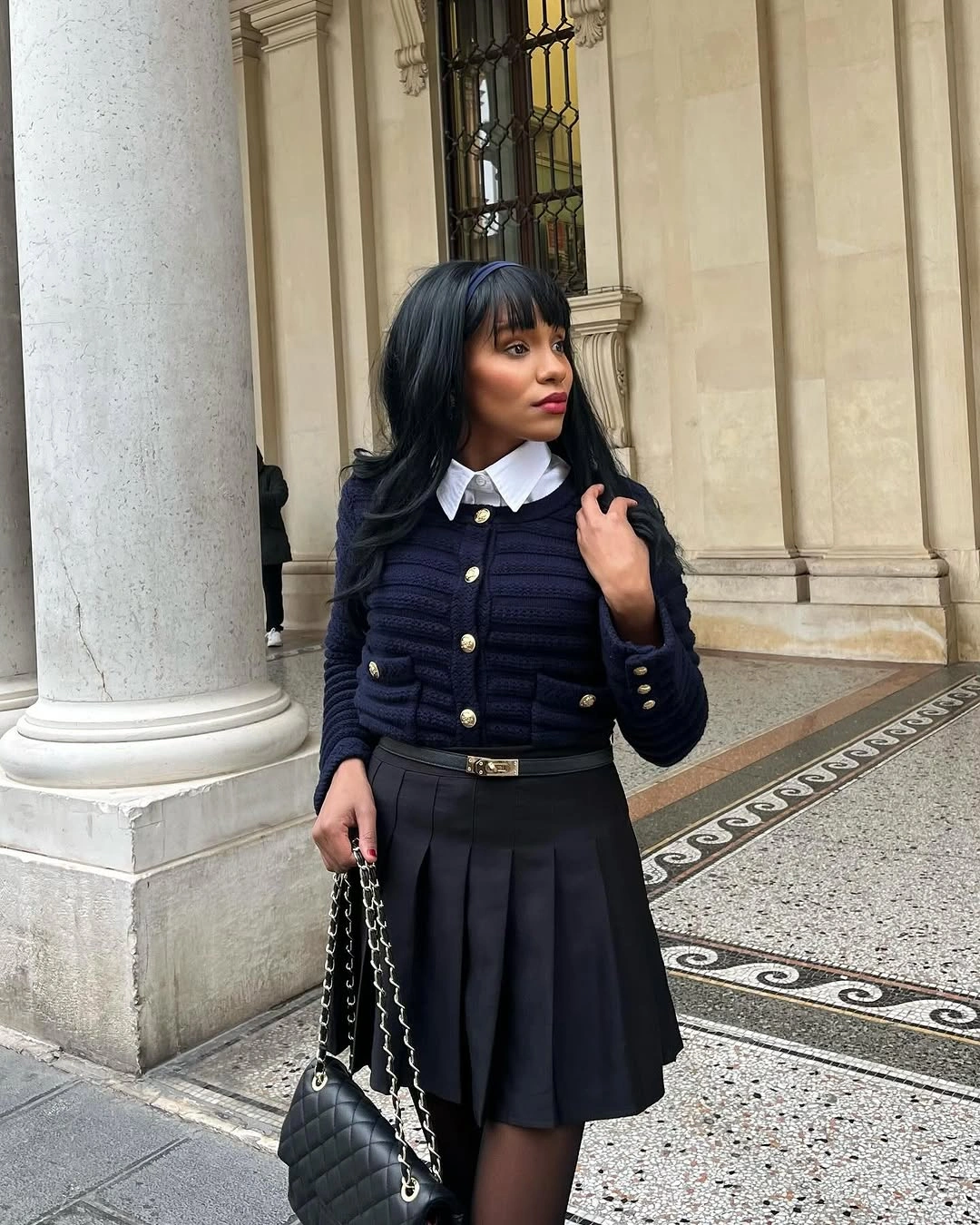
The white collar is a small but important point because it separates the navy jacket from the face and echoes the lighter gray skirt. A fine knit, button-front layer, or crisp collar insert could achieve a similar effect. Keep the bag dark and compact so it reinforces the jacket without adding another color. The pleats are already providing movement and visual interest below the waist.
A skirt with socks is not a universal winter solution, and personal warmth preferences should lead the choice. Opaque tights, taller boots, or tailored trousers could preserve the navy-gray-white balance with more coverage. The padded jacket will always add some volume, so the clean collar and pleated lower line are especially valuable for keeping the outfit from feeling like a single bulky shape.
Long Black Coat With a Burgundy Bag
A long black coat, charcoal knit, dark wide trousers, black boots, and a burgundy shoulder bag create depth through close neutral shades and one warm accessory. The bag does not dominate, yet its wine color keeps the black-and-gray layers from feeling austere. The outfit remains practical because the strongest color is confined to an item that can carry daily essentials rather than a delicate statement piece.
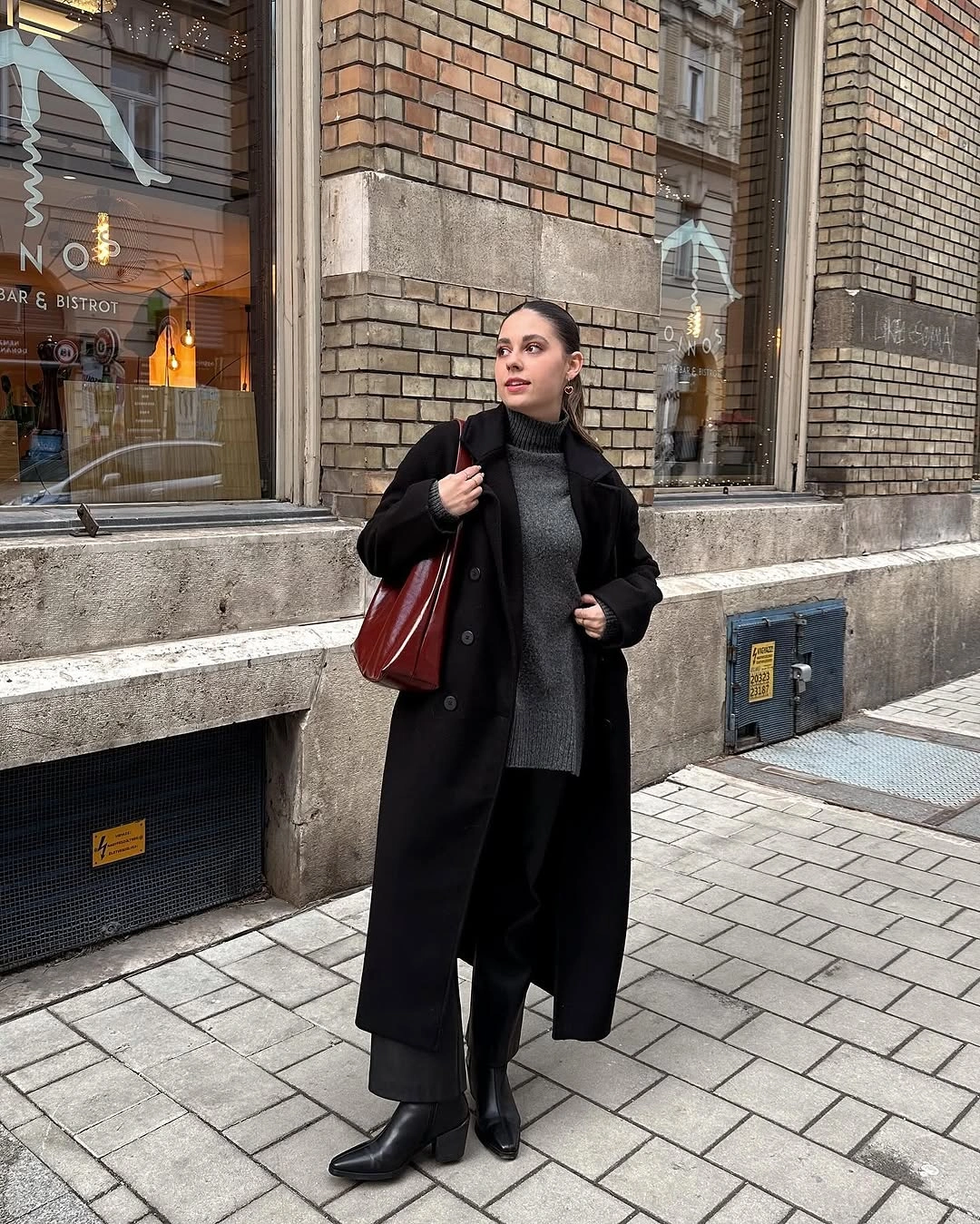
Charcoal is a useful bridge between black outerwear and a burgundy accessory because it prevents the palette from splitting into only dark and red. A gray scarf or knit top can perform the same task if the coat is closed. For more winter work outfit ideas, this balanced use of deep color belongs beside the site’s winter work outfit guide rather than a trend that depends on a single season.
The wide trousers keep the coat from looking overly formal, but they need a boot with enough substance at the hem. A delicate flat could get lost under the extra fabric, while a simple ankle boot gives the lower line a clear finish. Burgundy bags also handle daily wear gracefully, though choose one with a shape that fits your work needs rather than forcing essentials into a small accessory.
Oversized Cream Texture With Black Ankle Boots
A large cream textured coat, white trousers, long pale scarf, and black ankle boots form a pale column with one grounded ending. The rear view makes the coat’s volume especially clear, while the boots prevent the lower edge from floating into the pavement. This is a strong way to use soft light layers in winter without needing a belt, bright bag, or patterned scarf to make them feel intentional.
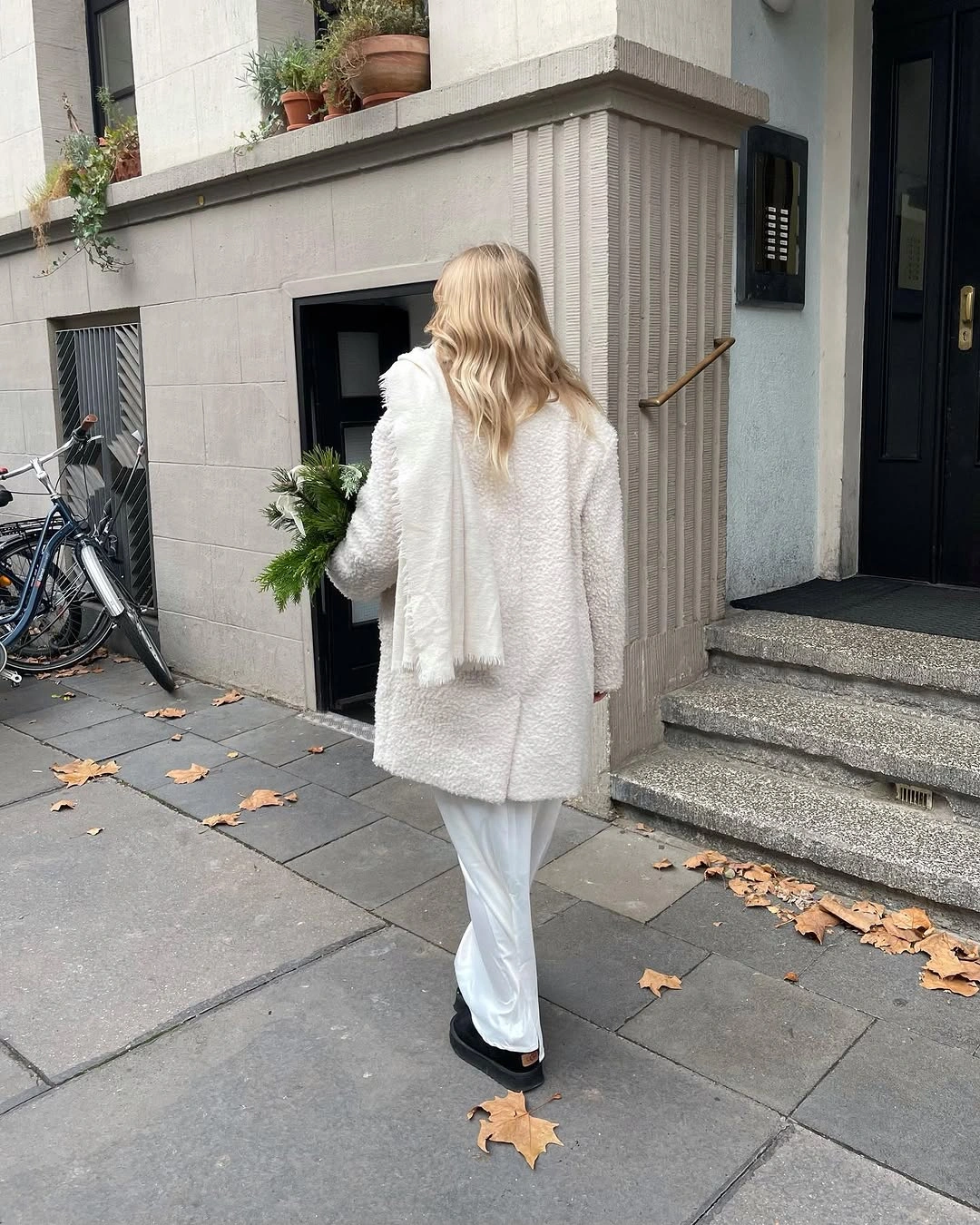
The coat and trousers remain close in value, so the scarf should also stay pale if you want the vertical effect to continue. A colored scarf would create a different, more broken-up outfit. Black boots are the useful contrast because they add stability while staying small enough not to interrupt the overall softness. A dark bag can work as well, but keep it modest in scale so it does not overwhelm the pale surfaces.
Oversized texture can be comfortable and visually beautiful, yet it is worth checking shoulder movement and the amount of room left under a bag strap. A lighter, flatter coat may be easier for a transit-heavy day. The essential idea is not the exact fabric, but the way one dark shoe choice can make a generous cream outfit feel finished rather than fragile.
Burgundy Puffer Vest Over Gray Knit and Denim
A burgundy puffer vest is layered over a gray knit with light blue jeans, pointed shoes, and a muted gray bag. The vest concentrates warmth and color at the center, while the denim and knit remain understated enough to support it. This creates an approachable workday palette for a casual office, where a full coat may be unnecessary indoors but a distinct outer layer still feels useful.
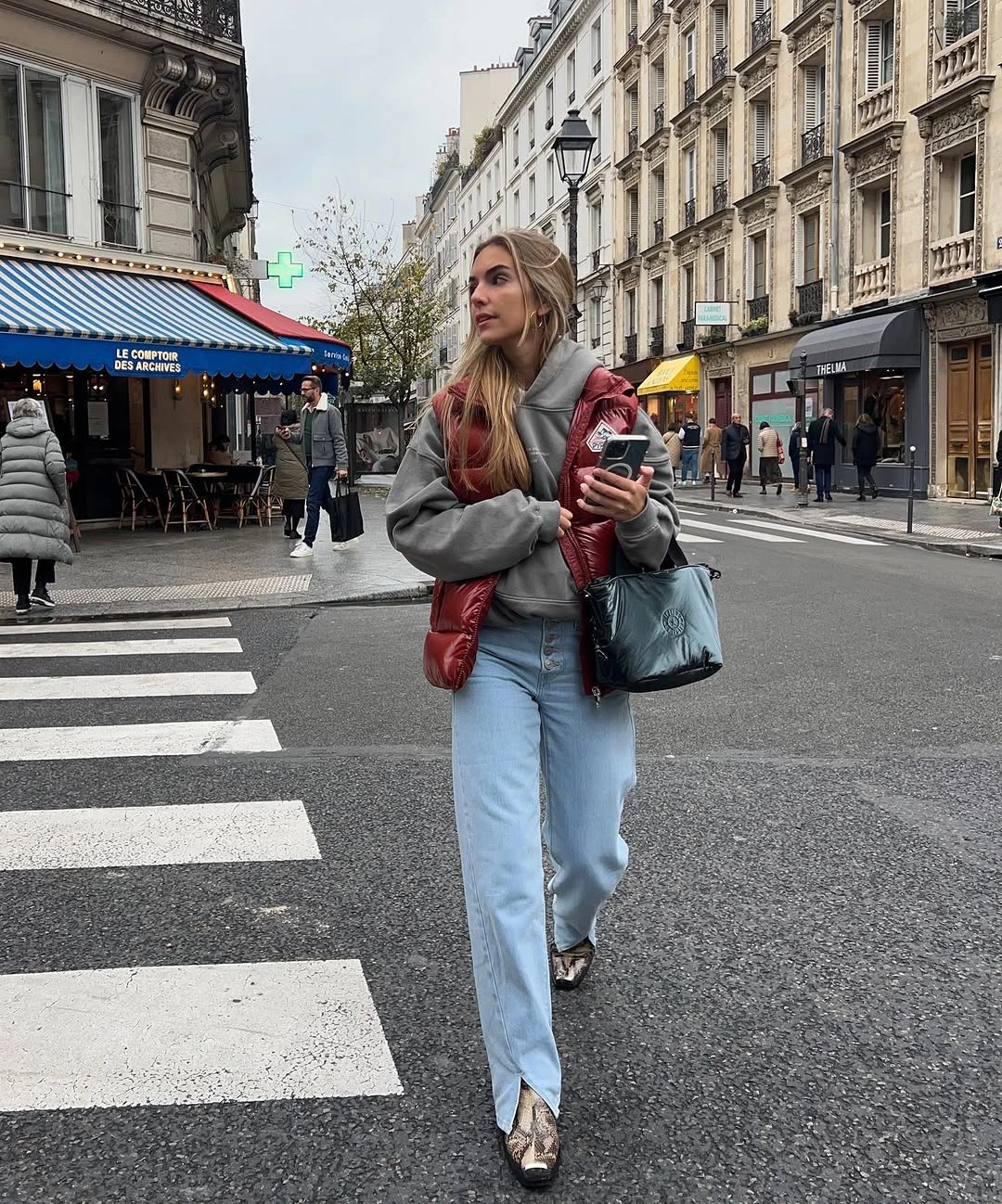
The gray knit is the quiet bridge that keeps burgundy and blue denim from competing. A white shirt would create brighter contrast, but gray makes the overall mood more muted and cohesive. Keep the vest’s shape clean and not overly bulky, because the jeans already add relaxed volume below. A pointed shoe gives the combination a slightly sharper finish than a running sneaker would provide.
A puffer vest is flexible for changing indoor temperatures, although it can look bulky if worn over a very thick sweater. Choose a knit with enough ease at the sleeve but not excessive fabric at the torso, then the vest can sit smoothly. The burgundy color does the expressive work here, leaving the bag and denim free to stay practical, comfortable, and easy to repeat.