
A middle part changes the mood before a single curl is placed. On one face it looks almost architectural, on another it simply clears the forehead and lets texture take over. I keep coming back to it because the smallest line can make a low ponytail look exact, give big waves somewhere to begin, or make an updo feel less closed.
The fun is in the tension: the crown can be strict while the ends stay loose, the color can be soft while the silhouette is bold, and one curled strand can disturb perfect symmetry without wrecking the shape. If you have been treating a middle part as a rule, it is worth treating it as a staging choice instead – decide what should stay calm, then let the rest of the hair have its own behavior.
Sleek Low Ponytail with a Clean Center Part
The first look makes the middle part unmistakable by keeping the dark hair close to the head before it gathers into a low ponytail. Its surface is smooth, the neck stays open, and a black ribbon detail near the collar adds a small sculptural interruption without competing with the hair. That restraint gives the center line a real job: it frames the face and carries the style before the tie even appears.
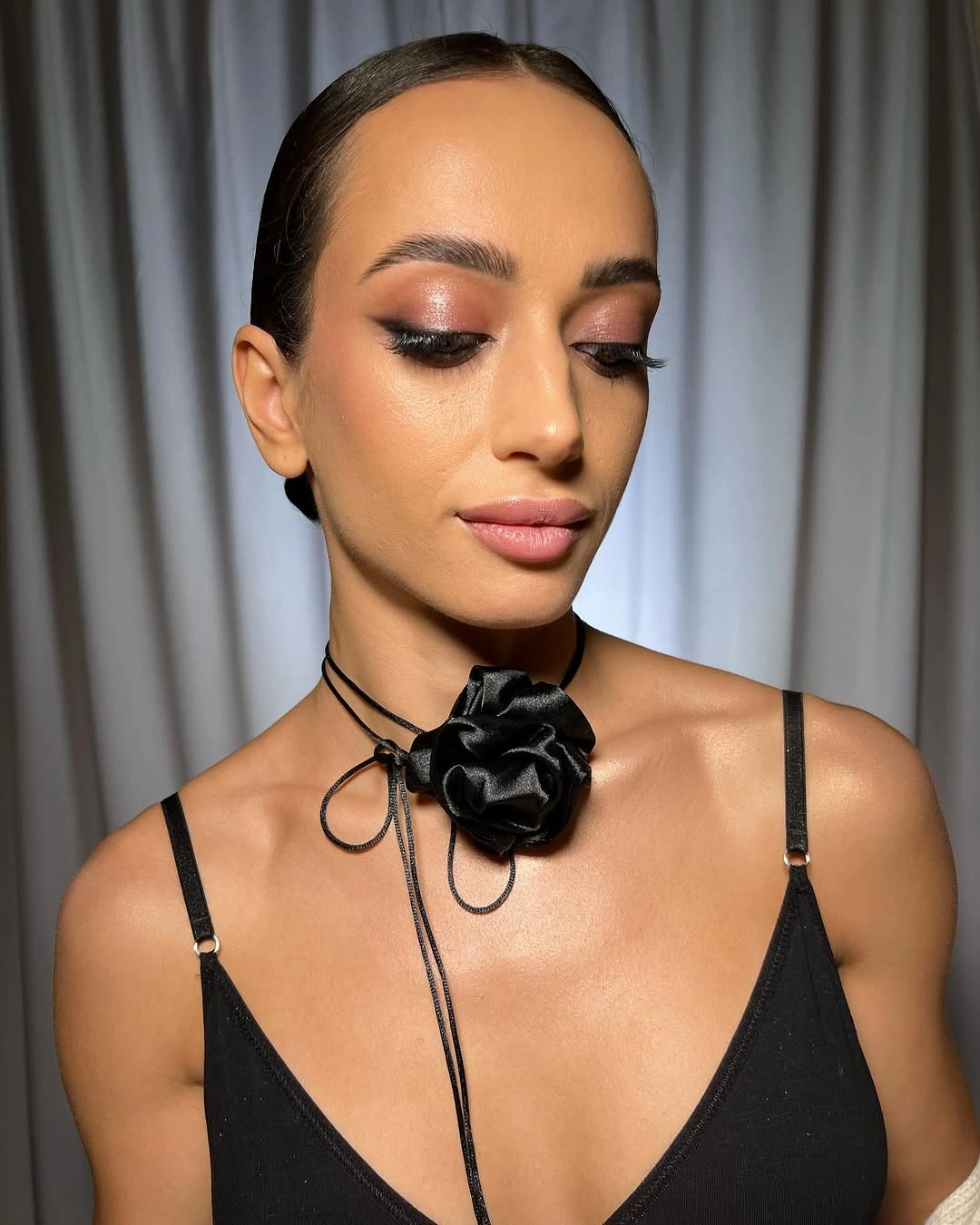
For a similar result, spend more attention on the part and the area around the ears than on the ponytail length. A controlled surface keeps the silhouette crisp, while a quiet tie prevents the neckline detail from turning into visual clutter. If your hair has more natural movement, let a little texture remain in the tail rather than forcing every strand flat; the important contrast is the neat crown against the relaxed length.
This is the clean baseline for the collection, and it will suit anyone who likes a deliberate shape with very little decoration in the hair itself. The tradeoff is that bumps and uneven flyaways are easier to notice than they would be inside a curl pattern. In return, the low placement feels composed with a simple top, a high neckline, or any accessory that needs room near the face.
Brushed Brown Waves with a Calm Crown
Here the brown hair begins at a clear center direction and opens into long, brushed waves with rounded bends through the lengths. The white high neckline makes the darker hair easy to read, but the real balance comes from keeping the crown orderly while the waves widen lower down. It is a soft shape with enough repetition to look arranged rather than windblown.
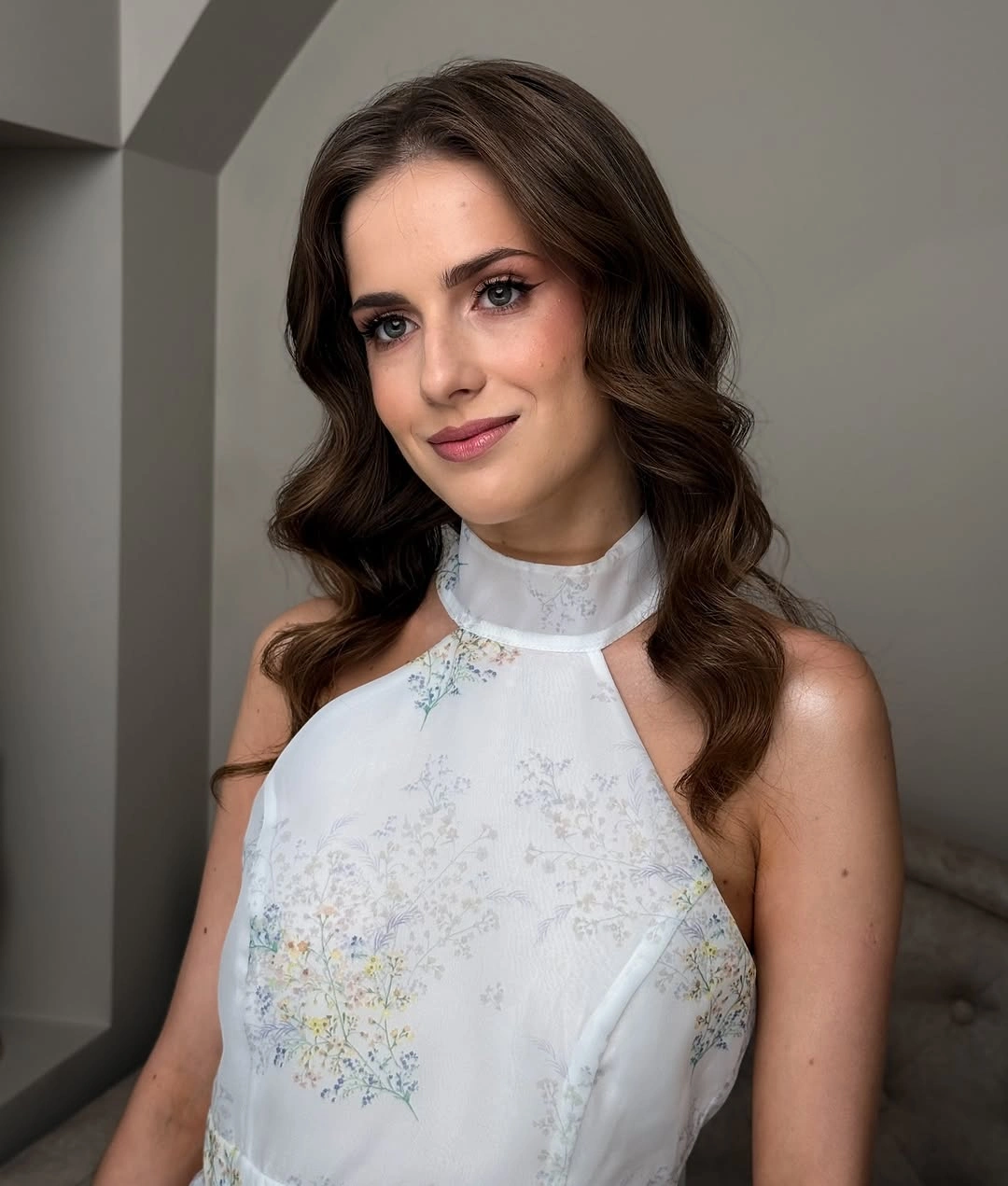
Shape the first bend below the cheek area if you want the middle part to stay visible and the sides to feel light. Broad sections create the rounded rhythm seen here, whereas small curls would make the hair denser and change the proportion around the face. A light brush-through can unite the waves, but overworking the ends will remove the separation that gives this look its gentle movement.
Compared with the sleek ponytail, this version brings more width and motion without turning the crown into a high-volume cloud. It is a useful middle choice for someone who wants a polished result that still moves over the shoulders. The honest limitation is length: broad bends need enough room to appear as waves instead of collapsing into a few loose kinks at the ends.
Full Defined Curls Framing the Middle Part
The center part is a quiet line above a much bigger event: full dark brown curls that begin around the face and build a rounded silhouette through the shoulders. The curls are visibly more defined than the brushed waves before them, and the balanced volume on both sides keeps the look grounded even when the texture becomes dramatic. That contrast between order at the crown and energy below is what makes the hairstyle work.
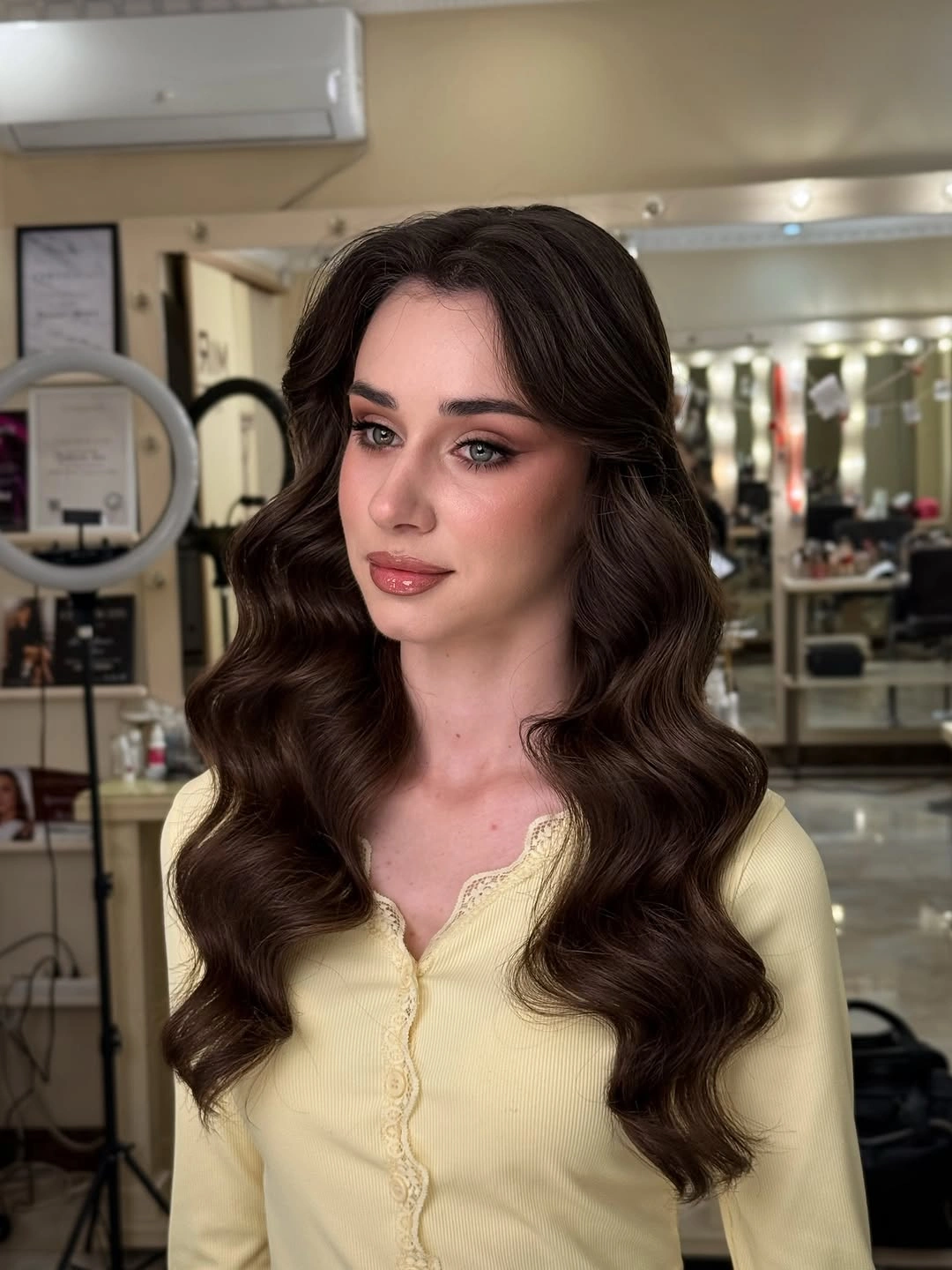
Keep the curls separated around the face so the part has an open landing zone instead of disappearing into one solid mass. The lower sections can stay rounded and full, but the front benefits from visible curl groups that show how the hair moves away from the center. If you need less width, reduce the amount of expansion at the sides rather than disturbing the part itself.
This is the high-volume option for the reader who wants the middle part to organize a strong texture, not flatten it. It has more presence than the smooth ponytail and demands more care when the curls are being refreshed, especially where the pattern meets the face. The result rewards that extra attention with a defined outline that still feels balanced from left to right.
Smooth Ponytail with a Jeweled Ear Accent
A dark middle part leads into another smooth low ponytail, but the visible ear cuff changes the emphasis. One side is tucked close to the head, the ponytail keeps a clean line behind it, and the reflective ear detail becomes a small focal point against the black styling cape. The hair stays controlled enough that the accessory reads as part of the composition rather than something added afterward.
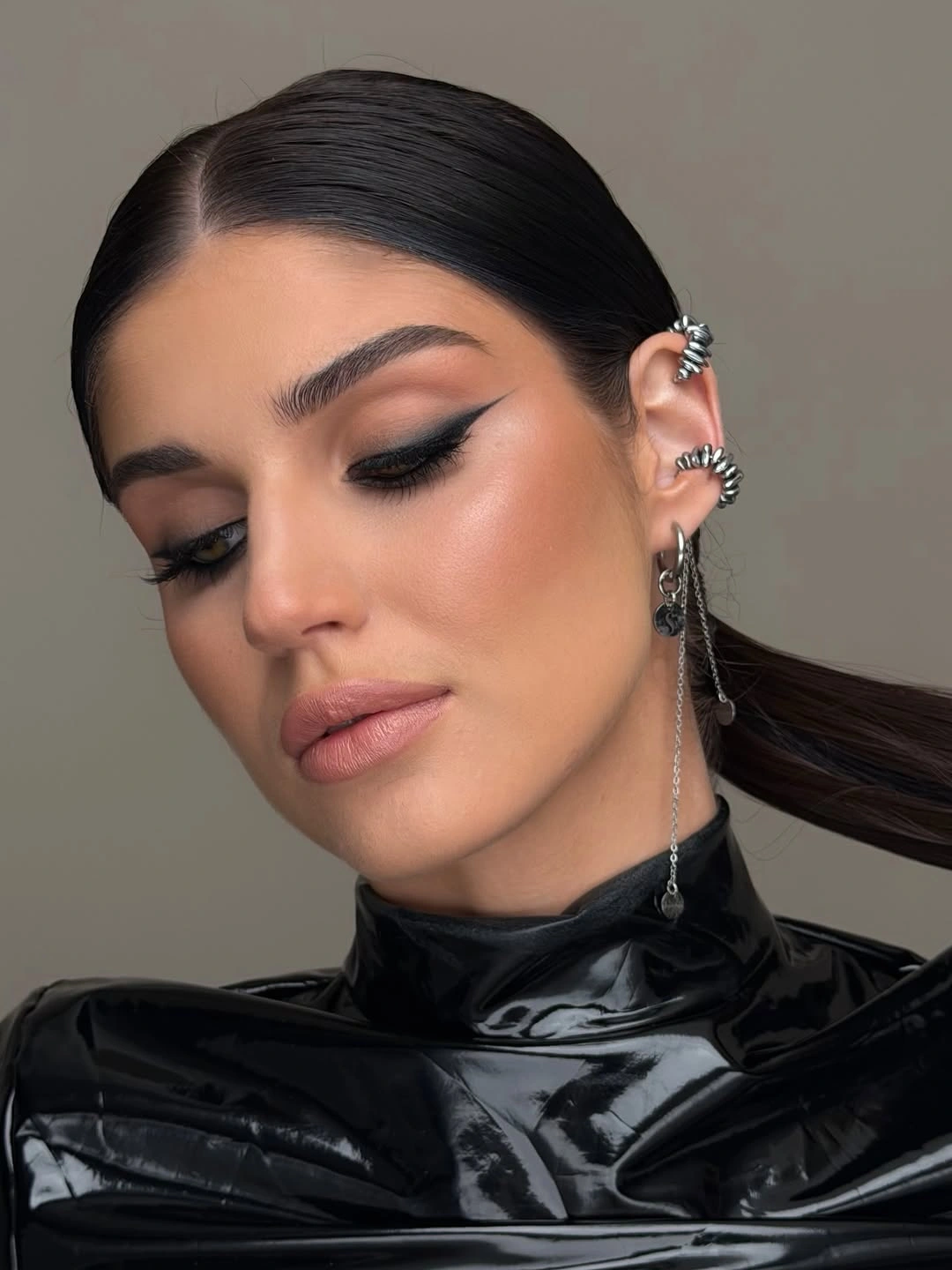
If you adapt this shape, make the tuck deliberate around the ear and keep the surface calm from the part to the tie. The ponytail does not need extra height because the accessory already supplies contrast; adding volume at the crown would compete with the close, streamlined silhouette. A slightly softer tail can work too, as long as the top and the ear area remain the most precise parts of the look.
This option is sharper than loose waves and more accessory-aware than the first ponytail, yet it still relies on the same middle-part discipline. It fits a setting where an earring or ear cuff should be noticed without a crowded hairstyle around it. The limitation is practical rather than aesthetic: a smooth tuck shows bumps quickly, so the finish needs checking from the side as well as from the front.
Very Long Loose Curls Falling Evenly
Long brown hair falls from a visible central direction into generous loose curls, and the pale top leaves the cascade open from shoulder to bust. The length creates a vertical curtain, while the middle part keeps the front from becoming too heavy on one side. Instead of a tightly set curl pattern, the bends remain broad and separate enough to show the weight and movement of the hair.
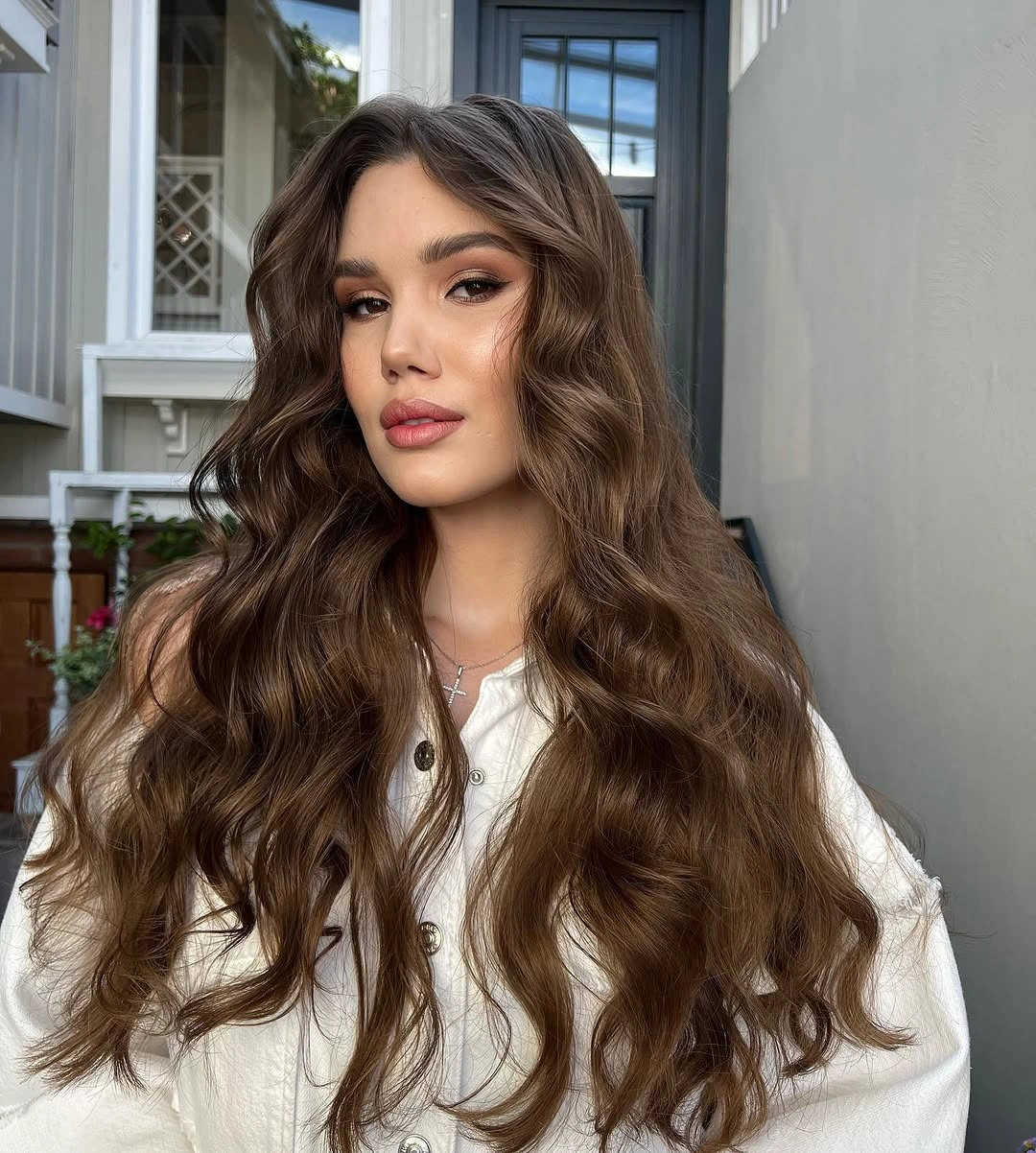
Let the front pieces fall forward naturally and refresh the outer bends without brushing the whole length into one shape. The lower sections can be softer than the hair around the face, which helps the style keep an airy outline rather than becoming a dense wall. If your own length is shorter, repeat the same logic with fewer bends and leave the crown smooth so the part still acts as the starting point.
The visual payoff is length first, texture second, making this a relaxed alternative to the defined curls above. It feels less formal than a close curl set, but the ends may be the first place where the pattern loses its shape because they carry more length. That is a fair trade if you prefer a cascading finish that looks good while moving instead of staying perfectly sculpted.
Soft Tousled Curls with Airy Ends
These pale blonde-brown curls are smaller and airier than the long loose bends, with texture gathered around the face and shoulders and a calmer crown above. The ends create the lively part of the silhouette, while the top stays controlled enough that the central direction is still easy to follow. The result is touchable in appearance without relying on a completely unstructured finish.
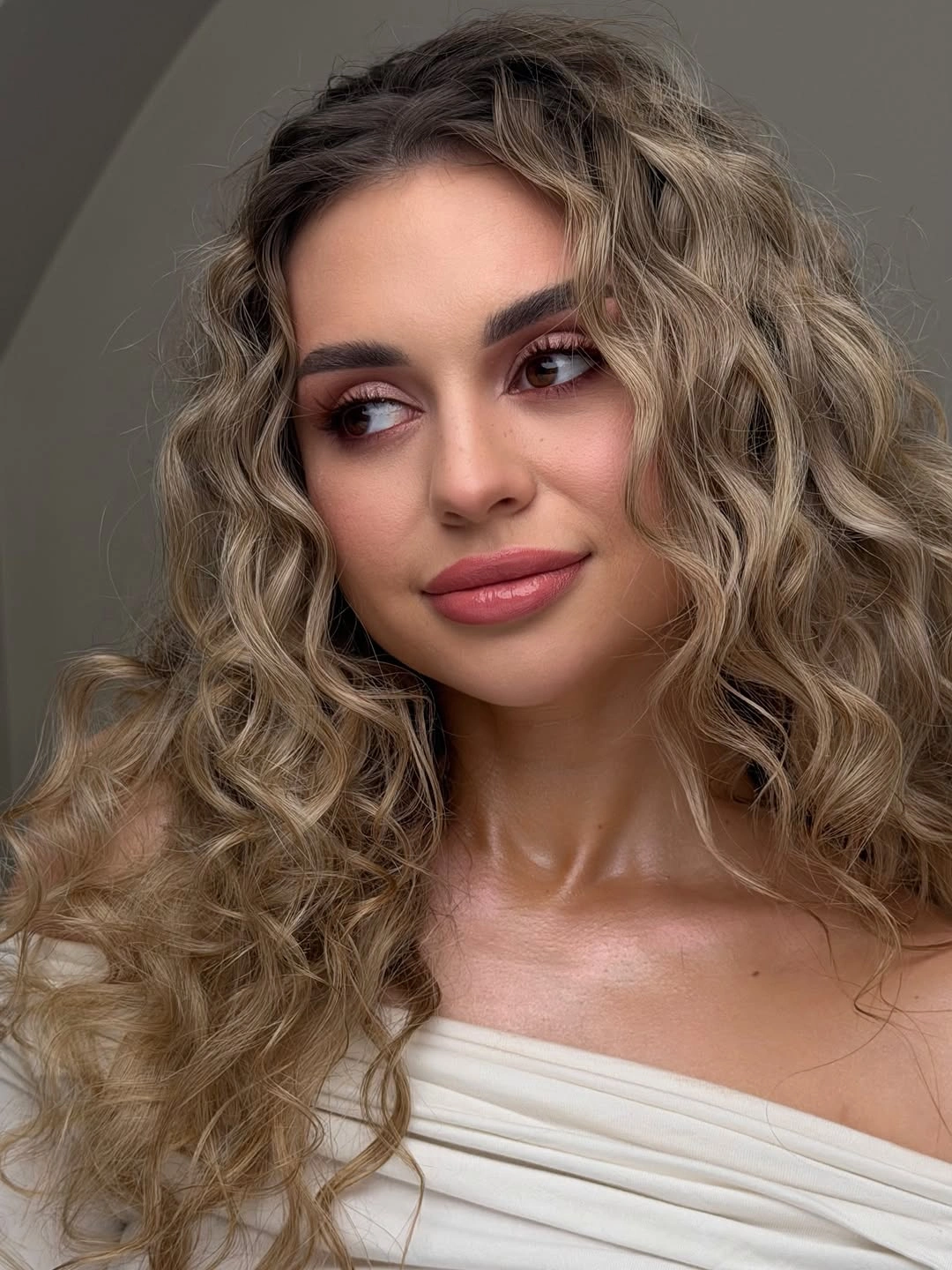
Work your styling effort through the mid-lengths and ends rather than flattening the crown or over-defining every curl. A little separation keeps the pattern from becoming a single fluffy shape, but aggressive brushing would trade the visible curl groups for frizz and erase the difference between the upper and lower sections. This is a good place to keep the part neat and let the ends carry the personality.
Compared with the longer, broader curls, this version feels more casual and less ceremonial because the texture has a slightly tousled edge. That relaxed character can be useful for everyday wear, though it also comes with a humidity and brushing tradeoff: the silhouette may expand or lose definition faster. The middle part gives the softness a visual anchor when the ends become less exact.
Half-Up Waves with an Oversized Black Bow
A centered crown leads into long brown waves that stay loose below a half-up gathering, while an oversized black bow becomes the clear focal point at the back. The top remains organized and the lower lengths keep their movement, so the accessory does not erase the hairstyle’s texture. That top-to-volume transition gives the look a playful color-and-shape moment without needing multiple hair decorations.
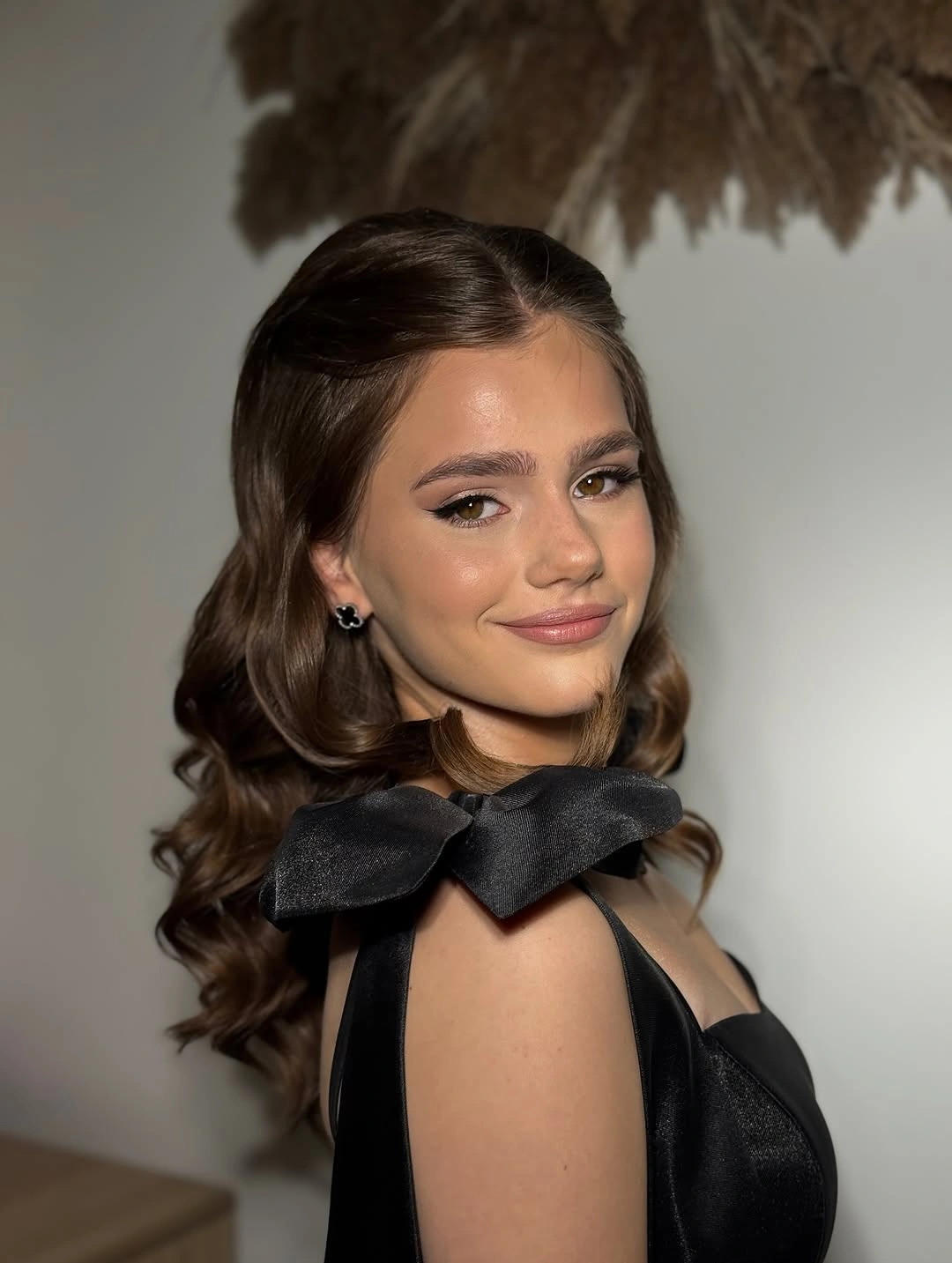
Place the gathering high enough that the part remains visible and the side hair does not collapse against the face. The bow should be secured without pulling the loose waves flat, because the charm of the style comes from the contrast between a tidy upper section and a flowing lower one. If the full bow feels too strong, a smaller dark ribbon can preserve the same idea while reducing the focal scale.
This is more decorative than either low ponytail and more deliberately styled than the tousled curls, but the basic balance is easy to understand. It suits a moment when you want the middle part to look intentional while still leaving the lengths down. The tradeoff is visual commitment: once the bow is large, the hairstyle reads as playful first, so a minimal accessory would create a quieter version of the same structure.
Twin Soft Waves Divided by the Center
A precise dark center part divides the hair into two long, soft waves that fall evenly over the shoulders. The top is smooth and the lower bends are gentle, so the style reads symmetrical without looking rigid. There is no single accessory or color change to distract from the main idea; the balance comes from how evenly the movement is shared from one side to the other.
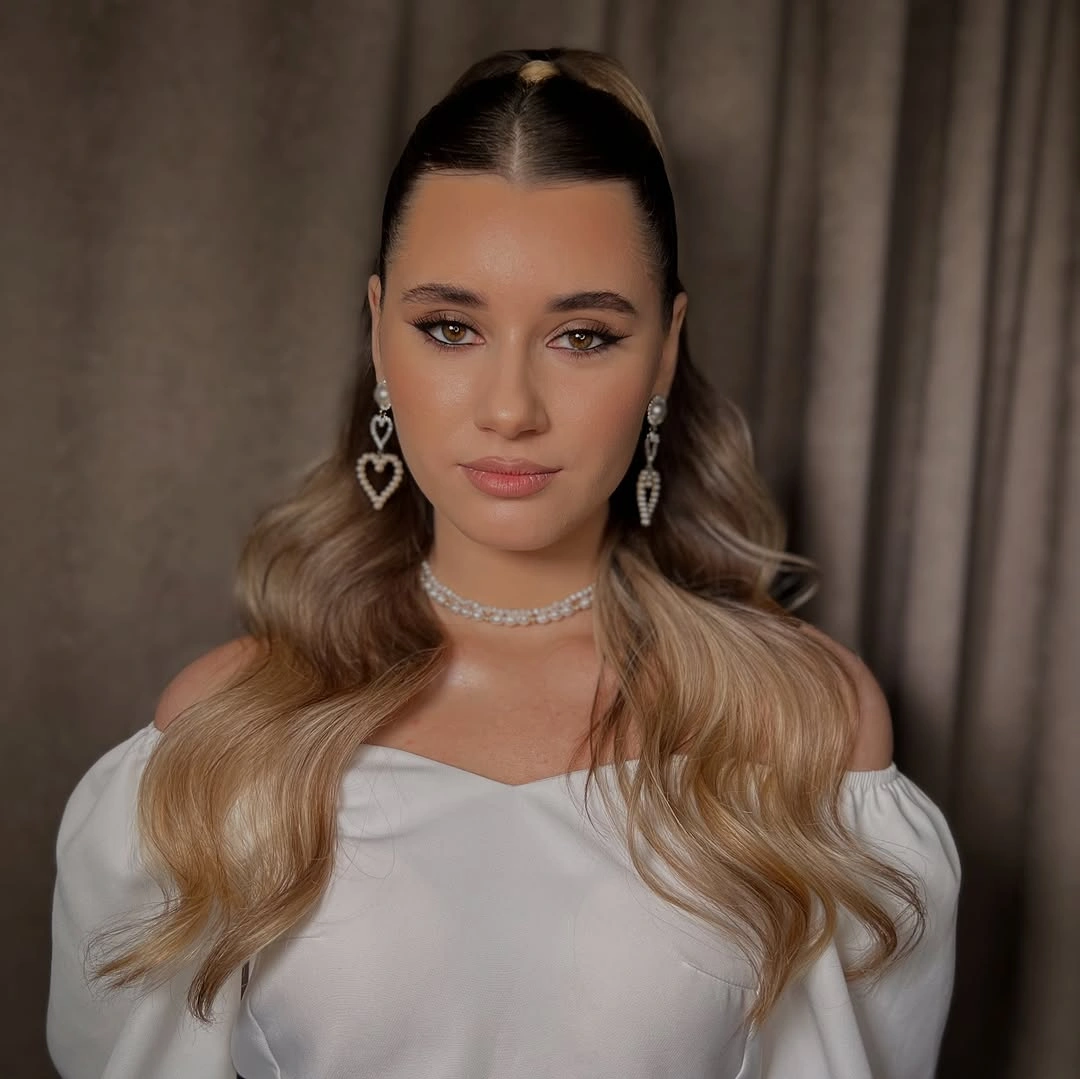
Keep the crown close to the head and begin the wave below the cheek area so the center line remains the clearest feature. Broad, repeated bends are enough to create the shape, and the ends can stay slightly open instead of being curled into tight spirals. If one side of your hair naturally carries more volume, reduce that side rather than adding height to both, because the appeal here is measured division.
This may be the most straightforward interpretation of a middle part in the collection, especially for someone who likes symmetry. It feels more polished than the one-sided curl later on, but it can also read less spontaneous than an off-center sweep. The practical reward is predictability: once the two sides share a similar wave pattern, the hairstyle keeps its proportion as it moves.
Low Updo Softened by Loose Tendrils
The hair is gathered into a compact low updo while two loose tendrils curve beside the face, creating a useful contrast between a tidy back and a softer front. The top direction remains balanced, but the curled strands keep the shape from feeling severe or overly formal. Because most of the length is contained, the face-framing pieces become the main movement in the hairstyle.
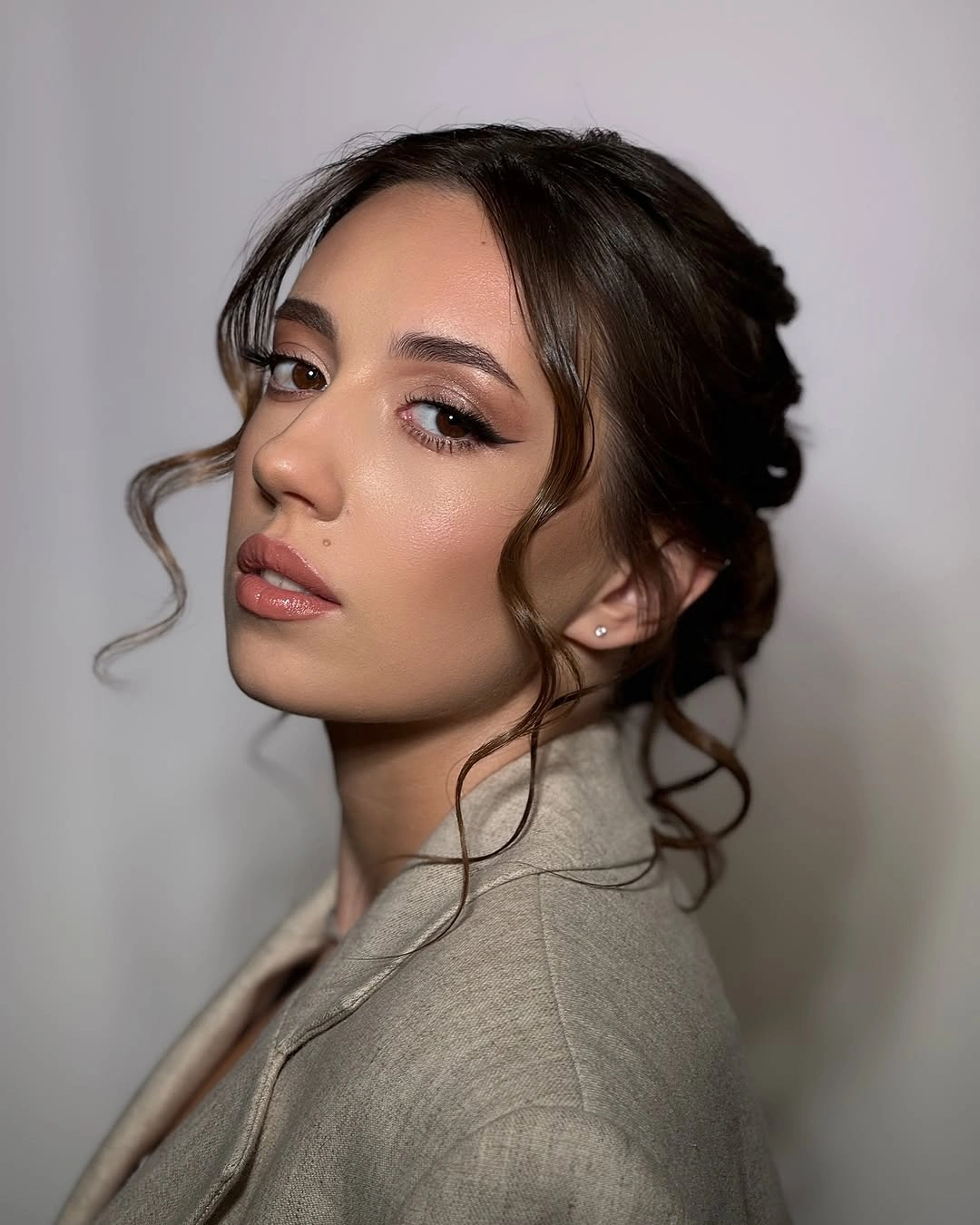
Leave the front pieces long enough to bend cleanly without touching the gathered section, then smooth the updo without flattening all of its texture. The tendrils work best when their curves look intentional and separated from the rest of the hair; too many escaped strands would blur the compact outline. This is also a good place to let the neck and earrings provide quiet space around the style.
Compared with hair worn fully down, the low updo changes the proportion by exposing more neck and concentrating detail near the face. It is less forgiving than a loose wave if the front pieces are uneven, but it is easier to keep out of the way once the gathered shape is secure. The result is a middle-part idea that feels softened rather than strictly sleek.
Pale Pink-Blonde Waves from a Center Part
The faint pink cast in this pale blonde hair gives the central part a color-led entry, then the lengths widen into loose mermaid-like waves. The roots stay relatively smooth while the repeated bends carry most of the interest lower down, so the unusual tone does not need a busy cut or accessory to stand out. It is a clear example of color and movement sharing the same visual job.
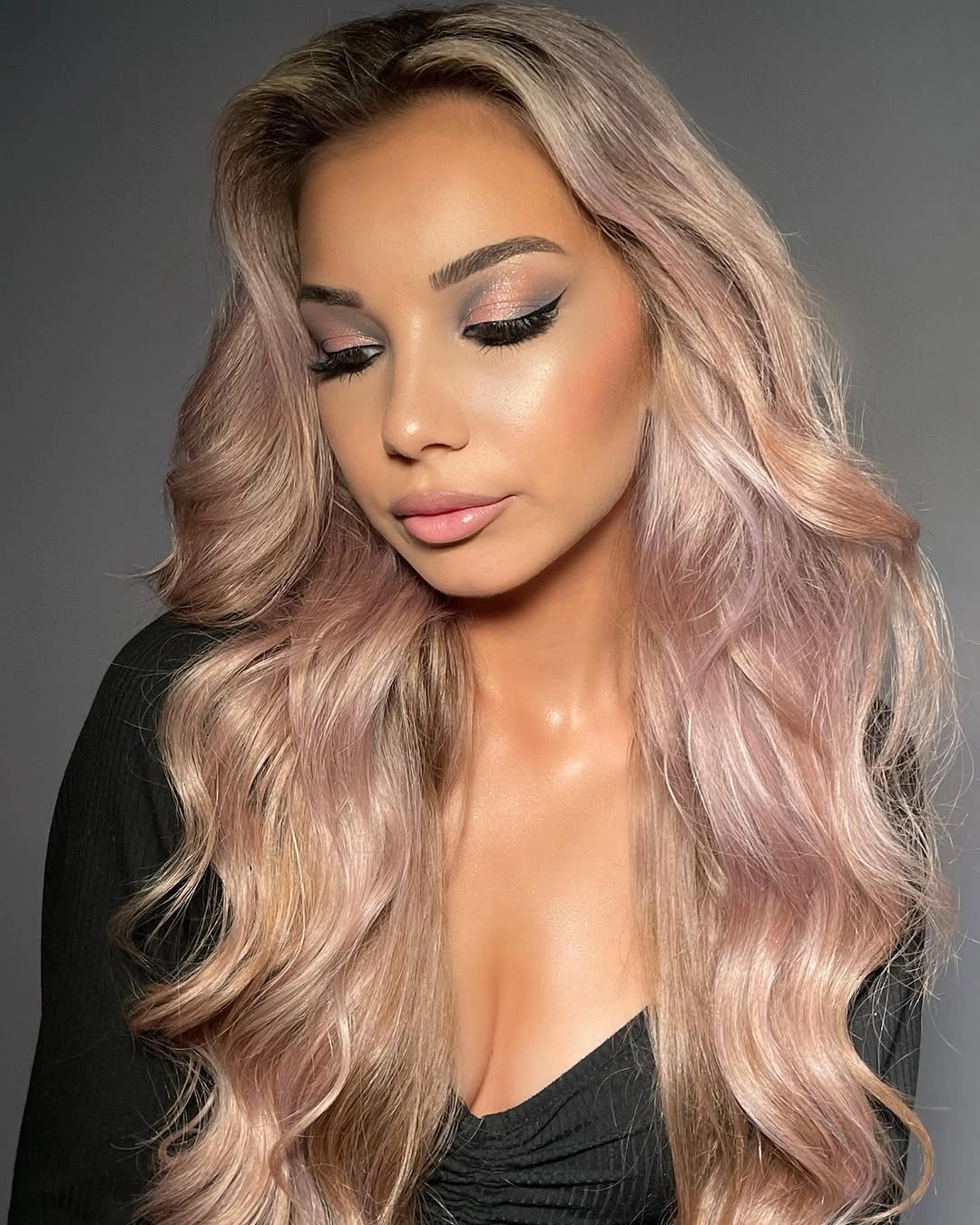
Keep the root area neat and use a wide wave pattern through the lengths so the pale color stays legible instead of blending into a fluffy outline. A soft sweep around the face can add movement, but the first few inches should remain calm if you want the center direction to read. When adapting the idea to a natural blonde or brunette base, the same wave spacing will preserve the silhouette even after the color changes.
This look is more statement-driven than the brown waves because the pale pink tone changes the first impression before texture is even noticed. That makes it fun for a color moment, but light shades can reveal dryness or uneven texture more clearly than a deeper base. The best balance is to let the color stay unexpected while keeping the wave architecture simple.
Copper Half-Up Twist Above Long S-Waves
Seen from the back, warm copper hair is divided into a small half-up twist and long S-shaped waves that continue beneath it. The dark jacket around the hair gives the warm color a clear frame, while the twist creates a hinge between the controlled crown and the moving lengths. This rear view shows how a middle-part idea can be understood through the back silhouette even when the face is not the focus.
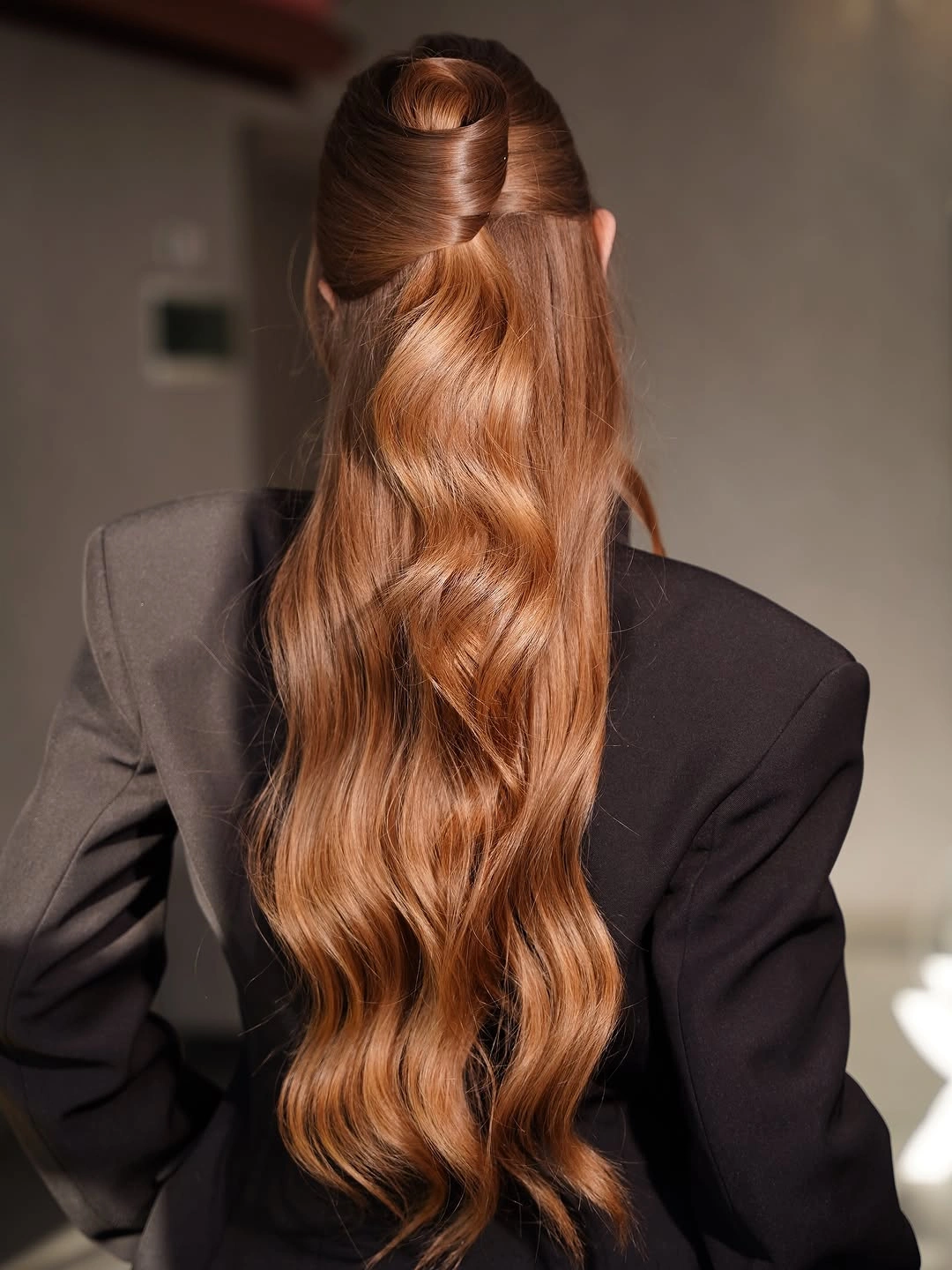
Keep the upper twist compact and allow the lower waves to remain separated into visible paths. Pulling the top too tightly would flatten the contrast that makes the style interesting, while over-brushing the lower section would turn the S-waves into a single fuzzy mass. A shorter version can use a small twist over shoulder-length bends and still keep the same upper-to-lower relationship.
The copper tone makes this more color-conscious than the surrounding brunette looks, yet the half-up construction keeps it from feeling like a simple color change. It offers a useful event direction when you want the back of the hairstyle to have a designed shape. The limitation is that the rear view tells you less about the front framing, so the part and face pieces would need to be matched deliberately.
Long Dark Waves with High-Contrast Volume
Very long dark hair falls from a centered part into large glossy waves with generous fullness through the sides. The bright pink top increases the contrast, making both the central line and the repeated wave rhythm easy to read. This is not a quiet cascade; the long length and strong color relationship give the hairstyle a deliberately glamorous scale while the part keeps it from drifting into visual chaos.
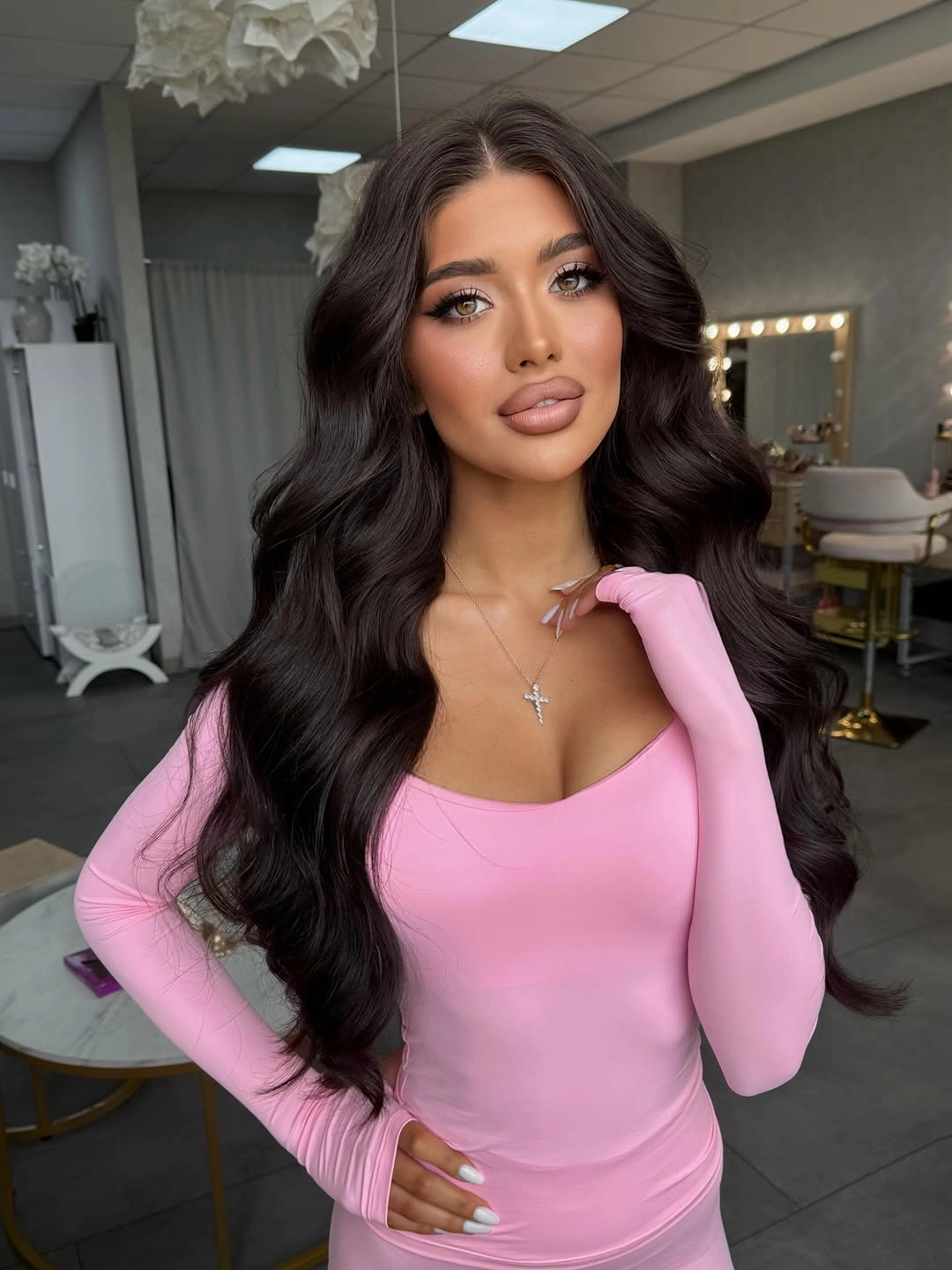
Keep the part crisp and make the waves large enough to hold their proportion across the length. Smaller curls would add density and could make the hair appear heavier around the shoulders, while a smoother crown gives the eye a clear place to begin. If you want to reduce the intensity, keep the same wave size but soften the contrast between your top and hair color rather than removing all the movement.
This is a fuller, more dramatic version of the earlier soft waves and a useful choice when the hair should be the main color block in the outfit. The payoff is presence; the tradeoff is bulk around the shoulders and more effort to keep the wave pattern from collapsing. The center part makes the drama feel organized, which is why the volume remains wearable instead of random.
Soft Crown with a Half-Up Curl Cascade
Brown hair is lifted gently at the crown and allowed to fall in repeated curls over the shoulders, creating a half-up shape that is dressed without becoming compact. The upper section stays smoother than the ends, and the front appears balanced around a central direction. The result sits between hair worn fully down and a gathered style, with the curl cascade supplying most of its movement.
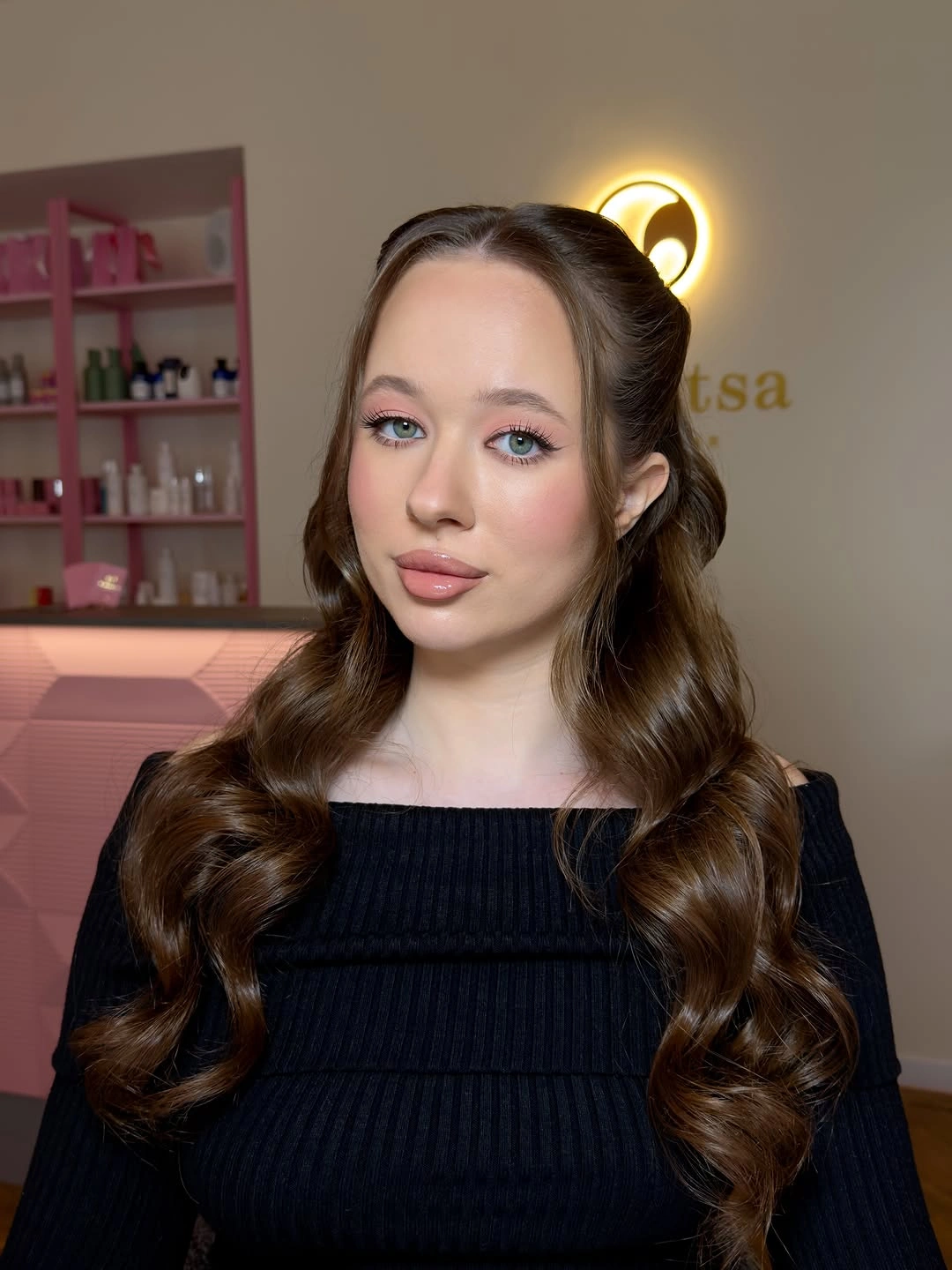
Secure only the upper section and keep the lower curl groups intact so the contrast between soft crown and textured lengths remains visible. Too much lift at the top would compete with the middle part, while too much brushing below would erase the repeated bends. For a less formal adaptation, reduce the amount of hair gathered and let two shorter pieces fall near the face.
This is a useful bridge for someone who likes the polish of an updo but does not want to give up the length of a curl pattern. It feels more occasion-ready than a relaxed wave, though the gathered section needs to be placed carefully so it does not flatten the sides. The gentle lift gives shape without turning the hairstyle into a stiff crown.
Blonde Waves with Softened Crown Fullness
Pale blonde hair forms large waves down the back and shoulders, with extra fullness near the crown and a gentle sweep that softens the central direction. Instead of a flat, exact line, the top has air and lift before the long bends take over. That makes the style a buoyant interpretation of the topic, where the middle part is felt through balance even when the crown is not pressed close.
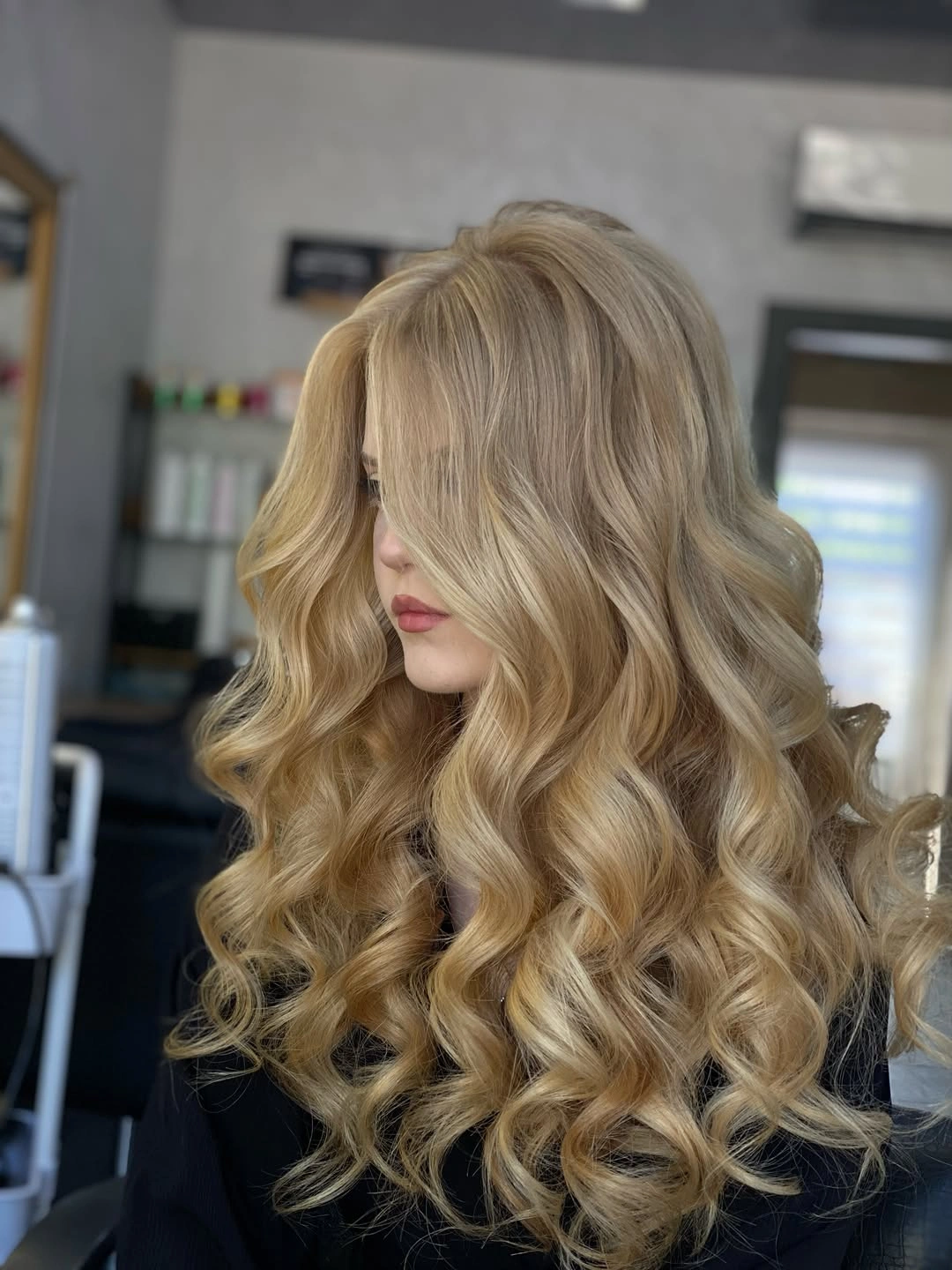
Add lift near the upper sections without teasing directly over the part, then keep the wave pattern broad enough to support the long silhouette. The crown should have space but not lose its division; that small distinction keeps the style from becoming a general voluminous blowout. If you prefer a calmer finish, reduce the top height first and keep the length and wave spacing intact.
Compared with the sleek center-part styles, this version is less exact and more airy, which gives it a softer mood with a larger maintenance bill. Fullness near the crown can shift during the day, and pale color makes texture changes easy to see. Still, the shape offers a convincing option for anyone who wants the part to organize volume rather than suppress it.
Textured Low Updo with Loose Nape Pieces
This rear view concentrates the hair into a textured low updo, with a braided-looking surface and a few loose pieces escaping around the nape and sides. The gathered shape is compact, but the small strands keep it from becoming a hard, sealed bun. Because the length is contained, surface texture and the placement of the loose pieces carry more weight than overall volume.
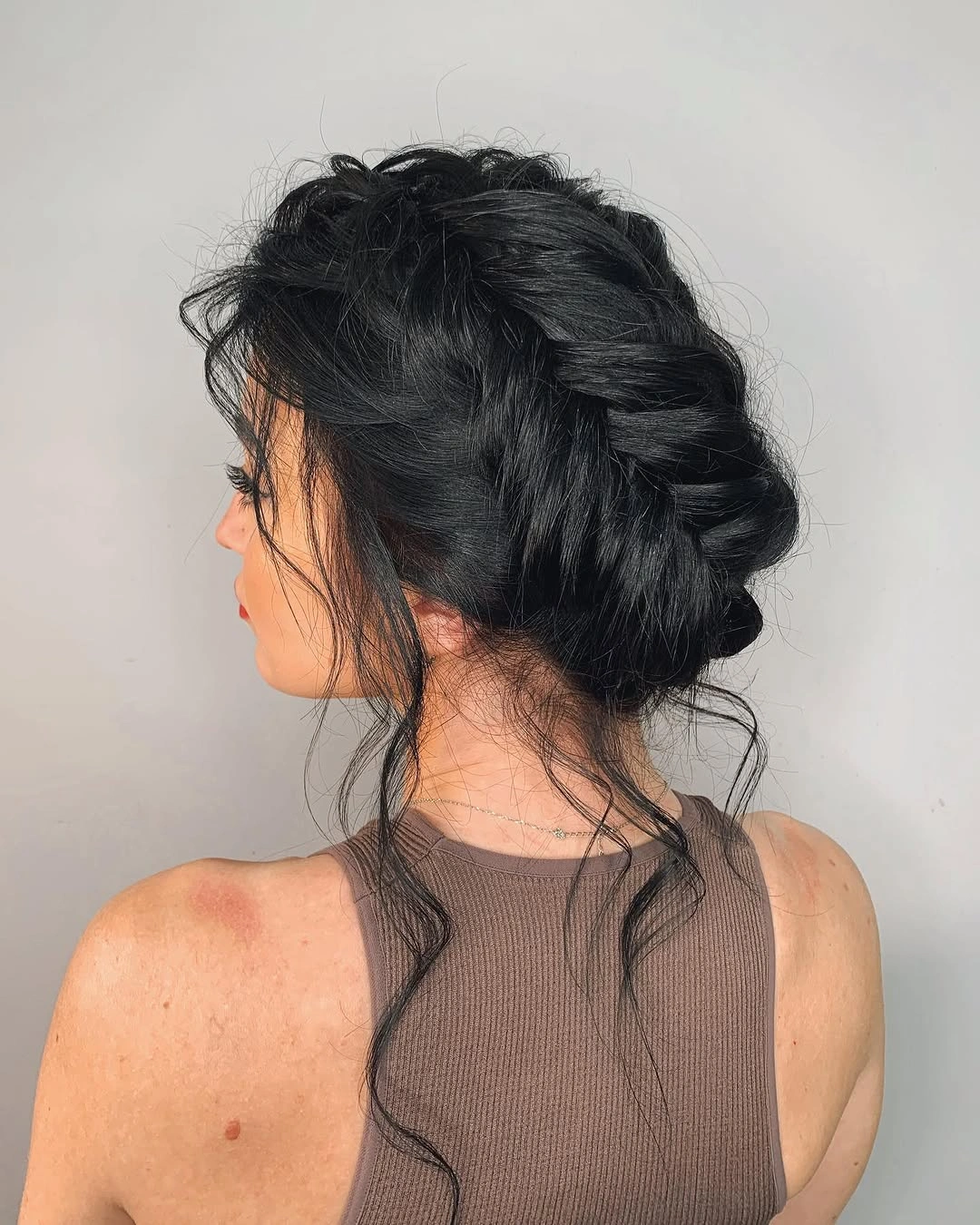
Pin the gathered section low and allow only a few controlled wisps to remain outside the outline. The visible texture can be repeated with a loose twist or braid-like arrangement, but the article’s key point is the contrast between a secured center and soft edges, not a claim about hidden construction. Keep the nape pieces short enough that they look intentional rather than unfinished.
This is more intricate than a smooth ponytail and more compact than the half-up waves, so it suits a day when the hair should stay gathered. Its honest limitation is predictability: textured updos can change as small pieces move or loosen. The payoff is a back silhouette with detail, even when the front styling stays simple.
Medium Soft Waves Around a Center Part
Medium brown hair falls over the shoulders in soft repeated waves, while the top stays balanced around a visible center part. The volume sits through the lengths rather than at the crown, so the face area remains calm and the hairstyle gets movement without a large halo. It is a wearable middle ground between the loose curls and the straight style nearby.
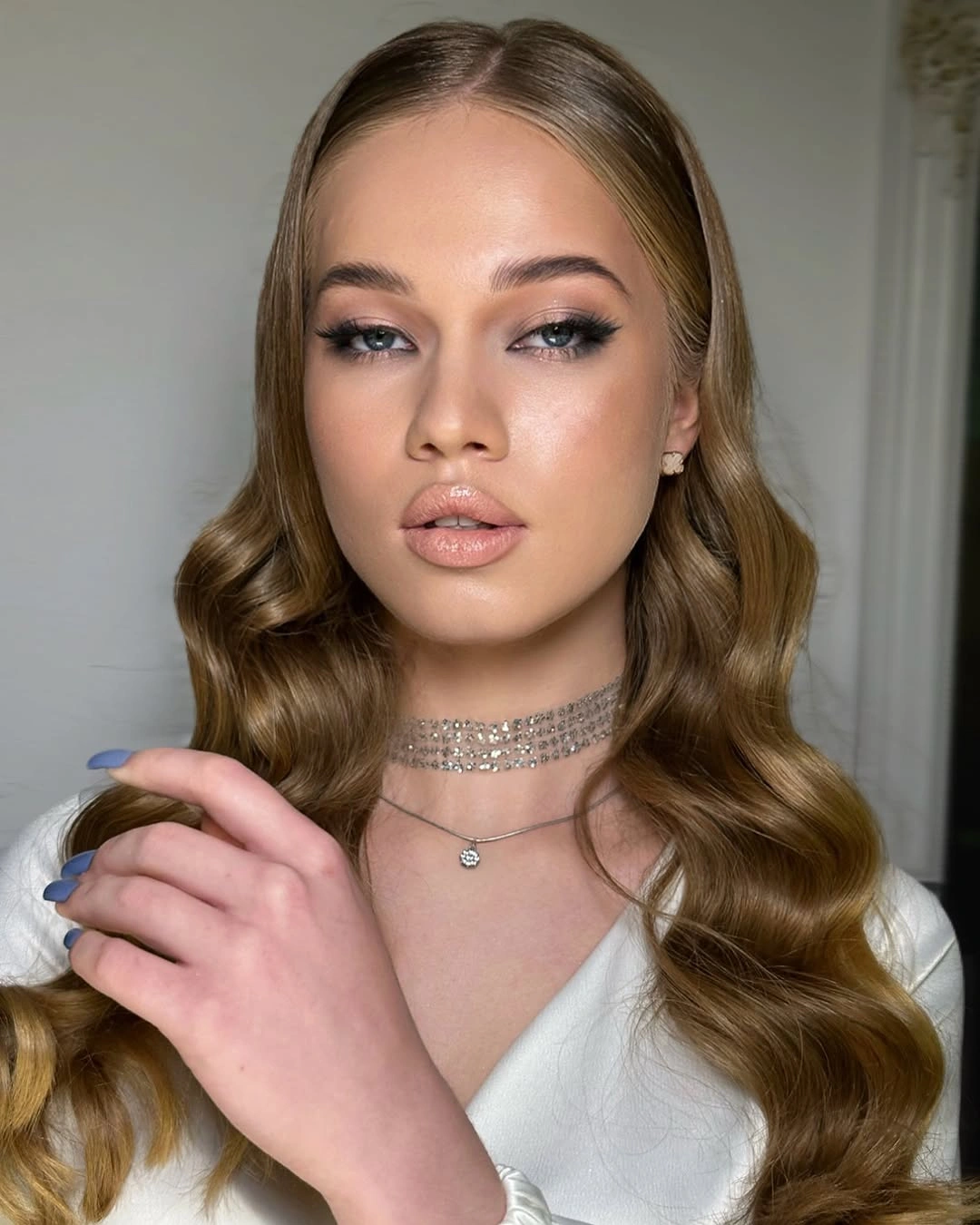
Start the wave below the cheek area and keep the central line clean, then let the ends carry the bend instead of adding lift at the roots. That placement keeps the shape from becoming too round at the top and preserves a clear relationship between the two sides. If the hair is shorter, use fewer, broader bends rather than squeezing several small curls into the same space.
This version feels gentler than the sculpted platinum waves and more dimensional than straight hair, which makes it useful when you want texture without a strong event finish. Soft waves can lose definition if they are brushed repeatedly, but the relaxed pattern does not need to remain identical from morning to evening. The part continues to do the quiet organizing work as the ends move.
Straight Medium Hair with an Exact Center Line
Medium brown hair lies straight and close to the head, with a clean central part and even-looking ends that frame the face without a visible layer story. The style has no extra curl, bow, or color contrast to carry attention, so the straight fall and the line of the part become the entire composition. That simplicity can look strong when the surface is consistent.
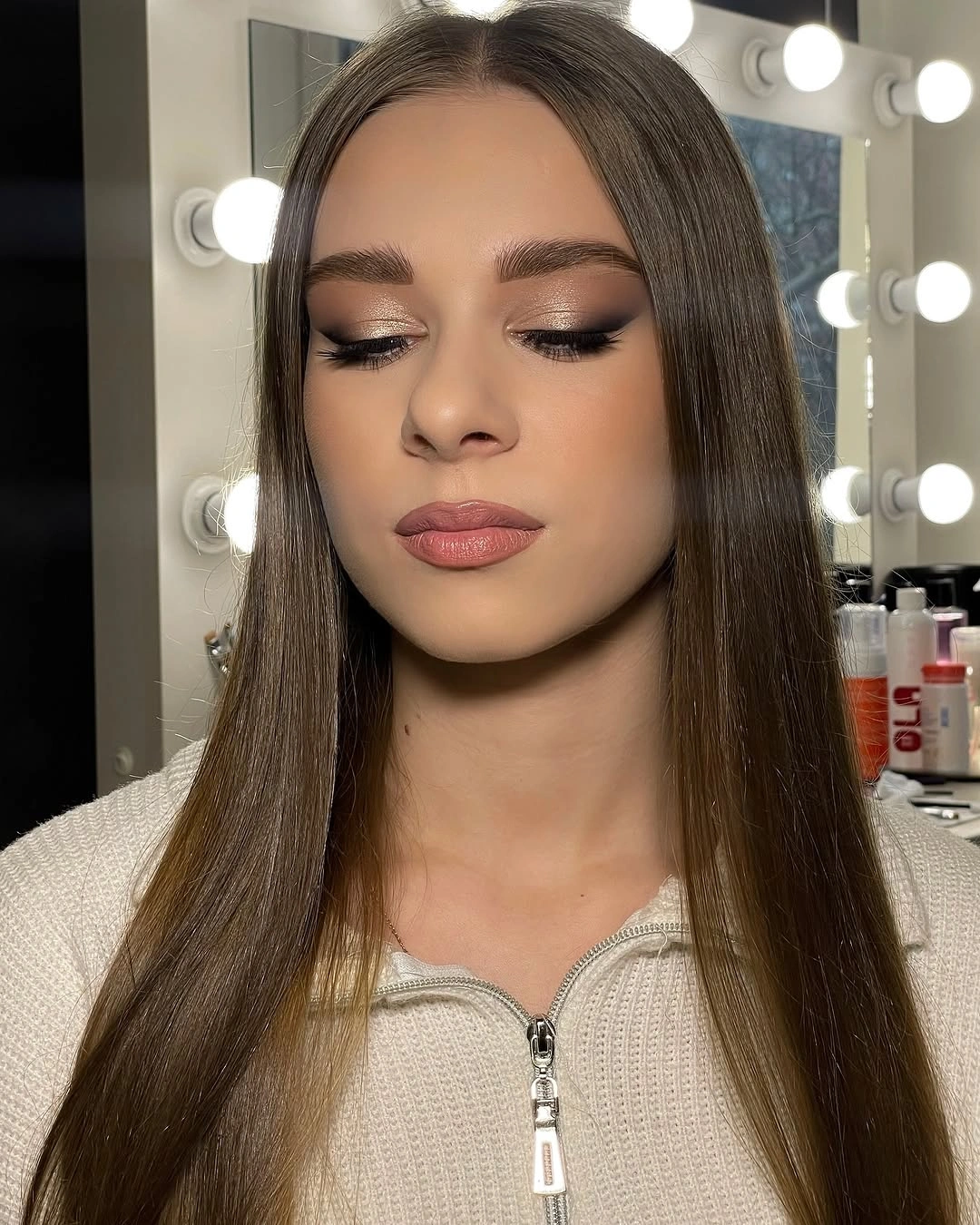
Keep the part clean and check the ends for bends or uneven flips, because small changes show more readily on a smooth, low-volume shape. You do not need to add height or decoration; the useful adaptation is simply to soften the face with a few front pieces if a completely one-length curtain feels severe. Let the top remain calm so the center line stays visually honest.
This is the collection’s minimal reset after several gathered and curled options. It gives up the softening effect of texture, but it also removes the extra volume and styling steps that can make a wavy look feel more demanding. If you want a quiet everyday interpretation of middle parting hairstyles, the clean surface and even fall make the choice easy to judge.
Sculpted Platinum Waves with a Swept Front
Pale platinum hair is shaped into large sculpted waves with pronounced lift and a strong sweep across the front. The root direction is more dramatic than a plainly visible center line, yet the controlled front structure still belongs to the same conversation about how parted hair sets the silhouette. The bright tone adds another layer of contrast, so shape has to stay precise.
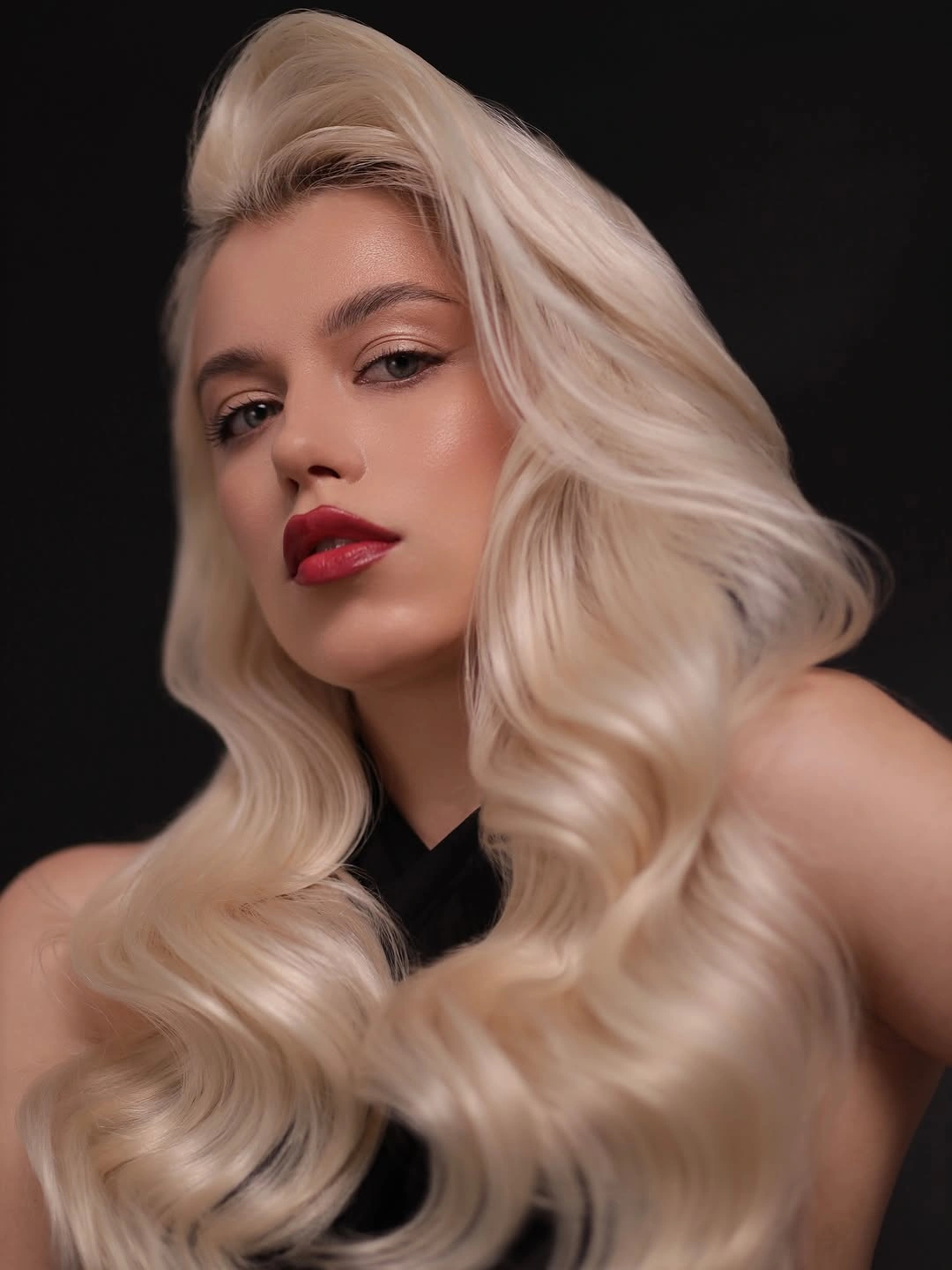
Treat the sweep as the main architecture and keep the large bends intact instead of brushing them into soft fluff. The front can move across the face, but the crown should retain enough order that the hair does not look accidentally displaced. If you want a quieter version, keep the pale color and broad waves while reducing the height and direction of the front section.
This is the most editorial, side-directed moment in the collection and a useful boundary case for the topic. It gains drama from the stronger sweep and loses some of the easy symmetry of a flat middle part, so it asks for more commitment in both styling and upkeep. The coherent choice is to let one large directional decision lead rather than adding small details everywhere.
Long Brunette Waves with One Stronger Curl
Long brunette hair falls in glossy waves, but one curl near the face is more pronounced and gathers closer to one side. That asymmetrical detail breaks the otherwise even length and gives the centered direction a focal point without changing the whole hairstyle. The rest of the hair remains broad and flowing, so the stronger curl reads as a choice rather than a separate style.
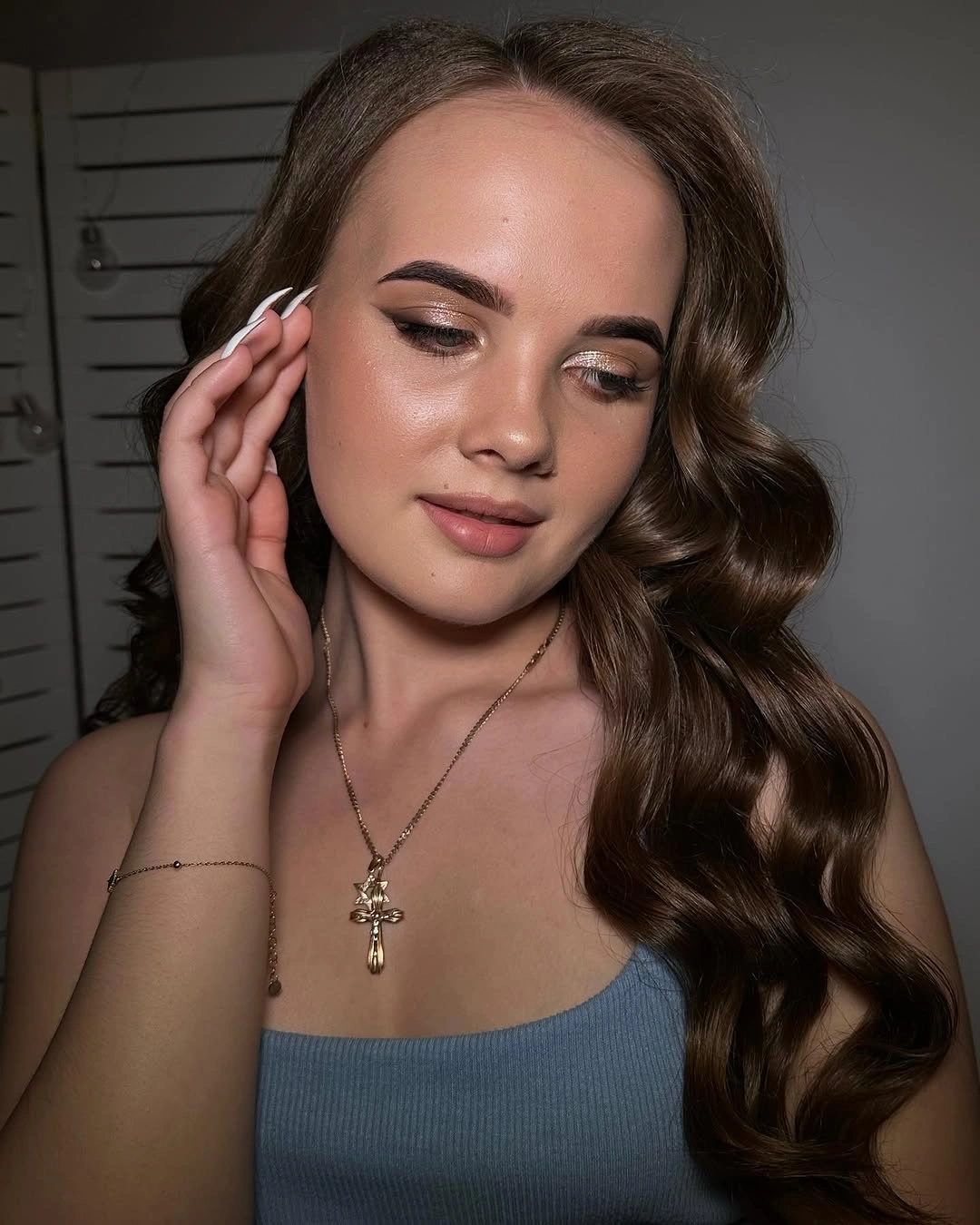
Define the standout curl separately and allow the remaining lengths to keep their wider bends. Matching every section too closely would erase the contrast that makes the front interesting, while leaving the curl completely loose could make it look accidental. A small amount of face framing can support the focal curl, but the center should still feel like the place where the shape begins.
This is softer and less constructed than the platinum sweep, yet it uses controlled asymmetry to keep long waves from looking uniform. The one-sided detail needs placement and may need refreshing sooner than the rest of the hair, which is the practical tradeoff for having a clear focal point. It is a good option when symmetry feels too polished but a full side part would change the look too much.
Low Twist Opening into Wavy Lengths
From the back, highlighted hair is gathered into a low twist or ponytail, then released into long wavy lengths below. Fine strands sit around the neck, so the gathered section creates a hinge while the lower hair keeps the silhouette light. The result is intentionally informal: controlled enough to show a shape, but open enough that the length still feels present.
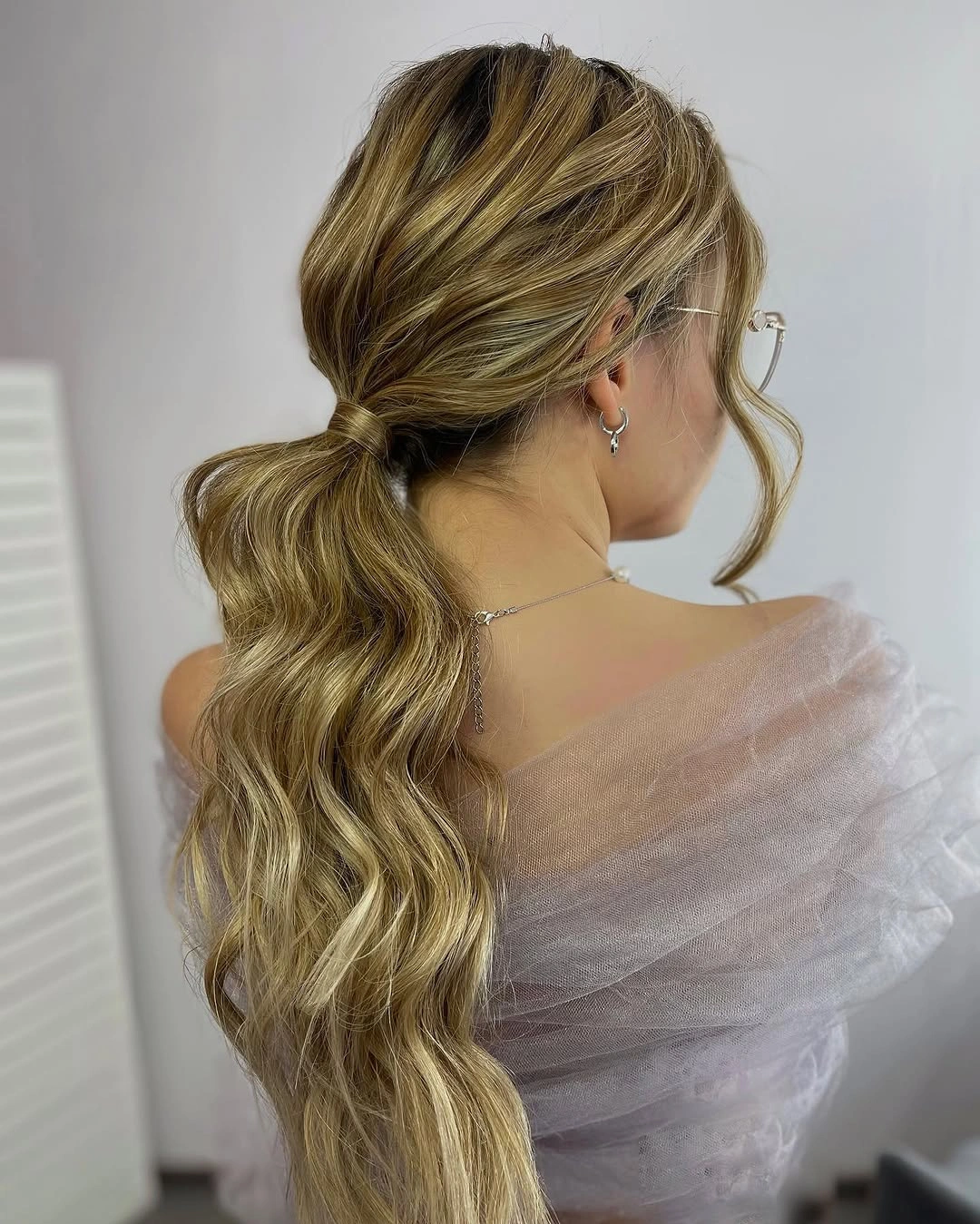
Keep the twist low and let the lower waves remain visible rather than hiding them under a tight tie. The loose strands should be few and placed around the nape, because the look depends on a designed softness rather than a general messy finish. If your hair is shorter, use a small low twist and let the remaining ends curve outward so the upper-to-lower transition stays clear.
This is more relaxed than the first sleek ponytail and less compact than the textured updo, making it a useful gathered option when strict polish is not the goal. The tradeoff is that loose pieces can change the outline during wear, especially around the neck. That informality is also the reason the style feels easy to place beside a soft fabric or a simple top.
Long Straight Length with Face-Framing Pieces
Long brown hair hangs straight from a visible middle part, with shorter front pieces tracing the sides of the face while the rest falls cleanly over a black top. The central division remains unmistakable because the long sections do not curl away, yet the front pieces keep the result from reading as one severe curtain. It is a small adjustment with a noticeable effect on the silhouette.
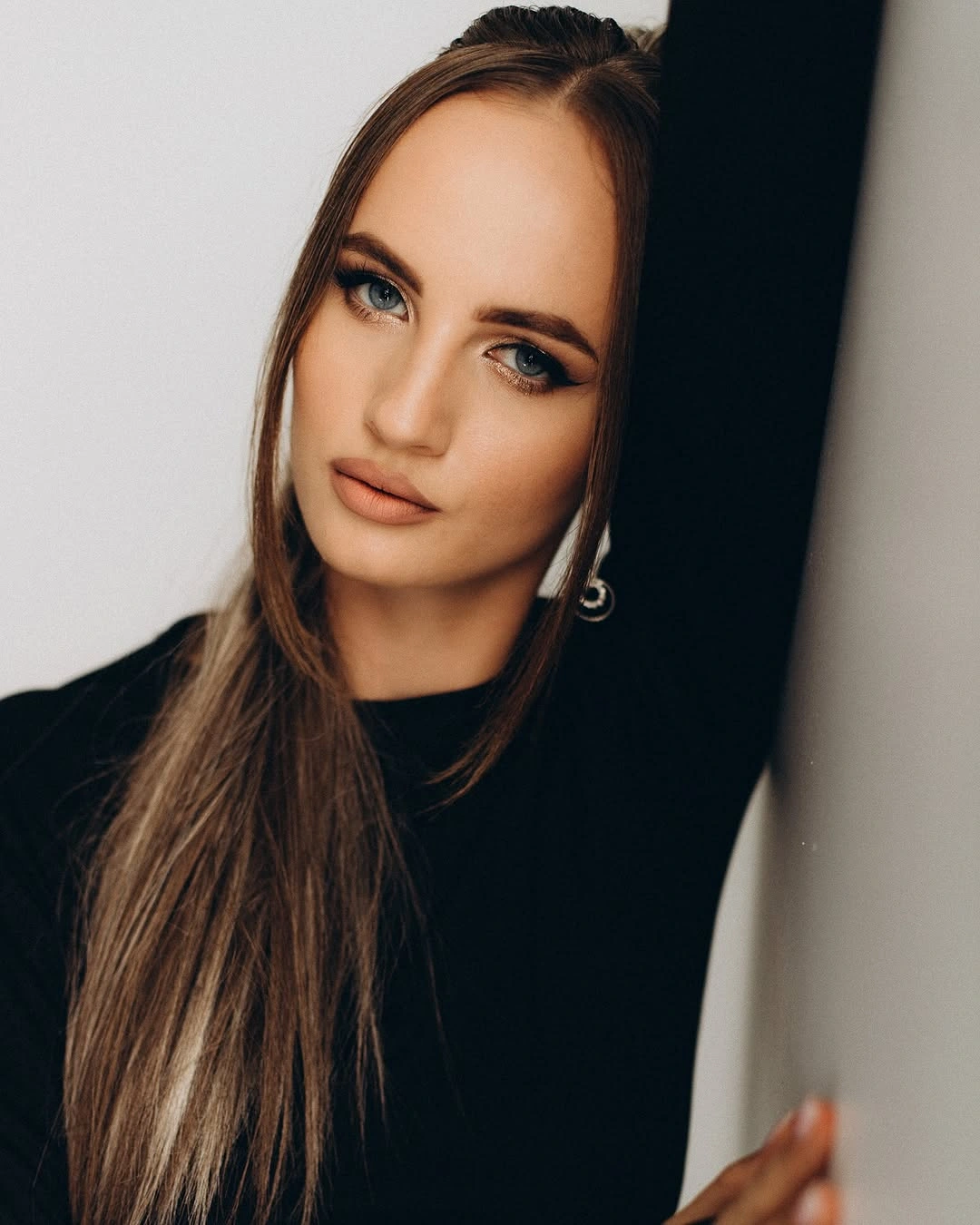
Keep the face-framing pieces slightly separated from the long back sections and avoid adding random waves that would blur the contrast. The front can bend gently if needed, but the long lengths should stay the quiet background for the framing detail. This adaptation also works at medium length when the shorter pieces are kept long enough to connect visually with the rest of the hair.
The finish is quieter than the statement curls, color shifts, and gathered shapes in the collection, but that restraint makes the center part easy to evaluate. Smooth straight hair can show oily roots, uneven ends, or stray bends sooner than texture hides them, so the maintenance expectation is visible. In return, the face-framing pieces add softness without sacrificing the clean line.