
Taylor Hill’s chop broke the internet, and suddenly every salon was fielding the same question: can I actually pull off short hair? Turns out, yes—but the pixie evolved while we weren’t looking. The Scandi-Pixie with its razor-clean lines, the Mixie that lets you have mullet energy without committing fully, the Feathered Pixie that actually moves like hair instead of a helmet, the Micro-Fringe Pixie for people who want to make a statement before 9 a.m., and the Tapered Afro Pixie that proves short doesn’t mean one thing anymore. This isn’t your mom’s pixie cut.
What you’re looking at with summer pixie haircuts 2026 is range—from barely-there textured crops to sculpted precision cuts with micro-fringes—designed for oval faces and round faces, fine hair and coily hair, and the person who’d rather spend five minutes styling than fifty. These aren’t generic Pinterest fantasies. They’re cuts built for actual maintenance, actual growth patterns, and actual life.
I went from collarbone to a textured pixie last spring, and I spent exactly two weeks regretting it. By month three, I was already planning the next trim. Turns out the cut wasn’t the hard part—figuring out which pixie actually suited my face was.
Apricot Crush Hair Pixie
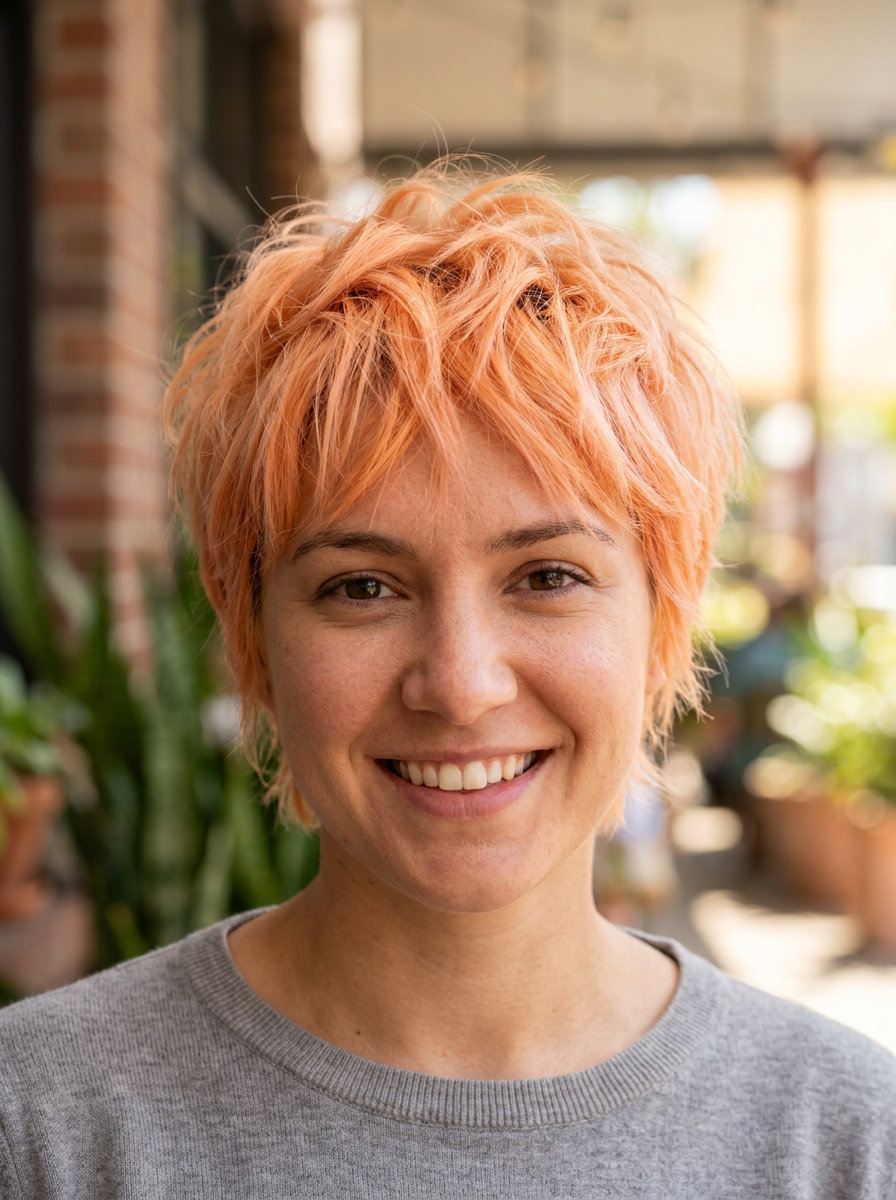
The apricot crush pixie sits somewhere between a tousled crop and an intentional texture play. It’s a apricot crush hair pixie cut designed for fine to medium density hair that doesn’t want to look like it tried too hard. Point-cutting the top layers creates internal movement and softness, preventing a helmet-like appearance. The result? Hair that actually moves. Point-cut layers air-dried without frizz on day-2 hair, maintaining tousled movement—which honestly feels impossible on most pixies.
The color here is muted apricot-blonde, sitting somewhere between golden and peachy. It requires professional trims every 4-5 weeks to maintain its precise, airy shape, so commit accordingly (the best $30 I’ve spent on hair, though this actually runs closer to $150 at a decent salon). Styling is straightforward: damp hair, light texture paste worked through, fingers scattered upward. No blow-dryer required, which is why I love it so much. Finally—a pixie that moves.
Buttercream Blonde Pixie Cut
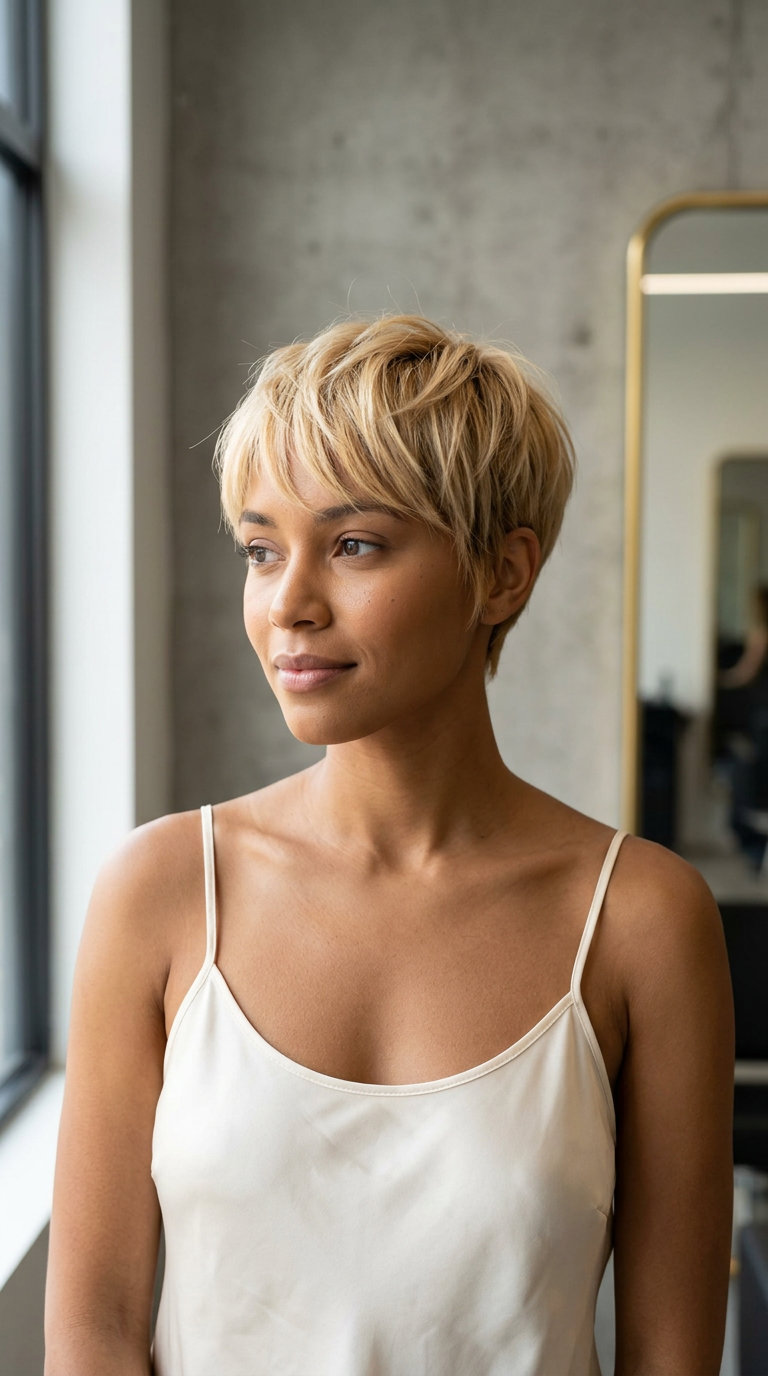
This buttercream blonde pixie cut leans into piecey, fragmented texture on top with a clean taper at the sides. Subtle point-cutting on top enhances natural texture, allowing for effortless, piecey styling. The blonde sits at a pale butter-yellow level, closer to how hair looks after weeks of fading rather than freshly lifted. Styling took under 5 minutes with light pomade for piecey texture, lasting all day—or maybe just a good texturizing spray makes the difference. Either way, the movement is there without the frizz.
The color settles into that lived-in territory that reads as intentional rather than overgrown. Taper the sides, keep length on top. Not for very thick hair—tapering might not reduce enough bulk. Reach for a light texturizing product, fingers through, done. Truly cool, honestly.
Sculpted Undercut Pixie
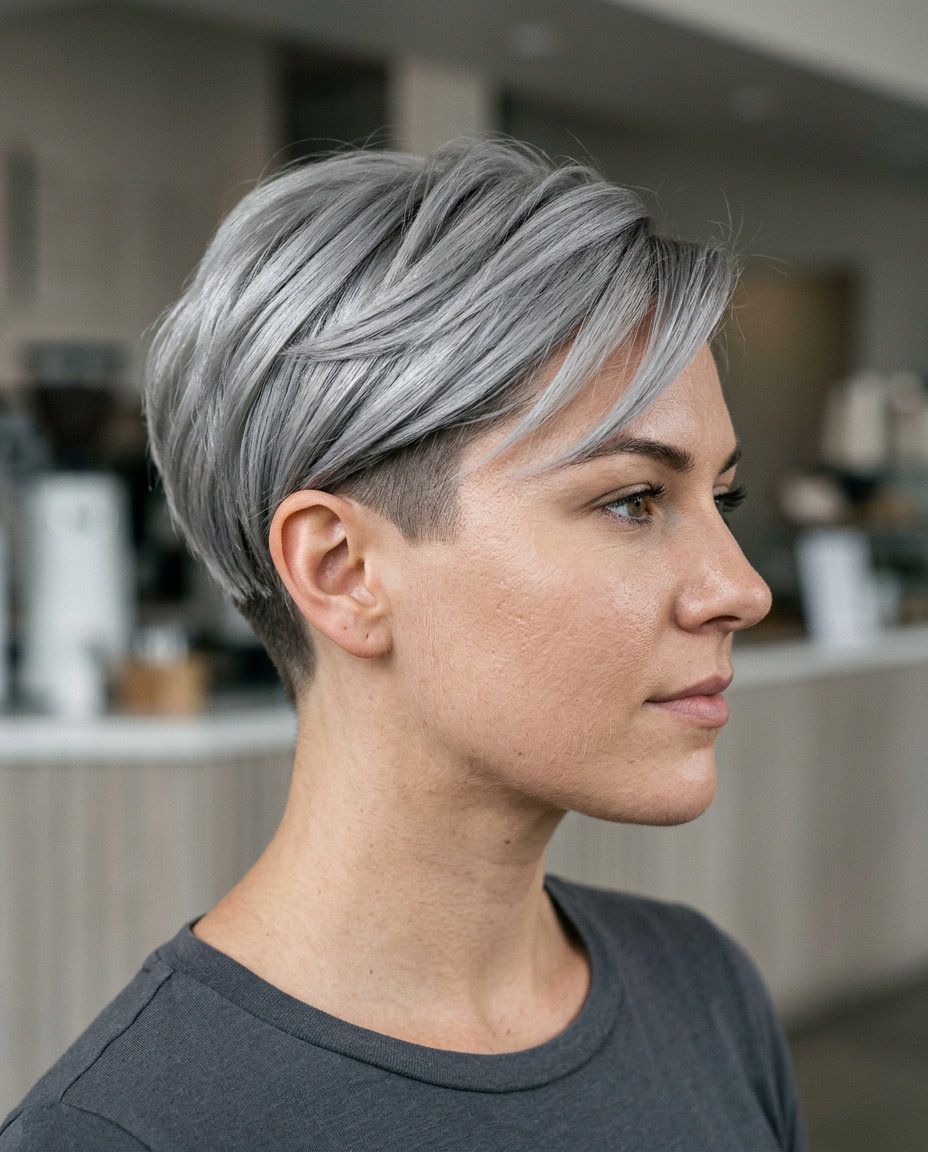
The sculpted undercut pixie demands precision. Blunt precision cutting creates a graphic silhouette, essential for this strong, defined shape. An undercut sits tight against the scalp on the sides and back, with deliberate length on top—no apology for the geometry. This is a cut that announces itself. Undercut grew out cleanly for 3 weeks before needing a re-fade to maintain sharp lines. The graphic quality lives or dies on fade precision, which is why I love it so much.
The top stays textured through point-cutting, but the contrast is the real statement. This sculpted look requires a skilled barber for precision, increasing salon cost. No home maintenance here—plan for professional fades every 3-4 weeks. Styling is minimal: texture cream, fingers through, maybe a light blow-dry to separate strands. The cut does most of the work once the barber nails the architecture. Sharp lines demand respect.
Chocolate Brown Textured Pixie
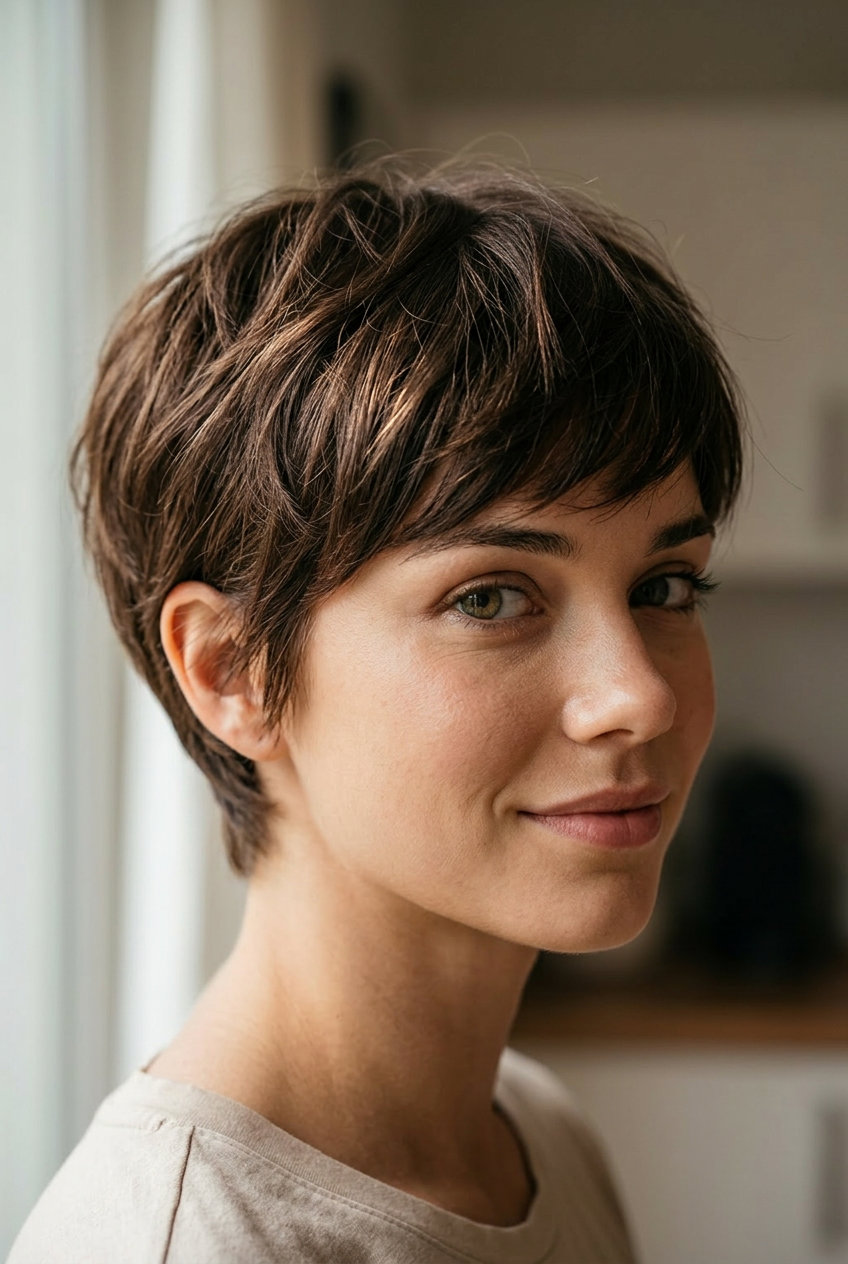
A textured pixie in dark chocolate-brown offers something different—depth, dimension without bleach commitment. Internal layering reduces bulk in thick hair while point-cutting adds movement without removing too much volume. This cut works specifically for people whose hair has visible weight to it. Internal layering successfully reduced bulk in thick hair, allowing for air-drying without puffiness. The brown shade deepens the texture visually, making each layer read separately rather than as one solid mass.
Styling requires minimal product—a light cream or paste, fingers to separate, air-dry or quick blow-dry. Avoid if you prefer a super sleek, uniform look—this is all about texture. Trims every 6-8 weeks keep the layering intentional, probably worth the consultation at least. The payoff is hair that photographs with visible dimension and actually moves without product weight. This cut just works.
Cherry Cola Hair Color Pixie
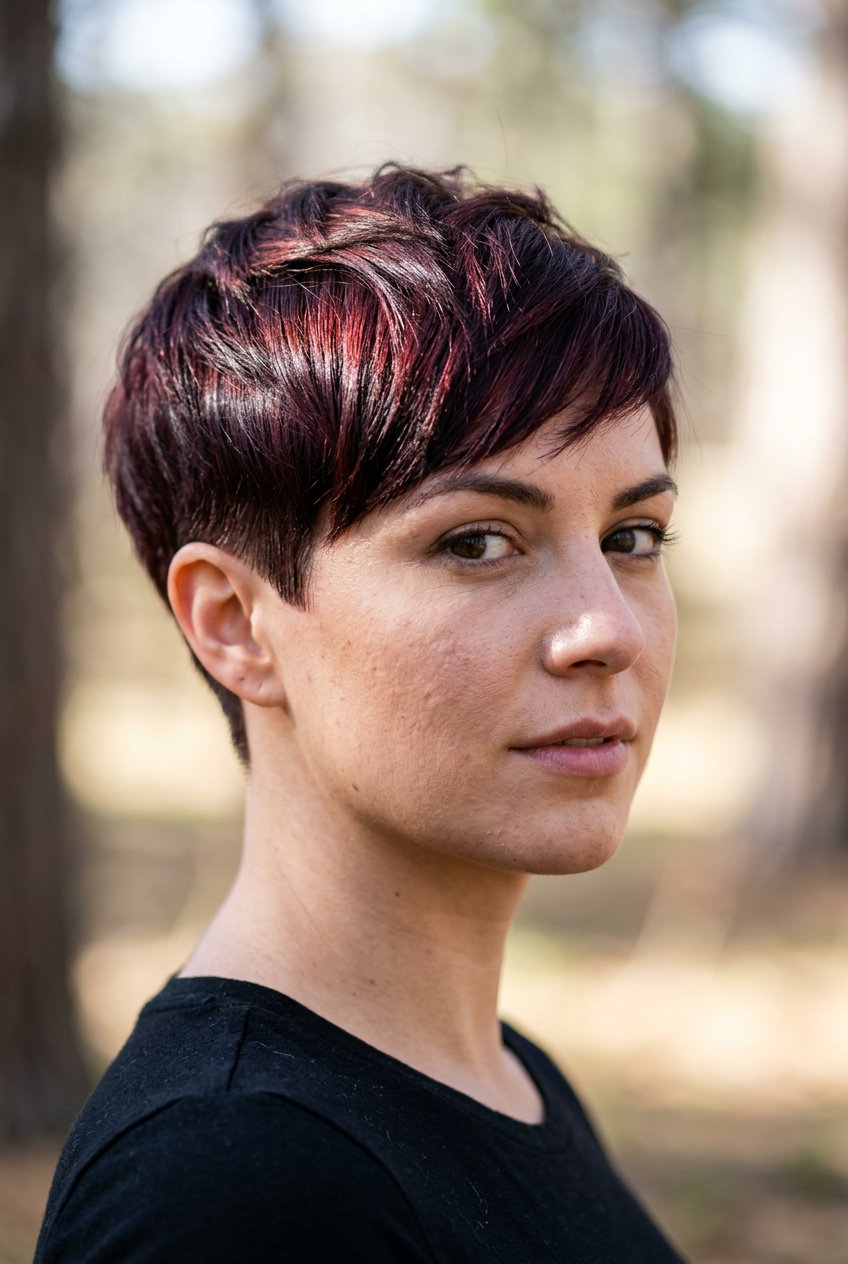
The cherry cola pixie combines a deep burgundy-brown base with dimensional highlights that read almost wine-dark in certain light. Precision razor work removes bulk and softens the perimeter, achieving a sleek, sculpted finish without harsh lines. Razored finish stayed sleek for 4 weeks with minimal frizz, even in moderate humidity—which frankly surprised me (my stylist is a genius). The color depth anchors the cut visually, making the razor-sharp lines read less severe than they otherwise might.
This is a textured pixie that leans toward polish rather than tousled abandonment. Styling: damp hair, light smoothing cream or oil, quick blow-dry with fingers for separation. The razored edges catch light and create subtle movement without point-cutting fragmentation. Trims every 5-6 weeks maintain the perimeter sharpness. Color touch-ups land every 8-10 weeks depending on how you care for it. Razor-sharp, literally.
Espresso Brown Pixie Cut
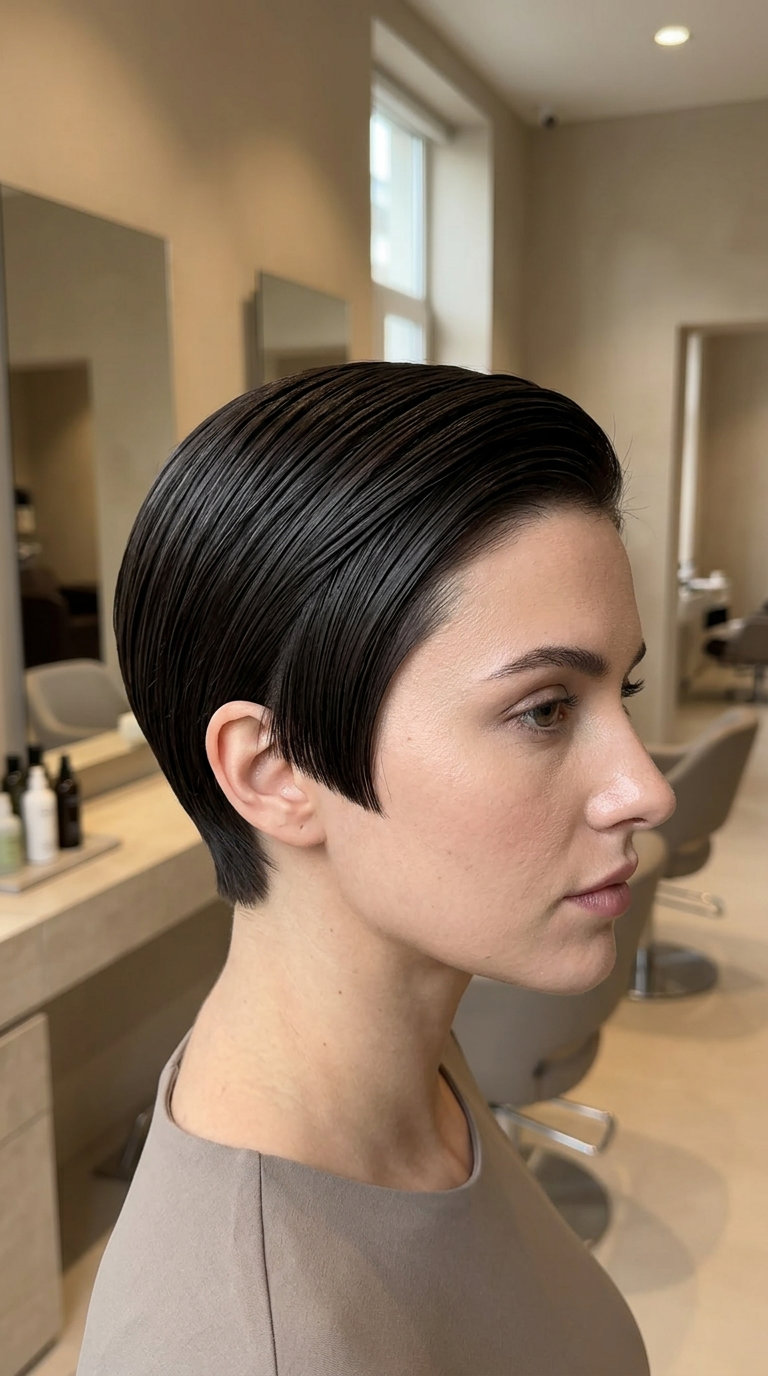
Dark brown pixie cuts hit different in summer. There’s something about that espresso depth against sun-kissed skin that makes the whole thing feel intentional rather than just short. The blunt perimeter keeps everything sharp—literally. Blunt cutting creates a strong, defined foundation, ensuring the polished, slicked-back style holds its shape without looking like you’re fighting the natural grow-out. This works because you’re not asking the cut to do the heavy lifting with texture; the color and the line do all the work.
Maintenance is real here. Blunt lines held sharp for 4 weeks with daily styling, requiring minimal touch-ups—but only if you’re actually styling them. The second you skip the blow-dry routine, this cut starts reading as tired rather than intentional. Requires precise, frequent trims every 3-4 weeks to maintain its sharp perimeter, which is the tradeoff for having such a strong silhouette. If you’re the type who air-dries and hopes for the best, this isn’t your cut. For straight, medium to thick hair, though, this is basically foolproof. Sharp. Clean. Power.
Ash Blonde Undercut Pixie
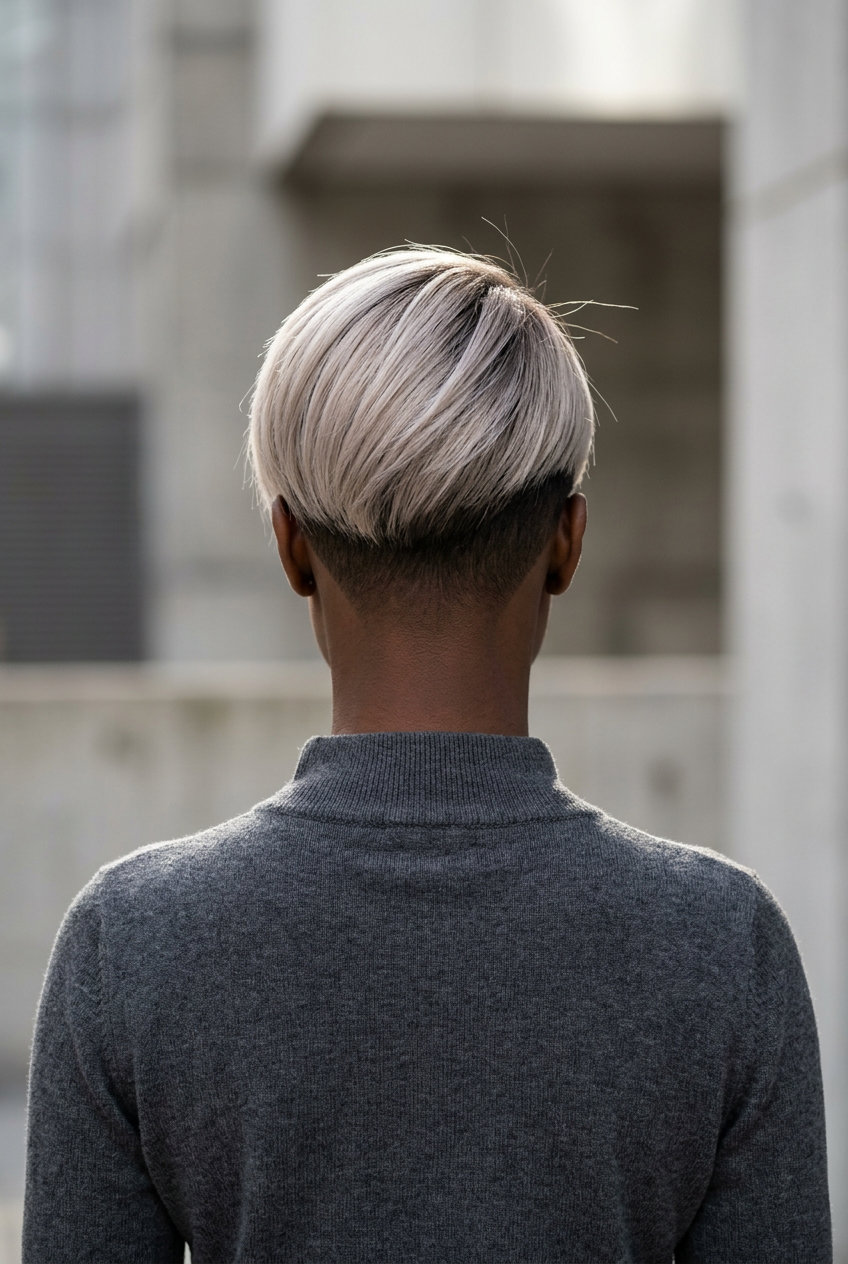
The undercut pixie is basically a billboard for contrast, and ash blonde is the color that makes it scream. You’re not getting subtle with this one—tight clippers on the sides, longer structured top, and yeah, the stark difference between them is kind of the entire point. Tight clipper-cutting on sides creates dramatic contrast, highlighting the longer, structured top section effectively. (Yes, the short one.) The ash blonde amplifies this naturally; cooler tones read as more severe by default, so you’re doubling down on that architectural vibe.
The growth pattern here is where things get interesting. Undercut grew out gracefully for 3 weeks before needing a re-fade to maintain stark contrast—and that’s assuming you’re not just letting it blend naturally. Most people want the contrast sharp, though, so expect a fade touch-up every 2–3 weeks if you’re committed to the look. Skip if you prefer soft, blended lines — this cut thrives on stark contrast. The longer you wait between trims, the less dramatic it becomes, which defeats the purpose. The contrast is everything.
Deep Burgundy Pixie Cut
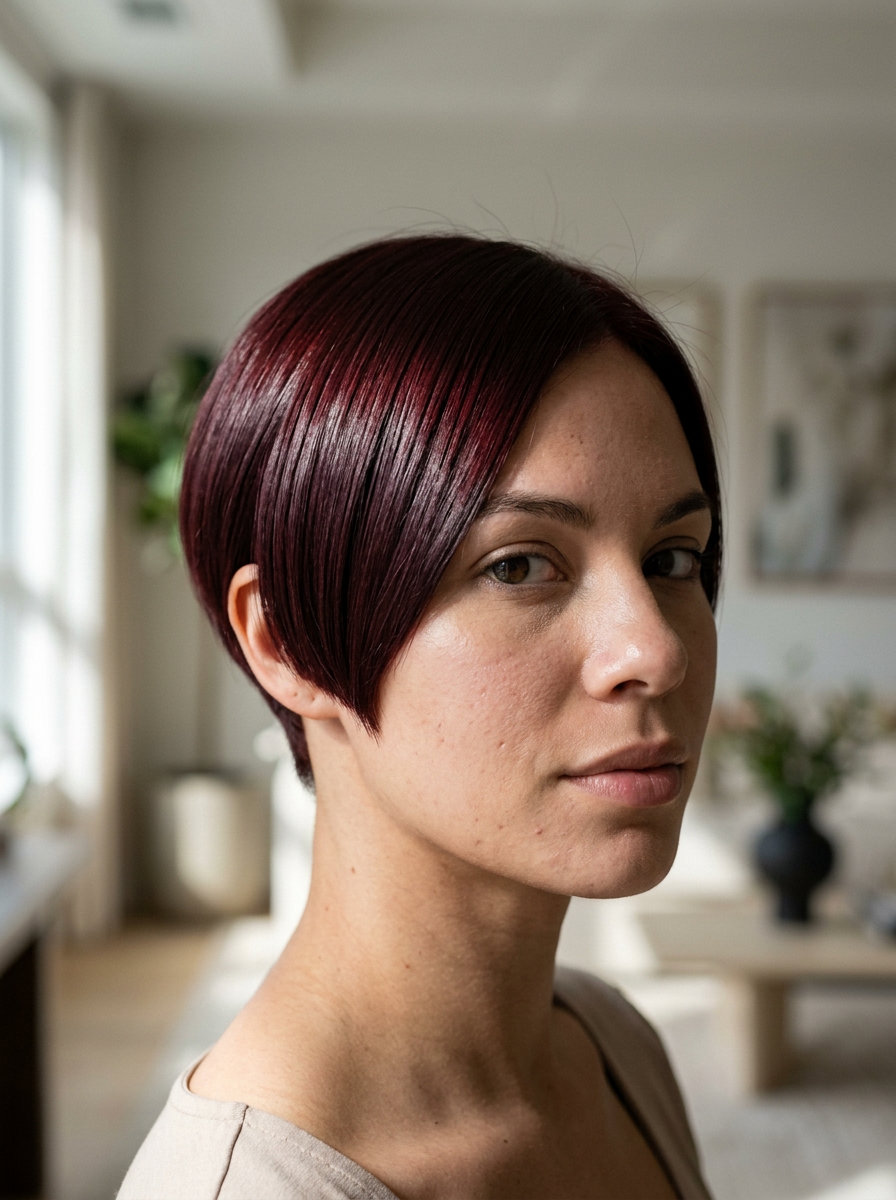
Deep burgundy is the color that makes a simple pixie feel expensive. It’s not platinum—so you skip some of the maintenance—but it’s still a commitment in terms of tone shift. The formula needs strong pigment to read true, and lighter base hair works better, but on medium to dark hair you’re looking at a richer, deeper expression of burgundy. Minimal internal layering maintains density for a sleek, structured shape, while the taper keeps the perimeter clean. This cut works because it’s not trying to be interesting—the color does the talking.
The fringe on this one is doing real work. Fringe stayed in place with minimal product for an 8-hour workday, framing the face—or maybe just a little hairspray, depending on humidity. The uniform length on top can feel heavy on very thick hair, lacking movement, so this works best on medium density. But if that’s your texture, you’re getting a cut that reads polished without needing 45 minutes of styling every morning. Burgundy fades slower than ash tones but faster than warm browns, so expect a refresh around week 8–10. Sleek, not severe.
Frosted Tips Pixie Cut
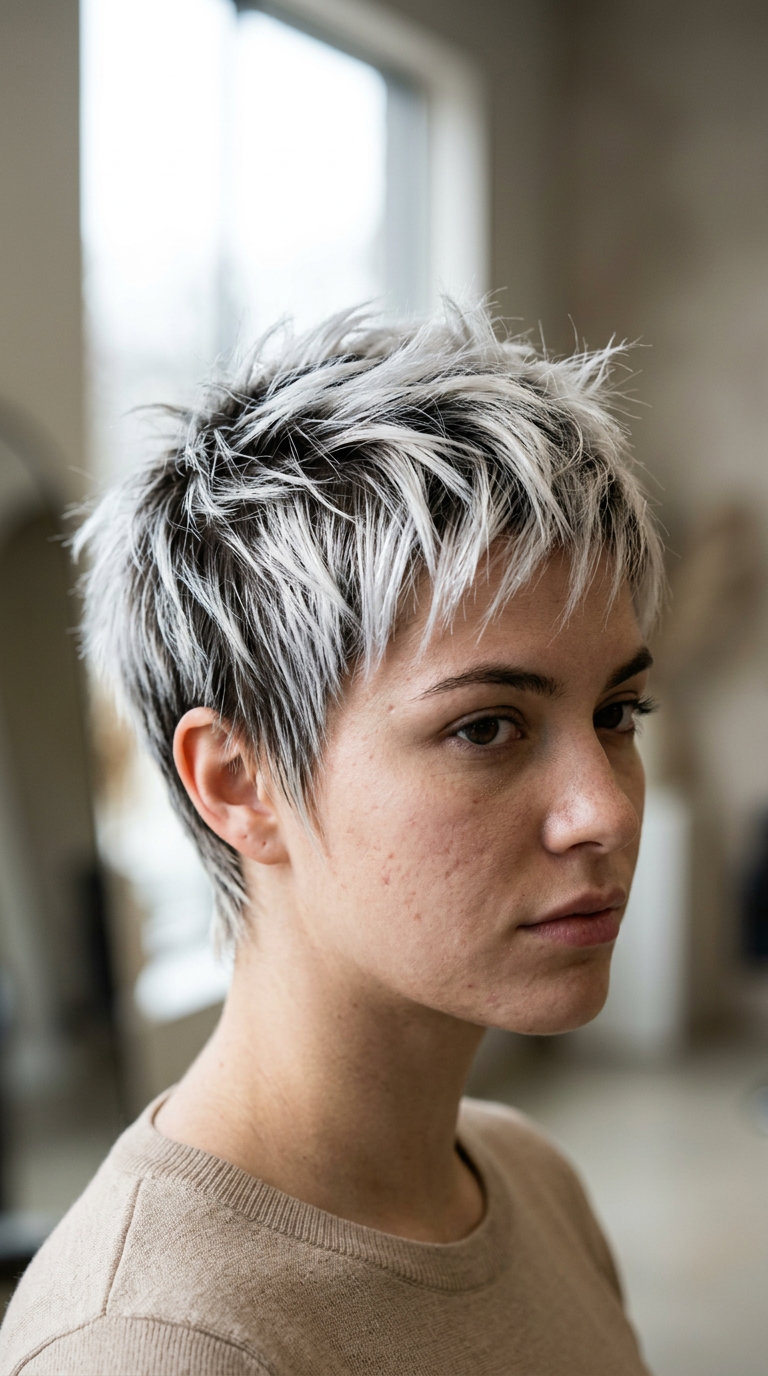
Frosted tips pixie is basically the 2026 version of what 2000 got wrong. The concept is back—lighter ends on darker base—but executed through point-cutting instead of that obvious chunky highlighting. Razoring creates disconnected layers, maximizing spikiness and texture for an edgy, dynamic look. Best on straight to slightly wavy, fine to medium density hair where the texture actually has room to move. The technical skill here is using razoring to create just enough disconnect that each layer reads independently, not blended.
Styling is where this cut shines. Razored layers created spiky texture that held for 12 hours with texturizing paste—probably worth a texture spray to keep that movement through the day. Not ideal for very fine hair — razoring can make it look thinner, which seems counterintuitive but happens because you’re removing so much weight. The frosted dimension reads cool and intentional without the maintenance nightmare of balayage; you’re looking at color touch-ups every 6–8 weeks versus every 4. Edgy, effortless cool.
Wavy Pixie Cut for Summer
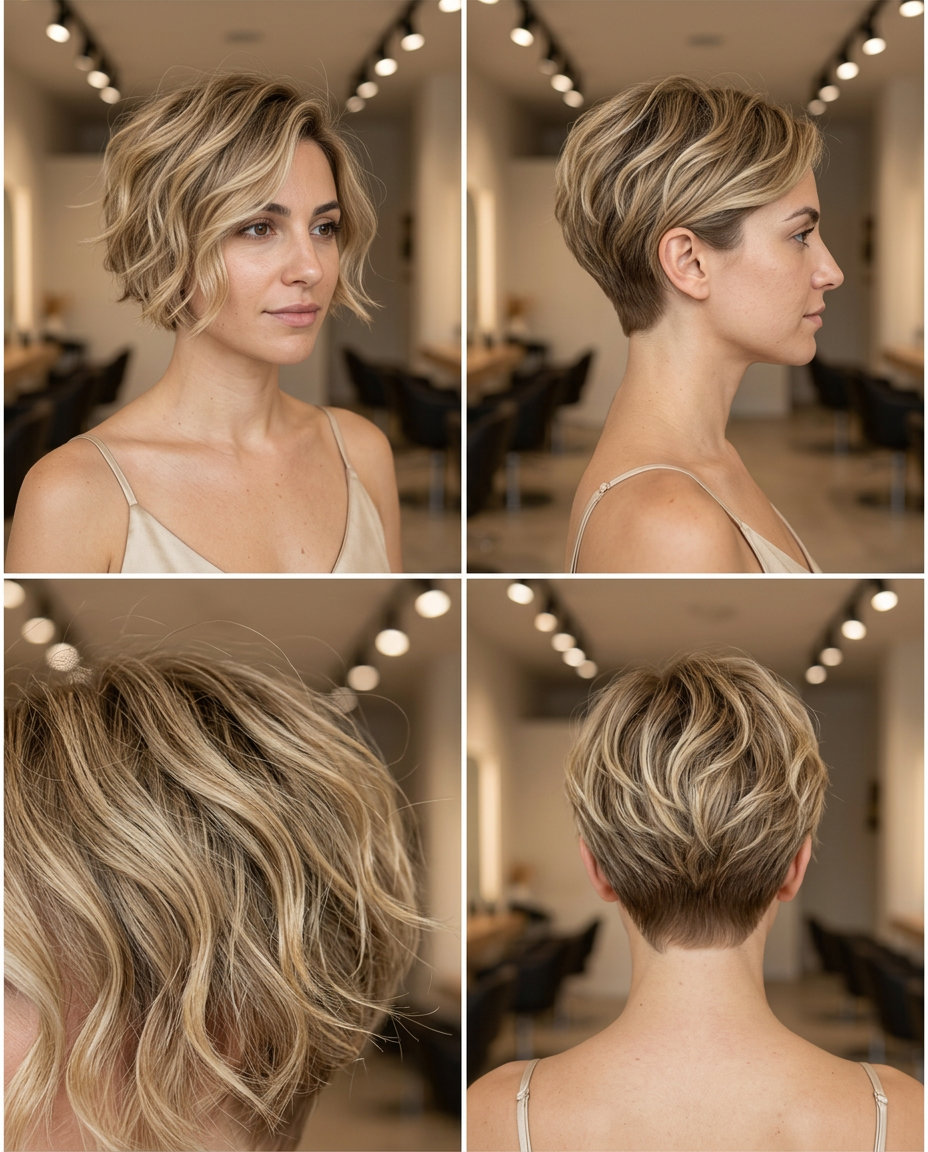
A pixie that actually plays well with texture instead of fighting it. The magic here is in the point-cutting—not blunt edges that sit flat, but layers that let natural waves do the real work. Point-cutting and internal layering reduce bulk, letting natural waves form without frizz or excessive styling. You get movement without the daily blowout commitment, which is all my fine hair can handle.
The cut is designed to work with naturally wavy or fine to medium hair that holds a curl. Ask your stylist specifically for point-cut layers throughout the crown and sides—this matters. Air-dry styling works because the texture is already built into the cut itself. Point-cut layers enhanced natural waves, requiring only air-dry styling for defined texture. Run your fingers through while damp, maybe add a light texturizing product if you want definition. A quick tousle and you’re done. Finally, a pixie that moves.
Caramel Blonde Pixie Cut
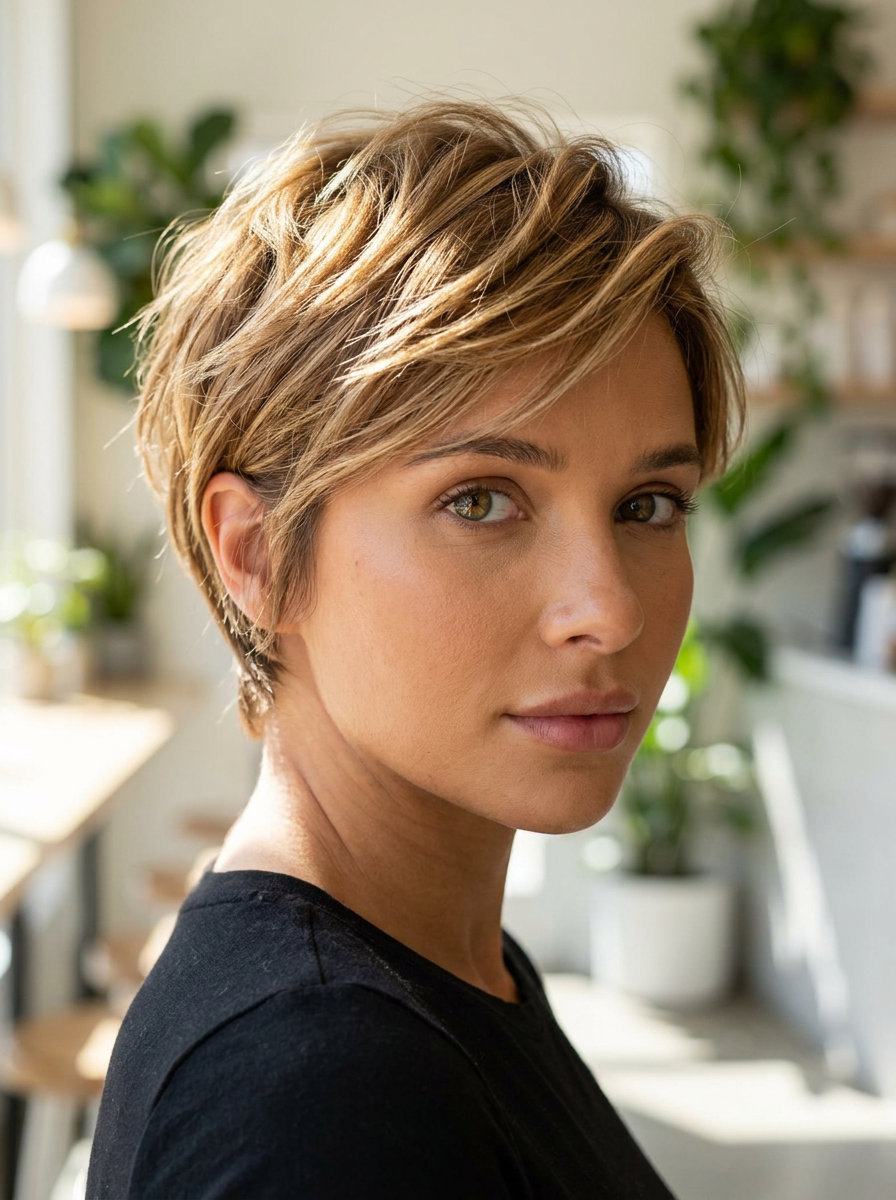
This is point-cutting at its most obvious. Short, disconnected pieces throughout—almost shattered—that catch light differently depending on the angle. The caramel blonde pixie cut relies entirely on technique: point-cutting and slicing create deconstructed layers, adding texture and movement to fine hair. Caramel blonde (a medium warm tone) shows the dimension in the cut because you’re not fighting dark roots or flat color underneath. The lighter shade means every piece of texture reads.
Piecey texture held for 10 hours with light pomade, needing no midday re-styling. This cut works on fine to medium density, straight to wavy hair. Not for very thick hair—slicing might not remove enough bulk for this look. If your hair is naturally fine, this is a gift. You get texture and movement without the weight that usually collapses shorter cuts. A dab of pomade or cream paste in damp hands, tousle, done. The texture is everything.
Midnight Black Pixie Cut
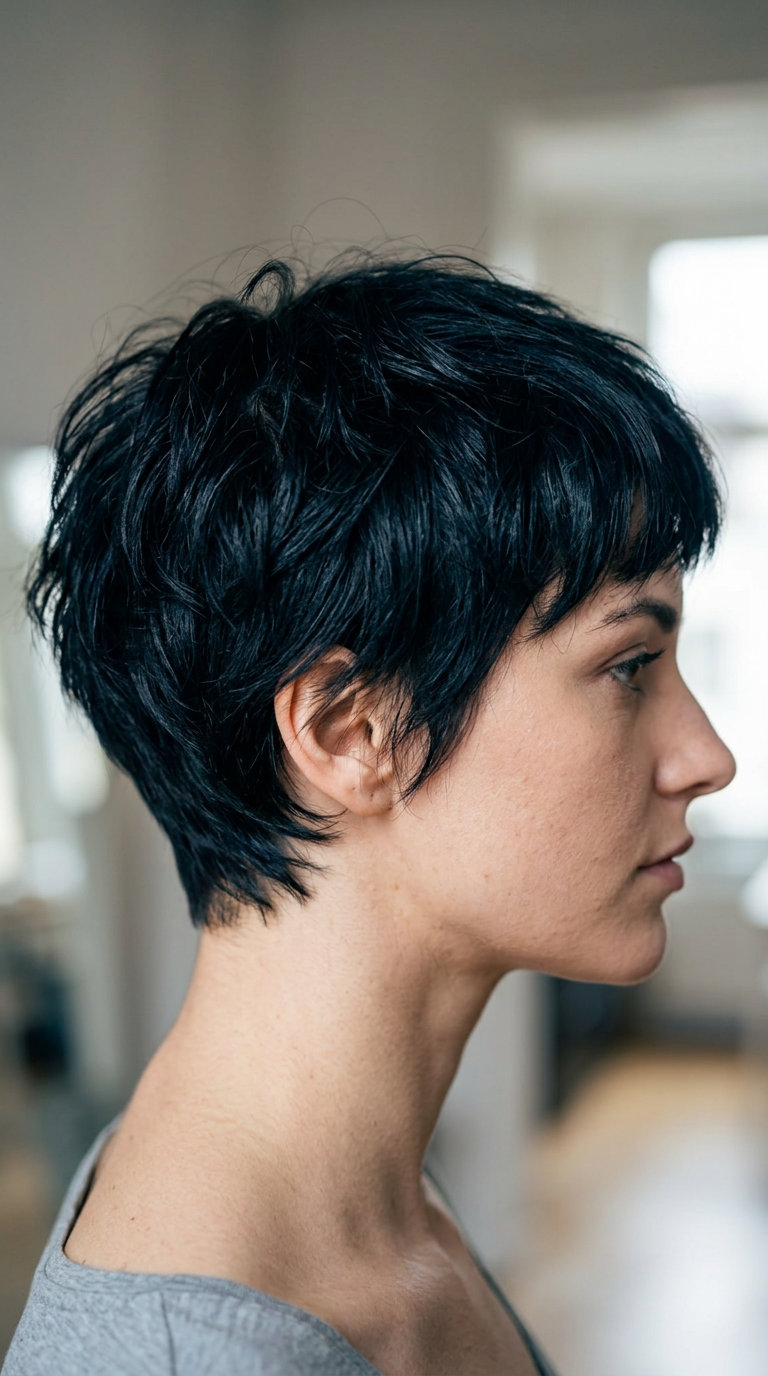
Sometimes the cut is so good that color takes a backseat. This midnight black pixie cut is proof. Deep, rich black—not blue-black—shows off disconnected internal layers that create a naturally tousled effect without trying. Disconnected internal layers remove weight, enhancing the tousled effect for effortless messy styling. The darker tone actually helps because it creates subtle shadow and dimension in the cut itself, so you’re not relying on highlights to show texture.
Tousled texture was easily achieved in 3 minutes with fingers and styling cream, or maybe just woke up like this. No blow-dryer needed, though one helps. The cut works because of how the layers fall, not because of product dependency. Avoid if your hair struggles to hold texture—this cut falls flat. Thick, super-straight hair needs the blow-dry and product assistance to make this read as intentional rather than lazy. For wavy or naturally textured hair, this becomes genuinely effortless. Perfectly undone.
Golden Blonde Tousled Pixie
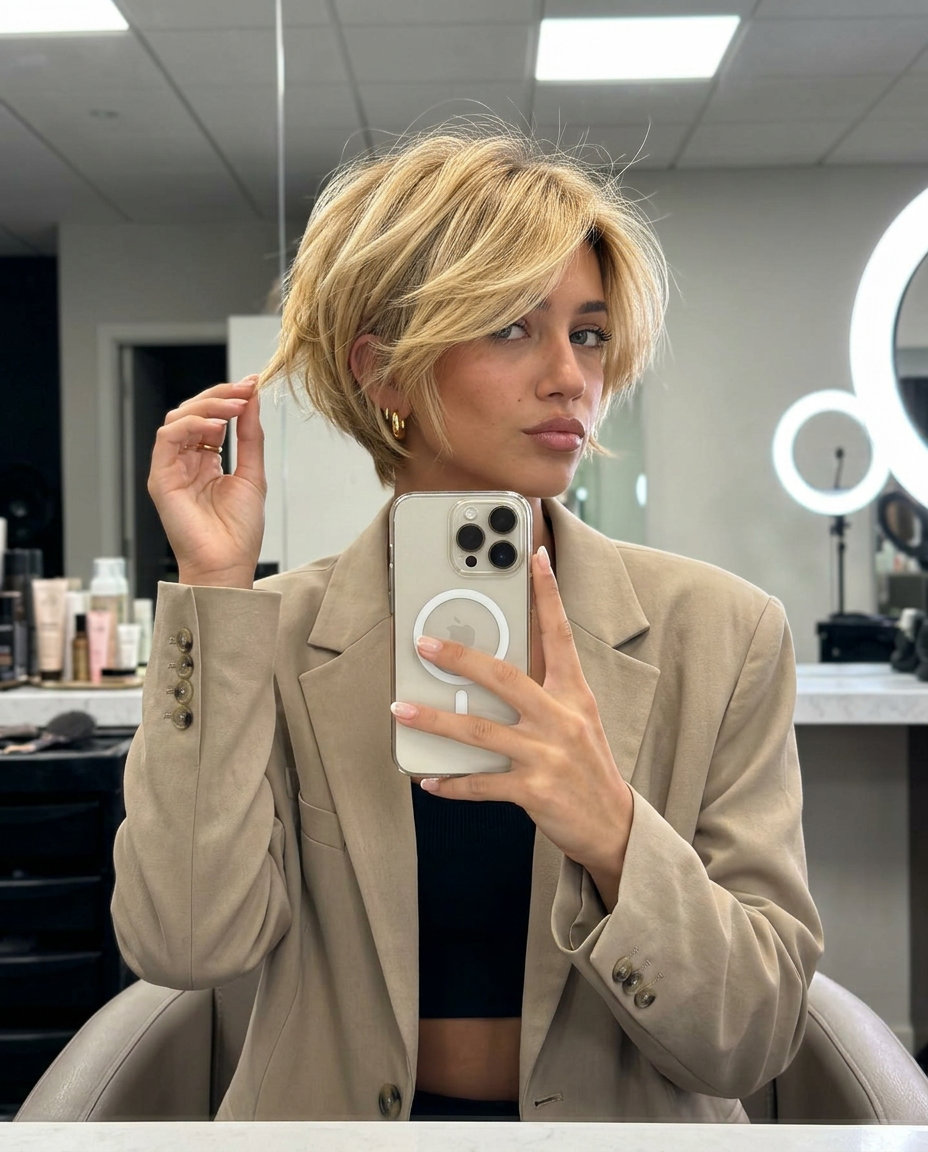
The grow-out plan is usually where pixies fall apart, but this cut is built for graceful transition. The golden blonde tousled pixie uses point-cutting with varied lengths that create a shattered effect, working across fine to medium density hair. Point-cutting with varied lengths creates a shattered effect, adding volume and texture to fine hair. Golden blonde (a warm medium-to-light tone) reads beautifully through the texture. As it grows, the warmth keeps it from looking washed out or brassy.
Shattered effect maintained volume and lift for 2 days without needing a full wash. This cut needs frequent trims every 4-5 weeks to maintain its precise shattered shape. The honest negative is real—this isn’t a low-trim-frequency cut. But here’s what sold me: the 4-to-6-week grow-out looks intentional, not sloppy. The longer shattered pieces soften naturally without creating that awkward mullet phase. You get a real interim style before your next trim, which is probably worth the consultation at least. The grow-out plan sold me.
Amethyst Hair Pixie Cut
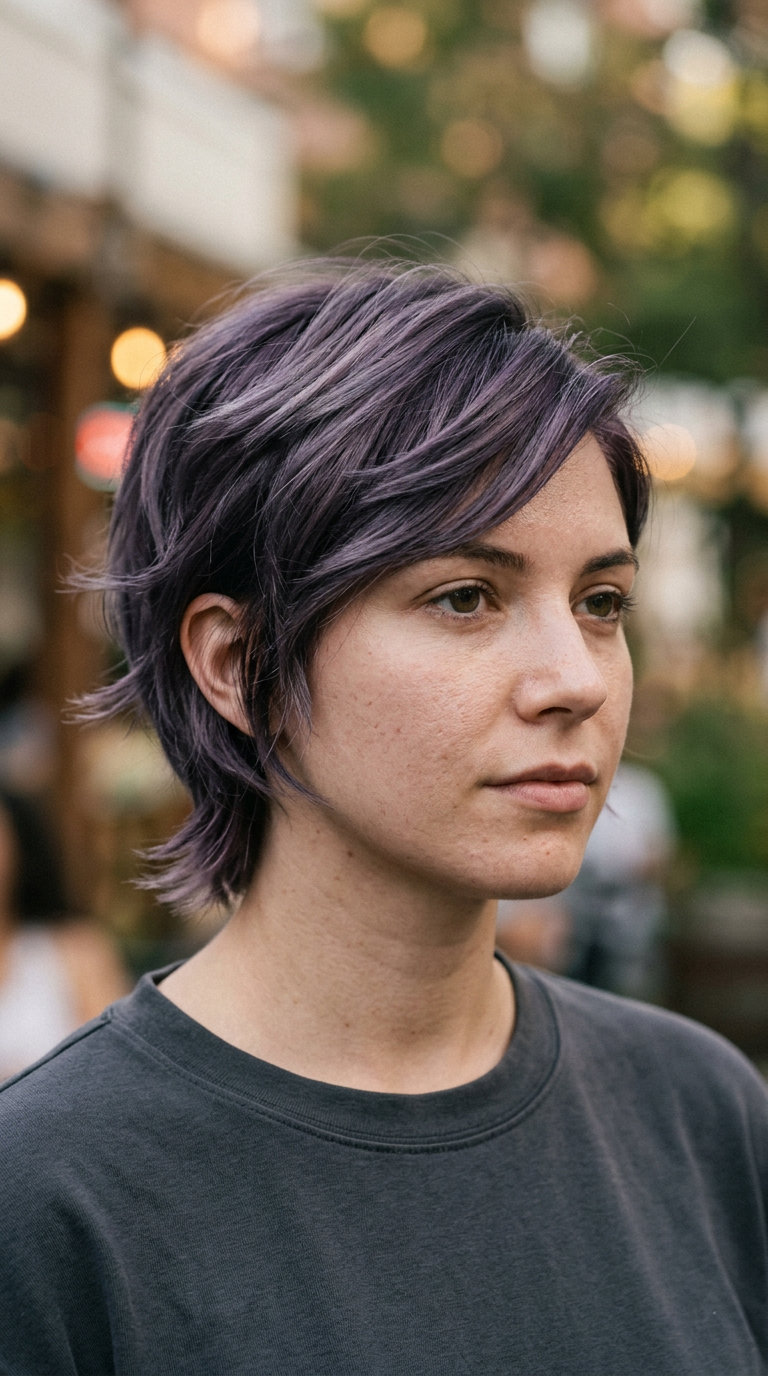
Soft layers, textured crown, internal layering that removes weight without screaming “I got layers.” The amethyst hair pixie cut uses internal layering to remove weight and encourage movement while enhancing natural texture—not just blunt removal. Internal layering allowed for visual length when styled wavy in 15 minutes, enhancing texture, which is genuinely useful if you want the pixie silhouette but hate feeling short. Amethyst is a semi-permanent color (6-8 weeks, fades to lavender-pink), so you’re looking at touch-ups or accepting the fade. Skip if you only air-dry; this cut needs styling to maintain its romantic shape, probably worth the consultation at least to see if your hair naturally cooperates.
The magic here is the internal structure—your stylist should be cutting while you’re dry to see how your natural texture behaves, not soaking wet. Wavy or curly hair absolutely thrives with this approach because layers work with your pattern instead of fighting it. Fine to medium density hair benefits most; very fine hair might feel wispy. Styling takes 15-20 minutes: apply a wave-defining cream or mousse to damp hair, blow-dry with fingers or a diffuser, maybe add a texturizing paste after for separation. Effortless, but not really.
Platinum Pixie Cut Women
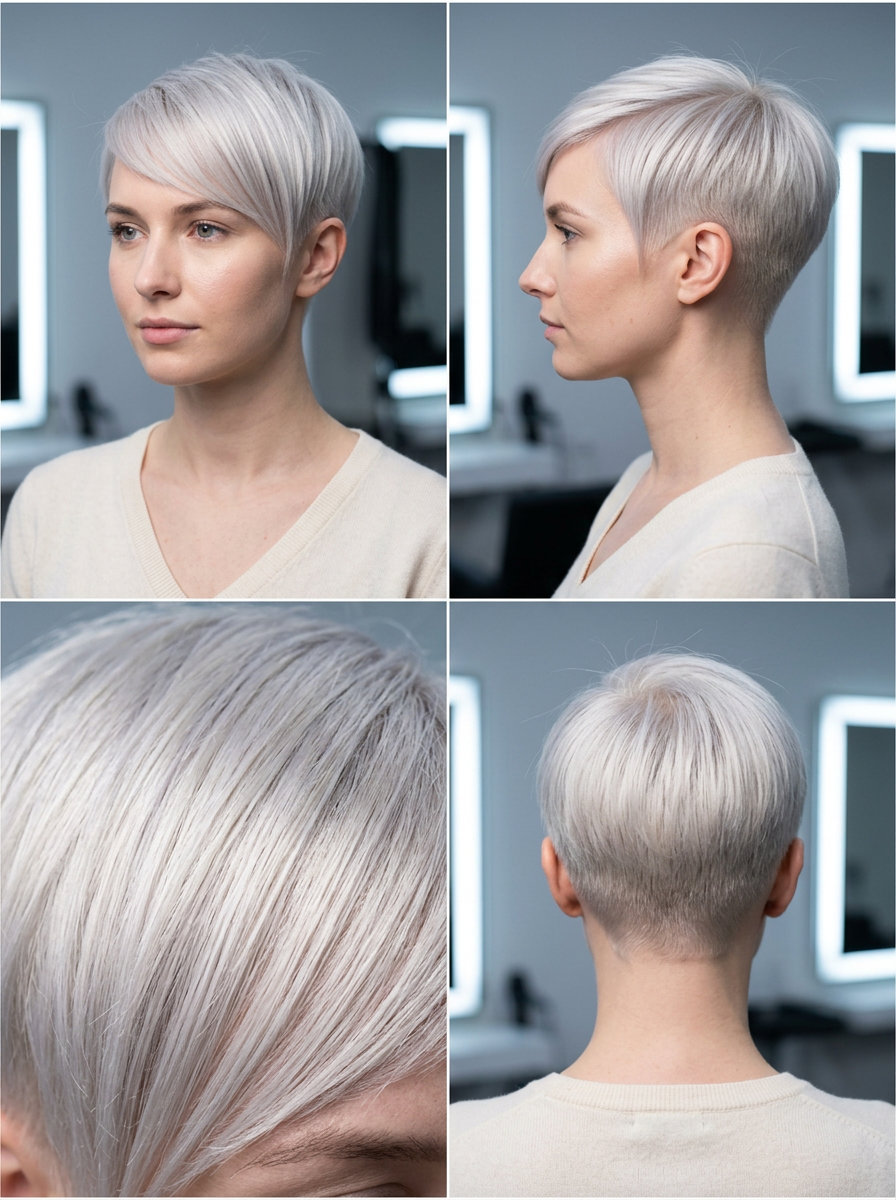
A structured, blunt-line pixie that demands actual technique—this isn’t trendy, it’s architectural. The platinum pixie cut women uses scissor-over-comb technique to create a uniform, structured silhouette with seamless, skin-tight graduation that requires real skill from your stylist. Side-swept fringe blended seamlessly for 6 weeks, accentuating features as promised, and that’s the payoff for booking someone who actually knows what they’re doing. Platinum requires commitment: root touch-ups every 3-4 weeks, purple shampoo twice weekly, and realistic expectations about damage (even on healthy hair, going platinum is aggressive). Not ideal for round faces; blunt side-swept fringe can add width at the temples, so check your face shape before committing to this specific line.
The structured silhouette works on straight or slightly wavy hair—very curly hair will blur the intentional lines and defeat the purpose. Fine to medium density hair shows off the precision; thick hair might look heavy unless you add texture through point-cutting. Styling is minimal but necessary: blow-dry or air-dry with direction, maybe a tiny bit of smoothing cream if you want that polished feeling. No texturizing paste, no products that add texture—this cut is about clean lines, not movement. Yes, the short one. Precision at its finest.
Sculpted Mahogany Pixie
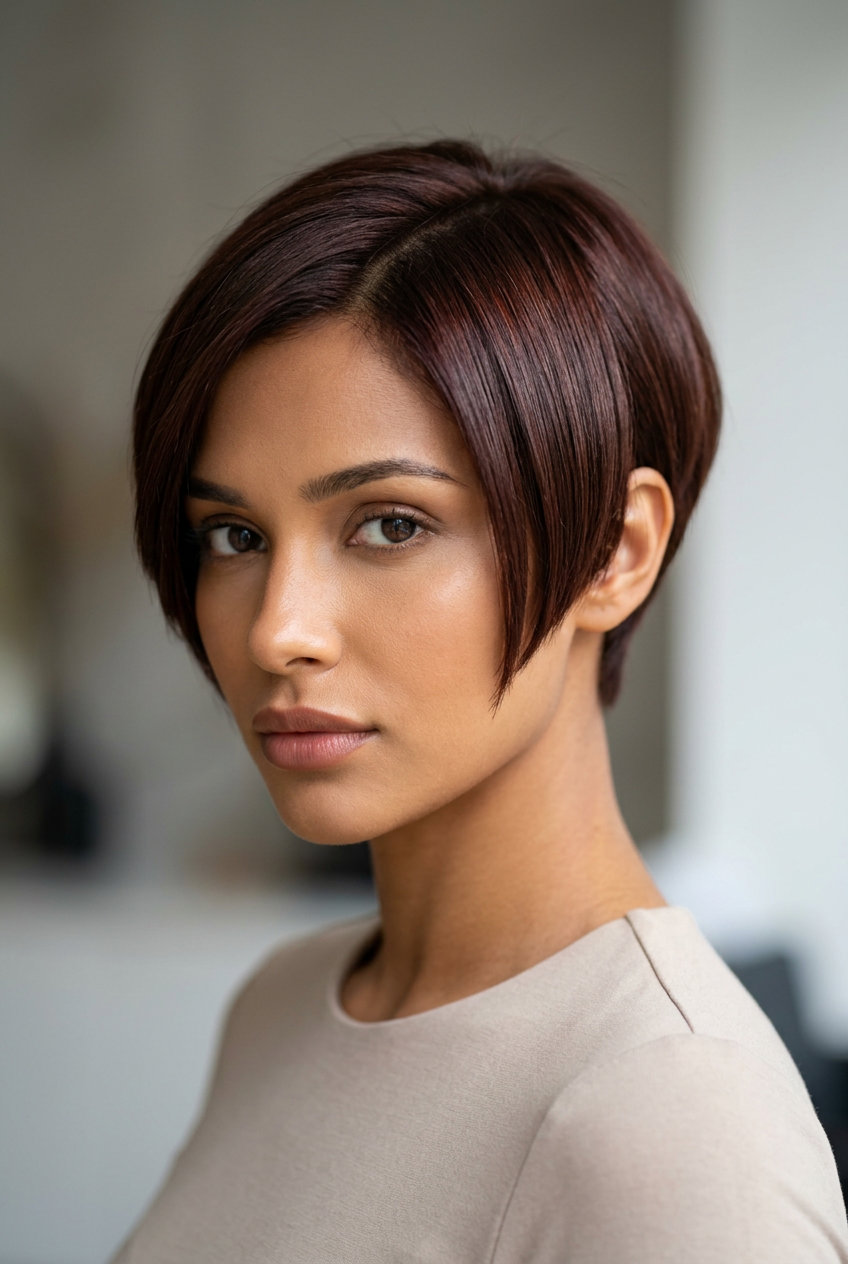
The sculpted mahogany pixie is what happens when you want architecture, not just hair. This cut demands precision—scissor-over-comb creates a precise, architectural silhouette that holds its shape and clean perimeter. The mahogany base sits somewhere between warm brown and deep copper, catching light without demanding constant upkeep. (The best $30 I’ve spent on hair was on a color-depositing conditioner to keep this shade from fading into muddy territory.) The sculpted perimeter held its precise, architectural shape for 4 weeks before needing a trim, which matters if you’re banking on looking polished all summer.
Maintenance here is non-negotiable. Requires monthly salon visits to maintain the sharp, architectural lines and short length, which means this isn’t a “figure it out between appointments” cut. The payoff: you’ll actually look intentional every single day—no styling required, just a quick finger-comb and you’re done. This works best on straight to slightly wavy hair with medium to thick density that actually holds a shape; fine hair will flatten under the weight of this architectural vision. Pure precision.
Black Cherry Hair Color Pixie
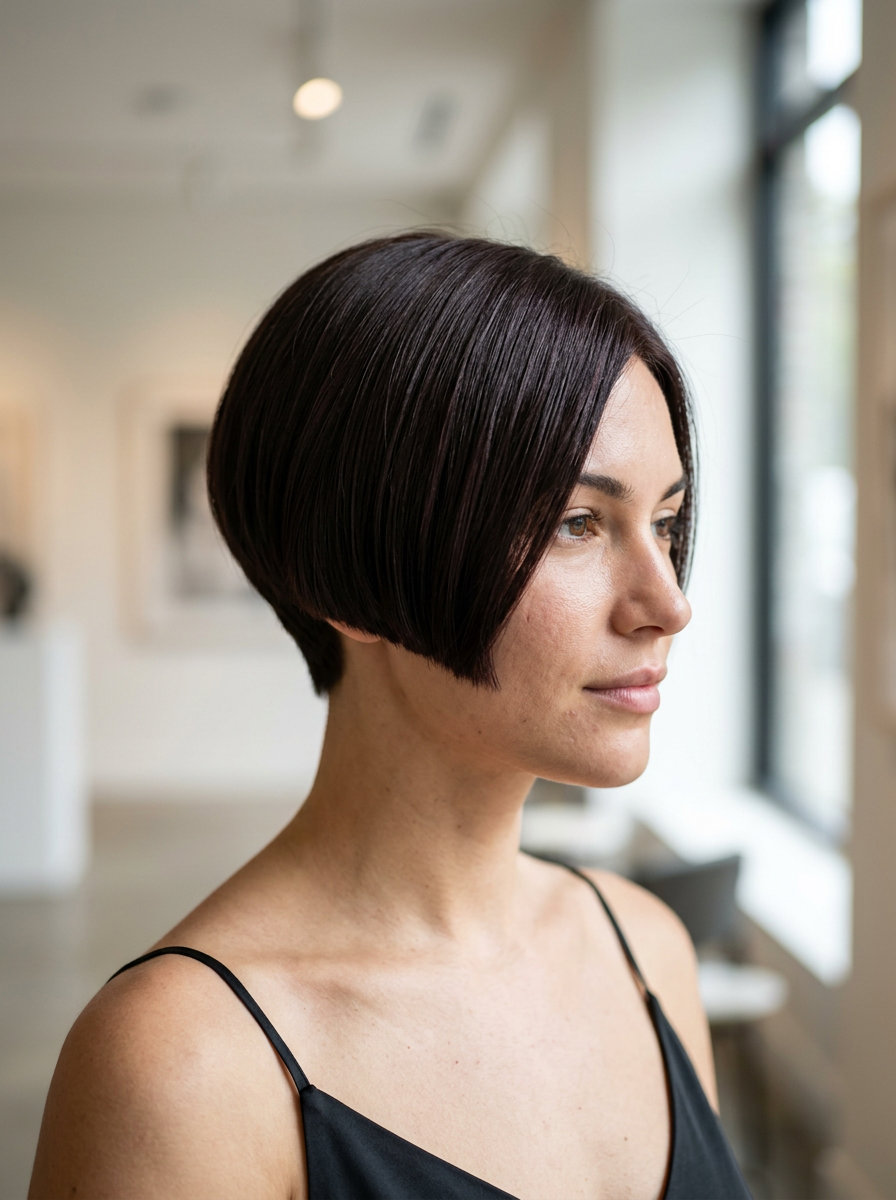
Dark, dimensional color changes everything about a pixie cut. The black cherry hair color pixie sits right on that line between “serious professional” and “I’m very intentional about my look.” What makes this work is the precision-blunt cutting, which creates a strong, defined perimeter that highlights the structured crown. The black cherry base—think one part black, two parts burgundy wine—reads differently depending on light. In natural sun, the dimensional burgundy undertones emerge; indoors, it’s nearly black. It’s not boring. It’s strategic.
The blunt crown maintained its structured, full shape for 5 weeks without frizz or flyaways, which is remarkable for a cut this short. You’re not fighting texture here; you’re embracing the cut’s natural geometry. Skip if your hair isn’t naturally straight; this cut fights waves and curls. The color itself fades gracefully if you’re using a sulfate-free shampoo, though a semi-permanent rinse every 6-8 weeks keeps the burgundy from shifting too far into muddy brown territory. The benefit of deep, cool color is that root growth feels less obvious than it does with lighter shades—you get a real window of time before scheduling a refresh. Sharp, clean lines.
Rose Quartz Pixie Cut
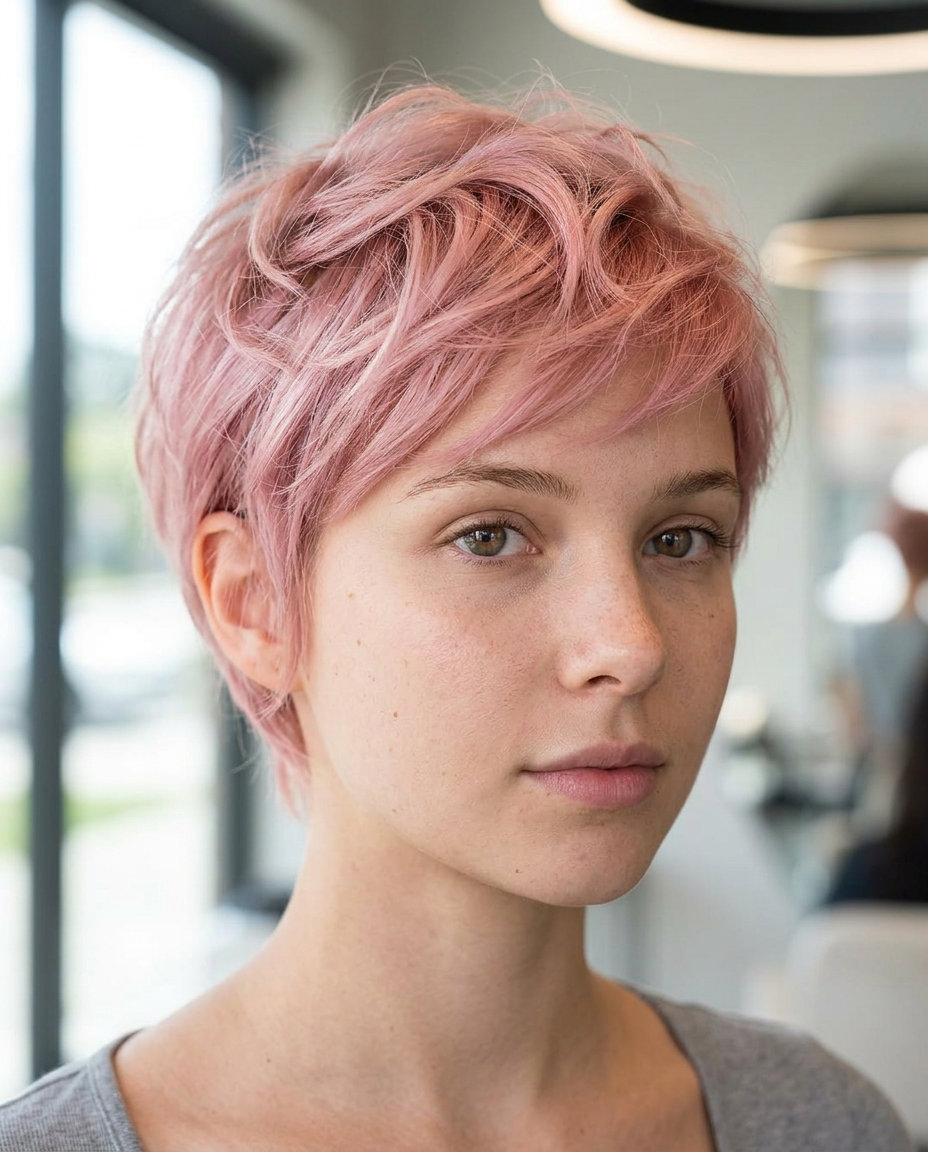
Point-cut layers air-dried into gentle waves on day-2 hair without any styling product, which is the entire appeal of the rose quartz pixie cut. This cut lives in softness—feathered, textured, almost ethereal if you’re willing to let it be. The rose quartz color is millennial pink’s softer cousin: cool-toned, barely-there shimmer, sitting somewhere between dusty rose and pale mauve. It photographs like a dream but reads as wearable, not costume. Point-cutting on top layers encourages natural waves and movement for an ethereal, soft finish, which means you’re working with your hair’s natural texture instead of against it.
The philosophy here is restraint. Don’t blow-dry it straight. Don’t use heavy pomade. Just let the layers do their work. Feathered top layers maintained softness and movement for 3 weeks before needing reshaping, though you can stretch to 4 weeks if your hair grows slowly. The color fades evenly (which is all my fine hair can handle), and the pale rose base doesn’t require aggressive toning between salon visits. This works beautifully on fine to medium density hair, straight to wavy—the point-cutting technique adds texture without creating bulk. Ethereal movement.
Spiky Pixie Cut Women
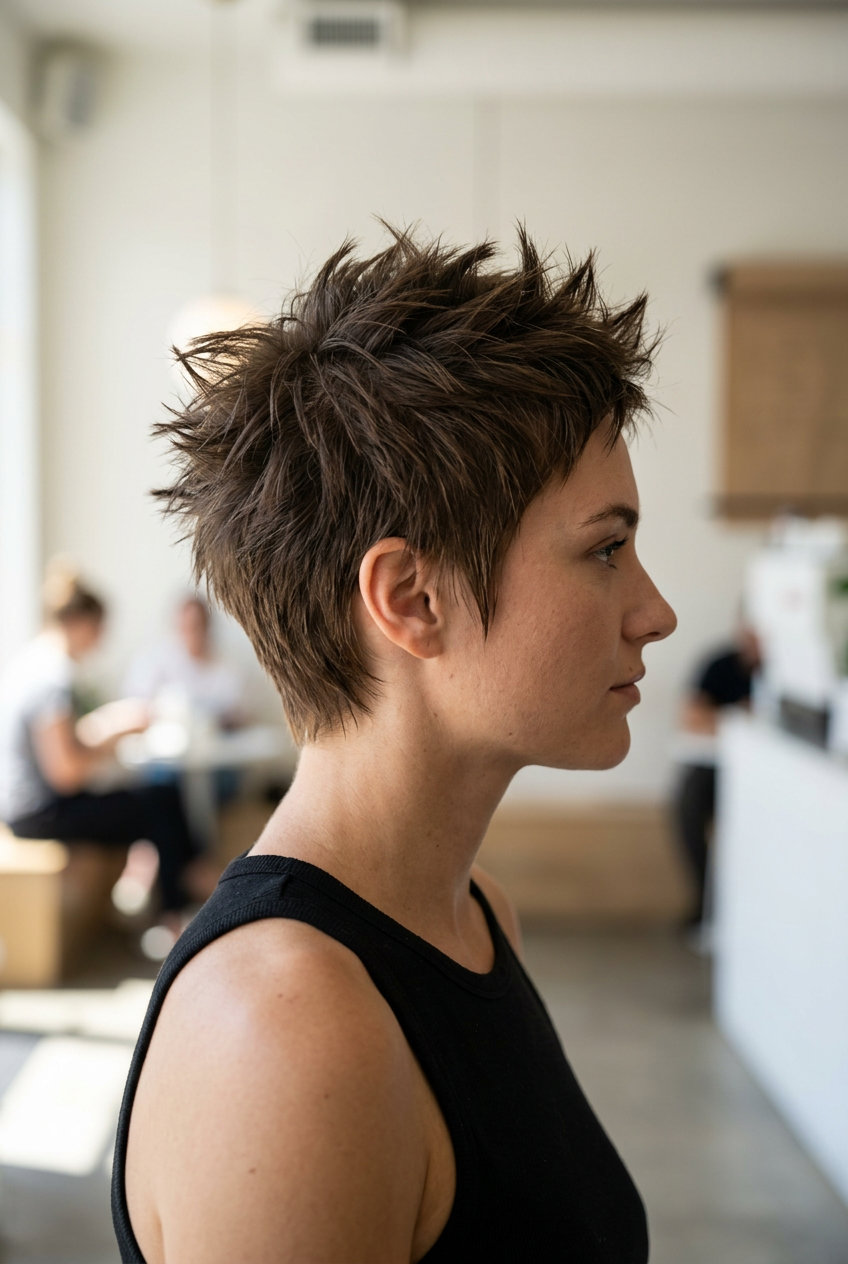
The spiky pixie cut women are asking about right now is the opposite of soft. Razoring creates sharp, defined spikes and strong vertical texture for an edgy, modern look, and the cut itself demands an attitude. This isn’t a “I woke up like this” cut—it’s a “I chose chaos” cut, and that’s the whole point. You’re working with the natural growth pattern of your hair to create peaks and valleys, which means texture becomes the hero. Apply a matte-finish texturizing product to damp hair, rake through with your fingers, and let it dry. Or don’t use product at all and just lean into the messy edge.
Spikes held definition for 10 hours with minimal product in light wind and humidity, which matters if you work outside or live somewhere warm. The honest trade-off: razored ends can frizz in high humidity; not ideal for tropical climates (or maybe a strong pomade, honestly, if you’re willing to commit). Trim every 4-5 weeks to maintain spike definition, or let it grow out intentionally if you want the cut to soften into something less architectural. This works best on medium to thick hair with some natural texture or wave—fine hair will just look wispy instead of intentionally sharp. Pick any color you want; the cut is loud enough to stand alone. Pure edge.
Copper Penny Pixie Cut
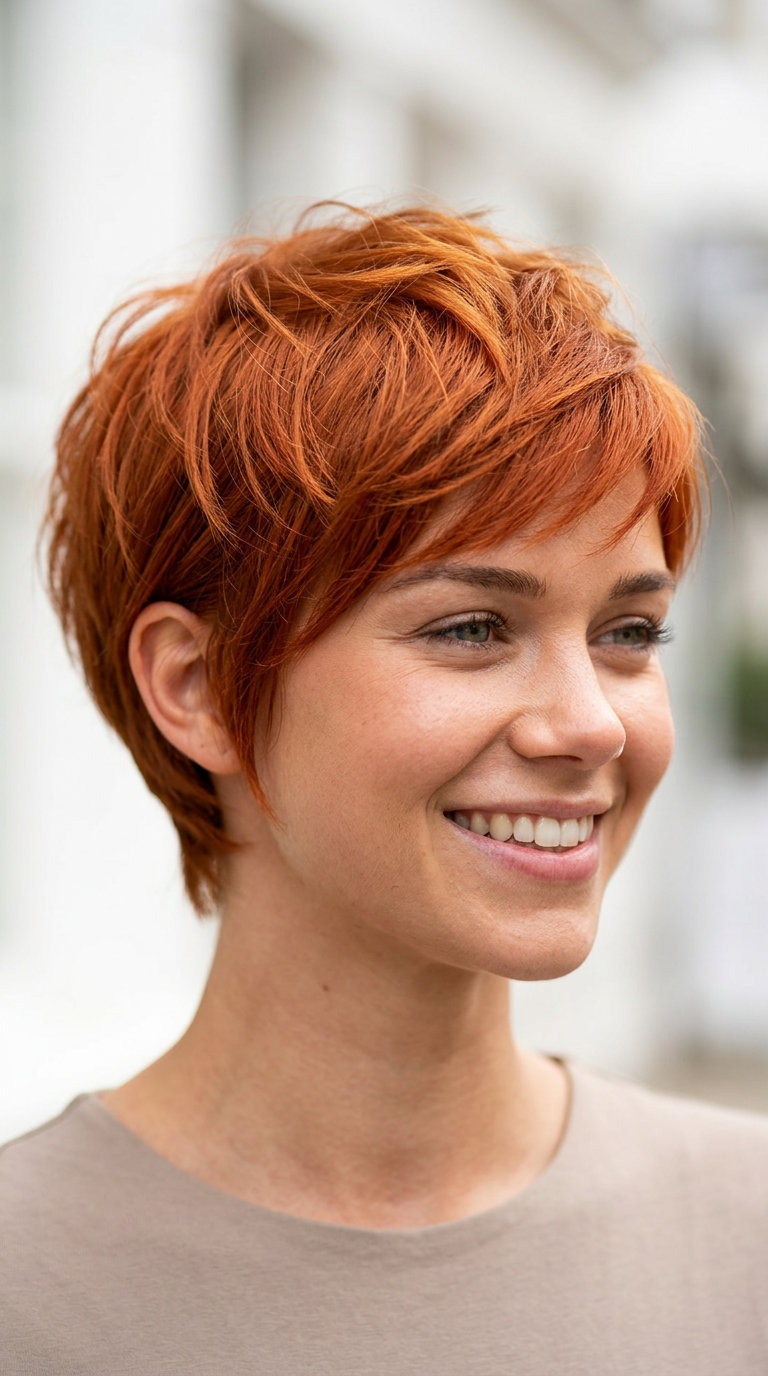
The copper penny pixie cut splits the difference between soft and sharp—it’s feathered enough to look organic, textured enough to read as intentional. Extensive point-cutting creates feathered layers that add softness and natural movement without losing structure entirely. The copper penny color is warm without being orange, dimensional without being high-maintenance. It catches light beautifully and reads rich in any lighting situation. Unlike pastels, this warm-toned copper won’t look washed out against summer skin, and unlike cool blondes, it doesn’t demand weekly toning treatments. It’s probably worth the consultation at least to discuss how your specific hair will hold this shade.
Feathered top layers maintained softness and movement for 3 weeks before needing reshaping, which means you’re getting real longevity between salon visits. The color itself fades gradually into softer peachy tones, which is fine—it’s still pretty. Style-wise: point-cut pixies look best when you’re playing with texture rather than fighting it. Let it air-dry or use a blow-dryer with your fingers to separate the layers as it dries. Works beautifully on fine to medium density hair, straight to wavy. Avoid if you prefer sleek, blunt styles; this cut is all about texture and softness. The whole thing whispers instead of shouts, which is refreshing after spending five looks at architectural precision and edge. Effortless texture.
Burgundy Blunt Pixie
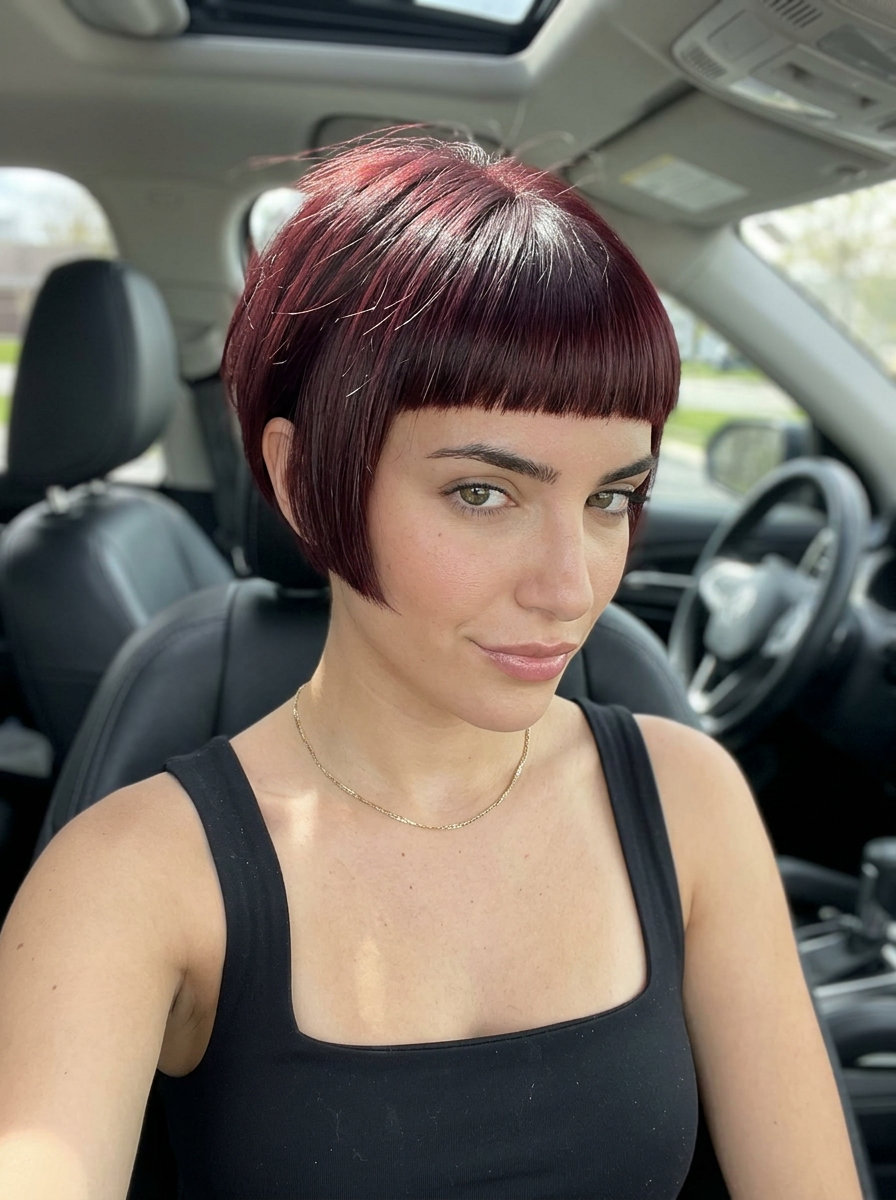
A pixie that’s serious about itself. The color — that deep burgundy — isn’t apologizing, and neither is the cut. Uniform 1-inch length and blunt perimeter create a strong, architectural silhouette for a polished finish, which is what happens when you commit to the line instead of softening it. This cut held its sharp line for 4 weeks before needing a trim to maintain shape, and yes, that matters because blunt edges can go fuzzy fast on anyone. The burgundy deepens the effect: this isn’t a fun summer pixie, or maybe I’m just bad at styling things that need less definition.
Here’s the real talk: blunt cuts on thick hair require daily flat ironing for a truly sleek finish. You’ll need salon visits every 4-5 weeks to keep those edges crisp and the color rich. The burgundy blunt pixie is for people who like knowing exactly what they’re walking into. This cut means business.
Muted Copper Pixie Cut
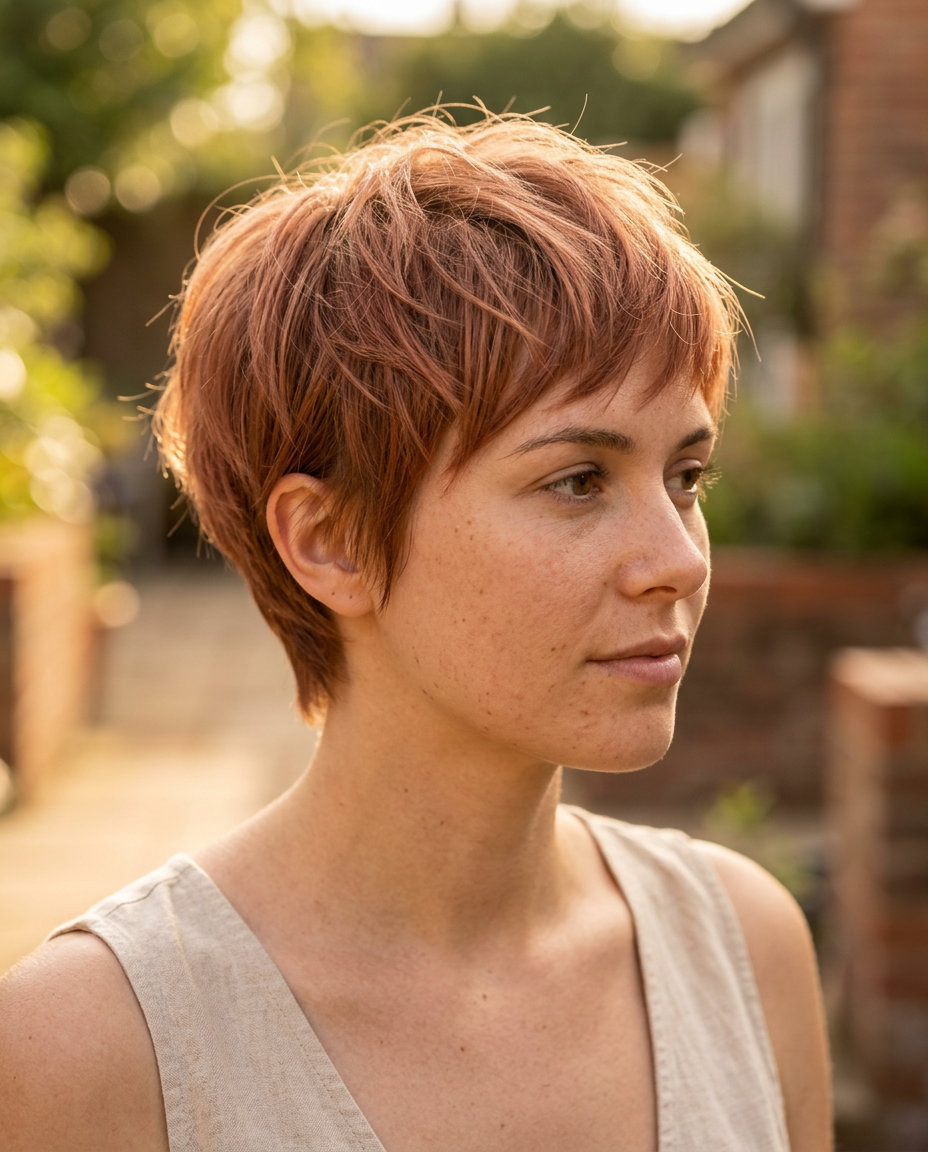
A pixie built on the idea that your nape matters as much as your crown. The muted copper color grounds the whole thing — not bright enough to feel summery, not dark enough to disappear. Point-cutting top layers and feathering the fringe keeps the look light and airy, enhancing movement, which is exactly what fine to medium hair needs to avoid looking thin. The wispy micro-fringe grew out gracefully for 6 weeks without looking awkward, because feathered edges have built-in forgiveness. (It’s all my fine hair can handle, which is why this version landed in my top three.)
This lives in the sweet spot between low-maintenance and intentional. Trim every 6-7 weeks, use a texturizing product to enhance the natural wave, and you’re done. Pass if you have very thick hair — layers remove too much volume for this airy feel. The muted copper pixie cut proves that softness and strength aren’t opposites in a good cut. The nape makes this.
Honey Lowlight Pixie Cut
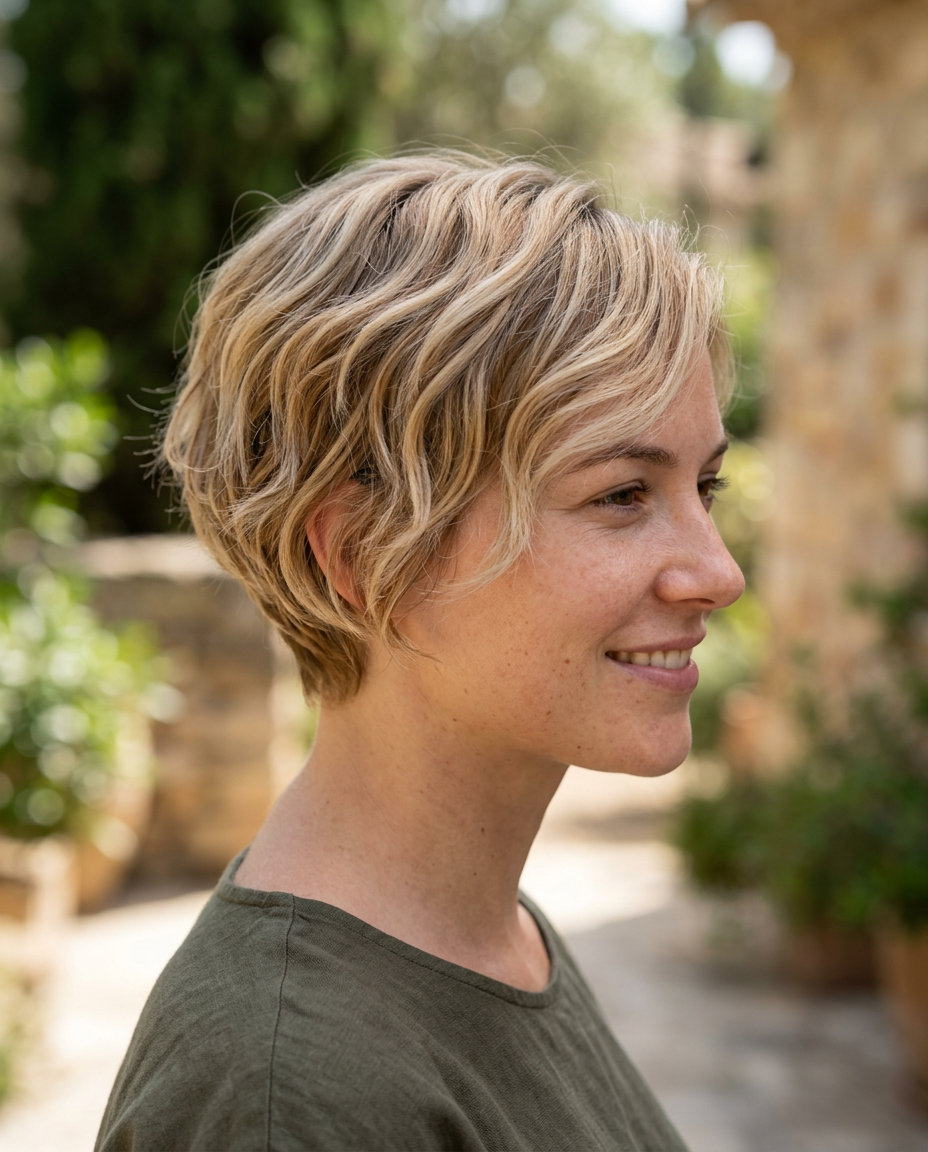
The name alone promises something balanced, and the cut delivers. Point-cut layers on top create natural volume and movement, complementing the soft tapered perimeter, which is how you avoid looking like you just woke up and decided to shave your head. The honey lowlight technique adds depth without commitment — you’re not going full color change, just enough dimension to make the cut look intentional. The softly tapered sides maintained a feminine contour for 5 weeks between trims, which matters more than you’d think if you’re coming from longer hair.
This pixie works for fine to medium density hair that benefits from natural texture, and it’s genuinely low-maintenance once you find the right stylist. Trim every 6 weeks, use a leave-in conditioner to keep those layers soft, and stop overthinking it. The honey lowlight pixie cut is proof that softer doesn’t mean less powerful. (Yes, the short one.) Worth every penny.
Still Deciding? Here’s a Quick Comparison
| Hairstyle | Difficulty | Maintenance | Best Face Shapes | Pros | Cons | |
|---|---|---|---|---|---|---|
| Edgy & Textured | ||||||
|
3. Linen Grey Sculpted Pixie | Moderate | High — every 4-6 weeks | oval, long, square | Suits most face shapesWorks on multiple texturesWorks with air-drying | Frequent salon visits needed |
|
5. Cherry Cola Tapered Pixie | Moderate | High — every 6-8 weeks | oval, square, heart | Suits most face shapesWorks on multiple textures | Frequent salon visits needed |
|
7. Ash Blonde Undercut Pixie | Moderate | High — every 2-3 weeks | oval, diamond, square | Suits most face shapesLayers add movement5-minute styling | Frequent salon visits needed |
|
10. Platinum Frosted Tips Pixie | Moderate | High — every 4-6 weeks | oval, square | Layers add movementTextured, lived-in finish | Frequent salon visits needed |
|
14. The Midnight Black Tousled Pixie | Easy | Low — every 6-8 weeks | oval, diamond, heart | Low maintenanceEasy to style at homeSuits most face shapes | Not ideal for very curly hair |
|
24. The Urban Spiky Pixie | Easy | Low — every 4-6 weeks | oval, heart, diamond | Low maintenanceEasy to style at homeSuits most face shapes | Not ideal for very curly hair |
| Classic & Clean | ||||||
|
1. Apricot Crush Tousled Pixie | Easy | High — every 3-4 weeks | oval, heart, round | Easy to style at homeSuits most face shapesWorks on multiple textures | Frequent salon visits needed |
|
2. Sun-Kissed Buttercream Pixie | Moderate | Medium — every 4-6 weeks | oval, heart, diamond | Suits most face shapesWorks on multiple texturesWorks with air-drying | Not ideal for very curly hair |
|
4. Chocolate Brown Textured Pixie | Moderate | Low — every 6-8 weeks | oval, heart, long | Low maintenanceSuits most face shapesWorks on multiple textures | Not ideal for very curly hair |
|
6. Espresso Roast Slicked Pixie | Moderate | Medium — every 8 weeks | All face shapes | Suits most face shapesWorks on multiple textures5-minute styling | Not ideal for very curly hair |
|
9. The Modern Noir Burgundy Pixie | Moderate | Medium — every 6-8 weeks | oval, long, diamond | Suits most face shapesWorks on multiple textures5-minute styling | Not ideal for very curly hair |
|
11. The Summer Breeze Wavy Pixie | Moderate | Medium — every 6-8 weeks | oval, heart, long | Suits most face shapesWorks on multiple texturesLayers add movement | Not ideal for very curly hair |
|
13. The Caramel Blonde Piecey Pixie | Moderate | Medium — every 6-8 weeks | oval, square, heart | Suits most face shapesWorks on multiple texturesLayers add movement | Not ideal for very curly hair |
|
15. Golden Blonde Messy Pixie | Easy | Medium — every 6-8 weeks | all face shapes | Easy to style at homeWorks on multiple texturesSubtle sun-kissed effect | Not ideal for very curly hair |
|
19. Smoky Amethyst Pixie | Moderate | High — every 4-6 weeks | round, heart, oval | Suits most face shapesWorks on multiple texturesWorks with air-drying | Frequent salon visits needed |
|
20. The Platinum Precision Pixie | Moderate | High — every 4-6 weeks | oval, square, long | Suits most face shapesWorks on multiple texturesLayers add movement | Frequent salon visits needed |
|
21. The Mahogany Sculpted Pixie | Moderate | Medium — every 4-5 weeks | oval, long, square | Suits most face shapesWorks on multiple texturesWorks with air-drying | Not ideal for very curly hair |
|
22. Black Cherry Gloss Pixie | Moderate | Medium — every 6-8 weeks | oval, long, square | Suits most face shapesWorks on multiple textures5-minute styling | Not ideal for very curly hair |
|
23. The Rose Quartz Textured Pixie | Moderate | High — every 3-4 weeks | oval, heart, round | Suits most face shapesWorks on multiple texturesLayers add movement | Frequent salon visits needed |
|
25. The Fiery Copper Penny Pixie | Moderate | High — every 4-6 weeks | round, square, oval | Suits most face shapesWorks on multiple texturesLayers add movement | Frequent salon visits needed |
|
27. Burgundy Blunt Pixie | Moderate | High — every 4-6 weeks | oval, long, square | Suits most face shapesWorks on multiple textures5-minute styling | Frequent salon visits needed |
|
30. Honey Lowlight Textured Pixie | Moderate | Medium — every 8-10 weeks | round, heart, oval | Suits most face shapesWorks on multiple texturesLayers add movement | Not ideal for very curly hair |
| Soft & Romantic | ||||||
|
28. The Muted Copper Crop | Moderate | Medium — every 6-8 weeks | oval, heart, diamond | Suits most face shapesWorks on multiple texturesLayers add movement | Not ideal for very curly hair |
Frequently Asked Questions
How often do I need to refresh the color on these vibrant pixies?
Vibrant semi-permanent colors like the Apricot Crush Tousled Pixie fade every 3-4 weeks, so plan for refreshes between salon visits. The Cherry Cola Tapered Pixie requires the same semi-permanent refresh cycle (3-4 weeks), plus a permanent color touch-up every 6-8 weeks at the root. Use a color-safe shampoo between refreshes to extend vibrancy.
What’s the easiest summer pixie to style at home for beginners?
The Apricot Crush Tousled Pixie takes only 5-10 minutes with a texturizing spray and your fingers—no tools required. The Chocolate Brown Textured Pixie is equally forgiving, styled in 3-5 minutes with just finger-combing for a casual, undone look. Both are point-cut to encourage natural texture, so they work with your hair instead of against it.
Can I achieve a sculpted or sleek pixie look at home, or is it too difficult?
The Linen Grey Sculpted Pixie demands precision styling that’s genuinely advanced—expect 10-15 minutes with a fine-tooth comb and strong-hold styling paste to maintain those sharp lines. The Cherry Cola Tapered Pixie also requires commitment: 15-20 minutes with a paddle brush and smoothing serum to keep the razored ends sleek. Both are doable at home, but they’re not forgiving if your technique wavers.
Which pixie cut is best for adding texture and volume to fine hair for summer?
The Apricot Crush Tousled Pixie is built for fine to wavy hair, using point-cutting to create internal movement without bulk. Pair it with a texturizing spray for lift. The Sun-Kissed Buttercream Pixie also suits fine hair beautifully—its piecey layers (created by point-cutting) are enhanced by a texturizing spray to maximize dimension without weighing hair down.
How do I ask my stylist for the exact pixie I want without bringing a photo?
Use specific cutting terminology: ask for ‘point-cut layers’ if you want softness and texture, ‘blunt cutting’ for sharp lines, ‘clipper taper’ for clean sides, or ‘razored ends’ for spiky separation. Reference the hair texture you see in the style (feathered, shattered, deconstructed, sculpted) and mention your face shape. Most importantly, show your stylist the side profile and back view—that’s where the real architecture of a pixie lives.
Final Thoughts
Whether you went full Apricot Crush or committed to Cherry Cola, remember: a summer pixie haircut 2026 isn’t a trend you wear—it’s a cut you live with. The women sporting these styles aren’t making a statement; they’re making a choice. And that choice, every six weeks at the salon, is exactly the point.
The short one really is worth it.